Showing posts with label Phoneme Media. Show all posts

Thursday, January 5, 2017

BESSARABIAN STAMPS, a Moldovan Magical Realist treasure


BESSARABIAN STAMPS
OLEG WOOLF
(translated by Boris Dralyuk)
Phoneme Media
$16.00 trade paper, available now

Rating: 4.5* of five

The Publisher Says: Reminiscent of Bruno Schulz’s Street of Crocodiles, Oleg Woolf’s Bessarabian Stamps — a cycle of 16 stories set mostly in the village of Sanduleni — is a vivid, surreal evocation of a liminal world. Sanduleni’s denizens are in permanent flux, forever shifting languages, cultures, and states (in every sense of the word). Woolf has relocated magical realism to Moldova. With the turmoil in current Russia and the post-Soviet world, Bessarabian Stamps emphasizes the absurdity of the mundane.

My Review: I am not entirely sure that I even knew there was a place called "Moldova." It's on my literary radar now. My review of The Good Life Elsewhere was suffused with my sense of the proceedings as almost cartoonish in their surreal yet inevitable zaniness. This collection of tiny tales does nothing to alter that basic impression. But Woolf's microstories add a layer of sophistication to my gloss on his state (in the several senses of the word that pervade the book):
It was raining the kind of rain that exhortations can't help, and try as one might, one won't manage a thing against the water.
This is on the very first page of Oleg Woolf's very first story, "Aurica and Van Gogh." Now's probably a good time to mention that I can't use my normal story-by-story review technique because the stories themselves are shorter than any analysis that would prove useful to the reader. So instead, the gestalt of the collection is what I'll talk about.

I've already published a public appreciation of Phoneme Media and its more-necessary-than-ever mission to bring American audiences the best work of people from other cultures. It is an urgent and necessary corrective lens to the myopic, nativist recrudescence we're seeing already...and have been able to see, had we the eyes to do so, since the time of de Tocqueville. Literature and film in translation in the US amounts, at the optimistic best-case scenario end of the statistics, to three percent of the total market output. And that data is probably the optimists' bible, since the University of Rochester, who collects the data, is reliant on voluntary reporting and has no power of compulsion to back it up.

It's a damned shame, too. The pleasures of reading Oleg Woolf's Bessarabian Stamps are many. The description of a village elder as "...well over a hundred, and remained a person of such openness, kindness, and strength that she was impossible to bear," for example, is pitch-perfect, precise, and funny as hell. We've all thought that someone was too good to be true, like Mother Teresa that old ambulatory accusation of avarice. Woolf makes many such arc-lights to illuminate his characters' essential reality. His is a gift of economy of praise and an abundance of clarity.

One thing that Woolf makes sure we know about Moldova is it's rain-forest-level wet all the time, and populated primarily by the oldsters who have been left behind by history:
Brăndulescu just watched and listened in silence to the rain, and it seemed that this rain would slowly transform into the murmur of some bygone voices, expired and empty. And suddenly he felt not so much sad, as somehow for nothing. He peered into the torrents of rain seriously and attentively—as if leaning over them—while they, in the usual manner of old men, forgetfully withdrew into themselves.
Americans are entering this population crash, well underway in Europe for a generation. Young people all over the world have migrated to cities since World War II, rural depopulation is exacerbated by the mechanization of farming, the collapse of the value of such labor as farming still requires, and the consequent rise in economic migration from Third World countries changes the sociopolitical landscape forever. Look at the Mexican migrant workers doing American farming scut-work in slave-labor conditions...almost sixty years after Harvest of Shame was broadcast. Unprovably, it's been asserted that this horrible exposé fueled the rise of what became Lyndon Johnson's Great Society programs. If nothing else, the attention of the culture was focused by that one show.

It takes many books to equal one television show. Just ask Sănduleni's poet Ivan Markov:
The day was full of the kind of clouds one rarely sees in Moscow—sour cream-like, made of human souls. Shaggy Markov walked across the Bolshoy Kammeny Bridge, and each of the piers was more governmental than three railroad stations. Many of those he passed on the bridge may have read his books, but without love, grief, pleasure, separation, or regret, as one reads before bed: so as to fall asleep. So as to, just think, nine hundred pages—your eyes fall on any of them and the author says: you just read my thoughts. And me, what are his thoughts to me—they've just put me aside for a rainy day.
It is ever thus with poets and writers. It is ever thus with publishers and translators. Shunted aside, left for a rainy day.

It's raining as hard as we're ever likely to see it rain, ladies and gentlemen, in a time when a man who openly and publicly said he grabbed women by their private parts had his statement brought to light and still won the presidency of the United States of America. We are all in need of reinforcement, of feeling understood and supported by every means at our disposal. We are in urgent need of the fellow feeling that reading translated works brings us. We need to support the work of companies like Phoneme Media, so that they can afford to bring us comfort and understanding from the places in the world we simply don't know anything about.

Bessarabian Stamps is an excellent book. It is a great place to bolster your inner resistance to philistinism and enforced ignorance.

Guess what? There's MORE! I write for The Coil, and at Medium, too

I wonder...does everyone, or anyone, who reads the blog know that The Coil also publishes pieces I write?
5 Novels to be Thankful Came Out in 2016
5 Novels by 21st Century Warriors
5 Alternate History Novels About American Politics
5 Novels About Immigrants and Immigration
The Coil is a webzine that treads the lightly beaten path of independent literature. It's curated by the unbelievably busy Leah Angstman of Alternating Current, which is also a micropublisher of outstanding books. I don't think the woman sleeps.

My piece on publishers in the Mittelstand. This is an area I'm very passionate about. I think this is the place where the best work in publishing is, and always has been, done. That's a German economic concept, one that we here in the USA have ignored. It's quite probable that this neglect has caused a great deal of the economic distress that we're in.

Wikipedia provides this list of core Mittelstand values:
Family ownership or family-like corporate culture
Generational continuity
Long-term focus
Independence
Nimbleness
Emotional attachment
Investment into the workforce
Flexibility
Lean hierarchies
Innovativeness
Customer focus
Social responsibility
Strong regional ties
Can anyone argue with these values as models for any company to emulate? The immense size of the US small business sector makes it a primary driver of consumer spending, aka the bulk of economic activity. Publishing's Mittelstand has given us the careers of Hemingway and Faulkner, among others. The modern independent publishing scene is more urgent than ever. In an emerging authoritarian regime, the big publishers can be very easily compelled to sing Horst Wessel because they have so much to lose and are famously un-nimble. With the advent of print-on-demand technology and e-books everywhere there is a screen, nimble and determined indies can evade all but the most determined government harassment. (Like Sander Hicks went through when he published James Hatfield's Fortunate Son, which horrendous governmental abuse of power is detailed in Horns and Halos.)

I've published two profiles of publishers I regard as exemplars of some of these admirable, almost Utopian, industrial values. Outpost19, a California-based emerging publisher of fiction and non-fiction that's outside the business model of the media conglomerate dominated publishers. I've reviewed Hope for a Cool Pillow in that profile.


I've also profiled Phoneme Media, whose novel BAHO! is the first Burundian novel to be published in the USA. My review is posted here. The publisher is a deeply creative soul, David Shook; his and his partner's outstanding aesthetic eye is evident in each and every thing that Phoneme does.

My next profile will be of my long-standing favorite publisher of gorgeous books, Chin Music Press.

It must be a decade now that I've read and reveled in their deluxe output. As objects, the books are uniformly handsome to gorgeous; as entertaining reads, they're uniformly excellent. So stay tuned...January brings a special treat of Seattle-y goodness.

Sunday, September 11, 2016

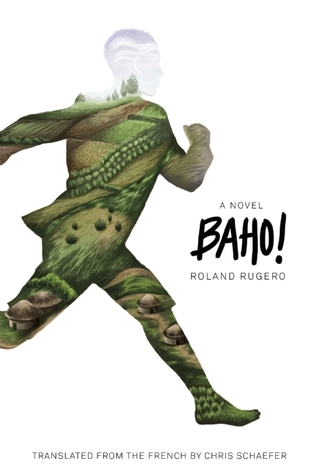
BAHO!, a Burundian novel of rage and redemption **TRIGGER WARNING** sexual violence


BAHO!
ROLAND RUGERO
translated by Christopher Schaefer
Phoneme Media (non-affiliate Amazon link)
$16.00 trade paper, available now

Rating: 3.5* of five

The Publisher Says: When Nyamugari, an adolescent mute, attempts to ask a young woman in rural Burundi for directions to an appropriate place to relieve himself, his gestures are mistaken as premeditation for rape. To the young woman's community, his fleeing confirms his guilt, setting off a chain reaction of pursuit, mob justice, and Nyamugari's attempts at explanation. Young Burundian novelist Roland Rugero's second novel Baho!, the first Burundian novel to ever be translated into English, explores the concepts of miscommunication and justice against the backdrop of war-torn Burundi's beautiful green hillsides.

My Review: A fable of modern life, not just in Africa but the world over: An atmosphere of fear and mistrust arising from more than a decade of endless war causes Nyamuragi (not Nyamugari as above) the mute to be accused of rape, then of murder as the heat of the moment causes passions to rise higher and higher. His "victim" is a teenaged girl who is accustomed (horribly) to the idea that every woman is a man's fair game. She isn't even close enough for Nyamuragi to touch until after she screams, when he grabs her to put his hands over her mouth. The whole village hears the commotion and, being on edge as a whole, assumes that there's trouble and sets out to find the screamer and help her. They see Nyamuragi manhandling their woman-child, assume the worst, and the pursuit begins. Running, of course, makes Nyamuragi look guilty, so the pursuers begin to stone him.

An elder of the village, widow of one of the wealthy men, is out tending her goats when the kerfuffle starts:
With her left eye, the one-eyed woman tries to make out the pack of pursuers.

With the other eye, her bad one, she searches her thoughts. Tears escape them both. It is hard work with sweat trickling down. One eye makes out reality, and the other seeks the explanation for its harshness. One sees, and the other deliberates. The old woman's comprehension in either case is muddled.
Her comprehension about matched mine, as the age of our protagonist Nyamuragi changes from elevn to twenty-six and hovers in an uncertain state from beginning to end. This is intentional, per the translator's note. The author is working in the oral storytelling tradition and piles on details that contradict each other as a means of overwhelming the reader, making the story more intensely alive, and who am I to argue with success?

As the mob drags Nyamuragi towards his death by hanging with a "virgin hemp rope" (this will be important later), the one-eyed old woman hears the word ejo, which leads to her reverie:
Tomorrow and yesterday: two different times, a single word to label them both. Two places in time, a single name. As a result, one becomes the other. Or maybe "tomorrow" and "yesterday" meld into one another, because they contain two chimeras: past and future.
(itals in original)
It seems that Nyamuragi has tried, in his torment, to assent to the mob's mistaken murder of him, to offer himself as a scapegoat for the rage and terror of the whole nation of Burundi, by shouting ego, an assent; since he's been electively mute for his whole life, his vocalization is misuderstood and the crowd roars ejo back at him. They wonder what he means, did he do mischief yesterday or will he if they let him live until tomorrow? In the throes of their rage and fear, they can't decide and no one can agree with anyone else.

Nyamuragi is, in the extremity of his manhandling and torture, driven by his agony to retreat into the waiting state. He's not fully in his body, he keeps blacking out, falling asleep, waking again to be dragged up and up the hill where his village mates are going to hang him from the giant fig tree. His ejo is very much where he is:
In fact, at a very young age Nyamuragi had loved to read, this way of summarizing life with signs. Letters which possessed hats, ties, crooked dashes, feet, arms pointed upwards or turned downwards, hooks above and below, commas, periods, scrawls and scribbles, with the odd one crossed out.
It is always safer, Nyamuragi has learned, to avoid speech and trust silence. Words on paper are blessedly mute. He has emulated them through the horrors of his parents' murders; he has emulated them so well that now he can't summon them despite his great need.

If Nyamuragi had possessed speech, perhaps he would have prayed for divine intervention. He needn't bother, since the divine has already intervened by sending his Uncle Jonathan the demobbed soldier to the village to see his nephew now that the wars are over:
He had served on the frontlines. He knew that tactical decisions win wars. The disorderly two-hundred-strong crowd did not overwhelm him. He knew they were weak. Because he was systematic. And especially because kuvuga menshi siko kuyamara—to speak much does not imply exhausting one's words.
It is Uncle Jonathan who saves the day, and saves Nyamuragi.

This fable of rage, fear, revenge, guilt and expiation, is as relevant to US society as to Burundian. While the scapegoat isn't guilty of the crime of rape, he looks like he is, so he is targeted and the sins of the villagers are heaped on the outsider-from-birth. Mob action might be more direct in Burundi than here, but only just. That the village unites around its young woman and protects her, promises her vengeance, is a refreshing difference from US society's casual, uninterested assumption that the rapist is more "innocent" than the victim. (Typing that sentence nauseated me.)

I recommend to you that, if you read this book (and I think you should), be prepared to do some involuntary soul-searching. How would you have handled the mob rule's decision to murder someone you knew for something you don't know whether or not he did? How would you have tried to comfort the terrified girl whose screams set off the whole nightmare? Would any course of action you can imagine have made any difference?

Only the best books can do this to a reader. This is art of a high order.