Showing posts with label African civil wars. Show all posts

Wednesday, November 13, 2024

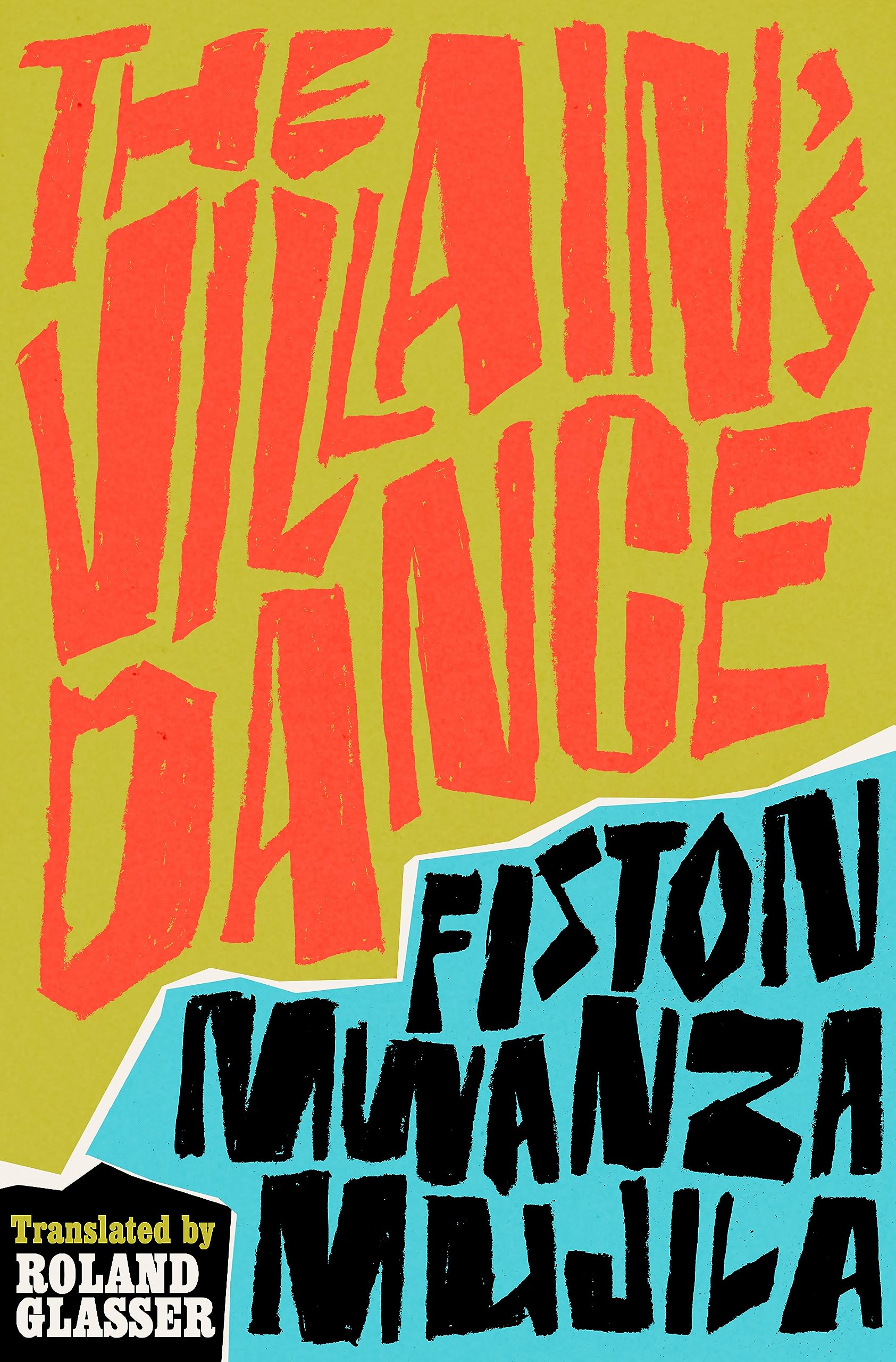
THE VILLAIN'S DANCE, apt title for this cautionary tale of the societal chaos of civil war


THE VILLAIN'S DANCE
FISTON MWANZA MUJILA
(tr. Roland Glasser)
Deep Vellum (non-affiliate Amazon link)
$9.99 Kindle edition, available now

Rating: 4.5* of five

The Publisher Says: Following the international success of his debut novel Tram 83, Fiston Mwanza Mujila is back with his highly anticipated second novel, which follows a remarkable series of characters during the Mobutu regime.

The Democratic Republic of Congo, otherwise known as Congo-Kinshasa or DRCongo, has had a series of names since its founding. The name of Zaire best corresponds to the experience of the novel’s characters. The years of Mobutu’s regime were filled with utopias, dreams, fantasies and other uncontrolled desires for social redemption, the quest for easy enrichment and the desecration of places of power.

Among these Zairians’ immigration to Angola during the civil war boycotting the borders inherited from colonization, as if the country did not have its own diamonds, and the occupation of public places by children from outside. The author creates the atmosphere of the time through a roundup of the diviner Tshiamuena, also known as Madonna of the Cafunfo mines, prides herself of being God with whoever is willing to listen to her. Franz Baumgartner, an apprentice writer originally from Austria and rumba lover, goes around the bars in search of material for his novel. Sanza, Le Blanc and other street children share information to the intelligence services when they are not living off begging and robbery. Djibril, taxi driver, only lives for reggae music.

As soon as night falls, each character dances and plays his own role in a country mined by dictatorship.

I RECEIVED A DRC FROM THE PUBLISHER VIA EDELWEISS+. THANK YOU.

My Review
: Want to know how much I appreciate Author Fiston Mwanza Mujila's talents?

I didn't pan, belittle, or insult his poetry. All y'all know how I feel about poetry. And I gave it more than three stars! Be amazed, be impressed...I hope you'll be inspired to go get one. Tram 83 worked for me, as well; I know a lot of folks were't fans but it felt like a breeze from Africa to me, hot, wet, heavily freighted. This impression left me for dead in the first instance; I was less enrapt with its story and atmosphere then than I am in retrospect. In part that's down to my subsequent experience of reading The Villain's Dance.

In common with my earlier reads of the author's books, I began this one with an awareness of atmosphere. He is always, or so it feels to me, careful to begin as he means to go on. I'm reasonably sure the huge majority of my readers are unaware of Mobutu's identity, and are more or less uninformed about tthe name "Zaire" and its history...many in my generation will have known the name Zaire vaguely applies to a huge place near the Congo River but be blissfully unaware that the name is no longer used, or why that happened.

I think that gives the novel almost an SFnal appeal. There's little sense of geography encompassing the story in US readers, so why not just go all the way and market it as taking place on a different planet entirely? *I* can do this, I'm a book reviewer, the publisher can't. The level of outrage engendered would be epic. However, let me propose this to you: If you're willing to learn the names of made-up places like Middle Earth, Arrakis, Pern, Atlantis, Downbelow Station, and their different inhabitants, conflicts, social norms, what's the hold up on Zaire and Brazzaville?

Maybe the tiniest taint of racism? Worth some energy to think about.

Assuming you're in the already-overcame-it or the overcoming-it-now group, this story's got great conflicts between dark-grey, pitch-black, and palest shades of violet people trying their best to make it in a world where up and down just switched places...like being on a space station whose spin just changed speeds dramatically.

Maybe my increased appreciation for this read makes more sense than I thought it did at first.

The people in this book aren't just as well-realized as the setting, for the most part; see below. The pace of the story is provided by history, as it's based on the realities then prevailing. The entire enterprise of nation-building collapsing into civil war (by definition a chaotic break in the life of a society) honestly needs little of that tarting up to make it compelling, even riveting, reading. What Author Fiston does very well here is to fragment the locations of the chaos to give different people reason to speak their truth without losing the core purpose of telling us this story. Like Do Androids Dream of Electric Sheep?, we are taken into realms of deep desperation and left there long enough to get it; then we're offered a peek into the purpose of the extraction and the exploitation that requires...we're not left to wallow, the way The Octopus, f/ex, does with us in service of the same sharp criticism of the cutting edge of capitalism. Poe said it very succinctly in the nineteenth century:  "{C}orporations, it is very well known, have neither posteriors to be kicked, nor souls to be damned." (Thanks for showing me the accurate quote again, P-E!)

Edges, as noted above, cut; in this story we're in the path of the blade so see both the wielding and cutting inherent in its very existence. People fail. It is inevitable. Challenges go unmet still less mastered. As often as not that is a design feature of the challenge. It engenders judgment and contempt for failure, but leaves the challenge, well, unchallenged. I suspect the true-to-life experience of people showing up for a minute then vanishing will affront a lot of complacently smug story-structure addicts. It's not by accident, y'all; it's a feature not a bug. Like life in an unstable place at a volatile time, different people will come, only to go without fanfare, or even explanation. Most of the characters trying to make it any old how they can haven't got the wherewithal to care, often enough to notice, who is who except at the precise flash of the camera that "now" represents.

I am trying as best I can to explain away the most common issues I've seen raised in others's assessments of the book. I'm not sure it matters. I hope y'all will attend to my 4.5* rating more closely than to my blandishments. A book of this trenchance is not to be dismissed. I'm hopeful that a few will take this moment of US culture shock to see what has happened in other places at this kind of inflection point.

Forewarned is forearmed.

Wednesday, December 30, 2020

TRAM 83, a Congolese poet's grenade of a debut novel & THE RIVER IN THE BELLY, collection of his translated poetry

TRAM 83
FISTON MWANZA MUJILA
(tr. Roland Glasser)
Deep Vellum
$10.00 ebook editions, available now

Rating: 3.75* of five

The Publisher Says: Two friends, one a budding writer home from Europe, the other an ambitious racketeer, meet in the only nightclub, the Tram 83, in a war-torn city-state in secession, surrounded by profit-seekers of all languages and nationalities. Tram 83 plunges the reader into the modern African gold rush as cynical as it is comic and colorfully exotic, using jazz rhythms to weave a tale of human relationships in a world that has become a global village.

Fiston Mwanza Mujila (b. 1981, Lubumbashi, Democratic Republic of Congo) is a poet, dramatist, and scholar. Tram 83 is his award-winning and raved-about debut novel that caused a literary sensation when published in France in August 2014.


I RECEIVED A DRC OF THIS BOOK FROM THE PUBLISHER VIA EDELWEISS+. THANK YOU.

My Review
: Many people have spoken to the poetic nature of this book's text. I agree, in both the good sense...the author's (and crucially the translator's) ear for the heightened meanings of words used in poetry is always adding a bass line to this melody...and the bad, that being the obfuscatory and often obscurantist requirement for the reader to unpack subtexts and discover new senses for familiar words while mid-read.
The City-State is one of those territories that have already broken through the barrier of internal suffering. You share the same destiny as everyone else, the same history, the same hardship, the same trains, the same Tram beer, the same dog kebabs, the same narrative as soon as you come into the world. You start out baby-chick or slim-jim or child soldier. You graduate to endlessly striking student or desperado. If you've got family on the trains, then you work on the trains; otherwise, like a ship, you wash up on the edge of hope - a suicidal, a carjacker, a digger with dirty teeth, a mechanic, a street sleeper, a commission agent, an errand boy employed by for-profit tourists, a hawker of secondhand coffins. Your fate is already sealed, the route marked out in advance. Fate sealed like that of the locomotives carrying spoiler merchandise and the dying.

It's not an impossible task. It's often uncomfortable, and it's always a way of slowing the reader down. That isn't always a bad thing. It can feel sort of like the author is being pedantic, the repetition of variants on "You have the time?" is my favorite example. The time to disport yourself with a prostitute. The time to listen to a song. The time as spending, a transaction, an exchange of money for value or attention for money; the issue at hand isn't that it's hard to do this work but that it's required. Read cold, flat, without investment other than decoding, there is no through-line of story to receive. It is a list of lists, a repetition of phrases and names and all strung on a thin cord of criticism for capitalist society's multi-level destruction of the characters. That isn't a terribly satisfying read; and the fact that it is in itself a sharp critique of the mental laziness of many readers is a bit off-putting.
The Northern Station was going to the dogs. It was essentially an unfinished metal structure, gutted by artillery, train tracks, and locomotives that called to mind the railroad built by Stanley, cassava fields, cut-rate hotels, greasy spoons, bordellos, Pentecostal churches, bakeries, and noise engineered by men of all generations and nationalities combined. It was the only place on earth you could hang yourself, defecate, blaspheme, fall into infatuation, and thieve without regard to prying eyes.

So much is inside the world of Tram 83 that it can feel as overwhelming as a physical trip to Africa does to many Westerners. For the whitest among us, the experience of being a vanishingly small minority is so unsettling as to be agony. For that reason I want many many US whites to read it; I recognize the futility of that wish but am stubbornly advocating it. It's the end of 2020. The world has changed because of COVID-19. It is long past time people with our First-World privilege, regular garbage pick-up and grocery stores and paved roads, heard about the reality of the rest of the world in their own words.
Eyes shrivelled by cigarettes and alcohol. Potbellies full to bursting with roundworms, amoebas, earthworms, and assorted mollusks. Heads shaved with knives. Arms and legs stiff with digging graves from morning till morning. They were close to ten, maybe twelve years old. They toted the same justifications: “We’re doing this to pay for our studies. Dad’s already gone with the locomotives. He doesn’t write no more. Mom’s sick. The uncles and aunts and grandmothers say we’re sorcerers and it’s because of that dad got married a third time and that our sorcery comes from our mom and that we should go to see the preachers who will cut the links by getting us to swallow palm oil to make us vomit up our sorcery and prevent us flying round at night.” They lived off a multitude of rackets, like all the kids in town.

They worked as porters at the Northern Station, and on the Congo River and at the Central Market, as slim-jims in the mines, errand boys at Tram 83, undertakers, and gravediggers. The more sensitive ones stood guard at the greasy spoons abutting the station, whose metal structure recalled the 1885s, in exchange for a bowl of badly boiled beans.

What I want from white people like me reading this thunderflash of words, this uncappable well of natural story-gas, is that we stop and do the work of being in fellowship with the world that isn't like us. Because that surface difference, as this intense and unmissable read says and shows, means nothing against the deepest human need of all: To connect and commune with Humanity. As cheesy as that sounds, this really is the take-away I hope you'll have when you spend a day immersed in Tram 83.

++++++++++++++++++++++++++++++++++++++++++++++++++++++++++++++++


THE RIVER IN THE BELLY
FISTON MWANZA MUJILA
(tr. J. Bret Maney)
Deep Vellum Books
$15.95 trade paper, available now

Rating: 3.5* of five

The Publisher Says: A moving lyric meditation on the Congo River that explores the identity, chaos, and wonder of the Democratic Republic of Congo as well as race and the detritus of colonialism.

With The River in the Belly, award-winning Congolese author Fiston Mwanza Mujila seeks no less than to reinitiate the Congo River in the imaginary of European languages. Through his invention of the “solitude”—a short poetic form lending itself to searing observation and troubled humor, prone to unexpected tonal shifts and lyrical u-turns—the collection celebrates, caresses, and chastises Central Africa’s great river, the world’s second largest by discharge volume.

Drawing inspiration from sources as diverse as Soviet history, Congolese popular music, international jazz, and everyday life in European exile, Mwanza Mujila has fashioned a work that can speak to the extraordinary hopes and tragedies of post-independence Democratic Republic of the Congo while also mining the generative yet embattled subject position of the African diasporic writer in Europe longing for home.

Fans of Tram 83 will rediscover in River the incandescent, improvisatory verbal energy that so dazzled them in Mwanza Mujila’s English-language debut.

I RECEIVED A DRC FROM THE PUBLISHER VIA EDELWEISS+. THANK YOU.

My Review
: I enjoyed Tram 83 a good deal more than most of my friends (see my almost-4-star review above); it's a successful read for me because it has an energy that makes me want to keep reading the words. That was also what I got out of this collection of poems. I think the overall likelihood of my agreeing with most anyone on matters poetical isn't high. What I will say is that I read the collection here without dramatic snorts or theatrical eyerolls. The one time I found myself thinking "oh, really?" was in the description above...the author's "invented solitudes"...when I thought, "someone hasn't met Henry Dumas's "Kef 24" and its fellow kefs. This is one frequent problem I experience with poetry. People either think I'm a know-it-all or an ignoramus because I make connections like this and, being poetry types, are not in the least reluctant to say something insulting or scathing either way. Tiresome sorts.

Anyway, this collection. I don't think it will hit right with formalists, who overlap pretty far with monoglot English speakers among my own acquaintances. There are, in Author Mujila's work, words and ideas that can't be translated into an English word; there are times when those words and phrases aren't obvious to the not-Congolese reader. Some patient Googling, a bit of contemplative cogitation, or simply moving on will solve most of these problems. I encourage the reader whose eyes just rolled to give the read a try...it's a shame not to become a more informed, better equipped reader for lack of mere exposure.

Author Mujila also isn't reluctant to use sexual imagery or crudely physical imagery. If you flinch at describing male fowl as "cocks," you really need not pick this book up. The idea of a river as entrails, with dysentery, gives you the primmylip purseymouths? Horseman, pass by. One of the greater pleasures, to my mind, of reading translated work from other cultures is the opportunity to learn what *their* boundaries are, what sets a word or idea apart as transgressive in their world-view. I got a very great deal out of reading this collection; I am not an eager seeker of experiences poetical; and I think that means many, if not most, of y'all could get a lot out of the read as well.

Sunday, December 31, 2017

THE BAD-ASS LIBRARIANS OF TIMBUKTU, an adventure story about books and the people who love them


THE BAD-ASS LIBRARIANS OF TIMBUKTU
JOSHUA HAMMER

Simon & Schuster
$13.99 ebook editions, available now

Rating: 4.5* of five

The Publisher Says: To save precious centuries-old Arabic texts from Al Qaeda, a band of librarians in Timbuktu pulls off a brazen heist worthy of Ocean’s Eleven.

In the 1980s, a young adventurer and collector for a government library, Abdel Kader Haidara, journeyed across the Sahara Desert and along the Niger River, tracking down and salvaging tens of thousands of ancient Islamic and secular manuscripts that had fallen into obscurity. The Bad-Ass Librarians of Timbuktu tells the incredible story of how Haidara, a mild-mannered archivist and historian from the legendary city of Timbuktu, later became one of the world’s greatest and most brazen smugglers.

In 2012, thousands of Al Qaeda militants from northwest Africa seized control of most of Mali, including Timbuktu. They imposed Sharia law, chopped off the hands of accused thieves, stoned to death unmarried couples, and threatened to destroy the great manuscripts. As the militants tightened their control over Timbuktu, Haidara organized a dangerous operation to sneak all 350,000 volumes out of the city to the safety of southern Mali.

Over the past twenty years, journalist Joshua Hammer visited Timbuktu numerous times and is uniquely qualified to tell the story of Haidara’s heroic and ultimately successful effort to outwit Al Qaeda and preserve Mali’s—and the world’s—literary patrimony. Hammer explores the city’s manuscript heritage and offers never-before-reported details about the militants’ march into northwest Africa. But above all, The Bad-Ass Librarians of Timbuktu is an inspiring account of the victory of art and literature over extremism.

***I WON THIS BOOK IN A LITERARY HUB GIVEAWAY. THANK YOU TO S&S AND LIT HUB!***

My Review
: A journalistic telling of a summer-blockbuster level tale...not that that's a bad thing!

What's most exciting in the book is the interaction of Al Qaeda and the resistance. What's least exciting about the whole story is the fact that we need to be told about the awful and hideous actions of the hate-filled anti-intellectuals who are, even as we speak, eviscerating an entire world's millennium of progress so their imaginary friend won't be mad at them.

And then there are the angry anti-intellectual greedy motherfuckers running the US government as an ATM for the world's wealthiest people.

And that, my dears, is 2017 in a nutshell. Books threaten these scumbags. They have to eliminate them somehow, and here in the US they've chosen the modern path of making them irrelevant, while in the old-school climes of Africa they physically destroy them. Same result. The forces of rage are out to stupidify the globe and it looks depressingly like they're succeeding.

But there are people like the brilliant, beautiful-souled Mr. Haidara. There are nooks in cyberspace where learning and passion for words still matter. There will always be a way to prevent the final night from falling.

It's more urgent than ever to remember that #READINGisResistance!

Sunday, January 15, 2017

AND AFTER MANY DAYS, debut Nigerian novelist tells personal/political tale of loss

AND AFTER MANY DAYS
JOWHOR ILE

Tim Duggan Books
$11.99 eBook platforms, available now

Rating: 4.5* of five

The Publisher Says: During the rainy season of 1995, in the bustling town of Port Harcourt, Nigeria, one family's life is disrupted by the sudden disappearance of seventeen-year-old Paul Utu, beloved brother and son. As they grapple with the sudden loss of their darling boy, they embark on a painful and moving journey of immense power which changes their lives forever and shatters the fragile ecosystem of their once ordered family. Ajie, the youngest sibling, is burdened with the guilt of having seen Paul last and convinced that his vanished brother was betrayed long ago. But his search for the truth uncovers hidden family secrets and reawakens old, long forgotten ghosts as rumours of police brutality, oil shortages, and frenzied student protests serve as a backdrop to his pursuit.

In a tale that moves seamlessly back and forth through time, Ajie relives a trip to the family's ancestral village where, together, he and his family listen to the myths of how their people settled there, while the villagers argue over the mysterious Company, who found oil on their land and will do anything to guarantee support. As the story builds towards its stunning conclusion, it becomes clear that only once past and present come to a crossroads will Ajie and his family finally find the answers they have been searching for.

And After Many Days introduces Ile's spellbinding ability to tightly weave together personal and political loss until, inevitably, the two threads become nearly indistinguishable. It is a masterful story of childhood, of the delicate, complex balance between the powerful and the powerless, and a searing portrait of a community as the old order gives way to the new.

***TIM DUGGAN BOOKS PROVIDED ME WITH A REVIEW COPY AT MY REQUEST. THANK YOU.*** SEE AUTHOR ILE'S 2020 CAINE PRIZE-NOMINATED STORY, FISHERMAN'S STEW!

My Review: This is a beautifully written novel. It is, if other commenters are to be believed, poorly or simply un-structured. I don't agree with this assessment. I see the author's structure as like that of life itself: Free-floating, connected and interconnected and bound tightly and tenuously, resembling nothing so much as a kaleidoscope. Structure and pattern are artifacts of observation. Hey, life is an emergent process of quantum energy. Or some such.

By setting the novel in 1995 Nigeria, the author enables the reader to participate viscerally in the rite of passage that is civil war. It is painful when viewed whole; it is mundane when lived through. Dinner is still cooked, even if it's over an open fire; bedtime still comes for all the young children, even if it's accompanied by gunshots and missing relatives. It was a crisis point for the anti-imperialism trying to stop the economic looting and environmental destruction of international oil companies that persist in Southern Nigeria to this day.

Children see this, like everything else, with pitiless clarity and unsparing judgment:
Things happen in clusters. They would remember it as the year the Mile Three ultramodern market burned down in the middle of the night… It was the year of the poor. Of rumors, radio announcements, student riots and sudden disappearances. It was also the year news reached them of their home village, Ogibah, that five young men had been shot dead by the square in broad daylight.
None of it makes sense or creates a pattern. Yet.

Family is completely unique in the eyes of each member. It's a funny (sense ha-ha, and sense hmmm) truth that the social group that forms each member's similar and different qualities, ideas, opinions is utterly unique and unknowable to each other member:
Before the beginning of his memory, which was to say from the beginning of this life, there had always been the three of them. Paul and Bibi were the first people he saw, the first he touched. Everything he resented and liked, everything he knew, thought and felt, his smile and the angry pounding in his veins were all from them, and now, for the first time, taking notice of this made him feel incredibly lonely. The sort of lonely feeling that Bibi would have been tempted to slap out of him. Just the kind of thing that would have made Paul look at him in his usual bemused way and say, 'My friend, what are you saying? Please be serious'. But he sensed it that night, it hung about the room, the feeling that things may not always be like this, that they would one day grow up and live across town from each other like Ma and her cousin Aunty Julie or even die like all of Bendic's siblings whom he hardly ever spoke of. Paul turned around in his bed, the distant drumming had stopped, and mumbled something in his sleep, and Ajie was sure he could hear Bibi softly breathing from the room next door.
How does a younger sibling explain this sense of the fragile reality of family and life to an older one already interested in bigger things, smaller in importance to you just now, but much more immediate and pressing to their eyes?

Paul is a fine young man. Paul is a good soul. Ajie, locked in mortal combat with his closer sibling Bibi, senses the gulf between himself and Paul as unbridgeable. Of course he sees it that way, childhood and adolescence are by definition this life's perspectiveless passages:
Now, this was what Ajie wanted, this way that Paul had of becoming something after he had read about it; this way he had of claiming things for himself. He had joined himself to a we, an us. A corrupt official had been exposed in the papers for misappropriating pension funds, and Paul was expressing betrayal, even anger, about it.

How do you make yourself do that? How do you learn how to work yourself up over something that's not directly your concern?
Poor Ajie, having a lifetime of living in a big brother's big shadow. And one just enough older to make a big difference in your world! How can he know that one fine day he too will understand and opine upon the matters of a world that, now anyway, is so much wider than your own as to be imperceptible to you?

But a sibling's world isn't the only one that a family has to contain. A mother's, a father's, existence is tied to the permanent creation of this temporary life. Structure exists because we summon it into being, and we do so with the materials we have, the ideas we grab from...anywhere, I suppose...and the living energy of the beings around us:
They have waited many years for an answer, and one has finally arrived, dry and diminished, resting inside the box before them, and not one of them in the room knows how to approach the coffin. Ajie feels it's his place to take the lead; he steps forward to the casket and opens it. When Ma draws close, he holds her hand while Bibi looks in from the other side of the casket. He holds Ma's hand tight but can still feel the tremor running through it. These bones formed inside her, Ajie thinks.
The surprise, for me at least, in the aging process...I'm older than most of the world's people will ever get to be...is how banal agony becomes. It is no less sharp or debilitating. It is simply part of the scenery, an item of furniture that serves no positive purpose but sits in exactly the place it is most likely to bark your shins or stub your toe. Of course Ma is in exquisite agony: She is looking at bones that grew inside her. Mothers...parents...are now in tears, in silent screams, in deepest possible denial. No one should know what their child's death looks like. It is asking too much of a human soul to bear this. But it happens every single minute of every single day that God sends.

Agnosticism is logic. Atheism is visceral certainty that no higher power could demand this of her creation.

This sentence sums up the only way many of us who have lost that deeply keep moving, breathing, functioning at whatever level we are able to summon:
The dead will not be consoled; neither will those who live in the skin of their dead.

Sunday, September 11, 2016

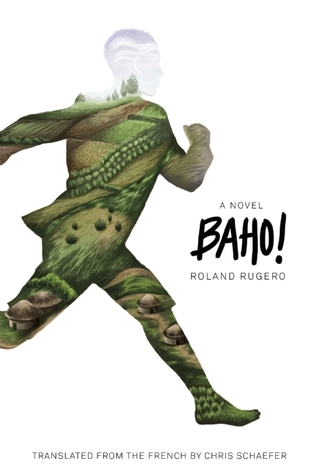
BAHO!, a Burundian novel of rage and redemption **TRIGGER WARNING** sexual violence


BAHO!
ROLAND RUGERO
translated by Christopher Schaefer
Phoneme Media (non-affiliate Amazon link)
$16.00 trade paper, available now

Rating: 3.5* of five

The Publisher Says: When Nyamugari, an adolescent mute, attempts to ask a young woman in rural Burundi for directions to an appropriate place to relieve himself, his gestures are mistaken as premeditation for rape. To the young woman's community, his fleeing confirms his guilt, setting off a chain reaction of pursuit, mob justice, and Nyamugari's attempts at explanation. Young Burundian novelist Roland Rugero's second novel Baho!, the first Burundian novel to ever be translated into English, explores the concepts of miscommunication and justice against the backdrop of war-torn Burundi's beautiful green hillsides.

My Review: A fable of modern life, not just in Africa but the world over: An atmosphere of fear and mistrust arising from more than a decade of endless war causes Nyamuragi (not Nyamugari as above) the mute to be accused of rape, then of murder as the heat of the moment causes passions to rise higher and higher. His "victim" is a teenaged girl who is accustomed (horribly) to the idea that every woman is a man's fair game. She isn't even close enough for Nyamuragi to touch until after she screams, when he grabs her to put his hands over her mouth. The whole village hears the commotion and, being on edge as a whole, assumes that there's trouble and sets out to find the screamer and help her. They see Nyamuragi manhandling their woman-child, assume the worst, and the pursuit begins. Running, of course, makes Nyamuragi look guilty, so the pursuers begin to stone him.

An elder of the village, widow of one of the wealthy men, is out tending her goats when the kerfuffle starts:
With her left eye, the one-eyed woman tries to make out the pack of pursuers.

With the other eye, her bad one, she searches her thoughts. Tears escape them both. It is hard work with sweat trickling down. One eye makes out reality, and the other seeks the explanation for its harshness. One sees, and the other deliberates. The old woman's comprehension in either case is muddled.
Her comprehension about matched mine, as the age of our protagonist Nyamuragi changes from elevn to twenty-six and hovers in an uncertain state from beginning to end. This is intentional, per the translator's note. The author is working in the oral storytelling tradition and piles on details that contradict each other as a means of overwhelming the reader, making the story more intensely alive, and who am I to argue with success?

As the mob drags Nyamuragi towards his death by hanging with a "virgin hemp rope" (this will be important later), the one-eyed old woman hears the word ejo, which leads to her reverie:
Tomorrow and yesterday: two different times, a single word to label them both. Two places in time, a single name. As a result, one becomes the other. Or maybe "tomorrow" and "yesterday" meld into one another, because they contain two chimeras: past and future.
(itals in original)
It seems that Nyamuragi has tried, in his torment, to assent to the mob's mistaken murder of him, to offer himself as a scapegoat for the rage and terror of the whole nation of Burundi, by shouting ego, an assent; since he's been electively mute for his whole life, his vocalization is misuderstood and the crowd roars ejo back at him. They wonder what he means, did he do mischief yesterday or will he if they let him live until tomorrow? In the throes of their rage and fear, they can't decide and no one can agree with anyone else.

Nyamuragi is, in the extremity of his manhandling and torture, driven by his agony to retreat into the waiting state. He's not fully in his body, he keeps blacking out, falling asleep, waking again to be dragged up and up the hill where his village mates are going to hang him from the giant fig tree. His ejo is very much where he is:
In fact, at a very young age Nyamuragi had loved to read, this way of summarizing life with signs. Letters which possessed hats, ties, crooked dashes, feet, arms pointed upwards or turned downwards, hooks above and below, commas, periods, scrawls and scribbles, with the odd one crossed out.
It is always safer, Nyamuragi has learned, to avoid speech and trust silence. Words on paper are blessedly mute. He has emulated them through the horrors of his parents' murders; he has emulated them so well that now he can't summon them despite his great need.

If Nyamuragi had possessed speech, perhaps he would have prayed for divine intervention. He needn't bother, since the divine has already intervened by sending his Uncle Jonathan the demobbed soldier to the village to see his nephew now that the wars are over:
He had served on the frontlines. He knew that tactical decisions win wars. The disorderly two-hundred-strong crowd did not overwhelm him. He knew they were weak. Because he was systematic. And especially because kuvuga menshi siko kuyamara—to speak much does not imply exhausting one's words.
It is Uncle Jonathan who saves the day, and saves Nyamuragi.

This fable of rage, fear, revenge, guilt and expiation, is as relevant to US society as to Burundian. While the scapegoat isn't guilty of the crime of rape, he looks like he is, so he is targeted and the sins of the villagers are heaped on the outsider-from-birth. Mob action might be more direct in Burundi than here, but only just. That the village unites around its young woman and protects her, promises her vengeance, is a refreshing difference from US society's casual, uninterested assumption that the rapist is more "innocent" than the victim. (Typing that sentence nauseated me.)

I recommend to you that, if you read this book (and I think you should), be prepared to do some involuntary soul-searching. How would you have handled the mob rule's decision to murder someone you knew for something you don't know whether or not he did? How would you have tried to comfort the terrified girl whose screams set off the whole nightmare? Would any course of action you can imagine have made any difference?

Only the best books can do this to a reader. This is art of a high order.

Saturday, February 20, 2016

THE IBIS TAPESTRY by Mike Nicol, a not-very-thrilling thriller that's still a good read


THE IBIS TAPESTRY
MIKE NICOL

Vintage Books
$15.00 trade paper, available now

Rating: 3* of five

The Publisher Says: An audacious departure for the internationally acclaimed South African novelist--a thriller with all the searing immediacy of today's headlines.

Who was Christo Mercer, and why was he brutally stabbed to death in a remote Saharan town? For Robert Poley, an unhappy writer of political thrillers, the welcome distraction posed by this question has become an obsession. With the mysterious delivery of a laptop computer and a cryptic email message, he finds himself slowly entwined in the vagaries that constituted Mercer's life and death. An illegal-arms trader haunted by his nightmares, his past, and his clandestine involvement with a ruthless rebel-- and with Christopher Marlowe's Tamburlaine the Great --Mercer lived on the grand stage of history, yet remained obscured by shadows until his seemingly fated demise. Now, piece by piece, in a complex web of social, political, personal, and fictional disclosures, the intricacies of Mercer's troubled psyche begin to reveal a pattern as corrupt as South Africa's in the aftermath of apartheid--years of judicial inquiry, the Truth Commission, and continued social unrest.

With alchemical bravura, Mike Nicol turns history into fiction and fiction into history, bringing to allegorical life the haunting story of a murder emblematic of South Africa's recent past.

My Review: Well...that piece of publisher puffery isn't, in my opinon, supported by this highly literary and relatively suspenseless, badly miscategorized "thriller." There is nothing thrilling about the narrator's life. The thrilling subject of the narrator's research project is all flashback and invention, barnacled with notes, digressions, irrelevant faux-research-paper citations...it gets tedious.

But what makes this read a good one for me is the thing that I suspect would turn off the mass of American readers: Untranslated Afrikaans words, unexplained geography, facets of South Africa's rich and complex culture that will be unfamiliar. I am a little better versed in these things, as I dated a South African for a good while; but I would hope that avid readers would find it an interesting chance to learn about this amazing place.

Mike Nicol has a considerable reputation as a thriller writer. A novel of his, HORSEMAN, was hugely and internationally acclaimed. As THE IBIS TAPESTRY is the first of his works I've read, I think I'll try it before reaching a conclusion about Mr. Nicol's readerly chemistry with me. Based on this book alone, I don't think I'd be a fan. But there's a lot to be interested in here.

The arms trade is a scourge on the world. South Africa, after an arms-sale embargo was put in place by the UN in 1963, developed a gigantic and sophisticated war-machinery manufacturing sector. Industries require sales and sales require customers and customers are thick on the ground among the hate-fueled warriors infesting Africa. So it's only logical that a well-connected "Englishman" with a serious psychological problem...what we'd call in the here and now PTSD...that fixates him on the world of power players and influence peddlers in his native South Africa. The Marlowe play he obsessively reads, analyzes, revises in his own words is the epitome of England's 16th-century expansionist, imperialist self-image building. It's not too much of a leap to see this man's fascination for our narrator, a writer of thrillers in the airport-book mode. His own life and family have blown up in his face and he badly needs a complex puzzle to work out.

The complexity of the puzzle is a big part of the book's appeal for me. As our narrator moves through the steps of solving his subject's murder, he takes steps that lead him into contact with the underside of South Africa's arms trade, supplying warlords with destructive capacity and to hell with the consequences. The South African arms trade is global, but by focusing on Africa and its warring factions, Nicol manages the tough trick of illuminating the horrors and consequences of war with the minimum of gore. It is the gift of the talented storyteller to make a subtext of violence. I see the gift in Nicol's story of THE IBIS TAPESTRY. But it takes a love of puzzles to get the most from this book's complicated world.

Tuesday, March 25, 2014

BEASTS OF NO NATION, art of a high order and indictment of an entire species


BEASTS OF NO NATION
UZODINMA IWEALA

HarperCollins
$13.99 trade paper, available now

This title is one of 2021's Olive Editions and it's a whopping $10!

Rating: 4* of five

The Publisher Says: In this stunning debut novel, Agu, a young boy in an unnamed West African nation, is recruited into a unit of guerrilla fighters as civil war engulfs his country. Haunted by his father's own death at the hands of militants, Agu is vulnerable to the dangerous yet paternal nature of his new commander. While the war rages on, Agu becomes increasingly divorced from the life he had known before the conflict started a life of school friends, church services, and time with his family still intact.

In a powerful, strikingly original voice that vividly captures Agu's youth and confusion, Uzodinma Iweala has produced a harrowing, inventive, and deeply affecting novel.

WINNER OF Sue Kaufman Prize for First Fiction–Barnes & Noble Discover Great New Writers Award for Fiction–Los Angeles Times Book Award

My Review: Men writing in the voice of a child are at a disadvantage because childhood is traditionally thought of as a woman's preserve. Iweala writes about a boy who is only nominally a child, though; one of the thousands of boys who are compelled to serve in the civil wars and rebellions of Africa's troubled states.

He does this with force, beauty, and horror.

This moment is the narrator's first moment of joy:
Nobody is seeing me as I am getting up and walking through the tree right to the road. I am feeling breezes to my back that is pushing me to walk far far away from here and I am moving quickly quickly onto the road where I am just walking walking walking to where the sun is setting. I am looking at it and wanting to catch it in my hand to be squeezing until the color are dripping out from it forever. That way everywhere it is always dark and nobody is ever having to see any of the terrible thing that is happening in this world.
I can't stress enough that this first novel is To Be Read! The passage above, in the context of the story, brought me to tears. It's a lovely piece of writing no matter what...but coming where it does in this wrenchingly infuriating story, it's got a wallop that must be experienced.

Beasts of No Nation was published in 2005. It's written by a Nigerian man of (then) some 23 years of age. Jamaica Kincaid acted as his advisor. Someone explain to me, that all being said, why the Adichie (of similar background and age) cult got rollin' and there was not an Iweala cult...?

This author deserves your attention. Please read his work. It's not flawless, but it's head and shoulders above most things that clutter our shelves!

Strongly recommended.