Showing posts with label anti-imperialsm. Show all posts

Thursday, August 7, 2025

THREADS OF EMPIRE: A History of the World in Twelve Carpets, fascinating light on history


THREADS OF EMPIRE: A History of the World in Twelve Carpets
DOROTHY ARMSTRONG

St. Martin's Press (non-affiliate Bookshop.org link)
$33.00 hardcover, $16.99 ebook, available now

A LIBRARY JOURNAL BEST BOOK OF 2025

Rating: 4* of five

The Publisher Says: Carpet specialist Dorothy Armstrong tells the stories surrounding twelve of the world’s most fascinating carpets.

Dorothy Armstrong’s Threads of Empire is a spellbinding look at the history of the world through the stories of twelve carpets. Beautiful, sensuous, and enigmatic, great carpets follow power. Emperors, shahs, sultans and samurai crave them as symbols of earthly domination. Shamans and priests desire them to evoke the spiritual realm. The world’s 1% hunger after them as displays of extreme status. And yet these seductive objects are made by poor and illiterate weavers, using the most basic materials and crafts; hedgerow plants for dyes, fibers from domestic animals, and the millennia-old skills of interweaving warps, wefts and knots.

In Threads of Empire, Armstrong tells the histories of some of the world’s most fascinating carpets, exploring how these textiles came into being then were transformed as they moved across geography and time in the slipstream of the great. She shows why the world’s powerful were drawn to them, but also asks what was happening in the weavers’ lives, and how they were affected by events in the world outside their tent, village or workshop. In its wide-ranging examination of these dazzling objects, from the 5th century BCE contents of the tombs of Scythian chieftains, to the carpets under the boots of Stalin, Roosevelt and Churchill at the 1945 Yalta Peace Conference, Threads of Empire uncovers a new, hitherto hidden past right beneath our feet.

I RECEIVED A DRC FROM THE PUBLISHER VIA NETGALLEY. THANK YOU.

My Review
: My only complaint is this DRC had none of the images the finished book has; I waited to write this review until I saw a finished book, so I could judge for myself how well the author's careful descriptions of these art objects evoked my perception of them.

Very well indeed, as it happens.

Best aspect of the read was the charming-to-me blend of personal anecdote and intensive research. They're blended in a way that evokes the sensation of having a personal chat with that world-renowned subject matter expert who's our personal bestie that we all have. (Or wish we did anyway.)

Flying on her magic carpet of knowledge across huge spans of time and space, Author Armstrong shows us how human creativity and skill are "rewarded" by exploitation and subjugation all too often. The existence of imperialism is not new. It is always, however, driven by greed. The subject of greed shifts over time but it never leaves us.

As the chapters are devoted to specific carpets from different cultures and eras, coveted by imperialists, a chronological organization would not work very well. It's sort of loosely there if you squint just right. I recommend reading the book as presented, however, not trying to do something more "orderly" with its vast erudition on a subject I'd bet not many of us know much about. It might help to space the chapters out, more like stories in a collection. I did that more or less by accident.

It should surprise no one that the majority of the anonymous creators of these artworks were women, and all were from disadvantaged, relatively powerless groups. A recurring theme, this, in Western colonial attitudes.

Feminists, art-history buffs, anti-imperialist readers, and the serious trivia hounds are encouraged to pick one up. Casual lovers of pretty books, well, if carpets are you thing yes; we're not looking at a coffee-table book, though.

Well worth springing for the paper book. I think the ebook must have some of the illustrative images but how they come across will be heavily device dependent. Stick to the half-millennium-old printing technology.

Wednesday, June 18, 2025

SEVENTHBLADE, Indigenous author tells powerful anti-colonialist fantasy


SEVENTHBLADE
TONIA LAIRD

ECW Press (non-affiliate Bookshop.org link)
$19.95 trade paper, available now

The author shared her maps on her website! : https://tonialaird.com/2025/06/18/the-maps-of-seventhblade/ These are included in the final book.

Rating: 4.75* of five

The Publisher Says: For readers of N.K. Jemisin and Rebecca Roanhorse, a fast-paced, anti-colonial action-adventure fantasy that explores twisted power dynamics and the effects of settler colonialism

After the murder of T’Rayles’s adopted son, the infamous warrior and daughter of the Indigenous Ibinnas returns to the colonized city of Seventhblade, ready to tear the streets asunder in search of her son’s killer. T’Rayles must lean into the dangerous power of her inherited sword and ally herself with questionable forces, including the Broken Fangs, an alliance her mother founded, now fallen into greed and corruption, and the immortal Elraiche, a powerful and manipulative deity exiled from a faraway land. Navigating the power shifts in a colonized city on the edge and contending with a deadly new power emerging from within, T’Rayles must risk everything to find the answers, and the justice, she so desperately desires.

Loaded with complex characters and intricately staged action, and set in a fragmented, fascinating world of dangerous magics and cryptic gods, Seventhblade is a masterful new fantasy adventure from a bright, emerging Indigenous voice.

I RECEIVED A DRC FROM THE PUBLISHER VIA NETGALLEY. THANK YOU.

My Review
: Losing your child is torturous. Losing him but not having a way to achieve closure on your grief? Never think that will not turn any parent into a giant ball of rage.

T’Rayles uses that rage, and a unique bond with her sword's beinghood, to hatch revenge plots involving a god, a world of hurt, and the end of her people's colonial subjection. She's going to do it all with the directed participation of Elraiche, cost her and the world what it may.

Proof to me, all that, that the most fun-to-read stories are those that center people with super-clear motives, goals that do not admit of defeat, and the rizz to command the help they need. T'Rayles is morally grey in her quest for revenge, in her need to make the world over so what happened to her never happens again. Her deal with Elraiche does not get made innocently, she expects damage, as much of it collateral as is not...but the goal is paramount: Revenge.

At times Author Laird, a most eloquent writer with a solidly developed command of evocative imagery, uses it more freely than the demands of plot can support. Her other work in the comics and games industry makes that unsurprising. There are some combat scenes halfway through that do not move at the pace one hopes to find in those times (surprisingly). The first third has more of Elraiche than seems needed, you might wonder why we're getting his PoV as much as I did but trust Author Laird. The way he is included pays off at the end.

The ending is...impactful. I found myself putting my device down and just thinking through what I'd read. Looking for my emotional teeth after Author Laird pounded 'em outta me. Whatever issues I'd had, particularly around Elraiche and around Dellan (the dead son's father, who had very little time with the reader), failed to diminish my impressed appreciation for the complicated but inevitable resolution I was offered.

I'd offer a full five stars had I had a map [UPDATE: The author shared her maps: https://tonialaird.com/2025/06/18/the-maps-of-seventhblade/ These are included in the final book.] of the world created for this story, especially since it's ripe for a sequel; and had it felt...fresher...less like a beautiful cart but one in a line of the many traveling revenge road.

The Indigenous inflections of the anti-colonial message put that half-star back. This story might not break new ground but it builds a beautiful new home on the Earth it occupies.

Monday, April 7, 2025

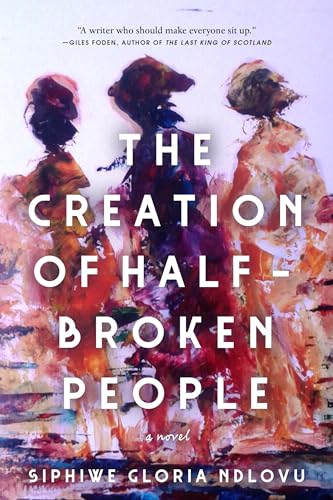
THE CREATION OF HALF-BROKEN PEOPLE, new African Gothic novel from Windham-Campbell Prize winner SIPHIWE GLORIA NDLOVU


THE CREATION OF HALF-BROKEN PEOPLE
SIPHIWE GLORIA NDLOVU

House of Anansi Press (non-affiliate Amazon link)
$16.99 ebook, available tomorrow

LONGLISTED for the 2026 Dublin Literary Award...the shortlist of six will be announced on 7 April 2026, the winner(s) in May's festival.

Rating: 4.25* of five

The Publisher Says: Stupendous African Gothic, by the winner of Yale University’s Windham–Campbell Prize

A modern Gothic story set on the African continent, The Creation of Half-Broken People tells the tale of a nameless woman plagued by visions. She works for the Good Foundation and its museum, a place filled with artifacts from the family’s exploits in Africa, the Good family members all being descendants of Captain John Good, of King Solomon’s Mines fame.

Our heroine is happy with her association with the Good family, until one day she comes across a group of people protesting outside the museum. Instigating the protesters is an ancient woman, who our heroine knows is not real. The nameless woman knows too that the secrets of her past have returned. After this encounter, she finds herself living first in an attic and then in a haunted castle, her life anything but normal as her own intangible inheritance unfolds through the women who inhabit her visions.

With a knowing nod to classics of the Gothic genre, Siphiwe Gloria Ndlovu weaves the threads of a complex colonial history into the present as she examines the collusion of colonialism, patriarchy, and capitalism in creating and normalizing a certain kind of womanhood.

I RECEIVED A DRC FROM THE PUBLISHER VIA EDELWEISS+. THANK YOU.

My Review
: What I loved about this read started from the first line: "There was a time before this. I did not always live in the attic."

I defy anyone who reads my reviews not to want to know what happens next.

One thing that happens is our narrator (nameless here, and like the second Mrs. de Winter, seamlessly unobservedly nameless throughout) meets and becomes entangled with the ominously named "John B. Good IX"—did your arm hairs just prickle with anticipatory dread or is it just me?—at the scary age of twenty-one. Legally responsible, emotionally clueless. Truly a moment in one's life when The Worst can happen without any way to avoid it.

*gleeful hand-rubbing*

So the story unfolds as a heartfelt homage to the centuries of gothic novels and tales that have come before it. The events, the relationships, the emotional devastations that come to each living one of us, all occur in a logical order as demanded by the arc of acceptance in emotional maturation. The struggles, the demands we place on Life for it to conform to our momentary desires, the sudden storms of others' emotional demands blowing our lifeships ever farther from safe harbors...all present and accounted for. As an experienced purveyor of stories...she's a filmmaker, several earlier novels to her credit, graduate of Stanford's film studies program...Author Ndlovu doesn't slow her roll for anything unnecessary, or lard in the always tempting useless "grace note" that reduces the reader's momentum.

Lush descriptive language will always get praise from me, I enjoy it for its own sake, and this is replete with it. It's a plus that I, old white US man, am taken into a sensory world not already familiar to me. I'm also fully on board with the not-subtle anti-colonial and anti-patriarchal messaging of the entire enterprise. What, then, explains my chary star rating? Surely my delighted warbling comes in a full-five review!

Nothing's perfect. I kept feeling the ghost of gothics past brushing by me, trope by trope. It's not a *bad* thing in and of itself, the story told here is remixed from the very best of its forerunners. It is, however, still a remix. I do not have a way to tell a gothic story that breaks new ground, not being a supergenius or time-traveling visitor from the storytelling future. Yet as I kept reading (and I never stopped from giddy-up to whoa) I got these flashes of "that's from this story!" I do not know if they were precisely the ones Author Ndlovu had as inspirations. I do feel, when that sensation comes very frequently in a story, a small sense of disconnection from my full-on engagement with the narrative flow.

I doubt this would present anyone but the most seasoned readers any kind of problem. It did not reduce my enjoyment of this story's merits by much at all. I recommend it to all y'all who want to read a deeply emotionally resonant story.

Thursday, December 5, 2024

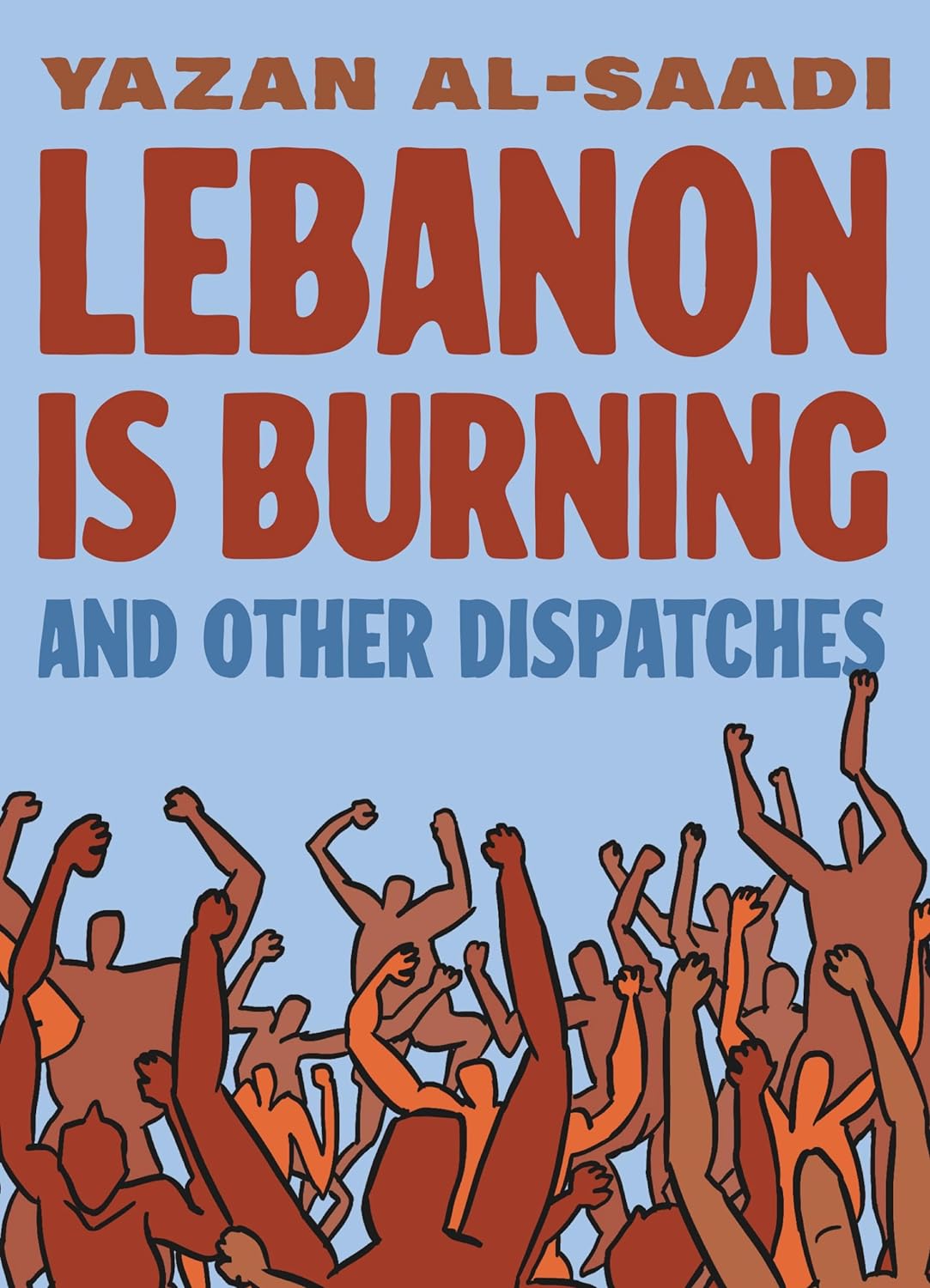
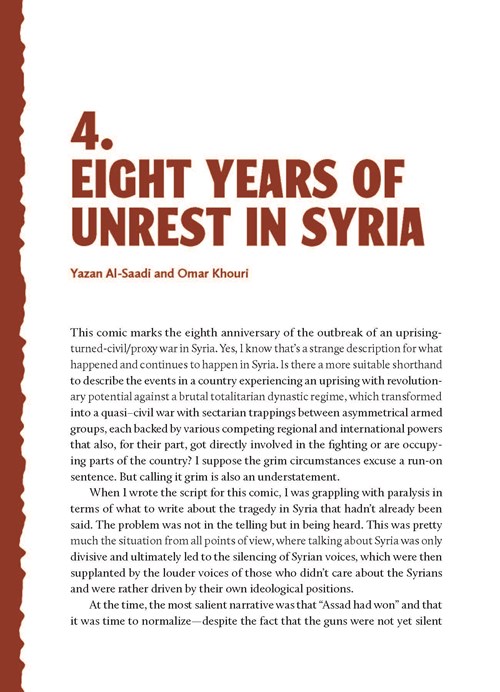
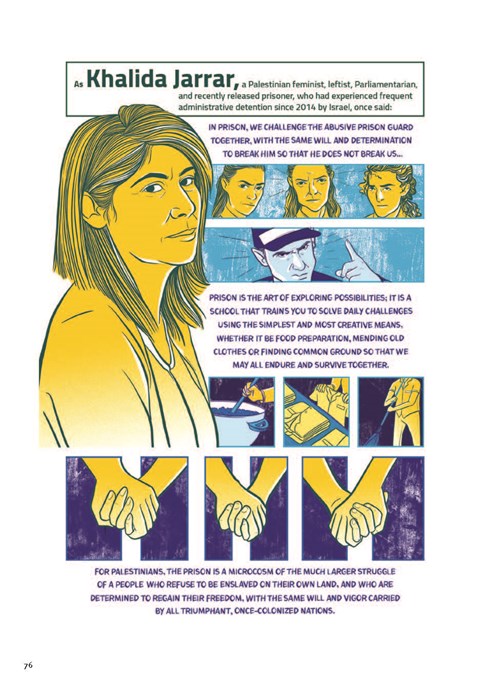
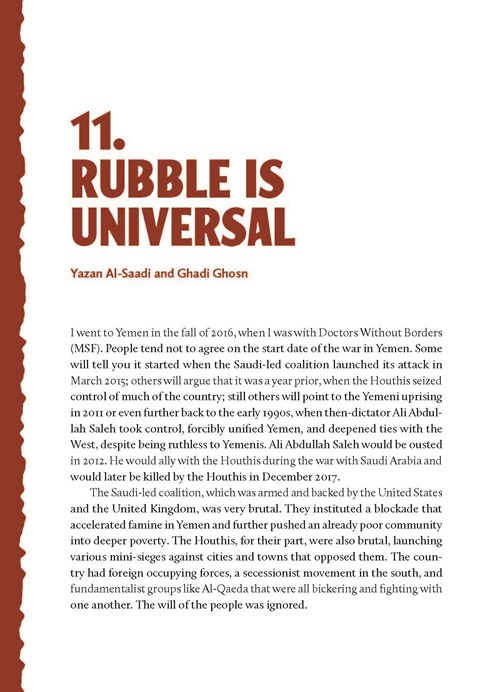
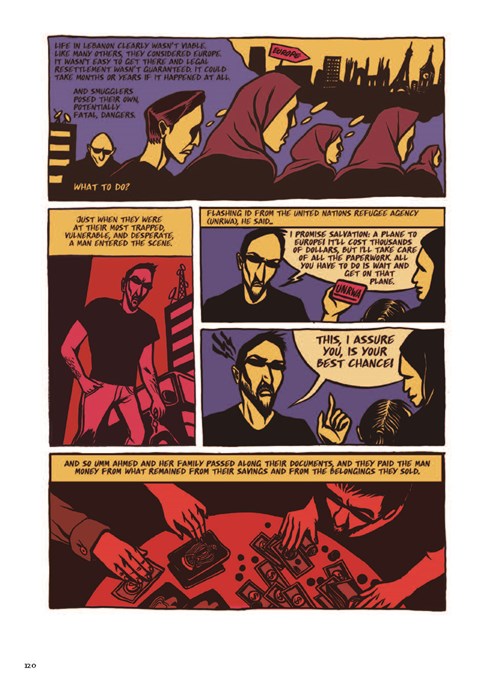
LEBANON IS BURNING AND OTHER DISPATCHES, answering "why is this happening?"


LEBANON IS BURNING AND OTHER DISPATCHES
VARIOUS CREATORS
(listed below)
Graphic Mundi (non-affiliate Amazon link)
$21.95 trade paper, available now

Rating: 5* of five

The Publisher Says: Voices from the Middle East on the fight for self-determination.

Essential reading for understanding current events through authoritative Middle East voices from the front lines.
Much of the present discourse about the pro-democracy Arab uprisings of 2011 paints a bleak picture of their defeat. But the truth is more complicated, and moments of struggle and inspiration still recur despite the overwhelming odds against the movements’ success.

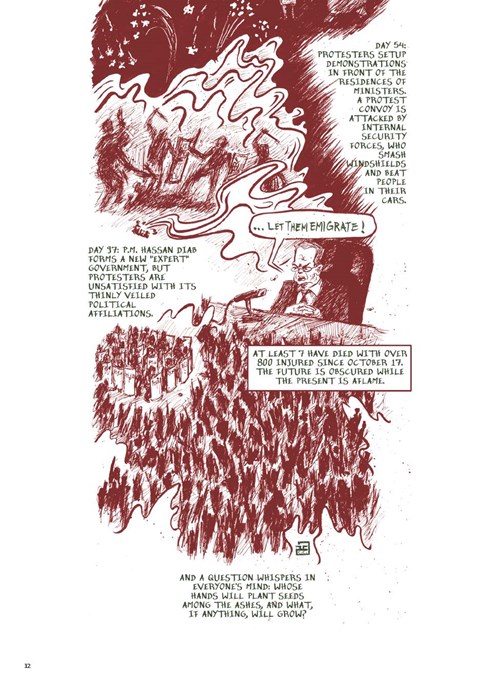
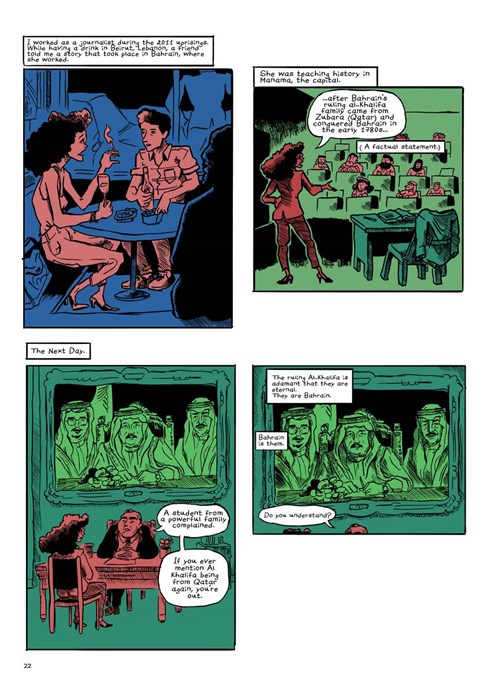
This collection of short comics documents the political and social unrest in the Middle East during the 2010s in such places as Lebanon, Egypt, Yemen, Palestine, Sudan, and Bahrain. A collaboration between writer and journalist Yazan Al-Saadi and a lineup of stellar cartoonists from the region—including:
  • Tracy Chahwan,
  • Ganzeer,
  • Ghadi Ghosn,
  • Omar Khouri,
  • Sirène Moukheiber,
  • Hicham Rahma,
  • Enas Satir
  • This graphic reportage serves as a witness to an era of counterrevolutionary resurgence in which entrenched powers clashed with the people’s struggle for self-determination.

    I RECEIVED A DRC FROM THE PUBLISHER VIA EDELWEISS+. THANK YOU.

    My Review
    : Precisely what I myownself needed to "get" the reasons the world is on fire again in what we in the US call the Middle East.

    It's all in the gestalt between art, ideas, and words. The entire experience illuminated my frustrated sense of "what the hell happened to set this horror into motion again?"

    Cheery little bagatelle it is not. A great way to offer your older teen or twentysomething giftee a handle on why the world is ablaze with rage...again...it very much is.

    Saturday, April 9, 2022

    THE MIRACULOUS TRUE HISTORY OF NOMI ALI, intense and urgent and deeply necessary reading


    THE MIRACULOUS TRUE HISTORY OF NOMI ALI
    UZMA ASLAM KHAN

    Deep Vellum (non-affiliate Bookshop.org link)
    $9.95 ebook, available now

    Rating: 4* of five

    The Publisher Says: Nomi and Zee are Local Borns—their father a convict condemned by the British to the Andaman Islands, their mother shipped off with him. The islands are an inhospitable place, despite their surreal beauty. In this unreliable world, the children have their friend Aye, the pet hen Priya and the distracted love of their parents to shore them up from one day to the next. Meanwhile, within the walls of the prison, Prisoner 218 D wages a war on her jailers with only her body and her memory.

    When war descends upon this overlooked outpost of Empire, the British are forced out and the Japanese move in. Soon the first shot is fired and Zee is forced to flee, leaving Nomi and the other islanders to contend with a new malice. The islands—and the seas surrounding them—become a battlefield, resulting in tragedy for some and a brittle kind of freedom for others, who find themselves increasingly entangled in a mesh of alliances and betrayals.

    Ambitiously imagined and hauntingly alive, The Miraculous True History of Nomi Ali writes into being the interwoven stories of people caught in the vortex of history, powerless yet with powers of their own: of bravery and wonder, empathy and endurance. Uzma Aslam Khan’s extraordinary new novel is an unflinching and lyrical page-turner, an epic telling of a largely forgotten chapter in the history of the subcontinent.

    I RECEIVED A DRC FROM THE PUBLISHER VIA EDELWEISS+. THANK YOU.

    My Review
    : First, read this:
    “Have you noticed that when men want freedom, the conversation is about the nature of action, violence or non-violence? But when women want freedom, the conversation is about the nature of women, natural or unnatural?”
    –and–
    Somewhere in the great sky beyond this sky of planes was a star made entirely of words. And on the star lived as many different kinds of words as birds in all the skies, fish in all the seas, and clay patterns in all the hands of adoring women. Some words were cautious as the crabs nesting on the beach. Others, bold as the giant hornbills prattling in the trees. Then there were those that made no sound, but were equally fearless, folding their arms and waiting for her to sit on their lap. The prisoner who was no longer a prisoner was gathering all these many words to herself and would speak them, if there were but someone to listen, even a little.

    The reason to read, or not to read, this story is there in those quotes. There are adults imprisoned in this story, adults whose sufferings are inflicted on bodies as well as souls; their children are, revoltingly but oddly mercifully, imprisoned with them in a soul-warping hothouse of rage and mistrust...but with their loving (if distracted) parents. These strands are braided throughout this intense, powerful, experiential read.

    The bones of the story...a political prison on the Andaman Islands during WWII is attacked by the Japanese, slaughter is heaped on torture, and through it all a family makes a life amid the death...are unfamiliar to most of us in the US. The existence of the Andamans, those odd and liminal boundary markers between marine biomes and cultural fault lines between the Bay of Bengal and the Andaman Sea, is probably unfamiliar even to geographically savvy folk here. Unless, of course, they're familiar with that idiotic spiritual imperialist who got himself murdered by the North Sentinelese isolationists. (Got what he deserved, in my never-remotely humble opinion.) These islands are very charged with an intense and irresistible energy for storytellers. Author Khan is the one who should be trusted to tell you the saga of their restless spirits.

    I can't really imagine it's a spoiler to reveal that the British Raj wasn't too terribly popular with quite a lot of the people they ruled. If you haven't heard of the Mahatma, take a quick peek at Wikipedia and then come back. He wasn't alone; he didn't work in isolation; and he wasn't the first freedom fighter on the Indian subcontinent. The parents in this story are, like the Mahatma, resisters of British imperial rule of India. For their beliefs and the actions they inspired them to take, they're imprisoned in the Cellular Jail. This hellscape was built after the 1857 Indian Rebellion exploded the political-prisoner population the British detained.

    History lesson aside, though it's very much not an aside but a central part of the experience of this read, the story Author Khan tells us is a deeply personal one. Nomi Ali, a Muslim child, is brought up with her brother in the Cellular Jail's ambit...and, odd as it sounds, it's...just a childhood. An abnormal one to the reader. Nomi doesn't really process this...she experiences the pains of growing up as the child of adults who are distracted, whose attention doesn't center on her or her needs. The awfulness an adult reader barely needs to infer, it feels so pervasive to us, isn't her issue. She feels alone. Her life isn't, in her observation, very important or even all that interesting. So she finds companionship and she comes of age in this stew of people who have only one thing in common: the colonial oppressors want them kept away from their homes enough to isolate them thoroughly. In the ordinary course of her life, Nomi wouldn't have encountered a Burmese person, or lived in a place with an Indigenous population older than her own ancestors, or been directly in the path of the Japanese army as they swept through South Asia.

    Brutal as the British were as jailers, the Japanese arrived to add much more misery...need I remind anyone of the "comfort women" and their heinous sufferings?...to the existing awfulness. For Nomi, though, this is...life. She gets on with the task of being alive and growing up.

    It is for that reason that I kept reading this chronicle in multiple voices of the horrors of war in a colonial setting. I was not taken with the author's choice to spread her narrative over multiple points of view and multiple strands of time. It was an extra call on my attention, an extra demand to retain details, that seemed to me to be unnecessary to make the larger point. Author Khan was asking that I invest in many lives, but shallowly; had I been given a choice, I would've invested in Nomi very deeply, and her story would still have enabled the deep interrogation of the immorality of colonialism and its inevitable offshoot, war.

    I would not in any way recommend that you shy away from reading this story. I want it to be part of all of our mental furniture, to fix itself in the legendarium of World War II. The urgency and the passion of Author Khan's storytelling voice will woo resistant readers into investing in a painful read, I honestly believe, and the story told is one of such tremendous relevance and urgency in 2022. We're witnessing analogous events unfold in Xinjiang. We're watching in horror as Mariupol and Kramatorsk see vile crimes against children, therefore against the future of humanity itself, perpetrated by invaders bent on territorial occupation. We aren't entitled to remain ignorant of the ways that impacts those who suffer it.

    But it's entirely too much to doomscroll the day away, to surrender to a helpless wretchedness. So turn, as I always have and recommend that you do too, to the past perfect, the completed action that explains and illuminates the present. This novel will give you furniture to rest your unanchored anguish and rage on. Nomi, and the characters around her, will afford us in our privileged isolation from the physical realities of war, a trellis to grow the vines of empathy into maturity. I hope they will root strongly in you, and bloom flowers of yellow and blue tolerance and understanding.

    Understanding the experience of war, as THE MIRACULOUS TRUE HISTORY OF NOMI ALI affords you the opportunity to do, might lead to more compassionate actions in one's own sphere of reality. This true story, told as a novel, gives you the chance to think through the consequences of inattention and indifference.

    Sunday, January 15, 2017

    AND AFTER MANY DAYS, debut Nigerian novelist tells personal/political tale of loss

    AND AFTER MANY DAYS
    JOWHOR ILE

    Tim Duggan Books
    $11.99 eBook platforms, available now

    Rating: 4.5* of five

    The Publisher Says: During the rainy season of 1995, in the bustling town of Port Harcourt, Nigeria, one family's life is disrupted by the sudden disappearance of seventeen-year-old Paul Utu, beloved brother and son. As they grapple with the sudden loss of their darling boy, they embark on a painful and moving journey of immense power which changes their lives forever and shatters the fragile ecosystem of their once ordered family. Ajie, the youngest sibling, is burdened with the guilt of having seen Paul last and convinced that his vanished brother was betrayed long ago. But his search for the truth uncovers hidden family secrets and reawakens old, long forgotten ghosts as rumours of police brutality, oil shortages, and frenzied student protests serve as a backdrop to his pursuit.

    In a tale that moves seamlessly back and forth through time, Ajie relives a trip to the family's ancestral village where, together, he and his family listen to the myths of how their people settled there, while the villagers argue over the mysterious Company, who found oil on their land and will do anything to guarantee support. As the story builds towards its stunning conclusion, it becomes clear that only once past and present come to a crossroads will Ajie and his family finally find the answers they have been searching for.

    And After Many Days introduces Ile's spellbinding ability to tightly weave together personal and political loss until, inevitably, the two threads become nearly indistinguishable. It is a masterful story of childhood, of the delicate, complex balance between the powerful and the powerless, and a searing portrait of a community as the old order gives way to the new.

    ***TIM DUGGAN BOOKS PROVIDED ME WITH A REVIEW COPY AT MY REQUEST. THANK YOU.*** SEE AUTHOR ILE'S 2020 CAINE PRIZE-NOMINATED STORY, FISHERMAN'S STEW!

    My Review: This is a beautifully written novel. It is, if other commenters are to be believed, poorly or simply un-structured. I don't agree with this assessment. I see the author's structure as like that of life itself: Free-floating, connected and interconnected and bound tightly and tenuously, resembling nothing so much as a kaleidoscope. Structure and pattern are artifacts of observation. Hey, life is an emergent process of quantum energy. Or some such.

    By setting the novel in 1995 Nigeria, the author enables the reader to participate viscerally in the rite of passage that is civil war. It is painful when viewed whole; it is mundane when lived through. Dinner is still cooked, even if it's over an open fire; bedtime still comes for all the young children, even if it's accompanied by gunshots and missing relatives. It was a crisis point for the anti-imperialism trying to stop the economic looting and environmental destruction of international oil companies that persist in Southern Nigeria to this day.

    Children see this, like everything else, with pitiless clarity and unsparing judgment:
    Things happen in clusters. They would remember it as the year the Mile Three ultramodern market burned down in the middle of the night… It was the year of the poor. Of rumors, radio announcements, student riots and sudden disappearances. It was also the year news reached them of their home village, Ogibah, that five young men had been shot dead by the square in broad daylight.
    None of it makes sense or creates a pattern. Yet.

    Family is completely unique in the eyes of each member. It's a funny (sense ha-ha, and sense hmmm) truth that the social group that forms each member's similar and different qualities, ideas, opinions is utterly unique and unknowable to each other member:
    Before the beginning of his memory, which was to say from the beginning of this life, there had always been the three of them. Paul and Bibi were the first people he saw, the first he touched. Everything he resented and liked, everything he knew, thought and felt, his smile and the angry pounding in his veins were all from them, and now, for the first time, taking notice of this made him feel incredibly lonely. The sort of lonely feeling that Bibi would have been tempted to slap out of him. Just the kind of thing that would have made Paul look at him in his usual bemused way and say, 'My friend, what are you saying? Please be serious'. But he sensed it that night, it hung about the room, the feeling that things may not always be like this, that they would one day grow up and live across town from each other like Ma and her cousin Aunty Julie or even die like all of Bendic's siblings whom he hardly ever spoke of. Paul turned around in his bed, the distant drumming had stopped, and mumbled something in his sleep, and Ajie was sure he could hear Bibi softly breathing from the room next door.
    How does a younger sibling explain this sense of the fragile reality of family and life to an older one already interested in bigger things, smaller in importance to you just now, but much more immediate and pressing to their eyes?

    Paul is a fine young man. Paul is a good soul. Ajie, locked in mortal combat with his closer sibling Bibi, senses the gulf between himself and Paul as unbridgeable. Of course he sees it that way, childhood and adolescence are by definition this life's perspectiveless passages:
    Now, this was what Ajie wanted, this way that Paul had of becoming something after he had read about it; this way he had of claiming things for himself. He had joined himself to a we, an us. A corrupt official had been exposed in the papers for misappropriating pension funds, and Paul was expressing betrayal, even anger, about it.

    How do you make yourself do that? How do you learn how to work yourself up over something that's not directly your concern?
    Poor Ajie, having a lifetime of living in a big brother's big shadow. And one just enough older to make a big difference in your world! How can he know that one fine day he too will understand and opine upon the matters of a world that, now anyway, is so much wider than your own as to be imperceptible to you?

    But a sibling's world isn't the only one that a family has to contain. A mother's, a father's, existence is tied to the permanent creation of this temporary life. Structure exists because we summon it into being, and we do so with the materials we have, the ideas we grab from...anywhere, I suppose...and the living energy of the beings around us:
    They have waited many years for an answer, and one has finally arrived, dry and diminished, resting inside the box before them, and not one of them in the room knows how to approach the coffin. Ajie feels it's his place to take the lead; he steps forward to the casket and opens it. When Ma draws close, he holds her hand while Bibi looks in from the other side of the casket. He holds Ma's hand tight but can still feel the tremor running through it. These bones formed inside her, Ajie thinks.
    The surprise, for me at least, in the aging process...I'm older than most of the world's people will ever get to be...is how banal agony becomes. It is no less sharp or debilitating. It is simply part of the scenery, an item of furniture that serves no positive purpose but sits in exactly the place it is most likely to bark your shins or stub your toe. Of course Ma is in exquisite agony: She is looking at bones that grew inside her. Mothers...parents...are now in tears, in silent screams, in deepest possible denial. No one should know what their child's death looks like. It is asking too much of a human soul to bear this. But it happens every single minute of every single day that God sends.

    Agnosticism is logic. Atheism is visceral certainty that no higher power could demand this of her creation.

    This sentence sums up the only way many of us who have lost that deeply keep moving, breathing, functioning at whatever level we are able to summon:
    The dead will not be consoled; neither will those who live in the skin of their dead.

    Thursday, January 12, 2017

    THE LOST CITY OF Z, 2009's terrific book looks like it's 2017's terrific film


    THE LOST CITY OF Z: A Tale of Deadly Obsession in the Amazon
    David Grann

    Doubleday
    $27.50 hardcover, available now

    Rating: 4.5* of five

    The Publisher Says: A grand mystery reaching back centuries. A sensational disappearance that made headlines around the world. A quest for truth that leads to death, madness or disappearance for those who seek to solve it. The Lost City of Z is a blockbuster adventure narrative about what lies beneath the impenetrable jungle canopy of the Amazon.

    After stumbling upon a hidden trove of diaries, New Yorker writer David Grann set out to solve "the greatest exploration mystery of the 20th century": What happened to the British explorer Percy Fawcett & his quest for the Lost City of Z?

    In 1925 Fawcett ventured into the Amazon to find an ancient civilization, hoping to make one of the most important discoveries in history. For centuries Europeans believed the world's largest jungle concealed the glittering kingdom of El Dorado. Thousands had died looking for it, leaving many scientists convinced that the Amazon was truly inimical to humans. But Fawcett, whose daring expeditions inspired Conan Doyle's The Lost World, had spent years building his scientific case. Captivating the imagination of millions round the globe, Fawcett embarked with his 21-year-old son, determined to prove that this ancient civilisation--which he dubbed Z--existed. Then his expedition vanished. Fawcett's fate, & the tantalizing clues he left behind about Z, became an obsession for hundreds who followed him into the uncharted wilderness. For decades scientists & adventurers have searched for evidence of Fawcett's party & the lost City of Z. Countless have perished, been captured by tribes or gone mad. As Grann delved ever deeper into the mystery surrounding Fawcett's quest, & the greater mystery of what lies within the Amazon, he found himself, like the generations who preceded him, being irresistibly drawn into the jungle's green hell. His quest for the truth & discoveries about Fawcett's fate & Z form the heart of this complexly enthralling narrative.

    2017 Movie News: Go watch the trailer for this Amazon Studios film. I'll wait. Okay, now go read the Rotten Tomatoes aggregation. Won't take long.

    Now. A four-plus star book review from me and a host of other sources, agreement among critics from Den of Geek all the way to The Nation, and a cast of pretty, pretty actors...plus the fact that it's an Amazon Studios original appearing hot on the heels of their Golden Globe-winning Manchester by the Sea, makes this a super-promising April 2017 must-see. Amazon might very well be Satan, I can't say I agree but there's a chorus of unhappy people from contractors to suppliers to anti-globalization zealots who say it is, but Satan's offering us a lot of really great inducements to forget his agenda. Amazon's Prime streaming service alone is worth the $100 a year it costs. I love that so much of Amazon Studios' output is book-based. Calculated or not, it's a great thing to see the filmed entertainment industry gain a player that mines the immense vein of unadapted written work instead of churning out sequels and comic book heroes and the occasional bland screensaver-level movie.

    My Review: This excellent book is the exciting, unusual story of the last of the Victorian polymath explorers on his quest to prove the unthinkable: That the Amazon, that "false paradise", supported a major technologically advanced civilization before the Columbian Holocaust.

    Percy Fawcett took his oldest son and his oldest son's best friend into the depths of Amazonia in 1925, to search for a place that the consensus of scientific wisdom of the time said could not exist. From that day to this, there has been no evidence of these three mens' existence. This by itself would provide the bones of a fascinating story. Why would a father risk his son's life in so unlikely a quest? Why bring the son's best friend? What the ruddy bleeding hell was a 58-year-old man THINKING to do this at all?!?

    Percy Fawcett was supported by his wife, who was his son's mother, and the mother of the best friend, as well as the Royal Geographical Society. He was a veteran Amazonian explorer. His son was himself writ young. His son's friend, well, it's on such trips as this that a man uncovers his true self, and the best friend was...wanting.

    The story of Percy's life, as Grann tells it, is interesting; the story of the exploration of the Amazon is interesting; the story of the many, many attempts to find the three disappeared explorers is not as interesting, but is very deftly compacted into a few passages.

    The author's expedition to follow Percy Fawcett's footsteps is, blessedly, brief in the telling. Exactly long enough, in fact. What the author, a fat middle-aged shlub who writes for The New Yorker, discovers...should be front-page news.

    Read this book. No evasive "maybes" no "I'll get around to it"s just go GET THIS BOOK AND READ IT. No one with an ounce of human curiosity can possibly regret reading The Lost City of Z.