Thursday, March 13, 2025

2024 NEBULA FINALISTS: COUNTESS, lesbian Count of Monte Cristo revenge story set in space!


COUNTESS
SUZAN PALUMBO

ECW Press (non-affiliate Amazon link)
$4.99 ebook, available now. Well worth it!

FINALIST for the 2024 Nebula Award! Winner announced at the 2025 Nebula Conference, 5 through 8 June 2025.

Rating: 3.5* of five

The Publisher Says: A queer, Caribbean, anti-colonial sci-fi novella, inspired by the Count of Monte Cristo, in which a betrayed captain seeks revenge on the interplanetary empire that subjugated her people for generations.

Virika Sameroo lives in colonized space under the Æerbot Empire, much like her ancestors before her in the British West Indies. After years of working hard to rise through the ranks of the empire’s merchant marine, she’s finally become first lieutenant on an interstellar cargo vessel.

When her captain dies under suspicious circumstances, Virika is arrested for murder and charged with treason despite her lifelong loyalty to the empire. Her conviction and subsequent imprisonment set her on a path to justice, determined to take down the evil empire that wronged her, all while the fate of her people hangs in the balance.

I RECEIVED A DRC FROM THE PUBLISHER VIA NETGALLEY. THANK YOU.

My Review
: I wouldn't call it a "romp" but it was a lot of fun to read a lesbian space opera/revenge fantasy with a very prominent anti-colonial slant that does not slacken its pace for a moment. The long, lingering sadomasochistic bit about The Count of Monte Cristo's imprisonment is entirely absent; these things are causally linked. Very enjoyable, Caribbean-inflected setting was probably my very favorite difference from most all the other SFF I've read.

Revolutionary fun! Strongly recommended for young firebrand lesbians! Old white people like me might feel a bit attacked...we are...but, well, is that really a surprise?

Originally published in my September 2024 round-up..

THE MAN NOBODY KILLED: Life, Death, and Art in Michael Stewart's New York, forty-two years and it's still fresh as tonight's news


THE MAN NOBODY KILLED: Life, Death, and Art in Michael Stewart's New York
ELON GREEN

Celadon Books (non-affiliate Amazon link)
$14.99 ebook, available now

Rating: 4.5* of five

The Publisher Says: The first comprehensive book about Michael Stewart, the young Black artist and model who died after an altercation with the police in 1983, from Elon Green, the Edgar Award-winning author of Last Call.

At twenty-five years old, Michael Stewart was a young Black aspiring artist, deejay, and model, looking to make a name for himself in the vibrant downtown art scene of the early 1980’s New York City. On September 15, 1983, he was brutally beaten by New York City Transit Authority police for allegedly tagging a 14th Street subway station wall.

Witnesses reported officers beating him with billy clubs and choking him with a nightstick. Stewart arrived at Bellevue Hospital hog-tied with no heartbeat and died after thirteen days in a coma. This was, at that point, the most widely noticed act of police brutality in the city's history. The Man Nobody Killed recounts the cultural impact of Michael Stewart’s life and death.

The Stewart case quickly catalyzed movements across multiple communities. It became a rallying cry, taken up by artists and singers including Madonna, Keith Haring, Spike Lee, and Jean-Michel Basquiat, tabloid legends such as Jimmy Breslin and Murray Kempton, and the pioneering local news reporter, Gabe Pressman. The Stewart family and the downtown arts community of 1980s New York demanded justice for Michael, leading to multiple investigations into the circumstances of his wrongful death.

Elon Green, the Edgar Award–winning author of Last Call, presents the first comprehensive narrative account of Michael Stewart's life and killing, the subsequent court proceedings, and the artistic aftermath. In the vein of The Short and Tragic Life of Robert Peace and His Name is George Floyd, Green brings us the story of a promising life cut short and a vivid snapshot of the world surrounding this loss. A tragedy set in stark contrast against the hope, activism, and creativity of the 1980’s New York City art scene, The Man Nobody Killed serves as a poignant reminder of recurring horrors in American history and explores how, and for whom, the justice system fails.

I RECEIVED A DRC FROM THE PUBLISHER VIA NETGALLEY. THANK YOU.

My Review
: Elon Green's followup to Last Call, again centering the life and murder of someone very much not like his cishet Jewish self, gets the tones of his subject's life and murder spot-on.

It's a gift not all have. I think his evident curiosity about people, the whys that drive them to the wheres that force us to hear about them, shines through in this exploration of all parties to this crime. Stewart, a young man of borning fame for a talent still developing, does not have much of a documentary footprint outside his still-early recognition from the downtown Manhattan art scene. He is of necesity flattened in affect thereby; he had little time and no special reason to leave behind a trove of thinking, essays, manifestoes; he is known only because his death interrupted his rise to Basquiat-levels of celebrity. It doesn't change the outrage vented by the white establishment liberals on the MTA-cop murderers, it doesn't alter by a jot the klieg-lights-and-klaxons that the murder of young Black men by white men set off, only to subside as the relentless slopping of the media trough with more acceptable outrages that refocus attention away from systemic racism accomplishes its task.

Michael Stewart died in vain. His death did not stop cops from killing other young Black men on the regular, nor dissuade the occasional white amateur from trying it...getting tried...getting off.

Elon Green doesn't shy away from the ugliness inherent in this story. He uses the limited materials about the victim to flesh him out as much as possible. It's just that the system itself, the perps it's enabled, the horrors of living in a world that views your existence as a provocation deserving of death, has a much larger footprint. It's thus that the system and its publicity becomes the focus of the book (hence my docked half-star). That might leave the reader wondering why Stewart got such prominent billing on the cover. Because we are accustomed to centering the white person(s) over the victims of color, we're accustomed to the perps (eg Derek Chauvin) getting media attention. It was his fate to be the killer cop who ignited, finally, #BlackLivesMatter and #SayHisName...could as easily have happened with one of Ahmaud Arbery's murderers, or Michael Stewart's. Follow those links, white people. Look at the titles of each article. Think about what you are seeing. Really THINK.

I assume you're sentient and I don't need to spell it out for you.

It's an infuriating read. I wanted the results not to be the results. It is history so of course I was disappointed. But, and all y'all who "just can't, too hard," with these books on difficult topics, think about how supremely spoiled and privileged a stance that is. Michael Stewart and his mother couldn't just ignore it. They had to live it, she lived it until she died.

Does it still feel too hard? Or can you use that rage, outrage, sympathy for a mother who outlived her child, to power some practical resistance? The US is sliding into a new era of sanctioned violence against those They hate. Does that not seem important enough to do actual work to oppose?

Wednesday, March 12, 2025

PROPAGANDA GIRLS: The Secret War of the Women in the OSS brings the underknown role women play in Intelligence to light


PROPAGANDA GIRLS: The Secret War of the Women in the OSS
LISA ROGAK

St. Martin's Press (non-affiliate Amazon link)
$14.99 ebook edition, available now

Rating: 4.25* of five

The Publisher Says: The incredible untold story of four women who helped win WWII by generating a wave of black propaganda.

Betty MacDonald was a 28-year-old reporter from Hawaii. Zuzka Lauwers grew up in a tiny Czechoslovakian village and knew five languages by the time she was 21. Jane Smith-Hutton was the wife of a naval attaché living in Tokyo. Marlene Dietrich, the German-American actress and singer, was of course one of the biggest stars of the 20th century. These four women, each fascinating in her own right, together contributed to one of the most covert and successful military campaigns in WWII.

As members of the OSS, their task was to create a secret brand of propaganda produced with the sole aim to break the morale of Axis soldiers. Working in the European theater, across enemy lines in occupied China, and in Washington, D.C., Betty, Zuzka, Jane, and Marlene forged letters and “official” military orders, wrote and produced entire newspapers, scripted radio broadcasts and songs, and even developed rumors for undercover spies and double agents to spread to the enemy. And outside of a small group of spies, no one knew they existed. Until now.

In Propaganda Girls, bestselling author Lisa Rogak brings to vivid life the incredible true story of four unsung heroes, whose spellbinding achievements would change the course of history.

I RECEIVED A DRC FROM THE PUBLISHER VIA NETGALLEY. THANK YOU.

My Review
: I think most of us know who Marlene Dietrich was; I thought Betty MacDonald was the author of The Egg & I, but that's not the case; none of the others caused even a flicker of recognition.

This, my fellow Murrikans, is not an accident. As covert-operations experts, it was never likely that the four women here...with one obvious exception...would become household names. Even Dietrich's wartime service, though, is very much downplayed and undercredited in biographies of her remarkable life. The others...well...I know we'll all clutch our collective pearls when we learn that they were passed over for promotions given to men they trained. Shocking, no?

Lisa Rogak has set out to tell the details, insofar as available, of the women whose lives were offered in service during a huge global war. The aftermath was predictably enough not glorious. The women are, I'm afraid, not part of the broader public record; that makes keeping track of them in this narrative of their covert activities a matter of noting names. No archive of their careers exists (pace Marlene), so we have little personality development. From divergent beginnings, they converge on a bored, rebellious attitude they are all entitled to. It just does little to keep their characters separate in one's mind. It doesn't help my sense of them as people that, based on the title, I was expecting more or less a Bletchley Park kind of ethos for them to operate together, as more or less a unit, to develop. Nothing could be further from the truth...they barely ever crossed paths and were not in the same kind of circumstances within the propaganda operation.

It's not so much a flaw in my mind as an inevitable consequence of the manner in which these women were treated as fungible, expendable units where their male colleagues were noticed and promoted...often on the backs of the women's efforts. The effect of propaganda on one's enemies is, obviously, a subject of great national importance in today's online world. I shudder to think what a popular entertainer of Dietrich's stature could do with social media at her command. Any one of these rumormongers, these evidence-fakers, these insiders-turned-enemies could do astonishing amounts of damage given free rein on the internet.

Heaven knows their descendants are. We ignore the ways and means of the past at our peril. We're still seeing these techniques used, as refined, against us now.

Why I couldn't reach a fifth star was really down to niggles, like the sort-of-faceless grievance ball the women turned into as I read along. It wasn't avoidable, I understand that we're dealing with people who didn't leave huge divots in the lawn of History here. It was, however, a distraction, so that's why this well-written, researched, and obviously very personally meaningful to the author story doesn't get its optimal five full stars.

Monday, March 10, 2025

LESSER RUINS, shortlisted for the 2025 Republic of Consciousness Prize—United States & Canada—for Small Presses


LESSER RUINS
MARK HABER

Coffee House Press (non-affiliate Amazon link)
$9.99 ebook editions, available now

Rating: 3 very grouchy stars of five

Shortlisted for the 2025 Republic of Consciousness Prize—United States & Canada—for Small Presses Winner announced 12 March 2025

The Publisher Says: From the author of Reinhardt's Garden and Saint Sebastian's Abyss comes a breathless new novel of delirious obsession.

Bereft after the death of his ailing wife, a retired professor has resumed his life's work—a book that will stand as a towering cathedral to Michel de Montaigne, reframing the inventor of the essay for the modern age. The challenge is the litany of intrusions that bar his way—from memories of his past to the nattering of smartphones to his son's relentless desire to make an electronic dance album.

As he sifts through the contents of his desk, his thoughts pulsing and receding in a haze of caffeine, ghosts and grievances spill out across the page. From the community college where he toiled in vain to an artists' colony in the Berkshires, from the endless pleasures of coffee to the finer points of Holocaust art, the professor's memories churn with sculptors, poets, painters, and inventors, all obsessed with escaping both mediocrity and themselves.

Laced with humor as acrid as it is absurd, Lesser Ruins is a spiraling meditation on ambition, grief, and humanity's ecstatic, agonizing search for meaning through art.

I RECEIVED A DRC FROM THE PUBLISHER VIA EDELWEISS+. THANK YOU.

My Review
: I connected with this sad-sack whiner in his grief for his dead wife, and his beautifully evoked love for coffee.

Apart from that, I loathed him and wanted him to shut his moan-hole.

I live (involuntarily and with poor grace) in proximity to a grievance-led, dementia-addled, old drunk. This is like reading the smart version of him venting his legit sadness and tiresome regrets in the key of "they done me wrong" on endless repeat.

I think this book is better than I perceive it to be, due to my own life's issues and difficulties. It has to be, to have elicited from me the degree of irritated disgust with its protagonist that it did. Had it been simply a poor job of writing or storytelling, I'd simply have Pearl-Ruled it and moved on with my day.

Read the free sample that Kindle offers you, you'll know right away if this resonates with you, and if the resonance is on a frequency you enjoy reverberating to. I very much did not like this read. The reasons I've given suggest to me that others without my life circumstances will feel otherwise.

My rating being an expression of my personal pleasure in the read explains its paltriness. You will most likely, or so I hope, disagree with me.

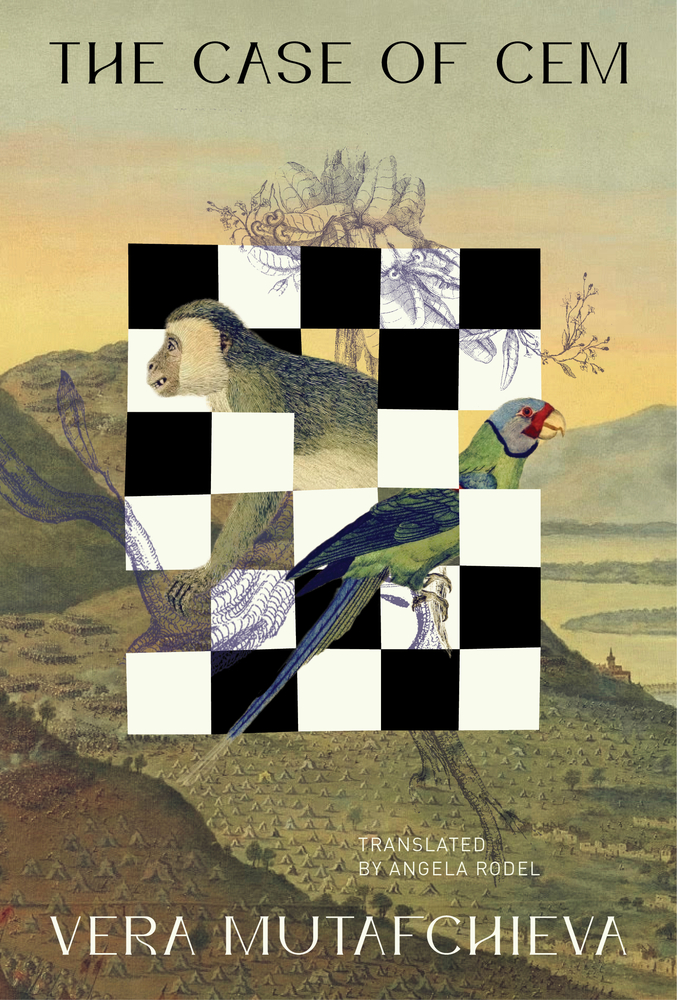
THE CASE OF CEM, shortlisted for the 2025 Republic of Consciousness Prize—United States & Canada—for Small Presses


THE CASE OF CEM
VERA MUTAFCHIEVA
(tr. Angela Rodel)
Sandorf Passage (non-affiliate Amazon link)
$9.99 ebook editions, available now

Rating: 5* of five

Shortlisted for the 2025 Republic of Consciousness Prize—United States & Canada—for Small Presses

The Publisher Says: Vera Mutafchieva’s The Case of Cem, presented as a series of depositions by historical figures before a court, tells a straightforward tale: Upon the death of Ottoman Sultan Mehmed the Conqueror in 1481, his eldest son Bayezid takes the throne. However, discontented factions within the Ottoman army urge Mehmed’s second son Cem, a well-educated and experienced warrior, to oppose his brother’s ascension. Bayezid refuses, setting off a ruthless power struggle and forcing Cem into long years of exile, a pawn for European powers as they try to slow the Ottoman Empire’s expansion.

This enticing novel of court intrigue maintains lasting resonance for being a personal exploration of emigration and loss as told through the historical era during which the politics of the East and West were sketched out with utter clarity. These early lines of demarcation, as voiced through Christian and Muslim emissaries, power hungry rulers, unflinching warriors, and poets, have indelibly influenced the word as we know it today.

I RECEIVED A DRC FROM THE PUBLISHER VIA EDELWEISS+. THANK YOU.

My Review
: This Bulgarian historical novel blew my mind: How the HELL has this long, deep, fascinating art object existed for most of my life and I am only now, at *mumblety*-five, hearing about it?! Life is not fair, we all know that, but this gem of writing and thinking remaining unread by Anglophones for most of six decades is a borderline crime against humanity.

Cold Wars, political spats among the too-powerful and too-rich, are to blame for this kind of asininity. Cem's life and times were as transitional as the paradigm shift we're undergoing today. Cem's imagined trial, inspired by a casual remark made by a too-powerful man of that time, is Author Mutafchieva's inspired rendering of History's treatment of the eponymous Cem.

In presenting this case, the first decision Author Mutafchieva had to make was to whom the case was being presented. That decision then dictates where the case is set, how the witnesses are going to present their evidence, all the trappings of a court case. The witnesses are all dead; they address us directly from the afterlife, with their direct knowledge of events and, somehow, of the events that have transpired since their own deaths.

The dreaded second-person narration, the eternal chest-pokey "you," is thus inevitably the main choice the author makes. It was that choice which left this novel unread on my Kindle for months. I will say that this narrative choice was...not my favorite. I was not as irked as I would ordinarily be, however, because the framing device explains the necessity of its use...we're reading depositions from witnesses in a court case.

In the course of reading about the case of Cem, a picture of him emerges. The idea that this dreamy, loving, insufficiently ruthless man could rule an empire is laughable...and the empire would've been all the better for his reign. He would've been a humane leader, and we all know what happens to those honorable souls (ask the late US President Jimmy Carter). Therein, of course, the need for a "case" to be made...a decision rendered in the court of History, which is naturally enough made up of thee and me as History's heirs, successors, and assigns.

What we do not get is anything from Cem himself. He is acted upon, never an actor, as his life from birth as his father's favorite child, born of a christian wife (sin of sins!), is always defined by the loves, hates, and needs of others. His proposal made to his elder half-brother to divide the immensity of the Ottoman Empire was, I think, actually very sound; of course that idea was never going to fly in a world of winner-takes-all and us-v-them thinking. It wouldn't fly today in, say Ukraine for the sake of argument, for those same reasons.

What made this tale of Realpolitik in translation from the Bulgarian a five-star read is the way each deposition/chapter adds another layer of words and thereby ideas over the space that is Cem's. The heart of the book, the sine qua non of the story, the gravity so powerful it lenses the entire Ottoman Empire, and Europe its enemy, from each and every direction the light emitted by all the actors and each reporter of the action thus illuminated occupies. The layers thus accreted form a strange shape. There is no motion from under these layers; Cem is absent and thus volitionless.

How that reality can create an animated image is, frankly, alchemical. It's like the celluloid of the stories told about Cem pass through an undetectable development bath that causes the shadows of him we're seeing to move as different reporters shine light through that celluloid. We're seeing a movie, a polyphonic miniseries, an opera with a huge cast whose parts were written by different composers...all in the same key and tempo.

It should feel shaggy and have holes everywhere; it should be a sieve not a bowl. It is instead a cauldron with rippling waters from many sources and the light from many points combines to cast an unquiet image, now sharp now wavy, interference become more than a pattern.

I applaud the author, long dead (1929-2009), for doing the immense work of researching then reimagining that data. The result is, based on Rodel's work translating it, a masterwork of polyphony. Often when reading historical fiction, there comes a moment of storytelling that is inauthentic. It's an anachronism, or it's not part of the historical record. It *feels* wrong, or at least not right.

I never found that moment reading this story. It earns all five stars from me.

Thursday, March 6, 2025

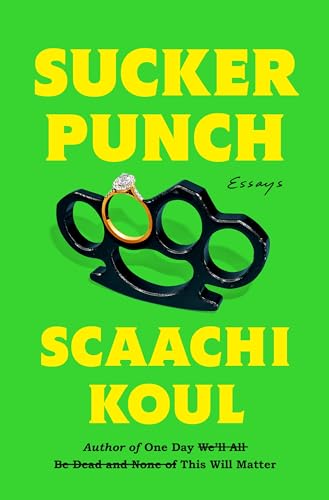
SUCKER PUNCH: Essays, apt title...on several levels


SUCKER PUNCH: Essays
SCAACHI KOUL

St. Martin's Press (non-affiliate Amazon link)
$14.99 ebook edition, available now

Rating: 3* of five

The Publisher Says: The long-awaited follow-up from one of the most original and hilarious voices writing today.

Scaachi Koul’s first book was a collection of raw, perceptive, and hilarious essays reckoning with the issues of race, body image, love, friendship, and growing up the daughter of immigrants. When the time came to start writing her next book, Scaachi assumed she’d be updating her story with essays about her elaborate four-day wedding, settling down to domestic bliss, and continuing her never-ending arguments with her parents. Instead, the Covid pandemic hit, the world went into lockdown, Scaachi’s marriage fell apart, she lost her job, and her mother was diagnosed with cancer.

Sucker Punch is about what happens when the life you thought you’d be living radically changes course, everything you thought you knew about the world and yourself has tilted on its axis, and you have to start forging a new path forward. Scaachi employs her signature humor and fierce intelligence to interrogate her previous belief that fighting is the most effective tool for progress. She examines the fights she’s had—with her parents, her ex-husband, her friends, online strangers, and herself—all in an attempt to understand when a fight is worth having, and when it's better to walk away.

I RECEIVED A DRC FROM THE PUBLISHER VIA NETGALLEY. THANK YOU.

My Review
: Author Koul's funny. Not innocently amusing, funny. She's written before this (One Day We’ll All Be Dead and None of This Will Matter) about her immigrant-to-Canada parents and her ongoing battles with their traditional expectations versus her Canadian ones. She had, then, a bit about her elaborate wedding...now it's about her pandemic experience, her mother's health crisis, the collapse of her marriage after that astonishing wedding...and something that's never been dealt with in her life, let alone her prose, before: she was sexually assaulted.

I do not know, or know of, a single solitary woman who does not have a story about her body being at the minimum threatened with sexual violence. Reading about it is, it seems, a means of creating solidarity and permission to say out loud that it's happened to you, like the very public #MeToo movement that's been bringing crimes to light that men are just as glad to have swept under the rug.

A proper millennial, Author Koul does her level-best to spin these facts of her life as...not funny, really, but sources or wry humor as she goes about coping with her wounds from them. I think a lot of women love to read these stories as a way to get perspective on the pain in their own lives. I'm aware of the reality and the awfulness of abuse in intimate relationships. It's not fun, and I myownself am not a fan of it as a topic for humorous coping.

Her other coping mechanism is rage. Full-throated, loudly expressed rage. That one I know from the inside; I do not think it is beneficial, nor appropriate, to valorize is as Author Koul does, while using humor to defuse its painful and destructive consequences on everyone...literally everyone...around her.

This is from my own experience: Go get counseling. Stay in counseling the rest of your life. Nothing will remove the rage. Work towards ways to minimize its footprint in your life, and the lives of those around you.

Three stars because it's trenchant and timely.

Wednesday, March 5, 2025

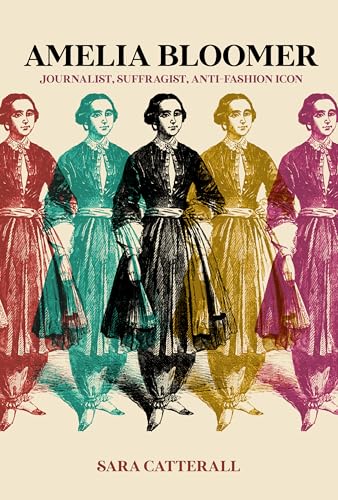
AMELIA BLOOMER: Journalist, Suffragist, Anti-Fashion Icon, a woman of moral certainty and impeccable rectitude who rebelled hard


AMELIA BLOOMER: Journalist, Suffragist, Anti-Fashion Icon
SARA CATTERALL

Belt Publishing (non-affiliate Bookshop.org link)
$11.99 ebook edition, available now

Rating: 5* of five

The Publisher Says: A fascinating look at an underappreciated woman in American history whose newspaper fostered a national conversation on women's issues.

Those who recognize the name Amelia Bloomer usually do so because of bloomers, the clothing item named after her. While she was a rational dress advocate for a time—calling on women to abandon rigid corsets and heavy petticoats and opt for long trousers, shorter skirts, and sensible boots—it was "but an incident" in the larger story of her life and impact.

Bloomer edited and published The Lily, the first newspaper for and by women. Much like Bloomer herself, it started as a temperance rag before broadening to include some of the most important issues to women in that day, including the right to vote, and included contributions from thinkers like Elizabeth Cady Stanton. The groundbreaking paper brought the conversation from Seneca Falls right to the doorsteps of women across the expanding nation.

Guided by a rigid sense of morality and a Puritan work ethic, Bloomer remained open-minded to new ideas. She refused to be swayed by social norms and wrote cutting responses to those who tried to intimidate or shame her and her friends, a group that included Stanton and Susan B. Anthony. This deeply researched biography by Sara Catterall follows the many chapters of her life: her humble upbringing in upstate New York, her role in the temperance movement (and its true legacy as a wellspring of the women's rights movement), her years at The Lily, her groundbreaking position as deputy postmaster in Seneca Falls, her troubled health, and her eventual move to Council Bluffs, Iowa, where she continued to move the needle on women's suffrage in the more flexible new governments of the West.

I RECEIVED A DRC FROM THE PUBLISHER VIA EDELWEISS+. THANK YOU.

My Review
: It had never creased my cranium that Amelia Bloomer was a temperance crusader before I read this book. Given that my mother the abuser never drank, and I had one boyfriend in my life who ever raised a hand to me and that never happened while he was drunk, temperance just did not ever cause me to think "good idea". All my associations with Mrs. Bloomer were around her ideas regarding the idiotic way women were caged inside their clothing during this era. Corsets really are the bound feet of Western culture.

I was utterly unprepared to meet this wildly different Bloomer. She was a woman of her time, in many ways moreso than the more famous ladies like her friends Stanton and Anthony...both of whom she knew from living in Seneca Falls, New York, and each of whom influenced her increasingly radical thinking about women's suffrage...as she was married with children and required to earn her living alongside her husband as best she was able while still raising children. Dexter and she were co-workers, as he hired her to work alongside him as a postmaster after his stint as a Whig-supporting newspaper editor landed him the job. A government salary for a woman no less!

Her position as a temperance crusader led her to make the connection that the only way to stop the unregulated flow of alcohol was to exert political pressure to regulate it. That was impossible, on a practical level, absent votes for women. (She didn't live to see Prohibition and its horrifying unintended consequences.) So her rational dress and votes for women all owe their influence on US culture to her christian temperance-movement work. It was spread wider than Seneca Falls by her opening The Lily, a newspaper for and by women that she, despite raising children, suffering chronic illness, and a complete lack of training except by Dexter's example from his newspaperman days. I am *gobsmacked* by her rigidly moral outlook leading her so far in opposition to the stupid cultural norms of "appropriate" behavior for women in a time where they were so very much more entrenched and enforced than they are now.

At this moment in US, and more broadly Western, political history, the example of a woman who looks at the world as she finds it, judges it harshly for its failings, and—at considerable personal cost to herself and her family—sets about opposing that world continuing down its present path, is invaluable. I'd also like to point out her starchy morality was inspired by an upbringing conventionally religious yet her response to it was radically, vocally, and consistently to apply its moral precepts in full and without exceptions.

If more christians were like Amelia Bloomer, the world would be a better place.

I did indeed just say that. Her acerbic wit, another surprise this book held for me, was deployed against obtuse and obnoxious followers of orthodoxy. Yet Mrs. Bloomer's touch with connecting to people who genuinely did not understand the stakes she saw so clearly in the direction society was heading was exemplary. She met those people on their own ground, without preaching or hectoring. I can only envy that skill; I myownself climb onto my ever-present high horse because I'm Right, that ever-losing strategy. Mrs. Bloomer's tone was always respectful...until she sensed ill-will or disingenuousness.

I knew exactly nothing of the substance of her life until Belt Publishing brought out this book. (I also now know that Dexter Bloomer wrote a biography of her in 1896, so I'll Gutenberg that up here directly.) Author Catterall and her publisher are to be praised, and I hope supported with purchases, for telling this unjustly neglected monadnock of probity and moral clarity's story to a needy new generation of readers. All five stars for bringing modern attention to this person from our past with so much to teach us for our future. It's involving prose, built on solidly shown foundations of information.