Pages
- Home
- Mystery Series
- Bizarro, Fantasy & SF
- QUILTBAG...all genres
- Kindle Originals...all genres
- Politics & Social Issues
- Thrillers & True Crime
- Young Adult Books
- Poetry, Classics, Essays, Non-Fiction
- Science, Dinosaurs & Environmental Issues
- Literary Fiction & Short Story Collections
- Sookie Stackhouse/Southern Vampire Books & True Blood
- Books About Books, Authors & Biblioholism
Showing posts with label Biology. Show all posts
Monday, June 15, 2026
THE BEASTS OF THE EAST: The Fall and Rise of America's Eastern Wilderness, positive stories from the frontlines of ecological recovery
THE BEASTS OF THE EAST: The Fall and Rise of America's Eastern Wilderness
ANDREW MOORE
Mariner Books (non-affiliate Bookshop.org link)
$15.99 ebook, available now
Rating: 4.25* of five
The Publisher Says: A celebration of the extraordinary lost natural wonder of the eastern U.S.—once the center of American wildness before its despoliation—and a lively tour through recent efforts to return elk, bison, wolves, and other creatures to their verdant native landscapes.
Before skyscrapers and smokestacks rose across the eastern U.S., elk, bison, wolves, and cougars roamed. Typically imagined as icons of the West, these large mammals are in fact native to what was once a kind of Eden—towering forests in the Northeast, rolling prairies in the Midwest, and cypress swamps in the Deep South. But, in mere decades, industrialization and unregulated hunting brought these emblems of the East to the precipice of extinction; by the 1950s, squirrels were one of the few wild mammals an easterner was likely to encounter.
Now, even as the climate and biodiversity crises loom, eastern wildlife are staging an unlikely comeback. Herds of bison graze on Illinois prairies, red wolves lurk in North Carolina’s coastal marshes, and abandoned coal mines in Kentucky are now home to thousands of elk. Such rewilding promises to restore balance to eastern ecosystems and return one of the most biodiverse regions in the world to its former luster—but not without controversy.
In Beasts in the East, we follow environmental writer and James Beard Award finalist Andrew Moore as he meets conservationists, hunters, biologists, and nature lovers as they confront herculean How can we enable wildlife migration in the midst of suburban sprawl? Are these success stories viable in the long-term? When humans and wildlife come in close contact, how do we define wilderness?
I RECEIVED A DRC FROM THE PUBLISHER VIA NETGALLEY. THANK YOU.
My Review: As Fathers' Day looms, the eternal conundrum of what to get Dad or father-figure that is nit some wearable or technological frippery he'll forget he owns is pressing. If your Dad's like me, he reads or watches news and frets about you, your kids, or the world going directly to hell in his lifetime.
He/we ain't all the way wrong.
BUT! There is hope to be found. It's true we've screwed up the planet pretty hard and done too little to fix it. Some people have done more than most to ameliorate some of the worst, stupidest damage our (well my anyway) generation, the Boomers, have done. Their successes are underdiscussed generally, and likely do not reach far enough into awareness to combat the gloom that's so paralyzing.
Author Moore, whose delightful book Pawpaw: In Search of America’s Forgotten Fruit was nominated for a James Beard Foundation Award in 2016, writes capably and informatively about the successes and the failures of the US scientific and govermental bodies charged with mitigating disasters their predecessors either caused or failed to prevent. It's a chonky boi, weighing in at almost 450 pages, but that's how much room is needed to really do justice to the good and the bad news.
I don't know about the men in your gifting circle but I don't trust the happy-clappy "this is fine" dawgs who tell us good things and chirp relentlessly cheery stuff from their high perches. I guess they see different landscapes from up there, whereas I see and smell sewage while they're making noise meant to distract me. I trust Author Moore's presentation of the significant environmental gains all over the highly urbanized Eastern US *because* the failures aren't ignored or hurried past; they're not lingered over, either, which is the other untrustworthy pole: sticking into gloom and doom.
There are copious notes, sources that held up everywhere I stress-tested them, and a tone of honest and truthful pleasure in the impressive successes won. The battles going well, eg red wolves rewilded in North Carolina, truly heartened me. I was astonished to learn there were populations of bison as far East as Pennsylvania! Imagine looking out of your sod hut in Pittsburgh and seeing a six-foot tall bison wandering the streets! Less surprising was the story of the reclaimed tall-grass prairies of Illinois that now sustain smallish herds of bison, but keep expanding.
The many people Author Moore consulted in preparing the book all come across as guardedly optimistic...I've mentioned the absence of chirpiness...which, given their various fields of knowledge and work, makes me believe we're not Doomed!...Doooomed!...just yet.
Given how little celebratory noise I hear daily and how assiduously I seek it out, I think a book like this is a good gift idea for Dad, Uncle, father-figure who also gets tired of treading sewage not water, and still can't believe or trust the sunshine enema people to be fully truthful. It's evidently expertise-laden author does an admirable tightrope walk with his tone of delivery. Including so many sources is helpful too.
It's good to offer a counter-narrative to doom and gloom that's grounded in facts and data. A very good gift for anxious science nerds of every gender.
Monday, October 13, 2025
THE GENIUS BAT: The Secret Life of the Only Flying Mammal, one of the most fascinating creatures gets its literary due
THE GENIUS BAT: The Secret Life of the Only Flying Mammal
YOSSI YOVEL
St. Martin's Press (non-affiliate Bookshop.org link)
$16.99 ebook, available now
Rating: 4.5* of five
The Publisher Says: An awe-inspiring tour of bat world by the world’s leading expert
With nearly 1500 species, bats account for more than twenty percent of mammalian species. The most successful and most diverse group of mammals, bats come in different sizes, shapes, and colors, from the tiny bumblebee bat to the giant golden-crowned flying fox. Some bats eat fruit and nectar; others eat frogs, scorpions or fish. Vampire bats feed on blood. Bats are the only mammals that can fly; their fingers have elongated through evolution to become wings with a unique super-flexible skin membrane stretched between them. Their robust immune system is one of the reasons for their extreme longevity. A tiny bat can live for forty years.
Yossi Yovel, an ecologist and a neurobiologist, is passionate about deciphering the secrets of bats, including using AI to decipher their communication. In The Genius Bat he brings to vivid life these amazing creatures as well as the obsessive and sometime eccentric people who study them–bat scientists. From muddy rainforests, to star-covered night deserts, from guest houses in Thailand, to museum drawers full of fossils in New York, this is an eye-opening and entertaining account of a mighty mammal.
I RECEIVED A DRC FROM THE PUBLISHER VIA NETGALLEY. THANK YOU.
My Review: My homeplace of Austin, Texas, has a huge population of Mexican free-tailed bats that live in the Congress Avenue Bridge; that's the way I've thought of bats as a result. Cultural icons, things to put up special habitats for, little mosquito-munching guano factories...there are caves in and around my old part of Central Texas that house colonies of the skeeter-eaters and welcome to 'em, y'all.
One of the main strands in this read was about the intense social nature of the bat as a genus. I am fascinated by their lives, so similar to ours as humans packed in together, so full of care and altruism to balance out the conflict and crowding. A neurobiologist is very much able to bring the reality of bat sociality to its most advantageous light. Author Yossi's clear fascination with and sympathy for the bat makes me feel some hope for these persecuted, threatened members of our world.
Habitat loss is a main threat to bats worldwide. These are beings with simple enough needs that humans, with our tremendous cognitive abilities, ought to be able to come up with better solutions than "watch and hope" to the issues of their protection. The book's structure, starting chapters with Author Yossi's personable, warm voice telling his own tales of events and incidents, then moving as seamlessly as I could hope for to the researches and results of others, kept me in the flow of this read.
While it is non-fiction with an advocate for the subject's point-of-view, it does not read as a hectoring or pleading or accusatory polemic. It felt to me as though a charming guest came to my living room to enjoy himself, and to express that pleasure by sharing his own experiences. It is a welcome feeling, a relaxed and...to my bat-friendly self...relaxing way to learn some really surprising new-to-me information.
I took a half-star off for some of the author's possibly-meant-as-humor slaps at people not like him.
Friday, November 29, 2024
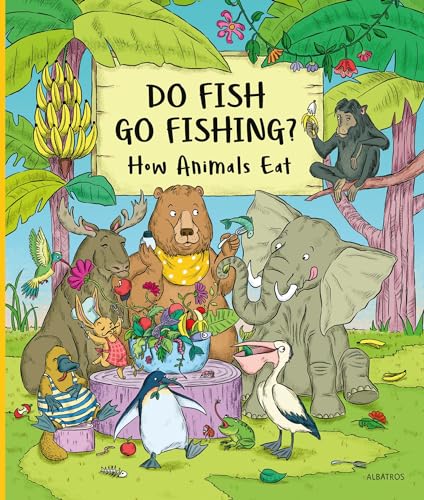
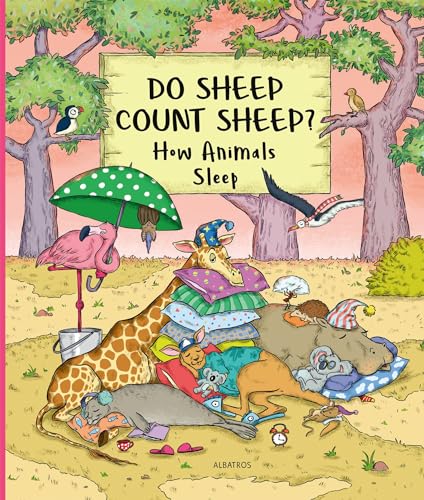
My First Books of Nature: DO SHEEP COUNT SHEEP?: How Animals Sleep & DO FISH GO FISHING?: How Animals Eat, lap-reads for curious kidlets
DO FISH GO FISHING?: How Animals Eat
PETRA BARTIKOVÁ (My First Books of Nature series; illus. Katarina Macurova)
Albatros Media
$15.95 hardcover, available now
Rating: 4* of five
The Publisher Says: Explore the fascinating world of animal eating habits and other fun facts in this illustrated non-fiction book, featuring diverse creatures and whimsical illustrations.
This non-fiction gem introduces eleven fascinating animals, from the peculiar platypus to the voracious elephant. Readers will discover the unique habitats of these animals and explore the whimsical ways they consume their meals. Dive into the underwater realm of the platypus, witness the colossal appetite of the elephant, and marvel at the varied dining techniques of creatures like fleas, chimpanzees, and hummingbirds.
Through vibrant visuals and engaging storytelling, this book offers an immersive and educational exploration of the captivating world of animal eaters. It also ensures a delightful reading experience that sparks curiosity, making it an ideal addition to any young reader's collection.
I RECEIVED A DRC FROM THE PUBLISHER VIA EDELWEISS+. THANK YOU.
My Review: Aimed at the young lap-reader, this 28-page delight has busy, detailed illustrations that should keep your audience busy finding new things to focus on, and give you a chance to engage them in learning the well-selected, carefully calibrated information about the feeding habits of the charismatic critters Author Bartíková has chosen to introduce kidlets to the world of science.
Your kid/grand/nibling might just get the spark of science love from this sort of fun and informative presentation, and it's a great hour's down-for-a-nap laptime read.
++++++++++++++++++++++++++++++++++++++++++++++++++++++++++++++++
DO SHEEP COUNT SHEEP?: How Animals Sleep
PETRA BARTIKOVÁ (My First Books of Nature series; illus. Katarina Macurova)
Albatros Media
$15.95 hardcover, available now
Rating: 4* of five
The Publisher Says: Explore the fascinating world of animal sleeping habits and other fun facts in this illustrated non-fiction book, featuring diverse creatures and whimsical illustrations.
Discover the captivating world of animal sleep in Do Sheep Count Sheep?: How Animals Sleep, the next installment in the My First Books of Nature series, tailored for children aged 3-6. Illustrated by award-winning artist Katarina Macurova, this non-fiction gem introduces eleven diverse animals, from the industrious ant to the serene koala, each showcasing unique sleeping habits and habitats. Through vibrant illustrations, young readers explore how animals rest in burrows, treetops, underwater, and even in-flight, offering an enchanting journey into the animal kingdom's slumber realms. Delve into the peculiar sleeping patterns of the giraffe, the nocturnal bat, and the laid-back albatross, discovering fascinating details about positions and durations that set animal sleep apart from our human routines.
This book stands as a delightful addition to the My First Books of Nature series, offering an educational and entertaining exploration of the intriguing world of animal slumber. With vibrant showcases of diverse sleeping habitats and positions, this book engages young minds, making learning about sleep variations both fun and informative. It ensures an immersive experience that sparks curiosity and fosters an early appreciation for the wonders of nature. A must-have for parents, caregivers, and educators seeking to introduce young readers to the fascinating realm of animal sleep, blending the magic of storytelling with educational value.
I RECEIVED A DRC FROM THE PUBLISHER VIA EDELWEISS+. THANK YOU.
My Review: *I* learned stuff from this adorable little book! It had never once, in almost seventy years of living among them, occurred to me to wonder if, still less how, ants slept! I might use this little overview as a naptime not bedtime read...too many questions and ideas to get the mind working on for that longer downtime transition to work smoothly.

Inexpensive enough for both together to make a terrific holiday gift to parents, enough fun to withstand multiple readings when the small mind latches on to the facts and starts to want more.
Subscribe to:
Posts (Atom)