Pages
- Home
- Mystery Series
- Bizarro, Fantasy & SF
- QUILTBAG...all genres
- Kindle Originals...all genres
- Politics & Social Issues
- Thrillers & True Crime
- Young Adult Books
- Poetry, Classics, Essays, Non-Fiction
- Science, Dinosaurs & Environmental Issues
- Literary Fiction & Short Story Collections
- Sookie Stackhouse/Southern Vampire Books & True Blood
- Books About Books, Authors & Biblioholism
Showing posts with label Iceland setting. Show all posts
Monday, February 2, 2026
ONE TRUE WORD, exhortation, plea, demand, or...?
ONE TRUE WORD
SNÆBJORN ARNGRÍMSSON (tr. Larissa Kyzer)
Pushkin Vertigo (non-affiliate Bookshop.org link)
$13.99 ebook, available now
Rating: 4* of five
The Publisher Says: A #1 bestselling hypnotic psychological thriller from Iceland, in which a woman abandons her husband on an uninhabited island.
“So gripping I simply couldn't put it down. . . Atmospheric and original with an ending I did not see coming” — Eva Björg Ægisdóttir, author of The Creak on the Stairs
Why did she do it?
After a day of simmering tension on a trip to an uninhabited island, Júlia finally reaches breaking point. In a fit of fury she makes a reckless decision—leaving her husband Gíó marooned in the middle of a freezing fjord in the depths of the Icelandic winter. As the cold dark of night swiftly approaches, she leaves without looking back.
When she regrets her decision and returns, he is nowhere to be found. There is no trace of him, and no sign of where he may have gone. The police launch a manhunt, but soon their suspicion falls on his wife. In an attempt to shield herself from their speculation, Júlia weaves an elaborate net of lies, trying to convince the police—and herself—of her innocence. But as her story starts to crumble, dark secrets start coming to light.
As time runs out, Júlia races to discover what really happened. But is Gíó alive or dead? In hiding or hunting her down? And can Júlia get to the truth before it destroys her?
One True Word is a #1 bestseller in Iceland that has been acclaimed by authors such as Katrín Jakobsdóttir, the former Icelandic Prime Minister.
I RECEIVED A DRC FROM THE PUBLISHER VIA EDELWEISS+. THANK YOU.
My Review: Júlía has a psychotic break and abandons her justifiably irritable "husband" on a little rocky islet in the North Atlantic Ocean. At night. In winter.
Despite the psychotic break, and the probable underlying paranoid personality disorder, she regrets her action and returns...the next day, after realizing she can't explain his disappearance away well enough to avoid legal problems, and fearing manslaughter charges...but he is not there.
This is bad. Epically bad. Contacting the police and spinning them a fantastical pack of lies, as she has done to evade blame her whole life (we meet the sister who hates her guts, and rightly so) she lives in fear that 1) the police will find his body, and b) he's alive and out there waiting to get revenge for what she did to him. And no blame on him if he is.
Her lies are ever more baroque and untenable. The legal system does what it is set up to do, poke into every corner and demand all the information, all the data, all the facts...but would Júlía even know a fact? Is there some...reason...for this psychotic break that she just can not face? Is she retrofitting details suggested, innocently enough, by the questions she has to answer?
In extremely short chapters and unadorned prose, this Icelandic thriller unwinds the worst moment of a wounded soul's life. It's tightly focused on Júlía, we never hear anyone else's thoughts or feelings except as they're expressed to, recalled by, her. It's not a nice place to be, Júlía's head...her perceptions are disturbingly off-kilter from the things she's reporting that she heard. Paranoid personality disorder? Abuse survivor? Both?
It's a book of questions, ambiguities, uncertain footings. If that and a very disjointed flow of story are not enjoyable to you, this ain't your read. I was drawn in by the sheer brio of a writer who focuses a noir thriller in the tightest focus on a woman who's undergoing a breakdown around her "husband"'s possible death, positive disappearance, at her own hands...unless she's dissociating, dissembling, desperately gnawing off her metaphorical arm to escape...what?
I detested Júlía, and thought her life was enough of a fantasyland that I was never fully sure Gíó, the vanished man she's not legally married to, was real. Could I even trust her to tell me the truth about that? Is it a lie or is her paranoia destabilizing my readerly radar that much?
I can't give five stars to the read despite the engagement and investment it elicited from me. Its ending was not on the same level of inventiveness as the rest of the story. It felt to me as though I was being dumped the minute after having brain-melting sex. Reality does this to me all the time; fiction should not!
I've also shaved off the partial stars because the short, choppy chapters that (I think) are intended to be in the places Júlía experiences breaks in her reality feel distancing, are in fact impediments to my connection to an already unlikable narrator. So I land on four of five stars but with the caveat that it's a better story, if not read, than this rating suggests.
Monday, September 15, 2025
RAGNAR JÓNASSON'S PAGE: The Criminologist Helgi Reykdal three-book series
THE MYSTERIOUS CASE OF THE MISSING CRIME WRITER
RAGNAR JÓNASSON (tr. Victoria Cribb)
Minotaur Books (non-affiliate Bookshop.org link)
$14.99 ebook, available now
Rating: 4* of five
The Publisher Says: One winter evening bestselling crime author Elín S. Jónsdóttir goes missing.
There are no clues to her disappearance and it is up to young detective, Helgi, to crack the case before it's leaked to the press.
As he interviews the people closest to her—a publisher, an accountant, a retired judge—he realises that Elín’s life wasn’t what it seemed. In fact, her past is even stranger than her stories.
As the case of the missing crime writer becomes more mysterious by the hour, Helgi must uncover the secrets of a very unexpected life . . .
I RECEIVED A DRC FROM THE PUBLISHER VIA NETGALLEY. THANK YOU.
My Review: Three timelines again: 1965 (investigated by Hulda, whom we see but all is not what it seems), 2005, and book-present, 2012. Dirty deeds done in each. It is now a Ragnar trope. While each one was, in fact, required to resolve the crime Helgi's investigating, the book-present ends on a cliffhanger...but not the one you're expecting. Still, the phobic about such things should know that before committing to the read.
Elín S. Jónsdóttir seemed to me to be Over It All before she disappeared...her 2005 interview (with Kristin, fellow series-readers) was, shall we say, adversarial and quite insinuating. I was left with an impression that this would go somewhere more central than it did...still played its part in a different way. It is not presented anywhere in its entirety, but is broken into chunks...I saw why, but it took time.
I think this might be the thing I enjoy most about Ragnar's storyverse. Everything does always connect up, only sometimes not where you thought it would. Helgi is a listener first and foremost. He comes across to more action-loving procedural readers as a bit passive. He's a thinking machine. (Anybody remember Futrelle's character, or am I the sole survivor?) Only better-looking....
It's a series, and it slots into other series written by Ragnar; the storyverse must needs be left a bit baggy at the knees in individual cases to work the way they must as a unit. One consistent factor that appeals to me is Helgi's explicit love and reverence for Dame Agatha Christie. It is obvious to me that Ragnar wants the Icelandic love of reading and its astonishing book culture to be on display in this series. Fine by me! You go, reader-boy! "That's what books are for: they help you travel to places you wouldn't otherwise be able to visit, journey through worlds that don't exist." I'd have that tattooed on me if I could think of a place to have it where I wouldn't have to explain who "Helgi" was every five minutes.
Lastly, let me just say that I hate Bergthora even more now. And Helgi needs to get that mess sorted by professional means. He's a cop faGawdsake!
++++++++++++++++++++++++++++++++++++++++++++++++++++++++++++++++
DEATH AT THE SANATORIUM
RAGNAR JÓNASSON (tr. Victoria Cribb)
Minotaur Books (non-affiliate Bookshop.org link)
$11.99 ebook, available now
Rating: 4* of five
The Publisher Says: 1983
At a former sanatorium in the north of Iceland, now a hospital ward, an old nurse, Yrsa, is found murdered. Detective Hulda Hermannsdottir and her boss, Sverrir, are sent to investigate her death. There, they discover five suspects: the chief physician, two junior nurses, a young doctor, and the caretaker, who is arrested following false testimony from one of the nurses, but subsequently released.
Less than a week after the murder, the chief physician, is also found dead, having apparently fallen from a balcony. Sverrir, rules his death as suicide and assumes that he was guilty of the murder as well. The case is closed.
2012
Almost thirty years later, Helgi Reykdal, a young police officer, has been studying criminology in the UK, but decides to return to Iceland when he is offered a job at the Reykjavik police department—the job which detective Hulda Hermannsdottir is about to retire from.
He is also a collector of golden age detective stories, and is writing his thesis on the 1983 murders in the north. As Helgi delves deeper into the past, and starts his new job, he decides to try to meet with the original suspects. But soon he finds silence and suspicion at every turn, as he tries to finally solve the mystery from years before.
I RECEIVED A DRC FROM THE PUBLISHER VIA NETGALLEY. THANK YOU.
My Review: At last we really *meet* Helgi. He does appear in Whiteout, though not very prominently. I say this with all the love in my heart...I like Helgi more than Ari Thór as a lead character. He's still got the bookishness, the clear love of puzzle-solving; he is a bit more of a distinctive character to me because he's explicitly an Agathan. It comes through in this resolution to an unresolved murder ("cold case" just feels on the nose for Icelandic crimes somehow) previously worked by Hulda Hermannsdottir, whose retirement he is enjoying by being brought home to Iceland from the UK to replace her.
One of humanity's great achievements, largely undersung about, is the reduction of TB from pandemic to chronic disease. As John Green reports in his Everything is Tuberculosis, an excellent book and a must-read for those in need of heartening, it's been a partial victory but still a very significant one. This murder took place in a TB asylum in 1983 as its use case was disappearing. In the novel's present day, 2012, the asylum is empty of patients and used as a research facility. As Helgi assumes his duties, he uses retired Hulda's involvement in the unsolved murder as the topic of his dissertation; so now he is in the same country as the scene of the crime, he determines to find out what really happened in 1983. This does mean we spend more time with Hulda. That's not a bad thing for Helgi or we-the-reader. Old wounds are not healed, it would seem, and another murder occurs that needs solving as Helgi's poking around picks up steam.
Vintage Ragnar-style, the setting is spooky and cold and full of bad energy or haunted by ghosts or something like that...it's never really explicit just what it is, which leaves room for we-the-reader to decide what works best. The limited pool of suspects for the original killing is still alive, so no problems of needing a medium to conduct interviews. It might've been safer that way. Helgi goes about studying the crime, the building a case for the new crime, with the same calm, assured demeanor. His doubts, like his very murky personal life...I hate his partner Bergthora a LOT!...are present in the story but not very foregrounded. I appreciate Ragnar offering us a sleuth-centered procedural that does not feel the need to make it indistinguishable from a domestic novel.
It was, if anything, a bit gothic in its TB ward in snowy conditions, an unknown killer stalking the place, whose identity I genuinely never expected to know...I thought this would remain an unsolved case...but when revealed became inevitable and so very sad. There is a brief excursion from 1983 back to 1950, that while necessary is definitely a pacing-killer. Ragnar's books aren't tearaway action plots. In this dual-timeline story, the pace is of necessity slower as there is much to relearn about the old killing. Helgi is a character who listens more than he talks. That won't work well for all readers but does for me.
Why I'm missing a star from the review is simple. There's a kind of coda on the ending that...annoyed me. You'll see, but maybe won't agree with me that it was an unnecessary add-on to a really absorbing, involving read.
++++++++++++++++++++++++++++++++++++++++++++++++++++++++++++++++
WHITEOUT
RAGNAR JÓNASSON (tr. Quentin Bates)
Orenda Books (non-affiliate Bookshop.org link)
$15.95 paperback, available now
Rating: 4* of five
The Publisher Says: When the body of a young woman is found dead beneath the cliffs of the deserted Icelandic village of Kálfshamarvík, police officer Ari Thór Arason uncovers a startling and terrifying connection to an earlier series of deaths, as the killer remains on the loose...
Two days before Christmas, a young woman is found dead beneath the cliffs of the deserted village of Kálfshamarvík.
Did she jump, or did something more sinister take place beneath the lighthouse and the abandoned old house on the remote rocky outcrop?
With winter closing in and the snow falling relentlessly, Ari Thór Arason discovers that the victim's mother and young sister also lost their lives in this same spot, twenty-five years earlier.
As the dark history and its secrets of the village are unveiled, and the death toll begins to rise, the Siglufjordur detectives must race against the clock to find the killer, before another tragedy takes place.
Dark, chilling and complex, Whiteout is a haunting, atmospheric and stunningly plotted thriller from one of Iceland's bestselling crime writers.
I RECEIVED A DRC FROM THE PUBLISHER. THANK YOU.
My Review: Ari Thór is very much the center of the action here; I tell you that because this page is dedicated to the latest series-starrer Helgi Reykdal. He appears in this book, so I'm not just being capricious.
Ari Thór is asked by Tómas, now a superintending detective from Reykjavík, formerly Ari Thór's boss, to be on the team investigating this crime. Helgi, as a UK-trained criminologist, is on it too, in a less visible capacity than Ari Thór. The basic mystery is why the young victim, raised in this now-abandoned village, is there dead in the same place her mother and sister were each found dead not all that long ago.
Family secrets, societal ills, the usual suspects...and speaking of suspects you'll know who committed the crime quite soon, if you're at all experienced in the ways of crime fiction. That said, the real reason to read the story is the wonderfully evocative writing, a setting both familiar...what genre reader hasn't read at least one Icelandic mystery in 2025?...and foreign enough to give one the frisson of difference from one's surroundings. The seasonality is very much a part of the appeal as well. It's close to Yule, and cold...Iceland, remember...and full of little sidebars about rituals (Jólabókaflóð!) and legends that both inform the action and involve the reader. This reader, anyway. I'm not sure if I like Ari Thór as much as Helgi from the later books, but they're both unrepentant bookwyrms: “The usual magnificent tree stood in the center of the Town Hall Square. The people of Siglufjordur were quietly getting ready for the holiday...with evening mass at the old church and then dinner and unwrapping of presents, followed by what in Ari Thór’s mind was one of the most important Christmas Eve traditions of all—the reading of a book well into the night.”
My homie, is Ari Thór. Yours too, I suspect, if you're reading this. I haven't seen Ari Thór since I took up with the more cinnamon-bun-y Helgi, but both are deeply convinced readers, so either is welcome. There's a condign resolution to this tragedy, and there's the satisfying sense of ma'at being served in faraway Iceland that now feels more like a home-from-home than a strange Norse myth of a country.
Starting your acquaintance with Ragnar's world right here is no bad thing. What you don't already know is gently explained to you. The ending might be a bit...pat...for some readers, including me, but be patient and pursue the series. It does make sense. Remember Ragnar is writing in a storyverse that just happens to be set in a real country, and enjoy the tidbits.
Thursday, February 27, 2025
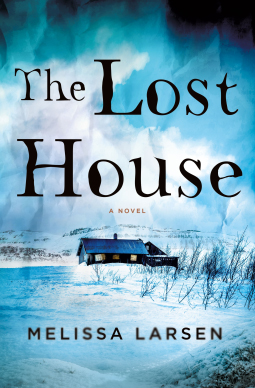
THE LOST HOUSE, entertaining cold-weather family tragedy story

THE LOST HOUSE
MELISSA LARSEN
Minotaur Books (non-affiliate Amazon link)
$14.99 ebook edition, available now
Rating: 3.5* of five
The Publisher Says: In Melissa Larsen's The Lost House comes the mesmerizing story of a young woman with a haunting past who returns to her ancestral home in Iceland to investigate a gruesome murder in her family.
Forty years ago, a young woman and her infant daughter were found buried in the cold Icelandic snow, lying together as peacefully as though sleeping. Except the mother’s throat had been slashed and the infant drowned. The case was never solved. There were no arrests, no conviction. Just a suspicion turned into a the husband did it. When he took his son and fled halfway across the world to California, it was proof enough of his guilt.
Now, nearly half a century later and a year after his death, his granddaughter, Agnes, is ready to clear her grandfather’s name once and for all. Still recovering from his death and a devastating injury, Agnes wants nothing more than an excuse to escape the shambles of her once-stable life—which is why she so readily accepts true crime expert Nora Carver’s invitation to be interviewed for her popular podcast. Agnes packs a bag and hops on a last-minute flight to the remote town of Bifröst, Iceland, where Nora is staying, where Agnes’s father grew up, and where, supposedly, her grandfather slaughtered his wife and infant daughter.
Is it merely coincidence that a local girl goes missing the very same weekend Agnes arrives? Suddenly, Agnes and Nora’s investigation is turned upside down, and everyone in the small Icelandic town is once again a suspect. Seeking to unearth old and new truths alike, Agnes finds herself drawn into a web of secrets that threaten the redemption she is hell-bent on delivering, and even her life—discovering how far a person will go to protect their family, their safety, and their secrets.
Set against an unforgiving Icelandic winter landscape, The Lost House is a chilling and razor-sharp thriller packed with jaw-dropping twists that will leave you breathless.
I RECEIVED A DRC FROM THE PUBLISHER VIA NETGALLEY. THANK YOU.
My Review: I'll always say yes to cold-weather thrillers. After all, I read, then watched, The Terror with the gruntled hygge of a true Northerner. Now you're waving Bifröst in my face?! Sign me right on up!
The sleuths are, to put it politely, secondary to my enjoyment of the setting. Nora, in particular, grated my nerves like a box-grater does soft cheese. If I met her in meatspace I would either do her grievous bodily harm or turn away in the first moments of listening to her whiny, manipulative BS on her podcast. I was no fonder of Agnes, again finding her crutching of the terrible physical trauma and subsequent drug dependence grounds for whining unpleasant me-me-me behavior. I suffer from grinding chronic pain, am dependent on drugs to continue living, and make a concerted effort not to do what Agnes is helping herself to: Making everything about herself, her pain, her life.
Unpleasant trait in my book. Raised my hackles.
Another hackle-raiser was the author's weird opinion of Icelandic people as credulous...treating Agnes as a sort of avatar or reincarnation of her grandmother, the murder victim, and therefore a carrier of the miasma of bad luck. It seems also a bit on the nose to call the town Bifröst, the name of the rainbow bridge between Earth and the afterlife in Norse myth. I doubt there'd be such a name chosen in Christian Iceland of the nineteenth century or earlier, and the town isn't presented to us as, say, a WWII new-build or something.
Well, anyway, those are the issues that shaved more than a star off my rating...but it's a read I'd tell you to get out of the library soon. I liked the way the author built her atmosphere of distrust at every opportunity. I found it a solid replacement for the identity of the murderer not being in the least surprising.
Bifröst is, pace its nose-thump of a name, a well-realized setting with a readily pictured landscape. It's just enough to get me over the three-star hump. I don't think these characters would, even if they could, draw me into reading a series, but I am not mad I read this book to pleasantly wile away a few hours.
Wednesday, November 16, 2022
OUTSIDE, Ragnar Jónasson's non-Dark Iceland thriller & DEVIL TAKE THE HINDMOST, 1920s London noir about lost innocence
OUTSIDE
RAGNAR JÓNASSON (tr. Victoria Cribb)
Minotaur Books
$27.99 hardcover, available now
Rating: 3.5* of five
The Publisher Says: Four friends. One night. Not everyone will come out alive . . .
When a deadly snowstorm strikes the Icelandic highlands, four friends seek shelter in a small, abandoned hunting lodge.
It is in the middle of nowhere and there's no way of communicating with the outside world.
They are isolated, but they are not alone . . .
As the night darkens, and fears intensify, an old tragedy gradually surfaces - one that forever changed the course of their friendship.
Those dark memories could hold the key to the mystery the friends now find themselves in.
And whether they will survive until morning . . .
I RECEIVED A DRC FROM THE PUBLISHER VIA NETGALLEY. THANK YOU.
My Review: Short, intense, and darkly atmospheric novella by one of Iceland's most valuable exports.
This honestly feels like a climactic scene from a longer novel that Ragnar didn't think was working, but it was just too darn good to let go to waste. We join the dramatis personae in medias res, we experience the building tension of a climax, and then...that was it...? Abrupt ending that doesn't do a lot of explaining, at least to me. It makes the whole exercise of reading the book just a bit frustrating to invest in the idea of this kind of pressure-cooker plot and then...stop.
I think everyone over 21 knows that we're defined by our worst moments, our biggest lapses of judgment. (If there are kids in your life, you *really* know this!) And we all know there are people in our lives whose place is more theirs by habit than by any desire on your, often nor their, part. People change and when we're young we think that won't matter. It's only as the weight of coping with our own lives becomes more and more demanding that we realize the weight of carrying someone whose place in our life is no longer a good investment of our energy.
The problem for me, in reading this chilling short take, is that these emotions are so common to all adults that to see them turned into a justification for chillingly, cruelly premeditated murder is asking me to go a bit farther than I'm generally prepared to go. The murderer in this piece is so coldly obsessed with a terrible event that no other thing can be allowed to enter their mental sphere.
Sociopaths aren't delightful company, and the ugliness of the murderer's interior is too much the focus of the story for me to get anything I wanted in the way of understanding out of the read. I left as revolted as I entered, and that's not a good reult for me.
+++++++++++++++++++++++++++++++++++++++++++++++++++++++++++++++++
DEVIL TAKE THE HINDMOST
MARTIN CATHCART FRODEN
Freight Books (non-affiliate Amazon link)
$9.59 trade paper, available now
Rating: 3.5* of five
The Publisher Says: A gripping historical noir set during the amphetamine-fuelled craze for velodrome racing which took London by storm in the late 1920s.
Into this world stumbles Paul, a bewildered Scottish farmboy running away from home. Powerfully built with a fierce passion for cycling, he is taken under the wing of Silas, a local loan shark, and from there enters a world he is ill-equipped to survive.
As the races get harder, the bets get larger, and the terrifying Mr Morton starts to take an interest in Paul's career. For fans of Peaky Blinders and Brighton Rock, Devil Take the Hindmost is a thrilling ride through a historical London that is rarely visited.
I RECEIVED A DRC FROM THE PUBLISHER VIA NETGALLEY. THANK YOU.
My Review: So, you've read the synopsis. You've seen the way the parade's headed. And, you clever thing, you've seen my rating. Why isn't it up to a four?
Because it was a very good story that didn't need to make Silas, the intermediary between the owner and the athlete, have a queer passion for the athlete to make its point.
It's not like it never happens. There's an entire subsection of M/M romances based around this plot. But those are *reciprocated* queer feelings. These, with the best will in the world, are not. I hasten to say this isn't ever promised to us. It's never even said out loud in the story's description. It's still there, though, one gets the little tickle behind the eyeballs that means either excess pollen or gay subtext is in the blurb's air.
Then we get to the story itself. To the author's credit there isn't a lot of dishonesty in the presentation of the gay subtext. It's there, it's known...just nothing comes of it. So, though I found this oft-told tale well done, and the author's gift for dialogue pretty darn decent, this story suffers from the same thing that My Policeman suffered from: Yes, in the 2010s; not so much in the 2020s.
What led to a whole star-and-a-half going back onto the rating is the way the athlete, a raw innocent from the nowhere that was Scotland in the 1920s, simply doesn't care about the man who's in love with him being a man. I mean, it's not for him, but it's also not a problem because they're really good friends and that's what he values the most. The ending, which did not surprise me one bit, did satisfy me. I was completely comfortable with the way Author Froden sent these characters off into the world to meet their destinies. Why? Because, in every case, there was a powerful sense of each one grabbing the power to *create* that ending. Win, lose, or draw, each characted earned their destiny.
Nothing whatever wrong with a revenge story, in my book at least.
Friday, September 16, 2022
MISS ICELAND, exploring the reality of how much society has changed ***SPOILERS***
MISS ICELAND
AUÐUR AVA ÓLAFSDÓTTIR (tr. Brian FitzGibbon)
Black Cat (non-affiliate Amazon link)
$10.99 Kindle edition, available now
Rating: 4.5* of five
The Publisher Says: Iceland in the 1960s. Hekla is a budding female novelist who was born in the remote district of Dalir. After packing her few belongings, including James Joyces's Ulysses and a Remington typewriter, she heads for Reykjavik with a manuscript buried in her bags. There, she intends to become a writer. Sharing an apartment with her childhood and queer friend Jón John, Hekla comes to learn that she will have to stand alone in a small male dominated community that would rather see her win a pageant than be a professional artist. As the two friends find themselves increasingly on the outside, their bond shapes and strengthens them artistically in the most moving of ways.
I RECEIVED A DRC FROM THE PUBLISHER VIA NETGALLEY. THANK YOU.
My Review: It's always been true that, to be a success, a woman must do twice as much and can expect half the reward a man would get for the same labor. Hekla, cursed with both attractiveness and intelligence in a smugly patriarchal culture, learns that to be a writer who is taken seriously while also being a pretty female is a Sisyphean task. The 1960s were not yet times of change in Iceland....
Hekla's ambitions lure her away from her rural home and, when she arrives in Reykjavík, her efforts are...Herculean. Yes, lots of mythology referred to here, and honestly it's only down to the fact that there isn't a better metaphor for what she is required to expend. Jón John, her gay BFF, preceded her to Reykjavík because if there's a worse thing to be in rural Iceland than a smart, ambitious, pretty woman, it's a queer man. They take up residence together while he does the kind of labor he can find, gets laid when someone's horny and their wife isn't willing, and ponders with her why they should be reduced to such crummy exigencies for getting mere crumbs of what they really want.
I was ready to give the book five stars until I got to the ending. What happened there, I fear, was me smacking my nose on the sad, true realization that Jón John's deeply ingrained homophobia will, in fact, be the death of him; and that Hekla, in accepting a very terrible and unfair life for herself, has resigned herself to the way the world is. Is this how the book should end? Yes, I can certainly see that it would make the most sense for it to end as it has. I still wanted, on an emotional level, to feel the striving I'd seen the characters enact pay off. I expected Surtsey to come roaring up faster than it did and give the characters new, hot, fire-powered land to live their new, hot, fire-powered lives on.
“Men are born poets. By the time of their confirmation, they’ve taken on the inescapable role of being geniuses. It doesn’t matter whether they write books or not. Women, on the other hand, grapple with puberty and have babies, which prevents them from being able to write.”
No, not for humans as fully, honestly drawn as these humans were, to be given a fairy-tale ending. They got reality. It felt like a cheat; it wasn't, of course, but it felt like one. I will say that the emotional core of the book is sadness and that was not the source of my half-star docking. It was the changes Jón John and Hekla made not amounting to an improvement of their lives. It could have; it seemed to me that, once the Faustian bargain of marriage was struck between them, they could've used that energy to propel themselves to happier endings. But the core of sadness was too powerful. The end of the story is, in this book, really and truly an end. Hekla's book being published? A major achievement! And it's all her ex-boyfriend Starkadur's because otherwise, without his man's name on it, the book won't *get* published. Miss Iceland was beautifully, poignantly sad all the way through. But when a story has one note, it's hard to maintain one's taste for that, and only that, note.
The skylight has misted up in the night, a white patina of snow has formed on the windowsill. I drape {Starkadur}'s sweater over me, move into the kitchen to get a cloth to wipe it up. A trail of sleet streams down the glass, I traced it with my finger. Apart from the squawk of seagulls, a desolate stillness reigns over Skolavordustigur.
Understand your journey, don't undertake it if you're not in the mood for exactly that journey. If you are, this will repay your attention with exquisitely lovely, painfully honest images and you'll be honestly unable to see for sad tears that won't quite fall.
Friday, January 28, 2022
RED MILK, weird title (so what else is new) for Sjón's latest & best
RED MILK
SJÓN (tr. Victoria Cribb)
MCDxFSG
$12.99 ebook editions, available now
Rating: 4.75* of five
The Publisher Says: A timely and provocative novel about a mysterious Icelandic neo-Nazi and the enduring global allure of fascism.
In England in 1962, an Icelandic man is found dead on a train bound for Cheltenham Spa. In his possession, policemen find a map on which a swastika has been drawn with a red pen. Who was he, and where was he going?
In a novel that reads as both biography and mystery, the internationally celebrated novelist Sjón tells the story of Gunnar Kampen, the founder of Iceland's anti-Semitic nationalist party, with ties to a burgeoning network of neo-Nazi groups across the globe. Told in a series of scenes and letters spanning Kampen's lifetime—from his childhood in Reyjavík during the Second World War, in a household strongly opposed to Hitler and his views, through his education, political radicalization, and his final clandestine mission to England—Red Milk urges readers to confront the international legacy of twentieth-century fascism and the often unknowable forces that drive some people to extremism.
Based on one of the ringleaders of a little-known neo-Nazi group that operated in Reykjavík in the late 1950s and early 1960s, this taut and potent novel explores what shapes a young man and the enduring, disturbing allure of Nazi ideology.
I RECEIVED A DRC FROM THE PUBLISHER VIA NETGALLEY. THANK YOU.
My Review: There is so much that goes into making a person's life. So many moments of seeming ordinariness, so many times unremembered but never forgotten.
Author Sjón absolutely understands this, relies on it, makes me aware of how unaware I am in my life. Living it day-to-day it's unremarkable. After it's over, as it's ending...those are the times reflection becomes available to the average person. Author Sjón takes that truth and makes it the structure of the novel.
We're reading the life of Gunnar after it's over, after it's been picked apart and examined...this book reads like an evidence box would, pick up this letter, what did this key open...and that lets us contextualize the story as the tragedy it really is.
I was gobsmacked to learn this is a based-in-fact story, this was a real person, the ending is factual. How Gunnar came to hold beliefs so horrible to me was all in the oblique and the sidewise and the interstitial parts of the text. Lest that sound Arty and pretentious, I hasten to say that there is no better way I evoke an honest emotional response than this. Author Sjón trusts you to Get It. He allows you not to know.
I'll take that sense of being allowed to find the truth in the fiction over being spoonfed any day.
What I hope you'll enjoy, resonate with, in this read is that quality of discovering the meat of the life Gunnar led, and placing the pieces in order for yourself. While you're never left in doubt about your position in time, you're not going to get everything there is simply by that means.
I think it was a real, living person that I found in this novel. Would I have "liked" him? I don't think so. But I wouldn't have known him the way I do because Author Sjón showed him to me in this simple, elegant piece-by-piece fashion. I like novel-Gunnar a little bit. He was so very empty. He found something to fill what a human can't live without having full. AND it was something awful. Something vile, foul...but it filled the void.
I understand the souls whose quest to be Whole leads them in dark, ugly, despicable places that one fraction better.
Thank you, Author Sjón. I can get better at being a good version of me after this read.
Saturday, November 23, 2019
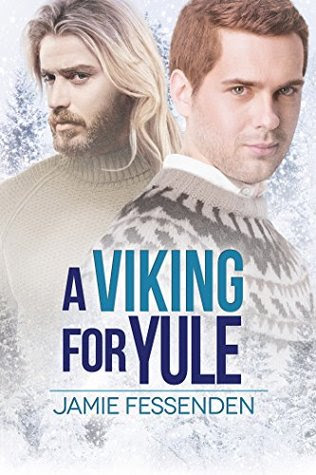
A VIKING FOR YULE, silly fun for the gingerbread-latte drinkers
A VIKING FOR YULE
JAMIE FESSENDEN
Self published (non-affiliate Amazon link)
$2.99 Kindle edition, available now
Rating: 4* of five
The Publisher Says: AFTER SAM'S GRANDFATHER nearly died in a blizzard one year ago, Sam has panic attacks in snow storms. So where does his friend Jackie propose they spend the holidays, as the last stop on their trip around the world?
Iceland. Of course.
But there's more in Iceland than snow. When Arnar, a handsome Icelandic man, offers to escort Sam on a several-day tour of the beautiful countryside, they soon find themselves drawn to each other. But Arnar is firmly rooted in his native soil, and Sam has to return to the US in a week to care for his ailing grandfather.
Suddenly, Yule can’t last nearly long enough.
NOTE: Though this novel includes characters from A Cop for Christmas, it is a standalone adventure. It isn’t necessary to read A Cop for Christmas first.
My Review: So sweet little (he's like 5'4") punkin Sam, a bit player in Author Fessenden's prior book A Cop for Christmas, gets his own love story! Jackie, the series (loose, but still counts) non-resident Auntie Mame, whisks Sam away on a world tour after some terrifying stuff happens to him (revealing what is a spoiler for the first book). True to Auntie-form, she hurls him at any number of eligible gay men in the various countries they visit. His timidity and inexperience with the world's many ways of being are, by the time the pair wash up on Iceland's shores for Yuletide, worn into a certain facility if not comfort with the strangeness he's now expecting and encountering.
But there at the international airport is Arnar. Long blond hair, studly muscles, surly attitude...even towards his "Aunt Jackie," whom he's known most of his life. And, if Sam's sharpening gaydar is any guide, a Friend of Dorothy's. Lovely! In every sense. Well, except the whole surly part.
Arnar, for his own part, is mourning the end of his relationship with Stefan (never met but despised by all Arnar's friends). He's hurting but he's a man, so he Notices Sam, being utterly charmed by his ears (of all things)...just not ready to let go of his sadz over the jerk Stefan.
The usual hijinks ensue, as they must in category romances. The Icelandic countryside and December weather play huge roles in the action. The elements are a big part of Arnar and Sam's falling in love with each other. The adventure that, as is ordinary for men, serves to bond them to each other, is largely dependent on weather. It is December in Iceland, after all. And the trope of hero-faces-down-fears is very much present.
But here we come to the crux of my problem with this lovely little bagatelle: By the numbers-ness. I don't believe for a second that, in this book's first draft, these men were the ages they're presented as being, ie thirtyish. They act like early-to-middle twentysomethings. They have packs of friends, just like early-to-middle twenties folk do; they have sullen fits, which frankly know no age but are usually less prevalent in the thirtyish bracket. They Have Adventures, not planning to do things that'll put them at risk like one does in the earlier twenties; they make HUGE life decisions on a whim, and that my dears is a dead give-away that they're nowhere near thirty. Sam has his sole remaining family member, ill and frail Grampy, to care for and about. He has also gone on an around-the-world trip for pretty much a year, at Jackie's behest and on her dime. I don't know about y'all, but that would make me wonder about the sanity of a thirtyish man; not a hair turned in a, say, twenty-five-year-old's case.
And the ending. Hm. While we need the de rigueur HEA, this one strikes me as...forced. It'd be a great last scene in a film. There's an epilogue that contextualizes it, but that's just it...it needs context.
Still! I can't say I read these books for their monumental and earth-shattering insights into character or innovations with the style-book. I read them for fun, and because I can tick off the trope boxes, I don't need to work at comprehending what I'm reading. This is a huge help to me while I'm in the process of getting this miserable apnea problem handled.
Friday, August 26, 2016
MOONSTONE, who feels very much like he WAS there despite the novel's subtitle
MOONSTONE: The Boy Who Never Was
SJÓN (tr. Victoria Cribb)
Farrar, Straus and Giroux
$11.99 ebo0ok editions, available now
Rating: 5* of five
The Publisher Says: The mind-bending miniature historical epic is Sjón's specialty, and Moonstone: The Boy Who Never Was is no exception. But it is also Sjón's most realistic, accessible, and heartfelt work yet. It is the story of a young man on the fringes of a society that is itself at the fringes of the world--at what seems like history's most tumultuous, perhaps ultimate moment.
Máni Steinn is queer in a society in which the idea of homosexuality is beyond the furthest extreme. His city, Reykjavik in 1918, is homogeneous and isolated and seems entirely defenseless against the Spanish flu, which has already torn through Europe, Asia, and North America and is now lapping up on Iceland's shores. And if the flu doesn't do it, there's always the threat that war will spread all the way north. And yet the outside world has also brought Icelanders cinema! And there's nothing like a dark, silent room with a film from Europe flickering on the screen to help you escape from the overwhelming threats--and adventures--of the night, to transport you, to make you feel like everything is going to be all right. For Máni Steinn, the question is whether, at Reykjavik's darkest hour, he should retreat all the way into this imaginary world, or if he should engage with the society that has so soundly rejected him.
**THE PUBLISHER PROVIDED ME WITH A REVIEW COPY AT MY REQUEST**
My Review: The first two paragraphs:
Color me cynical, I guess.
Máni Steinn, Moonstone in English, has led a stressful and unhappy life. His loss of family and inability to fit in to his peer group are central to his sense of himself as Other, not one of the lads or lasses. He creates his own family of sorts by turning tricks for his cash and living his real life in the cinemas (two!) of Reykjavík. The boy lives with his great-aunt because no one else could or possibly would take him in. As she is well past her prime and unable to do a lot for him socially, Máni is left as free as any misfit could ever wish to be, enabling him to act freely and without fear of discovery as he memorizes the important things in a lad's life: the sound that each unique vehicle in the small country makes, the faces and trades and residences of his tricks, the existence of the Cool Kids' Set and their activities. This being 1918 Máni is about to learn something of the outside world in stark and cruel relief. The Spanish Flu is creeping up the shores of Iceland where it will alter his life forever:
It amazes me the facility with which Sjón operates equally lyrically when describing the antiquated views of the doctor and the simple survival techniques of Máni. Never does one feel like a foil for the other. In this compact and beautiful novel, each character is accorded that respectful tacit acknowledgment of his or her uniqueness and validity.
Such a terrific feat in life, still less in art. This story is a joy to read; Sjón is a welcome addition to my pantheon of superb writers, and his translator Victoria Cribb earns my slack-jawed admiration for her sterling craftsmanship and fearless honesty in searching out the exact, precise word that conveys the very shade of meaning one can sense was there in the original; and last but far from least, Farrar, Straus and Giroux gets a prolonged standing ovation for making this joyous discovery possible for the US audience.
Thank you all. And happy birthday, young Sjón, on the 27th of August!
SJÓN (tr. Victoria Cribb)
Farrar, Straus and Giroux
$11.99 ebo0ok editions, available now
Rating: 5* of five
The Publisher Says: The mind-bending miniature historical epic is Sjón's specialty, and Moonstone: The Boy Who Never Was is no exception. But it is also Sjón's most realistic, accessible, and heartfelt work yet. It is the story of a young man on the fringes of a society that is itself at the fringes of the world--at what seems like history's most tumultuous, perhaps ultimate moment.
Máni Steinn is queer in a society in which the idea of homosexuality is beyond the furthest extreme. His city, Reykjavik in 1918, is homogeneous and isolated and seems entirely defenseless against the Spanish flu, which has already torn through Europe, Asia, and North America and is now lapping up on Iceland's shores. And if the flu doesn't do it, there's always the threat that war will spread all the way north. And yet the outside world has also brought Icelanders cinema! And there's nothing like a dark, silent room with a film from Europe flickering on the screen to help you escape from the overwhelming threats--and adventures--of the night, to transport you, to make you feel like everything is going to be all right. For Máni Steinn, the question is whether, at Reykjavik's darkest hour, he should retreat all the way into this imaginary world, or if he should engage with the society that has so soundly rejected him.
**THE PUBLISHER PROVIDED ME WITH A REVIEW COPY AT MY REQUEST**
My Review: The first two paragraphs:
The October evening is windless and cool. There is a distant throb of a motorcycle. The boy puts his head on one side to get a better fix on the sound. Holding it still, he tries to work out the distance; to hear if the bike is coming closer or moving away; if it's being ridden over level or marshy ground, or up the stony slope on the town side of the hill.I don't have any idea what I was expecting from this story, but this surely was not it. I had heard tell of Sjón as I expect most serious readers will have done. I hadn't either noticed or encountered those who had mentioned the fact that he is perfectly comfortable discussing the meatiness of sex and the cultural hypocrisy that surrounds sexuality all over the world. I haven't heard of Iceland being particularly enlightened about queerness. Combine all these lacks and you get a surprised old man gaping at the first page of this internationally acclaimed novel, wondering (not for the first time) if those warbling from the treetops about how wonderful this book is have really read it.
A low groan escapes the man standing over the kneeling boy. With his back pressed to the cliff, the man appears to have merged with his own shadow, become grafted to the rock. He groans again, louder, in increasing frustration, thrusting his hips so his swollen member slides to and fro in the boy's mouth.
Color me cynical, I guess.
Máni Steinn, Moonstone in English, has led a stressful and unhappy life. His loss of family and inability to fit in to his peer group are central to his sense of himself as Other, not one of the lads or lasses. He creates his own family of sorts by turning tricks for his cash and living his real life in the cinemas (two!) of Reykjavík. The boy lives with his great-aunt because no one else could or possibly would take him in. As she is well past her prime and unable to do a lot for him socially, Máni is left as free as any misfit could ever wish to be, enabling him to act freely and without fear of discovery as he memorizes the important things in a lad's life: the sound that each unique vehicle in the small country makes, the faces and trades and residences of his tricks, the existence of the Cool Kids' Set and their activities. This being 1918 Máni is about to learn something of the outside world in stark and cruel relief. The Spanish Flu is creeping up the shores of Iceland where it will alter his life forever:
The photographer hands the boy three krónur:The moments of 1918 will be limned in Máni's mind's eye forever. As well as World War I reaching its spavined conclusion, 1918 saw Iceland freed from the long colonial rule of Denmark and one of its immense supply of volcanoes erupting near to Reykjavík. For Máni, all of this was merely background noise as his survival from the flu and his discovery in flagrante delicto with a Danish sailor on the day that Iceland's independence was formally announced leads his unsettled life into yet another configuration. His adoration for the film world and its probable effect on his abnormality is clearly analyzed by a famous doctor whose henchman Máni had been until the dalliance with the Danish sailor comes to light:
--I'm afraid you won't be as busy for a while, pal.
The boy shrugs and heads back out into the rain.
The photographer was one of his first gentlemen. It was from him that he acquired the photograph of Muggur. The picture shows the artist in a black suit, with bangs down to his eyes and a roguish smile on his lips. There is a cigarette in his hand, which he must have lowered the instant the shutter opened.
The movement of his arm is sketched in the air as if Muggur had made a brushstroke in time.
Anyone who has observed a child playing with a doll will know how intently the child examines it by touch as well as gaze. Fingers and eyes probe the physical form with the precision of a master surgeon who has been assigned the duty of dissecting a body to the bone. Every nook and cranny is inspected; nape of neck and ear, groin and instep are caressed.(itals in original)
In the same fashion, the cinema audience scrutinizes the light-puppets on the silver screen, and whether it is the curve of Asta Nielsen's back, Theda Bara's naked shoulders, Pina Menichelli's sensual eyelids, Clara Kimball Young's slim ankles, Musidora's Cupid's bow, Gunnar Tolnæs' strong fingernails, Douglas Fairbanks' firm thighs, or Max Linder's soft eyes, the body part in question and its position will become the focus of the viewer's existence and etch itself into his psyche, while the size of the image and the repeated close-ups of lips, teeth, and even tongues will exacerbate the effects until few have the strength to resist them.
Film is thus immoral by its very nature, transforming the actor into a fetish and fostering perversion in the viewer, who allows himself to be seduced like a moth to the flame. The difference lies in that the cinema audience's appointment is with the cold flicker of the flame rather than the searing fire itself.
It amazes me the facility with which Sjón operates equally lyrically when describing the antiquated views of the doctor and the simple survival techniques of Máni. Never does one feel like a foil for the other. In this compact and beautiful novel, each character is accorded that respectful tacit acknowledgment of his or her uniqueness and validity.
Such a terrific feat in life, still less in art. This story is a joy to read; Sjón is a welcome addition to my pantheon of superb writers, and his translator Victoria Cribb earns my slack-jawed admiration for her sterling craftsmanship and fearless honesty in searching out the exact, precise word that conveys the very shade of meaning one can sense was there in the original; and last but far from least, Farrar, Straus and Giroux gets a prolonged standing ovation for making this joyous discovery possible for the US audience.
Thank you all. And happy birthday, young Sjón, on the 27th of August!
Subscribe to:
Posts (Atom)