Showing posts with label Native American novel. Show all posts

Monday, April 7, 2025

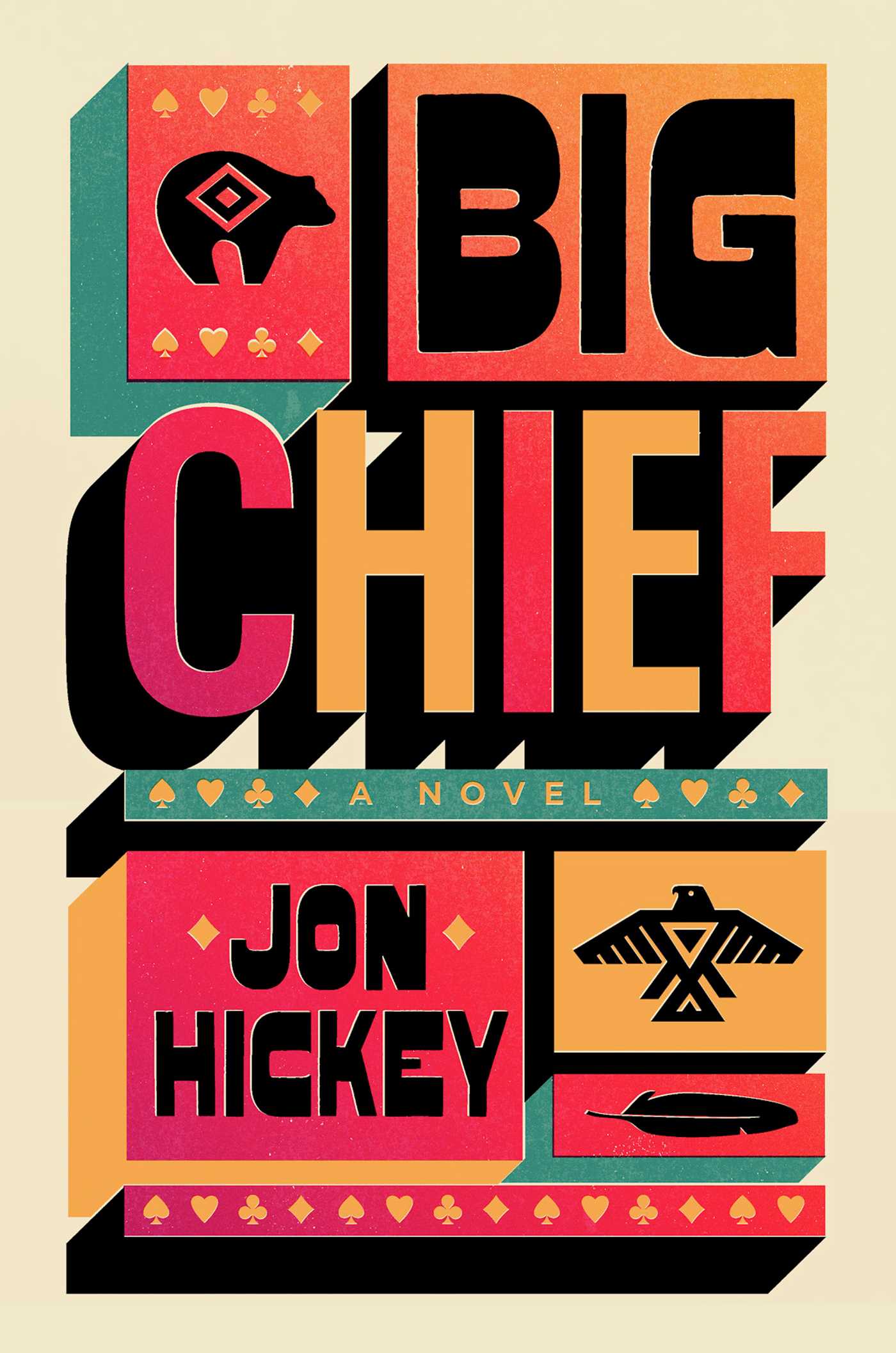
BIG CHIEF, debut Native American political/corruption story about loyalty and grief


BIG CHIEF
JON HICKEY

Simon & Schuster (non-affiliate Amazon link)
$14.99 ebook, available tomorrow

One of Electric Literature’s Best Novels of 2025!

Rating: 3.75* of five

The Publisher Says: There There meets The Night Watchman in this gripping literary debut about power and corruption, family, and facing the ghosts of the past.

Mitch Caddo, a young law school graduate and aspiring political fixer, is an outsider in the homeland of his Anishinaabe ancestors. But alongside his childhood friend, Tribal President Mack Beck, he runs the government of the Passage Rouge Nation, and with it, the tribe’s Golden Eagle Casino and Hotel. On the eve of Mack’s reelection, their tenuous grip on power is threatened by a nationally known activist and politician, Gloria Hawkins, and her young aide, Layla Beck, none other than Mack’s estranged sister and Mitch’s former love. In their struggle for control over Passage Rouge, the campaigns resort to bare-knuckle political gamesmanship, testing the limits of how far they will go—and what they will sacrifice—to win it all.

But when an accident claims the life of Mitch’s mentor, a power broker in the reservation’s political scene, the election slides into chaos and pits Mitch against the only family he has. As relationships strain to their breaking points and a peaceful protest threatens to become an all-consuming riot, Mitch and Layla must work together to stop the reservation’s descent into violence.

Thrilling and timely, Big Chief is an unforgettable story about the search for belonging—to an ancestral and spiritual home, to a family, and to a sovereign people at a moment of great historical importance.

I RECEIVED A DRC FROM THE PUBLISHER VIA NETGALLEY. THANK YOU.

My Review
: I Pearl-Ruled There There. I almost Pearl-Ruled this book. The reason I didn't, in spite of the irksome meandering of the plot, is that I liked Mitch and didn't like the coruscating cloud of people in Orange's book. I think there's a deeper...difference...in these stories than I am accustomed to. The characters in Tommy Orange's novel never felt distinctive or differentiated as I read that first segment. Hickey's characters, Mitch in particular, were more fleshed out, which allowed me to get into the twisty story. But both novels share a similarly alienating absence of interest in building tension for all they're both stories about identity-forming in the crucible of interpersonal conflict.

I am all over stories of power addicts misusing their hits of the drug. It feels evergreen and timely at the same moment of storytelling..."this could be 1888, 1988, 2008, and I'd be in the same rooms among the same people" says my headliner note...so I'm better able to get past the messy, not-obvious-why-they're-happening PoV shifts. I was sometimes a little fuddled about Mack's hold over Mitch, a lawyer who's cynical yet still young enough to believe the law has force of its own. Mack has no such illusions (nor does his political opponent Gloria) so he's, um, pragmatic and elozable. Mitch? Not sure if he's willfully blind to Mack's, um, character traits or simply prefers him to other political animals because Mack's familiar to Mitch. Mitch uses his lawyerly (though not legal) skills to fix events in Mack's favor but he's not crossing his personal ethical boundaries.

I felt immersed in the Passage Rouge Nation. I felt I understood why people love the place. I was on board for the ways and means Mack adopted to effect change, so truly *got* how he lost his moral way. I mistrusted his political opponent/loudly activist Gloria. While believing she was at least half sincere in her desire to reform the world, I felt it was not so much it wouldn't line her pockets. My evil little inner cynic got a good outing among these people.

As to why there are not-quite four full stars, I never fully bought into the plot to retain power Mack set in motion, as it seemed out of proportion thus guaranteed to blow up and cause him worse problems. Mitch saw this, I think, as a failing but he and Mack want the same outcome and share so much history; now how much sense of self does he care to put on the line to achieve a goal? Mitch is a perpetual outsider, which I relate to deeply, as well as a carrier of nasty generational trauma. It was clear to me as I read past the point I nearly tapped out that Author Hickey gets something profound about Mitch. He is among the few who is capable of making his trauma into a source of power.

I think the real reason I found this story so powerfully involving all comes down to my sense of connection to Mitch. Yeah, I'd've liked less muddling through the plot's interesting intertwining strands; I might've enjoyed Mack more had he not possessed what felt like a convenient penchant for making own goals. In the end I allowed this debut novel its imperfections because I feel, and I hope, Author Hickey will be back on our shelves soon with an even more accomplished story for us.

Monday, January 27, 2025

FIRE EXIT, Native American author Morgan Talty's debut novel


FIRE EXIT
MORGAN TALTY

Tin House Books/Zando (non-affiliate Bookshop.org link)
$17.99 paperback edition, available now

Rating: 4.75* of five

The Publisher Says: From the porch of his home, Charles Lamosway has watched the life he might have had unfold across the river on Maine’s Penobscot Reservation. On the far bank, he caught brief moments of his neighbor Elizabeth’s life—from the day she came home from the hospital to her early twenties. But there’s always been something deeper and more dangerous than the river that divides him from her and the rest of the tribal community. It’s the secret that Elizabeth is his daughter, a secret Charles is no longer willing to keep.

Now, it’s been weeks since he’s seen Elizabeth, and Charles is worried. As he attempts to hold on to and care for what he can—his home and property; his alcoholic, quick-tempered, and bighearted friend Bobby; and his mother, Louise, who is slipping ever deeper into dementia—he becomes increasingly haunted by his past. Forced to confront a lost childhood on the reservation, a love affair cut short, and the death of his beloved stepfather, Fredrick, in a hunting accident—a death he and Louise are at odds over as to where to lay blame—Charles contends with questions he’s long been afraid to ask. Is his secret about Elizabeth his to share? And would his daughter want to know the truth, even if it could cost her everything she’s ever known?

From the award-winning author of Night of the Living Rez, Morgan Talty’s debut novel, Fire Exit, is a masterful and unforgettable story of family, legacy, bloodlines, culture and inheritance, and what, if anything, we owe one another.

I RECEIVED A DRC FROM THE PUBLISHER VIA NETGALLEY. THANK YOU.

My Review
: Twice in the course of this read I stopped to think carefully about the truth, encapsulated in the truism "every tool is a weapon," that the greatest evils come from the least expected places. Honesty, or simple vanity, or (as reality is next to never binary) somewhere on the spectrum defined by those endpoints, in claiming a daughter Charles has always known he fathered though he was never allowed to parent her thanks to the blood quantum laws (weapons of oppression formed into tools of exclusion by the Penobscots themselves) would ruin her life as it is. Does she still have that life? Why hasn't Charles, her immediate neighbor all her life, seen her at all in weeks? Has she moved away, run away or vanished under more sinister circumstances? He has no standing to ask any of these questions, an off-reservation neighbor in the eyes of the law. "To think that the reservation is what makes an Indian an Indian is to massacre all over again the Natives who do not populate it," thinks Charles.

Elizabeth's mother chose to have his child, who was conceived while Charles was able to live on the reservation thanks to his mother's marriage to a Penobscot man, Charles's alcoholic best reservation-dwelling buddy Bobby, by pretending she was his child...a Penobscot father. Charles's avknowledged paternity would have denied Elizabeth a place on reservation, thus her ancestral identity and such benefits as are available to Native Americans who pass the blood quantum tests. Adding injury to this insult, Charles's dearly loved Penobscot stepfather dies...hunting accident? darker tragedy?...so he must leave the reservation for good. A tool, a gift of identity and grudging economic benefit for Elizabeth, becomes a weapon to deprive Charles of a life he wanted. Charles identifies the weaponization of the tool of identity, of belonging: "It was {dead stepfather} Fredrick’s love that made me feel Native. He loved me so much that I was, and still am, convinced that I was from him, part of him, part of what he was part of. That was how I felt about Elizabeth—in truth, she was a descendant only from her mother’s side, and if that were to come out and she were taken off the census, would she feel any less Native? I didn’t think so."

Charles now wants his daughter found, and to tell her at last who her family truly includes. Armistead Maupin, a true treasure of a writer, activist, and thinker, titled his memoir of coming out after coming of age as a true Southern right-wing boy Logical Family. The journey, the destination, the idea of clipping "bio" from "family," all form part of Charles's heterosexual journey. He is more proof that the reality of love forming family not family necessarily forming love, is more than ever a bulwark against increasingly harsh reality. "I wanted to say it all: wanted to give her all the history that is hers. This past. This family. I wanted her to know, wanted her to understand what it meant that she was being stretched beyond the walls of her parents' house," her family of origin was not all there was to her...or his...world. As the story unfolds Charles grapples with claiming the bio- and logical family as his mother descends into dementia thus dying to him before her body finally dies. All of these are issues I've faced; I was totally engrossed, enmeshed in this multipart logical family struggling to be formed.

Charles spends the entire book obsessing over Elizabeth and his denied paternity, over the ethics of telling her this potentially tribal-membership ending reality...and it suddenly hit me almost three-quarters if the way through: Elizabeth is in her middle twenties! I'd simply never done the math. It changed everything to know this.

Telling an adult who can decide for herself what to do with the life-changing factual information is a duty. It's not optional. Her life is built on a lie, and that is unconscionable to continue to hide from a twentysomething. She's got the life experience to decide for herself if she wants to continue to lie to the authorities. How to handle the fallout, if she tells the truth. She's not a kid...and I also realized that Charles'a obsessive worry about why she's vanished is completely misplaced, even a little creepy.

Charles switched from being "poor old Charles" to being "pick your balls up, put 'em back on, and take action for once" Charles. At almost the same narrative moment, a major plot point resolves. I was left wondering what to think about this altered idea of and opinion about the character I'd invested in so deeply.

That is a very, very good reminder to check the facile, shallow interpretations at Author Talty's doorstep...his short fiction should've taught me that! There is no surface without structure around here. I can't quite finish that fifth star because I found some of Charles's passive acceptance and supine acquiescence unpleasant, if relatable throughout, but the awareness misdirection was truly *chef's kiss*

If you haven't read Night of the Living Rez, his story collection, by all means do. Starting here, or starting as I did with the stories, your decision to make Morgan Talty part of your reading universe is one you aren't likely to regret.

(Where the HELL is my 2022 review of the stories?! Panic stations until I find it!)

Thursday, January 18, 2024

ALL I SEE IS VIOLENCE, a novel whose title is evocative and accurate and deeply sad


ALL I SEE IS VIOLENCE
ANGIE ELITA NEWELL

Greenleaf Book Group Press
$27.95 hardcover, available now

Rating: 4* of five

The Publisher Says: A woman warrior, a ruthless general, and a single mother―three stories deftly braided into the legacy of a stolen nation

The US government stole the Black Hills from the Sioux, as it stole land from every tribe across North America. Forcibly relocated, American Indians were enslaved under strict land and resource regulations. Indigenous writer Angie Elita Newell brings a poignant retelling of the catastrophic, true story of the 1876 Battle of Little Bighorn and the social upheaval that occurred on the Pine Ridge Reservation in 1972 during the height of the American Indian Movement.

Cheyenne warrior Little Wolf fights to maintain her people’s land and heritage as General Custer leads a devastating campaign against American Indians, killing anyone who refuses to relocate to the Red Cloud Agency in South Dakota. A century later, on that same reservation, Little Wolf’s relation Nancy Swiftfox raises four boys with the help of her father-in-law, while facing the economic and social ramifications of this violent legacy.

All I See Is Violence weaves love, loss, and hard truths into a story that needs to be told―a journey through violence to bear witness to all that was taken, to honor what all of our ancestors lived through, and to heal by acknowledging the shadows in order to find the light.

I RECEIVED A DRC FROM THE PUBLISHER VIA NETGALLEY. THANK YOU.

My Review
: Alternating PoV narratives are hard to pull off. A balancing act among three voices is even harder. What Author Newell sought to do, it seems to me, was done by giving the reader all the points of view that shore up her point: Fight for or against something, whichver you like, and you will still end up reinforcing the violence and the rage our world is swimming in. She does this best by presenting each character's story to us in the same first-person present tense.

To be sure, her Indigenous people's points of view are clearly presented as they are, the victims of an aggressive colonial project that requires them to die. The truth here is that women are not passive victims of this project, but use every tool available at the time they exist to fight against the dual prongs of racism and sexism.

Custer's PoV is, at first, an odd choice given the theme of the book. His perpetration of violence against Indigenous people did nor give me any clues about why he was included...until his (much shorter) sections led me to see that the story was about the violence committed, not about victimhood. Custer was part of an Imperial project, and a believer in it...through cluelessness, sociopathy, or an Eichmannesque just-following-orders soldier's ethos is an open question.

I landed on a four-star rating because I was not entirely convinced by the narrative inclusion of Custer...it jars with my expectations, and more to the point it is not prefigured or required in Little Wolf's contemporaneous narrative parts...and because I very much wanted more of Nancy Littlefox's family relationships. These lacunae were not fatal to my enjoyment of the read, obviously, but noticeably lessened my smooth sailing through it.

Cavils, really, concerning a read I was drawn to, and held within, for several pleasurable hours.