Showing posts with label #OwnVoices. Show all posts

Monday, April 7, 2025

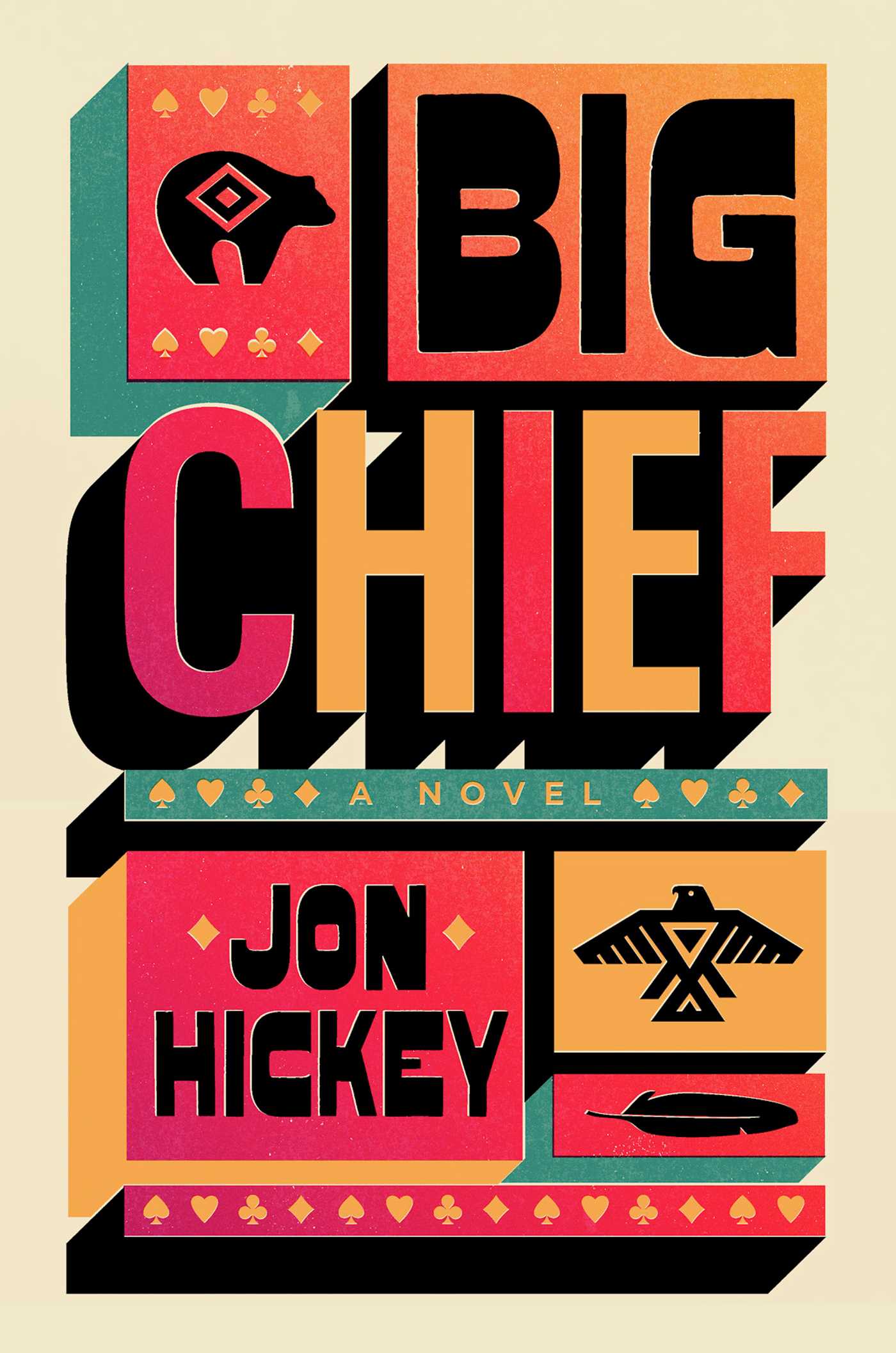
BIG CHIEF, debut Native American political/corruption story about loyalty and grief


BIG CHIEF
JON HICKEY

Simon & Schuster (non-affiliate Amazon link)
$14.99 ebook, available tomorrow

One of Electric Literature’s Best Novels of 2025!

Rating: 3.75* of five

The Publisher Says: There There meets The Night Watchman in this gripping literary debut about power and corruption, family, and facing the ghosts of the past.

Mitch Caddo, a young law school graduate and aspiring political fixer, is an outsider in the homeland of his Anishinaabe ancestors. But alongside his childhood friend, Tribal President Mack Beck, he runs the government of the Passage Rouge Nation, and with it, the tribe’s Golden Eagle Casino and Hotel. On the eve of Mack’s reelection, their tenuous grip on power is threatened by a nationally known activist and politician, Gloria Hawkins, and her young aide, Layla Beck, none other than Mack’s estranged sister and Mitch’s former love. In their struggle for control over Passage Rouge, the campaigns resort to bare-knuckle political gamesmanship, testing the limits of how far they will go—and what they will sacrifice—to win it all.

But when an accident claims the life of Mitch’s mentor, a power broker in the reservation’s political scene, the election slides into chaos and pits Mitch against the only family he has. As relationships strain to their breaking points and a peaceful protest threatens to become an all-consuming riot, Mitch and Layla must work together to stop the reservation’s descent into violence.

Thrilling and timely, Big Chief is an unforgettable story about the search for belonging—to an ancestral and spiritual home, to a family, and to a sovereign people at a moment of great historical importance.

I RECEIVED A DRC FROM THE PUBLISHER VIA NETGALLEY. THANK YOU.

My Review
: I Pearl-Ruled There There. I almost Pearl-Ruled this book. The reason I didn't, in spite of the irksome meandering of the plot, is that I liked Mitch and didn't like the coruscating cloud of people in Orange's book. I think there's a deeper...difference...in these stories than I am accustomed to. The characters in Tommy Orange's novel never felt distinctive or differentiated as I read that first segment. Hickey's characters, Mitch in particular, were more fleshed out, which allowed me to get into the twisty story. But both novels share a similarly alienating absence of interest in building tension for all they're both stories about identity-forming in the crucible of interpersonal conflict.

I am all over stories of power addicts misusing their hits of the drug. It feels evergreen and timely at the same moment of storytelling..."this could be 1888, 1988, 2008, and I'd be in the same rooms among the same people" says my headliner note...so I'm better able to get past the messy, not-obvious-why-they're-happening PoV shifts. I was sometimes a little fuddled about Mack's hold over Mitch, a lawyer who's cynical yet still young enough to believe the law has force of its own. Mack has no such illusions (nor does his political opponent Gloria) so he's, um, pragmatic and elozable. Mitch? Not sure if he's willfully blind to Mack's, um, character traits or simply prefers him to other political animals because Mack's familiar to Mitch. Mitch uses his lawyerly (though not legal) skills to fix events in Mack's favor but he's not crossing his personal ethical boundaries.

I felt immersed in the Passage Rouge Nation. I felt I understood why people love the place. I was on board for the ways and means Mack adopted to effect change, so truly *got* how he lost his moral way. I mistrusted his political opponent/loudly activist Gloria. While believing she was at least half sincere in her desire to reform the world, I felt it was not so much it wouldn't line her pockets. My evil little inner cynic got a good outing among these people.

As to why there are not-quite four full stars, I never fully bought into the plot to retain power Mack set in motion, as it seemed out of proportion thus guaranteed to blow up and cause him worse problems. Mitch saw this, I think, as a failing but he and Mack want the same outcome and share so much history; now how much sense of self does he care to put on the line to achieve a goal? Mitch is a perpetual outsider, which I relate to deeply, as well as a carrier of nasty generational trauma. It was clear to me as I read past the point I nearly tapped out that Author Hickey gets something profound about Mitch. He is among the few who is capable of making his trauma into a source of power.

I think the real reason I found this story so powerfully involving all comes down to my sense of connection to Mitch. Yeah, I'd've liked less muddling through the plot's interesting intertwining strands; I might've enjoyed Mack more had he not possessed what felt like a convenient penchant for making own goals. In the end I allowed this debut novel its imperfections because I feel, and I hope, Author Hickey will be back on our shelves soon with an even more accomplished story for us.

Monday, January 27, 2025

FIRE EXIT, Native American author Morgan Talty's debut novel


FIRE EXIT
MORGAN TALTY

Tin House Books/Zando (non-affiliate Bookshop.org link)
$17.99 paperback edition, available now

Rating: 4.75* of five

The Publisher Says: From the porch of his home, Charles Lamosway has watched the life he might have had unfold across the river on Maine’s Penobscot Reservation. On the far bank, he caught brief moments of his neighbor Elizabeth’s life—from the day she came home from the hospital to her early twenties. But there’s always been something deeper and more dangerous than the river that divides him from her and the rest of the tribal community. It’s the secret that Elizabeth is his daughter, a secret Charles is no longer willing to keep.

Now, it’s been weeks since he’s seen Elizabeth, and Charles is worried. As he attempts to hold on to and care for what he can—his home and property; his alcoholic, quick-tempered, and bighearted friend Bobby; and his mother, Louise, who is slipping ever deeper into dementia—he becomes increasingly haunted by his past. Forced to confront a lost childhood on the reservation, a love affair cut short, and the death of his beloved stepfather, Fredrick, in a hunting accident—a death he and Louise are at odds over as to where to lay blame—Charles contends with questions he’s long been afraid to ask. Is his secret about Elizabeth his to share? And would his daughter want to know the truth, even if it could cost her everything she’s ever known?

From the award-winning author of Night of the Living Rez, Morgan Talty’s debut novel, Fire Exit, is a masterful and unforgettable story of family, legacy, bloodlines, culture and inheritance, and what, if anything, we owe one another.

I RECEIVED A DRC FROM THE PUBLISHER VIA NETGALLEY. THANK YOU.

My Review
: Twice in the course of this read I stopped to think carefully about the truth, encapsulated in the truism "every tool is a weapon," that the greatest evils come from the least expected places. Honesty, or simple vanity, or (as reality is next to never binary) somewhere on the spectrum defined by those endpoints, in claiming a daughter Charles has always known he fathered though he was never allowed to parent her thanks to the blood quantum laws (weapons of oppression formed into tools of exclusion by the Penobscots themselves) would ruin her life as it is. Does she still have that life? Why hasn't Charles, her immediate neighbor all her life, seen her at all in weeks? Has she moved away, run away or vanished under more sinister circumstances? He has no standing to ask any of these questions, an off-reservation neighbor in the eyes of the law. "To think that the reservation is what makes an Indian an Indian is to massacre all over again the Natives who do not populate it," thinks Charles.

Elizabeth's mother chose to have his child, who was conceived while Charles was able to live on the reservation thanks to his mother's marriage to a Penobscot man, Charles's alcoholic best reservation-dwelling buddy Bobby, by pretending she was his child...a Penobscot father. Charles's avknowledged paternity would have denied Elizabeth a place on reservation, thus her ancestral identity and such benefits as are available to Native Americans who pass the blood quantum tests. Adding injury to this insult, Charles's dearly loved Penobscot stepfather dies...hunting accident? darker tragedy?...so he must leave the reservation for good. A tool, a gift of identity and grudging economic benefit for Elizabeth, becomes a weapon to deprive Charles of a life he wanted. Charles identifies the weaponization of the tool of identity, of belonging: "It was {dead stepfather} Fredrick’s love that made me feel Native. He loved me so much that I was, and still am, convinced that I was from him, part of him, part of what he was part of. That was how I felt about Elizabeth—in truth, she was a descendant only from her mother’s side, and if that were to come out and she were taken off the census, would she feel any less Native? I didn’t think so."

Charles now wants his daughter found, and to tell her at last who her family truly includes. Armistead Maupin, a true treasure of a writer, activist, and thinker, titled his memoir of coming out after coming of age as a true Southern right-wing boy Logical Family. The journey, the destination, the idea of clipping "bio" from "family," all form part of Charles's heterosexual journey. He is more proof that the reality of love forming family not family necessarily forming love, is more than ever a bulwark against increasingly harsh reality. "I wanted to say it all: wanted to give her all the history that is hers. This past. This family. I wanted her to know, wanted her to understand what it meant that she was being stretched beyond the walls of her parents' house," her family of origin was not all there was to her...or his...world. As the story unfolds Charles grapples with claiming the bio- and logical family as his mother descends into dementia thus dying to him before her body finally dies. All of these are issues I've faced; I was totally engrossed, enmeshed in this multipart logical family struggling to be formed.

Charles spends the entire book obsessing over Elizabeth and his denied paternity, over the ethics of telling her this potentially tribal-membership ending reality...and it suddenly hit me almost three-quarters if the way through: Elizabeth is in her middle twenties! I'd simply never done the math. It changed everything to know this.

Telling an adult who can decide for herself what to do with the life-changing factual information is a duty. It's not optional. Her life is built on a lie, and that is unconscionable to continue to hide from a twentysomething. She's got the life experience to decide for herself if she wants to continue to lie to the authorities. How to handle the fallout, if she tells the truth. She's not a kid...and I also realized that Charles'a obsessive worry about why she's vanished is completely misplaced, even a little creepy.

Charles switched from being "poor old Charles" to being "pick your balls up, put 'em back on, and take action for once" Charles. At almost the same narrative moment, a major plot point resolves. I was left wondering what to think about this altered idea of and opinion about the character I'd invested in so deeply.

That is a very, very good reminder to check the facile, shallow interpretations at Author Talty's doorstep...his short fiction should've taught me that! There is no surface without structure around here. I can't quite finish that fifth star because I found some of Charles's passive acceptance and supine acquiescence unpleasant, if relatable throughout, but the awareness misdirection was truly *chef's kiss*

If you haven't read Night of the Living Rez, his story collection, by all means do. Starting here, or starting as I did with the stories, your decision to make Morgan Talty part of your reading universe is one you aren't likely to regret.

(Where the HELL is my 2022 review of the stories?! Panic stations until I find it!)

Tuesday, October 25, 2022

ALL THE QUIET PLACES, debut YA novel by & about First-Nations youth caught in tumultuous times & WHAT IS LEFT THE DAUGHTER, CanLit monadnock Howard Norman's YA-themed novel


ALL THE QUIET PLACES
BRIAN THOMAS ISAAC

Brindle & Glass
$18.00 trade paper, available now

Rating: 4.5* of five

The Publisher Says: Brian Isaac's powerful debut novel All the Quiet Places is the coming-of-age story of Eddie Toma, an Indigenous (Syilx) boy, told through the young narrator's wide-eyed observations of the world around him.

It's 1956, and six-year-old Eddie Toma lives with his mother, Grace, and his little brother, Lewis, near the Salmon River on the far edge of the Okanagan Indian Reserve in the British Columbia Southern Interior. Grace, her friend Isabel, Isabel's husband Ray, and his nephew Gregory cross the border to work as summer farm labourers in Washington state. There Eddie is free to spend long days with Gregory exploring the farm: climbing a hill to watch the sunset and listening to the wind in the grass. The boys learn from Ray's funny and dark stories. But when tragedy strikes, Eddie returns home grief-stricken, confused, and lonely.

Eddie's life is governed by the decisions of the adults around him. Grace is determined to have him learn the ways of the white world by sending him to school in the small community of Falkland. On Eddie's first day of school, as he crosses the reserve boundary at the Salmon River bridge, he leaves behind his world. Grace challenges the Indian Agent and writes futile letters to Ottawa to protest the sparse resources in their community. His father returns to the family after years away only to bring chaos and instability. Isabel and Ray join them in an overcrowded house. Only in his grandmother's company does he find solace and true companionship.

In his teens, Eddie's future seems more secure—he finds a job, and his long-time crush on his white neighbour Eva is finally reciprocated. But every time things look up, circumstances beyond his control crash down around him. The cumulative effects of guilt, grief, and despair threaten everything Eddie has ever known or loved.

All the Quiet Places is the story of what can happen when every adult in a person's life has been affected by colonialism; it tells of the acute separation from culture that can occur even at home in a loved familiar landscape. Its narrative power relies on the unguarded, unsentimental witness provided by Eddie.

I RECEIVED A DRC FROM THE PUBLISHER VIA EDELWEISS+. THANK YOU.

My Review
: This beautifully written debut novel, telling a deeply affecting story of a boy's coming of age amid loss and deprivation, was longlisted for the Scotiabank Giller Prize in 2022. I'm a bit surprised that it didn't make the shortlist because it's got the power and the credibility to impress any judging panel. Still...however they chose, the judges chose this story to stay longlisted.

Eddie Toma is a character I recognize...a youth whose rudder isn't calibrated like he's told it's supposed to be. It's an adolescent trait, of course, but the issues Eddie is coping with are his life are those unique to an unvalued Indigenous male. In a settler-colonial society he isn't going to find a lot of validation. What he has, in compensation, is a formidable grandmother who models a moral compass nonpareil. He spends his entire growing-up time torn between the need, like all of us, to figure out what the world is about, and the impoverished person's need to find enough food to fill his hunger. His life in the white-people school in the nearest town is a nightmare of bewilderment...how is he supposed to know about racism? until he started school he'd never even been to the white people who lived across the road's home!...and there is no one to explain anything to him at home or at school.

Except Eva, the white girl who lives across the road...she's kind, and she's weird, and she's got something Eddie can't quite figure out going on in her mind. (That remains true all through the book.) Eva is a beautiful, willful, intelligent girl caught in a place too small to hold her talent, still less her interest. As Eddie and Eva continue to knock their corners together and as Life gives them nasty buffets and blows, they simply get on with getting on. Growing up. Learning and wondering and trying stuff out.

When I think about the way the story unfolds after reading the ending of the book, I feel so much more as though Author Isaac brought his bluntest weapons to the tale's wordsmithing. I was always involved in Eddie's solitary life, weirdly lived among the crowds of people who were Others to Eddie and who in their turn Othered him. I wished, at every failed opportunity to make a connection with someone, that I could go into the pages and hug Eddie. I wished his family had seen him, the "him" that this novel builds, the real him. His mother was challenged at every single step by single motherhood, by racial prejudice, by the judgment and unkindness of the world; her treatment of her sons was only marginally better than their treatment at the world's hands, and it's there that I wanted to go be a White Savior.

It's not, then, the happiest of lives that Eddie and his family live. He loves, I think, almost no one but he crushes on Eva and still can't connect with her. She, in her turn, is both kind and cruel. She's a kid...she's a rebel...she's a privileged white lass whose feelings for an Indigenous lad are titillatingly forbidden, yet came across to me as sincere. As the years progress, Eddie can't make sense of her, can't make sense of his burgeoning feelings for her, can't take in the manifold cruelties he's undergoing on every level except one quiet refuge: His grandmother.

His mother's mother is a calm center of this chaotic bunch. Even her white racist neighbors feel respect for her, though they never express it without nastiness. Eddie loves her, in the best way a deprived and neglected heart like his can love. Only to her can he turn in all his bewilderment and rage, with all his confused longings for nameless-to-him caring and nurturing. From her he absorbs respect for the wild world, and her son Alphonse (whose life doesn't include much voluntary time spent with any kids) leads him by example to knowledge of and connection with his environment. These factors enable Eddie to get through the disasters of most all colonialism-, racism-, and poverty-blighted lives. He is, at base and at heart, only truly, trustingly at home in the wild world.

The ending of the story is, I confess, a bit downbeat for my taste; it's the reason I'm not giving the read all five stars. It makes perfect sense. It is exactly what, I suspect, happened to someone, somewhere in Author Isaac's own past. It is not false; it is just...so very, very sad. I wouldn't recommend this as a read for someone needing a cup of cheer. But I do recommend that you read this tender, loving, cruelly realistic tale of life lived in racism's ugly glare.

++++++++++++++++++++++++++++++++++++++++++++++++++++++++++++++++


WHAT IS LEFT THE DAUGHTER
HOWARD NORMAN

Mariner Books
$14.99 trade paper, available now

Rating: 4* of five

The Publisher Says: Howard Norman, widely regarded as one of this country's finest novelists, returns to the mesmerizing fictional terrain of his major books—The Bird Artist, The Museum Guard, and The Haunting of L—in this erotically charged and morally complex story.

Seventeen-year-old Wyatt Hillyer is suddenly orphaned when his parents, within hours of each other, jump off two different bridges—the result of their separate involvements with the same compelling neighbor, a Halifax switchboard operator and aspiring actress. The suicides cause Wyatt to move to small-town Middle Economy to live with his uncle, aunt, and ravishing cousin Tilda.

Setting in motion the novel's chain of life-altering passions and the wartime perfidy at its core is the arrival of the German student Hans Mohring, carrying only a satchel. Actual historical incidents—including a German U-boat's sinking of the Nova Scotia-Newfoundland ferry Caribou, on which Aunt Constance Hillyer might or might not be traveling—lend intense narrative power to Norman's uncannily layered story.

Wyatt's account of the astonishing—not least to him—events leading up to his fathering of a beloved daughter spills out twenty-one years later. It's a confession that speaks profoundly of the mysteries of human character in wartime and is directed, with both despair and hope, to an audience of one.

An utterly stirring novel. This is Howard Norman at his celebrated best.

I CHECKED THIS BOOK OUT FROM THE LIBRARY. USE THEM OFTEN, THEY LIVE AND DIE ON OUR PATRONAGE.

My Review
: When an author of Howard Norman's stature uses the epistolary storytelling technique, the chances of disappointment...always higher when this difficult-to-master form is used...shrink back into insignificance. As expected, then, this read was a master class in what and how to make of the epistles in question.

Wyatt's parents aren't alive as we meet him. I got a strong intimation that he, looking back on a whole family's life pretty passionately (if unhappily) lived, didn't feel they were alive before they each committed suicide for mixed-up love of the same woman. If I had to guess (Author Norman doesn't over-explain anything, ever) I'd say Wyatt's life more complicated than most from the very beginning. His letter to his largely unseen daughter, however, is all about putting forward the facts of her paternal family's life as he recalls them. It felt to me as though Author Norman's telling of the tale was direct and honest; so Wyatt, then, wasn't aware even in retrospect of his life's peculiarly high levels of complexity.
In The Highland Book of Platitudes, Marlais, there's an entry that reads, "Not all ghosts earn our memory in equal measure." I think about this sometimes. I think especially about the word "earn," because it implies an ongoing willful effort on the part of the dead, so that if you believe the platitude, you have to believe in the afterlife, don't you? Following that line of thought, there seem to be certain people—call them ghosts—with the ability to insinuate themselves into your life with more belligerence and exactitude than others—it's their employment and expertise.

With all the arousal hormones Wyatt's story begins with, and given the fact that he's writing to his twentyish daughter, this is a story pretty much guaranteed to be about the erotic charge that a messy life provides and more importantly about its costs. Wyatt's unrequited love for a person in his family circle who is not a relative is the stuff of life. I suspect it was deeply relatable to anyone who's ever been part of a blended or a found family. The object of his affections, herself an added person (one whose family isn't a birth family), falls madly in love with someone socially inconvenient: A German émigré, and this story's set during World War II. So there's another level of relatability, as what adult has made it this far without an unrequited love?
My whole life, Marlais, I've had difficulty coming up with the right word to use in a given situation, but at least I know what the right word would have been once I hear it.

The problem this inability brings with it, or perhaps the character trait it points up, is that of passivity. Wyatt is not a doer but a done-to. Nothing that happens in his (passive, epistolary) account of his life to the daughter he doesn't know is as a result of his actions. The one truly, damningly awful thing he's involved in, and for which he is now seeking his daughter's forgiveness, is a result of his inaction, his inability to stand for something.
I realize I've sometimes raced over the years like an ice skater fleeing the devil on a frozen river.
–and–
I refuse any longer to have my life defined by what I haven't told you.

But what he does, this man of inaction, is write the young woman a letter. How typical of him...make an effort but make it ineffectually. What a letter does is enable him to remain inactive yet still offer, as if from behind a wall, an accounting of the young woman in question's heritage. What happens as a result? We never know; Author Norman's story is of Wyatt, not Marlais.

You'll have to decide if that's a deal-maker or -breaker for you. I fall on the line between those poles. I need to feel a story is complete, fulfilling its brief, to really lose myself in it. The musicality of Author Norman's line-by-line creation can draw one along for a good while but there's always that need to have some story pay-off for me. I was not all the way satisfied...I wasn't dissatisfied...there was a strange liminality in this tale of passive inaction's consequences. I would recommend you read the book. I wouldn't recommend it to you, however, of you're in the mood for a propulsive plot-driven thrillride. Does the read repay the effort? It did for me—mostly.

I think Author Norman turned me into Wyatt!

Friday, February 19, 2021

LET'S GET BACK TO THE PARTY, Zak Salih's debut novel

LET'S GET BACK TO THE PARTY
ZAK SALIH

Algonquin Books
$10.99 ebook, available now

Rating: 4* of five

The Publisher Says: What Does It Mean to Be a Gay Man Today?

It’s just weeks after the historic Supreme Court marriage equality ruling, and all Sebastian Mote wants is to settle down. A high school art history teacher, newly single and desperately lonely, he envies his queer students their freedom to live openly the youth he lost to fear and shame.

So when he runs into his childhood friend Oscar Burnham at a wedding in Washington, D.C., he can’t help but see it as a second chance. Now thirty-five, the men haven’t seen each other in a decade. But Oscar has no interest in their shared history. Instead, he’s outraged by what he sees as the death of gay culture: bars overrun with bachelorette parties; friends getting married, having babies.

While Oscar and Sebastian struggle to find their place in a rapidly changing world, each is drawn into a cross-generational friendship that treads the line between envy and obsession: Sebastian with one of his students and Oscar with an older icon of the AIDS era. And as they collide again and again, both men must come reckon not just with one another, but with themselves.

Rich with sharply drawn characters and contemporary detail, provocative, and emotionally profound, Let’s Get Back to the Party is sure to appeal to readers of Garth Greenwell, Alan Hollinghurst, Claire Messud, and Rebecca Makkai.

I RECEIVED A DRC FROM THE PUBLISHER VIA NETGALLEY. THANK YOU!

My Review
: There are a lot of things to celebrate among queer Americans at the moment. Progress has been made that, when I was a babyqueer, was inconceivable. (And yes, I do know what that word means.) Legal marriage? Common surrogate fatherhood?! Even, in some places, adoption?!? All this presupposes joint mortgages, life insurance left to one's partner, joint bank accounts, Social Security survivor benefits...holy carp, the GOP tomb-raiders who oppose even straight people getting back the money they put into the system must be plotzing. Believe you me, under-40s, not one bit of this was probable in a world with Don't-Ask Don't-Tell witchhunts in all branches of the military and the ever so inaptly named Defense of Marriage Act specifically, and unConstitutionally, forbidding same-sex couples from receiving the 1,049 (by some counts) benefits available to heterosexuals simply by speaking a few words to a County Clerk. (If you're wondering, the religious idiots do not have any thing at all to say about marriage. They can refuse to perform a marriage ceremony for anyone they choose, for any reason they choose; but the State is the only entity that can declare you married, and this has always been so in the United States.)

But what laws give, they can take away; and these rights which are justly ours as much as theirs can, with the wrong (aka right-wing) party at the helm of government, be taken away again by legal chicanery. And Oscar Burnham is bitterly aware of this. Beyond the fact that the extension of legal access to protection for couples strikes at one of the defining qualities of gay-manhood, unbridled and unfettered and unceremonious couple/uncouple relationships where everyone is Mr. Right Now, he's grouchy and squicked out about how the gays are becoming hipsters instead of threatening outsiders to be envied and feared. When he meets Sean, the elderqueer, the survivor of the AIDS years (aka "my direct contemporary") they bond over the Sad State of Things. Sean remembers what it was to be Other with a capital Q when one came out or was outed. Oscar, bless him, tries his damnedest to be there in Sean's head, attaches himself to the older man, becomes his happy shadow.

Sebastian Mote teaches for a living. Sebastian, after re-encountering youthful friend Oscar at a wedding, begins to think...well...sense...maybe perceive will do...that the unfinished business he brings to the table where Oscar's sitting should get more attention from them both. A dance begins, one that ended a decade before; one that wasn't ever resolved, though, so the emotional bonds are still firmly seated. Sebastian's so involved with his students, in the not-squicky way, that he doesn't quite see how Arthur is becoming an obsession...doesn't quite want to let go of his access to the youth's open, happy life awaiting him with boyfriend Raymond.

There is so much about what happens that you'll hate having spoiled. I need you to know, though, one big facet of this story is tragic and painful and life- and generation-defining. It will leave or open wounds for its ferocity and its outrageous reminder that Hate trumps all values thrown in its way because humans love the raw, red, bloody gobbets of The Other's flesh. I don't like that it's true, but nothing in my over-sixty years on Earth has ever come close to persuading me that it isn't.

I am, in a lot of ways, like Oscar: Grumpy, disillusioned by mainstreaming, in a strange, intergenerational love relationship that doesn't look like one anyone outside it understands. (I hope like hell that Rob doesn't feel conflicted about the same things Oscar does!) For that reason, I found this read very much an involving one. The relationship Oscar has with his parents, the emotional ties that bind but are ever looser he feels with Sebastian...all very much like my own life.

What in the end worked best for me about this read was my sense of its reality, its groundedness, and thus it earned my trust. I was always glad to read more and I returned to the read without hesitation. I'm so pleased that the publisher decided to offer me the book to review, and I'm just as pleased that the author wrote such a deeply personal story. The one thing you shouldn't expect is detailed sex scenes, à la Garth Greenwell mentioned in the blurb. It's just not needed to tell this tale the best way it could be told, so Author Salih doesn't do it for the sake of doing it. A big point in his favor.

Then there's the Tragedy I alluded to above, while handled sensitively, isn't so delightful; I wasn't all the way convinced that the event's aftermath was, in fact, not given short shrift. It felt to me as though it was no longer useful in the plot so let's just go now, k? And they did. It wasn't what I felt was enough given the scope of it.

While it did reinforce the solipsism of these men's on-again, off-again intimacy, it felt off, almost reductive, as it's presented in the book. That's a matter of opinion, I know, so take it as such and decide for yourself what you think of the ending.

Now we all have to sit and twiddle our thumbs until Author Salih brings us his next idea. I'm looking forward, and expect you will be too.

Wednesday, January 13, 2021

THE PROBLEM WITH MISTLETOE, proof that distracted reading is real and very troublesome


THE PROBLEM WITH MISTLETOE
KYLE BAXTER
(Five Points Stories #1)
Self published (non-affiliate Amazon link)
FREE Kindle edition, available now

Rating: 3.5* of five

The Publisher Says: David Cooper did not believe in happily ever after—he thought he let his chance pass him by—between work, being a single father and planning a Christmas party for his mother’s charity his life is complicated enough. And then he has to ask Alex Capili, an old friend who just returned from the big city, to help run it. Spending weeks working closely together old feelings come up and David wonders if fairy tales really do come true.

Alex came home to help sell off his family’s restaurant, he was not looking for love. And happy endings only happen in movies. But nothing about this return trip home town is quite what he expected and David is still the best man he's ever known. A good father, with a heart as big as all outdoors, and disarmingly handsome.

THIS WAS A HOLIDAY-SEASON FREEBIE.

My Review
: I was looking for a "Calgon, take me away" read while the nightmare of this year's bungled and sabotaged transition of presidential power was playing out before my revolted and horrified eyes. A romance, with pretty boys and snow and angst that feels real enough to invest in but not to get in an uproar about, seemed just the ticket.

Eighteen (18) W-bombs. A couple are excusable...parent to child, one intentionally cheeseball one...but when you use a physical defect, I mean gesture, eighteen times in one short book, you're overdoing it. Call this the Cheeseball Test: When you see someone's body language or facial expression described the same way, substitute "fart/ed" and see how you respond.

But that growl of disgust, while it cost the story a star, aside, I found the love of David and Alex very charming. Their second chance at love was a big draw to me. I'm a sucker for second chances. They're not as common in life as in fiction, but that's why I find them so irresistible. Also realistic in my own experience was the homophobic, abusive parent trope. I've had multiple love relationships with men whose upbringings were a lot like Alex's, raging drunk/druggie parents with a major hate for their child's self leading them to beat, belittle, and abuse them. My own mother's rages found their target in my sexuality, as well, though the only substance she abused was tobacco. (Happily enough it's what killed her!)

David's hoity-toity family's lack of acceptance of Alex, misinterpreted by both boys in the moment, was down to his father the drunk; this problem is brought up near the beginning of the book. The source of Alex's abandonment of their hometown and flight to New York City was also his abusive father...a fact that David, whose life trajectory was more conventional than Alex's, has always felt was his own fault for a badly handled kiss under the mistletoe.

Plenty of believable cross-purposes misunderstandings, badly hurt feelings leading to long silences between former friends, a trans character whose friendship with both boys isn't very well explored, several very troubled women whose failings are central to the plot...juicy!

All the problems I've had with the unfolding of the plot...we all know David and Alex are going to end up together, it's a romance, and the HEA is de rigueur...stem from rushed resolutions and missed explorations. In order to feel truly satisfied, I'd've needed to see more of the inner workings of their rupture. Their constantly interrupted efforts to talk went on a little too long. If they'd started the conversations then been interrupted during them it would have made for more tension. As it was it never built anything except the annoying sensation of avoidance.

On balance, the reason I wanted to review the book at this length was to find out why I took three weeks to finish an afternoon's entertainment. When it feels to me like the author is not, even in the limited scope of a romance novel's length, focusing on people's interrelatedness, it's not the immersive read I am always eager to find. As a freebie at Christmas, this book came out ahead of my niggling dissatisfaction. A better example of the Holiday romantic read was, for me, A Viking for Yule (q.v.). It dug just that extra fraction deeper than this perfectly fine read did, and got a higher rating from my picky typist's fingers than this book.

Thursday, December 24, 2020

DOMINION presents the best-quality and most stylistically varied look at SF/F/H focused on Authors of Color


DOMINION: An Anthology of Speculative Fiction from Africa and the African Diaspora
edited by Zelda Knight and Ekpeki Oghenechovwe Donald

Aurelia Leo (non-affiliate Amazon link)
$9.99 Kindle edition, available now

Rating: 5* of five

The Publisher Says: Dominion is the first anthology of speculative fiction and poetry by Africans and the African Diaspora. An old god rises up each fall to test his subjects. Once an old woman’s pet, a robot sent to mine an asteroid faces an existential crisis. A magician and his son time-travel to Ngoni country and try to change the course of history. A dead child returns to haunt his grieving mother with terrifying consequences. Candace, an ambitious middle manager, is handed a project that will force her to confront the ethical ramifications of her company’s latest project—the monetization of human memory. Osupa, a newborn village in pre-colonial Yorubaland populated by refugees of war, is recovering after a great storm when a young man and woman are struck by lightning, causing three priests to divine the coming intrusion of a titanic object from beyond the sky.

A magician teams up with a disgruntled civil servant to find his missing wand. A taboo error in a black market trade brings a man face-to-face with his deceased father—literally. The death of a King sets off a chain of events that ensnare a trickster, an insane killing machine, and a princess, threatening to upend their post-apocalyptic world. Africa is caught in the tug-of-war between two warring Chinas, and for Ibrahim torn between the lashings of his soul and the pain of the world around him, what will emerge? When the Goddess of Vengeance locates the souls of her stolen believers, she comes to a midwestern town with a terrible past, seeking the darkest reparations. In a post-apocalyptic world devastated by nuclear war, survivors gather in Ife-Iyoku, the spiritual capital of the ancient Oyo Empire, where they are altered in fantastic ways by its magic and power.

I RECIEVED A DRC OF THIS BOOK FROM THE EDITORS. THANK YOU!

My Review
: Whenever you see this review: GO GET THIS ANTHOLOGY. It's the 24th...your ereader or tablet is just sitting there, you can't play your gifted games just yet, and Krampus only knows how long it will be until you get snacky. Read these intense, startling, urgent stories...no excuses! You read The Lord of the Rings and had no problem following those fake, complicated character and place names so don't front that these are any harder. And believe me: The stories are (almost) all so vivid and alive and enfolding that you are gonna be up late. The always-useful technique I call the Bryce Method of making notes and offering ratings story-by-story is my guide.

Trickin' by Nicole Givens Kurtz gives us the "after" of a world almost, but not quite, like our own; the Trickster Raoul is, or isn't, the Trickster God...? No matter, the old world's dead:
Once, a bustling metropolis existed, but now, only disappointment remained.
–and–
Some spoke of a virus that each warring country deployed against the other in an effort to gain the upper hand in a battle already slippery from bloodshed.

Can you think of a particularly compelling reason to care if this is the God or simply the psychopomp of sacrifices' souls? 4 stars

Red_Bati by Dilman Dila explores the eternal tension between slave and master. Granny's grandson, in her final years, gifted her with a "pet red basenji" robot, modified in a few ways to make sure it could keep Granny truly engaged with the world. This, as with all well-intentioned interference in the Way Things Are, has consequences.

Red_Bati becomes, after his fashion, sentient through his modified programming growing to respond to Granny and her human demands, needs, habits, wants. But as must be, Granny dies and her grandson sells off her property that's of no use to him. Including Red_Bati. Forgetting his well-intentioned mods to the robot might need taking care of, Red_Bati resultingly leaves Granny's body...though not her being...as he is repurposed for asteroid mining. An injury, "life"-changing, results:
Once his battery ran down, he would freeze and that would damage his e-m-data strips. Though these could be easily and cheaply replaced, he would lose all his data, all the codings that made him Red_Bati and not just another red basenji dog, all his records of Granny. He would die.

"That won't be a bad thing," Granny said, chuckling. "If you were a true dog, you'd be as old as I am and wishing for death."

He was not a dog. He was a human trapped in a pet robot.
–and–
The VR printers would give birth to more of his kind, but they would not grow like human children. They would be fully functioning adults at birth, with almost nothing new to learn because they would have all the knowledge that forebots had gathered. Would exploring for new worlds and searching for mew matter give their lives a meaning?

Yes, well, that's the penalty of leadership, isn't it, defining "meaning" for all who come after you. Yours the power, yours the responsibility...and what does a real human do when Responsibility bears down on him? Passes the buck, of course; but to whom...? 4 stars

A Maji Maji Chronicle by Eugen Bacon can't be faulted for its refrain of "be careful what you wish for" in today's world. We're facing several existential crises and, like the Emperor of Ngoni, we might very well become that which we defeated on our way to restoration of balance. Even the wise should fear power:
Lust predated greed that predated power that predated altruism. The Emperor gathered a harem of one thousand wives whose shelter spread across three villages. Their feed took resources from twelve more villages now forced to pay 'protection' tax to the palace.

And thus the wages of interference in the path of Destiny, History, Doom, call it what you will. Some things are not the result of evil-souled malice, but of simply being alive. A message well worth hearing. 3.75 stars, a slight star-ding for what felt to me a slightly infelicitous haste in relating this urgent message; needed more about the future before I bought the journey, for example.

The Unclean by Nuzo Onoh is far from fresh ground to till. An unwanting and unwanted wife, woman haunted by ill fortune and bad decisions made for her by men who seek only to use her womb for sons. A curse brought on by her bad Chi, a child lost, a rival gained, finally death calls on her husband and his house again and again. And it's all her fault, in everyone's eyes including her own.

Pretty standard stuff. There are beatings. The husband's fat sisters and his fat new wife and the whole family close her out, conspire against her, her own dead child visits her...this body-shaming and man-loathing goes on a long time before the woman is rescued by her younger, modern sister, who finds her bound to her dead husband's side by magic spells as she awaits the judgment of a tree on her viability and guilt. Sister breaks the curse by stomping up, gathering her into her Westernized arms, and whisking her off. I was interested in Igbo culture's demons and beliefs for a while, but honestly? This is a well-worn path among African women's writing, fathers and husbands and brothers all foolish and greedy and abusive, that I don't really want to follow along to anymore. YMMV, of course. 3 stars

A Mastery of German by Marian Denise Moore uses that most anodyne of settings, The Corporate Workplace, to explore a chilling, and I suspect fast-approaching, Brave New World: Sharing the essential You via genetic manipulation. Young Black woman Candace is new at her job of Project Management at fast-track pharma developer QND. The founder gave her full control over a Black geneticist's mysterious, and underperforming, project...find out if it will be profitable, how soon, and if that window makes sense; or kill it and we move on.

Clear, simple directive; tangled, ethically questionable decision. The best kind for a story. What if Candace, keeping this project alive, has the ability to keep the Sands of Time from burying the lives and accomplishments of Black people?
"I hit a wall {her father says of his genealogy research}; this always happens. Josiah Toil was just a Black laborer, so his work wasn't recorded. Every generation," he paused, "like Black Wall Street, like all of the Black towns after the Civil War, like all of the Black miners at Matewan."

"We know all of that," {Candace} said quietly.

"No, we rediscovered all of that. It gets wiped away and then two generations later people say 'we were kings and queens in Africa'. Well, sure. But we were city planners, architects, engineers, bricklayers, and professors here in America."

Now, you're Candace; you have the power to end that vicious, racist cycle forever by supporting this mysterious project you were tacitly told to kill; but it will take one giant hellacious demonstration with intimately controlled variables to keep it alive. How much of yourself would you be willing to give, permanently, to make it happen? This story gripped me, refused to let me go, from the outset. I hope that, one day, it grows into the big novel I feel it longing to become. 4.5 stars

Convergence in Chorus Architecture by Dare Segun Falowo is a novella that simply will not let you stop reading it...or, if you're a white westerner without curiosity, won't let you start. I want you to be one who starts.

It is no more difficult to read The Lord of the Rings than it is to experience this story in all its richness. It has astounding dieties, it has magical events, it has a dense world full of exciting and involving details to ponder over, to play out in your mind...and no one who's read the elvish stuff in Tolkien has any excuse but uninterest to avoid this deeply satisfying read. There are titanic storms and there are mystical journeys and there are people on quests to do things for the betterment of all Humanity. There is an intricate arabesque of a plot that will, at times (and I believe at the author's will), lead you astray:

Everyone stood and looked bored, insenseate, until the moment. The moment a single wail left their mouths just as their bodies caught on fire and they ascended into the black body of the ship. The boneship swallowed all without discrimination: women who had escaped war and men who had refused it and children who did not know its scars until later in their lives.
–and–
The bodies rose around as he made his way through a maze of rippling flesh. There were hundreds and hundreds of them. To the one who brought him it was a normal situation but to him it was like walking through a dense forest made of limbs and buttocks, a house of sleeping skin.
–and–
The black boneship slipped out of thoughtspeed into an infinite ocean. The ocean was still and white as purest sap. The boneship ceased to move with any precision and began to drift and spin slowly. Nothing moved in the whiteness. There was no sound.

Do not despair. You're on a quest, when was that ever easy? And, in the end, you're going to be so much richer for the read. The title, obscure to the point of obfuscation, is actually the only possible title this necessary tale could ever have. 5 stars

Emily by Marian Denise Moore is a brief poem about life as a child-slave. I have no context to rate poetry. It's very short, though, so don't just skip it.

To Say Nothing of Lost Figurine by Rafiyat Aliyu plays to my love of heists and of portals between dimensions. I'm as happy as a puppy in a puddle as I follow Odun to Kur, therein to retrieve his ngunja called Jooh. The fun of this is its deeply held belief that there is no Western "pure science" or African "folk magic" there is Reality and it is far, far stranger than we know:
"Greetings to you and those you hold in your possession," the agent said in a deep, raspy voice.

"Greetings to you and those you hold in your possession," Odun replied.

Covered from head to toe in a flowing robe of pitch black, the border agent's identity was hidden. Yet the greeting signalled that the agent was someone like Odun, someone selected to control the variety of staffs, wands, and figurines that made up the corpus of the ngunja.
–and–
This year was particularly crucial: it would mark Odun's sixth win, qualifying him for a promotion and hopefully an all-explense paid move to another frontier town where he could push the limits of his ngunja and terrakinesis abilities.

Now, these details tell the experienced caper-reader what we need to know to suss out the ending before it unfolds; in a short story, that's not the least common fault, so the focus of an old reader shifts to the places, the characters, and the ideas we're getting. And I approve, whole-heartedly, of them all. Odun's local guide Aule is a worthy sidekick; she has her physical powers and her wildly different way of thinking to fit with Odun's more "but but but these are RULES and RULES ARE IMPORTANT" mien. Absolutely admired the economical way Author Aliyu snuck in the Kurians' objections to humans like Odun, and their deep physical aversion to Aule. Please, Author Aliyu, please make more stories in this universe! I give it 4 stars, but that's only because there is a missing step in their heist...the escape!

Sleep Papa, Sleep by Suyi Davies Okungbowa takes father/son conflict to a level I simply was not expecting...Max, whose carelessness while he's in a body-parts market is enough of infraction of the necromantic laws that a damned weird and terrible penalty is exacted: he and his dead father must battle out Max's guilt at wanting to leave the family trade, his father's gift of a career to him, and his growing need to be a modern man:
There are mud tracks on the floor tiles that he didn’t notice before. They run from the door, but don’t end at Max’s feet at the entrance to the kitchenette. The TV’s light is insufficient, so Max squints to follow the tracks, which he notices are odd because while one is a complete footprint, the opposite foot has most of the sole with no trace of toes.

It is moments like this that tell you you're not in Lagos as you and I know it. It tells you that Author Okungbowa leads us into the world of horror and body horror to explain how a man must fight for every foot of distance from family and its expectations. One of the standout stories. 4.75 stars

Clanfall: Death of Kings by Odida Nyabundi needed more Shibuor and fewer interchangeable men! What a hellacious, intense, adrenaline-pumping ride! More now please. 4.5 stars and please note the "please" at the end of "More now" was really pro forma...get more of these stories out!!

The Satellite Charmer by Mame Bougouma Diene scintillates, coruscates, makes my knees go weak and my ears ring with divine prosody:
He flung the galactic bow away, the soundbox expanding, his fingers drumming the thick chords like a bass. The satellites winked out as giant ♬♫♩♪ hammered them in waves, destroying cities across the planet. Somewhere his body died. His fingers merged with the chords, he and the bull fiddle were one vibration, bouncing between satellites until a ring of debris circled the earth. He inhaled, or rather somewhere in the vastness of space a galaxy exploded. He let his fingers rest. Light years away the bass line birthed a star.

Do you need more? I can go on... 4.75* of five

Thresher of Men by Michael Boatman was deeply uncomfortable to read, and very very on point; I wished for Kisazi to do more. Never mind content warnings...any sensitivity you can name is likely to experience a strong response. I don't know what to say rating-wise...let's go with intensity of response = good, so 4 stars

Ife-Iyoku, the Tale of Imadeyunuagbon by Ekpeki Oghenechovwe Donald brings this collection to a climax, not a close. Every word is limned with acetylene, high heat cutting the obdurate titanium of post-apocalyptic reality with beautiful figures and delicate patterns...that will then roast themselves into your readerly skin as Author Donald smacks you with them. A fitting conclusion to this astounding, intense, often brutal read. 5 bright stars
“Ife-Iyoku” is a work of daring moral imagination as well as a story expertly constructed. What makes this story’s achievement even more spectacular is that {it} stood out for the jury in a bumper crop of thought-provoking and challenging speculative fictions." Winner of the 2020 OTHERWISE AWARD! Bravo!
Monday, November 2, 2020

AFTER THE PEOPLE LIGHTS HAVE GONE OFF, collection of horror shorts

AFTER THE PEOPLE LIGHTS HAVE GONE OFF
STEPHEN GRAHAM JONES

Open Road Media (non-affiliate Amazon link)
$9.99 Kindle edition, available now

Rating: 4.5* of five

The Publisher Says: This collection of fifteen stories taps into the horrors and fears of the supernatural as well as the everyday. Included are two original stories, several rarities and out of print narratives, as well as a few "best of the year" inclusions. Stephen Graham Jones is a master storyteller. What does happen after the people lights have gone off? Crack the spine and find out.

With an introduction by Joe R. Lansdale.

I RECIEVED THIS BOOK FOR REVIEW FROM THE PUBLISHER. THANK YOU.

My Review
: Sixteen novels, over two hundred stories, and a career of scaring the wits out of the susceptible-to-horror...all of these metrics modified by "and counting," as Author Stephen is not even fifty yet. There is a certain kind of story one expects from this hand, a deeply unsettling look at what it means to be Other and Othered in a world seemingly owned by the lowest, the least worthy. More often than not, white men. More often than not, they're using or abusing or oppressing an Indian (the word the author chooses most often, I suspect quite calculatedly) man and/or his family.

Well, that's not realistic at all, is it.

But what you will get here, you who venture into Author Stephen's mind palaces-cum-stories, is a very thorough grounding in the liminal spaces where consensus reality (eg, the built reality of a rest stop, the hallway of a 3-2 tract house) meets the Otherlands. The spaces between the two are always rife with, ripe and round and fertile with, the kind of stories that begin one way and subvert that in the end. Endings are, to this artist, the culmination and completion of an arc. Underpinning Author Stephen's arabesques of not-always-white reality-cum-fantastically hyperreal action are carefully drawn geometries of story, carefully obscured by inevitable-seeming developments. Story logic is a strong skill of Author Stephen's, I haven't read one piece of his work that isn't absolutely, from giddy-up to whoa, internally cohesive.

This absolutely gorgeous book deserves its very own post. I received and gave it a quick review in 2015; but that was before I was consistently using the Bryce Method of going story-by-story and before I was calling so heavily on the authors' own words to make my points about the entire collection. So now I'm dusting off my handsomely designed and beautifully illustrated paperback copy to deliver myself of these ideas and opinions.

Thirteen shows Author Stephen's deep and abiding fascination with the under-appreciated horror possibilities of small-town multiplex movie theaters. An underused venue, in my opinion, except for him; but the territory here is used to creep me out to the point that I'm actually *glad* that I can't go to movies because I'd need my Young Gentleman Caller to take me to the bathroom and wait for me. 4 stars

Brushdogs is a father's story, any dad out there knows this cold-sweat no-stomach hollow-head panic.
That had been his secret Indian Trick to hunting, back then: to not hunt. The same way you never find your wallet when you're actually looking for it.

Just keep a rifle with you.


Junior? Denny needs you! 3.5 palm-sweaty stars

Welcome to the Reptile House is *seriously* fucked up. A terrifying, violent undead being with its hand cupping the balls of a tattoo artist to compel his care and attention? And those tattoo needles? What a great idea for using them! Sure, why not. I don't need sleep. 3.5 stars

This is Love takes Jonathan and Lucas, a loving couple, where absolutely no one ever *wants* to go. Their damned dumb drama gets blown like smog out over all the strangers at the rest stop. Maybe...maybe it's just the drama-smog...please let it be the drama-smog...
Thinking the bad instead of the good, defaulting to disaster instead of joy, letting the world infect you. And you know better. That's no way to live.

It isn't the drama-smog. 4 stars

The Spindly Man is an hommage à Stephen King.
"We were just talking about how if you admit devils," Drake said, "then that means the door must be open for angels as well."

"Or more demons," the spindly man said, sitting back in his chair. "Inside every angel, there's a demon waiting to claw out, right?"

That intonation (read it aloud, you'll see what I mean) and that supernatural-meets-Wednesday feeling perfectly evoke the numinous borderlands that Author Stephen seems to live in and the rest of us are just too scared to. 4 stars

The Black Sleeve of Destiny does for thrift stores what Halloween did for Wusthof sales. Who in their right mind ever gave a second's thought to a Goodwill hoodie with mismatched arms? There's just nothing scary about that image.

...you poor little fool...dark down under there, isn't it. 4 stars

The Spider Box made my head hurt. All things geometry adjacent do, like this damn freaky box with no lid. But this time I was so worried about spiders coming out of my cereal box, or emptying like a spill of oil...well, it doesn't much matter where they go or what they do after that, does it? I'll be in the basement behind the boiler with the gun. Don't come looking for me. 4 stars

Snow Monsters is a weird take on why wishes are incredibly dangerous. I was skeeved from the beginning. 3 stars

Doc's Story just does not come from a normal guy's imagination. Werewolf story only totally inverted. I will say this: I got rid of my ball-peen hammer. Can't abide to think of the thing's shape anymore. 4.5 stars

The Dead Are Not does nothing to make me think the universe is one inch smaller than terrifyingly huge.
He hadn't really followed anybody, he told himself.

It was wishful thinking. He had needed the universe to be large enough to accommodate the remote possibility of Marissa surviving, and so had invented alien tourists who knew, and could divulge, the secrets of the universe.

It was wishful thinking.


So he keeps saying. I'm not that sure. 3.5 stars

Xebico didn't draw me in, somehow. I couldn't find the point where I would be able to enter the story's universe, none of the ambiguities were opening at my knock. Not a bad experience, not a good one either. 3 stars

Second Chances finds horror in the astringent, sanitary world of the lab. Maddy really, really needs to be made to take a vacation for an extended time. I found this more eerie than unsettling, but was all the way in from beginning to de-cocooning. 4 stars

After the People Lights Have Gone Off is a ghost-tale novella of deep and abiding scariness. I will not tell you one thing about it because it is a glittering, sharp-faceted gem from an ancient and malign deity's statue-eye. I will not rish my immortal soul just to convince you to read it. But I will tell you it gets 5 stars and my unprecedented urging for you to get the audiobook...this story should be read aloud.

Uncle goes into the half-mad, half-gleeful widowerhood of a man you suspect was never quite all there:
Later, I settled my red pointer on the late-show host's cheek. It made me feel like a sniper.

And then I checked the living room out.

The walls were warmer behind the set, cooler by the door. The lamp that I'd had on while eating was still comparatively hot. The late show host was on fire. The window was the Arctic, the ceiling indifferent, the carpet the same.

Then the audience on television exploded with laughter.

I nodded in acknowledgement, sighted along the top of the gun down the hall, to my bedroom, but stopped at Theresa's instead.

Everywhere else in the darkness, the temperature was hovering around seventy.

There was a spot right in her doorway, though.

It registered as body heat.

Does that make your vellus hairs go into the full upright and locked position? If not, I bet you don't care about sticking your feet out from under the covers at 2 a.m. Weirdo. 4 stars

Solve for X doesn't fit. Yes, it's dark; yes, it's horror; but it's the first time I've read one of Author Stephen's stories and thought, "duuude". This is more horrible than horror. Not for me, not at all (and not only because of the equations) (though they don't help). 2.5 slightly barfed-on stars

Wednesday, October 28, 2020

THE ONLY GOOD INDIANS, Stephen Graham Jones's exploration of madness among Rez refugees


THE ONLY GOOD INDIANS
STEPHEN GRAHAM JONES

Saga Press
$16.99 trade paper, $9.99 ebook editions, available now

WINNER OF THE 2020 SHIRLEY JACKSON AWARD FOR BEST NOVEL!

WINNER OF THE 2020 THIS IS HORROR AWARD FOR BEST NOVEL!

FINALIST, WORLD FANTASY AWARD: BEST NOVEL, 2021! Winners to be announced 7 November 2021.

Rating: 5* of five

WINNER OF THE 2020 BRAM STOKER AWARD FOR SUPERIOR ACHIEVEMENT IN A NOVEL!

The Publisher Says: A tale of revenge, cultural identity, and the cost of breaking from tradition in this latest novel from the Jordan Peele of horror literature, Stephen Graham Jones.

Seamlessly blending classic horror and a dramatic narrative with sharp social commentary, The Only Good Indians follows four American Indian men after a disturbing event from their youth puts them in a desperate struggle for their lives. Tracked by an entity bent on revenge, these childhood friends are helpless as the culture and traditions they left behind catch up to them in a violent, vengeful way.

I RECEIVED A DRC OF THIS NOVEL FROM THE PUBLISHER VIA NETGALLEY. THANK YOU.

My Review
: The alert readers of this blog will have noticed that I've been on a Stephen Graham Jones kick here lately. Actually, what y'all don't know is that this is only the tip of the iceberg. I've been *reading* Author Stephen's work for a long time, and haven't reviewed them here because I've bought them for myself. How can I reasonably ask publishers for free reviewers' copies if I'm just gonna go buy 'em and review 'em anyway? What sane businessperson would sign up for that deal?

So my silence is broken by this DRC approval, and I've grandfathered in all the earlier and later stuff because Y'ALL. AIN'T. FOUND. HIM. YET. I mean, in your millions who buy Clive Barker and Stephen King. That's the audience that Stephen Graham Jones merits. Major film franchises. TV development deals. The whole shootin' match.

Because this is top-quality writing, using the bones of the genre fleshed out in new and interesting ways. Psychological splatterpunk. Rez Noir. Gore with more.

And now the literary crowd is making "get-up-and-leave" noises. No, no! Sit down. This book isn't another exploitation of "Noble Savages Get Revenge Via Folklore" (seriously, go to Goodreads and search "the wendigo" to see what I mean about exploitation...monsterporn galore and white people writing from their deep personal knowledge of Native American life as far back as 1910). It is #OwnVoices do horror. The point of #OwnVoices is moot if it is construed by the very white people who celebrate it so vocally if it can't be applied to *sniff* mere genre fiction. (And for the record I'm all down with white people reading more Otherwork. I just find the labeling a bit depressing and not a little bit condescending. Do y'all really need roadmaps to find an interest in people who are-but-aren't like you?)

You are defined by the worst thing you've ever done. We all are. But what if the worst thing you've ever done offended not only the social norms and personal dignity of the community you live in, but the very powers of the Universe your community resides among? (There are different powers in every community...?) What the hell is wrong with you, first...you can't not know what you're doing is offensive when you are sneaking around...and second, when you're going against the Universal powers that little sick feeling in your gut should tell you to break the hell off, abort, and go back to where you were before. I speak from experience. As does our point-of-view character, Lewis. One of four buddies who need to get their freezers full before winter hunger attackes their families, these goofuses trespass on the Elders's land to bag an elk. They do that, alright, so strike one. It's a female, strike two. She's pregnant, strike three. The game police, the tribal councils, AND the Universal powers are all lined up to take turns beating up these criminals.

Yes, criminals. They violated laws and customs galore. But the law and the tribe are, in the end, the least of their worries. One of the lads is killed outside a bar, and that fact barely registers. It's a year or so after the perps committed their crime, but it doesn't feel like it's Retribution. It's sadly common for an Indian man to die violently outside a bar. So no alarm bells go off. Fast forward a decade or so, and Lewis begins to tell us of his slow realizations that Something Is Hinky in his life. His white wife (the epithet "Custer haired" is used and, sad old sexist that I am, that made me laugh out loud) starts to worry about his sanity...Lewis is pretty sure he doesn't have any for her to worry about...and slowly comes to think the crack-up she's experiencing vicariously is more than just the sudden onset of midlife dumbfuckery that almost all men go through.

The actions Lewis performs, and I use the term advisedly, all are geared to show his unseeable enemy that he sees her, he knows the pregnant she-elk and her calf are behind the escalating weirdness of his life even if his wife isn't figuring it out. His entrapment of a possessed workmate, and his subsequent means of dealing with her, is extremely and amazingly revolting, and exactly right: Can a sane man, which we've been building up to wondering if Lewis still is, do that?! And that's the point where a hack writer would just go on and show you his cards. Not so Author Stephen. Your suspense is not lifted. In fact, your suspense is not lifted any time soon.

Then along comes THE SHIFT. Suddenly we're in the elk-spirit's point of view. At first this disgruntled me. I wanted to know Lewis's fate! But in short order, events occurred that caused my attitude to switch back to trusting the author's structural capabilities. While the effect is jarring at first, I suspect that's actually the reason he does it. "Get out of that familiar, comfortable groove, Lazypager, and THINK about this story I am telling you!" When that shift, from passive experiencer to active reader, is accomplished, the story's outliers (Lewis's fellow perps) are served their just deserts in a way that merely toddling along behind Lewis would never have been able to accomplish. Now, there *is* a structural issue I have with the book, the long delay in the elk-spirit's getting revenge after her initial rage; and yes, Author Stephen does indeed provide a reason for it in the text but I find it a bit like a mea-exculpa instead of a reason. From my own point of view, it came across like an "oh SHIT I forgot about that!" add-on. It is a small thing, but pobody's nerfect and I have been yodeling my fool lungs out to convince y'all to get this book and do it NOW, so it's only fair to say it's not the beau ideal after all.

I'll warn you sensitive fleurs that the initial scenes of violence are not isolated events. I'm not going to go into their particulars. I will say this, passionate animal lovers should not even *think* about buying this book. The gore is not, however, ladled on the plate with the abandon of the cafeteria lady gravying your biscuits. It is where it is for solid structural and storytelling reasons. And, believe it or not, this genre trope...the threats to/from animals...is evergreen for a reason: we invest a lot of love in our companion animals, and we work off considerable rage at Life pursuing game animals. These are the two sides of the coin Author Stephen spends. Each, in its proper place inside this narrative, expands the reader's understanding of the true horror of this story. I could pepper this review with quotes from Author Stephen's wry, self-deprecating humor-laden writing, and it's a struggle for me not to, but there is one and only one quote I want you to take away from this inducement to buy and read this book for Halloween:
Death is too easy. Better to make every moment of the rest of a person’s life agony.


Wednesday, September 30, 2020

THE WORLD DOESN'T WORK THAT WAY, BUT IT COULD: Stories with flame-seared, acid-etched people running wild

THE WORLD DOESN'T WORK THAT WAY, BUT IT COULD: Stories
YXTA MAYA MURRAY

University of Nevada Press
$26.00 hardcover, available now

Rating:

Use code ‘UNP30’ when shopping online at the University of Nevada Press, and receive 30% off your entire order!

Click the link to start shopping.

The Publisher Says: The gripping, thought-provoking stories in Yxta Maya Murray’s latest collection find their inspiration in the headlines. Here, ordinary people negotiate tentative paths through wildfire, mass shootings, bureaucratic incompetence, and heedless government policies with vicious impacts on the innocent and helpless. A nurse volunteers to serve in catastrophe-stricken Puerto Rico after Hurricane Maria and discovers that her skill and compassion are useless in the face of stubborn governmental inertia. An Environmental Protection Agency employee, whose agricultural-worker parents died after long exposure to a deadly pesticide, finds herself forced to find justifications for reversing regulations that had earlier banned the chemical. A Department of Education employee in a dystopic future America visits a highly praised charter school and discovers the horrific consequences of academic failure. A transgender trainer of beauty pageant contestants takes on a beautiful Latina for the Miss USA pageant and brings her to perfection and the brink of victory, only to discover that she has a fatal secret.

The characters in these stories grapple with the consequences of frightening attitudes and policies pervasive in the United States today. The stories explore not only our distressing human capacity for moral numbness in the face of evil, but also reveal our surprising stores of compassion and forgiveness. These brilliantly conceived and beautifully written stories are troubling yet irresistible mirrors of our time.

I RECEIVED A DRC FROM THE PUBLISHER VIA NETGALLEY. THANK YOU.

My Review
: Powerhouse writing. There are no wasted words in these stories. There are Spanish words, and that will sit poorly with some readers...I characterize those readers as lazy or racist or both...but understand this: those Spanish words are in exactly the place that no English or French or German word could fit.

I'll use the time-honored Bryce Method and give thoughts on the stories as they come.

Miss USA 2015 is the reminiscences of a retired pageant coach, a person of flexible gender (depending on where we are in their life story, the pronouns change) and impeccable talent for spotting and curating talent for the beauty-pageant industry that has served many in good stead. It takes a sharp and unsparing eye to see the chances a child has for success, and it starts with the family:
The older one was dark and the younger one came out lighter, but they both had the same round, grumbly faces. The mother looked exhausted, and no wonder, with the two sons and then this one with the attitude.

Never forget, for even a second, the existence and cost of racism within as well as from without the disadvantaged group. Children are graded by their families on skin color. The lighter-skinned ones are often favored, but frankly that's not the point. The fact of a family judging its members by where they fall on some made-up color bar is appalling and real. Our pageant coach, being older than these kids and their parents, has an even greater investment in that system as it has made them a living from gatekeeping others. And a transgender person being in that position is, well, unique and risky. The story's most unsettling passages come from the falling-in-love that a coach and a star performer must live in order to get to the very top of their field.
She thumped around this way and that but all the time smiling at me like she could eat me down to the bones and still want more.

The hunger for success, the desperate need for a way out has led many a hopeful into bad, dark places. The coach knows this.
And that's the thing that I want you to know if you want to train with me and my team, is that it's easy to get confused. There's so much nastiness. What you tell yourself is that evil in this business all belongs to other people but that doesn't make you one of their whores. You play ball and survive, but you can keep your soul pure.

No, you can't. And the ways you can fail far exceed the number of ways you can succeed, especially when there are so many people pulling you down. 4.5 stars

Wednesday, October 23, 2013

OPEN CITY, Teju Cole's PEN/Hemingway Award for First Fiction-winning novel

OPEN CITY
TEJU COLE

Random House
$17.00 trade paper, available now

Rating: 4* of five

WINNER OF THE 2012 PEN/HEMINGWAY AWARD FOR FIRST FICTION!

The Publisher Says: Along the streets of Manhattan, a young Nigerian doctor doing his residency wanders aimlessly. The walks meet a need for Julius: they are a release from the tightly regulated mental environment of work, and they give him the opportunity to process his relationships, his recent breakup with his girlfriend, his present, his past.

But it is not only a physical landscape he covers; Julius crisscrosses social territory as well, encountering people from different cultures and classes who will provide insight on his journey—which takes him to Brussels, to the Nigeria of his youth, and into the most unrecognizable facets of his own soul.

I RECEIVED AN ARC FROM THE PUBLISHER. THANK YOU.

My Review
: The annus horribilis of Julius, a Nigerian psych resident in Manhattan. He is estranged from his mother, his only surviving parent; never knew his German maternal grandmother; is alone and adrift in the cold (too cold for his tropical self) and cruel city. He responds to his recent loss of a girlfriend to the lures of San Francisco by walking. He lives in Morningside Heights, a small college town on Manhattan's far Upper West Side; he works his last year of residency at Columbia Presbyterian Hospital, one of the city's medical gems; he attends a concerts of music I'd pay money to avoid (Mahler! PURCELL! *shudder*); and he walks.

His ramblings take him to every part of Manhattan, later also Brussels where he spends a month looking quite haphazardly for his probably dead German grandmother whom he does not find; his trained ear allows him to listen to text and subtext in his many conversations with many and various people of most every ethnicity these famously open cities have to offer. He is, in Christopher Isherwood's very apt phrase, a camera ("I am a camera with its shutter open, quite passive, recording not thinking...."); we are never treated to a view of the man holding the camera, but rather we are in the camera as he swings it about. In the end, there are no actions to report of Julius, but he makes up for his passivity with his introspection, and his clearly flawed impassivity to the emotional realities of others.

I had no idea this book was coming to me. In a truly random act, Random House's Random House imprint delivered me a signed copy of the book, with the editor's card (thank you, kind sir! Nice to get a gift from someone I don't know!) and a photocopied rave review of the book from The New Yorker. I read the first 10pp anyway, since The New Yorker and I almost never agree on books.

I was hooked. I was claustrophobic and annoyed and hooked. I had no idea books like this, the truly interior novels of the nouvelle roman ilk, were still able to be published in the USA. I mentioned above that we never, ever leave the camera that is Julius's head; all experiences are filtered through his eyes, heard with his ears. It's actually physically confining, this technique; like being tied up and read to. NOT a favorite activity of mine, for the record; either of them. It's a species of intimacy that I find quite discomfiting. But it works here because the narrator is so completely unable to be anywhere but here, think about any time but now; his excursions into memory are forced, and intentionally so (I think; Mr. Cole and I aren't acquainted, so I impute motives to him on no basis but my eyes).

Annoyingly, Julius is not very good at contextualizing his world. This is the risk an author runs in writing from inside the tightest and narrowest of boxes, the human skull. Of course, no sane person runs around through the day contextualizing his or her own story, so that's hardly a mark against the author's fidelity to his vision. But it makes Julius a little less of a forceful presence and more of a miasmic infestation in his own book. I was left feeling that the bedbugs (horrible bloodsucking little fiends) resembled the narrator a little too closely. Both are simply *there* and the fact of them is meant to be enough to set action rolling. I mildly disagree, but that's neither here nor there in evaluating the book's merits.

And merits it has. The prose is begulingly poetic. The lushness of description would feel out-of-timely off-putting were it not for the sense of inevitability and rightness the descriptions provide. The structure of the book (the hardest personal and professional year of a residency, that last one) isn't in any way innovative, but it's used to excellent effect. Julius, based on reading this book, seems like the sort of man who would be interesting to run into on his walks around Manhattan. I suspect the same would be true of Mr. Cole. Whatever force impelled the author to write this book, however the shock to his system that's the sine qua non of bringing forth such a sustained and elaborate feat of craftsmanship was delivered, it's my hope that another will be delivered soon. In the meantime, I'd suggest investing in this book will prove a winner for most sophisticated readers.