Showing posts with label #QUILTBAG. Show all posts

Wednesday, September 16, 2026

HALF LIGHT, subcontinental queerness interrogated pre-decriminalization


HALF LIGHT
MAHESH RAO

Pushkin Press (non-affiliate Bookshop.org link)
$14.99 ebook, available now

Rating: 4* of five

The Publisher Says: An affair between two men in India changes the course of both their lives forever in this searing queer love story about shame, hope, and identity.

“Rao sheds light without judgement…Thoughtful, tender storytelling at its finest.” —Marie Claire


High up in the misty mountains of Darjeeling, a landslide cuts off a crumbling hillside hotel from the outside world. Trapped together with other guests and staff, two men begin to exchange lingering glances. For Neville, a charismatic student, such encounters are nothing new—urgent kisses in stairwells, fleeting encounters in parked cars. But for Pavan, a shy hotel employee accustomed to hiding in plain sight, their growing connection threatens to upend the careful life he has built in secrecy.

Years later, the men meet again by chance, this time surrounded by the towering skyscrapers and ghostly smog of Mumbai. Neville is now a restless graduate, trying to find his footing in the city. Pavan has long since fled the hills and begun a new life for himself working in a luxurious city hotel. As their renewed flirtation quickly turns fraught, long-buried secrets from their shared past threaten to tumble into the light.

Set on the cusp of India's landmark ruling to decriminalize homosexuality, Half Light is an atmospheric, elegantly wry story of outlawed desire and the fragile hope for a life beyond concealment. From literary powerhouse Mahesh Rao, this tender exploration of the struggle for acceptance and understanding will appeal to readers of Douglas Stuart and Tom Crewe.

I RECEIVED A DRC FROM THE PUBLISHER VIA EDELWEISS+. THANK YOU.

My Review
: In this year of our lord twenty-twenty six, the World has decided to valorize the ineffable experience of Yearning. Longing purposefully for someone, usually in its most effective iterations someone forbidden to you. I liked Heated Rivalry the book; I adored Heated Rivalry the TV series, because it yearned more obviously for me to invest in, cry over, relate to than in the text version.

I think this story would be even better filmed, too. Its couple aren't as charismatic, or even as much of a couple, as Shane and Ilya; but they have similarly disparate beginnings. Pavan is lower in class, and from a national minority:
𝐏𝐚𝐯𝐚𝐧 𝐟𝐨𝐫𝐜𝐞𝐝 𝐡𝐢𝐦𝐬𝐞𝐥𝐟 𝐭𝐨 𝐭𝐡𝐢𝐧𝐤 𝐚𝐛𝐨𝐮𝐭 𝐰𝐡𝐚𝐭 𝐡𝐞 𝐡𝐚𝐝 𝐮𝐧𝐰𝐢𝐭𝐭𝐢𝐧𝐠𝐥𝐲 𝐫𝐞𝐯𝐞𝐚𝐥𝐞𝐝 𝐭𝐨 𝐭𝐡𝐢𝐬 𝐛𝐨𝐲. 𝐀𝐥𝐥 𝐡𝐢𝐬 𝐥𝐢𝐟𝐞, 𝐡𝐞 𝐡𝐚𝐝 𝐭𝐫𝐢𝐞𝐝 𝐭𝐨 𝐦𝐚𝐢𝐧𝐭𝐚𝐢𝐧 𝐚 𝐩𝐫𝐨𝐭𝐞𝐜𝐭𝐢𝐯𝐞 𝐞𝐪𝐮𝐢𝐥𝐢𝐛𝐫𝐢𝐮𝐦 𝐛𝐞𝐭𝐰𝐞𝐞𝐧 𝐚𝐥𝐨𝐨𝐟𝐧𝐞𝐬𝐬 𝐚𝐧𝐝 𝐢𝐧𝐯𝐨𝐥𝐯𝐞𝐦𝐞𝐧𝐭. 𝐇𝐞 𝐤𝐧𝐞𝐰 𝐛𝐨𝐝𝐢𝐞𝐬 𝐠𝐚𝐯𝐞 𝐭𝐡𝐞 𝐠𝐚𝐦𝐞 𝐚𝐰𝐚𝐲 𝐬𝐨 𝐡𝐞 𝐡𝐚𝐝 𝐩𝐨𝐥𝐢𝐜𝐞𝐝 𝐡𝐢𝐬 𝐥𝐢𝐦𝐛𝐬 𝐚𝐧𝐝 𝐡𝐢𝐬 𝐞𝐱𝐩𝐫𝐞𝐬𝐬𝐢𝐨𝐧𝐬 𝐞𝐯𝐞𝐫 𝐬𝐢𝐧𝐜𝐞 𝐡𝐞 𝐜𝐨𝐮𝐥𝐝 𝐫𝐞𝐦𝐞𝐦𝐛𝐞𝐫. 𝐀𝐭 𝐬𝐜𝐡𝐨𝐨𝐥 𝐭𝐡𝐞 𝐨𝐭𝐡𝐞𝐫 𝐜𝐡𝐢𝐥𝐝𝐫𝐞𝐧 𝐡𝐚𝐝 𝐧𝐞𝐞𝐝𝐥𝐞𝐝 𝐡𝐢𝐦 𝐛𝐮𝐭 𝐟𝐨𝐫 𝐨𝐭𝐡𝐞𝐫 𝐫𝐞𝐚𝐬𝐨𝐧𝐬: 𝐭𝐡𝐞 𝐭𝐡𝐫𝐞𝐚𝐝𝐛𝐚𝐫𝐞 𝐡𝐚𝐧𝐝-𝐦𝐞-𝐝𝐨𝐰𝐧𝐬 𝐡𝐞 𝐰𝐨𝐫𝐞, 𝐡𝐢𝐬 𝐟𝐚𝐭𝐡𝐞𝐫'𝐬 𝐛𝐫𝐚𝐰𝐥𝐬, 𝐭𝐡𝐞 𝐫𝐚𝐦𝐛𝐥𝐢𝐧𝐠𝐬 𝐨𝐟 𝐡𝐢𝐬 𝐠𝐫𝐚𝐧𝐝𝐦𝐨𝐭𝐡𝐞𝐫 𝐚𝐬 𝐬𝐡𝐞 𝐰𝐨𝐮𝐧𝐝 𝐡𝐞𝐫 𝐰𝐚𝐲 𝐭𝐡𝐫𝐨𝐮𝐠𝐡 𝐭𝐡𝐞 𝐯𝐢𝐥𝐥𝐚𝐠𝐞 𝐬𝐥𝐨𝐰𝐥𝐲 𝐥𝐨𝐬𝐢𝐧𝐠 𝐡𝐞𝐫 𝐦𝐢𝐧𝐝. 𝐇𝐢𝐬 𝐦𝐨𝐬𝐭 𝐩𝐫𝐢𝐯𝐚𝐭𝐞 𝐟𝐞𝐚𝐫𝐬 𝐡𝐚𝐝 𝐠𝐨𝐧𝐞 𝐮𝐧𝐝𝐞𝐭𝐞𝐜𝐭𝐞𝐝 𝐚𝐧𝐝 𝐡𝐞 𝐞𝐱𝐩𝐞𝐫𝐢𝐞𝐧𝐜𝐞𝐝 𝐭𝐡𝐢𝐬 𝐜𝐨𝐧𝐜𝐞𝐚𝐥𝐦𝐞𝐧𝐭 𝐥𝐢𝐤𝐞 𝐚 𝐦𝐢𝐫𝐚𝐜𝐥𝐞.
...and Neville is far better educated and insulated from Pavan's existential risks in acting on his gayness, in pre-decriminalization times, by being richer. Not that much happens in the story but they do a lot of soul-searching in gorgeously evoked scenery. They are existing as gay in a country with even farther to go towards QUILTBAG equality than the US.

It makes their interest in each other more difficult, of course, and it sharpens their desire to be in relationship. It's very much a story that foregrounds their interiority, which makes me feel the Yearn all the more. It is not a romance, though, don't hear me tell you that! It's a story of two gay guys who notice each other and wonder, separately, if it's even okay to yearn for the lovingkindness they see and can imagine in each other. Neville is able to shut down the desire for more by seeking casual sex with nobody-bodies. Pavan is more constrained in his sexual expression without the money and class position; their ideas of each other are thus similar: I can't get what I want but I want what I thought I had with him.

It's powerful, the yearning, it's cruel in the extreme to criminalize a person's identity over something as trivial as sexuality, and Author Rao doesn't let us forget the men's struggles are not simple or internally resolvable. I'll be honest: I didn't like either man much. I was never rooting for them to get past their fears and be together. I was fully invested in their yearning, for a just and fair world, for a life they could feel validated them as men, for a way to seek someone who loves them for themselves and they might love in return. Their differing repressive forces are equally unfair. Their ultimate fates aren't vouchsafed to us, exactly, but decriminalization does push Pavan into making some steps into a future under his control. Neville is a rich boy from start to finish, not inclined to be otherwise, so his course is merely more openly itself.

I had to take a star off the beautifully evocative rale set in vividly realized places because the men were so constructed as to make their didactic positions as catalysts for Pavan's growth and Neville's stasis their only real relationship. It makes the experience of reading Neville's arc feel as though I was voyeurizing vapidity. On the whole, though, I found so much enjoyment in the settings and societal developments feeling so real to me that I hope you'll send a copy to your local filmmaker!

Saturday, September 5, 2026

CHOSEN FAMILY: A Novel, Aussie lesbian-led found-family with all its loving flaws


CHOSEN FAMILY: A Novel
MADELEINE GRAY

Mariner Books (non-affiliate Bookshop.org link)
$14.99 ebook, available now

Rating: 4* of five

The Publisher Says: An exuberant and irreverently funny novel about one gorgeously messy friendship-feud-unrequited-love-affair set in Sydney across eighteen years.

Nell Argall and Eve Bowman are both brilliant, odd, and friendless. When they meet on the brutal battlefield that is their posh all girls’ high school during their first year there, both their lives are changed forever. From school, to university, to careers, Nell and Eve’s relationship is a life raft that is also a poison apple that is also a Medusan stare, frozen in time.

When the passion, guilt, shame, and joy that perpetually twists and turns between them finally implodes, Nell abruptly walks away, leaving Eve alone at the helm of the gloriously unorthodox family they’ve built with their seven-year-old daughter, Lake. Eve finds herself left wondering: Can the wounds of adolescent betrayal ever really heal? Can we ever really understand what’s going on in someone else’s head? And what’s love got to do, got to do with it?

Written with Gray’s characteristic big-heartedness and dark wit, Chosen Family is a queer modern classic that reminds us again and again that sometimes the most fulfilling and life-saving relationships are the ones that are the hardest to define.

I RECEIVED A DRC FROM THE PUBLISHER VIA NETGALLEY. THANK YOU.

My Review
: Who among us did not think "I'll do it right" when imagining parenthood?

No one does it right.

Kids hate their parents because they lack the perspective to understand what comes with the job of parenting, partnering, sustaining all of this all the time under all conditions in all moods with no meaningful support. This is true of all classes—genders—wealth levels.

You as a parent have one thing under your control: What your kids hate you for. Choose wisely.

Sound impossible? Of course it does, because it is, always was, and insofar as I know anything about humanity, always will be. So we read about how badly others fuck it up, or about how they say they didn't. It's all about getting a hit of fellow feeling that SOMEone is getting wronger than you. A book like this one is an excellent source of that schadenfreude. I might be screwing my kids up but it's got to be better than raising a kid with someone you're in love with but can't tell her or make a move on her to show your love's more than of the mind but only if she's willing but she can't do that so neither can you.

Talk about modeling dysfunction!

It's a story that's very much rooted in urban life, no one in small-town Anglophonia is going to do this; it's a very Australian story because the cultural references root it there...which facet of the story I quite enjoyed, though I'll bet Aussies reading it are wondering how dated/anachronistic (set fifteen or so years ago from when it was published and when I'm reading it) references made into the book. It's thus an advantage to read it in the US, a bit like reading Zazie dans le métro in English is appreciating a classic and in French is "they thought this was funny in 1959?"

Eve, one of our PoV moms, is a student making a good go of intellectualizing the queer experience in endless study and reading. "Look over there!" I kept wanting to shout, pointing at Nell. "A queer person to experimentally test your theories on who's DYING for a chance!!" But the thing about theorizing is that it keeps the messy, smelly reality of bodies at bay. The incredibly messy emotional realities of being human aren't susceptible to the keeping-at-bay delusion for long. Our framing device is Eve writing to Nell after a long estrangement, a letter unsent, atonement unsought; Eve's not a great one for introspection so her missed opportunities are legion whether past or present. Moving among the times of the family's life works well enough as a means of getting us to the story's heart; it's not a technique I love for itself, but Author Gray has the skill to use it well enough that I didn't make scoffing noises and slam the Kindle shut.

If you like Sally Rooney's messy stories about messy people whose love problems are lack of honesty with their communication and a *serious* need to see a therapist, only want it queer and Australian, your story awaits. I think most readers of "contemporary/women's fiction" in the Industry's reductive and condescending marketing terminology will enjoy the experience enough to make it worth their time and treasure. I was glad to see the back of Eve, and that seemed to me to be both the problem with and the explanation of my compulsion to finish the story.

People who are hard to love are no less..possibly more...interesting because of it; but interacting with them IRL is more exhausting than reading about them in doses we-the-reader get to set. Let Author Gray do the heavy lifting of living with the family, and enjoy the way it feels to leave without hurt feelings.

CONFLUENCE, our queer elders show us how they did it in times more dangerous than today


CONFLUENCE
ALEX TURNER
with Lucian Childs
Arsenal Pulp Press (non-affiliate Bookshop.org link)
$10.99 ebook, available now

Rating: 4.25* of five

The Publisher Says: An intimate, deeply moving queer coming-of-age novel that evokes '50s small-town life and the surprisingly wild pre-Stonewall '60s

In 1956, lonely teenager Teddy is drawn to the water and woods surrounding his small town, where he meets bad boy Wade and becomes overwhelmed by his attraction to him. During the rapturous early period of their friendship, the two range over the area’s mountains and waterways before falling out after high school over Teddy’s sexuality. In the years following their separation, Teddy—now going by Ted—struggles to live openly as a gay man, finding and losing lovers at parties, dance clubs, and cruising spots in a surprisingly wild pre-Stonewall gay Vancouver. He is befriended by a lively crew of eccentrics—a new chosen family—who aid him in finding fulfillment both as a gay man and as an artist. Returning to his hometown nearly a decade later, Ted must decide whether or not to reunite with the one who once meant so much to him: the sexy and mercurial Wade.

Confluence is a collaboration between late author Alex Turner and his husband, Lucian Childs. Drawing on his sixty-year history with his beloved West Coast home, Turner wrote much of this beautifully rendered novel before he passed away in 2019. Childs, an award-winning author himself, completed the work, a novel that is simultaneously poetic, humorous, and exuberantly down to earth.

I RECEIVED A DRC FROM THE PUBLISHER VIA EDELWEISS+. THANK YOU.

My Review
: "Exuberant" is a very good word to use with this novel's affect in mind. It's inherent, in a funny way, in the idea of coming of age; it feels a lot harder and more like a chore as you're doing it than the reality from the outside, and later the memory of it, report.

Teddy and Wade, misfits in their small town of origin, do what misfits most often do. They find common cause, they make a mutual defense pact against the world...in this case more like the Molotov-Ribbentrop Pact than the Kellogg–Briand Pact, one ending when they began a war and the other still in force. Teddy's attraction to Wade is different than the usual alliance of convenience only neither knows it until it's been the glue between them for quite a while.

It's quite a common experience, the different relationships/same people one. As always there's an event that brings out the need to discuss what each feels as adolescence presses its hormonal buttons. Wade, being straight and it being 1956, doesn't respond very kindly or acceptingly towards Teddy, hastening his departure for the big city of Vancouver.

Life, as is its wont, happens; Teddy becomes Ted, a good-looking young queer-about-town exuberantly exploring the joys of sex and the consolations of friendship. It's a story I've read oh so many times, set in a place I've never been but recognize as a cognate with my natal place San Francisco, my coming-of-age place Austin, and my home Manhattan. It's the island of safety in an unsafe world.

That safety, the sense of it being okay to be yourself, is what makes this such a magical read. Its hormonal passages aren't lacking in number or excitement. Its more important idea, though, is the safety to explore the hormonal drives because there's a safe place to do it, albeit still without any legal protection; but a loving group of likeminded people to cushion the fall from the heights of Love and the pangs of loneliness that follow the ends of things. That's honestly more important in the long run.

Of course a novel will always need resolutions to big unresolved threads in a life. Reality doesn't impose such conditions on us. We-the-reader need to know, though, what happened to Wade who stayed behind.

We find out.

It was a pleasure to be with these young gay men in their youth, distant by decades from my own youth and most of a century removed from the present. It is vital to have these words of witness from someone who was there to understand it from the inside, who lived its reality and thought it good to bring those moments to life for us who followed in time. I hope those younger than I am will find those words, realize how similar humans are to each other, how much different their own time is from the story's time and hopefully to find those differences contain mostly improvements.

We live in a time of miracles being commonplace. Appreciating that is a great way to honor those who worked for a world better than their own to come into being.

Friday, September 4, 2026

HOW TO DATE A FANATIC, two halves make a funny-shaped whole


HOW TO DATE A FANATIC
ARUNI KASHYAP

HarperVia (non-affiliate Bookshop.org link)
$12.99 ebook, available now

Rating: 4* of five

The Publisher Says: In this compassionate, poignant novel set in contemporary India, a young professor searches for connection and love during a time of political and cultural upheaval.

As political tensions rise precipitously across India, Rohit returns to Delhi University to teach and gets caught in a web of unrequited love with his friend Dhruv. To alleviate his inevitable heartbreak, Rohit seeks relationships with other men on campus, until he meets and embarks on a delicate new romance with the effervescent Sayan, a literature student he hopes will be the answer to getting over Dhruv.

Rohit’s life soon becomes more complicated as the country's political tensions erupt on campus, sparking a turbulent student-led movement that entangles Rohit when Dhruv joins the fray, a tipping point that changes Rohit’s life forever. Set against the vibrant, volatile tapestry of modern India, Rohit and his friends must learn to navigate the challenges and triumphs of queer life to survive in an unpredictable political landscape.

Propulsive, tense, and charged with humor and tenderness, How to Date a Fanatic is an exploration of identity, connection, and the enduring hope for a better future in a rapidly changing world.

I RECEIVED A DRC FROM THE PUBLISHER VIA NETGALLEY. THANK YOU.

My Review
: India's right-wing horrible human beings are enough like our US versions that I was stressed for Rohit from the get-go; I was also reminded that au fond, humans are not different anywhere on this globe. The same insatiable desire to control others in every way, the same pressure to conform or else, the same kinds of violent resistance and repression, for reasons only cosmetically different.

The reason I'm not offering perfect ratings and warbles of delight for this clear-sighted takedown of the repression and conformity machine is simple: Dhruv's a bastard. Rohit needs to get over his addiction to an emotionally unavailable man, and that story is *uncomfortably* close to home. It's all on Rohit, of course, Dhruv's uninterest could've been more kindly expressed but that is not incumbent on any of us to come up with in the moment. Rohit losing himself in the pursuit of distraction is deeply relatable. His choices are very interesting to me because they're further evidence of human nature being consistent across cultures.

Where the mess that is the authoritarian horror India lives under (and the US seems to be rushing to emulate) takes hold of the narrative, the second half becomes more a political argument against authoritarianism while backgrounding Rohit's emotional life. The shift in tome is always going to be tricky to navigate; I didn't feel it was all that well handled. I was taken from one focus, on the intimate life and choices of Rohit, into another, the violent and vicious reactionary response of a right-wing regime to gay men.

Both were very involving, though a reader looking for more of the first story might not like being catapulted into the second much. Readers interested in the second stiry might have preferred it to be more than just lightly foreshadowed from the beginning. It's this dichotomy between the (roughly) halves that stalled me out at four stars. There are that many because I really liked and invested in Rohit and his happiness. Sure, I wanted to shake him by the shoulders and demand he get on with finding someone who deserves his love. But he really deserves that kind of happy ending. (Other kinds too but permaybehaps on the page in my imagined other story...not this unsteamy one.)

A successful read for all my quibbly niggles, a story I'd enjoy seeing more of, should a follow-on tale eventuate. That ain't the most common end to a review I write about a book that frustrated me!

Wednesday, September 2, 2026

FRUITS OF OUR LABOR, very trenchant, very loudly thinking about taboo topics


FRUITS OF OUR LABOR
IAN PATTERSON

Shiraki Press (non-affiliate Bookshop.org link)
$9.99 ebook, available now

Rating: 4* of five

The Publisher Says: A new world is emerging, one parthenogenetic birth at a time.

In a near-future America where women have just achieved asexual reproduction, Samara yearns for freedom from her dying relationship, and a child of her own—fully her own.

As parthenogenetic birth takes hold and the role of men in the survival of the species diminishes, protest and outcry sweep across the nation. Sierra, one of the first “partho babies”, is bullied relentlessly as she grows up and seeks her place in this new pressure cooker of changing gender roles and norms.

And in the aftermath of the “Days of Horror”, a period of violent backlash from displaced men, a professor of history looks back on the rise of PG birth in an attempt to understand the impact of this era of upheaval on the world.

Together, these three converging perspectives tell the story of a profound societal transformation that asks who gets to have autonomy, who gets to write the future, and who that future is for.

I RECEIVED A DRC FROM THE PUBLISHER VIA NETGALLEY. THANK YOU.

My Review
: What fresh hell is this, Dorothy Parker famously (sort of) said. It's probably a situation that sounds perfect to some, reproducing only yourself; it eliminates some troublesome, destructive friction in society.

Does it? Would it? Could it?
"Maybe it’s evolution, maybe it’s divine influence, but at the end of the day, does it matter? I’ll let you in on a secret: I don’t think I’m special at all. I’m just the first woman to figure out she didn’t need a man to have a baby. I bet you we’re all capable of it, of self-birth. And if every woman out there focused on it like I did, I think we’d find our true power. And it would change everything."
It's a novella, under 160pp, and it's told in multiple timelines; pay attention, or who is speaking to you could easily slip away from your awareness. It's well-paced and well-designed to make its points with facts (parthenogenesis is seen in all other lineages, but not mammals, so it's not a stretch to see how it might develop) and conjectures (the Manosphere would have hysterics over this and it's not hard to see how violent the response would likely be to this). As an exploration of an idea this is fascinating. As a summation of the awful state of gender politics, it's chilling. And as a meditation on what is invisible to those in the binary mindset, it's...essentialist. No one transmasc has a viewpoint at all; I'm not surprised, because we're talking about exalting Woman, after all. No one transfem is in the book, either; are these oversights or just biases that permeate culture so deeply they're invisible in this Brave New World of all women?

Can't get to a perfect five, but I can definitely say I think more about these issues of sex-essentialism and gendered violence in this framework. I'm fascinated by every twist and turn in the compact story, and hope y'all will be too.

Monday, August 31, 2026

THE DISAPPEARERS, deeply angering and saddening Booker Prize longlistee


THE DISAPPEARERS
MARLON JAMES

Riverhead Books (non-affiliate Bookshop.org link)
$13.99 ebook, available now

On the 2026 Longlist for the National Book Award for Fiction.

Rating: 5* of five

The Publisher Says: From Marlon James, author of the Booker Prize–winning A Brief History of Seven Killings: a propulsive novel about the murder of a gay man in 1980s Jamaica and its tragic consequences.

In 1988, eight men in Kingston, Jamaica begin rehearsals for a play. Though strangers to one another, they share an inescapable truth: All of them are gay. And they live in a world that refuses to accept them.

One night the men are savagely beaten and one of them is killed. As their bodies heal, the survivors begin to face the hatred and contempt that the violence laid bare. Some try to ignore what happened. Others double down on retribution. Some disappear completely.

In The Disappearers, Marlon James has written a riveting and deeply human story of men forced to make compromises to survive what the society they live in demands. It is both a dramatic page-turner and an unflinching exploration of queer life in Jamaica during the 1980s and 1990s.

I RECEIVED A DRC FROM THE PUBLISHER VIA NETGALLEY. THANK YOU.

My Review
: Y'all do not know what it means to be at risk of your life for what you do in your bedroom. It's okay with church ladies, sports stars, politicians, dumb fucks on street corners, to insult, threaten, jeer at, and...if there are enough of them...chase and beat you, often enough to death, because of what you do in your bedroom.

It's the reality of being yourself as a queer person. It's not different in the US, only for the most part quieter.

So these 640 pages will come as a illusion-threatening denial-generating surprise to the majority of you. It will cause knee-jerk "no, it's not *that* bad." Yes. It is.

Yes. It is.

This story is based on real events. It should shame every one of you who's made a homophobic joke, laughed at stories with lisping queens, or any of the other minstrel-show-with-fags stuff you've seen and heard, because it Others and thus aids in desensitizing murderous idiots. Maybe you didn't mean it to, but it did and it does. I don't think any of you will read this book, so let me tell you what happens:

A bunch of gay guys get together to put on a play that no one is forcing anyone to watch. A gang of those guys who make the jokes you laugh at decide they don't like the fact they're doing this, so they go to the place the rehearsals...not even a public performance...take place, and beat the actors for daring to address the feelings and concerns of people like them before, I remind you, the play that no one is forced to watch unless they choose to so severely one loses his sight.

And one dies.

The remaining six are traumatized.

Because y'all hate people. Who do not ask you to participate in sex, celebrate Otherness, or even make yourselves aware of individual acts of entertainment's existence. "*I* didn't do that" no, but did you ever stop a joke to deride a bigot to interrupt a hate-filled sermon?

No. You did not.

So these eight men lost lives they weren't through living, altered or ended, because no one ever stood up and said "what you do to these men you do also to me" and stood in solidarity at a grocery store, in a meeting, at a dinner party, and said "stop."

Sleep tight.

Thursday, August 20, 2026

THE MINIMALIST, music is a hard, demanding master to serve


THE MINIMALIST
KAILEE PEDERSEN

St. Martin's Press (non-affiliate Bookshop.org link)
$14.99 ebook, available now

Rating: 4.5* of five

The Publisher Says: For fans of Tár and The Piano Teacher, this gruesome and unsettling psychological drama is a darkly lucid portrait of a classical composer’s descent into madness.

As the last and greatest student of famed minimalist composer Ryder Wakefield, Mia Voss’s rise to prominence in the insular world of classical music has long been assured. When Ryder dies unexpectedly, she inherits everything—including the unfinished manuscript of his final composition, the mysterious Death Fugue: Music for Orchestra.

Haunted by memories of her tragic romance with Ryder’s late son, Oliver—like Mia, an Asian American adoptee—Mia leaves her girlfriend behind and returns to Ryder’s home to finish his last work. There, Mia is forced to confront her complex relationship with Ryder, who hid his Jewish and gay identities to become one of the most important twentieth-century American composers; her lingering guilt over Oliver’s suicide; and her own musical ambition as the manuscript begins to exert a disturbing, mesmerizing hold over her.

Drawn from the author’s own experiences as an adoptee and classical musician, The Minimalist is a harrowing examination of loss, torment, mental illness, self-harm, and artistic self-destruction.

I RECEIVED A DRC FROM THE PUBLISHER VIA NETGALLEY. THANK YOU.

My Review
: Music is not a career, a job, or even a calling so much as an identity. "A musician" is not always employed making music, but they are still a musician. Those whose income derives from whatever facet of performance or creation are not *more* musicianly but simply luckier.

Or maybe not.

My second Kailee Pedersen read gave me deeply unsettling dreams about the (to me) horrifying psychological agony of being A Musician who is simply unfit for other work. Its Procrustean demands, its necessary or sometimes just conveniently available pressures to conform to a standard of self-presentation can cause deep psychological wounds. As the astonishingly complex intersectionality of Mia's identities are laid bare in her reckoning with Oliver, Ryder, adoption, musicianship, we're drawn into her psychic damage. It's horror, it's horrifying, it's horripilating as it unfolds in Author Pedersen's words. I had never once given any thought to the true extent extant in the phrase "putting oneself into one's work," but I will not be using that phrase lightly in future.

Is music a thing, an entity outside us? Is a musician possessed by music? Or does the rigorous mathematical nature of composing and performing music simply attract creative people with obsessive personalities? I don't know; I didn't even know to ask the question before I read this story. It is the best kind of reading experience for me, that. When an author's chosen story gives my endlessly curious brain something new to chew over, to turn at unusual angles so I can see its lumps and rough patches, I am deeply satiated and grateful.

So where's that fifth star? That all adds up to a rave review, doesn't it? It does; tempered with a slight squeamishness. It's often the case in body horror stories that I, on the rare occasions I buy into the horror elements, think "that right there is a bridge too far." I got there during this read. A whole half-star's worth of there. *shudder* I don't think many gore-readers will batten on the careful, attentive buildup of the story, either; it's really, despite the shuddersome bit, a psychological unraveling story where the unraveled bits also form mummy-wrapping strips of Mia's psychology.

It was a fascinating reading experience. I am reinforced in my high opinion of Author Pedersen's storytelling eye. I am also never going to be able to listen to music blithely, unthinkingly appreciating the sounds in the air...I'll be ever afterward aware of how much music costs the creators.

And how much of themselves they put into it.

Wednesday, August 12, 2026

HOCUS POCUS, a very resonant title for an exciting read


HOCUS POCUS
BRINDA CHARRY

Scribner (non-affiliate Bookshop.org link)
$14.99 ebook, available now

Rating: 4.75* of five

The Publisher Says: A young magician travels across the world seeking fame and fortune all the while hiding a secret, in a novel based on the renowned, real-life Indian stage magicians performing in the United States in the 1800s.

Samuel Thomas, a man of uncertain parentage, is a young magician convinced that he is destined for greatness in a far-off land. Seeking honor and acclaim, he journeys across the globe—from India to London to the fog-shrouded streets of Boston in 1816, the infamous Year Without a Summer. In this season of unrelenting cold, Samuel arrives in a city alive with ambition, contradiction, and tension.

Enter Nathaniel in some ways a world away from Samuel, hailing from the upper echelons of Boston society, but also nursing a problem of his own. Proprietor of the New Boston Museum which is on the brink of bankruptcy, Nathaniel is desperate to find ways to keep it open—and Samuel is the ideal fit for the first live addition to the collection.

While the perfect solution to each other’s problems, the relationship between the two men quickly becomes complicated as Nathaniel grows more and more fascinated, and even obsessed, with the young foreigner. As Samuel becomes subsumed within the museum and dependent on Nathaniel, he must reckon with just how much he’s willing to give up to achieve success. Richly detailed and vividly conjured, Hocus Pocus is a story about art, ambition, and desire, and captures the crackling energy and wonder of a bygone era through the eyes of a young performer.

I RECEIVED A DRC FROM THE PUBLISHER VIA NETGALLEY. THANK YOU.

My Review
: The modern idea of a museum has its roots in the cabinets of curiosities, or wonder-rooms, of earlier times. It's my opinion their real roots are the human male need to possess...things...and explain them. (No one is allowed to use the sexist slur "mansplain" in my presence. I will perform the most intense demonstration of why you hate this tendency on you unrelentingly.) The young United States becomes their last stronghold, not least because of a man named Barnum. It's the fork in the road for the cabinet of curiosities developing into the vulgar, déclassé sideshow and the institution of High Culture the museum.

That split was already in progress as we meet Walter, a middle-aged proprietor of the New Boston Museum, still on the fence between the two courses of development. Walter is ably assisted by Ezra, who has the idea to perk up attendance thus profits by adding live performance of stage magic to the curiosities on display. Walter bites, as he does not really enjoy sending his unloved wife to see her rich father to get more money to fund his compulsive shopping problem, I mean collecting mania, that is to say procurement of further oddities and wonders for his museum.

Enter Samuel Thomas (né Kumar Samee), half-caste magician from Madras via London, currently performing in a Boston dockside tavern. Samuel has left the indifferent London he ran to as an escape from his grief and misery at losing his lover and stage partner Kabir in a horrible accident. The young United States is welcoming to Samuel because magic shows, stage illusions, and musical performances are very much in vogue. Samuel's dark-by-US-standards skin and his skillful illusions make him the answer to Walter's prayers.

It is a true meeting of needs, so the ways Walter seeks to alter Samuel...from being light-skinned in India and raised as a British boy to being required to darken his skin to suit US audience's race prejudices is quite a blow to Samuel. Obeying his meal ticket is the only viable option so he does it...but it costs him every time he shows his darkened face. This is where the authorial choice to give us the tale in alternating PoVs really pays its dividends. Samuel loves performing his illusions for the burgeoning audiences while feeling slighted and belittled by questions like "where'd you learn to speak such good English" and "but what are you, really" from the local yokels. Audiences have a way of turning into crowds when they get too close....

Walter is a different order of being entirely. He's nouveau riche, like all Americans of necessity must be; he's married into what passes for old money, and Puritanism, in the form of Sarah Talbot. It is expected that a man of his station will have a wife. Walter needs social credibility, and money. Sarah's Puritan father provides, very very grudgingly, because Sarah begs him to, the money to pay off Walter's moneylenders before they do dastardly deeds, possible irreparable harm, to his daughter's chosen husband. It leads to tense confrontations about worshiping idols and near occasions of sin in the family circle.

It's utterly charming how eagerly Walter displays his magpie autodidact's glory in Knowing Stuff. It's clear that this {insert slur from above here} is working on Sarah and Ezra. This causes the love triangles that never fail to enliven a story to multiply Walter's possessive joy in Samuel as performer and man. Sarah's father does not fail to clock the intensity of the feelings in his daughter's marriage and, being deeply Puritan, loudly disapprove of them all. This is all taking place in one of the world's most important climate crises, The Year Without A Summer; it was the first time science was applied to the problem of *why* the weather was doing something unusual enough to cause famines across the globe; and the increasing interconnectedness of the world meant there was actual evidence that the event was fully proven to be global for the first time.

The pleasure of this read is in the deft layering of these events real and invented into multiple meanings. Each character has a slant on all these facts. They interact and interlock to make very different life experiences; we-the-reader's experience contains them all, in varying amounts, to make a deeply satisfying story-reading experience. Boston, brash and burgeoning in this wildly new country, is a fully realized character of its own. An old city by American standards and one founded by religious nuts as a haven from conformity of conscience, it's only at this point that the conformity of conscience the religious nuts quite predictably enforced once they were in power is challenging Boston's elites. New ideas gain relevance and replace dogmas in moments of crisis such as 1816 represent. A wild, intense energy sweeps away old worlds, like Napoleon's recently concluded fall from power and the United States' shocking second victory in fifty years over its old colonizer in a war only barely over.

Abolition of chattel slavery is a more and more important brick in Boston's identity; it's increasingly part of England's social revolution so is much on the minds of all the characters. Samuel's not mistaken for a slave but his status as Other leads him into awareness of how slavery warps people. And his mind being agile and problem-solving, it's not a huge leap to his life as a colonized second-class person.

Text and subtext weave and fray and reweave in unusual, clashing-colored patterns in lumpy awkwardly hand-woven cloth in a society where smooth, carefully blandly uniform machine-loomed stuff is beginning a multicentury normalization. Reading this story was fun, fascinating, invigorating pleasure from start to finish.

Friday, August 7, 2026

FRUIT FLY, appropriation is appropriation, and it's always wrong


FRUIT FLY
JOSH SILVER

Crooked Lane Books (non-affiliate Bookshop.org link)
$14.99 ebook, available now

The Independent Press Top 40 Bestsellers: Fiction For the week ending September 2, 2026

Rating: 4.25* of five

The Publisher Says: Go gay. Go sad. Go dark.
A washed-up author will stop at nothing to claw her way back to relevancy—even if it means appropriating a young gay man’s tragic story.


Mallory Maddox is buried under seven years of writer’s block. With her status as a literary sensation fizzling, she’ll do anything she can to resurrect her career. Inspiration needs to strike—and fast.

Enter Leo. He’s a struggling addict sleeping under bridges and trading sex for survival. He’s vulnerable. He’s enigmatic. He’s exactly what Mallory has been looking for.

Mallory needs Leo if she wants another bestseller. The world needs Leo’s story right now, and Mallory believes she deserves to tell it. Really, it’s her story—she’s the one who wrote it, after all.

But as secrets threaten to unravel more than just her career, Mallory must decide how far she will go to pen the perfect story.

A razor-sharp satirical thriller, Fruit Fly will appeal to fans of R. F. Kuang’s Yellowface and Yomi Adegoke’s The List.

I RECEIVED A DRC FROM THE PUBLISHER VIA NETGALLEY. THANK YOU.

My Review
: Mallory appropriates a person's life story because she needs a bestseller. His story is plangently told for sympathy tears because he's been used hard and thrown aside by an uncaring world, left to rot under bridges without housing and unable to access needed treatment for his addictions. Mallory extracts Leo's story by telling lies and faking an identity aimed at piquing Leo's interest in targeting the fake for exploitation, trading sex for cash along the way. Then the really ugly fake begins...her impersonation of a therapist who will help Leo.

Because Mallory needs a bestselling novel idea that she can turn around quickly.

It's hard to overstate the ick that gave me as I read it in the synopsis, except to say it only gets worse as the story itself unfolds. I do mean "unfolds" as the stories of Mallory and Leo are multilayered and coming to light in slow steps, complementing each others' past traumas and shared senses of betrayal.

The language of therapy can hide as easily as it can reveal; the way one uses the techniques involved in therapy do not in and of themselves lead directly to miraculous healing. In these characters' case, neither separately and never the two together are using anything to do more than temporarily and incredibly facilely cope with genuine, terrible traumas. Neither is introspective by nature. You can't fuck for a living and be doing a whole lot of drugs to get it done and still feel on top of your emotional damage; and any writer who can't overcome writers' block by looking inward to see *why* instead of outward to see *what* as a reflex action is deeply, deeply damaged and needs lots of help.

The pair are entangled in a complicated system of interlocking denial told in their own separate voices...always wise to let the perp and the victim have equal access to the reader's attention. It's a loud response to the terrible A Little Life, shifting its ripping and tearing of emotions into bleeding gobbets into clumsy and careless slicing at cancerous infected flesh. It hasn't helped but it is the action that, with guidance, will help as opposed to the lethal wrongness of that other story.

What happens, though, is that the finger-wagging title...y'all know what a fruit fly is in gay circles, right?...and the darkly judgmental tone of her engagement with Leo wears on one's nerves as it drips out in unceasing small, acidic drops. These are not kind people to themselves or others so the novel's length works against it. Yes, I know more details of how terrible each of them is, but really? Do I genuinely need to know this much?

I was also informed the story had thriller elements but I'm not sure what they were. I can get behind a mystery definition of the read because it's a mystery to me why Mallory's husband is still alive and has his balls attached (he's pushing for a kid, so they gotta be there). It's also a mystery why Leo thought he was using Mallory as she strip-mined his life for usable raw materials in several guises; that's a shocking absence of street savvy for someone who makes a living turning tricks.

I found a certain wry amusement in reading the stories because I felt in on the joke, but that was tempered by the very clear and unsparing depictions of abuse and violence and self-harming ideation. It's done plainly, in adequate metaphorical lighting that enables we-the-reader to see the actions and activities without questioning "is that what I think it is?" Yep. It is. The authorial tone is quite unemphatically reporting what is really occurring. That's a virtue, it deprives the pearl-clutchers of their favorite line of criticism: sensationalized overblown etc etc.

It just goes on that little bit too long to be my personal ideal read. Maybe it'll be yours.

Wednesday, August 5, 2026

LIARS IN PARADISE, Olesya Lyuzna's1920s queer-led mystery series gets its book 2


LIARS IN PARADISE
OLESYA LYUZNA

The Mysterious Press (non-affiliate Bookshop.org link)
$11.99 ebook, available now

Rating: 4.25* of five

The Publisher Says: With five days to clear her partner’s name after a horrific crime, private detective Ginny Dugan infiltrates a cultish secret society on Long Island’s Gold Coast in this champagne-soaked followup to Glitter in the Dark.

New York City, 1925. A night of high-stakes gambling at the Empire Club ends in gunfire and Jack Crawford is found at the center of the carnage—covered in blood, gun in hand. The club’s ruthless owner offers Jack an ultimatum: find the real shooters within five days, or die for their crimes.

Ginny Dugan hasn’t known Jack long, but as his partner in their detective agency, she needs to believe she’s trusted the right man this time. Their only lead is Lila, the sole survivor of the massacre. They follow her to a queer dance hall in Glen Cove, a Long Island Gold Coast town whose glittering summer estates now stand empty in the November chill. Among those who knew Lila, one name keeps surfacing: Echelon, a seductive society where fortune is promised to those who surrender everything. Convinced the answers they seek lie within, Ginny and Jack infiltrate its ranks, where they encounter silent masked attendants, serpents sliding over bare skin, and members who seem to know more than they should—especially about Jack.

As the body count climbs and Jack’s past resurfaces in unsettling ways, Ginny begins to doubt her instincts, her partner, even her own reality. Maybe she was never in control. Maybe she was brought here to play someone else’s game.

I RECEIVED A DRC FROM THE PUBLISHER VIA NETGALLEY. THANK YOU.

My Review
: Author Lyuzna's previous book Glitter in the Dark gets a sequel. I was delighted to hearit was coming, I missed the wonderful immersion in the slightly-too-full hot tub of Lyuzna's 1920s glamour

People who want, who yearn for something are the ones easiest to manipulate. Show them a path that guides them through the yearning process and you've got 'em in your conytol. There's always something left behind in achieving a goal. That something is...useful...to someone who wants to control the yearner for fun and profit. And that something needs receipts to be truly, enduringly useful, as well as backed up by demonstrated willingness to use it to harm others (but never me, says the voice of hubris very quietly).

Ginny does not believe any secret is worth dying for, it's what makes her such an effective investigator. She's taken Jack on as her...partner, possibly maybe in more than one sense of the word, this is still in flux...knowing there are secrets in his past, though not what precisely they are. She's confronted with them after she foils a knife attack on a stranger.

Are you feelin' the vibe here? We're in a melodrama. We're heading into the choppy waters off the rocky coast leading to Safe Harbor; our vessel is a bit too small to plow through the waves, maybe the wind's shifting to lift spray into our eyes, where are those damn life jackets anyway? It's a familiar setting in general, but the specifics are what burnish the brasses.

Jack's darkish past is tied to the Big Bad of this story, Dickie Stryker. He's a very familiar character in the twenty-first century: charismatic cult leader, prosperity gospel pusher, blackmailer extraordinaire. Jack's entanglement with him is the ostrich-sized chicken that came home to roost. Ginny's own secrets, the woman who got away for example, are unsurprisingly going to need some dealing with as the waves get fiercer smashing against the rocks outside Safe Harbor. Dickie knows a lot, doesn't have a second's heitation about using what he knows to force Ginny and Jack to deal with his problem or face their vessel being holed (Jack's impending murder) in the heaving story-seas.

Overheated? Yes. Fun? Yep!

It's well-constructed as a mystery. I found not plot holes that didn't feel like secret doors to future installments in the series. I thoroughly enjoyed the bisexual representation...something I don't see too much of in mysteryworld...and appreciated Ginny being drawn as a woman very much in charge of her fate in a time period where that was believable but still very difficult. (Not that it's ever been easy.) It makes the Jazz Age setting have greater depth to see these glistening highlights against the dark, terrible background of Power being flexed.

Echelon, our nexus of Power, is appallingly familiar to readers in 2026. If you read this story and still need a map drawn of how the hideous cult of Power we're watching unravel in 2026, you're probably best suited to religious stories and should not be reading my reviews. It's very much a tropical island transferred to Glen Cove (a lovely place that deserves better). As Author Lyuzna builds out the ugly way the Echelon cultists dig the canals leading to Safe Harbor only through dangerous territiry, the twist and doublebacks and unexpected locks that impede the trip become more and more baroque. The slang of the era is lots of fun to read, making this world feel Other and lived in at the same time. It's a storytelling technique I always like to see. Firefly and Battlestar Galactica and Riddley Walker and A Clockwork Orange have all used the same idea; all are celebrated as successful on a storytelling basis at least in part because the creators were attentive to the details at this high of a level.

I'm not all the way convinced the more melodramatic flourishes are necessarily a good ide in a series. Cecil's knife attack tying back only coincidentally to Jack's secret past is my best not-spoilery examplee (it's literally the beginning of the story). It feels forced; it's there that I suspect the bridge to the period setting could let the author down a bit. This exact storytelling trope is torally of the period we're within. A lot of less talented authors might run with the faux-Golden Age-ness of the story with an intrusive framing device. Author Lyuzna leaves the frame in 2026, tells the story that could best happen in the Jazz Age with a modern societal lens but does not force the action to conform with 2026's expectations. The consequences, the need to obey older cultural norms, are still present.

But there's always a course between the rocks, up the canal, into Safe Harbor at last. Makes for an exciting journey.

Friday, July 31, 2026

MAZELTOV, gay Jewish teen's bar mitzvah mishegas


MAZELTOV
ELI ZUZOVSKY

Henry Holt & Co. (non-affiliate Bookshop.org link)
$13.99 ebook, available now (preorder a paperback for $17.99, delivered 25 August, at that link too)

Rating: 3.5* of five

The Publisher Says: In a glorious debut, a boy confronts queer lust, shame, the threat of war, and the plague of family on the day he becomes a man.

At a banquet hall, at the onset of war, Adam Weizmann’s bar mitzvah party turns into a glorious catastrophe. On the cusp of manhood—and the verge of a nervous breakdown—Adam has been bracing for his special day, mired in family neuroses and national dysfunction.

In a chorus of voices, a fractious cast of well-wishers narrates Adam’s coming-of-age in Israel: his newly devout father and the mystic rituals he practiced on his young son; his best friend, Abbie, who points the way to joyful transgression; Khalil, a Palestinian poet, who offers a glimpse of a different way to be; and Adam himself, filled with shame and desire as he faces the brokenness of his world.

At once tender and lustful, a work of scathing satire and piercing insight, Mazeltov is a wholly original vision of a young man’s quest to know his own heart.

I RECEIVED A DRC FROM THE PUBLISHER VIA NETGALLEY. THANK YOU.

My Review
: Framed as a long flashback from a future not filled in (so as not to give stuff away), this coming-of-age story centered on a religious rite of passage that's recognizing the adolescent mind's shift into high (adult) gear. Unsurprisingly that's also a time many queer kids become aware they're different...and some of those become aware of just exactly how they're different.

Adam's name, shared with the first-ever man in his religion's mythology, is a clever choice. It truly does feel as though one is the very first ever to go through the self-discovery process. Then there's his surname: Weizmann. Only the greatest Zionist of them all was Weizmann. Can't unsee that call-back. It's prestigious in Israel, very much the opposite in my world.

No matter how accepting one's peers and family might be, there is anxiety around recognizing one is Other in the eyes of the world. Most of us don't feel accepted in that awful 13-15 age bracket though, so the queer identity adding complexity to the existing tsurres is seldom welcome.

The Israel setting is going to be an issue to some who read my blog. The ongoing genocide against Palestinians is not foregrounded here, so make your decisions with that information in mind. I myownself was not minded to reject the book outright for not writing the details of a war crime that long predates the PoV character's birth into his personal story. You do you, though.

The multiple PoVs and the technique used to switch among them, along with quiet, unheralded details that are not consistent in the different PoVs, is more likely to cause readers problems than procrustean political tomfoolery. I'm sure some readers put these detail differences down to a lack of novelistic craft. I'm not of that opinion myownself. I think Author Zuzovsky put those variations in the narrative because the characters are going to have those differing recalls, and we as the listeners aren't necessarily going, or even likely to know whose version is factually correct...if any version is.

Adam's unhappily divorced parents are *awful*...and this is judging them from their own PoVs not from dam's adolescent one. Dad snipes at Mom in his remarks for the occasion, Mom can't be arsed to write a speech or her son's rite of passage...ick. Send these two to Gaza to be aid workers so they'll be forced to think of others not just themselves.

It's a sort read at under 200pp. I'll say I was never bored. I'll mention that I was empathetic for this kid's relatable, familiar struggles with naming and taking on his adult identity. I can't not say that I'm squeamish about Israeli literature because the way their government is acting is appalling...and my government's bankrolling it.

It's complicated, like Adam Weizmann's bar mitzvah. It's messy, like Adam Weizmann's bar mitzvah. It needs some room to grow it didn't get, like Adam Weizmann's bar mitzvah.

But it's a debut. More and even better things are to come. Like the aftermath of Adam Weizmann's bar mitzvah.

THE PIANO STUDENT, fictionalized gay love story from the scariest part of the 1930s


THE PIANO STUDENT
LEA SINGER
(tr. Elisabeth Lauffer)
New Vessel Press (non-affiliate Bookshop.org link)
$10.99 ebook, available now

Rating: 5* of five

The Publisher Says: The Piano Student centers on an affair between one of the 20th century’s most celebrated pianists, Vladimir Horowitz, and his young male student, Nico Kaufmann, in the late 1930s.

As Europe hurtles toward political catastrophe and Horowitz ascends to the pinnacle of artistic achievement, the great pianist hides his illicit love from his wife Wanda, the daughter of the renowned conductor Arturo Toscanini. The affair is narrated by Kaufmann in the 1980s to another music devotee, who comes to him enchanted by Schumann’s composition Träumerei and awakens memories of the thwarted relationship. Kaufmann is spending his final years playing in small-time Zurich bars, never rivaling his teacher’s musical mastery and rapturously received concerts.

Based on unpublished letters by Horowitz to Kaufmann that author Lea Singer herself discovered in Switzerland, the novel portrays the anguish that the acclaimed musician felt about his never publicly acknowledged homosexuality and the attendant duplicity of his personal life. It's a riveting and sensitive tale of musical perfection, love, and longing denied, with multiple historical layers and insights into artistic creativity.

I RECEIVED A DRC FROM THE PUBLISHER VIA EDELWEISS+. THANK YOU.

My Review
: Given the times and the stakes, Horowitz staying closeted was a solid decision to make. If his wife didn't see a golden opportunity in his necessary secret, I'll kiss a pig. But being "out" as we twenty-first centuryans conceptualize it would've been career...possibly literal...suicide.

Suicide's a major part of this work. Do not pick it up if you are in distress, or if ongoing ideation around ending your own life is an issue for you. This review will not be delving more deeply into the topic.

This novel polarizes readers. It's more a stream of consciousness work than a standard narrative. It does not spoon-feed readers, it expects you'll be paying attention to the details well enough to follow or at least be able to figure out who is speaking, whose head you're in, or whose PoV is dominant at that moment. For those not looking for a read of that nature just now, it's best to pass it by.

As a story this is a pretty ordinary one: lovers must hide from the world because the world does not and would not accept their love as valid or acceptable. This moment in history we in the Anglophone world are seeing how much that story resonates with readers and viewers with the wild ascendancy of Heated Rivalry. I do not recall anything like this level of investment or passion for a yearning-romance story since Moonlighting in the 1980s. I hope it does not fizzle like that show did...or this excellent novel has done in the past six years.

I'm certain that the author's choices of narrative complexity were deliberate and considered. The framing device of Robert Donati avoiding the consequences of a decision he made but regretted meeting Nico Kaufmann and exchanging stories is a well-worn one, only rescued from triteness by its stream-of-consciousness presentation. It establishes the psychological safety of baring one's soul to a stranger as the reason we're hearing the stories at all. Considering the pseudonymous author discovered the Kaufmann story in letters buried in an archive the device is very apt, reflective of her own presumptive experience of discovery.

The unbearably sad life of a man who does not control his own destiny isn't a new idea for a story either. Wanda Toscanini Horowitz managed the career of her husband for her benefit, his safety, and their material security. Horowitz did not have any freedom, any latitude, in the course of his musical career—though not one soul could claim much credit for directing his astounding musical gift, how it became world-famous cost him a lifetime of terrible depression, emotional collapses, and caustic unfreedom of living an honest, open love. Kaufmann was the first (we know of) musical protege who was really a lover. Nico's story makes it plain he loved Volodya very much but was ultimately unable to commit to a life on Wanda's terms. Or Volodya's...Nico was too young to consider monogamy a good personal choice, and that was always going to be their downfall as lovers.

It does not prevent their friendship, based in the camaraderie of living double (dishonest) lives, from persisting...Horowitz writes to Nico over the years of his ups and downs. It's a sad truth of life that friendships based in shared trauma can, as this one did, curdle; ultimately the choices of a life lived for an external goal amputate the lingering ties to a life lived for personal happiness incompatible with that goal.

Nico's unexceptional talent and Volodya's era-defining one were doomed to clash. Their moment of lovingkindness and connection was a gift each man treasured. It could not be celebrated in their world, but it can be now.

I'd recommend this passionate love-chronicle to the readers who enjoy, and are in the mood for, putting some effort into living inside a great love's contained world.

Thursday, July 23, 2026

WATERSPOUT, one of Troy Ford's Pink Sheep Novels


WATERSPOUT (The Pink Sheep Novels Book 2)
TROY FORD
Sweet Flag Books (non-affiliate Bookshop.org link)
$15.99 paperback, available now

Rating: 4* of five

The Publisher Says: Pillion meets The Goldfinch in this dark literary novel about art, ambition, and the volatile people who become our muses.

Jimmy Traywick is running out of options. Job, apartment, boyfriend, and gallery in San Francisco—gone. Retreating to a quiet town across the Bay, he’s hoping for a fresh start when a charismatic insider offers a shot at the New York art world.

Desperate to seize the opportunity, he begins painting the new lovers and friends who have pulled him into their orbit, transforming passion and chaos into a raw new body of work.

But when secrets surface and relationships fracture, he discovers too late that inspiration can come at a devastating price.

I RECEIVED A DRC FROM THE PUBLISHER VIA NETGALLEY. THANK YOU.

My Review
: Ambition's a cruel taskmaster. It forces people into actions they'd otherwise overthink their way out of, like trading sex for fame. It's a terrible price to pay for a a commodity that loses value when you lose interest. Money...assets...jewels...their value is more durable.

It doesn't stop people from making that bargain. For millennia people have traded sex for tangible items and intangible things like gods and power and fame/notoriety. Jimmy Traywick did that. It worked...until it didn't.

That's the thing about Faustian bargains: Wanting something badly enough to ignore your own misgivings about it is its own reward. Funny word to use, isn't it. Not funny-ha-ha but funny-hmmm. It's a bad reward, but a real one, to set and pursue a goal to the single-minded exclusion of doubt and fear. Jimmy, like other ambitious people, desires at a more intense level than most of us. He's not stupid, wait yes he is, he's not dumb because he sees Paul Allenson in 3D, shadows are there, they point to things that aren't open, aboveboard...and he takes the proffered bargain anyway.

It's a choice. A choice he made. Now we meet Jimmy in the aftermath. He still owns his choice, its mark is on him for good and ever. The story you're reading is the story of making that choice, choosing that fate knowing it will be costly but not what exactly the cost will be.

It's always fascinating and not a little enlightening to read stories about people who are more intense about their lives, their goals, the desires than we-the-reader are. We're looking in on a train wreck, watching the rescue operation be hit by flash floods, the director with the radio coordinating everything get hit by lightning, the ambulances fall into sinkholes on the way to the scene...and we-the-reader sit comfortably in our chair in the air conditioning thrilling to it all.

Ain't reading grand?

Author Ford is an unkind man with a depraved soul. Goddesses please bless him for showing it to us. Jimmy goes through the wringer and comes out flattened but never flat and featureless.The same is less true of those around him, or this would be five stars with a yodel of rapture. It's a tough balancing act, taking time away from our PoV guy to limn some depth for the supporting players. It's a thing all too often left undone. I don't think it was left undone here, Author Ford's not careless or unskilled. It was part and parcel of the choice to tell the story with its focus resolutely on Jimmy. It was a lot to put onto one character, and that one character was rather less nuanced than I'd've needed for him to be to sit back in my chair with the book open on my lap with a slightly dazed expression on my puss.

It's a really involving tale, once I opened it I didn't close it willingly; it never once bored me or made me wish to heck he'd get bloody on with it; but it explored depths I didn't find that deep, so it's not my idea of perfect.

It very much is perfectly entertaining and, not for nothing, really begging to have a movie draped over it. Get you one and see if I'm wrong.

Monday, July 20, 2026

UNSAYABLE: A Life in Writing, speaks the unsayable into being


UNSAYABLE: A Life in Writing
MICHAEL CUNNINGHAM

Random House (non-affiliate Bookshop.org link)
$13.99 ebook, available now

Rating: 4.75* of five

The Publisher Says: An intimate memoir portraying a life spent trying to describe the indescribable—from the Pulitzer Prize-winning novelist of The Hours and Day

Go ahead. Try using language to slit the skin of mortality to see what’s on the other side.

At the age of three, Michael Cunningham began obsessively collecting the names of oak, Chevrolet, finch, tulip, Tupperware… Each word rendered the world ever so slightly more understandable, more describable, kicking off a lifelong love affair with language—one that would, eventually, maybe inevitably, lead him to become a writer.

In Unsayable, Cunningham’s memories spill forth, and with them, reflections on the craft of writing. He is fifteen, in a swimming pool at night, gazing at the first boy he ever fell in love with, who is lost in contemplative silence. He is a new college graduate, setting off for nowhere in a Dodge Dart, hoping to pull meaning (and a novel) from the expanse of America. He is on Cape Cod, regaling an elderly couple with invented tales of sexual escapades. He is in an art gallery, unwittingly having the first in a lifetime of conversations with the man he would marry. A thread ties each beautifully-wrought moment to the what is unspoken, what won’t yield to language, what is embellished beyond recognition, what is still left to say.

Luminous, perceptive, and powerful, Unsayable is an ode to literature, a meditation on craft, and an intimate account of a life spent trying to put into words that which resists depiction. This, it turns out, is the lifeblood of the fiction the impossibility of capturing the human experience, and the relentless desire to try.

I RECEIVED A DRC FROM THE PUBLISHER VIA NETGALLEY. THANK YOU.

My Review
: Do you like life?

Really unanswerable, that question. Does it mean your life or just Life, that vast agglomerating thing that doesn't even have a rigorous definition? See...pointless to ask, unable to be pinned down well enough to create an answer.

But asking the question made you think, made you name things to focus thoughts, organize feelings, contemplate so many things no one ordinarily just...turns over deliberately. And all of it was done in words, because you read words, and put your words into combinations they probably havent been in for a long time. Or ever.

This is what Michael Cunningham has done in Unsayable: he has turned over in his mind all the life he's had, looking for words to put around the very odd thing he's organized his life around, being a writer. He loves writing, he loves words, he loves stories, and each anecdote in this memoir reinforces the reader's sense of these facts as rooted in his life. It's a tacit admission of his likely audience, the aspiring writers of the Anglophone world. It's also a generous gift from a seventy-plus year old teacher of the arts of storytelling, because it will survive him as well as his professional career. There are moments of craft advice in the moments of life story, there are even more clues as to how a reader can view the stories they consume so as to get the most pleasure out of the reading. It's just never made sense to me that more readers who don't plan to write fail to see the benefit of reading writing advice. How better to comprehend a story's creator as a person practicing a craft?

It's as deft an exercise of prose-writing as you'd expect. It's a read filled with stories for you to know Michael Cunningham by. It's a powerful tool to create a narrative, whether for your own life, a story you want to write, or empower yourself to create change.

Goodness knows the world needs people of vision to create better, more humane stories to follow in the world itself. Best to learn how from a master practicioner of the storytelling art.

Wednesday, July 15, 2026

KILLER VIBES, the authorial and series debut novel set in "Keep Austin Weird" Austin...not Alex Jones Austin


KILLER VIBES (Peter Key Mystery Series #1)
JACK FRIDAY
Minotaur Books (non-affiliate Bookshop.org link)
$14.99 ebook, available now

Rating: 4* of five

The Publisher Says: Meet Peter Key: self-proclaimed “laziest private investigator in Texas” (it’s harder than it looks), full-time bisexual, dedicated stoner, and the surprised recipient of a windfall inheritance from an uncle he barely knew. Peter’s life was a mess before he became the owner of a dilapidated house in one of the most desirable neighborhoods in Austin, but now he has a mountain of debt to deal with—and pushy realtors popping up on every corner to convince him to sell the land while the market is hot.

But Peter doesn’t like to be pushed around. And when he discovers a bag full of cash and a suggestion that his uncle's death might not have been an accident, he starts asking questions. When they said “Keep Austin Weird,” they weren’t joking. Just about everyone Peter meets seems to have a hidden agenda, and he soon finds himself pulled into a lethal game where not everybody plays by the rules. Fortunately for Peter, he’s never been a rule follower anyway.

Sexy, suspenseful, and packed with Austin’s quirks, Killer Vibes is the start of an iconic new series with a singular, unforgettable cast of characters.

I RECEIVED A DRC FROM THE PUBLISHER VIA NETGALLEY. THANK YOU.

My Review
: I lived in late 1960s, 1970s, and very early 1980s Austin. I've got a lot of nostalgia for that world. "Keep Austin Weird" is a resonant slogan to me. So I'm primed to be this story's booster by happy association.

There is always an ugly side to any place humans congregate. Austin produced vile scum Alex Jones the Sandy Hook liar, who is my direct peer, being only two years younger than me and a product of the same public schools I went to. Every sunny meadow has shadows, great and small, or you wouldn't see any depth at all.

Peter Key, connoisseur of life's finer things (sex, drugs, skiving off anything that looks like work), has pushed his boundaries with those who toil that he may chillax. He's a slacker in the mothership of slacker culture; but he is, when we meet him, a slacker with a housing and eating problem.

His deus coming ex machina is Uncle Forrest, a barely-remembered relative with a house (mortgaged) that Peter can go live in; and whose death is...hinky. How did a retired daredevil racer lose control of his car badly enough to go over a cliff and die from the injuries he sustained? Why, in his seriously past due mortgaged house, is there a bag of cash? Where's the money from? What was his gambler/adrenaline junkie uncle up to? Did it get him murdered? Peter's aunt's hired a PI to investigate, but with a serious stake in the solution (who doesn't want a home?), Peter takes the PI's offer to keep going only if he'll help help with the investgation seriously.

Practical people who care about Peter are all encouraging him to cash in on his real-estate windfall, as housing in Austin is insanely expensive. Peter decides he wants a home, rolls up his joint sleeves, and begins looking around at the people badgering him for stuff Uncle Forrest "owed" them. It's a classic origin story. It's billed as #1 in a series. It's got modern energy, in that our man-bunned hero is both slacker and hedonist enough to be bi in that casual way younger men often are in my own experience. The pacing is good, the thriller elements are well deployed, the most important element of a series...the hero's ability to command our emotional investment in him...is finely crafted.

I stopped at four stars not for any prose flaw or characterization lack, but for a structural quibble: WHY ARE YOU BREAKING THE SCENES SO OFTEN?! There's no reason, and certainly no excuse, for this choppy execution when there is literally no change of time, of PoV, of subject, between them! I'd lop off another star if I hadn't enjoyed Peter's disastrously bad judgment all coming out okay for...Reasons. I really hope, Author Friday, you won't succumb to the temptation to prevent Peter from growing, from making *new* mistakes in a field he's still learning how to work but which he clearly has a solid aptitude for.

That said, I'm sat for book two.

Thursday, July 9, 2026

GRIEF EATER, female rage, childhood betrayal, homophobic idiocy revenged upon


GRIEF EATER
EMMA OSBORNE

Interstellar Flight Press (non-affiliate Bookshop.org link)
$9.99 ebook, available now

Rating: 4.9* of five

The Publisher Says: Visceral, gritty, and unforgiving, GRIEF EATER is a zombie story like you’ve never read before.

When Kristina rises from her violent death, she’s not the same fragile woman her family once abandoned. She’s rageful, powerful, and hungry—for the blood of the ones who were supposed to love her. With a newfound craving to see vengeance and grief served, she launches into a once-in-an-undead-lifetime journey across blood-slicked highways to the scorched Australian bush and her hometown. As her body fails and her mind fractures, she’s left with one final question: Is she here to forgive, or to feed?

A transgressive, gory examination of queer identity and found family, GRIEF EATER sinks its teeth into trauma and what it means to be devoured by grief.

I RECEIVED A DRC FROM THE PUBLISHER VIA EDELWEISS+. THANK YOU.

My Review
: I don't read many zombie stories, so I can't say "this is really different from all the others in the genre" with any confidence or authority. I can say I don't think anyone I've run across discusses the way the zombies are resonating with their readers on the level of emotional impact, of exploring how grief is a deadly contagion.

Katrina is one of the interesting-to-me abuse archetypes: someone who was offhandedly neglected, occasionally brutalized by unkindness from, it seems, earliest life; someone who is benumbed by her absence of caring for her as a person as well as damaged by the indifference to her actual fleshly person's caretaking. It is not uncommon for queer, odd, Othered kids to suffer this fate.

Ask me how I know. (Not a serious invitation...don't, please.)

So Kristina's brutalization by those with a duty of care towards her is resonant with me, and with many millions of us around the world. I don't...can't bear to...say "billions" though I suspect it's the literal truth. Katrina awakens to her afterlife as a zombie because her life as a human ended gorily and as a result of abandonment. It's weirdly liberating, this alteration. It's permission to drop her human life's expectations for the raw, vicious reality of revenge...of bringing into meatspace the consuming hatred of those who ignored and dismissed Katrina when she most needed their care: "I know now why we look so mindless, so insatiable to the living. There is beauty in letting your body glut itself with rich fat and small bones."

As a novella, this horror story is finely judged to the point where it felt to me, as I came to its end, there was not lingering sense that this or that was in need of more room to develop. The SFnal background was deftly handled in that it is left as a background. It isn't the point of the storytelling, so let it be the story's matrix. I often wish horror/near-future SF would choose this deliberate backgrounding in place of half-hearted worldbuilding that is more or less an infodump. Better in my mind, for my reading taste, to offer fewer details but place them with care and forethought in place of a wodge of stodge that's plopped before you and assumed to be part of your mental furniture henceforth. My example of this technique at its most irritating is how Asimov treated us in Foundation. My example of how my preferred method of establish and reinforce lightly but effectively is Orwell's clock striking thirteen in the very first line of 1984.

It's a rare feat to tell me a story about a subject I'm not interested in...zombies in this case...and come away with my admiring compliment: this is a close-to-perfect example of its format and its subject matter.

Thursday, July 2, 2026

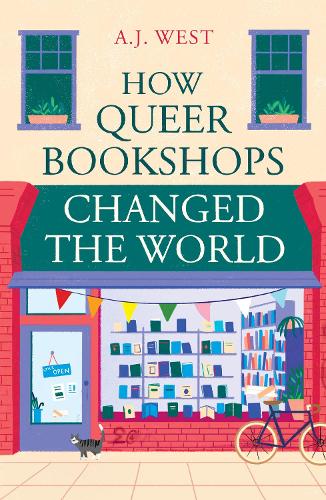
HOW QUEER BOOKSHOPS CHANGED THE WORLD, worthy thesis defended with passion


HOW QUEER BOOKSHOPS CHANGED THE WORLD
A.J. WEST

Oneworld Publications (non-affiliate Bookshop.org link)
$14.99 ebook, available now

The Independent Press Top 40 Bestsellers: Non-Fiction For the week ending June 30, 2026

Rating: 4.75* of five

The Publisher Says: For over a century, LGBTQ+ bookshops have been the unsung heroes of queer liberation

Home not only to books but chaotic community noticeboards, vicious rescue cats and countless meet cutes, queer bookshops have always been more than just bookshops, offering friendship, solidarity and sanctuary.

Traveling the world—Shakespeare and Company in Paris, Gay’s the Word in London, the Oscar Wilde Bookshop in New York—A. J. West explores the remarkable history of these bookstores. Tracing their evolution from under-the-counter operations to beloved out-and-proud institutions, West reveals how the queer bookshop stood at the vanguard of LGBTQ+ rights, offering support and vital information through the AIDS crisis and bringing the fight to Section 28 and book bans.

A powerful testament not only to bookshops but to the courage of queer booksellers, from Sylvia Beach hiding books from the Nazis in laundry baskets to Craig Rodwell facing off against the police at the Stonewall riots, A. J. West celebrates the shops and booksellers that brought queer literature and lives into the mainstream.

I RECEIVED A DRC FROM THE PUBLISHER VIA EDELWEISS+. THANK YOU.

My Review
: I'd give it a perfect rating if I hadn't felt so put-upon with the opening chapters speed-lining queer history.

It was my emotional reaction. I'm not wrong; I literally cannot be wrong about my feelings.

It's necessary to put not-queer, or new to their history queer, readers in the picture of what these trailblazing heroically brave people did and what they risked for us all to have access to queer stories. It is breathtaking, and eye-opening, and quite honestly shaming for those of us not willing or able to stand up against Authority for the good of all.

It is more clear to me than ever before that the urgent project of the authoritarians trying to ban queer books, the tech scum trying to make all knowledge available only on their say-so and the seeker's ability to pay any vig "They" choose to demand, and the ruling class's desire to keep you as stupid as possible intertwine like snakes on Medusa's head. The underknown prophet of this future we now live in, Sinclair Lewis, wrote: "When fascism comes to America, it will be wrapped in a flag and carrying the cross."

Look around you...that was prophecy, not fiction.

Author AJ writes about the past in this book. It could, one day soon, feel like an elegy for les jadis if you and I are not very careful and very intentional in our actions in November 2026. It's fragile, this thing called Liberty, and it's always been very, very unpopular with with the ruling class. We-the-people have already seen how much control "They" want after women's bodily autonomy was stripped away from them in the US. Revoltingly it was enabled by a quisling woman. All of these struggles, legal battles, and societal shifts are under long-term and well-funded attack. How I wish more people had listened when Hilary Clinton spoke that truth.

Author AJ details the harms this determined regressive minority causes with seeming impunity in his chapters on the role of AIDS amelioration and drag-queen story hour bannings. Restraining the flow of often life-saving information to those in desperate need of it, and excluding people "They" don't like such as gender-nonconforming people, are terrible actions on their face. The true evil doesn't announce itself. It unfolds as Author AJ shows us consequences.


The best kind of non-fiction writing tells you a story that evokes emotional responses from the reader. I've seldom been more emotional in my response to a true story that does not involve a murder. Author AJ deserves all the kudos there are for bringing a storyteller's constructive attention to this crisis in our body politic.

Wednesday, July 1, 2026

JUNE/PRIDE MONTH/2Q2026 IN REVIEW

amazing advertising artwork promoting the new Dune movie

It was Pride Month here on my blog. I focused on queer reviewing for the whole month (and a little bit of May). I wrote twenty-eight specific-to-Pride reviews. Twelve of those were June 2026 DRCs (out of twenty June 2026 DRCs reviewed this month, and a slightly appalling SEVENTY-FOUR June DRCs I received. Seriously...one less than my LibraryThing home group's annual goal in one month?! Who do I think I am, Biblio-Terminator?).

I'm torn between The Invention of Nature, a biography of my elder sibling in gay-maleness Alexander von Humboldt, and Medea Sang Me A Corrido as my favorite Pride reads. I thoroughly loved Villain but it was less clearly queer than Hench so got a hair less luuuv from me. The Summer Boy was a lovely read, a story I felt was aimed directly at me; yet it wasn't as energetic, as actively pursuing my attention as my two favorite candidates. I read two Steven Rowley stories, liked both, but...not quite enough to warble my fool lungs out over them. It was a good 2026 Pride crop, one to savor in memory, and makes me very glad I didn't pressure myself with a numerical goal so I didn't fret about "making progress" or other such artificial stricture. I'm labeling this tracking project a successful trial. Maybe I'll aim for a numerical goal in 2027. I have a solid eight months to decide, no rush....

In June overall, I wrote thirty-six reviews. I received a slightly appalling SEVENTY-FOUR June DRCs; thus my reviewed-DRCs percentage is a barely tolerable 48.6%. I'm obviously quite greedy, and a fast reader, but THAT is worrying me. It could be years before I review those generously gifted-to-me books! I must work on my s(h)elf control.

Of the sixteen reviews for not-QUILTBAG books in June, one stands out like a lighthouse in the living room as a "please please pleasepleaseplease read this book": The Reverse Centaur's Guide to Life After AI by Cory Doctorow. It's important. Please read it. Get it from your library if you don't want to spend money on it. Just read it. Please. In those sixteen non-QUILTBAG reviews there were no fictions that I found terribly exciting. The crappiest book I read in June was Puck, and I am not kidding when I tell you the one I'm talking about here gets lost in one's search-results options because the hockey-romance craze is INSANE! Puck-the-character adapted here from Shakespeare turned me off completely.

So I soldier onward to July, and the third quarter of 2026. I expect to see a dramatic decrease in my blog's engagement because Bluesky no longer allows me to access it through my browser...it insists on being the only thing on my screen, being vertically formatted, and thus unreadable for me. I do not expect them to reverse course so I'll be on their site at most a few times a day. I hate it when tech scum make decisions for me. They *never* get it right. ENSHITTIFICATION is real. Like the way the goddamned motherfucking AI decided I wanted to capitalize "enshittification" when I did not.

The second quarter of 2026 saw me write reviews for 105 books in total, sixty-three in their publishing month. That's out of a total of 171 DRCs received for this quarter, or 37% reviewed in the month they were published and 60% of my total reviews written. I was most eager to read The Violence: My Family's Colombian War because Author Adriana is an old friend's daughter-in-law, who happens to be a very talented writer. It was a great success in the marketplace, and with me. The second of my two current possibilities for 2026's six-stars-of-five read is a non-fiction book for the first time ever: A Bird's IQ: Innovation, Intelligence, and Problem Solving in the Avian World is by Louis Lefebvre and translated from French by Pablo Strauss. It was a surprise to me how much of Author Lefebvre's earlier novel-writing training held over into his non-ficton prose creation without making it feel as though he was book-horning pretty sentences into places they felt brummagem or incongruous.

Overall, I liked non-fiction a lot more than usual this quarter, with some tippy-top reads as well as a true shocker coming from that genre. The shocker was Self-Help from the Middle Ages: What the Seven Deadly Sins Can Teach Us About Living by Peter Jones; self-help's a genre I view with great skepticism based on what "They" tell you it is, ie a way to fix problems. It's much more interesting to me as a barometer reading of the culture's current obsessions, and the average person's most pressing personal fears. This book managed to be a bit of both. That was a pleasant surprise, plus I liked Author Peter Jones's presentation of self.

Looking ahead to July, I'm not going to kid around: I have forty-two DRCs of July-date reads unreviewed out of forty-three received (as of 1 July, it could go up as the month wears on). I want to get half of those reviewed. I plan to prioritize political books as we head into midterms this quarter. I've got a lot of political-reads noted already from years gine by. I've always held back because so many people I know just flat refuse to put in the work of reading the books. That's no longer something I can factor in to my review-writing queue. The stakes are too high to pander to lowest-common-denominator reading habits.

Can't make y'all read the books, or the reviews, but you'll have to make a conscious choice to skip them.