Showing posts with label lesbian representation. Show all posts

Wednesday, September 2, 2026

FRUITS OF OUR LABOR, very trenchant, very loudly thinking about taboo topics


FRUITS OF OUR LABOR
IAN PATTERSON

Shiraki Press (non-affiliate Bookshop.org link)
$9.99 ebook, available now

Rating: 4* of five

The Publisher Says: A new world is emerging, one parthenogenetic birth at a time.

In a near-future America where women have just achieved asexual reproduction, Samara yearns for freedom from her dying relationship, and a child of her own—fully her own.

As parthenogenetic birth takes hold and the role of men in the survival of the species diminishes, protest and outcry sweep across the nation. Sierra, one of the first “partho babies”, is bullied relentlessly as she grows up and seeks her place in this new pressure cooker of changing gender roles and norms.

And in the aftermath of the “Days of Horror”, a period of violent backlash from displaced men, a professor of history looks back on the rise of PG birth in an attempt to understand the impact of this era of upheaval on the world.

Together, these three converging perspectives tell the story of a profound societal transformation that asks who gets to have autonomy, who gets to write the future, and who that future is for.

I RECEIVED A DRC FROM THE PUBLISHER VIA NETGALLEY. THANK YOU.

My Review
: What fresh hell is this, Dorothy Parker famously (sort of) said. It's probably a situation that sounds perfect to some, reproducing only yourself; it eliminates some troublesome, destructive friction in society.

Does it? Would it? Could it?
"Maybe it’s evolution, maybe it’s divine influence, but at the end of the day, does it matter? I’ll let you in on a secret: I don’t think I’m special at all. I’m just the first woman to figure out she didn’t need a man to have a baby. I bet you we’re all capable of it, of self-birth. And if every woman out there focused on it like I did, I think we’d find our true power. And it would change everything."
It's a novella, under 160pp, and it's told in multiple timelines; pay attention, or who is speaking to you could easily slip away from your awareness. It's well-paced and well-designed to make its points with facts (parthenogenesis is seen in all other lineages, but not mammals, so it's not a stretch to see how it might develop) and conjectures (the Manosphere would have hysterics over this and it's not hard to see how violent the response would likely be to this). As an exploration of an idea this is fascinating. As a summation of the awful state of gender politics, it's chilling. And as a meditation on what is invisible to those in the binary mindset, it's...essentialist. No one transmasc has a viewpoint at all; I'm not surprised, because we're talking about exalting Woman, after all. No one transfem is in the book, either; are these oversights or just biases that permeate culture so deeply they're invisible in this Brave New World of all women?

Can't get to a perfect five, but I can definitely say I think more about these issues of sex-essentialism and gendered violence in this framework. I'm fascinated by every twist and turn in the compact story, and hope y'all will be too.

Wednesday, August 5, 2026

LIARS IN PARADISE, Olesya Lyuzna's1920s queer-led mystery series gets its book 2


LIARS IN PARADISE
OLESYA LYUZNA

The Mysterious Press (non-affiliate Bookshop.org link)
$11.99 ebook, available now

Rating: 4.25* of five

The Publisher Says: With five days to clear her partner’s name after a horrific crime, private detective Ginny Dugan infiltrates a cultish secret society on Long Island’s Gold Coast in this champagne-soaked followup to Glitter in the Dark.

New York City, 1925. A night of high-stakes gambling at the Empire Club ends in gunfire and Jack Crawford is found at the center of the carnage—covered in blood, gun in hand. The club’s ruthless owner offers Jack an ultimatum: find the real shooters within five days, or die for their crimes.

Ginny Dugan hasn’t known Jack long, but as his partner in their detective agency, she needs to believe she’s trusted the right man this time. Their only lead is Lila, the sole survivor of the massacre. They follow her to a queer dance hall in Glen Cove, a Long Island Gold Coast town whose glittering summer estates now stand empty in the November chill. Among those who knew Lila, one name keeps surfacing: Echelon, a seductive society where fortune is promised to those who surrender everything. Convinced the answers they seek lie within, Ginny and Jack infiltrate its ranks, where they encounter silent masked attendants, serpents sliding over bare skin, and members who seem to know more than they should—especially about Jack.

As the body count climbs and Jack’s past resurfaces in unsettling ways, Ginny begins to doubt her instincts, her partner, even her own reality. Maybe she was never in control. Maybe she was brought here to play someone else’s game.

I RECEIVED A DRC FROM THE PUBLISHER VIA NETGALLEY. THANK YOU.

My Review
: Author Lyuzna's previous book Glitter in the Dark gets a sequel. I was delighted to hearit was coming, I missed the wonderful immersion in the slightly-too-full hot tub of Lyuzna's 1920s glamour

People who want, who yearn for something are the ones easiest to manipulate. Show them a path that guides them through the yearning process and you've got 'em in your conytol. There's always something left behind in achieving a goal. That something is...useful...to someone who wants to control the yearner for fun and profit. And that something needs receipts to be truly, enduringly useful, as well as backed up by demonstrated willingness to use it to harm others (but never me, says the voice of hubris very quietly).

Ginny does not believe any secret is worth dying for, it's what makes her such an effective investigator. She's taken Jack on as her...partner, possibly maybe in more than one sense of the word, this is still in flux...knowing there are secrets in his past, though not what precisely they are. She's confronted with them after she foils a knife attack on a stranger.

Are you feelin' the vibe here? We're in a melodrama. We're heading into the choppy waters off the rocky coast leading to Safe Harbor; our vessel is a bit too small to plow through the waves, maybe the wind's shifting to lift spray into our eyes, where are those damn life jackets anyway? It's a familiar setting in general, but the specifics are what burnish the brasses.

Jack's darkish past is tied to the Big Bad of this story, Dickie Stryker. He's a very familiar character in the twenty-first century: charismatic cult leader, prosperity gospel pusher, blackmailer extraordinaire. Jack's entanglement with him is the ostrich-sized chicken that came home to roost. Ginny's own secrets, the woman who got away for example, are unsurprisingly going to need some dealing with as the waves get fiercer smashing against the rocks outside Safe Harbor. Dickie knows a lot, doesn't have a second's heitation about using what he knows to force Ginny and Jack to deal with his problem or face their vessel being holed (Jack's impending murder) in the heaving story-seas.

Overheated? Yes. Fun? Yep!

It's well-constructed as a mystery. I found not plot holes that didn't feel like secret doors to future installments in the series. I thoroughly enjoyed the bisexual representation...something I don't see too much of in mysteryworld...and appreciated Ginny being drawn as a woman very much in charge of her fate in a time period where that was believable but still very difficult. (Not that it's ever been easy.) It makes the Jazz Age setting have greater depth to see these glistening highlights against the dark, terrible background of Power being flexed.

Echelon, our nexus of Power, is appallingly familiar to readers in 2026. If you read this story and still need a map drawn of how the hideous cult of Power we're watching unravel in 2026, you're probably best suited to religious stories and should not be reading my reviews. It's very much a tropical island transferred to Glen Cove (a lovely place that deserves better). As Author Lyuzna builds out the ugly way the Echelon cultists dig the canals leading to Safe Harbor only through dangerous territiry, the twist and doublebacks and unexpected locks that impede the trip become more and more baroque. The slang of the era is lots of fun to read, making this world feel Other and lived in at the same time. It's a storytelling technique I always like to see. Firefly and Battlestar Galactica and Riddley Walker and A Clockwork Orange have all used the same idea; all are celebrated as successful on a storytelling basis at least in part because the creators were attentive to the details at this high of a level.

I'm not all the way convinced the more melodramatic flourishes are necessarily a good ide in a series. Cecil's knife attack tying back only coincidentally to Jack's secret past is my best not-spoilery examplee (it's literally the beginning of the story). It feels forced; it's there that I suspect the bridge to the period setting could let the author down a bit. This exact storytelling trope is torally of the period we're within. A lot of less talented authors might run with the faux-Golden Age-ness of the story with an intrusive framing device. Author Lyuzna leaves the frame in 2026, tells the story that could best happen in the Jazz Age with a modern societal lens but does not force the action to conform with 2026's expectations. The consequences, the need to obey older cultural norms, are still present.

But there's always a course between the rocks, up the canal, into Safe Harbor at last. Makes for an exciting journey.

Wednesday, May 20, 2026

VILLAIN (Hench #2) is Author NATALIE ZINA WALSCHOTS long-awaited and worth the wait sequel


VILLAIN (Hench #2)
NATALIE ZINA WALSCHOTS

Watch the inimitable Nancy Pearl interview Author Walschots here!
William Morrow (non-affiliate Bookshop.org link)
$14.99 ebook, available now

Rating: 4.75* of five

The Publisher Says: The Boys meets Starter Villain and Assistant to the Villain in Natalie Zina Walschots’s electrifying, sharp, violent, and hilarious sequel to the highly acclaimed novel, Hench, in which the Auditor must confront the near-impossible in order to right the many wrongs in the superhuman industry…or cause more of them. She’s not picky.

Anna, better known to superheroes as the Auditor, has carved out a name for herself. Any hero unlucky enough to cross her path knows her potential and powers. Surely, success should taste she has an incredible job with lots of perks, and her boss will literally annihilate anyone who crosses her, and her greatest enemy, the former hero Supercollider, has been utterly defeated and literally ground to a pulp.

But Anna still has her sights set on a greater destroying the Draft, the organization that makes, trains, and manages the world’s most powerful superheroes. These “heroes” have shown time and time again that they do more harm than good, and now is the time to stop the damage at its source.

Yet all is not well for the Auditor and her fellow evildoers. Her employer, Leviathan—the world’s most feared supervillain—is not coping well with Supercollider’s defeat at someone else’s hands. Moreover, her unlikely ally and unexpected friend, Quantum Entanglement, has vanished without a trace, leaving Anna to examine all the ways they deceived each other. Tension and uncertainty fill the air, and fear that this moment of triumph is about to crumble looms over all of them.

Anna soon finds herself facing down an opponent unlike any she’s taken on before—not another superhero, but someone like her…someone much more the Draft’s Chief Marketing Officer. This isn’t a test of physical prowess, but ideas, and as the fight spirals deeper and deeper, with new foes popping up every day—she’ll need more than just her superpower—data research—to keep ascending through the supervillain ranks.

It’s guerrilla ad warfare, and the Auditor might have finally met her match.

I RECEIVED A DRC FROM THE PUBLISHER VIA NETGALLEY. THANK YOU.

My Review
: It took five years, but the sequel I've quietly pined for has arrived. I downloaded the DRC in February, started reading it in late March, and finished a final pre-review skim last night. I treated this read as a reward, an experience to be savored, because Hench was such a completely fresh experience that it made me rethink the messaging of superhero crap, made me consider how subversion can in fact look like participation or even celebration. I liked The Boys because it's taken that idea to its logical end-point; but it came after Hench had prepared me psychologically for its storytelling mode.

The Department of Superheroic Affairs, aka "the Draft," is the organization that's responsible for everything involving superheroes. They do the recruiting, training, and funding...who ever stops to think about the accounting and expenditures that enable superheroes to blow apart entire city blocks? can you even imagine the insurance bills?!...and they create the most compelling backstories for them that they can. It means only certain tropes survive time-testing as superheroes wreak havoc in order to "save" people from supervillains.

Who also have an organizational structure centered around Leviathan, for whom our dear Anna...formerly Electric Eel's hench, now known as the supervillain "The Auditor" (if that yclepture doesn't provoke horripilation you've never filled out an accounting reimbursement justification)...serves as right-hand person. Leviathan, after the end of Hench sees the biggest rival he has (Supercollider) fall to richly deserved intimate betrayal orchestrated by Anna/The Auditor, is too depressed by the newly unchallenging world he lives in to be effective in supervillainy. Anna/The Auditor needs to snap him out of it but, in a truly tropey twist, The Draft hires a new marketing manager. One who is Anna/The Auditor's equal or possibly superior in data analytics and statistical modeling...the secret superpowers that brought Supercollider down. Now Supercollider is permanently damaged, and dies as the Draft's medics are trying to "untangle him from himself," and the Draft's new marketer finds enough dirt to plausibly, if inaccurately, pin responsibility for his death on Leviathan.

Hijinks ensue.

To look into this only-slightly-distorted mirror world is to see 2026 explained without didactic shouting, blaming, and finger-pointing. It's all here, all the guilty parties are lined up for our scorn and contumely to be unloaded on them, and exactly like real life they are everywhere not just on one side. False dichotomies like hero-v-villain aren't allowed to stand; the acts perpetrated are equally awful, are not discernably different in their results. They're not different in their motivations, either; each "side" is only out to do down the other side and then justify the carnage for everyone else later.

It is here that I come fully into my love of Author Natalie's storytelling. The battling sides are not contesting opposing ideas, arguing through competing society-wide organizational plans, they're solely and entirely focused on hurting each other in increasingly horrifying ways. What that means for non-combatants is (yet again) not part of the calculus except insofar as the optics can be used against the other side.

As Leviathan re-awakens to his supervillainous purpose, Anna/The Auditor and her scoobygroup are stretched on practical and emotional levels to achieve Leviathan's purpose and counteract the Draft's new, high-powered team that uses Anna/The Auditor's innovative techniques against them. As in Hench, the emotional costs of violence, loss, betrayal, and fanaticism are personalized while the impersonal systems grind on propelled by the suffering people behind the major players.

I think Author Natalie took her time...I understand she re-wrote this book four times...to very good effect. I got invested again immediately despite the long interval between reads. I was deftly reminded of things necessary to remember instead of infodumped on; I was also shown how time has passed in the storyverse and the changes that has wrought on significant relationships. It's a fine achievement in storytelling craft. The ending is not A Conclusion. There is openness in its action to either another sequel (yes please!) or simply room for you-the-reader to headcanon something you'd like for the characters. It works for soap operas and comic book series, why not for a supervillain's difficult choices and incomplete emotional development?

I recommend the read; it's not utterly necessary to read Hench first, but why wouldn't you want to? It's a series with a lot to say about the world we live in, and what it says I agree with, so I'm recommending it to all y'all, even the superhero/comic book averse.

After all, that described me before this series came my way.

Wednesday, July 23, 2025

SALT BONES, Demeter & Persephone on the Mexicali border


SALT BONES
JENNIFER GIVHAN

Mulholland Books (non-affiliate Bookshop.org link)
$14.99 ebook, available now

Rating: 4.25* of five

The Publisher Says: For fans of Silvia Moreno-Garcia’s Mexican Gothic and Ramona Emerson’s Shutter: a gripping retelling of Persephone and Demeter in the Mexicali borderlands

At the edge of the Salton Sea, in the blistering borderlands, something is out hunting. . .

Malamar Veracruz has never left the dust-choked town of El Valle. Here, Mal has done her best to build a good life. She’s raised two children, worked hard, and tried to forget the painful, unexplained disappearance of her sister, Elena. When another local girl goes missing, Mal plunges into a fresh yet familiar nightmare. As a desperate Mal hunts for answers, her search becomes increasingly tangled with inscrutable visions of a horse-headed woman, a local legend who Mal feels compelled to follow. Mal’s perspective is joined by the voices of her two daughters, all three of whom must work to uncover the truth about the missing girls in their community before it's too late.

Combining elements of Latina and Indigenous culture, family drama, mystery, horror, and magical realism in a spellbinding mix, Salt Bones lays bare the realities of environmental catastrophe, family secrets, and the unrelenting bond between mothers and daughters.

I RECEIVED A DRC FROM THE PUBLISHER VIA NETGALLEY. THANK YOU.

My Review
: There's Spanish in here.

Everybody still here, this is a retelling of Demeter and Persephone, probably the original mother-myth in Western culture. It is also notable that Demeter's the oldest sister of baby Zeus...that energy surrounding maleness surrounds this entire story.

Are the whiny man-babys gone yet? Good.

The gynergy is strong in this one, folks. All the horror, and there's a lot of it, stems from problems and issues around femaleness in our highly misogynistic culture. Women are, for a wonder, presented as misogynistic as hell in here, and all the monstrous, horrifying behavior is portrayed as affecting women. (Why the fathers aren't ever fussed I'll leave to your imagination.)

Invest in the first quarter to third of the read as your acclimatization, get used to Mal and her pueblo's speech patterns, and (ebook users only) try out the built-in translation feature to get the hang of Spanglish, then cruise through the story that fills in the lines of the old myth in a really fun...not the right word, but "interesting" is so juiceless and "involving so cerebral...unexpected way.

It's a dark reality that Mal's fears and worries are rooted in the ugliness that is femicide, a too-easily-dismissed issue plaguing la frontera. Stories like this one are ways to increase awareness of the precarity of simply existing as a female, or in a female body, in so many parts of the world. And like the real world, some people have privilege, even when bad things happen to and around them. Seeing the author present this as a reality, well...brava for doing it at all, and do it more, please.

The Salton Sea is important enough to the read that I recommend you acquire basic knowledge of it, its existence and origin, before embarking on this fascinating thriller. I found the pace fast. I don't think everyone will. I hope you'll try, though.

Saturday, December 21, 2024

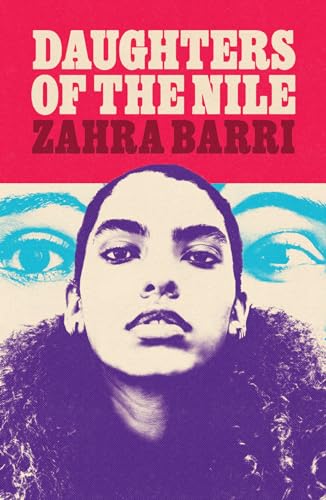
DAUGHTERS OF THE NILE, extraordinary sapphic family saga


DAUGHTERS OF THE NILE
ZAHARA BARRI

Unbound (non-affiliate Amazon link)
$6.15 Kindle edition, available now

Rating: 4* of five

The Publisher Says: A bold multi-generational debut novel exploring themes of queerness, revolution and Islamic sisterhood.

Paris, 1940. The course of Fatiha Bin-Khalid’s life is changed forever when she befriends the Muslim feminist Doria Shafik. But after returning to Egypt and dedicating years to the fight for women’s rights, she struggles to reconcile her political ideals with the realities of motherhood.

Cairo, 1966. After being publicly shamed when her relationship with a bisexual boyfriend is revealed, Fatiha’s daughter is faced with an impossible decision. Should Yasminah accept a life she didn’t choose, or will she leave her home and country in pursuit of independence?

Bristol, 2011. British-born Nadia is battling with an identity crisis and a severe case of herpes. Feeling unfulfilled (and after a particularly disastrous one-night stand), she moves in with her old-fashioned Aunt Yasminah and realises that she must discover her purpose in the modern world before it’s too late.

Following the lives of three women from the Bin-Khalid family, Daughters of the Nile is an original and darkly funny novel that examines the enduring strength of female bonds. These women are no strangers to adversity, but they must learn from the past and relearn shame and shamelessness to radically change their futures.

I RECEIVED A DRC FROM THE PUBLISHER VIA EDELWEISS+. THANK YOU.

My Review
: A powerfully imagined story of how very lucky we are to be alive at this moment in world history, when even sixty lousy years ago...within my lifetime!...options for women, for gay men, and for overall independence from patriarchy were as unimaginable as escape from the divine right of kings were three hundred years ago. While this story of a family's women moving from tradition to liberation is a carefully thought-out demonstration of hurdles failed, hurdles overcome, and hurdles only now hoving into view, it has a structural weakness. Most multiple-timeline stories have this same weakness: As we move from timeframe to timeframe, focusing a different woman in each, we lose forward momentum. It takes reading time to recover the investment made within each timeframe. Yasminah is indeed a constant, though not always foregrounded, presence; this helps with, but doesn't overcome my issue.

It mattered to me because the locations should have felt different in really evocative ways...Paris, Cairo, Bristol might as well be on different planets!...but I had to refocus my emotional temperature to a new main character. I'm not trying to be unkind or dissuasive; I really enjoyed this journey through the world's astonishingly rapid growth, and equally disheartening failure to learn lessons from past failures.

It's a very inexpensive Kindlebook. I'd tell any of my women readers, especially the sapphic ones, to get this all loaded up for solidarity's sake. Your family "Togetherness" will be that much easier to bear if you read about an earlier generation's struggles. We all need to know we're not alone, and part of that is knowing we're not the first either.

It is a fine piece of writing, and of story-telling; it *just* fails at greatness for this old man reader.

Thursday, June 20, 2024

I NEVER LIKED YOU ANYWAY, I feel like Colin Clive should be shouting "IT'S ALIVE! IT'S ALIVE!"


I NEVER LIKED YOU ANYWAY
JORDAN KURELLA

Lethe Press
$11.00 trade paper, available now

Rating: 4.5* of five

The Publisher Says: Eurydice is dead, and hell is a school. She has to learn Hauntings, Baking Disasters, Threads of Fate, and all the other classes a newly dead soul needs to master before they're ready for what comes next. Eurydice is still processing the disastrous relationship that sent her into the land of the dead almost as soon as she was married to the brilliant love of her life, Orpheus.

She'll tell you how he swept her off her feet, and how their polyamorous group swept each other up in music and art and art theory and a life of creation from destruction, but mostly just destruction. But, this isn't their story. Eurydice is dead, and failing all her classes, and she knows Orpheus is coming to get her out. Not that he cares, but that's not what she wants. And, she's the only one who truly knows how Orpheus and Eurydice's story ends.

I RECEIVED A DRC FROM THE PUBLISHER VIA NETGALLEY. THANK YOU.

My Review
: The term "disaster bisexual" gets a lot of airplay in this retelling og Orpheus and Eurydice. It very much fits. Everyone.

That's it. That's the review. In spirit, anyway.

I've heard many times over the years, "why can't They just leave {cultural shibboleth} alone? Why do They need to make it about Them?" Because it is about them, and if changing skin colors, genders, clothes, languages makes it more about them in ways they want it to, so be it. The only They who want things to be "left alone" are the "They" who want closet doors swung shut, schools to lead prayer circles, and women to admit they liked it.

This wildly 21st-century setting for the timeless myth of complicated love and its pangs, pains, and consequences, suits the spirit of the Archaic original in exploring the ways communication and courage fail in tandem. It brings the idea of The Grand Passion, The Noble Sacrifice, The Fame of Great and Good Men into sharp, pitiless relief when it's shorn of its togas and chitons, vivified out of its marmoreal bloodless heft into lively, real banter and passionate, full-throated desire.

Is this the best example of a queer myth retelling I've ever read? That would be Patroclus retelling the Iliad. But it is very funny, fun to read, and more like the way I suspect the mythcrafters intended the entire enterprise to play out in the original Bronze-Age dialect. Thev fussy, sexually neutered Myth we're accustomed to, the one They want us to leave alone, was...I promise you this...not the way it was first told.

So revel in this big, bold, bawdy recovery, this excavation of the graveyard of Literature, and drink the cold refreshment of a real, honest, genuinely felt myth for the first time in millennia.

Sunday, June 16, 2024

VICTORIES GREATER THAN DEATH, well-deserved 2022 Locus Award for Best Young Adult Novel


VICTORIES GREATER THAN DEATH
CHARLIE JANE ANDERS

Tor Teen
$18.99 hardcover, available now

Rating: 4.5* of five

The Publisher Says: Tina never worries about being ‘ordinary’—she doesn’t have to, since she’s known practically forever that she’s not just Tina Mains, average teenager and beloved daughter. She’s also the keeper of an interplanetary rescue beacon, and one day soon, it’s going to activate, and then her dreams of saving all the worlds and adventuring among the stars will finally be possible. Tina’s legacy, after all, is intergalactic—she is the hidden clone of a famed alien hero, left on Earth disguised as a human to give the universe another chance to defeat a terrible evil.

But when the beacon activates, it turns out that Tina’s destiny isn’t quite what she expected. Things are far more dangerous than she ever assumed. Luckily, Tina is surrounded by a crew she can trust, and her best friend Rachael, and she is still determined to save all the worlds. But first she’ll have to save herself.

Buckle up your seatbelt for this thrilling sci-fi adventure set against an intergalactic war from international bestselling author Charlie Jane Anders.

I RECEIVED A DRC FROM THE AUTHOR. THANK YOU.

My Review
: This is, hands down, the queerest YA book I've read.

I really could stop writing now with the injunction for you to go get a copy and read it before setting it loose into the library, the Little Free Library, the bus subway breakroom etc etc. Tina and her found families are urgently needed in a world where the ugliest, most hateful and judgmental people are launching their latest attack on progress, inclusion, and a better world.

Same as it ever was.

What the younger readers will learn from reading Aunt Charlie Jane's book is that there is a future, and it can look the way you'd like it to look...but you have to be willing to move outside your boundaries, you have to embrace your ability to make, find, and accept the world's wildness and surprises. Your efforts will pay off in proportion to your commitment to them.

How Author Charlie Jane accomplishes that is to take one teen girl, one best friend of teen girl, and hurl them into a cosmic battle of good against evil. Do you know a teenager...have you EVER known a teenager...who did not resonate like a struck bell to this plot? And then Author Charlie Jane shakes the soda bottle to fizz up the stakes by making everyone in the girls' expanded universe into some form of different, but without Othering them for the differences...after all, if the way you just are is somehow different from how I am, who says *I* get to decide that YOU are the Other?

This is a truth that permeates all Author Charlie Jane's work. It makes the banners and haters and deniers completely mental. Since I think making those sorts of people wildly uncomfortable is a very worthy cause, I want to support it wherever I can.

While I love a dense, richly textured world, I'm an old man and have been reading since before Author Charlie Jane was born, so I found the expository bits too frequent and a smidge too detailed for my reading pleasure to morph into joy. They seem a touch overdone for today's SF-savvy youth, if I'm honest; but that is a thing I'm happy to see because it means this book can be an onramp into SF for even the most innocent and unworldly young person.

Matching my expectations, then, was not her project...that was what she did with Even Greater Mistakes, her other work from the annus mirabilis that was her 2022...but speaking to her audience, to the future leaders and readers. This is a wonderful thing, an excellent project, and a top-quality execution of it.

Gift it. Read it yourself, then give it to all the young readers you know.

Friday, June 14, 2024

GIRLS WHO LIE TOGETHER, exactly what it says on the tin


GIRLS WHO LIE TOGETHER
JESSA RUSSO

Kindle Freebie
$0!

Rating: 2.5* of five

The Publisher Says: Easy summers lead to hard falls in this Grease meets Mean Girls contemporary romance…

When seventeen-year-old Renata Carpenter hijacked her stepdad’s classic car, she hadn’t planned on totaling it and landing her best friend in a cast from hip to heel. She definitely hadn’t planned on being sent to a work program in New Orleans as punishment. And she certainly hadn’t planned on falling in love.

But Ren’s summer of forced manual labor has a bright side: her name is Brit, and she’s everything Ren never knew she needed. First love becomes first heartbreak when their summer romance comes to a crashing close earlier than anticipated. Adding insult to injury, Ren’s break-up with Brit is followed by a big move to a small town.

As if starting senior year completely alone isn’t bad enough, Ren soon discovers that the Hell on Heels mean girl who rules Sun Ridge Prep with an iron fist and a vicious tongue is none other than her first love. Too bad this Brit is far from lovable.

But Ren knows the girl beneath the façade, and she refuses to give up on rekindling their relationship. Secretly, the girls pick up where they left off, falling deeper in love and risking it all to be together. But when their affair is exposed by Brit’s boyfriend, Ren and Brit are faced with the ultimate choice: love or acceptance.

Because they certainly can’t have both.

I RECEIVED THIS BOOK AS A PROMOTION. THANKS!

My Review
: The author markets this as a YA title. I disagree. I'd hesitate before I gave it ti a sixteen-year-old, or a naïve seventeen-year-old. So let's say it's more a New Adult title.

It's definitely on the money with the Mean Girls comparison. Ren is a classic Mean Girl. She's also a very horny character, and no respecter of boundaries. Brit: "I'm not gay!" Ren: "Get a load of those tits! Such a sweet pair of [upper]lips!"

Then there's the slur usage. I get reclaiming words, and even use queer myownself these days. That was a nasty one in my youth. But using slurs and only slurs? Not now, not ever. That's reinforcing abuse.

While I thought Brit was toying with Ren's feelings...denying you're gay does NOT absolve you of responsibility for behaving sexually with someone of the same sex...I found Ren deeply dislikable and overbearing. Brit's manipulative. Neither is someone I'd like to spend any more time with.

The main issues above weren't made better by the way the story is structured, with time-gaps that just make the chemistry between these two feel very unlikely for teens to experience. The writing was okay, with flashes of creative interest once in a while. Not a favorite read. Caveat emptor re: sexual content.

Thursday, June 1, 2023

THE KELLY ANN JACOBSON PAGE for the DISCERNING YA reader: ROBIN AND HER MISFITS, & TINK AND WENDY


ROBIN AND HER MISFITS
KELLY ANN JACOBSON

Three Rooms Press
$14.00 trade paper, available now

Rating: 4.5* of five

The Publisher Says: A roving female gang of fun-loving rebel bikers, street racers, and bandits led by Robin agree to give back to queer girls in need of help in this stunning modern reimagining of the Robin Hood legend.

Robin and her four Misfits—Little John, White Rabbit, Daisy Chain, and Skillet—have run away from their families in order to live off the grid on their own terms. For a while, they’re hidden, safe, and happy as they commit petty crimes that provide enough to get by. All that matters is keeping their small clan alive. Then, one mission proposed by an unfriendly associate from their past reminds them of their former lives and motivates the group to a new purpose. The five Misfits develop into a league of strong individuals united by a fresh goal: do whatever it takes to help queer girls rise above oppressive laws and attitudes.

Kelly Ann Jacobson, the author of the award-winning LGBTQ+ young adult novel Tink and Wendy, is back with another diverse twist on a popular legend.

I RECEIVED A DRC FROM THE PUBLISHER VIA EDELWEISS+. THANK YOU.

My Review
: I love Daisy Chain the best because her sibylline utterings aren't remotely clear to her listeners, fellow very young women, except by accident; or, I suspect, by her deeply sneaky inner sibyl wishing to make clear messages only occasionally.

The Prologue, by its nature, is a giant spoiler. Even I, deeply indifferent to spoilers, thought as we then moved back in time for the bulk of the novel, "what's suspenseful now that I know what I know?"

"There is nothing either good or bad, but thinking makes it so."

In that Daisy Chain-uttered Shakespearean truism, laddies and gentlewomen, lies the essential truth of this book. Every runaway runs out of steam at last. All lies are signposts aimed directly at the truth. And when eternal runaway Daisy Chain at long last finds herself, she then finds the greatly belovèd carved-granite mass that is Robin right where she left her.

So that Prologue? What does it spoil? Does knowing where mean how has no value? Or is "Don't waste your love on somebody who doesn't value it" more than one lie told in one sentence? That hand is always pointing its curled fingers directly at the truth of love never being wasted because it is valued...if, perhaps, differently than one would ask for it to be...but still valued.

What's on offer here is this: A story designed to be eaten up by young, questioning women in search of Identities in a world awash with given, never chosen, names. It's going to offer those young women snow chains for the tires on the unchosen, unsuitable dune-buggy that in their ill-suited design keep slipping on the glaciers where they inexplicably find themselves. This story can be their Nottingham of the spirit while their bodies work out how to steer their unstable, utterly unreliable transportation on to as-yet-unseen safer paths.

Highly recommended for those young women among your graduating family who could use a nudge to become Robin Hood not the Pretty, prized-but-powerless Maid Marian.

++++++++++++++++++++++++++++++++++++++++++++++++++++++++++++++++


TINK AND WENDY
KELLY ANN JACOBSON

Three Rooms Press
$14.00 trade paper, available now

Rating: 4.5* of five

The Publisher Says: What happens when Tinker Bell is in love with both Peter Pan and Wendy? In this sparkling re-imagining of Peter Pan, Peter and Wendy’s granddaughter Hope Darling finds the reclusive Tinker Bell squatting at the Darling mansion in order to care for the graves of her two lost friends after a love triangle gone awry. As Hope wins the fairy’s trust, Tink tells her the truth about Wendy and Peter—and her own role in their ultimate fate. Told in three alternating perspectives—past, present, and excerpts from a book called Neverland: A History written by Tink’s own fairy godmother—this queer adaptation is for anyone who has ever wondered if there might have been more to the story of Tinker Bell and the rest of the Peter Pan legend.

I RECEIVED AN ARC FROM THE PUBLISHER. THANK YOU.

My Review
: Never for a moment have I believed that the story of Peter Pan and Wendy and the Lost Boys was sweet and Innocent and all on the up-and-up. There is a seedy adult-mediated sexuality in the whole concept of the story. The Lost Boys and Peter trapped in that eternal tween-age: where parents can comfortably if mendaciously Not Know that their kids are steadily, stealthily beginning the sad journey into adolescent sexual awakening. They're busily putting together hints and clues, and feeling weird new things without possessing words to explain them yet. Wendy, here as always the odd creature out, has a body the Boy and his boys don't know inside out already. She has a mind they can't fathom and she can't explain, because who can explain how they are built different from you? And because no one really talks to kids about what they want to know regarding sex and sexuality, parents keep giving kids the original deeply subversive story about the tragedy that befalls the innocent when Innocence is finally and forever lost. Never mind that the kids don't want this Innocence we're determined to protect in them. Having no idea of what Innocence means, the Innocent can't wait to get rid of it.

"It's harmless," goes the reassuring hiss of the lying snake within the well-meaning adult. "After all, it's got a tiny fairy standing between them, so Nothing Can Happen."

That's what this book is about: what happens when the tiny fairy, sick of being Between too many things and having no ground of her own, takes her rightful place in the action. As seasoned readers we know that's the starting gun for tragedy to unfold. This book is about the price that loving one, being in love with the other, exacts on the lover. Also what terrors there lurk within the armor-plated ignorance of being the belovèd. This story rips the dishonesty off the older story of wanting to keep your cake but eat it too...that evergreen source of unhappy resolutions to love triangles. Teach them young that there is no frictionless way to be in love: If you care enough to make it count, like Tink does, you will suffer most when your belovèd suffers. Teach them before they create disaster by refusing to choose, by declining to believe they can, they truly can! have happiness if they bravely reach out for it. It's better done like this than the Innocence-celebrating original.

These readers come away clear about what prolonging Innocence costs. What they probably don't—maybe eevn shouldn't yet— see is the pale and semi-conscious illness-ridden compromised and dishonest simulacrum that will, like here in this story, become the best you can have if you waver betwixt and between, refusing to make a choice.

As stories for youths go, this one is honest, well-told, and contains what looks like a happy ending that is, in fact, a dire warning. I'd time-travel to give this morally complex, intellectually serious retelling of a deeply problematic story told by a very sketchy source I wouldn't let near anyone under twenty-five to every teen I knew when I was one myself.

Monday, July 18, 2022

OUR WIVES UNDER THE SEA, a lesbian-led version of Annihilation


OUR WIVES UNDER THE SEA
JULIA ARMFIELD

Flatiron Books
$26.99 hardcover, available now

One of NPR's Best Books of 2022!

LONGLISTED for the 2023 Andrew Carnegie Medal for Excellence in Fiction!

One of LitHub's 38 Favorite Books of 2022!

Rating: 4* of five

The Publisher Says: Leah is changed. Months earlier, she left for a routine expedition, only this time her submarine sank to the sea floor. When she finally surfaces and returns home, her wife Miri knows that something is wrong. Barely eating and lost in her thoughts, Leah rotates between rooms in their apartment, running the taps morning and night.

As Miri searches for answers, desperate to understand what happened below the water, she must face the possibility that the woman she loves is slipping from her grasp.

I RECEIVED A DRC FROM THE PUBLISHER VIA NETGALLEY. THANK YOU.

My Review
: First, read this:
The space around us is a claw half grasped, holding tight without quite crushing, and I wish, in the idle way I always wish these days, that I felt more confident in my ability to breathe.
–and–
I used to think there was such a thing as emptiness, that there were places in the world one could go and be alone. This, I think, is still true, but the error in my reasoning was to assume that alone was somewhere you could go, rather than somewhere you had to be left.
–and–
Her tone is perfectly reasonable, even kind. Beneath it, however, there is little enough in the way of feeling, a chilly blank where the rest of her voice, as I know it, should be.

Don't think for a moment that this is ever an easy book to read. It's not long, only 240pp, or probably 85,000 to 90,000 words. It's a supremely effective exercise in lovely phrase-making that adds up to an eerie atmospheric story of two women in a marriage based on so many broken places and invisibly tiny hooks on long, thin, almost undetectable filaments that intertwine with the other's reaching filaments...no telling whose reach in, whose reach out, the effect still mimics velcro for the soul.
I used to think it was vital to know things, to feel safe in the learning and recounting of facts. I used to think it was possible to know enough to escape from the panic of not knowing, but I realize now that you can never learn enough to protect yourself, not really.

I felt my impatience with Miri, the wife on land, wax and wane several times during the read...in life I'd find Miri intolerable...and I found Leah more and more relatable, as the quote above could've been ripped out of my mind and prettied up some to be Leah's voice. I understood these two women being together, and I understood why Author Armfield introduced a new Leah-like character to be active for Miri the passive, the sea-like all-absorbing heatless Miri. I understood...but I didn't love.

Too much of what happened reminded me of Jeff VanderMeer's Annihilation, possibly more the filmed version than the book. Too many things left off, dangling conversations like the one in the ancient Simon & Garfunkel song. The eerieness of it is very close to ennui at times, Leah speaks of exhaustion that feels bottomless and that unfortunately is what I took away from this read.

But oh my goddesses, the beautiful phrases. The beautiful, beautiful phrases, the concepts caught in their gem facets, oh my goddesses. Give me that all day long. I promise I won't complain a peep about the "plot".

Wednesday, June 29, 2022

THE VISITORS, trippy anti-capitalist lesbian breakdown with tech & psychosis & DIARY OF A FILM, who gets to tell queer stories?


DIARY OF A FILM
NIVEN GOVINDEN

Deep Vellum
$25.95 hardcover, now available in paperback $18.95

Rating: 4* of five

The Publisher Says: In this highly-lauded novel, a filmmaker meets a woman named Cosima at an Italian espresso bar, spinning a gorgeous tale of love and the creative process.

An auteur, together with his lead actors, is at a prestigious European festival to premiere his latest film. Alone one morning at a backstreet café, he strikes up a conversation with a local woman who takes him on a walk to uncover the city's secrets, historic and personal. As the walk unwinds, a story of love and tragedy emerges, and he begins to see the chance meeting as fate. He is entranced, wholly clear in his mind: her story must surely form the basis for his next film. This is a novel about cinema, flâneurs, and queer love — it is about the sometimes troubled, sometimes ecstatic creative process, and the toll it takes on its makers. But it is also a novel about stories, and the persistent question of who has the right to tell them.

I RECEIVED A DRC FROM THE PUBLISHER VIA EDELWEISS+. THANK YOU.

My Review
: First, read this:
There was a moment in a theatre as the lights went down that you truly understood the depth of your vulnerability: that for all the good wishes and the boosting presence of family around you, the truth that you were about to be judged was inescapable. Your visual imagination and use of language, your depth and humour, as well as compassion and emotional intelligence: these were to be dissected, held aloft and appraised. I knew of no other art form that took apart a human being to the same degree of complexity.

–and–

I was jealous of the lives novelists lived but I knew that I was not a solitary creature. Novels were a different kind of cage, one where you willingly locked yourself in. {His newly discovered muse} had something of the captive in her, I thought; that same mixture of passion and restraint I’d seen in other novelists I’d worked with.

The words, musings really, of a cinema auteur of the pretentiously arty sort; all the inducement, or warning, you need about the read to come. I'm pretty sure you know right now which it is for you. I was left eager for more as I read the first sentence:
I flew to the Italian city of B. to attend the film festival in late March. Our entry into the competition, a liberal adaptation of William Maxwell’s novel The Folded Leaf, had been officially confirmed, and I was expected to participate in three days of interviews and panels to promote the release, with a jury screening on the second evening.

...because that novel contains one of my commonplace book's fattest sections. Maxwell's story, simple on the surface, of unrequited and unrequested love, is a tour-de-force of understatement that would be damned close to impossible to film. How does one get this:
But to live in the world at all is to be committed to some kind of a journey... On a turning earth, in a mechanically revolving universe, there is no place to stand still. Neither the destination nor the point of departure are important. People often find themselves midway on a journey they had no intention of taking and that began they are not exactly sure where.

...onto film? How in the hell can Lymie, the speaker, ever be really captured outside a reader's head? So we know what kind of filmmaker we're with in B., and it ain't Quentin Tarantino. Did Wallace Shawn ever direct a film? It would've been a lot like the narrator's films, I'll wager.

As he is in B. for the second time with a film almost certainly receiving an award, I was a touch surprised that Maestro (the tag that everyone uses to refer to and address the narrator, ugh) didn't have his husband and son with him. They are there in spirit, I suppose; the Maestro does refer to them. But the principal story here is about Cosima, a novelist who meets the Maestro quite by accident (or is it an accident?). Her long, intimate ramble and rambling chat with him becomes the center of the Maestro's world. He is captivated, both by Cosima and her story of a dead and gone artist lover of hers. He does what I think all truly driven artists do: He absorbs Cosima's story, Cosima's love; he appropriates them, in more modern terms. After all, he's decided with the arrogance of his sex and class that he's Going To Make This Film, the life and art of these lovers. So what that Cosima doesn't want him to? Who owns the facts?

The Maestro, then, is accustomed to taking what he wants. It's also obvious in his creepily Hitchcockesque insertion of himself into his lead actors' (from The Folded Leaf, the novel he's filmed, remember?) new off-screen romance. He's very benign about it, but it's there, and it reads badly in the twenty-first century. As it's intended to do....

The unbearably lush sensory world of Italy, its food and its lavish sensual feast of a landscape, is all I can picture after this read. The parties and events surrounding the Maestro's film release aren't very interesting to me, and luckily receded into the background as I read, but I'm attuned to the food and wine descriptions. (If I were a dog, I'd be reward-oriented in training.)

The stylistic choice to make each chapter a paragraph makes sense when one twigs to the fact this is a récit. All speech not the Maestro's is reported by him, is heard through his ears. We're always inside his head, always with his eyes doing our seeing...it's actually like we're the audience at the movie of his life. In fact, based on what he says, I'm willing to bet the Maestro's a narcissist on the ragged edge of pre-disorder-level presentation. It wouldn't take much to shove him into a full-blown clinical case.

The simple saving grace for the Maestro is, I suspect, that he's a storyteller by profession and passion.
Too much of life is given to analysis. I agree with that, I said, more than you realise. That's not to say I want to live blindly, maestro, more that you have to give yourself up to the day in order to live it. I learned a lesson from reading that novel. You're not always in control of when and how things end. What you can control is whether you embrace the moment.

You're not in control of how things end...but the author, the auteur, is. And there's no better place to be than that. The truth is the Maestro will always assume control of wherever he is, whenever he is there.

The main response I predict most people will have to the story is formal: Many are the folk who do not like absent dialogue tags and paragraphs that go on for pages. These are not the readers for Govinden's strange and lovely artwork. If you enjoyed Milkman with its men called things like Maybe-boyfriend and the neverending sentence with "the fact that" as a kind of punctuation in Lucy Elliman's Ducks, Newburyport, you'll be fine with this read. In fact it's downright simple in comparison to those two, or their French ancestors Pinget or Proust.

If those aren't happy memories for you, this isn't likely to be either. If you're willing to put in some concentration I predict this story in its very 21st century preoccupations with story, ownership, misogyny, and the Cult of the Creator, you'll like this read a lot.

++++++++++++++++++++++++++++++++++++++++++++++++++++++++++++++++


THE VISITORS
JESSI JEZEWSKA STEVENS

And Other Stories
$25.95 hardcover, available now

The author discusses her book with Christian Lorentzen.

Rating: 3? 5? 9? stars of five

The Publisher Says: From the author of The Exhibition of Persephone Q, a chilling fable about the necessity—and impossibility—of productivity, art, and love in an age governed by capitalist logic.

On the eve of the Occupy Wall Street protests, C is flat broke. Once a renowned textile artist, she’s now the sole proprietor of an arts supply store in Lower Manhattan. Divorced, alone, at loose ends, C is stuck with a struggling business, a stack of bills, a new erotic interest in her oldest girlfriend, and a persistent hallucination in the form of a rogue garden gnome with a pointed interest in systems collapse…

C needs to put her medical debt and her sex life in order, but how to make concrete plans with this little visitor haunting her apartment, sporting a three-piece suit and delivering impromptu lectures on the vulnerability of the national grid? Moreover, what's all this computer code doing in the story of her life? And do the answers to all of C's questions lie with an eco-hacktivist cabal threatening to end modern life as we know it?

Replaying recent history through a distorting glass, The Visitors is a mordantly funny tour through through a world where not only civic infrastructure but our darkest desires (not to mention our novels) are vulnerable to malware; where mythical creatures talk like Don DeLillo; where love is little more than a blip in our metadata. It peers into How We Got Here and asks What We Do Next, charting the last days of a broken status quo as the path is cleared for something new.

I RECEIVED A DRC FROM THE PUBLISHER VIA EDELWEISS+. THANK YOU.

My Review
: All progress, so it seems, is coupled to regression elsewhere. — Author JESSI JEZEWSKA STEVENS, The Visitors

A Hymn of Praise to the Great Publisher AND OTHER STORIES, which dwelleth in the Sheffield of Reeds, the Rulers of Literature! Thou art the first-born fruit of Stefan Tobler's psychic womb. Thou art they whose brows are lofty. Thou hast gained possession of the Formula of Publishing, Publishing = Supply + Demand + Magic, and used this with the rank and dignity of the divine forebears Knopf, Calder, and Busby. Thy literary nous is wide-spread. Thy existence shall resound in the welkin of words. Grant thou to me glory in reading and breadth in comprehension in the form of an unbenighted reader, and the power to pass in through and to pass out from the bewilderingly dense and mannerèd prose of this, thy author JESSI JEZEWSKA STEVENS, whose words possess humor and trenchance yet surpass my ability to grasp them.

Homage to thee, O Progenitors of Those En Avant. I have fought for thee, I am one of those who wisheth for words of wisdom and meaning beyond those that make the women tear out their hair. I unbolt the door on the Shrine of Feminism in TERFless lands. I enter in among and come forth with the Goddesses of Literary Experimentation on the day of the destruction of James Patterson and J.K. Rowling. I look upon the hidden things in THE VISITORS and recite the words of the liturgy of Rachel Cusk.

Hail, O Ye Who Make Perfect Souls to enter into the House of Woolf and Stein, make ye the well-instructed soul of the Reader Mudge. Let him hear even as ye hear; let him have sight even as ye have sight; let him stand up under this onslaught of ideas even as ye have stood up; let him take his seat even as ye have taken your seats, for he is mightily worn out.

Hail, O Ye Who Open Up The Way, who act as guides through the thickets of recursion and coding-inflected ideas, to the perfect souls in the House of Literature. May he enter into the House of AND OTHER STORIES with boldness, because there is no trace of comprehension in him. May there be no opposition made to him, nor may he be sent out again therefrom for his dimwittedness. May he not be found light in the Balance, and may the Feather of Book-Ma'at decide his case.

with my most sincere apologies to the shade of E.A. Wallis Budge, translator of The Book of Going Forth By Day, to whose prose I have done great and grievous violence; and to JESSI JEZEWSKA STEVENS, whose erudition and verve with language dwarf my own limited capacities to comprehend them

Saturday, June 25, 2022

MANYWHERE, nine short but powerful fictions in debut collection


MANYWHERE: Stories
MORGAN THOMAS

MCDxFSG
$26.00 hardcover, available now

Author Thomas wins a 2022 Judith A. Markowitz Award for Exceptional New LGBTQ Writers!

Rating: 4* of five

The Publisher Says: Morgan Thomas's Manywhere features lush and uncompromising stories about characters crossing geographical borders and gender binaries.

The nine stories in Morgan Thomas's shimmering debut collection witness Southern queer and genderqueer characters determined to find themselves reflected in the annals of history, whatever the cost. As Thomas's subjects trace deceit and violence through Southern tall tales and their own pasts, their journeys reveal the porous boundaries of body, land, and history, and the sometimes ruthless awakenings of self-discovery.

A trans woman finds her independence with the purchase of a pregnancy bump; a young Virginian flees their relationship, choosing instead to immerse themself in the life of an intersex person from Colonial-era Jamestown. A writer tries to evade the murky and violent legacy of an ancestor who supposedly disappeared into a midwifery bag, and in the uncanny title story, a young trans person brings home a replacement daughter for their elderly father.

Winding between reinvention and remembrance, transition and transcendence, these origin stories resound across centuries. With warm, meticulous emotional intelligence, Morgan Thomas uncovers how the stories we borrow to understand ourselves in turn shape the people we become. Ushering in a new form of queer mythmaking, Manywhere introduces a storyteller of uncommon range and talent.

I RECEIVED A DRC FROM THE PUBLISHER VIA NETGALLEY. THANK YOU.

My Review
: Whenever I read new story collections, I try to think of the reason(s) the writer had for writing that story, for including those words in a selection of them intended to make a reader form an idea of their creator. When that test gets me into a swivet, a frustrated screaming match with that absent author, I know I'm onto something worth following to the end of the trail. I had that sensation reading Morgan Thomas's words from the beginning.

As an example, there's "Taylor Johnson's Lightning Man." This was one of those fantastical reads that grows as you recede from the words but get the feelings so much more powerfully as memories. Those high places got scaled again in the strange, futuristic "Transit," in which the story's liminal between-space left me slightly sadder that I'd been born. There's no way that much longing and unrequited need can not teach you the truth of samsara. And the less-than-desired results of reading other stories, eg "Alta's Place," bring that into ever-sharper focus. The balance of going with Author Thomas's peripatetic imagination to its manywheres comes down on the positive, occasionally excellent, end of the literary map's scale.

In the time-honored tradition of this blog, I shall use the Bryce Method to elucidate my opinion of each piece within the whole.

Taylor Johnson’s Lightning Man poignantly discovers a trans ancestor in a folk-tale told by a non-conforming cisgender parent. The ways we all need to feel Seen and accepted are many, innumerable perhaps, but real drivers of identity and success. It's a charming story, all centered around photography as it reveals and conceals:
But they're waiting for you upstairs, the Board of Special Inquiry. Of course, you'll have to bring them a photo. You choose one of the good, familiar photos. In it, you sit in your hat and spectacles, facing the camera, your head tilted just a little to the right, your mouth a firm, flat line.
"At the risk of saying too much," I say, I'm a fan of that photo. Everything I am is because of that photo."

It says just enough. Magical realism does Ellis Island. 4.5 stars

That Drowning Place is a polyphony in one voice, "we", for people with Hansen's disease who lived in Katrina's path, who lived as long as they could in a place that no one else wanted, and who eventually got themselves neighbors in the relocated Cajuns, not entirely voluntarily. But the price of joining the rest of the world? Not small. "They" are everywhere. And we'd best get ourselves ready for it. There will be a LOT more of "them" soon.
You can't hide from the water forever.

The end of all things: The water. 3.5 stars, a story that repays close attention and makes demands.

Transit posits a weirdly different climate-changed Louisiana, one with the most delightful little town of freakishly supernatural beings...shades of Sookie!...only it's on a major train corridor, and it's got a faux (?) vampire visiting as the world around drowns and leaves them stranded on their way back from an institution for the anorexic desiring not to be Women.
"If I wasn't a girl would you date me?"

Happy grinned and I knew I'd lost her. "If you're not a girl, then what are you?" Happy pulled her bottom lip in against her teeth, her incisors poking out long and sharp. "Someving supernatural?"

"I'm whatever. I could be whatever."

If that doesn't break your heart. Broke mine. 4 stars

The Daring Life of Philippa Cook the Rogue has the best line I've read yet:
It's astounding that {she} has any memory of that day at all, though I suppose it's true that as the lanterns darken yesterday, they brighten yesteryear.

Excellent! And perfect for this oddball tale of a transwoman/hermaphrodite (it's not totally clear which) in Colonial Jamestown. Epistolary delight, a truly moving account of the terrible price being forced to choose a binary identity exacts on those not inclined to the absolutist demands of The World. Moving, terribly sad, ultimately a joyful reading of Reality trumping the fantasy of the past we're sold as the one immutable truth. 4 stars

Bump tells us of Louie, their lover Len, and Len's wife Melinda, as they navigate the shoals of Figuring Family Out. It isn't, I know you'll be shocked to learn, a smooth process.
We. A word I hated. A word that declared to the listener, You Are Not One of Us.

Louie's "country Cajun" Nana, who lives with them and is supported by them, is also the sanest person in this piece. She just gets on with her life, making her needs known and dispensing The American Way advice to her increasingly reality-challenged grandchild: taken to wearing a pregnancy bump, in competition with Melinda's actual baby ("the aphid"), Louie gets trapped in the implicit lie at work by failing to correct a co-worker's presumption that it's a real pregnancy.

More hijinks ensue and, in the end, Len's unusual family comes apart. You know already who's "we" and who isn't. 4 stars

Alta's Place makes me so sad...what is persecution if not denying a person a living, a house, a way not to starve and/or freeze? Why is this so hard to comprehend?

Because this is the land of the free to discriminate, and the brave if you don't put it to the test, Othered people will tell you. Being from here, or elsewhere, Othered people will tell you what refuge means: Not Wanted, go away. (Cory, the party of the second part in the dialogue, is a drip.) Not the best of these stories. 3.5 stars

The Expectation of Cooper Hill shed a little light on the war of the medical profession against all those who didn't want to medicalize everything a human body does. It's been a long, expensive peace; maybe we should get back to warring. A woman being a midwife seems like a pretty good alternative to going into a hospital.

But I don't love the idea of the world as it was, either, though maybe that's how things are headed. 3 stars

Surrogate meditates on the gigantic cost of environmental degradation, the cruelty of expectations loaded onto a relationship, and the tyrannical hold of Hope on our spirits. Brighten, in need of a purpose, tells her husband Orson that she's decided to become a surrogate for $50,000. He does his best to dissuade her. He says really clearly that he'd rather she didn't. She does anyway.

As the rural poverty of Arkansas makes Orson's job at the fracking facility a good one, and as she's sure their well isn't polluted, Brighten makes a mistake by drinking tap water while carrying her surrogate child. The problem of being alive in this ugly, dirty world has never been more stark than Brighten's corner of it. 4 stars

Manywhere finishes the journey with a Vegas trip. A transmasc narrator, Charlie, is sure that caring for the father that walked out of her mother's life the same way he walked into it...unexpectedly...and now that Charlie's caught up with him, he's filled their life too. And now, a peripatetic life led the two of them back to each other only this time with one major difference: Obligation.

Who's obliged to whom? There's never only one answer to that question and this exploration of it doesn't offer anything pretending to be it to the reader. But the scourges of mental illness, loneliness, unhappiness follow people no matter where they walk to or from or around. There is, at last, no longer any way to be out of reach of the sorrow we inherit from all the ancestors we never met. 4 stars

Sunday, June 12, 2022

SOLO DANCE, East Asian queerness finds an English-language voice BUT CW for suicidal ideation


SOLO DANCE
KOTOMI LI
(tr. Arthur Reiji Morris)
World Editions
$17.99 trade paper, available now

ONE OF NBC'S BEST LGBTQ BOOKS OF 2022!

Rating: 4* of five

The Publisher Says: An important queer voice from East Asia’s millennial generation

Chō Norie, twenty-seven and originally from Taiwan, is working an office job in Tokyo. While her colleagues worry about the economy, life-insurance policies, marriage, and children, she is forced to keep her unconventional life hidden—including her sexuality and the violent attack that prompted her move to Japan. There is also her unusual fascination with death: she knows from personal experience how devastating death can be, but for her it is also creative fuel. Solo Dance depicts the painful coming of age of a gay person in Taiwan and corporate Japan. This striking debut is an intimate and powerful account of a search for hope after trauma.

I RECEIVED THIS DRC FROM THE PUBLISHER VIA EDELWEISS+. THANK YOU.

My Review
: Asian cultures don't, as a rule, deal well with modern QUILTBAG identities. The perception of queer folks isn't anything like as angry as the anti- crowd here in the West but it's close in emotional terms to our unenviable habit of emotional violence and rejection. Homophobia is something queer folks battle no matter where we are. Doesn't say great things about human beings, does it.

What Author Li does in Solo Dance is deeply personalize the costs of being out in the culture of Taiwan, which leads to violent assault, and in Japan's less physical homophobic world, where it's simply ignored. Slighted, denigrated, and rejected; but without ever saying the awful words "gay" or "lesbian". This ostracization is crueler even than physical beatings.

But that is what Chō Norie prefers to her native Taiwan's brutality. She came to Japan unable to speak Japanese, as a Taiwanese woman, with all the cultural frieght that carries. Her great-grandmother's generation was used as "comfort women" and her own is a kind of slighted immigrant worker-bee, needed but not valued in larger Japanese society...and that suits Chō down to the ground. Maybe, after all, if she *can't* speak the language, no one will demand she speak at all. Thus is denial and emotional cowardice perpetuated in Chō's new, self-selected life.

With the long-standing Japanese cultural celebration of suicide, the Ghost Forest and the Wind Phone joining the long-standing ritual suicide of seppuku; it seems utterly unsurprising, then, that Chō comes here to make a life while obsessing over, planning for, lovingly dwelling on, her own suicide to come, as well as the past. (It should be noted that Japanese society is being deliberately steered away from this cultural acceptance.)
She didn’t have a strong inclination towards death, but she had no attachment to living either. While she still had breath in her lungs, she would do her best in life, yet should it ever reach that point where it was no longer bearable, she would choose death without hesitation.

Since that is the very first page of the story, I think it acceptable to quote it here; if this is in the least triggering for you and you've read this far into the review, it's a poor fit for you.

The main point of my discussing this book, though, is to say that it is a gorgeous work of prose, in a quiet and mannered way. It is an honest and bleak account of Otherness in a culture that greatly values comformity. It is a deep dive into a woman's blocked relationship with her body, with the pleasures of sex and intimacy, stemming from sexual violence. Chō runs away from Taiwan because she does not want to confront her rape in every living moment. Japan does not, to no one's surprise, encourage healing in its culture of silence around matters sexual. Her own fearfulness about her emotional state, then, is never in any way the focus of any positive intervention.

It is not a hopeful story of a survivor.
She was twenty-seven and this real-world conversation shouldn’t feel so remote, but she couldn’t force herself to get interested. There was an insurmountable wall that prevented her from fully engaging with it. All this talk of a decade from now, two decades from now, seemed like the distant future—hundreds if not thousands of years away. A world in which her existence wouldn’t make any difference. That was the true representation of her feelings.

Chō Norie, as she has chosen to be known, is not Yingmei the child whose early life contains earthquakes (fascinating to read about how her family copes with those!) and the death of a classmate-cum-crush-object of Yingmei's which is met with emotional ceremonies and discussions that she is utterly unable to process or participate in. Chō is a woman born out of intent...a creation not the being created, an auto-Galatea. And as a result, Chō has few inner resources to meet the few concerned people she encounters in Japan, even fewer to meet the awful and brutal rejection of a character Chō is (somewhat bloodlessly) involved with.

What, then, is the source of my four-star rating? First, beautifully translated imagery-laden writing. I think Translator Arthur Reiji Morris did a beautiful job of putting flattering English clothes on this very Japanese body. Enough context is presented that I never felt lost or left out; I suspect those were crafted for the translation, and it was done with great facility. Second, the fact that Chō was a woman made up, and one composed of literary antecedents. There are many works of literature harkened back to and that always gets my upvote.

There's a last thing you should know before starting on this journey: The ending. It is, to be as succinct as I can be, fantastical. Whether real or fantasized or merely cooked up, it does not resolve the events of the book. It leaves room for you to do that and, in the context of a book of this kind of interiority (though not a récit, it comes close), that fel to me like a worthy choice. It was not satisfying, though, in that "...and that was a fascinating story! *closes cover*" way.

Like all unfinished business, it lingers.

Wednesday, April 13, 2022

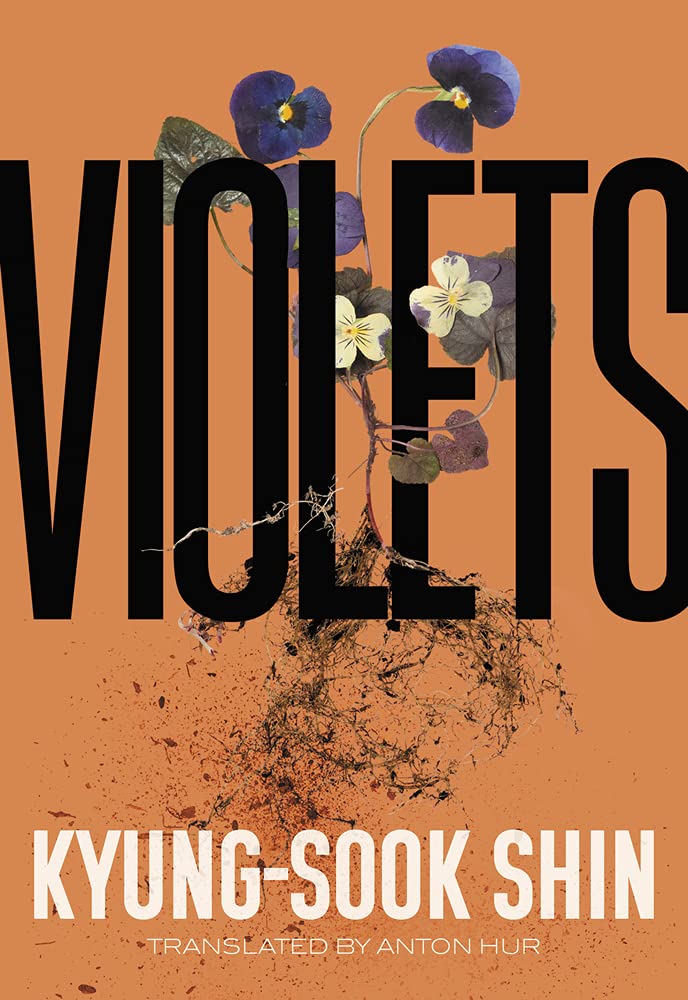
VIOLETS, a brutally sad and deeply poignant story of being Other in your homeland


VIOLETS
SHIN KYUNG-SOOK
(tr. Anton Hur)
The Feminist Press
$15.95 trade paper, available now

One of NPR's Best Books of 2022!

Rating: 4.5* of five

The Publisher Says: We join San in 1970s rural South Korea, a young girl ostracised from her community. She meets a girl called Namae, and they become friends until one afternoon changes everything. Following a moment of physical intimacy in a minari field, Namae violently rejects San, setting her on a troubling path of quashed desire and isolation.

We next meet San, aged twenty-two, as she starts a job in a flower shop. There, we are introduced to a colourful cast of characters, including the shop's mute owner, the other florist Su-ae, and the customers that include a sexually aggressive businessman and a photographer, who San develops an obsession for. Throughout, San's moment with Namae lingers in the back of her mind.

A story of desire and violence about a young woman who everyone forgot, VIOLETS is a captivating and sensual read, full of tragedy and beauty.

I RECEIVED MY DRC FROM THE PUBLISHER VIA EDELWEISS+. THANK YOU.

My Review
: This translation from the Korean joins a widening stream of Korean-culture transplants...Squid Game, Minari, this author's previously translated novel Please Look After Mom...making their roots into American pop-cultural soil.

If you've yet to explore the trickle, start now before it's a flood. I think it's wonderful because English-language monoglot culture gets stale and boring and all alike if we don't seek out fresh infusions of talent and stories. And, like all the best translations, this story's timelessness is rendered in prose that could very easily have been first created in English...none of the occasional signals of awkwardly trying to explicate something that one word in the translated language would convey whole and entire. That is a fine achievement indeed, probably helped along by the fact that things like "minari" aren't quite as furrin as they would've been in 2011, when Please Look After Mom was published.

What happens in this story is not particularly new or unusual. A girl is born to unfit parents:
In a house with shut doors, a mother closes her eyes as the baby’s grandmother offers her the newborn. The mother knows what will happen now. An uncelebrated girl. The infant accepts her mother’s closed eyes in lieu of a loving caress, perhaps having intuited her fate from the womb, and does not bother crying. The sound of the monsoon fills the house. Underneath the porch, a dog curls its legs into itself. Can the baby hear the sound of the rain? She’s about to fall asleep in her grandmother’s hands. That same night, her father gives his daughter’s face only a cursory glance.

Thus does another unwanted girl enter the world that won't ever bother to see her, really even to look at her. She's just...there. Her father never bothers to return; her mother never bothers with her at all, constantly seeking a man to care for her. (To be fair, an ordinary Korean woman's opportunities a generation ago weren't plentiful, and San's mother wasn't exceptional.)
Her mother. San thinks about her from time to time.

If she had begged her to stay, in front of that carefully prepared food, would she have listened? Why had San never once tried to hold her back? Wherever it was that her mother went, she never forgot to send her daughter money for school until San graduated.

The last time San had seen her mother was when she was a freshman in high school.

Children of addicts, the world over, tell versions of this same story. In this case, San's mother is addicted to men. She can't live without a man taking care of her, and she sacrifices the daughter she didn't want to get what she does want.

Author Shin isn't solely criticizing the mother. She is critiquing the social organization, the patriarchy, that privileges men and their desires over women and their needs so completely, so thoroughly, that the women are hollow and meaningless without a man. It is repulsive and it is reprehensible, and much abuse and violence simply are borne by the women because what option do they have? What other choice can they make? In San's case, she is so hollowed out by the complete absence of love from her mother (or anyone else) that she enacts the form of love she knows: rejection follows violence, as it must.

There is nothing forgiving in San. She forgives nothing, she is forgiven nothing, throughout the book. She is alone, she feels lonely of it (or so we infer...I don't know that she would be able to articulate the unmoored, disconnected reality that lonely people all share). For this, among other, reasons, this is a hard story to read. If you have ever been truly, down-to-the-bone lonely, this might be a triggering read for you. I haven't run across too many reads with this hyperconcentrated focus on loneliness, or too many with more success in rendering an emotional state into prose.
A stranger to every single person in the crowd, San finds herself blocking the sidewalk as people swerve to avoid her. Even if a carnival were to break out around her, the vacant expression on her face looks entrenched enough to persist.

Because she knows nothing of love, loving, being loved, San sees nothing except the one moment when everything changed, when the one love she thought she had was denied and made nothing. Not even attempting to find her former home nets San anything, she sees not the fields of minari she grew up among, where her life irrevocably emptied out and flowed away from her, but careful rectilinear plots of...something not minari. She has no roots. She feels no kinship.
Nothing happened this past summer. Only that, in the hot sun from time to time, a brief thought would appear and disappear around me. That thought was closer to me than any of the flowers in the shop. Even as I tried to capture the thought on paper, the heat would exhaust me and I'd give up. There were plenty of things I gave up, using the heat as an excuse. Which means I spent this past summer repeatedly deciding to do things and then giving up on them. As if my life were an exhibition of how good I am at giving up. It was that kind of summer.

It was that kind of life. It won't end well, it didn't begin well or go on well; that much we know. There's nothing hopeful in this story. Women like San aren't ever anyone's focus...her job in the flower shop working with and for Su-ae notwithstanding. She receives the desperate, genuine love of Su-ae as...nothing. San is fixated on emptiness...her only friend abandoned her!...and on men she does not want. She needs their love. She doesn't want it. She decided long ago that love wasn't something she could have, feel, receive, give. And so when it's offered to her she...doesn't see it. She does see the want of one man, she feels the desperate pull of another man on her attention, and gets nothing but unwanted results.
Every attempt to resist is met with his greater strength. In a moment, her head begins to droop.

She's released onto the street.
Her mind is completely taken over, her body a husk. No one seems to take note of the loneliness she carries. Just some woman in the crowd, unaware that her top is undone. A more observant person might have noticed her cheek slightly swollen from having been punched, the thin lines of her face a touch asymmetrical because of it. Someone might see her pale face and think, How could anyone ever look so pale....

A life of being unwanted, invisible, and it comes down to a final indignity. San is raped. Her hollowness filled at last with the violence that is all she can accept. It isn't in her to accept the reality of her situation, being unloved and unwanted, then seek out change. That's simply impossible. She leaves safety, courts rejection, and seeks oblivion.

Leaving behind only the tiniest of wakes...the end of the story of Oh San is a poignant piece of mythologizing that fit so poorly onto the rest of the story that I was forced by honest anger and sincere disdain for its sentimentality to whack a star off my rating. After a night's sleep where I dreamed of the photographer and San:
Violets. They bloom everywhere, making them seem more like weeds than proper flowers. San takes a closer look at them. Their little green leaves are small, their purple blossoms tiny. Before she came to the flower shop, she knew them as swallow flowers. Memories of entangling two swallow flower stems together and pulling them apart— one side was bound to snap. Whoever’s stem didn’t was the winner. She forgot what the prizes were, but she’d played the game many times. They did it with broadleaf plantains; they did it with foxtails.

The man keeps pressing the shutter and mumbling something discontentedly. “What’s so pretty about these flowers? Such nonsense.” His disappointment is so palpable, it makes her apologetic.

...I realized that his arc needed an end, too. I might not like that end, but I would've felt cheated (if not right away, then after my irritation with the whole ending subsided) had it not been there. So back came a half-star, though I confess with some grumbling on my part.

I think this small, powerful story deserves your eyeblinks. I think we should all resolve to notice the Oh Sans of this world, to extend a welcome to the table of them, to recognize their living presence instead of making them ghosts before they die.