Showing posts with label queer culture. Show all posts

Thursday, August 20, 2026

THE MINIMALIST, music is a hard, demanding master to serve


THE MINIMALIST
KAILEE PEDERSEN

St. Martin's Press (non-affiliate Bookshop.org link)
$14.99 ebook, available now

Rating: 4.5* of five

The Publisher Says: For fans of Tár and The Piano Teacher, this gruesome and unsettling psychological drama is a darkly lucid portrait of a classical composer’s descent into madness.

As the last and greatest student of famed minimalist composer Ryder Wakefield, Mia Voss’s rise to prominence in the insular world of classical music has long been assured. When Ryder dies unexpectedly, she inherits everything—including the unfinished manuscript of his final composition, the mysterious Death Fugue: Music for Orchestra.

Haunted by memories of her tragic romance with Ryder’s late son, Oliver—like Mia, an Asian American adoptee—Mia leaves her girlfriend behind and returns to Ryder’s home to finish his last work. There, Mia is forced to confront her complex relationship with Ryder, who hid his Jewish and gay identities to become one of the most important twentieth-century American composers; her lingering guilt over Oliver’s suicide; and her own musical ambition as the manuscript begins to exert a disturbing, mesmerizing hold over her.

Drawn from the author’s own experiences as an adoptee and classical musician, The Minimalist is a harrowing examination of loss, torment, mental illness, self-harm, and artistic self-destruction.

I RECEIVED A DRC FROM THE PUBLISHER VIA NETGALLEY. THANK YOU.

My Review
: Music is not a career, a job, or even a calling so much as an identity. "A musician" is not always employed making music, but they are still a musician. Those whose income derives from whatever facet of performance or creation are not *more* musicianly but simply luckier.

Or maybe not.

My second Kailee Pedersen read gave me deeply unsettling dreams about the (to me) horrifying psychological agony of being A Musician who is simply unfit for other work. Its Procrustean demands, its necessary or sometimes just conveniently available pressures to conform to a standard of self-presentation can cause deep psychological wounds. As the astonishingly complex intersectionality of Mia's identities are laid bare in her reckoning with Oliver, Ryder, adoption, musicianship, we're drawn into her psychic damage. It's horror, it's horrifying, it's horripilating as it unfolds in Author Pedersen's words. I had never once given any thought to the true extent extant in the phrase "putting oneself into one's work," but I will not be using that phrase lightly in future.

Is music a thing, an entity outside us? Is a musician possessed by music? Or does the rigorous mathematical nature of composing and performing music simply attract creative people with obsessive personalities? I don't know; I didn't even know to ask the question before I read this story. It is the best kind of reading experience for me, that. When an author's chosen story gives my endlessly curious brain something new to chew over, to turn at unusual angles so I can see its lumps and rough patches, I am deeply satiated and grateful.

So where's that fifth star? That all adds up to a rave review, doesn't it? It does; tempered with a slight squeamishness. It's often the case in body horror stories that I, on the rare occasions I buy into the horror elements, think "that right there is a bridge too far." I got there during this read. A whole half-star's worth of there. *shudder* I don't think many gore-readers will batten on the careful, attentive buildup of the story, either; it's really, despite the shuddersome bit, a psychological unraveling story where the unraveled bits also form mummy-wrapping strips of Mia's psychology.

It was a fascinating reading experience. I am reinforced in my high opinion of Author Pedersen's storytelling eye. I am also never going to be able to listen to music blithely, unthinkingly appreciating the sounds in the air...I'll be ever afterward aware of how much music costs the creators.

And how much of themselves they put into it.

Thursday, July 2, 2026

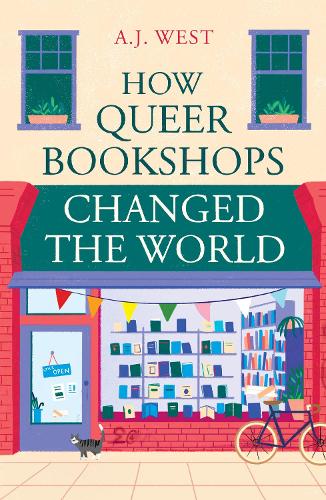
HOW QUEER BOOKSHOPS CHANGED THE WORLD, worthy thesis defended with passion


HOW QUEER BOOKSHOPS CHANGED THE WORLD
A.J. WEST

Oneworld Publications (non-affiliate Bookshop.org link)
$14.99 ebook, available now

The Independent Press Top 40 Bestsellers: Non-Fiction For the week ending June 30, 2026

Rating: 4.75* of five

The Publisher Says: For over a century, LGBTQ+ bookshops have been the unsung heroes of queer liberation

Home not only to books but chaotic community noticeboards, vicious rescue cats and countless meet cutes, queer bookshops have always been more than just bookshops, offering friendship, solidarity and sanctuary.

Traveling the world—Shakespeare and Company in Paris, Gay’s the Word in London, the Oscar Wilde Bookshop in New York—A. J. West explores the remarkable history of these bookstores. Tracing their evolution from under-the-counter operations to beloved out-and-proud institutions, West reveals how the queer bookshop stood at the vanguard of LGBTQ+ rights, offering support and vital information through the AIDS crisis and bringing the fight to Section 28 and book bans.

A powerful testament not only to bookshops but to the courage of queer booksellers, from Sylvia Beach hiding books from the Nazis in laundry baskets to Craig Rodwell facing off against the police at the Stonewall riots, A. J. West celebrates the shops and booksellers that brought queer literature and lives into the mainstream.

I RECEIVED A DRC FROM THE PUBLISHER VIA EDELWEISS+. THANK YOU.

My Review
: I'd give it a perfect rating if I hadn't felt so put-upon with the opening chapters speed-lining queer history.

It was my emotional reaction. I'm not wrong; I literally cannot be wrong about my feelings.

It's necessary to put not-queer, or new to their history queer, readers in the picture of what these trailblazing heroically brave people did and what they risked for us all to have access to queer stories. It is breathtaking, and eye-opening, and quite honestly shaming for those of us not willing or able to stand up against Authority for the good of all.

It is more clear to me than ever before that the urgent project of the authoritarians trying to ban queer books, the tech scum trying to make all knowledge available only on their say-so and the seeker's ability to pay any vig "They" choose to demand, and the ruling class's desire to keep you as stupid as possible intertwine like snakes on Medusa's head. The underknown prophet of this future we now live in, Sinclair Lewis, wrote: "When fascism comes to America, it will be wrapped in a flag and carrying the cross."

Look around you...that was prophecy, not fiction.

Author AJ writes about the past in this book. It could, one day soon, feel like an elegy for les jadis if you and I are not very careful and very intentional in our actions in November 2026. It's fragile, this thing called Liberty, and it's always been very, very unpopular with with the ruling class. We-the-people have already seen how much control "They" want after women's bodily autonomy was stripped away from them in the US. Revoltingly it was enabled by a quisling woman. All of these struggles, legal battles, and societal shifts are under long-term and well-funded attack. How I wish more people had listened when Hilary Clinton spoke that truth.

Author AJ details the harms this determined regressive minority causes with seeming impunity in his chapters on the role of AIDS amelioration and drag-queen story hour bannings. Restraining the flow of often life-saving information to those in desperate need of it, and excluding people "They" don't like such as gender-nonconforming people, are terrible actions on their face. The true evil doesn't announce itself. It unfolds as Author AJ shows us consequences.


The best kind of non-fiction writing tells you a story that evokes emotional responses from the reader. I've seldom been more emotional in my response to a true story that does not involve a murder. Author AJ deserves all the kudos there are for bringing a storyteller's constructive attention to this crisis in our body politic.

Friday, March 6, 2026

THAT'S WHAT FRIENDS ARE FOR, aaarrrgh earworm earworm!!


THAT'S WHAT FRIENDS ARE FOR
WADE ROUSE

MIRA Books (non-affiliate Bookshop.org link)
$28.99 hardcover, available now

Rating: 4.25* of five

The Publisher Says: In this poignant and hilarious story inspired by TV’s beloved The Golden Girls, bestselling author Wade Rouse celebrates love, aging, finding your people, and the art of impeccably timed one-liners.

Theodore Copeland has created a fabulous life in the desert oasis of Palm Springs, where he shares a fabulous pink mid-century home with three fabulous friends: Barry, a former actor still clinging to his youth, his hair, and the memory of the dream role that killed his career; Ron, an uprooted Christian from the Midwest with a big heart but no one to give it to; Sid, who, after coming out late in life, has never found love. Teddy is the caustic, unspoken leader of “The Golden Gays”—the foursome’s monthly drag tribute to The Golden Girls. Despite their foibles and bickering, they have turned their golden years into a golden era.

But the harmony of their desert enclave becomes a carousel of emotional baggage when Teddy’s estranged sister, Trudy, shows up on their doorstep, her dramatic teenage granddaughter in tow. While Teddy keeps Trudy at arm’s length, she manages to wheedle her way into the lives of the Golden Gays, until the real reason for her visit is revealed and the secrets they’ve all been keeping from each other unravel faster than a hastily stitched hemline.

A novel that gives thanks to “old” friends, That's What Friends Are For proves that while family may be the tie that binds, it’s the chosen family that truly keeps us together.

I RECEIVED A DRC FROM THE PUBLISHER VIA NETGALLEY. THANK YOU.

My Review
: Four older...old, "of a certain age" is such an absurd weasel-wording...gay guys live in Zsa Zsa Gabor's Palm Springs home, in the absence of other places to be as they live out their invisibility, bond to each other the way the Golden Girls did, and perform as a drag troup reenacting episodes of the show.

You need to be charmed by the premise to enjoy the book. I was; I did.

It was more true to the spirit of the show than I expected. In novel form, that meant packing in a lot of trauma recall, a lot of wistful nostalgia, a lot of regrets for pasts "misspent" in all the ways people do that, in not a lot of space. The gestalt of these four charmers is just *chef's kiss* and the repartee flows like Veuve Cliquot from a marabou mule. (Zsa Zsa is, after all, the former owner of their house.)

If no one is currently in development talks for this book it will utterly stun me. Heartstopper for the teens, Heated Rivalry for the horny adults, That's What Friends Are For representing the generation that fought these stupid necessary battles for all y'all that seem to've been erased from the collective memory. *ahem* I meant to say "the seasoned citizens." Of course I did.

Celebrating found family, talking honestly about what life looks like as "The End" hoves into view without crowding you (yet), flexing the wicked-humor muscles developed from years of deflecting nastiness...it's a grown person's happy place, this. Drama arises because humans create drama the same way we breathe—automatically—but it never feels calculated, like Author Rouse said "let me rile these queens up now" while twirling his mustachios. I bought into the dynamics he built, accepted the moments when the men had trouble dealing with things as natural and inevitable. Author Rouse uses the conflicts the way a good therapist urges one to use them: get to know your friend better, get to know yourself better, apply kindness and acceptance like the balm it truly is, and move on.

A big issue in the story is staying stuck. It's a huge issue in almost everyone's life, from what I can tell. It's good to see it addressed openly, with candor, and in such a humorous setting. (I admit I want to bash Barry for chasing his long-past youth. Grow up!!) What Author Rouse has done is deliver a warm-hearted, clear-eyed, just sentimental enough look at the unforgiving terminal illness of Getting Old, in a relatable and enjoyable visible way denied to queer folk by our heteronormative culture.

Kudos! More soon? Please?

Thursday, May 29, 2025

FOREST EUPHORIA: The Abounding Queerness of Nature offers a bracing dose of Reality to "gender essentialists"


FOREST EUPHORIA: The Abounding Queerness of Nature
PATRICIA ONONIWU KAISHIAN

Spiegel & Grau (non-affiliate Amazon link)
$14.99 ebook, available now

The Independent Press Top 40 Bestsellers: Non-Fiction For the week ending September 16, 2026

Time's The 100 Must-Read Books of 2025 selection

Rating: 4.75* of five

The Publisher Says: A thrilling book about the abounding queerness of the natural world that challenges our expectations of what is normal, beautiful, and possible.

Growing up, Patricia Ononiwu Kaishian felt most at home in the swamps and culverts near her house in the Hudson Valley. A child who frequently felt out of place, too much of one thing or not enough of another, she found acceptance in these settings, among other amphibious beings. In snakes, snails, and, above all, fungi, she saw her own developing identities as a queer, neurodivergent person reflected back at her—and in them, too, she found a personal path to a life of science.

In Forest Euphoria, Kaishian shows us this making of a scientist and introduces readers to the queerness of all the life around us. Fungal species, we learn, commonly encompass more than two biological sexes—and some as many as twenty-three thousand. Some intersex slugs mutually fire calcium carbonate “love darts” at each other during courtship. Glass eels are sexually undetermined until their last year of life, a mystery that scientists once dubbed “the eel question.” Nature, Kaishian shows us, is filled with the unusual, the overlooked, and the marginalized—and they have lessons for us all.

Wide-ranging, richly observant, and full of surprises, Forest Euphoria will open your eyes and change how you look at the world.

I RECEIVED A DRC FROM THE PUBLISHER VIA EDELWEISS+. THANK YOU.

My Review
: Honestly, our very much elder siblings the fungi, part of a family we do not share but the most distant connection with, have more to teach us about Life than I expected. Author Kaishian is a very well qualified guide into their world, having several degrees in mycological subjects and being the New York State museum's curator of mycology. An unimpeachable fount of expert knowledge, then.

I've never really thought about the gender realities of fungi before now. I knew they were ubiquitous...the wood-wide web...and enormous (that several-square-mile honey fungus in Oregon), for two memorable examples...but how they got it on was hazy, limited to fruiting bodies producing spores in my infobase. I am of greatly expanded consciousness now.

Fungus is just the beginning of queerness, of "gender non-conformity" that culture-specific ungeneralizable concept, in Nature. The examples are weird...eels? what the hell my dudes?...slugs *shudder* doing unspeakable things to each other after sex...and the list isn't even fairly begun. Vertebrates, our fellow spine-havers, get themselves up to some wild shenanigans, like the fish harems where the physically largest female becomes male when the old one dies. How do they know? Who thought this was a good idea?

But, overall, the thing I loved about this read was not the fount of factfulness but the fountain of meditative, calm reflection that Author Patty (she refers to herself as such on her website so I'm presuming to do so too) uses to soothe away the hurts being queer in a hostile world has wrought. Her Irish-Armenian heritages, her neurodivergent presentation of self, her life experiences, all give her the invaluable, painful gift of Otherhood. It is a thing I've been grateful for in my older years of life. It takes Otherhood to see the absurdity of the prejudices most people use in place of learning, thinking, meditating. Author Patty gets this on such a core level that as she lets us in on her uncoverings it feels organic (!) instead of calculated as is so often the case. Even her coinage of "eco-spirituality" to describe this manner of being in the world feels uncondescending. It could easily have read brummagem and insulting. Instead it's all of a piece with her shared factual information as viewed through her lens of personal reflection. Like this:
I like blurring the line between human and nature because I believe we, as a species, have become profoundly lonely in our self-enforced isolation. And it’s because of this that the planet is spinning through a devastating loss in biodiversity. The species that have brought me the most companionship, assurance, and inspiration are those furthest banished from human society, those least associated with the “desirable” traits of being human—upright and logical, two-legged and binary-sexed. My personal connections to these organisms have brought me a sense of queer belonging and comfort in the heaviest of times. In exchange, I hope to do my small part by sharing their stories. And I hope that in sharing these stories, you too will feel the closeness of the earth, the lack of space between our cells, and the memory of each other.
I think the last word has been had. I'm just that hair away from five stars because I still find slugs utterly repugnant and with a gardener's eye of loathing.

Saturday, March 29, 2025

YOUR LOVE IS NOT GOOD, exploring queer desire's darker corners


YOUR LOVE IS NOT GOOD
JOHANNA HEDVA

And Other Stories (non-affiliate Amazon link)
$18.95 trade paper, available 15 April 2025

Rating: 5* of five

The Publisher Says: Finalist for the 2024 Republic of Consciousness Prize
An artist of color becomes obsessed with a white model in a novel with the glamour of Clarice Lispector and the viscerality of Han Kang.

At an otherwise forgettable party in Los Angeles, a queer Korean American painter spots a woman who instantly controls the room: gorgeous and distant and utterly white, the center of everyone’s attention. Haunted into adulthood by her Korean father’s abandonment of his family, as well as the specter of her beguiling, abusive white mother, the painter finds herself caught in a perfect trap. She wants Hanne, or wants to be her, or to sully her, or destroy her, or consume her, or some confusion of all the above. Since she’s an artist, she will use art to get closer to Hanne, beginning a series of paintings with her new muse as model. As for Hanne, what does she want? Her whiteness seems sometimes as cruel as a new sheet of paper.

When the paintings of Hanne become a hit, resulting in the artist’s first sold-out show, she resolves to bring her new muse with her to Berlin, to continue their work, and her seduction. But, just when the painter is on the verge of her long sought-after breakthrough, a petition started by a Black performance artist begins making the rounds in the art community, calling for the boycott of major museums and art galleries for their imperialist and racist practices.

Torn between her desire to support the petition, to be a success, and to possess Hanne, the painter and her reality become more unstable and disorienting, unwilling to cut loose any one of her warring ambitions, yet unable to accommodate them all. Is it any wonder so many artists self-destruct so spectacularly? Is it perhaps just a bit exciting to think she could too?

Your Love Is Not Good stuffs queer explosive into the cracks between identity and aspiration, between desire and art, and revels in the raining debris.

I RECEIVED A DRC FROM THE PUBLISHER VIA EDELWEISS+. THANK YOU.

My Review
: The way I know queer folk are, for want of a more accurate and inclusive term, assimilated into the Borg Collective straight peoples' overcultural awareness as real, fully human people is the virulence of the Gawd Squad's attacks on our rights, and our young people (by which I mean everyone born from 1984 on) feel it's okay to write about messed-up, creepy, mean, or even evil queer people. In other words, people. Just plain ol' humans. No need to fancy it up with initialisms that help us find each other but become tiger traps of ghettoization over time.

Here's a novel about a mixed-"race" (a term I hate with all my passion mobilizable...we are all humans none of us are neanderthals or antecessors!!) lesbian at the ragged edge of youth shading into middle age finding out how easy it is to fall into obsessive love when your hypercapitalist life starts to spontaneously deconstruct under the weight of expectation. Becoming fixated on someone like you see yourself being, only moreso, someone refined, and just...better...is justifiable to others and yourownself when the object is from the group at the pinnacle of society's desire hierarchy.

The object is then defined by the terrible, reductive term "muse," one definition of which that I think is relevant here is: A muse represents more than a mere subject or source of inspiration; it embodies the very essence of creative energy and inspiration itself. The muse possesses a unique allure that captivates the artist’s senses, provoking emotions, ideas, and a deep connection that fuels their artistic expression. It is not limited to a passive role but actively participates in the artistic process. They stimulate the artist’s vision, evoking a profound response and encouraging the exploration of new artistic territories. And Hanne, the white woman in her current, sold-out (!) painting series, is not her first "muse" nor her first racialized lust object.

In many ways, our unnamed narrator...called "Johanna" as a proxy for the author, but still explicitly stated not to be the author, so not named...painting Hanne (note how similar the beauteous muse's name is to the author's) for a highly prestigious gallery show is falling into the ugly territory that dogged Nabokov when he wrote the bitter, angry, utterly misunderstood Lolita. Inspired by the conventional white-woman prettiness of Hanne, so distinct from the narrator's own constructed "mixed" identity, she's creating beautiful artworks that are (she tells herself) critical of and interrogating the primacy of whiteness in the construction of a concept of beauty.

The art collectors and institutions who will see the show, however, will most likely buy them because she's painting a pretty picture of a pretty woman whose skin is white.

The deep-seated inner conflict between her Korean father's immigrant economic striving and Asianness and her white artist-mother's centrality to everything she's desired to become as well as escape is brought to crisis point when a Black friend issues a manifesto, calling on artists of color to boycott the white-centered art/beauty industry. If she ignores the call, she's made implacable enemies out of longtime friends, but most likely saved her school-debt-ridden, broke-ass economic life. Getting down to the nitty-gritty of this particular story, however, for all the complex and fascinating issues it raises and grapples with, is a simple sentence fragment: "...it takes hours to paint a portrait, and this is who I wanted to spend hours looking at."

There it is. Has the narrator burned out her exoticizing fascination with the women of color who served as muses before Hanne, or is this loudly, argumentatively toxic assumption of control that is the relegation of a person to the role of "a muse" a form of revenge on whiteness like the paintings are? Or, and this seems likely to be true to me, is the artist painting Hanne finally giving in to hypercapitalism's siren song of money, approval, and fame?

Are any of these untrue, or mutually exclusive? Not in my eyes. They're all likely to form part of the mosaic (another word related to the original Muses) of the core truth of this dark, brave narrative. Queer desire is as murky and incomprehensible as all desire is; made up of dark and angry stuff, bright and uplifting stuff, all rolled into the minds of the lovers...though all too seldom examined, or shared, or even acknowledged. Hanne feels the muse's rage and outrage at being Othered; the narrator the desperation of feeling intensely an unshared emotion.

It ends, as great and passionate loves must, in tears and bitterness.

This is exactly why I loved it as much as I did. The prose earns four and a half stars for economy of imagery, just enough not too much. The messy, angry queer desire slipped that extra half-point on for the full five.

Thursday, June 27, 2024

QUEER AS CAMP: Essays on Summer, Style, and Sexuality, preaching to the choir...but charismatically


QUEER AS CAMP: Essays on Summer, Style, and Sexuality
KENNETH B. KIDD
(ed.) & DERRITT MASON (ed.)
Fordham University Press
$33.00 trade paper, available now

Rating: 4* of five

The Publisher Says: To camp means to occupy a place and/or time provisionally or under special circumstances. To camp can also mean to queer. And for many children and young adults, summer camp is a formative experience mixed with homosocial structure and homoerotic longing. In Queer as Camp, editors Kenneth B. Kidd and Derritt Mason curate a collection of essays and critical memoirs exploring the intersections of "queer" and "camp," focusing especially on camp as an alternative and potentially nonnormative place and/or time.

Exploring questions of identity, desire, and social formation, Queer as Camp delves into the diverse and queer-enabling dimensions of particular camp/sites, from traditional iterations of camp to camp-like ventures, literary and filmic texts about camp across a range of genres (fantasy, horror, realistic fiction, graphic novels), as well as the notorious appropriation of Indigenous life and the consequences of "playing Indian."

These accessible, engaging essays examine, variously, camp as a queer place and/or the experiences of queers at camp, including Vermont's Indian Brook, a single-sex girls' camp that has struggled with the inclusion of nonbinary and transgender campers and staff; the role of Jewish summer camp as a complicated site of sexuality, social bonding, and citizen-making as well as a potentially if not routinely queer-affirming place. They also attend to cinematic and literary representations of camp, such as the Eisner award-winning comic series Lumberjanes, which revitalizes and revises the century-old Girl Scout story; Disney's Paul Bunyan, a short film that plays up male homosociality and cross-species bonding while inviting queer identification in the process; Sleepaway Camp, a horror film that exposes and deconstructs anxieties about the gendered body; and Wes Anderson's critically acclaimed Moonrise Kingdom, which evokes dreams of escape, transformation, and other ways of being in the world.

Highly interdisciplinary in scope, Queer as Camp reflects on camp and Camp with candor, insight, and often humor.

Contributors: Kyle Eveleth, D. Gilson, Charlie Hailey, Ana M. Jimenez-Moreno, Kathryn R. Kent, Mark Lipton, Kerry Mallan, Chris McGee, Roderick McGillis, Tammy Mielke, Alexis Mitchell, Flavia Musinsky, Daniel Mallory Ortberg, Annebella Pollen, Andrew J. Trevarrow, Paul Venzo, Joshua Whitehead

I RECEIVED A DRC FROM THE PUBLISHER VIA EDELWEISS+. THANK YOU.

My Review
: Camp. One set of four letters, widely divergent meanings to different groups. Don't think these essays, from the queer-studies, and mostly queer, people listed above are in any way insensible of this dichotomy. It gets played with a lot.

One note I'll give you before you even think about reading the collection: Read Sontag's Notes on Camp before you get into these weeds. Everyone herein reproduced has, says so, and/or refers to that work. Besides it's well worth reading just because.

Academocs are famous for writing at each other, Essays and articles in their specialist subjects used a shared vocabulary that most of us do not share. That's certainly true of this collection's contents. Yet I've given it four stars. That's all down to the fact that the essayists have all tied their thoughts either to pop-cultural texts like Mielke and Trevarrow's engrossing"Camping with Walt Disney’s Paul Bunyan: An Essay Short" and Kyle Eveleth's "Striking Camp: Empowerment and Re-Presentation in Lumberjanes", which might be my favorite essay in the whole thing; or to experiences of going to summer camp that I could relate to, like D. Gilson's "Notes on Church Camp" which was a tough read for me.

What I got from this assemblage of academic thought about youthful queerness was the striking, clarifying bolt of insight that I was supposed to feel the exclusion and rejection of camp. It was meant to, designed to, cause this Otherness I knew I had to be thrown (verb not chosen lightly) into high relief. I was *intended* to feel the hostility of my peers so I would buckle down and try to be like them.

Fat chance.

The other reason for a boy like me to go to camp, to be a camper, was to show to the other boys that I was fair game. As long as I failed at their tasks, it was okay to be cruel...it was expected. "Letting the kids sort themselves out" was the way the appalling cruelty of ut was sold to parents.

That has never been clearer than after reading these stories of queer camping experiences. I don't know who among the readers of my blog will most likely want to spend the high price of the collection; I hope that, for anyone interested in the subject, their local library will step in and add this to the extant sociology texts, or if you live in an enlightened place, their queer studies collection.