Showing posts with label queer identity. Show all posts

Friday, September 4, 2026

HOW TO DATE A FANATIC, two halves make a funny-shaped whole


HOW TO DATE A FANATIC
ARUNI KASHYAP

HarperVia (non-affiliate Bookshop.org link)
$12.99 ebook, available now

Rating: 4* of five

The Publisher Says: In this compassionate, poignant novel set in contemporary India, a young professor searches for connection and love during a time of political and cultural upheaval.

As political tensions rise precipitously across India, Rohit returns to Delhi University to teach and gets caught in a web of unrequited love with his friend Dhruv. To alleviate his inevitable heartbreak, Rohit seeks relationships with other men on campus, until he meets and embarks on a delicate new romance with the effervescent Sayan, a literature student he hopes will be the answer to getting over Dhruv.

Rohit’s life soon becomes more complicated as the country's political tensions erupt on campus, sparking a turbulent student-led movement that entangles Rohit when Dhruv joins the fray, a tipping point that changes Rohit’s life forever. Set against the vibrant, volatile tapestry of modern India, Rohit and his friends must learn to navigate the challenges and triumphs of queer life to survive in an unpredictable political landscape.

Propulsive, tense, and charged with humor and tenderness, How to Date a Fanatic is an exploration of identity, connection, and the enduring hope for a better future in a rapidly changing world.

I RECEIVED A DRC FROM THE PUBLISHER VIA NETGALLEY. THANK YOU.

My Review
: India's right-wing horrible human beings are enough like our US versions that I was stressed for Rohit from the get-go; I was also reminded that au fond, humans are not different anywhere on this globe. The same insatiable desire to control others in every way, the same pressure to conform or else, the same kinds of violent resistance and repression, for reasons only cosmetically different.

The reason I'm not offering perfect ratings and warbles of delight for this clear-sighted takedown of the repression and conformity machine is simple: Dhruv's a bastard. Rohit needs to get over his addiction to an emotionally unavailable man, and that story is *uncomfortably* close to home. It's all on Rohit, of course, Dhruv's uninterest could've been more kindly expressed but that is not incumbent on any of us to come up with in the moment. Rohit losing himself in the pursuit of distraction is deeply relatable. His choices are very interesting to me because they're further evidence of human nature being consistent across cultures.

Where the mess that is the authoritarian horror India lives under (and the US seems to be rushing to emulate) takes hold of the narrative, the second half becomes more a political argument against authoritarianism while backgrounding Rohit's emotional life. The shift in tome is always going to be tricky to navigate; I didn't feel it was all that well handled. I was taken from one focus, on the intimate life and choices of Rohit, into another, the violent and vicious reactionary response of a right-wing regime to gay men.

Both were very involving, though a reader looking for more of the first story might not like being catapulted into the second much. Readers interested in the second stiry might have preferred it to be more than just lightly foreshadowed from the beginning. It's this dichotomy between the (roughly) halves that stalled me out at four stars. There are that many because I really liked and invested in Rohit and his happiness. Sure, I wanted to shake him by the shoulders and demand he get on with finding someone who deserves his love. But he really deserves that kind of happy ending. (Other kinds too but permaybehaps on the page in my imagined other story...not this unsteamy one.)

A successful read for all my quibbly niggles, a story I'd enjoy seeing more of, should a follow-on tale eventuate. That ain't the most common end to a review I write about a book that frustrated me!

Friday, July 31, 2026

MAZELTOV, gay Jewish teen's bar mitzvah mishegas


MAZELTOV
ELI ZUZOVSKY

Henry Holt & Co. (non-affiliate Bookshop.org link)
$13.99 ebook, available now (preorder a paperback for $17.99, delivered 25 August, at that link too)

Rating: 3.5* of five

The Publisher Says: In a glorious debut, a boy confronts queer lust, shame, the threat of war, and the plague of family on the day he becomes a man.

At a banquet hall, at the onset of war, Adam Weizmann’s bar mitzvah party turns into a glorious catastrophe. On the cusp of manhood—and the verge of a nervous breakdown—Adam has been bracing for his special day, mired in family neuroses and national dysfunction.

In a chorus of voices, a fractious cast of well-wishers narrates Adam’s coming-of-age in Israel: his newly devout father and the mystic rituals he practiced on his young son; his best friend, Abbie, who points the way to joyful transgression; Khalil, a Palestinian poet, who offers a glimpse of a different way to be; and Adam himself, filled with shame and desire as he faces the brokenness of his world.

At once tender and lustful, a work of scathing satire and piercing insight, Mazeltov is a wholly original vision of a young man’s quest to know his own heart.

I RECEIVED A DRC FROM THE PUBLISHER VIA NETGALLEY. THANK YOU.

My Review
: Framed as a long flashback from a future not filled in (so as not to give stuff away), this coming-of-age story centered on a religious rite of passage that's recognizing the adolescent mind's shift into high (adult) gear. Unsurprisingly that's also a time many queer kids become aware they're different...and some of those become aware of just exactly how they're different.

Adam's name, shared with the first-ever man in his religion's mythology, is a clever choice. It truly does feel as though one is the very first ever to go through the self-discovery process. Then there's his surname: Weizmann. Only the greatest Zionist of them all was Weizmann. Can't unsee that call-back. It's prestigious in Israel, very much the opposite in my world.

No matter how accepting one's peers and family might be, there is anxiety around recognizing one is Other in the eyes of the world. Most of us don't feel accepted in that awful 13-15 age bracket though, so the queer identity adding complexity to the existing tsurres is seldom welcome.

The Israel setting is going to be an issue to some who read my blog. The ongoing genocide against Palestinians is not foregrounded here, so make your decisions with that information in mind. I myownself was not minded to reject the book outright for not writing the details of a war crime that long predates the PoV character's birth into his personal story. You do you, though.

The multiple PoVs and the technique used to switch among them, along with quiet, unheralded details that are not consistent in the different PoVs, is more likely to cause readers problems than procrustean political tomfoolery. I'm sure some readers put these detail differences down to a lack of novelistic craft. I'm not of that opinion myownself. I think Author Zuzovsky put those variations in the narrative because the characters are going to have those differing recalls, and we as the listeners aren't necessarily going, or even likely to know whose version is factually correct...if any version is.

Adam's unhappily divorced parents are *awful*...and this is judging them from their own PoVs not from dam's adolescent one. Dad snipes at Mom in his remarks for the occasion, Mom can't be arsed to write a speech or her son's rite of passage...ick. Send these two to Gaza to be aid workers so they'll be forced to think of others not just themselves.

It's a sort read at under 200pp. I'll say I was never bored. I'll mention that I was empathetic for this kid's relatable, familiar struggles with naming and taking on his adult identity. I can't not say that I'm squeamish about Israeli literature because the way their government is acting is appalling...and my government's bankrolling it.

It's complicated, like Adam Weizmann's bar mitzvah. It's messy, like Adam Weizmann's bar mitzvah. It needs some room to grow it didn't get, like Adam Weizmann's bar mitzvah.

But it's a debut. More and even better things are to come. Like the aftermath of Adam Weizmann's bar mitzvah.

Thursday, July 2, 2026

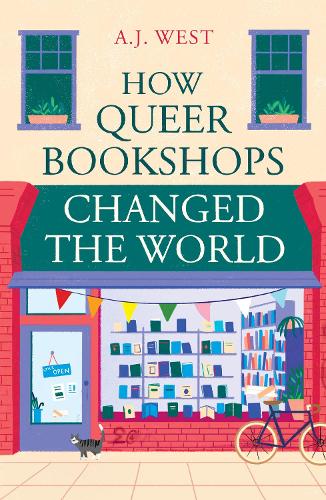
HOW QUEER BOOKSHOPS CHANGED THE WORLD, worthy thesis defended with passion


HOW QUEER BOOKSHOPS CHANGED THE WORLD
A.J. WEST

Oneworld Publications (non-affiliate Bookshop.org link)
$14.99 ebook, available now

The Independent Press Top 40 Bestsellers: Non-Fiction For the week ending June 30, 2026

Rating: 4.75* of five

The Publisher Says: For over a century, LGBTQ+ bookshops have been the unsung heroes of queer liberation

Home not only to books but chaotic community noticeboards, vicious rescue cats and countless meet cutes, queer bookshops have always been more than just bookshops, offering friendship, solidarity and sanctuary.

Traveling the world—Shakespeare and Company in Paris, Gay’s the Word in London, the Oscar Wilde Bookshop in New York—A. J. West explores the remarkable history of these bookstores. Tracing their evolution from under-the-counter operations to beloved out-and-proud institutions, West reveals how the queer bookshop stood at the vanguard of LGBTQ+ rights, offering support and vital information through the AIDS crisis and bringing the fight to Section 28 and book bans.

A powerful testament not only to bookshops but to the courage of queer booksellers, from Sylvia Beach hiding books from the Nazis in laundry baskets to Craig Rodwell facing off against the police at the Stonewall riots, A. J. West celebrates the shops and booksellers that brought queer literature and lives into the mainstream.

I RECEIVED A DRC FROM THE PUBLISHER VIA EDELWEISS+. THANK YOU.

My Review
: I'd give it a perfect rating if I hadn't felt so put-upon with the opening chapters speed-lining queer history.

It was my emotional reaction. I'm not wrong; I literally cannot be wrong about my feelings.

It's necessary to put not-queer, or new to their history queer, readers in the picture of what these trailblazing heroically brave people did and what they risked for us all to have access to queer stories. It is breathtaking, and eye-opening, and quite honestly shaming for those of us not willing or able to stand up against Authority for the good of all.

It is more clear to me than ever before that the urgent project of the authoritarians trying to ban queer books, the tech scum trying to make all knowledge available only on their say-so and the seeker's ability to pay any vig "They" choose to demand, and the ruling class's desire to keep you as stupid as possible intertwine like snakes on Medusa's head. The underknown prophet of this future we now live in, Sinclair Lewis, wrote: "When fascism comes to America, it will be wrapped in a flag and carrying the cross."

Look around you...that was prophecy, not fiction.

Author AJ writes about the past in this book. It could, one day soon, feel like an elegy for les jadis if you and I are not very careful and very intentional in our actions in November 2026. It's fragile, this thing called Liberty, and it's always been very, very unpopular with with the ruling class. We-the-people have already seen how much control "They" want after women's bodily autonomy was stripped away from them in the US. Revoltingly it was enabled by a quisling woman. All of these struggles, legal battles, and societal shifts are under long-term and well-funded attack. How I wish more people had listened when Hilary Clinton spoke that truth.

Author AJ details the harms this determined regressive minority causes with seeming impunity in his chapters on the role of AIDS amelioration and drag-queen story hour bannings. Restraining the flow of often life-saving information to those in desperate need of it, and excluding people "They" don't like such as gender-nonconforming people, are terrible actions on their face. The true evil doesn't announce itself. It unfolds as Author AJ shows us consequences.


The best kind of non-fiction writing tells you a story that evokes emotional responses from the reader. I've seldom been more emotional in my response to a true story that does not involve a murder. Author AJ deserves all the kudos there are for bringing a storyteller's constructive attention to this crisis in our body politic.

Monday, May 25, 2026

THE SUMMER BOY, Philippe Besson's récit of coming of age during tragedy's aftermath


THE SUMMER BOY
PHILIPPE BESSON
(tr. Sam Taylor)
Scribner (non-affiliate Bookshop.org link)
$13.99, available now

Rating: 4.5* of five

The Publisher Says: On an island off the coast of France, six teenagers come together for a summer of desire and discovery until one of them vanishes forever, leaving the rest with an enduring mystery.

Tell me, do you know why the most beautiful love stories must always end badly?

In the summer of 1985, on a scruffy resort island off the coast of France, six teenagers—five boys and one girl—band together for a final golden season before adulthood. Their days are drenched in sun and freedom, and their nights simmer with secrets, jealousy, and longing. Philippe is drawn to Nicolas, the quiet new boy who sees him in a way that no one else does. As their bond deepens, part of Nicolas remains unreachable—until a sudden tragedy brings their summer to a brutal end.

The Summer Boy is a lush and unforgettable autobiographical tale, capturing the ineffable summers of youth in amber. Celebrated novelist Philippe Besson has shaped his memories into an aching meditation on how one summer night—and one fierce connection—can echo across a lifetime.

I RECEIVED A DRC FROM THE PUBLISHER VIA NETGALLEY. THANK YOU.

My Review
: Author Besson, a mere stripling of fifty-nine, recalls That One Summer. We've all had it: the moment when all the boundaries and all the relationships change, whether at eighteen or forty-two or in winter, in Louisville, Kentucky, on vacation, or waiting for your bus to come. Falling in love often does the trick. Getting a crush can, too, but so can the ordinary murkiness of passing time in good company. It's a defining moment. It can, usually does in my own lived experience, change you and your thinking about the whole rest of your life.

Where Lie With Me was a récit about Philippe's very first true love, this is a récit about how love is not plot armor and no matter how it ends, love is always going to wind bonds and webs and fetters around among between the people in your life. Philippe, as in Lie With Me, is both author and character in equal measure. Here he is eighteen and having that magical last summer of childhood freedom before adulthood tightens around him. François is a close friend whom Philippe is a rival of without being in any way deliberate about it; Alice, a new friend of both boys, is enamored of Phillipe and by François, in that eternal tangle that (depressingly enough) persists in happening over and over during one's lifetime. Nicolas, a friend of François', is fascinating to Philippe, but he's sexually interested by Alice's brother Marc. And that soap opera is where we stay all story long as events unfold.

That sounds more kinetic than this story is. Events are, in this context, mostly off-screen/page; we're here for the feels or else we're in the wrong book. As it's Philippe's récit the feelings are all his but he's astute so he reports on others' lives and feelings with acuity and compassion. Of course Author Philippe is discussing the past so it's the adult who evokes those feelings for his long-ago companions, but I felt as though character-Philippe was empathetic enough to have experienced his friends' feelings with interest and compassion.

Regret for things ill-done or, worse, un-done is one of the most maturing experiences in a person's life. It's truly a before-and-after moment to realize you have seen signs of a looming disaster but done nothing to affect its outcome. Philippe did not understand that he *could* impact Nicolas' fate. He, as Author Philippe, is coming to terms with the emotional scars and the unbearably sad realization that we possess the power to alter history...if we choose to.

It sobers a person up to know for certain that another person has their life altered because of our own in/action. No wonder Author Philippe is working this seam in the story-mine of gay coming-of-age stories. He does it beautifully and with palpable emotional honesty. In under two hundred pages he brings we-the-reader into full contact with the summer everything changed for him. It was a wrenching thing that changed his life. It's not sensationalized but it's not like there was room to do that in this page count...yet I got the impression there was little self-protecting editing of his personal memories. He was honest, our author, and gave us true biz about his life.

It made for a very good story to start my #PrideMonth reviewing with.

Sunday, March 15, 2026

WITHIN THESE COUNTY LINES, New Adult coming-of-age novel


WITHIN THESE COUNTY LINES
BRIAN ZEPKA

Pennor Books (non-affiliate Bookshop.org link)
99¢ ebook, available now

Rating: 3.5* of five

The Publisher Says: Eighteen-year-old Stetson Delancey never thought breaking up with his boyfriend would turn him invisible.

In Penango County, Pennsylvania, high school couples carve their names into the legendary Ardor Tree, a rite of passage said to grant love that lasts. Stetson and his boyfriend were no exception. But a bitter breakup just before college splinters their future, and in a moment of anger, Stetson does the unthinkable: he hacks their names from the tree.

That’s when everything in his rural hometown goes from boring to bizarre. Shadows flicker where they shouldn’t. Strangers pass by like he’s not even there. And some people stop seeing him altogether.

With just two months left in Penango and his college dream slipping away, Stetson races to uncover the tree’s secrets before he vanishes for good. But when he meets a boy only he can see—a boy who may have secrets of his own—Stetson begins to wonder if breaking free from his hometown means letting go of everything or learning to hold on to what matters.

WITHIN THESE COUNTY LINES is a queer coming-of-age novel about the unraveling of first love, hometown magic, and how sometimes we can’t uncover the truth about others without confronting the truth about ourselves.

I RECEIVED A DRC FROM THE PUBLISHER VIA NETGALLEY. THANK YOU.

My Review
: Stetson's a queer kid at the inflection point between ending the perspectiveless wasteland of adolescence and taking on the habituation to and of emotional regulation that we call "young adulthood." At eighteen, he knows when he fucks up there'll be consequences; sometimes he just doesn't much care. This is where we meet him.

What happens to start Stetson on his path to maturity is not revealed until about two-thirds of the way into the story...bye now, fifth star...while he very thoroughly trashes his now-ex boyfriend (of two years, at eighteen) in the vaguest most undefendable terms. It's clear Precious is a Major Drama Queen. He's got his BFF Whitley (I mentally called her the most patient girl in the world because she never snapped on this inconsiderate chud despite how often he simply ghosted her, used her as ears to whine into, etc.) as his captive audience for obsessively overthinking all the weird stuff that's happening to him. It's not 100% clear to me the supernatural implications of Stetson becoming invisible to Murray, the ex, and his sudden ability to "see" the long-missing Xander were real or simply the intense fantastical overdescriptions of Stetson's wounded spirit.

What I want to praise is the evocation of how domestic violence becomes normalized within a relationship. If you screw up, like Stetson did with his big dramatic announcement to Murray, and your partner's response is what Murray's was, you're going to need to consider an exit strategy. Props to Author Zepka for making this a point, though why wait so long to bring it up?

I'm generally positive about the read, though more for teens than readers in my age bracket. As the author's already in the YA market, I'm supposing this is more aimed at "New Adults" (a kind of reader I characterize as "YA with pubic hair"). It's still not on my top-ten list but I'm not the marketed-to reader. I'd prefer a story with much better female representation, the sweet, patient BFF is in short supply in the real world; but that's me being an old guy with multiple axes that need grinding. I'd buy it for my grandkid who's navigating a new relationship territory. If they asked for it.

Friday, March 6, 2026

THAT'S WHAT FRIENDS ARE FOR, aaarrrgh earworm earworm!!


THAT'S WHAT FRIENDS ARE FOR
WADE ROUSE

MIRA Books (non-affiliate Bookshop.org link)
$28.99 hardcover, available now

Rating: 4.25* of five

The Publisher Says: In this poignant and hilarious story inspired by TV’s beloved The Golden Girls, bestselling author Wade Rouse celebrates love, aging, finding your people, and the art of impeccably timed one-liners.

Theodore Copeland has created a fabulous life in the desert oasis of Palm Springs, where he shares a fabulous pink mid-century home with three fabulous friends: Barry, a former actor still clinging to his youth, his hair, and the memory of the dream role that killed his career; Ron, an uprooted Christian from the Midwest with a big heart but no one to give it to; Sid, who, after coming out late in life, has never found love. Teddy is the caustic, unspoken leader of “The Golden Gays”—the foursome’s monthly drag tribute to The Golden Girls. Despite their foibles and bickering, they have turned their golden years into a golden era.

But the harmony of their desert enclave becomes a carousel of emotional baggage when Teddy’s estranged sister, Trudy, shows up on their doorstep, her dramatic teenage granddaughter in tow. While Teddy keeps Trudy at arm’s length, she manages to wheedle her way into the lives of the Golden Gays, until the real reason for her visit is revealed and the secrets they’ve all been keeping from each other unravel faster than a hastily stitched hemline.

A novel that gives thanks to “old” friends, That's What Friends Are For proves that while family may be the tie that binds, it’s the chosen family that truly keeps us together.

I RECEIVED A DRC FROM THE PUBLISHER VIA NETGALLEY. THANK YOU.

My Review
: Four older...old, "of a certain age" is such an absurd weasel-wording...gay guys live in Zsa Zsa Gabor's Palm Springs home, in the absence of other places to be as they live out their invisibility, bond to each other the way the Golden Girls did, and perform as a drag troup reenacting episodes of the show.

You need to be charmed by the premise to enjoy the book. I was; I did.

It was more true to the spirit of the show than I expected. In novel form, that meant packing in a lot of trauma recall, a lot of wistful nostalgia, a lot of regrets for pasts "misspent" in all the ways people do that, in not a lot of space. The gestalt of these four charmers is just *chef's kiss* and the repartee flows like Veuve Cliquot from a marabou mule. (Zsa Zsa is, after all, the former owner of their house.)

If no one is currently in development talks for this book it will utterly stun me. Heartstopper for the teens, Heated Rivalry for the horny adults, That's What Friends Are For representing the generation that fought these stupid necessary battles for all y'all that seem to've been erased from the collective memory. *ahem* I meant to say "the seasoned citizens." Of course I did.

Celebrating found family, talking honestly about what life looks like as "The End" hoves into view without crowding you (yet), flexing the wicked-humor muscles developed from years of deflecting nastiness...it's a grown person's happy place, this. Drama arises because humans create drama the same way we breathe—automatically—but it never feels calculated, like Author Rouse said "let me rile these queens up now" while twirling his mustachios. I bought into the dynamics he built, accepted the moments when the men had trouble dealing with things as natural and inevitable. Author Rouse uses the conflicts the way a good therapist urges one to use them: get to know your friend better, get to know yourself better, apply kindness and acceptance like the balm it truly is, and move on.

A big issue in the story is staying stuck. It's a huge issue in almost everyone's life, from what I can tell. It's good to see it addressed openly, with candor, and in such a humorous setting. (I admit I want to bash Barry for chasing his long-past youth. Grow up!!) What Author Rouse has done is deliver a warm-hearted, clear-eyed, just sentimental enough look at the unforgiving terminal illness of Getting Old, in a relatable and enjoyable visible way denied to queer folk by our heteronormative culture.

Kudos! More soon? Please?

Sunday, December 7, 2025

LITTLE F, On the Road for Queer youth


LITTLE F(aggot)
MICHELLE TEA

The Feminist Press (non-affiliate Bookshop.org link)
$17.95 all editions, available now

Rating: 4* of five

The Publisher Says: A new epic novel about a teenage queer runaway from cult classic author of Blackwave and Valencia Michelle Tea.

In Spencer’s fantasies, the breezy, queer streets of Provincetown, MA, are utopia, a place where he can be free. Yet when a violent attack in his suburban Arizona schoolyard sends him to the hospital, he decides queer utopia can’t wait. And one night, with the help of his best friend, the teenage witch Joy, he hitches a ride to find it.

The cross-country road odyssey that follows brings Spencer from new moon rituals in Arizona canyons to Texas bus stations, from the luxe drag stages of Houston’s Montrose district to the jazz-soaked streets of the French Quarter and beyond. This new novel from Michelle Tea tells the story, by turns raw, romantic, and sweet, of a sheltered boy taking his first leap into queer life, among all the complicated queers who live it.

I RECEIVED A DRC FROM THE PUBLISHER VIA EDELWEISS+. THANK YOU.

My Review
: Road novels lend themselves beautifully to the coming-of-age genre. In a road novel, the main character is by definition seeking some unknown, longed-for thing...adulthood is that thing, the long-dreamed-of delights of not being under someone else's thumb, making your own decisions....

I know, I know, it's as far from reality as a time-travel novel is. The traveler/comer-of-age doesn't know that (yet) so let it ride while the trip educates the youth into disillusionment's many pleasures. ...wait...pleasures? Spencer is, like so many of us formerly young queer lads going to run head-first into reality and find it pretty good.

Escaping homophobia is not possible, but getting out of a bully's sights is not a bad idea. As Spencer moves to other peoples' whims, aka hitchhikes, to get to Provincetown, the world shows him a bright face. He meets people who help him, in spite of taking him away from the direction he's set; lots of endearing, heartfelt chats; sleeping on couches (my back twinged just typing it); finding his first reciprocated love.

A lovely story, but not one we haven't read before (over thirty, anyway), so best really as a gift for your sweet young giftee. You know the one...not ready to come out; not ready for The Talk; but turning life over in their mind painfully loudly.

Give them this book to give those gears a bit of "others before you have been there, here's what they say about it" lubrication before you, their parents, and the rest of us go deaf.

Saturday, June 28, 2025

SHAMPOO UNICORN, nice YA story with a surprisingly successful gimmick


SHAMPOO UNICORN
SAWYER LOVETT

Hyperion (non-affiliate Bookshop.org link)
$18.99 hardcover, available now

Rating: 4* of five

The Publisher Says: Shampoo Unicorn: (noun)
1. A shower hairstyle in which one styles their lathered hair into the fluffiest soapy unicorn horn possible.
2. A podcast by two mysterious hosts exploring rural queer life--the isolation, the microaggressions, the boredom, and occasionally, the sky-shattering joy.


In the small town of Canon, West Virginia, most people care about three things: God, country, and football.

Brian is more into Drag Race, Dolly Parton, and his gig as one of the mystery hosts of his podcast, Shampoo Unicorn.

Greg's life should be perfect as the town's super-masc football star, but his secret is he's just as gay as Brian.

Leslie is a trans girl living in nearby Pennsylvania, searching for reasons to get out of bed every day. Her solace is listening to her favorite podcast. . . .

When a terrible accident occurs, it's Shampoo Unicorn that brings the three teens' lives together. And what begins as a search for answers becomes a story of finding connection.

Sawyer Lovett's powerful and ultimately joyful debut novel is about three teens, one podcast, and carving out a rainbow pocket in an otherwise red state.

I RECEIVED A DRC FROM THE PUBLISHER VIA EDELWEISS+. THANK YOU.

My Review
: Mixing three tenses to mark the three major PoVs...well, not likely to thrill me. I've referred to the "Satanic second" and the chest-pokey 'you'" often enough to set up a serious takedown of a story that mixes first, second, and third persons in one narrative.

I didn't hate it.

Wait! Before you call the butterfly-net-bearers, let me explain. First-person Brian is out, gay, and proud...he gets to tell us his story face-on because it will cost him nothing he isn't used to paying in terms of acceptance of himself and by others. Brian is so fully inhabiting his queerness that he podcasts about it.

Like someone who never quite faces you as you talk to them, studly Greg puts distance between his internalized homophobia and his powerful queer desires every way he can. Using the intimate, yet distancing, second person is a very effective way of starting to own his "shadow" side, the part of himself that he knows is there but has no map in his world for bringing forward. He's learning the secret that hiding something is bringing it to the center of your identity but without honesty.

Poor wee Leslie! She's trans in a culture that fears the mere mention of transness. She, quite logically, speaks in the third person of "Leslie" until she can find her way out of a multiply-locked prison of biological maleness. She is protecting Leslie, nurturing her, bringing her up in a sense until she can be in a place that is less risky to life and limb.

So there is a reason for this initially awkward splitting of tenses. It's also the case that I'm very old, and don't need klaxons to figure stuff like this out...the fifteen-year-olds this book is aimed at could use a nudge like this to think more deeply. Interspersed with direct address come transcripts of podcasts Brian does to reach isolated gay people. It makes the story's stakes feel immediate in this highly mediated age we live in.

I found myself enjoying this read more than I'd feared I would after discovering the unorthodox narrative strategy. It is a book I hope reaches, physically reaches to be explicit, its intended audience. In the prevailing climate of rage and hatred being stoked from so many corners, it could prove a lifeline to some badly in need of one.

Please, if your gaydar pings around a young person, please gift that young soul this story as a lifeline.

Saturday, June 7, 2025

FORBIDDEN DESIRE IN EARLY MODERN EUROPE: Male-Male Sexual Relations, 1400-1750, scholarly work needed to read for queer-identity students


FORBIDDEN DESIRE IN EARLY MODERN EUROPE: Male-Male Sexual Relations, 1400-1750
NOEL MALCOLM

Oxford University Press (non-affiliate Amazon link)
$24.99 ebook, available now

Rating: 4.25* of five

The Publisher Says: A landmark study of the history of male-male sex in early modern Europe, including the European colonies and the Ottoman world.

Until quite recently, the history of male-male sexual relations was a taboo topic. But when historians eventually explored the archives of Florence, Venice and elsewhere, they brought to light an extraordinary world of early modern sexual activity, extending from city streets and gardens to taverns, monasteries and Mediterranean galleys. Typically, the sodomites (as they were called) were adult men seeking sex with teenage boys. This was something intriguingly different from modern the boys ceased to be desired when they became fully masculine. And the desire for them was seen as natural; no special sexual orientation was assumed.

The rich evidence from Southern Europe in the Renaissance period was not matched in the Northern lands; historians struggled to apply this new knowledge to countries such as England or its North American colonies. And when good Northern evidence did appear, from after 1700, it presented a very different picture. So the theory was formed—and it has dominated most standard accounts until now—that the 'emergence of modern homosexuality' happened suddenly, but inexplicably, at the beginning of the eighteenth century.

Noel Malcolm's masterly study solves this and many other problems, by doing something which no previous scholar has giving a truly pan-European account of the whole phenomenon of male-male sexual relations in the early modern period. It includes the Ottoman Empire, as well as the European colonies in the Americas and Asia; it describes the religious and legal norms, both Christian and Muslim; it discusses the literary representations in both Western Europe and the Ottoman world; and it presents a mass of individual human stories, from New England to North Africa, from Scandinavia to Peru. Original, critical, lucidly written and deeply researched, this work will change the way we think about the history of homosexuality in early modern Europe.

I RECEIVED A DRC FROM THE PUBLISHER VIA EDELWEISS+. THANK YOU.

My Review
: Deeply researched, plentifully sourced and attributed...and as that would lead you to understand, it's an academic work. It isn't a browsing book, it's a studying book. I took over a year to read it. I wanted to do it justice, to focus on its theses, so I took my time.

I ended up surprised at some of Malcolm's conclusions, as one would hope to be the case in a scholarly work. His firm opinion that English buggery was simply not as common as the Mediterranean practice was specifically stated to include James I of England. He contends that the social conventions of male friendship then prevailing adequately explain His Majesty's somewhat fervent correspondence with his favorites. This is carefully hedged by explaining that, absent proof, it's reasonable to accept that we simply do not know with certainty what occurred at this distance in time.

How useful is it to go looking for ancestors of modern queer identities in the past? Where there are records, they are almost always legal ones, of prosecutions for offenses. Can that in any useful way be extrapolated to indicate broader trends of sexual activity? Is sexual activity actually a useful measure of a person's emotional inner life? What do we mean by "queer" or "gay" or "bisexual?" I know of my own personal knowledge men who have sex with other men exclusively, who reject any "queer" identity.

It's the identity, you'll note, that's being rejected. Malcolm contends that it's "the Mediterranean model" of pederastic sodomy that was absent in northern climes, not men having sex with other men. It's a contention that I think bears very serious consideration. If many men in the Mediterranean committed sodomy as their legitimate access to sexual release, given how late (compared to more northerly climes) they married, are they in any meaningful way "queer?" Or just horny, and unwilling to risk syphilis (fatal then) by using a female sex worker?

A book that treats its topic with bracing and refreshing unwillingness to bow to fashion while still refusing to stray far from its evidentiary base is a rare thing indeed. One that is carefully analytical of the terms used in the past and their intersection, or lack of intersection, with modern understandings of identity, is rare and precious.

Not a casual read but a profoundly informative and essential one for gay men, or those who wish to comprehend history's limits in identity politics.