Pages
- Home
- Mystery Series
- Bizarro, Fantasy & SF
- QUILTBAG...all genres
- Kindle Originals...all genres
- Politics & Social Issues
- Thrillers & True Crime
- Young Adult Books
- Poetry, Classics, Essays, Non-Fiction
- Science, Dinosaurs & Environmental Issues
- Literary Fiction & Short Story Collections
- Sookie Stackhouse/Southern Vampire Books & True Blood
- Books About Books, Authors & Biblioholism
Showing posts with label domestic horror. Show all posts
Wednesday, December 10, 2025
IT CAME FROM THE CLOSET: Queer Reflections on Horror, a genre the community embraces...hard
IT CAME FROM THE CLOSET: Queer Reflections on Horror
JOE VALLESE (Editor)
The Feminist Press (non-affiliate Bookshop.org link)
$25.95 all editions, available now
Rating: 4* of five
The Publisher Says: Through the lens of horror—from Halloween to Hereditary—queer and trans writers consider the films that deepened, amplified, and illuminated their own experiences.
Horror movies hold a complicated space in the hearts of the queer community: historically misogynist, and often homo- and transphobic, the genre has also been inadvertently feminist and open to subversive readings. Common tropes—such as the circumspect and resilient “final girl,” body possession, costumed villains, secret identities, and things that lurk in the closet—spark moments of eerie familiarity and affective connection. Still, viewers often remain tasked with reading themselves into beloved films, seeking out characters and set pieces that speak to, mirror, and parallel the unique ways queerness encounters the world.
It Came from the Closet features twenty-five original essays by writers speaking to this relationship, through connections both empowering and oppressive. From Carmen Maria Machado on "Jennifer’s Body", Jude Ellison S. Doyle on "In My Skin", Addie Tsai on "Dead Ringers", and many more, these conversations convey the rich reciprocity between queerness and horror.
I RECEIVED A DRC FROM THE PUBLISHER VIA EDELWESS+. THANK YOU.
My Review: I'll put it this way: It seemed to me, when I began reading, that queer people are really barkin' up the wrong tree to look to horror, homophobic, transphobic, misogynistic medium it is, for representation. Anti-models, maybe...but representation carries (to me, anyone else?) positive or at the minimum neutral connotations for the represented.
I do not see this in horror stories, where the evil queer has survived long past its rejection in most mainstream media.
"All of us together are smarter than any one of us" has never been more amply and aptly demonstrated than in this collection of essays. It is true that some are hits and others misses; it's in the nature of collections for this to be the case. My miss could easily be your hit. It's the reason that essays are so very valuable collected together, to maximize the reader's exposure to new, different ideas that might resonate...or clang dissonantly. Both, and all the shades of experience between, are valuable for pointing out and pointing up one's blind spots.
I'd never once, when watching Jaws in 1975, considered the homoerotic subtext in the film. (I've never read the novel.) I only watched it the once because, fifty years later, I still won't go into the ocean above my ankles because I'm *still* scared by that buoy scene. (IYKYK) Jen Corrigan saw it. I didn't think she was right at first; then I kept thinking about the points being raised and came to think she was correct. Fifty years later, I'm thinking about a film I saw once, and can't forget for bad reasons, reassessing it in light of a stranger's thoughts and appreciating it more positively for doing that.
Recontextualizing an object of fear, fifty years later, actually reduces the terror I've always felt due to Spielberg's genius-level indirect threat building, not making it grimly obvious therefore dismissable, reducible to whether we think the effect was "good enough" or not. What strikes unseen is always more frightening, look at Alien, look at ICEstapo's masked raids, look at the fear of the unknown everywhere in our culture.
So essays by queer people about the films that scare all of use make the scares, even the ones at our expense like Tucker Lieberman's essay on childhood trauma and A Nightmare on Elm Street, are the best use of our mental energy around these cultural products designed to elicit fear in the viewer. When we, the queers of the world, are targets of evil everywhere in our quotidian lives it pays to forearm yourself with context to battle the inner demons "They" want to feed, to convince you are REAL and YOUR FAULT...which they aren't.
A book to be savored in sips, not down-in-one belted into your eyeholes. Well worth gifting to your horror-obsessed friend of any sexuality, or your queer media-studies nibling/grand, or just some guy who was traumatized by Jaws as a teen.
You never know where healing will come from.
Thursday, April 3, 2025
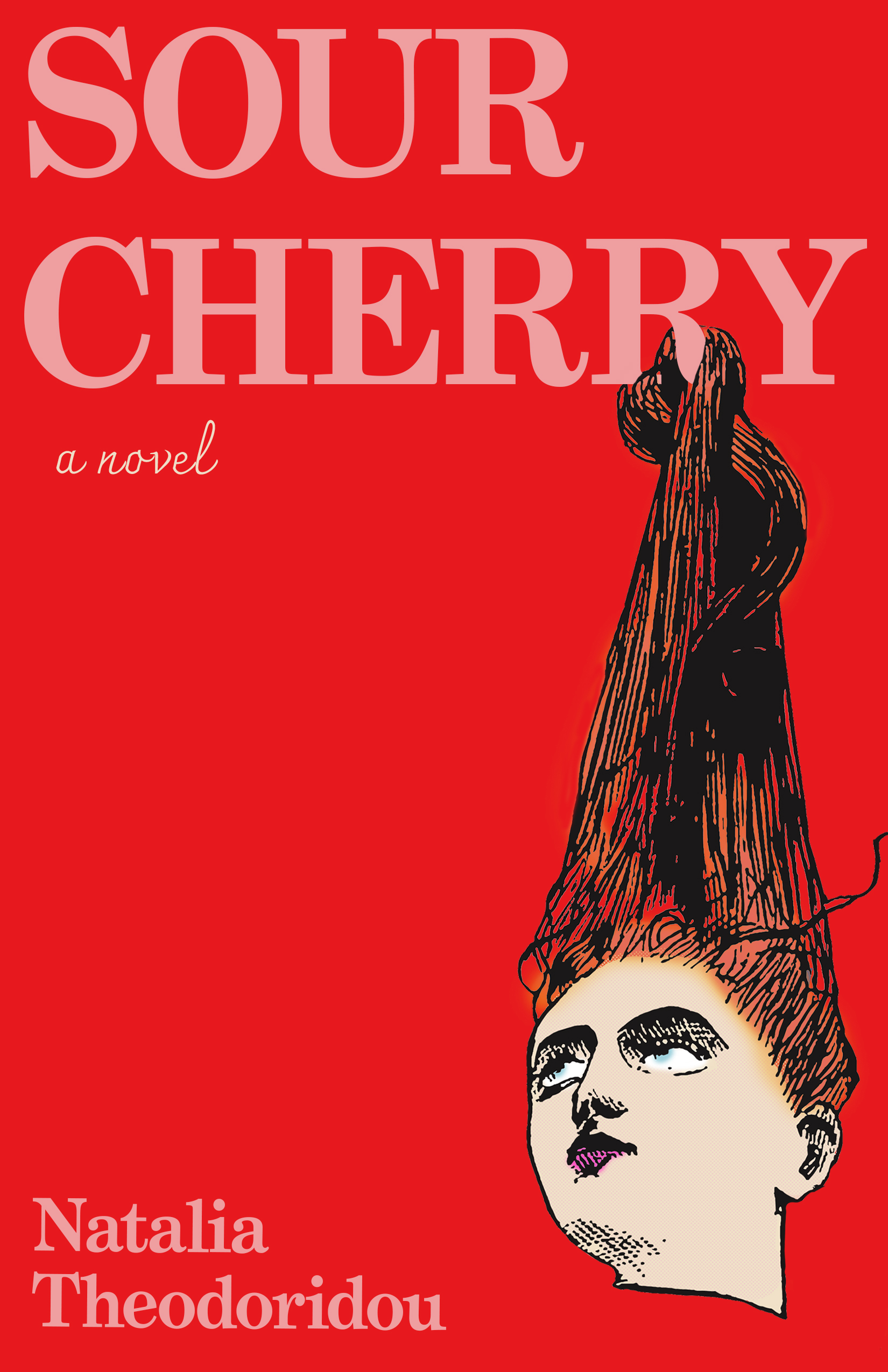
SOUR CHERRY, feminist retelling of the folktale Bluebeard...only with empathy

SOUR CHERRY
NATALIA THEODORIDOU
Tin House Books (non-affiliate Amazon link)
$9.99 ebook, available now
2025 Nebula Award nominee for Best Novel. Winners will be announced June 3-7, 2026.
One of LitHub's 100 Notable Small Press Books for 2025!
WINNER OF the 2026 Locus Award for FIRST NOVEL!
Rating: 3.75* of five
The Publisher Says: A stunning reimagining of Bluebeard—one of the most mythologized serial killers—twisted into a modern tale of toxic masculinity, a feminist sermon, and a folktale for the twenty-first century.
The tale begins with Agnes. After losing her baby, Agnes is called to the great manor house to nurse the local lord’s baby boy. But something is wrong with the child: his nails grow too fast, his skin smells of soil, and his eyes remind her of the dark forest. As he grows into a boy, then into man, a plague seems to follow him everywhere. Trees wither at the roots, fruits rot on their branches, and the town turns against him. The man takes a wife, who bears him a son. But tragedy strikes in cycles and his family is forced to consider their own malignancy—until wife after wife, death after death, plague after plague, every woman he touches becomes a ghost. The ghosts become a chorus, and they call urgently to our narrator as she tries to explain, in our very real world, exactly what has happened to her. The ghosts can all agree on one thing, an inescapable truth about this man, this powerful lord who has loved them and led them each to ruin: If you leave, you die. But if you die, you stay.
Natalia Theodoridou’s haunting and unforgettable debut novel, Sour Cherry, confronts age-old systems of gender and power, long-held excuses made for bad men, and the complicated reasons we stay captive to the monsters we love.
I RECEIVED A DRC FROM THE PUBLISHER VIA NETGALLEY. THANK YOU.
My Review: Retelling "Bluebeard," one of the most unsettling folk tales I've ever encountered, was a shoo-in to get my admiring attention for this novelist's debut effort. At about the 45% mark, the scene under the cherry tree, I found the time jumping wearing me down...no particular effect was, in my observation, intended for these shifts. They do not seem coupled to changes in emotional register, or attached to revelations of characters' understandings of themselves or each other. Instead they felt to me like ways to avoid exploring an important shift in something because after the time shift the event shifted from is dealt with in short and sharp explanation..."after that Tristan looked at his hand a lot"...without much depth. As this story explores the fear and the disappointment that must inevitably accompany truly loving another person, that matters. The ending was, as a result of this ongoing issue, a bit anticlimactic.
The plus side is that this is a retelling of a quite brutal tale that tries hard to be in the main character's corner. Something that gives kids like me nightmares is brought into the realm of reason. It's very empathetic, it's very willing to engage the readers' empathy. This makes the awfulness all the more poignant and impactful, and is the source of all my positive feelings for the book. It grapples with the deep, oceanic sadness of loving someone who is haunted by an awful past, whose emotional tides do not stop at the shores between himself and the world. It brings a lovingkindness to the seemingly cursed eternal outsider, yet doesn't play the victim card for the monster or the lover.
Craft quibbles aside, I found this story quite engrossing or I'd've simply Pearl-Ruled it. I haven't raised the thematic elements of horror to content-warning status because, frankly, if you need CWs on ancient folktales you won't consider the read for more than a split second anyway.
A debut novel that portends a career of fascinating work. I already want to read Author Theodoridou's next book.
Saturday, March 29, 2025
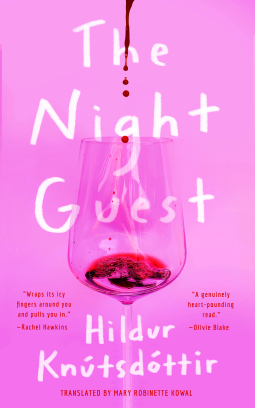
THE NIGHT GUEST, deeply unnerving psychological domestic horror novella centers misogyny

THE NIGHT GUEST
HILDUR KNÚTADÓTTIR (tr. Mary Robinette Kowal)
Tor Nightfire (non-affiliate Amazon link)
$11.99 ebook, available now
Rating: 3.5* of five
The Publisher Says: Hildur Knutsdottir's The Night Guest is an eerie and ensnaring story set in contemporary Reykjavík that’s sure to keep you awake at night.
Iðunn is in yet another doctor's office. She knows her constant fatigue is a sign that something's not right, but practitioners dismiss her symptoms and blood tests haven't revealed any cause.
When she talks to friends and family about it, the refrain is the same ― have you tried eating better? exercising more? establishing a nighttime routine? She tries to follow their advice, buying everything from vitamins to sleeping pills to a step-counting watch. Nothing helps.
Until one night Iðunn falls asleep with the watch on, and wakes up to find she’s walked over 40,000 steps in the night . . .
What is happening when she’s asleep? Why is she waking up with increasingly disturbing injuries? And why won’t anyone believe her?
I RECEIVED A DRC FROM THE PUBLISHER VIA NETGALLEY. THANK YOU.
My Review: I'm always down for a psychological horror read. This one has a strong message about misogyny at its core. I think that is what powered me past my disappointing reading experience.
Iðunn's world is a very familiar, quotidian one of tedious work, unfulfilling relationships, and family pressures that might or might not be external. Like so many, maybe every, female of my acquaintance, she's a poor sleeper. This has multiple negative effects on a person's life. Iðunn tries to make changes in her sleeping deficits with a fancy new kind of wearable multiple-axes tracking device.
The promised data on her sleeping patterns tells a story that does not make sleep come any easier. If anything the data scares her more; and the device itself seems to be making her life, not only her sleep deficit, much worse.
Iðunn's sense of crushing responsibility for every single thing in her life is not unfamiliar to me. It's just not something I think is always an external pressure as Iðunn thinks it is. No matter; her responses to the world are the story, so putting aside my sense of her emotional immaturity, I travel down the unhappy trail with her. Why is she, for want of another term, sleepwalking? Why does her body acquire wounds during her unconsciousness? If it isn't sleep, what is this state and why is it part of her nightly experience that is unavailable to her daylight mind?
I was ready to quit the read when animal harm entered the chat. I was perfectly happy to follow the deteriorating sense of control over her body and mind; it seems to me to be an excellent metaphor for being a woman in a misogyny-drenched world. I'm very much not down with harming creatures that can not adequately defend themselves, when it's done for cruelty's sake most especially. In this case it did nit feel to me to be more than an intensifying trope; it did not come from something within Iðunn that was just bursting out of her in a horrible way...see The Wasp Factory for an example of what I mean by that.
I decided to trust the eminent Mary Robinette Kowal, a personal favorite creative talent, whose translation of the text felt very smooth and organic and unlike I was reading a story at an extra remove. That often happens to me, even in excellent translations. This story isn't ever going to be a five-star read to me, thought I, but it's way better than average.
Then...the ending.
Three and a half stars. No more, no less.
Wednesday, March 26, 2025
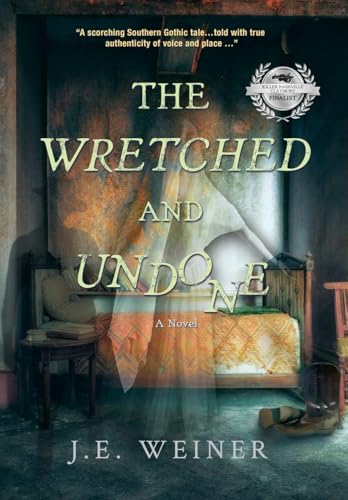
THE WRETCHED AND UNDONE, dark and spooky Texas-set immigrant family saga

THE WRETCHED AND UNDONE
J.E. WEINER
HtF Publishing (non-affiliate Amazon link)
$9.99 ebook, available now
Rating: 4* of five
The Publisher Says: A sweeping Southern Gothic saga unfolds in the Texas Hill Country, where history's silenced voices rise amidst an astonishing tale that defies expectations.
A sinister specter is hell-bent on revenge, and an ethereal woman in white is desperate to repel the menacing force. A battle rages for the hearts, minds, and souls of the Anderwalds and their extended family of immigrant outcasts, Arab camel wranglers, wounded warriors, and a songstress on the verge of madness. A sweeping Southern Gothic saga unfolds in the Texas Hill Country, where history's silenced voices rise amidst an astonishing tale that defies expectations.
On the eve of the Civil War, Polish immigrants Marcin and Agnieszka Anderwald arrive in Bandera, Texas, seeking a new beginning. But when Marcin crosses paths with a vengeful ghost known as the Shadow, their dream quickly turns into a nightmare. The Anderwalds' baby drowns, and Agnieszka is convinced she is to blame. She starves herself to death, returning from the grave as a ghostly Woman in White, determined to protect her family. Marcin and Agnieszka's son, Zacharias, burdened by grief, becomes entangled in a quest for vengeance that threatens his very soul. As he and his wife Liza clash with the relentless Shadow, they cling to hope when blessed with a child, John Marcin Anderwald.
But the curse of the Anderwalds is unyielding. John Marcin grows up amidst murder trials, haunting executions, and the ever-present Shadow that seeks to destroy his family. His love for the troubled singer Anna Schulte leads to further heartache, and his sons, Luke and Junior, inherit a legacy of sorrow and secrets that could tear them apart.
As the Anderwald legacy unfolds, each generation faces its own harrowing ordeal, where love and sacrifice are pitted against an unrelenting evil. Will they break free from the Shadow's curse, or will they remain forever wretched and undone?
I RECEIVED A DRC FROM THE PUBLISHER VIA NETGALLEY. THANK YOU.
My Review: Bandera! Good goddle mitey, y'all, that's just down the road a piece from my home town, Austin. What a surprise to find it in a novel of a cursèd family of Polish immigrants who are purported to be based on real people.
Dunno about all that, but it's cool to read about people I actually know. Or knew...most of the ones I met are bound to be dead by now, they all smoked like chimneys. But a thing most people don't seem to know is just how much the aftermath of the 1848 revolutions affected inbound migration into Texas. The repressions that followed the PTB returning to uncontested power in the Prussian, Austrian, and Russian Empires led to many, many people making their way to Galveston and Indianola to escape repression and reprisals from Bohemia, Poland, and Silesia...most especially Catholics from Poland and Bohemia, Anabaptists from Silesia.
So here's a superstitious Polish family arriving to start a freer, better life in Texas...they'd be so ashamed of their thrice-great grands and the awfulness they're inflicting on those who are seeking the same...and they get tangled up in a curse that travels the generations. Is that because "The Shadow" is supernatural, or because the family's passed it down like a blood feud with the world?
So yes indeed, it's dark, and violent, and misogynistic abuse is rife. Is it a cheery way to wile away a weekend? No. Is it fun? hmmm not all the way sure I'd call it "fun" but I was not about to put it down. Any family as haunted and afflicted as the Anderwalds that somehow staggers from the Civil War of 1860 all the way to the present is, well, tough, stubborn and full of that intangible thing I call "grit." It made me feel invested in the succeeding generations as they succumbed to...whatever "The Shadow" really is.
I'll only give it four stars because I found it so curiously compelling and oddly propulsive. I think many of y'all won't be so tolerant. If historical fiction about the ugly life challenges od immigrant clans that quite literally pull no punches don't send you sprinting for the exit, this read will scratch your dark fiction need. It's borderline supernatural horror without feeling silly to me. That tells you a lot about how deftly Author Weiner handles "The Shadow."
I liked the experience of reading about my old homeplace as well. It's funny...I don't want to live there now, but it's still a weird unwelcoming home to me. Definitely a spooky one to read.
Friday, January 17, 2025
STRANGE PICTURES, aptly titled off-kilter murder-mystery narrative translated from Japanese

STRANGE PICTURES
UKETSU (tr. Jim Rion)
HarperVia (non-affiliate Amazon link)
$13.99 Kindle edition, available now
Rating: 4* of five
The Publisher Says: The spine-tingling bestseller that has taken Japan by storm—an eerie fresh take on horror for fans of Hidden Pictures and Junji Ito, in which a series of seemingly innocent pictures draws you into a disturbing web of unsolved mysteries and shattered psyches.
An exploration of the macabre, where the seemingly mundane takes on a terrifying significance. . . .
A pregnant woman's sketches on a seemingly innocuous blog conceal a chilling warning.
A child's picture of his home contains a dark secret message.
A sketch made by a murder victim in his final moments leads an amateur sleuth down a rabbithole that will reveal a horrifying reality.
Structured around these nine childlike drawings, each holding a disturbing clue, Uketsu invites readers to piece together the mystery behind each and the over-arching backstory that connects them all. Strange Pictures is the internationally bestselling debut from mystery horror YouTube sensation Uketsu—an enigmatic masked figure who has become one of Japan's most talked about contemporary authors.
I RECEIVED A DRC FROM THE PUBLISHER VIA NETGALLEY. THANK YOU.
My Review: Visual horror...sequential art, film, artworks...isn't very effective on me. My idea of horror is Wrongness, and that's deeply individual in its iconography, therefore effective representation. I'm more afraid of people than Supernatural Forces because the Supernatural, by definition, can't be identified until we know all the laws of nature, and know that we know all of them. Until then, everything that happens, including things that break the known laws of physics, are simply unexplainable but still not supernatural.
Reality stinks, mono- or a-theistic religious nuts. Miracles and superheroic gods are improbable but not impossible because nature is not even a billionth of a percent explained yet. Stay agnostic, it's the only defensible stance.
This effort at image-enhanced horror is very interesting, though I'm pretty convinced it's one of that most Japanese of stories, the eerie murder mystery. I've reviewed plenty of those. This is another one. It's...fine, perfectly readable (as a mystery), and in spots enjoyable. It's a complex puzzle, not at all easy or simple to solve. It defeated me. I was sure one particular thing was true, and it explicitly wasn't. That made the read much more interesting to me than it would've been if I'd been correct.
Like so many mysteries from Japan, the characters are more gesturally indicated than developed. Mystery-genre readers in the US are less tolerant of this than they could be; we tend to look for people to invest emotional energy in, not just puzzles that rake place in a brooding ill-defined space. I think the ideal reader for this story, among my Anglophone audience, is likely to be someone who really enjoys Julio Cortázar or Umberto Eco.
I was not particularly enraptured by the read until after I finished it. This was more akin to a storyboard pitch to investors about an idea for a horror story connecting some...suspicious deaths that were or could've been Influenced From Beyond than itself a horror story. Thinking about the read, which I finished last night after taking a week to read (in my habitual scattershot way interspersed with other books), I realized I was very, very successfully manipulated from the off. A child psychologist explaining how a little murderer's artwork provided clues to the reality that child operated within initially felt a bit In Cold Bloody to me. Should I believe the narrative? Should I be interested in *how* or why? Or permaybehaps what....
That's top-quality misdirection for that to work on a reader with sixty years' experience.
Will you love it? I doubt it; I didn't. Will you enjoy reading it? See my comps, if you love them you might get a charge out of this off-kilter, well-crafted read.
Friday, May 20, 2022
JUST LIKE MOTHER, truly horrific, horrifying, horror fiction
JUST LIKE MOTHER
ANNE HELTZEL
Tor Nightfire
$26.99 hardcover, available now
Rating: 3.5* of five
AUTHOR HELTZEL ON THE CULT OF MOTHERHOOD at CrimeReds.com.
The Publisher Says: A girl would be such a blessing…
The last time Maeve saw her cousin was the night she escaped the cult they were raised in. For the past two decades, Maeve has worked hard to build a normal life in New York City, where she keeps everything―and everyone―at a safe distance.
When Andrea suddenly reappears, Maeve regains the only true friend she’s ever had. Soon she’s spending more time at Andrea’s remote Catskills estate than in her own cramped apartment. Maeve doesn’t even mind that her cousin’s wealthy work friends clearly disapprove of her single lifestyle. After all, Andrea has made her fortune in the fertility industry―baby fever comes with the territory.
The more Maeve immerses herself in Andrea’s world, the more disconnected she feels from her life back in the city; and the cousins’ increasing attachment triggers memories Maeve has fought hard to bury. But confronting the terrors of her childhood may be the only way for Maeve to transcend the nightmare still to come…
I RECEIVED A DRC FROM THE PUBLISHER VIA NETGALLEY. THANK YOU.
My Review: The opening scene...Maeve, locked in a closet (!), hearing hideous screams of agony and being quietly comforted by her cousin Andrea as they go on and on, had me riveted. And that is that!
All the momentum drained out of the story for me as we went from following her child-self to the chase narrative laid on for adult Maeve. The reason? I don't like adult Maeve. She's either a bit simple or she's got The Most Trusting nature ever plopped in a human being. Either way I want to shout at her, shake her until the missing connections in her brain click together, until she sees the simplest manipulations are being used on her with appalling regularity and success.
In the story universe, Maeve is one of the girl children in The Mother Collective whose purpose is to control matrilineally all the money and power that men have always controlled. They're using that power and wealth as men always have, to oppress and abuse their opposite numbers. Maeve's rescued/kidnapped by the Patriarchy at the ripe old age of eight and, unsurprisingly, is a Survivor and PTSD sufferer for the rest of her life.
When we rejoin her first person narrative, she's a never-was in her thirties, making her meager crusts of bread as a fiction editor. She's naturally quite wary of relationships, having very few...until Andrea comes back into her life. Andrea, her cousin from childhood, is fabulously wealthy and living a dream life as the big boss of a fertility start-up.
If you've read horror novels, you pretty much know what's coming.
It occurs, over the course of some thirty chapters. I'd say if you don't already have a grasp on the end of the book it will come as a shock to you. It did not do so to me. I was along for the ride, though, because I started to want this idiot woman Maeve to suffer some more right here in front of me as Andrea manipulates and sets her up.
The actual ending of the book was pretty clearly telegraphed from the start. I kept hollering at Maeve, "just LOOK AT ANDREA for ten seconds and you will see it!" But she didn't, and I began to suspect her intelligence truly was subnormal.
When, at around the half-way mark, Maeve's friend-with-benefits pays one hell of a price for her vague, unconnected relationship to life, I was ready to say "sayonara." I decided to do something I don't usually do: I read the epilogue. There was another vile w-bomb aimed by Maeve, there was a moment of clarity for Maeve, and there was something so deeply schadenfreude-inducing that I had to get there step by step.
This is a horror novel for those, like me, who aren't in the Cult of Mother, and whose belief in the goodness of Woman is so frayed and chopped that it can no longer be discerned from a streak of extra-dark dirt etched on my skin. I think Author Heltzel has created a dark, dreadful mirror of the life men have forced, and continue to force, women to lead. There is nothing innate in the desire to Mother someone for many women. Uteruses are not always the only important organ in a woman's body, and her existence should never be presumed to revolve around that organ's use in any way.
If you can read this book and not see that the nightmare is very real, and that its fictionalization is merely cosmetic, then you're at Maeve's level. I don't think I know many folk like that. But if one reads this: Go back and look carefully at every decision Maeve makes. What that will tell you is all you need to know.
Monday, February 28, 2022
SUNDIAL, an oddly innocuous title for an anything-but-innocuous read
SUNDIAL
CATRIONA WARD
Tor Nightfire Books
$26.99 hardcover, available tomorrow (pre-orders today, of course!)
Rating: I settled on four; YMMV
READ HER INTERVIEW IN The Guardian!
The Publisher Says: You can't escape what's in your blood...
All Rob wanted was a normal life. She almost got it, too: a husband, two kids, a nice house in the suburbs. But Rob fears for her oldest daughter, Callie, who collects tiny bones and whispers to imaginary friends. Rob sees a darkness in Callie, one that reminds her too much of the family she left behind.
She decides to take Callie back to her childhood home, to Sundial, deep in the Mojave Desert. And there she will have to make a terrible choice.
Callie is worried about her mother. Rob has begun to look at her strangely, and speaks of past secrets. And Callie fears that only one of them will leave Sundial alive…
The mother and daughter embark on a dark, desert journey to the past in the hopes of redeeming their future.
I RECEIVED A DRC FROM THE PUBLISHER VIA NETGALLEY. THANK YOU.
My Review: Y'all remember how I said I wasn't a member of the Cult of the Mother? Rob, the mother at the center of the pitch-black exploration of the Dark Heart of Motherhood, isn't a big fan of it either. And she, stupid asshole that she is, had a second baby with a man she dislikes despite the fact she doesn't like the one she already has.
So why the ever-lovin' hell did I keep reading the book? And what's that star rating up there all about? I can (sort of) explain....
I hate fewer tropes more than the Noble Woman Who Keeps Her Family Together™. This is that story. And I hate that about it. I'm not interested in reading about the vileness of animal experimentation. This is that story, too. I really, really do not like to read Exceptional Child narratives. I don't really need to say it again, do I? But once you open this story up, you're In It For The Duration. Believe me when I tell you, you're not going to come out the other side the same as you went in. Rob is really a bad, bad mother in that she became one at all, ever, after what her childhood was like. It's inevitable that very bad things would follow this woman around like roast-beef-and-brussels-sprouts farts. And yet her narrative voice never does the inexcusable and becomes whiny. She gets closest to it when she discovers that her best friend isn't. But even then, very early on, her tone is "goddammit! not a-fucking-gain!" instead of "how could this happen to meeeeee?" which last is the norm for most women's fiction/domestic thrillers I've perused.
It's what occurs to bring the matter to her attention that needs to be praised: Her youngest child contracts chicken pox. There is only one plausible way that could have occurred. And that, as the saying goes, is that. What matters as we go forward is what Rob is going to do about the stuff she learns: fix it. Every weird, unbelievably wacked out thing Rob does throughout this weird, wacked out story is aimed at fixing the problems she's got in her face right this minute. And it takes her less time to figure out what she has to do to have the best chance to fix it than you'd think, looking at the page count.
Not a one for deep self-reflection, our Rob. Had she been so equipped, there would've been no marriage and no children in her life. And believe you me, there should NOT HAVE BEEN.
So why were there a marriage and children in her life? Because...there are debts that one repays whether in this or another life, there are things that are absolutely yours and yours alone to atone for and to offer up to the evil life-force that this world was created to sustain. And that is where Rob and Callie are as this story begins its uphill climb against the gravity of reality.
When you start out a read as addictively written as this one is, you accept that there are things you won't like as much as others in it. Because something is marketed as horror, you know you're going to have to accept a certain level of gore, for example. The question is will you be too squicked to take the gore as it's intended, or will it just lie there on the book's floor waiting for the cleaning crew to make it all go away? This book seriously skated on the edge of calling the crime-scene cleaners as we got more and more into the scenes in the desert. I wasn't at all sure continuing was a good idea at multiple junctures.
I persevered, and despite the feeling that there could've been less of some gory moments, the fact is that the gore here is handled with deft assurance, and is applied to the plot with a care that one senses even as it deepens about one's ankles. The moments when the plot takes the path of least resistance, ie "it's the man's fault," there is in fact something more to it than that. There is a dark, echoing justice in the world the book creates, a seriously ugly but still urgent weighing of karmic scales that must happen to give this ending, any ending really, a hope of satisfying the reader.
The latent genetic flaw, or the generational trauma inheritance, or the epigenetic expression of ancestral agonies that come to the fore in the read are utterly predictable from the moment we meet Rob. But there's the small matter of how Author Catriona Ward writes to explain why one is compelled to keep reading on. It is this fact that caused me to power through very, very, very upsetting events that would normally have caused me to shut the book for good.
I don't think too terribly many of my regular readers are in it for horror reads. If that's you, skip this review. But horror people should, if they have not already, make this author welcome on their shelves. She's a good sentence-by-sentence writer, and while I'm not the most familiar with horror plotting, this story's absence of supernatural falderol accentuates the truth that I appreciate horror stories making plain: Humanity is made up of vile, irredeemable scum who, even when they say they're doing something for "the greater good" or whatever, are actually just looking for ways to excuse their inner cruel bastard coming out.
Monday, October 11, 2021
UNDERNEATH, brutal yet concise true-crime novel about Mother & SHELTER, psychological horror in Australia
UNDERNEATH
LILY HOANG
Red Hen Press
$16.95 trade paper, available now
Rating: 4* of five
The Publisher Says: Martha Johnson wants to be a good mother and a devoted wife. It’s all she’s ever wanted in life, and she tries her very best, but when her husband threatens to leave her, her desperation reveals only one strategy that can save her family, punish her ungrateful husband, and earn power: murder.
Over a five-year period, Martha Johnson murders her four children, one by one, in order to punish her husband when they argue, but Martha is no ordinary serial killer. She murders her children by using the bulk of her 250-pound body to suffocate them. Unlike other fictionalized true-crime novels, Underneath neither valorizes nor focuses on the specific acts of violence. Instead, it attempts to understand how feelings of powerlessness, the residue of trauma, and the need to find justice in a world that refuses to give a fat body justice finds its only respite through murder.
I RECEIVED A DRC FROM THE PUBLISHER VIA EDELWEISS+. THANK YOU.
My Review: Disturbing story of disempowerment's most extreme and appalling cost. That it is based on a true story made me feel ill.
...I'm pretty sure this isn't purgatory, either. It's more just like, extension. Continuation. We the murdered continue on, right underneath the living, but we aren't alive anymore. We're just here: bodies, but not bodies, too. So far as I can tell, the living can't see or hear or feel or smell us, but sometimes, if I get close enough to Martha, I swear she can taste me. ... Because we were murdered, this is our punishment.
As one expects from stories published by Red Hen Press's Kate Gale, monadnock of the LA literary publishing scene for {undisclosed} years now, there is a weird and unsettling tension between the lovely language and the sheer awfulness unfolding inside those pretty phrases and unnerving images. Why should the murdered, especially these child-victims, be made to suffer punishment? Discuss amongst yourselves after reading this intensely book-clubbable book.
Incest...prostitution...child-murder...maternal child abuse...domestic violence...and told through a dead child's point of view. "Is this old man round the bend for good?" I hear y'all thinking, as you read my sentence above about the book being "intensely book-clubbable." No: I'm hoping to make it plain to you that this story is so viscerally real, so eye-wateringly honest about the actual experience of mothering for a not insignificant segment of women, that y'all bougie book clubbers could do with a corrective lens to all the saintly, rise-above-it-all, succeed succeed succeed "women's fiction" guff that gets Oprah'd and Reese'd. Please note that I am not attempting a knock on these book clubs, they are hugely popular for a reason and their choices are not all in one and only one vein...but they are very fond of a certain type of story (described above) and return to books telling it quite often. Don't fix what ain't broken.
I want people to look past the usual and see the raw edges where things have failed and fragmented in different ways. Where the fault lines that exist in much of the world go at a different angle. I include myself in this, as my periodic reviews of *shudder* poetry and *urp* YA stories demonstrate. Successful for me or not, these reads are in areas I'm hell-bent-for-leather not to ignore simply because I so very often find them...unpleasant...to read. As I've said many times, I do not want to die above the neck before I die below it. So I'm out there sayin' "yes" when people offer me the damn things instead of running away like I want to...challenging my prejudices is the only way I know to prevent them from becoming part of the bone structure.
With Underneath, Author Hoang very much did that kind of challenging. We're not innocents, readers all, we've read The Lovely Bones and/or seen its movie. Dead narrators in fiction go a long, long way farther back in time than that. I'm not sure this take on the story she's telling here, a sort of slo-mo In Cold Blood, is one I'd've recommended to her. (I sure as hell wouldn't've recommended using w-bombs.) But when you're fully in the flow of the story you can see why this choice was exactly right, and possibly the only one she could have made. There was no other structure which would've enabled the Bernice-to-Martha-to-Arlene transmission of woman-violence to come clear. It needed an eyewitness whose eyes weren't in the same place they used to be. Like, Earth.
The pace of storytelling...well...I don't exactly know what to tell you. This isn't a novella, but it's not a long book. It doesn't linger on any scene. It simply is Arlene...talking to you. The story seems, in my experience of reading it, to tell itself to you in some peculiar way. Maybe the narrator being a child, who specifically says she's a child but one whose, um, existence after death keeps her learning, is so disorienting that the story becomes more of presence than she is? I can't be sure...but to me, the story was its own narrator, and it called itself Arlene. (If that makes any sense to you, could you explain it to me?) It doesn't repeat itself. It doesn't leave stuff out (for long). It's got a pull like a river's current, not dramatic but inexorable and powerful, like it won't let you go once you're there.
So go with it.
The structural facts of a novel told in vignettes...in discrete story-slices, layered with the sadness that floats under the surface of the ever-expanding skin of mother eating, of child growing, of marriage to a man who loves only what he needs and not what he wants bloating as its death-gases seek escape...is irregular, like the crumb structure of the best bread is. Not for Author Hoang, writing about cake...endless cakes made and eaten, made and eaten, never ever shared...the dense, regular, sweet crumbs left on an unused party-plate. The coarse and unappealing crumbs, food for scavenging ants, of hollow-sounding adulterated loafs of dollar-store bread; these make Martha's and Arlene's lines as they slip and catch and form shapes no one wants to see, just sweep into a trash can or, at best, into a crumb-catcher for possible crushing and reuse after they're fully hardened and useless as food in themselves.
There is a crisis in this world. It's a crisis of unlove. There are so many, many people in the world who are unloved. Who can't love or return love or even conceptualize it. They're incapable of it; they need it the more desperately because of that. But they don't and can't and won't get love. They are love-less. Bernice? Martha? Even, in the end, Arlene...love-less. Love, you see, isn't a word or a fancy chocolate bar, or a birthday card. It's action, investment of time and emotion. And the tragedy, in the ancient sense as well as the modern, of this story is that It. Is. True.
Beautiful sentences telling a dreadful, tragic tale of love, in its absence and its perverse, incomprehensible to normies, twisted shapes. Read this and be very, very glad you are none of these people.
Read this and shudder to your bones: You are all of these people. Happy Spooktober.
++++++++++++++++++++++++++++++++++++++++++++++++++++++++++++++++
SHELTER
CATHERINE JINKS
Text Publishing (non-affiliate Amazon link)
$15.95 trade paper, available now
Rating: 4* of five
The Publisher Says: Meg lives alone. Her little house in the bush outside town is the perfect place to hide. This seclusion is one of the reasons she offers to shelter Nerine, a young women escaping an abusive ex-partner. The other is that Meg knows what it’s like to live with the looming threat of a violence at the hands of someone you love.... Nerine is jumpy and her two little girls are frightened. This tells Meg all she needs to know about where they’ve come from, and she’s not all that surprised when Nerine asks her to get hold of a gun. But she knows it’s unnecessary. They’re safe now. Or so Meg thinks… Then she starts to wonder about some little things. A disturbed flyscreen. A tune playing on her windchimes. Has Nerine’s ex tracked them down? Has Meg’s husband turned up to torment her some more? By the time she finds out, it’ll be too late to do anything but run for her life.
I RECEIVED A DRC FROM THE PUBLISHER VIA EDELWEISS+. THANK YOU.
My Review: Remember the first time the old aphorism, "No good deed goes unpunished," held real, tangible, awful Truth for you? Strap in....
Meg is the kind of friend you hope you'll have in an emergency or crisis. She's been there, she's done what she could, realizes how important the mere fact of showing up is. She'll give you shelter, she'll offer support, she will feed you and listen to you and Be There in the psychological, supportive sense of the words.
That's because she did not get those things when she so badly needed them during her devastatingly abusive marriage.
Nerine and her two daughters are, as we're shown, in a situation where Meg, her home (which she's ever so aptly named "Bolt Hole"), and her way with others are just exactly what they need. In they come; settle they do not. Nerine is in constant motion, constantly talking taking talking about how horrible the girls' father is (right in front of their scared little faces), how bad their lives were, how the courts have...insanely, incomprehensibly...given this vile predatory abuser visitation rights! Can you even imagine! she asks Meg, never waiting for an answer.
Then the nightmare turns real...awful things having been said, there are suddenly weird and unnerving things happening...frightening but, as yet, not violent things...footprints and noises where and when they shouldn't be, and all the time Nerine's talk talk talk about the horrors of the past makes little Analiese and Collette, her very young daughters, scared and jumpy. Meg, a grown woman with an estranged daughter living in England (can't forgive Mum for staying with the awful narcissistic personality disorder-having Dad), empathizes with all three, tries her best to distract and entertain the girls with rural life's many pleasures. Nerine? Nothing changes her focus. She is wound way too tight, experiences all things as threats and blames everything on the violent, awful ex who will, it comes to seem, jump down from a tree onto them with a machete!
As the unnerving stuff escalates into actual violence (CONTENT WARNING: ANIMAL CRUELTY), Meg begins to piece together some very, very strange facts and comes up with a truly frightening picture.
As I read the story, I was genuinely unsettled and disturbed. I can't say I expected the twist, having thought from the get-go there was going to be one. What it was, however, surprised me. Author Jinks deserves big ups for her unnerving choice of an ending. It was not what I'd thought it would be, and made the story that much more appealing to me.
Animal cruelty cost the book a star. I understood why Author Jinks made that choice, and I wasn't inclined to put the book down for good because of it, but it was dreadful and I warn my more sensitive readers (Kathy!) not to consider this tale for their own shelves.
The topic of incest and the crime of rape are factors in this story. They are hot buttons for many. I will say that Auhtor Jinks does not sensationalize them. They aren't dwelt on with ghoulish and repugnant "look! LOOK at how AWFUL men are!" glee. They are presented as facts, and as crimes; they are part of the women's experiences, and are told to us, the readers, as such.
I quite liked the pace set by Author Jinks. We're not in a hurry to get where we're going; there are interesting side characters and the land itself is a character of a sort. That, from my point of view, set the stakes effectively high for Meg, and for the reader. Anything that disrupts this lovely woman's Bolt Hole is a Bad Thing. And boy oh boy, the bad thing is very, very bad indeed. As Spooktober reads go, I think this one is as scary and as nightmarish as they come. Perfect for y'all ghoulies looking for a safe place to be wound up and scared witless!
Friday, August 6, 2021
THE GLASSY, BURNING FLOOR OF HELL, Brian Evenson's latest collection of literary horror
THE GLASSY, BURNING FLOOR OF HELL: Stories
BRIAN EVENSON
Coffee House Press
$16.95 trade paper, available now
Rating: 4.5* of five
The Publisher Says: "Here is how monstrous humans are."
A sentient, murderous prosthetic leg; shadowy creatures lurking behind a shimmering wall; brutal barrow men: of all the terrors that populate The Glassy, Burning Floor of Hell, perhaps the most alarming are the beings who decimated the habitable Earth: humans. In this new short story collection, Brian Evenson envisions a chilling future beyond the Anthropocene that forces excruciating decisions about survival and self-sacrifice in the face of toxic air and a natural world torn between revenge and regeneration. Combining psychological and ecological horror, each tale thrums with Evenson's award-winning literary craftsmanship, dark humor, and thrilling suspense.
I RECEIVED A DRC FROM THE PUBLISHER VIA EDELWEISS+. THANK YOU.
My Review: A collection from Brian Evenson, even one with some pieces that weren't quite as welcome to me as they ordinarily are (see below), will never not be greeted with warbles of delight from me. These tales are all from other homes, but they belong together. They're Family, much as a cult is.... Last Days, a pair of odd and deeply disturbing novellas linked by one hugely upsetting premise...and this premise is the *only* one I've ever encountered whereunder I am simply delighted to be called a "one"...made me think and shiver in 2014, and still does today. His short fiction tends to be very, very short (see my review of Windeye from 2013). This can render me almost mute, considering how very unreasonable the demands of reviewing collections, as opposed to anthologies of multiple writers, of short stories are. What's one meant to say? How to capture the gestalt of the collection? Is there a gestalt? If not, what the heck?! I get all verklempt and deeply verschmeckeled. But this is Brian Evenson. The peace is kept. These stories will take you, quickly, to places you're not at all sure you'd like to go.
I got a bit of a foretaste of the unease Author Evenson had in store for me when I kept thinking I should know that title, such a resonant phrase and so elegantly crafted! Is it a quote? A line from some famous poem by Milton, or permaybehaps Swinburne...turns out the author attributes it to Marguerite Young from Miss Mackintosh, My Darling! That monster hasn't been mined as thoroughly for titles as I'd've expected. I don't have any notion of where in the book it occurs, nor does he vouchsafe the information, but the sense of that exact phrase *belonging* somewhere has been answered and laid to rest. Unlike, it must be said, the science-fictional treatments of Otherness, the spooky treatments of cruelty and neglect, and the other many-sided polygons of storytelling he gets up to here. I agree that the planet's had it with us, and can even understand the more, um, arcane ways Author Evenson's come up with for it to shuffle us off. But they are as one expects from him: Unsettling, open-ended, and prettily told even when they aren't at all pretty.
With my usual éclat, I'll employ the Bryce Method of short impressions but no distinct individual ratings (no need; four fives, the rest but one four-and-a-halfs) for the stories so as to organize my thoughts and feelings, while hopefully allowing you to reach your own conclusions.
Leg is Hekla's, well, leg...only it isn't exactly a leg, and it's only hers until it doesn't want to be anymore. Then, well...you know who wrote it, you know what's likely to happen: Nothing you expect or predict. It's a quick, bitter hit of Evensonism.
In Dreams leads us to the sadly messed-about brain of a man whose very sense of himself is...flat, affectless. Much like, he muses, a psychopath's mind. But he has a familiar, a technological thing in his head, something that uses the parts of his brain that long-ago science said we, that is humanity, do not use...let us have it, they asked him, and he said yes.
That strange, almost fluttering sensation from deep within his mind, a sort of mental arrhythmia. It rose, it rose.
I could simulate dreams for you, it offered.
You've been listening in.
Of course I have, it said. I always am.
You always are, he acknowledged.
I could simulate them for you, it said again. They would be very well done. You wouldn't know the difference.
That was what frightened him, that perhaps he wouldn't know the difference.
I had a roommate when I was in the goofy garage who was schizophrenic. He was eerily like this character. Something else was in him, the C.I.A. was beaming imagery into his mind...it's a frightening thought, to be not-alone in your own head, and one that isn't obviously untrue sometimes....
Myling Kommer explains the unbearable burdens of family when Wrong is done to one of your own by one of your own. It is chilling and unfair; Jussi does not understand, can't possibly, the degree of hatred a child can feel for a selfish and terrible parent. Lucky boy, yet the future he inherits might not be quite so lucky.
Come Up for what, air? What good is air when you can't breathe? Breathing never got you anything good, never rewarded your life-long need to be seen or found to be important...but what do you do about it? You make sure you're never forgotten. Never. Even if it means making sure there isn't time to forget....
There was just a hole, a void where his wife had been. You couldn't feel anything about a void. All you could do was try desperately to keep it from swallowing you.
Good luck with that....
Palisade got built because someone, who remembers who, knew there was something that needed to be kept...in? out? hardly matters...and here you come, galumphing goofball that you are, head near empty and heart chock-full of nasty! Any wonder that the world around you gets angry? It's how angry that counts. One of the most persuasive arguments here for NetPriAppPeaDis to open up their vault and splash eight figures out on an all-Evenson anthology à la LOVE DEATH + ROBOTS.
Curator gives new meaning to the words "Mission Drift":
Here is how monstrous humans are, she felt the record should say. Humans are what they did to this world, their home. Here is why, once humans are extinct, they should never be brought back to life.
The Curator is absolutely correct. Wisdom comes at last, and too late.
To Breathe the Air is a master class in the beauty of launching the reader into a story in medias res. Simply superb science-fictional tale of two cities, and the horrors of Others being in control...exercising dominion over...those that do not consent and cannot benefit from it. Please, NetPriAppPeaDis, please make this an animated film!
The Barrow-Men makes you glad you don't live in Author Evenson's head. When Arnar claims an identity that isn't his, just to save himself, the barrow-men treat him to special, super-deluxe accommodations. Poor bastard.
The Shimmering Wall meditates on the power of love to make a person do what they believe they cannot and act as they swore they would not. It's also a bitter, angry denunciation of greed and selfishness and the disfiguring results of Institutional Superiority. And never once does it sound as strident as my reductive synopsis does.
Grauer in the Snow oh, how very much Grauer wishes he wasn't where he is! There but for the want of the presence of a ticket...he's quite sure his would've been punched; I wonder if anything in liminal space is ever for sure. Angels? An angel? If you like....
Justle makes a strong case for never pursuing family secrets! And Capgras syndrome? Maybe we don't really want to poke too deeply into it. No way to be sure there won't be a can of worms the size of Australia come poppin' up. Earth's revenge for our clever-clever uses and abuses, permaybehaps. Honestly, if this world's headed the way of Justle's Earth (assuming it is Earth), I'm not going to make book against this story coming to literal...life....
The Devil's Hand reminded me of an Aickman story, one about a weather house, that I read some time ago...the cruelty of the deprivations, the sheer indifference to bodily autonomy and integrity...just awful!
It was delicious.
Nameless Citizen or just "Nameless Person" in the end. No one lives through The End. The few clones of whatever is left aren't going to make it much past a few days apiece...by design? Or is this just another knock-on effect of the disaster that ends us?
Did I dream? I would say no—I never dream, at least not dreams I remember. I have not dreamt since the disaster changed me, as if the exchange for surviving the conflagration was to surrender my ability to dream.
Would that be a price you'd be willing to pay? Would there be a point to...continuing...if it cost you your dreams, your soul, along with your future?
The Coldness of His Eye reminds you, the reader, that no crime is perfect. Nothing on this Earth stays hidden forever...just hope that you're not interesting enough to be sought out for the wickedness you do without squaring it with the Universe. Because, rest assured, you will eventually pay the price, and the interest is a killer.
Daylight Come for the Eater of Darkness, the woman who can do what the men who think they need to know the future she might be able to tell them can't; so can it not actually come? The thing about power, true power, is that those who need it can never have enough and those who have it can never give enough.
Elo Havel is a take on that classic tale, The Ones Who Walk Away From Omelas, crossed with The Lottery, told by a character from an Edwardian Saki story. Short, to the point, not a wasted syllable.
His Haunting left me wondering how, in the end, inheritance works...your father to you, then you (a childless gay man) to...? Props to Author Evenson for mundanely, unspectacularly, introducing a gay guy into his fiction.
Haver brings the brutality of the shrink Haver trying to confine artist Festus to one measly lifetime, one lousy timeline, and to trap them there with chemical cocktails. Can anyone believe this is a full and complete life? I'd say Festus has some ideas about it. Maybe some Other does, and uses Festus? One thing I'll say for Haver: he knows his fate's condign.
The Extrication makes Dr. Mengele seem like your kid's pediatrician!
A Bad Patch recalls the chest-burster scene in Alien all too vividly and revoltingly...and it's not just one...and you're Sigourney Weaver strapped to a Vogon Poetry Appreciation chair.
Hospice is the story that I like the least. Distasteful to me to spend any time with this, this incel or just plain asshole, whatever he's meant to be. Thank goodness it's a short-short.
The Glassy, Burning Floor of Hell returns Hekla to us! Yes, Hekla from "Leg" and this is an earlier stage of her, um, partnership? with Leg. A trip to a yoga-ish retreat, where Hekla's just about the least valued and most ignored person there, arriving after everyone's asleep and helping herself to a room. Turns out it's the only room she can have...and the fat man (jarring note, making a villainous person fat) who's guru-ing this jamboree she doesn't want to be at is the Real Deal at Guruing. Only, and this is not particularly subtle, he's doing it out of greed. So, like, big not-cool points for fat-shaming and equating heaviness with greed.
This isn't enough to ruin the read for me, but YMMV of course.
Subscribe to:
Posts (Atom)