Pages
- Home
- Mystery Series
- Bizarro, Fantasy & SF
- QUILTBAG...all genres
- Kindle Originals...all genres
- Politics & Social Issues
- Thrillers & True Crime
- Young Adult Books
- Poetry, Classics, Essays, Non-Fiction
- Science, Dinosaurs & Environmental Issues
- Literary Fiction & Short Story Collections
- Sookie Stackhouse/Southern Vampire Books & True Blood
- Books About Books, Authors & Biblioholism
Showing posts with label CW: animal cruelty. Show all posts
Friday, June 12, 2026
I MAKE MY OWN FUN, a title you'll look at differently after the read
I MAKE MY OWN FUN
HANNAH BEER
House of Anansi Press (non-affiliate Bookshop.org link)
$19.99 paperback, available now
Rating: 4.5* of five
The Publisher Says: An unhinged romp through fame, obsession, and fandom
Everyone knows Marina, the A-list movie star. But very few know Marina, the absolute monster.
Years at the top have proved that whatever Marina wants, she gets. But when she meets bartender Anna, Marina discovers something that can't be Anna's affection. As Anna remains unmoved, Marina's advances become more desperate, and her obsession more dangerous.
The price of fame is heavy—and someone will have to pay for it …
I RECEIVED A DRC FROM THE PUBLISHER VIA EDELWEISS+. THANK YOU.
My Review: Mmmkay...so...see it's like this. There is not one shred of realism in this weirdness. Marina has five Oscars and she got them when not yet thirty.
Five. OSCARS.
Park them carpin' natterin' nabobs of emotional negativity in the punchbowl, y'all. Go with it. So Marina's in London for...something, I forgot what, doing her "Miss Relatable Superstar oh I'm just plain folks" shtik that sells out theaters, bored with the fact it keeps working, but nothing gonna change her runnin' the con, because a superstar girl's gotta feed the hordes of hangers-on. Marina goes out, worn out after another day of faking sincerity in search of booze and babes (the hot PR-inspired boyfriend is with his little sidequest lad—everybody's bi). (Oh, Marina? She likes girls too.)
And there SHE is: Anna the food-service worker, starstruck and ripe for the plucking. Marina plucks, well tries to anyway. Anna is...not impressed.
This cannot be allowed. You just know the whole world, from the folks Marina catfishes on various dating apps to the fellow A-lister "friends" she's secretly fed to the internet wolves for shits and giggles, has always fallen right into or back into her orbit at the merest crook of a pinky from Marina. Anna, though, declines the part she's been cast to play.
I hope you saw Tár. Marina's the Hollywood version of her, very very sure she is worth all the trouble and pain she causes all around her because she is A Star. There is more than a little of the Fatal Attraction thing goin' on with the way Anna keeps ducking out and trying to get away, which Marina's sure is just playing hard to get. Not so much Marina...Anna sees your real face and wants no part of looking into the abyss of selfishness and self-regard you represent. You're running out of time, passing the line of 30 aka career death, and Anna is failing to hide your desperation and trappedness from you...how dare she?! You *deserve* Anna's utter devotion! You're YOU!
Bitter, angry celebrity-obsessed woman caught in what she knows inside is the beginning of the end refuses to examine her actual reality to see what she wants to try next. Told in a headlong, obsessive rush, maybe even too much of one, Author Beer's debut novel is a howl of outrage that the /marinas of the world get as far as they do, that what the Marinas of the world do to others is only partial repayment and charged to the wrong account for what's done to them. The ending, honestly rushed and abrupt, works because there are unreliable narrators like Christie's Dr. Sheppard, and then there are the Marinas. This ending, abrupt as it is, makes the sheer awfulness of Marina fluoresce. It's so so sad, and so so appropriate, and just truly satisfying for what it subtextually points to.
There is not one soul in this book I felt like I wanted to rescue, teach sense to, or even get to know better. I know it's a novel but it truthfully made me look askance at everyone involved in the celebrity-influencer world again.
Summer sudsy thriller fun! I say feed your inner cynic a story to keep it from gluing you to the next season of The Traitors.
Thursday, May 21, 2026
THE MADNESS PILL: One Doctor's Quest to Understand Schizophrenia, can be a tough read but has a hopeful ending
THE MADNESS PILL: One Doctor's Quest to Understand Schizophrenia
JUSTIN GARSON
St. Martin's Press (non-affiliate Bookshop.org link)
$15.99 ebook, available now
Rating: 4.5* of five
The Publisher Says: A rollicking history of the life and work of an unheralded genius: Dr. Solomon Snyder, whose experiments with mind-altering drugs helped change the way we think about the causes and treatments of schizophrenia.
In the 1950s, the field of psychiatry had nothing to show for itself. While polio was being cured, antibiotics were being discovered, and cancer research was developing, the mental health world had no wins. Asylums were full and nobody had figured out how to fix insanity—specifically schizophrenia, the severest mental illness. Scientists became convinced that if they could engineer a pill to create madness, then they could cure it.
Centered around Solomon Snyder, the psychiatrist who ultimately did identify the madness pill, and the community of doctors and researchers he worked with, THE MADNESS PILL recounts the drug-fueled quest to cure schizophrenia. A wunderkind who started medical school at 19, Snyder worked steadily for decades to replicate the illness, ultimately finding in 1970 that amphetamines could trigger a schizophrenia-like state by flooding the brain with dopamine. Five years later, he went on to discover the dopamine receptor and proved that antipsychotic drugs work by disabling dopamine neurons. Snyder’s dopamine hypothesis inspired a generation of researchers to part ways with psychoanalysis and look for the biological basis of schizophrenia and other mental disorders.
Using first-hand research and interviews, THE MADNESS PILL is at once a raucous history and insightful portrait of a remarkable scientist who turned psychiatry into a respected science by transforming how mental illness is treated.
I RECEIVED A DRC FROM THE PUBLISHER VIA NETGALLEY. THANK YOU.
My Review: I did not think I'd review this book all that politely. The publicists who wrote the synopsis above used two words in particular that felt...off, odd, even a smidge dishonest, in my mental ear: "rollicking" and "raucous." A scientist's life's work decribed in storytelling superlatives, not scientific ones like "groundbreaking" or "paradigm-shifting"? ::side-eye::
One victory for y'all, publicists. This story as told by Author Garson does indeed rollick raucously through Solomon Snyder's life's work in neurochemistry. I'm a big proponent of talk therapy for those able to benefit from it. Those who can benefit include me (happily) when, after a major crisis that was stabilized by antidepressants, aka neurochemicals, I entered another phase of talk therapy that has presented me with ongoing benefits that I remain deeply grateful for.
Schizoaffective disorder and the multitude of brain-chemistry malfunctions related to it is not adequately addressed by talk therapy. Until Solomon Snyder got to pokin' around because there was zero progress towards curing this life-ruining disorder, there was no good outcome for its sufferers on offer anywhere. It's still a horrendously difficult condition to manage even with neurochemical models explaining some root causes of its symptoms, and chemical therapies helping manage some of devastatingly painful results of its symptoms.
Author Garson is chatty in his presentation of the facts uncovered by Sol, as Dr. Snyder seems to be universally referred to after a time, and his collaborators and even enemies. (No one who changes paradigms is going to be without enemies, detractors, and ill-wishers.) The chattiness and the organizing principle of Sol's personality and perspicacity leads to the strange sense that we're getting to know *about* Sol, getting to know how he affected people and worked with them...or didn't...but not to *know* him. The research, the systems of conducting it, aren't glossed over or lingered on. It's very uncomfortable stuff to our twenty-first century eyes. Sol was in the thick of it. He did wonders for people who previously had little to hope for; getting there, he caused harm and suffering. Those who suffer with experimental animals are strongly cautioned not to read this story; those who feel raw about issues of consent are not going to find this subject matter at all easy to contend with.
There truly is no light without shadow.
Light there is, all in despite of the dark tunnel traversed to get to it. I have known eople suffering with schizophrenia who, when medicated, felt worlds better than without these hard-won treatments. Some have not felt the positive effects outweigh the frustrations of the side-effects that come from altering one's brain chemistry long term. My sample size might not be huge but is exactly in line with the results reported, and analyzed, in Author Garson's story. The names of the chemicals, the names of the drugs, the explication of the functions of them...all of that's a lot, and be ready to use Google often. But the reason to keep your attention on the page is that this detailed information is the foundation of the genuine miracle that is the help offered to previously unhelpable sufferers.
I was so buoyed up by this end result that I was able to consider the abusive and unethical (by today's standards) actions committed and/or not opposed at any point in the process as distasteful, but not disqualifying of the results as very much positive. I do not feel that way about, say, watching a Weinstein-produced film now that I know the crimes he committed, or the awfulness of that transphobic conversion-therapy supporter whose wizard books I once enjoyed.
I offer my ethical calibration for your reference only. Your decision about learning the good with the unpleasant in search of help for the mentally ill is not for me to do more than inform. I felt all the way through the read that I'd've been even happier had Author Garson discussed ethics in specific and open terms as we went along but the way he chose to address the issues passed my muster. Barely...more would've been better.
Again I strongly caution those sensitive to animal suffering to avoid this entire topic. It will not reward you commensurate with your own distress.
Thursday, March 5, 2026
BRIDGET WALSH'S PAGE: The Variety Palace Mysteries series 1, 2 & 3
THE TUMBLING GIRL (Variety Palace Mysteries #1)
BRIDGET WALSH
Pushkin Vertigo (non-affiliate Bookshop.org link)
$14.99 ebook, available now
Rating: 4* of five
The Publisher Says: The first in a sharp, witty series of Victorian mystery novels, The Tumbling Girl sees an unlikely duo team up to solve a grisly spate of murders.
1876, Victorian London. Minnie Ward, the feisty scriptwriter for the Variety Palace Music Hall, is devastated when her best friend is found brutally murdered. She enlists the help of private detective Albert Easterbrook, who already has his hands full trying to catch the notorious Hairpin Killer. But Minnie can't help getting involved in the investigation, and as the bodies begin to pile up, Albert's burgeoning feelings for his amateur partner start to interfere...
A dazzling debut for fans of Sarah Waters and Elizabeth Macneal, and shows like Miss Scarlet and the Duke.
I RECEIVED A DRC FROM THE PUBLISHER VIA EDELWEISS+. THANK YOU.
My Review: What delight it is to find a dynamic duo, opposite genders and complementary skill sets uniting to solve a case not worth the police's time...the victim was "just" a performer and a female one at that...without slobbering over each other's sex appeal! Albert comes to realize what a treasure Minnie is without her body being his focus.
Minnie's clearly an unusual person, one who does not accept Authority's word as law. It makes her very much in step with my tastes in a person to read about. Albert is built up as a detective of skill and reputation, which made me a little disgruntled at some missteps he made that were Very Convenient for the plot...I didn't want to leave off that fractional fifth star, but for a while it looked like I'd be rating this story just under four stars.
What put the rest of the fourth star back on my opinion of the story was Albert and Minnie's response, a shared one, to the Hairpin Killer as a person. The killer has a deeply twisted motive for doing the revolting things done to the victims, and it offends Albert as much as it does Minnie because he sees the victims as real people in the way she does. He, the experienced detective, wants to catch the killer because he is mortally offended that these crimes *occur* to the killer, that it seems *okay* to do these things in a person's mind. Minnie, OTOH, is outraged that there's so little official interest in the killings because the victims are lower class.
All of that is sort of elliptical because it would be very easy to ruin the puzzle if I say more explicitly what the duo are responding to. It's not a cozy, y'all, and the crimes are not sugar-coated. I don't think, for my read anyway, that it's prurient in purpose to be as direct about what the results of murder are. It felt to me that the detective duo's different tonal responses to the realities of the aftermath were intended to make their partnership more nuanced, more relatable for future events in this story and later ones.
Of course I already knew there were more books in the series before starting this read, but that honestly made the ending bearable. The twist, if I'd had to endure a long wait for book two to come out, would've been excruciating! It was not an artificial, tacked-on, manipulative one; it was organic and it was kind of dreadful, but it worked. I'll warn you, gentle readers, to have book two to hand when you read book one.
I encourage you to read it. There is a lot to enjoy in a female-led Victorian detective duo solving nasty crimes by bringing justice to the perpetrator in spite of official indifference. Victims, in any afterlife that might exist, can feel their wrongs have been redressed.
On to book two!
+++++++++++++++++++++++++++++++++++++++++++++++++++++++++++++++
THE INNOCENTS (Variety Palace Mysteries #2)
BRIDGET WALSH
Pushkin Vertigo (non-affiliate Bookshop.org link)
$13.99 ebook, available now
Rating: 4* of five
The Publisher Says: The hotly anticipated follow-up to The Tumbling Girl, The Innocents follows Minnie and Albert on a new crime-solving quest in the world of a Victorian music hall.
Still reeling from the gruesome murders of the previous year, Minnie Ward is appointed manager of the Variety Palace. Times are hard, with performers shunning the 'cursed' music hall, and Minnie's relationship with Detective Albert Easterbrook is more complicated than ever. Despite the success of their last case, Minnie is terrified of the feelings that have started to grow between them. She has decided it’s definitely better for all involved if they stay as far away from each other as possible…
But when another killer begins to terrorise the city's streets, Minnie and Albert are thrown together once more. The crimes seem connected to a notorious tragedy that left nearly 200 children dead—and with so many lives affected by the incident, practically everyone is a suspect. As the investigation unfolds, dark truths begin to come to light, and Minnie is forced to confront her own past.
The Innocents is the 2nd book in the Variety Palace Mystery series, which can be read independently but continue the story of irresistible crime-solving duo Minnie and Albert. Taking place against the thrilling backdrop of the Variety Palace Music Hall in gritty Victorian London, it's perfect for fans of historical crime fiction, such as books by Sarah Waters, Stacey Halls and Elizabeth Macneal.
I RECEIVED A DRC FROM THE PUBLISHER VIA EDELWEISS+. THANK YOU.
My Review: I'll start by noting that you really will enjoy this read a lot more if you read book one before picking this one up. (I'm soft-pedaling this because publishers are really anxious for y'all who resist series-reading unless the series is complete need you to buy the books.)
I'd say this was not *quite* up to the first one's standard of narrative refinement. The twist I mentioned that occurs in the last 15% of The Tumbling Girl is, to my surprise, allowed to keep affecting the action in this book. I felt that was surprising, not ordinary; I didn't mind it because the issue under investigation by Minnie and Albert is not an ordinary one, relating to and stemming from a decade-plus old cause. If we're seeing life unfolding as Life unfolds for us real people, let the recrudescence of complicating factors do the same. After all, ma'at is never done with us; why should plots be artificially tidy?
Because fiction isn't life, that's why.
Minnie is in a more complicated situation vis-à-vis the music hall in this entry, is still processing her complicated feelings for Albert, still juggling skatey-eight skabillion demands on her time...and still can not let an injustice, really a dereliction, with horrible real-world pain and anguish as its fruit go unaddressed once Albert makes her aware of it.
Albert's still the emotionally labile one of the pair. He loves Minnie and still doesn't demand anything of her just is there with her, supportive, while still giving her the impetus to use skills and talents she might be reticent to deploy as he guides her to do. She suffers the conflicted feelings that any PTSD sufferer would when confronted by a worthy, good partner: she isn't good enough, he deserves better, he is too good for her. Albert does not agree. Albert demonstrates this with patient kindness and sincere reassurance. It's like watching Ilya from Heated Rivalry tenderly reassuring Shane that everything's fine when stress causes a spin-out. Albert has earned Minnie's trust so he can focus her on protecting their friends from harm.
These stories are not sugar-coated. The terrible things that happen are not shied away from, minimized, in order to spare your 21st-century squeamishness. I'm okay with that, but in this story two things occur and get described that are...viscerally upsetting, child harm and cruelty to dogs. Both are condemned, both are presented as appalling to Albert, Minnie, and decent people everywhere. They're still in the story and not merely in passing.
I do not recommend this entry in the series to my sensitive pals. I had a hard time with the dog scene. I think y'all might as well skip this story who can't deal even with what I've told you.
Thicker-skinned folk will likely find the resolution to the multistranded miscreancy in this story worth powering past, or through, those dreadful byways. Minnie and Albert have annoying habits of not learning lessons from their pasts, but the author's set the books a couple years apart so that was enough of a fig-leaf for the issue in my reading experience.
It was a rather deus ex machina of an ending, though. Sort of late-career Agatha Christie vibes. It wasn't totally, utterly sprung on me but it was abrupt and not quite the very best work from Author Walsh. I'm still at four stars because Albert and the Variety Palace scoobygroup keep Minnie held together and moving forward in believable, investable ways.
Maybe you'll get as much from these two reads as I did by experiencing them back-to-back. I recommend it to the not-squeamish.
+++++++++++++++++++++++++++++++++++++++++++++++++++++++++++++++
THE SPIRIT GUIDE (Variety Palace Mysteries #3)
BRIDGET WALSH
Pushkin Vertigo (non-affiliate Bookshop.org link)
$14.99 ebook, available now
Rating: 4* of five
The Publisher Says: A witty, propulsive historical murder mystery investigating a secretive spiritualist cult in Victorian London—and the 3rd installment in the beloved Variety Palace Mysteries series!
1879, Victorian London.
Tea room sting operations, seedy music hall secrets, elaborate disguises, and slow-burn romance…
Detective duo Minnie Ward and Albert Easterbrook return for another exciting case to uncover the dark secrets at the heart of Victorian London’s spiritualist scene.
This time, an investigation into two mysterious deaths leads this famed detective duo to the doors of the Spirit Sisterhood, a female-only spiritualist group that facilitates communion with the souls of the dead. And recently several of its visitors have been found dead themselves.
Minnie isn't buying it: there is more to the Sisterhood than there first seems. The more Minnie looks, the more covert operations come to light. She goes undercover at the organization’s secretive countryside home, where she quickly finds herself drawn into the dark but strangely alluring world of spirits and ghosts.
But, isolated from Albert and everyone she loves, Minnie's situation quickly gets out of hand. Can she find a way out of this remote cult before time runs out? And can she keep her own demons at bay long enough to withstand the Sisterhood?
A rip-roaring murder mystery brimming with theatrical detail, loveable characters, and an addictive plot, the 3rd book in the beloved Variety Fair Mysteries will keep you guessing until the very last page.
I RECEIVED A DRC FROM THE PUBLISHER VIA EDELWEISS+. THANK YOU.
My Review: Albert's more assertive in this book, more worried about Minnie's immediate physical safety, and so more motivated to behave in a protective way. It's not unreasonable. Minnie is separated from him in the remote place that the target of their criminal investigation, the Spirit Sisterhood, has sequestered themselves away from prying eyes (like Minnie's since Albert can't come, or even visit).
Weird things begin to occur; Minnie, as a theatre person, can't *quite* dismiss them all as illusions. That is the most unsettling aspect of her stay with the Spirit Sisterhood. She is not taken in, of course, by the cruder illusions, but she is deeply troubled by the weird...immanence...of violence. There have been two murders already, and without the safety of her ever-attentive Albert, can Minnie navigate the eerie and threatening world of the Spirit Sisterhood?
Of course she can; of course the redoubtable Albert is there when he is really needed. It's the way the series works. And it's the series getting a shake-up with the spooky trappings of the Sisterhood that makes this entry a hit with me. Developments occur in a balloon. Speeches are made, laconic people wax eloquent, the rotten-souled abuser who's preying on young women is thwarted...though we're not privy to the inner workings of a louse's soul like we are with the Epstein Files, we're similarly positioned to watch the fall.
Less physically violent action marked a pleasant change to my mind. I like Albert, and really want him to end up with Minnie in all her prickly glory. I'm really pleased at how his character develops in this story. Minnie needs every second of the peril in this story to do hard, necessary emotional work; her relationship with Albert can't grow if she refuses to.
I very much approve of this outing. I hope the dynamic duo will be back to enliven the music-hall stage (foreshadowing, that) while making London safer for the ordinary working souls.
Sunday, January 18, 2026
THE RUNAWAYS: A Novel, flawed, interesting, but beware the animal cruelty
THE RUNAWAYS: A Novel
FATIMA BHUTTO
Verso Books (non-affiliate Bookshop.org link)
$9.99 ebook, available now
Rating: 3.5* of five
The Publisher Says: The lives of three radicalized Muslim teenagers—two from Pakistan, one from the United Kingdom—intersect in the Iraqi desert as they travel to a jihadi training camp in Mosul.
Anita lives in Karachi’s biggest slum. Her mother is a maalish wali, paid to massage the tired bones of rich women. But Anita’s life will change forever when she meets her elderly neighbor, a man whose shelves of books promise an escape to a different world.
On the other side of Karachi lives Monty, whose father owns half the city and expects great things of him. But when a beautiful and rebellious girl joins his school, Monty will find his life going in a very different direction.
Sunny’s father left India and went to England to give his son the opportunities he never had. Yet Sunny doesn't fit in anywhere. It’s only when his charismatic cousin comes back into his life that he realizes his life could hold more possibilities than he ever imagined.
These three lives will cross in the desert, a place where life and death walk hand in hand, and where their closely guarded secrets will force them to make a terrible choice.
I RECEIVED A DRC FROM THE PUBLISHER VIA EDELWEISS+. THANK YOU.
My Review: What is the process of radicalization? It's ever more timely a question. We in the US are not accustomed to thinking the radicalization process applies to women. In this story, Author Bhutto, whose family has been deeply damaged by radicalized people, treats the process as gender-blind.
I'm glad she did that. In 2026, we need to be aware of how readily educated minds can be co-opted into fields of endeavor I can only think of as anti-social. I'm quite sure Author Bhutto knows each of these people. I'm clear she does not want us to think of them as pieces of a monolithic belief group, but people who found a path to serve a larger purpose and discover a way to live a meaningful life.
Religion being a human thing I dislike and decline to participate in, this story is one I simply read to gain some semblance of understanding for its apparent magnetic appeal to others. I'm no more clear about it now. None of these misguided young people, particularly gay young Sunny, make any tiniest bit of sense to me. I understand none of their motivations any better after the read than before. They're tedious rebellious adolescents. Their path to selfhood and separation from their parents is not one I like or support; I expected that. I wanted to understand at least a little better what inflames the young passions in this cause I don't like or wish success for; not forthcoming. Instead there is an animal cruelty scene I'll never be able to unread.
Not a success for my aims, then; as a novel curiously unsuccessful too. Three PoVs, one deep (Sunny the gay lad...what the hell, Sunny, they'll kill you when they know you're queer!); Monty the vapid rich boy, a gray fog of words and no lightning except an obsession with a girl; Anita...well, what was Anita's PoV? Why was she included when she changed the least of the three?
Monty's mother's religious faith, surprisingly, plays a very small role in this tale pf Muslims becoming radicalized. She is a believer who is not radicalized; why is she not given a role in trying to explain his path's consequences to Monty, instead of abetting him in his course? She is not at all committed to it, that's clear.
I wasn't satisfied on a craft level, then; I didn't get what I'd hoped for; so why am I rating it over three stars? Because Author Bhutto herself is part of a family (follow the link above) terribly impacted by the dreadful roiling cauldron of extremism. I felt her presence in the spaces sh left for me to contemplate the fates of her runaways. It was enough for me to connect emotionally with this flawed novel.
I warn off those squeamish about animal cruelty. Others less sensitive, particularly gay Muslim lads, might get more of a satisfying reading experience.
Wednesday, November 26, 2025
THE PORCELAIN MENAGERIE, fiction about the world's most important object of industrial espionage
THE PORCELAIN MENAGERIE
JILLIAN FORSBERG
History Through Fiction LLC (non-affiliate Bookshop.org link)
$9.99 ebook, available now
Rating: 4* of five
The Publisher Says: In a world where ambition is as fragile as porcelain, two lives are shaped by a king's dangerous obsessions.
In 18th-century Dresden, the dangerous whims of King Augustus the Strong shape the court and the lives of those held captive, both people and animals. Johann Kändler, a talented young artist, is drawn into the world of King Augustus the Strong. The king's relentless desire for a lifelike porcelain menagerie could make or break Johann's future. As Johann works to meet the king's impossible demands, he finds unexpected allies in former royal mistress Maria and her daughter Katharina. Johann's art might secure his future-or ruin it if he fails to satisfy the king.
Decades earlier, another story unfolds. Fatima, a Turkish handmaiden, is chosen to replace Augustus's discarded mistress. As she tries to create a menagerie of exotic animals and navigate the intrigues of an unpredictable court, Fatima must learn to survive in a world that values beauty and power above all. She must fight to keep her identity and unlock her own cage in the king's dangerous realm.
Two timelines, bound by a king's art and survival intertwine as Johann and Fatima navigate the king's unpredictable demands and the deadly allure of court life, where ambition can be as fragile as porcelain.
I RECEIVED A DRC FROM THE PUBLISHER VIA NETGALLEY. THANK YOU.
My Review: Royalty has never had much reason to behave pleasantly to the lower orders...what, after all, can they do to a royal personage?
1789 still scares tyrants. But that's decades away from Augustus the "Strong"'s reign in Saxony. The story of Fatima, a beautiful young servant who catches the King's eye and is traduced by him, and how she manages life as Maria the lowly mistress of the King, exemplifies this.
Before I go on: Animal cruelty in this book turned my stomach. It's well known as a real activity in this royal court. Do not look it up. Trust me. If you read the book for other reasons, do not read chapter 30. At all.
If porcelain had never made it to Europe, the *astonishing* wealth transfer beginning in the 1400s into China, and later into Japan, would never have drained the economy dangerously. It is immensely superior to pottery in strength and durability. It is beautifully translucent, it takes colored glazes readily...being by nature soft white when fired properly...and can be made into very fine, very small shapes, like miniature marble. You most likely don't give much thought to the porcelain in your kitchen cabinets, and only a little more to Granny's stuff in the breakfront, or the figurines Mom used to make you dust.
Augustus the Strong gets credit for that. His decades-long search for the secret to making porcelain...in English we mostly call it "china" nowadays...was a quest to stem the treasure hemorrhage to the country of East Asia where they made whichever of the tens of thousands of pieces he coveted. It's bloody incredible to read about his collection.
Those facts are related in a rather tedious history book called The Arcanum by Janet Gleeson, which has the virtue of being well-researched so worth reading if you really enjoy your china. This novel, being fiction, isn't limited to the history. It delves into a story, based on real people's real lives. Of course it's necessary to burnish up the bones of fact, to pad in some likely-sounding dialogue, to speculate on unrecorded emotional factors that all lives possess.
The resultant novel is a very emotionally affecting read. Maria/Fatima-that-was and her bastard royal daughter Katharina come to life, though not modern life (a good thing), making the very best of the choices open to women in 18th-century Saxony. Johann's efforts as an artist, his careful treading as a man beholden for both living and life to a capricious, moody obsessive of a king, and his relationship to the women of the story all coalesces in a satisfying, if not truly happy, ending.
If not for (factually accurate) chapter 30, I'd rate it higher. Just can not dismiss, diminish, or relativize this one.
Wednesday, August 13, 2025
ROPE: How a Bundle of Twisted Fibers Became the Backbone of Civilization, enjoyable, informative microhistory of an invisibly ubiquitous invention
ROPE: How a Bundle of Twisted Fibers Became the Backbone of Civilization
TIM QUEENEY
St. Martin's Press (non-affiliate Bookshop.org link)
$13.99 ebook, available now
A LIBRARY JOURNAL BEST BOOK OF 2025
Rating: 4.5* of five
The Publisher Says: A unique and compelling adventure through the history of rope and its impact on civilization, in the vein of single subject bestsellers like Salt and Cod
Tim Queeney is a sailor who knows more about rope and its importance to humankind than most. In Rope, Queeney takes readers on a ride through the history of rope and the way it weaves itself through the story of civilization. Considering Magellan’s world-circling ships, the 15th century fleet of Admiral Zheng He, or a Polynesian multihull with crab claw sails, he shows how without rope, none of their adventurous voyages and their discoveries would have been possible. Time traveling, he describes the building of the pyramids, the Roman Coliseum, Hagia Sofia, Notre Dame, the Sultan Hasan Mosque, the Brooklyn Bridge and countless other constructions that would not have been possible without rope.
Not content to just look at rope’s past, Queeney looks at its future and how the re-invention of rope using steel strands to make wire rope and later synthetic fibers will likely provide the strength for cables to support elevators into space. Making the story or rope real for readers, Queeney tells remarkable nautical stories of his own reliance on rope to survive—“While approaching Buzzard’s Bay in the dark of night, we were hit by a fierce squall…The wrong line was eased, and the 200-pound hunk of wood that holds the top of the sail, went flying out of control, swaying wildly and threatening to knock us into the inky ocean. Finally, the proper ropes were located in the dark, firm hands hauled them taught and the gaff was brought under control. It was a sobering display of rope’s often unacknowledged role and uncredited importance.” Rope is history, adventure and the story of one of the world’s most common tools that has made it possible for humans to advance throughout the century.
I RECEIVED A DRC FROM THE PUBLISHER VIA NETGALLEY. THANK YOU.
My Review: Tim Queeney is treading on Mark Kurlansky's and Mary Roach's territories with this historical and sociological survey of rope, its development, its role in society, and its future uses.
While many short lengths of rope helped countless individuals through the centuries, rope also was a tool of human innovation writ large through collective action. Just as many small strands come together to form a rope, so, too, did many people gather to perform the biggest of tasks. The exemplar of this from the ancient world is the Egyptian pyramids. While we don’t know exactly how these human-built mountains were assembled, we can be sure that rope was an essential tool in their construction. In this way rope stands as both a tool and a symbol of humans working together to achieve the greatest things.He sets his sights high. The book is even organized into "strands" not chapters, which seemed cutesy to me at first...it's not, it is in fact subtle and informative. I'm happy to report he succeeds in the rope-climb to success.
Its cultural significance is revealed by a parade of expressions: “roped me in,”“rope it off,”“tied in knots,”“rope-a-dope,”“roped and branded,”“give him/ her enough rope,”“at the end of my rope,”“throw me a rope,”“give me some slack,”“on the ropes ,”“go piss up a rope,”“learn the ropes,”“a rope of sand.” This incomplete list of everyday sayings just shows how deeply into our consciousness rope has entwined itself.Readable, relatable, illuminating, and fun to learn about, who knew rope was so culturally significant? I've reached the end of my rope more than once, and still had not thought about the rope I was running out of. I've had enough fun in my life finding the men who live by the old gay truism, "if you can rope me, you can ride me," that I ought to be far more alert to how ropey my grasp of the subject is.
I have a greatly expanded respect for how many metaphors and concepts tie back to rope and its variants, starting with "religion"...re- (back to, again)+ligare (to tie, to rope onto)= "religion." A concept hiding in plain sight, one that could not exist without that extremely early invention of humankind, the rope.
The development of rope was surprisingly technological; in fact if we had not been scientists by our very nature rope could not exist. Many aspects of its creation were impossible without trial and error based on what we today would describe as "materials science"...does grass get stronger or weaker when bundled together? is green grass more or less useful than dried grass? exactly how dried is optimal for making cordage?...a tiny, tiny peek into the huge variety of questions Author Queeney introduces us to as he explicates the scientific process as we developed it.
No tool is not also a weapon: "string him up" and its variants did not come about as a common phrase because someone was decorating a loved one in a string vest. Author Queeney does not shy away from elucidating the horrifying, evil uses humanity put its early invention the rope to. The details are stomach-churning, but the facts are incontrovertible. We love to be hatefully cruel. I'm sure some readers will skip right over these parts in order not to lose sleep. I strongly caution those highly averse to animal cruelty to pay close attention to prefatory language used as they read along.
I'm carrying on about a five-star read but there's not a whole fifth star. The half-star lost got hung up on that pesky thing, the content warning. The fact is there's not much human awfulness I haven't read about or seen in the past *mumble*ty-five years. I still felt blindsided by the overly-careful enumeration of the nasty uses we use rope for. Lingering on these unpleasantnesses slowed my roll through the story of rope. Don't get tied up in these things if you're at all squeamish; fresh strands await.
A thoroughly noted and sourced elucidation of the importance of an invisbly ubiquitous invention. Its many pleasures for the broadly curious reader require some common-sense personalization of the reading experience. Those who need chew-toys for their brains are going to batten on the trivia embedded in the long strand roping human history together.
Saturday, August 9, 2025
ANGEL DOWN is hands-down my favorite WWI novel
ANGEL DOWN
DANIEL KRAUS
Atria Books (non-affiliate Bookshop.org link)
$14.99 ebook, available now...the paperback comes out on 12 May 2026 for $18.00! Preorder at this non-affiliate Bookshop.org link.
WINNER OF THE 2026 PULITZER PRIZE FOR FICTION!
A New York Times 10 Best Books of 2025 selection!
Rating: 4.5* of five
A New York Times 100 Notable Books of 2025 selection
The Publisher Says: The critically acclaimed author of the “crazily enjoyable” (The New York Times) Whalefall returns with an immersive, cinematic novel about five World War I soldiers who stumble upon a fallen angel that could hold the key to ending the war.
Private Cyril Bagger has managed to survive the unspeakable horrors of the Great War through his wits and deception, swindling fellow soldiers at every opportunity. But his survival instincts are put to the ultimate test when he and four other grunts are given a deadly venture into the perilous No Man’s Land to euthanize a wounded comrade.
What they find amid the ruined battlefield, however, is not a man in need of mercy but a fallen angel, seemingly struck down by artillery fire. This celestial being may hold the key to ending the brutal conflict, but only if the soldiers can suppress their individual desires and work together. As jealousy, greed, and paranoia take hold, the group is torn apart by their inner demons, threatening to turn their angelic encounter into a descent into hell.
Angel Down plunges you into the heart of World War I and weaves a polyphonic tale of survival, supernatural wonder, and moral conflict.
I RECEIVED A DRC FROM THE PUBLISHER VIA NETGALLEY. THANK YOU.
My Review: I learned early in life that humans are vile, irredeemable homunculi, ruled by hatred, greed, and envy. Church was a solid training ground, thank you Jesus. So the story of the men in this tale wasn't a revelation or a surprise, nor an insulting calumny on humankind. It merely felt like I was hearing from a cheerier, more forgiving soul-sibling of mine.
Did anyone I know read Ducks, Newburyport? That hugely long sentence has a smaller sibling now in Kraus's latest, weird-stop-full-out toccata for literary pipe organ. It's about greed and hate and jealous loathing and fear...it's about humans trying to cope with transcendent realities while in the mire of fantastical pestilential mud. It's what your soul wants and your body resists while you can't even see a yard ahead because you need not to be slaughtered.
Unlike Lucy Ellmann's genius work of transcendence in the quotidian...I'm too intimidated to review it, there's just too much in there I want to read aloud to you!...this sentence is more compressible. It feels like Author Kraus did what Warhol did in Empire...turned on the camera after framing the shot then went away...but the point of this story is not to watch as time passes but watch as feelings, desires, emotions pass. It's a Zen in-joke. It's the kind of technique that some bounce off hard. It's meant to enable you as reader to get inside a flow of experiences of reality without ever feeling you are limited to just one. White space is your resting point; the absence of periods/full stops is your clue to the emotional reality of the Great War these people are utterly mired in, consumed by, entrapped entombed enmeshed inside.
The experiences are all, mental emotional psychical transcendent one and all, all of them are brutal and honest and unsentimentally crudely Earthy. In the midst of a grinding torturous killing machine with no end to the horror pain cruelty waste dehumanization, how else could they be? An angel from God in Her Heaven wounded and suffering? A divine being in need? A war experience that encompasses this! An actual angel laid low and so accessible to the traumatized men in need of a miracle....
So now, this being the case, what do these men do? Why do they hesitate or even reject doing the "obvious" and stopping the War? but a nagging voice insists it’s a miracle, which only pisses him off, he’ll be goddamned if he’s going to start believing in miracles here in hell
Bagger is our PoV. He is not one bit better than he is forced to be. He is canny, savvy to the ways of the world; he has a limited intellect, and if he has a soul, I saw no evidence of it. Arno, his foil, is Lumpenproletariat on legs, though more redeemable in my eyes than Bagger.
So how to explain my four and a half stars, when everything I've said either points all the way up or all the way down? I'm missing one key thing to make it the holotype war-fantasy story to rule them all: Why? Within the story, the why? never comes. I understand it's deliberate, it's a choice not a lapse. I still think a "why"...why Bagger, why now, why angel not demon...anchors a story set in a brutally real setting better than a lingering question does.
Gore, wickedness, horror, and all, it's one of my favorite reads of 2025.
Friday, May 9, 2025
FOUR BY FOUR, Sara Mesa's odd, claustrophobic, upsetting challenge to smugness
FOUR BY FOUR
SARA MESA (tr. Katie Whittemore)
Open Letter Books
$15.95 trade paper, available now
August 2025: 40% discount on all Open Letter titles written or translated by female-identifying artists. (Discount is applied automatically at checkout on publisher's website and applies to all hardcover, paperback, and ebook editions.)
Rating: 4.25* of five
The Publisher Says: Set entirely at Wybrany College—a school where the wealthy keep their kids safe from the chaos erupting in the cities—Four by Four is a novel of insinuation and gossip, in which the truth about Wybrany’s “program” is always palpable, but never explicit. The mysteries populating the novel open with the disappearance of one of the “special,” scholarship students. As the first part unfolds, it becomes clear that all is not well in Wybrany, and that something more sordid lurks beneath the surface.
In the second part—a self-indulgent, wry diary written by an impostor who has infiltrated the school as a substitute teacher—the eerie sense of what’s happening in this space removed from society, becomes more acute and potentially sinister.
An exploration of the relationship between the powerful and powerless—and the repetition of these patterns—Mesa’s "sophisticated nightmare" calls to mind great works of gothic literature (think Shirley Jackson) and social thrillers to create a unique, unsettling view of freedom and how a fear of the outside world can create monsters.
I RECEIVED A DRC FROM THE PUBLISHER VIA EDELWEISS+. THANK YOU.
My Review: There's enough animal cruelty in here for me to warn the sensitive to cross the story off their radar for good. It was a very close-run thing for me to finish the book, in fact.
What moved me forward was the nature of the story. It's a closed society, a hierarchy run on the tacit rules of conduct that never get enumerated and therefore are that much harder to fight against, to resist inside and out. The "colich" (as everyone refers to it) was established to keep the children within safe from...honestly, at this point, I can't help myself: from what, given that what happens in the "colich" is so utterly unspeakably awful...the Outside, the terrors of the unknown-but-known. (Like all "security states" the unknown being protected from must be known to someone or else how would one know it was worse than the security state?) Sexual assaults, class enmities, all the sins of the world are routine within the "colich" and the outside world's worse? Hm.
Anyway, Mesa's tight and tiny little microcosm of all authoritarian states is limned in hot acid on living flesh, her story unfolds as a fever dream had by a starving political prisoner might with all its abuses and horrors. Her singular talent for controlling the reader's attention...leaving the basic reality of the world outside the "colich" unexplored, undescribed, but making the contrast to the well-fed and privileged comforts of staff and students plain...creates the slightly seasick sense of knowing someone is being abused, but not quite knowing how. Still less realizing that it is also happening to you. Author Mesa's narrative, then, is finely balanced between the states of revulsion and empathy, between understanding and comprehending viscerally, always shifting the reader's attention away when clarity threatens to lift that so-necessary fog.
A lot like life in the world, then.
What makes this a four-star read, not a five-star one, is the nature of the animal cruelty (it's the reason not solely the fact that's so upsetting to me) and the strange, third-act summing-up bit written by a teacher who's no longer at the "colich" but which was presumably written while there and is now, suddenly, here in our face. The framing device wasn't as effective as it seemed to want to be in this case, and rather fractured the eerie, claustrophobic darkness that's prevailed in the novel until now.
As a reading experience, it's definitely one I can recommend to you. As an extended metaphor for the nature of wealth-measured success in Society, I can even urge it on you. As Spanish Gothic, it excels. As a gestalt, it falls only slightly—but perceptibly—short.
Saturday, March 29, 2025
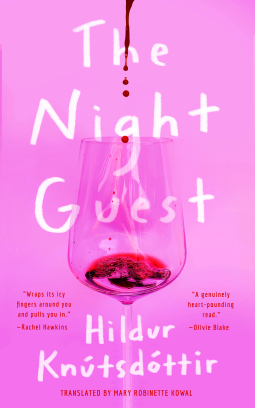
THE NIGHT GUEST, deeply unnerving psychological domestic horror novella centers misogyny

THE NIGHT GUEST
HILDUR KNÚTADÓTTIR (tr. Mary Robinette Kowal)
Tor Nightfire (non-affiliate Amazon link)
$11.99 ebook, available now
Rating: 3.5* of five
The Publisher Says: Hildur Knutsdottir's The Night Guest is an eerie and ensnaring story set in contemporary ReykjavÃk that’s sure to keep you awake at night.
Iðunn is in yet another doctor's office. She knows her constant fatigue is a sign that something's not right, but practitioners dismiss her symptoms and blood tests haven't revealed any cause.
When she talks to friends and family about it, the refrain is the same ― have you tried eating better? exercising more? establishing a nighttime routine? She tries to follow their advice, buying everything from vitamins to sleeping pills to a step-counting watch. Nothing helps.
Until one night Iðunn falls asleep with the watch on, and wakes up to find she’s walked over 40,000 steps in the night . . .
What is happening when she’s asleep? Why is she waking up with increasingly disturbing injuries? And why won’t anyone believe her?
I RECEIVED A DRC FROM THE PUBLISHER VIA NETGALLEY. THANK YOU.
My Review: I'm always down for a psychological horror read. This one has a strong message about misogyny at its core. I think that is what powered me past my disappointing reading experience.
Iðunn's world is a very familiar, quotidian one of tedious work, unfulfilling relationships, and family pressures that might or might not be external. Like so many, maybe every, female of my acquaintance, she's a poor sleeper. This has multiple negative effects on a person's life. Iðunn tries to make changes in her sleeping deficits with a fancy new kind of wearable multiple-axes tracking device.
The promised data on her sleeping patterns tells a story that does not make sleep come any easier. If anything the data scares her more; and the device itself seems to be making her life, not only her sleep deficit, much worse.
Iðunn's sense of crushing responsibility for every single thing in her life is not unfamiliar to me. It's just not something I think is always an external pressure as Iðunn thinks it is. No matter; her responses to the world are the story, so putting aside my sense of her emotional immaturity, I travel down the unhappy trail with her. Why is she, for want of another term, sleepwalking? Why does her body acquire wounds during her unconsciousness? If it isn't sleep, what is this state and why is it part of her nightly experience that is unavailable to her daylight mind?
I was ready to quit the read when animal harm entered the chat. I was perfectly happy to follow the deteriorating sense of control over her body and mind; it seems to me to be an excellent metaphor for being a woman in a misogyny-drenched world. I'm very much not down with harming creatures that can not adequately defend themselves, when it's done for cruelty's sake most especially. In this case it did nit feel to me to be more than an intensifying trope; it did not come from something within Iðunn that was just bursting out of her in a horrible way...see The Wasp Factory for an example of what I mean by that.
I decided to trust the eminent Mary Robinette Kowal, a personal favorite creative talent, whose translation of the text felt very smooth and organic and unlike I was reading a story at an extra remove. That often happens to me, even in excellent translations. This story isn't ever going to be a five-star read to me, thought I, but it's way better than average.
Then...the ending.
Three and a half stars. No more, no less.
Thursday, February 13, 2025
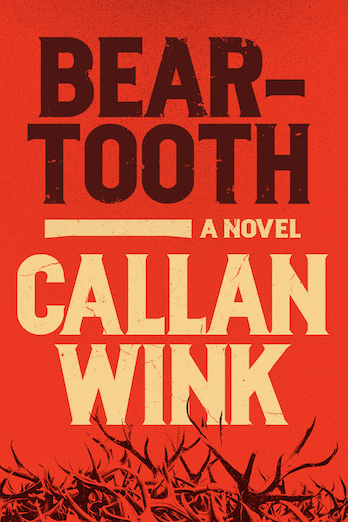
BEARTOOTH, Callan Wink's latest Great Outdoors tale of morally questionable choices

BEARTOOTH
CALLAN WINK
Spiegel & Grau (non-affiliate Bookshop.org link)
$9.99 ebook, available now
The Independent Press Top 40 Bestsellers: Fiction For the week ending April 19, 2026
Rating: 3.25* of five
The Publisher Says: Two brothers in dire straits, living on the edge of Yellowstone, agree to a desperate act of survival.
In an aging timber house hand-built into the Absaroka-Beartooth mountains, two brothers are struggling to keep up with their debts. They live off the grid on the fringe of Yellowstone, surviving after the death of their father. Thad, the elder, is more capable of engaging with things like the truck registration and the medical bills from their father’s fatal illness and the tax lien on the cabin their grandfather built, while Hazen is... different, more instinctual, deeply attuned to the natural world. Desperate for money, they are approached by a shadowy out-of-towner with a proposition and agree to attempt a heist of natural resources from Yellowstone, a federal crime.
Beartooth is a fast-paced tale set in the grandeur of the American West.
I RECEIVED A DRC FROM THE PUBLISHER VIA NETGALLEY. THANK YOU.
My Review: All y'all seem to be lovin' you some Western-set crime shows, like Costner's Yellowstone that lasted six years in a media landscape full of disposable shows. There are other series reads in this setting (eg C.J. Box's Joe Pickett books, Craig Johnson's five-year TV run for Longmire TV show and ongoing novel series) but all of those are borderline copaganda in their focus on police procedural plots, and valorization of the settler-colonial worldview endemic in the men of this family. The brothers in this story, coming as they do into control of valuable natural resouces after their father's expensive death that threatens their grandfather's stolen homestead.
It was pretty hard for me to work up much sympathy for Thad, the brother whose show of privilege leads them into the nightmare of property loss, which they agree to solve, and to restore their stolen "birthright" homestead, by doing things so far beyond the pale of acceptability that I had a lot of trouble pushing through the details to get to the ending.
Animal abuse is rife.
I'm impressed by Wink's ability to evoke the Montana setting with near-hallucinatory clarity. I could feel the unique quality of Yellowstone's air, see the special way light limns the edges of distant objects; I was a lot less excited when the poaching scenes were also evoked as clearly. Hazen, the more nature-oriented brother, still finds it in himself to commit acts I find reprehensible for short-term gain. It's almost always the case that criminals are simply bad at planning and lack foresight; that fits these brothers to a T. They're led into criminality to solve a problem they created with no shred of common sense to their behavior.
What happens is a drawn-out reckoning for the past and against the future. Their long-fled mother, Sacajawea, shows up to add her dose of unpleasantness. I expected to be more led along by the strands of family dissolution and reckoning. Their criminality, the means and motivation for it, led me to finish this short (under 300pp) tale of men acting like kids who need a spanking, in over a week.
I seldom take more than three days to finish 256pp, more often two.
Wink can write. His plotting is logical, his pace is chosen carefully to immerse the reader not whiz past anything. I wish I'd loved it by the end as much as I started out loving it.
Animal lovers are cautioned...the awful things done to them aren't valorized, but still happen with no sense on my part they were being condemned, either.
Monday, November 18, 2024
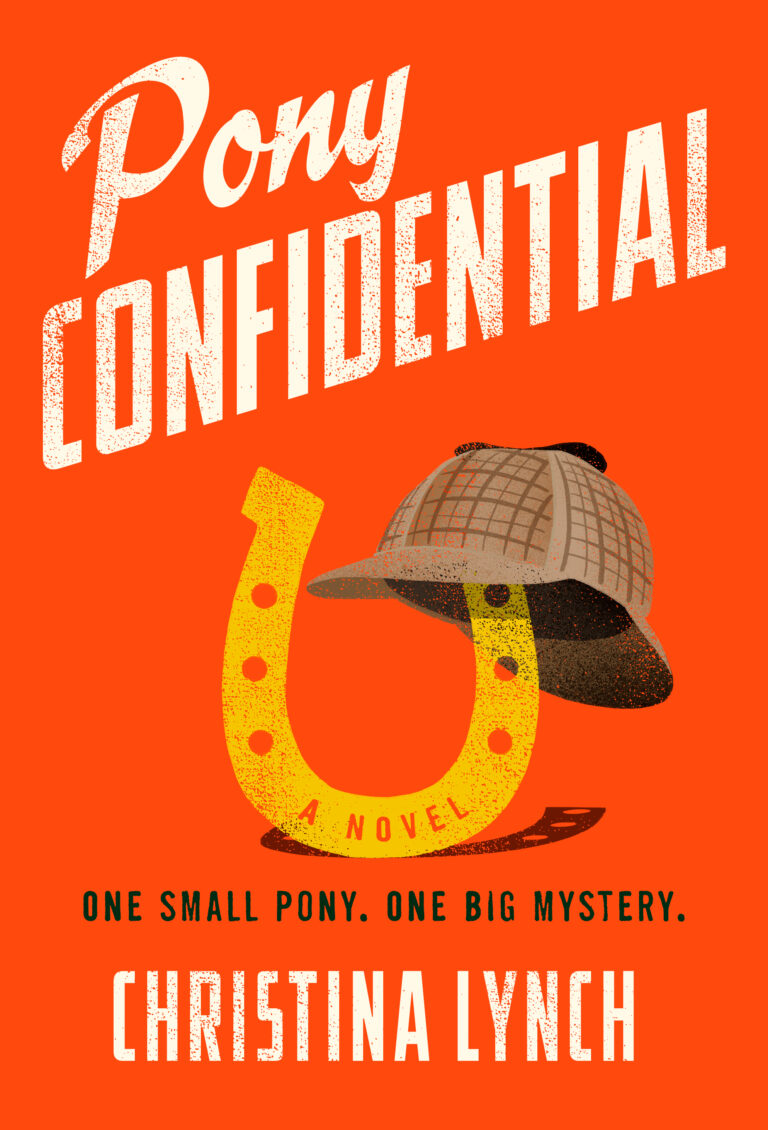
PONY CONFIDENTIAL, urban-fantasy talking animal story meets cozy mystery

PONY CONFIDENTIAL
CHRISTINA LYNCH
Berkley Books
$28.00 hardcover, available now
Rating: 3.75* of five
The Publisher Says: In this one-of-a-kind mystery with heart and humor, a hilariously grumpy pony must save the only human he’s ever loved after discovering she stands accused of a murder he knows she didn’t commit.
Pony has been passed from owner to owner for longer than he can remember. Fed up, he busts out and goes on a cross-country mission to reunite with the only little girl he ever loved, Penny, who he was separated from and hasn’t seen in years.
Penny, now an adult, is living an ordinary life when she gets a knock on her door and finds herself in handcuffs, accused of murder and whisked back to the place she grew up. Her only comfort when the past comes back to haunt her are the memories of her precious, rebellious pony.
Hearing of Penny’s fate, Pony knows that Penny is no murderer. So, as smart and devious as he is cute, the pony must use his hard-won knowledge of human weakness and cruelty to try to clear Penny’s name and find the real killer.
This acutely observant feel-good mystery reveals the humanity of animals and beastliness of humans in a rollicking escapade of epic proportions.
I RECEIVED A DRC FROM THE PUBLISHER VIA NETGALLEY. THANK YOU.
My Review: You know that Swede who writes about cutesy old people? Of course you do, y'all luuuv him as much as Richard Osman! (Only Osman's old people are cool, unlike that Swede's faux-feisty feebs.) Now imagine that Swede decided to take over Spencer Quinn's Chet and Bernie series.
Yeah. That, and Remarkably Bright Creatures chucked in for good measure. So what's it doing as a regular review, not a Burgoine? "When you like a book, but don't love it, it's a Burgoine," someone is even now saying to their screen.
Penny and fluent English-hearer Pony the pony, separately and together, do some very good mental health work, that's why it's a regular review, and thanks for noticing. Penny's never quite gotten a grip on Life; as a result she is always on the back foot with the people and situations in her life. Being a kindergatren teacher does not make this easier. Being a single mom to a cute kid with a really bad relationship to the father, well...gettin' the drift here? She has a life-altering nightmare hit her square in the chops, and here we come to the first-ever in my reviews spoiler. (Stop laughing! And pointing is rude.)
This para has the spoiler: When Penny was twelve, a terrible, fatal accident occurred and her family has to run away. Pony got left behind, and is still bitter about it. Penny's now being accused of murder, twenty years later, and is hauled off to jail. A mother with a child is hauled off to jail for suspicion of involvement in a twenty-year-old crime.
This is really, really unbelievable to me.
Howsomever, the plot needs driving so drive we shall. Grouchy, misanthropic Pony hears and understands this, decides he's off to save Penny (the one human he's ever loved) and has so many cool adventures...all of 'em opportunitites to shine a light onto how truly unfair and sadistically convoluted late-stage capitalism is. I agree with this and find the looneyness of the animal characters' various voices great fun. They banter together, discuss how rotten humans are. They still say home truths about each other that will get past the guard of all but the most cynical. I'll go with it.
I want to note that suicide and depression are more than minor plot points without being foregrounded.
As a puzzle, the villains are very two-dimensional thus easy to spot. I read a lot of mysteries, though, so ma'at leads my eyes (as the Egyptians said) and I figured it out; honestly, that's not the point here. Read this for feel-good cuteness. Read this for affirmation the world *can* be good. Read this, in short, for fun.
I did. It was. Everybody's happy. (Even Pony.)
Friday, August 23, 2024
NEFANDO, if you have a trigger, do not read this book

NEFANDO
MÓNICA OJEDA (tr. Sarah Booker)
Coffee House Press
$17.95 trade paper, available now
Rating: 4* of five
The Publisher Says: A techno-horror portrait of the fears and desires of six young artists whose lives are upended by a controversial video game, from National Book Award finalist Mónica Ojeda.
Six young artists share an apartment in Kiki Ortega, a researcher writing a pornographic novel; Iván Herrera, a writer whose prose reveals a deeply conflicted relationship with his body; three siblings, Irene, Emilio, and Cecilia, who quietly search for ways to transcend their abuse as children; and El Cuco MartÃnez, a video-game designer whose creations push beneath the substrate of the digital world. All of them are connected in different ways to Nefando, a controversial cult video game whose purpose remains a mystery.
In the parallel reality of the game, players found relief from the pain of past trauma and present shame, but also a frighteningly elastic sense of self and ethics. Is Nefando a game for horror enthusiasts, a challenge to players' morals, or a poetic exercise? What happens in a virtual world that admits every taboo?
Unsparing, addictive, and perverse, Nefando takes us to the darkest corners of the web, revealing the inevitable entanglement of digital and physical worlds, and of technology and horror.
I RECEIVED A DRC FROM THE PUBLISHER VIA EDELWEISS+. THANK YOU.
My Review: If you have a trigger, do not read this book.
I can't recommend this read to you. I can tell you it challenged my every shibboleth, saying out loud things I'm reluctant to confront, because that means acknowledging them. Unlike Jawbone, this book doesn't burst onto the scene pointing Horror's attention onto girls and women as perpetrators and planners of Evil for the first time...well, not literally THE FIRST time but definitely early on...but treads that path with zeal and a ghoulish delight.
I'm always impressed when a writer can genuinely shock me. I was routinely shocked by the game Nefando, genuinely repulsed and affronted by things within it. As the sales copy above says, this is an unsparing story, deeply deeply perverse, and discomfitingly addictive. I didn't much want to keep reading. I had to. I was not going to be able to keep these images from ruining my sleep until I gave the story closure. The last time I felt this way about a psychological horror story was the Japanese version of Ring, which...well, no, not going into it except to say this story has similarly deeply embedded awful triggers for me.
If I felt any kind of way about the translation, it was deeply impressed. Translator Booker made this nightmarish trip down...all the way down...into the pit an utterly unmissable trip. That takes mad skills. She has those, and clearly also has a deep affinity for psychological horror, the kind that blends pervasive unease with jump scares. If there is ever a horror translators' award, it should be called "The Sarah Booker Slap."
Author Ojeda...I hope this paper exorcism of your personal demons did you all the good in the world. It's set my therapy sessions back at least five years.
*shudder*
Wednesday, October 4, 2023
THE BLACK TREE ATOP THE HILL, folk-gothic horror novella & MENEWOOD, decade-in-the-making sequel to HILD
THE BLACK TREE ATOP THE HILL
KARLA YVETTE
CLASH Books
$16.95 trade paper, available now
Rating: 4* of five
The Publisher Says: What came first in this Gothic Western, the ghosts, or The Black Tree Atop the Hill? Set in an alternate American old-west that is hauntingly familiar yet strangely off-putting, Marisol is the first to see the tree on the hill, but that’s only to be expected. As the witch of Jack Boyd’s ranch, her job is to notice threats, even amid a most disastrous calving season. It is up to Marisol and the ranch’s ghost to work together to stop mysteriously spreading trees from taking over their ranch, California, and the entirety of the country. But real magic requires sacrifice, and Marisol is not certain she is prepared to accept the consequences of what she must do to stop the trees’ advance.
This is a story about believing in intuition against the rain, about the violence of nature and of those who inflict it. Gothic gardeners explore the question of nature’s home in a progressing world.
Oozing with conflicting resolutions and twisty insides, this is a stunning debut by Portland artist Karla Yvette.
I RECEIVED A DRC FROM THE PUBLISHER VIA EDELWEISS+. THANK YOU.
My Review: I'm not sure how I got through the awful animal-horror bits. Must be because they weren't perpetrated upon the poor things after they were alive, but were part of a really awful curse that was put on this ranch—and the rest of California—in this altered Western. Folk horror-Gothic horror-tinges of cosmic horror...why the heck would I, materialist extraordinaire, like reading this?!
For one thing, it's short and succinct. Marisol's got a job to do, protecting people from the rampant ill-meant magic flowing everywhere. She doesn't dawdle around being scared or feeling put-upon, she focuses on her protection duties...thank goodness!
What worked best for me in this read was the pacing. A close second was the fact thar Author Yvette never put in any excessive "world-building" aka infodumping stuff...you're where you are, get used to it...and that works best when I'm being asked to suspend disbelief for the space of a novella. If this were a full-on novel, I'd miss the infodumping. The brevity of a novella, which is the exact right length for this story, is stodged up by too much detail of the rules the characters are all playing by. They know them, and I'm happy to follow their lead...for this long, anyway.
Marisol, as expected, carries the story forward. Her ideas about the curse, about the ghost of the rancher's dead wife, and her job, are the really interesting part of the read. The thing that always engages my forward-going gears in a read is a story of underdogs who face down the Powers That Be when it would be easier, and more sensible, to give in and give up. Not being too much of a giver-upper, I like that plot. The Lodge, in this story, functions as a church of sorts regulating magic and punishing its misuse...as, of course, defined by the Lodge. Marisol's magic isn't sanctioned by the Lodge yet she's the one who figures out what the heck is making things on Jack's ranch go so awfully wrong. That's always going to poke the people I don't like in their softest spot: Their hegemony.
All the way around a good tale well-told, an interestingly off-kilter from consensus normality setting, and a heroine whose power comes from her own resources. Definitely a winner for me!
++++++++++++++++++++++++++++++++++++++++++++++++++++++++++++++++
MENEWOOD
NICOLA GRIFFITH
MCD x FSG
$35.00 hardcover, available now
Rating: 4.5* of five
The Publisher Says: In the much anticipated sequel to Hild, Nicola Griffith's Menewood transports readers back to seventh-century Britain, a land of rival kings and religions poised for epochal change.
Hild is no longer the bright child who made a place in Edwin Overking's court with her seemingly supernatural insight. She is eighteen, honed and tested, the formidable Lady of Elmet, now building her personal stronghold in the valley of Menewood.
But Edwin needs his most trusted advisor. Old alliances are fraying. Younger rivals are snapping at his heels. War is brewing—bitter war, winter war. Not knowing who to trust he becomes volatile and unpredictable. Hild begins to understand the true extent of the chaos ahead, and now she must navigate the turbulence and fight to protect both the kingdom and her own people.
Hild will face the losses and devastation of total war, and then she must find a new strength, the implacable determination to forge a radically different path for herself and her people. In the valley, her last redoubt, her community slowly takes root. She trains herself and her unexpected allies in new ways of thinking as she prepares for one last wager: risking all on a single throw for a better future...
In the last decade, Hild has become a beloved classic of epic storytelling. Menewood picks up where that journey left off, and exceeds it in every way.
I RECEIVED A DRC FROM THE PUBLISHER VIA NETGALLEY. THANK YOU.
My Review: Pearl-clutchers get your grips ready: I'm going to say some nice things about a christian abbess.
Of course, her christian belief is...muted? inflected? yes, inflected...by the ancient practices of seventh-century Northumbria (a name she wouldn't have known of or used, but firmly established in our modern idea of the time and place). Her christian belief is, by most modern standards, heretical. The Roman priests in this story don't come off that well. They're not alone. King Edwin, whose godmouth Hild is still, is singularly blind to the way his rulership's grip drives the agendas of many angry, ill-willed forces around him.
They are using deeply predictable pathways to bring his rule down, yet he needs Hild's counsel to identify the threats. It's ever thus: Power is as always its own worst enemy. Look at the extensive historical record. All dictators eventually fall, even if it's sometimes quite a lengthy process. What Griffith does brilliantly is in the construction of the story of Hild's rise and the fall of an older world. Her inventions and fictionalizations of this history make sense of some things that our few contemporary(ish) sources apply generous slatherings of handwavium to. It's not, in the end, a story with huge depths of character but rather one with immense scope and sweep of events, and actions taken, purposes found, lives changed and morphed. That being a good kind of historical epic strategy, I'm on board.
Good thing, too, as there are seven hundred-ish pages of Hild's story.
Expect action, don't expect explication. The last book's, um, meatyness and squalor as I think it's fair to characterize it, is still a major register of the narrative voice. You're going to want to bookmark the maps, the notes, and the glossary. There is also, in the ebook, a hyperlink to the author's website where there is a wealth of information about who was who and who never really was and what the hell all those freaky-deaky names mean. In fact this historical novel has more source citations than many history books claiming factuality I've read here recently. It works very much to Author Griffith's favor that she spends a goodly amount of time in her endnotes explaining why she made some choices regarding names and naming conventions, as well as giving a Cliffs Notes course in the unreliability of our best sources on the grounds of non-neutrality.
For this cranky old man reader, Hild is only coming more and more to matter as she moves from fey young girlhood to her surprisingly potent womanhood. I love the fact that this woman, this member of a group outrageously repressed and abused for the majority of the millennium-plus since Hild's death, is the only person powerful enough to change the course of the world (go look up the Synod of Whitby). That isn't in this book, but it'd better be in a future one. This character is far, far too amazing to drop now!
A hardcover of this length is pricey and hard for older and disabled people to manage as an object as well as a significant purchase. All I can say is that the read is worth accepting these obstacles to get in your head.
Wednesday, August 30, 2023
IN THE HEAT OF THE MOMENT and IN HARM'S WAY, books 5 & 6 of the Sandhamn Murders
IN THE HEAT OF THE MOMENT(Sandhamn Murders #5)
VIVECA STEN (tr. Marlaine Delargy)
AmazonCrossing
$5.99 Kindle edition, available now
Rating: 3.25* of five
The Publisher Says: What’s a lie among friends? It’s murder—in this riveting thriller by Viveca Sten, bestselling author of Tonight You’re Dead…
It’s Midsummer’s Eve, the celebration of the longest day of the year, and on Sandhamn it’s the longest party of the year. But the fun comes to a dead halt when a young reveler is murdered, a teenage girl is found drugged and dazed on the beach, and other young women vanish. So far, what links the victims is a mystery. For Nora Linde and her new boyfriend, Jonas Sköld, the crimes are personal: one of the missing girls is Wilma, Jonas’s daughter. And her disappearance could test Nora and Jonas’s relationship in ways they never expected.
Thrust into the investigation, they soon discover that it’s more than a case of bad blood between friends. But the truth, which has receded into a haze of carousing, drugs, and liquor, is getting harder to see. If Nora and Jonas are going to find out what happened to Wilma, they’d better do it fast—before the ebbing tides sweep away all the terrible secrets of that night on Sandhamn Island.
I RECEIVED A DRC FROM THE PUBLISHER VIA NETGALLEY. THANK YOU.
My Review: Another more Thomas-centered book, therefore more police procedural-like than the cozy-er Nora-centric ones...but only slightly. Thomas and Pernilla have a new daughter, and experience the stresses of parenthood all over again (remembering this is their second child together, and their long separation came after the first child's death). Thomas is the lead investigator on the murder-and-disappearance case that involves Nora's new boyfriend through his daughter being among the girls who've vanished from the high-octane Midsummer's Night revelries. Given that he was really not happy about saying yes to her badgering pleas to be allowed to party with the cool kids, he's an absolute wreck.
Wilma, Nora's boyfriend's daughter, is part of a crowd that Nora finds troubling. They're privileged, spoiled brats who use lovely Sandhamn and its close-knit community as a backdrop for irresponsible chemical-fueled partying. Nora's ex-husband and his milieu of privilege come forcefully to mind as she tries to assist Thomas in his attempts to bring a young man's murderer to justice and return the missing young women to their insanely anxious families. Her worries for her own young sons and their futures enter into the story as well. The awful ex is, unsurprisingly given that he's in the social milieu of the dead boy's parents, sticking his oar in. It seems life sans Nora isn't the fun that life with her was. She, unlike Thomas vis-a-vis Pernilla, isn't having it. This gets all the yay from me after his abusive behavior in an earlier book.
The main thread of the story, though, is Thomas and policing partner Margit methodically working to solve the case without significant details. These are all locked in the heads of the spoiled, drunk, high kids whose reactions to a dead guy and some missing gal-pals is basically to whine about being asked questions by old farts in uniforms instead of being allowed to get away from all this boring shit on Papa's yacht.
Ick ptui.
Thomas, in spite of needing to be focused on the case, is of course just as eager as the brats are to get the whole thing over with so he can go home and play with his new daughter. (I'm still deeply conflicted about this rapprochement with Pernilla, whose presentation of self makes me suspicious.) So the detective, his sidekick, and the witnesses are all conflicted and not clearly focused on the tragedy that's occurred. That presents a problem for me as a reader.
The dead boy's father, the young hellions doing the partying, and to an extent Nora's stepdaughter-adjacent person Wilma, are all really unsympathetic characters. Their collective story is woven of multiple strands of neglect and indifference coupled with overaffluence and its deleterious effect on the moral compasses of the privileged. Where this led me as a reader was into a lot of "Thomas should be home with his new baby and Margit ought to slap all of 'em" eyerolling. The author seems in a funny way to share my impatience because the end of the book feels like a rush to wrap up the threads, so isn't all that satisfying. I can assure my ma'at-lovin' readers that there's resolution to the death and the disappearances too. There will be no black armbands in the Linde ménage. I'm hopeful that Jonas, with Nora, won't repeat his mistakes and Nora will continue to shun her vile ex-husband.
This book is very much not my favorite in the series to date, and skated perilously close to becoming a DNF on several occasions. The power of Thomas and Nora as people I believe could exist and whose flaws I can invest in as I watch them overcoming, or trying to, their effects powered my drive through the read.
YMMV, of course.
++++++++++++++++++++++++++++++++++++++++++++++++++++++++++++++++
REVIEW OF BOOKS 1 & 2 HERE
REVIEW OF BOOKS 3 & 4 HERE REVIEW OF BOOKS 7 & 8 HERE
++++++++++++++++++++++++++++++++++++++++++++++++++++++++++++++++
IN HARM'S WAY (Sandhamn Murders #6)
VIVECA STEN (tr. Marlaine Delargy)
AmazonCrossing
$5.99 Kindle edition, available now
Rating: 3* of five
The Publisher Says: A woman’s dangerous career comes to a chilling end in this spellbinding thriller by Viveca Sten, bestselling author of In the Heat of the Moment…
The body of world-famous journalist Jeanette Thiels is discovered the day after Christmas, frozen in a snow-spotted garden just steps from her hotel on Sandhamn Island. Detective Thomas Andreasson finds it highly unlikely that it was some bizarre accident. After all, the relentless war-zone correspondent was no stranger to conflict and controversy—both professional, and of late, very personal. Who would want to see her dead is another story.
Enlisting the help of attorney Nora Linde, his longtime friend on holiday, Thomas is anxious for the answers. But he and Nora don’t have to look far. The clues are leading them closer to home than they imagined. Jeannette may have made a career out of exposing corruption at the highest levels of world power, but she was also a woman with secrets of her own and they’re coming to light on Sandhamn. But for Thomas and Nora, unearthing the deeply rooted deceptions behind Jeanette’s death could now put those closest to her in harm’s way, too.
I RECEIVED A DRC FROM THE PUBLISHER VIA NETGALLEY. THANK YOU.
My Review: I now know more than I ever knew there was to know about pickled herring.
This is not an approving statement.
Again, we're police-proceduraling with Thomas and Margit. She's coalesced into more of a presence than I ever expected her to do, has our Margit; but I'm still not distracted from the mains by her involvement in investigations so I call the author's level of detail in limning her character good. The immigration issues facing Europe, the backlash from "cultural purity" proponents, the unbelievable, incredible hatred that some are consumed by for those not just like them all concatenate at the same time as Nora's Yule festivities on Sandhamn. (Why she includes the vile ex-husband is beyond me.)
After Iranian immigrant journalist Juliette dies in the snow outside her hotel on the island (you know, I love cozies and their settings, but the logical part of me says "the Swedes ain't idiots and this place would glow like Chernobyl on any statistical map of Swedish crime" like Midsomer would in England); it's not a horrible accident, of course. Juliette's work is digging into some unnerving and clearly unsavory stuff that the Powers That Be did not want exposed. Then Juliette's controlling Swedish ex-husband comes into the suspect frame; even his pre-adolescent daughter thinks he probably had some hand in her mother's death.
Enter Thomas and Margit as the lead investigators, and the police Scoobygroup we've seen before starts the interesting ferreting among the fallen leaves of this dogged, but hapless, woman's life. The work she'd been doing about the burgeoning nativist group that hates non-Nordic Swedes was reaching a critical mass and that's a reason to kill in that sick, twisted worldview. The issues between her and her ex keep the focus on the police's work in solving her poisoning; thus off the Nora parts of the plot. For those hooked in by Nora from the off, this story will feel frustrating. Her involvement in Thomas's case is pretty much nil; her plot strands are lawyering related, as her company is enmeshed in the colonial remnants of Sweden's centuries-old Baltic empire. This leads to some unpleasant, though legal, ways of making money, to Nora's deep disgust; her firm's head and she are due for a showdown over this shady, unethical entanglement (among other things, like misogyny and borderline harassment). As this echoes the main case's focus on the role of History in forming a place for better or ill, it wasn't a waste to include Nora. She doesn't play a role in the crime investigation but her moral musings and decisions do offer depth of field to the main idea behind the murder.
I am not a fan of the dithering "will-she-won't-she" style of storytelling I see all too much of in series reads. Why women should be presented as so weak as to constantly question their decisions about men is something I do not think we question as a trope nearly hard enough. Nora's ex shouldn't be up for rehabilitation after his emotional abuse of her. (Let's not even bring up The Slap. Might bring up my lunch wth it.) She's decided several books ago that the affair she discovered him having is the bridge too far. That should be allowed to be that. Her efforts not to estrange her ex-husband from their sons is admirable. But let's leave it as focused on the EX part and not so much the HUSBAND part.
That ongoing snark aside, the role of ethnicity in this story is very much the catalyst for some trademark idiotic behaviors among the investigators. Thomas in particular is, every book, doing something that unnecessarily endangers his life...and while I'm really not on board with his reunion with Pernilla, he DOES have an infant daughter to consider before haring off without backup to Get The Perp. And this time he's very much not alone, since one of the investigative Scoobygroup is an Iranian-born Swede whose dander gets up as facts of the case come to light. He decides, like his colleagues Thomas and Margit, to say "screw it" to rule-following and puts himself (and, one would think, any hope of bringing a successful prosecution) in danger.
Well, fiction ain't fact, and at least in the latter case I really got why the response was what it was.
I do want to offer one very major content warning: There is, in this entry, animal abuse that I found very upsetting. It is the reason that I rated this read lower than the one before it, when before this occurred, I was set to give it a solid four stars. I am, it's true, very averse to this subject matter, and others might not find the event portrayed as upsetting as I did. For my fellows in feeling that children and animals being harmed are not welcome events in my entertainment, be aware this occurs.
Snowy, Yule-y streets in the sweetly intimate island community of Sandhamn. The expected death. The inevitable successful resolution of the crime. The ongoing lives of characters I've come to care about. All the elements of damned fine read. And so it was.
Until the content warning stuff happened. I'll be continuing with the series but some luster got lost off my pleasure.
Subscribe to:
Posts (Atom)