Pages
- Home
- Mystery Series
- Bizarro, Fantasy & SF
- QUILTBAG...all genres
- Kindle Originals...all genres
- Politics & Social Issues
- Thrillers & True Crime
- Young Adult Books
- Poetry, Classics, Essays, Non-Fiction
- Science, Dinosaurs & Environmental Issues
- Literary Fiction & Short Story Collections
- Sookie Stackhouse/Southern Vampire Books & True Blood
- Books About Books, Authors & Biblioholism
Showing posts with label New Orleans setting. Show all posts
Thursday, June 19, 2025
TRAMPS LIKE US, a bit of history all in 21st-century Western culture could learn from
TRAMPS LIKE US
JOE WESTMORELAND
MCD (non-affiliate Bookshop.org link)
$11.99 ebook, available now
Rating: 5* of five
The Publisher Says: A treasured cult classic following a young gay man crisscrossing 1970s and ’80s America in search of salvation. Now reissued with an introduction from Eileen Myles and an afterword from the author.
Abused by his father and stifled by closeted life as a teenager in Kansas City, Joe, the wide-eyed narrator of Tramps Like Us, graduates from high school in 1974 and hits the road hitchhiking. But it isn’t until he reunites with Ali, his hometown’s other queer outcast, that Joe finds a partner in crime. When the two of them finally wash up in New Orleans, they discover a hedonistic paradise of sex, drugs, and music, a world that only expands when they move to San Francisco in 1979.
Told with openhearted frankness, Joe Westmoreland’s Tramps Like Us is an exuberantly soulful adventure of self-discovery and belonging, set across a consequential American decade. In New Orleans and San Francisco, and on the roads in between, Joe and Ali find communities of misfits to call their own. The days and nights blur, a blend of LSD and heroin, new wave and disco, orgies and friends, and the thrilling spontaneity of youth—all of which is threatened the moment Joe, Ali, and seemingly everyone around them are diagnosed with HIV. But miraculously, the stories survive. As Eileen Myles writes, “I love this book most of all because it is so mortal.”
Back in print after two decades and with an introduction by Myles and an afterword by the author, Tramps Like Us is an ode to a nearly lost generation, an autofictional chronicle of America between gay liberation and the AIDS crisis, and an evergreen testament to the force of friendship.
I RECEIVED A DRC FROM THE PUBLISHER VIA NETGALLEY. THANK YOU.
My Review: When I first read this in the Aughties it was already historical fiction. It was my life, my graduating class, and my generation of gay men who were, to all intents and purposes, vanished. Many died that I knew...almost none I was really close to until the late 1980s.
Reading the story again, at well over sixty, reminded me forcefully of that *horrible* severing. All hope seemed to die. With every memorial service there was less reason to feel as though anyone cared, as though people like me were on anyone's priority list.
I started volunteering here and there. I saw christians at their absolute worst. Mothers rejecting dying sons, fathers speaking loudly with their absence...it was the last nail in my faintest glimmers of religiosity.
So being there wasn't...nice...but it did make me recall the value of community (and the reality of burnout). When my true love was dying of CMV in 1992, I had men around me who loved him, and who supported me so completely (thanks Joe and Domingo!) that I could latch onto Ali and Joe as they created their magic circle, as they ran from haven to hearth looking for home.
It was breathtaking. It was heartbreaking. It was very much the way I want to remember the squashed possibilities of gay liberation...none of this *fighting* for equal rights we've been distracted with for decades, but coming up with new ways to define ourselves in the world.
Not even my grands have come back to that level.
What might have been, sighs the young heart in the elderly chest. Visit it for y'all's selves.
Monday, October 7, 2024
SEASON OF THE SWAMP, historical figure in historic city navigating his way into History
SEASON OF THE SWAMP
YURI HERRERA (tr. Lisa Dillman)
Graywolf Press
$26.00 hardcover, available now
Rating: 4.5* of five
The Publisher Says: New Orleans, 1853. A young exile named Benito Juárez disembarks at a fetid port city at the edge of a swamp. Years later, he will become the first indigenous head of state in the postcolonial Americas, but now he is as anonymous and invisible as any other migrant to the roiling and alluring city of New Orleans.
Accompanied by a small group of fellow exiles who plot their return and hoped-for victory over the Mexican dictatorship, Juárez immerses himself in the city, which absorbs him like a sponge. He and his compatriots work odd jobs, suffer through the heat of a southern summer, fall victim to the cons and confusions of a strange young nation, succumb to the hallucinations of yellow fever, and fall in love with the music and food all around them. But unavoidable, too, is the grotesque traffic in human beings they witness as they try to shape their future.
Though the historical archive is silent about the eighteen months Juárez spent in New Orleans, Yuri Herrera imagines how Juárez’s time there prepared him for what was to come. With the extraordinary linguistic play and love of popular forms that have characterized all of Herrera’s fiction, Season of the Swamp is a magnificent work of speculative history, a love letter to the city of New Orleans and its polyglot culture, and a cautionary statement that informs our understanding of the world we live in.
I RECEIVED A DRC FROM THE PUBLISHER VIA EDELWEISS+. THANK YOU.
My Review: A vividly imagined and intensely told expansion on the historical record of President Juárez's exile from Mexico. Arriving in New Orleans, with its slave markets, must've been a shock coming from Mexico thirtyish years after the trade was outlawed and slavery abolished there. Like everything else Juárez thought or felt in those years, though, Author Herrera has had to reconstruct it from the known, more importantly the documented, facts of his later life.
So it is that the events related in this novel can't be verified; there aren't any records in his, or anyone else who was there's, own words what the people around Juárez said, or thought, or felt. This reconstructed tale that relies on the history of New Orleans in 1853 as extensively documented has the feel of verisimilitude. We can't know if Author Herrera got it all, as regards Juárez at least, factually correct, but I can tell you he got it right.
Juárez, as an Indigenous Mexican in the US at that fraught passage in our history, would've seen and been the subject of the nastiest kind of "racial" prejudice. Mexico was no kind of enlightened paradise at this moment, but there was no threat of being kidnapped, then sold into slavery, as the was in the antebellum South. I don't know if one major plot point relating to slavery is factual, but it wouldn't surprise me. In fact I kind of hope it was, even if it wasn't Juárez's own story. (You'll know as soon as you run across it which one I mean.)
If this story has an overriding virtue, it is that it is short enough to be an all-day-and-done read. I think it's going to be hard to put down once you begin it, so that's a very good thing. Among the events rendered all the more effectively for being curtailed in length is Juárez's immigrant journey of acquiring the local language, English, on top of his native Zapotec and the Mexican national tongue Spanish. Three very different grammars, poor bastard, and (as we who speak English first do not realize) extremely complicated to navigate the world in.
Author Herrera's writing style is both evocative and without frills and furbelows, eg: "What are we willing to ignore, or let atrophy, for the right to indolence. What a monstrous thing, comfort." It's not flowery and it's not plain. Translator Dillman is clearly working to a high level and from a highly polished source. This is the kind of work I hope we will get from author, translator, and publisher, as a team or separately, for a long time to come.
Almost five stars for compact, beautiful, concise storytelling. Some minor rubbing of noses cost it a half-star.
Monday, December 11, 2023
MARDI GRAS INDIANS, a fascinating introduction to a culture too few know about
MARDI GRAS INDIANS
NIKESHA ELISE WILLIAMS
LSU Press/Louisiana True series
$21.95 trade paper, available now
Rating: 4* of five
The Publisher Says: Mardi Gras Indians explores how sacred and secular expressions of Carnival throughout the African diaspora came together in a gumbo-sized melting pot to birth one of the most unique traditions celebrating African culture, Indigenous peoples, and Black Americans. Williams ties together the fragments of the ancient traditions with the expressed experiences of the contemporary. From the sangamentos of the Kongolese and the calumets of the various tribes of the lower Mississippi River valley to one-on-one interviews with today’s Black masking tribe members, this book highlights the spirit of resistance and rebellion upon which this culture was built.
I RECEIVED A DRC FROM THE PUBLISHER VIA EDELWEISS+. THANK YOU.
My Review: Mardi Gras, on the American continent, started in Mobile, Alabama, before it was celebrated in New Orleans. That being said, New Orleans marketed it more tenaciously and is now the continent's premier destination for those seeking a more vivid, intense party experience than the Yuletide fun we're having now. I don't image too many who haven't been to, or been around, the Krewes that make the parades up know much about the venerable institution of the Mardi Gras Indians.
This book's métier is to explain the what and the why of this tradition, to bring you into the whens and the hows of the tradition's celebrants making this part of their lives:
Many, many generations of Bulbacha (New Orleans to us white people)'s inhabitants have been of mixed heritage, now an entire heritage group of its own: Afro-Indigenous people have been part of the Louisiana landscape sic slaver traders brought the African peoples to these shores in bondage. The author is our cicerone as this culture most white people, and lots of mixed heritage people (my own dear Young Gentleman Caller) had no idea they had no idea existed.
Her prose is illustrative and elucidative. It is not extensively footnoted, as I would've hoped. It reads well; it is, after all, the story of a people whose cultural identity was born of rebellion against the strictures, the customs, and the laws of their enslavers.
While the history of these good folk is deeply involving, it is not just a sweet celebration of all things Afro-Indigenous:
A careful look at this photo of Cherice Harrison Nelson by Arthur Severi will show you the "MeToo" painted onto her left shoulder facing us. Women in this cultural sphere, while leaders and maintainers of history, are also heirs to the ills of our patriarchal society.
The author has given you an entrée into the society of colorful, passionate, playful costume-wearing rebels against the status quo. She has done so with admirable clarity, with great aplomb, without making grandiose claims for the completeness and inerrancy of her work. Any of your Mardi-Gras loving lefty friends will appreciate both the subject and the execution of this book.
Saturday, December 9, 2017
THE LOST SKETCHBOOK OF EDGAR DEGAS, a beautiful novel told in a deeply immersive voice
THE LOST SKETCHBOOK OF EDGAR DEGAS
HARRIET CHESSMAN
Outpost19 (non-affiliate Amazon link)
$9.99 eBook editions, available now
Rating: 5* of five
The Publisher Says: Ten years after Edgar Degas' 1872 visit to New Orleans, a lost sketchbook surfaces. His Creole cousin Tell -- who lost her sight as a young woman -- listens as her former child-servant describes the drawings and reads Degas' enigmatic words. It's both cryptic and revelatory, leading Tell to new understandings of her marriage, her difficult, brilliant cousin Edgar, her daughter Josephine, and herself.
***THE PUBLISHER SENT ME A REVIEW COPY AT MY REQUEST. THANKS JON!***
My Review: In the spirit of full disclosure, Harriet is my social media pal and the best of friends. It's unlikely I'd've published a negative review of the book under those circumstances, but equally unlikely I'd be so disrespectful as to puff up a book I did not enjoy. If you can't say anything nice, say nothing, is the tack I take on reviewing books by friends.
Luckily for the world, I absolutely adored reading this book. I have the good fortune to have seen a number of Degas's works in person, and I am familiar with New Orleans and its culture from years of contact with it and its practitioners. As I was reading the book, I'd come across things that spoke to me of the unique place that New Orleans is.
Honor reads a description of the city of New Orleans. Edgar appears to have written this on the eve of his departure. I almost can't listen, caught and struck as I am by some of the images: the city as a huge sleeping cat, washed and clean, or foul; something about Lake Pontchartrain's beauty. Something "glittering," something "humming." Lemon trees and orange trees. People of all colors. It moves me, in the wake of Edgar's despair, to discover in his own words how much he cherished about this city I love so much, in spite of all. What might have happened if he could have stayed, for a summer, another winter? Could he have felt healed? Could he have found comfort? Maybe even love?It's not necessary to spell it out in blocks of visual data. In this case, as the narrator has lost her sight, it would be deeply suspect to do so. But what New Orleans is, in the end, is a place of the heart and soul more than a physical entity. New Orleans is either your home or it isn't, and you're aware of the answer from the second you arrive. It is undeniable and it is for life: You're a yat at heart or the magic is lost on you.
The magic is lost on me.
That doesn't mean I don't get it, though. I get what draws people to the place. I think Chessman's words vivify the spell of New Orleans as much as they limn the landscape of art. The narrative device of a lost sketchbook filled with New Orleans's grace and beauty by one of the leading artists of the time read to a blind woman relative of that artist by one of the subjects of his art is delightful. It requires no effort to understand...and that's the highest compliment I can offer a writer irrespective of the genre in which she works. Framing devices are too often part of a Conversation With The Reader. I don't appreciate that kind of story. I want you to lift me out of my comfy reading posture and transport me to your story's locale without making blaring announcements like a train's conductor does.
And that is Harriet Chessman's gift.
Here on my lap is something Edgar held once, and many times, something he opened, often, to record what he saw in our pretty, messy, crowded house. I wonder if Edgar still misses this sketchbook. I wonder what his days are like now. He must have filled dozens, hundreds, more such books since that winter when he was our guest.In a passage tesserated from simple words, the complex conceit of the book takes shape. Telly, our blind point-of-view character, vivifies the world Chessman creates for us to inhabit. Telly is never obtrusive...she isn't the point of her own story, how typically female...she talks to us like she's across the tea table, she chats with us as she would any friend come to wile away an afternoon. It becomes more and more obvious to the reader that Telly inhabits her time with her cousin Edgar as old people inhabit their past. She is the mother of young people, she is the wife of a good man, and she is blind. She is blind in her eyes and she is blind in her heart and she gropes for understanding at every turn, physical or psychical.
Over the course of these 130-ish pages, I felt myself adjusting my reading speed to expand my pleasure in Telly's company. Odile and Honor came to feel like intruders, not one a beloved child and the other a welcome visitor. I was jealous of the attention they commanded from Telly. How silly, I'd tell myself, as annoyance whipped through me at Telly addressing one or the other. As it happened, Edgar, to whom Telly speaks in her memories of the past, elicited no such response from me. I was, instead, a full participant in Telly's relationship to her glamorous Parisian cousin.
I love reading books where I am that fully engrossed, carried out of the 21st century. It's a pleasure to be made that transparent to one's own eyes. I recommend this read to anyone looking for an immersive experience that won't require an entire month to read but will leave food for thought to keep you ruminating for months to come.
Friday, September 23, 2016
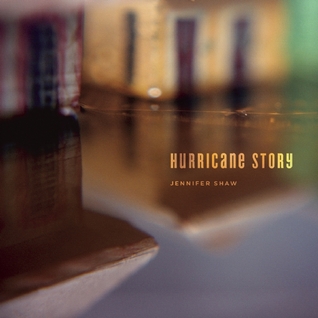
HURRICANE STORY, five-star art from painful ational tragedy

HURRICANE STORY
JENNIFER SHAW
Broken Levee Books
$18.00 hardcover, available now
Rating: 5* of five
The Publisher Says: Hurricane Story is a spellbinding odyssey of exile, birth and return told in forty-six photographs and simple, understated prose. This first-person narrative told through dreamlike images of toys and dolls chronicles one couple’s evacuation from New Orleans ahead of the broken levees, the birth of their first child on the day that Katrina made landfall, and their eventual return to the city as a family. Shaw’s photographs, at turns humorous and haunting, contrast deftly with the prose.
This clothbound hardcover edition includes an introduction by Rob Walker, author of Letters From New Orleans and former “Consumed” columnist for The New York Times Magazine.
My Review: Very, very pregnant photographer, husband, dogs, and cats, all escape New Orleans barely ahead of Hurricane Katrina. Son is delivered, family is displaced, much of New Orleans is destroyed, to our lasting national shame, and family returns to rebuild and resume living in the place they love and call home. The story isn't new, and it's not the first time anyone anywhere has told it in this words-and-images fashion.
But no one else anywhere has Ms. Shaw's extraordinary and amazing eye; her terse prose style, so beautifully suited to both story and images; or her quite astounding luck in being published by this amazing press, Chin Music via its New Orleans-centered imprint Broken Levee Books.
The book itself is worthy of being purchased simply to put on your front room's most prominent table. It is gorgeous. Bound in real cloth (my dog is still sniffing it, she's never encountered real cloth binding before) which is printed (let me assure you that this technique is far from simple, and its failure rate is significant; the technical demands on the printer, the designer, and the person making the color separations are quite significant; and the aesthetic that demanded this *exactly*right* production is quite rarefied) with an eerie, atmospheric image of great subtlety, the object itself begins its acquaintance with you by offering an uneasy glimpse into the mind of its makers. This will not be a candy-coated, literal, easy-to-process exercise in the journalism of indignance.
Opening the book, one reads the perfectly serviceable prose of two brief essays, one by Rob Walker, a former New Orleanian, and one by Ms. Shaw. Now we are mise en scene (oh, the badness of the pun), and the next page-flip takes you to spread 01: "We left in the dark of night." That's all she says in words. The photo facing the page bears a moment of painful clarity, expressed in a simple image of a red toy truck's tailgate retreating down a highly textured, shining road. The dark world closing in claustrophobically around this single spot of life, vividly red, the beautiful shining cobblestone-like texture of the road, the smoothness of the chiaroscuro...well, I could wax rhapsodic until you beg for mercy, but I won't. No point. Has to be experienced.
The use of toys and models to create the photo story is delightful. If I see one more image of people on a roof waving at the news copter while their house gives way beneath them, I shall scream blue murder. I avoid picture books of 9/11 for the same reason: I can't bear it. I've seen it! I've seen it! Stop smacking me! I won't look! But Shaw doesn't smack me. She wallops me ten minutes after I've seen her images. Dolls, with their awful starey eyes, usually make me uneasy. They still do here, but they are meant to, and they are deployed in simple, uncontrived story-telling, not some absurd, doomed effort to be archly Commenting On Life. The documentary "Marwencol" has much the same effect on me, and the same affect on its medium, as Shaw's dolls do.
And I must mention one thing in particular: Shaw's son is represented here by the King Cake baby. It's a nice, quiet, unpretentious symbol of her son's heritage. To someone without New Orleans knowledge, it's invisible and unnecessary to appreciate the story; to someone who knows what the symbol is, it's poignant and fitting.
Love New Orleans or loathe it, care about personal stories or not, this beautiful object should be in your home if for no other reason than to demonstrate quietly that you have excellent aesthetic taste and a real love for the object we call book. And the best part? It's only $18.
Buy one. Tell me I'm wrong. I dare you.
Wednesday, June 29, 2016
MURDER IN THE RUE CHARTRES by Greg Herren, third entry in the Chanse MacLeod mystery series
MURDER IN THE RUE CHARTRES (Chanse MacLeod #3)
Greg Herren
Bold Strokes Books
$9.99 eBook only, available now
WINNER OF THE 20th Lambda Literary Award—BEST GAY MYSTERY!
Rating: 4.3* of five
The Publisher Says: Murder hits the Big Easy.
In the wake of Hurricane Katrina, Chanse MacLeod returns to a different, shattered New Orleans in an attempt to rebuild his own life and face his own future. When he discovers that his last client before the storm was murdered the very night she hired him to find her long-missing father, he is drawn into a web of intrigue and evil that surrounds the Verlaine family.
My Review: There is no escape from the past. It supports us, if we're lucky; it drags us down from otherwise attainable heights, if we're not. This third installment of Herren's Chanse MacLeod mysteries reinforces this sad, inescapable lesson in a harsh and cruel and painful way, only for once it's not Chanse that does most of the suffering. Hired to look into a 32-year-old disappearance by the daughter of a vanished father, Chanse ends up fired before he can so much as cash the check...and then his client turns up dead. Odd, that...and her in the throes of planning her wedding? Something smells fishy to Chanse, who returns her retainer check in person to the dead woman's older brother. Surprise there: Chanse now has a much larger retainer check and a new client who wants the same job done. In short order, Chanse meets the patriarch of this singularly unlucky clan; loses his new client to what he is morally sure is murder; breaks up with his rebound guy, a nice-but... that he met in the last book; has a quickie with an old friend, newly single; and learns that his hag/best friend is leaving post-Katrina New Orleans. To finish her book, she says.
Rest assured, though: The right people end up in the right places and Chanse, for a wonder, actually unthaws his cryogenically preserved, battered, bruised, and broken heart, resolving to live his life and not simply exist in it because he's not dead yet.
New Orleans post-Katrina is a grim backdrop for this outing. I suspect in many ways anyone who has written about New Orleans since 2005 has written out of a sense of atonement, or expiation, or making things right, because after all they're alive and so very many aren't any more. Chanse comes home from a stay in Dallas to find that he's lost nothing in the storm or the flood; his friend Venus lost everything, for example, as did so many. The hero of a mystery series needs obstacles to make him more interesting that simply a crime-solving computer. The obstacles here, well, they're pretty grisly...driving around and seeing those horrible, horrible "X"s showing where bodies were found...refrigerators abandoned as far from homes as possible so they won't add to the mold problems, and adorned with anti-government slogans...well, this leads Chanse to a minor breakdown. No duh.
I am not, at heart, a New Orleanian. I got out of the car in 1975 and said, "Jesus, what a dump." Nothing in all the time since has made me think anything different. I don't miss going there, and wish our friends from there would come here to visit. But the city is one of the world's most popular destinations, and it's got a certain raffish charm that shines through in these books. I still don't want to go there. But I like the Chanse MacLeod character's development and growth, and I like the secondary characters like Paige, his hag, and Venus, the tall and elegant lady detective; who knows, maybe Herren has let us see a glimmer of hope for Chanse to have a shot at boyfriendly bliss!
Kinda doubt it, though. Remember what happened to "Moonlighting" when Cybill Shepard and Bruce Willis finally got it on?
Tuesday, June 28, 2016
MURDER IN THE RUE ST. ANN by Greg Herren, the second Chanse MacLeod mystery
MURDER IN THE RUE ST. ANN (Chanse MacLeod #2)
Greg Herren
Bold Strokes Books
$9.99 eBook, available now
Rating: 4* of five
The Publisher Says: When sexy gay private eye Chanse MacLeod investigates the financial shenanigans of club promoter Mark Williams, he discovers that not only does Williams have ties to the New Orleans judiciary, he also has ties to Chanse’s lover, Paul—a connection that reveals secrets about Paul’s past that Chanse had never guessed and now wishes he didn’t know. When Paul disappears, it seems his past has caught up with him in a terrifying way.
My Review: Second of the Chanse MacLeod murder mysteries set in New Orleans, this is a more assured performance by author Herren. He winds a good tale around the sudden end of happiness for our tight-lipped hero...boyfriend Paul goes, in the space of twenty-four *really* lousy hours, from apple dumpling sweetie pie to murder suspect to missing person. Chanse reveals more to us in the course of his frantic search for Paul, and along the way steps in the dogshit-laden middle of a Federal Mob case, almost becomes a wrestle-porn whore, and winds up with a tender and loving experience of family and love and acceptance. As his entire world ends. Ain't it always the way?
*SPOILERS FROM HERE ON*
*
*
I don't know if I've told my grim secrets often enough for them to be scabbed over or not, but this book ripped them scabs right off. Chanse's trailer-trash past is detailed here, and while the setting of his agonies was way way down-market from mine and my mother was the abuser not my father, we came from similar backgrounds of unknowable trigger-points for screaming violent abuse. It was harrowing to read. (Sucked to live, too.)
Then, after a very unpleasant break-up, we see Chanse's self-involvement and inability to love and care in a real and significant way for others: Check! Did that. I hid it behind being an AIDS volunteer, and put a braver face on it for the public, but oh yeah. Ask any of the women I married. Ask the men I dated. I promise they'd back me up here: Cold as a walk-in freezer when it came down to it.
And then, and then...oh my oh my...Chanse loses Paul to a vile and horrible crime, as I lost my son to his mother's drunk driving in 1981, as I lost my dearly, dearly treasured Bland to AIDS in 1992. Herren gives his reactions to the horror in a direct and laconic way, which makes them all the more affecting. Those of us only slightly and tangentially able to feel emotions anyway respond to grief in a particular way...all the color goes out of the world. There may be a storm of weeping, then *slam* the gate goes down. No more tears. And then the torment begins: You are made of lead, of iron-bound lead, and the world is papier mache. Moving is a delicate task. Nothing at all works. Drinking and drugging suddenly seem like *wonderful* ideas, so off you go!
And that, my friends, is where Herren leaves Chanse--at a bar, drink in front of him, at 11:45am.
Oh yeah. Been there, done that, and so (I suspect) has Herren. I don't think a person can make this imaginitive leap without a real solid launching pad. I hurt for him, no one should have to know what it's like. But then, isn't that what art does? Take the fortunate to the places the unfortunate know how to find? Well, whatever the source, the book takes the reader there, that awful agonized place of loss.
But then you get to close the book, put it on a shelf, and get a glass of water for your nightstand as you go to bed.
Sweet dreams.
Greg Herren
Bold Strokes Books
$9.99 eBook, available now
Rating: 4* of five
The Publisher Says: When sexy gay private eye Chanse MacLeod investigates the financial shenanigans of club promoter Mark Williams, he discovers that not only does Williams have ties to the New Orleans judiciary, he also has ties to Chanse’s lover, Paul—a connection that reveals secrets about Paul’s past that Chanse had never guessed and now wishes he didn’t know. When Paul disappears, it seems his past has caught up with him in a terrifying way.
My Review: Second of the Chanse MacLeod murder mysteries set in New Orleans, this is a more assured performance by author Herren. He winds a good tale around the sudden end of happiness for our tight-lipped hero...boyfriend Paul goes, in the space of twenty-four *really* lousy hours, from apple dumpling sweetie pie to murder suspect to missing person. Chanse reveals more to us in the course of his frantic search for Paul, and along the way steps in the dogshit-laden middle of a Federal Mob case, almost becomes a wrestle-porn whore, and winds up with a tender and loving experience of family and love and acceptance. As his entire world ends. Ain't it always the way?
*SPOILERS FROM HERE ON*
*
*
I don't know if I've told my grim secrets often enough for them to be scabbed over or not, but this book ripped them scabs right off. Chanse's trailer-trash past is detailed here, and while the setting of his agonies was way way down-market from mine and my mother was the abuser not my father, we came from similar backgrounds of unknowable trigger-points for screaming violent abuse. It was harrowing to read. (Sucked to live, too.)
Then, after a very unpleasant break-up, we see Chanse's self-involvement and inability to love and care in a real and significant way for others: Check! Did that. I hid it behind being an AIDS volunteer, and put a braver face on it for the public, but oh yeah. Ask any of the women I married. Ask the men I dated. I promise they'd back me up here: Cold as a walk-in freezer when it came down to it.
And then, and then...oh my oh my...Chanse loses Paul to a vile and horrible crime, as I lost my son to his mother's drunk driving in 1981, as I lost my dearly, dearly treasured Bland to AIDS in 1992. Herren gives his reactions to the horror in a direct and laconic way, which makes them all the more affecting. Those of us only slightly and tangentially able to feel emotions anyway respond to grief in a particular way...all the color goes out of the world. There may be a storm of weeping, then *slam* the gate goes down. No more tears. And then the torment begins: You are made of lead, of iron-bound lead, and the world is papier mache. Moving is a delicate task. Nothing at all works. Drinking and drugging suddenly seem like *wonderful* ideas, so off you go!
And that, my friends, is where Herren leaves Chanse--at a bar, drink in front of him, at 11:45am.
Oh yeah. Been there, done that, and so (I suspect) has Herren. I don't think a person can make this imaginitive leap without a real solid launching pad. I hurt for him, no one should have to know what it's like. But then, isn't that what art does? Take the fortunate to the places the unfortunate know how to find? Well, whatever the source, the book takes the reader there, that awful agonized place of loss.
But then you get to close the book, put it on a shelf, and get a glass of water for your nightstand as you go to bed.
Sweet dreams.
Monday, June 27, 2016
MURDER IN THE RUE DAUPHINE by Greg Herren, first Chanse MacLeod mystery
MURDER IN THE RUE DAUPHINE Chanse MacLeod #1
Greg Herren
Bold Strokes Books
$9.99 eBook platforms, available now
Rating: 3.75* of five
The Publisher Says: For gay New Orleans private eye Chanse MacLeod, it seemed like a simple case: find out who was blackmailing his pretty-boy client's rich, closeted boyfriend, collect a nice check, and take some time off. But then the pretty boy turns up dead in what looks like a hate crime and the gay community of New Orleans is up in arms, demanding justice. In the stifling heat of a New Orleans summer, Chanse searches for an extremely clever killer on a trail leading to a gay rights organization, boys for hire, and New Orleans society, knowing he has to find the killer before the entire city explodes.
My Review: Chanse MacLeod, former LSU football star, New Orleans policeman, and present-day private detective, gets a client in the most appealing possible way for a gay male mystery: His hottie hirer picks him out, and up, at the gym. Hunky Mike Hansen is, wait for it, in love with a rich, married, closeted doctor who is being blackmailed. Mike arranges to meet Chanse at Mike's home, after getting the incriminating blackmail tape from Dr. Delicious McWallet. (We don't find out his real name until well into the book.) Chanse, worn out from the workout and still sad over his peripatetic lover's departure for another multi-day trip as a flight attendant, oversleeps and is an hour late for their meeting. Darn good thing, too, since if he'd been on time, he'd've seen Mike being murdered.
Discovering the body, reporting the murder to his former colleagues at NOPD, and then trying to stay out of the circus that ensues is the meat of this short first mystery in a series by author and anthologist Herren. Gold diggers, horny creeps, jaded reporters, single-minded do-gooders, whores and whoremongers jig and caper through Herren's pre-Katrina French Quarter and Faubourg Marigny. MacLeod's laconic page presence still allows for character development, since we're in first person. What solves the mystery is an attempted murder that, for a wonder, vivifies the term "feed 'em to the fishes." The resolution is in no way a surprise, but the way it arrives is fun.
I'm not sure Chanse would give my fat carcass the time of day, muscle queen that he is, but I don't mind hitchhiking on his betank-topped muscular shoulder. The book is a fantasy, and it's not played for realism, but it's got some good character bases for a long-legged series: gruff black lady cop, honest and forthright, whom everyone erroneously assumes to be a lesbian; Chanse's hag, reporter Paige Tourneur, is appealingly damaged and quite obviously hangin' with his hunky self out of self-protection, so fertile ground for fun developments; Chanse's lover the air mattress (gay male slang for stewards), who commits the Unpardonable Sin of saying "I love you" to Chanse not once, oh no we can ignore that, but TWICE! Chanse's attack of the fantods led me to the mirror to see if maybe Herren had a camera in there...and leads Chanse to the brink of an affair with a most, most inappropriate man.
Enjoyable fluff, this. I wish the author's editor had made him do a few of the obvious development tricks, delving just a wee bit deeper into the recurring characters' pasts, but all in all this is a good and solid effort. It lacks suspense to an almost fatal degree as a mystery, but it makes up for it in blithe and quick-witted writing. Book 2, Murder in the Rue St. Ann, awaits on the nightstand. It's only 1am, I can fit in 50pp or so, can't I?
Greg Herren
Bold Strokes Books
$9.99 eBook platforms, available now
Rating: 3.75* of five
The Publisher Says: For gay New Orleans private eye Chanse MacLeod, it seemed like a simple case: find out who was blackmailing his pretty-boy client's rich, closeted boyfriend, collect a nice check, and take some time off. But then the pretty boy turns up dead in what looks like a hate crime and the gay community of New Orleans is up in arms, demanding justice. In the stifling heat of a New Orleans summer, Chanse searches for an extremely clever killer on a trail leading to a gay rights organization, boys for hire, and New Orleans society, knowing he has to find the killer before the entire city explodes.
My Review: Chanse MacLeod, former LSU football star, New Orleans policeman, and present-day private detective, gets a client in the most appealing possible way for a gay male mystery: His hottie hirer picks him out, and up, at the gym. Hunky Mike Hansen is, wait for it, in love with a rich, married, closeted doctor who is being blackmailed. Mike arranges to meet Chanse at Mike's home, after getting the incriminating blackmail tape from Dr. Delicious McWallet. (We don't find out his real name until well into the book.) Chanse, worn out from the workout and still sad over his peripatetic lover's departure for another multi-day trip as a flight attendant, oversleeps and is an hour late for their meeting. Darn good thing, too, since if he'd been on time, he'd've seen Mike being murdered.
Discovering the body, reporting the murder to his former colleagues at NOPD, and then trying to stay out of the circus that ensues is the meat of this short first mystery in a series by author and anthologist Herren. Gold diggers, horny creeps, jaded reporters, single-minded do-gooders, whores and whoremongers jig and caper through Herren's pre-Katrina French Quarter and Faubourg Marigny. MacLeod's laconic page presence still allows for character development, since we're in first person. What solves the mystery is an attempted murder that, for a wonder, vivifies the term "feed 'em to the fishes." The resolution is in no way a surprise, but the way it arrives is fun.
I'm not sure Chanse would give my fat carcass the time of day, muscle queen that he is, but I don't mind hitchhiking on his betank-topped muscular shoulder. The book is a fantasy, and it's not played for realism, but it's got some good character bases for a long-legged series: gruff black lady cop, honest and forthright, whom everyone erroneously assumes to be a lesbian; Chanse's hag, reporter Paige Tourneur, is appealingly damaged and quite obviously hangin' with his hunky self out of self-protection, so fertile ground for fun developments; Chanse's lover the air mattress (gay male slang for stewards), who commits the Unpardonable Sin of saying "I love you" to Chanse not once, oh no we can ignore that, but TWICE! Chanse's attack of the fantods led me to the mirror to see if maybe Herren had a camera in there...and leads Chanse to the brink of an affair with a most, most inappropriate man.
Enjoyable fluff, this. I wish the author's editor had made him do a few of the obvious development tricks, delving just a wee bit deeper into the recurring characters' pasts, but all in all this is a good and solid effort. It lacks suspense to an almost fatal degree as a mystery, but it makes up for it in blithe and quick-witted writing. Book 2, Murder in the Rue St. Ann, awaits on the nightstand. It's only 1am, I can fit in 50pp or so, can't I?
Sunday, May 5, 2013
DIRTY LITTLE ANGELS, a bitter draft of honest and unflinching observation
DIRTY LITTLE ANGELS
CHRIS TUSA
Livingston Press
$8.00 trade paper, available now
Rating: 4* of five
The Publisher Says: Set in the slums of New Orleans, among crack houses and abandoned buildings, Dirty Little Angels is the story of 16-year-old Hailey Trosclair. When the Trosclair family suffers financial hardship and a miscarriage, Hailey finds herself looking to God to save her family. When her prayers go unanswered, Hailey puts her faith in Moses Watkins, a failed preacher and ex-con.
Fascinated by Moses' lopsided view of religion, Hailey and her brother Cyrus begin spending time at an abandoned bank that Moses plans to convert into a drive-through church. Gradually, Moses' twisted religious beliefs become increasingly more violent, and Hailey and Cyrus find themselves trapped in a world of danger and fear from which there may be no escape.
I RECEIVED AN ARC FROM THE PUBLISHER. THANK YOU.
My Review: The thing about receiving author-supplied DRCs is that one never knows whether they're the author's own files or the typeset and formatted files the publisher sells on ebook sites. Luckily for me, I'm acquainted with this publisher so I asked for and received a tree book copy of it.
When you start reading this bitter, sour-faced story of a family's complete collapse, you're expecting more Southern Gothic. Failed fathers, hate-stuffed mothers, frail, failing children, all the usual trappings...set in New Orleans, a place that (to me) reeks of failure on a generational time-scale...and what more fertile ground can there be for a teenage girl to discover the nasty, brutish, short nature of most of humanity's lives.
Hailey is desperate. She's trapped in a web of emotional blackmail and the sticky sap of rage and blame in a marriage that failed the test of character. She's savvy, sensing the sap is slowly turning into amber as pressure and heat build in her parents. Not very surprisingly, she opts to try putting her faith in the christian god. She's from the South, and it's a space hag-ridden by the manifold evils of that religion's ripeness for exploitive behavior. Of course Hailey falls in with an abusive, evil preacher called "Moses" (how original that alias is!) whose plans are just loopy enough to seem visionary to a desperate girl.
The problems that the adult reader sees instantly Hailey sees as positives...the idea of a drive-through church is simply ludicrous...but only long enough to discover that Moses is not there to help her but to use her. It's a horrible realization and it's an angry world that popped Hailey up, so it's no surprise how she ends up behaving in the end.
It's not a long story, and it's not a cheery one, but it's very tellingly presented as a slice of life. Hailey's growing into her full power of womanhood doesn't, in the end, break the mold set by her unhappy family.
It takes a fucking sledghammer to the whole structure.
If you're up for a bracingly told, frankly and honestly observed coming-of-age story set in an iconic if still catatonic since Katrina location, this is a story you'll love. I did.
Subscribe to:
Posts (Atom)