Showing posts with label domestic thriller. Show all posts

Friday, August 9, 2024

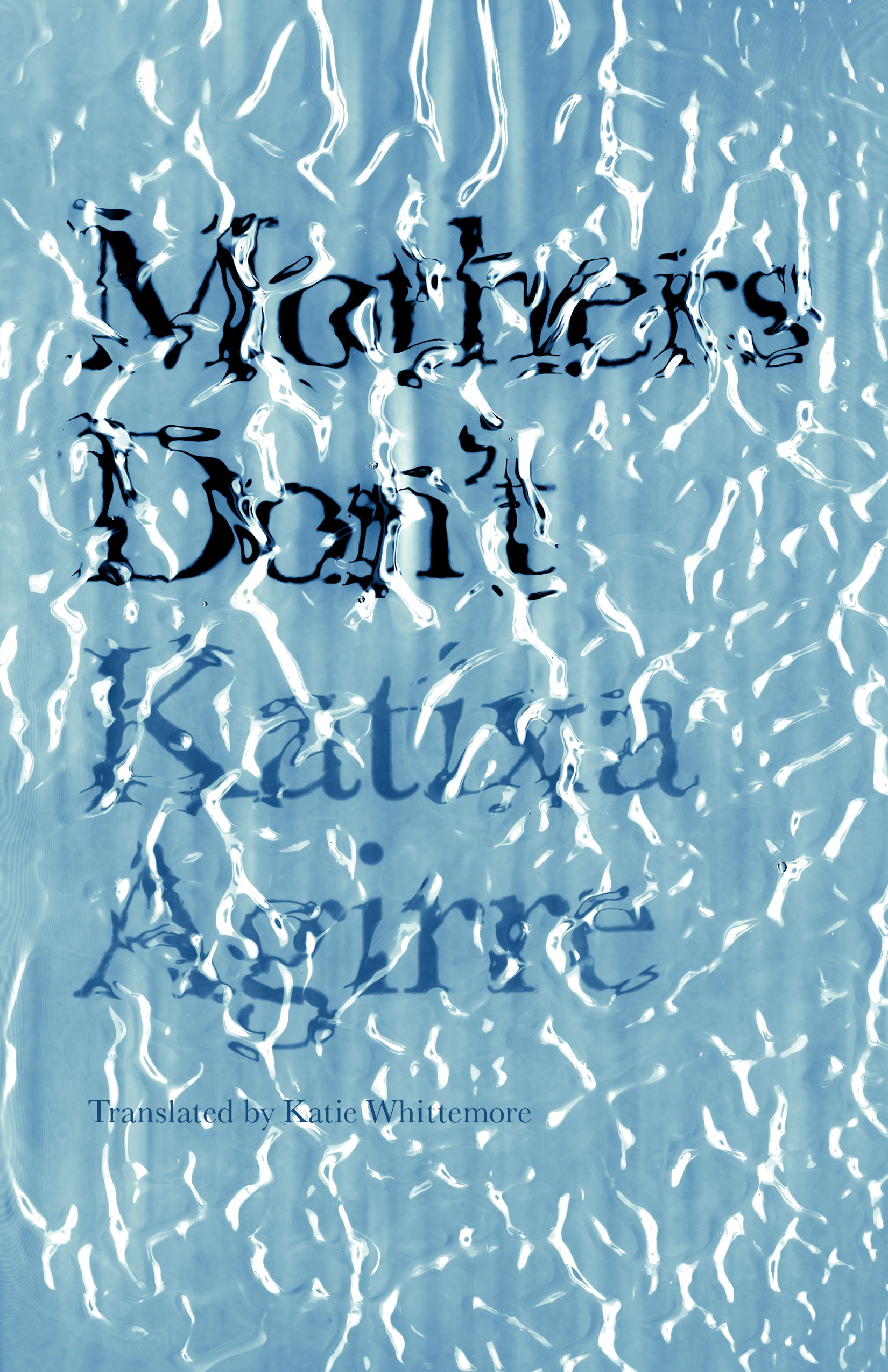
MOTHERS DON'T, Basque-language translation of very difficult subject


MOTHERS DON'T
KATIXA AGIRRE
(tr. Katie Whittemore)
Open Letter Books
$15.95 trade paper, available now

August 2025: 40% discount on all Open Letter titles written or translated by female-identifying artists. (Discount is applied automatically at checkout on publisher's website and applies to all hardcover, paperback, and ebook editions.)

Rating: 4* of five

The Publisher Says: A mother kills her twins. Another woman, the narrator of this story, is about to give birth. She is a writer, and she realizes that she knows the woman who committed the infanticide. An obsession is born. She takes an extended leave, not for child-rearing, but to write. To research and write about the hidden truth behind the crime.

Mothers don't write. Mothers give life. How could a woman be capable of neglecting her children? How could she kill them? Is motherhood a prison? Complete with elements of a traditional thriller, this a groundbreaking novel in which the chronicle and the essay converge. Katixa Agirre reflects on the relationship between motherhood and creativity, in dialogue with writers such as Sylvia Plath and Doris Lessing. Mothers Don't plumbs the depths of childhood and the lack of protection children face before the law. The result is a disturbing, original novel in which the author does not offer answers, but plants contradictions and discoveries.

I RECEIVED A DRC FROM THE PUBLISHER VIA EDELWEISS+. THANK YOU.

My Review
: Seeing Motherhood, that uncriticizable cult, as a prison exclusively populated by and designed for women, is very culturally risky. Think I'm exaggerating? Call Motherhood a "sacred cow" in public.

Crowds will gather. Trouble will brew. The speaker will be set upon from every point of the cultural compass. Like saying "religion is evil, a force for the worst people to do the most intentional damage to the greatest number of others" it results in much, much shouting about it from those alleging they most value the freedom to express ideas freely. Feminists will decry the insult perceived in comparing a woman to an animal, a Hindu will shout about colonialist appropriation of a cultural symbol, a mother will complain she is misunderstood....

I know this from experience.

That reality told me Author Agirre was on to a winner in this journalistic investigative thriller of a wealthy woman's "inexplicable" infanticide. I'm going to have to contextualize all of that: by definition, all things pertaining to mothers and motherhood are domestic; a story that centers a journalist investigating a crime in front of us is journalistic; a story involving the uncovering of the "why" of a violent crime no one wants investigated is a thriller. That exactly none of these things are present in their essential forms makes this literary fiction; that the center of the story is absolutely, essentially, irreducibly about femaleness's exclusive biological function, unshared and unshareable with men makes it feminist.

The entanglements do not stop there. This is a web, and it is meant to be. Meanings are massively interwoven: Do these women have a relationship, or is it a case of scraping a connection? Does our journo using an extended leave, not to care for her own child but to write about the infanticide as it travels through the legal system, suggest her fascination might be rooted in some envy? Her old connection is an artist, married to a wealthy man, possessed of an au pair...her own Swedish man isn't wealthy but she has resources many would envy just by giving birth there. Her story is of a difficult birth, a lot of time away from her child, permaybehaps escaping the overwhelming, extinguishing identity Mother, instead of drowning her child in a bathtub.

The story, in pop culture and true crime, is as old as the state of Motherhood. Sometimes it's just too much. Some people aren't interested in doing this lifelong job. Some aren't suited to it. And the less we talk about it, the more women fall into a life they do not want to lead because they had no external guidance to consequences, alternatives, solutions. Tragedies come when people, all of us, refuse to talk through the realities of life. That leaves us all at the mercy of myths. Myths arise to address needs; myths also get crafted, honed to serve as weapons. One thing is certain: The Cult of Mother is incredibly old and powerfully supported, and only a brave soul says, "No."

These kinds of stories tell us about a tragedy arising from the myth remaining unchallenged. That ought to be enough to send all y'all scurrying out to get a copy. I hope it will. For me, this was an above-average reading experience that didn't quite reach the pinnacles I always hope for a read to reach. As a translation of a translation, I wonder if that might be it. Translator Whittemore does a creditable job but I'm...unthrilled. Pleased. Contented. Unthrilled, though, and I am absolutely the audience for this tale. My own mother should never have had me, or any other child, because I can tell you her laziness was the only reason she never killed me. It was easier not to vaccinate me and to ignore my physical problems.

Not kidding. Being female does not mean a person is automatically suited to motherhood.

So, well, do I recommend the read? Yes. It is stylistically interesting, it tells a story I think many will find very involving and will invest their energy into while receiving ample rewards.

It will entertain, it will inform, it will offer rewards. The sale price, had I paid it, would feel very well worth the investment.

Wednesday, July 21, 2021

THE PLOT, a title that explains but doesn't do justice to a fabulous summer read


THE PLOT
JEAN HANFF KORELITZ

Celadon Books
$28.00 hardcover, available now

A NEW YORK TIMES NOTABLE BOOK FOR 2021!

Rating: 3.5* of five

The Publisher Says: Jacob Finch Bonner was once a promising young novelist with a respectably published first book. Today, he’s teaching in a third-rate MFA program and struggling to maintain what’s left of his self-respect; he hasn’t written—let alone published—anything decent in years. When Evan Parker, his most arrogant student, announces he doesn’t need Jake’s help because the plot of his book in progress is a sure thing, Jake is prepared to dismiss the boast as typical amateur narcissism. But then . . . he hears the plot.

Jake returns to the downward trajectory of his own career and braces himself for the supernova publication of Evan Parker’s first novel: but it never comes. When he discovers that his former student has died, presumably without ever completing his book, Jake does what any self-respecting writer would do with a story like that—a story that absolutely needs to be told.

In a few short years, all of Evan Parker’s predictions have come true, but Jake is the author enjoying the wave. He is wealthy, famous, praised and read all over the world. But at the height of his glorious new life, an e-mail arrives, the first salvo in a terrifying, anonymous campaign: You are a thief, it says.

As Jake struggles to understand his antagonist and hide the truth from his readers and his publishers, he begins to learn more about his late student, and what he discovers both amazes and terrifies him. Who was Evan Parker, and how did he get the idea for his “sure thing” of a novel? What is the real story behind the plot, and who stole it from whom?

I CHECKED THIS BOOK OUT OF MY LOCAL LIBRARY. USE THOSE LIBRARIES! THEY NEED OUR PATRONAGE TO SURVIVE.

My Review
: First, read this:
All he had ever wanted was to tell—in the best possible words, arranged in the best possible order—the stories inside him. He had been more than willing to do the apprenticeship and the work. He had been humble with his teachers and respectful of his peers. He had acceded to the editorial notes of his agent (when he’d had one) and bowed to the red pencil of his editor (when he’d had one) without complaint. He had supported the other writers he’d known and admired (even the ones he hadn’t particularly admired) by attending their readings and actually purchasing their books (in hardcover! at independent bookstores!) and he had acquitted himself as the best teacher, mentor, cheerleader, and editor that he’d known how to be, despite the (to be frank) utter hopelessness of most of the writing he was given to work with. And where had he arrived, for all of that? He was a deck attendant on the Titanic, moving the chairs around with fifteen ungifted prose writers while somehow persuading them that additional work would help them improve.

When your first novel comes to the attention of the Great and the Good of the literati, your foot's on the next-up rung of The Ladder. Jake Bonner's first, The Invention of Wonder (I'd buy that book, great title!), gave him that boost. But his sophmore slump, Reverberations, was (sad to say) so very very complete a failure that no one would give him a chance at a third. Any crack at redemption in the marketplace vanished. Disappointed critics and readers are unforgiving...ask the silenced wunderkinder. Oh...you can't...they're obscure now.

So here it is, laddies and gentlewomen, all of it...the petty, the ugly, the desperate parts of le monde littéraire as the early 21st century knows it. The feuds are titanically operatic, and over small enough things that we, in our less-than-private hells documented every which way we can get them to be seen and/or heard by strangers, should really have much better sense than to imbue with the seriousness we do. Jake's in an ugly position: He needs to make his bills:
But no guest-writer had ever acknowledged Jake’s professional achievements, let alone drawn inspiration from his success in the field they supposedly hoped to enter. Not once in three years. He was as invisible to them as he had become to everyone else.

Because he was a failed writer.

Jake gasped when the words came to him. It was, unbelievably, the very first time this truth had ever broken through.

He's possessed of a juicy idea: No one owns ideas, no matter how one comes across them:
He had no thought of anything but this story, which was none of the great plots—Rags to Riches, Quest, Voyage and Return, Rebirth (not really Rebirth), Overcoming the Monster (not really Overcoming the Monster). It was something new to him, as it would be new to every single person who read it, and that was going to be a lot of people. That was going to be, as his terrible student had so recently said, every book group, every blogger, every person out there in the vast archipelago of publishing and book reviewing, every celebrity with a bespoke book club of her own, every reader, everywhere. The breadth of it, the wallop of it, this out-of-nowhere and outrageous story.

He has the chops to execute the idea: What's stopping you?
To Jake, the word that comprised the relationship between a writer and their spark was “responsibility.” Once you were in possession of an actual idea, you owed it a debt for having chosen you, and not some other writer, and you paid that debt by getting down to work, not just as a journeyman fabricator of sentences but as an unshrinking artist ready to make painful, time-consuming, even self-flagellating mistakes.

So there we have it: A man with ambitions and a modicum of talent out to milk the System. What ever could go wrong.

Someone who knows he didn't think up this plot could go very far to damaging his credibility...or could they, really? He didn't steal someone else's work. He used the details of something he was freely told in a work of fiction. I can't think of a single example of that in modern fiction, can you?

Heh.

My real point, facetious asides aside, being that it's done the books whose sources were, um, less than pure absolutely no harm for this information to come out. When I was a sprog, there was a great deal of to-do about Grace Metalious writing a nasty, tell-all scandal of a book called Peyton Place. Shock and recrimination attended the publication because her native town complained about how they were portrayed. It was so sudsy and such a whang-dang-doodle of a story...affairs! bastards! drunks!...that you couldn't see for the lines of folks waiting to hand their $5 to the cashier at Macy's. (Bookstore chains were a thing of the future in the 1950s and 1960s.) Then, of course, Hollywood came calling. Then came fame and money and alcoholism and death...all of it because the prudey world of 1950s publishing couldn't believe people would buy this crap by the ton.

So the truism "there is no bad publicity" was proven yet again to be an eternal verity.

And, corollary to that proverb is "be really careful what you complain about." Does A Ladder to the Sky versus Less ring a bell? Keep shtumm if you don't want your dirty laundry laid out...and the noxious dead guy that Jake, um, allowed to inspire him shall we say, didn't have much chance to learn that. But now here's Jake getting privately messaged about how he's a thief, with just enough detail to make it a credible accusation. But the originator of the idea's dead; can't be him...no one else could know. And he knows he didn't spill the beans....

Okay, so there's where I end my plot discussion. The events of the book need to be brought to your attention by Author Korelitz. I've got nothing but praise for how the pacing is handled. I'm not going to fault a single line, because as a line-by-line reading experience, this is a polished one. I can't say a bad word about the way the reader is brought into the main action of the book. Almost all my rating's glee resides, though, in the supremely assured and deeply wicked skewering of the publishing/entertainment world. Flawless. Fabulous. Fun.

So where's those one-and-a-half stars that make up five? Lost to some major issues. This plot, the one that's absolutely NEW and UNIQUE, is Grey Gardens meets Carrie. The actions of one character in particular are both calculating and foolish...one totally understands the desire for material gain that motivates the eventual malefactor, but the degree of planning and calculation necessary to execute this plot are OTT from my view. Is the criminal a sociopath or psychopath, to respond to something that just is not all that heinous an infringement of life, liberty, and the pursuit of happiness in such a disproportionate manner? And one knows this is not the criminal's first crime...so, well, it really sapped my pleasure in the preceding exciting story. (Also, this identity reveal was not quite the surprise it's played up to be.) I'm not asking that the book be restyled into a psychological thriller instead of a chase tale. I'm just not convinced that, on the evidence I saw on the page, the response of the malefactor made sense absent something...extreme...in what Jake did.

Still, the pages flew and the story unfolded without a single wasted word or gesture or trope. It is deft and assured and downright sudsy, and the film needs to star Reese Witherspoon and Ryan Phillippe.