Pages
- Home
- Mystery Series
- Bizarro, Fantasy & SF
- QUILTBAG...all genres
- Kindle Originals...all genres
- Politics & Social Issues
- Thrillers & True Crime
- Young Adult Books
- Poetry, Classics, Essays, Non-Fiction
- Science, Dinosaurs & Environmental Issues
- Literary Fiction & Short Story Collections
- Sookie Stackhouse/Southern Vampire Books & True Blood
- Books About Books, Authors & Biblioholism
Showing posts with label Shakespeare retelling. Show all posts
Monday, June 1, 2026
PUCK...yuck.
PUCK
SAMANTHA ALLEN
Zando (non-affiliate Bookshop.org link)
$9.99 ebook, available now
The Independent Press Top 40 Bestsellers: Fiction For the week ending June 16, 2026
Rating: 2.5* of five
The Publisher Says: In this A Midsummer Night's Dream-inspired romcom, Puck is a reality show producer and agent of chaos with a talent for bringing people together . . . and tearing them apart.
Meet Puck: the nonbinary, thirty-year-old mastermind behind "Homewreckers", a dating show that puts troubled couples through hell—with a little help from their exes. Used to being the one pulling the strings, it shocks Puck when their life undergoes a plot twist of its own and their college roommate Mia announces her engagement to her ex’s best friend, Damon. Having only recently broken up with longtime-boyfriend Zander, and never having had much in common with Damon (who lovesick Lena has always pined after), Mia’s news leaves her friend group reeling—and Puck’s mind whirling.
When they arrive for a week of wedding festivities at an upscale resort in the Appalachian forest, Puck immediately sees that Mia’s marriage will lead to misery, and takes it upon themself to save their friends by rearranging the couples—without anyone finding out. But as Puck comes up against a type-A maid of honor hell-bent on making this wedding happen, it becomes clear that they will have to deliver the greatest stunt of their career. If only they can take their eyes off the bridesmaid. After all, the course of true love never did run smooth…
Written with Samantha Allen’s signature charm, wit, and an irresistible dose of Shakespearian mischief, Puck is the ultimate romcom for our chaotic era, and a celebration of the friendships that carry us through it all.
I RECEIVED A DRC FROM THE PUBLISHER VIA NETGALLEY. THANK YOU.
My Review: I've read reality-TV plots before, and liked them fine. I dislike Puck as much as it is possible to dislike a fictional character.
Controlling and manipulative are the core qualities a producer/director must have. The Creative Types series got uniformly good reviews from me, and controlling manipulative producer/director types abounded. LOVE, HATE & CLICKBAIT had the same. I liked it, too. All these stories were chock-a-block with cynical, manipulative controlling people.
Puck is the first one of the producers to feel sociopathic, actually uncaring in their actions...as in not really interested or invested in a positive outcome of some sort. Their impulse to derail the train heading for a genuine disaster was, it felt to me as I read along, much the same "I will because I can and y'all sort out the pieces once I've had my laugh" as in A Midsummer Night's Dream.
I'm glad I read the whole story. I'm supposed to see the easy, wealth-lubricated hum of a stage play wedding as hollow and shallow and doomed to failure. So Puck blowing all those things up? Well, why not they were going to blow up anyway.
I found the idea of Puck's in-universe TV show, Homewreckers, to be as repugnant as The Traitors all y'all seem to lap up. I'm not going off on a rant about how vicious all these craptastic shows feel to me...entertain y'all's selves how you see fit...but absent some tinge of positive motivation, some twinge of conscience or at least awareness that the playing cards being shuffled by Puck are people with feelings, I'm not recommending the read.
The prose is charmingly descriptive, the surfaces ae glossy, the dialogue had a brittle wit to it.
And I disliked every page.
Thursday, November 27, 2025
ROMEO vs. JULIET: A Kill Shakespeare Adventure, cool expansion of Shakespeare's story
ROMEO vs. JULIET: A Kill Shakespeare Adventure
ANTHONY DEL COL (art by Stefan Tosheff)
Gemstone Publishing (non-affiliate Bookshop.org link)
$17.99 paperback, available now
Rating: 4* of five
The Publisher Says: The world's most famous lovers are now sworn enemies dueling to the death!
In this Shakespearean Western, warrior-for-hire (and pregnant) Juliet Capulet is hired to protect a border town nunnery from the evil forces led by her ex Romeo. As they prepare, she reluctantly reunites with her old allies, including Hamlet, Othello, Puck (a “Magnificent Shakespeare Seven”) but they soon discover something rotten in the state of the nunnery and a magical force that dreams are made on… all while Juliet must determine if the father of her child is Hamlet… or the man she must kill, Romeo.
Pulitzer Prize-winner writer Anthony Del Col (Luke Cage: Everyman, I Escaped a Chinese Internment Camp) and artist Stefan Tosheff bring reboot Kill Shakespeare with this fantasy Western that's tailor-made for fans of Neil Gaiman, Fables and Lore Olympus.
I RECEIVED A DRC FROM THE PUBLISHER VIA EDELWEISS+. THANK YOU.
My Review: Rebooting a comics series, that was itself a riff on the works of Shakespeare? These guys got big brass ones! I'm not the most dedicated fan of comic-book art (stop laughing) so I wasn't expecting much when, on a whim, I downloaded this murderous, vengeful Juliet out to kill Romeo (whose child she's bearing), in sequential art form.
That's some kinetic, powerful art. I will admit freely that I don't feel I *get* what y'all do when looking at this art, but it was clear enough for me to follow the storyline, and I really enjoyed the read.
Since Turkey Day requires us to really dig deep into our memories of Love and Kindness to survive the onslaught of togetherness, the narcissism of small differences in Freud's pithy formulation, do a bit of relief-valving by reading what could on this day of total excess feel like wish fulfillment.
I can't get past something to offer a perfect score: Juliet looks very blunt, very not-noble to my eyes. YMMV of course. I really enjoy retellings, more often than not, and Shakespeare's ripe for the retelling and reimagining. His plays were a chore to read for me...don't like plays as reading material too much...but what stories he told! Reusing the ideas of the greatest storytellers seems an excellent idea to me. Enjoy the ride!
Monday, September 23, 2024
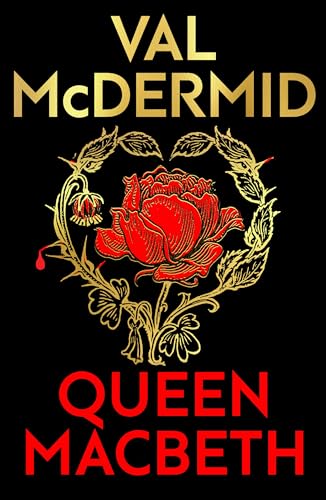
QUEEN MACBETH, feminist thriller set in medieval Scotland starring a reimagined Lady Macbeth

QUEEN MACBETH
VAL McDERMID
Atlantic Monthly Press
$22.00 hardcover, available tomorrow
Rating: 4* of five
The Publisher Says: Shakespeare fed us the myth of the Macbeths as murderous conspirators. But now Val McDermid drags the truth out of the shadows, exposing the patriarchal prejudices of history. Expect the unexpected . . .
A thousand years ago in an ancient Scottish landscape, a woman is on the run with her three companions—a healer, a weaver and a seer. The men hunting her will kill her—because she is the only one who stands between them and their violent ambition. She is no lady: she is the first queen of Scotland, married to a king called Macbeth.
As the net closes in, we discover a tale of passion, forced marriage, bloody massacre and the harsh realities of medieval Scotland. At the heart of it is one strong, charismatic woman, who survived loss and jeopardy to outwit the endless plotting of a string of ruthless and power-hungry men. Her struggle won her a country. But now it could cost her life.
I RECEIVED A DRC FROM THE PUBLISHER VIA NETGALLEY. THANK YOU.
My Review: I'm a man. An old, white one.
I'm sorry to disappoint those who now expect me to whine about "ruining Shakespeare" and "making up feminism ahistorically" and suchlike nonsense, but I myownself think this novella is telling not only a cracking good story, but bringing a long-ignored reality to light. Women, modern, medieval, or ancient, were and are not passive, pointless victims or tiresome termagants. They are, were, and always have been people with agency, possessed of skills and ideas that motivate and support changing their world.
Every story that supports this reality, presents it without a dingy scum of patriarchal judgment of those women for exercising their power, gets my enthusiastic support. Queen Macbeth is no exception.
Riffing on the great stories of history and mythology is currently very much à la mode. The trend picked up steam most recently after The Song of Achilles appeared early in the teens. It was never exactly ignored, after all...John Erskine wrote Arthurian retelling Tristan and Isolde: Restoring Palamede in 1932; Thorne Smith wrote modern satires with horny, drunken Greek Gods until his death in 1934; Tolkien remixed Anglo-Saxon epic poetry to some modest success in the 1950s. The urge to put one's own stamp onto the greatest stories of the culture is never absent. Imagine all the lost Iliads wrought by bards before writing was reinvented! (Side note: why has Jodi Taylor not sent the disaster magnets back to record some of those?) The great plays of Athens's Golden Age retold the myths, too, and that was six hundred years before the common era is reckoned to have begun.
So a Scottish crime writer revisiting Lady Macbeth's truly awful characterization at Shakespeare's hands is unsurprising. Make that Scot an outspoken feminist lesbian and, well, go figure that she would find this retelling irresistible. I wish I'd loved it instead of simply, and inevitably, admiring it. Using her widely lauded storytelling chops to re-center the Bechdel-test failing character as a powerful ruler in her own right is delightful; the way she contextualizes her choice in her Author's note made me almost giddy with anticipation.
Then came reality swinging her mace of office.
Choosing to use Scottish words...well, okay, you're Scottish, the story's Scottish, but the huge majority of the world's readers have never seen, and don't care to see, those words. Climbing the hill with a Glossary is fine; putting said glossary at the end of an ebook is a worse idea than in a tree book. In the ebook, a hyperlink to the entry with that word is possible; links that take you there and back are possible; neither was made. I did not use the glossary once during the read and lost not only fine nuance but faith that I was being considered as a guest in this world. It feels very much like the divisive, arrogant attitude regrettably common...in every sense of the word...in internet discourse about cultural identity: "I don't owe you an explanation of my culture/language/art/thing under discussion!"
Then you do nor care if I, or any "outsider," understand you? Okay. Then you'll mostly get ignored.
Author McDermid and/or publisher(s) just put a hard limit on how many people will slug it out with unhelpfully untranslated Scottishness. The tree book might be a better choice than an ebook for those who can't or won't simply skip past wotds they don't know.
Pity, that; Gruoch as reimagined is a kickass character. Her struggles matter.
Tuesday, August 23, 2016
ON THE TWELFTH NIGHT, a blazingly creative finish to Monstrous Little Voices
ON THE TWELFTH NIGHT
JONATHAN BARNES (Monstrous Little Voices #5)
Abaddon Books (non-affiliate Amazon link)
$2.99 Kindle edition, available now
Rating: 4* of five
The Publisher Says: Anne Hathaway – contented wife of a glovemaker and aletaster, proud mother of three – has her life turned upside down when strangers, oddly familiar, come to her door and whisk her husband away. What is their business, this terrible danger they say we all face? What is the lattice, and what part must her Will play to save it?
Monstrous Little Voices is a collection of five short novellas, a single long tale set in Shakespeare’s fantasy world of fairies, wizards and potions, in honour of the four-hundredth anniversary of the Bard’s death.
My Review: Imagine yourself in Jonathan Barnes's shoes: you're invited to participate in making an anthology of prose extensions and reimaginings of playwright William Shakespeare's retronymed Tuscan Wars fantasy universe. The editors are hotshots. The publishing house is terminally cool. This sugar/adrenaline bolus would lead any writer to need immediate doses of Ritalin and insulin. Then comes the dose of ricin, the silver hammer this collective Maxwell brings down on your head:
You're wrapping the main narrative thrust that four gifted and talented other authors shaped and directed into a satisfying conclusion, and you're doing it as a response to Twelfth Night.
Holy shitsnacks. *I* can feel writer's block coming on out of sheer terror.
In my review of Adrian Tchaikovsky's EVEN IN THE CANNON'S MOUTH, I called attention to Helena's description of a "place between the pages of the world's book," as a central factor in making all five of these novellas make sense (something modern audiences insist on, silly buggers) as a universe. Clearly I don't know if that conceit is original to Mr. T or if it was part and parcel of the pitch to the authors. I therefore claim no special knowledge of the origins of "the lattice" either. The two conceits seem to me to be different points of view on the same underlying reality. Whoever thought this up, however it was disseminated to the writers, it is a piece of bloody brilliance that knits up many raveled places in Shakespeare's own fictional playhouse-cum-universe. It is, in fact, a small bell-ringer for me as part of the explanation of Shakespeare's troubling and sudden blooming into a major talent from humble, nay untermensch dimensions lowly, beginnings.
And Jonathan Barnes plays it for all it is worth by describing it from the standpoint of the most innocent imaginable bystander: abandoned wife Anne Shakespeare. Oh my, how bold and perceptive a narrative choice. Anne is always, in every imaginable way, the unwinner of every iteration of Shakespeare's fame. Read Robert Nye's take on her, MRS. SHAKESPEARE: The Complete Works. Her fictional memoir is as affecting in its portrayal of a loud, vibrant, lively fun-loving woman as Barnes's is in portraying Anne as a passionate woman in love with a restless man. Both takes, along with so many others written over the course of centuries, require Anne to sacrifice herself to Will's outsized persona.
Only in this novella, an entire playwright's canon of pathos is loaded onto Mrs. Shakespeare's broad shoulders:
Afterwards, they went inside and they sat by the fire and they talked of the life that was left to them, and for a little while, they thought not of the past at all, but only of the future.
EVEN IN THE CANNON'S MOUTH, fourth novella in Monstrous Little Voices and a follow-on tale to Shakespeare's As You Like It
EVEN IN THE CANNON'S MOUTH
ADRIAN TCHAIKOVSKY (Monstrous Little Voices #4)
Abaddon Books (non-affiliate Amazon link)
$2.99 Kindle edition, available now
Rating: 5* of five
The Publisher Says: Illyria’s Duke Orsino has raised new, powerful allies, and in a last-ditch attempt to win the war, Don Pedro and his brother John, wise old Jacques and the physician Helena sail to Milan to appeal in person for the wizard Prospero’s aid. But unseasonal storms drive them onto the Illyrian shore, and into the hands of their enemies...
Monstrous Little Voices is a collection of five short novellas, a single long tale set in Shakespeare’s fantasy world of fairies, wizards and potions, in honour of the four-hundredth anniversary of the Bard’s death.
My Review: Thiiiiiiiiiiiiiiiiis close to being my tippy-top very-best favorite in the collection! It is not because of any lack or failing that Tchaikovsky's entry comes in at 0.999999999999 of 1 in my affections, it is the happenstance of placement. This fourth of five novellas takes on As You Like It, a dear favorite play of mine; but the tale does so very near the close of the collection's business, and so is constrained to bring major thematic strands together while working within the conceit established for the whole endeavor.
A lesser writer would be sunk by meeting these rigorous demands. Tchaikovsky makes doing so look effortless and makes his audience chortle, snicker, giggle, and all while mopping away strange bits of moisture from the corner of the eye. No idea where those came from. But here's the rub for me: I sense that there was a lot, nay a plethora, of material that Tchaikovsky whipped in to the crème Chantilly that is Even in the Cannon's Mouth and was compelled to jettison it to serve his multiple masters.
I realize I could be completely wrong, Tchaikovsky isn't an intimate of mine and doesn't confide his secrets to me; but read this:
"You are most kind," Viola spoke over him. "And pray, will you not join us, who has such respect for learning?"This grace note off the mash-up within pastiche inside hommage shows the attentive reader just how much pruning must have gone into keeping this novella a novella and not a stonking tome. (Saint Quinculencus? HA!) A mind this well furnished and a spirit this inclined to playfulness must be severely disciplined to keep things concise.
They passed some moments exchanging compliments, then sent the noble Spaniard off for more mugs, consigning him to the seven-deep scrum about the tapster. Viola let Feste ramble, watching the two foreigners try to follow his baffling loops of logic. At last she said, "Aye, we two are belike the foremost men of learning in all Illyria, and yet you see how fortune treats us! I myself have converse with angels and airy spirits most nights, and have studied with no lesser man than Doctor Dee, while Father Topaz has honed his craft in the invisible college of Verrucoporcus and conjured the stone philosophical. It has been many a cold week since last a stranger showed kindness to two poor scholars such as we."
The form Tchaikovsky uses to frame his tale is also an aid in this task. Acts and scenes and stage directions function as a corset does in assisting the costume to cover more fleshed-out bones than it could otherwise. They're in the spirit of the Bard, they're familiar to the audience likely to pick up the book, and they're practical. It isn't a small feat to understand all that and use it so seamlessly for all those purposes that the typical reader passes them all by unthinking.
These passages reveal the immense and demanding task behind the seemingly effortless storytelling going on in the foreground:
"We are between the pages of the world's book. Each scene and moment of our lives is pieced together in this space before it's served to us. We are where none of us was meant to be."May I just say YES to this? And:
Parolles was still at his fictional Battle of Lepanto. Already he had travelled on a cannonball and hauled himself out of the water by his own hair. Each listener had tried to challenge the lie--Orsino, Don John, and Sir Toby among them--and each challenge he slew, and then piled up the bodies to reach even greater heights of the absurd. Where his words might have taken him, when the newcomers broke in, was past all guessing. Some men, when given rope, refuse to hang themselves but weave a ladder to the moon.Aside from the humor and the dignity of the passage on its surface, there is in concert with the passage above a deep structural function to those ideas expressed. This becomes more obvious when the book has been consumed whole. But there is something, some gravitic effect like dark matter, that pulls the reader towards these moments and carves their importance on the awareness paid into any work of fiction.
Yet all without any sense of didactic purpose or clanking of barely invisible plot machinery. That, my friends, is the best quality of writing going today.
Monday, August 22, 2016
THE UNKINDEST CUT, Macbeth immortal, The Tempest family dysfunction, and Julius Caesar with the gender roles swapped in true William Shakespeare-meets-21st century fashion
THE UNKINDEST CUT
EMMA NEWMAN (Monstrous Little Voices #3)
Abaddon Books (non-affiliate Amazon link)
$2.99 Kindle edition, available now
Rating: 4* of five
The Publisher Says: Lucia de Medici sought only to marry, ending a war that has engulfed all the world from Navarre to Istanbul; but she has been lied to, and made into an assassin. Now, armed with new knowledge and accompanied by the ghost of her victim, she sets out to find who so deceived her, and to what end, and to try and restore the damage done.
Monstrous Little Voices is a collection of five short novellas, a single long tale set in Shakespeare’s fantasy world of fairies, wizards and potions, in honour of the four-hundredth anniversary of the Bard’s death.
My Review: Have the hankies ready. There is a reason Newman is known for dark fiction. This is a supremely clever narrative conceit, driven by the fact that even the smartest and most experienced practitioner of an occult art can fall over human frailties like motherhood, misplaced trust, the need to fix people, places, things.
Her mother's face was pale in the lantern light. She looked tired, and older than Lucia liked to think she was. The deep red velvet of her cloak made her look ill in contrast. "Dear heart, I have always told you the truth. I cannot tell you because I cannot see it."Unquestioning faith meets unshareable burden. I'm familiar with that.
"Have you lost your gift?"
"No."
"You can see the future for others, then, still?"
Her mother's sigh was one of a woman tired beyond words. "Sweet child, rest now."
As burdens go, parenthood's the heaviest imaginable to most mortals. Add in the unfathomable weight of governance. Then top it all with a "Gift" of supernatural power. No wonder la chère Madame sa mère sighs wordlessly. You would too. Adding yet more weight to the burdens Lucia and her mother must carry is the reason that the future must be scryed in the first place: Lucia's impending nuptials to Francesco de Medici will finally, once and for all, put an end to the Tuscan Wars that bedevil this fantasy Mediterranean and draw in the rest of the world, magical and mundane. If they can be brought to their successful conclusion.
So what constitutes success? Do forms have more value than substance? If forms are observed and goals attained by that measure, what cost exacted on the meat-puppets voids success?
Prospero, Duke of Milan, enters the stage with his cruel loss poisoning his never-sanguine personality and clouding his tiny remaining window onto human nature. Lucia's task is to remove him from the stage. Does she succeed in this task if, in accomplishing it, she uses a "One Ring to Rule Them All"-level evil artifact that in its use summons the violent, murderous immortal remains of Scottish King Macbeth to unleash his blood and horror onto the world Lucia's charged with saving?
In the end, the narrative noose that Newman draws about Lucia's neck is clear to the poor child. She has been used by forces far, far more powerful than it is safe for mortal beings to interact with.
Her face was wet and her throat raw. Everything seemed too dull, too slow to be real.Love redeemed? Love squished under the thundering hooves of the Universe's largest cavalry, yet left breathing and suffering. It is a sadist's delight, this tale. Lucia, standing in for the reader, makes the best decisions she can based on the best and most trustworthy information she has; that the information is unreliable and the decisions terrifyingly misinformed mean that we/she must now suffer the single most painful coming-of-age moment of them all:
"Yours is not the face of love redeemed," Prospero said, not unkindly. "Take a moment to restore yourself. I fear you grasped that magic's nettle for longer than you should have."
You don't matter.
THE COURSE OF TRUE LOVE, a prose sequel novella to A Midsummer Night's Dream, the delicious comedic play written by William Shakespeare
THE COURSE OF TRUE LOVE
KATE HEARTFIELD (Monstrous Little Voices #2)
Abaddon Books (non-affiliate Amazon link)
$2.99 Kindle edition, available now
Rating: 4.25* of five
The Publisher Says: Pomona, a gifted hedge-witch of advancing years in fair Illyria, is walking about her own business when she spies a fairy gentleman trapped in a secret garden. Vertumnus, King Oberon’s emissary to the Duke, has been taken captive by proud Titania, and a war is in the offing... unless Pomona can prevent it.
Monstrous Little Voices is a collection of five short novellas, a single long tale set in Shakespeare’s fantasy world of fairies, wizards and potions, in honour of the four-hundredth anniversary of the Bard’s death.
My Review: A moving, touching, lovely tale of love surprised. Heartfield creates, in Pomona and Vertumnus, a pair of seasoned travelers whose voyages on love's tides have left them on land and grimly content that it be, and remain, so. Neither, however, can resist a puzzle to solve, a clue to pick and unravel into a solution, so when Pomona accidentally sees into Vertumnus's walled prison yard-cum-garden and also through his enchanted appearance as an old hag, she cannot accept that her first vision is not the correct one and that her undignified descent into the enchanted courtyard is not showing her a lie when she sees Vertumnus's haggish countenance. The lie she knows her eyes tell her piques her curiosity, which once aroused is not to be stilled by the shrilling and shouting of tiny Queen Mab playing her role as jailer to the glamoured Vertumnus:
"And if you had seen this man, what of it?" squeaked Mab. "Why seek him with such ferocity? Whenever you think you glimpse a man, you charge toward the place he was last sighted and seek him behind any bush or tree? I advise you as a woman of some years myself: your fond chase will only make your quarry despise you more. Chase cattle, not men. You are, by your looks, not wealthy enough to atone for your wrinkles in the eyes of any man worth the hunting."And so we have the traditional romantic beginning: meet cute, start by being antipathetic to each other, but unite in opposition to a third party. There's a reason that's an evergreen. It worked then as it works now. Get them juices flowin' and then let the underlying chemistry have its turn.
The woman set her lips together but said nothing. If she were a trap, sent here by Titania, she must have no awareness of it--or else she could play a part better than any mummer. She had wandered into this garden only to be taunted, to be called ugly and foolish by a bitter old gad-fly.
By Jove, he would prove the little harridan wrong if he were wearing his own appearance.
"You rere-mouse," he scoffed to Mab. "You speak of love as you would of farthest India, knowing nothing of either."
In response, she flew at him, her ghastly team stamping toward his nose. Without thinking, he caught her between his cupped palms for just a moment, but it was just long enough for Mab to work her magic on him. He screamed as pain spread from his feet upwards, all over his skin, and in his mind flashed a strange vision, so that for a moment he thought his prison was not a beautiful garden but a dank stone cell, smelling not of blossoms but of mould. ... Pomona put the book down on the bench and a hand on her hip. "Do not trouble the fairy, madam. She speaks the truth. I know full well I am no beauty. I do not seek a husband, here or anywhere. Show me the way out, then, I will trouble you no more. Where is the gate? I see none."
But wait, there's more! After all this novella is a follow-on to one of Shakespeare's most famous romantic comedies. We've already had mistaken identity, ensorcellment, a changeling child's fate revealed, immortality...what's next? Oh yeah! Ignition!
...he was never privy to Oberon's laughing whispers with Puck and his other councillors, and never invited to join the Hunt with the other favourites. He was always more than human but less than spirit.I don't know about women's feelings on the matter, but to me there is nothing sexier than a man under arrest and/or tied up. No wonder Pomona starts the cross-examination that, as always, elicits the startling details of the male love interest's past which are destined to warm her reluctant heart to him in his pitiable vulnerability. Heartsfield does not stint in assigning pitiability to Vertumnus! Changeling, outsider, neither fish nor fowl...well, what decent heroine could resist that?!
If he were a true fairy, he would be gone now, off on the air like a sylph, vanished like first love. If he were a true fairy, perhaps--probably--Titania would not have been able to take away the powers she had given him so long ago.
Instead he was bound, and hurt, and limping behind this witch like a pig being led to market.
Not his rescuer, that's for sure:
"Truth is truth," she said. "Beneath, above, inward, outward."That loud thud you just heard? Yeah, that was Pomona falling for Vertumnus. He's already fallen for her, his rescuer from Titania's cruel captivity. And now their world trembles because there is no enemy, human or faerie, who can stand against the certainty of mature people in love. It falls to the pair of them to avert the onset of still worse bloodshed in the Tuscan Wars, this imaginary seventeenth-century world war, as soon as they face down the wrath of faerie royalty.
"You say that, who saw me as a woman yesterday."
"And were you any different, when I saw you as something else than what you are? Would you have acted any differently than you had? You cannot seek your nature, you can only make it, moment by moment." ... "Then tell me, what is your nature, Pomona?"
"It is whatever I need it to be--or whatever the person paying me for my services needs it to be."
"So simple! But Rumi says the king knows not that he is a king when he sleeps, and the prisoner knows not that he is a prisoner. So what are we, then, when we are sleeping? When we are only ourselves, at night, naked and unoccupied?"
"Are you always unoccupied, then," she said, "when you are naked?"
Assuming they survive....
Sunday, August 21, 2016
MONSTROUS LITTLE VOICES, a beautiful-looking and beautifully conceived and executed anthology of Shakespearean fanfic
MONSTROUS LITTLE VOICES: New Tales from Shakespeare's Fantasy World
DAVID THOMAS MOORE, editor Afterword by Dr. John Lavagnino
Abaddon Books
$5.99 ebook editions, available now
Rating: 5* of five
The Publisher Says: Mischief, Magic, Love and War.
It is the Year of Our Lord 1601. The Tuscan War rages across the world, and every lord from Navarre to Illyria is embroiled in the fray. Cannon roar, pikemen clash, and witches stalk the night; even the fairy courts stand on the verge of chaos.
Five stories come together at the end of the war: that of bold Miranda and sly Puck; of wise Pomona and her prisoner Vertumnus; of gentle Lucia and the shade of Prospero; of noble Don Pedro and powerful Helena; and of Anne, a glovemaker’s wife. On these lovers and heroes the world itself may depend.
These are the stories Shakespeare never told. Five of the most exciting names in genre fiction today – Jonathan Barnes, Adrian Tchaikovsky, Emma Newman, Foz Meadows and Kate Heartfield – delve into the world the poet created to weave together a story of courage, transformation and magic.
Including an afterword by Dr. John Lavagnino, The London Shakespeare Centre, King's College London.
**I BOUGHT THIS TREE BOOK WITH MY VERY OWN UNITED STATES DOLLARS**
My Review: I hereby make an Executive Decision to promote the works of fiction in this collection from stories, as the publisher describes them above, to novellas. Considered in terms of length, I think that's justified, if only barely; it's the depth of storytelling and the complexity of the interrelationships that lifts the tales out of storydom. Admittedly the authors each had a tremendous boost out of the story ghetto by working within the Shakespeare-verse. This has saved a tremendous amount of worldbuilding effort on their part as a certain level of background familiarity can reasonably be expected of readers attracted to the tales. The problems that come with working inside a set of conventions and premises not of one's own creation aren't to be minimized. Honoring the unknowable intent of the original creator, going with or against the tide of the original creator's fan-base's fixed ideas and assumptions about same, while avoiding the artistic death-spiral of checking one's own creative impulse at the door is a feat of no small proportions. Bravo to each and all for navigating these shoals gracefully and successfully.
Equally graceful and successful is publisher Abaddon Books's cover and interior design. The use of period-sourced woodcuts as cover images and interior part-title pages is visually and intellectually pleasing. Woodcuts are shorthand for a rustic or home-made aesthetic, and the ones chosen for use here as well as on the covers of the individually published novellas are appropriately playful in nature. They all capture the spirit of the project whole and entire as well as illuminating certain aesthetic choices made within the illustrated novellas.
I'll review the novellas individually:
–CORAL BONES–THE COURSE OF TRUE LOVE–THE UNKINDEST CUT–EVEN IN THE CANNON'S MOUTH–ON THE TWELFTH NIGHT–
The idea of the whole collection merits separate consideration.
And that right there, that little word "collection," is a big reason why the reviews of the parts are different from the whole. Is this a collection? Is it an anthology? I deliberated about that for some time. My love affair with Wikipedia's easily accessed and readily digestible information led me there first, where I found this indirect illumination of the distinction between an anthology and a collection:
A collection, then, is a single-author sampling; an anthology has multiple authors. In the SF/F field there exists a long tradition of themed anthologies from Groff Conklin's many forays beginning in the 1950s all the way through 2016 Hugo-winner Ellen Datlow (for Best Editor, Short Form), and I'm confident that the form will continue into the foreseeable future.
I'll call this book a themed anthology. Its shared premise is that the Mediterranean world of Shakespeare's invention, in which he set many stand-alone comedies and dramas, was deliberately created by Shakespeare as an exercise in worldbuilding. While the modern concept of worldbuilding didn't appear until 1820, we attribute so many powers of prescience and invention to him that this latest one doesn't stretch his legend unduly. Five authors take a play or several plays from this loose grouping of works and, instead of retelling the source material, write prose sequels of sorts to the plays. I've seen several references to these novellas as Shakespearean "fanfic", but the amateurish clumsiness this mildly pejorative and deeply (if unfairly) dismissive term hauls as its baggage is insulting to the fine writers here included. It's factually accurate perhaps, but the connotations aren't.
A collection of Shakespearean "fanfic" is a terrific idea no matter what, one I hope we'll see more of, but this anthology came out tied to the 400th anniversary of Shakespeare's death. Tying the publication of MONSTROUS LITTLE VOICES to such a cultural milestone is genius and I hope the advance sales were monster (which would aid the project in remaining on the backlist forever). If anyone should profit from the Bard of Avon's legend, I'd love it to be modern creative writers working the seams of precious coal he found to invent new and exciting ways to delight and warm us by the collective hearthfire. Fires need fuel. The hottest fires use the best fuel. What better fuel is there than that which comes from time-tested sources? Four hundred years of mining hasn't exhausted this source.
Digital Humanities scholar Dr. John Lavagnino contributed an Afterword to the anthology that provides a clear and concise overview of the aims, sources, and results of the project. It reads to me like a call to arms:
DAVID THOMAS MOORE, editor Afterword by Dr. John Lavagnino
Abaddon Books
$5.99 ebook editions, available now
Rating: 5* of five
The Publisher Says: Mischief, Magic, Love and War.
It is the Year of Our Lord 1601. The Tuscan War rages across the world, and every lord from Navarre to Illyria is embroiled in the fray. Cannon roar, pikemen clash, and witches stalk the night; even the fairy courts stand on the verge of chaos.
Five stories come together at the end of the war: that of bold Miranda and sly Puck; of wise Pomona and her prisoner Vertumnus; of gentle Lucia and the shade of Prospero; of noble Don Pedro and powerful Helena; and of Anne, a glovemaker’s wife. On these lovers and heroes the world itself may depend.
These are the stories Shakespeare never told. Five of the most exciting names in genre fiction today – Jonathan Barnes, Adrian Tchaikovsky, Emma Newman, Foz Meadows and Kate Heartfield – delve into the world the poet created to weave together a story of courage, transformation and magic.
Including an afterword by Dr. John Lavagnino, The London Shakespeare Centre, King's College London.
**I BOUGHT THIS TREE BOOK WITH MY VERY OWN UNITED STATES DOLLARS**
My Review: I hereby make an Executive Decision to promote the works of fiction in this collection from stories, as the publisher describes them above, to novellas. Considered in terms of length, I think that's justified, if only barely; it's the depth of storytelling and the complexity of the interrelationships that lifts the tales out of storydom. Admittedly the authors each had a tremendous boost out of the story ghetto by working within the Shakespeare-verse. This has saved a tremendous amount of worldbuilding effort on their part as a certain level of background familiarity can reasonably be expected of readers attracted to the tales. The problems that come with working inside a set of conventions and premises not of one's own creation aren't to be minimized. Honoring the unknowable intent of the original creator, going with or against the tide of the original creator's fan-base's fixed ideas and assumptions about same, while avoiding the artistic death-spiral of checking one's own creative impulse at the door is a feat of no small proportions. Bravo to each and all for navigating these shoals gracefully and successfully.
Equally graceful and successful is publisher Abaddon Books's cover and interior design. The use of period-sourced woodcuts as cover images and interior part-title pages is visually and intellectually pleasing. Woodcuts are shorthand for a rustic or home-made aesthetic, and the ones chosen for use here as well as on the covers of the individually published novellas are appropriately playful in nature. They all capture the spirit of the project whole and entire as well as illuminating certain aesthetic choices made within the illustrated novellas.
I'll review the novellas individually:
–CORAL BONES–THE COURSE OF TRUE LOVE–THE UNKINDEST CUT–EVEN IN THE CANNON'S MOUTH–ON THE TWELFTH NIGHT–
The idea of the whole collection merits separate consideration.
And that right there, that little word "collection," is a big reason why the reviews of the parts are different from the whole. Is this a collection? Is it an anthology? I deliberated about that for some time. My love affair with Wikipedia's easily accessed and readily digestible information led me there first, where I found this indirect illumination of the distinction between an anthology and a collection:
Since publishers generally found anthology publication a more flexible medium than the collection of a single poet's work, and indeed rang innumerable changes on the idea as a way of marketing poetry, publication in an anthology (in the right company) became at times a sought-after form of recognition for poets. The self-definition of movements, dating back at least to Ezra Pound's efforts on behalf of Imagism, could be linked on one front to the production of an anthology of the like-minded. Also, whilst not connected with poetry, publishers have produced collective works of fiction from a number of authors and used the term anthology to describe the collective nature of the text.(emphases added)
A collection, then, is a single-author sampling; an anthology has multiple authors. In the SF/F field there exists a long tradition of themed anthologies from Groff Conklin's many forays beginning in the 1950s all the way through 2016 Hugo-winner Ellen Datlow (for Best Editor, Short Form), and I'm confident that the form will continue into the foreseeable future.
I'll call this book a themed anthology. Its shared premise is that the Mediterranean world of Shakespeare's invention, in which he set many stand-alone comedies and dramas, was deliberately created by Shakespeare as an exercise in worldbuilding. While the modern concept of worldbuilding didn't appear until 1820, we attribute so many powers of prescience and invention to him that this latest one doesn't stretch his legend unduly. Five authors take a play or several plays from this loose grouping of works and, instead of retelling the source material, write prose sequels of sorts to the plays. I've seen several references to these novellas as Shakespearean "fanfic", but the amateurish clumsiness this mildly pejorative and deeply (if unfairly) dismissive term hauls as its baggage is insulting to the fine writers here included. It's factually accurate perhaps, but the connotations aren't.
A collection of Shakespearean "fanfic" is a terrific idea no matter what, one I hope we'll see more of, but this anthology came out tied to the 400th anniversary of Shakespeare's death. Tying the publication of MONSTROUS LITTLE VOICES to such a cultural milestone is genius and I hope the advance sales were monster (which would aid the project in remaining on the backlist forever). If anyone should profit from the Bard of Avon's legend, I'd love it to be modern creative writers working the seams of precious coal he found to invent new and exciting ways to delight and warm us by the collective hearthfire. Fires need fuel. The hottest fires use the best fuel. What better fuel is there than that which comes from time-tested sources? Four hundred years of mining hasn't exhausted this source.
Digital Humanities scholar Dr. John Lavagnino contributed an Afterword to the anthology that provides a clear and concise overview of the aims, sources, and results of the project. It reads to me like a call to arms:
...Pericles returns to a plot resolution {Shakespeare had} used as early as The Comedy of Errors and found fascinating throughout his career: the astonishing reunion with those who seemed lost forever. That particular kind of wonder doesn't appear here, and indeed fits a play better than this book's new kind of exploration. Instead we get the richness of a fictional world that could continue rolling along forever, that could keep leading us to new places and startle us not by returning to our beginnings but by going on and on.Aux armes (ou claviers), citoyens creatifs!
Subscribe to:
Posts (Atom)