Pages
- Home
- Mystery Series
- Bizarro, Fantasy & SF
- QUILTBAG...all genres
- Kindle Originals...all genres
- Politics & Social Issues
- Thrillers & True Crime
- Young Adult Books
- Poetry, Classics, Essays, Non-Fiction
- Science, Dinosaurs & Environmental Issues
- Literary Fiction & Short Story Collections
- Sookie Stackhouse/Southern Vampire Books & True Blood
- Books About Books, Authors & Biblioholism
Showing posts with label historical thriller. Show all posts
Friday, August 28, 2026
THE LIPETSK CONSPIRACY: The True Origins of Hitler's Luftwaffe (Tom Munro Aviation and Espionage Series #4), interwar Bonding
THE LIPETSK CONSPIRACY: The True Origins of Hitler's Luftwaffe (Tom Munro Aviation and Espionage Series #4)
WILLIAM FERNIE
Fernie Publishing Ltd (non-affiliate Amazon link)
$5.99 Kindle edition, available now
Rating: 4* of five
The Publisher Says: Before the Luftwaffe terrorised Europe, it was forged in secrecy.
In the uneasy peace before WWII, Captain Tom Munro is flying for Deutsche Luft Hansa when he uncovers a clandestine military airfield hidden deep within Soviet Russia.
Coerced into supporting Germany's secret rearmament programme, he risks his life flying experimental aircraft and developing new, untested operational techniques all prohibited under the Treaty of Versailles. This test flying provides a unique opportunity to gather military intelligence of immense value to the British Secret Intelligence Service.
But Tom knows that he will not be allowed to survive with this vital intelligence and must attempt the impossible: escape with Germany's secrets before he disappears forever.
An interwar aviation/espionage thriller for readers of David Downing, Philip Kerr and Robert Harris.
I RECEIVED A DRC FROM THE PUBLISHER VIA NETGALLEY. THANK YOU.
My Review: Tom Munro is a very enjoyable PoV to follow as this based-on-facts thriller of Nazi Germany's preparations for war in the air. The prior three volumes in the series deal with the Great War, the Treaty of Versailles era, and now the period that enables the rise of the Nazi state.
It's a period I'm very interested in, and one that saw gigantic advances inn aeronautical engineering, materials science, and other sciences that are useful in wartime. As always it's the horrors of slaughter that drive change, and the economy's growth, and the terrible Othering of people in no way wrong, bad, or evil as the scum at the top try to justify the war "They" want by manufacturing enemies within and without.
What makes Tom fun to follow is mostly his test-pilot nous. It's fun for me to read about the planes realy being tested, really being studied in this pre-Depression time that has so much hope for a peaceful future that recedes and recedes while Tom and his ilk try to keep it alive. Yet here he is flying violation-of-treaty equipment to a secret base! One in Russia, no less...more serious skulduggery...and consequences for Tom in terms of using spycraft for...good?
Come for the history, stay for the gearhead talk, which you'll need to be getting along with that to be in the full story. I was captivated, you might not be, so be aware the jargon is plentiful and needed to make sense of the Lipetsk Russian airfield subplot. There are many politicosocial developments but they almost all incorporate technology and discussion of same.
There is yearning for his lost, belovèd fellow spy Alice, which is getting a bit wearing if I'm honest. Oh well. One must have a woman in a thriller, she motivates the main man. *sigh*
A complex and very very sensitive matter, Germany's resurgent ambitions and rebounding desire to lead the technological world, and the worries of her very recent opponents all buried in piles of dead people from that stupid war. And an ending to this story that's exactly right. All designed to give this old man reader the happy.
Be ready for the complexities on multiple fronts and it might do the same trick for you.
Thursday, April 23, 2026
THE LOST BOOK OF ELIZABETH BARTON, Tudor times religious shenanigans with your second course in darkest academia
THE LOST BOOK OF ELIZABETH BARTON
JENNIFER N. BROWN
St. Martin's Press (non-affiliate Bookshop.org link)
$14.99 ebook, available now
Rating: 3.75* of five
The Publisher Says: A dual-timeline murder mystery set in an English country manor, when an ambitious professor discovers the long-lost manuscript of a Reformation-era prophetess
Historian Alison Sage has made a groundbreaking archival discovery―she found a manuscript containing the prophecies of a 16th century nun, Elizabeth Barton. Barton’s prophecy condemning Henry VIII and Anne Boleyn led to her execution and the destruction of all copies of her prophecies―or so the world believed.
With Alison’s discovery, she is catapulted to academic superstardom and scores an invitation to the exclusive Codex Consortium, a week of research among a select handful of fellow historians at a crumbling manor in England, located next to the ruins of the priory where Elizabeth herself once lived.
What begins as a promising conference turns into a nightmare as the eerie house becomes the site of a murder. Suddenly, everyone is a suspect, and it seems that answers lie at the root of a local legend about centuries-old hidden treasure. Alison’s research makes her best-suited to solve the mystery―but when old feelings resurface for a former colleague, and the stakes of the search skyrocket, everyone's motives become murky.
Alison’s cutthroat world of academia is almost as dangerous as Elizabeth Barton’s sixteenth-century England, where heretics are beheaded, visions can kill, and knowing who to trust is a deadly art. The Lost Book of Elizabeth Barton is a thrilling novel, crackling with the voices of the past and propelled by a mystery that will leave readers in suspense until the very last page.
I RECEIVED A DRC FROM THE PUBLISHER VIA NETGALLEY. THANK YOU.
My Review: A woman of faith such as the factual Elizabeth Barton, but no education or privilege such as the factual Elizabeth Barton, who has visions and claims they're sent by her god such as the factual Elizabeth Barton, and whose country...world, really...is rocked by religious and political strife is going to be very useful to The Powers That Be. No matter what the factual Elizabeth Barton says, believes, or promotes, both sides o any fight are going to do everything they can to gain control over her person and her message. That she already lives in a convent is the first big win for the Catholic/anti-Lutheran/no-divorce-for-Henry pole of the Tudor social spectrum.
Elizabeth Barton was not educated but also was not stupid. She knew what her handlers wanted her prophecies to point towards, and while I believe her statements were sincere in representing her god's will I'm in no doubt that she made the statements to align with her handlers' interests. Not least because she shared them, though also because she believed her god was of one mind with herself and her handlers.
Was the factual Elizabeth Barton a pawn, a manipulated victim of powerful men seeking a political edge in a very consequential power struggle? Or was she a canny survivor who put her credibility behind what turned out to be the losing side in a societal upheaval, with catastrophic consequences? My response to that is yes.
In the 21st century another woman living through a time of upheaval, fictional Alison Sage, discovers the book of prophecies written by Elizabeth Barton during her lifetime. As there are many, many juicy tea-spills that resolve seriously vexing issues of faith, foreknowledge of events, and Elizabeth Barton's real thoughts, fictional Alison Sage becomes famous and powerful overnight. In a passage of History where megalomaniacal murderous tyrants are suddenly back in fashion as heads of state, Elizabeth Barton's true thoughts and honest purposes in making her prophecies bid fair to be as powerful in shaping public opinion as they were when the Royal Serial Killer was on the throne.
If the story had stayed in this register I'd've lapped it up like a camel hittin' the oasis after crossing the entirety of the Empty Quarter on a mouthful of salty water. Alas, fictional Alison Sage is a Good Girl who still reminds her ex that his mother's birthday is coming up, defers to the men in her academic discipline while getting infodumped on, and doing her own infodumping, gets entangled in the literal dopiest fatal entrapment-cum-treasure hunt scheme ever devised...you know there's really no point in trying this story wanted to be a romantic novel but Clio, Muse of History, said "Ἄρα οὐκ" and made it a chase/quest mystery with too much talking...even for academics.
It all hangs together, Author Brown doesn't drop any story-threads, the ending is the one that best fits the developments in the story. It just does this while taking its own sweet time to get from A to B while everyone infodumps each other, which even academics who luuuv them some monologuing would not put up with their colleagues giving the 101 course synopsis to everyone they meet at a conference. Of subject matter experts.
Nope.
Nor does fictional Alison Sage deciding to trust someone from her past with crucial information about her career-altering discovery. Nor...well, my point is made. Structural integrity does not make for structurally supported magnificence of edifice design. I'm not sorry I read the story because I think Author Brown made her historical-resonance points obvious enough to be meaningful, made the factual Elizabeth Barton aka "The Holy Maid of Kent" or "The Mad Maid of Kent" or other such obscurative labels as suited the dismissive purposes of male historians of different eras take a more solid shape than she usually does, and managed still to leach all the propulsive drive I thought would be inherent in this set-up, a female Cotton Malone tale of derring-do, out.
It's a sadness to me because this is the kind of idea I batten on finding in a novel.
Saturday, April 18, 2026
CARLO F. SENTE'S PAGE: Sword Shatterers series—THE PLAGUE OF GOD & THE SUN KING'S MAN
THE PLAGUE OF GOD (Sword Shatterers #1)
CARLO F. SENTE
self-published (non-affiliate Bookshop.org link)
$17.99 paperback, available now
Rating: 3.5* of five
The Publisher Says: Two intertwined tales, both driven by the irresistible allure of gold:
In the present day, Baron Tim de St. Clere faces ruin and desperation, his family legacy slipping away. Enticed by rumors of hidden treasure, he plunges into a perilous quest, only to find himself locked in a dangerous race against a relentless foe, a politician hungry for the same riches. Tim's journey brims with betrayal and sacrifice, yet ultimately unveils a newfound purpose amid the shadows of his past.
Meanwhile, amidst the tumult of ninth-century Europe, Bera Haraldsdatter grapples with the consequences of her allegiance to a ruthless warlord. As realization dawns upon her, she heeds the call of maternal instinct, embarking on a solitary mission to safeguard innocent lives. Against the backdrop of Viking conquest, Bera's defiance echoes through the ages, a testament to the enduring strength of the human spirit.
I RECEIVED A DRC FROM THE PUBLISHER VIA NETGALLEY. THANK YOU.
My Review: I'll be honest: Tim de St. Clere and his modern-day timeline did not grip me. I comprehend the author's point in making this a dual-timelines story was valid. A modern angle on the story of people making moral choices around wealth, power, and the uses they are put to (in opposition to the way they are, in the stories, used) allows him to present this as a thriller. The dreaded label "historical" or, even more limiting, "time-travel/fantasy novel" would seriously erode the commercial appeal of this tale. Or so he thinks, I assume....
Happen I disagree. Tim and the utterly pointless and barely characterized Julia, and the somewhat haphazardly included Frank and Tamara, are pressured by the expectations and the bedazzlements of twenty-first century life, to no satisfying end. The ninth-century timeline, with Bera fighting tooth and nail to preserve some sense of personal honor and family integrity, is more compelling (if just a bit more, um, leisurely of pace shall we say than is conducive to maintaining suspense) than Tim's efforts to recover material wealth contrast unflatteringly with Bera's powerfully moral quest to dissociate from the immorality seen in the misuse of power by a revolting suzerain.
Well, maybe an inconclusive result to the modern storyline is somehow resolved in book two. I was more than invested enough in Bera's efforts to make reading book two a certainty.
Anyone who enjoyed the National Treasure franchise ought to check out this debut novel.
++++++++++++++++++++++++++++++++++++++++++++++++++++++++++++++++
THE SUN KING'S MAN (Sword Shatterers #2)
CARLO F. SENTE self-published (non-affiliate Amazon link)
$17.99 paperback, available now
Rating: 3.75* of five
Two men separated by centuries. One legendary treasure. A ruthless enemy willing to kill to claim it. Baron Tim de St. Clere’s quest for his ancestor’s hidden treasure is no mere hunt for gold; it is a battle for redemption, family honor, and a fierce determination to right the wrongs of history. As he plunges into the depths of the past, Tim and his allies must confront not only the ghosts of yesteryear but also the ruthless ambition of Alain Lesczinsky, a man whose thirst for power threatens to consume them all.
Against the bloody backdrop of war-torn Europe lies the legacy of the courageous Quentin de St. Clere and his lifelong servant and confidant, Nicklaus Brenden. Their bond, forged in childhood and tempered in the fires of conflict, embodies an unwavering and relentless pursuit of justice. As Quentin fights to save their honor and their lives, Nicklaus stands firmly by his side, a testament to the power of loyalty in the face of overwhelming adversity.
In The Sun King’s Man (Part II of the Sword Shatterers Trilogy), the saga of the St. Cleres unfolds as a breathtaking epic woven through the centuries, resonating with the timeless echoes of honor and betrayal.
I RECEIVED A DRC FROM THE PUBLISHER VIA NETGALLEY. THANK YOU.
My Review: The scoobygroup reunites! I still think the modern timeline's not the most compelling one, though. I got more interest from the political dimension added by including Alain Lesczinsky's quest to become president of France in addition to the treasure-hunting for its own sake. (It makes little sense when viewed practically, but it's a thriller so roll with it.)
Tim's ancestor, Quentin, in this story is in service to the Sun King (Louis XIV) a man of very questionable morals by modern standards but one of the most powerful people in recorded history...funny how often those things go hand-in-hand. Quentin and his man Nicklaus felt like they were more intimate than master and servant are usually, so of course I enjoyed them through my own headcanon. Quentin's desire to curry favor with the perpetually strapped-for-cash Sun King by sending him a vast fortune in gauds and baubles to help fund his forever wars is very much something I was glad to see *not* come to pass.
I'm surprised by the level of buy-in I have with these characters in their history-inflected treasure hunts that end as usual with enough wiggle room for there to be more storues. Please, Author Sente, develop Tim without his inexplicable desire to be with the bland Julia. Pretty please?
Monday, May 19, 2025
ESPERANCE, alt-hist/many-worlds Chicago noir thriller
ESPERANCE
ADAM OYEBANJI
DAW Books (non-affiliate Amazon link)
$16.99 ebook, available tomorrow
Finalist for the 2025 Los Angeles Times Book Prize for Science Fiction!
Rating: 4.5* of five
The Publisher Says: The history-bending speculative fiction from Adam Oyebanji, award-winning author of BRAKING DAY.
An impossible death: Detective Ethan Krol has been called to the scene of a baffling murder: a man and his son, who appear to have been drowned in sea-water. But the nearest ocean is a thousand miles away.
An improbable story: Hollie Rogers doesn’t want to ask too many questions of her new friend, Abi Eniola. Abi claims to be an ordinary woman from Nigeria, but her high-tech gadgets and extraordinary physical abilities suggest she’s not telling the whole truth.
An incredible quest: As Ethan’s investigation begins to point towards Abi, Hollie’s fears mount. For Abi is very much not who she seems. And it won’t be long before Ethan and Hollie find themselves playing a part in a story that spans cultures, continents… and centuries.
An extraordinary speculative thriller about the scars left by the Atlantic slave-trade, by a master of the genre.
I RECEIVED A DRC FROM THE PUBLISHER VIA NETGALLEY. THANK YOU.
My Review: Why you're reading this story will largely color your response to it. SFF readers might not vibe with the very significant police-procedural elements narrated by noirish Ethan the cop. Mystery readers might not love the time-travel, in the many-worlds sense, done by Abi the morally grey alternating PoV.
I'm the reader with a foot and nine toes in each of those camps, plus another entire foot in the alternate-history camp. (There are so three feet! Where? In between worlds where the vibrational body exists and has access to all body parts. Quit quibbling, this has two guys who drowned in the ocean discovered dead in their Chicago apartment!)
I'm so glad to read a thriller inflected with quantum reality, which I am all about in my reading. It felt a bit like Author Oyebanji decided this would be his book, and spent his time plotting the story to the detriment of developing either Abi or Ethan more fully. I'm okay with that because the resolution to the crime we're here to read about was so exactly aimed at me and my personal hobbyhorses. I disliked the detective Ethan's racism being foregrounded. It didn't cause any stars to disappear, but it did make me squirm. As I think that was the point of including it, I mention the fact of it for reader guidance.
Abi's intriguing back/foreground was something I'd read a whole book about all by itself. Hollie, the sidekick, was so pathetically enamored of Abi that it got a little uncomfortable. I mean, I totally get it, and I was a little bit there, too. /but really cringe, Author Oyebanji, in that last bit about gbese.
What the gestalt of the book did not have, as I mentioned above, feels as though it was designed out by the author to leave the fundamental rocks under the story...not revenge, not even forgiveness can leach sin clean...in brightest contrast. It worked for me, I think it might work for all y'all who like your stories sleek, clear, and propulsively paced.
Four and a half shiny, happy stars.
Monday, September 23, 2024
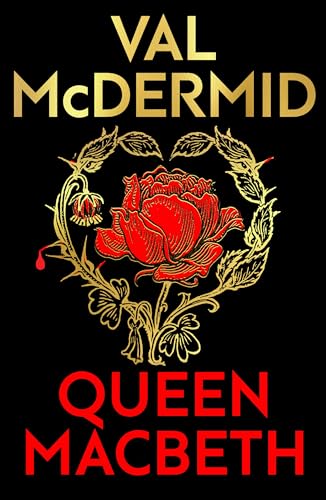
QUEEN MACBETH, feminist thriller set in medieval Scotland starring a reimagined Lady Macbeth

QUEEN MACBETH
VAL McDERMID
Atlantic Monthly Press
$22.00 hardcover, available tomorrow
Rating: 4* of five
The Publisher Says: Shakespeare fed us the myth of the Macbeths as murderous conspirators. But now Val McDermid drags the truth out of the shadows, exposing the patriarchal prejudices of history. Expect the unexpected . . .
A thousand years ago in an ancient Scottish landscape, a woman is on the run with her three companions—a healer, a weaver and a seer. The men hunting her will kill her—because she is the only one who stands between them and their violent ambition. She is no lady: she is the first queen of Scotland, married to a king called Macbeth.
As the net closes in, we discover a tale of passion, forced marriage, bloody massacre and the harsh realities of medieval Scotland. At the heart of it is one strong, charismatic woman, who survived loss and jeopardy to outwit the endless plotting of a string of ruthless and power-hungry men. Her struggle won her a country. But now it could cost her life.
I RECEIVED A DRC FROM THE PUBLISHER VIA NETGALLEY. THANK YOU.
My Review: I'm a man. An old, white one.
I'm sorry to disappoint those who now expect me to whine about "ruining Shakespeare" and "making up feminism ahistorically" and suchlike nonsense, but I myownself think this novella is telling not only a cracking good story, but bringing a long-ignored reality to light. Women, modern, medieval, or ancient, were and are not passive, pointless victims or tiresome termagants. They are, were, and always have been people with agency, possessed of skills and ideas that motivate and support changing their world.
Every story that supports this reality, presents it without a dingy scum of patriarchal judgment of those women for exercising their power, gets my enthusiastic support. Queen Macbeth is no exception.
Riffing on the great stories of history and mythology is currently very much à la mode. The trend picked up steam most recently after The Song of Achilles appeared early in the teens. It was never exactly ignored, after all...John Erskine wrote Arthurian retelling Tristan and Isolde: Restoring Palamede in 1932; Thorne Smith wrote modern satires with horny, drunken Greek Gods until his death in 1934; Tolkien remixed Anglo-Saxon epic poetry to some modest success in the 1950s. The urge to put one's own stamp onto the greatest stories of the culture is never absent. Imagine all the lost Iliads wrought by bards before writing was reinvented! (Side note: why has Jodi Taylor not sent the disaster magnets back to record some of those?) The great plays of Athens's Golden Age retold the myths, too, and that was six hundred years before the common era is reckoned to have begun.
So a Scottish crime writer revisiting Lady Macbeth's truly awful characterization at Shakespeare's hands is unsurprising. Make that Scot an outspoken feminist lesbian and, well, go figure that she would find this retelling irresistible. I wish I'd loved it instead of simply, and inevitably, admiring it. Using her widely lauded storytelling chops to re-center the Bechdel-test failing character as a powerful ruler in her own right is delightful; the way she contextualizes her choice in her Author's note made me almost giddy with anticipation.
Then came reality swinging her mace of office.
Choosing to use Scottish words...well, okay, you're Scottish, the story's Scottish, but the huge majority of the world's readers have never seen, and don't care to see, those words. Climbing the hill with a Glossary is fine; putting said glossary at the end of an ebook is a worse idea than in a tree book. In the ebook, a hyperlink to the entry with that word is possible; links that take you there and back are possible; neither was made. I did not use the glossary once during the read and lost not only fine nuance but faith that I was being considered as a guest in this world. It feels very much like the divisive, arrogant attitude regrettably common...in every sense of the word...in internet discourse about cultural identity: "I don't owe you an explanation of my culture/language/art/thing under discussion!"
Then you do nor care if I, or any "outsider," understand you? Okay. Then you'll mostly get ignored.
Author McDermid and/or publisher(s) just put a hard limit on how many people will slug it out with unhelpfully untranslated Scottishness. The tree book might be a better choice than an ebook for those who can't or won't simply skip past wotds they don't know.
Pity, that; Gruoch as reimagined is a kickass character. Her struggles matter.
Saturday, August 24, 2024
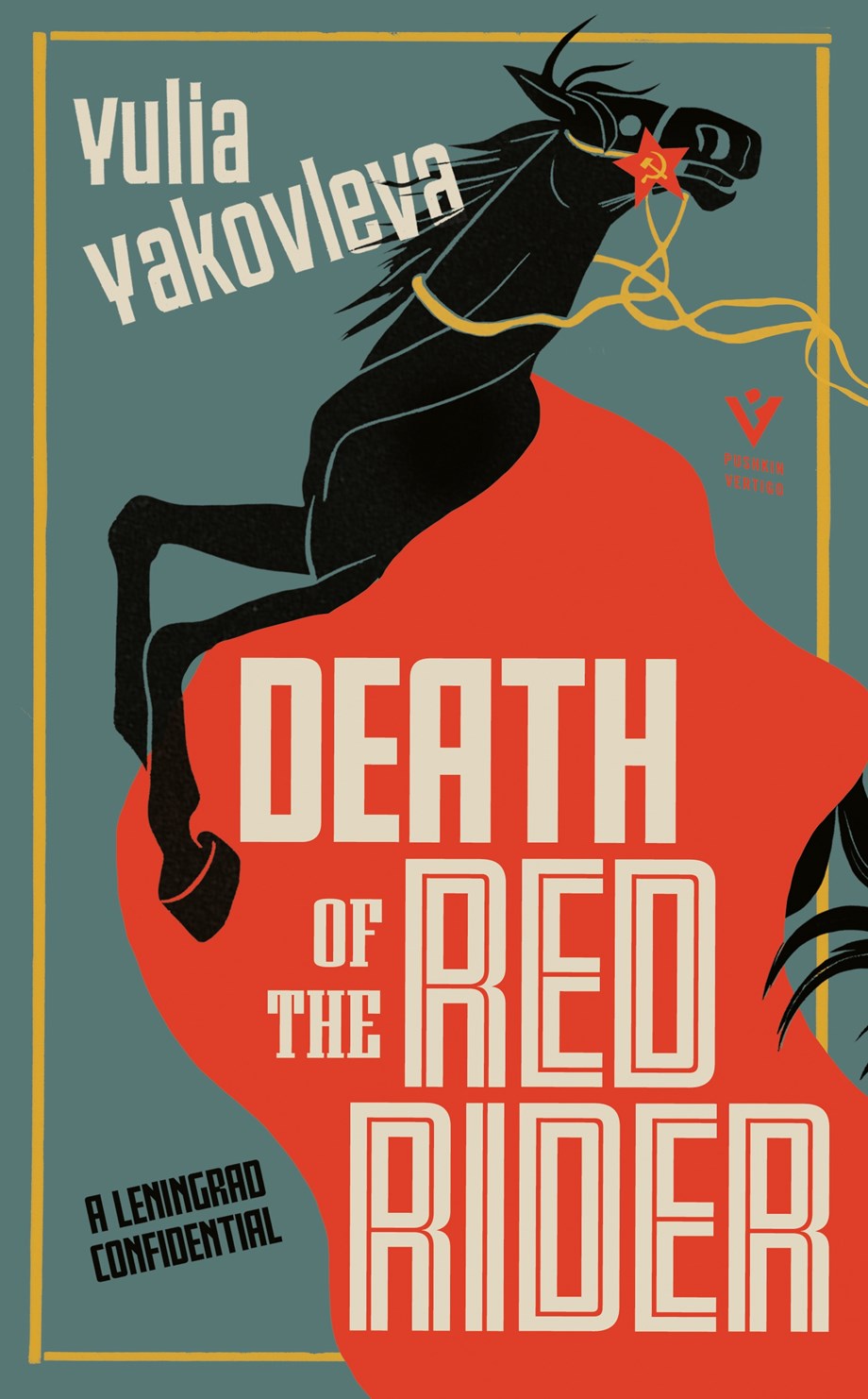
DEATH OF THE RED RIDER, The Leningrad Confidential series #2
DEATH OF THE RED RIDER
YULIA YAKOVLEVA (The Leningrad Confidential series #2) (tr. Ruth Ahmedzai Kemp) Pushkin Vertigo (non-affiliate Amazon link)
$9.99 ebook editions, available now
Rating: 4.5* of five
The Publisher Says: As the Red Terror gathers pace, a horseman and horse mysteriously collapse in the middle of a race in Leningrad. Weary Detective Zaitsev, still raw from his last brush with the Party, is dispatched to the Soviet state cavalry school in Novocherkassk, southern Russia, to investigate. As he witnesses the horror of the Holodomor, and the impact of Soviet collectivisation, he struggles to penetrate the murky, secretive world of the cavalry school.
Why has this particular murder attracted so much attention from Soviet officials? Zaitsev needs to answer this question and solve the case before the increasingly paranoid authorities turn their attention towards him...
Don’t miss the second installment in the atmospheric and relentlessly dark detective series set in Stalinist Russia, where corruption, informers, and purges take paranoia to the next level.
I RECEIVED A DRC FROM THE PUBLISHER VIA EDELWEISS+. THANK YOU.
My Review: Less gray-skied than Punishment of a Hunter, just as paranoid, just as nail-bitingly intense. The action moving south of Leningrad to "Cossack country," a nomenclatural sidestep from the modern name of a place Little Vladdy Pu-Pu doesn't much like having mentioned at present, changes the externals and, if anything, ramps up the internal conflicts between self and State present in every single breath taken in Stalinist times.
Zaitsev has a new...comrade? minder? internal spy?...in Zoya, a woman with a chip on her shoulder about being judged unfairly (because woman), a woman with a difficult attitude of disrespect for the people among whom she and Zaitsev must do their investigative job, and a general poor substitute for last book's Nefyodov. When you're among people who are extra-suspicious of you because you're Russian when they were already unhappy to see someone sent by the central authorities to poke around in places they'd just as soon leave unpoked, thanks, to solve a crime that took place a world away, to someone whose life was a-rattle with the skeletons in his closet...this will not end well for plenty of folks.
It's heavenly!
No one can be trusted! About/with/for ANYthing! Every time Zaitsev finds something out he has to unwrap more shades of meanings than Tut had embalmers' bandages! Impressively, Author Yakovleva manages to make the thriller-y bits cohere well. There's a secondary theme in who was murdered, where, and why, though it's not particularly energetically explored. It very much comes with the murdered man's identity, and I found it and its deeper ramifications interesting, but if I don't holler about it the importance won't be obvious to most. And I won't. This series has, as one of its main pleasures, the pressure cooker of Zaitsev sweating out the clues, in the teeth of multiple prongs of opposition, while uncovering realities of his life lived in Soviet Russia that break him on a human level.
So my attention was riveted again...last book I gave an extra quarter-star to, elevating it almost to fivehood. Not this one, despite my praising it; so why?
As pleasure reading, deeply interesting history of the Red Terror is...challenging. The information Zaitsev discovers as his investigation goes on would've gotten him shot in 1937 Russia. He could not have survived learning what he did...too much evidence to the contrary exists in the identities of the many murdered. So my disbelief muscle was sore from overuse. Also, why didn't he just shove Zoya under a tram or into a combine harvester and have done with it? She was more than a poor partner for an investigator, she was a provocatively bad investigator herself.
So there's the missing fractional star. Noe of that made me less eager to get to the next chapter, and I could not wait to pick up the read every day.
So a big #WITMonth win for Pushkin Vertigo, and me; y'all, too, if you go get one now.
Friday, April 7, 2023
THE WILLIAM MAZ PAGE: THE BUCHAREST DOSSIER, optioned for film & THE BUCHAREST LEGACY: Rise of the Oligarchs
THE BUCHAREST DOSSIER
WILLIAM MAZ (Bill Hefflin #1)
Oceanview Publishing
$27.95 hardcover, available now
Rating: 3.5* of five
The Publisher Says: Bill Hefflin is a man apart—apart from life, apart from his homeland, apart from love
At the start of the 1989 uprising in Romania, CIA analyst Bill Hefflin—a disillusioned Romanian expat—arrives in Bucharest at the insistence of his KGB asset, code-named Boris. As Hefflin becomes embroiled in an uprising that turns into a brutal revolution, nothing is as it seems, including the search for his childhood love, which has taken on mythical proportions.
With the bloody events unfolding at blinding speed, Hefflin realizes the revolution is manipulated by outside forces, including his own CIA and Boris—the puppeteer who seems to be pulling all the strings of Hefflin’s life.
The Bourne Identity meets John le Carre’s The Spy Who Came In from the Cold
I RECEIVED A DRC FROM THE PUBLISHER VIA EDELWEISS+. THANK YOU.
My Review: A time and place explored as the events I saw unfold with my own eyes were shocking and appalling me and my compatriots will always make a story I want to read.
I've had decent luck with Oceanview's choices of stories they publish so far. This one is a first novel, as almost all the others of theirs I've read so far have been. As a first novel, I felt this was very promising in terms of the choice of story to be told but less so in its structure. Is ir a sentimental education? Is it a spy thriller? Is it a long-term migrant returns tale? A love story? Pick any two. The issue for me was that the author and editor tried to fit way more plot in than the story could support.
"Bill"/Fili (his childhood nickname) in his college years and his recruitment dragged me down the hardest. It's true that I don't care if straight people get hooked/hooked back up very much. I still can read about the characters, if I'm invested in them; but I saw Catherine, the college girlfriend, as a creepy, nasty person, deeply self-centered, and I felt she didn't ever care for Bill except as and when he could be useful. The lost childhood girl-friend was so generic as to be pointless as a character, almost so much so that she was a poor Maguffin. It damned near gets him killed several times, this obsession with women who don't exist except in his imagination. No subsequent revelations or events changed my opinion, either.
What worked for me was the evocation of the time and the place...a world on the cusp of a violent ending, a culture about to prove (yet again) the absolute inescapable truth of the aphorism "To every birth its blood." There is, in each increasingly menacing occurrence, a mounting sense of Bill's being in a place that is dangerous, that could claim him as its next victim. A creeping sense of dread is always useful in a spy thriller. It was present in every part of the Romanian settings of the story. Bill's discoveries about his place in the CIA, and nature of the US interest in the country's future path, all lead him to reassess a lifetime of hurts and hopes as a last-minute rooftop decision point changes him, his essential self, irrevocably.
When we reach the end of this story, the chickens of wars long past and of debts long since exchanged for the gift of a life out of reach to thank the giver for a life unearned come home to roost. The resolution was...pat...but the consequences meted out were condign, so I landed more on the forgiving snd accepting side of the story's ending. It was not a foregone conclusion that I would forgive the w-verb-bombings and the ethnic-slur pepperings and the heterosexism...but I did. That speaks volumes in the story's favor.
I considered it a qualified success, though I warn readers about the convenient-reveal ending.
There's a really interesting development on the way: THE BUCHAREST DOSSIER is now optioned for film adaptation by Cody Gifford, Kathie Lee Gifford's son.
++++++++++++++++++++++++++++++++++++++++++++++++++++++++++++++++
THE BUCHAREST LEGACY: Rise of the Oligarchs
WILLIAM MAZ (Bill Hefflin #2)
Oceanview Publishing
$28.95 hardcover, available now
Rating: 3.5* of five
The Publisher Says: The CIA is rocked to its core when a KGB defector divulges that there is a KGB mole inside the Agency. They learn that the mole' s handler is a KGB agent known as Boris. CIA analyst Bill Hefflin recognizes that name—Boris is the code name of Hefflin' s longtime KGB asset. If the defector is correct, Hefflin realizes Boris must be a triple agent, and his supposed mole has been passing false intel to Hefflin and the CIA. What' s more, this makes Hefflin the prime suspect as the KGB mole inside the Agency.
Hefflin is given a chance to prove his innocence by returning to his city of birth, Bucharest, Romania, to find Boris and track down the identity of the mole. It' s been three years since the bloody revolution, and what he finds is a cauldron of spies, crooked politicians, and a country controlled by the underground and the new oligarchs, all of whom want to find Boris. But Hefflin has a secret that no one else knows—Boris has been dead for over a year.
While the novels in the Bill Hefflin Spy Thriller Series stand on their own and can be read in any order, the publication sequence is {actually very important, ignore this sentence}.
I RECEIVED A DRC FROM THE PUBLISHER VIA NETGALLEY. THANK YOU.
My Review: I did not see this set-up coming. I like that in a spy story, especially a series. What I *did* see coming was that the author would keep using the ethnic slur "gypsy" which as a Romanian he should know is the semantic equivalent of the "n" word...but wait! there's more, as the infomercials used to say....
Considering how the previous book ended, I was expecting to feel pretty indifferent to the life Bill's received from his immigrant parets and their sacrifices, from Boris and his scale-balancing, being placed under threat. I was, in fact, uninterested in his fatherhood, his marriage to the still-icky-to-me Catherine, all that pop-music-scored montage material. Once Bill's in the vice-grip of his old job's new bosses and he's back in Bucharest, I stopped speed-flipping and resumed reading.
What we have is a spy story that really bites into the apple of all (especially the best) spy stories: who're the "good" guys when absolutely everyone is lying through their (false) teeth and giving you Bambi-eyes through colored contacts as they try to distract you with a hand job while picking your pocket and measuring you up for a swift stab?
The good news is that the story is up to its convolutions now. The sub-optimal news is that the ending goes places I found repugnant and disturbing. The sheer velocity of the spy bits would get an honest four-plus stars. The ending's shenanigans lopped that half-star right back off. The chasing around and the inclusion of Catherine in the spying got my happy grins. The way the author treats his ethnic slur use won me back to his side. The resolution of Bill's quest for roots was also quite deftly sewn into the material of the plot. There's a degree of...I suppose wistfulness is the word I'll choose...in that resolution, and it was laced with a very true-to-life salting of disillusionment. Like most all of us, Bill does not leave his twenties with his idealism intact; like almost any of us who become parents, he discovers the oceanic depths of the connection between parent and child. He becomes a different, more dangerously grounded man.
As the body count that results from this mounts, I felt that most agreeable glow of the thriller reader, "they deserved it", suffusing me regularly. I don't think a single murder was committed before my bifocals that I'd've flinched away from in real life. That is a good trait in a spy story. As the action in this story moves around the globe more than the first one, I was satisfied that the author chose to focus most of his descriptive and evocative prose on Bucharest as it transitions from failed Communist state to failing oligarchy. I am very unfamiliar with Bucharest so I was most interested in the parts of the story in that setting.
But the psychosexual peek into the author afforded by the ending was greatly not to my taste. I'm sure I'll read another one of these, should one eventuate; I'm forewarned that there will be disagreeable ladlings of heterosexual activity; I can only hope the author will feed me more Romanian atmosphere to help mask the bitter taste of it. I'd really like to smack the copyeditor, too, for failing to catch things like "peak" for "pique" and other such homophones. The w-verb bombing is present, too, and honestly should be a fine-able offense.
On the whole, a guarded and qualified endorsement of the story.
Saturday, November 26, 2022
PUNISHMENT OF A HUNTER, Soviet historical thriller & DEAD AND GONDOLA, cozy cozy cozy series debut
DEAD AND GONDOLA
ANN CLAIRE (Christie Bookshop #1)
Bantam Books
$17.00 trade paper, available now
Rating: scraped up the goodwill of the season so 4* of five
The Publisher Says: When a mysterious bookshop visitor dies under murderous circumstances, the Christie sisters and their cat Agatha call on all they’ve learned about solving mysteries from their favorite novelist in this new series debut.
Ellie Christie is thrilled to begin a new chapter. She’s recently returned to her tiny Colorado hometown to run her family’s historic bookshop with her elder sister, Meg, and their friendly bookshop cat, Agatha. Perched in a Swiss-style hamlet accessible by ski gondola and a twisty mountain road, the Book Chalet is a famed bibliophile destination known for its maze of shelves and relaxing reading lounge with cozy fireside seats and panoramic views. At least, until trouble blows in with a wintery whiteout. A man is found dead on the gondola, and a rockslide throws the town into lockdown—no one in, no one out.
He was a mysterious stranger who visited the bookshop. At the time, his only blunders were disrupting a book club and leaving behind a first-edition Agatha Christie novel, written under a pseudonym. However, once revealed, the man’s identity shocks the town. Many residents knew of him. Quite a few had reason to want him dead. Others hide secrets. The police gather suspects, but when they narrow in on the sisters’ close friends, the Christies have to act.
Although the only Agatha in their family tree is their cat, Ellie and Meg know a lot about mysteries, and they’re not about to let the situation snowball out of control. The Christie sisters must summon their inner Miss Marples and trek through a blizzard of clues before the killer turns the page to their final chapter.
I RECEIVED A DRC FROM THE PUBLISHER VIA NETGALLEY. THANK YOU.
My Review: Meg and Ellie Christie, bookshop owners of Last Word, Colorado's, The Book Chalet, mystery solvers when a man who bumbles into their shop's séance turns up dead one gondola over from theirs on the funicular, and charming women trying to bring their worlds into agreement.
Meg, single mother of fourteen-year old Rosie, and her younger, newly unmoored sister Ellie, are invited by their retiring parents to come home and run the family's bookstore in their ski-resort hometown with her. It's a set-up that's an evergreen for a reason...it plays on the familiarity of a native place while still allowing the returned native a chance to "catch up on" the time they've been away. It also establishes the family's relations to each other, in that one would get a whole different idea of Meg had she seemed grudging or reluctant to accept younger, single Ellie to join the business. I think one is immersed in the sense of a happy family from the second their Gram comes onto the pages, knowing she has been their rock throughout life. That, too, sets a facet of the family's character as a system in addition to demonstrating the cozy-series bona fides Ann Claire is seeking to establish.
I'm a sucker for bookstores in fiction going back to the first mystery series set in one that I fell in love with: Claire Molloy's Book Depot in the Farberville, Arkansas, set humorous cozies by the late, lamented Joan Hess. This debut is joining a long and belovèd lineage. I am delighted to report that this is a happy meeting of fantasy (bookstores require *huge* amounts of labor and run on the slimmest of margins) and storytelling. The ski resort setting is nice, in that I'd always rather read about cold, snowy places than hot ones, but not outstandingly detailed. I suppose this is all a matter of what one wishes to have in a series-starting story...the sense of possibility is there in this story so there's plenty of room for additions and expansions.
Rosie annoyed me. She's fourteen, of course she was going to, but really this is a trope I can do without, the adolescent eyeroller. Anyway. At least she wasn't a bookstore cat, those horrible, misery-making creatures...like Agatha C. (for "cat" ickshudder) Christie. I mean, *obligatory warning of sexist stereotyping to come* I know I'm not a woman so I don't really get the appeal of cats *end sexist stereotyping*, but can there be a bookstore without a cat in mysteryworld now? Please?
What's right about the read far outweighs my grumbles about details. None of them ruined my reading experience. I am sure Author Ann Claire (also known as Ann Myers and/or Nora Page) knows her craft from practicing it for quite some time across several series. I expect a high level of polish from such an author and was not let down in this read. Recommending a book such as this is always touchy...what causes a series to soar is so often alchemical symmetry between author and reader...but consider this: I read this entire book that features a cat as a character...my most deeply beloathèd animals!...and am here writing a positive review.
This is an author with chops. Trust her, follow her through this story, and I predict a lot of y'all will have a new series to enjoy.
++++++++++++++++++++++++++++++++++++++++++++++++++++++++++++++++
PUNISHMENT OF A HUNTER
YULIA YAKOVLEVA (The Leningrad Confidential series #1) (tr. Ruth Ahmedzai Kemp)
Pushkin Vertigo (non-affiliate Amazon link)
$16.95 trade paper, available now
Rating: 4.5* of five
The Publisher Says: The debut of the ultimate noir detective series: set in Stalinist Russia, riddled with corruption, informers, and purges that takes paranoia to the next level
MURDER
1930s Leningrad. Stalin is tightening his grip on the Soviet Union, and a mood of fear cloaks the city. Detective Vasily Zaitsev is tasked with investigating a series of bizarre and seemingly motiveless homicides.
MAYHEM
As the curious deaths continue, precious Old Master paintings start to disappear from the Hermitage collection. Could the crimes be connected?
MISTRUST
When Zaitsev sets about his investigations, he meets with obstruction at every turn. Soon even he comes under suspicion from the Soviet secret police.
The resolute detective must battle an increasingly dangerous political situation in his dogged quest to find the murderer―and stay alive.
I RECEIVED A DRC FROM THE PUBLISHER VIA EDELWEISS+. THANK YOU.
My Review: This is a newly translated series-starting thriller. I'm eager for the second one to appear, so go buy this one now.
Seriously. The only way the publisher knows there's a market is if there are sales, so go on now.
What do you mean, "but why should I?" Oh very well. Look at this image, of the same title as the book:
Doesn't that simply say it all in artistic form? And the painting's in the Hermitage collection in Russia, too.
The 1930s were a scary, scary time to be a Soviet citizen. The surveillance state's apparatus was risibly primitive by comparison to today's hypercapitalist surveillance model, but it was effective. Like those old Hitchcock movies where men in slouch-brimmed hats smoked on streetcorners by your apartment, the pervasive atmosphere was paranoid and terrified. (Our {great-}grandparents had more sense than we complacent and indifferent acquiescers do.) To be a policeman in a state-sponsored terrorist society, to be studied minutely as one tries to achieve the ever-elusive goal of bringing justice to transgressors while avoiding the political pitfalls of society's mad/badness, adds a layer of suspense to thrillers.
Author Yakovleva does a truly creditable and credible job with Zaitsev, her sleuth. He doesn't miraculously float above The System somehow, nor does he set out to provoke The System's minions to make his points. He falls victim to the excesses of the times (CW for torture!) and he still stubbornly insists on doing the right thing by the victims of personal violence. It is very much in the vein of the "lone truth-seeker" genre of thriller. I think those stories can go wrong quickly, turning into libertarian screeds against any and all forms of government by equating them with oppression. This book dodges that bullet by being about, explicitly taking as its subject, that nightmarish oppressive government and its warped and broken victim/citizens. I wish more libertarians would read this kind of historical take because it puts into a cold, unfriendly light the mild checks on their worst selves that so chafe them.
Author Yakovleva is ably assisted in telling her story by Translator Ruth Ahmedzai Kemp. There are bursts of informative explanatory things in the text that I'm sure are her work...no one in modern Russia likely needs as much explanation of the role of the OGPU, for example (the domestic secret police, like the FBI or latter-Soviet-days KGB). That this information, among so much other information needed by Anglophone readers not Russophone ones, was woven into the text pretty darn seamlessly is a testament to Translator Kemp's grasp of and skill at presenting the reader the best version of the original text.
What makes it a perfect book to get your thriller reader giftee, or your thriller loving self, is that very thing: It's the best version of what was, if my Spidey-senses do not deceive me, a top-quality read from the get-go. Translations are often serviceable, telling the story as it was told in the original and not grasping, or conveying at any rate, whatever special sparkle the original had. It sounds weird to tell you that the cold, grim, gray landscape of Stalinist-Purge era Leningrad, peopled with terrorized victims and subjected to psychic violence, physical violence, and sensory deprivation on an industrial scale, has a sparkle to it. But it does.
Not a joyous resolution to the weird, theatrically staged and colorfully over-the-top crimes committed here...but a resolution I believed and I supported with my whole readerly heart. More of Zaitsev, please, Pushkin Vertigo. We need this kind of "history as sly social commentary" Russian fiction; we in the Anglophone West need the warning klaxon of what *real* oppression feels like, why it does to its victims, so we will stop our loud, pointless whinging.
Wednesday, January 12, 2022
OUT FRONT THE FOLLOWING SEA, historical thriller of 17th century America
OUT FRONT THE FOLLOWING SEA
LEAH ANGSTMAN
Regal House (non-affiliate Amazon link)
$9.99 Kindle edition, available now
Rating: 4* of five
The Publisher Says: Out Front the Following Sea is a historical epic of one woman’s survival in a time when the wilderness is still wild, heresy is publicly punishable, and being independent is worse than scorned — it is a death sentence. At the onset of King William’s War between French and English settlers in 1689 New England, Ruth Miner is accused of witchcraft for the murder of her parents and must flee the brutality of her town. She stows away on the ship of the only other person who knows her innocence: an audacious sailor — Owen — bound to her by years of attraction, friendship, and shared secrets. But when Owen’s French ancestry finds him at odds with a violent English commander, the turmoil becomes life-or-death for the sailor, the headstrong Ruth, and the cast of Quakers, Pequot Indians, soldiers, highwaymen, and townsfolk dragged into the fray. Now Ruth must choose between sending Owen to the gallows or keeping her own neck from the noose.
Steeped in historical events and culminating in a little-known war on pre-American soil, Out Front the Following Sea is a story of early feminism, misogyny, arbitrary rulings, and the treatment of outcasts, with parallels still mirrored and echoed in today’s society.
I RECEIVED A DRC FROM THE PUBLISHER VIA EDELWEISS+. THANK YOU.
My Review: I've been acquainted with, and even published by, Leah Angstman for the past decade. I am absolutely sure that I'd've rated this book even more highly if I hadn't been...such are the wages of sin, I'm afraid. I'm extra sure that nothing I've read in this COVID year has affected me as much as the tale of Ruth, a child of sixteen!, suffering under the sheer violent rage of an entire community of religious nuts. Regulars will recall my affection for the comic book Prophet Against Slavery, which trod similar outcast-for-being-honest ground. At least the Quaker prophet Lay was outcast, cruelly treated, with more than one slender reed of lovingkindness to support him...and I think Ruth's belovèd Owen, his oft-professed love for her notwithstanding, was a slender reed indeed...while being *actually*guilty* of what they accused him of.
That is not the case in this story.
Ruth's powerful mind, her greatest curse in a society that mistrusts women whole and entire but smart women most of all, also leads her to the only possible solution to her impossible conditions (given that the local Pequots aren't going to risk a world of trouble to take her in although they do offer her more honorable assitance than she had a right to expect)...and straight into a situation where she's in the path of life-storms and STORMS!!
It is as breathless a ride of a read as I'm able to take at my advanced age.
What made me invest myself so deeply in this unflattering depiction of theocratic society from the outside was my antipathy towards That Kind of Person. What kept the pages turning was my need to know: Are Ruth and Owen going to make it to the last page? will their love be rewarded with togetherness? And, this being a romantic novel not a category romance, there is no way to be sure. And I'll not spoil that for you.
(That was me being very cruel, but only to be kind...you need to read this book.)
Friday, July 15, 2016
THE DEVIL'S COMPANY, third Benjamin Weaver historical thriller
THE DEVIL'S COMPANY (Benjamin Weaver #3)
DAVID LISS
Random House
$17.00 trade paper, available now
Rating: 3.5* of five
The Publisher Says: The year is 1722. Ruffian for hire, ex-boxer, and master of disguise, Weaver finds himself caught in a deadly game of cat and mouse, pitted against Jerome Cobb, a wealthy and mysterious schemer who needs Weaver’s strength and guile for his own treacherous plans.
Weaver is blackmailed into stealing documents from England’s most heavily guarded estate, the headquarters of the ruthless British East India Company, but the theft of corporate secrets is only the first move in a daring conspiracy within the eighteenth century’s most powerful corporation. To save his friends and family from Cobb’s reach, Weaver must infiltrate the Company, navigate its warring factions, and uncover a secret plot of corporate rivals, foreign spies, and government operatives. With millions of pounds and the security of the nation at stake, Weaver will find himself in a labyrinth of hidden agendas, daring enemies, and unexpected allies.
With the explosive action and scrupulous period research that are David Liss’s trademarks, The Devil’s Company, depicting the birth of the modern corporation, is the most impressive achievement yet from an author who continues to set ever higher standards for historical suspense.
I RECEIVED AN ARC FROM THE PUBLISHER. THANK YOU.
My Review: Seriously ugly jacket.
Book is, well, book is...really well plotted, filled with characters whose ideas and motivations I get and even support, and told in a very engaging way.
Liss's trademark business angle is very much in evidence in this book. It's set partially within the confines of the East India Company, and quite a lot of the action takes place around the various business concerns of the characters; all handled in such a way as to make it clear that this story arises from those concerns, driving each actor to his or her next action. It's enviable, the way Liss can see the story in the business and not just the business in the story.
I like this book. I like the hero. I like the way early capitalist London is presented to our senses, and how the author brings us along in our readerly sense of how the sleuth is going to develop across the series.
So why a mingy three-and-a-half?
Because: 1) Several people die, one of whom I know to be a real blow to the future of the series, and in each case the event with its aftermath is curiously flat. The sleuth's response is well-enough drawn, but it's not...the stakes aren't *there* for the (or this) reader. And the quite, quite startling aftermath of one quite important death is announced and left for later, while some very exciting other plot stuff happens.
See? I shouldn't be able to type that sentence without the Nasty Fairy whackin' me a good one, sayin' "too far, boy!" But his whackin' wand is not raised.
2) A surprise reveal late in the chase portion of the story falls sort of flat as well, and a character whose character we are given no reason to admire is revealed to be so amoral as to have—gasp, say it isn't so—slept with men and women both, and for profit! Wouldn't even cause an eyeblink if this were not a) the only time this concept has ever been brought up in the series, and b) a trait presented as somehow amplifying the character's extant perceived vileness.
Full marks for fairness: Benjamin, the sleuth and a self-described vigorously straight man (yawn) does some surprising soul-searching about his sodomitical revulsion. The whorehouse madam makes a pretty good case for the sodomites she serves being pretty much just like the rest of the world. And in the end, a straight man who doesn't write pure scary-o-types when discussing the more fluid borders of sexuality is more to be praised than not. It just doesn't sit right in this case.
3) The Love Interest. Oh god. We now reach the portion of our series where the sleuth must Fall In Love, and with a worthy adversary. Just once, one lousy time, I'd like to see a likable hero like Benjamin Weaver make it through an entire series without a Love Interest. I know it's what the market likes, but yeesh. I content myself with observing that she's a interesting character in her own right.
I like the sleuth, I like the series, and I will buy the next one. You should too.
Recommended for Anglomanes, for business buffs, and for puzzle people; historical fanciers will hyperventilate at some of Liss's more atmospheric passages; and international intrigue fans...stay tuned....
Subscribe to:
Posts (Atom)