Wednesday, April 13, 2022

VIOLETS, a brutally sad and deeply poignant story of being Other in your homeland


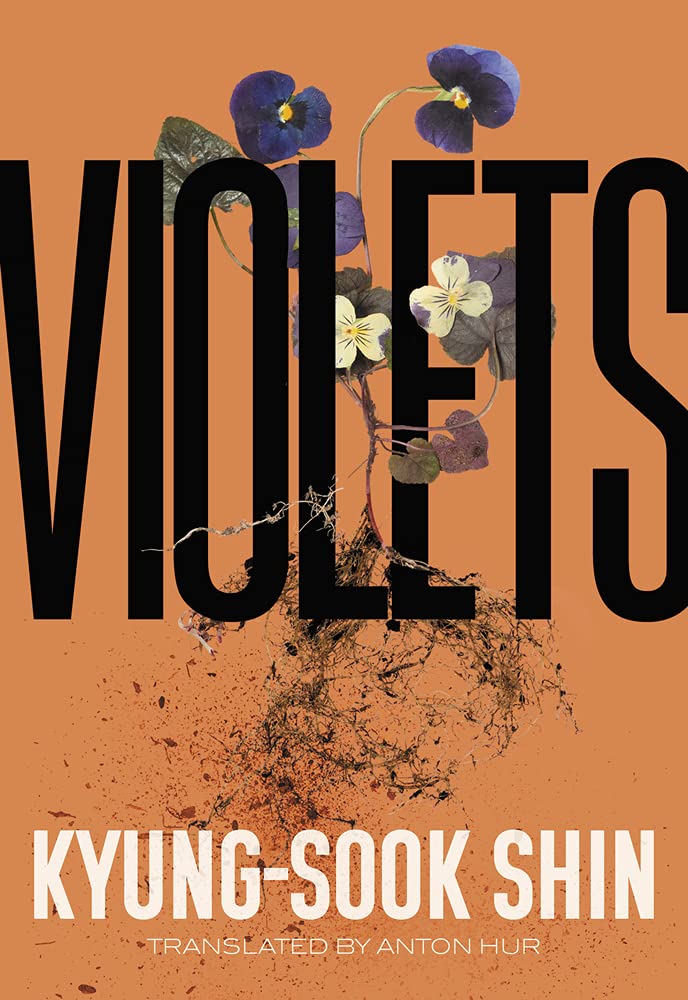
VIOLETS
SHIN KYUNG-SOOK
(tr. Anton Hur)
The Feminist Press
$15.95 trade paper, available now

One of NPR's Best Books of 2022!

Rating: 4.5* of five

The Publisher Says: We join San in 1970s rural South Korea, a young girl ostracised from her community. She meets a girl called Namae, and they become friends until one afternoon changes everything. Following a moment of physical intimacy in a minari field, Namae violently rejects San, setting her on a troubling path of quashed desire and isolation.

We next meet San, aged twenty-two, as she starts a job in a flower shop. There, we are introduced to a colourful cast of characters, including the shop's mute owner, the other florist Su-ae, and the customers that include a sexually aggressive businessman and a photographer, who San develops an obsession for. Throughout, San's moment with Namae lingers in the back of her mind.

A story of desire and violence about a young woman who everyone forgot, VIOLETS is a captivating and sensual read, full of tragedy and beauty.

I RECEIVED MY DRC FROM THE PUBLISHER VIA EDELWEISS+. THANK YOU.

My Review
: This translation from the Korean joins a widening stream of Korean-culture transplants...Squid Game, Minari, this author's previously translated novel Please Look After Mom...making their roots into American pop-cultural soil.

If you've yet to explore the trickle, start now before it's a flood. I think it's wonderful because English-language monoglot culture gets stale and boring and all alike if we don't seek out fresh infusions of talent and stories. And, like all the best translations, this story's timelessness is rendered in prose that could very easily have been first created in English...none of the occasional signals of awkwardly trying to explicate something that one word in the translated language would convey whole and entire. That is a fine achievement indeed, probably helped along by the fact that things like "minari" aren't quite as furrin as they would've been in 2011, when Please Look After Mom was published.

What happens in this story is not particularly new or unusual. A girl is born to unfit parents:
In a house with shut doors, a mother closes her eyes as the baby’s grandmother offers her the newborn. The mother knows what will happen now. An uncelebrated girl. The infant accepts her mother’s closed eyes in lieu of a loving caress, perhaps having intuited her fate from the womb, and does not bother crying. The sound of the monsoon fills the house. Underneath the porch, a dog curls its legs into itself. Can the baby hear the sound of the rain? She’s about to fall asleep in her grandmother’s hands. That same night, her father gives his daughter’s face only a cursory glance.

Thus does another unwanted girl enter the world that won't ever bother to see her, really even to look at her. She's just...there. Her father never bothers to return; her mother never bothers with her at all, constantly seeking a man to care for her. (To be fair, an ordinary Korean woman's opportunities a generation ago weren't plentiful, and San's mother wasn't exceptional.)
Her mother. San thinks about her from time to time.

If she had begged her to stay, in front of that carefully prepared food, would she have listened? Why had San never once tried to hold her back? Wherever it was that her mother went, she never forgot to send her daughter money for school until San graduated.

The last time San had seen her mother was when she was a freshman in high school.

Children of addicts, the world over, tell versions of this same story. In this case, San's mother is addicted to men. She can't live without a man taking care of her, and she sacrifices the daughter she didn't want to get what she does want.

Author Shin isn't solely criticizing the mother. She is critiquing the social organization, the patriarchy, that privileges men and their desires over women and their needs so completely, so thoroughly, that the women are hollow and meaningless without a man. It is repulsive and it is reprehensible, and much abuse and violence simply are borne by the women because what option do they have? What other choice can they make? In San's case, she is so hollowed out by the complete absence of love from her mother (or anyone else) that she enacts the form of love she knows: rejection follows violence, as it must.

There is nothing forgiving in San. She forgives nothing, she is forgiven nothing, throughout the book. She is alone, she feels lonely of it (or so we infer...I don't know that she would be able to articulate the unmoored, disconnected reality that lonely people all share). For this, among other, reasons, this is a hard story to read. If you have ever been truly, down-to-the-bone lonely, this might be a triggering read for you. I haven't run across too many reads with this hyperconcentrated focus on loneliness, or too many with more success in rendering an emotional state into prose.
A stranger to every single person in the crowd, San finds herself blocking the sidewalk as people swerve to avoid her. Even if a carnival were to break out around her, the vacant expression on her face looks entrenched enough to persist.

Because she knows nothing of love, loving, being loved, San sees nothing except the one moment when everything changed, when the one love she thought she had was denied and made nothing. Not even attempting to find her former home nets San anything, she sees not the fields of minari she grew up among, where her life irrevocably emptied out and flowed away from her, but careful rectilinear plots of...something not minari. She has no roots. She feels no kinship.
Nothing happened this past summer. Only that, in the hot sun from time to time, a brief thought would appear and disappear around me. That thought was closer to me than any of the flowers in the shop. Even as I tried to capture the thought on paper, the heat would exhaust me and I'd give up. There were plenty of things I gave up, using the heat as an excuse. Which means I spent this past summer repeatedly deciding to do things and then giving up on them. As if my life were an exhibition of how good I am at giving up. It was that kind of summer.

It was that kind of life. It won't end well, it didn't begin well or go on well; that much we know. There's nothing hopeful in this story. Women like San aren't ever anyone's focus...her job in the flower shop working with and for Su-ae notwithstanding. She receives the desperate, genuine love of Su-ae as...nothing. San is fixated on emptiness...her only friend abandoned her!...and on men she does not want. She needs their love. She doesn't want it. She decided long ago that love wasn't something she could have, feel, receive, give. And so when it's offered to her she...doesn't see it. She does see the want of one man, she feels the desperate pull of another man on her attention, and gets nothing but unwanted results.
Every attempt to resist is met with his greater strength. In a moment, her head begins to droop.

She's released onto the street.
Her mind is completely taken over, her body a husk. No one seems to take note of the loneliness she carries. Just some woman in the crowd, unaware that her top is undone. A more observant person might have noticed her cheek slightly swollen from having been punched, the thin lines of her face a touch asymmetrical because of it. Someone might see her pale face and think, How could anyone ever look so pale....

A life of being unwanted, invisible, and it comes down to a final indignity. San is raped. Her hollowness filled at last with the violence that is all she can accept. It isn't in her to accept the reality of her situation, being unloved and unwanted, then seek out change. That's simply impossible. She leaves safety, courts rejection, and seeks oblivion.

Leaving behind only the tiniest of wakes...the end of the story of Oh San is a poignant piece of mythologizing that fit so poorly onto the rest of the story that I was forced by honest anger and sincere disdain for its sentimentality to whack a star off my rating. After a night's sleep where I dreamed of the photographer and San:
Violets. They bloom everywhere, making them seem more like weeds than proper flowers. San takes a closer look at them. Their little green leaves are small, their purple blossoms tiny. Before she came to the flower shop, she knew them as swallow flowers. Memories of entangling two swallow flower stems together and pulling them apart— one side was bound to snap. Whoever’s stem didn’t was the winner. She forgot what the prizes were, but she’d played the game many times. They did it with broadleaf plantains; they did it with foxtails.

The man keeps pressing the shutter and mumbling something discontentedly. “What’s so pretty about these flowers? Such nonsense.” His disappointment is so palpable, it makes her apologetic.

...I realized that his arc needed an end, too. I might not like that end, but I would've felt cheated (if not right away, then after my irritation with the whole ending subsided) had it not been there. So back came a half-star, though I confess with some grumbling on my part.

I think this small, powerful story deserves your eyeblinks. I think we should all resolve to notice the Oh Sans of this world, to extend a welcome to the table of them, to recognize their living presence instead of making them ghosts before they die.

Monday, April 11, 2022

YOUNG MUNGO, second three-hankie weepie novel from Douglas Stuart


YOUNG MUNGO
DOUGLAS STUART

Grove Press
$27.00 hardcover, available now

One of NPR's Best Books of 2022!

One of Time Magazine's 100 Must-Read Books of 2022

LISTEN TO THE AUTHOR DISCUSS HIS BOOK!

LONGLISTED for the 2023 Andrew Carnegie Medal for Excellence in Fiction!


Rating: 5* of five

The Publisher Says: A story of queer love and working-class families, Young Mungo is the brilliant second novel from the Booker Prize-winning author of Shuggie Bain.

Douglas Stuart's first novel Shuggie Bain, winner of the 2020 Booker Prize, is one of the most successful literary debuts of the century so far. Published or forthcoming in forty territories, it has sold more than one million copies worldwide. Now Stuart returns with Young Mungo, his extraordinary second novel. Both a page-turner and literary tour de force, it is a vivid portrayal of working-class life and a deeply moving and highly suspenseful story of the dangerous first love of two young men.

Growing up in a housing estate in Glasgow, Mungo and James are born under different stars—Mungo a Protestant and James a Catholic—and they should be sworn enemies if they're to be seen as men at all. Yet against all odds, they become best friends as they find a sanctuary in the pigeon dovecote that James has built for his prize racing birds. As they fall in love, they dream of finding somewhere they belong, while Mungo works hard to hide his true self from all those around him, especially from his big brother Hamish, a local gang leader with a brutal reputation to uphold. And when several months later Mungo's mother sends him on a fishing trip to a loch in Western Scotland with two strange men whose drunken banter belies murky pasts, he will need to summon all his inner strength and courage to try to get back to a place of safety, a place where he and James might still have a future.

Imbuing the everyday world of its characters with rich lyricism and giving full voice to people rarely acknowledged in the literary world, Young Mungo is a gripping and revealing story about the bounds of masculinity, the divisions of sectarianism, the violence faced by many queer people, and the dangers of loving someone too much.

I RECEIVED A DRC FROM THE PUBLISHER VIA NETGALLEY. THANK YOU.

My Review
: I want to address something that's been bothering me a lot to start off this review:
There. I've said it. I stand by it. Adjust your seatbelts, laddies and gentlewomen, and listen up.

Mungo's a teenager with a truly evil, selfish alcoholic mother, a violent, should-be-imprisoned brother, and a sweet but misguided, loving but naïve sister, and a serious tic gifted to him by his unaddressed, undiagnosed neurodivergence. His life isn't one tiny bit of fun, and unlike Shuggie in Author Stuart's first book, he doesn't have a love object in his entire life. He loves his sister and she loves him, but that's a little like the lame helping the halt. Shuggie was entirely absorbed in loving his mother, but Mungo seldom sees his and when he does, it's usually better for him not to spend much time in her toxic terrible black hole of a presence. Being a neurodivergent person, Mungo fixates on his too-young, too-broken mother for whatever guideposts she can offer; she sucks the whole of his lovingkindness down like her genuine love, fortified wine, and gives none back. So he knows, at least seems to know, she isn't a model he can follow. His sister does the best she can to fill the kindness void, but she's barely older than Mungo by the calendar. She's gotten out of a bad jam, and come to know she can't live in this world...meaning she has to leave Mungo behind. Hamish? All Hamish does, all he knows, is rage and violence. There will be nothing else left in Mungo's life...no other emotional reality.

This, then, isn't Shuggie Redux. Stop pretending it is. Yes, it's set in deindustrializing Glasgow. Yes, it takes place in the working class parts of that world. Alcoholic parent, abusive sibling, all there...but the meat of this story is Mungo, and therefore this story could not be less like the family that slips away from Shuggie, that he just...loses...no fault of his own. The one good thing, as he tells himself (and with which I agree) is that he has is the love he bears for and gets from the Catholic boy who lives near him: James. James, son of a cancer-taken mother, an oil-rig worker father, and in love with Mungo. Who, need I mention, loves James right back. They explore their teenaged awkward bodies, they try to figure out the HUGE new emotions, and they face up to the impossibility of being openly gay in their world. Hamish? He'll kill Mungo; James's father's already had a go at killing him for it. James, older by almost a year, is the one who has to bear the public brunt of their inevitable discovery...Mungo just can't.

Not to say Mungo's not hapless and helpless. He's simply clueless, he lacks a kind of inner compass that warns a person away from impulsive action. In the end, it causes a world of trouble for him, and all of it is his mother's fault. She wants to be alone, to get her funtimes with a new man, so off she packs Mungo (freshly beaten by Hamish for the James-loving faggot that he is) off with...strangers, basically. And that goes epically badly for Mungo. He can think of nothing, no way out of his terrible situation. He's got nothing except what he's seen, what's surrounded him his whole life when Life, the great existential crisis that is Life, crashes down on him. That it is a test is clear; how he responds to the test isn't obviously the way he would have even a day before it came upon him. Mungo makes his whole life anew when he absolutely can do nothing except react, respond to the great crisis.

It is harsh, ugly, and frightening, and it comes from events so hideous that I was sure I would lose my rag and start screaming incoherently at the Kindle. And it was, in this reader's angry, bitter judgment, the only and the best way he could have behaved. It was a boy, cooked in a bath of rage, becoming the only man that bath dissolved the fatty, weakening childness off of him to be.

There is a scene at the very end of the book, a moment, a thing we're not expecting. It is, of course, Author Stuart's last word. He wrote this book, this harsh and unyielding and rageful story, the way he wrote Shuggie Bain: without mercy. It was the perfect ending. And this was the best way he could possibly have followed that book up: darkness has shadows, too.

Sunday, April 10, 2022

YOUR HEART IS A MUSCLE THE SIZE OF A FIST, first novel set in a major, convulsive inflection point


YOUR HEART IS A MUSCLE THE SIZE OF A FIST
SUNIL YAPA

Lee Boudreaux Books (non-affiliate Amazon link)
$10.99 Kindle edition, available now

Rating: 4* of five

The Publisher Says: The Flamethrowers meets Let the Great World Spin in this debut novel set amid the heated conflict of Seattle's 1999 WTO protests.

On a rainy, cold day in November, young Victor—a boyish, scrappy world traveler who's run away from home—sets out to sell marijuana to the 50,000 anti-globalization protestors gathered in the streets. It quickly becomes clear that the throng determined to shut the city down—from environmentalists to teamsters to anarchists—are testing the patience of the police, and what started as a peaceful protest is threatening to erupt into violence.

Over the course of one life-altering afternoon, the lives of seven people will change forever: foremost among them police chief Bishop, the estranged father Victor hasn't seen in three years, two protestors struggling to stay true to their non-violent principles as the day descends into chaos, two police officers in the street, and the coolly elegant financial minister from Sri Lanka whose life, as well as his country's fate, hinges on getting through the angry crowd, out of jail, and to his meeting with the president of the United States.

In this raw and breathtaking novel, Yapa marries a deep rage with a deep humanity, and in doing so casts an unflinching eye on the nature and limits of compassion.

A LOVELY SURPRISE GIFT. THANK YOU.

My Review
: First, read this:
Doing something, he had discovered, anything, however small, that contributed to your meaningfulness of self and surroundings—well, that was the trick. That was the trick to not feel like shit.
–and–
What is the function of the heart, if not to convince the blood to stay moving with the limits where it belongs, to stay at home.

Stay at home, stay at home, stay at home.

But restless thing that it is, your blood, it leaps into the world.
–and–
...{T}hey learned that courage is not the ability to face your fear, heroically, once, but is the strength to do it day after day. Night after night. Faith without end. Love without border.

What the 1999 WTO Protests taught the reactionaries around the world was that there was nothing they could do to win the hearts of the people. They set about controlling their bodies instead. As Author Yapa put it, "...how deep the darkness of the heart which longs for control," and there it is out in the open. The hearts of a few demand that the world obey them, obey their darkness, and submit to external control.

None of the seven PoV characters in this story are without that darkness. They're all on trajectories that will not allow then to remain unbruised and unbattered by life, and more particularly by the awfulness of demanding economic justice from those whose entire way of life, whose whole sense of self, is rooted in and branches from their hoarded wealth. There are those whose one need in this life is to deny others what they want and/or need (preferably both) so they can Win, they can be seen to be Right because they've won! Then there are those whose one need in this life is to take away what it is they've decided is unfairly denied to others:
They wanted to tear down the borders, to make a leap into a kind of love that would be like living inside a new human skin, wanted to dream themselves into a life they did not yet know. He heard them in the streets saying, “Another world is possible,” and beneath his ribs broken and healed and twice broken and healed and thrice broken and healed, he shuddered and thought, God help us. We are mad with hope. Here we come.
–and–
Tiresome people, but he knew it was only human nature to believe it best to ignore suffering, to focus on your own good fortune. The human survival mechanism: to say your prayers, thank your gods, and hold your breath when you passed the slums. The sweet poison of privelege, wasn't it? To think blindness a preferable condition.

And neither side of this divide sees the grim and angry reality: They're one coin. Heads, tails, maybe they're aesthetically distinct but they're one zero-sum-game playing piece of a coin. It would be funny if it weren't so tragic.

The central spine of the book, for this reader, is the story of Bishop and Victor...father and son, estranged, and truly, absolutely the same man, the same wounded-by-loss, blinded-by-love man. Just as sad as father-and-son estrangements always are. Just as inevitable as the voice of experience being unable to be the ears of acceptance that a rudderless, shallow-drafted dinghy of a boy needs to find a channel in the rough storms he can't avoid:
“What we require of others so that we may live our lives of easy convenience. Dad, there are people who work all day every day for thirty years assembling the three wires that make a microwave timer beep. What are we supposed to think of this? How do they survive it? Why do we ask them to?”
–and–
“Son, how easily an open heart can be poisoned, how quickly love becomes the seeds of rage. Life wrecks the living.”

Singing the same song, different verses, and different keys...the minor key of youthful wounds, the major key of adult scars.

What you need to know is that Author Yapa wrote a polyphonic poem, a written kōan to the concept of connection and belonging. What you want to read needs to be story of discovering yourself in many places, seeing your wounds and worlds across gulfs of experience and of time as you seek out the hand, the heart, the warm and welcoming shoulder to shelter and comfort you:
It was 1999 in America, he had traveled the world for three years, looking for what he didn’t know, and now here he found himself: absolutely allergic to belief, nineteen years old, and totally alone.
–and–
And yet there he was, his son, looking and smiling through his half-opened eyes, not a look of concern, but as if he understood in some way, the sometime knowledge of what this is, the knowledge of the whole ugly beautiful thing, the knowledge of the courage it takes to move into fear and to fuck up and to go on living, knowing that sometimes it is two people alone and some small kindness between them that is not even called family, or forgiveness, but might be what some, on the good days, call love.

Good days or bad, that is its name: Love. There are strands to this too-short, too-scattered narrative that seek their love, that clutch their illusions of love; but in this father, whose son is not his flesh and blood but is his, and this son, whose world refuses to stop hurting and whose heart can't make itself heard yet, there is a beautiful, complete love of like-minded men.

If that's a story you need to read, as I did, then get this into your hands at once.

Saturday, April 9, 2022

THE MIRACULOUS TRUE HISTORY OF NOMI ALI, intense and urgent and deeply necessary reading


THE MIRACULOUS TRUE HISTORY OF NOMI ALI
UZMA ASLAM KHAN

Deep Vellum (non-affiliate Bookshop.org link)
$9.95 ebook, available now

Rating: 4* of five

The Publisher Says: Nomi and Zee are Local Borns—their father a convict condemned by the British to the Andaman Islands, their mother shipped off with him. The islands are an inhospitable place, despite their surreal beauty. In this unreliable world, the children have their friend Aye, the pet hen Priya and the distracted love of their parents to shore them up from one day to the next. Meanwhile, within the walls of the prison, Prisoner 218 D wages a war on her jailers with only her body and her memory.

When war descends upon this overlooked outpost of Empire, the British are forced out and the Japanese move in. Soon the first shot is fired and Zee is forced to flee, leaving Nomi and the other islanders to contend with a new malice. The islands—and the seas surrounding them—become a battlefield, resulting in tragedy for some and a brittle kind of freedom for others, who find themselves increasingly entangled in a mesh of alliances and betrayals.

Ambitiously imagined and hauntingly alive, The Miraculous True History of Nomi Ali writes into being the interwoven stories of people caught in the vortex of history, powerless yet with powers of their own: of bravery and wonder, empathy and endurance. Uzma Aslam Khan’s extraordinary new novel is an unflinching and lyrical page-turner, an epic telling of a largely forgotten chapter in the history of the subcontinent.

I RECEIVED A DRC FROM THE PUBLISHER VIA EDELWEISS+. THANK YOU.

My Review
: First, read this:
“Have you noticed that when men want freedom, the conversation is about the nature of action, violence or non-violence? But when women want freedom, the conversation is about the nature of women, natural or unnatural?”
–and–
Somewhere in the great sky beyond this sky of planes was a star made entirely of words. And on the star lived as many different kinds of words as birds in all the skies, fish in all the seas, and clay patterns in all the hands of adoring women. Some words were cautious as the crabs nesting on the beach. Others, bold as the giant hornbills prattling in the trees. Then there were those that made no sound, but were equally fearless, folding their arms and waiting for her to sit on their lap. The prisoner who was no longer a prisoner was gathering all these many words to herself and would speak them, if there were but someone to listen, even a little.

The reason to read, or not to read, this story is there in those quotes. There are adults imprisoned in this story, adults whose sufferings are inflicted on bodies as well as souls; their children are, revoltingly but oddly mercifully, imprisoned with them in a soul-warping hothouse of rage and mistrust...but with their loving (if distracted) parents. These strands are braided throughout this intense, powerful, experiential read.

The bones of the story...a political prison on the Andaman Islands during WWII is attacked by the Japanese, slaughter is heaped on torture, and through it all a family makes a life amid the death...are unfamiliar to most of us in the US. The existence of the Andamans, those odd and liminal boundary markers between marine biomes and cultural fault lines between the Bay of Bengal and the Andaman Sea, is probably unfamiliar even to geographically savvy folk here. Unless, of course, they're familiar with that idiotic spiritual imperialist who got himself murdered by the North Sentinelese isolationists. (Got what he deserved, in my never-remotely humble opinion.) These islands are very charged with an intense and irresistible energy for storytellers. Author Khan is the one who should be trusted to tell you the saga of their restless spirits.

I can't really imagine it's a spoiler to reveal that the British Raj wasn't too terribly popular with quite a lot of the people they ruled. If you haven't heard of the Mahatma, take a quick peek at Wikipedia and then come back. He wasn't alone; he didn't work in isolation; and he wasn't the first freedom fighter on the Indian subcontinent. The parents in this story are, like the Mahatma, resisters of British imperial rule of India. For their beliefs and the actions they inspired them to take, they're imprisoned in the Cellular Jail. This hellscape was built after the 1857 Indian Rebellion exploded the political-prisoner population the British detained.

History lesson aside, though it's very much not an aside but a central part of the experience of this read, the story Author Khan tells us is a deeply personal one. Nomi Ali, a Muslim child, is brought up with her brother in the Cellular Jail's ambit...and, odd as it sounds, it's...just a childhood. An abnormal one to the reader. Nomi doesn't really process this...she experiences the pains of growing up as the child of adults who are distracted, whose attention doesn't center on her or her needs. The awfulness an adult reader barely needs to infer, it feels so pervasive to us, isn't her issue. She feels alone. Her life isn't, in her observation, very important or even all that interesting. So she finds companionship and she comes of age in this stew of people who have only one thing in common: the colonial oppressors want them kept away from their homes enough to isolate them thoroughly. In the ordinary course of her life, Nomi wouldn't have encountered a Burmese person, or lived in a place with an Indigenous population older than her own ancestors, or been directly in the path of the Japanese army as they swept through South Asia.

Brutal as the British were as jailers, the Japanese arrived to add much more misery...need I remind anyone of the "comfort women" and their heinous sufferings?...to the existing awfulness. For Nomi, though, this is...life. She gets on with the task of being alive and growing up.

It is for that reason that I kept reading this chronicle in multiple voices of the horrors of war in a colonial setting. I was not taken with the author's choice to spread her narrative over multiple points of view and multiple strands of time. It was an extra call on my attention, an extra demand to retain details, that seemed to me to be unnecessary to make the larger point. Author Khan was asking that I invest in many lives, but shallowly; had I been given a choice, I would've invested in Nomi very deeply, and her story would still have enabled the deep interrogation of the immorality of colonialism and its inevitable offshoot, war.

I would not in any way recommend that you shy away from reading this story. I want it to be part of all of our mental furniture, to fix itself in the legendarium of World War II. The urgency and the passion of Author Khan's storytelling voice will woo resistant readers into investing in a painful read, I honestly believe, and the story told is one of such tremendous relevance and urgency in 2022. We're witnessing analogous events unfold in Xinjiang. We're watching in horror as Mariupol and Kramatorsk see vile crimes against children, therefore against the future of humanity itself, perpetrated by invaders bent on territorial occupation. We aren't entitled to remain ignorant of the ways that impacts those who suffer it.

But it's entirely too much to doomscroll the day away, to surrender to a helpless wretchedness. So turn, as I always have and recommend that you do too, to the past perfect, the completed action that explains and illuminates the present. This novel will give you furniture to rest your unanchored anguish and rage on. Nomi, and the characters around her, will afford us in our privileged isolation from the physical realities of war, a trellis to grow the vines of empathy into maturity. I hope they will root strongly in you, and bloom flowers of yellow and blue tolerance and understanding.

Understanding the experience of war, as THE MIRACULOUS TRUE HISTORY OF NOMI ALI affords you the opportunity to do, might lead to more compassionate actions in one's own sphere of reality. This true story, told as a novel, gives you the chance to think through the consequences of inattention and indifference.

Thursday, April 7, 2022

THE DARKEST GAME, cerebral LA Noir, third in a series


THE DARKEST GAME
JOSEPH SCHNEIDER

Poisoned Pen Press (non-affiliate Amazon link)
$7.99 Kindle edition, available now

Rating: 3.75* of five

The Publisher Says: Bad things happen every day. No one knows this better than LAPD Detective Tully Jarsdel. He also knows that bad things often go unpunished—all it takes is a glance at his dusty stack of cold cases to see that time is kind to sinners.

A museum curator is found shot point-blank, his home torn apart. It's the sort of random crime destined to fester in an evidence locker. But it's a case tailor-made for the academic turned detective—he can't leave any question unanswered. In pursuit of an untouchable killer, Jarsdel soon uncovers a web of fraud and corruption that leads him to sunny Catalina Island, Hollywood's bygone playground. There, nothing is as it should be: the past is ever-present, and Jarsdel unwittingly finds himself embroiled in a widespread conspiracy. While reckoning with a dark legacy, he'll exhume long-buried secrets of LA's troubled past and with it, deadly consequences.

A searing mystery from critically acclaimed author Joseph Schneider, The Darkest Game is a story about dread, greed, and anguish; how it spreads like rot, and how one detective struggles to keep it at bay.

I RECEIVED A DRC FROM THE PUBLISHER VIA NETGALLEY. THANK YOU.

My Review
: There are a lot of things wrong with starting a series with Book Three. I am usually very twitchy about this topic. I would, after having read this book, have felt much better had I had the history between the two leads. As it was, in medias res with them as a bickering old couple (not in the sexual sense), I was able to enjoy the story for itself. I still wish I'd had their history to hand in my brain's filing system, though.

The mystery itself got announced in a fairly usual way: Someone not obviously murder-worthy is found in a trashed home...there's just enough off about the situation to make the Odd Badge-wearing Couple poke more into the dead guy...and thus a very thorough policing job, one that proceeds without undue haste, uncovers some very rotten doins in both past and present that merit a lot of trouble being heaped on people more accustomed to doing the heaping. And, to be sure, they try their goddamnedest to do that heaping again. Tully, having "disappointed" his professor parents by *shudder* becoming a cop in LAPD, isn't likely to let a little thing like Official Disapproval stand in his way of a successful solution. Morales? He's along for the ride, an always-complaining partner-in-crime (solving) with more to gain by staying with the insufferable Tully than moving on. Plus he's not exactly easygoing hisownself.

Tully's abandoned life of being another Professor Doctor Jarsdel has, it is to be noted, equipped him with far more information than the typical cop. It didn't give him his powers of observation, however, and those are the key characteristics that get Tully into enough hot water that he gets quite viciously attacked...twice...and, the second time, he's almost killed from it.

Not only do both he and Morales survive, the second attack...and the murder of their chief suspect...coalesce into a picture of the actual murderer and the real motive for the entire sad affair. It was very, very well-handled, I thoroughly enjoyed Tully's snobby references to things others do not catch or care about, and still thought, "why hasn't friendly fire taken this oh-so-superior guy out?" Because he may grate on the ordinary people around him, but he gets the job done where most of them are honest enough to admit that they might very well not have done.

If you liked watching Endeavour on the TV, or liked the Gervase Fen series or the Nero Wolfe series, these stories will likely scratch the itch well. He's not as arch as Fen or as august as Morse, but Jarsdel will definitely be well-placed on your radar.

I spent most of my life in Texas, but was born in California to a native Californian, a man from Venice Beach. We visited Catalina Island many times, and I've seen the Huntington Museum that forms part of this mystery...but the main thing to know about the settings is that they are there to evoke moods and emotions in the reader. Yes, you'll recognize the places if you've been there or live there, but essentially these aren't used to make it impossible to "get" the full extent of the mystery the way some London- or Paris-set stories are. Like having read the first two entries in the series, it would add something to know what's what, but it isn't in any way *crucial* for you to have done so.

Wednesday, April 6, 2022

THE OTHER MAN, a Lammy-nominated gay-male romance set in Mumbai


THE OTHER MAN
FARHAD J. DADYBURJOR

Lake Union Publishing (non-affiliate Amazon link)
$3.99 Kindle edition, available now

Real Rating: 4.25* of five, because I feel charitable despite getting NINE W-BOMBS splattered on my hems like chamberpots tossed out a medieval window

FINALIST FOR THE 34th LAMMY AWARD—BEST GAY ROMANCE! Winners announced 11 June 2022.

The Publisher Says: A heartwarming and transporting romantic comedy about finding happy ever after on your own terms.

Heir to his father’s Mumbai business empire, Ved Mehra has money, looks, and status. He is also living as a closeted gay man. Thirty-eight, lonely, still reeling from a breakup, and under pressure from his exasperated mother, Ved agrees to an arranged marriage. He regrettably now faces a doomed future with the perfectly lovely Disha Kapoor.

Then Ved’s world is turned upside down when he meets Carlos Silva, an American on a business trip in India.

As preparations for his wedding get into full swing, Ved finds himself drawn into a relationship he could never have imagined―and ready to take a bold step. Ved is ready to embrace who he is and declare his true feelings regardless of family expectations and staunch traditions. But with his engagement party just days away, and with so much at risk, Ved will have to fight for what he wants―if it’s not too late to get it.

I RECEIVED A DRC FROM THE PUBLISHER VIA NETGALLEY. THANK YOU.

My Review
: There is nothing quite so satisfying to me as to read something where, since the conventions of the genre are well-established and I'm deeply familiar with them, the Rules get a good, solid workout. It really looked like something was just going to happen in the established and expected (in the book's world) way, and I'd've been reading a different book than the one I thought I was getting.

This did not occur. That is a Good Thing.

There's always an HEA (Happily Ever After) in a romance novel, or in a rom-com. They aren't always clearly signaled from the beginning. Usually, after a long time reading them, one gets a feeling for what's coming up. The thing that makes this a better version of the genres (they're not identical, romances and rom-coms) is that I got the real and genuine interiority of the main man.
He was well aware how people viewed homosexuality in this country—as if it were a disease that could be cured like any other. He would become the object of ridicule at work, and he could imagine all too easily the way Mum’s friends would sneer about his “abnormality” behind his back, offering their sympathies to Dolly while secretly relishing the downfall of the once-mighty Mehra name.
–and–
Carlos clearly believed Ved was different, but Ved wasn’t so sure. Ved had once been the one to smile at Akshay like that, with his whole face open, with such trust. Ved had done that from this very seat at this very table. Now, the roles were reversed. In this scenario, Ved was Akshay. And that terrified him.

The point-of-view character is, in the best versions of the genres, developed beyond the absolute minimum. In Dadyburjor's book, the repeal of Section 377, a British Colonial law against consensual gay sex between men, provides the backdrop for the gradual awakening of the main man to his responsibilities as a societal actor. His long-brewing confrontation with himself, his internalized need to Please and to fit in, tracks with the Indian Supreme Court's decision to overturn this legacy of obtuse and cruel Britishness. This places the book's action as taking place around 6 September 2018, when the decision to strike down the law was formally issued.

As framing devices for coming-out narratives go, it's awfully hard to beat that one! It isn't exactly harped on, American audiences without much interest in the fate of their fellow men in other countries aren't going to get smacked with it everywhere, but there is enough to make the turning points clear to someone who has paid attention.

Ved, our main man, is really the opposite of a cinnamon roll...maybe a kale salad, like the one he eats *convulsive retch* during the dark, pre-coming-out days?...he not only deserves his suffering but is let off lightly by the author for his unconscionable acts of lying by omission and commission. He's eaten alive by self-loathing and guilt? Good! He merits these feelings! His actions towards both his gal-pal/fiancée and his belovè'd Carlos are reprehensible indeed. Yes yes yes he's trying to please everyone else and not being in the least bit honest in it. That's part of the character's journey...and part of the framing device's demands. The point of Ved coming out at all was to be, legally and finally, a gay man in a country that stopped making it possible for sleazy, evil people to victimize him. (Go watch the 1961 film Victim if you want to see what specifically could happen to a man like Ved without the repeal of Section 377. It is not all that pleasant, he said with his best clipped English tones.)

But this is all in service of A Redemption. The redemption comes after the main man is out, after he takes his lumps and makes his obeisances to the ones his dishonesty hurt. It does indeed work, for this particular reader, as a romance novel for that reason. I wouldn't call it a rom-com, as I've seen others do. I don't find lying and hiding amusing anymore...once I might've, since I used to laugh my socks off at Absolutely Fabulous (am now unable to watch even a full episode).

Ved makes as good as anyone can for the harm he's caused. That merits some sort of reward. But we don't see it...the engagement party that he's just caused to crash and burn was a few days, like two or three!, away when he said "NO" and we see NONE of the carnage? Why do I feel so cheated of some good, meaty melodrama? And Disha, the woman he was engaged to, wasn't any monadnock of probity, either, yet she gets nothing, absolutely nothing! of a reckoning for her lying? Hm. I get the constraints of romance-novel length but a balance could've been struck, couldn't it?

So no, no fives from me. But I must say that I completely understand the inclusion of the book on the Lammy Awards list of bests of 2021. It deserves, in my never-remotely-humble opinion, the win. The originality of the framing device, its careful use so as not to be intrusive to audiences who *sigh* just don't care but still present enough to make the timeline clear, gets big kudos. The main man's journey from child-man to man is satisfyingly real. The ending is indeed happy, and that was exactly what the entire exercise promised.

Promise: kept. Pleasure: had.

Sunday, March 27, 2022

March 2022's Burgoine Reviews & Pearl Rule Reviews


Author 'Nathan Burgoine posted this simple, direct method of not getting paralyzed by the prospect of having to write reviews. The Three-Sentence Review is, as he notes, very helpful and also simple to achieve. I get completely unmanned at the idea of saying something trenchant about each book I read, when there often just isn't that much to say...now I can use this structure to say what I think is the most important idea I took away from the read and not try to dig for more.

Think about using it yourselves!

++++++++++++++++++++++++++++++++++++++++++++++++++++++++++++++++


A Tap on the Window by Linwood Barclay

Rating: 3* of five

The Publisher Says: When Cal Weaver stops at a red light on a rainy night while driving home, he ignores the bedraggled-looking teenage girl trying to hitch a ride - even when she starts tapping on his window. But as soon as he realises she's one of his son's classmates, he knows he can't really leave her, alone, on the street.

But nothing prepares him for the consequences of trying to help her out. The next morning he's gone from Good Samaritan to Murder Suspect, and with one girl dead and another missing, he's suddenly at the centre of a deadly puzzle that reaches right to the heart of the town - from its bullying police force to its strangely furtive mayor - and finally to one family's shocking secret.

LIBRARY CHECK-OUT. USE THE LIBRARY, FOLKS! OUR PATRONAGE IS THEIR LIFE'S BLOOD.

My Review
: Not a bad read, though there's a serious TSTL issue running through the whole read...from the get-go, the teen girl who's murdered has no cellphone in the Teens? the ex-cop falls for a clear bait-and-switch? there's no instant suspicion about this particular guy's probable targeting due to what's happened to him (loss of his son to drug addiction)? The issues will either slam the cover on your read before p25/5%, or you'll think "okay, we're getting into a deeper North-by-Northwestesque entrapment plot" and have you settling the read-medium into your lap and moving on.

I'm in Camp 2.

This is very interesting from the standpoint of a reader whose interests are in psychological undercurrents and deeper reasons for evidently complex relationship problems. A family that has addiction ripping at its vitals is under stress constantly...but also causes stress far outside its immediate circle. The metaphysical gravity that Love represents is merely a feather pointing at the dark matter made up of Anger. The source of Anger in a family is always basal...but its influence is invisibly, inexorably warping the movement of every single thing the family resides among.

There's never a good answer to the question "Why?" Please believe me, the way Author Barclay reveals (most of) the "Why" we'd be just as happy not knowing. Paradoxically, there's just enough that doesn't quite add up to leave you, the reader, thinking, "...but...wait...what about...ah, heck with it." This is not my preferred ending to a thriller. It's a genre where, no matter how morally grey the situation and resolution are, Justice needs to prevail even if the law gets or remains broken (often again). So, not quite the read I signed up to experience. Get it at Amazon: non-affiliate link

++++++++++++++++++++++++++++++++++++++++++++++++++++++++++++++++


ARKHANGELSK by ELIZABETH H. BONESTEEL

Rating: 3.5* of five

The Publisher Says: Head peace officer Anya Savelova believed her people, living on a hostile planet in the ice-bound city of Novayarkha, were the last of humanity.

Until the day she learned they weren't.

When a starship from an Earth thought long dead appears in orbit over her world, Anya imagines an explosion of possible futures, offering her people the freedom to transcend the limiting environment of the planet they'd thought was their last refuge. In the starship's crew, Anya finds creativity, diversity, innovation-all things the colony has had to inhibit to survive.

Seeing her world through the eyes of the starship crew makes Anya look closer at her city's inconsistencies, oddities she's always been told to ignore. But the harder she pushes at the pieces that don't fit, the more her government perceives the strangers as a threat. There are secrets in Novayarkha, hiding in plain sight, that the strangers can't possibly understand-and Anya's drive to uncover them risks shredding the fragile web holding together everything she's ever known and loved.

I RECEIVED A DRC FROM THE PUBLISHER VIA NETGALLEY. THANK YOU.

My Review
: Modestly enjoyable; the author's not aiming for brain-bending novelty, and so delivers solid, competent storytelling.

The most interesting thing is the set-up: one group of colonists leave Earth in what they imagine are its last throes only to discover, as they consolidate their hold on a new world, that the planet and the people survived. These groups are under some significant stresses. What matters is how they decide to cohabit the iceball they're going to be sharing. And then there are the wild ones who don't want to be told what to do...what to do about them now that things are even more complicated?

Briskly told, basically familiar enough in its execution, the pages turn and the planet that Earth's disease of H. sapiens has spread to sets about killing some infectious issues, I mean colonists. There are excerpts from "founding documents" and archives of Earth history. That works well to add depth and color to Author Bonesteel's tale.

I spent pleasant, if only modestly thrilling, hours learning about the Novayarkha being born as three poles of conflict settle in for a future together. Sci-fi readers will enjoy it, women who like stories about the ethical dilemmas women in power consider existential threats and decide to skate close to the winds of Decency to survive.

Available from House Panther Press here.

++++++++++++++++++++++++++++++++++++++++++++++++++++++++++++++++


Underland: A Deep Time Journey by Robert Macfarlane

Rating: 3* of five

The Publisher Says: In Underland, Robert Macfarlane delivers an epic exploration of the Earth’s underworlds as they exist in myth, literature, memory, and the land itself. Traveling through the dizzying expanse of geologic time—from prehistoric art in Norwegian sea caves, to the blue depths of the Greenland ice cap, to a deep-sunk "hiding place" where nuclear waste will be stored for 100,000 years to come—Underland takes us on an extraordinary journey into our relationship with darkness, burial, and what lies beneath the surface of both place and mind.

Global in its geography and written with great lyricism, Underland speaks powerfully to our present moment. At once ancient and urgent, this is a book that will change the way you see the world.

LITTLE FREE LIBRARY ACQUISITION...AND BACK IT GOES, TOO.

My Review
: I don't think this is as wonderful as most of y'all do. It isn't awful, certainly, though I was heading in the "two-stars-get-it-away-from-me" direction at the end of Third Chamber (p248). I left it on my TBR pile for a couple years after the white-hooded guy with the film gets irradiated.

Part Three—Haunting (The North) was, unexpectedly, a much different reading experience. It's still too long, it's way too ornately wrought for its subject matter...Robert Mulvaney and his "haven't sailed the east (British) coast unless you've grounded" shtik almost got the book put down again...but there is a simple and essential heartbeat of passion for the planet that came through to me more clearly after the hauntings began.

(No, not ghosty-ghouly hauntings.)

I won't re-read it, and I doubt I'll knock over any little kids to grab the last copy of his latest, but the book ended up feeling like time well spent. As that was not the direction I was headed for over half the read, I think it's a minor miracle I kept going long enough to find that out.

Non-affiliate link to Amazon.

++++++++++++++++++++++++++++++++++++++++++++++++++++++++++++++++


Who Will Comfort Toffle? by Tove Jansson

Rating: 5* of five

The Publisher Says: A tale of Moomin Valley sees Toffle driven from his home by the frightening noises of the forest. Too shy, at first, to approach the many colourful Moomin characters he passes along the way, he gains confidence by discovering a scared and lonely Miffle who needs his help.

Toffle's quest to save Miffle from the dreadful Groke is an inspiring tale that every child (and many adults) are sure to identify with. In Scandinavia, this story by Tove Jansson is even more popular than her Moomin books; in over 40 years since it was published it has never once been out of print.

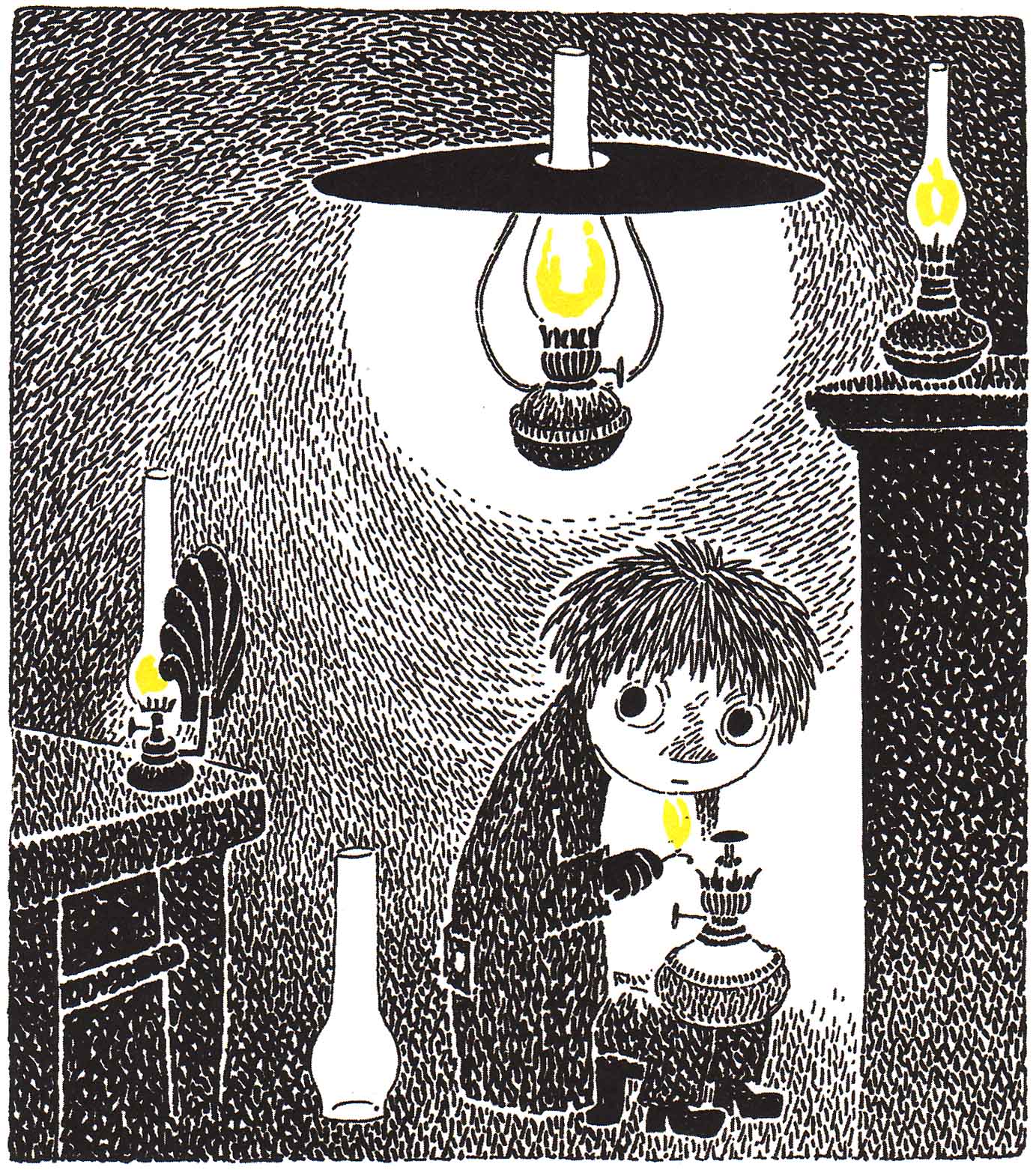
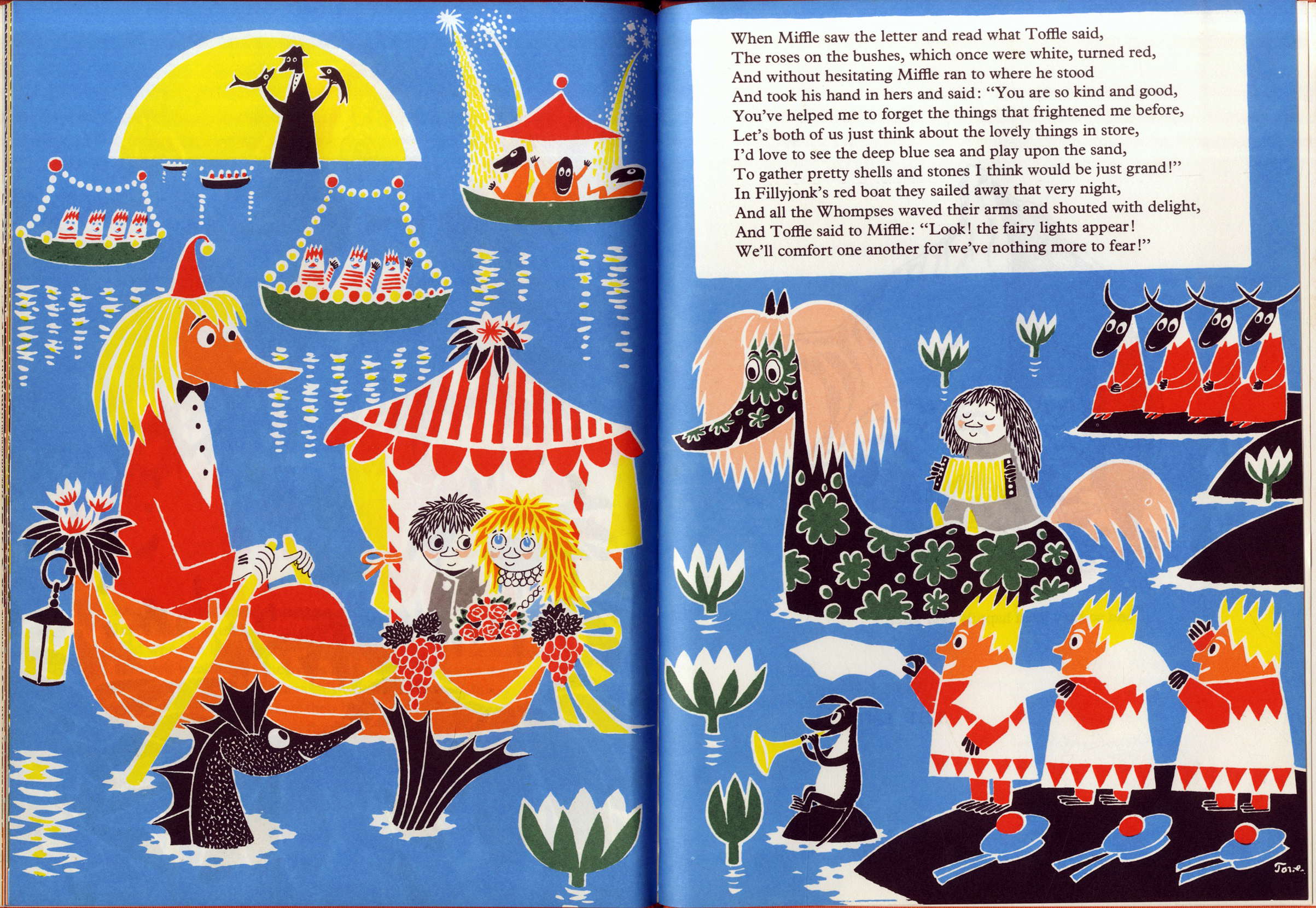
My Review: The inimitable Tove Jansson's beautiful art, her bracing message of the value to you of Helping, and it's never been out of print in 62 years. Absolutely wonderful little-kid version of "you won't know unless you try." I love Tove Jansson's art, and her words always seem to speak directly to my inner weirdo.


Now, go watch the musical version (subtitled in English and Spanish, as you prefer) from 1980. It, too, is an absolute joy.


A non-affiliate Amazon link to the hardcover edition will only set you back $16 or so.

+++++++++++++++++++++++++++++++++++++++++++++++++++++++++++++++++


The Story of China: The Epic History of a World Power from the Middle Kingdom to Mao and the China Dream by Michael Wood

Rating: 5* of five

The Publisher Says: A single volume history of China, offering a look into the past of the global superpower and its significance today.

Michael Wood has travelled the length and breadth of China producing a magisterial new book that combines a sweeping narrative of China's story with the stories of its people, the history of its landscape and commentary from his extensive travel journals. He begins with a look at China's prehistory--the early dynasties, the origins of the Chinese state, and the roots of Chinese culture in the teachings of Confucius. He looks at particular periods and themes that are being revaluated by historians now such as The Renaissance of the Song with its brilliant scientific discoveries. He offers a revaluation of the Qing Empire in the 18th century, just before the European impact, a time when China's rich and diverse culture was at its height. Wood takes a new look at the encounter with the West, the Opium Wars, clashes with the British and the extraordinarily rich debates in the late 19th century as to which path China should take to move forward into modernity.

Finally, he brings the story up to today by giving readers a clear, current account of China post 1949 complete with a more balanced view of Mao based on newly-opened archives. In the final chapter, Wood considers the provocative question of when, if ever, China will rule the world. Michael Wood's The Story of China answers that question and is the indispensable book about the most intriguing and powerful country amassing power on the world stage today.

I RECEIVED A DRC FROM THE PUBLISHER VIA NETGALLEY. THANK YOU.

My Review
: I got a DRC just as COVID hit and, in the mishegas of having it twice and wanting to make a review commensurate with the book's quality, have so far failed to get any review at all done. It really is a terrific job of work, just as writing almost a thousand pages goes. One expects Wood to be top-flight at research, given his forty-plus years of making and presenting TV shows about history (his In Search of the Dark Ages series easily being my favorites!) but the clarity and the wit of his sentence-by-sentence storytelling really brings his anecdotes alive.

NON-AFFILIATE Amazon link will take you to your Great-on-Kindle seller...enjoy this book, build up credits to get the next for cheap!

++++++++++++++++++++++++++++++++++++++++++++++++++++++++++++++++
+++++++++++++++++++++++++++++++++++++++++++++++++++++++++++++++++


This space is dedicated to Nancy Pearl's Rule of 50, or "the Pearl Rule" as I've always called it. After realizing five times in December 2021 alone that I'd already Pearl-Ruled a book I picked up on a whim, I realized how close my Half-heimer's is getting to the full-on article. Hence my decision to track my Pearls!

As she says:
People frequently ask me how many pages they should give a book before they give up on it. In response to that question, I came up with my “rule of fifty,” which is based on the shortness of time and the immensity of the world of books. If you’re fifty years of age or younger, give a book fifty pages before you decide to commit to reading it or give it up. If you’re over fifty, which is when time gets even shorter, subtract your age from 100—the result is the number of pages you should read before making your decision to stay with it or quit.

So this space will be each month's listing of Pearl-Ruled books. Earlier Pearl-Rule posts will be linked below the current month's crop.
To my surprise, I did not Pearl Rule a single book in March 2022!
++++++++++++++++++++++++++++++++++++++++++++++++++++++++++++++++