Showing posts with label memoir. Show all posts

Thursday, June 25, 2026

THE MAKE-BELIEVE: A Memoir of Magic and Madness, the long walk back to Reality from toxic fantasyland


THE MAKE-BELIEVE: A Memoir of Magic and Madness
HANNAH MURRAY

The Dial Press (non-affiliate Bookshop.org link)
$13.99 ebook, available now

Rating: 4* of five

The Publisher Says: He sat me down in a chair and he told me, in no uncertain terms, that magic was real.

This is the true story of a spiritual awakening that turned into a mental breakdown. At the age of twenty-seven, an actress joins a wellness organisation and falls in love with its leader. She is sectioned for a psychotic break and diagnosed with bipolar disorder.

The Make-Believe is a deeply personal account of these events. It is a wild ride, a searching attempt for understanding and a call for radical empathy. Lyrical and playful, exploring light and dark, it takes readers on a journey to the edges of reality, to a seductive and dangerous world where magic seems possible.

I RECEIVED A DRC FROM THE PUBLISHER VIA NETGALLEY. THANK YOU.

My Review
: First things first: the acting career of Author Hannah is not foregrounded. This is not a celebrity BTS tell-all. Game of Thrones happens in the background.

Some of y'all are now gone, largely uninterested in this story; honestly I think that's a good thing because there's no reason to try to interest those seekers in this quest. What makes it a good read is exactly that: Author Hannah is on a quest, a search for...something...but like most of us, she's frustrated by the amorphousness of questing without a target. The goal of any quest is to get somewhere, find something, achieve stuff.

Is it? Should it be?

The cautionary tale of Author Hannah's bilking at the hands of those who purvey certainty ought to put paid to that wrongheadedness. Her eventual psychotic break, leading to a bipolar diagnosis is truly the heart of her story. I'm deeply empathetic with the terror of psychosis because I've been there myself. Nothing on Earth can compare to that terrifying, unmoored awareness of reality being...conditional, absent even, as you try to navigate living without being able to feel the rootedness of touching truth.

There's nothing more comforting in that situation than having certainty gifted to you from outside. The wellness cult Author Hannah found was giving her value for the money they took from her in the form of terra firma, a firm ground to attach her questing mind to. It wasn't honest or real so coming unstuck was inevitable...but her crisis led her to the solidity of a diagnosis that snapped her into focus. The reason for her continuing failures to reach solid ground were finally clear: bipolar disorder clouds every single perception until the sufferer can't see which thoughts are grounded and which are vaporous fantasies.

Author Hannah's telling of her journeys to harbors that end up being whirlpools is harrowing. It's honest...as far as it goes. I'm still not clear how her parents, who come in for plentiful blame, were so dreadful because it's simply told to the reader that they were. Given the results as embodied in Author Hannah herself, I'd say the perception of them as horrific human beings might just be an artifact of her genuine mental illness that she's going to spend a lifetime unraveling and integrating into her ever-developing tapestry of healthy perceptions. An actress of her achievements does not spring from nowhere. It's a question that's unaddressed and it constantly niggled at me as I read.

This is a very sobering walk with a lost soul who found her way back, and would like us to know how, and why, she took it as well as tell us how to come back if we come unmoored too.

Monday, April 13, 2026

SELF-HELP FROM THE MIDDLE AGES: What the Seven Deadly Sins Can Teach Us About Living, never forget people are ALWAYS people not labels


SELF-HELP FROM THE MIDDLE AGES: What the Seven Deadly Sins Can Teach Us About Living
PETER JONES

Doubleday (non-affiliate Bookshop.org link)
$14.99 ebook, available now

Rating: 4* of five

The Publisher Says: From medieval historian Peter Jones comes a groundbreaking guide to navigating contemporary life through the wisdom of the Seven Deadly Sins.

Peter Jones was teaching medieval history at a university in Siberia when his third icy winter there plunged him into a dark place. Luckily, he knew something few of us know—that for all its reputation for darkness and superstition, the Middle Ages were the golden age of self-help. So he set out on a journey to explore the wisdom of medieval scholars, saints, and mystics, looking for an alternative path through the challenges of modern life.

Never in history, Jones marvels in Self-Help from the Middle Ages, has so much energy and talent gone into studying how the mind works as in the medieval centuries. Although today we think of the Seven Deadly Sins as a catalog of forbidden behavior, in the Middle Ages, at the height of their currency, they were a path to self-knowledge and self-forgiveness. Together, pride, envy, anger, sloth, greed, gluttony and lust were a psychological map that laid out seven basic patterns of thought, showing how our thinking can go astray and how we can find our way home.

In Self-Help from the Middle Ages, Jones explores each sin, searching the hellscapes of Hieronymous Bosch and Giotto, the intimate confessions of Dante and Margery Kempe, and the personal struggles of Francis of Assisi and Catherine of Siena. Along the way he discovers a treasure trove of lost truths about temptation, frustration, addiction, compulsion, burnout, rage, fear, anxiety, and grief that still pulse with life. With beautiful illustrations drawn from medieval art and literature, his book is a gift to all who love history and anyone who has ever sought wisdom from the past.

I RECEIVED A DRC FROM THE PUBLISHER VIA NETGALLEY. THANK YOU.

My Review
: What happens when a scholarly British man with an advanced medieval-history degree from an American school gets a seriously good job in Russophone academia? He moves to Siberia! (Before the Ukraine war begins. He lives in Madrid now.)

Siberia. The place Russia sends people to die in misery. A byword, in US English anyway, for grim, awful exile, for the place you're sent to pay for your sins. I'm afraid this is where I start revealing my prejudices: I envied this polyglot scholar for his seriously good luck. I envied him for living a life I'm still feeling angry at being denied a chance to pursue (though Siberia was never in my mind as an option). So already two of the deadly sins ticked off—again—my life's list of the damned things committed. Oh okay, I'm getting the point now, thought I.

Siberia, the severeness of it, wore on the spirit of Author Jones. He experienced the dark night of the soul, the terrible trackless waste of depression. Being a scholar by nature the solution was obvious: you are not the first person to have this problem. How did those others handle it? The seven deadly sins offer up a schema for understanding the workings of the human mind as well as a perspective check on what your emotional weather really means.

These "sins" are, of course, deeply enmeshed with christian concepts of a religiously ordered universe. Sin more broadly is a religious concept of transgressing a divinely ordained code and appears in multiple religious traditions. It's only natural that a medievalist from England would gravitate towards concepts familiar from his scholarly activities.

In the memoir portions of this narrative, the author evokes very movingly the experience of researching, identifying, and handling medieval manuscripts that contain the seven deadly sins and their explications of how these can be used to improve one's soul. The goal in these readings iss to give the reader a map towards salvation, union with the god of the christians; but as Author Jones elucidates, how different is that goal from modern self-help books' stated goal of helping one become better, happier, more adept at navigating your life. People have sought ways to understand their inner workings, how to cultivate their minds/souls into "better" or "happier" behaviors since the oracle at Delphi...much earlier than that, I am certain, because a pithy aperçu like "know thyself" isn't a first draft, and it is carved in literal stone so it's been workshopped to a fare-thee-well, though it wasn't done in writing so the records are implicit only.

We're highly intelligent, us humans, curious about ourselves because we're so different from other creatures. We have access to the thoughts and the musings and the conclusions of millennia of our forebears. A scholar would know where and how to look for insight into issues common to us all. Descriptions of depression, of psychological maladjustments, maladaptive behaviors, and solutions to the problems arising therefrom, might vary but the impetus to look for ways to be, feel, act "better" is constant. Author Jones seeks the commonality between the seven deadly sins and modern self-help schemata because he needs help, knows our ancestors...sons, daughters, lovers, spouses just like us...needed help figuring out the best ways to be fulfilled. He accomplishes this in the way that best uses his personal strengths. He tells us about his quest in plainly personal terms, clearly stating his stakes in starting the quest. (I frame it as a quest because he's a medievalist and "happiness" is a grail quest.) It is more this strand of his narrative that I found involving, engaging. I was less invested in the rubber-meets-the-road formulations of how the personally offensive to me religious concept of the sins themselves represent paths to self-knowledge. This is a very useful and, to me, persuasive argument. It's offensive to me because the religion it's embedded within is evil and vile, used to create division and enact horrors of cruelty; if there is a "God" as they name her, and she tolerates these terrible acts committed in her nsme, she is not the kind of god who deserves worship.

None of that is addressed in this book; I can't offer an otherwise fully merited fifth star because to do so is to accept a fundamental agreement with an argument for "God" and her christian system's validity.

This is purely a personal inability to tolerate any support of the christian worldview,however tacit it may be, as in any way moral or positively constructive.

Sunday, February 15, 2026

CURIOUS MEN: Lost in the Congo, memoir without closure is more interesting!


CURIOUS MEN: Lost in the Congo
BOB KUNZINGER

Madville Publishing LLC (non-affiliate Bookshop.org link)
$21.95 paperback, available now

Rating: 4.5* of five

The Publisher Says: An experienced adventurer partners with an innocent nineteen-year-old to plan a journey on the most dangerous river in the world.

What starts as one man's dream ends up as another man's nightmare. It was a time when pushing our limits knew no boundaries and being nineteen had no restrictions.

I RECEIVED A DRC FROM THE PUBLISHER VIA EDELWEISS+. THANK YOU.

My Review
: Nightmares are, after all, dreams by definition.

When Bob, the author and Joe, the traveler, are dreaming up then planning this extreme journey...testing boundaries in that absurd male way, finding limits by crossing them seldom ends happily...they're consciously planning a story. Its plot is set in their minds, the story-logic will unfold as they intend because stories can be controlled.

Anyone who's ever written any fiction will now be laughing hollowly, their chest devoid of air or the ability to draw it in. They believe the world will obey the rules says the inner terrified parent who knows with bitter certainty that is not the case. Their plans leave room for that, the young ones blithely assure themselves and others. And my inner parent says "you can't plan for the unforseeable" while sweating anxiously, absolutely certain tragedy impends.

And befalls.

This novelistic memoir is the survivor's attempt to discover closure in disaster's aftermath. Bob Kunzinger now needs to make this all make sense, when it does not. He does not fall into the trap of excusing himself, or dismissing his vanished friend's responsibility for undertaking this journey. It's an old man's look back at the event that can not do other than bend his own survivor's life into a weird shape. It feels like therapy on the page, starting with several fantasies of how it should have or might have unfolded differently.

No one now an adult hasn't done that same memory dance. "If only..." is a poison when used indiscriminately, a medicine to poultice hurts if used to direct healing onto a survivor's guilt. I'm not Author Kunzinger, I don't know which this story is for him. For me it was the kind of read I look for in a memoir. It presents no fancy-work of "closure." It is, instead, the account of the testosterone-poisoned late (or arrested, in Joe's case) adolescent exceptionalism of male hubris.

Thinking one can plan for, control, the randomness of the world is the source of much grief. Ask Joe's parents. Testing boundaries and exceeding limits is a function of being a person in growth mode. Failure to cross some of these safely and successfully is called "growth." In coping with the aftermath of the fatal failure of Joe to solo-canoe down the Congo, Bob utterly and irrevocably changes the course of his life. No one, not Bob and certainly not the reader, can say what might have been would've been better or preferable or even possible...was this outcome inevitable, merely inescapable for any one of a myriad of reasons, or an unhappy accident?

Yes. Only without the conditional "or."

That's the source of my high rating for this compact, unresolved story, told by a man whose entire life was altered by his participation in a crazy dream of fame for a feat of endurance accomplished. Only when it wasn't accomplished someone was dead, and Bob Kunzinger has had to live on with his own participation in the fatal event unresolved in the absence of a body, a certainty of that death. In many ways it is more painful not to know how, what, when; imagination fills in the gaps as luridly as possible. Author Kunzinger's written multiple stories in his life after Joe vanished. I'd be amazed if any of them end the way this one does, open-ended and unresolved. It's bad storytelling to leave the ending unresolved.

Life couldn't give a fig about storytelling's rules. Author Kunzinger tells this open-ended story with compassion for the young men who did this stunningly stupid thing without excusing them, or exonerating himself, or blaming Joe or any of the other mental gymnastics I'm morally certain he went through over the years since Joe vanished. It's a really adult reckoning with an adolescent's questionable choices. I found it involving, and infuriating about them then, as well as compassionate for the over-sixty man who can never exonerate the youth who was complicit in this, expiate the harm his actions set in motion, or expunge the act itself from Life's unredactable records.

Saturday, December 13, 2025

OUTER SPACE IS CLOSER THAN ANTARCTICA: And Other Things I Learned While Falling in Love at the Bottom of the World


OUTER SPACE IS CLOSER THAN ANTARCTICA: And Other Things I Learned While Falling in Love at the Bottom of the World
MICHELLE OTT

Chronicle Books (non-affiliate Bookshop.org link)
$19.95 hardcover, $15.99 ebook, available now

Rating: 4.5* of five

The Publisher Says: This beautifully illustrated memoir tells artist Michelle Ott’s true story of falling in love and discovering her place in the universe on a remote research station in Antarctica.

In 2004, feeling burned out and dissatisfied, Michelle Ott left her high-profile gallery job in New York to work as a janitor at McMurdo Station in Antarctica: the coldest, windiest, driest place on Earth. There, she fell in love—not only with her future partner, but with the raw, inhospitable, incomparable beauty of the continent itself.

She took trips to nowhere on the Antarctic ice and mapped out the most romantic date locations on a remote research base where the sun never sets.
She witnessed the bright green aurora australis at -30°F, cried in response to its beauty, and found her eyes frozen shut by her tears.
She learned about (literally) breathtaking katabatic winds, ventifacts, and what it was like to bake cookies for 1000.
She dropped a piece of glacier ice into a glass of booze and consumed the ancient air bubbles that were trapped within it.

In this emotional blend of art, science, and deeply personal stories, Ott shares the wisdom and wonder gleaned from her four trips to the southernmost continent. Complete with hand-drawn maps and diagrams, accessible scientific explanations, and the realizations that can only come from turning your life upside down, Outer Space Is Closer Than Antarctica is an ode to explorers and dreamers, scientists and artists, and anyone curious enough to brave the unknown.

FOR THE EXPLORER AND THE DREAMER: Who hasn't fantasized about quitting their job, leaving city life behind, and running away to the wilderness? We might not all choose Antarctica as our dream destination, but Michelle Ott's brave, open-hearted approach to life still speaks to that nagging impulse to flip your world upside down. Her story of finding friendship, love, and an appreciation for life's simplest joys reminds us that sometimes that impulse is worth acting on.

ART + SCIENCE: This well-researched memoir presents scientific principles and research in an engaging combination of art and prose. Learn about volcanoes, stardust, Katabatic winds, the polar vortex, ventifacts, glaciers, and other Antarctic phenomena through Ott’s illustrations, maps, diagrams, and descriptions.

THE WONDER OF ANTARCTICA: Antarctica is a place of superlatives—driest, highest, coldest, windiest, biggest—and extremes. Its closest continental neighbor is 774 miles away. The Kármán line, the boundary between Earth’s atmosphere and outer space, is only 62 miles above sea level. When you are standing on any other landmass on Earth, you are nearer to outer space than to Antarctica. Science enthusiasts, creative thinkers, and armchair travelers will all find something to relish in this remarkable volume.

Perfect for:
  • Fans of illustrated nonfiction and memoirs
  • Anyone who’s ever daydreamed about moving away from the city and starting fresh
  • Designers, artists, visual thinkers, and other creatives
  • Adults and teens who are curious about geology, geography, and earth sciences
  • Scientists, researchers, and environmentalists
  • Fans of introspective nature writing and authors like Katherine May and Helen Macdonald
  • Romantics and readers who enjoy unconventional love stories

  • I RECEIVED A DRC FROM THE PUBLISHER VIA EDELWEISS+. THANK YOU.

    My Review
    : I felt curiously removed from this memoir; because it is very much a vibes book about a very rigidly regimented world, it came across as curiously...out of phase for me.

    Author Ott is not a scientist, so of course she isn't going to talk about the science she's been doing. She's there because she's fascinated by Antarctica, as who isn't. (If you're not, whyever not?) It is the most extreme place on the planet, moreso than the Arctic. Colder, icier, all the superlatives there are for weird and cold and Other. Sounds great to me.

    It sounded great to Author Ott, too. Off she went to have an adventure, to reassess her life, to shake things up. It worked...she met her partner there, she got to introspect in a way not really possible in the midst of life as we live it. Along the way she became a real professional at cookie-baking, becoming slightly overaware (at least for my taste) of how important round cookies are as morale boosters...bar shaped tray bakes are not as...personal...apparently. I've never been as isolated, as regimented (like being imprisoned) as she has in Antarctica.
    It's just an incredible place...it drew her back four times over the years, and her vibes-based narrative really accentuates why. I don't always like reading memoirs of people's experiences that center their private world over their surroundings, but felt the balance was struck well in this book.

    The balancing of desires versus requirements as shown above is something I feel provides the very best clue to this book's ideal giftee: A young person, obviously most important for a young woman, who is about to launch a course of study leading to a career, launch the career itself, or who is stuck in unfulfilling circumustances. Many of us are, at all stages of life; the book ill work its encouraging magic on all ages. I think it will offer a lot to a younger person who's not sure about a STEM career.

    It's clear that no one who fancies extreme experiences shouls pass this experiential memoir by. I think your experience of the art will be superior in a tree book format, though the ebook is by no meeans a poor choice...if you have a good tablet to read it on.

    The way of the world *can* give you what you need. It's a lovely and powerful message. It all comes down to taking action, taking responsibility, accepting risk...all those things that an extreme environment like Antarctica requires of you. Since most of us can't emulate her geographical journey, reading about it and learning from the act of reading is a good second-best lesson.

    Wednesday, November 12, 2025

    IT TAKES A LIFETIME TO LEARN TO LIVE: An Italian American Story of Coming Home, seeking family gynergy in Mama Italia


    IT TAKES A LIFETIME TO LEARN TO LIVE: An Italian American Story of Coming Home
    LIBBY CATALDI

    Bordighera Press (non-affiliate Bookshop.org link)
    $20.00 paperback, available now

    Rating: 4* of five

    The Publisher Says: It Takes a Lifetime to Learn How to Live is an intimate, multigenerational Italian American memoir immersed in the legacies of secrets, silence, and sacrifice of Southern Italy.

    In 1915, Carmela leaves the remote village of Rotondella. Her daughter, Laura, grows up determined to sever the past in an effort to be fully American. But decades later, when her life collapses, Laura's daughter-the memoir's narrator-sets off alone to Italy in search of truth and belonging.

    Her journey leads her back to her ancestral village, where she finds the open arms of family-and also uncovers the lingering shadows of the malocchio, omertà, rigid Catholicism, and a past of abject poverty, arranged marriage, patriarchal control, the Mafia, and a suspicion of sexual abuse.

    She begins to understand how these forces shaped not only her grandmother's life, but also her mother's-and her own. By honoring the courage of the women who came before her, to risk and endure, she finds the grace to forgive, to heal, to make peace with her mother, and ultimately, to come home to herself.

    I RECEIVED A DRC FROM THE PUBLISHER VIA NETGALLEY. THANK YOU.

    My Review
    : I've been involved with multiple Italian-American families over the years, always enjoyably, mostly because they were descended from Southern Italian emigrants. I asked to read this book because I wanted to reinforce my good memories of the times I spent in the orbit of these clans.

    Job done. Was much like hearing from The Beyond more of the stories I found so enjoyable. All the official patriarchy, all the real-life matriarchy, all the exciting stories of how the decision to come to the US was reached...or compelled...were all present and accounted for. It was Old Home Week, for me anyway, in all the most enjoyable ways.

    Funny to call something "enjoyable" that starts in grinding, miserable poverty, misogyny, and class stratification and the social abuses the flow from that. It's more accurate to say that, these being ancestral stories told to the author then narrated to us removes immediacy from them. It's like any painful family memory. It smoothes out over time with retellings. Unlike to the person who lived it, we the audience know the ending, and it comes out fine.

    Of course that's a failing of all memoirs. A person. like Author Cataldi, searching for family connections, has clearly ended up in a privileged position relative to those ancestors. It isn't suspenseful, so many people find memoir a bit of a snooze. I myownself enjoy the genre because I'm more invested in the "why" than the "what" as a rule. Why did Author Cataldi go seeking Rotondella and its denizens? Why was her need so powerful that she made an expensive and fairly extensive effort to investigate these origin stories?

    I'm interested in her, not in some myth, in other words; I felt my curiosity assuaged, though it required some reading into spaces for that to happen.

    Seeking the source of her family's gynergy was something that motivated Author Cataldi, and was powerful enough to compel me to go with her. I was very glad to have made the family's acquaintance.

    I DELIVER PARCELS IN BEIJING: One Man's Quest to Speak the Truth about the Global Gig Economy, deeply saddening, all too common story


    I DELIVER PARCELS IN BEIJING: One Man's Quest to Speak the Truth about the Global Gig Economy
    HU ANYAN
    (tr. Jack Hargreaves)
    Astra House (non-affiliate Bookshop.org link)
    $15.99 ebook, available now

    The Independent Press Top 40 Bestsellers: Non-Fiction For the week ending September 16, 2026

    Rating: 4* of five

    The Publisher Says: In 2023, I Deliver Parcels in Beijing became the literary sensation of the year in China. Hu Anyan’s story, about short-term jobs in various anonymous megacities, hit a nerve with a generation of young people who feel at odds with an ever-growing pressure to perform and succeed.

    Hu started posting essays about his experiences online during COVID lockdowns. His recollection of night shifts in a huge logistics center in the south of China went viral: his nights were so hot that he could drink three liters of water without taking a toilet break; his days were spent searching for affordable rooms with proper air-conditioning; and his few moments of leisure were consumed by calculations of the amount of alcohol needed to sleep but not feel drowsy a few hours later.

    Hu Anyan tells us about brutal work, where there is no real future in sight. But Hu is armed with deadpan humor and a strong idea of self. He moves on when he feels stuck—from logistics in the south, to parcel delivery in Beijing, to other impossible jobs. Along the way, he turns to reading and writing for strength and companionship.

    I Deliver Parcels in Beijing is an honest and startling first-person portrait of Hu Anyan's struggle against the dehumanizing nature of our contemporary global work system—and his discovery of the power of sharing a story.

    I RECEIVED A DRC FROM THE PUBLISHER VIA EDELWEISS+. THANK YOU.

    My Review
    : I see why this was a literary sensation in China. It's a real telling-truth-to-power story of how labor exploitation functions; it's an honest appraisal of the personal costs of the gig economy in a country where that is fresh ground to be broken.

    It isn't so new a topic here. We have many books about the gig economy and the evils of end-stage capitalism taking over our lives. But Author Hu is a man possessed of a self-deprecating streak, as well as personal humility, coupled with self-awareness. It makes his take on economic exploitation broadly relevant as well as personally centered. He is a worker, a man who feels the need to do the job he has taken to the best of his ability. Not for him the do-the-minimum slacking life! That has the downside of making him susceptible to manipulation by unscrupulous bosses whose desire to extract ever more labor from him he has trouble coming to terms with.

    It's a struggle he becomes aware of as he realizes what this character trait he is lauded and exploited for is causing him real harm.
    promotional art from the publisher

    It's a sad truth that hustle culture is a sharp knife in the ribs of any kind of satisfying social life. Author Hu learns this early...and sadly often. It is mildly frustrating to follow the man as he grows into realizing he has only acquaintances instead of friends yet not see him really take steps to deepen his non-work connections with others. I can see the issue, of course; he's leading the same life as the people he meets.

    Author Hu does say, as the end of the book approaches, that he is no longer the pushover he was. I wonder...I saw no sign of it because he told me this as a fact, in a kind of summing-up of his working (and only) life, and ended the story. He's quite young. It makes a kind of sense. It does make one want to yell, "AnYan! stop telling, start showing," until realization hits: He can't, there hasn't been time yet. It's a story in progress. I think it made the read more urgent for me after I really internalized that fact.

    A book you might be tempted to read down, to think of as an incomplete memoir, that is really a call to Author Hu's age cohort to recognize and correct course on their own iterations of his behaviors. A very honest look at a very dark side of global labor exploitation that does so much to enable our spoiled, luxurious lifestyles.

    Worth your time and treasure to get for your TBR.

    Wednesday, September 3, 2025

    THE SEASON: A Fan's Story, a beautiful gift given out of love


    THE SEASON: A Fan's Story
    HELEN GARNER

    Pantheon Books (non-affiliate Bookshop.org link)
    $13.99 ebook, available now

    One of Lit Hub’s 43 Favorite Books of 2025!

    Rating: 4.5* of five

    The Publisher Says: From the beloved master of Australian letters Helen Garner comes a brand new work of nonfiction, exploring boyhood, football, and the quotidian joys of family life.

    Helen Garner is one of the most “prodigiously gifted” writers of our time (The New York Times Book Review), best known for her intricate portraits of “ordinary people in difficult times” (New York Times). In The Season, she trains her keen, journalistic eye on the most difficult time of all: adolescence.

    Garner and her grandson Amby are deep in the throes of a shared obsession with Australian football—or “footy”—as Amby advances into his local club’s Under-16s. From her trademark remove, Garner documents the camaraderie and the competition on the field: the bracing nights of training, the endurance of pain, the growth of a gaggle of laughing boys into a formidable, focused team.

    The Season is part dispatch on boyhood, chronicling the tenderness between young men that so often scurries away under too bright a spotlight, and part love letter to parenthood and family, as Garner becomes enmeshed in the community that gathers to watch their boys do battle. The Season finds Garner rejoicing in the later years of her life, surprised to discover their riches—a bright, generously funny, exuberant book from one of our great living writers.

    I RECEIVED A DRC FROM THE PUBLISHER VIA NETGALLEY. THANK YOU.

    My Review
    : I really like Helen Garner's writing, enjoy her choices of subject matter, and really resonate with the worldview she puts out:
    A little rush of desolation. It doesn't matter if I'm not there. No one needs me. I'm not essential after all. I'm only a witness. It's one of the sporadic bursts of reality that grandparents have to bear. You're making a serious mistake if you start to think you're near the centre. You're on the periphery. You're a servant. A hanger-on. And soon you'll be dead.
    Preach, my sister.

    What hasn't, won't, can't really die is the pleasure of an honest writer facing up to a tough subject (and there is no tougher subject than getting old!) with clear eyes, a willing heart, and a lifetime of practice, just...getting on with it. That is Helen Garner's métier. She speaks of her teenaged grandson with the mingled pride, amusement, and nostalgia for the rapidity of time and change carting away the one you made memories with while leaving a very roughly similar but perilously unfamiliar person in their place. I completely relate. Parents, grands, aging family members all feel a similar way, and what interests us is how much we obliviously assumed about our own pasts. Did we do better than they did? What Aunt Doraflora meant that one time she said the thing that made Dad so damn mad...oh! makes sense now, as we watch our futures doing, learning, figuring out in front of us.

    The real matter of the writer is always life. Helen Garner has never once in a long career lost sight of that. Here she grapples with life changed beyond recognition, obsessions incomprehensible, worries she has no way to connect to, while knowing how much she loves; learning how much she is loved; and grappling with The End. "Really I’m trying to write about footy and my grandson and me. About boys at dusk. A little life-hymn. A poem. A record of a season we are spending together before he turns into a man and I die."

    It is a gift you leave him, Helen Garner, that he will open many times in his life. And, in his turn, in a world as different from this one you both briefly cohabited in as you and I can't even conjure, he will understand your thoughts and feelings. They will resemble yours...despite the immense gulf between you in time, you will connect on the humanness of being old, being alive without certainty, and...I know you hope, and so do I...feeling loved from ahead and behind.

    Thursday, July 24, 2025

    THE MOTHER CODE: My Story of Love, Loss, and the Myths That Shape Us, including the one you don't look at: Privilege


    THE MOTHER CODE: My Story of Love, Loss, and the Myths That Shape Us
    RUTHIE ACKERMAN

    Random House (non-affiliate Bookshop.org link)
    $13.99 ebook, available now

    Rating: 2* of five

    The Publisher Says: In this propulsive memoir, an award-winning journalist blends history, science, and cultural criticism, to uncover whether motherhood outside of society's rigid rules and expectations is possible—and whether she fits the mold for what a mother should be.

    For so long, Ruthie Ackerman believed that the decision not to have children was a radical act. She'd grown up being told that she came from a long line of women who had abandoned their children. Plus, Ruthie feared she would pass on her half-brother’s rare genetic disorder. Haunted by this generational inheritance, she goes searching in the twists and turns of her DNA to decide once and for all whether she should become a mother. When a geneticist leaves her at a dead end, she chooses to marry a man who doesn’t want children—only to realize that, despite everything, she desperately does. When Ruthie’s strained marriage ends, her quest for a new vision of motherhood begins.

    She eventually finds an image of radical motherhood where women have an opportunity to see their role not just as fulfilling but as powerful. This new mother code goes beyond children and focuses on actively working towards stronger communities and happier, less-stressed parents. But by the time Ruthie meets the right partner and is ready to have the baby she so desperately desires, she learns she can't use her own eggs. Now, Ruthie has to evolve this new mother code as she navigates the scientific, philosophical, and intimate questions about what it means to both create–and nurture–a life.

    The Mother Code unravels how we’ve come to understand the institution of motherhood, offering a groundbreaking a new a mother code that goes beyond our blood lines and genetics, and instead, pushes us to embrace inheritance as the legacy we want to leave behind for those we love.

    I RECEIVED A DRC FROM THE PUBLISHER VIA NETGALLEY. THANK YOU.

    My Review
    : More Momaganda. "I changed my mind after most of my life is passed, and Became A Mother extremely expensively and in spite of thinking about it for decades and deciding against it" is a HUGE pile of privilege. It is unexamined in any critical way.

    Adopt.

    I was not well-treated by my mother, and as a direct result do not belong to the Cult of Mother. One does not dare to speak out about this pervasive cult because (like the Spoiler Stasi) there are great heaving seas of angry partisans who will NOT allow anyone to publicly question Their Choice.

    Usually it's religious nuts to the fore, though not always. These people having the overlap in group membership that they do, I don't know how I'll escape another round of insulting nonsense for saying this, but here goes:

    Your belief that something is good and right and necessary does not stop its being exploitive, manipulative, and wrong.

    Thursday, July 3, 2025

    FAKE WORK: How I Began to Suspect Capitalism is a Joke, memoir of life in capitalism's trenches and how they changed her


    FAKE WORK: How I Began to Suspect Capitalism is a Joke
    LEIGH CLAIRE LaBERGE

    Haymarket Books (non-affiliate Bookshop.org link)
    $9.99 ebook, available now

    Rating: 3.5* of five

    The Publisher Says: In this genre-bending memoir, Leigh Claire La Berge reflects on her stint at one of the most prestigious management consulting firms in the country and what it teaches us about the absurdity of work—for readers of Bullshit Jobs and fans of Office Space and Sorry to Bother You

    The year is 1999, and the world is about to end. The only thing standing between corporate America and certain annihilation is a freshly employed twenty-two year old and her three-ring binders.

    While headlines blazed with doomsaying prophecies about the looming Y2K apocalypse, our protagonist Leigh Claire was quickly introduced to the mysterious workings of The Process—a mythical and ever-changing corporate ethos The Anderson People (her fellow consultants) believe holds world saving powers. Her heroic printing physical copies of spreadsheets and sending them to a secure storage facility somewhere in the bowels of New Jersey. After a series of equally mundane tasks, and one well-timed deployment of an anecdote about a legendary quarterback, she soon found herself jet-setting on the firm's dime to thirty-minute lunch meetings in Johannesburg, giving impromptu lectures to Japanese executives about limiting liability at the end of the world, and leaping from burning vehicles on Mexico City's busiest highway.

    As present-day Leigh Claire reflects on the inanity of her former employment, we're introduced to a carousel of characters plucked from a Mike Judge screenplay, and are treated to post-facto theoretical interjections about the nature of financialized capitalism that recall David Graeber at his best.

    I RECEIVED A DRC FROM THE PUBLISHER VIA EDELWEISS+. THANK YOU.

    My Review
    : Best read by those already familiar with Marxism for Cats: A Radical Bestiary. A memoir of being a minor cog in a massive corporate machine, and working on what ended up being an unnecessary task since Y2K's predicted meltdown was averted by a lot of hard-working coders.

    It's absolutely clear to me that this nightmarish experience would radicalize anyone with two functioning neurons and a conscience. The memoir aspect of the story is the more powerful to my mind because someone subjected to a vastly successful indoctrination process woke up and rejected it.

    That's a take-away I can get behind.

    Since leaving the corporate world, Author La Berge has made her career taking down this system's rottenness with academic books and articles all adding their mite to the reconceptualization of our present system. In her second book, Wages Against Artwork, she introduced me to the concept of "decommodified labor," or labor that is not recompensed. Labor being capitalism's lifeblood, this made a big shift in my worldview. Is art rightfully not a wage-earning pursuit? Discuss. I have. (My conclusion is redistribution via UBI is the fair solution.)

    As someone who has never fitted into any large system I related to Author La Berge's increasing hostility to meaningless "productivity" goals, pointless groupthink reinforcement sessions (aka meetings), and supremely extravagant playthings, eg expensive, environmentally unjustifiable travel, absurdly an performatively wasteful meals, and the like.

    In the face of post-pandemic disillusionment with The Bosses in general, it's time to reassess what The Bosses demand from us for the absolutely insecure, fire-at-will "jobs" that—by design—never quite pay enough. This is someone who can report from the inside and shed light on why The Bosses absolutely go all-in for AI as an alternative to the labor she performed that she's discussing. It's obvious these jobs are going away to anyone who even half-heartedly glances at unemployment statistics. Nothing being proposed to fill that gap in employment, it is clear the war on workers has ratcheted up.

    This is a memoir; it's told more or less episodically; that means there's some irritating repetition of key points. I was familiar with the economic vocabulary but those who aren't might simply give up on the read. The insights Author La Berge delivers are important enough that I urge you to use a not-Google search engine to look up the concepts not familiar to you. The heart of this critique, while firmly personal, is...literally everywhere...being borne out as valid. You might or might not share he sense of humor, but Author La Berge is one helluva cicerone through the uselessness of capitalism as an organizing principle. It is not to be trusted, and here is an insider's experience of why.

    Wednesday, July 2, 2025

    THE PLACE OF TIDES, privileged man has mid-life crisis in the Arctic


    THE PLACE OF TIDES
    JAMES REBANKS

    Mariner Books (non-affiliate Bookshop.org link)
    $14.99 ebook, available now

    Rating: 3.5* of five

    The Publisher Says: We are all in need of lights to follow.

    One afternoon many years ago, James Rebanks met an old woman on a remote Norwegian island. She lived and worked alone on a tiny rocky outcrop, caring for wild Eider ducks and gathering their down. Hers was a centuries-old trade that had once made men and women rich, but had long been in decline. Still, somehow, she seemed to be hanging on.

    Back at home, Rebanks couldn’t stop thinking about the woman on the rocks. She was fierce and otherworldly—and yet strangely familiar. Years passed. Then, one day, he wrote her a letter, asking if he could return. Bring work clothes, she replied, and good boots, and come her health was failing. And so he travelled to the edge of the Arctic to witness her last season on the island.

    This is the story of that season. It is the story of a unique and ancient landscape, and of the woman who brought it back to life. It traces the pattern of her work from the rough, isolated toil of bitter winter, building little wooden huts that will protect the ducks come spring; to the elation of the endless summer light, when the birds leave behind their precious down for the woman to gather, like feathered gold.

    Slowly, Rebanks begins to understand that this woman and her world are not at all what he had previously thought. As the weeks pass, what began as a journey of escape becomes an extraordinary lesson in self-knowledge and forgiveness.

    I RECEIVED A DRC FROM THE PUBLISHER VIA NETGALLEY. THANK YOU.

    My Review
    : Author Rebanks, "an expert advisor to UNESCO on sustainable tourism", tells us an amazingly convenient story of going to learn the old folk ways of Anna, an elder who has made her life as far away from others as she can get; has devoted herself to maintaining a lifeway that, should any significant number of just this book's readers attempt to emulate would result in environmental devastation; but which fuels the itchy sense the world is enshittifying everything worthwhile without offering any remotely practicable solution to that real and accurate feeling.

    I admit I'm a grouch, an also am in existential crisis about the world's horrifying trajectory. This book's pretty, nicely turned and selected sentences, all supporting a beautiful fantasy of life utterly in harmony with nature, are NOT A HELPFUL HOW-TO. They should not be read as anything inspiring you to reproduce the actions the author took. Inspiring you to look into ways to work with local nature-preserving groups? Absolutely. Don't think it's going to be like the author's time with Anna.

    There are not a lot of ways to experience the thrill of being able to immerse yourself in unmediated nature. The author does it as long as it suits him, and his emotional needs. Then he returns to his 21st-century life. That's a whole huge pile of unexamined privilege there, sir. The majority of us can't find an Anna, still less go spend a lot of time not doing what people with lives and families must. After all, that was what drove you to seek Anna out.
    “Anna’s example was simple: if we are to save the world, we have to start somewhere. We just have to do one damn thing after another. Hers was a small kind of heroism, but it was the most powerful kind. The kind that saves us. We all have to go to work in our own communities, in our own landscapes. We have to show up day in, day out, for years and years, doing the work. There will be no brass band, no parade. And we have to accept and keep the faith in each other, and somehow work together. It is the only way we can make our own tiny deeds add up to become the change we all need.”
    As lessons go, this one is hard to fault. It applies to all people everywhere. If your pretty sentences do good for the world, this is the good they do. It was, however, a lot more like a very good Longreads piece instead of a resource-heavy printed book; hence my mingy rating.

    Just don't think it's going to look like an isolated life in a beautiful Arctic setting. See the message not the movie, and set out to make a small, undramatic difference wherever you are, however you can.

    Sunday, June 8, 2025

    DEEP HOUSE: The Gayest Love Story Ever Told does so very much for illuminating the reality of empathy


    DEEP HOUSE: The Gayest Love Story Ever Told
    JEREMY ATHERTON LIN

    Little, Brown and Company (non-affiliate Bookshop.org link)
    $29.00 hardcover, available now

    Rating: 4.5* of five

    One of Publishers Weekly's Top 10 Best Books of 2025!

    One of Electric Literature’s Best Non-fiction Books of 2025!

    The Publisher Says: From the National Book Critics Circle Award-winning author of Gay Bar comes a rule-breaking, sweat-soaked, genre-busting story of outlaw love.

    It’s 1996, and Jeremy Atherton Lin has met the boy of his dreams—a mumbling, starry-eyed Brit—just as, amid a media frenzy, US Congress prepares the Defense of Marriage Act, denying same-sex couples federal rights including immigration. The pair steals away to remote forests and vast deserts, London fashion shows and Berlin sex clubs, dinner parties, back alleys, East Village hotel rooms, and San Francisco dives. Finding no other way to stay together, they shack up illicitly among unlikely allies in a “city of refuge.”

    With Atherton Lin’s inimitable blend of tenderness and wicked humor, Deep House moves through the couple’s string of rented apartments while unlocking doors to a lineage of gay men who have come before—smuggling a foreign partner through national checkpoints or going public to stand up for the right to get down in the privacy of their own homes. They include hapless criminals, sexpot bartenders, friars, pirates, government workers who subverted the system, activists who went all the way to the Supreme Court, and the celebrated artist Felix Gonzalez-Torres.

    Following Gay Bar—called “a rich tapestry” by Vanity Fair and “an absolute tour de force” by Maggie Nelson—Deep House juxtaposes whispered disclosures of undocumented domesticity with courtroom drama and political stunts to explore myriad forms of intimacy while questioning the mechanisms that legitimize love. Deep House is at once a historical kaleidoscope and the innermost tale of two boyfriends who made a home in the shadows of a turbulent civil rights battle.

    I RECEIVED A DRC FROM THE PUBLISHER VIA NETGALLEY. THANK YOU.

    My Review
    : A story whose timeliness could not possibly be greater. Author Jeremy takes us through a moment, thirty years ago, when the political landscape looked a lot like today's. He had just fallen in love with "Famous Blue Raincoat," an undocumented Brit, which is presenting practical problems of residence and life together. How do you rent an apartment, earn a living, make couple-friends? You're carrying the usual relationship stuff but on top of that is the need to be discreet, even secretive, about big pieces of your life.

    What Author Jeremy chooses as his narrative strategy is lighter on the deeply personal details in favor of a potted history of the topic of marriage equality in the US from DOMA in 1996 through twists an turns of bi-national queer couples litigating their basic human rights (which is not how rights are supposed to work except here in looney-religious-land) through to the now-imperiled Obergefell v Hodges decision in 2015.

    It's a lot to take in. The personal parts pertaining to Author Jeremy and "Famous Blue Raincoat" are sprinkled on like powdered sugar to make the wodges of information go down easier. There are so many facts that impinge on the love story he's telling that there's really no other way to tell the whole story. Author Jeremy was threading needle after needle after needle, trying not to be preachy while advocating equality, trying not to be confessional while honestly depicting the cost of a life defined by struggle to access simple equality, trying not to chirp triumphantly about battles won while they're being refought, yet leaving his readers with real hope in a world that does not do much to support it.

    The amount of focused effort in these four-hundred-plus pages is humbling. It's a gift to receive this kind of careful craft on such a personal topic. I'd've given a full fifth star had I had citations, not simply end-notes; it's a "me" thing, it likely won't bother a lot of y'all, but when you're relying on sources to make factual cases and points within cases, I'd like to be pointed at those sources in the text not simply as end notes. I feel a bit unkind bringing it up in a time where even the inclusion of end notes is increasingly rare, but, well, I'm pedantic and grouchy and old.

    Surprise!

    Don't wait...get yourself a copy fast as you can for your #PrideMonth reading. It's a pleasurable way to appreciate fully and personally what is at stake in the current political crisis.

    Wednesday, May 7, 2025

    THE LAST SECRET AGENT: My Life as a Spy Behind Nazi Lines, once there were Giants...very short ones


    THE LAST SECRET AGENT: My Life as a Spy Behind Nazi Lines
    PIPPA LATOUR with Jude Dobson

    St. Martin's Press (non-affiliate Amazon link)
    $14.99 ebook, available now

    Rating: 4.75* of five

    The Publisher Says: After decades of silence, the last surviving World War II British spy reveals the real, untold story of her time as a secret agent in the deadly world of Nazi France.

    From a unique and singular voice comes the incredible true story of the last surviving undercover British female operative in WW2. Pippa Latour parachuted into occupied France in 1944 to conduct sabotage and subversion behind enemy lines. Selling soap to German soldiers and hiding codes on a piece of ribbon, she sent back crucial information about troop positions in the lead up to D-Day, and continued her work until Paris was liberated. From her childhood as an orphan in South Africa to her years as an undercover agent, Pippa's story is that of a woman determined to honor her principles and risk her life to fight against the greatest evil of the 20th century.

    The Last Secret Agent is a posthumously published memoir, co-written with journalist Jude Dobson. Pippa was decorated highly for her actions, including being made a Member of the Order of the British Empire and receiving the Légion d’Honneur in France. For years, Pippa kept her involvement in the war effort secret from everyone, including her family, but for the first time, her story can now be told in full.

    I RECEIVED A DRC FROM THE PUBLISHER VIA NETGALLEY. THANK YOU.

    My Review
    : It makes me sad that Pippa Latour did not live to see her story told publicly at long last. Sh desreved to be here to hear, if not necessarily accept, our kudos. She was a modest person, and I suspect suffered from some terrible PTSD based on what I read in this book; that's not a person likely to want to stand in fromt of a room full of applauding people. Never mind she deserves the plaudits. Never mind she was angered by online misinformation about the realities of WWII. She did what she did, honored her Official Secrets Act duty, and lived the life she helped make safe for herseld and millions of others.

    I salute you, Ma'am. (Royal address use deliberate.)

    From her African colonial childhood, where she picked up practical and communication skills easily, to her European youth, where she put every skill she developed to use, hers was a life of intensities sought, mastered, and used for the purpose she chose to learn them for. This kind of mental toughness and goal-driven living is rare. People like Pippa Latour do not get born often. That she lived until she was 102 is astounding, yet utterly unsurprising. It's our good fortune that she decided to tell her story to a qualified journalist...who filled in gaps that inevitably appear in aging memories...in the trained researcher's best-practices way. (Her specialism is in creating WWII informational films and other materials.) There are reconstructed conversations, unsupported anecdotal statements of fact, and all of that must be okay with the story's best reader. It is, I feel sure, inevitable with the stories of any covert operative.

    All the verifiable points check out. I'm not inclined to think someone who told this story at this late date, insisting it be brought to the world's attention after her impending death, would lie. I could be wrong. (It happens to the best of us.) But nothing in her account rings false, as happens with other memoirs. I trust her, I never met her, and isn't that just exactly what a truly skilled covert operative could do in her sleep?

    A very powerful story...risking life and sanity to defend strangers' right to freedom of thought and of self-determination...told well. Why then do I dock a fractional star? Because sources aren't cited where they exist, and I'm not really sure which non-conversational (I take it as given that any conversation is the product of memory and imagination) parts aren't sourced or at least grounded in source materials. Much as I understand and accept the reality of a covert operator's limited access to documentation, if this story's appearing at all, the Official Secrets Act applies so it was approved in some fashion. What occurred to make that decision possible?

    It's a cavil, but it niggled at me.

    The effects of her wartime service on her family? Not delved into, though she explains that her reasons for not speaking of it to her ex-husband and children were grounded in the lingering trauma (my term, not hers) and the need not to breach her oath to keep it zipped up tight. makes perfect sense to me. I would say that, if you're looking for salacious stuff, you move on. Pippa is telling us a story her way. That is not going to be full of gossip.

    It is a story we badly need to hear. A woman so small, so frail-looking she could pass as young teen chose to risk torture and death and live among the collaborators and the silently acquiescent to work against a great evil, is a role model to any...all...of us living in this ugly, ugly passage of the 21st century. I'm sorry the late, great lady can't tell me this: Did she see our awful present developing? Is that really what opened her mouth at long last?

    It wouldn't surprise me one little bit. She was a shrewd observer and a good judge of character.

    Saturday, January 25, 2025

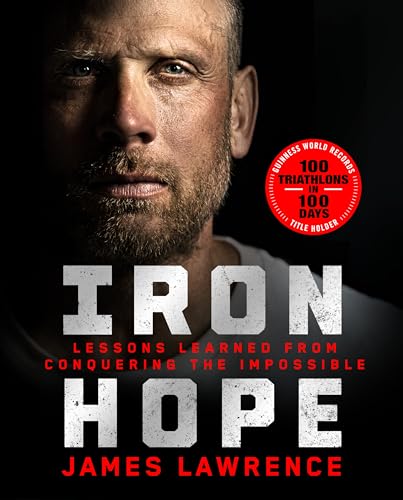
    IRON HOPE: Lessons Learned from Conquering the Impossible, focus on the lessons not the why of them and it's inspiring


    IRON HOPE: Lessons Learned from Conquering the Impossible
    JAMES LAWRENCE

    St. Martin's Press (non-affiliate Amazon link)
    $15.99 ebook editions, available now

    Rating: 3.75* of five

    The Publisher Says: The ultimate guide to mental toughness by James 'Iron Cowboy' Lawrence – the greatest endurance athlete in human history.

    Lawrence’s accomplishments are nearly impossible to comprehend. In 2015, he set a Guinness World Record record by completing 50 full-distance triathlons in 50 states in 50 consecutive days. Yes, THE Ironman, 'the single most difficult day in sports'—a 2.4-mile swim, 112 miles on a bike, then a 26.2-mile run, all completed in under 17 hours. It is a race so intense that less than .01% of the population have completed one.

    Afterwards, Lawrence subjected his body to exhaustive physical testing, to every genetic test known to science. The stunning discovery is that physically, James Lawrence is unspecial in every way. The secret to his bulletproof body is his bulletproof mentality.

    How does a person develop the mental fortitude necessary to overcome incredible exhaustion, immeasurable suffering, and unfathomable pain in order to achieve impossible goals? With Iron Hope, that’s exactly what James 'Iron Cowboy' Lawrence shows readers how to do. Lawrence explains how readers can forge an iron will by making and keeping small promises to themselves again and again, amassing experience and building momentum until giving up becomes impossible. Combine a big dream with small improvements repeated with great consistency and make your goals and dreams a reality.

    I RECEIVED A DRC FROM THE PUBLISHER VIA NETGALLEY. THANK YOU.

    My Review
    : I read this because I am unable to fathom WHY anyone would do this insane thing to their body.

    I still don't know.

    What I *do* know is that doing this insane thing to his body afforded Author Lawrence great clarity about how he accomplished this absurd, OTT feat of effortful activity. He reports to readers the means by which he accomplished a feat of endurance and self-discipline that a vanishingly small number of us fellow humans ever even attempt, let alone accomplish.

    There is huge value in absorbing this attitude: "do it to prove you can." Do hard things because they are hard, and along the way build the habits of mind that will make you unstoppable in areas that actually matter.

    *oops* I didn't mean to type that out loud.

    There it is, though. What earthly use is doing this to one's body? This smacks of the religious ascetics who do appalling things to themselves because god. In what way is this necessary, or beneficial to the world? As an example to emulate? I'd drag anyone I know to the shrink if they announced they'd got this idea for abusing their body in this way.

    However much I decry the wasteful, expensive thing this lunacy promotes...that training costs, the supplements and dietary demands cost like crazy, donate the time and money to bettering the world you selfish thing!...I acknowledge the author's using the platform it gives him to have accomplished this as a means to offer practical, actionable advice on how to acquire the *habits* that got him there. He's offering good information, clearly and understandably formatted, explaining how and why this or that effort pays off in self-discipline; this is the thing I focused on, not the reason *he* was doing it but rather *how* he did what he did.

    I devoutly hope the readers the book will get because the author did what he did will put his path to attaining an enviable strength of mind to more useful ends. It's the egotism, the selfish "MY victory" straight-male vanity of the exercise (!) that won't let me get to a full four stars despite the more positive uses the information can be put to.

    Tuesday, January 21, 2025

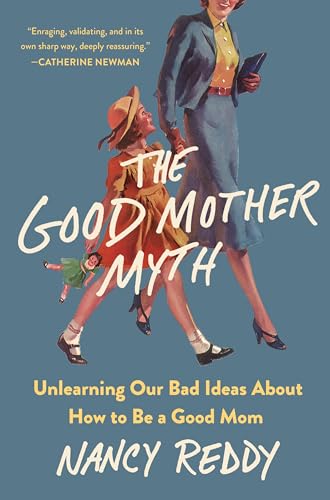
    THE GOOD MOTHER MYTH: Unlearning Our Bad Ideas About How to Be a Good Mom, opening a conversation Society needs to have


    THE GOOD MOTHER MYTH: Unlearning Our Bad Ideas About How to Be a Good Mom
    NANCY REDDY

    St. Martin's Press (non-affiliate Amazon link)
    $14.99 Kindle edition, available now

    Rating: 4* of five

    The Publisher Says: Timely and thought-provoking, Nancy Reddy unpacks and debunks the bad ideas that have for too long defined what it means to be a "good" mom.

    When Nancy Reddy had her first child she found herself suddenly confronted with the ideal of a perfect mother—a woman who was constantly available, endlessly patient, and immediately invested in her child to the exclusion of all else. Reddy had been raised by a single working mother, considered herself a feminist, and was well on her way to a PhD. Why did doing motherhood "right" feel so wrong?

    For answers Reddy turned to the mid-20th century social scientists and psychologists whose work still forms the basis of so much of what we believe about parenting. It seems ludicrous to imagine modern moms taking advice from mid-century researchers, yet their bad ideas about so-called “good” motherhood have seeped pervasively into our cultural norms. In The Good Mother Myth, Reddy debunks the flawed lab studies, sloppy research, and straightforward misogyny of researchers from Harry Harlow, who claimed to have discovered love by observing monkeys in his lab, to the famous Dr. Spock, whose bestselling parenting guide included just one illustration of a father interacting with his child. Blending history of science, cultural criticism, and memoir, The Good Mother Myth pulls back the curtain on the flawed social science behind our contemporary understanding of what makes a good mom.

    I RECEIVED A DRC FROM THE PUBLISHER VIA NETGALLEY. THANK YOU.

    My Review
    : Misogyny begins at home. You drink it in with your mother's milk. She is, after all, "just your mother." That phrase resounds in my brain as one of the most invidious, viprously poisonous idiocies that passes unquestioned from many a mouth.

    The myth of Motherhood is exalted...pedestalized...and thus an extremely effective weapon in misogyny's arsenal of control. A woman, a human female, is reduced to her biological capacity for reproduction. It is an important function but not, as the Cult of the Mother makes it, a predestination and (not incidentally) a life sentence.

    The author's struggles with the reality of being a mother versus the snake-oil sold to her by The Cult of Mother led her into paths of research done during my, and my generation's, childhoods. It was done by men. It was deeply embedded in capitalist norms then being solidified, codified, and imposed to create a Cult of Mother to support a culture of mothers without agency since that belonged to husbands and experts. Never mind that the sample sizes were uneven and the methodology unreliable, uncintrolled often enough; never mind that a lot of the research designs adopted were unethical. Hear the Word of Your Lord And Master, woman: feel this or be forever lacking, wanting in human feeling, LESS THAN.

    It's a vicious self-springing trap for someone in a deep emotional, existential, physical crisis often enough exacerbated by sudden and/or acute depression. Author Reddy takes us through the orthodoxies of our youth, hers too, and parallels them with her own struggles.

    What this book sets out to offer the reader is a footing to view the mountain of garbage "science" and the reeking cesspits of "how YOU should feel" liberally sprayed with "...but it's NATURAL" as though Nature isn't the one and only source of all the ills and plagues of Humanity's time on Earth. Yes, it is. We too are part of Nature, not apart from, above it.

    Our actions are natural, they can not be otherwise because we live within the laws of nature.

    I offer four stars to the read, not docked too far for its lack of rigor...her models for that failing are the great and good of the subject's past...or for its tooth-gritting tendency to repeat itself...see previous parenthetical...but in recognition of its undeniable attack from within the fortress by a victim of The Cult of Mother, therewith to offer aid and comfort to others who experience what she has.

    That deserves all five stars. I can't honestly warble my fool lungs out about the execution. It's above average and it makes its case clearly if anecdotally. It is a read that spoke my truth to me, so I resonate to its vibes.

    Women: Do NOT settle for becoming what your biology hands you. Decide for yourself who and what you want to be.

    Signed, A Pissed-off Man.

    Wednesday, December 11, 2024

    COLORFUL PALATE: A Flavorful Journey Through a Mixed American Experience, drool-worthy memoir centered on food


    COLORFUL PALATE: A Flavorful Journey Through a Mixed American Experience
    RAJ TAWNEY

    Empire State Editions
    $18.95 paperback, $24.95 hardcover, available now

    Rating: 4.5*of five

    The Publisher Says: WINNER, 2024 BEST INDIE BOOK AWARD, CULINARY MEMOIR

    WINNER, 2024 LIVING NOW BOOK AWARD, INSPIRATIONAL MEMOIR – MALE (BRONZE)

    A NEW YORK PUBLIC LIBRARY & FOREWORD REVIEWS BOOK OF THE DAY • NAMED A BEST BOOK OF 2023 BY ZED BOOK CLUB & INDIA CURRENTS • LA WEEKLY BOOK PICK • RECOMMENDED BY BOOK RIOT & ELECTRIC LITERATURE


    A timely self-examination of the “mixed” American experience featuring exclusive recipes and photographs from the author’s multicultural family.

    As citizens continue to evolve and diversify within the United States, the ingredients that make up each flavorful household are waiting to be discovered and devoured. In Colorful Palate, author Raj Tawney shares his coming-of-age memoir as a young man born into an Indian, Puerto Rican, and Italian-American family, his struggles with understanding his own identity, and the mouthwatering flavors of the melting pot from within his own childhood kitchen.

    While the world outside can be cruel and unforgiving, it’s even more complicated for a mixed-race kid, unsure of his place in the world. Turning to his mother and grandmother for guidance, Tawney assists in the kitchen, providing intimate moments and candor as he listened to the tales behind each culinary delicacy and the women who perfected it. Each lovingly prepared meal offered another opportunity to learn more about his extraordinary heritage. The ability to create delicious fare with his family wasn’t just a duty for the grand ladies who raised him; it was a survival tactic for navigating new and unknown cultures, not always willing to accept them at first or even a hundredth glance. As Tawney examines both himself and his loved ones through the formative stages of his life, from boyhood through adulthood, he begins to realize, through all of the chaos and confusion, just how “American” he actually was.

    In this contemporary coming-of-age tale, Tawney tackles personal hot-button issues about race and identity through poignant, heartfelt moments centered on delicious meals. From succulent tandoori chicken to delectable arroz con habichuelas to scrumptious spaghetti and meatballs, Tawney shares his family recipes along with the intimate stories he overheard in the kitchen as he played sous chef to hundreds of recipes that not only span continents but also come with their own personal histories attached. Colorful Palate is a tale of the mixed experience, one of the millions that rarely get told, undefined by a single group or birthright and unapologetic about its lack of classification.

    I RECEIVED A DRC FROM THE PUBLISHER VIA EDELWEISS+. THANK YOU.

    My Review
    : A Desi dad, a Puerto Rican/Italian mom...Raj is a bog-standard modern New Yorker. His family's families of origin are, well, not really compatible. His early life was spent with parents who were not effective at engagement with each other. This makes for a vacuum in a child's emotional growth. It did not, luckily, result in a food vacuum. His mother was a cook, and came from cultures with powerful culinary traditions.

    Enter his grandmother and auntie. And, not coincidentally, delicious Desi food, Italian food, and Puerto Rican food as all points on his cultural compass were contributing to his maturing tastes. Not to mention he and his older brother were fully involved in the dominant US culture. Here's someone who came of age amid a lot of very, very powerful cultures, and has told us how this has molded him as a cook, and a person.

    There are recipes in each chapter for dishes relevant to that chapter's substance, always at the end so easy to access. There are sixteen halftone illustrations to give you some extra flavor (!) of the author's life. I don't want you to thik it's a cookbook. I'd happily keep it in my cooking collection but I wouldn't suggest it for the cookbook collector.

    You can definitely use the recipes, though, don't think they're pointless, ornamental ones. Just...more for a culture maven, one interested in society and the propagation of traditions in today's world, and anyone you know who is very interested in New York City, AND likes to adventure in the kitchen (but doably in the ingredients hunt!) will batten on this book.

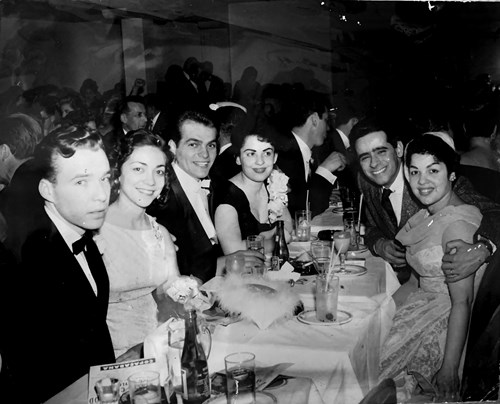
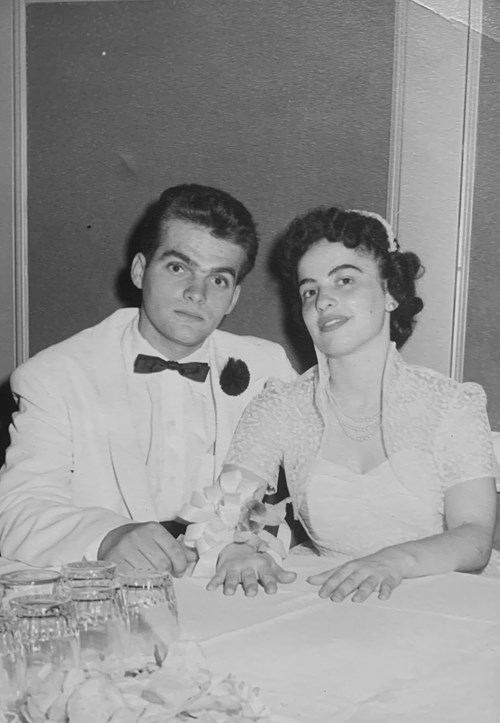
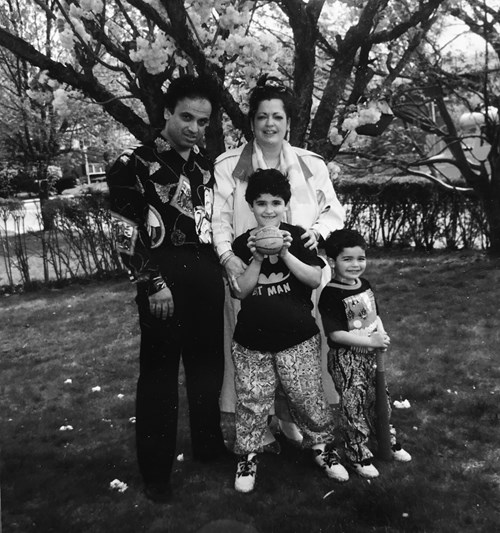
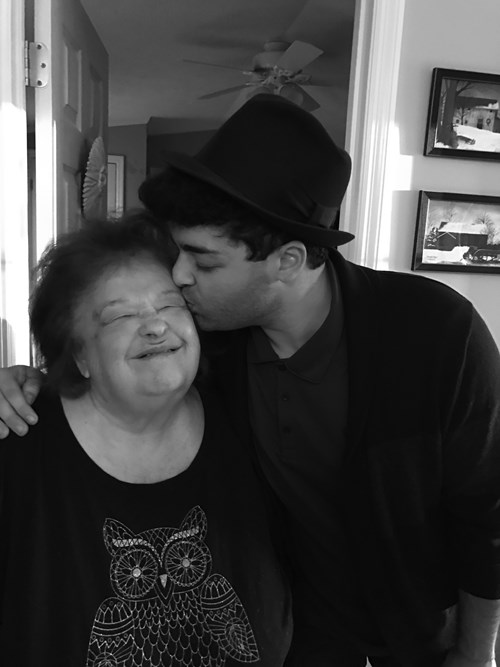
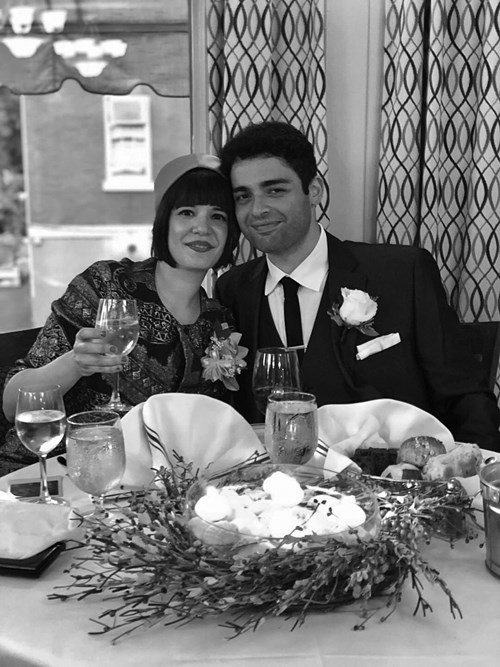
    Sample illustrations offered for your assessment:

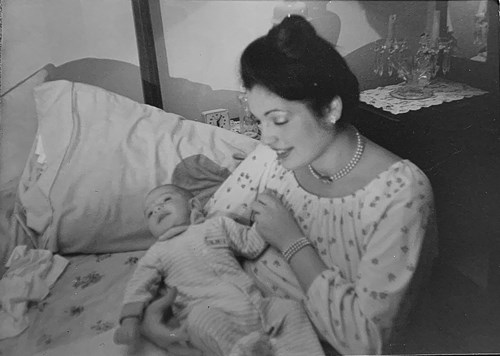
    Mom's parents being glam, 1957 at the Copacabana
    Mom's Puerto Rican Mom and Italian Dad, 1957 wedding
    Author and Mom, 1988
    The author's immediate family, 1990
    Author and maternal grandmother, 2018
    Author and wife, Michelle, wedding day 2019

    An American life, joined in progress, shared for our pleasure and our cultural broadening.

    Wednesday, April 3, 2024

    NO SON OF MINE: A Memoir, a son's generous gift of forgiveness to a dead mother


    NO SON OF MINE: A Memoir
    JONATHAN CORCORAN

    University Press of Kentucky
    $29.95 hardcover, available now

    Rating: 5* of five

    The Publisher Says: Born and raised in rural West Virginia, Jonathan Corcoran was the youngest and only son of three siblings in a family balanced on the precipice of poverty. His mother, a traditional, evangelical, and insular woman who had survived abuse and abandonment, was often his only ally. Together they navigated a strained homelife dominated by his distant, gambling-addicted father and shared a seemingly unbreakable bond.

    When Corcoran left home to attend Brown University, a chasm between his upbringing and his reality began to open. As his horizons and experiences expanded, he formed new bonds beyond bloodlines, and met the upper-middle-class Jewish man who would become his husband. But this authentic life would not be easy, and Corcoran was forever changed when his mother disowned him after discovering his truth. In the ensuing fifteen years, the two would come together only to violently spring apart. As the COVID-19 pandemic raged in 2020, the cycle finally ended when he received the news that his mother had died.

    In No Son of Mine, Corcoran traces his messy estrangement from his mother through lost geographies: the trees, mountains, and streams that were once his birthright, as well as the lost relationships with friends and family and the sense of home that were stripped away when she said he was no longer her son. A biography nestled inside a memoir, No Son of Mine is Corcoran's story of alienation and his attempts to understand his mother's choice to cut him out of her life. Through grief, anger, questioning, and growth, Corcoran explores the entwined yet separate histories and identities of his mother and himself.

    I RECEIVED A DRC FROM THE PUBLISHER VIA EDELWEISS+. THANK YOU.

    My Review
    : Y'all remember my four-star review of The Rope Swing? The man who wrote that, wrote this. What I noted then was that I felt removed from the people in his stories, like something I'd expected to be immediate and intimate was not quite that.

    Objection overruled, eight-years-ago me.

    The story of a Southern son...and Appalachia, where Author Corcoran hails from, is its own thing but is also The South...of a religious Mama who, in firm in her Faith, rejects her child whom she bore, nurtured, and loved, is not new nor is it underrepresented in the literary scene. UPK made the book available to me; I respected the author's chops; I started the read cautiously optimistic that it would be a Good Read. And that it was.

    Being raised by a religious mother is often troublesome for a son. She often uses faith as a punishment. Her efforts to parent are more likely to be aimed at one's religious well-being and not quite concerned enough with the problems of being an adolescent. What Author Corcoran does in his memoir is to make you part of the fabric of the troubled (and frankly troubling to my atheist eyes) family he came from, and overcame. His education at elite Brown University, where my own eldest sister graduated from, drew him away from the limited life of his borderline impoverished, uneducated, Bible-believing family; not coincidentally, it introduced him to his desire's fulfillment in the gay demimonde, so to speak, of university life.

    Once that genie's out of the bottle, that is that. Gawd stops being The Big Bad, and sex becomes possible to imagine as part of one's life without thunderation and guilt. Until, of course, one goes home.

    It might be this bit that truly hit home hardest for me: That fracturing of the idea of Home. The title of the book gives the game away. "No son of mine" is harsh, unforgiving, and stone-cold. Those are words I heard as well. They sever the taproot of family brutally and irreparably. The rest of one's life they resonate, drowning out the less-resonant words of lovingkindness one attracts. One day, if one is VERY lucky, a voice will say "I love you" in the exact canceling resonance to that thunderous rejection...and that good luck came to Author Corcoran, or I simply could not have borne to read or write about this book. I knew that going in, as I follow him on Facebook, so I was in no doubt that this would be the case. Even being uncertain of this facet of his present-day life would have rendered me unable to read the book, so strongly do I feel about it.

    What made Author Corcoran write this memoir now is the pandemic just past. His mother died in the pandemic without the two of them being able to reach mutual forgiveness. That is an incalculable agony. Staying silent, not howling one's pain to the world, is just flat imposssible. Being a writer meant that he chose to make this hegira from belief, to education, to rejection, to sad, grieving acceptance of one's losses in words. His life today is a materially and emotionally better one, his loving partnership is a source of acceptance and self-worth support, it is in short a story of succeeding without forgetting his beginnings. What pleased me, as a reader, the most was the fact that I never once felt that he belittled or looked down on his mother, or the world he left behind; that is a spiritual generosity that I can but envy.

    In his evocation of a life left behind, Author Corcoran leaves the reader with the sense that he looks on his mother and the life she led, the teachings she imparted, and the world she lived in as a chrysalis from which he emerged, not a trap from which he escaped.

    That is the best gift a parent can receive from an adult child. I am deeply saddened that the author's mother is not alive to receive it.

    Monday, March 11, 2024

    ONCE UPON A VILLA: Adventures on the French Riviera, a vicarious stroll among the one-percenters


    ONCE UPON A VILLA: Adventures on the French Riviera
    ANDREW KAPLAN

    Smuggler’s Lane Press
    $9.99 Kindle edition, available now

    Rating: 3.75* of five

    The Publisher Says: In this wise, warm-hearted, witty, and LOL hilariously funny true account, New York Times bestselling author Andrew Kaplan tells what it’s like when he, his wife, and two-year-old son decided to chuck it all and live the fantasy in a villa by the sea in that extraordinary corner of the world—part international café society, part billionaires’ playground, part provincial France—that is the French Riviera.

    Whether it’s matching wits with French bureaucracy, searching for the perfect bouillabaisse, encounters with con men, eccentric ex-pats, and Monaco’s royal family, partying with the international set on Onassis’ yacht, playing chess with a philosophical police chief, or adventures and friendships with the rich and famous and the presumably standoffish French, Once Upon a Villa will transport you to a fascinating and shrewdly-observed world that you will savor like your first-morning bite of pain au chocolate.

    I RECEIVED A DRC FROM THE PUBLISHER VIA NETGALLEY. THANK YOU.

    My Review
    : No idea if it’s just me or what, but I still crave comfort reads.

    The world’s gotten way meaner here lately. It takes more and more effort not to simply check out and leave the awfulness to its own devices, perpetuating itself being its best-ever trick. Thus I approached this read with all the fervor I would’ve lavished on the Best-Costume Oscar had I known about the bit John Cena committed to this ceremony. The man’s fifty-five, y’all, give it up for growing old gracefully...and hotly.

    Ahem. Focus, Mudge, focus!

    So, back to Author Kaplan, and the idea of relocating to the Riviera. Short of money, the author clearly is not...and there’s my sticking point, the reason for my missing stars. The part of the read that was charming, the French and their cultural schizophrenia of warm, generous, welcoming people and cold, maddening bureaucracy, was outweighed in my pleasure-reading by a very arriviste kind of name-dropping and hobnobbing with the Society Set that has long made the South of France its own. So much of the book is about who the author and his shopaholic wife went around and about with that I lost my warm happy glow.

    That was not fatal...the story is a lot of fun to read...it just hits me, the leftist redistributionist, in the wrong way. I do not care about Princess Caroline of Monaco. I do care about the neighbors who were kind.

    I am not everyone, and I am quite sure many of y’all will not feel my collywobbles about the snobbery on view. I urge y’all to go to it, go get it, and enjoy its very real writerly pleasures. I felt uneasy about my own trip, but that is no reason you should. This tour of the land of naked privilege should entertain and distract (most) anyone.