Showing posts with label politics. Show all posts

Saturday, October 11, 2025

FUCK NEOLIBERALISM: Translating Resistance, ignore the "worty dirds" to focus on what needs resisting


FUCK NEOLIBERALISM: Translating Resistance
SIMON SPRINGER
PM Press (non-affiliate Bookshop.org link)
$9.99 ebook, available now

Rating: 5* of five

The Publisher Says: In a long history of ruination and destruction, neoliberalism is the most recent and virulent form of capitalism. This book is a call to action against the most persistent and pestilent disease of our time. Translated into over twenty different languages, the book offers a call to action that transcends local contexts and speaks to the violent global conditions of our neoliberal age.

Fuck Neoliberalism: Translating Resistance is a worldwide middle finger to the all-encompassing ideology of our era.

With translations into languages from across the globe, including Mandarin, German, Indonesian, Spanish, Hindi, Italian, Korean, and many more, this book brings those translations together, accompanied with short essays from each translator that explain the reasons why they translated the text and describes the struggles against neoliberalism in their regions. With these translations, this book highlights the international nature of resistance to the totalitarian ideology of neoliberalism.

Featuring a cover produced by renowned artist Ed Repka (a.k.a. the King of Thrash Metal Art), this internationalized, heavy-metal rant against the all-powerful ideology highlights a chink in its armor. When people across the world find a way to communicate a shared message and stand together, resistance can be both beautiful and inspiring.

I RECEIVED A DRC FROM THE PUBLISHER VIA EDELWEISS+. THANK YOU.

My Review
: You're on board with the sentiment or you're not; but on or off, it would do all y'all a power of good to read words from those who've chosen to translate this (surprisingly mild, given its épater-la-bourgeoisie title) essay into their languages of choice, usually of their homelands.

Understand that book-banning, speech-squelching, and thought-controlling has gone on forever and becomes the default when too many "nice" people do not make the affirmative effort to resist it. Yes, even when it bothers you, even when it...gasp...offends you. Unless the speech is advocating violence, hate crimes, or censorship of those disliked by the powerful, it is in your personal interest to actively support free speech.

Worty dirds are not grounds for censorship. Rude gestures are not grounds for censorship. Demands for brown-skinned people to "go home" are. Demands for personal enemies to be persecuted by state power are. Let's stay clear about this.

Even if you never read a word of this loudmouthed little book, buy one to support firebrand publishers in their mission to save us from the worst consequences of our lazy, "nice" conformity.

Friday, July 18, 2025

A FLOWER TRAVELED IN MY BLOOD: The Incredible True Story of the Grandmothers Who Fought to Find a Stolen Generation of Children


A FLOWER TRAVELED IN MY BLOOD: The Incredible True Story of the Grandmothers Who Fought to Find a Stolen Generation of Children
HALEY COHEN GILLILAND

Avid Reader Press (non-affiliate Bookshop.org link)
$14.99 ebook, available now

FINALIST FOR THE 2026 PULITZER PRIZE FOR GENERAL NONFICTION!!

Time's The 100 Must-Read Books of 2025 selection

One of The Washington Post's 10 Best Books of 2025!

One of BookPage's 10 Best Books of 2025!

A New York Times 100 Notable Books of 2025 selection

Rating: 4.5* of five

The Publisher Says: For readers of Say Nothing and The Immortal Life of Henrietta Lacks, the epic, true story of the Abuelas de Plaza de Mayo, grandmothers who fought to find their stolen grandchildren during Argentina’s brutal dictatorship.

In the early hours of March 24th, 1976, the streets of Buenos Aires rumbled with tanks as soldiers seized the presidential palace, overthrowing Argentina’s leader. To many, it seemed like just another coup in a continent troubled by them, amid political violence and Cold War tensions. But there was something darker about this new regime. Quietly supported by the United States and much of Argentina itself, which was sick of constant bombings and gunfights, the junta quickly launched the “National Reorganization Process” or El Proceso—a bland name masking their ruthless campaign to crush the political left and instill the country with “Western, Christian” values. The dictatorship, which continued until 1983, decimated a generation.

One of the military’s most diabolical acts was the disappearance of hundreds of pregnant women. Patricia Roisinblit was among them, a mother and leftist revolutionary labeled “subversive” and abducted while eight months pregnant with her second child. Patricia gave birth in captivity, making one last call to her mother, Rosa, before vanishing. Her newborn son was also taken, one of hundreds given to police, military families, and dictatorship supporters, while their biological parents were secretly executed and their bodies disposed of. For Rosa and the other mothers in her same situation, the loss was unimaginable; their only solace was the hope that their grandchildren were still alive. United by this faith, a group of fierce grandmothers formed the Abuelas de Plaza de Mayo, dedicated to finding the stolen children and seeking justice from a nation that betrayed them.

A Flower Traveled in My Blood is Rosa and the Abuelas’ extraordinary story, told by a journalist with unique access. With authority and compassion, Haley Cohen Gilliland brings this tale to life, tracing the lives of Patricia, Rosa, and her stolen grandson, Guillermo. As the Abuelas transform into detectives, they confront military officers, sift through government documents, assume aliases to see suspected grandchildren, and even pioneer a groundbreaking genetics test with an American scientist.

A compelling mystery and deeply researched account of a pivotal era in world history, A Flower Traveled in My Blood takes readers on a journey of love, resilience, and redemption, revealing new truths about memory, identity, and family.

I RECEIVED A DRC FROM THE PUBLISHER VIA NETGALLEY. THANK YOU.

My Review
: It took me almost three months to read this book. Yes, it's over five hundred pages; I can do that much reading in a day; the reason it's taken me so long is purely emotional.

This horror is another example of why the Global Right is really the international fascist front. There is no hiding from the fact the US government is riddled with people who supported the perpetrators of the heinous, nauseating crimes Author Cohen Gilliland details. And no, the argument that they did not know what was happening is not true...I refer you to the astonishingly and damningly complete endnotes. Not one thing in this book is unsourced. The perpetrators' voices are unheard, though not for lack of trying on her part. Had I done any of these things, I don't know I'd've been willing to talk on the record about them.

Anyone who heard about "Alligator Alcatraz" and did not instantly go into resistance mode needs to read this book. This is what happens when fascist scum grab power. If you can read this and NOT think "I've got to do something, anything, to oppose this publicly", I'm ashamed for and of you. Not reading it is cowardly.

If that sounds like I'm judging you, you're right. I am.

It's long past time to coddle yourself. I assure you, if you think you and yours are safe, they are not. No one's "guilt" matters to people like this.

I was clear about why Author Cohen Gilliland chose to refer to the Madres and the Abuelas by first names, both her stated one of not having confusingly common last names on the page and her unstated one of creating greater intimate connection with them, but it felt more confusing for me. A reporter for The Economist is not going to be so inexperienced as to not think of that; it actually works to increase my readerly investment because it hammers into my brain the Everywoman who went on the Plaza to hold up signs, photographs, and stand there utterly exposed to the unpredictable actions of the gun-wielders was each of these enraged grieving mothers and grandmothers.

Read this story, then resist actively the actions of ICEstapo.

Sunday, June 8, 2025

DEEP HOUSE: The Gayest Love Story Ever Told does so very much for illuminating the reality of empathy


DEEP HOUSE: The Gayest Love Story Ever Told
JEREMY ATHERTON LIN

Little, Brown and Company (non-affiliate Bookshop.org link)
$29.00 hardcover, available now

Rating: 4.5* of five

One of Publishers Weekly's Top 10 Best Books of 2025!

One of Electric Literature’s Best Non-fiction Books of 2025!

The Publisher Says: From the National Book Critics Circle Award-winning author of Gay Bar comes a rule-breaking, sweat-soaked, genre-busting story of outlaw love.

It’s 1996, and Jeremy Atherton Lin has met the boy of his dreams—a mumbling, starry-eyed Brit—just as, amid a media frenzy, US Congress prepares the Defense of Marriage Act, denying same-sex couples federal rights including immigration. The pair steals away to remote forests and vast deserts, London fashion shows and Berlin sex clubs, dinner parties, back alleys, East Village hotel rooms, and San Francisco dives. Finding no other way to stay together, they shack up illicitly among unlikely allies in a “city of refuge.”

With Atherton Lin’s inimitable blend of tenderness and wicked humor, Deep House moves through the couple’s string of rented apartments while unlocking doors to a lineage of gay men who have come before—smuggling a foreign partner through national checkpoints or going public to stand up for the right to get down in the privacy of their own homes. They include hapless criminals, sexpot bartenders, friars, pirates, government workers who subverted the system, activists who went all the way to the Supreme Court, and the celebrated artist Felix Gonzalez-Torres.

Following Gay Bar—called “a rich tapestry” by Vanity Fair and “an absolute tour de force” by Maggie Nelson—Deep House juxtaposes whispered disclosures of undocumented domesticity with courtroom drama and political stunts to explore myriad forms of intimacy while questioning the mechanisms that legitimize love. Deep House is at once a historical kaleidoscope and the innermost tale of two boyfriends who made a home in the shadows of a turbulent civil rights battle.

I RECEIVED A DRC FROM THE PUBLISHER VIA NETGALLEY. THANK YOU.

My Review
: A story whose timeliness could not possibly be greater. Author Jeremy takes us through a moment, thirty years ago, when the political landscape looked a lot like today's. He had just fallen in love with "Famous Blue Raincoat," an undocumented Brit, which is presenting practical problems of residence and life together. How do you rent an apartment, earn a living, make couple-friends? You're carrying the usual relationship stuff but on top of that is the need to be discreet, even secretive, about big pieces of your life.

What Author Jeremy chooses as his narrative strategy is lighter on the deeply personal details in favor of a potted history of the topic of marriage equality in the US from DOMA in 1996 through twists an turns of bi-national queer couples litigating their basic human rights (which is not how rights are supposed to work except here in looney-religious-land) through to the now-imperiled Obergefell v Hodges decision in 2015.

It's a lot to take in. The personal parts pertaining to Author Jeremy and "Famous Blue Raincoat" are sprinkled on like powdered sugar to make the wodges of information go down easier. There are so many facts that impinge on the love story he's telling that there's really no other way to tell the whole story. Author Jeremy was threading needle after needle after needle, trying not to be preachy while advocating equality, trying not to be confessional while honestly depicting the cost of a life defined by struggle to access simple equality, trying not to chirp triumphantly about battles won while they're being refought, yet leaving his readers with real hope in a world that does not do much to support it.

The amount of focused effort in these four-hundred-plus pages is humbling. It's a gift to receive this kind of careful craft on such a personal topic. I'd've given a full fifth star had I had citations, not simply end-notes; it's a "me" thing, it likely won't bother a lot of y'all, but when you're relying on sources to make factual cases and points within cases, I'd like to be pointed at those sources in the text not simply as end notes. I feel a bit unkind bringing it up in a time where even the inclusion of end notes is increasingly rare, but, well, I'm pedantic and grouchy and old.

Surprise!

Don't wait...get yourself a copy fast as you can for your #PrideMonth reading. It's a pleasurable way to appreciate fully and personally what is at stake in the current political crisis.

Monday, December 30, 2024

THE POPULIST EXPLOSION: How the Great Recession Transformed American and European Politics, & THE NATIONALIST REVIVAL: Trade, Immigration, and the Revolt Against Globalization


THE POPULIST EXPLOSION: How the Great Recession Transformed American and European Politics (Columbia Global Reports series)
JOHN B. JUDIS
Columbia University Press (non-affiliate Amazon link)
$8.16 Kindle edition, available now

Rating: 4* of five

The Publisher Says: From the author of THE POLITICS OF OUR TIME

What’s happening in global politics, and is there a thread that ties it all together?

There is, and it is called populism.

What is populism? And why have populist parties and candidates suddenly sprung up and even gained power in the United States and Western Europe? The emergence of Bernie Sanders and Donald Trump, France's Marine LePen, Podemos in Spain, Syriza in Greece, and the Alternative for Germany are signs that an older consensus about politics and government is breaking down.

John B. Judis, one of America's most respected political analysts, tells us why we need to understand the populist movement that began in the United States in the 1890s and whose politics have recurred on both sides of the Atlantic ever since. The Populist Explosion is essential reading for anyone hoping to grasp a global political system that is only just beginning what will be a long-running and highly consequential readjustment.

Featured as one of "Six Books to Help Understand Trump's (2016) Win" by The New York Times

I RECEIVED A DRC FROM THE PUBLISHER VIA NETGALLEY. THANK YOU.

My Review
: A very interesting read that boils the toxic goo of this moment in history's outrage and grievance into an easy-to-swallow dose. The author's a reputable source of wisdom for leftists for over fifty years. See his Wikipedia page. His take on the issue of seething rage and outrage at being derided, ignored, and exploited among huge swaths of the world's people is well worth your effort to read attentively; it is arguably the reason we are where we are on many fronts.

No one will ever convince me that 45 thought up the campaign that returned him to the White House. There are very, very rich and powerful and canny people who want him where he is. Those are the people who redesigned the way his campaign looked. The slide from populism into fascism, as Judis defines that term, has accelerated. The 2024 man is clearly modeled on Orban and Putin, Cult-of-Personality rulers who have created cadres of supporters who do the leader's bidding. This is something that has developed since this book was written. Judis defines fascism, then says unequivocally in this book that 45 is not one. That is simply not...or no longer is...true.

The truth is, though, understanding the way the people who voted for the redesigned 45 chose this path is something we all need to make the effort to do. The world is not going to end soon. *My* world will; most of my friends' and descendants and countrymen's worlds will too; so I'm quite clearly motivated to be focused on the topic. How we can make the world better for the largest number of people now alive is another strong motivator to get into this topic. I very strongly disapprove of the mental illness of hoarding and greed that constitutes our current economic system. I know this is a common opinion. The canny operators who redesigned the campaign that landed 45 back in power knew there needed to be a hook they could hang a future movement on.

Populism will not survive contact with the stated goals of this group's plan for power. Fascism will.

Learn how we got here, apply these rules to the world to come, and resist.

++++++++++++++++++++++++++++++++++++++++++++++++++++++++++++++++
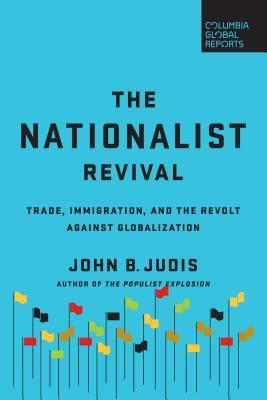


THE NATIONALIST REVIVAL: Trade, Immigration, and the Revolt Against Globalization (Columbia Global Reports series)
JOHN B. JUDIS
Columbia University Press (non-affiliate Amazon link)
$10.92 Kindle edition, available now

Rating: 4* of five

The Publisher Says: Why Has Nationalism Come Roaring Back?

Trump in America, Brexit in the U.K., anti-EU parties in Italy, Germany, France, the Netherlands, Austria, Poland, and Hungary, and nativist or authoritarian leaders in Turkey, Russia, India, and China -- Why has nationalism suddenly returned with a vengeance? Is the world headed back to the fractious conflicts between nations that led to world wars and depression in the early 20th Century? Why are nationalists so angry about free trade and immigration? Why has globalization become a dirty word?

Based on travels in America, Europe, and Asia, veteran political analyst John B. Judis found that almost all people share nationalist sentiments that can be the basis of vibrant democracies as well as repressive dictatorships. Today's outbreak of toxic "us vs. them" nationalism is an extreme reaction to utopian cosmopolitanism, which advocates open borders, free trade, rampant outsourcing, and has branded nationalist sentiments as bigotry. Can a new international order be created that doesn't dismiss what is constructive about nationalism? As he did for populism in The Populist Explosion, a runaway success after the 2016 election, Judis looks at nationalism from its modern origins in the 1800s to today to find answers.

I RECEIVED A DRC FROM THE PUBLISHER VIA NETGALLEY. THANK YOU.

My Review
: Much like The Populist Explosion, this 2018 book is a higher-level explainer to ground you in the essentials of nationalism's rise and development.

Post-WWII globalist institutions, created to combat the toxic fascist-infected nationalism running rampant today, have come a cropper in combating the nightmarish reality of resurgent and toxic nationalism—ironically because the institutions were using the weapons of the fascists, shame, Othering, and punishment, against them.

The force that is today's nationalist/fascist movement proves the weapons they themselves used ultimately hastened their own end.

The force of nationalism, like the force of populism, cannot be repressed forever, nor can it be reasoned out of people; it must be accounted for, if not exactly accommodated, in the politics of the twenty-first century. These are emotional responses to triggering events that make followers feel insecure. It cannot be stated enough that facts disproving emotive claims are ineffective in the face of passionately held feelings.

The points made in this book, that nationalists are not all wrong and the liberal elites are not listening to them could not be clearer in 2024. This US election was disastrously mishandled, manipulated by some very clear-sighted and goal-directed people, and need not have resulted in the the awful way that it did. Author Judis is very clear about how we fell into the trap we did; the job now is making the changes, personal, political, and societal, that need making to prevent the incoming administration from throwing US and by extension global society into far worse channels than we're already headed into.

An excellent companion read to The Populist Explosion and a worthy exploration of forces we as a society need to comprehend and harness to productive use.

Tuesday, November 19, 2024

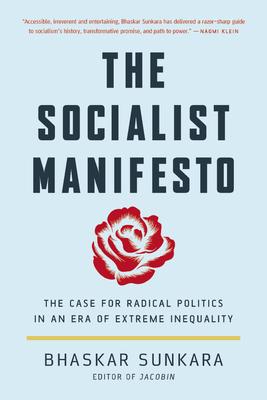
THE SOCIALIST MANIFESTO: The Case for Radical Politics in an Era of Extreme Inequality, never more trenchant than today


THE SOCIALIST MANIFESTO: The Case for Radical Politics in an Era of Extreme Inequality
BHASKAR SUNKARA

Basic Books
$15.00 trade paper, purchased from the author's magazine website

Rating: 5* of five

The Publisher Says: A "razor-sharp" introduction to this political and economic ideology makes a galvanizing argument for modern socialism (Naomi Klein)—and explains how its core tenets could effect positive change in America and worldwide.

In The Socialist Manifesto, Bhaskar Sunkara explores socialism's history since the mid-1800s and presents a realistic vision for its future. With the stunning popularity of Bernie Sanders and Alexandria Ocasio-Cortez, Americans are embracing the class politics of socialism. But what, exactly, is socialism? And what would a socialist system in America look like?

The editor of Jacobin magazine, Sunkara shows that socialism, though often seen primarily as an economic system, in fact offers the means to fight all forms of oppression, including racism and sexism. The ultimate goal is not Soviet-style planning, but to win rights to healthcare, education, and housing, and to create new democratic institutions in workplaces and communities. A primer on socialism for the 21st century, this is a book for anyone seeking an end to the vast inequities of our age.

I RECEIVED A DRC FROM THE PUBLISHER VIA NETGALLEY. THANK YOU.

My Review
: William M. Tweed said this about the way the US does politics:
I don't care who does the electing, so long as I get to do the nominating. As quoted in Understanding American Government (2003) by Susan Welch, p. 224

No good came from trying to talk sense into the Democratic Party; their loss on 5 November 2024 was catastrophic. It was not the resounding mandate the Nerd Reich and its tech scum boosters portray it as. The margin was not huge, but the impact will be *immense*, far-reaching, and vastly immiserating for millions.

It did not need to happen, even in the teeth of forty years of the carefully disguised radical coup orchestrated by the wealthy and powerful against the rest of us. The way to beat the radicals is not to appease or identify with them; it is to present an alternative to them.

This will never happen in the two-party system.

I wanted this not to be true, but this idiotic result has driven the last nail in the coffin of my faith in humanity, my trust in the US institutions of politics, and my desire to support the least-worst politicians in hopes they'll do some of the Right Thing. They won't.

Now what?

Now this, and before someone says "But socialism!" or even stupider "that's Communist!" I'll remind all y'all that the monster you've been Pavlovianly conditioned to fear and hate is totalitarianism relabeled to scare you away from realizing the socialist demands the owners hate were already met...to a degree...and they're the exact things your newly elected scum were put in place to destroy. When the way you live gets worse, do not open your yap. You either voted for, or decided not to vote against, this exact result.

It is your fault.

Now let's figure out what we can begin to do to make a few gains. Start by reading Bhaskar Sunkara's clear, cogent, carefully reasoned manifesto. If you're still reeling from the evidence of how immensely successful the scumbags' propaganda, misinformation, and misdirection were, here's a shred of hope to cling to. Here's a possibility that you already know works...you who receive "benefits" aka your own tax money returned to you (not some gift as the radical right wants you to believe) better than anyone...so lean into it.

Don't feel like you can do anything, don't want to think about it, are just too drained to give it your attention? That's their system for making you passive at work. If you won't do the work, spend your money to support those who will, and that shit-sure ain't the Democrats.

Support a real change for the better. Read this book to learn what that can mean.

Monday, September 9, 2024

THE IDEAL STATE: A Model Based on Analysis of Savagery, Feudalism, Capitalism and Beyond


THE IDEAL STATE: A Model Based on Analysis of Savagery, Feudalism, Capitalism and Beyond
TAYYIB AHMAD TAYYIB

Ideal Publishing Inc.
$18.00 Kindle edition, available now

Rating: 3* because I fully agree with the politics.

The Publisher Says: Previously published as "The Evil Within Evolution of Social Systems & The Ideal State"

This is a fully revised and expanded edition. Have you not wondered what kind of a country you would want to live in? What policies of its government would guarantee a secure and happy life for you and your children? We need to look at our past history and understand how our previous generations have fared under different social systems. Only then we can decide how a state should be structured and what policies it should adopt to ensure security and well-being of its population. It is important to know what makes a state into an imperial power and drives it to subjugate other states and peoples and exploit them. How could this tendency be avoided?

All civilized states and societies are moving towards more and more socialism and democratic control of their governments, despite temporary setbacks. What do you think lies ahead? States like Norway, Sweden, Denmark and most other European states are referred to as "social democratic states". Their citizens enjoy free education, universal health care and a guaranteed retirement income. China calls its socio-economic system as "Socialism with Chinese Characteristics". Despite being a developing country, it has eliminated extreme poverty and offers free high-school education to all its citizens and subsidized higher education and virtually universal health care. Bernie Sanders pleaded for a "democratic socialism" in the United States in his bid for the presidency of the US, a few years ago.

In this work, you would find a comprehensive analysis of the development of socio-economic and political systems from the age of savagery to feudalism and capitalism. You would find why, and how, capitalism leads to extreme exploitation, imperialism and violence, why it needs to be discarded and why a democratic socialist future for mankind is inevitable. The resulting ideal state should ensure equality of social, economic and political rights for all, without any distinction - racial, national, or gender. It should eliminate all kinds of economic exploitation resulting in development of all individuals to their full potential. Numerous illustrations are included and many political thinkers, economists and political leaders have, indirectly, contributed to this work. Quotations from their works are included on specific issues. Imagine what such an ideal state, or states, would mean for you and for the rest of humanity. Find out how humanity is progressing in that direction now and how this process would accelerate in the future. Let us not give up hope. The future of humanity is bright!

I RECEIVED A DRC FROM THE PUBLISHER VIA NETGALLEY. THANK YOU.

My Review:
This book is preaching to the choir, in terms of my belief the author is onto something good in his negative assessment of capitalism.

But, for four hundred pages, the prose is a lot like the synopsis above. That is to say, it's not fluid and readable like Yannis Varoufakis and Thomas Piketty (as translated by Arthur Goldhammer, anyway) are. I'm not in good conscience able to recommend the read to laypeople. If you're interested in leftist economics and social policy, come to the altar, but check your expectations at the door.

Thursday, April 11, 2024

PRESCRIPTION FOR PAIN: How a Once-Promising Doctor Became the "Pill Mill Killer", be extremely alert to the dangers of "doctor knows best"


PRESCRIPTION FOR PAIN: How a Once-Promising Doctor Became the "Pill Mill Killer"
PHILIP EIL

Steerforth Press
$29.95 hardcover, available now

Rating: 4.5* of five

The Publisher Says: An obsessive true crime investigation of a bizarre and unlikely perpetrator, who’s serving the opioid epidemic’s longest term for illegal prescriptions — four life sentences

Written in the tradition of I'll Be Gone in the Dark and True Crime Addict, combining Dopesick's heart rending portrayal of the epidemic's victims with Empire of Pain's examination of its perpetrators.

This haunting and propulsive debut follows a journalist’s years-long investigation into his father's old former high school valedictorian Paul Volkman, who once seemed destined for greatness after earning his MD and his PhD from the prestigious University of Chicago, but is now serving four consecutive life sentences at a federal prison in Arizona.

Volkman was the central figure in a massive “pill mill” scheme in southern Ohio. His pain clinics accepted only cash, employed armed guards, and dispensed a torrent of opioid painkillers and other controlled substances. For nearly three years, Volkman remained in business despite raids by law enforcement and complaints from patients’ family members. Prosecutors would ultimately link him to the overdose deaths of 13 patients, though investigators explored his ties to at least 20 other deaths.

This groundbreaking book is based on 12 years of correspondence and interviews with Volkman. Eil also traveled to 19 states, interviewed more than 150 people, and filed a Freedom of Information Act lawsuit against the Drug Enforcement Administration that led to the release of nearly 20,000 pages of trial evidence.

The American opioid epidemic is, like this book, a true crime story. Through this one doctor’s story, an era of unfathomable tragedy is brought down to a tangible, and devastating, human scale.

I RECEIVED A DRC FROM THE PUBLISHER VIA EDELWEISS+. THANK YOU.

My Review
: Greed, selfishness, and vanity are unholy siblings in this unnerving true-crime book.

The fact that I am treated for a very painful chronic condition, gratefully enough not by a pill-mill doctor!, meant I very much had a dog in this fight. Doctors who prescribe regular doses of strong pain meds are subject to a lot of scrutiny. After reading this horror story, I understand why.

I have a really hard time thinking about the kind of sociopathic ideation that goes into knowingly ruining people's lives on an industrial scale. A person with medical-school training who prescribes the cocktail of opioids, depressants, relaxants, that this man fed patients is well aware that the probability of disaster is very high. Anyone on these drugs, still less all these drugs in a cocktail, needs to be under close medical scrutiny. I'll mention here that, unlike many of the patients in this story, I am physically seen and extensively interacted with by my doctor every time I renew my pain medication. He interacts with me on multiple levels, conversationally determining if I am more or less impaired each visit; checking all vital signs, quizzing me on what I am doing with my medications; in short testing my level of cognitive ability to manage the use of all my meds. It makes my visits longer than most people's visits but that is what I need so it's what he does.

None of that happened for the pain patients caught in this doctor's pill mills.

When people seek pain relief, as a result of this doctor's and the many doctors like him prescribing pain drugs solely for their earning capacity, they often do not get it. People who need it are denied it because the possibility of abuse is so very present in our cultural consciousness due to the horrible, greedy, often fatal and always destructive issues caused by doctors turned drug entrepreneurs.

I wanted to read this book because I thought I'd read some overzealous puritan's exaggerated rage-filled hatchet job on a particular bad doctor. I assumed I'd come out of it like I did from Dopesick, thinking that I wanted a less judgmental and overemotional tone that would help me see the problem with greater clarity but not expecting to find it. This is, after all, the time of who shouts loudest sells best and controls the conversation...however briefly.

That made my surprise on finding exactly what I had hoped to find all the sharper. Eil's journalistic approach is to do the research and present the evidence, then go into an analysis of it that includes consulting with experts as well as speaking with the affected people. The emotional and judgmental stance I was expecting and dreading was vitiated by the careful framing of it inside contexts of the times and places, and most importantly people, involved.

Perhaps the most important context was that of the doctor himself. Only he knows why he did what he did. The people consulted by Eil give us the impression he left on those who knew him personally and professionally. That left me, as a reader who never met him, with the impression that psychological screening should be mandatory for anyone seeking a medical degree. It would help to identify narcissists and get them, as a condition of their future licensing, into counseling. It could also keep sociopaths out of the field entirely because, unlike narcissists, they lack empathy entirely instead of misplacing it in relationships, and can not be trusted to give actual help to patients in their uncaring care.

The entire grim saga of the pain mills run by this doctor, and yes I am not using his name because it is a bad idea to spend time in this hyperconnected era saying unkind things about narcissists in public, is one of societal subversion, too. The expectation that consumers of medical services have of their use is that a licensed professional will be trustworthy because the issuers of the license have done their research into the person and deem them credible and qualified. The system in his area let the people it's meant to serve down in pursuit of money. A hypercapitalist system is not going to result in good care for the ill and the needy. This book never smacks the reader with this conclusion; it presents a case that, unless one is dimwittwed or a sociopath, this is the only conclusion one can draw.

That's all I feel I need to say about that. That is, in fact, all I really want you to know that I got from the read. Was it fun? No it was not. Did I enjoy it? Not in any healthy way. My hope is that you will read this terrible tragic tale of dishonesty, greed, and cruelty, not because I dislike you but because I want you to be extremely alert to the real dangers of casually accepting "doctor knows best."

Tuesday, February 20, 2024

THE MARS HOUSE, latest from the ever-delightful Natasha Pulley


THE MARS HOUSE
NATASHA PULLEY

Bloomsbury USA
$15.99 ebook, available now

Rating: 4.8* of five

The Publisher Says: From the author of The Watchmaker of Filigree Street, a queer sci-fi novel about an Earth refugee and a Mars politician who fake marry to save their reputations—and their planet.

In the wake of environmental catastrophe, January, once a principal in London’s Royal Ballet, has become a refugee on Tharsis, the terraformed colony on Mars. In Tharsis, January’s life is dictated by his status as an Earthstronger—a person whose body is not adjusted to Mars’s lower gravity and so poses a danger to those born on, or naturalized to, Mars. January’s job choices, housing, and even transportation options are dictated by this second-class status, and now a xenophobic politician named Aubrey Gale is running on a platform that would make it all worse: Gale wants all Earthstrongers to be surgically naturalized, a process that can be anything from disabling to deadly.

When Gale chooses January for an on-the-spot press junket interview that goes horribly awry, January’s life is thrown into chaos, but Gale’s political fortunes are damaged, too. Gale proposes a solution to both their problems: a five-year made-for-the-press marriage that would secure January’s financial future without naturalization and ensure Gale’s political future. But when January accepts the offer, he discovers that Gale is not at all like they appear in the press. And worse, soon, January finds himself entangled in political and personal events well beyond his imagining. Gale has an enemy, someone willing to destroy all of Tharsis to make them pay—and January may be the only person standing in the way.

I RECEIVED A DRC FROM THE PUBLISHER VIA NETGALLEY. THANK YOU.

My Review
: This has a very "ripped-from-the-headlines" feel, like a big issues-driven Movie of the Week in the 1980s. The playfulness that the author, comme d'habitude, uses to frame her presentation of the Issues made me smile. I am particularly fond of the way she plays with the MM romance trope of a fake marriage that leads to a real relationship, in the context of a serious contemplation of the refugee crisis and the ever-increasing backlash againt gender minorities.

No one ever accused Author Pulley of lacking ambition.

Even inclusivity excludes, when it is a mandate...I am not a they, I am a he, and will resist being "they"d because of the same reasons I ask people what their not-always-obvious pronoun preference is. Like any overarching solution, it will not work for everyone...like absurd wealth disparities don't, like hypercompetition won't. And, as I expect from the author of The Kingdoms and The Secret Life of Valery K., that is the point. She invites us in to have a good, solid storytelling, then the real purpose sort of creeps up behind your chair and slaps some ropes around your wrists so you *need* to know what happens while also getting yor mind wedged open a bit.

Like the surgical "naturalization" of the Earthstrong immigrants that will artificially weaken them to make the like "real" Martians instead of merely imprisoning them in tightly binding suits...oh my goodness, the unpleasant parallels to our culture war over transness and the nature of being a "real" something. "We must PROTECT our weakest from these interlopers!" The eternal cry of the high-control fascist-leaning cultural bully. The Earthstrong immigrants have a terrible social ostracism as threats to the adapted Martians, confined to menial labor that renders their actual physical power differential a big advantage.

January, our main character, is the only character referred to by a masculine pronoun. As a former dancer, he is strong and lithe even by Earth standards. This makes him a scary monster of a beast to the adapted Martians, much less gravity having attenuated their strength and stamina. This is quite a come-down for him since he was once a principal dancer at the Royal Ballet. It does make his masculine pronoun feel simultaneously othering and fetshizing...like all perceived-stronger minorities his gender is hyperemphasized. This makes his union with Martian nativist Senator Gale, whose impromptu soundbite caused January tremendous social trouble, all the more trenchant in its commentary on the social construction of gender and the fetishization of, especially the visible, Others in a society.

Like we do with highly intentionally muscular men, heavy-breasted women whose endowments are clearly artificially augmented, and those whose skin and/or eye colors are not like the resident majority's are.

This, then, is Author Pulley at her tendentious best. The invitation to think through the role of fetishization, or simply enjoyed as the slow, rocky coming-together of two people from opposite sides of an ideological divide, is there. It is up to you which one you wish to foreground as you read the book. The interpersonal stakes are not shorted, or allowed to dominate; they are, as always in this author's œuvre, balanced carefully thus enriching each strand.

What makes the read just less than five stars for me is my rather less than enjoyment experienced by the inclusion of resurrected wooly mammoths. The entire ecological commentary is, for my money, twee and forgettable, though of course well-crafted...I just do not buy the animals' PoV bits, which thankfully are confined to footnotes. This is a facet that will delight some but did not me.

A worldbuilding tour de force, a meet-cute/fake marriage queer love story, a takedown of high-control ideology, and most of all a chance to fall in love alongside two wounded souls who had to travel from literal different planets to find their happiness.

Monday, January 22, 2024

MEMES TO MOVEMENTS: How the World's Most Viral Media Is Changing Social Protest and Power, slightly dated but very trenchant


MEMES TO MOVEMENTS: How the World's Most Viral Media Is Changing Social Protest and Power
AN XIAO MINA

Beacon Press
$24.95 hardcover, available now

Rating: 4* of five

The Publisher Says: A global exploration of internet memes as agents of pop culture, politics, protest, and propaganda on- and offline, and how they will save or destroy us all.

Memes are the street art of the social web. Using social media-driven movements as her guide, technologist and digital media scholar An Xiao Mina unpacks the mechanics of memes and how they operate to reinforce, amplify, and shape today's politics. She finds that the "silly" stuff of meme culture—the photo remixes, the selfies, the YouTube songs, and the pun-tastic hashtags—are fundamentally intertwined with how we find and affirm one another, direct attention to human rights and social justice issues, build narratives, and make culture. Mina finds parallels, for example, between a photo of Black Lives Matter protestors in Ferguson, Missouri, raising their hands in a gesture of resistance and one from eight thousand miles away, in Hong Kong, of Umbrella Movement activists raising yellow umbrellas as they fight for voting rights. She shows how a viral video of then presidential nominee Donald Trump laid the groundwork for pink pussyhats, a meme come to life as the widely recognized symbol for the international Women's March.

Crucially, Mina reveals how, in parts of the world where public dissent is downright dangerous, memes can belie contentious political opinions that would incur drastic consequences if expressed outright. Activists in China evade censorship by critiquing their government with grass mud horse pictures online. Meanwhile, governments and hate groups are also beginning to utilize memes to spread propaganda, xenophobia, and misinformation. Botnets and state-sponsored agents spread them to confuse and distract internet communities. On the long, winding road from innocuous cat photos, internet memes have become a central practice for political contention and civic engagement.

Memes to Movements unveils the transformative power of memes, for better and for worse. At a time when our movements are growing more complex and open-ended—when governments are learning to wield the internet as effectively as protestors—Mina brings a fresh and sharply innovative take to the media discourse.

I RECEIVED A DRC FROM THE PUBLISHER VIA EDELWEISS+. THANK YOU.

My Review
: Definition of a meme, via Wikipedia:
A meme (/miːm/; MEEM) is an idea, behavior, or style that spreads by means of imitation from person to person within a culture and often carries symbolic meaning representing a particular phenomenon or theme.[4] A meme acts as a unit for carrying cultural ideas, symbols, or practices, that can be transmitted from one mind to another through writing, speech, gestures, rituals, or other imitable phenomena with a mimicked theme.
Which has given rise to the Internet meme, again via Wikipedia:
An Internet meme, or simply meme (/miːm/, MEEM), is a cultural item (such as an idea, behavior, or style) that is spread via the Internet, often through social media platforms. Internet memes can take various forms, such as images, videos, GIFs, and various other viral sensations. Characteristics of memes include their susceptibility to parody, their use of intertextuality, their propagation in a viral pattern, and their evolution over time.
I doubt a lot of my readers are unfamiliar with the concept of a meme, in its initial formulatiion by Richard Dawkins, or in its new sense from the internet. It pays not to be caught out by omitting the definitions, partial though they may be. There will always be someone who wants to invalidate any information that offers context for judging modern information culture.

The meme machine is decades old at this point, and a book six years old is going to miss some modern context...the internet moves very fast and seldom stays in one lane even when it isn't moving at top speed. That is clear, and undeniable, but it in no way invalidates the author's thesis that the internet and social media have a large, possibly growing, influence on how much and what kind of attention we pay to different cultural memes on the internet as well as in real life. There are examples of internet-inspired real life actions, eg The Arab Springs of the teens, so her thesis is that governments began to use countermemes to spread doubt, dissension, and overwhelmed apathy among internet users. The hashtag culture that looks for its own people via searching hashtags on Twitter (still refuse to call it X), and the multivarious pretenders to its throne, to find those whose views align with their own, and whose voices they wish to amplify by reposting or remixing their memes, has proven distractable and cooptable. This was at an earlier phase when the author was writing the book, and thus gets comparatively little play. I would have been more satisfied had there been illustrative memes in the text, but it had, I feel sure, pragmatic reasons like copyright clearances and the sheer exposure to malicious actors challenging the book. In other words, a species of the self-censorship the author discusses, as a consequence of state-sponsored botfarms etc. etc. that act in search of diluting messages they do not like.

That being more of a reason for the publisher to bring out a second edition, one including climate denial in its evolving, still spreading, form, than for you to skip reading it. I encourage you to get your eyes on the author's trenchant, intelligent analysis of the intersection between meme culture and personal resistance to oppression and totalitarian ambitions and actions.

Monday, January 15, 2024

JOHN LEWIS: In Search of the Beloved Community, a "Citty Upon a Hill" longed from since the time of Winthrop


JOHN LEWIS: In Search of the Beloved Community
RAYMOND ARSENAULT

Yale University Press
$35.00 hardcover, available tomorrow

Rating: 5* of five

The Publisher Says: The first full-length biography of civil rights hero and congressman John Lewis

For six decades John Robert Lewis (1940–2020) was a towering figure in the U.S. struggle for civil rights. As an activist and progressive congressman, he was renowned for his unshakable integrity, indomitable courage, and determination to get into “good trouble.”

In this first book-length biography of Lewis, Raymond Arsenault traces Lewis’s upbringing in rural Alabama, his activism as a Freedom Rider and leader of the Student Nonviolent Coordinating Committee, his championing of voting rights and anti-poverty initiatives, and his decades of service as the “conscience of Congress.”

Both in the streets and in Congress, Lewis promoted a philosophy of nonviolence to bring about change. He helped the Reverend Martin Luther King Jr. and other civil rights leaders plan the 1963 March on Washington, where he spoke at the Lincoln Memorial. Lewis’s activism led to repeated arrests and beatings, most notably when he suffered a skull fracture in Selma, Alabama, during the 1965 police attack later known as Bloody Sunday. He was instrumental in the passage of the Voting Rights Act of 1965, and in Congress he advocated for racial and economic justice, immigration reform, LGBTQ rights, and national health care.

Arsenault recounts Lewis’s lifetime of work toward one overarching realizing the “beloved community,” an ideal society based in equity and inclusion. Lewis never wavered in this pursuit, and even in death his influence endures, inspiring mobilization and resistance in the fight for social justice.

I RECEIVED A DRC FROM THE PUBLISHER VIA NETGALLEY. THANK YOU.

My Review
: Almost six hundred pages. That is a lot of reading time. It is also, peculiarly enough, less than I would have liked it to be because the life of Representative Lewis took place in such interesting times, and among such towering figures of US history, that I would gladly have read more.

Most all my readers know I am a committed atheist, and either know or can guess why. It is people like John Lewis, who used their christian beliefs to leave the world a better, more equitable place for as many as he could advocate for, that make me especially bitter about the sleazy rotten souled creeps who embody my idea of christians and christianity. Lewis was such a committed christian that he, the victim of a violent attack by a racist who later regretted his actions and sought forgiveness from Lewis, referred to the man as his brother in a television appearance they made together. This is a prime example of what a friend of Lewis’s called his "moral jujitsu," a means of wrong-footing the hate-spewing opponents who confidently expected him to return fire.

Author Arsenault sites Lewis in his historical milieu with thorough, fully attributed research. He has relied on personal sources who knew him. Thus they, who were there, can give him the real flavor of a Jim Crow rural Alabama upbringing, one filled with the ritual humiliations and deprivations so beloved of our scumbag brethren the white nationalists. While this did radicalize young Lewis, his christian beliefs channeled his radicalism into a serach for justice, fairness, equitability, and all achieved without the rage and hate that marked his opponents. Admirable to me, and to generations of voters who returned him to Congress for much of his adult life.

His skills as a politician were honed in the arena of the Student Nonviolent Coordinating Committee, which he was instrumental in forming and from whom he broke away after they began calling for "Black Power," which he saw as provocative and counterproductive with its inherent message of conflict. Lewis opposed the simple reductive sloganeering of the Civil Rights Movement in its post-MLK era. This was, after all, one of the folk who thought they would be murdered in public on Bloody Sunday, in a protest on a bridge now named after him.

What that pointed to was a fact that I, no scholar of Representative Lewis’s life and career, had never known or even considered: John Lewis was not uniformly admired among his colleagues because he favored the cause of human rights over narrowly construed civil rights. He was, for example, taken to task for his vocal opposition to the confirmation of the Supreme Court’s first Black justice, Clarence Thomas...and how right he was about that! He was also a QUILTBAG ally in a community that does not, as a rule, support gay rights...at least not publicly. He very much did, and also supported the ongoing Jewish struggle against antisemitism.

John Lewis emerges from this telling of his life’s story as a man of high principles and powerful moral certainty. It did not make him universally loved, in fact made him a figure of hatred for many, but it gave him the grace of convictions not merely held, but lived. I hope you will spend some hours with John Lewis’s spirit by reading Author Arsennault’s wonderful telling of it. There are illustrative images in the text that enrich the older reader’s memory of the times he helped shape. It is a life worth knowing more about lived in times we still feel reverberations of...though not as positive a feedback as I myownself would prefer.

Tuesday, December 19, 2023

INTO SIBERIA: George Kennan's Epic Journey Through the Brutal, Frozen Heart of Russia, a sort of anti-travelogue


INTO SIBERIA: George Kennan's Epic Journey Through the Brutal, Frozen Heart of Russia
GREGORY J. WALLANCE

St. Martin's Press
$30.00 hardcover, available now

Rating: 4* of five

The Publisher Says: In a book that ranks with the greatest adventure stories, Gregory Wallance’s Into Siberia is a thrilling work of history about one man’s harrowing journey and the light it shone on some of history’s most heinous human rights abuses.

In the late nineteenth century, close diplomatic relations existed between the United States and Russia. All that changed when George Kennan went to Siberia in 1885 to investigate the exile system and his eyes were opened to the brutality Russia was wielding to suppress dissent.

Over ten months Kennan traveled eight thousand miles, mostly in horse-drawn carriages, sleighs or on horseback. He endured suffocating sandstorms in the summer and blizzards in the winter. His interviews with convicts and political exiles revealed how Russia ran on the fuel of inflicted pain and fear. Prisoners in the mines were chained day and night to their wheelbarrows as punishment. Babies in exile parties froze to death in their mothers’ arms. Kennan came to call the exiles’ experience in Siberia a “perfect hell of misery.”

After returning to the United States, Kennan set out to generate public outrage over the plight of the exiles, writing the renowned Siberia and the Exile System. He then went on a nine-year lecture tour to describe the suffering of the Siberian exiles, intensifying the newly emerging diplomatic conflicts between the two countries which last to this day.

I RECEIVED A DRC FROM THE PUBLISHER VIA NETGALLEY. THANK YOU.

My Review
: Russia always seems to have vicious, cruel, authoritarian governments. George Kennan documented the horrifying repressions of the tsarist regime of Alexander III, father of the ill-fated Nicholas II. The adventurous man whose trip through Siberia Author Wallance is epitomizing first went to Siberia, governed by our then-close ally Russia, to lay a telegraph line across the country beginning in 1864 and eventually have it reach Western Europe. There was an Atlantic cable to England, but the Atlantic has these terrible, damaging things called "hurricanes" every so often, and then there's that big line of volcanoes up the middle of it that periodically erupts here and there...think Iceland's Eyjafjallajökull, 2010...so it has always made sense to have a backup.

Kennan spent a couple years doing the work, and was in love with Siberia by the end of it. The US and Russia, after a long period of close ties that peaked after we bought Alaska from them in 1867, began getting terrible reports about the political prisoners being abused in Siberian prisons. Kennan, by now a professional journalist, was widely thought to be the best possible person to investigate the situation on behalf of the US. He was vocal in his love for Siberia. He said publicly that he felt the complaints of terrible conditions were unlikely to be true...prisoners' families could join them there, after all!

Kennan and artist George Albert Frost traveled through the tsarist penal system, documenting conditions as they found them. Kennan wrote an eleven hundred-page exposé of the horrors they witnessed; Frost's drawings and photographs were included. Frost himself suffered a breakdown—what we would call today PTSD—and really was never quite the same again.

Kennan never lost his love for Siberia and its people but he became an implacable detractor of the Imperial Russian government. He had the evidence to back his outrage and disgust up. He devoted his next decade to a lecture tour enlightening audiences to the facts of what was euphemistically called "the Exile System" of political repression. When, decades later, the October Revolution brought the Bolsheviks to power, Kennan famously said that "the Russian leopard has not changed his spots."

I read this fascinating history of events I'd had only a passing awareness of in the context of Kennan's report to Woodrow Wilson about the Bolsheviks and his subsequent criticism of the Wilson Administration's pusillanimous response to them. His 1885 trip was touched on, but I now know why he was tasked by Wilson with preparing the ignored report. This book, not at all a long read, brings the full awfulness of Kennan and Frost's experiences to life. It is nothing short of gut-wrenching at times. It is extremely carefully footnoted and supplied with an admirable bibliography. I believe Author Wallance has done everything except invent time travel to bring us the best report of the facts possible. His contextualization was emotionally honest, but not of the sort that leads me to mutter, "don't try so hard."

I recommend it highly...but with the warning that delicate fleurs who don't enjoy details of physical cruelty should pass right by. I did, to be honest, feel as though these facts were rather more abundant than was strictly necessary. I had a half-star knocked off for feeling like I was being knocked in the teeth. As Frost's art exists, I wanted to see it, or some of the photos, just to see the realities behind the descriptions of the place itself, though not the abuses!

Not always an easy read, but a wonderfully immersive and interesting historical light on a country whose past binds it to the US.

Monday, December 18, 2023

MORTAL REPUBLIC: How Rome Fell into Tyranny, using History to explain the present pretty convincingly


MORTAL REPUBLIC: How Rome Fell into Tyranny
EDWARD J. WATTS

Basic Books
$18.99 trade paper, available now

Rating: 4* of five

The Publisher Says: Learn why the Roman Republic collapsed—and how it could have continued to thrive—with this insightful history from an award-winning author.

In Mortal Republic, prize-winning historian Edward J. Watts offers a new history of the fall of the Roman Republic that explains why Rome exchanged freedom for autocracy. For centuries, even as Rome grew into the Mediterranean’s premier military and political power, its governing institutions, parliamentary rules, and political customs successfully fostered negotiation and compromise.

By the 130s BC, however, Rome’s leaders increasingly used these same tools to cynically pursue individual gain and obstruct their opponents. As the center decayed and dysfunction grew, arguments between politicians gave way to political violence in the streets. The stage was set for destructive civil wars—and ultimately the imperial reign of Augustus.

The death of Rome’s Republic was not inevitable. In Mortal Republic, Watts shows it died because it was allowed to, from thousands of small wounds inflicted by Romans who assumed that it would last forever.

I RECEIVED A DRC FROM THE PUBLISHER VIA NETGALLEY. THANK YOU.

My Review
: The Mary Beard School of Skepticism About Past as Prologue is in session.
The past is no Oracle and historians are not prophets, but this does not mean that it is wrong to look to antiquity for help understanding the present.
This is intensely controversial. I am not at all sure it is true, but after reading this thoroughly researched and well sourced in the facts that we can know book, I'll put a pin in my inclination to doubt. I can enjoy this book on its factual merits quite well enough.

The author focuses his attention on the period between the victory of the Romans over Carthage in the Second Punic War, and Octavian's usurpation of power, effectively beginning the Empire. That time, its unrest and gradual normalization of political gridlock and, ultimately, violence, does bear a resemblance to the current pass in US–and world–politics.

I have no kick with that fact being pointed out. I am pretty confident the author's analysis of what led up to the events, and how what went down made the resolution of the problems seem pretty obvious. The way he has used the chapter order is, pretty clearly, tendentious...a downward slide from functioning, if troubled republic into one-man rule and autocracy just *feels* more and more inevitable as the facts we know are marshaled.

Where I go a little off his carefully laid rails is where he posits his ideas for how the slide was not inevitable, and the autocracy could've been avoided. That is allohistory which, by itself, is fine by me. But this is presented with a very authoritative air, not differentiated from the text based on facts that surrounds it, and that felt a bit like I was being led to agree without any facts or evidence that his conclusions were plausible. There can not be any such evidence or facts because that isn't how things *did* play out. I can't say he's wrong for all the same reasons.

The desire to show us how to fix the ugly, scary passage we're going through by using the past as a model makes a lot of sense. It still shouldn't be presented as being the equal of the fact-based narrative around it.

Your history-loving giftee, your anxious old uncle who just knows The End Is Nigh, will lap up this story. The good thing is that, as the facts pile up, the author hands the reader this double-edged aerçu:
No republic is eternal. It lives only as long as its citizens want it.
That is hopeful, if you believe there is a chance to warn and arm people against what is occurring; and disheartening, because look what happened to Rome.

The author is of the former opinion, and this book is the case he makes for it.

GALILEO AND THE SCIENCE DENIERS, a great read and a good gift


GALILEO AND THE SCIENCE DENIERS
MARIO LIVIO

Simon & Schuster
$18.00 trade paper, available now

Rating: 4.5* of five

The Publisher Says: An “intriguing and accessible” (Publishers Weekly) interpretation of the life of Galileo Galilei, one of history’s greatest and most fascinating scientists, that sheds new light on his discoveries and how he was challenged by science deniers. “We really need this story now, because we’re living through the next chapter of science denial” (Bill McKibben).

Galileo’s story may be more relevant today than ever before. At present, we face enormous crises—such as minimizing the dangers of climate change—because the science behind these threats is erroneously questioned or ignored. Galileo encountered this problem 400 years ago. His discoveries, based on careful observations and ingenious experiments, contradicted conventional wisdom and the teachings of the church at the time. Consequently, in a blatant assault on freedom of thought, his books were forbidden by church authorities.

Astrophysicist and bestselling author Mario Livio draws on his own scientific expertise and uses his “gifts as a great storyteller” (The Washington Post) to provide a “refreshing perspective” (Booklist) into how Galileo reached his bold new conclusions about the cosmos and the laws of nature. A freethinker who followed the evidence wherever it led him, Galileo was one of the most significant figures behind the scientific revolution. He believed that every educated person should know science as well as literature, and insisted on reaching the widest audience possible, publishing his books in Italian rather than Latin.

Galileo was put on trial with his life in the balance for refusing to renounce his scientific convictions. He remains a hero and inspiration to scientists and all of those who respect science—which, as Livio reminds us in this “admirably clear and concise” (The Times, London) book, remains threatened everyday.

I RECEIVED A DRC FROM THE PUBLISHER VIA NETGALLEY. THANK YOU.

My Review
: A concise, well-thought-through biography of Galileo. The point of another biography of him is the present climate od science denial, of skepticism in our social and political realms, about the way science is done–and why it is done that way.

There is much to be taken from an erudite scientist and polymath's recounting of the events of Galileo's life in the specific context of looking at what led him to become a prisoner of conscience, what the men who opposed his dissemination of his discoveries were fighting for and against, and what this battle cost all of society. Author Livio is tendentious, unapologetically so, and presents a perfectly astonishing notes, footnotes, and sources collection for a popular not academic book.

The organization of the book is more thematic than linear. Following the author's arguments is, as expected from a scientist, not hard...being organized is kinda the job description of scientist, after all...but do not expect the chronology of Galileo's life to make an appearance, and go with the logical flow.

Science, being dedicated to the pursuit of facts, often presents its conclusions as Truth...then changes its mind as new evidence comes in. This is a feature, not a bug, in how science works. It conflicts with many people's intense need for Immutable Truth...science is pretty much antithetical to Immutability. This has the sad consquence of people like the church hierarchy is made up of, running head-on into people like Galileo and his fellow scientists as they follow the evidence and the facts in reaching very new conclusions...facts are not Truth. The conclusions based on the facts, new and old, are not Truth. Science is a worldview based on probabilities.

Many people feel this is shifty...dishonest...trying to put one over on them.

This is the conflict that Author Livio is arguing against. He does not use head-on confrontation to do so. Galileo's life, and his conflict with the hierarchy, does most of his heavy lifting. The beauty of his book is that this argument, presented in any other way, leads to deeper entrenchment of anti-science attitudes. By using the life of a well-known and respected scientist from the past, the attitudes that led him into conflict, and how that conflict is now understood, Author Livio uses the back door to find the chinks in the faulty logic used by science deniers.

Great book for your loud old uncle, or your argumentative teen boy, who has Opinions about science with no information to rest them on. Also good for you to read because you will learn more ways to build your counterarguments to the denials of facts to serve that evil illusion, Truth.

TOO MUCH INFORMATION: Understanding What You Don't Want to Know, a how-to-think book


TOO MUCH INFORMATION: Understanding What You Don't Want to Know
CASS R. SUNSTEIN

MIT Press
$19.95 trade paper, available now

Rating: 4* of five

The Publisher Says: How much information is too much? Do we need to know how many calories are in the giant vat of popcorn that we bought on our way into the movie theater? Do we want to know if we are genetically predisposed to a certain disease? In Too Much Information, Cass Sunstein examines the effects of information on our lives. Sunstein argues that government should require companies, employers, hospitals, and others to disclose information not because of a general "right to know" but when the information in question would significantly improve people's lives.

I RECEIVED A DRC FROM THE PUBLISHER VIA NETGALLEY. THANK YOU.

My Review
: How many times a day do you have to fill out a form of some sort? How many forms does it take for you to interact with your bank, your local government, your vendor of choice for whatever gotta-have-it you gotta have today? I know most of us don't read the Terms of Service, and even if we start to, they're written in legalese to discourage all but the most bloody-minded to give up, scroll to the bottom, and hit "I Agree" even though you're pretty sure you don't.

Autocomplete makes some forms tolerable and password managers make others easy enough to forego the usual "do I really want to sign up for this?" soul-searching. But it is all information...your information. You are your information.

Author Sunstein (Can It Happen Here?: Authoritarianism in America, Impeachment: A Citizen's Guide) was the Administrator of the White House Office of Information and Regulatory Affairs in the Obama administration, as well as the Harry Kalven Visiting Professor at the University of Chicago Law School; he is currently Professor of Law at Harvard Law School. In other words, this is someone who really knows what information is used for, and has an unaralleled grasp of the costs that gathering, storing, and manipulating all this information costs at every end of the transaction.

What this book did for me was to make me think through the mindless "I Agree"-clicking I do when I am online. Service providers are required to disclose things to us for a reason, and it isn't *our* protection. Author Sunstein doesn't provide panaceas or one-size-fits-all solutions to the issue of information overload. He offers a considered, informed insider's look at how the constant demand for your information, the constant barrage of their legally-required information to you, leads to the fatigue of indifference.

This doesn't make it sound like a #Booksgiving gift. It should be one you gift yourself, but as the demand for and deluge of information grows more and more overwhelming, it's a great time to think of the consequences as we head into the presidential election cycle of 2024. Your politically active pals could use this readable, thoughtful treatment of the complex issue of how much is too much information...in or out...and how to manage, parse, and organize that information as presented to you.

Valuable information (!) for your engaged, aware friend.

Saturday, May 21, 2022

HITLER'S AMERICAN FRIENDS: The Third Reich’s Supporters in the United States, traitorous fascist sympathizers aren't new


HITLER'S AMERICAN FRIENDS: The Third Reich’s Supporters in the United States
BRADLEY W. HART

Thomas Dunne Books
$11.99 Kindle edition, available now

Rating: 4* of five

The Publisher Says: A book examining the strange terrain of Nazi sympathizers, nonintervention campaigners and other voices in America who advocated on behalf of Nazi Germany in the years before World War II.

Americans who remember World War II reminisce about how it brought the country together. The less popular truth behind this warm nostalgia: until the attack on Pearl Harbor, America was deeply, dangerously divided.

Bradley W. Hart's Hitler's American Friends exposes the homegrown antagonists who sought to protect and promote Hitler, leave Europeans (and especially European Jews) to fend for themselves, and elevate the Nazi regime.

Some of these friends were Americans of German heritage who joined the Bund, whose leadership dreamed of installing a stateside Führer. Some were as bizarre and hair-raising as the Silver Shirt Legion, run by an eccentric who claimed that Hitler fulfilled a religious prophesy. Some were Midwestern Catholics like Father Charles Coughlin, an early right-wing radio star who broadcast anti-Semitic tirades. They were even members of Congress who used their franking privilege—sending mail at cost to American taxpayers—to distribute German propaganda. And celebrity pilot Charles Lindbergh ended up speaking for them all at the America First Committee.

We try to tell ourselves it couldn't happen here, but Americans are not immune to the lure of fascism. Hitler's American Friends is a powerful look at how the forces of evil manipulate ordinary people, how we stepped back from the ledge, and the disturbing ease with which we could return to it.

I RECEIVED A DRC FROM THE PUBLISHER VIA NETGALLEY. THANK YOU.

My Review
: It's always been a failing of the left-wing political folk to see the Apocalypse in each and every thunderation from the Christo-Fascist Right as the ongoing battle for the USA's soul continues. There are now, there were in the 1950s, there were in the 1930s and 1940s, traitorous scum whose personal vision of a Perfect World contains only people like them, who are willing to do anything legal or not to enforce their will on the eternal majority who don't want that. In an article in The Nation, the author of the think piece I've linked to comments most saliently on the Red Scare years' school-textbook battles, book burnings, and other such performative outrage with this pithy remark:
Most Americans don’t think that proponents of critical race theory are secretly spreading “Marxism” in the schools, either, or that woke corporations are somehow supporting the same evil project. The people who make such claims are a small minority, just as they were in the 1950s.

The fact is that our country's been under some form of internal attack from fascist and/or authoritarian right-wing rabble since Day One. So has every other political structure. Let's not forget the fate of Periclean Athens. It's the eternal project of greedy, selfish control freaks to get everything they can into their own hands and to control what they can't possess.

Author Hart made a well-researched and -written alarm call against calm, resigned acceptance of the culture coup attempted during the 45th president's term in this book. He uses the well-documented and clearly overcome existence, activities, and failures of Nazi sympathizers in the US. It is an effective technique; it uses as its organizing principle a simple structure: Each chapter is dedicated to a single organization active in promoting German/Nazi interests in the US, and gives some crucial details about how and why this choice was made. It also characterizes and puts into timely context the people who made up the institution in question. This avoids a common trap in histories of zeitgeists or social movements, the dreaded alphabet soup of initialism and too-similar or too-often-repeated names. That admittedly more synthetic approach can weave a tapestry of details. It more often than that causes severe MEGO disease.

The most disturbing take-away of this entire loudly rung tocsin is that these forces of anti-democratic rage failed because they lacked a credible, powerful leader. Today's versions, it is very frightening to realize, do not suffer from that lack. It isn't that Author Hart is unaware of this, it's that he seemed to feel he shouldn't make as much of the echoes I heard in each chapter of current events as I would've preferred. There is something to be said for taking off the gloves and hitting the enemy within hard. It's something "they" do a lot of (see my review of The Obama Hate Machine) and with a lot less factual basis than Author Hart presents.

Why this book only gets four stars from me is the quite startling number of uncorrected typos that made it from the DRC I read into the library copy I checked out. Scandalous! And, in the end, there were moments that I found myself not quite satisfied with the case the author made for some person or organization's motivation for opposing the US entry into WWII. Mixed motives are more common than pure ones on every gradation of the ideological spectrum, as (for example) morally based pacifism is present among right-wingers, too.

Perhaps the most telling thing that I noticed go underremarked was the utter ineffectuality of Hoover's FBI in going after right-wing terrorism. Red Scare propaganda against our nominal allies the Soviets was rife. How telling that is...British intelligence informed the US government better about domestic threats than Hoover's FBI.

I was still angered and unsettled and unnerved by this read. I am recommending it to all and sundry who think the Right's victory in the 2022 midterm elections is somehow inevitable. We who do not wish to have our country scourged by the hypocrites and religious nuts of this book's modern counterparts should heed Author Hart's dictum: "{U}nfortunately, the merchants of hate always seem to have someone to listen to them." Let's plug the holes in our national awareness. It can only help the side dedicated to the rights and duties of citizens against the Right's attacks on them.

Friday, February 11, 2022

TODAY HONG KONG, TOMORROW THE WORLD: What China's Crackdown Reveals About Its Plans to End Freedom Everywhere


TODAY HONG KONG, TOMORROW THE WORLD: What China's Crackdown Reveals About Its Plans to End Freedom Everywhere
MARK L. CLIFFORD

St. Martin's Press
$29.99 hardcover, available now

Rating: 4.5* of five

The Publisher Says: A gripping history of China's deteriorating relationship with Hong Kong, and its implications for the rest of the world.

For 150 years as a British colony, Hong Kong was a beacon of prosperity where people, money, and technology flowed freely, and residents enjoyed many civil liberties. In preparation for handing the territory over to China in 1997, Deng Xiaoping promised that it would remain highly autonomous for fifty years. An international treaty established a Special Administrative Region (SAR) with a far freer political system than that of Communist China—one with its own currency and government administration, a common-law legal system, and freedoms of press, speech, and religion.

But as the halfway mark of the SAR’s lifespan approaches in 2022, it is clear that China has not kept its word. Universal suffrage and free elections have not been instituted, harassment and brutality have become normalized, and activists are being jailed en masse. To make matters worse, a national security law that further crimps Hong Kong’s freedoms has recently been decreed in Beijing. This tragic backslide has dire worldwide implications—as China continues to expand its global influence, Hong Kong serves as a chilling preview of how dissenters could be treated in regions that fall under the emerging superpower’s control.

Today Hong Kong, Tomorrow the World tells the complete story of how a city once famed for protests so peaceful that toddlers joined grandparents in millions-strong rallies became a place where police have fired more than 10,000 rounds of tear gas, rubber bullets and even live ammunition at their neighbors, while pro-government hooligans attack demonstrators in the streets. A Hong Kong resident from 1992 to 2021, author Mark L. Clifford has witnessed this transformation firsthand. As a celebrated publisher and journalist, he has unrivaled access to the full range of the city’s society, from student protestors and political prisoners to aristocrats and senior government officials. A powerful and dramatic mix of history and on-the-ground reporting, this book is the definitive account of one of the most important geopolitical standoffs of our time.

I RECEIVED A DRC FROM THE PUBLISHER VIA NETGALLEY. THANK YOU.

My Review
: It is, in light of China's Xi and Russia's Putin inking a deal for "world domination", beyond urgent that we listen to Author Clifford's personal experience on China's until-now slow, patient, and carefully deniable march towards world domination.

After almost thirty years as a foreign resident in Hong Kong, Author Clifford...able, at any time, to leave this city he loves for a solid and certain welcome "home"...was a more than modestly invested resident of what was to be a Special Autonomous Region of China with rights and freedoms guaranteed by treaty in 1984, to take effect in 1997's handover of Hong Kong and be in place until 2047. (I can't help but wonder if the symmetry of that date with the centennial of India and Pakistan's partition and independence was deliberate.) I am sure that his pain, as he's watched the world shrug its shoulders when viewing (at a profitable distance) China's steady, concerted, implacable abrogation of the treaty, is intense. It comes from a genuine love for this unique and vibrant world that is the port on the Pearl River into the South China Sea.

If this year's Beijing Winter Olympics had not focused some attention on the Uyghur Genocide (alleged, in case some troll farm decides I'm good as a target, alleged genocide) and the de-Uyghurization of children in boarding schools, a policy shamelessly, shamefully modeled on US and Canadian Native populations' systematic abuse of the too-recent past, and darn near compelled the regime to require a Uyghur skier to act as torchbearer at the opening ceremonies, no doubt we would all be listening to Author Clifford in a near-comatose indifference.

It is the besetting sin of the capitalist, "democratic" society to look on apathetically when things occur that do not earn or cost them money.

But that said, are we just helpless as the autocratic 2.4 billion-strong Asian/Russian Neues Herrenvolk flex their economic and resource-controlling might? What, then, would be the point of picking up the book? Author Clifford's not Cassandra, nor even Tiresias. He is, though, a keen observer, a skilled craftsman of ideas, and an effective communicator of what he has observed as well as what he has seen work or not work in countering the actions taken by the Chinese authorities. He makes a very plain, inescapable fact crystal clear: China is on a tight time schedule to achieve its goals.

Like the US now, like the Soviet Union in 1989, the population-shrinking bomb's going off in China within the next two decades. The growth, economic and technological, that China has experienced, came at the price of fewer births among Han Chinese (the infamous one-child policy is already scrapped), the real people in China's HIGHLY racist culture. So they need to get their control of Tibet (source of water for over 2 billion people!), of Taiwan (control of the South China Sea, busiest shipping lanes on Earth!), and Xinjiang (mineral wealth beyond belief!) fully consolidated yesterday at the latest.

So it needs maximum Red Army head count. And that's set to decline. Hence the sudden-seeming, multi-pronged, and many-faceted repressions, aggressions, and pacifications we're seeing. Author Clifford, in his wordsmithing, does a more deft and delectable job than I have, but he is not one whit less urgent in his bid for your attention. The world faces a large number of concurrent crises...nothing new there...but one does rather need to step away from the genuine anguish of watching the labor of decades, a century, being dismantled on so many fronts at once. Author Clifford, while his love for Hong Kong doesn't inspire me with similar love, does inspire me to look at the events in Hong Kong and think..."uh oh."

But on an entirely different plane. One of, "wait a minute, that's what the CCP did in Hong Kong!" One of seeing past the mendacious excuses offered for authoritarian groundwork-laying. One of "it can happen here if we let it." There is a level on which reading this book will, and should, cause anyone born in times that called themselves democratic to look long and hard at the political landscape in the US and think "it's not a single second too soon to take decisive action against the home-grown authoritarian movement."

Please.