Showing posts with label economic justice. Show all posts

Wednesday, July 15, 2026

HAPPY LIFE, not a buck-up-bucko book despite the title


HAPPY LIFE
DAVID FOENKINOS
(tr. Sam Taylor)
Pushkin Press (non-affiliate Bookshop.org link)
$13.99 ebook, available now

Rating: 4* of five

The Publisher Says: A tender and wistfully satirical novel about the desire to change your life by bestselling French author David Foenkinos

"Foenkinos's surreal yet relatable novel…considers life in our age of anxiety, when other people's picture-perfect lives make our own seem drab in comparison." —Washington Post

Everyone, at some point in their lives, wants to be someone else.

Eric Kherson—40, divorced, distracted—is spiraling. He has devoted his life to a successful career as the marketing director of a leading sports brand. But when family disaster rocks him to his core, he finds himself adrift from his family and questioning all his choices.

That is, until an acquaintance from his schooldays offers him a high-powered government position. Desperate for escape, he throws himself into her enigmatic world of high-risk deals and endless networking, doing anything it takes to get a contract signed.

But on a business trip to Seoul, Eric starts feeling worse than ever. Wandering the city's streets, he comes across Happy Life, a store that offers its customers something that could change their lives: a fake funeral. Happy Life will write your eulogy, arrange the flowers, and allow you to lie inside your own coffin. Why? They believe the experience will help you reinvent yourself.

But above all for Eric, Happy Life sparks a business venture of his own that might do just that…

A celebrated French bestseller, Happy Life is a life-affirming story of hope and recovery, perfect for fans of Matt Haig and Nathan Hill.

I RECEIVED A DRC FROM THE PUBLISHER VIA EDELWEISS+. THANK YOU.

My Review
: I am on record as a David Foenkinos fanboy. I have not (yet, anyway) rated any of his books I've read under four stars. I'm pickin' up what he's puttin' down because he's willing to take a classically realist setting and stitch some strangeness onto it. It's never a huge dissonance, it doesn't feel as though some clumsy editor from a different decade bookhorned a bad idea into the story...it's happened to other authors. I'm always *sure* this story of his I'm reading right then will be Foenkinos' breakout hit, and all y'all will see how Right I am about his humor, delicate honesty, and how very deftly Sam Taylor captures it in English!

To date, not so much. I persevere. I'm shocked that y'all read Solvej Balle's riff on Groundhog Day in your tens of thousands and shun a more fun version of the "things fall apart, emotions have entropy, no one gets outta here alive" story. There are over a thousand reviews of this book on Goodreads, average high three stars. Given the quotidian subject matter...there must be more than this...that strikes me as decent.

Happy Life, the business, is a very interesting conceit. Pretend you're dead. Read your obituary. Lie in your future coffin. Now, when you get up, think "is this good enough?" I'll bet most people look at life without depth until confronted with Death, the Reaper, the dirt nap, whatever euphemism tickles your fancy, whose cold grasp is very strongly focusing to everyone who feels it. Eric, our PoV character, is middle-aged, mid-career, peaking in power. He's miserable in the depressed person's way, shrouded in grey fog and honestly unable to see why that's even a problem anymore.

That's the true danger point, when a new challenge (his new job as a trade representative for France in this case) only points up the essential sameness of Life and futility of hope. On a mission to Seoul, Eric discovers Happy Life and its weird conceit of fake-deathing yourself to shed the fog, pull off the shroud of sameness, rise from the coffin renewed and revitalized. It works. And if it worked for Eric, unhappy and unable to think *why* he should be when he's got money, power, and purpose, then it probably will for other wealthy French people.

Can money buy happiness after all?

A mean little stereotype says literary fiction needs to be depressing. A cultural insult says French fiction's full ashtrays and empty lives must end stories in ennui. Both might've been true in the 1970s or 1980s but even then it was books written for the haute bourgeoisie, the people who had too much of everything so did not need anything; that's a soul-killer, that is, any era or country. Look at the billionaires today, they're purposeless and useless so they frivol away their substance on useless stuff while real problems need solving.

Eric brings Happy Life to France in order to jolt people into the same sense of purpose, of wanting something more important and rewarding than "more." Spoiler: Eric is a helluva salesman, as his entire career has shown.

Author Foenkinos is not writing for Literati. He's writing to tell people who like stories a story about a man who faces endings by casting about until he finds a new beginning. I like that story; it's not one we see in upper-echelon-aimed books but it's honestly all the better for it. It doesn't do that American thing of chirping five easy steps at you, just do *this* and you're all set MLM happy-clappy horseshit. It's a story that starts from "sad man doesn't want to be sad" and moves on from there through the steps of doing whatever comes his way to setting out with intention and purpose when one shows up worth his while.

It's not experimental literary or boundary-pushing shenanigans. It's a French guy writing a story he figures will resonate with French people of the 2020s. Is it also critiquing the PTB and their greed? Yeah, that's in there, but it's not what thee and me will see first. It's not yelling at you. It's on the next barstool over talking on the phone to someone who needs the same commonsensical splash of water you need.

I liked it, didn't fall madly in love with it, and think we need more like it from countries all over the world to show us how common this malaise really is. Better than floundering in the dark foggy corners wondering if we're alone in our befuddlement.

Tuesday, November 19, 2024

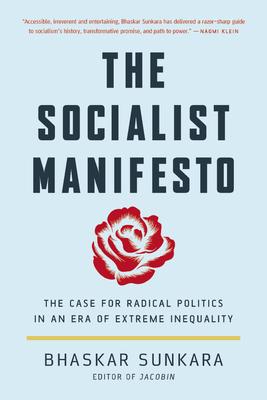
THE SOCIALIST MANIFESTO: The Case for Radical Politics in an Era of Extreme Inequality, never more trenchant than today


THE SOCIALIST MANIFESTO: The Case for Radical Politics in an Era of Extreme Inequality
BHASKAR SUNKARA

Basic Books
$15.00 trade paper, purchased from the author's magazine website

Rating: 5* of five

The Publisher Says: A "razor-sharp" introduction to this political and economic ideology makes a galvanizing argument for modern socialism (Naomi Klein)—and explains how its core tenets could effect positive change in America and worldwide.

In The Socialist Manifesto, Bhaskar Sunkara explores socialism's history since the mid-1800s and presents a realistic vision for its future. With the stunning popularity of Bernie Sanders and Alexandria Ocasio-Cortez, Americans are embracing the class politics of socialism. But what, exactly, is socialism? And what would a socialist system in America look like?

The editor of Jacobin magazine, Sunkara shows that socialism, though often seen primarily as an economic system, in fact offers the means to fight all forms of oppression, including racism and sexism. The ultimate goal is not Soviet-style planning, but to win rights to healthcare, education, and housing, and to create new democratic institutions in workplaces and communities. A primer on socialism for the 21st century, this is a book for anyone seeking an end to the vast inequities of our age.

I RECEIVED A DRC FROM THE PUBLISHER VIA NETGALLEY. THANK YOU.

My Review
: William M. Tweed said this about the way the US does politics:
I don't care who does the electing, so long as I get to do the nominating. As quoted in Understanding American Government (2003) by Susan Welch, p. 224

No good came from trying to talk sense into the Democratic Party; their loss on 5 November 2024 was catastrophic. It was not the resounding mandate the Nerd Reich and its tech scum boosters portray it as. The margin was not huge, but the impact will be *immense*, far-reaching, and vastly immiserating for millions.

It did not need to happen, even in the teeth of forty years of the carefully disguised radical coup orchestrated by the wealthy and powerful against the rest of us. The way to beat the radicals is not to appease or identify with them; it is to present an alternative to them.

This will never happen in the two-party system.

I wanted this not to be true, but this idiotic result has driven the last nail in the coffin of my faith in humanity, my trust in the US institutions of politics, and my desire to support the least-worst politicians in hopes they'll do some of the Right Thing. They won't.

Now what?

Now this, and before someone says "But socialism!" or even stupider "that's Communist!" I'll remind all y'all that the monster you've been Pavlovianly conditioned to fear and hate is totalitarianism relabeled to scare you away from realizing the socialist demands the owners hate were already met...to a degree...and they're the exact things your newly elected scum were put in place to destroy. When the way you live gets worse, do not open your yap. You either voted for, or decided not to vote against, this exact result.

It is your fault.

Now let's figure out what we can begin to do to make a few gains. Start by reading Bhaskar Sunkara's clear, cogent, carefully reasoned manifesto. If you're still reeling from the evidence of how immensely successful the scumbags' propaganda, misinformation, and misdirection were, here's a shred of hope to cling to. Here's a possibility that you already know works...you who receive "benefits" aka your own tax money returned to you (not some gift as the radical right wants you to believe) better than anyone...so lean into it.

Don't feel like you can do anything, don't want to think about it, are just too drained to give it your attention? That's their system for making you passive at work. If you won't do the work, spend your money to support those who will, and that shit-sure ain't the Democrats.

Support a real change for the better. Read this book to learn what that can mean.

Saturday, November 9, 2024

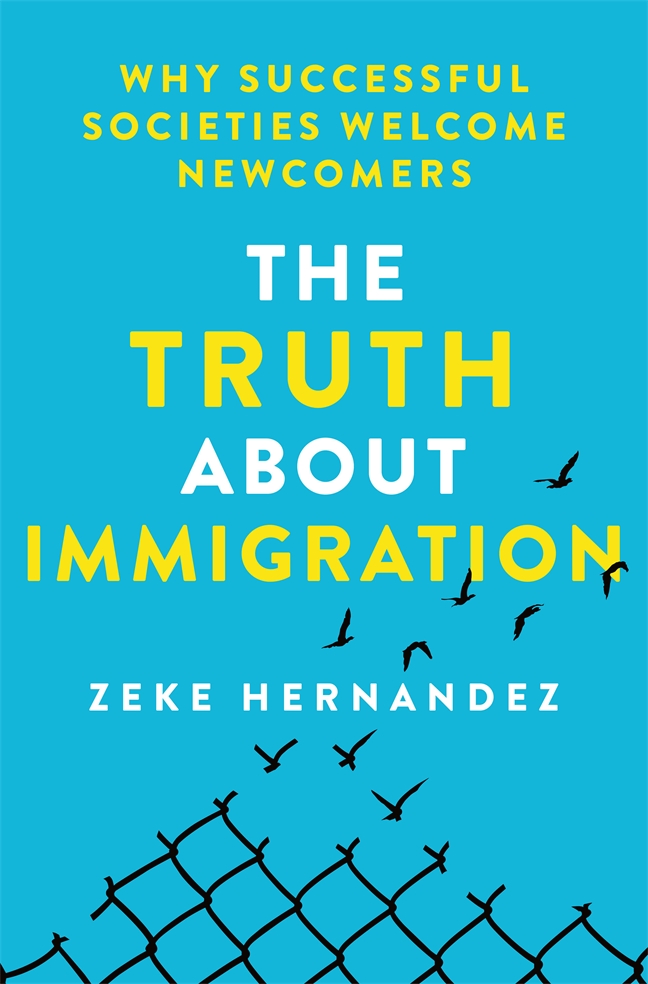
THE TRUTH ABOUT IMMIGRATION: Why Successful Societies Welcome Newcomers, careful, honest, trenchant and tendentious


THE TRUTH ABOUT IMMIGRATION: Why Successful Societies Welcome Newcomers
ZEKE HERNANDEZ

St. Martin's Press
$30.00 hardcover, available now

Rating: 4* of five

The Publisher Says: The go-to book on immigration: fact-based, comprehensive, and nonpartisan.

Immigration is one of the most controversial topics in the United States and everywhere else. Pundits, politicians, and the public usually depict immigrants as either villains or victims. The villain narrative is that immigrants pose a threat—to our economy because they steal our jobs; our way of life because they change our culture; and to our safety and laws because of their criminality. The victim argument tells us that immigrants are needy outsiders—the poor, huddled masses whom we must help at our own cost if necessary. But the data clearly debunks both narratives. From jobs, investment, and innovation to cultural vitality and national security, more immigration has an overwhelmingly positive impact on everything that makes a society successful.

In The Truth About Immigration, Wharton professor Zeke Hernandez draws from nearly 20 years of research to answer all the big questions about immigration. He combines moving personal stories with rigorous research to offer an accessible, apolitical, and evidence-based look at how newcomers affect our local communities and our nation. You'll learn about the overlooked impact of immigrants on investment and job creation; realize how much we take for granted the novel technologies, products, and businesses newcomers create; get the facts straight about perennial concerns like jobs, crime, and undocumented immigrants; and gain new perspectives on misunderstood issues such as the border, taxes, and assimilation.

Most books making a case for immigration tell you that immigration is good for immigrants. This book is all about how newcomers benefit you, your community, and your country. Skeptics fear that newcomers compete economically with locals because of their similarities and fail to socially assimilate because of their differences. You'll see that it's exactly the opposite: newcomers bring enduring economic benefits because of their differences and contribute positively to society because of their similarities. Destined to become the go-to book on one of the most important issues of our time, this book turns fear into hope by proving a simple truth: immigrants are essential for economically prosperous and socially vibrant nations.

I RECEIVED A DRC FROM THE PUBLISHER VIA NETGALLEY. THANK YOU.

My Review
: Do you like to eat? Thank an immigrant, an economic migrant, as you chow down on those tomatoes and cucumbers.

*You* sure didn't go pick 'em.

Do you use Google, chat on Twitter, watch TikTok every day? Thank an immigrant. In this case, you're thanking said immigrant with your data being harvested to fatten his (they're all men, at least so far) coffers.

But that law'n'order fetish you got goin' on...surely that's the real reason to oppose immigration, to keep 'em out and chuck 'em out when they come anyway, right? The president-elect has more felonies on his record than a random immigrant. But they cost us money! Take money from needy Murrikinz! You're thinking of the GOP in the various legislatures. Immigrants pay taxes through their (upright & honest, or shady) employers. They're barred by law from getting any of those taxes back.

The author, unlike me, is apolitical. He has done the research and these are the facts he found. If you support immigration, read this book for talking points. There's a lot of 'em. If you don't support immigration, why the hell are you reading my reviews? If someone you care for is anti-immigrant, maybe this non-partisan voice will reach them. It sure can't hurt to try.

I'm not calm enough to care to engage with people like that. They're wrong. I needn't fuss about it because that kind of wrong loves a fight. Got nothin' left for that uselessness. If you do, great! And here's you a swiss army knife of evidence-backed facts to use in your noble work of Enlightenment.

Thursday, October 17, 2024

KLAXON READS: THE BIG CON: Crackpot Economics and the Fleecing of America, & LIMITARIANISM: The Case Against Extreme Wealth


LIMITARIANISM: The Case Against Extreme Wealth
INGRID ROBEYNS

Astra House
$28.00 hardcover, available now

Rating: 4* of five

Ahead of the paperback release on 23 September 2025, listen to the author on The Grey Area podcast. Necessary reading and listening in 2025.

The Publisher Says: "A powerful case for limitarianism – the idea that we should set a maximum on how much resources one individual can appropriate. A must-read!" —Thomas Piketty, bestselling author of Capital in the Twenty-First Century

An original, bold, and convincing argument for a cap on wealth by the philosopher who coined the term "limitarianism."

How much money is too much? Is it ethical, and democratic, for an individual to amass a limitless amount of wealth, and then spend it however they choose? Many of us feel that the answer to that is no—but what can we do about it?

Ingrid Robeyns has long written and argued for the principle she calls "limitarianism"—or the need to limit extreme wealth. This idea is gaining momentum in the mainstream – with calls to "tax the rich" and slogans like "every billionaire is a policy failure"—but what does it mean in practice?

Robeyns explains the key reasons to support the case against extreme wealth:
  • It keeps the poor poor and inequalities growing
  • It’s often dirty money
  • It undermines democracy
  • It’s one of the leading causes of climate change
  • Nobody actually deserves to be a millionaire
  • There are better things to do with excess money
  • The rich will benefit, too
  • This will be the first authoritative trade book to unpack the concept of a cap on wealth, where to draw the line, how to collect the excess and what to do with the money. In the process, Robeyns will ignite an urgent debate about wealth, one that calls into question the very forces we live by (capitalism and neoliberalism) and invites us to a radical reimagining of our world.

    I RECEIVED A DRC FROM THE PUBLISHER VIA EDELWEISS+. THANK YOU.

    My Review
    : Using moral arguments against massive wealth accumulation is like using moral arguments against porn: You could be right, probably aren't, and the target audience for your suasions could not possibly care less about them.

    All the bullet list items above? The very wealthy know those to be true and could not possibly care less about them. "Every billionaire a policy failure" is way more effective because it simply states the people's case against the perpetrators of the crimes (moral and/or legal) that must be committed to become a billionaire.

    What to do with the proceeds of the confiscation of excessive wealth is always going to be the weak point of any scheme to disempower the richest. The current Congress, like all its predecessors, is made up of people beholden to the moneymen. They will not confiscate and redistribute more than those who pay them...the people offer a token salary, the real money is in the campaign warchests they pay no tax on and use as they please...will allow.

    Author Robeyns is firing an opening salvo in the next campaign against greed. It will persuade a few groundlings to talk it up and try to get it onto the agenda of more meetings.

    Absolutely no billionaire will acquiesce to her suggestions. Therefore nothing will change as radically as she proposes.

    That is not, in my view, the purpose of this read, any more than Marx or Mao delivered revolutions in human social or economic organization with their books. In fact both delivered fig leaves for the vilest and most destructive totalitarians to operate on their ostensible behalf while in fact defrauding their true believers and, often as not, killing the ones who said "stop" because the inconveniently moral could be labeled "counterrevolutionary" therefore beyond the social pale to the supporting masses.

    What Author Robeyns offers here is a chance for you to examine your beliefs and your conscience. She doesn't have a prayer of impacting the lowlife, amoral Nerd-Reichers and the humanoid wallets enabling them. She *does* have a chance to elucidate some ugly facts about the accumulation of great wealth. A philosopher who has read, studied, and thought very deeply about human nature, she comes to conclusions you and I would do well to evaluate for ourselves. The only way I know of to do that is to read her words, and decide how much you resonate with them. The work this book represents is impressive. No one gets to these stages of argument absent a long, intense program of study.

    Do you feel in your water that someone possessing a billion currency units is also possessed of a character flaw? You'll find some comfort in knowing that you're not first to reach, or alone in reaching, this conviction. Is the spectacle of inconceivably rich foreigners using their hoards to manipulate the US electorate and thus the outcome of our elections very angering to your patriot's soul? You'll resonate to the ways and means of removing that power from them.

    Thomas Piketty praises this book as a "must-read" on its central argument of limitarianism. As he has done more than anyone else to yank the horribly uncomfortable, thick wool of "neoliberalism" from the world's eyes, I'd say heed him and get this book into your head before casting your 2024 votes up and down the ticket.

    Why have I given it a surprisingly limitarian four stars, if I set out to warble my fool lungs out about its virtues? Because, by the tendentious nature of books setting forth cases for action, it's a bit repetitive. It's not academic in purpose so it's not footnoted to a fare-thee-well. It is, in short, a beast with two faces: one faces the congregation and lectures for change; one faces the choir and seeks approval for its message.

    Speaking from the choir, I approve.

    ++++++++++++++++++++++++++++++++++++++++++++++++++++++++++++++++


    THE BIG CON: Crackpot Economics and the Fleecing of America
    JONATHAN CHAIT

    Mariner Books (non-affiliate Amazon link)
    $11.99 Kindle edition, available now

    Rating: 4* of five

    The Publisher Says: The scam of supply-side economics is clearly and convincingly explained in “a classic of political journalism” (Michael Lewis).

    Jonathan Chait has written for a range of publications, from the Wall Street Journal to the Washington Post, and considers himself a moderate. But he’s convinced that American politics has been hijacked.

    Over the past three decades, a fringe group of economic hucksters has corrupted and perverted our nation’s policies, Chait argues, revealing in The Big Con how these canny zealots first took over the Republican Party, and then gamed the political system and the media so that once-unthinkable policies—without a shred of academic, expert, or even popular support—now drive the political agenda, regardless of which party is in power. The principle is supposedly “small government”—but as he demonstrates, the government is no smaller than it was in the days of Ronald Reagan; it’s simply more debt-ridden and beholden to wealthy elites.

    Why have these ideas succeeded in Washington even as the majority of the country recognizes them for the nonsense they are? How did a clique of extremists gain control of American economic policy and sell short the country’s future? And why do their outlandish ideas still determine policy despite repeated electoral setbacks? Explaining just how things work in Washington, DC, and distinguishing between short-term volatility in the “political weather” and the long-term, radical shift in the “political climate,” Chait presents a riveting drama of greed and deceit that should be read by every concerned citizen.

    “Chait is both very serious and seriously funny as he traces the rise of conservatism over the past thirty years.” —Michael Kinsley

    I RECEIVED THIS BOOK AS A GIFT. THANKS!

    My Review
    : We knew the 1980 election was stolen. We knew why, too. Milton Friedman told us why it had to be in Free to Choose, book and TV show. He operated in the libertarian/laissez-faire world of F.A. Hayek. The men behind Reagan were supply-side radicals who wanted more than anything to cripple the Federal government's ability to act against the businesses polluting out planet, and "taking their money." Instead the Federal government would need to borrow money...at interest...from the banks; enriching the bankers and hobbling the politicians who could enforce change on the reactionary elite.

    What tendentious Author Chait does in this seventeen-year-old book is detail the ways this brazen theft (my words, not his) has resonated down the decades to the present moment of radicalized fascist terrorism meeting economic royalism in an ongoing enshittification of the world's social fabric. And it's being done to us all under the name "supply-side economics."

    Call it whatever you like. We're forty-four years into the world's first experiment in this snake-oil system of not taxing the rich and not acting to protect the poor and the needy, after seeing the huge economic and societal gains of the Keynesian interventionist years. The promises of economic growth and technological innovation, of booming investment by those untaxed billionaires, etc etc ad nauseam, have not materialized. There's never been a glimmer of benefit to anyone except the untaxed wealthy.

    Yet the entire conversation about the economy is still framed in terms that comport with this failed-in-practice theory.

    The essence of insanity is doing the same thing repetitively and expecting different results to come of it.

    Author Chait isn't kidding around with this takedown of the naked emperors of the economic establishment. It is refreshing to see a commonsensical moderate-to-conservative poloitical thinker confront orthodoxy, hold it to the test of results-versus-promises, and report honestly on his findings. Reading this book before the 2024 election would be wise. Reading it, and considering deeply its message and its implications, is something I'd call a civic duty.

    Friday, September 13, 2024

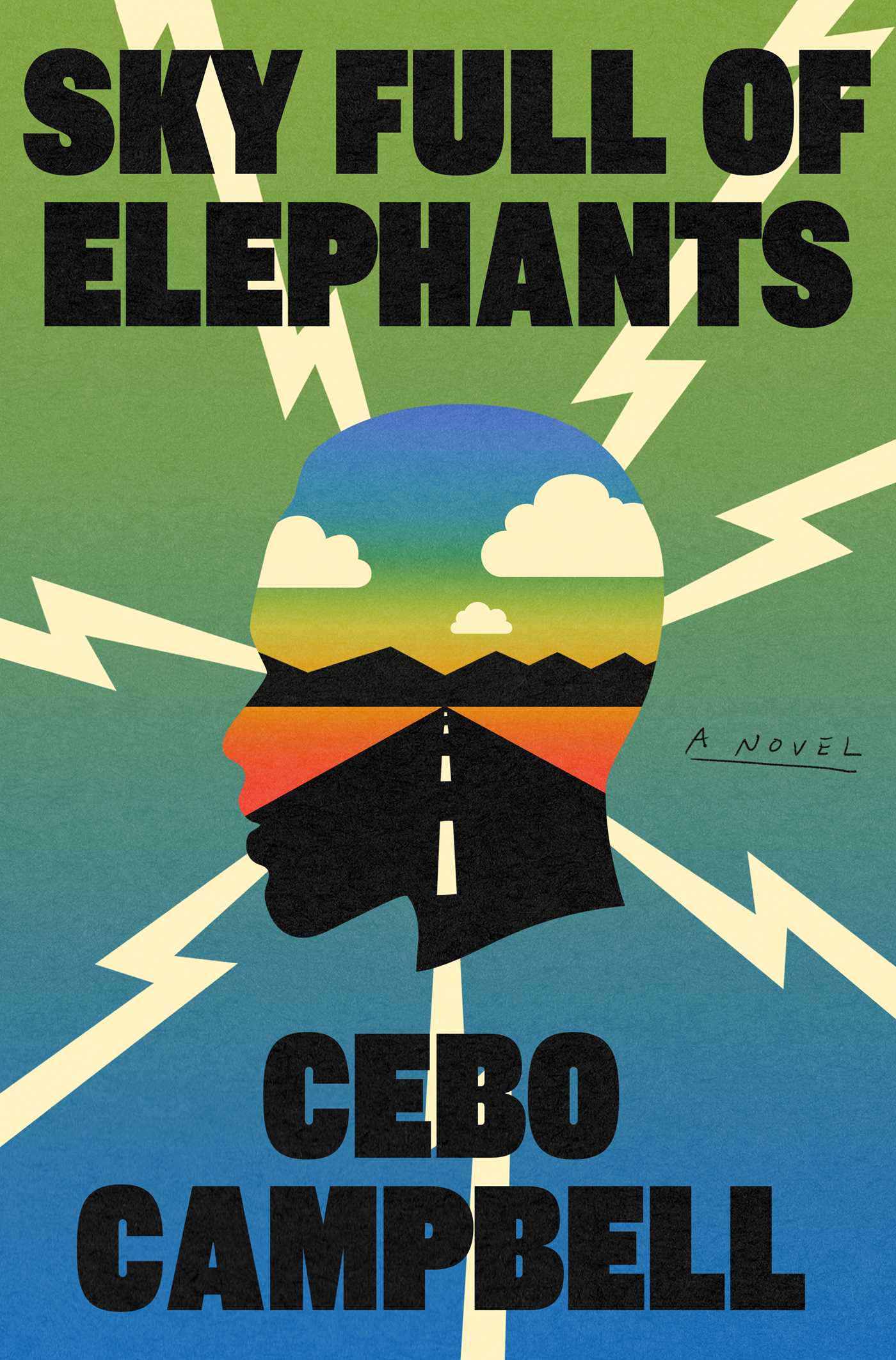
    SKY FULL OF ELEPHANTS, debut novel with ideas that have real power


    SKY FULL OF ELEPHANTS
    CEBO CAMPBELL

    Simon & Schuster
    $27.99 hardcover, available now

    Rating: 4.5* of five

    The Publisher Says: In this exquisite speculative novel set in a world where white people no longer exist, college professor Charlie Brunton receives a call from his estranged daughter Sidney, setting off a chain of events as they journey across a truly “post-racial” America in search of answers.

    One day, a cataclysmic event occurs: all of the white people in America walk into the nearest body of water. A year later, Charles Brunton is a Black man living in an entirely new world. Having served time in prison for a wrongful conviction, he’s now a professor of electric and solar power systems at Howard University when he receives a call from someone he wasn’t even sure existed: his daughter Sidney, a nineteen-year-old who watched her white mother and step-family drown themselves in the lake behind their house.

    Traumatized by the event, and terrified of the outside world, Sidney has spent a year in isolation in Wisconsin. Desperate for help, she turns to the father she never met, a man she has always resented. Sidney and Charlie meet for the first time as they embark on a journey across America headed for Alabama, where Sidney believes she may still have some family left. But neither Sidney or Charlie is prepared for this new world and how they see themselves in it.

    When they enter the Kingdom of Alabama, everything Charlie and Sidney thought they knew about themselves, and the world, will be turned upside down. Brimming with heart and humor, Cebo Campbell’s astonishing debut novel is about the power of community and connection, about healing and self-actualization, and a reckoning with what it means to be Black in America, in both their world and ours.

    I RECEIVED A DRC FROM THE PUBLISHER VIA NETGALLEY. THANK YOU.

    My Review
    : Well, this was a read and a half. A fantasia, an attempt to view the culture of privilege and prejudice confronted by a man and the mixed-race daughter he never knew he had in the wake of white peoples' mass lemming-like vanishing.

    Now, let me bring something up: This is in no way some triumphalist "wouldn't it be cool if all the white people vanished?" racist fantasy. It isn't that kind of facile storytelling, or revenge fantasy. It's a fantasia on the inscrutable ways of the Universe, an unknowable, unfathomably powerful external force that, this time, spared you; but...Amid the reorgaization of society, there's that unease that comes from an unresolved stressor, like the Bomb in the Cold War.

    A lot like Le Guin's The Dispossessed, A Morally Ambiguous Utopia, the ideas in this story are heady indeed. The overculture in each of these different stories presupposes the existence of a hegemonic economic system that can only be opposed not reimagined. In Author Campbell's story, the presumption includes the fact that when whiteness and its (largely) unexamined privilege vanish, the enforcement of the hegemonic capitalism dies. Is everything suddenly perfect? No, but it's free from many of the more abusive qualities of capitalism and racism. I myownself am not quite so confident that capitalism would wither so completely or so quickly; it's too effective a tool of control, that most human of needs. Leaving that aside, the Brave New World presented feels...right, just, positive. I say this as someone explicitly excluded from this world. That fact is, I suspect, what led a LOT of whiny little butthurt arrested adolescents to ratings-bomb the book on Goodreads. Such arrant nonsense makes Author Campbell's premise's point for him. It also embarrasses me, an old white man, to be relegated among such angry, hateful, immature people.

    The author's imagination, then, can't be faulted. This is his debut novel, so technique is logically enough less well-honed than his idea-generating musculature. I kept saying to my DRC, "Please don't explain so much to me. Trust that the stories you've imagined so richly will, in fact, lead me where you're wanting me to go. Conflicts whose roots and results you carefully elucidate aren't tense enough to keep me eagerly reading." I'm confident this can be attributed to his tyro status. I'm also very eager to read his next work when it comes out.

    The ending of the story, while not exactly a release from tension, does flow from the events of the preceding action. It felt...I'm not sure "inevitable" is precisely correct, but it has the leadenness of affect I want to convey.

    I've rated the book with four stars because I was brought up short and required to consider the ideas of the story multiple times. Good SF/F does that wonderful job better than any other form of storytelling.

    This is good SF. That explains the other half-star.

    Wednesday, September 6, 2023

    CONTAINING BIG TECH: How to Protect Our Civil Rights, Economy, and Democracy & THE PERENNIALS: The Megatrends Creating a Postgenerational Society, huge forces reshaping our lives


    CONTAINING BIG TECH: How to Protect Our Civil Rights, Economy, and Democracy
    TOM KEMP
    Fast Company Press
    $27.95 hardcover, available now

    Rating: 4.5* of five

    The Publisher Says: The path forward to rein in online surveillance, AI, and tech monopolies

    Technology is a gift and a curse. The five Big Tech companies—Meta, Apple, Amazon, Microsoft, and Google—have built innovative products that improve many aspects of our lives. But their intrusiveness and our dependence on them have created pressing threats to our civil rights, economy, and democracy.

    Coming from an extensive background building Silicon Valley–based tech startups, Tom Kemp eloquently and precisely weaves together the threats posed by Big Tech:
  • the overcollection and weaponization of our most sensitive data
  • the problematic ways Big Tech uses AI to process and act upon our data
  • the stifling of competition and entrepreneurship due to Big Tech’s dominant market position

  • This richly detailed book exposes the consequences of Big Tech’s digital surveillance, exploitative use of AI, and monopolistic and anticompetitive practices. It offers actionable solutions to these problems and a clear path forward for individuals and policymakers to advocate for change. By containing the excesses of Big Tech, we will ensure our civil rights are respected and preserved, our economy is competitive, and our democracy is protected.

    I RECEIVED A DRC FROM THE PUBLISHER VIA NETGALLEY. THANK YOU.

    My Review
    : We are, as a society, in serious danger. A lot of things that were once difficult to find effective ways to influence and manipulate are becoming trivially easy to do. The perpetrators of this violation of our essential freedom to be safe in our own heads have, in eight concise chapters, each been named and shamed, their tactics analyzed and the consequences of them sketched out, by one of their own.

    True, it wasn't like any of them were trying to fly under the radar about this...for a famous example, Jeff Bezos clearly said he wanted to control ecommerce way back when, but really only accidentally:
    When his goals did slip out, they were improbably grandiose. Though the startup’s focus was clearly on books, Davis recalls Bezos saying he wanted to build “the next Sears,” a lasting company that was a major force in retail. {An investor who was also a} kayaking enthusiast...remembers Bezos telling him that he envisioned a day when the site would sell not only books about kayaks but kayaks themselves, subscriptions to kayaking magazines, and reservations for kayaking trips—everything related to the sport. “I thought he was a little bit crazy,” says {the investor}.
    (source: The Everything Store: Jeff Bezos and the Age of Amazon by Brad Stone)

    What this immense ambition created was The Literal Everything Store, used by everyone even marginally online at some point for something they need or want. They might not even realize it's Amazon they're doing business with...how many of even the most committed Amazonphobes know who hosts their online commercial interactions? or where bricks-and-mortar stores buy their stock?...but their data is in some way harvested by Amazon. The other members of Big Tech's five brothers are dealt similar serious blows to their frequently protested innocence of maleficent intent and wrongdoing in the moral if not the legal sense.

    It's part of their business plans to amass a chillingly immense digital dossier on every internet user by the entire tech industry. The purpose is to make them incomprehensible piles of money; they then use that money, extracted directly and indirectly from your pockets, to influence the course of world events on political and economic stages to benefit themselves and themselves alone. Refer back to 1953, when the famous kludged-up quote "What’s good for General Motors is good for America" was supposedly said by a GM exec being vetted by the Senate for a senior government job. (The truth is more nuanced, if less punchy.) The usual course of a person interested in the US's economic health is to consult the newspaper or equivalent's reporting of the stock market's performance. How this casino capitalism came to be conflated with the country's overall economic health is outside the book's or this review of it's scope, but is part of the larger picture painted herein of the actions taken by the surveillance economy's owners and drivers.

    The means of information gathering and opinion-sharing are increasingly in the hands of the same few corporate entities that harvest your data and the windfalls it generates. The AI revolution we're relentlessly being told is coming has lifted the increasingly fragile casino economy's entirely notional values into new superstratospheric heights. Go look at Nvidia's stock prices then its history to see what I'm talking about. The way to make people believe something is inevitable is to tell them over and over again that it is, and that includes the inevitability of Big Tech's dominance. In these eight chapters, the author presents a very good case for what each player in the surveillance capitalism/totalitarian state apparatus's purpose is in pursuing its goals. In the appendices he outlines the personal, as well as the societal, steps one can take to corral the presently untrammelled ability these corporate actors have to present only information and opinion positively inclined towards them and their agenda.

    A book that blares alarms at you without offering actionable items to prevent or mitigate the warnings taking place or effect isn't doing a service but simply further harm. I think the author here is doing a great service by performing both the warning function about the problems we're facing and the directions they're approaching us from, and outlining potential solutions on actionable on multiple fronts.

    I'd like to stress that my use of "actionable" with such regularity is intentional and meant to convey my personal sense of urgency in addressing these issues. I think reading this book will convince many to stop wondering if it's even worth paying attention to these issues of surveillance and manipulation, and start taking steps to mitigate the harms being caused by the overreach of an identifiable coterie of bad actors.

    That means I'd really like you to read it. Get it from the author's website linked above. Get it from Amazon, they sell it. Get your local library to buy one or two and check one out. Just get it and its ideas in your heads.

    It's not exaggerating to say that, if the AI future being drummed into us as inevitable comes to pass, we're going to need the checks and balances in this book to survive with even a whisper of autonomy intact.

    +++++++++++++++++++++++++++++++++++++++++++++++++++++++++++++++++

    THE PERENNIALS: The Megatrends Creating a Postgenerational Society
    MAURO GUILLÉN
    St. Martin's Press
    $30.00 hardcover, available now

    Rating: 4.5* of five

    The Publisher Says: In today’s world, the acceleration of megatrends—increasing longevity and the explosion of technology among many others—are transforming life as we now know it.

    In The Perennials, bestselling author of 2030 Mauro Guillén unpacks a sweeping societal shift triggered by demographic and technological transformation. Guillén argues that outmoded terms like Boomers, Gen X, Millennials, and Gen Z have long been used to pigeonhole us into rigid categories and life stages, artificially preventing people from reaching their full potential. A new postgenerational workforce known as "perennials"—individuals who are not pitted against each other either by their age or experience—makes it possible to liberate scores of people from the constraints of the sequential model of life and level the playing field so that everyone has a chance at living a rewarding life.

    This multigenerational revolution is already happening and Mauro Guillén identifies the specific cultural, organizational and policy changes that need to be made in order to switch to a new template and usher in a new era of innovation powered by The Perennials.

    I RECEIVED A DRC FROM THE PUBLISHER VIA NETGALLEY. THANK YOU.

    My Review
    : I'm well into my geezerdom. I think this gent's insight is a corker. Not just because he acknowledges the role of experience in a functioning world but because he says it's really the only way out of the looming crises of employment, productivity, and collapsing ecology. Well, I added the last one, but it seems to me that the problems the planet is facing are best faced with all hands on deck.

    Most people don't live in the way I grew up, or likely that my readers did: A mother, a father, some siblings, one house, a couple cars; some orbiting family from the parents' siblings, closer or farther from us with whatever degree of connection our families could/chose to maintain; maybe grandparents on big family occasions. Life was preordained to follow that pattern through our generation, and we thought beyond it, too. Varying political movements and social pressures began to change the tiny, nuclear-family model...not least a reality of the nuclear world is that fission is easier and more common than fusion, and produces very, very toxic waste with a hugely long lifespan.

    As a result of demographic realities the huge boost of living standards after World War II across most of the globe produced a gigantic population bubble. Better lives for "all" keep coming about, and all meant so many more than ever. The sociological changes wrought by the various liberation and empowerment movements around the world meant that there were huge numbers of people who needed jobs that had little or no family component. University educations became necessary (in theory anyway) to get ahead, to make a decent living. Maybe, if you wanted to, have a family of your own. It was the choice of many not to do so much of that old model, but the world's picture of school then work and then finally retirement...the whole structure of the twentieth century's body politic...has changed very little. Our lives within it are, however, being lived in a more flexible and inclusive way than ever.

    What the author propounds in his fascinating look at how we could all benefit from adapting our model to lived reality is the acceptance that people live longer and need to live better. All of us need challenges and face the reality that those challenges ae changing. He proposes the deeply pragmatic solution of adopting a life-long learning model. This means we're not In A Job for life but in a habit of honing skills we have and acquiring new ones.

    Addressing the looming labor shortages as people get older and stay fit longer means second, third, or fourth careers for many of us will have to be planned for by employers. Age discrimination is very much a reality. The companies that emulate BMW in their age-blended team models will make a big bonus for their shareholders. The entire landscape of work will need to change (see my review of THE ONLY GAME IN TOWN for some background on this; also that author, Mohammed El-Erian, approves of this book and its thesis) to accommodate different needs and desires, like the work-from-home lifestyle that most people prefer and Big Tech is leading the charge to reverse in the wake of the pandemic's accidental proof of concept that it works.

    Possibly the most resonant part of the book to me was its model of exchanging skills among the generations. I know that, in my own life, my Young Gentleman Caller has helped me remain more comfortable with information technology and its many nuances than almost all the people I live among. I know also that my experience has alerted him to some less-than-honorable intentions among his acquaintance. It's a joy to be able to both learn and be taught. And I don't exaggerate when I use the word "joy." In my own life, as in his, learning stuff is a source of real joy for each of us...it's one reason we remain in relationship in supervention of the challenges we face.

    The author's thesis is particularly informative of th challenges the world being summoned into being by Big Tech (see review above) being met with effective control. It will take an intergenerational conversation of great depth and serious intent to prevent the dystopic possibilities of surveillance capitalism and totalitarian governance from happening.

    Reading these books together was one of the most challenging emotional rides of 2023 for me. There's a lot to be deeply concerned about in the direction that our present system of inaction and wasteful misdirection of energy is following. There are ways to solve it, and this read's author has one of the best structural models for directing growth into sustainable channels I've read. This is largely, I suspect, because I already implement the lifelong learner model of being. It's paid such huge dividends in my own life. Not least by giving me the mental framework and the emotional push needed to recover faculties many like me lose when they have the multiple strokes that I had in January 2023. I'm slower, and quicker to tire, than before my problems got worse; but unlike those whose retirements or simply aging lifestyles aren't focused, I had something to recover for and get back to doing: This. Reading. Thinking about what I've read. Thinking about how to support the changes I want to see and resist the ones I don't want to see effectively. Communicating those thoughts on this little blog I've run for ten years, that still attracts about two hundred viewers on an average day.

    I think more people would find ways to do what I've done if they read these two books: the first to learn what's at stake and how to get a handle on it; the second to learn why it's a good use of your time to overcome inertia and restart your mind's journey.

    Monday, February 28, 2022

    NO STUDY WITHOUT STRUGGLE, a different lens on an ongoing, increasingly urgent social issue


    NO STUDY WITHOUT STRUGGLE: Confronting Settler Colonialism in Higher Education
    LEIGH PATEL

    Beacon Press
    $24.95 hardcover, available now

    Rating: 4* of five

    The Publisher Says: Examines how student protest against structural inequalities on campus pushes academic institutions to reckon with their legacy built on slavery and stolen Indigenous lands

    Using campus social justice movements as an entry point, Leigh Patel shows how the struggles in higher education often directly challenged the tension between narratives of education as a pathway to improvement and the structural reality of settler colonialism that creates and protects wealth for a select few.

    Through original research and interviews with activists and organizers from Black Lives Matter, The Black Panther party, the Student Nonviolent Coordinating Committee, the Combahee River Collective, and the Young Lords, Patel argues that the struggle on campuses reflect a starting point for higher education to confront settler strategies. She reveals how blurring the histories of slavery and Indigenous removal only traps us in history and perpetuates race, class, and gender inequalities.

    By acknowledging and challenging settler colonialism, Patel outlines the importance of understanding the relationship between the struggle and study and how this understanding is vital for societal improvement.

    I RECEIVED THIS DRC FROM THE PUBLISHER VIA EDELWEISS+. THANK YOU.

    My Review
    : Universities are under siege from as many angles as there are. Activists have campaigned, more or less successfully, for disinvestment from socially irresponsible industries. They've made the possession of a racially insensitive mascot a lightning rod for criticism. These news stories are commonplace enough to be readily Google-able, and to have a selection of attitudes and viewpoints from which to choose.

    I'd also recommend taking a few minutes to read Author Patel's Q&A on The Beacon Broadside's website for a trenchant, quotable précis of her thoughts on this difficult to dismiss subject. It is a clear statement of her purposes in writing this book.

    What makes this a worthwhile read is that it requires the reader to re-evaluate every university activity. There comes first identifying then admitting prospects "worthy" of the opportunity, with the "right kind" of work ethic both within their schools and outside them. Next the institution busies itself with identifying, designing, and inculcating the capitalist dogmas that will serve the needs of the ownership class. And finally, the cruelest step: indenturing students with mountains of debt to that ownership class for the privilege of enjoying the experience, which serves to prevent the offensive-to-them class and ethnic mixing. The fear being that, unburdened by economic chains, their students will inevitably rise above their starting points and cause their owners' control to be diluted. Reading Author Patel's work will, I'm sure, give the students and their parents the perspective to see through a definitively different lens. What makes that a good idea is that many will experience a sudden and usually pretty painful awakening. Those who are screaming about "critical race theory" are calling this propaganda spreading, brainwashing, or just plain indoctrination. As always, examine the accuser's accusations for cues as to the real source of their rage: the examination Author Patel demands we her readers undertake will cause some number of us to reject our present indoctrination as the unfair, exclusionary artifact of an exploitive ownership class's control paradigm.

    Since I've already had a pitcher of that Kool-Aid, this wasn't fresh stuff for me.

    What I needed to learn about was Author Patel's encouragement of the University's students to interrogate everything they are being offered through the awareness of settler colonialism's existence, reach, and signals of control. Her book is a call to arm yourself, youthful learners, with skepticism and information, not simply and passively accept the way things are without understandig how they got that way and who wants them to stay that way.

    What lowers my rating to four of five stars is my sense that the message, while complete and well-thought-through, isn't presented in such a way as to lead to action. In the world of young persons it's my experience that theory is best left to emerge from actions at the maxiumum possible number of times. I'd've been much more stirred and delighted had I seen some non-theoretical analysis..."when one sees this, then that is the likeliest cause; now, do this or that to draw attention to it with the aim of changing it." After all, Author Patel spoke to many whose lives of resistance and struggle included forging action agendas. Why not bring this facet, underpinning the work as it does, to the fore?

    But never mind all that Monday-morning quarterbacking. The book that is here, that is available from the estimable Beacon Press, will offer you much. If your child is leaving for college soon, I want to push you towards the read with some extra fervor. If your child is in school now, please send them one. There is no bad or wrong time to give someone not yet ossified into a brittle psychic shape the chisels and files and rasps to add refinement and enhancement to their awareness.

    Thursday, January 7, 2021

    THE STONE WÄ’TÄ€ and COME WATER, BE ONE OF US, never mistake short for weak

    THE STONE WĒTĀ
    OCTAVIA CADE
    Paper Road Press NON-Affiliate link to Amazon; the author published the book from New Zealand
    $3.99 Kindle edition, available now

    WINNER OF THE 2021 SIR JULIUS VOGEL AWARD FOR BEST NOVEL!

    Rating: 5* of five

    The Publisher Says: “We talk about the tyranny of distance a lot in this country. That distance will not save us.”

    With governments denying climate science, scientists from affected countries and organizations are forced to traffic data to ensure the preservation of research that could in turn preserve the world. From Antarctica, to the Chihuahuan Desert, to the International Space Station, a fragile network forms. A web of knowledge. Secret. But not secret enough.

    When the cold war of data preservation turns bloody – and then explosive – an underground network of scientists, all working in isolation, must decide how much they are willing to risk for the truth. For themselves, their colleagues, and their future.

    Murder on Antarctic ice. A university lecturer’s car, found abandoned on a desert road. And the first crewed mission to colonize Mars, isolated and vulnerable in the depths of space.

    How far would you go to save the world?

    My Review: When the Revolution comes, it will be women leading it. Secular Saint Stacey Abrams will likely be honking the biggest horn and causing the biggest ruckus. But that's not because it's her M.O. It's because her cover's blown. There is no point in trying to sneak when every-damn-body knows your shoe size and when you cheat on your diet.

    So here is a story I read last month about the Revolution led by women and made up of scientists who'll be damned to hell if they're going to make nice for no gain when the planet is dying:
    Resistance was revolution, sometimes, blood and dramatic acts, but more often it was survival. More often it was preservation, and the data she carried with her was for preservation more than revolution.

    This near-future Earth has gone well past tipping point. The vileness that is Capitalism is still spinning its lies and soothing its consumers to keep them buying while...to be honest I haven't the foggiest clue what they're thinking they can do that we can't, how they will survive the *actual* End of Days, but there it is. The lie-maker machinery behind the popular songs is still humming "Big Yellow Taxi" and cheerfully killing people who know it's all a lie and can't be arsed to do anything about it.
    It was hard to be an astronaut and not be an environmentalist.
    –and–
    She’d seen the photos—Earthrise and The Blue Marble—known the watershed impact they’d had on the conservation movement.

    The women in this resistance movement are identified in a clever, amusing way; I won't say, you should find out for yourself. Actually the biggest advantage to this technique is the flexibility it gives Author Cade in prefiguring the events of the chapters and sections. What she does with it is that sly, side-eye fun-making that you and at least one of your friends have, that one whose eye you cannot afford to meet when you're together but not in a safe place to fall out laughing at embarrassing moments. The story is one that today, the sixth of January, 2021, was so perfect in subject, in tenor, and resonance, that I had to re-read it. These women, these scientists, are all in flux and transition (!) and trying to protect the only home we have from the misguided and stupid who are deliberately trying to destroy it.

    The challenges of doing that by concealing accurate data, the enemy of fascists and authoritarians everywhere. Do y'all remember my review of The Badass Librarians of Timbuktu? That culture of concealment for survival is mentioned here, alongside its increasingly popular young grandniece:
    All those manuscripts, and Timbuktu a place of historic learning, of literacy and knowledge passing on. What it passed on now could be the lessons and skills of resistance, the ways of smuggling out and networking.
    –and–
    There was a tendency with so much digital to make all copies electronic, and rely on the internet for keeping multiple copies visible and tamper-proof. But any system could be hacked, any data deleted. The information she intended to facilitate had to be kept discretely, separate from any possible influence.

    There is no hope for rebuilding from looming catastrophes—and there is a dilly of a disaster we see even before the collapse we're too soon to witness completing itself—without accurate, complete data hidden somewhere, cared for by someone with the skills to use it when it's finally safe to do so. Think of the world we might have had the religious nuts not burned the Library at Alexandria! So there's a precendent for Author Cade telling us this story, and a reason for you to spend the money to read it at this moment in US and UK history. Today's multiple klans of barbarians are doing their damnedest to finish burning the norms and conventions that have protected and enriched the greatest number of people. Author Cade tells us, and the evidence right now points to her prescience, that they won't stop even at murder to finish the destruction of whatever institutions, whatever systems and learning and techniques, prevent them from staying in complete control.

    We've fought wars ostensibly to prevent that from happening, against an enemy whose words and iconography we saw used in the Capitol of the United States of America. One woman, identity as yet not revealed, has died from a gunshot wound received during the violence. It is eerie, then, to realize this is not so shockingly unthinkable. Author Cade thought it. She framed it, though, differently from the US news media, as what it is:
    One person was such a small-scale loss, comparatively. (One person was enormous.)

    +++++++++++++++++++++++++++++++++++++++++++++++++++++++++++++++++

    COME WATER, BE ONE OF US
    OCTAVIA CADE

    Strange Horizons magazine
    Free to read online

    Rating: 5* of five

    We made the corporations people, but then we did the same to the rivers.

    A fever dream of anti-capitalist and pro-planet activism. A simply told, easily understood explication of why it was such a *colossally* stupid thing to create the legal fiction of "corporate personhood."

    People are greedy, selfish fucks, so why would one expect an atl-law-only person to be any different? But...here's the thing...bad ideas come with good uses. This one comes with the personification of Water in their riverine expression. If rivers are people, they have rights and they have legal standing; it then becomes possible, nay necessary, to act in their behalf. To give them the care and assistance necessary for them to thrive and prosper, just like all persons whether biological or legal.

    Take THAT, capitalism.

    Sunday, October 11, 2020

    WHY IS THE GLOBAL ECONOMY LIKE THIS?, a damned good question too few seem to ask themselves

    WHY IS THE GLOBAL ECONOMY LIKE THIS?
    CORNELIS BAL

    Partridge Publishing Singapore
    $3.92 Kindle edition, available now

    Rating: 3* of five

    The Publisher Says: Have you ever wondered just how our current global economy came about—and how its laws and regulations rule and influence our lives?
    In this commonsense discussion of world economics, author Cornelis Bal presents a brief exploration of these questions and offers suggestions for how we might change our economic system in order to improve our lives. His explanation draws a comparison between the laws of nature and the laws of economics, considering how the rapid development of technology in the last century has drastically affected how we work and live and these technological developments will continue to influence our lives beyond imagination in the very near future. Rather than presenting elaborate mathematical models to support his conclusions, he relies on straightforward language and observations that anyone might make. Bal explains that the present global economic system does not seem to have a sustainable future unless we make drastic changes, we will continue to experience increasing anarchy.

    My Review: Super basic, entry-level discussion of a complex problem aimed at complete novices to the topic.
    Although the economy is growing, the number of people and corporations involved in the money-generating process is shrinking. This means that the number of people depending on the people generating money will grow, leading to an imbalance.

    See? We're talkin' basic-basics here. Most anyone reading my reviews will smirk and pass on, utterly uninterested and unmoved.

    BUT!

    Author Cornelis takes us on a whirlwind tour of the world as it is. The concepts are barely sketched in. The issues are skeletonized. The usefulness of the piece is to present barebones basics to the absolute novice to the topic.
    The economic laws have been created by a relatively small number of people who had and have both the power and selfish interest to create the rules and regulations as we now know them. ... The first question I ask is this: why do we continue to accept current economic rules and regulations without question?

    Do you begin to sense the reason I wanted to bring this to your attention? And, for the persons not of a progressive bent, the author offers this self-assessment: "I want you to know that I am not a socialist; I am a realist!", and to prove it, he goes on, "The design parameters of any new system must include greed and envy otherwise it is bound to fail." This, he asserts, is what sunk the "communist" experiment in the Soviet bloc. Since I agree with that assessment of the USSR's primary failure, I am willing to suggest an audience for this short, inexpensive piece.

    Is your high-school kid or college freshman driving you bonkers about how awful everything is (like this is a newsflash to adults, but hey, we all start somewhere)? Give them this short, readily understood piece. Then they can go to bat with better questions. And really, isn't that all we can ask of each other? Ask better questions and find better answers, case by case and bit by bit?

    Thursday, October 8, 2020

    WHY SAVE THE BANKERS?, a question I ask myself every time new economic disasters emanate from them


    WHY SAVE THE BANKERS?: And Other Essays on Our Economic and Political Crisis 
    THOMAS PIKETTY (tr. Seth Ackerman)
    Houghton Mifflin Harcourt
    $15.99 trade paper, available now


    Rating: 5* of five

    The Publisher Says: Incisive commentary on the financial meltdown and its aftermath, from the author of the bestselling global phenomenon Capital in the Twenty-First Century 

    Thomas Piketty's work has proved that unfettered markets lead to increasing inequality. Without meaningful regulation, capitalist economies will concentrate wealth in an ever smaller number of hands. Armed with this knowledge, democratic societies face a defining challenge: fending off a new aristocracy. 

    For years, this critical challenge to democracy has been the focus of Piketty’s monthly newspaper columns, which pierce the surface of current events to reveal the economic forces underneath. Why Save the Bankers? brings together selected columns from the period bookended by the September 2008 collapse of Lehman Brothers and the terrorist attacks in Paris in November 2015. In crystalline prose, Piketty examines a wide range of topics, and along the way he decodes the European Union’s economic troubles, weighs in on oligarchy in the United States, wonders whether debts actually need to be paid back, and discovers surprising lessons about inequality by examining the career of Steve Jobs. 

    Coursing with insight and flashes of wit, these brief essays offer a view of recent history through the eyes of one of the most influential economic thinkers of our time. 

    My Review: Any rational person sees the world's injustice. Few come up with commonsensical, tried-and-true solutions as does Thomas Piketty, week by week, in his newspaper column for Libération, a Socialist-aligned daily. 

    You'll remember Piketty's name from his monster bestselling tome, Capital in the Twenty-First Century, which The Belknap Press brought out in 2014. It's sat unread on many a poseur's coffee table. (I've owned it since 2015, and have reached p310: Wage Scales and the Minimum Wage, which begins: "There is no doubt that the minimum wage plays an essential role on the formation and evolution of wage inequalities, as the French and US experiences show." Out of 577 pages of text plus a hundred or so more of back-matter, I can't claim to be whipping through this one...not least because OWWW my hands!)

    And still, I say with his, among other reasonable voices (I'm looking at you, Yanis Varoufakis), pointing and waving their arms to drag the world's attention to these solutions, what's the problem with fixing the seriously, badly broken economic stuff the 99.9% endure?! Here's the problem. Piketty wants to tame greed and mitigate inequality. That does not suit the Economic Royalists in control of the modern world.

    But here he is, week by week, swinging for the bleachers in his newspaper column. And that leads me to the major problem a book like this has: reading collections of columns is wearing in that they re-explain things a lot. Since they were once read in one's daily newspaper, and since one never knows if the current reader has any prior specific knowledge of the subject, the wisdom of repetition is honored. The collection-reader, however, wishes the publisher had spent some time eliding a bit of the information overkill.  

    As problems go, however, I'll take this one compared to the larger problem of silence or collaboration with the prevailing radical-right orthodoxy in the economics of the world. I salute you, Kind Sir. Long may you attempt to shout loud enough for the hoi polloi to hear and heed you. An early column, from 2009, has this gem to offer regarding the progressive income tax vis-à-vis progressive income and capital-gains taxation:
    For almost fifty years, from the 1930s until 1980, not only did the top rate never fall below 70 percent, but it averaged more than 80 percent. ... They had the particular virtue of drastically reducing corporate executives’ incentive to dip their hands into the till, beyond a certain threshold. With the globalization of finance, such policies could probably be enacted only with a complete reworking of accounting disclosure rules, and relentless efforts against tax havens. Unfortunately, it will probably take many more crises to get there.
    If the kleptocrats know the tax man is standing at the vault door with the legal right to snag most of their ill-gotten gains, there's comparatively less incentive to steal too much. This is blindingly obvious, no? Read this beautiful dream from twelve years ago:
    First, there must be guarantees that the shareholders and managers of banks bailed out by taxpayers will pay a price for their mistakes, which hasn’t always been the case in recent interventions. Second, aggressive financial regulation must be put in place to ensure that toxic assets can no longer be sold into the markets—with the same vigor that food regulators use when supervising the introduction of new products. This will never be possible as long as we leave more than $10 trillion in assets to be managed in tax havens in the most opaque fashion. Finally, we have to put an end to the obscene compensation packages of the financial sector, which helped stimulate excessive risk-taking. That will require more heavily progressive taxes on high incomes, the polar opposite of France’s current tax-shield policy,* which aims to preemptively exempt the best off from any effort to foot the bill. With that kind of a strategy, we will probably have to prepare ourselves for even more severe crises to come—social and political ones.
    Honestly, doesn't M le Docteur sound like a Cassandra from Hell? Did he somehow witch up this very outcome, the one we call "USA 2020" with curled lips and seriously elevated blood pressures all around? Many in the US probably don't recall the heinous, vicious dismemberment of the Greek economy that came with the world economic crisis of 2008-2010:
    ...the new liquidity {injected by central banks printing money} undoubtedly helped us avoid a cascade of bankruptcies and prevented the recession from becoming a depression. That is, provided governments now manage to impose strict financial regulations that prevent such disasters from recurring, demand accountability (and taxes) from the banks, and, to boot, unload the debt that the governments borrowed from them. –and– To save the banks, the monetary authorities lent to them with no questions asked, at interest rates of 0 or 1 percent. They were right to do so. But after that, it’s unclear how to explain to taxpayers (Germans as well as Greeks) that they will have to tighten their belts for years to repay high interest rates on their public debt.
    It's a crisis that keeps on being repeated, and *still* isn't fully fixed in Greece in 2020! All the idiot bankers can say is "austerity! Austerity!"
    But if they go all in on drastic austerity policies, there is a high risk that it will lead to disaster. Financial crises are part and parcel of capitalism. And when faced with major crises, central banks are irreplaceable. Of course, their infinite power to create money must be kept within bounds. But not to fully use this tool in today’s context would be a suicidal and irrational strategy.
    The cost in human terms, need I remind my COVID-19 afflicted 2020 readers, is appalling. And growing.
    What’s odd is that two years ago everyone was defending the central banks when they were bailing out the private financial sector, even though that sector had caused the crisis. Clearly several decades of systematically denigrating the state has left its mark. And it’s ended up making us forget that central banks are not there to twiddle their thumbs. In times of serious crises they play a crucial role as lender of last resort. That role may well grow even bigger in the years to come.
    Like right now...in other words, my friends, this is the consequence of not heeding the good advice of people who see that austerity = death for the powerless, and that this is quite simply a mug's game to play with an economy. Make no mistake, this disastrously badly handled economic crisis isn't close to over or even at bottom. 

    I will not add more quotes to this review. My 5-star encomium plus the parts already presented to you should explain why I feel Thomas Piketty is a man of greatest intellectual admirability and social and moral quality. For anyone so inclined, I have sixty-three notes and highlights on Goodreads. Yes, that's right, 60+3=63 of them. The strain of trying not to get too many duplicates was strong! But all in all, this reading experience was one of the best I've had in ages.
    What effect will the 2007–9 world financial crisis have on the distribution of wealth? Despite what you often hear, it’s unlikely that the crisis will lead to a lasting decline in inequality. –and– The historical data series on top incomes that we have created with the British economist Tony Atkinson, which now tracks the annual evolution of inequality in twenty-three countries throughout the twentieth century, shows unambiguously that financial crises, as such, have no lasting effect on inequality: it all depends on the political response to them.
    With the benefit of hindsight, we all know the Whoopsie! Recession did filth to long-term economic inequality. And that, mes vieux, is why You. Must. Vote. In. November.

    Friday, March 10, 2017

    NICKEL AND DIMED, still relevant, still trenchant, still tendentious

    NICKEL AND DIMED: On (Not) Getting By in America
    BARBARA EHRENREICH

    Picador USA
    $17.00 trade paper, available now

    Rating: 4* of five

    The Publisher Says: Millions of Americans work for poverty-level wages, and one day Barbara Ehrenreich decided to join them. She was inspired in part by the rhetoric surrounding welfare reform, which promised that any job equals a better life. But how can anyone survive, let alone prosper, on $6 to $7 an hour? To find out, Ehrenreich moved from Florida to Maine to Minnesota, taking the cheapest lodgings available and accepting work as a waitress, hotel maid, house cleaner, nursing-home aide, and Wal-Mart salesperson. She soon discovered that even the "lowliest" occupations require exhausting mental and physical efforts. And one job is not enough; you need at least two if you intend to live indoors.

    Nickel and Dimed reveals low-wage America in all its tenacity, anxiety, and surprising generosity -- a land of Big Boxes, fast food, and a thousand desperate strategies for survival. Instantly acclaimed for its insight, humor, and passion, this book is changing the way America perceives its working poor.

    My Review: Let's get something out of the way right here and now: Ehrenreich has had a lot of snarky feedback about the fact that, in researching and writing this book, she's "playacting" and her privileged background as a PhD-having writer shows in every "condescending" moment of expressing surprise at how ground down her temporary colleagues are. She is the target of "ghetto tourism" accusations. And so on and so forth. I suppose for the stupider members of the audience the concept "investigative journalism" isn't familiar. She, a journalist, stepped out of her own life to investigate an important situation in American society. So we're clear: Her responses are part of the story. They are MEANT TO BE PART OF THE STORY, YA DIMWITS. Her privilege is showing because she's privileged and she's doing these crap jobs to see what it's like. Guess what? IT SUCKS. So she responds as anyone from her background would.

    Not to mention her ancestors weren't middle class, they were the very people she's reporting on...with the important difference that their labor was rewarded adequately to support their families. How things change when the bidness bastards get their greedy mitts on the levers of power:
    My aim here was much more straightforward and objective — just to see whether I could match income to expenses, as the truly poor attempt to do every day. Besides, I've had enough unchosen encounters with poverty in my lifetime to know it's not a place you would want to visit for touristic purposes; it just smells too much like fear.
    I guess that passage whipped past the haters. Or they just decided it didn't matter for some arcane reason. Anyway, I consider that specious argument laid to rest. Allons-y!

    As a nouveau poor person, I can tell you I've never come close to breaking even on any transaction of any sort. The reason:
    There are no secret economies that nourish the poor; on the contrary, there are a host of special costs. If you can’t put up the two months’ rent you need to secure an apartment, you end up paying through the nose for a room by the week. If you have only a room, with a hot plate at best, you can’t save by cooking up huge lentil stews that can be frozen for the week ahead. You eat fast food or the hot dogs and Styrofoam cups of soup that can be microwaved in a convenience store.
    You get fat when you're poor because the only food you can afford is shitty, processed, and low-quality store-brand offal. No apartment? No fridge. No fresh anything, even assuming you go pay a buck for an apple (do the math when you're in the produce section). No milk, only "creamer" (terrifying stuff, look at the label sometime) for your coffee, tea, cereal. I personally am incredibly lucky because my most recent roommate left me his fridge when he had to go to the nursing home. Imagine! Frozen veggies!! Luxury.

    Ehrenreich brings us to the brink of a hideous cesspit of greed with this ongoing slimy, nauseating sludge of reality soup:
    As Louis Uchitelle has reported in the New York Times, many employers will offer almost anything—free meals, subsidized transportation, store discounts—rather than raise wages. The reason for this, in the words of one employer, is that such extras “can be shed more easily” than wage increases when changes in the market seem to make them unnecessary. In the same spirit, automobile manufacturers would rather offer their customers cash rebates than reduced prices; the advantage of the rebate is that it seems like a gift and can be withdrawn without explanation.
    Salary or wages become expectations, and can't have the hoi polloi expecting a decent living! After all, where will all those scumbag banksters get the extra zero on their bonus checks from if minimum wage is set at a livable level?

    So Ehrenreich, an educated woman, has a thunderstruck moment of realization:
    To draw for a moment from an entirely different corner of my life, that part of me still attached to the biological sciences, there is ample evidence that animals — rats and monkeys, for example — that are forced into a subordinate status within their social systems adapt their brain chemistry accordingly, becoming "depressed" in humanlike ways. Their behavior is anxious and withdrawn; the level of serotonin (the neurotransmitter boosted by some antidepressants) declines in their brains. And — what is especially relevant here — they avoid fighting even in self-defense ... My guess is that the indignities imposed on so many low-wage workers — the drug tests, the constant surveillance, being "reamed out" by managers — are part of what keeps wages low. If you're made to feel unworthy enough, you may come to think that what you're paid is what you are actually worth.
    She realizes that her response is typical of people whose lives are lived at this depth of society. Imagine how someone less able than she is internalizes this hideous reality. To her credit, she thinks about this, even though her genetic privilege of intelligence prevents her from fully experiencing its soul-crushing impact. And it's the bored upper classes who guzzle antidepressants by the fistful. Something's very wrong with that....

    Of course, the opiate of the masses is now TV not Jeebus. Even there the poor person is slapped and kicked and punched with the expectation that we're all one big middle-class world:
    Maybe it's low-wage work in general that has the effect of making you feel like a pariah. When I watch TV over my dinner at night, I see a world in which almost everyone makes $15 an hour or more, and I'm not just thinking of the anchor folks. The sitcoms and dramas are about fashion designers or schoolteachers or lawyers, so it's easy for a fast-food worker or nurse's aide to conclude that she is an anomaly — the only one, or almost the only one, who hasn't been invited to the party. And in a sense she would be right: the poor have disappeared from the culture at large, from its political rhetoric and intellectual endeavors as well as from its daily entertainment. Even religion seems to have little to say about the plight of the poor, if that tent revival was a fair sample. The moneylenders have finally gotten Jesus out of the temple.
    Really, what else needs be said? Can you watch your sitcom or your vampire show the same way after being awakened to the impact that its assumptions have on the maid who polishes your moss-covered three-handled family gradunza, the immigrant smiling as she hands over your greaseburger and fries with a molto grandissimo vat of fizzy death juice (which for gods' sweet sake STOP PUTTING IN YOUR BODY NOW!)?

    I think the point of this book is best summed up here:
    When someone works for less pay than she can live on — when, for example, she goes hungry so that you can eat more cheaply and conveniently — then she has made a great sacrifice for you, she has made you a gift of some part of her abilities, her health, and her life. The 'working poor,' as they are approvingly termed, are in fact the major philanthropists of our society. They neglect their own children so that the children of others will be cared for; they live in substandard housing so that other homes will be shiny and perfect; they endure privation so that inflation will be low and stock prices high. To be a member of the working poor is to be an anonymous donor, a nameless benefactor, to everyone else.
    If this isn't enough to shame you into activism on behalf of the people who mow your, your neighbor's, and the local church's lawn for a lousy $40 or so; bring your lazy ass a pizza in her own car, paying $4 or so for a gallon of gas and insurance and then you tip her $2 or $3; or teaching your snot-nosed privileged peanut-allergied unvaccinated brats while her own kids are a constant worry because the school system doesn't provide daycare, then I have no hope for your soul.