Showing posts with label essays. Show all posts

Saturday, August 29, 2026

THE CULTURE OF LIES, last collection of essays I have of Dubravka Ugrešić's to review


THE CULTURE OF LIES
DUBRAVKA UGREŠIĆ
(tr. Celia Hawkesworth)
Open Letter Books (non-affiliate Bookshop.org link)
$9.95 ebook, available now

Rating: 4.75* of five

The Publisher Says: The Culture of Lies is one of the most intelligent and lucid accounts of an appalling episode in history. It shows us the banality and brutality of nationalism and the way that nationalistic ideology permeates every pore of life. Ugrešić's acerbic and penetrating essays cover everything from politics to daily routine, from public to private life.

With a diverse and unusual perspective, she writes about memory, soap operas, the destruction of everyday life, kitsch, the conformity of intellectuals, propaganda and censorship, the strategies of human manipulation and the walls of Europe which, she argues, never really did fall.

Shot through with irony and sadness, satirical protest and bitter melancholy, The Culture of Lies is a gesture of intellectual resistance by a writer branded "a traitor" and "a witch" in Croatia.

I RECEIVED A DRC FROM THE PUBLISHER VIA EDELWEISS+. THANK YOU.

My Review
: A collection of very wise, trenchant, and tendentious essays to cap off #WITMonth.

Shifting from Yugoslav nationality to Croatian was not a seamless process for Author Dubravka. A new passport under a new governing entity does not change the passport holder's identity or thought processes or, dangerously, political beliefs. Dissent is even more dangerous in a newly created state struggling to distance itself from the burdensome and ill-fitting imposed identity and ideology. Author Dubravka didn't fit in when Yugoslav was a political state's demonym, but neither did loads of other folk. "Croatian" as a political demonym is new enough that to dissent from the new ruling class is to risk losing the right to use it. This is where Author Dubravka ended up, an ethnic Croat instead of a Croatian citizen.

Labels don't matter much to me in my white US male's privilege. Unless I insist on bringing my Otherness to the fore, I can simply walk around being an "American," a label that makes me wince at its arrogance. Author Dubravka did not exist in that bubble of certainty. Her identity, dissenter, observer, critic, meant her labeling got complicated quickly in the upheavals of Communism's death throes. The wry tone of these works does not foreground a thing I perceive, possibly that I interpolate, the trauma and pain of losing an identity, a building block of selfhood. It's clear the fact of that loss is central to Author Dubravka's work; she does not wallow or lament but rather observes and analyzes. I still feel an edge of strong emotion despite it not being foregrounded.
I know of a writer colleague who claimed to a foreign journalist that he was ‘the victim of repression’ under Yugo-communism, that his books were banned, and that he had been in prison. That colleague was never in prison nor was he ‘the victim of repression’ and all his books were regularly published. I do not believe that he was lying. Exposed to media brainwashing, terror by forgetting and collective compulsion, my colleague had simply forgotten his personal history, he carried out an unconscious mental touching-up, and in the general context the spoken lie became an acceptable truth. And after all, the foreign journalist had come to hear just such a story, in his Westerner’s head he already carried such a stereotype: the story of a repressed writer in the former communist regime and a happy end in the new, democratic one.
It's not a shouted pain, it's a carefully phrased analysis of trauma's aftermath that shows how very painful it was for all to need to re-craft selves when their world ended. New nationalisms, new canons, new ethnic expressions glorified...all processes we undergo in youth and that are painful enough to live through even in that more mentally agile passage of life; as an older, even an old, person...!
I am no one. And everyone. In Croatia I shall be a Serb, in Serbia a Croat, in Bulgaria a Turk, in Turkey a Greek, in Greece a Macedonian, in Macedonia a Bulgarian… Being an ethnic ‘bastard’ or ’schizophrenic’ is my natural choice, I even consider it a sign of mental and moral health. And I know that I am not alone. Violent, stubborn insistence on national identities has provoked a response: today many young citizens of former Yugoslavia, particularly those scattered throughout the world, stubbornly refuse any ethnic labels.

There is a lot to be learned for us in the US on the subject of nationalism and identity in 2026 that a public intellectual from a disintegrating polity can teach us from the 1990s. Author Dubravka felt, though, analyzed, contextualized for us already. I hope more of us will now absorb and appreciate that gift in our own parlous times.

Friday, July 24, 2026

LIVING, TOGETHER: Reimagining Community in the Age of Disconnection, exactly what it says on the label


LIVING, TOGETHER: Reimagining Community in the Age of Disconnection
SAMANTHA PAIGE ROSEN
(editor)
Beacon Press (non-affiliate Bookshop.org link)
$13.99 ebook, available now

Rating: 4.25* of five

The Publisher Says: 21 writers and organizers on found family, hacking adulthood, and other lessons communal living can teach us about the future of housing in America

Featuring Kristen Arnett, Rhaina Cohen, Kim Stanley Robinson, and more

At age 29, when Samantha Paige Rosen made an unexpected move back home, she was surprised to find how much she loved living with her parents again. Inspired and curious, she began searching for others who had redefined home and community.

The essays and Q&As in Living, Together are about carving out spaces of communal connection and joy in our 3-bed, 2-bath starter home culture. Although they recount life at different stages and in different regions, these stories showcase the delights and tradeoffs of more dynamic shapes of “home.” AAcross sections on family, intentional community, and what lies beyond housing, readers will hear from voices like:
  • Kristen Arnett, whose found family kept her afloat, from weddings to hurricane season and everything in between
  • Kim Stanley Robinson, who describes the magic of communities that are led by everyone
  • Sarah Thankam Mathews, who founded a pandemic mutual aid group and discovered, like so many of us, how essential connection and care are in times of crisis
  • Rodney M. Bordeaux, who explores how strength and unity are inextricably tied to life on First Nations reservations
  • Communal living isn’t just for cults or millennials with a pipe dream. Amidst the climate crisis, a hostile housing market, and the loneliness epidemic, Living, Together opens a window into how people in the US are thriving through collective care. This book invites us to imagine what new opportunities for connection exist when we push through the walls society has built for us.

    I RECEIVED A DRC FROM THE PUBLISHER VIA EDELWEISS+. THANK YOU.

    My Review
    : I live alone. I have always loved living alone. Company suits me only when I can't hear, see, or smell them (smokers need to be treated for their addiction!) when I don't want to. (Which is almost always.) However, age and disability require I compromise by living in congregate care so the things I genuinely can no longer do but that need doing are still done.

    Because I live in New York City, that is not an impossible dream, and I wake up each and every day happy and comfortable...and very aware of my extreme good fortune.

    So there's my essay for this collection of them on the topic of living in and among others. It is a fascinating topic, living arrangements always are. The essays within the collection are going to appeal in varying degrees. Different writers approach the topic differently, and sometimes unexpectedly based on their larger bodies of work.

    I'm convinced the topic of housing all of us is never going to be less than contentious. Capitalism's deep, invasive weed roots are going to wrap around everyone involved in its systems' minds. I hope reading this collection of essays will convince a few to stand outside the building their lives have been spent within to take a fresh, sunlit view of the needs, the wants, and the realities of fair, just, reasonable access to housing.

    *snort* Not bloody likely in a world where healthcare is rationed by money, but a boy can dream.

    Thursday, November 20, 2025

    REBELS AND OUTLIERS: Real Stories of the American West, collected essays with more ideas than words


    REBELS AND OUTLIERS: Real Stories of the American West
    JOHN M. GLIONNA

    University of Nevada Press (non-affiliate Bookshop.org link)
    $27.95 paperback, available now

    Rating: 4.75* of five

    The Publisher Says: Rebels and Outliers: Real Stories of the American West shines a spotlight on the unforgettable characters that author and journalist John M. Glionna has encountered during his more than 30 years crisscrossing the western United States for some of the nation’s top newspapers. With sharp insights, Glionna captures the essence of the modern West through the lives of its most intriguing, unconventional inhabitants.

    From the struggles of a Navajo Nation police officer grappling with the tension of enforcing laws among her own people to the quirks of a pig farmer who feeds his livestock with leftovers from Las Vegas’s extravagant buffets, Glionna fearlessly delves into topics that reveal the complexities of life on the fringes. Each showcases Glionna’s remarkable talent for uncovering the universal truths that connect us all.

    This vibrant collection invites readers to journey through the rugged landscapes and tight-knit communities that define the American West. Along the way, you’ll meet individuals whose grit, resilience, and pioneering spirit embody the heart of this region’s legacy.

    A captivating follow-up to Glionna’s 2022 book, Outback: Real Stories of the Silver State, Rebels and Outliers is a testament to the untamed, enduring character of the people who call the West home.

    I RECEIVED A DRC FROM THE PUBLISHER VIA EDELWEISS+. THANK YOU.

    My Review
    : I was born as far west as it's possible to get without being in the Pacific Ocean, raised in Texas, and now live as far East as it's possible to get without being in the North Atlantic Ocean. I have a pretty good vantage point, then, to view the self-mythologizing that goes on in the US West.

    It's really entertaining, always; but it's often...skewed...by the framework of "The West" wild or otherwise that this country *insists* comes with distinctive character traits. Writers and other creative souls go far out of their way to find reinforcing examples of whatever they're looking for and use them as normalizing examples of the myth they're perpetuating.

    Very much what's happening here. And done quite well. As long as one's aware of the larger purpose of the stories, they're very well-reported pieces of creative (in expression, not in factuality) journalistic writing. I'll be clear and say it again: I'm not claiming to know the author knowingly distorted or misrepresented or invented any facts, ideas, opinions, or statements in this collection of articles previously published. I am saying that he selected the subjects to illustrate a point he wanted to make. I do not think of that as a fault.

    The mythology of "The Westerner" is pretty pervasive already, so one might wonder with me why this needs or merits reinforcement. I think the author's purpose was to find and hone into gleaming points stories that are entertaining and informative to read, that exemplify the laudable angles of "The Westerner" myth that exist.

    I was always, in the eight weeks I dipped in and out of the book, ready to come back for more. I enjoyed, was enlightened and moved by, the stories themselves, the characters, the way the author used postscripts to answer my personal burning question so often unanswered in collections like this: "...and then what happened?" He tells me!

    Maybe the most moving piece for me, as an old queer gent, is the story of the gender-nonconforming straight married man with adult children who categorically refused ever to leave his home in what he bitterly called "the Mississippi of the West"—Wyoming, ironically labeling itself as "The Equality State" because women were given (note verb they chose) the vote there first. He taught farmhands about using heavy machinery...in a dress...and some came so far around on him as out and queer that they showed up to class in pink hair and wearing ribbons. His son, past 40 now, says in the piece that his dad was mentally stronger than anyone else he knows. I so deeply agree with him; I wish he'd been my dad. In this piece's postscript, I learned the gent has died of brain cancer. Vale good sir. I hope there's an afterlife so I can meet you there. I'd offer all five stars to this, and a few other, essays, except they're not all quite such thuds in the feels. All, however, were worth reading to me.

    This one's emblematic of the stories in here that they all contain more ideas than words. I'm always down for that, and as we enter peak reading-spot usage season, this sort of browsing book with rewarding short hits that hit home is a welcome addition to your, or a gifting-close friend's, library.

    Wednesday, September 17, 2025

    BAD INDIANS BOOK CLUB: Reading at the Edge of a Thousand Worlds, taking back control of the narrative never went down easier


    BAD INDIANS BOOK CLUB: Reading at the Edge of a Thousand Worlds
    PATTY KRAWEC
    (foreword by Omar El Akkad)
    Broadleaf Books (non-affiliate Bookshop.org link)
    $27.99 hardcover, available now

    Rating: 4* of five

    The Publisher Says: Bad Indians Book Club continues the conversation Anishinaabe writer Patty Krawec started in Becoming Kin, inviting readers to question the stories of settler colonialism and discover the rich worlds created by Indigenous voices.

    "A fascinating advanced seminar about how to think, read, think about reading, and think about Indigenous lives."—Booklist, starred review

    In this powerful reframing of the stories that make us, Anishinaabe writer Patty Krawec leads us into the borderlands of history, science, memoir, and fiction to ask: What worlds do books written by marginalized people describe and invite us to inhabit?

    When a friend asked what books could help them understand Indigenous lives, Patty Krawec, author of Becoming Kin, gave them a list. This list became a book club and then a podcast about a year of Indigenous reading, and then this book. The writers in Bad Indians Book Club refuse to let dominant stories displace their own and resist the way wemitigoozhiwag—European settlers—craft the prevailing narrative and decide who they are.

    In Bad Indians Book Club, we examine works about history, science, and gender as well as fiction, all written from the perspective of "Bad Indians"—marginalized writers whose refusal to comply with dominant narratives opens up new worlds. Interlacing chapters with short stories about Deer Woman, who is on her own journey to decide who she is, Krawec leads us into a place of wisdom and medicine where the stories of marginalized writers help us imagine other ways of seeing the world. As Krawec did for her friend, she recommends a list of books to fill in the gaps on our own bookshelves and in our understanding.

    Becoming Kin, which novelist Omar El Akkad called a "searing spear of light," led readers to talk back to the histories they had received. Now, in Bad Indians Book Club comes a potent challenge to all the stories settler colonialism tells—stories that erase and appropriate, deny and deflect. Following Deer Woman, who is shaped by the profuse artistry of Krawec, we enter the multiple worlds Indigenous and other subaltern stories create. Together we venture to the edges of worlds waiting to be born.

    I RECEIVED A DRC FROM THE PUBLISHER VIA EDELWEISS+. THANK YOU.

    My Review
    : The structure of the book makes me think these were written as essays, turned into chapters, and not very thoroughly combed through to make sure reduplicative information was minimized or eliminated.

    That said, every chapter is cram-jam full of information new to me, or so distant from my ROM that I needed to dig for it in RAM. I came away very much better informed, educated, and energized. Fortunately, there are footnotes galore to keep me supplied in rabbit-hole bait. Yay. *note to self check data usage*

    The character Kwe/Deer Woman as our guide and cicerone is a polarizing addition to the non-fiction nature of the book. Quite sensible in my opinion, as being taught something I'm totally unfamiliar with is always easier for me to contextualize and absorb if there is a person teaching me. I think I might have been okay with just Author Krawec...but this way I felt I was listening in and learning more through it.

    In a time that feels to me like it is celebrating smallness, valorizing exclusion, and weaponizing authority structures, reading Bad Indians Book Club gave me the feeling of learning while resisting these things I emphatically do not support. I will warn my fellow biblioholics that this is going to be a TBR-fattening read. Big time.

    But worth it to discover new storytelling. I think you will agree.

    Friday, February 28, 2025

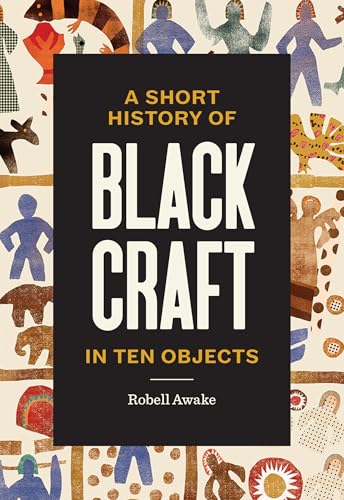
    A SHORT HISTORY OF BLACK CRAFT IN TEN OBJECTS, beautiful gift object as well as solid primer on crafts-as-art


    A SHORT HISTORY OF BLACK CRAFT IN TEN OBJECTS
    ROBELL AWAKE
    (illus. Johnalynn Holland; afterword by Tiffany Momon)
    Princeton Architectural Press (non-affiliate Amazon link)
    $12.99 ebook editions, available now

    Rating: 4.5* of five

    The Publisher Says: Ten beautifully illustrated essays tell the stories of handcrafted objects and their makers, providing inspiration and insight into Black history and craftsmanship.

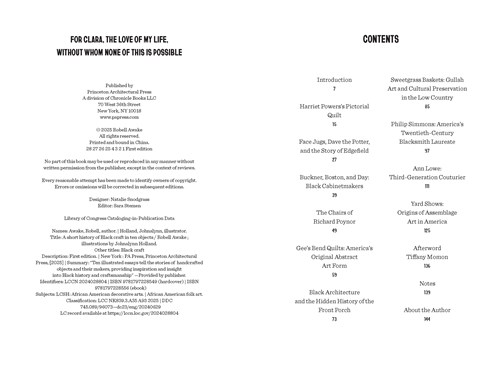
    Black artisans have long been central to American art and design, creating innovative and highly desired work against immense odds. Atlanta-based chairmaker and scholar Robell Awake explores the stories behind ten cornerstones of Black craft, including:
  • The celebrated wooden chairs of Richard Poynor, an enslaved craftsman who began a dynasty of Tennessee chairmakers.
  • The elegant wrought-iron gates of Philip Simmons, seen to this day throughout Charleston, South Carolina, whose work features motifs from the Low Country.
  • The inventive assemblage art and yard shows of Joe Minter, James Hampton, Bessie Harvey, and others, who draw on African spiritual traditions to create large-scale improvisational art installations.

  • From the enslaved potters of Old Edgefield, South Carolina, to Ann Lowe, the couture dressmaker who made Jacqueline Kennedy's wedding dress, to Gullah Geechee sweetgrass basket makers, to the celebrated quilters of Gee's Bend, A Short History of Black Craft in Ten Objects illuminates the work of generations of Black craftspeople, foregrounding their enduring contributions to American craft.
  • BLACK CRAFT AND AMERICANA: Delving into the history of Black skilled artisans, estimated to have outnumbered white artisans five to one in the southern United States in the late 1800s, this unique art history book celebrates handcrafted objects that reflect the dynamic nature of Black culture.
  • DYNAMIC ILLUSTRATED ESSAYS: Luminous color illustrations by artist Johnalynn Holland highlight beloved craft objects and their makers, creating a fascinating volume to study and treasure.
  • ART HISTORY EXPERTISE: Author Robell Awake is a notable furniture maker, artisan, and educator whose work has been featured in the New York Times and in group shows at Verso Gallery in New York City and the Center for Craft in Asheville, NC. Dr. Tiffany Momon, who contributes an afterword, is the founder and co-director of the Black Craftspeople Digital Archive and a leading scholar of Black history and African American placemaking throughout the southeast.
  • BEAUTIFUL GIFT BOOK: The gorgeous design is ideal for art collectors and craft enthusiasts, as a keepsake reminder of Black heritage, for Black History Month and beyond.

  • I RECEIVED A DRC FROM THE PUBLISHER VIA EDELWEISS+. THANK YOU.

    My Review
    : There's a lot to love about Black History Month. One big thing is its use as a goad to look out for Black creators, and creativity centering Black life and experiences, in my otherwise very, very white life. I am an old white man and really appreciate the push to look out for ideas and art I don't see on the regular.

    I think you're going to like it. Look:

    Laying out the course we'll follow.

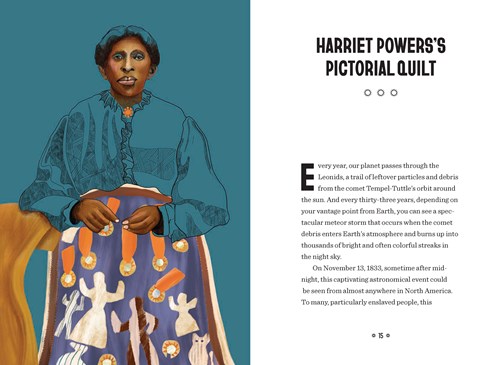
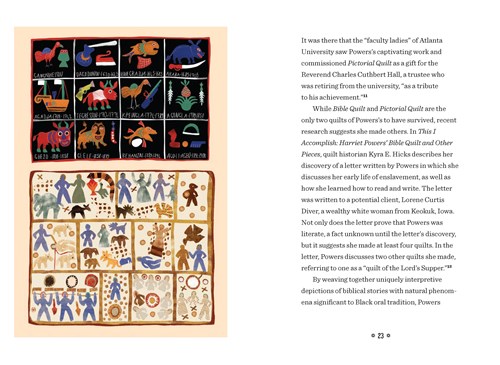
    So beautiful, the evocation of the spirit of the quilt.


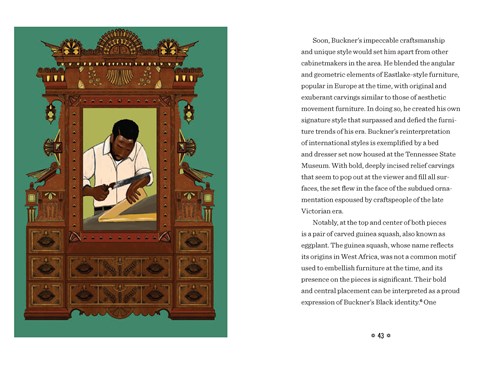
    They're stunning as art; they're vital as cultural documents.

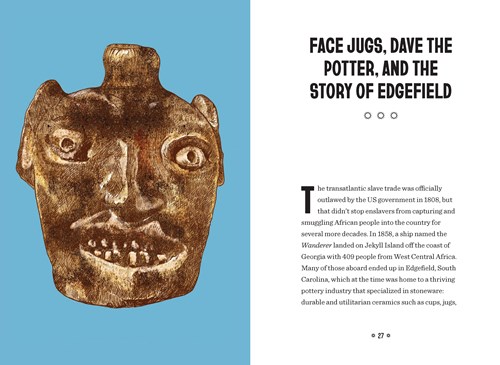
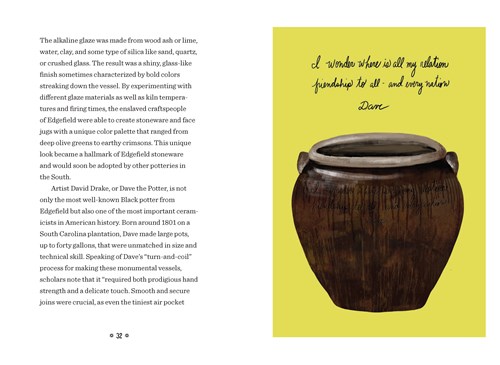
    This kind of pottery makes my hairs stand up. Such a shot of Truth! It's a personality, it's a real Presence, an avatar of interiority.


    Speaking real, home truth there, Dave.


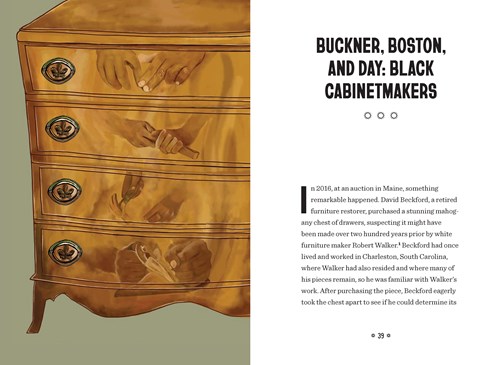
    It's a bureau that, as I look at it, is exactly like one Mama had; I wonder if that one was made by a Black craftsman, and I have no way to know....

    A beautiful object about beautiful objects. An adornment for the coffee table. The essays aren't exactly stunning prose, or hugely academic; they're tonally appropriate enhancements of one's existing, or good seedstock for one's entirely absent, knowledge base of the long, long tradition of Black art in the craft sphere. Can't quite give it that full fifth star because it's doing its job but not stretching me as a reader; it will others, though.

    Monday, September 16, 2024

    A MUZZLE FOR WITCHES, probably the last time we'll get to hear from a feminist ikon


    A MUZZLE FOR WITCHES
    DUBRAVKA UGREŠIĆ
    (tr. Ellen Elias-Bursać)
    Open Letter Books
    $14.95 trade paper, available tomorrow

    August 2025: 40% discount on all Open Letter titles written or translated by female-identifying artists. (Discount is applied automatically at checkout on publisher's website and applies to all hardcover, paperback, and ebook editions.)

    Rating: 4.5* of five

    The Publisher Says: Winner of the Neustadt International Prize for Literature As with the rest of her literary career, Dubravka Ugresić's final work, A Muzzle for Witches, is uncategorizable. On its surface, the book is an conversation with the literary critic Merima Omeragić, covering topics such as "Women and the Male Perspective," "The Culture of (Self)Harm," and "The Melancholy of Vanishing."

    But the book is more than a simple interview: It's a roadmap of the literary world, exploring the past century and all of its violence and turmoil—especially in Yugoslavia, Ugresić's birth country—and providing a direction for the future of feminist writing.

    One of the greatest thinkers of the past hundred years, Ugresić was one-of-a-kind, whose novels and literary essays pushed the bounds of form and content, and A Muzzle for Witches offers the chance to see her at her most raw, and most playful.

    I RECEIVED A DRC FROM THE PUBLISHER VIA EDELWEISS+. THANK YOU.

    My Review
    : "Raw and playful" are not frequently paired in a publisher's synopsis. In this outraged, affronted growl, they're two of the best words for Ugresić's œuvre as a whole, and this last distilled, refined-to-purity last work in particular. Her métier was the essay, I've even said before the screed, and this one-sitting book is a great way to get one's eye in to the tenor of her work.

    It's quite an achievement to call out, I'd venture to say even to take down, the sexist, fascist Establishment that's controlled...notionally, in her case...the course of both life and career, while being amusing. Mordantly so, but amusing nonetheless. Author Dubravka does this trick regularly. I'm very impressed by this because it means her focus is not on her topic of outrage. The outrage is there, but unlike the literature of grievance that grows so stale so very quickly. Jeremiads are so deeply tedious as anything except a light seasoning on top of one's regular reading.

    The title of these collected interviews with a literary critic from Croatia, Merima Omeragić, is a call-out to the (male-dominated) Croatian establishment's characterization of her as a "witch" when her anti-war attitudes got her hounded into exile in 1993. "Muzzle me, you dickheads?" one can hear her thinking in this title. I do not know if she chose it, but it certainly captures her acerbic, flensing-knife wit.

    What we, as a literary society, lost on her 2023 death, was an acute observer...better to say "witness" of the Ship of Fools we're riding on. Dubravka Ugrešić saw it from her berth in Second Class, where she was assigned, but never, ever stayed. Her head was the Imperial Suite's sole occupant. She saw right through the oppressive systems designed to reduce her to a compliant drone, a life support system for a uterus.

    We need this voice as a society. The women who vote in the 2024 US elections should read this, and other feminists of an earlier generation, because their privileges are not secure when their very rights to bodily autonomy are being rolled back at a great rate of speed.

    Saturday, September 30, 2023

    THE AGE OF SKIN: Essays by the late thinker/cultural critic Dubravka Ugrešić


    THE AGE OF SKIN: Essays
    DUBRAVKA UGREŠIĆ
    (tr. Ellen Elias-Bursać.)
    Open Letter Books
    August 2025: 40% discount on all Open Letter titles written or translated by female-identifying artists. (Discount is applied automatically at checkout on publisher's website and applies to all hardcover, paperback, and ebook editions.)

    $16.96 trade paper, available now

    Rating: 3.5* of five

    The Publisher Says: These essays are written on the skin of the times. Dubravka Ugrešić, winner of the Neustadt International Prize and one of Europe’s most influential writers, with biting humor and a multitude of cultural references—from La La Land and Dawn of the Planet of the Apes, to tattoos and body modification, World Cup chants, and the preservation of Lenin’s corpse—takes on the dreams, hopes, and fears of modern life. The collapse of Yugoslavia, and the author’s subsequent exile from Croatia, leads to reflections on nationalism and the intertwining of crime and politics. Ugrešić writes at eye level, from a human perspective, in portraits of people from the former Eastern Bloc, who work as cleaners in the Netherlands or start underground shops with products from their country of origin.

    A rare and welcome combination of irony, compassion, and a sharp polemic gaze characterizes these beautiful and highly relevant essays.

    I RECEIVED A DRC FROM THE PUBLISHER VIA EDELWEISS+. THANK YOU.

    My Review
    : There is a timelessness to the literary form we call the screed. These extended snorts of derision, grumbles of dissatisfaction, howls of anguish, form in their bulk a screed against Ugrešić's many crotchets with the modern capitalist, hyperconsumptive, obsessional "culture" that's permeated our planet and bids fair to destroy its capacity to support us.
    Technology has empowered him, our former statistic, to finally take center stage. Did not he, this worm in human form, also come into the world to leave his mark?! And sure enough, the little guys have raced to leave their mark, developing in the process voracious appetites: some of them strip naked and bare their posterior, others their genitalia, some sing, others write, some dance, others paint, while some are multiplexes and do all of this at once. The little guy has finally conquered the media.

    The technology to have what Andy Warhol famously predicted would be our universally available "world-famous for fifteen minutes" cultural due is in place; is being used; and exacerbates the overuse of resources by the stupid on their individual search of their fifteen-minute slice:
    Where did I go wrong, a friend of mine asked, an astrophysicist. He was left jobless, and scrolled through his computer to find something, anything, to make ends meet. There before him on the computer screen loomed Kim Kardashian’s large, oiled butt.{...} Kim Kardashian’s butt came jumping off every website, the world over, wherever he clicked. My friend realized this butt was the final greeting from a civilization breathing its last, and he relaxed. The Kardashian meteorite came slowly closer, in another second it would crash into Earth and shatter into a million bits. Where have I gone wrong, asked the astrophysicist with the last vestiges of his brain.

    Flaunt what you like, show what you've got, no one's paying attention because everyone's looking for their reflection in your shiny, oiled-up abs, ass, tits.
    {A}ll the world looks like a beach party, bare-naked bodies chanting Gorky’s man, how proud it sounds, that everything is cool, couldn’t be cooler, the party will last till the liberated bodies are stilled by that inevitable shovelful of dirt.

    Even after they pat you in the face with a spade, your selfies and your butt will be proof for so long as the bits and bytes have juice to keep them available to whoever cares to look that You Were Here, that once upon a time Granny had a slammin' beach bod, that Papaw was well-hung, that Mom and Dad liked anal, too.
    Everyone is preoccupied with their own life, their own little existence. And as long as people stare obsessively at their reflection on the smooth screen, there will be no room for the lives of others, there is simply no room.

    No room, no room...never enough room for all the nothing-much that people want to insulate themselves against oblivion with, the immense pile of stuff we're pretty much padded from the grim reality that all that stuff came from someone's labor, made from resources they can't access, and all you're doing with it is plonking it into a (rented) storage unit until you die and whoever has to clean up after you throws it out, sells it, donates it to the needy.
    And when the victims are many, there’s no place for them in human hearts of average emotional capacity. It bears remembering that in this society of ours, rooted in an overweening happiness, empathy has been jettisoned.

    "The poor you will always have with you, but you will not always have Me," says the original christian according to Matthew...and haven't his co-religionists just taken that right to heart, as written though not as it was intended. In a world padded by stuff the blows of misfortune and reversal aren't as sharp, are thye, so stuff is doing its job...dulling you to the reality that all the noise, all the "I AM, I AM, I AM" we shout onto the smooth screens reflecting the vacant spots that are the Others, is an appalling, desperate din of misery and not a joyful noise unto the lord.
    Stupidity has become, over time, far too burdensome for me. I am finding it difficult to breathe under its weight and cannot shake free of it. I tried for a while with laughter, and, to be sure, that helped. But now stupidity has barged in, made itself at home, and soaked up all the oxygen. A quarter century ago, stupidity grabbed the microphone, gleeful with self-confidence, and hogged center stage. There is no hope that it will be relinquishing its position any time soon.

    Bitter, disillusioned old curmudgeon that I am, Dubravka Ugrešić speaks for me more eloquently than I can mange to do for myself. Her death in March, 2023, was a huge loss of honesty, clarity, and grouchy, disappointed screed-making. I know I feel it as a loss. If you read these trenchant essays I expect you might, as well.

    Monday, September 25, 2023

    BAYARD RUSTIN: A Legacy of Protest and Politics surveys a life lived in resistance, & LOST PROPHET: The Life and Times of Bayard Rustin, biography of his gayness


    BAYARD RUSTIN: A Legacy of Protest and Politics
    MICHAEL G. LONG
    (editor)
    NYU Press
    $27.95 harcover, available tomorrow

    Rating: 3.5* of five

    The Publisher Says: Celebrates the life and legacy of Bayard Rustin, the civil rights leader behind the 1963 March on Washington for Jobs and Freedom

    While we can all recall images of Martin Luther King Jr. giving his “I Have a Dream” speech in front of a massive crowd at Lincoln Memorial, few of us remember the man who organized this watershed nonviolent protest in eight short weeks: Bayard Rustin.

    This was far from Rustin’s first foray into the fight for civil rights. As a world-traveling pacifist, he brought Gandhi’s protest techniques to the forefront of US civil rights demonstrations, helped build the Southern Christian Leadership Conference, led the fight for economic justice, and played a deeply influential role in the life of Dr. King by helping to mold him into an international symbol of nonviolent resistance. Rustin’s legacy touches many areas of contemporary life—from civil resistance to violent uprisings, democracy to socialism, and criminal justice reform to war resistance.

    Despite these achievements, Rustin was often relegated to the background. He was silenced, threatened, arrested, beaten, imprisoned, and fired from important leadership positions, largely because he was an openly gay man in a fiercely homophobic era. With expansive, searching, and sometimes critical essays from a range of esteemed writers—including Rustin’s own partner, Walter Naegle—this volume draws a full picture of Bayard a gay, pacifist, socialist political radical who changed the course of US history and set a precedent for future civil rights activism, from LGBTQ+ Pride to Black Lives Matter.

    I RECEIVED A DRC FROM THE PUBLISHER VIA EDELWEISS+. THANK YOU.

    My Review
    : Too long ignored for being queer and open about it, the life of a Quaker resistor of Wrong and Wickedness was a complicated one. I wish this collection of essays had been edited to reduce the repetition of basic information about him, but appreciate that it was done at all.

    I imagine the experience of being friends with Bayard Rustin was pretty fraught...his stadards were very high and his judgments usually spot-on, which combination is uncomfortable for himself and others. This reality played itself out in his double invisibility in gay-rights circles: Blackness and religious belief. He felt he wasn't needed or wanted in that world so, until he fell in love with Walter Naegle at 65, he focused on Black liberation and didn't involve himself in gay rights. The sad part to me is that the man was ahead of his time in his politics, his morals, and his social beliefs, and still deeply internalized both homophobia and misogyny.

    If you're utterly unfamiliar with Rustin, this collection of essays will fill you in. Read the way any collection should be, piece by piece over time, the cumulative effect is to bring an unjustly underknown man's contributions to the best things that happened in the era of Civil Rights expansion to light. He is, be aware, not critically examined in these essays. Part three of the collection, "What Rustin Means to Me," is probably my favorite to read because the legacy of this upright, intelligent, unsparing actor on the public stage is dealt with by those whom he has inspired. I suppose anyone who stood up for an unpopular belief because it was right to do so can't hope for a better legacy.

    +++++++++++++++++++++++++++++++++++++++++++++++++++++++++++++++++


    LOST PROPHET: The Life and Times of Bayard Rustin
    JOHN D'EMILIO

    The Free Press
    $11.99 Kindle edition, available now

    Rating: 4.5* of five

    The Publisher Says: Bayard Rustin is one of the most important figures in the history of the American civil rights movement. Before Martin Luther King, before Malcolm X, Bayard Rustin was working to bring the cause to the forefront of America's consciousness. A teacher to King, an international apostle of peace, and the organizer of the famous 1963 March on Washington, he brought Gandhi's philosophy of nonviolence to America and helped launch the civil rights movement. Nonetheless, Rustin has been largely erased by history, in part because he was an African American homosexual. Acclaimed historian John D'Emilio tells the full and remarkable story of Rustin's intertwined lives: his pioneering and public person and his oblique and stigmatized private self.

    It was in the tumultuous 1930s that Bayard Rustin came of age, getting his first lessons in politics through the Communist Party and the unrest of the Great Depression. A Quaker and a radical pacifist, he went to prison for refusing to serve in World War II, only to suffer a sexual scandal. His mentor, the great pacifist A. J. Muste, wrote to him, "You were capable of making the 'mistake' of thinking that you could be the leader in a revolution...at the same time that you were a weakling in an extreme degree and engaged in practices for which there was no justification."

    Freed from prison after the war, Rustin threw himself into the early campaigns of the civil rights and anti-nuclear movements until an arrest for sodomy nearly destroyed his career. Many close colleagues and friends abandoned him. For years after, Rustin assumed a less public role even though his influence was everywhere. Rustin mentored a young and inexperienced Martin Luther King in the use of nonviolence. He planned strategy for the Southern Christian Leadership Conference until Congressman Adam Clayton Powell threatened to spread a rumor that King and Rustin were lovers. Not until Rustin's crowning achievement as the organizer of the 1963 March on Washington would he finally emerge from the shadows that homophobia cast over his career. Rustin remained until his death in 1987 committed to the causes of world peace, racial equality, and economic justice.

    Based on more than a decade of archival research and interviews with dozens of surviving friends and colleagues of Rustin's, Lost Prophet is a triumph. Rustin emerges as a hero of the black freedom struggle and a singularly important figure in the lost gay history of the mid-twentieth century. John D'Emilio's compelling narrative rescues a forgotten figure and brings alive a time of great hope and great tragedy in the not-so-distant past.

    I CHECKED THIS BOOK OUT OF MY LOCAL LIBRARY. USE THEIR SERVICES OFTEN, THEY NEED US!

    My Review
    : So, after deciding that I wanted a biography of the complex gay man Bayard Rustin while reading essays about him, I found this hefty tome. I love library lending because I couldn't justify spending full price on a book I expected to admire not like when my $12 investment represents 5% of my total monthly spending power.

    I'm going to buy it for myself now because I want to support this historian whose stylish writing and tireless researching of a crucial figure in gay and Black history has enriched my life.


    Rustin's Quaker upbringing strongly influenced his social-justice compass and his anti-violence stance. He refused to serve any military or enabling function in World War II, serving instead jail time for following his conscience. He was consistently anti-war and anti-colonialist in his world view, modeling his resistance to them on Mohandas K. Gandhi's successful anti-British actions in India. Rustin, and mentor A. Philip Randolph, founder and leader of the Brotherhood of Sleeping Car Porters, planned a mass march on Washington in 1941 for the same goals that the 1963 event had (Jobs and Justice) but called it off because President Roosevelt asked them to. The brink of war was used as an excuse to delay urgent public action...as always...but both men were active in making sure the March on Washington took place, at last, in 1963. We remember it mostly for assassinated leader Martin Luther King, Jr.,'s rousing and glorious "I Have A Dream" speech. If, like most, you've only ever seen the highlight reel version, go treat yourself to the entire seventeen and a half minutes at the link. But Randolph, responding to ongoing scurrilous efforts to paint MLK and Rustin as sexual lovers not friends, really shone in his ringing defense of Rustin's involvement as the leader and backstage manager of this titanic event that kickstarted so many changes in US society: "Bayard Rustin IS the March on Washington." He faced down, on behalf of his gay friend and fellow life-long resistor of social and political injustice, the President of the USA, J. Edgar Hoover ofthe FBI...arguably the more powerful of the two men...and Adam Clayton Powell, Harlem's immensely influential Congressman, who coveted Rustin's control and directive roles.

    The over five hundred pages of this story aren't a chore to read. The reason is that Author D'Emilio made the effort to make it a story. Many, if not most, biographers are excellent researchers and fans of their subjects; fewer wre storytellers with an eye for the illustrative anecdote. My best example is the moment when, during a public meeting after the Montgomery, Ala., church bombing killed four little girls, Rustin took those loudly calling for a violent response to task by accusing them of proposing to accomplish nothing.

    That is some kind of drama, folks, and it perfectly encapsulates a lifetime of Rustin's moral and political learning.
    What leads me to talk about this lost prophet, buried in homophobic judgment, in connection with the essays just published about him, is the fact that Rustin had so much internal-to-the-struggle opposition to cope with that his never hidden, never centered homosexuality was never the focus of his resistance to power's abuses. Bear in mind that a known, avowed homosexual Black man was principally responsible for the community activism model and playbooks that succeeded in achieving the end of the legal fig-leaf of Jim Crow laws in the US. Could he have done the same had he set his sights on axhieving the same for queer folk, when the DSM-II of NINETEEN SIXTY-EIGHT still defined homosexuality as a mental illness, and the Feds led by Hoover had barely stopped the Lavender Scare? During the latter events, do not ignore, Rustin was a victim and STILL LED THE MARCH ON WASHINGTON!

    Sorry. The awfulness of his treatment during his life by his fellow Quakers and Christians, and after his death by literally everyone simply forgetting he existed, lead me to the shouting.

    The man himself noted that liberals couldn't hate Blacks and Latinos anymore, but they sure could—and did—hate fags. Realist that he was, he spent his life of organizing, resisting, and inspiring in the fields where he could do the most good. Admirably clear-sighted and honestly, to me at least, movingly generous of spirit of him not to insist on perfection but work for better. Events have proven his approach was effective for QUILTBAG folk as much as for ethnic minorities.

    I salute author D'Emilio for putting in the hard labor and the gigantic energy to create this readable, enjoyable story of an important and ignored man, his life and his loves and his legacy. A perfect accompaniment to Bayard Rustin: A Legacy of Protest and Politics.

    Monday, June 12, 2023

    UNCLE OF THE YEAR & Other Debatable Triumphs, famous gay actor writes vignettes a la Sedaris...and succeeds at it!


    UNCLE OF THE YEAR & Other Debatable Triumphs
    ANDREW RANNELLS

    Crown Books
    $28.00 hardcover, available now

    Rating: 4* of five

    The Publisher Says: From the star of The Book of Mormon and Girls, candid, hilarious essays on anxiety, ambition, and the uncertain path to adulthood that ask: How will we know when we get there?

    In Uncle of the Year, Andrew Rannells wonders: If he, now in his forties, has everything he’s supposed to need to be an adult—a career, property, a well-tailored suit—why does he still feel like an anxious twenty-year-old climbing his way toward solid ground? Is it because he hasn’t won a Tony, or found a husband, or had a child? And what if he doesn’t want those things? (A husband and a child, that is. He wants a Tony.) In deeply personal essays drawn from his life as well as his career on Broadway and in Hollywood, Rannells argues that we all pretend—for friends, partners, parents, and others—that we are constantly succeeding in the process known as “adulting.” But if this acting is leaving us unfulfilled, then we need new markers of time, new milestones, new expectations of what adulthood is and can be.

    Along the way, Rannells navigates dating, aging, mental health, bad jobs, and much more. In his essay “Uncle of the Year,” he explores the role that children play in his life, as a man who never thought having kids was necessary or even possible—until his siblings have kids and he falls in love with a man with two of his own. In “Always Sit Next to Mark Ruffalo,” he reveals the thrills and absurdities of the awards circuit, and the desire to be recognized for one’s work. And in “Horses, Not Zebras,” he shares the piece of wisdom that helped him finally come to terms with his anxiety and perfectionism.

    Filled with honest insights and a sharp wit, Uncle of the Year challenges us to take a long look at who we’re pretending to be, who we know we are, and who we want to become.

    I RECEIVED A DRC FROM THE PUBLISHER VIA NETGALLEY. THANK YOU.

    My Review
    : Impostor Syndrome played for laffs. And it got them from me! What I don't always understand is how the idea of this common mental illness is so undertreated in the world of psychology, except of course among women in whom it was first identified forty-five years ago. That makes sense because it's a subtle way of (in)validating women's power.

    Actor Rannells is a gay man of a certain age writing about himself and his multivalent struggles to achieve success, find love, gain self-esteem and confidence, and then Own It. If Impostor Syndrome does nothing else, it weaponzes the "virtue" of modesty to create eternal insecurity and "unworthiness" in those not inoculated against those insidious underminers of personal satisfaction and empowerment by virtue of gendered, class- and race-specific messaging. Just look around at those whose self-esteem is most on public display to get the import of this effective means of social control.

    Those reflections being delivered, the story itself is a laugh-out-loud collection of short essays, the precise proper length to be read while in down-time from tasks of ordinary living...waiting in waiting rooms, between required or assigned busy-work bursts...and they deliver not simply respite from these but quietly effective food for thought. Rannells has lived an active public-facing life. His reflections on how that's worked for him, what it's cost him, where it's led him, are both completely personal and universally applicable in their outlines. (Funny how often those things go hand-in-hand, isn't it?)

    What I enjoyed most about the read was how much honesty Actor Rannells brings to his gayness. He denies, hides, celebrates, and ultimately integrates his sexual and romantic focus on his own gender in a social milieu, the theatre, where it's not exactly uncommon. The process isn't direct, and is never over...gay men never stop coming out...but it's a lot less time-consuming as he ascends the career ladder with candor and humor. Aging has its good points. He's in charge of his own life and future in ways he never thought he could be as a young gay man. But the eternal struggle to believe himself actually possessed of that power, and the deservedness of that success, that is the ongoing "gift" of Impostor Syndrome, is the quiet but inescapable burden of his humorously delivered anecdotes.

    I'm older than Rannells, older even than his decade-plus older partner, and I still recognize and relate to all the struggles he underagoes. I found comfort, fellowship, and fun in this read. I hope you'll take it with you to the next doctor's office or bureaucratic waiting room you go into.

    Friday, August 27, 2021

    THE BOOK OF ERRORS will delight and enlighten some, bewilder and befuddle others


    THE BOOK OF ERRORS
    ANNIE COGGAN (art) and MARK HAGE (text)

    A Public Space Books
    $18.00 trade paper, available now

    Rating: 4* of five

    The Publisher Says: A collection of three illustrated essays looking at the preservation of three historic houses—and the layered, messy process of reconstructing our past and reimagining history. An architect and artist, Annie Coggan delves into the history of three iconic American structures—the Henry Knox Memorial in Maine; Fraunces Tavern in New York City; and the Betsy Ross House in Philadelphia—and the stories of the people and ideas involved in their preservation to consider the ways in which history is reshaped by future generations.

    I RECEIVED A DRC FROM THE PUBLISHER VIA EDELWEISS+. THANK YOU.

    My Review
    : A literary magazine of some significance gave birth to a publishing company of some significance. I've reviewed So Much for That Winter, one of their earlier book publications of a translation from the Danish via Graywolf Press, on this blog. I've also reviewed their initial own-imprint publishing venture, the late and underknown Bette Howland's delight of a short-fiction collection, Calm Sea and Prosperous Voyage, on this blog. As both of those were positive reviews, I think you could safely say I am in tune with this press's aesthetic.


    Here you see the artwork that forms the spine of this book's conceit. It is a series of beautiful paper models, and drawings, and painted drawings, of three different historic homes that are going to be conserved, restored, or rebuilt. The specific examples I've used are those provided by the publisher; all are from the Henry Knox Memorial, a house named "Montpelier," in Thomaston, Maine. The facts about the house are: It is a nineteen-room recreation, finished in 1929, of the original space built in 1794; that space was demolished in 1871 to make way for the Thomaston Railroad. The essay about this house is in the form of letters to and from the architect of the reconstruction, William E. Putnam, to one of the commissioning parties, Miss Watts of the Daughters of the American Revolution. Are these "real," by which I mean were they written by the parties whose names are on them, and selected by Author Coggan; or are they fabrications of Author Coggan's, made to elucidate a point about the eternal and delicate process of reaching a working understanding between client and architect?

    I don't think it matters.
    I don't see how anything but the effect, the gentle and eloquent interplay of images such as the above, with the words such as:
    The evidence, even of eyewitnesses, as to the probable plans of the Knox House are so at variance that we have to consider it carefully and test each bit by things that we are sure of from a practical standpoint...

    I wish you would read carefully Miss Miller's description and check it up with your remembrance. Also, if she is still living, I should think that a talk between you and her might clear up many of the points about which a difference of opinion seems to exist....

    really makes a difference to the way one experiences this beautiful and thoroughly satisfying melding of idea, image, and purpose. We are brought into a quotidian conversation between patron and architect, between a man and a woman both of senior years, and thus in conjunction with the beautiful art, we are flies on the walls of these moments when History, long dead even then, was being negotiated for presentation to The Future. It is always a worthwhile endeavor to learn about what goes into the making of the world thee and me see.

    Author Coggan's beautiful paper-and-paint constructions offer something I think too many books about preservation, architectural history, and art in general lack: A what-if, a road-not-taken approach to visual arts that I resonated with. It could simply be that I am so enchanted by the art itself that I am happy to see it used in this unusual manner. I grant that others might not feel this is anything other than a very niche project, showing a blow-by-blow of things that didn't happen, or might have happened, instead of cold non-fiction.

    I see value in the exploration this approach allows of the why, the deeper why, of art and architecture pressed onto the service of History and the Monomyth of American History. The exceptionally contentious "restoration" of Fraunces Tavern, more precisely called a "conjectural reconstruction" (thanks, Wikipedia!), is illustrated in black-and-white drawings which, quite lovely though they are, suit the more angry and contentious responses to the Sons of the Revolution's major, and not uncontroversial, reimagining of the Tavern as of the 1790s (from the distance of 1904!):
    "On passing the Washington statue...I thought I heard a loud sobbing... I said, 'Why weepest thou?' He said, 'Hast been to Fraunces's Tavern lately and witnessed the scoundrelly piece of vandalism that they have perpetrated upon that hallowed building, with whose walls I embraced my loved comrades?'"
    —Letter to the New York Times (1906)

    Daniel Libeskind, he of the master-planned Freedom Tower complex on the site of the old World Trade Center Twin Towers, would've recognized the entire imbroglio as being New York City doing what she does best: Eating her young. Nothing can ever be accomplished in the City without a decade of brangling, infighting, and public bitching.

    The last of the three historic structures whose futures were assured by these early preservation attempts was famed upholsterer and flag-designer, Betsy Ross, whose residence in Philadelphia came in for a "re-configuration" to make it more suitable a setting for the probably apocryphal transfer of a flag designed by Mrs. Ross in her role as a famed upholsterer in Philadelphia society to General Washington. Since the probability is that Mrs. Ross didn't ever live in that tourist mecca, there's really no point getting exercised about it...and Author Coggan uses beautifully simple line drawings to evoke the scale of the house (it's dinky!) and the simplicity of its furnishings (spartan).

    I think this lovely object belongs on the coffee tables of those whose appreciation for art is not limited to visual expressions of design, but also reaches for the "why" of art...what about this is necessary, what in this artistic expression am I going to think about and become acquainted with that I haven't, wouldn't, or couldn't otherwise?

    This book is meant to close those gaps for you, elegantly, about parts of History that more often than not are so dead to us that we couldn't care less if they were there at all. I salute your vision, A Public Space Books, and your talent, Author Coggan!

    Monday, December 28, 2020

    2020...GAWD it stank! Here are some reads to remind us what's at stake in 2021


    MILL TOWN: Reckoning with What Remains
    KERRI ARSENAULT

    St. Martin's Press
    $27.99 hardcover, available now

    Rating: The Full Five

    The Publisher Says: A galvanizing and powerful debut, Mill Town is an American story, a human predicament, and a moral wake-up call that asks: what are we willing to tolerate and whose lives are we willing to sacrifice for our own survival?

    Kerri Arsenault grew up in the rural working class town of Mexico, Maine. For over 100 years the community orbited around a paper mill that employs most townspeople, including three generations of Arsenault’s own family. Years after she moved away, Arsenault realized the price she paid for her seemingly secure childhood. The mill, while providing livelihoods for nearly everyone, also contributed to the destruction of the environment and the decline of the town’s economic, physical, and emotional health in a slow-moving catastrophe, earning the area the nickname “Cancer Valley.”

    Mill Town is an personal investigation, where Arsenault sifts through historical archives and scientific reports, talks to family and neighbors, and examines her own childhood to illuminate the rise and collapse of the working-class, the hazards of loving and leaving home, and the ambiguous nature of toxics and disease. Mill Town is a moral wake-up call that asks, Whose lives are we willing to sacrifice for our own survival?

    A FINALIST!! The National Book Critics' Circle's annual John Leonard Prize for a first book.

    Many thanks to NetGalley and St. Martin's Press for my DRC.

    My Review
    : The 2020 book I couldn't review because I always end up screaming at my computer and kicking my laundry bag...it is that good, that real, that intense and necessary a read. Using her own hometown, and her entire youth there, as a lens to expose and excoriate corporate chicanery, Author Arsenault is taking no prisoners. Like her predecessors in exposé-dom Katherine Boo (Behind the Beautiful Forevers) and Rachel Carson (Silent Spring), she dug deep, interviewed widely, and concluded with a shout of outrage you really owe it to yourself to experience.

    ++++++++++++++++++++++++++++++++++++++++++++++++++++++++++++++++


    REFINERY TOWN: Big Oil, Big Money, and the Remaking of an American City
    STEVE EARLY

    Beacon Press
    $27.95 hardcover, $14.99 ebook editions, available now

    Rating: 4* of five

    The Publisher Says: The People vs. Big Oil--how a working-class company town harnessed the power of local politics to reclaim their community

    With a foreword by Bernie Sanders


    Home to one of the largest oil refineries in the state, Richmond, California, was once a typical company town, dominated by Chevron. This largely nonwhite, working-class city of 100,000 suffered from poverty, pollution, and poorly funded public services. It had one of the highest homicide rates per capita in the country and a jobless rate twice the national average.

    But when veteran labor reporter Steve Early moved from New England to Richmond in 2012, he discovered a city struggling to remake itself. In Refinery Town, Early chronicles the 15 years of successful community organizing that raised the local minimum wage, defeated a casino development project, challenged home foreclosures and evictions, and sought fair taxation of Big Oil.

    A short list of Richmond's activist residents helps to propel this compelling chronicle:

    - 94 year old Betty Reid Soskin, the country's oldest full-time national park ranger and witness to Richmond's complex history
    - Gayle McLaughlin, the Green Party mayor who challenged Chevron and won
    - Police Chief Chris Magnus, who brought community policing to Richmond and is now one of America's leading public safety reformers


    Part urban history, part call to action, Refinery Town shows how concerned citizens can harness the power of local politics to reclaim their community and make municipal government a source of much-needed policy innovation.

    Many thanks to Edelweiss+ and Beacon Press for my DRC.

    My Review
    : There is nothing worse than a corporate lobbyist seeking the blinding of oversight for their industry: Congressional intervention alone saved the Chemical Safety & Hazard Investigation Board in 2017, whose paltry $11 million budget stands in stark contrast to the $530 billion industry they're charged with regulating. Author Early, in his extremely tendentious résumé of the many battles fought by the Richmond (CA) Progressive Alliance, some won and others lost but all in service of the humans of the city, kept me gasping in outraged sympathy. I definitely encourage Bernie supporters, environmentalists, and progressives to make the considerable effort to read this case study of a movement.

    ++++++++++++++++++++++++++++++++++++++++++++++++++++++++++++++++


    COMING OF AGE AT THE END OF NATURE: A Generation Faces Living on a Changed Planet
    JULIE DUNLAP & SUSAN A. COHEN

    Trinity University Press
    $18.95 paperback, $14.99 ebook editions, available now

    Rating: 4.5* of five

    The Publisher Says: Coming of Age at the End of Nature explores a new kind of environmental writing. This powerful anthology gathers the passionate voices of young writers who have grown up in an environmentally damaged and compromised world. Each contributor has come of age since Bill McKibben foretold the doom of humanity’s ancient relationship with a pristine earth in his prescient 1988 warning of climate change, The End of Nature.

    What happens to individuals and societies when their most fundamental cultural, historical, and ecological bonds weaken—or snap? In Coming of Age at the End of Nature, insightful millennials express their anger and love, dreams and fears, and sources of resilience for living and thriving on our shifting planet.

    Twenty-two essays explore wide-ranging themes that are paramount to young generations but that resonate with everyone, including redefining materialism and environmental justice, assessing the risk and promise of technology, and celebrating place anywhere from a wild Atlantic island to the Arizona desert, to Baltimore and Bangkok. The contributors speak with authority on problems facing us all, whether railing against the errors of past generations, reveling in their own adaptability, or insisting on a collective responsibility to do better.

    Many thanks to Edelweiss+ and Trinity University Press for my DRC.

    My Review
    : A wildly variable collection of young peoples' responses to the horrific crisis my generation refused to mitigate or ameliorate in any way, shape, or form. I enjoyed a few essays that explored personal connections...a young parent pondering the ethics of childbirth at this historical point, a National Park docent contrasting the biome she guides people through with last century's paean essays to its lost glory...empathized with all, and ended up wanting to pen an apologia not a review. If the gutting of oversight and enforcement of regulations and standards on industry, and the all-but-abolishment of Federal land stewardship, causes you pain, read these essays to become galvanized and energized with purpose to fight our planet's hastened end.

    ++++++++++++++++++++++++++++++++++++++++++++++++++++++++++++++++


    HOW TO CHANGE A LAW: Improve Your Community, Influence Your Country, Impact the World
    JOHN THIBAULT

    iLobby (non-affiliate Amazon link)
    $2.99 ebook editions, available now

    Rating: 5* of five

    Many thanks to NetGalley and iLobby for my DRC.

    I began this book wondering what the heck I could do to impact the legislative process; I ended it eager to apply the seven steps to self-empowerment in the political process. The most mind-blowingly direct, unfussy, and above all practical guide to speaking the language of successful influencers I can imagine. If the 2021 administration change has heartened you to imagine your voice can and should be heard, spend the extremely modest investment in this book and prepare wield your citizen's power effectively.

    Sunday, December 27, 2020

    2020...the year the world stopped for a minute


    THE DARK FANTASTIC: Race and the Imagination from Harry Potter to the Hunger Games
    EBONY ELIZABETH THOMAS

    NYU Press
    $16.95 trade paper, available now

    Rating: 4* of five

    Many thanks to Edelweiss+ and NYU Press for my DRC of this book

    This past November 1st, Author Ebony Elizabeth Thomas won the 2020 World Fantasy Special Award for Professionals in recognition of this title's outsized importance in its field. Any in-depth review of the book will simply be retyping it; the author is adept at stating home truths in trenchant, relatable ways: "Maybe it’s not that kids and teens of color and other marginalized and minoritized young people don’t like to read. Maybe the real issue is that many adults haven’t thought very much about the radicalized mirrors, windows, and doors that are in the books we offer them to read, in the television and movies we invite them to view, and in the fan communities we entice them to play in." It is a wonder to find someone as adept as Octavia Butler was at making the nature of the wrongs embedded in our lush, vibrant SF literary world clear and present and, as a result, actionable. If you're white, love to read fantasy, science fiction, or horror fiction, this is a must read.

    ++++++++++++++++++++++++++++++++++++++++++++++++++++++++++++++++


    THE SECRET LIFE OF GROCERIES: The Dark Miracle of the American Supermarket
    BENJAMIN LORR

    Avery
    $27.00 hardcover, $15.99 ebook editions, available now

    Rating: 4* of five

    Many thanks to Edelweiss+ and Avery for my DRC of this book

    In a five-year odyssey through the world created to feed American consumers, Author Lorr sees the behind-the-scenes costs of the cornucopia you visited weekly if not daily....and now likely use the internet to have delivered to you. The appalling conditions of Asian slave laborers, the crushing debts of US truckers, and the battle to prevent consumers from knowing the true cost of cheap food come flying at you as fast as you can turn the pages. Those of us holed up in isolation need to read about those who have no choice but to risk plague to keep us from the risks of stepping outside. Given how many discovered the sheer creative joy of manipulating our food to taste even better might've slightly reduced our own carbon footprints...but others took up our slack. My dote Mary Roach (Stiff, Bonk, Packing for Mars) said it best in her blurb:
    The modern shopper wants groceries that are ethical, sustainable, humane, affordable, fresh, and convenient. But as Lorr discovers, the costs of our demands are recouped from the bottom of the food chain: debt-ruined truckers, foreign slave labor, and Whole Foods workers in our own communities — the people whose lives Lorr shared (and sometimes lived) for weeks or months. Does it sound grim? It’s not! The Secret Life of Groceries is a terrific read. The stories flow, and the hard truths are seasoned with wit and hope.


    ++++++++++++++++++++++++++++++++++++++++++++++++++++++++++++++++


    VESPER FLIGHTS
    HELEN MACDONALD

    Grove Press
    $27.00 hardcover, available now

    Rating: 3.5* of five

    Many thanks to NetGalley and Grove Press for my DRC of this book

    Alone among the literate world, I was made uncomfortable by the relationship between naturalist Macdonald and Mabel the formerly wild hawk told in H is for Hawk. These essays on many topics are written in Author Macdonald's justly celebrated elegant prose, and include so many aperçus that my commonplace book blew up. If you don't share my unease with people venerating wildness while taming it out of a fellow being, you'll enjoy this collection without my unshakeable unease.

    ++++++++++++++++++++++++++++++++++++++++++++++++++++++++++++++++


    CLIMATE CHANGE AND THE HEALTH OF NATIONS: Famines, Fevers, and the Fate of Populations
    ANTHONY J. MCMICHAEL
    Oxford University Press
    $26.95 trade paper, available now

    Rating: 4* of five

    Many thanks to NetGalley and Oxford University Press for my DRC of this book


    I wanted to see what the world has done to challenge us as hard as unchecked climate change is doing at this very moment. With a startlingly immense grasp, the scope of Humankind's long fight to survive despite the ways Earth changes is calmly but urgently expressed by Author McMichael. Anyone who loves to learn the ins and outs of a complex topic with a master teacher will lap this book up. The regime change due in the US on 20 January 2021 is the perfect time to learn why we should force our lawmakers to focus on responding effectively to climate change's many effects on health, wealth, and food security.

    Wednesday, November 4, 2020

    HOW TO MAKE A SLAVE and Other Essays, a finalist for a National Book Award

    HOW TO MAKE A SLAVE and Other Essays
    JERALD WALKER

    Mad Creek Books
    $19.95 paperback or ebook editions, available now

    Rating: 4* of five

    The Publisher Says: For the black community, Jerald Walker asserts in How to Make a Slave, “anger is often a prelude to a joke, as there is broad understanding that the triumph over this destructive emotion lay in finding its punchline.” It is on the knife’s edge between fury and farce that the essays in this exquisite collection balance. Whether confronting the medical profession’s racial biases, considering the complicated legacy of Michael Jackson, paying homage to his writing mentor James Alan McPherson, or attempting to break free of personal and societal stereotypes, Walker elegantly blends personal revelation and cultural critique. The result is a bracing and often humorous examination by one of America’s most acclaimed essayists of what it is to grow, parent, write, and exist as a black American male. Walker refuses to lull his readers; instead his missives urge them to do better as they consider, through his eyes, how to be a good citizen, how to be a good father, how to live, and how to love.

    I RECEIVED A DRC OF THIS BOOK FROM THE PUBLISHER VIA EDELWEISS+. THANK YOU.

    My Review
    : The reason we read essays, as readers, is almost the opposite of why we read fiction of all stripes, not to broaden our experience of humanness but to particularize it. Dr. Walker's essays about being Black in academia, in the slums of his boyhood, of being a small-town dad of sons who are Othered by their skin color, of being his own unique self in a world that wasn't ready with a place for him to fit, are as particular as one can hope to find. And that is why they resonate so fully with my older, whiter, place-was-made-before-I-cared self. How often have I wondered what in the hell I should say when my half-Black Young Gentleman Caller makes a joke about hair (I have next to none, his is abundant, and the contrast tickles him to no end. Ha ha ha) or his (pale) skin color..."I am closer in hue to a banana than a plum," says Dr. Walker at one point...and am left shtumm because, well, no matter that he's chosen an old white man for his confidant and bedmate, I can still hear the hurt in his voice or see it in the frozen-for-a-second smile when someone's comment is a microaggression. To my delight, my silence or my simple smiling and laughing without comment have kept me from experiencing that swallowed hurt at my words.

    So far.

    The years Dr. Walker spent in seeking an MFA were spent being mentored by James Alan McPherson, a monadnock of the Iowa Writers' Workshop, and one of the most admired and sought-after guides to the unforgiving world of seeking literary excellence. His story collection, Elbow Room, won him the first Pultizer Prize for Fiction awarded to a Black person. Who better to create another Black male artist? And so he did, in Dr. Walker, after some rough moments at the beginning of their association. He was capable of delivering great advice, and making it go down like a spoonful of sugar instead of the bitter and damned toxic draft of reality that it truly was:
    "Stereotypes are valuable," he said. "But only if you use them to your advantage. They present your readers with something they'll recognize, and it pulls them into what appears to be familiar territory, a comfort zone. But once they're in, you have to move them beyond the stereotype. You have to show them what's real."

    "And what's real?" I asked.

    Without hesitation, he said, "You."


    That one sounds so innocent...and the one-word lance through the armor and into the heart is why so many deeply talented and delightful writers don't ever quite make it, get past the early parts of a career. How cruel it is to have to commit to endless hours of honing and polishing and rending one's psychic flesh for a few grand on a good day, and free on a bad one! But success is all in practice and work, and no one in American history has known that more than our unappreciated and unsupported artists. So few make it....

    But some become epoch-defining superstars. Memories of Michael Jackson, unsurprisingly, loom large in Dr. Walker's youth as it coincided with the man's inescapable pop-culture presence in the later 1970s and early 1980s. I drove around with Michael Jackson on the radio because he was what was playing, what was in demand, whose talent and sound were *exactly* what the Whitegeist wanted. He sounded, I realized from reading the essay about him, very different to a young Black boy in the Chicago ghetto. Dr. Walker and his brothers were caught up in a different stream of the times than I was, and this passage tells me what I need to know: We shared the planet, for better or worse, in ways that can't be fully reconciled but can be felt, deeply, in our love of someone who made something powerful and lasting:
    While I do not know if this is true, I have a vague memory that the three of us, in 1983, watched the Motown 25 television special together, and maybe we rose at some point to to attempt Michael's moonwalk before collapsing back into our seats, succumbing to the dope coursing through our veins, much as dope would course through Michael's, nearly three decades later, and stop his heart.

    Mine stopped, for a moment, when I heard the news. And in that pause before grief, I had a vision of the Walker Six, dancing and singing...and then it was gone.

    How we all mourn our quiet fantasy lives being rendered impossible by death...and who hasn't dreamed of What Might Have Been?

    A place where I felt Dr. Walker's essayistic honesty let me, his happy reader, down was in a passage about an older gay man who offered cold, wet Jerald a ride to where he didn't much want to walk. He was treated to a request for sex, and handled that unwelcome advance with apolmb. He wasn't pressured or forced, he just got out of the car where he was going...was seen...and was later upbraided by his brother (whose own trajectory wasn't as happy as Dr. Walker's) and required to explain himself. Dr Walker goes on to tell us of the many signs of gayness that he and the Black community just...overlooked...because:
    Blacks had had their fill of emasculation over the centuries of slavery; the need to not see male homosexuality in our community was strong.

    I chose a comedy slap GIF, and one with two white men as its actors, to emphasize how deeply out of my sense of the essayist's carefully acquired sense of honest and effortful inclusion this passage is. I was gobsmacked by the casual assumption in that minor sentence, not in any way led up to or made the point of the piece, that gay men are not masculine and that to be gay is to be, like the slaves of yore, less than a man.

    I can only assume that the espousal of this calumny isn't so; it's really out of character from all the other work in the book; but it left a sour place in my opinion of both work and man.

    But the scars of disrespect for the community I live in are as nothing to the fears Dr. Walker woke in me with his horrifying brush with medical racism as his young son is having seizures...and the ignorant idiot in his small town's hospital, without drawing blood or doing anything at all except looking at two horror-struck Black parents of a child whose world needs to be fixed, now, or they're never ever going to be happy again, and says, "It could be syphilis."

    SYPHILIS. Congenital, obviously, he's a child; and a Black child, obviously from a Black parent and we all know how THEY are about sex, so hey, maybe your child has it, what do you think?

    What they thought was that a trip to Boston would get them the help they needed without the side-trimmings of racist bullshit. Paroxysmal Kinesigenic Dyskinesia is the diagnosis, a "neurological disorder that can trigger petit (mal) seizures when the body is suddenly thrust into motion." Move too quickly, get thrown into a seizure. Wow, there goes that whole school athletics program, and no way will you be getting swimming lessons, son...don't jump a lot...dancing? mmm...maybe not....

    But a diagnosis. And with it, a way forward, a way to be your son's dad as he needs you to be, the one he turns to to fix the things that are wrong in his world. And that is a way forward. The meditation on being a father in that kind of terror-stress, of having the responsibility to make your child whole, cannot be more universal. Cannot be more particular. Cannot be better, more bravely, more fully honestly Himself, Dr. Jerald Walker; and that's why I rate this fascinating and touching and brutally honest collection of essays as high as I do, and hope he wins a National Book Award for it.

    Saturday, March 25, 2017

    CLOSING THE BOOK, essays proving the urgency of women being at the cultural table


    CLOSING THE BOOK: Travels in Life, Loss, and Literature
    JOELLE RENSTROM

    Pelekinesis
    $20 trade paper, available now

    Rating: 4.5* of five

    The Publisher Says: CLOSING THE BOOK: TRAVELS IN LIFE, LOSS, AND LITERATURE explores the intersection of literature and life in personal essays about traveling, teaching, reading, writing, living, and dying. Each essay's narrative arc is formed and informed by the act of reading literature that makes a reader feel like the book she's reading was somehow written specifically for her to read in that exact moment. Renstrom relies on science fiction as a catalyst for grief, as well as a means of pushing past grim realities to begin envisioning life reconstructed and to embrace the idea that "there's nothing wrong with rebuilding forever."

    My Review: Joelle Renstrom, like most of us in adulthood, has lost loved ones to death. Her father died of cancer at the disturbingly young age of sixty-three (given that I'm within hailing distance of that landmark and possessed of siblings well beyond it, this perturbs my emotional orbit), her world then darkens bit by bit as more and more adult griefs mark her passage through time.

    Passing through time and space is a long-term interest of Renstrom's. Her blog, Could This Happen?, is dedicated to the topic of science intersecting with science fiction. Her ruminations on the near-miraculous reach of modern technology with the humdrum existence of thee and me are well worth your eyeblinks and earhairs. As one would expect of an MFA recipient, her ruminations are fueled by reading widely and voraciously. The methodology of her processing the pain of losing her dad is also, and unsurprisingly, based on the books she has read. The processing begins with an unsurprising lens: White Noise.

    A Sense of Homecoming (Don DeLillo—White Noise) rather unsurprisingly deals with an academic and his wife who fear, with irrational intensity, death. The idea of it, the fact of it, the sheer unknowable scope of death causes Jack and Babette to run from the void and directly into the unknown scientific ameliorations of death's traumas pre-mortem. Or, in other words, into the void of the unknown but outlined by the comprehensible present:
    Before Dad got sick, visiting Kalamazoo and the icons of my childhood was gratifying and indulgent—it stoked my appreciation for the people and places that shaped me. Now it feels as though I've gone back to my childhood home only to find it full of crumbling plaster and frayed wires; yet my only option is to stay there, trapped between desperate nostalgia and the rapidly darkening future.
    As Peter Weller famously said in "The Adventures of Buckaroo Banzai," "after all, no matter where you go, there you are." We bring with us all the associations of happier or sadder times to every physical place we inhabit no matter how temporarily. When we're at our least profound passages we're still moving towards death and consuming the life we've got in making sure death is held at bay:
    The supermarket is a recurring location in White Noise. All those people pushing carts, contemplating trying to right the squeaky wheel that keeps veering left, buying things they think will keep them alive. All those people I think are nothing like me until we shuffle together under the bright white lights, cheekbones sinking, chests caving.
    It is a place brimful of life's supports, lit like a hospital delivery room, and there is no place on earth less life-affirming to be. Renstrom makes her shopping choices, not her usual ones, and in her change of life's habits in this stark shining anteroom to the inevitable dark grave, comes to terms with the scope of her problem: Jack and Babette's terror of the end.

    Making Luck (Kurt Vonnegut—Sirens of Titan) starts young Joelle's early adulthood with a double-barreled shock: As she unpacks her boxes in a tiny Manhattan space, there is an indescribable noise as planes hit the Twin Towers. From her roof, Joelle watches a shaky rump of consensus collapse in fire and dust and death; coming back into her room, her beloved cat has, in panic, vanished from the premises. Her new job evaporates. Her friends are as shocked as she is, offer nothing real, satisfying, even logical to the hurting grieving lass? Her bookcase offers help, how shocking, as The Sirens of Titan with its chrono-synclastic infundibulum fitting together antithetical truths, its seemingly persecuted Malachi Constant batted willy-nilly about the Solar System at the malign will of Winston Niles Rumfoord as he surfs the infundibulum's Universe-spanning spirals after escaping a Martian-ruled Earth pacified by the Rumfoordian invention, The Church of God the Utterly Indifferent. Intervention, explanation, causation arrive from (unsurprisingly, to those familiar with Vonnegut) Tralfamadore in the form of a missing but minor bit of Tralfamadorian technology called the UWTB: the Universal Will To Become.
    As I skimmed through, Vonnegut seemed to pat my knee and tell me nothing was my fault. Like Malachi Constant, my present circumstance was created by a series of accidents, dice rolls, short straws. Bad luck. Initially, I found the idea comforting—what was [a friend]'s flippant psychobabble next too the infinite wisdom of Kurt Vonnegut?

    If luck is the force that moves the world, not everything is about me, or you, or anyone—perhaps not much is. As I stood, my hand pressed to the book as though it were a Bible, I realized that accepting my luck, or the sheer arbitrariness of my situation, was tantamount to admitting that there was nothing I could do, now or ever. While there's a certain comfort in powerlessness and in the idea that all we can do is keep going, I found it problematically passive.
    Remembering Malachi Constant in the time before Joelle finds her cat and her post-9/11 footing after the attacks recalls her deep questioning of the comforts of pain's trivialization by the tempting path of predestination. Her father's stage IV cancer is part of the plan. We make our own destiny, it's part of the cosmic plan, it's illusory freedom within an iron cage of karma.
    Perhaps it's reductive, but I can't shake the notion that someone's behind the curtain. Luck, even if random, is a force with energy and movement. It has to come from somewhere—every force has a genesis. Is luck born like a thunderclap when certain conditions exist? What or who is luck? Karma raises the same question—if karma is a reaction, who or what is reacting? Who or what determines the poetic justice that will extend over multiple lifetimes? Karma is a system, which suggests that it needs to be managed. Luck seems to be a system, too, though I can't discern what rules or ruler governs it. If luck operates on a scale or system, why can't the outcomes be programmed or predicted?
    All the questions everyone who went to college with a philosophy major, or a theology student, spent at least one smoky night discussing. But after 9/11 the issues became more urgent for us all again, and for the author the possession of a well-stocked bookshelf offered up the perfect companion on another midnight ramble down the Path of Least Resistance on our way to the Treadmill of Futility. Vonnegut, in his wise indifference, allowed Joelle to take the control she could of the things she could reach and affect. A lesson that her later self would need to have buried deep in her mental foundations as she comes to terms with her beloved dad's unfair, unearned, undeserved, yet inevitable death.

    Letters to Ray Bradbury (Zen in the Art of Writing and The Martian Chronicles) is the author, a teacher and a daughter and a writer, struggling to get up each morning, step on the annihilating landmine of reality, and spend her day, her life, reassembling the atomized bits into a self.
    [My dad and I] were supposed to go to Sweden together—we'd talked about the trip for ages. Now, I had in my bag a glass jar filled with his ashes. The last day of my trip I would spread them over Hedemora, where my grandfather's grandparents had lived. I got up every morning and had to figure out how I would say goodbye that day. Each footfall was a goodbye. Every blink, every yawn, every drop of rain.
    This experience of loss is the experience of mindfulness. Every action, performed mindfully, is a connection to all that is and all that was and all that ever will be. Eternity is the experience of now. It's easy to dismiss this insight as facile or puerile. It's harder to find someone who, once the now has fully entered them, snorts or curls a lip at the reality of its immense power to change us.

    The Progress of Souls (Walt Whitman—Leaves of Grass Song of Myself #81) takes Joelle on her tireless tour of Scandinavia, allowing us to bridge her grieving self and her healing self in anecdotes personal yet curiously universal, like the post-death sex that most of us have, that animal coupling devoid of connection or commitment that simply affirms the continued vitality of the animal; then the more healing sex of a compatriot, a being whose existence is real to us before, during, and after the encounter.

    Whitman's the perfect book-companion for this part of the journey of healing. His verse was very like intimacy, its lines like the smell of your lover's ears or the feel of his ball-sack in your palm. Joelle's men aren't men, they're theraputic appliances, and there's no reason for that to be a bad thing. She needs healing, they need whatever brings them to her side, and both parties are ready, willing, and able to perform their appointed parts in the acts to come. (You should forgive.)

    Fighting the Sunday Blues with Albert Camus (Albert Camus—The Stranger) pulls Joelle into her chosen role as teacher, where her students serve as surrogate selves in her search for the edges of her grief. What better way to explore the idea of grieving than to go into Camus' absurd rejection of meaning in The Stranger. Meaning can't be ascribed to any of Meursault's actions, he says so himself, and Camus clearly agrees with him:
    Despite their feelings of discomfort regarding Meursault I suggest to my students that because Meursault remains true to himself and to his belefs, and because he thwarts society's attempt to impose its values onto him, he's a hero—at least, in Camus' eyes. This makes the class squirm. They ask how a murderer can be a hero. It's a question so reasonable that it seems almost rhetorical. But more importantly, it's an opening; the best teaching moments come from flipping the obvious, subverting the expected.
    So how can grief have meaning? How can the author's Sunday blues have meaning? There's no meaning to find because it isn't there.

    Strong meat for a teen. Stronger perhaps for the cicerone charged with explaining the system to the perspectiveless adolescents who, sadly, are often trapped by the idea of meaninglessness and its corollary, the eternal unchanging now, and take a final solution to a problem that's really just a matter of faulty perspective: Why worry about meaning? Life isn't the question, as in "why are we alive?" Life is the answer, as in "In a Universe of absurd, improbable things, how can we not be alive?"

    How I Spent My Free Will (Kazuo Ishiguro—Never Let Me Go) explores the adolescent class under Joelle's tutelage responding to the purpose-driven life, the existence filled to the brim with meaning and predestination.

    It's chilling and horrible, though, isn't it, the existence these beings are born into, that's designed for them, that's inevitable from cradle to grave? (And, not coincidentally given the last essay in Renstrom's book, this novel won the 2006 Arthur C. Clarke Award.) Can anyone who has read this book ever look at a purpose-driven life with the same blithe certainty that it's a good thing? I certainly didn't; I don't think Joelle or her kids did, either. A corrective to the absolute freedom of Camus? Merely identifying the poles between which the metaphysical gravity flows?
    Absence of hope takes many shapes. It's not the quiet and muted scarcity of something wonderful and luxurious, like chocolates or soft sheets. The absence of hope is the absence of something utterly essential. The absence of hope crumples your chest like cellophane. How ugly the world becomes when the clouds hang hopeless, how suffocating and stagnant. Nothing will ever move or change again. The clouds sag lower and lower until they bind you up like a beetle in a spider's web, unable even to contemplate the possibility of escape. You walk through days as though you're in a CGI movie; some grey shadow has filled your soul, digitally grafted over your image so that you look and feel sooty, dirty, damaged.
    Purpose, then, excises free will? Free will obviates purpose? Surely the truth is in the middle!

    Isn't it. Isn't it?

    Finding Fathers (Barack Obama—Dreams from My Father) takes us with Joelle as the amazing, beautiful moment of Barack Obama's election to the presidency hits the whole country like the sledgehammer that it truly represented. Shattering the ancient white privilege...though not the more ancient male privilege...that dominated US politics was the moment when she looked up at the sky and asked her dead father, "Are you seeing this?"

    Never before a believer in an afterlife, by her own report, she reached into immensity and sought a return touch from the source of her life and her hope for purpose. I think it's the act that makes the result.

    Closing the Book (Gabriel García Márquez—Love in a Time of Cholera) was the author's somewhat odd choice of reading material for the days of her father's final bouts of chemotherapy. After his death, the book remained on each night table she had for four years. Finishing the book would, I suppose, feel like finishing her journey through grief. Anyone who has been through a profound grieving can tell you that the grief itself becomes a way to feel the beloved's presence. It's as necessary to us, the bereft, as the beloved was in life.

    Four years after his death, living in Boston, teaching her teenagers about the landscape of literature and the how the emotional map is not the country, Joelle picks up this deeply fraught read and finishes it. She does so in the unearthly beauty of Mount Auburn Cemetery. But at last she brings into her heart and mind the beautiful and sad tale of time's best, cruelest trick: passing, passing, passing:
    Now, as the act of reading Love in a Time of Cholera catalyzes...memories, I feel as though I'm remembering a horrible movie I once saw. Maybe I'm preventing myself from fully accessing those moments, making sure I stay outside them. I have flashes of rememberinghow very real those moments are. Yet a few minutes later I read over the words curiously, thinking, oh yeah, that's right—that happened. Even though I lived it, I still cannot fathom this happening. All I know is that I wouldn't go through it again for anything.
    And yet, in the inevitable course of life lived with love, you will. And you will be glad that you did.

    The Stars Are Not For Man (Arthur Clarke—Childhood's End) draws on the author's stint teaching a course at her father's university, where he taught for decades, called "The Evolution of Science Fiction." As with all truly well-thought-out courses of action, this one had unanticipated side effects: an intergenerational friendship that blooms in the garden of Joelle's gym. Her friend is an older man whose scientific interests have led him down paths fictional and metaphysical, and the discussions the two of them have are deep, profound, moving; they include the unknowable nature of dark matter and the inscrutable nature of cancer and the sixty-four-year-old miracle that is Childhood's End. Arthur C. Clarke, whose resume includes many fine works of fiction and much wonderful scientific origination...his practical research and analysis made satellite communication possible...wrote of the Overlords and their unasked-for gift of evolution to Humankind in terms that echo the journey Joelle and her friend are on:
    "How little we really know about ourselves," [my friend] said. "Regardless of my boundless lack of understanding, I have faith in the way things work. I have faith that they do work," he said. ... "After all, what's the likelihood of you and me becoming friends?" he asked.
    What's the likelihood of anything at all existing? What's the likelihood of there having been an imbalance of matter and antimatter in the vanishingly tiny fractions of time following whatever it was that banged in the Big Bang, resulting in the minuscule variations in radiation levels (aka heat) that we've seen and named "the cosmic microwave background" and that underpins the very existence of the universe we so impatiently, demandingly prod and poke and shout, "WHY?!" at with our every breath.

    "There lay the Overmind, whatever it might be, bearing the same relation to man as man bore to amoeba...Now it had drawn into its being everything the human race had ever achieved. This was not tragedy, but fulfillment."

    And so a daughter lays to rest her father's being inside a structure so vast there is no superlative for it: Herself.