Showing posts with label women's fiction. Show all posts

Sunday, April 19, 2026

WHERE THE GIRLS WERE, if you're not a worried feminist at the end of the read you didn't read carefully enough


WHERE THE GIRLS WERE
KATE SCHATZ

The Dial Press (non-affiliate Bookshop.org link)
$13.99 ebook, available now

Rating: 4.25* of five

The Publisher Says: In this electrifying and heartfelt historical coming-of-age novel, set against the tumultuous backdrop of 1960s San Francisco, a pregnant teenager reckons with womanhood and agency after being sent to a home for unwed mothers.

It’s 1968, and the future is bright for seventeen-year-old Elizabeth Phillips is called by her middle name “Baker” by everyone. She’s the valedictorian of her high school, with a place at Stanford in the fall and big dreams of becoming a journalist. But the seductive free-spirited San Francisco atmosphere seeps into her carefully-planned, strait-laced life in the form of a hippie named Wiley. At first, letting loose and letting herself fall in love for the first time feels incredible. But then, everything changes.

Pregnancy hits Baker with the force of whiplash—in the blink of an eye, she goes from good girl to fallen woman, from her family’s shining star to their embarrassing secret. Sent to a home for unwed mothers, Baker finds herself trapped in an old Victorian house packed with a group of pregnant girls who share her shame and fear. As she reckons with her changing body, lack of choice, and uncertain future, Baker finds unexpected community and empowerment among the “girls who went away.”

Where the Girls Were is a timely unearthing of a little-known moment in American history, when the sexual revolution and feminist movement collided with the limits of reproductive rights—and society's expectations of women. As Baker finds her strength and her voice, she shows us how to step into your power, even when the world is determined to keep you silent.

I RECEIVED A DRC FROM THE PUBLISHER VIA NETGALLEY. THANK YOU.

My Review
: I remember my much-older sister having a friend who was sent away to "nature camp" for a few months. Is that transparent or what? It was part of the culture, though, so while there were significant looks and quiet changes of subject, it wasn't treated as stunning or weird. The Pill was very newly available in the US, though I think it wasn't legal for unmarried women in California at that time. The battles of the Second-Wave Feminists for full adulthood and, crucially for Baker's story, bodily autonomy, were still unfolding.

Baker, poor lamb, didn't come from sophisticated people who didn't approve of her accidental pregnancy but didn't freak out. I wished she'd been among my family's orbit as we were there at the relevant time. Alas. Baker's trip to the maternity "home" as it was so wrongly called is designed to cast shadows over her family's star as she falls from grace so she can still be useful to them:
They love her, they're proud of her—and they need her. And that's why no one can know what is really going on. Brilliant young Baker is their ticket, the proof to everyone that their little family has made it, will make it. The future is bright, because their daughter is bright. No one else in this family has gone to college. Baker is going to life them to a new level. This has always been the plan.
The emotional register of the entire novel is in that passage. This extraordinary, exceptional young woman isn't allowed any autonomy, any agency, afforded any support for expressing her own desires or needs. It was a different time, though, right?

How different remains to be seen.

The condescending (at best), judgmental (more usually), shame-dealing (always) hierarchy of Baker's "home" atmosphere keeps all its inmates uninformed as to their own body's workings by doctors refusing to discuss the progress of the pregnancies they're all undergoing, to discuss the realities of giving birth; of course, they're also misinformed and misled about their legal rights as a matter of course. What use instructing these girls in the illusion of legal rights when they all disappear as soon as she marries? No sense giving girls who already showed "poor judgment" by getting pregnant...clearly placing all blame on her, none on the male who was of necessity there at the time...in "rights" she might try to exercise against her husband's will.

It makes me angry even typing it. It made me panther-screechingly furious as I was reading the book. At least the abuse Baker has to endure is not physical as well as psychological. Undermining her confidence and booby-trapping her self-esteem with real, unexaggerated Hitchcockian gaslighting were not compounded by Dickensian-poorhouse deprivational cruelty. Small mercies, I suppose, loom large when the injustice of a situation is so star and so terrible.

As her due date approaches, Baker begins to use her reporting skills to keep herself sane in a place that isn't sane. She discovers there are darker patches than hers in her family's past. It's a well-handled side quest that reveals the seemingly immutable law that no surface is a real gauge of how the structure underneath is supported. It's almost always a lot more ramshackle and surprisingly at variance with appearances. A story at once familiar to me on generational axes while being at wild variance with my own privileged-male upbringing, Author Schatz's adaptation of a common story was inspired by her own mother's life story. I found the read engaging, enraging, and enlightening, as Baker brought home to me the personal and emotional realities of the absence of agency women are being forced back into.

No one with a daughter, a niece, a sister, or a mother should fail to engage with this story's emotional underpinnings. In Author Schatz's telling, the story of an unlucky young woman's odyssey through a cruel, indifferent-to-her system paying alone for a "sin" she did not commit alone, is edifying and devastating by turns. It is a must-read.

Tuesday, December 10, 2024

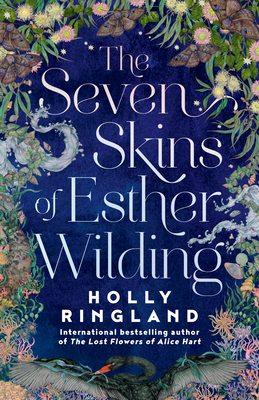
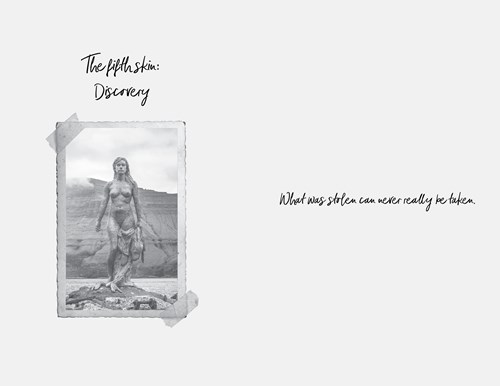
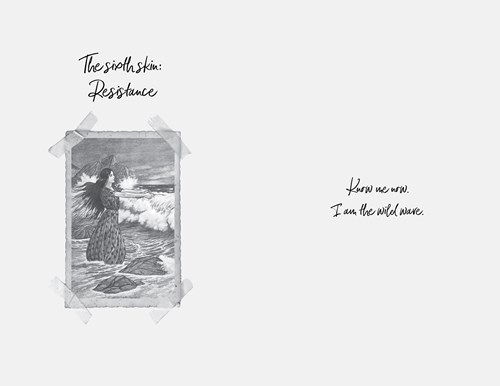
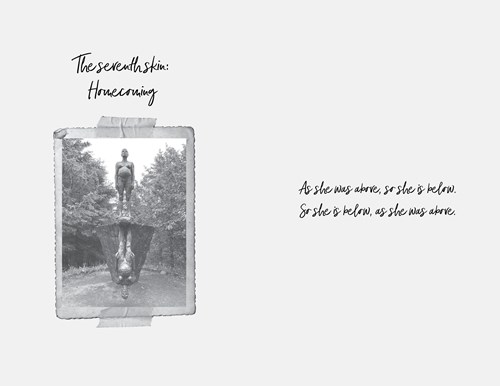
THE SEVEN SKINS OF ESTHER WILDING, making art out of grief


THE SEVEN SKINS OF ESTHER WILDING
HOLLY RINGLAND

House of Anansi Press
$19.99 trade paper, available now

Rating: 4* of five

The Publisher Says: A haunting, magical novel about joy, grief, courage and transformation from the international bestselling author of The Lost Flowers of Alice Hart.

‘On the afternoon that Esther Wilding drove homeward along the coast, a year after her sister had walked into the sea and disappeared, the light was painfully golden.’

The last time Esther Wilding’s beloved older sister Aura was seen, she was walking along the shore towards the sea. In the wake of Aura’s disappearance, Esther’s family struggles to live with their loss. To seek the truth about her sister’s death, Esther reluctantly travels from Lutruwita/Tasmania, to Copenhagen, and then to the Faroe Islands, following the trail of the stories Aura left behind: seven fairy tales about selkies, swans and women, alongside cryptic verses Aura wrote and had secretly tattooed on her body. The Seven Skins of Esther Wilding is a sweeping, deeply beautiful and profoundly moving novel about the far reaches of sisterly love, the power of wearing your heart on your skin and the ways life can transform when we find the courage to feel the fullness of both grief and joy.

I RECEIVED A DRC FROM THE PUBLISHER VIA EDELWEISS+. THANK YOU.

My Review
: Pretty, pretty chapter-opens and lovely sentences to console and condole the woman in a time of loss, particularly effective if the loss is a much loved sister.

Doesn't sound like me, does it? It's not me, I'm not the target audience. It's not me, my sisters aren't close this way, either to me or to each other. It's not like I'm someone particularly sentimental...but many, many are, and I think the fact that I read many, many, many pages of this book speaks loudly of its merits.

Has one of your giftees lost a sister, or (worse) a friend as close as a sister? Is there a abig grieving hole in your life for someone you shared a big part of your life with? These "skins" or fables (re)enacted in search of an involuntarily severed connaction with a fellow woman might offer some balm for the wound.


Not incidentally, the tales offer some very useful and constuctive perspective on loss. See below.


This is a terrific book, since it kept me reading. I recommend it happily.

Wednesday, January 31, 2024

THE DISAPPEARANCE OF ASTRID BRICARD, romantic generational saga *not* a romance


THE DISAPPEARANCE OF ASTRID BRICARD
NATASHA LESTER

Forever/Grand Central Publishing
$30.00 hardcover, available now

Rating: 3.75* of five

The Publisher Says: Three generations. One chance to prove themselves. Can the women of the Bricard fashion dynasty finally rewrite their history?

French countryside, Present Blythe Bricard is the daughter of famous fashion muses but that doesn't mean she wants to be one. She turned her back on that world, and her dreams, years ago. Fate, however, has a different plan, and Blythe will discover there is more to her iconic mother and grandmother than she ever knew. New York, 1970: Designer Astrid Bricard arrives in bohemian Chelsea determined to change the fashion world forever. And she does―cast as muse to her lover, Hawk Jones. And when they're both invited to compete in the fashion event of the century―the Battle of Versailles―Astrid sacrifices everything to showcase her talent. But then, just as her career is about to take off, she mysteriously vanishes, leaving behind only a white silk dress.

Paris, 1917: Parentless sixteen-year-old Mizza Bricard has made a to be remembered on her own terms. Her promise sustains her through turbulent decades and volatile couture houses until, finally, her name is remembered and a legend is born―one that proves impossible for Astrid and Blythe to distance themselves from.

I RECEIVED A DRC FROM THE PUBLISHER VIA NETGALLEY. THANK YOU.

My Review
: The Battle of Versailles, 1973, has long been a subject of great interest for me. Many things shifted as a result of this event, not least the French conception of US fashion designers as lesser lights, or derivative copycats riding the wave of French chicté and eternal design leadership.

At stake was far more than bragging rights...the international luxury-goods market was even then worth billions. As the event progressed, it was clear that the New York contingent was well and truly a creative design force on its own, handing the French designers their first effective challenge for world leadership...and the profits therefrom.

What former L’Oreal executive, and current New York Times bestseller, Natasha Lester did that was truly inspired was to remodel several real peoples’ lives to better present a generational saga of the fashion universe of the twentieth century. The heavily made-up Bricards, from World War One Paris to twenty-first century world citizenship as they arise and create beauty as well as havoc, represent an amalgam of factual individuals and business dynasties.

Driven, high-powered people seldom make good parents. The Bricards, to a woman, were not good parents as they sought to achieve things other people really could not even see. They were, like the real folks their lives were based on, frequently abused emotionally and taken advantage of financially and creatively, as the hunger for glory is the outward-facing surface of money-hunger. What raises this above the run-of-the-mill story of sexist betrayal is that the men perpetrating the thefts are not the men the Bricard women love, but the ones who run the businesses that the women stand as public faces for, and the mass of media types in search of a hook to hang the story they want to tell...not the story of the Bricards, but "The Story of The Bricards"—if you get my drift.

Author Lester is a very well thought of storyteller, and she has a genuinely interesting story to tell here. Her focus on the Bricards and their creative ambitions and abilities led her not to tell a story, even in part, that was of great consequence indeed: the Black models whose performances on the catwalks of this hugely consequential show broke, at last, the color barrier in fashion. True, it was not part of the Bricard story as written, but I felt it could and should have been.

That misfire, and Author Lester’s serviceable, but never more than that, prose, led me to give the book what seems an ungenerous under-four-star rating. I read the book with pleasure, but was always aware that a very big part of the real story it is based upon was just...missing. In today’s world, not telling the whole story involving Black creatives is more troublesome than at any time in the past. It isn’t as though this reality is some specialist knowledge, the kind of knowledge that only a scholar would reasonably be expected to have...after all, *I* know it.

So, while this is a reading pleasure that will involve and entertain readers of what I don’t know what else to call except the cringe-y label "women’s fiction", it comes with some big asterisks for the standard 2024 reader.

Sunday, October 1, 2023

THE PRESIDENT'S WIFE, historical fiction about very interesting relationship that helped change the Constitution & world history


THE PRESIDENT'S WIFE
TRACEY ENERSON WOOD

Sourcebooks Landmark (non-affiliate Amazon link)
$27.99 hardcover, available now

Rating: 3.75* of five

The Publisher Says: The incredible story of the First Lady who clandestinely assumed the presidency

Socialite Edith Bolling has been in no hurry to find a new husband since she was widowed, preferring to fill her days with good friends and travel. But the enchanting courting of President Woodrow Wilson wins Edith over and she becomes the First Lady of the United States. The position is uncomfortable for the fiercely independent Edith, but she's determined to rise to the challenges of her new marriage—from the bloodthirsty press to the shadows of the first World War.

Warming to her new role, Edith is soon indispensable to her husband's presidency. She replaces the staff that Woodrow finds distracting, and discusses policy with him daily. Throughout the war, she encrypts top- secret messages and despite lacking formal education becomes an important adviser. When peace talks begin in Europe, she attends at Woodrow's side. But just as the critical fight to ratify the treaty to end the war and create a League of Nations in order to prevent another, Woodrow's always-delicate health takes a dramatic turn for the worse. In her determination to preserve both his progress and his reputation, Edith all but assumes the presidency herself.

Now, Edith must contend with the demands of a tumultuous country, the secrets of Woodrow's true condition, and the potentially devastating consequences of her failure. At once sweeping and intimate, The President's Wife is an astonishing portrait of a courageous First Lady and the sacrifices she made to protect her husband and her country at all costs.

I RECEIVED A DRC FROM THE PUBLISHER VIA NETGALLEY. THANK YOU.

My Review
: Charming historical fiction about two people of riper years whose love for each other is tested, re-tested, and ultimately short-lived due to death.

So many things about Woodrow Wilson are awful to me. A racist, an ivory-tower academic without the track record to be the strong-arming law-ramming president thr first World War demanded; but most of all the man who gave away the keys to the economy to the banksters of Jekyll Island's cabal in 1913, thus dooming us to cycles of boom and bust that would only get worse every time the banksters clawed more money from our pockets to feed their greed and gambling addiction.

*ahem*

That not being what this book's about, let me tell you about it, not him.

First of all, it's a novel about two older people whose lives are mostly behind them finding comfort and companionship at the end. That one of them is the president of the US is, in a strange way, tangential to their story. They had a true connection to each other as people, as a man and a woman left alone by the deaths of their spouses. Author Wood gives us the sense that, had they met without this central fact being present, they likely would've had an affair because they were so simpatico. The way their relationship played out, so very publicly, and at such high volume, meant that the end of the affair was inevitably going to be marriage...nothing less would assuage the "moral standards" of the day. Edith Bolling was, thank goodness, a practical person, aware of the world around her and its demands; also to be praised is her full belief in Wilson's political and social progressivism (as far as it went, anyway), so her voice was added to his, not in conflict with it in the battles he was waging.

The Great War, as World War One was called at the time, was only one item on Wilson's plate and isn't the major focus of the book. More weight is given to the all-important enfranchisement of women. This is the one unqualified success of Wilson's presidency. Edith Bolling Wilson was influential on the president's support for this amendment to the Constitution.

Again, more important than the history lesson of the book is the close relationship between these two people. The background of their lives together was always public, and the work they did together was consequential to this very day. But they themselves, as people, are Author Wood's focus. She does not present them as superhuman archetypes. Thy are believable characters, strong people with powerful convictions, who found each other in the last act of the play that is a human's life. Their needs and their interests matched so well that it feels, to this elderly reader, as though they each found the satisfaction of an entire lifetime's search for their best partner.

It's a fine story, about interesting people, and it's told well. Enjoy it soon.

Wednesday, September 20, 2023

ROUGE, more than a color...a way of life and a (bad) reason to live


ROUGE
MONA AWAD

Simon Element
$28.00 hardcover, available now

One of Literary Hub's Best Reads od 2023!

Rating: 4.5* of five

The Publisher Says: From the critically acclaimed author of Bunny comes a horror-tinted, gothic fairy tale about a lonely dress shop clerk whose mother’s unexpected death sends her down a treacherous path in pursuit of youth and beauty. Can she escape her mother’s fate—and find a connection that is more than skin deep?

For as long as she can remember, Belle has been insidiously obsessed with her skin and skincare videos. When her estranged mother Noelle mysteriously dies, Belle finds herself back in Southern California, dealing with her mother’s considerable debts and grappling with lingering questions about her death. The stakes escalate when a strange woman in red appears at the funeral, offering a tantalizing clue about her mother’s demise, followed by a cryptic video about a transformative spa experience. With the help of a pair of red shoes, Belle is lured into the barbed embrace of La Maison de Méduse, the same lavish, culty spa to which her mother was devoted. There, Belle discovers the frightening secret behind her (and her mother’s) obsession with the mirror—and the great shimmering depths (and demons) that lurk on the other side of the glass.

Snow White meets Eyes Wide Shut in this surreal descent into the dark side of beauty, envy, grief, and the complicated love between mothers and daughters. With black humor and seductive horror, Rouge explores the cult-like nature of the beauty industry—as well as the danger of internalizing its pitiless gaze. Brimming with California sunshine and blood-red rose petals, Rouge holds up a warped mirror to our relationship with mortality, our collective fixation with the surface, and the wondrous, deep longing that might lie beneath.

I RECEIVED A DRC FROM THE PUBLISHER VIA NETGALLEY. THANK YOU.

My Review
: I had the kind of mother who told her daughters, "you have to suffer for beauty, girls." Noelle reminded me a lot of Mama. Deeply shallow, focused to the exclusion of all else on irrelevancies, fripperies, and appearances, Noelle's my definition of toxic womanhood. Also very much the embodiment of what women were and are told they were supposed to be, to care about, and to focus on.

How horrifying. How titanically wasteful.

And how ripe for a loud, satirical takedown, which Author Awad delivers. Adding a supernatural edge to it, no less.

This kind of dark, menacing take on consumerism's extra-toxic focus on women and the messaging aimed squarely at their money is something I wish more women wrote. I remember my mother's obsessive regimens for her skin and how many perfumey unguents and masks she would bring home from the department store. I never saw the dentist and got one pair of glasses, one pair of shoes a year...she had dozens of these things littering her bathroom counter. Yep. I know this obsession is real.

The reality of it made, for me, the supernatural element...humorous, in a very black and cynical way. Of course there must be some awful, evil outside agent making us feel this way...no rational person would surrender to obsession so easily, you can hear the self-justifiers and excusers say. It was genius for Author Awad to make those evil outside agents the malevolent supernatural entities of La Maison de Méduse instead of the blandly corporate agents of evil called Lanvin, Coty, Revlon, et alii.

This gives her so much more latitude to poke fun, too. She's got her sights on the obsession with surfaces, and the ease of trapping women with such simple lures as beauty and youthful appearance. There's a whiff of colorism in the discussions of "managing one's skin tone" that made me cringe. It rang all the more loudly in my ears after I read her sketch of the beauty obsession that's gripped her middle-aged self in The Walrus (here). What a wonderful, wry way to send up one's own foibles and insecurities, I thought. What a talent this author has to make me, a certifiable man and victim of neglect by a beauty addict, read the story with such intensity and interest.

It didn't hurt that Author Awad wrote in that piece:
A bookseller once told me that when you buy a book, you’re also buying the idea of time in which to read it. A down payment on an extension of life, a shimmer of immortality. With my growing collection of serums, I was perhaps seeking something similarly existential. An illusion of control. A staving off of death.

Yep, as the saying goes, thass me.

Why I'd say to read it is that it's a great antidote to the huge ocean of mediocre man-blaming same-ol' same-ol' women's fiction. It's bracingly honest about the internal roots of obsession without ever excusing the forces outside that drive to turn it, purely for profit, into addiction.