VONNEGUT’S WAR: The Making of Slaughterhouse-Five
SUSAN FARRELL
Bloomsbury Academic (non-affiliate Bookshop.org link)
$27.00 hardcover, available now
Rating: 5* of five
The Publisher Says: Banned, burned, and censored, Kurt Vonnegut's 1969 novel Slaughterhouse-Five is widely regarded as one of the greatest (and most controversial) novels of the twentieth century. Fusing vivid biography with popular history and close textual analysis, Vonnegut's War tells the fascinating story of the making of a modern classic and the writer that created it.
New archival discoveries and recently released oral histories give us the fullest account yet published of Vonnegut's real-life prisoner-of-war experiences at Stalag IV-B and Dresden, which heavily influenced Slaughterhouse-Five. A recently discovered trove of letters introduces us to his first wife, Jane Cox Vonnegut, and her influence on his writing. Along the way, we also encounter UFOs and aliens, grapple with the shadow cast by the Vietnam war, and unearth the stranger-than-fiction tale of David Irving's The Destruction of Dresden, the historical reference behind Vonnegut's writing about the Dresden firebombing.
This book sheds light on one of America's most beloved writers and explores how cultural forces helped to shape a modern masterpiece of storytelling.
Susan Farrell is a professor of American Literature at the College of Charleston. She has published two previous books on Vonnegut and founded the International Kurt Vonnegut Society.
I RECEIVED A DRC FROM THE PUBLISHER VIA NETGALLEY. THANK YOU.
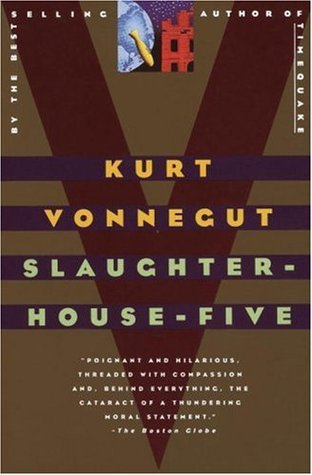
My Review: Billy Pilgrim shaped many an internal landscape after his appearance in 1969. My older sister encouraged me to read Slaughterhouse-Five when I was fourteen or so; I did, and was genuinely not the same person after the read. I've always been sure war and other kinds of industrial-scale killing were wrong, and tools of oppression and manipulation used by "Them" (the ever-shifting, always-there overclass) to ensure no individual of any class ever truly feels secure for very long. It read to my young self like the bravest kind of art, made to tell ugly truth in carefully crafted images. It was sublime. (I stand by my 2014 review.)
As a middle-aged man I read the story again, on the fortieth anniversary (more or less) of the first read. Same story, different reader, similar conclusion reached...though with nuances like a shocked certainty that Billy Pilgrim was Vonnegut's PTSD personified, that the entire exercise was a therapy session shaped into a narrative of brutal honesty and deep personal exposure underpinning artifice, maybe art, maybe just the complete relatability of honest, truthful self-examination made public.
Twenty more years have passed. I'm not drawn to the text for another read, too few eyeblinks left to me and too much good stuff as yet unread. This book, telling the story of how Slaughterhouse-Five came to be over the course of more than twenty years in the eventful, interesting life of Kurt Vonnegut. It was a long-term, multi-partner effort to shape Vonnegut's trauma into the glittering form we possess now. Access to much material previously off-limits to researchers makes the role of Vonnegut's much-maligned first wife in shaping the narrative more evident. We all, in the twenty-first century, have a very, very different understanding of gender dynamics than was available to any but the most advanced academic thinkers during the years Vonnegut was composing Slaughterhouse-Five. His evident misogyny went well beyond the cultural norms of his era. It's not emphasized in the book nor is it glossed over; this is at heart an academic book, though, so it sticks to its lane more than a purely popular one would. As a factor in the creation of the work in question the reprehensible misogyny and abuse Vonnegut doled out are in the DNA of the story. It's discomfiting to read the clear-eyed portrait of Vonnegut in the throes of creation. Confronting the damage he (knowingly, deliberately) enacts on those around him is unpleasant, as I've grown my mind around the work he's done over the majority of my approaching seventy years on Earth. The older I get the more I realize how little has really changed since the men who wrote the "idol with legs of iron, and feet of clay" quote appearing in the Bible sharpened their styluses.
As Author Farrell's pursuit of the reality behind the making of Slaughterhouse-Five she does the hard work of giving perspective to the acts of its creation in the context of the times. Who was this WWII veteran trying to find perspective on his experiences reading, talking to, using as sounding boards? Could this specific novel have come to be in 1949, 1959, even 1965? I remember the ferment of those years, the way my older-than-most parents were constantly blindsided and upset by the world changing so much so fast...Vonnegut was younger than they were so I realized with a start in reading this book. It adds a piece to my vision of Slaughterhouse-Five that I'd never had. It takes reading a book written about a book getting written to bring perspective to my settled opinion of a story published almost sixty years ago. Do you need a better illustration of why reading, writing about reading, and close and careful analysis of stories are more important than ever in a world getting "AI" shoved down its throat?
What this read did for me it can do for you and for others. No "AI" (properly "LLM") can do what Author Farrell did here. Human brains make connections among data points derived from deep research. They're what creates the synthesis of information that synthetic entities steal to regurgitate to the uncritical as new and insightful ideas. It's true, they are new and insightful; but if you've read the stolen source material, you realize how the scam works. It's new to you, not freshly newly thought up. This is why controlling the world's IP is such an incredibly important part of the scam.
My proof is here, in this well-written, thoroughly researched story of the making of a story that defined the emotional state of a man, and thereafter of a generation.