Showing posts with label author biography. Show all posts

Monday, August 17, 2026

VONNEGUT’S WAR: The Making of Slaughterhouse-Five, fascinating story of a fascinating book's creation


VONNEGUT’S WAR: The Making of Slaughterhouse-Five
SUSAN FARRELL

Bloomsbury Academic (non-affiliate Bookshop.org link)
$27.00 hardcover, available now

Rating: 5* of five

The Publisher Says: Banned, burned, and censored, Kurt Vonnegut's 1969 novel Slaughterhouse-Five is widely regarded as one of the greatest (and most controversial) novels of the twentieth century. Fusing vivid biography with popular history and close textual analysis, Vonnegut's War tells the fascinating story of the making of a modern classic and the writer that created it.

New archival discoveries and recently released oral histories give us the fullest account yet published of Vonnegut's real-life prisoner-of-war experiences at Stalag IV-B and Dresden, which heavily influenced Slaughterhouse-Five. A recently discovered trove of letters introduces us to his first wife, Jane Cox Vonnegut, and her influence on his writing. Along the way, we also encounter UFOs and aliens, grapple with the shadow cast by the Vietnam war, and unearth the stranger-than-fiction tale of David Irving's The Destruction of Dresden, the historical reference behind Vonnegut's writing about the Dresden firebombing.

This book sheds light on one of America's most beloved writers and explores how cultural forces helped to shape a modern masterpiece of storytelling.

Susan Farrell is a professor of American Literature at the College of Charleston. She has published two previous books on Vonnegut and founded the International Kurt Vonnegut Society.

I RECEIVED A DRC FROM THE PUBLISHER VIA NETGALLEY. THANK YOU.

My Review
: Billy Pilgrim shaped many an internal landscape after his appearance in 1969. My older sister encouraged me to read Slaughterhouse-Five when I was fourteen or so; I did, and was genuinely not the same person after the read. I've always been sure war and other kinds of industrial-scale killing were wrong, and tools of oppression and manipulation used by "Them" (the ever-shifting, always-there overclass) to ensure no individual of any class ever truly feels secure for very long. It read to my young self like the bravest kind of art, made to tell ugly truth in carefully crafted images. It was sublime. (I stand by my 2014 review.)

As a middle-aged man I read the story again, on the fortieth anniversary (more or less) of the first read. Same story, different reader, similar conclusion reached...though with nuances like a shocked certainty that Billy Pilgrim was Vonnegut's PTSD personified, that the entire exercise was a therapy session shaped into a narrative of brutal honesty and deep personal exposure underpinning artifice, maybe art, maybe just the complete relatability of honest, truthful self-examination made public.

Twenty more years have passed. I'm not drawn to the text for another read, too few eyeblinks left to me and too much good stuff as yet unread. This book, telling the story of how Slaughterhouse-Five came to be over the course of more than twenty years in the eventful, interesting life of Kurt Vonnegut. It was a long-term, multi-partner effort to shape Vonnegut's trauma into the glittering form we possess now. Access to much material previously off-limits to researchers makes the role of Vonnegut's much-maligned first wife in shaping the narrative more evident. We all, in the twenty-first century, have a very, very different understanding of gender dynamics than was available to any but the most advanced academic thinkers during the years Vonnegut was composing Slaughterhouse-Five. His evident misogyny went well beyond the cultural norms of his era. It's not emphasized in the book nor is it glossed over; this is at heart an academic book, though, so it sticks to its lane more than a purely popular one would. As a factor in the creation of the work in question the reprehensible misogyny and abuse Vonnegut doled out are in the DNA of the story. It's discomfiting to read the clear-eyed portrait of Vonnegut in the throes of creation. Confronting the damage he (knowingly, deliberately) enacts on those around him is unpleasant, as I've grown my mind around the work he's done over the majority of my approaching seventy years on Earth. The older I get the more I realize how little has really changed since the men who wrote the "idol with legs of iron, and feet of clay" quote appearing in the Bible sharpened their styluses.

As Author Farrell's pursuit of the reality behind the making of Slaughterhouse-Five she does the hard work of giving perspective to the acts of its creation in the context of the times. Who was this WWII veteran trying to find perspective on his experiences reading, talking to, using as sounding boards? Could this specific novel have come to be in 1949, 1959, even 1965? I remember the ferment of those years, the way my older-than-most parents were constantly blindsided and upset by the world changing so much so fast...Vonnegut was younger than they were so I realized with a start in reading this book. It adds a piece to my vision of Slaughterhouse-Five that I'd never had. It takes reading a book written about a book getting written to bring perspective to my settled opinion of a story published almost sixty years ago. Do you need a better illustration of why reading, writing about reading, and close and careful analysis of stories are more important than ever in a world getting "AI" shoved down its throat?

What this read did for me it can do for you and for others. No "AI" (properly "LLM") can do what Author Farrell did here. Human brains make connections among data points derived from deep research. They're what creates the synthesis of information that synthetic entities steal to regurgitate to the uncritical as new and insightful ideas. It's true, they are new and insightful; but if you've read the stolen source material, you realize how the scam works. It's new to you, not freshly newly thought up. This is why controlling the world's IP is such an incredibly important part of the scam.

My proof is here, in this well-written, thoroughly researched story of the making of a story that defined the emotional state of a man, and thereafter of a generation.

Monday, April 28, 2025

THE JOHN WILLIAMS PAGE: STONER; and THE MAN WHO WROTE THE PERFECT NOVEL: John Williams, Stoner, and the Writing Life


THE MAN WHO WROTE THE PERFECT NOVEL: John Williams, Stoner, and the Writing Life
CHARLES J. WILLIAMS

University of Texas Press (non-affiliate Amazon link)
$2.99 Kindle edition, available now

Rating: 4.5* of five

The Publisher Says: An “engrossing” biography of a brilliant novelist underappreciated in his own time who became a twenty-first-century bestseller, from the New York Times–bestselling author (The New Yorker).

When Stoner was published in 1965, the novel sold only a couple of thousand copies before disappearing with hardly a trace. Yet the quietly powerful tale of Midwestern college professor William Stoner, whose life becomes a parable of solitude and anguish, eventually found an admiring audience in America and especially in Europe. The New York Times called Stoner “a perfect novel,” and a host of writers and critics, including Colum McCann, Julian Barnes, Bret Easton Ellis, Ian McEwan, Emma Straub, Ruth Rendell, C.P. Snow, and Irving Howe, praised its artistry. The New Yorker deemed it “a masterly portrait of a truly virtuous and dedicated man.”

This biography traces the life of Stoner’s author, John Williams. Charles J. Shields follows the whole arc of Williams’s life, which in many ways paralleled that of his titular character, from their shared working-class backgrounds to their undistinguished careers in academia. Shields vividly recounts Williams’s development as an author, whose other works include the novels Butcher’s Crossing and Augustus (for the latter, Williams shared the 1972 National Book Award). Shields also reveals the astonishing afterlife of Stoner, which garnered new fans with each American reissue, and then became a bestseller all over Europe after a Dutch publisher brought out a translation in 2013. Since then, Stoner has been published in twenty-one countries and sold over a million copies.

“Like Williams, Shields know how to tell a good story, one that will appeal especially to those interested in the ins and outs of the publishing industry and the ups and downs of a writer’s life.” —Los Angeles Review of Books

I RECEIVED A DRC FROM THE PUBLISHER VIA EDELWEISS+. THANK YOU.

My Review
: My earlier reading of Author Shields' excellent And So it Goes: Kurt Vonnegut: A Life made me eager to read this book about John Williams. My as-yet unblogged review of Stoner is below, to add the needed context to my ideas about this book and its subject.

I think the reason this book never got to pop-culture awareness, in spite of Stoner's tremendous success in the twenty-first century, is simple: John Williams is a shitty human being. I mean, men of his generation more often than not were shitty, and abusive, and sexist...homophobic...by our standards of acceptability, irredeemable in ways even Armie Hammer and Neil Gaiman don't approach. Tempus fugit; sic transit gloria mundi.

No one would get away with Vonnegut's misogyny and sexism today, yet here's a man who wrote one of the most horrendous, harridanly women in literature...Edith Stoner...irredeemable even in victim terms, as her malevolence is obvious long before her husband rapes her. What I could never figure out is why she hated Stoner so much, he was never any kind of promising except of failure and disappointment. She wasn't duped; she married the real him, looking down on him every step of the way.

And Williams' life? He insisted Stoner was fictional. I myownself, after reading this book, think otherwise. The litany of grievances against life, work, colleagues (he had no friends that I thought deserved the name), all of it: Stoner. So how does he, Williams, get a pass from the literati? Beats me all hollow, though I suspect it's merely a matter of time.

What made me enjoy this book so much was the factual reporting of his life story: The multiple infidelities and marriages; his early infatuation with theater; his early love for Look Homeward, Angel, that adolescent's dream book; his admiration for Ronald Colman as Sydney Carton in the film of A Tale of Two Cities (I shudder even typing that sentence fragment, go look at the link to see why; oleaginous much?). These facts and many more make as comprehensible and clear a picture of the man who could author Stoner as well as the proto-Blood Meridian Western-but-don't-tell-him-you're-calling-it-that Butcher's Crossing as one could ever hope to find.

Violence, in John Williams' œuvre, is less physiologically present than in McCarthy's. It's not dwelt on with loving, prurient, in my view pornographic lingering money shots of prose. It's, well, I guess my best match between vocabulary and feeling is clinical. John Williams was undoubtedly an acoholic, an abusive and distant man, and the way to be all those things is to be removed from one's emotional states, to devalue and deny empathy while, paradoxically, demanding that very feeling for one's characters as they enact worse and worse things on their victims.

Should one who has not read any Williams, but would like to, read this biography? Not with any expectation of still wanting to read his work. It's a good way to learn how you'll respond to the work itself though. I don't know how knowing about the real person doing the writing of the books we know and love should make us feel. It varies, I suppose, from reader to reader, from writer to writer.

I'll go out on a limb and say that, for $2.99 on Kindle, the answer in this case is "absolutely do read it." Author Shields is enough of a talented storyteller to make time spent learning how nasty one person can get worth one's time.

+++++++++++++++++++++++++++++++++++++++++++++++++++++++++++++++

STONER
JOHN WILLIAMS

NYRB Classics
$9.99 Kindle edition, available now

The Independent Press Top 40 Bestsellers: Fiction For the week ending September 2, 2026

Rating: 5* of five

The Publisher Says: Discover an American masterpiece. This unassuming story about the life of a quiet English professor has earned the admiration of readers all over the globe.

William Stoner is born at the end of the nineteenth century into a dirt-poor Missouri farming family. Sent to the state university to study agronomy, he instead falls in love with English literature and embraces a scholar’s life, so different from the hardscrabble existence he has known. And yet as the years pass, Stoner encounters a succession of disappointments: marriage into a “proper” family estranges him from his parents; his career is stymied; his wife and daughter turn coldly away from him; a transforming experience of new love ends under threat of scandal. Driven ever deeper within himself, Stoner rediscovers the stoic silence of his forebears and confronts an essential solitude.

John Williams’s luminous and deeply moving novel is a work of quiet perfection. William Stoner emerges from it not only as an archetypal American, but as an unlikely existential hero, standing, like a figure in a painting by Edward Hopper, in stark relief against an unforgiving world.

I BOUGHT A PAPERBACK FROM THE PUBLISHER FIFTEEN YEARS AGO. THANK YOU, PAST SELF.

My Review
: I went into this read thinking it'd be another wildly overpraised midcentury modern grimfest. I was happily proved wrong, though that is the last time I will ever use the word "happy" in conjunction with this tale.

A story about a small Prufrockian man, doomed from the get-go to a disappointing existence unworthy of the descriptor "life" by any but the most generous definition of the subject. Author Alex Preston (Goodreads profile link), in a 2015 review he blogged, said of Stoner:
With each of Stoner’s defeats, he backs further and further away from us, his voice becoming more distant, his character less alive on the page. At the start of the novel, I was yelling at him to grow a pair. By the time he lets his wife sacrifice their daughter on the altar of her motiveless malignancy, I’d given up on him entirely. I read through to the end because I wanted to see if...there would be something elegiac, a note of quiet redemption in the final passages of the book. There wasn’t.
Scathing! Angry, upset, and not wrong in any way. Yet, as Author Preston's fury warms my heart, I am required by my own appreciation of the story to admit that I found these very things to be the raison d'etre of the novel, and the beating heart of John Williams' artistry. He told a failure's life in a failure's language; he accepted Stoner as the small, ungreased cog in a small, janky machine full of others like him that Williams himself was.

So, while very aware of this divisive thematic and stylistic choice will not be to everyone's taste, I can honestly and wholeheartedly say it was very much to mine.

Casey Affleck was set to portray Stoner in the film! (Although ten years on, I think we're safe to assume the project has spluttered out.) This was excellent news! I...enjoyed, liked, all those words seem full of misplaced chirpiness applied to Stoner's small, cramped life...resonated with this novel and after seeing Mr. Affleck in Manchester by the Sea I can only be happy and grateful he might yet assume the leading role in it.

Saturday, December 14, 2024

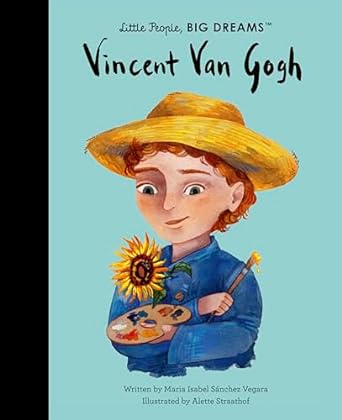
Little People, BIG DREAMS series: VINCENT VAN GOGH, great troubled artist, & ROALD DAHL, great troubling writer


VINCENT VAN GOGH
MARIA ISABEL SÁNCHEZ VEGARA
(Little People,BIG DREAMS series; illus. Alette Straathof)
Frances Lincoln Children's Books (non-affiliate Amazon link)
$15.99 hardcover, available now

Rating: 5* of five

The Publisher Says: Learn about the life of Vincent van Gogh, one of the world's most influential and best-loved artists.

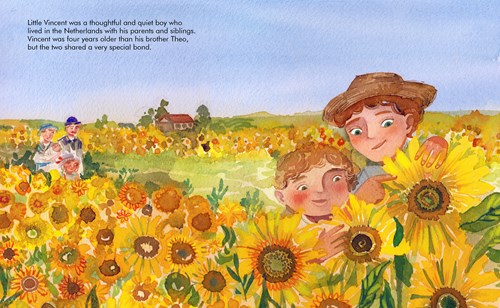
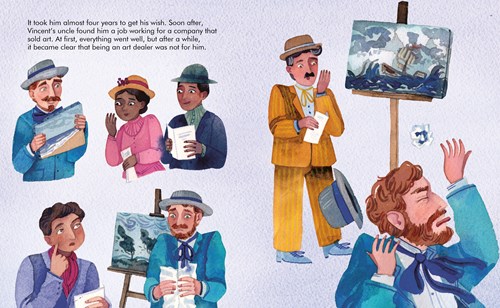
Little Vincent was a quiet child. He loved spending time in nature and playing with his brother Theo. After leaving school, he began working as an art dealer. Vincent showed promise, but he found it more and more difficult to control his emotions and eventually had to leave. He had a go at many different jobs, including a teacher and a bookseller, but nothing felt right.

When he wasn’t working, he wrote Theo long letters that included beautiful drawings. Theo loved his work and suggested that he try being an artist. Vincent dedicated himself to painting and never looked back! He developed his own style and expressed his emotions through his art: from sorrow to joy, and everything in between.

During his life, Vincent had little success, but today, his paintings are admired and celebrated in galleries across the world.

This powerful book features stylish and quirky illustrations and extra facts at the back, including a biographical timeline with historical photos and a detailed profile of the artist's life.

Little People, BIG DREAMS is a bestselling biography series for kids that explores the lives of outstanding people, from designers and artists to scientists and activists. All of them achieved incredible things, yet each began life as a child with a dream.

This empowering series of books offers inspiring messages to children of all ages, in a range of formats. The board books are told in simple sentences, perfect for reading aloud to babies and toddlers. The hardcover and paperback versions present expanded stories for beginning readers. With rewritten text for older children, the treasuries each bring together a multitude of dreamers in a single volume. You can also collect a selection of the books by theme in boxed gift sets. Activity books and a journal provide even more ways to make the lives of these role models accessible to children.

Inspire the next generation of outstanding people who will change the world with Little People, BIG DREAMS!

I RECEIVED A DRC FROM THE PUBLISHER VIA EDELWEISS+. THANK YOU.

My Review
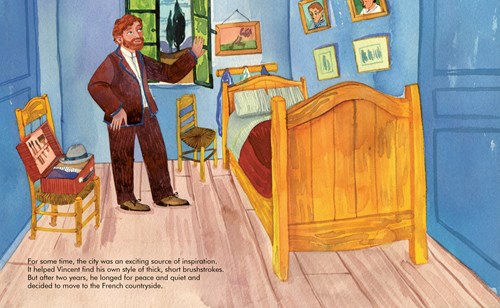
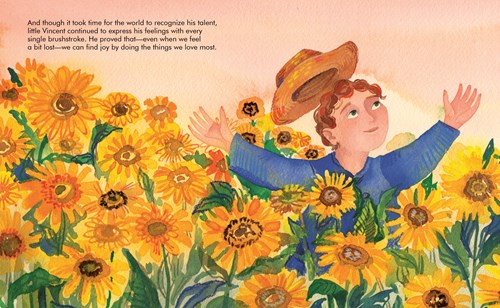
: You don't need to be told who van Gogh is. (I hope.) A kid who's got the world to learn does, and here's a way for you to help that happen. A series like this has so many good layers: facts about the world, facts about life as others lead it, examples of what we as a culture value.

The value here is obvious, I trust:

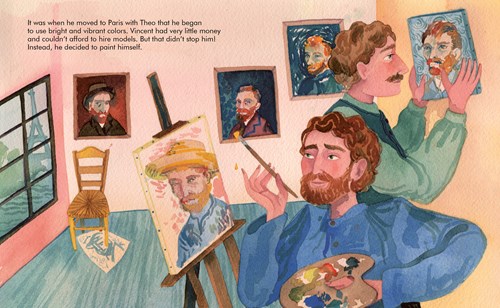
Gorgeous as artworks, pitch perfect as illustrations of van Gogh's life...which is ably recounted by Sánchez Vegara's simple but effective text...this small person's excellent introduction to the life of one of the present day's most venerated artists adds luster to a terrific series.

Worth reading yourself. An absolute must for your grand/nibling's education in art, biography, and the value of being Different in a conformist world.

+++++++++++++++++++++++++++++++++++++++++++++++++++++++++++++++


ROALD DAHL
MARIA ISABEL SÁNCHEZ VEGARA
Little People,BIG DREAMS series; illus. Francis Martin)
Frances Lincoln Children's Books(non-affiliate Amazon link)
$15.99 hardcover, available now

Rating: 5* of five

The Publisher Says: Discover the life of Roald Dahl, the groundbreaking author whose work is beloved by children all over the world.

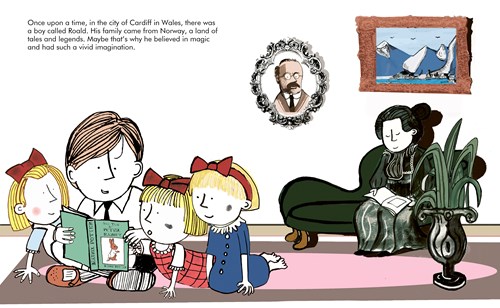
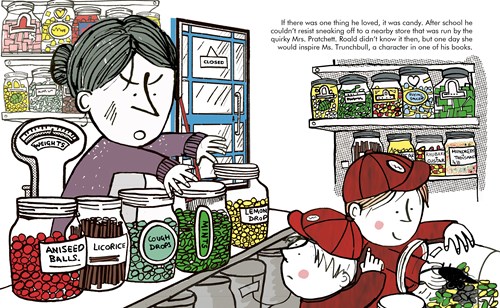
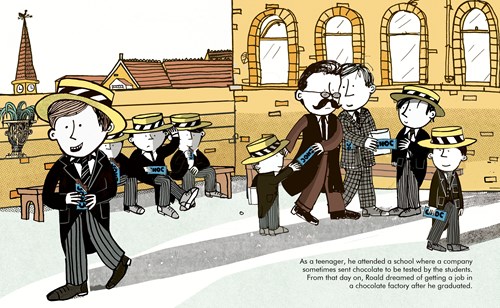
Little Roald grew up in the city of Cardiff in Wales. He loved to spend time reading with his family and visiting the local candy store for yummy chocolatey treats. But he found school difficult. No one believed in Roald’s potential.

When Roald finished school, he was ready to make his life an adventure! He traveled the world and saw some amazing sights. When World War II started, he was ready to serve his country and joined the air force. During his service, his plane crashed over a desert, leaving him blind for a period of time. Roald wrote about his experience of the crash, and enjoyed doing it so much that from then on, he knew he wanted to be an author.

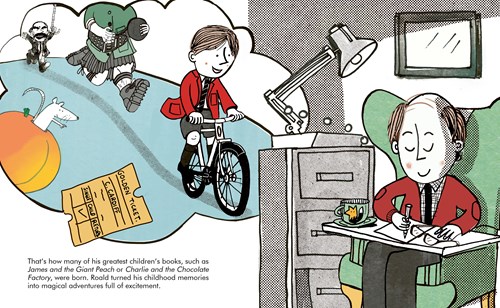
Roald began crafting books for children, working away in the shed at the bottom of his garden. From Charlie and the Chocolate Factory to James and the Giant Peach, his wonderful stories have captivated generations of readers. The magical worlds he created have been brought to the stage and screen, with hit musicals and films, like Matilda and The Witches.

The story also boldly addresses the antisemitic remarks that Roald Dahl made during his lifetime, highlighting the power and impact that our words can have: both to delight or cause lasting harm.

This thoughtful book features quirky illustrations and extra facts at the back, including a biographical timeline with historical photos and a detailed profile of Roald’s life. His story shows that extraordinary talent lies within each and every one of us.

I RECEIVED A DRC FROM THE PUBLISHER VIA EDELWEISS+. THANK YOU.

My Review
: From the beginning, we're in possession of the facts of Dahl's troubling life. He was very much not a nice man, even by the lax standards of the day; he was hateful, and cruel to his wives, he wrote truly awful stereotypes into his books for children, and let's not discuss his adult fiction at all. Given the delight his children's books have brought on page and screen, it feels only right to introduce the children who will be in his audience to the real man.

To do it honestly and without tendentious vilification, and in conjunction with æsthetically pleasing artwork, shows me how much thought and effort Quarto's children's imprint has put into this series of essential cultural figures' biographies.

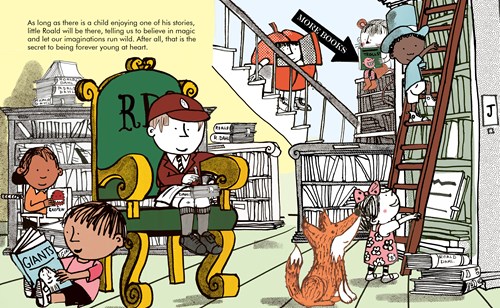
Such a great match between illustrations and subject! Tey look like they could be from Dahl's heyday in the 1950s and 1960s. They're fresh, original, and in great keeping with the ethos Dahl worked within.

Perfect for introducing those too young to get his work delivered directly to the ideas of it. Even better for those who have had some of his work read to them already to him as a person, as they can read it themselves. I remain troubled by Dahl and his unpleasant personality, and I'd recommend to you the giver of the book to check with the recipient's parents to be positive this body of work is acceptable for their child before committing even this minimal amount to procuring it.

Saturday, December 7, 2024

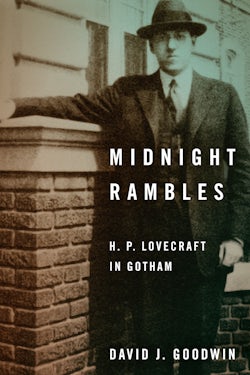
MIDNIGHT RAMBLES: H. P. Lovecraft in Gotham, good, well-framed slice of a nasty man's life


MIDNIGHT RAMBLES: H. P. Lovecraft in Gotham
DAVID J. GOODWIN

Empire State Editions
$29.95 hardcover, available now

Rating: 4.25* of five

The Publisher Says: A micro-biography of horror fiction’s most influential author and his love–hate relationship with New York City.

By the end of his life and near financial ruin, pulp horror writer Howard Phillips Lovecraft resigned himself to the likelihood that his writing would be forgotten. Today, Lovecraft stands alongside J. R. R. Tolkien as the most influential genre writer of the twentieth century. His reputation as an unreformed racist and bigot, however, leaves readers to grapple with his legacy. Midnight Rambles explores Lovecraft’s time in New York City, a crucial yet often overlooked chapter in his life that shaped his literary career and the inextricable racism in his work.

Initially, New York stood as a place of liberation for Lovecraft. During the brief period between 1924 and 1926 when he lived there, Lovecraft joined a creative community and experimented with bohemian living in the publishing and cultural capital of the United States. He also married fellow writer Sonia H. Greene, a Ukrainian-Jewish émigré in the fashion industry. However, cascading personal setbacks and his own professional ineptitude soured him on New York. As Lovecraft became more frustrated, his xenophobia and racism became more pronounced. New York’s large immigrant population and minority communities disgusted him, and this mindset soon became evident in his writing. Many of his stories from this era are infused with racial and ethnic stereotypes and nativist themes, most notably his overtly racist short story, “The Horror at Red Hook,” set in Red Hook, Brooklyn. His personal letters reveal an even darker bigotry.

Author David J. Goodwin presents a chronological micro-biography of Lovecraft’s New York years, emphasizing Lovecraft’s exploration of the city environment, the greater metropolitan region, and other locales and how they molded him as a writer and as an individual. Drawing from primary sources (letters, memoirs, and published personal reflections) and secondary sources (biographies and scholarship), Midnight Rambles develops a portrait of a talented and troubled author and offers insights into his unsettling beliefs on race, ethnicity, and immigration.

I RECEIVED A DRC FROM THE PUBLISHER VIA EDELWEISS+. THANK YOU.

My Review
: S.T. Joshi's two-volume I Am Providence is the go-to biography of this awful human being whose fiction output changed what we know as horror fiction. It's a much more...worshipful isn't too strong a term, but let's use the slightly less judgmental term "positively inclined"...take on his entire life.

We don't get that tone here. The author focuses on Lovecraft's New York years. It's pretty much impossible to make the time he spent in the place that inspired the utterly despicably racist story "The Horror at Red Hook" anything but dark and negative.

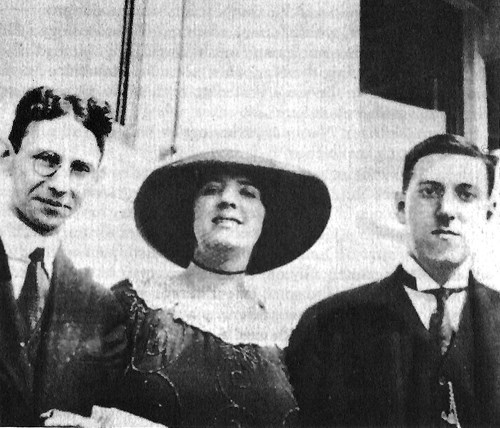
Rheinhart Kleiner introduced his mutual friends H. P. Lovecraft and Sonia H. Greene during a boat tour of Boston Harbor in July 1921. The three were attending an amateur journalism convention in the city.
That is both true, and misleading. This narrowly focused life of Lovecraft isn't a hatchet-job. It is, instead, a careful look at the whos, whats, and whys of Lovecraft coming into himself as a person and a writer.

That he wasn't a very nice person, well, you know what? Facing up to the real person who typed the words that formed the stories you love or loved is not something we can avoid in the twenty-first century. The fascinating part to me was that there needn't have been this curdling of his heart. There was a window for someone to reach into his heart and pull out a kinder human being. Sonia Greene certainly tried this feat.

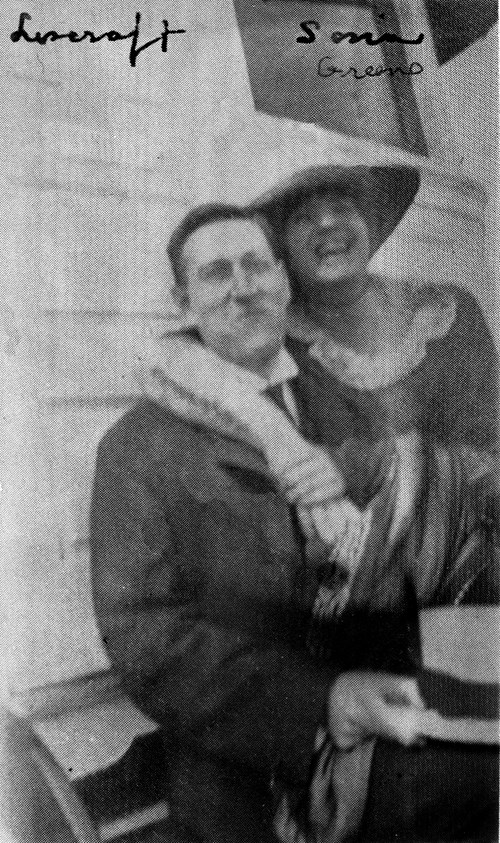
Greene grew more intrigued by Lovecraft throughout the Boston convention. This marked the beginning of their relationship.
A brief moment of happiness. It beggars belief to me that this smiling boy is H.P. Lovecraft, whose sour unsmiling visage is reproduced on so many book covers.

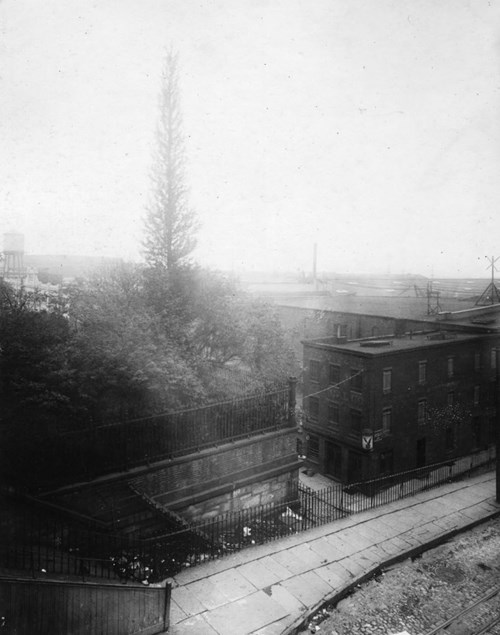
While Lovecraft strolled through Brooklyn Heights one evening, a neglected garden captured his attention. This might have been the grounds of the James S. Rockwell House.
His environs always influenced his creative process, naturally. Seeing such sights in Brooklyn, an urban space, would've charged up his future use of the surprising, hidden facet of his stories' settings. As a matter of fact he seems to have found the experience more formative than most others he would have while living in New York.
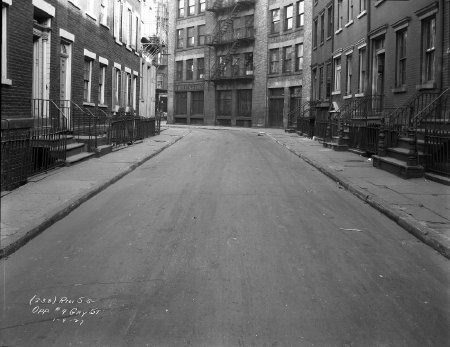
Lovecraft regularly wandered New York City’s nighttime streets to discover buildings reflecting the architectural styles of colonial and early America. He described Greenwich Village’s Gay Street as a “quaint, curving little alley.”
That it is! Still looks like this, too. It doesn't seem to have sweetened his world-view....

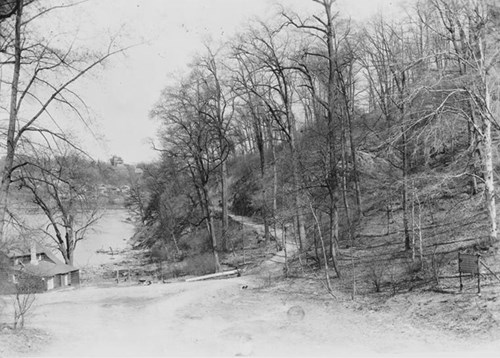
When exploring New York City, Lovecraft sought pockets of nature largely unblemished by urban development. Today’s Inwood Hill Park in Manhattan stood as such a space.
Holy carp! That's INWOOD?! My goodness, a hundred years makes a big difference.

I think my point's made. This is a terrific book about the nasty guy who refined and codified the tropes and topics that now make up "cosmic horror." He is seen here on the cusp of all the floods of words that would make this enduring contribution to our culture. I was drawn into this story by the details I did not know, despite the trajectory and ending being already familiar.

I'm convinced your young Lovecraft/horror reader will be as taken with this read as I was. I can't get all the way over the hump to five stars because I dislike Lovecraft that much. That's probably a testimonial to how well Author Goodwin did his job.

Tuesday, November 26, 2024

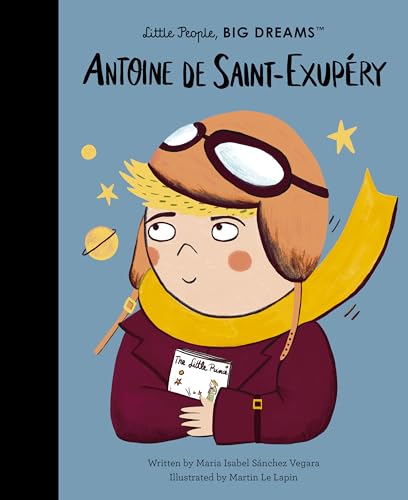
ANTOINE DE SAINT-EXUPÉRY, role model for anti-fascism this #Booksgiving


ANTOINE DE SAINT-EXUPÉRY
MARIA ISABEL SÁNCHEZ VEGARA
(Little People, BIG DREAMS series; illus. Martin Le Lapin)
Frances Lincoln Children's Books
$15.99 hardcover, available now

Rating: 5* of five

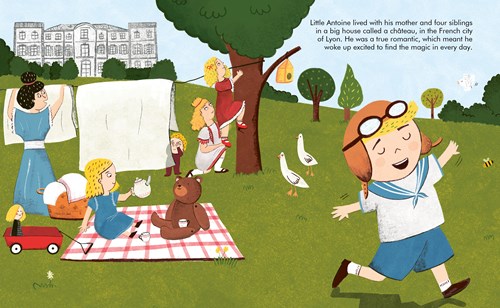
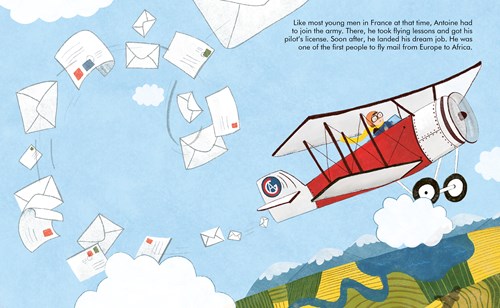
The Publisher Says: In this book from the critically acclaimed, multimillion-copy bestselling Little People, BIG DREAMS series, discover the life of Antoine de Saint-Exupéry, the talented pilot and writer. Little Antoine grew up in Lyon, France. Ever since his first flight as a young boy, he dreamt of becoming a pilot. When he joined the French army during WWI, he finally got his chance. He spent a short time in the Air Force before leaving to become a mail pilot, all the while writing about his adventures.

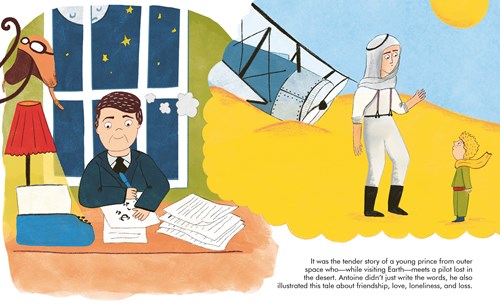
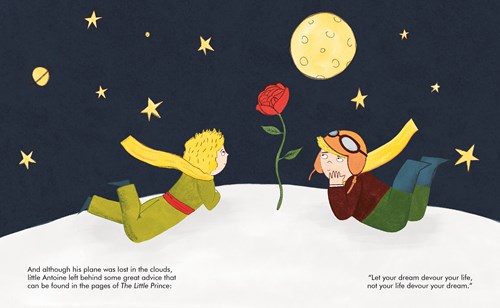
However, in 1935, he crashed in the desert during a flight from Paris to Saigon. With little food and water to hand, he became very ill. Fortunately, after four days, he was found by a passerby and nursed back to health. This experience influenced much of Antoine's future writing. In WWII, he moved to the United States where he campaigned for France's freedom from Nazism. During this period, he wrote The Little Prince, a captivating story of love and loss, which went on to become one of the bestselling children's books of all time.

This powerful book features stylish and quirky illustrations and extra facts at the back, including a biographical timeline with historical photos and a detailed profile of the writer’s life. Little People, BIG DREAMS is a bestselling biography series for kids that explores the lives of outstanding people, from designers and artists to scientists and activists. All of them achieved incredible things, yet each began life as a child with a dream.

This empowering series of books offers inspiring messages to children of all ages, in a range of formats. The board books are told in simple sentences, perfect for reading aloud to babies and toddlers. The hardback versions present expanded stories for beginning readers. With rewritten text for older children, the treasuries each bring together a multitude of dreamers in a single volume. You can also collect a selection of the books by theme in boxed gift sets. Activity books and a journal provide even more ways to make the lives of these role models accessible to children.

Inspire the next generation of outstanding people who will change the world with Little People, BIG DREAMS!

I RECEIVED A DRC FROM THE PUBLISHER VIA EDELWEISS+. THANK YOU.

My Review
: Start 'em young. Dreams are formed in earlier life. We need kids to form dreams now more than ever, so make this a bookish Yule of stories that inspire #ReadingIsResistance in younger minds.

Give them the start they deserve. A true story abut a man who always found a way to make a positive difference won't hurt any kid to learn. And learn from.

The kids who get this start have a great shot at becoming people with empathy. The Little Prince will likely teach these young readers about love and loss and how to make sense of them.

Wednesday, September 11, 2024

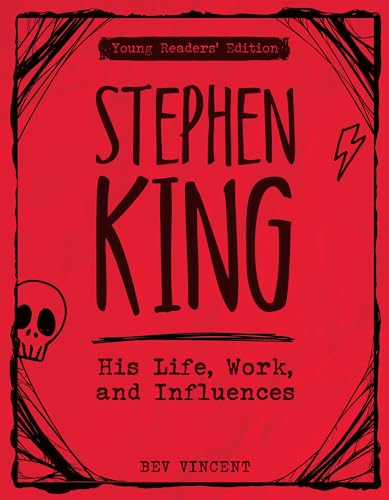
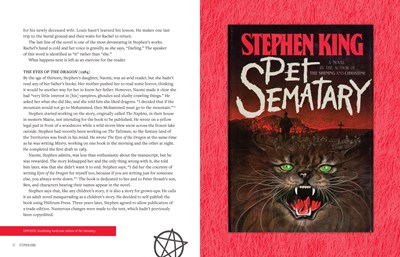
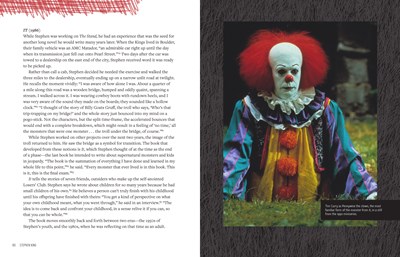
STEPHEN KING: His Life, Work, and Influences, perfect gift for your teen/tween Constant Reader


STEPHEN KING: His Life, Work, and Influences
BEV VINCENT

becker&mayer! kids
$16.99 trade paper, available now

Rating: 5* of five

The Publisher Says: A thrilling visual companion curated for young adults voraciously reading their way through Stephen King’s colossal corpus of creepy books.

For many young readers, when the last page of Goosebumps is turned, the first chapter of Pet Sematary begins, and a world of terror crafted by Stephen King is revealed. His novels are as fascinating as his life, and in this ultimate illustrated guidebook, young readers explore the cultural phenomenon and legacy of the King of Horror.

From scare-seeking child to impoverished university student to struggling schoolteacher to one of the best-selling—and most recognizable—authors of all time, this engrossing book reveals the evolution and influences of Stephen King’s body of work over his nearly 50-year career, and how the themes of his writing reflect the changing times and events within his life.

With tons of photos, approachable bite-size sections, and gripping details to captivate young readers, the book offers an extensive look into Stephen King’s books, short stories, writings, movies, series, and other adaptations ideal for the young reader to review. Exclusive memorabilia from Stephen King, including personal and professional correspondences, handwritten manuscript pages, book covers, movie stills, and a never-before-seen excerpts from his poems. Personal insights and observations such as real-life settings that inspired King’s writing, the editor who discovered him, his life as a Boston Red Sox fan, and the many awards and honors he has received. Motivating quotes from King from interviews over the decades.
“My childhood was pretty ordinary, except from a very early age I wanted to be scared…there was a radio program at the time called Dimension X, and my mother didn’t want me to listen to that because she felt it was too scary for me, so I would creep out of bed and go to the bedroom door and crack it open. And she loved it, so apparently, I got it from her, but I would listen at the door and then when the program was over, I’d go back to bed and quake.” —Stephen King

Young adults will covet this comprehensive yet accessible reference to their favorite horror author.

I RECEIVED A DRC FROM THE PUBLISHER VIA EDELWEISS+. THANK YOU.

My Review
: Author Vincent's a King superfan, and believe you me, it shows. This compendium of anecdotes and overviews of his career, and the stories he's offered us, is exactly what a young fan will love.

Plenty of not-so-young fans too, I'll wager.

I'm not a Constant Reader, as he addresses his immense and well-earned audience online, more of a dibble-dabbler. I enjoy many of his massive tomes—my own favorite being 11/22/63—because I'm very old and that date means so very much to me. (Rob asked me once why that date was important...ouch.) The manner in which Author Vincent hits the life and career high points will make this a deeply welcome gift to your King-stan teen or tween. (Officially. We won't discuss what you do with it before wrapping it up.)

The design and visuals are very much up to the job, as one would expect from a Quarto Group imprint.

Clear, concise, not too busy to fail in its primary duty of informing as well as keeping one's interest.


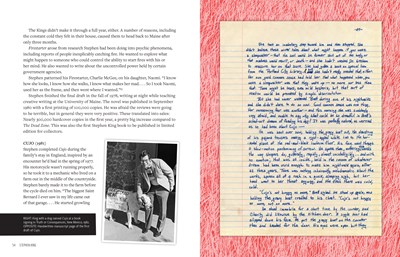
I enjoyed the glimpse into King's early methods and processes.


It's safe to say we do not share a taste in companion animals. *shudder*


The stuff of literal nightmares for decades now!


...speaking of which...Tim Curry does Pennywise the best, in my never-remotely humble opinion. Skarsgard's got a different take, not worse not better...but give me Curry every time.

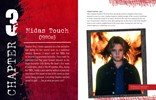
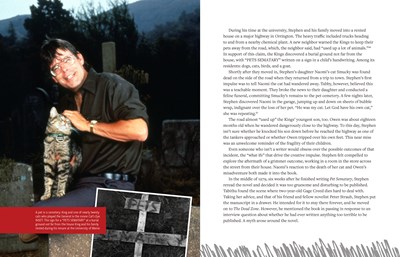
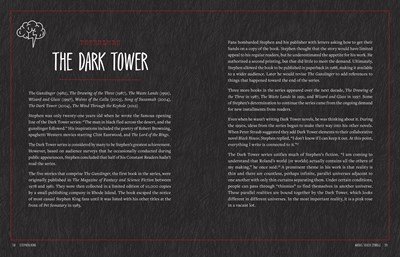
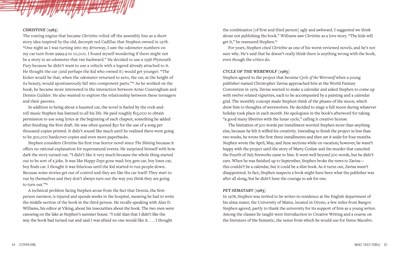
Here are a couple text-only spreads to round out your visual impression of the book. I'll stress that, even on my tablet, the design's readable and very appealing.


Solid design, appealing to a recipient fan, very intentionally a gift book. It's a terrific value at this price!

Friday, September 15, 2023

LARRY McMURTRY: A LIFE, and what a life it was!


LARRY McMURTRY: A LIFE
TRACY DAUGHERTY

St. Martin's Press
$35.00 hardcover, available now

Rating: 4* of five

The Publisher Says: A biography of the late Pulitzer Prize-winning American novelist and screenwriter Larry McMurtry from New York Times bestselling author Tracy Daugherty.

In over forty books, in a career that spanned over sixty years, Larry McMurtry staked his claim as a superior chronicler of the American West, and as the Great Plains’ keenest witness since Willa Cather and Wallace Stegner. Larry McMurtry: A Life traces his origins as one of the last American writers who had direct contact with this country’s pioneer traditions. It follows his astonishing career as bestselling novelist, Pulitzer-Prize winner, author of the beloved Lonesome Dove, Academy-Award winning screenwriter, public intellectual, and passionate bookseller. A sweeping and insightful look at a versatile, one-of-a-kind American writer, this book is a must-read for every Larry McMurtry fan.

I RECEIVED A DRC FROM THE PUBLISHER VIA NETGALLEY. THANK YOU.

My Review
: First, I want to salute Tracy Daugherty, fellow Texan and indefatigable researcher. This is a thoroughly sourced book withe compendious endnotes hyperlinked in the DRC I read. Some things didn't really need so much sourcing, being opinions of interviewees, but too much beats too little all hollow in non-fiction. More especially in the notes because reading them is entirely optional. I do it because I'm a fussbudget. I don't often comment about it either way, but here it's appropriate...a William Zinsser opinion from The American Scholar Magazine impressed me by being so niche a quote and being checkably sourced, I felt compelled to bring it up.

Then, I want to diss Larry McMurtry, petulant whiny adolescent of great age. No matter where he was, he was dissatisfied by it; no matter who he knew, he critiqued them with a flensing-knife of an eye; yest his curmudgeonliness gave the world some impressive art and a lot of filler. He had honesty enough to know it, though, that's a saving grace.

He was an inveterate lover of women. Married or not, he was always glad to meet another lady...with predictable results for the existing relationship...but he wasn't always sexually involved with them. He really just loved women as beings. His writing partner was Diana Ossana, and their closeness created a collaboration that made Annie Proulx's story "Brokeback Mountain" into a delight of a screenplay (one well worth reading on its own). He was friends with Merry Prankster and fellow novelist Ken Kesey, whose widow Faye he married in 2011—a decade after Kesey's death in 2001. This was a man who, in spite of a pretty spiky personality, could sustain a friendship!

He identified as a Texan. That in spite of his flensing-knife eye seeing, and his venom-filled pen chronicling, the failings of his fellow Texans in the gloriously angry The Last Picture Show, and his honest appraisal of Texas's self-aggrandizing mythology in the most famous book of his career Lonesome Dove. I think it's weird that people misinterpret Lonesome Dove as a celebration of the West, but that's another project that I can't tackle here. I rated this book more highly than my enjoyment of its subject would've led me to do because I so enjoyed reading McMurtry's opinions of the fans of his books. I'm not going into details because spoilers but this was one serious curmudgeon.

That's where I ran into a problem. I ended up knowing McMurtry better but not liking him more. This wasn't promised to me, so I'm not complaining that I was led to believe something was going to be offered that was not. I wasn't his biggest fan, actively disliking Texasville and the sequels to Lonesome Dove; but I always admired his clearsightedness. Now I know what I do about him as a person, I don't see it as clearsightedness any more. He was a chronic fault-finder who made, so far as I could tell or the author reported to me, no effort to use this in any constructive way in his own life. The consequences are predictable, and largely suffered by others.

That moody snort aside, I am sure that my world is enriched by his work, and I'm glad that this fascinating, difficult man came along to tell us all about our dirty, grubby, grasping, grouchy selves. I expect my Young Gentleman Caller is on to something when he remarked, "he reminds me of you."

Friday, May 3, 2013

AND SO IT GOES, A Life of Vonnegut--warts and all


AND SO IT GOES: Kurt Vonnegut: A Life
CHARLES J. SHIELDS

Henry Holt & Co. (non-affiliate Amazon link)
$11.99 Kindle edition, available now

Rating: 4.25* of five

The Publisher Says: The first authoritative biography of Kurt Vonnegut Jr., a writer who changed the conversation of American literature

In 2006, Charles Shields reached out to Kurt Vonnegut in a letter, asking for his endorsement for a planned biography. The first response was no ("A most respectful demurring by me for the excellent writer Charles J. Shields, who offered to be my biographer"). Unwilling to take no for an answer, propelled by a passion for his subject, and already deep into his research, Shields wrote again and this time, to his delight, the answer came back: "O.K." For the next year—a year that ended up being Vonnegut's last—Shields had access to Vonnegut and his letters.

And So It Goes is the culmination of five years of research and writing—the first-ever biography of the life of Kurt Vonnegut. Vonnegut resonates with readers of all generations from the baby boomers who grew up with him to high-school and college students who are discovering his work for the first time. Vonnegut's concise collection of personal essays, Man Without a Country, published in 2006, spent fifteen weeks on the New York Times bestseller list and has sold more than 300,000 copies to date. The twenty-first century has seen interest in and scholarship about Vonnegut's works grow even stronger, and this is the first book to examine in full the life of one of the most influential iconoclasts of his time.

My Review: Shields, whose biography of Harper Lee was a New York Times bestseller, is set to do it again with this life of the ineffable Kurt Vonnegut, father to Kilgore Trout, Billy Pilgrim, and the unforgettable Montana Wildhack. If any of these names fails to ring a bell with you, please exit the room via the door marked “DUH”. Anyone sixty-five or under should recognize failed SF writer Kilgore Trout as the real hero of Breakfast of Champions (and Vonnegut’s ironic alter ego). Anyone of any age who fails to recognize Billy Pilgrim or Montana Wildhack as the forces in Slaughterhouse-Five hasn’t read the book. Shame! Shame!

Shields began this project with Vonnegut’s blessing. While he was a very short way into the project, Vonnegut suffered the fatal accident (in exactly the way he predicted he would, more than thirty years before it happened) that silenced his curmudgeonly trumpetings from the marshes of sanity, where he spent a forty-year career attempting to bring the rest of us into awareness of the fact that we’re heading the wrong damn way down the shaggy, overgrown path of conformity and unquestioning obedience to Authority. Vonnegut himself wasn’t a willing follower of much of anything, be it a rule or a custom or an order. He did what was expected of him as a husband and a father, in his day and time, but the book illuminates the unspoken reluctance of his participation in any life that wasn’t of, and in, the mind. Writing was Vonnegut’s ruling passion. It trumped all things corporeal. It gave him, as Shields brings out without beating us over the head with the knowledge, a sense of himself as an actor in the world and not just a spectator.

After Vonnegut’s death, his widow and his oldest son pulled back from full participation in the preparation of this life. I think that was not a good decision, myownself, because a more appreciative and less tendentious biography I have yet to read. I think the author’s intent was to write a real life of the man, not to grind an axe to a sharp edge in order to slice and dice the reputation of anyone. That’s rare. And it’s a delight to see it done so well.

I don’t know about you, but this Boomer cut his literary teeth on Vonnegut. No one can claim full citizenship in the USA without reading Slaughterhouse-Five. It’s in the Constitution, it just has to be. The experience of the firebombing of Dresden, firsthand, from an emotional standpoint and by a man who lived through it, is something that all of us in this self-satisfied, we’re always right, country need to experience. It’s not an anti-war novel. It’s not a screaming polemic. It’s a man’s attempt to put his life into perspective, and that life includes one experience…the firebombing…that renders perspective forever out of reach. And Vonnegut was always looking for perspective in his work. The author of this life seeks out the actors in his life, and then more or less gets out of the way while they fill him in on what it was like to know Kurt Vonnegut.

In a strange way, I think this book would have appealed to the negative, curmudgeonly, perpetual victim that was Vonnegut, because he would have at last seen his own life in perspective.

Perfect he was not. He stank as a father. He wasn’t a good husband to his first wife, insulting her, cheating on her, demanding she be his servant girl (though it’s never put this way in the book, it was really really clear to me that this was so); he was a crap friend to some very deserving people, eg Knox Burger, whose editorial support Vonnegut repaid by pusillanimously giving then withdrawing his very significant business dealings from Burger, who had founded a literary agency on the strength of Vonnegut’s being his client. But his talent was in storytelling, in distilling the life he wasn’t good at living into thought-provoking and very trenchant morality tales.

Even if you haven’t read Vonnegut before now (!), read this life. It is a great roadmap to the 20th century’s preoccupations. And, I will just bet, it will make the previously unexposed curious enough about this mordant, tendentious, ironical storyteller to pick up one of his books.