Pages
- Home
- Mystery Series
- Bizarro, Fantasy & SF
- QUILTBAG...all genres
- Kindle Originals...all genres
- Politics & Social Issues
- Thrillers & True Crime
- Young Adult Books
- Poetry, Classics, Essays, Non-Fiction
- Science, Dinosaurs & Environmental Issues
- Literary Fiction & Short Story Collections
- Sookie Stackhouse/Southern Vampire Books & True Blood
- Books About Books, Authors & Biblioholism
Showing posts with label Empire State Editions. Show all posts
Wednesday, August 13, 2025
TOO GOOD TO GET MARRIED: The Life and Photographs of Miss Alice Austen, biography of a recovered queer elder
TOO GOOD TO GET MARRIED: The Life and Photographs of Miss Alice Austen
BONNIE YOCHELSON (foreword by Victoria Munro & Jessica B Phillips)
Empire State Editions (non-affiliate Bookshop.org link)
$39.95 hardcover, available now
Rating: 4.5* of five
The Publisher Says: Explore Gilded Age New York through the lens of Alice Austen, who captured the social rituals of New York’s leisured class and the bustling streets of the modern city. Celebrated as a queer artist, she was this and much more
Alice Austen (1866–1952) lived at Clear Comfort, her grandparent’s Victorian cottage on Staten Island, which is now a National Historic Landmark. As a teenager, she devoted herself to photography, recording what she called “the larky life” of tennis matches, yacht races, and lavish parties.
When she was 25 and expected to marry, Austen used her camera to satirize gender norms by posing with her friends in their undergarments and in men’s clothes, “smoking” cigarettes, and feigning drunkenness. As she later remarked, she was “too good to get married.” Austen embraced the rebellious spirit of the “New Woman,” a moniker given to those who defied expectations by pursuing athletics, higher education, or careers. She had romantic affairs with women, and at 31, she met Gertrude Tate, who became her life partner. Briefly, Austen considered becoming a professional photographer. She illustrated Bicycling for Ladies, a guide written by her friend Violet Ward, and she explored the working-class neighborhoods of Manhattan to produce a portfolio, “Street Types of New York.” Rejecting the taint of commerce, however, she remained within the confines of elite society with Tate by her side.
Although interest in Austen has accelerated since 2017, when the Alice Austen House was designated a national site of LGBTQ history, the only prior book on Austen was published in 1976. Copiously illustrated, Too Good to Get Married fills the need for a fresh and deeply researched look at this skillful and witty photographer. Through analysis of Austen’s photographs, Yochelson illuminates the history of American photography and the history of sexuality.
I RECEIVED A DRC FROM THE PUBLISHER VIA EDELWEISS+. THANK YOU.
My Review: This isn't an obvious fit for the usual definition of #WITMonth I've been working with. Indulge me for a moment: In society, now as much as in Austen's time, there is a phenomenon called "code switching." It's a kind of translation your queer friends know well, and your young friends, your opposite-gender friend;, we are most all of us doing a bit of code-switching.
What Author Yochelson does in this magisterial biography of lesbian artist and bon vivant is a translation of Austen's code-switching between woman of substance and closeted (as all were then required to be)...if only barely...lesbian in a long-term partnership.
It occurred to me to call this a translation when I read more about how Austen "{rejected} the taint of commerce...{and} remained within the confines of elite society with Tate by her side." This was a woman who spoke one language, of intimacy and sapphic love, at home, and a very, very different one among her public social circle. Austen documented, and Author Yochelson caringly and carefully examines, the world of women we would otherwise never know existed.
What this book does with skill and panache is the very thing the presently installed in government social reactionaries hate the most: Demonstrate in words and pictures that queerness, its existence and its joyfulness, has always existed and thus is among the real identities others can ascribe to.
There is more shock in the world of today at these intimate, fun-having images than there was in the earlier Gilded Age, because the sexual lives of others are more publicly known and thus easier to discuss...and judge...than the private lives of the day. Gossip was then shameful, vulgar, low; and is now journalism, casually reported and widely and openly discussed. Reality TV and celebrity journalism are thoroughly established in respectability.
It is a world I suspect Miss Austen would thoroughly dislike.
This house, this family, is Miss Austen's native world. Gossip about personal lives, while surely (humanly) indulged in, would not be done in public by these folk. Officially. Behind hands and doors and fans, sure! Thus the need to code-switch constantly would've kept Miss Austen and later Miss Tate (her partner) as well quite busy and alert.
The ladies in question in later life
The value of this explication of life among the hidden sapphic sisters of the era can't be overstated. Aesthetically we're all much richer for the re-emergence of these images; societally, we are hugely enriched by this evidence of the way diversity has flourished and enriched the culture of every era.
Look carefully, these were shocking, as tame as they seem now!
I think this work of translation from lives once unable to be spoken openly to the mass medium of publishing, as a rescue operation of identity and artistry previously masked and ignored, is worth the purchase price. There are over 100 photographs in the text. It is a treasure trove of lesbian life in the first Gilded Age. It is also a human life's worth of creative joy and pleasure shared.
It is, most importantly in my eyes, my elder sibling in queerness restored to me, guiding me through the world's rage and hate by her example. Celebrate that beauty and gift.
Monday, June 16, 2025
DISORDERLY MEN: A Novel, unnerving in its clarity and emotional acuity...devastating, sleep-robbing historical fiction
DISORDERLY MEN: A Novel
EDWARD CAHILL
Empire State Editions (non-affiliate Bookshop.org link)
$27.99 ebook, available now
Rating: 4.75* of five
The Publisher Says: Three gay men in pre-Stonewall New York City find their fates thrown together in the police raid of a Village bar.
Roger Moorhouse is a Wall Street banker and Westchester family man with a preciously guarded secret. As the shouting begins and flashlights blaze in his face, the life he’s carefully curated over the years—a fancy new office overlooking lower Broadway, a house in Beechmont Woods, his wife and children—is about to come crashing down around him.
Columbia literature professor Julian Prince lives a comparatively uncloseted life when he finds his first committed relationship tested to its limits. How could he explain to Gus, a fearless young artist, that he couldn’t stay with him that weekend because the woman who was still technically Julian’s fiancĂ©e would be visiting? But when Gus is struck unconscious by a police baton, Julian comes out of hiding to protect him, even if exposure means losing everything.
For Danny Duffy, an Irish kid from the Bronx with a sassy mouth and a diverse group of friends, the raid is a galvanizing, Spartacus moment. Danny doesn’t have too much left to lose; his family has just disowned him. But once his name appears in the newspaper, he’ll be fired from his job at Sloan’s Supermarket, where he’s risen to assistant manager of produce, and begin a journey that veers between political enlightenment and violent revenge.
The three men find themselves in a police wagon together, their hidden lives threatened to be revealed to the world. Blackmail, a private investigator, Gus’s disappearance, and Danny’s quest for retribution propel Disorderly Men to its piercing conclusion, as each man meets the boundaries of his own fear, love, and shame. The stakes for each are different, but all of them confront a fundamental question: How much happiness is he allowed to have . . . and what share of it will he lay claim to?
I RECEIVED A DRC FROM THE PUBLISHER VIA EDELWEISS+. THANK YOU.
My Review: The chilling truth is that, within my own lifetime, queer life has never been safer than it is now; and it has never been under more sustained attack than it is now.
This novel takes you into the deep, dark chasm of gay males' knife-edge of tolerated behavior when "They" decide to unleash the fury of institutional prejudice on these gay men. It doesn't take much to push an ordinary guy off his place in the socioeconomic pecking order in those times.
What made me feel so afraid was that I had friends and family who were the exact contemporaries of these men. I'd heard similar stories, though not specifically about Stonewall. In that recognition and recollection was a huge ball-peen hammer that hit me again and again. This is the existence the people who drew up Project 2025 believe is the right and proper one for me, men like me, and our siblings across the spectrum of minority behavior. These are the feelings, the troubles, the disasters that they *want*us*to*experience. It is only because, after a while, I felt more like I was reading (good) narrative non-fiction, not a novel, that I was compelled to dock a quarter star off a perfect five.
It's chilling to know this from their own keyboards and placards and gunsights.
I encourage you to read it, cishet, religious, leftist, or simply sentient emotionally literate people. Feel from the inside how this world was for those condemned to it.
Reading truly is resistance.
Wednesday, December 11, 2024
COLORFUL PALATE: A Flavorful Journey Through a Mixed American Experience, drool-worthy memoir centered on food
COLORFUL PALATE: A Flavorful Journey Through a Mixed American Experience
RAJ TAWNEY
Empire State Editions
$18.95 paperback, $24.95 hardcover, available now
Rating: 4.5*of five
The Publisher Says: WINNER, 2024 BEST INDIE BOOK AWARD, CULINARY MEMOIR
WINNER, 2024 LIVING NOW BOOK AWARD, INSPIRATIONAL MEMOIR – MALE (BRONZE)
A NEW YORK PUBLIC LIBRARY & FOREWORD REVIEWS BOOK OF THE DAY • NAMED A BEST BOOK OF 2023 BY ZED BOOK CLUB & INDIA CURRENTS • LA WEEKLY BOOK PICK • RECOMMENDED BY BOOK RIOT & ELECTRIC LITERATURE
A timely self-examination of the “mixed” American experience featuring exclusive recipes and photographs from the author’s multicultural family.
As citizens continue to evolve and diversify within the United States, the ingredients that make up each flavorful household are waiting to be discovered and devoured. In Colorful Palate, author Raj Tawney shares his coming-of-age memoir as a young man born into an Indian, Puerto Rican, and Italian-American family, his struggles with understanding his own identity, and the mouthwatering flavors of the melting pot from within his own childhood kitchen.
While the world outside can be cruel and unforgiving, it’s even more complicated for a mixed-race kid, unsure of his place in the world. Turning to his mother and grandmother for guidance, Tawney assists in the kitchen, providing intimate moments and candor as he listened to the tales behind each culinary delicacy and the women who perfected it. Each lovingly prepared meal offered another opportunity to learn more about his extraordinary heritage. The ability to create delicious fare with his family wasn’t just a duty for the grand ladies who raised him; it was a survival tactic for navigating new and unknown cultures, not always willing to accept them at first or even a hundredth glance. As Tawney examines both himself and his loved ones through the formative stages of his life, from boyhood through adulthood, he begins to realize, through all of the chaos and confusion, just how “American” he actually was.
In this contemporary coming-of-age tale, Tawney tackles personal hot-button issues about race and identity through poignant, heartfelt moments centered on delicious meals. From succulent tandoori chicken to delectable arroz con habichuelas to scrumptious spaghetti and meatballs, Tawney shares his family recipes along with the intimate stories he overheard in the kitchen as he played sous chef to hundreds of recipes that not only span continents but also come with their own personal histories attached. Colorful Palate is a tale of the mixed experience, one of the millions that rarely get told, undefined by a single group or birthright and unapologetic about its lack of classification.
I RECEIVED A DRC FROM THE PUBLISHER VIA EDELWEISS+. THANK YOU.
My Review: A Desi dad, a Puerto Rican/Italian mom...Raj is a bog-standard modern New Yorker. His family's families of origin are, well, not really compatible. His early life was spent with parents who were not effective at engagement with each other. This makes for a vacuum in a child's emotional growth. It did not, luckily, result in a food vacuum. His mother was a cook, and came from cultures with powerful culinary traditions.
Enter his grandmother and auntie. And, not coincidentally, delicious Desi food, Italian food, and Puerto Rican food as all points on his cultural compass were contributing to his maturing tastes. Not to mention he and his older brother were fully involved in the dominant US culture. Here's someone who came of age amid a lot of very, very powerful cultures, and has told us how this has molded him as a cook, and a person.
There are recipes in each chapter for dishes relevant to that chapter's substance, always at the end so easy to access. There are sixteen halftone illustrations to give you some extra flavor (!) of the author's life. I don't want you to thik it's a cookbook. I'd happily keep it in my cooking collection but I wouldn't suggest it for the cookbook collector.
You can definitely use the recipes, though, don't think they're pointless, ornamental ones. Just...more for a culture maven, one interested in society and the propagation of traditions in today's world, and anyone you know who is very interested in New York City, AND likes to adventure in the kitchen (but doably in the ingredients hunt!) will batten on this book.
Sample illustrations offered for your assessment:

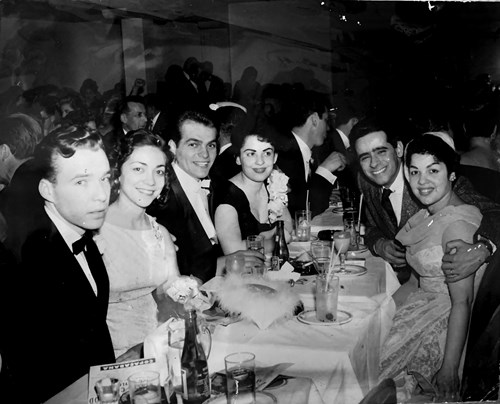
Mom's parents being glam, 1957 at the Copacabana

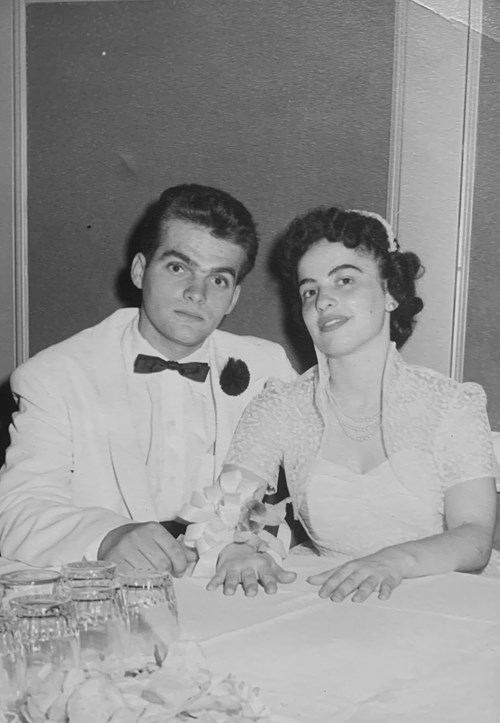
Mom's Puerto Rican Mom and Italian Dad, 1957 wedding

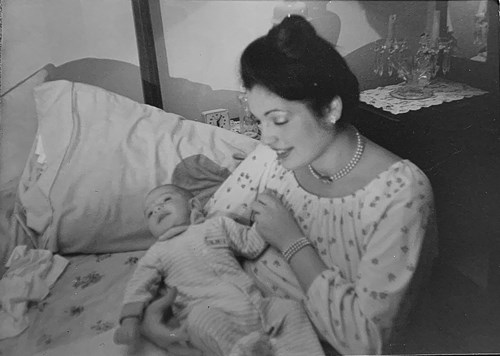
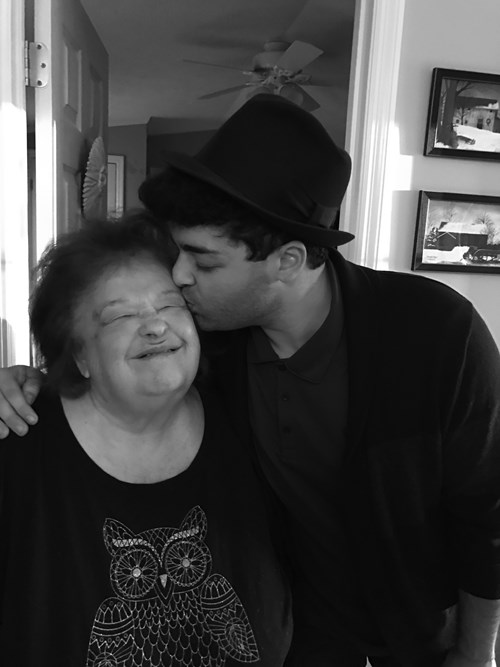
Author and Mom, 1988

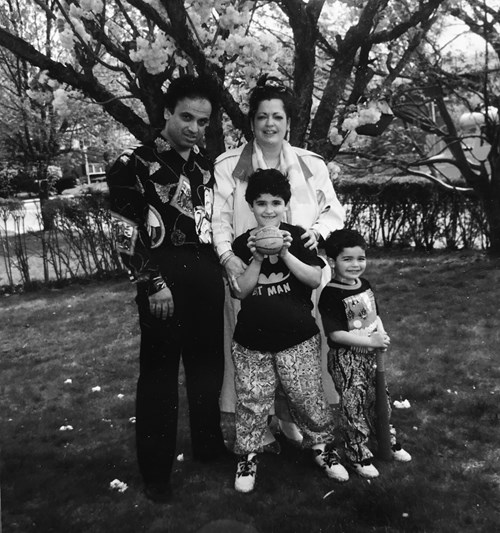
The author's immediate family, 1990

Author and maternal grandmother, 2018

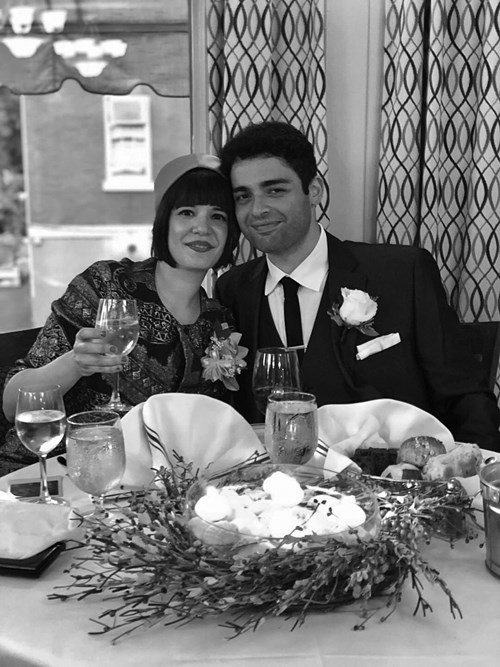
Author and wife, Michelle, wedding day 2019
An American life, joined in progress, shared for our pleasure and our cultural broadening.
Saturday, December 7, 2024
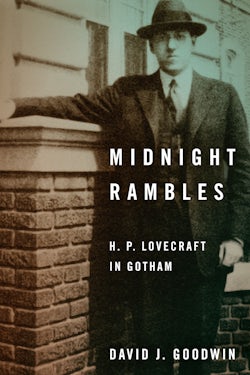
MIDNIGHT RAMBLES: H. P. Lovecraft in Gotham, good, well-framed slice of a nasty man's life
MIDNIGHT RAMBLES: H. P. Lovecraft in Gotham
DAVID J. GOODWIN
Empire State Editions
$29.95 hardcover, available now
Rating: 4.25* of five
The Publisher Says: A micro-biography of horror fiction’s most influential author and his love–hate relationship with New York City.
By the end of his life and near financial ruin, pulp horror writer Howard Phillips Lovecraft resigned himself to the likelihood that his writing would be forgotten. Today, Lovecraft stands alongside J. R. R. Tolkien as the most influential genre writer of the twentieth century. His reputation as an unreformed racist and bigot, however, leaves readers to grapple with his legacy. Midnight Rambles explores Lovecraft’s time in New York City, a crucial yet often overlooked chapter in his life that shaped his literary career and the inextricable racism in his work.
Initially, New York stood as a place of liberation for Lovecraft. During the brief period between 1924 and 1926 when he lived there, Lovecraft joined a creative community and experimented with bohemian living in the publishing and cultural capital of the United States. He also married fellow writer Sonia H. Greene, a Ukrainian-Jewish Ă©migrĂ© in the fashion industry. However, cascading personal setbacks and his own professional ineptitude soured him on New York. As Lovecraft became more frustrated, his xenophobia and racism became more pronounced. New York’s large immigrant population and minority communities disgusted him, and this mindset soon became evident in his writing. Many of his stories from this era are infused with racial and ethnic stereotypes and nativist themes, most notably his overtly racist short story, “The Horror at Red Hook,” set in Red Hook, Brooklyn. His personal letters reveal an even darker bigotry.
Author David J. Goodwin presents a chronological micro-biography of Lovecraft’s New York years, emphasizing Lovecraft’s exploration of the city environment, the greater metropolitan region, and other locales and how they molded him as a writer and as an individual. Drawing from primary sources (letters, memoirs, and published personal reflections) and secondary sources (biographies and scholarship), Midnight Rambles develops a portrait of a talented and troubled author and offers insights into his unsettling beliefs on race, ethnicity, and immigration.
I RECEIVED A DRC FROM THE PUBLISHER VIA EDELWEISS+. THANK YOU.
My Review: S.T. Joshi's two-volume I Am Providence is the go-to biography of this awful human being whose fiction output changed what we know as horror fiction. It's a much more...worshipful isn't too strong a term, but let's use the slightly less judgmental term "positively inclined"...take on his entire life.
We don't get that tone here. The author focuses on Lovecraft's New York years. It's pretty much impossible to make the time he spent in the place that inspired the utterly despicably racist story "The Horror at Red Hook" anything but dark and negative.
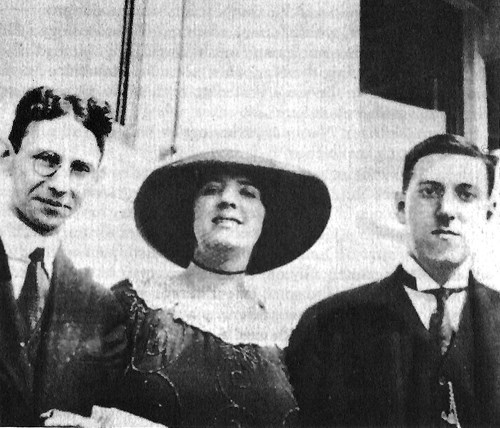
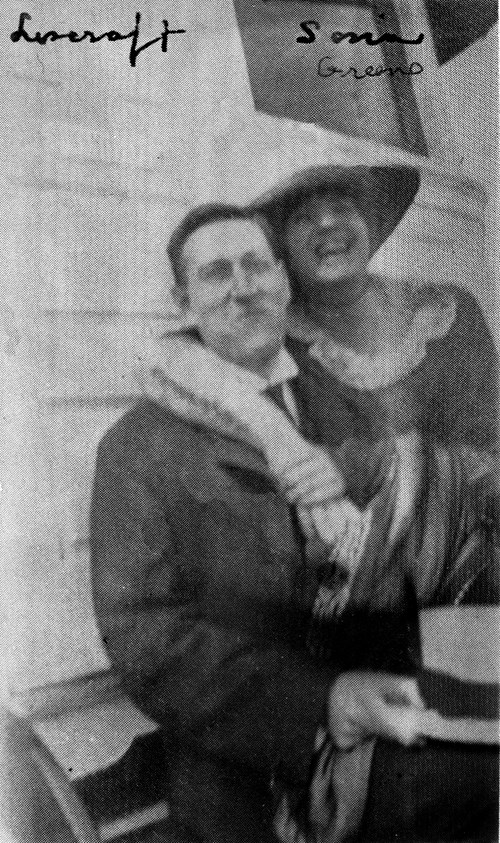
Rheinhart Kleiner introduced his mutual friends H. P. Lovecraft and Sonia H. Greene during a boat tour of Boston Harbor in July 1921. The three were attending an amateur journalism convention in the city.
That is both true, and misleading. This narrowly focused life of Lovecraft isn't a hatchet-job. It is, instead, a careful look at the whos, whats, and whys of Lovecraft coming into himself as a person and a writer.
That he wasn't a very nice person, well, you know what? Facing up to the real person who typed the words that formed the stories you love or loved is not something we can avoid in the twenty-first century. The fascinating part to me was that there needn't have been this curdling of his heart. There was a window for someone to reach into his heart and pull out a kinder human being. Sonia Greene certainly tried this feat.
Greene grew more intrigued by Lovecraft throughout the Boston convention. This marked the beginning of their relationship.
A brief moment of happiness. It beggars belief to me that this smiling boy is H.P. Lovecraft, whose sour unsmiling visage is reproduced on so many book covers.
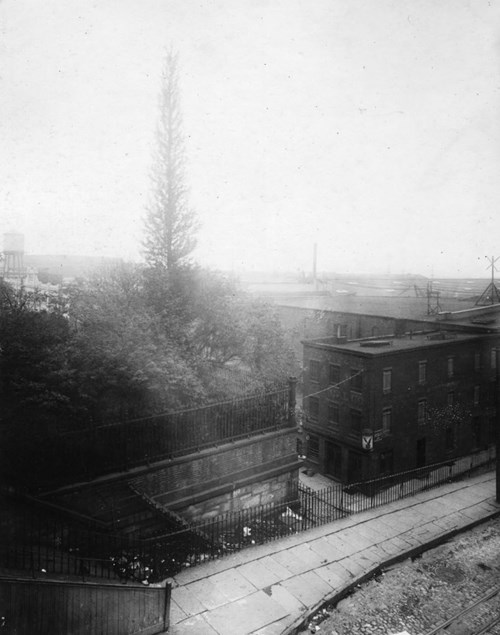
While Lovecraft strolled through Brooklyn Heights one evening, a neglected garden captured his attention. This might have been the grounds of the James S. Rockwell House.
His environs always influenced his creative process, naturally. Seeing such sights in Brooklyn, an urban space, would've charged up his future use of the surprising, hidden facet of his stories' settings. As a matter of fact he seems to have found the experience more formative than most others he would have while living in New York.
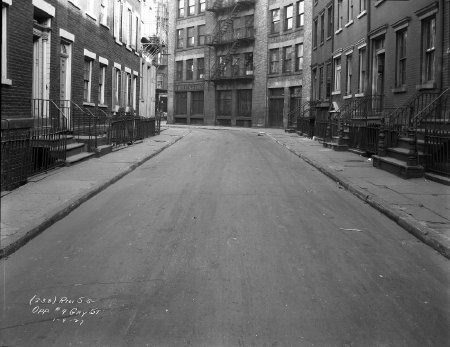
That it is! Still looks like this, too. It doesn't seem to have sweetened his world-view....
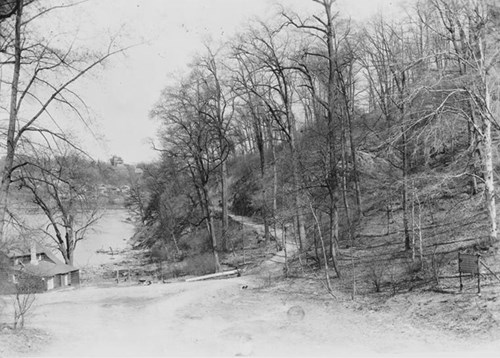
When exploring New York City, Lovecraft sought pockets of nature largely unblemished by urban development. Today’s Inwood Hill Park in Manhattan stood as such a space.
Holy carp! That's INWOOD?! My goodness, a hundred years makes a big difference.
I think my point's made. This is a terrific book about the nasty guy who refined and codified the tropes and topics that now make up "cosmic horror." He is seen here on the cusp of all the floods of words that would make this enduring contribution to our culture. I was drawn into this story by the details I did not know, despite the trajectory and ending being already familiar.
I'm convinced your young Lovecraft/horror reader will be as taken with this read as I was. I can't get all the way over the hump to five stars because I dislike Lovecraft that much. That's probably a testimonial to how well Author Goodwin did his job.
THE AMERICAN ART-UNION: Utopia and Skepticism in the Antebellum Era, beautiful art history-filled object for #Booksgiving
THE AMERICAN ART-UNION: Utopia and Skepticism in the Antebellum Era
KIMBERLY A. ORCUTT
Empire State Editions (non-affiliate Amazon link)
$39.95 hardcover, available now
Rating: 4.5* of five
The Publisher Says: The first comprehensive treatment in seventy years of the American Art-Union's remarkable rise and fall
For over a decade, the New York-based American Art-Union shaped art creation, display, and patronage nationwide. Boasting as many as 19,000 members from almost every state, its meteoric rise and its sudden and spectacular collapse still raise a crucial Why did such a successful and influential institution fail? The American Art-Union reveals a sprawling and fascinating account of the country's first nationwide artistic phenomenon, creating a shared experience of visual culture, art news and criticism, and a direct experience with original works.
For an annual fee of five dollars, members of the American Art-Union received an engraving after a painting by a notable U.S. artist and the annual publication Transactions (1839–49) and later the monthly Bulletin (1848–53). Most importantly, members' names were entered in a drawing for hundreds of original paintings and sculptures by most of the era's best-known artists. Those artworks were displayed in its immensely popular Free Gallery. Unfortunately, the experiment was short-lived. Opposition grew, and a cascade of events led to an 1852 court case that proved to be the Art-Union's downfall. Illuminating the workings of the American art market, this study fills a gaping lacuna in the history of nineteenth-century U.S. art. Dr. Kimberly A. Orcutt draws from the American Art-Union's records as well as in-depth contextual research to track the organization's decisive impact that set the direction of the country's paintings, sculpture, and engravings for well over a decade.
Forged in cultural crosscurrents of utopianism and skepticism, the American Art-Union's demise can be traced to its nature as an attempt to create and control the complex system that the early nineteenth-century art world represented. This study breaks the organization's activities into their major components to offer a structural rather than chronological narrative that follows mounting tensions to their inevitable end. The institution was undone not by dramatic outward events or the character of its leadership but by the character of its utopianist plan.
I RECEIVED A DRC FROM THE PUBLISHER VIA EDELWEISS+. THANK YOU.
My Review: I've mentioned before my upbringing was very heavy on the art-world access, and a lot of art history came into my knowledge base as part of that. I was drawn to this book in part because it dealt with a topic I'd heard about, but had never gotten too much information regarding, so...well, curiosity got the better of me.

Thomas Hicks, Calculating, 1844. Oil on canvas, 13 5/8 x 17 in. (34.61 x 43.18 cm). Museum of Fine Arts, Boston, Gift of Maxim Karolik for the M. and M. Karolik Collection of American Paintings, 62.273. Photograph © 2024 Museum of Fine Arts, Boston.

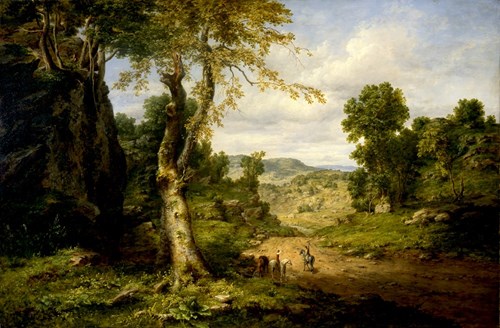
George Inness, View in Berkshire County, Massachusetts, Clearing off After a September Storm, 1849. Oil on canvas, 48 x 72 1/4 in. (121.92 x 183.52 cm). Buffalo Bill Center of the West, Cody, Wyoming; Whitney Western Art Museum; Gift in Memory of L.G. Phelps and Frances Phelps Belden, 21.00.

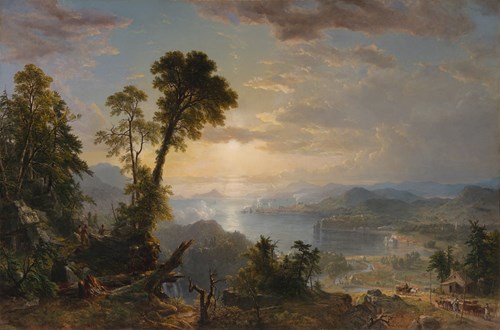
Asher B. Durand, Progress (The Advance of Civilization), 1853. Oil on canvas, 48 × 72 in. (121.92 × 182.88 cm). Virginia Museum of Fine Arts, Richmond. Gift of an anonymous donor, 2018.547. Photo: Travis Fullerton © Virginia Museum of Fine Arts.

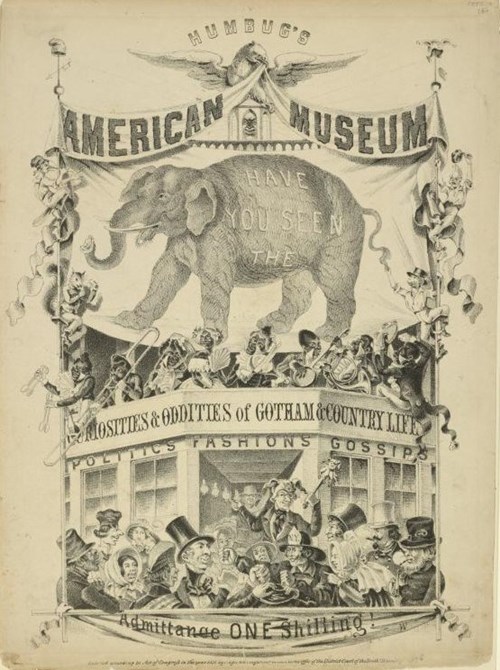
Nagel and Weingärtner, Humbug’s American Museum, 1851. The Miriam and Ira D. Wallach Division of Art, Prints and Photographs: Print Collection, The New York Public Library.

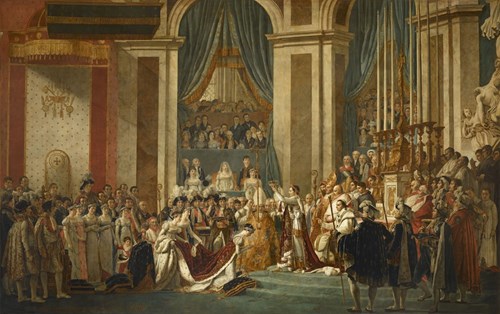
Jacques Louis David, Coronation of Emperor Napoleon and Josephine at Notre-Dame in Paris, December 2, 1804, 1808–22. Oil on canvas, 240 1/8 x 382 1/4 in. (610 x 971 cm). Chateaux de Versailles et de Trianon. © RMN-Grand Palais / Art Resource, NY

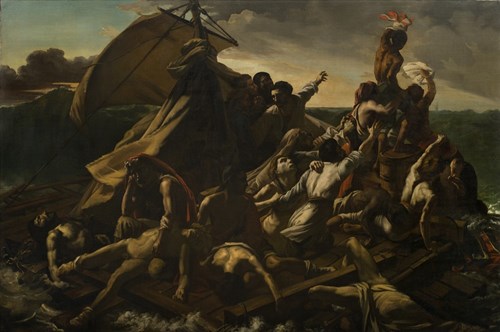
George Cooke, Raft of the Medusa, ca. 1830. Oil on linen, 51 3/8 × 77 1/4 in. (130.5 × 196.2 cm). New-York Historical Society, Bequest of Uriah Phillips Levy, 1862.4. Photography © New-York Historical Society.

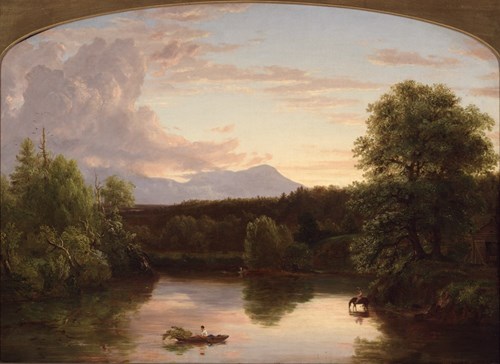
Thomas Cole, North Mountain and Catskill Creek (Sunset on the Catskill), 1838. Oil on canvas, 26 7/16 × 36 7/16 in. (67.2 × 92.6 cm). Yale University Art Gallery, Gift of Anne Osborn Prentice, 1981.56.

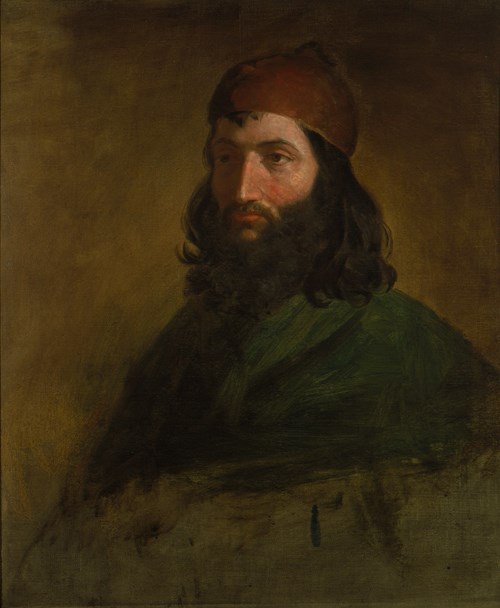
Washington Allston, Sketch of a Polish Jew, 1817. Oil on canvas, 30 1/4 × 25 1/4 in. (76.8 × 64.1 cm). National Gallery of Art, Corcoran Collection (Museum Purchase, William A. Clark Fund).

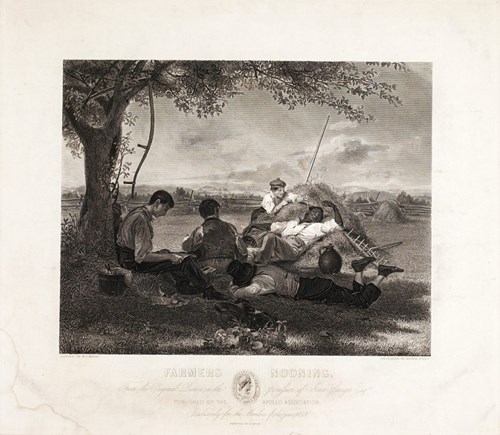
Alfred Jones after William Sidney Mount, Farmers Nooning, 1843. Engraving. National Museum of American History, Smithsonian Institution.
☀☀☀☀☀☀☀☀☀☀☀☀☀☀☀☀☀☀☀☀☀☀☀☀☀☀☀☀☀☀☀☀☀☀☀☀☀☀
I've selected these images from the ones made available for reviewers to draw from in their reviews. (There are eighty-seven illustrative images in the entire text.) I think these choices offer the gifter of the book, to self or others, a pretty solid overview of the aesthetic on display in the book. If you like nineteenth-century art, more or less academic in its emphasis, this book is a great choice to ornament your coffee table.
The idea of the American Art-Union, its aim to bring visual culture to the entire borning nation, resonated with me like I was a bell and it was a clapper. Its aims, its choices, and the idea of a drawing to win original art...well, take my money, y'all.
Sadly the times were just not in sync with this lofty aim. The inevitable problems with Authority, among the membership, and all the usual nonsense that attends doing something large and ambitious that exceeds the practical and the cultural infrastructure, concatenated in a spectacular flame-out.
Unusually, the author chose to follow the internal threads of the story. I felt a bit at sea for a while, as I'd expected the bog-standard chronological structure. No indeed...and to be honest, it serves the story being told better than a chronolgy would have done. I can see that this technique will make enemies, though, so I don't want you to go in to a $40 book only to be blindsided with a synthetic approach where one expects an analytical one.
I'm eager for fellow appreciators of nineteenth-century utopianism, of the urgent need to create a visual culture in this world of philistines, and those who just flat love to look at art, to get one of these beauties for themselves, or a like-minded friend.
The Table of Contents, with its relative page counts, will show you better than I can what the author does with this story. The amount of text dedicated to the events chronicled is proportional to the importance of the events themselves, much more directly than I find is usual in art-history works:
Introduction: The Dream of Art for the People | 1This is a fine work of scholarly thought, meeting beautiful art images, and coming together to produce a book that your budding historian, your culture vulture, and your very artsy giftee will eat up with a terribly refined runcible spoon.
1 Engravings: To Lead Taste or to Follow? | 29
2 Selecting Artworks for Distribution: From Democracy to Oligarchy | 63
3 The Free Gallery: Art, Anxiety, and Revolution | 99
4 Distributions and Membership: “Messengers and Missionaries of Art”? | 122
5 The Bulletin: From Education to Provocation | 155
6 Slowly, Then All at Once: The Demise of the American Art-Union | 180
Acknowledgments | 209
Appendix A: American Art-Union Resources | 211
Appendix B: American Art-Union Officers and Committee of Management, 1839–51 | 213
Appendix C: American Art-Union Engravings Distributed to All Members | 216
Notes | 219
Sources Cited | 253
Index | 271
I did.
Sunday, December 17, 2023
BOY WITH THE BULLHORN: A Memoir and History of ACT UP New York, clarion call to the quiet youth
BOY WITH THE BULLHORN: A Memoir and History of ACT UP New York
RON GOLDBERG
Empire State Editions/Fordham University Press
$36.95 hardcover, available now
TRADE PAPER AVAILABLE NOW FOR $22.95
Rating: 4.5* of five
The Publisher Says: A coming-of-age memoir of life on the front lines of the AIDS crisis with ACT UP New York.
From the moment Ron Goldberg stumbled into his first ACT UP meeting in June 1987, the AIDS activist organization became his life. For the next eight years, he chaired committees, planned protests, led teach-ins, and facilitated their Monday night meetings. He cruised and celebrated at ACT UP parties, attended far too many AIDS memorials, and participated in more than a hundred zaps and demonstrations, becoming the group’s unofficial “Chant Queen,” writing and leading chants for many of their major actions. Boy with the Bullhorn is both a memoir and an immersive history of the original New York chapter of ACT UP, the AIDS Coalition to Unleash Power, from 1987 to 1995, told with great humor, heart, and insight.
Using the author’s own story, “the activist education of a well-intentioned, if somewhat naĂŻve nice gay Jewish theater queen,” Boy with the Bullhorn intertwines Goldberg’s experiences with the larger chronological history of ACT UP, the grassroots AIDS activist organization that confronted politicians, scientists, drug companies, religious leaders, the media, and an often uncaring public to successfully change the course of the AIDS epidemic.
Diligently sourced and researched, Boy with the Bullhorn provides both an intimate look into how activist strategies are developed and deployed and a snapshot of life in New York City during the darkest days of the AIDS epidemic. On the occasions where Goldberg writes outside his personal experience, he relies on his extensive archive of original ACT UP documents, news articles, and other published material, as well as activist videos and oral histories, to help flesh out actions, events, and the background stories of key activists. Writing with great candor, Goldberg examines the group’s triumphs and failures, as well as the pressures and bad behaviors that eventually tore ACT UP apart.
A story of ordinary people doing extraordinary things, from engaging in outrageous, media-savvy demonstrations, to navigating the intricacies of drug research and the byzantine bureaucracies of the FDA, NIH, and CDC, Boy with the Bullhorn captures the passion, smarts, and evanescent spirit of ACT UP—the anger, grief, and desperation, but also the joy, camaraderie, and sexy, campy playfulness—and the exhilarating adrenaline rush of activism.
I RECEIVED A DRC FROM THE PUBLISHER VIA EDELWEISS+. THANK YOU.
My Review: After reading Peter Staley's memoir of the ACT UP days during the AIDS crisis, I was too emotionally fatigued to give this memoir of the same time my full attention. I still find it astounding that this book came out thirty-five years after ACT UP appeared.
Early, noisy days
I have to admit that I am still very tender on the subject of this epidemic because of my own losses during that time. There is no sense hiding away from the terrible, always-there pain of losing someone in this awful way, though. It was quite theraputic to recall that the world might not have cared much, but the world could not just ignore the issue after ACT UP got the noisemakers and angry young folk organized.
My personal favorite demonstration–combining my hatred for the catholic church and outrage at the inaction of the medical establishment
Whatever else has happened to me since AIDS took my first friend in 1984, I have carried the clear and unforgiving certainty that my life mattered less than a straight person's life on a policy level. This is brutal, evil, capitalist greed...costs too much to get those drugs, coverage denied...the Government can't afford this medication, coverage denied...and, while that is nothing new to Black or Indigenous people, or even to women, it was a wake-up call to a privileged white boy.
There is one thing that makes me recommend this as a #Booksgiving idea...your young, gay friend who is doing little, or nothing at all, to protest the inaction on climate change...that is reaching crisis stage earlier than we thought...needs a reminder that PrEP did not come about because the elites thought it was a good idea, but because there was a history of loud, angry agitation among the folk who needed it, a bunch of scientists whose careers were able to focus on AIDS because ACT UP acted, and the way to pay it forward is to start shouting along with Greta Thunberg. Or along with David Hogg abour gun control. Whatever! Read this memoir of the joys of acting up and yelling about important matters, about the crises we face. Goldberg has led a happy, fulfilling life being very disobedient. Encourage your young gay friend to do the same.
Being flamboyant in a good cause is no crime.
Monday, December 11, 2023
GLOBAL QUEENS: An Urban Mosaic, nostalgia for the ex-New Yorker or inspiration for the aspiring New Yorker
GLOBAL QUEENS: An Urban Mosaic
JOSEPH HEATHCOTT
Empire State Editions/Fordham University Press
$34.95 hardcover, available now
Rating: 5* of five
The Publisher Says: A vibrant exploration of the everyday life of one of the most diverse places in the world: Queens, New York.
Remade by decades of immigration, Queens, New York, has emerged as an emblematic space of social mixing and encounters across multiple lines of difference. With its expansive subdivisions, tangled highways, and centerless form, it is also New York’s most enigmatic borough. It can feel alternately like a big city, a tight-knit village, a featureless industrial zone, or a sprawling suburban community. Through more than 200 contemporary photographs, Joseph Heathcott captures this multifaceted borough and one of the most diverse places in the United States.
Drawn from more than a decade of roaming around Queens and snapping photos, Heathcott conveys the juxtaposition of the ordinary and the extraordinary, the mundane and the surprising, and the staggering social diversity that best characterizes Queens. At the heart of the story are two separate but entwined histories: the rapid expansion of the borough’s built environment through the twentieth century, and the millions of people who have traveled from near and far to call Queens home. Newcomers have had to confront discrimination, white racial hostility, legal challenges, and language barriers. They have had to struggle to find adequate housing, places to worship, and jobs that pay enough to survive. And they have done all of this in the borough’s jumbled collection of neighborhoods, housing types, civic and religious institutions, factories and warehouses, commercial streets, and strip malls.
Heathcott makes primary use of documentary photography to bring these social and spatial realities of everyday life into relief. He also draws on demographic data, archival sources, planning documents, news stories, and reports. The result is a visual meditation on Queens that provides clues about an urban future where notions of citizenship and belonging are negotiated across multiple lines of difference, but where a sense of ”getting along”—however roughly textured and unfinished—has taken hold in the everyday life of the streets.
I RECEIVED A DRC FROM THE PUBLISHER VIA EDELWEISS+. THANK YOU.
My Review: The city I've lived in, or longed to return to, since the 1980s is always entered via the Borough of Queens: Both airports are there, and we're not going to count Newark as it is its own major city and port of entry for all of New Jersey's international flyers. It's the biggest borough, it's got the most oceanfront exposure, it's always been a huge part of the immigrant experience of New York City for many, possibly most, ethnic minorities getting a foothold in the Land of Opportunity.
The side of New York City that most who visit, and many who live in, it just don't think about...lots of natural areas still exist that aren't carefully manicured parks.
To those who live here in the city, or as I do now, mere meters from Queens (Nassau County WAS Queens until it seceded in 1901 for depressingly racist reasons), think of it as the borough of homes:
...I think gemütlich is a great word, and one that pretty much *is* Queens.
The place is an educational hub, having numerous university campuses, and a separate public library system that serves a tremendously large (2.4 million people) and diverse population:
...as well as being very close and convenient to the employment and entertainment hub that is Manhattan:
...so it's no wonder so very many people who come here end up in the already-established immigrant communities, and the comparatively affordable housing, that this global city offers.
One of the unappealing human characteristics is the need to Other people with slighting nicknames. A common one, from the Manhattan of my youth, was to call the people who came to our home patch (as we saw it) "Bridge and Tunnel Kids" regardless of their age. The bridges and tunnels referenced here are part of the astoundingly efficient and well-designed transportation infrastructure of the borough. It's all a lot prettier than you've been led to believe, too:
...and works a lot better than many cities with much smaller populations can manage. After all, the bridges and tunnels don't just bring the millions of Queens residents to and from different destinations...they serve millions from Long Island, millions from Brooklyn, a million-plus from Manhattan, and a few hundred thousand from Staten Island.
New York City is a place so many aspire to live, for so many reasons; a gift to one of them that you know wouldn't come amiss. The sad soul who left, but would like to come home, is also an apt recipient. The stories about Queens, the social history aspects of the book, also make it a good gift idea for your scholarly pal who talks a lot about how we live in these weird constructs called "cities" without thinking about how they work. Not for nothing did this book win The David R. Coffin Publication Grant.
Beautiful and educational, informative and entertaining...a great package.
Subscribe to:
Posts (Atom)