Showing posts with label Indian American family. Show all posts

Monday, September 22, 2025

THE LONELINESS OF SONIA AND SUNNY, loneliness is a cultural phenomenon


THE LONELINESS OF SONIA AND SUNNY
KIRAN DESAI

The Hogarth Press (non-affiliate Bookshop.org link)
$13.99 ebook, available now

One of The Guardian's The best fiction of 2025 list!

Time's The 100 Must-Read Books of 2025 selection

One of Lit Hub’s 43 Favorite Books of 2025!

One of BookPage's 10 Best Books of 2025!

A New York Times 10 Best Books of 2025 selection!

Finalist for the 2025 Booker Prize.

Rating: 4.75* of five

The Publisher Says: The spellbinding story of two young people whose fates will intersect and diverge across continents and years—an epic of love and family, India and America, tradition and modernity by the Booker Prize-winning author of The Inheritance of Loss

Behind every love story are the myriad stories of two families.

In the snowy mountains of Vermont, Sonia is lonely. A college student and aspiring writer homesick for India, she turns to an older artist for inspiration and intimacy, a man who will cast a dark spell on the next many years of her life. In Brooklyn, Sunny is lonely, too. A struggling journalist originally from Delhi, he is both beguiled and perplexed by his American girlfriend and the country in which he plans to find his future. As Sonia and Sunny each becomes more and more alienated, they begin to question their understanding of happiness, human connection, and where they belong.

Back in India, Sonia and Sunny's extended families cannot fathom how anyone could be lonely in this great, bustling world. They arrange a meeting between the two—a clumsy meddling that only drives Sonia and Sunny apart before they have a chance to fall in love.

The Loneliness of Sonia and Sunny is the sweeping tale of two young people navigating the many forces that shape their country, class, race, history, and the complicated bonds that link one generation to the next. A love story, a family saga, and a rich novel of ideas, it is the most ambitious and accomplished work yet by one of our greatest novelists.

I RECEIVED A DRC FROM THE PUBLISHER VIA NETGALLEY. THANK YOU.

My Review
: If this *immense*, intense, and deeply emotionally charged novel is not on the Booker shortlist tomorrow, I will kick off big time.

Sonia and Sunny and their families are excellent company. Like anyone you spend this much time with, there are moments of irritated shouting, times of sad, misty dripping, and the occasional whoop of glee. (Note to self: reading stories like this at 3am can lead to justifiably angry quarters-sharers. Best not to.)

What I got out of this Dickensian-in-scope tale of love, Love, imperialism, racism, chicanery, skulduggery, and the immutable urge to discover Truths greater than self-actualization, was the conviction that there needs to be a new category of read: a Bildungsroman for adults figuring their {stuff} out; a one-volume roman-fleuve for the increasing number of Indian-authored epic novels that feel even bigger in scope than they are.

Love, love, and desire figure into both of the above subgenres. I think of the old joke describing Stephen Dedalus in Ulysses as "horny Irish medical student goes on a rampage" and I'm still pretty sure that is the whole reason Joyce didn't stop at A Portrait of the Artist as a Young Man...he had so much more to say.

This could have been A Portrait of the Artist as a Young Man-length but Author Desai had a Ulysses-esque lump in her throat. It's a lot, Sunny alone is a novel's worth of weird (mother Babita and her...unexpected...opinions and cheese-related kleptomania), but Sonia and her nasty time with Ilan (older, jealous artist-lover) could've been another entire book fully satisfying the criteria of novelhood. (NB: this is the beginning of the book; persevere, ye who dislike this truthtelling trope. It's not like that all the way through.)

The weight of expectation, of cultural baggage, on aspiring artist Sonia (I'd read her novel!) and journalist Sunny (a byline I'd look for!) as they try to figure out their paths in the buzzing hive of US culture and politics, all stewed up with many people they run into (sometimes literally) along the way: crushing, annihilating, and in the end energizing. Loneliness and fear and baggage motivate these two, where they squash so many. Across the world there are people with the talent and the drive, but not the luck, of Sonia and Sunny, and we will never hear their names.

We have, now, heard their names, in Author Desai's busy, overstuffed novel. I hope in that magical-realist liminal place they are, they know and are happier for it. Seher, Sonia's mother said it best: "Loneliness could mean abiding peace. It could mean understanding your happiness backward, when you happened to exclaim out loud, surprising yourself when there was no apparent reason, I'm happy!"

Shout it, folks, you've been found.

Wednesday, December 11, 2024

COLORFUL PALATE: A Flavorful Journey Through a Mixed American Experience, drool-worthy memoir centered on food


COLORFUL PALATE: A Flavorful Journey Through a Mixed American Experience
RAJ TAWNEY

Empire State Editions
$18.95 paperback, $24.95 hardcover, available now

Rating: 4.5*of five

The Publisher Says: WINNER, 2024 BEST INDIE BOOK AWARD, CULINARY MEMOIR

WINNER, 2024 LIVING NOW BOOK AWARD, INSPIRATIONAL MEMOIR – MALE (BRONZE)

A NEW YORK PUBLIC LIBRARY & FOREWORD REVIEWS BOOK OF THE DAY • NAMED A BEST BOOK OF 2023 BY ZED BOOK CLUB & INDIA CURRENTS • LA WEEKLY BOOK PICK • RECOMMENDED BY BOOK RIOT & ELECTRIC LITERATURE


A timely self-examination of the “mixed” American experience featuring exclusive recipes and photographs from the author’s multicultural family.

As citizens continue to evolve and diversify within the United States, the ingredients that make up each flavorful household are waiting to be discovered and devoured. In Colorful Palate, author Raj Tawney shares his coming-of-age memoir as a young man born into an Indian, Puerto Rican, and Italian-American family, his struggles with understanding his own identity, and the mouthwatering flavors of the melting pot from within his own childhood kitchen.

While the world outside can be cruel and unforgiving, it’s even more complicated for a mixed-race kid, unsure of his place in the world. Turning to his mother and grandmother for guidance, Tawney assists in the kitchen, providing intimate moments and candor as he listened to the tales behind each culinary delicacy and the women who perfected it. Each lovingly prepared meal offered another opportunity to learn more about his extraordinary heritage. The ability to create delicious fare with his family wasn’t just a duty for the grand ladies who raised him; it was a survival tactic for navigating new and unknown cultures, not always willing to accept them at first or even a hundredth glance. As Tawney examines both himself and his loved ones through the formative stages of his life, from boyhood through adulthood, he begins to realize, through all of the chaos and confusion, just how “American” he actually was.

In this contemporary coming-of-age tale, Tawney tackles personal hot-button issues about race and identity through poignant, heartfelt moments centered on delicious meals. From succulent tandoori chicken to delectable arroz con habichuelas to scrumptious spaghetti and meatballs, Tawney shares his family recipes along with the intimate stories he overheard in the kitchen as he played sous chef to hundreds of recipes that not only span continents but also come with their own personal histories attached. Colorful Palate is a tale of the mixed experience, one of the millions that rarely get told, undefined by a single group or birthright and unapologetic about its lack of classification.

I RECEIVED A DRC FROM THE PUBLISHER VIA EDELWEISS+. THANK YOU.

My Review
: A Desi dad, a Puerto Rican/Italian mom...Raj is a bog-standard modern New Yorker. His family's families of origin are, well, not really compatible. His early life was spent with parents who were not effective at engagement with each other. This makes for a vacuum in a child's emotional growth. It did not, luckily, result in a food vacuum. His mother was a cook, and came from cultures with powerful culinary traditions.

Enter his grandmother and auntie. And, not coincidentally, delicious Desi food, Italian food, and Puerto Rican food as all points on his cultural compass were contributing to his maturing tastes. Not to mention he and his older brother were fully involved in the dominant US culture. Here's someone who came of age amid a lot of very, very powerful cultures, and has told us how this has molded him as a cook, and a person.

There are recipes in each chapter for dishes relevant to that chapter's substance, always at the end so easy to access. There are sixteen halftone illustrations to give you some extra flavor (!) of the author's life. I don't want you to thik it's a cookbook. I'd happily keep it in my cooking collection but I wouldn't suggest it for the cookbook collector.

You can definitely use the recipes, though, don't think they're pointless, ornamental ones. Just...more for a culture maven, one interested in society and the propagation of traditions in today's world, and anyone you know who is very interested in New York City, AND likes to adventure in the kitchen (but doably in the ingredients hunt!) will batten on this book.

Sample illustrations offered for your assessment:

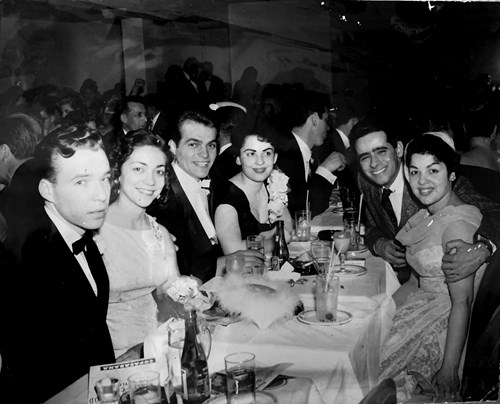
Mom's parents being glam, 1957 at the Copacabana
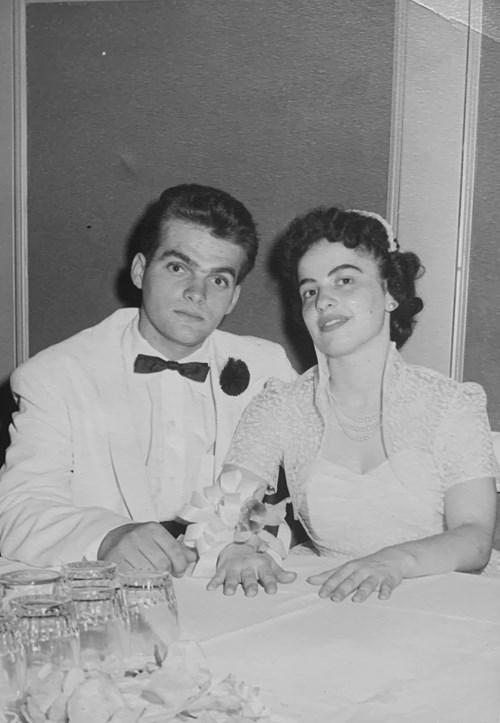
Mom's Puerto Rican Mom and Italian Dad, 1957 wedding
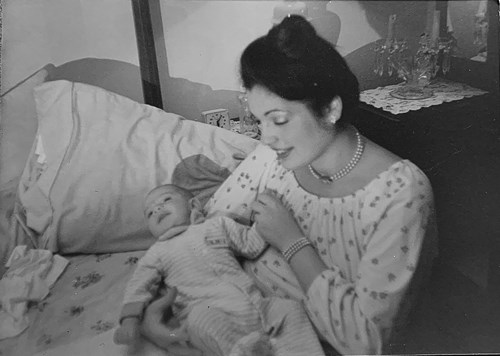
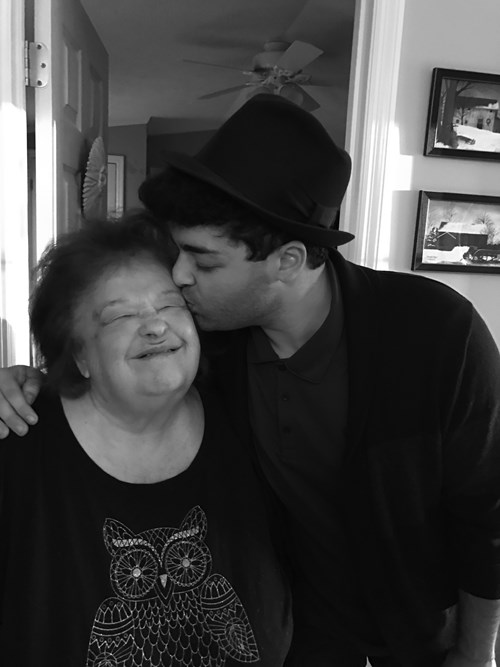
Author and Mom, 1988
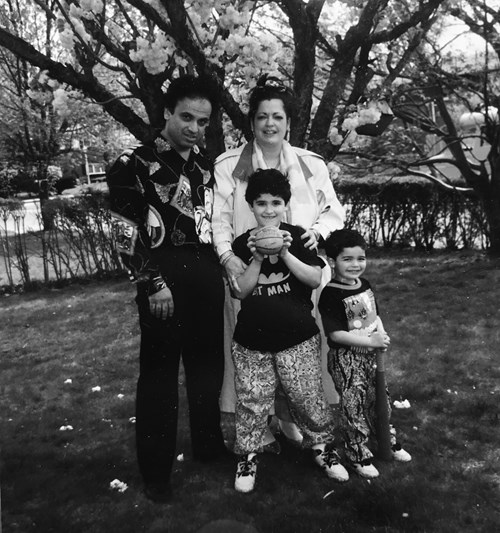
The author's immediate family, 1990
Author and maternal grandmother, 2018
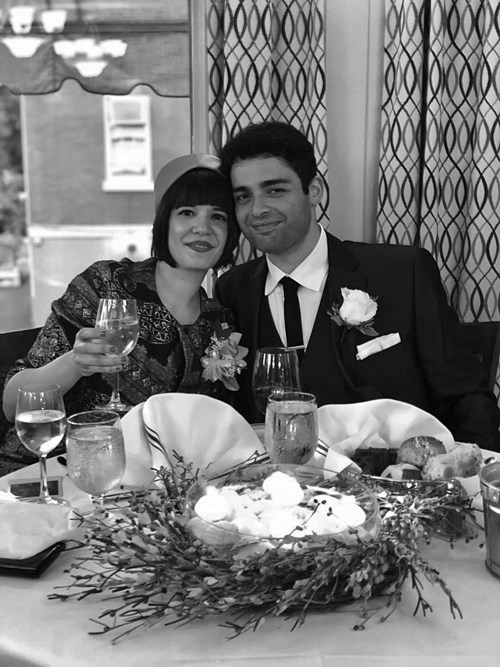
Author and wife, Michelle, wedding day 2019

An American life, joined in progress, shared for our pleasure and our cultural broadening.

Friday, June 17, 2022

ANTIMAN: A Hybrid Memoir will hoick you out of your lazy ease into a better one


ANTIMAN: A Hybrid Memoir
RAJIV MOHABIR

Restless Books
$27.00 hardcover, available now

Rating: 5* of five, or maybe even six....

The Publisher Says: Winner of the Restless Books Prize for New Immigrant Writing, Rajiv Mohabir’s Antiman is an impassioned, genre-blending memoir that navigates the fraught constellations of race, sexuality, and cultural heritage that have shaped his experiences as an Indo-Guyanese queer poet and immigrant to the United States.

Growing up a Guyanese Indian immigrant in Central Florida, Rajiv Mohabir is fascinated by his family’s abandoned Hindu history and the legacy of his ancestors, who were indentured laborers on British sugarcane plantations. In Toronto he sits at the feet of Aji, his grandmother, listening to her stories and songs in her Caribbean Bhojpuri. By now Aji’s eleven children have immigrated to North America and busied themselves with ascension, Christianity, and the erasure of their heritage and Caribbean accents. But Rajiv wants to know more: where did he come from, and why does he feel so out of place?

Embarking on a journey of discovery, he lives for a year in Varanasi, on the banks of the Ganges, perfecting his Hindi and Bhojpuri and tracing the lineage of his Aji’s music. Returning to Florida, the cognitive dissonance of confederate flags, Islamophobia, and his father’s disapproval sends him to New York, where finds community among like-minded brown activists, work as an ESL teacher, and intoxication in the queer nightlife scene. But even in the South Asian paradise of Jackson Heights, Rajiv feels like an outsider: “Coolie” rather than Desi. And then the final hammer of estrangement falls when his cousin outs him as an “antiman”—a Caribbean slur for men who love men—and his father and aunts disown him.

But Aji has taught Rajiv resilience. Emerging from the chrysalis of his ancestral poetics into a new life, he embraces his identity as a poet and reclaims his status as an antiman—forging a new way of being entirely his own. Rapturous, inventive, and devastating in its critique of our own failures of inclusion, Antiman is a hybrid memoir that helps us see ourselves and relationships anew, and announces an exciting new talent in Rajiv Mohabir.

I RECEIVED A DRC FROM THE PUBLISHER VIA EDELWEISS+. THANK YOU.

My Review
: If you read one sentence from this review, make it this one:
I'd never thought of writing as a gift, but a skill and a bravery that you have after refusing to burn up in flame. It was an act against death.

That's as perfect a description of the reason writers write, creators of anything create, as I can imagine there being.

Now. Remember who this is, talking to you: An avowed anti-poetry zealot. This is a person, the one writing this review, who reads poetry with a pained grimace (if required to in public) or not at all (if it can possibly be avoided).

You, my fellow Western people, need to read this poet's poetry of love and passion and the terror of not knowing what life is, what Life is we understand, but life? Why is there life? And what you will learn is that everyone fears death and hates loneliness and eagerly whores their body out for a brief look-in from connectedness to another.

It's all down to Ajiya, the author's grandmother, you see. Without her strength of will and flowering of soul, your author would not have come to be or learned to be. She powered his being, his existence in this Vale of Tears, with a dirty veil of Life cast aside at last so she could finally, finally! be where she belonged all along, with her grandson, her boy of the heart.

Inside, then, all of us. Everyone who reads this book. Everyone who has read the poems she gave to her grandson who turned them into words they weren't forged from and thus pounded a new meaning from the gold, the silver, the lead. We all have Rajiv Mohabir's Ajiya in us and we're lucky we do. It's a simple truth that our belovèd others are not always what we would've wished them to be. Immigrants are required to make themselves anew and Ajiya wasn't made of malleable stuff so she didn't. Instead she waited, quiet as she could make herself, until the ears she had got in exchange for the mouth she turned off showed up again.

So it is that her outsider Other grandson became the channel of her frequency and spoke its truth and its stories and its poems into our indifference-clouded intoxicated-with-vanity white/Western/privileged ears. His soul and hers...two for one...and you'll just have to pay for a single book. It's an amazing reading experience, with its Creole passages and its polyphonic choruses of lifestuff. Its ebullience carries you through the passages where cruel, small people following a character from a bad fantasy novel reject and belittle when they can be induced to notice anyone not like themselves.

That attitude is a specialist product, turned out by the megaton, of the US and its more revolting useless eaters.

There is absolutely a need for all y'all to come to this table, to sit down with all your long-lost spiritkin, and learn the songs and the poems of their walk through our world. Yours has shadows, but their light might help dispel those that frighten you the way night terrors and sleep paralysis...the states between states that humans do not want to inhabit...release you when they are rolled away.

I wait for years for reads like this to come along.

Wednesday, August 4, 2021

RADIANT FUGITIVES, debut novel from a recovering capitalist has all the heartfulness


RADIANT FUGITIVES
NAWAAZ AHMED

Counterpoint Press (non-affiliate Amazon link)
$17.95 trade paper, available now

A BOOKRIOT BEST BOOK OF 2021!

Rating: 3.75* of five

LISTEN TO THIS PODCAST: “Living in America Is Like Living in an In-Law’s House.” with Author Ahmed on Mitzi Rapkin's First Draft Podcast

OCTOBER 2021 UPDATE Read this brief profile about Author Ahmed in PW!


The Publisher Says: A tour-de-force debut following three generations of a Muslim-Indian family confronted with a nation on the brink of change in Obama-era San Francisco and Texas with a blockbuster ending you have to read to believe.

Working as a political activist in the early days of the Obama presidency, Seema still struggles with her father’s long-ago decision to exile her from the family after she came out as lesbian, forcing her to construct a new life in the West. Now, nine months pregnant and estranged from the father of her unborn son, Seema seeks reconciliation with the family that once renounced her: her ailing mother, Nafeesa, traveling alone to California from Chennai, and her devoutly religious sister, Tahera, an OB-GYN living in Texas with her husband and children.

Pushed apart and drawn together in equal measure by their often conflicting beliefs, Seema, Tahera, and Nafeesa must confront the complex yearnings in their relationships with one another—and within their innermost selves—as the events that transpire over the course of one fateful week unearth an accumulated lifetime of love, betrayal, and misunderstandings.

Told from the point of view of Seema’s child at the moment of his birth and infused with the poetry of Wordsworth, Keats, and the Quran, Radiant Fugitives is an operatic debut from a bold new voice, exploring the tensions between ideology and practicality, hope and tradition, forgiveness and retribution for one family navigating a shifting political landscape.

I RECEIVED A DRC FROM THE PUBLISHER VIA NETGALLEY. THANK YOU.

My Review
: Debut novelist Ahmed has done something special with this book. He has chosen to tell a story of rigidity and rage, of tenderness and forgiveness, and of sadness and loss from the point of view of a perinatal infant whose mother has died in trying to give him life.

That is a bold decision. And it's not a spoiler because there's no way you could possibly miss it...the author says it plain and straight on the first page. I spent the first few pages a little unsure of the wisdom of it, because it will inevitably lead to the Satanic Second Person sooner or later. (Sooner as it turns out.) But the choice, like all bold gambles, carries a certain momentum that either weighs the reader down or drags him along in its wake. I was dragged. I wasn't sure I would be. When the infant addresses his grandmother as "Grandmother," I confess I winced and even pooh-poohed the idea. I was too taken in by the way Seema, the "hasbian" (in the ugly, dismissive formulation I've heard lesbians use towards one who marries a man...why not "bisexual" I've always wondered) mother of this child, was continually struggling to find her footing in the narrative...bad choice for a narrator; Nafeesa, the terminally ill grandmother, was too cowed and rendered voiceless by her entire life's denied course; Tahera, the rigidly religious sister, was too ragey and resentful. No one else matters, their quiet places in the story don't ripple strongly enough to compete with the women and their unborn male relative. I definitely include the father in this. Poor bastard.

Back to our narrator, Ishraaq (meaning "Dawn"). He is the right choice to tell us this story because, like all infants, it's the story he inherits by his simple act of drawing breath. So my cavils were set aside, and the story progressed...familiar things happened. For example, I recognized the divide between the sisters as superficially being about their differing faith-walks but really being about the disfiguring jealousy of sisters denied the place they thought was theirs. Sibling rivalry was always going to rip their relationship to shreds. Their mother wasn't capable of standing up for herself, still less her daughters, against their forceful father and his ungovernable passions for poetry and control. Keats isn't used as a love language in their family so much as an armory of unresolvable resentments...it's their father's favorite work, and their mother was bludgeoned with it despite her love of her native Urdu and its vast, beautiful literature.

As an adult, Ishraaq's mother is an out lesbian. That goes over badly with her devout Muslim father. Mother, of course, submits her actions to her husband's control. They cut their heretical daughter out of their lives. And she, for her part, builds quite a world for herself in activist politics, while her dutiful and Muslim younger sister becomes a family physician...so no slouch in the brains department. Such a lot of anger for Big Sis from childhood...it quite naturally fuels her religious rejection of Seema for her lifestyle. In his role as narrator, Ishraaq doesn't dwell on the particulars of his mother's sex life, which I think was a good authorial call. It doesn't feel to me as though anything in the story requires us to follow the characters into their bedrooms. I noted the fact that we mostly hadn't, and then thought, well, what a great way to make use of such a narrator!

What I didn't find so believable was the way Ishraaq was sometimes omniscient, discussing things that would be impossible for him to know because the belly he was inhabiting was elsewhere. A conversation between his father and grandmother marked the first time I was jolted into awareness of the issue. It's here that the reader will stall out..."this is impossible, forget it"...or will reach the accommodation that I did: "we're assuming a consciousness is Ishraaq, not the infant flesh is Ishraaq, and the story ends when he's mere moments old." I'll get past my collywobbles re: magical narrators if there's at least a shred of a line to cling to as I suspend my disbelief. It was a close-run thing, though.

Events happen that ground us in the US of 2010. Obamacare, Kamala Harris as a candidate for Attorney General, mosque vandalism...all struck resonant chords in me. I was also taken by setting the narrative in San Francisco for the most part. I loved the atmospheric descriptions of San Francisco's fog belt, and the evocation of Dolores Park. The use of color in the book is quite elegant...a deep, unrepentant purple sky!...as is the food the characters prepare, offer, consume. There's a much-needed specificity to these moments. A great deal of the book feels less moored, grounded, because it's a flashback. The past that Ishraaq narrates, or observes I suppose, and then describes, is of necessity less vibrant than a directly shown and not told timeline would be. In many ways this choice was made when Author Ahmed chose his narrator. There really is no other practical way to tell a story from that point of view.

There are secondary characters with arcs that will shock you. There are characters whose "it's all my fault"s rang in my ears as solipsistic and self-important. There are moments of sheer blithering idiocy when decisions that should've been postponed are instead made and made badly. And that's one of the best things about the book to me. I enjoy a story with real-feeling stakes...death is a real stake, and there's more death in the book than is at first evident. The "radiant fugitives" of the title, what elicits that particular descriptive phrase, make for one of the book's set it down and say "wooow" moments.

But even the death serves its purpose. People are never more themselves than when they are around death. The selves they are, all too often, are not the selves they want to be. And it's this immense tension that gives Radiant Fugitives its narrative drive, its memorable ending, its full measure of sadness and rage, love and compassion. It's a book that forgives its characters for being less than their best selves and giving less than their all when they're called to step up. The ending will strike some as overdone, it did me, but it was most certainly an organic, honest ending to the story we started out reading. That makes the journey a good and worthwile one, and as a debut novel, one of above-average skill to create.

But, and I mean this, someone at Counterpoint needs to fix "Irvine, Texas" to read "Irving" because Irvine's in California. Irving's in the Dallas-Fort Worth Metroplex.