Pages
- Home
- Mystery Series
- Bizarro, Fantasy & SF
- QUILTBAG...all genres
- Kindle Originals...all genres
- Politics & Social Issues
- Thrillers & True Crime
- Young Adult Books
- Poetry, Classics, Essays, Non-Fiction
- Science, Dinosaurs & Environmental Issues
- Literary Fiction & Short Story Collections
- Sookie Stackhouse/Southern Vampire Books & True Blood
- Books About Books, Authors & Biblioholism
Showing posts with label modern foodie culture. Show all posts
Wednesday, February 25, 2026
PICKY: How American Children Became the Fussiest Eaters in History, Dr. Spock has a LOT to answer for
PICKY: How American Children Became the Fussiest Eaters in History
HELEN ZOE VEIT
St. Martin's Press (non-affiliate Bookshop.org link)
$14.99 ebook, available now
Rating: 4.5* of five
The Publisher Says: An eye-opening investigation into why American kids no longer eat broadly and with gusto
Are children naturally picky? It sure seems that way. Yet, amazingly, pickiness used to be almost nonexistent. Well into the 20th century, Americans saw children as joyful omnivores who were naturally curious and eager to eat. Of course, this doesn't make sense today. Don't kids have special taste buds? Aren't they highly sensitive to food's texture and color? Aren’t children incapable of liking “adult foods,” and don’t parents risk harming kids psychologically by urging them to eat?
But Americans in the past didn’t think any of those things. They assumed that children could enjoy the same foods as adults, and children almost always did. They loved spicy relishes, vinegary pickles, and bitter greens. They spent their allowances on raw oysters and looked forward to their daily coffee. So how did modern kids become such incredibly narrow eaters? The story is fascinating – and about much more than rising abundance. Picky shows how fussy eating came to define "children’s food" and reshape American diets at large. Maybe most importantly, it explains how we can still use the tools that parents used in the past to raise happy, healthy, wildly un-picky kids today.
I RECEIVED A DRC FROM THE PUBLISHER VIA NETGALLEY. THANK YOU.
My Review: I wasn't a picky eater because I was raised by parents who loved food. I'm so grateful to them for the lesson they each taught: "try it, if you don't like it you don't have to finish it."
I'm also old. This message was more common among the Depression-era denizens who raised me than postwar-boom kids who raised the picky eaters we're discussing in this book.
As "experts" got hold of the conversation around food (author's scare quotes), the wheels came off. We know from decades of research findings being reported and then challenged, the "experts" (remember, not my scare quotes!) have been tarred by the backlash that keeps growing against expertise in general. It feels kind of justified to me, in this case, because there are no real reasons that the advice the "experts" gave should have been heeded as none of them made any sense at all. But, well, expertise needs to be respected. It's the world now that does NOT respect expertise that's in terrible trouble.
Author Veit has researched the question "is a generation of US-born kids pickier in their food choices than earlier generations?" and presented findings and posited reasons for the findings. It is a fascinating topic. The sources are broad-based and wide-ranging; cited in line which I appreciate; and to the extent I randomly sampled credible. What they aren't, and what the book itself isn't, is prescriptive. Nowhere in the text is there a solution to a problem identified. It was not promised, it was not suggested in the research sources to be intended; I bring it up because I don't want to give the impression there is anywhere anything about addressing the behavior being studied.
I get the impression that the title led previous readers down that garden path. Don't be one of them! I'm interested in the subject of picky eating because it seems so absurd to allow it. I was glad to read Author Veit's study because I feel much less...superior...about the realities of the issue. I think there's a lot of value in this lens on our present social moment's roots and results. I felt there was genuine curiosity, a real "I need to know" on the author's part, and I resonated with that feeling. It gave me a four-star reading experience. I was impressed with her research, her cogitations on the research, and convinced by her conclusions based on them. I was perhaps less drawn in than I might have been by the shifts I felt between the presentation of her digests of research and the chattier tone of her presentation of her conclusions drawn from it...this was more like feeling some charming cocktail-party acquaintance was suddenly taking me into the lecture hall.
Entirely irrelevant to the value I received from the read. It was a factor that impacted me on a reading-pleasure level alone. You might feel entirely differently. I hope you will get the book to find out for yourself.
Thursday, December 11, 2025
VIBRANT HARVEST: Cultivating a Kaleidoscope of Colors in Your Vegetable Garden with Heirlooms, Modern Hybrids, and More
SANDRA MAO
Cool Springs Press (non-affiliate Bookshop.org link)
$26.99 all editions, available now
Rating: 5* of five
The Publisher Says: Vibrant Harvest is the ultimate guide to bringing more color and diversity into your veggie garden (and your diet!) by growing the most colorful veggies on the planet. Fill your garden and plate with a rainbow of flavorful produce with this engaging and visually stunning guide to a Vibrant Harvest.
It’s easy to “eat the rainbow” when you’re growing one right in your own backyard! In Vibrant Harvest, you’ll meet some of the most colorful veggies on the planet and learn how to grow, harvest, and enjoy them. Author Sandra Mao (@sandra.urbangarden) and her color-infused garden hand you all the insight you need to grow a kaleidoscope of heirloom, hybrid, and ancestral vegetables that are not only a feast for the eyes but also nutritional powerhouses.
With this inspiring guide, bringing bright colors and rich flavors into your kitchen has never been simpler or more dynamic. From purple tomatoes, pink beans, yellow carrots, magenta potatoes, and black radishes, to speckled lettuces and orange cucumbers, you’ll find handy advice for growing them all. Plus, learn the best varieties to seek out.
The book is organized into four parts:
I RECEIVED A DRC FROM THE PUBLISHER VIA EDELWEISS+. THANK YOU.
My Review: A book I thought I'd mildly snort at...colors matter! faugh!...when I got it, but it's about useful gardening as opposed to ornamental gardening, so I thought I'd give it a whirl.
"Eat the rainbow" is actual, serious food science; adding color to your diet has measurable health benefits. If you're going to garden,I say do it to enjoy really fresh foods you wouldn't otherwise have access to; adding the color factor also adds a certain pleasurable frisson to the work as well as the harvest.
two of my favorite veggies in a row!
It's a serious book, about a serious subject...food security, health and lifespan improvement...that people my age need to consider seriously because we didn't when we were younger. If you're under 40, first of all hello! how on earth did you get here of all places?, please learn from my mistake: eat carefully and intentionally as a habit. Go wild on holidays, take the occasional extra cookie, but as your baseline, be very intentional in your eating habits. It pays off in the medium and the long run.
Growing your own is a solid habit to form, as well. No ordinary grocery store will have anything as beautiful as these:
...and there's no sense looking at the pretties unless you know the problems you'll likely face in growing them:
All said and done, this is a great gift to the aspiring gardener, the new homeowner, and the flagging, bored plant butler. And/or yourself.
Wednesday, December 11, 2024
COLORFUL PALATE: A Flavorful Journey Through a Mixed American Experience, drool-worthy memoir centered on food
COLORFUL PALATE: A Flavorful Journey Through a Mixed American Experience
RAJ TAWNEY
Empire State Editions
$18.95 paperback, $24.95 hardcover, available now
Rating: 4.5*of five
The Publisher Says: WINNER, 2024 BEST INDIE BOOK AWARD, CULINARY MEMOIR
WINNER, 2024 LIVING NOW BOOK AWARD, INSPIRATIONAL MEMOIR – MALE (BRONZE)
A NEW YORK PUBLIC LIBRARY & FOREWORD REVIEWS BOOK OF THE DAY • NAMED A BEST BOOK OF 2023 BY ZED BOOK CLUB & INDIA CURRENTS • LA WEEKLY BOOK PICK • RECOMMENDED BY BOOK RIOT & ELECTRIC LITERATURE
A timely self-examination of the “mixed” American experience featuring exclusive recipes and photographs from the author’s multicultural family.
As citizens continue to evolve and diversify within the United States, the ingredients that make up each flavorful household are waiting to be discovered and devoured. In Colorful Palate, author Raj Tawney shares his coming-of-age memoir as a young man born into an Indian, Puerto Rican, and Italian-American family, his struggles with understanding his own identity, and the mouthwatering flavors of the melting pot from within his own childhood kitchen.
While the world outside can be cruel and unforgiving, it’s even more complicated for a mixed-race kid, unsure of his place in the world. Turning to his mother and grandmother for guidance, Tawney assists in the kitchen, providing intimate moments and candor as he listened to the tales behind each culinary delicacy and the women who perfected it. Each lovingly prepared meal offered another opportunity to learn more about his extraordinary heritage. The ability to create delicious fare with his family wasn’t just a duty for the grand ladies who raised him; it was a survival tactic for navigating new and unknown cultures, not always willing to accept them at first or even a hundredth glance. As Tawney examines both himself and his loved ones through the formative stages of his life, from boyhood through adulthood, he begins to realize, through all of the chaos and confusion, just how “American” he actually was.
In this contemporary coming-of-age tale, Tawney tackles personal hot-button issues about race and identity through poignant, heartfelt moments centered on delicious meals. From succulent tandoori chicken to delectable arroz con habichuelas to scrumptious spaghetti and meatballs, Tawney shares his family recipes along with the intimate stories he overheard in the kitchen as he played sous chef to hundreds of recipes that not only span continents but also come with their own personal histories attached. Colorful Palate is a tale of the mixed experience, one of the millions that rarely get told, undefined by a single group or birthright and unapologetic about its lack of classification.
I RECEIVED A DRC FROM THE PUBLISHER VIA EDELWEISS+. THANK YOU.
My Review: A Desi dad, a Puerto Rican/Italian mom...Raj is a bog-standard modern New Yorker. His family's families of origin are, well, not really compatible. His early life was spent with parents who were not effective at engagement with each other. This makes for a vacuum in a child's emotional growth. It did not, luckily, result in a food vacuum. His mother was a cook, and came from cultures with powerful culinary traditions.
Enter his grandmother and auntie. And, not coincidentally, delicious Desi food, Italian food, and Puerto Rican food as all points on his cultural compass were contributing to his maturing tastes. Not to mention he and his older brother were fully involved in the dominant US culture. Here's someone who came of age amid a lot of very, very powerful cultures, and has told us how this has molded him as a cook, and a person.
There are recipes in each chapter for dishes relevant to that chapter's substance, always at the end so easy to access. There are sixteen halftone illustrations to give you some extra flavor (!) of the author's life. I don't want you to thik it's a cookbook. I'd happily keep it in my cooking collection but I wouldn't suggest it for the cookbook collector.
You can definitely use the recipes, though, don't think they're pointless, ornamental ones. Just...more for a culture maven, one interested in society and the propagation of traditions in today's world, and anyone you know who is very interested in New York City, AND likes to adventure in the kitchen (but doably in the ingredients hunt!) will batten on this book.
Sample illustrations offered for your assessment:

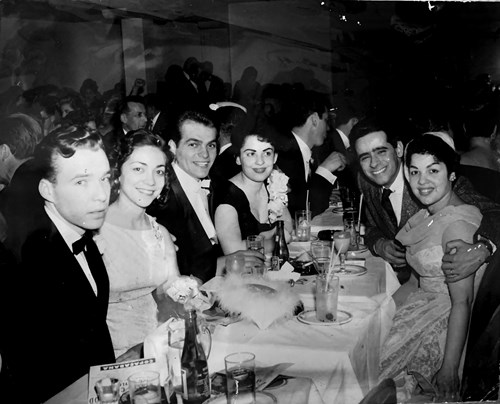
Mom's parents being glam, 1957 at the Copacabana

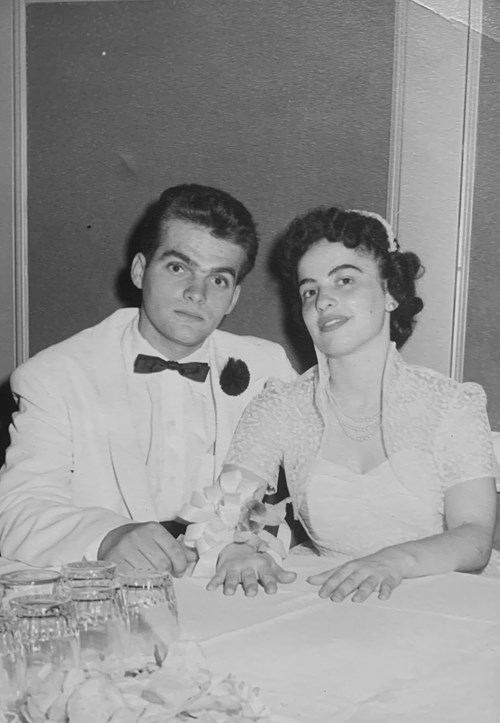
Mom's Puerto Rican Mom and Italian Dad, 1957 wedding

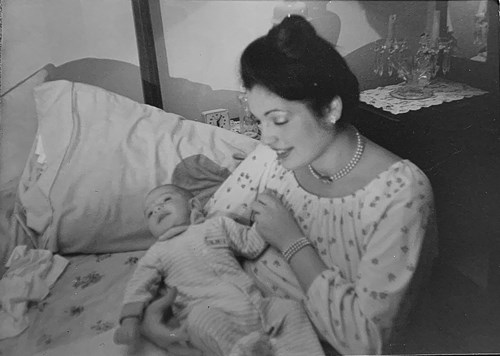
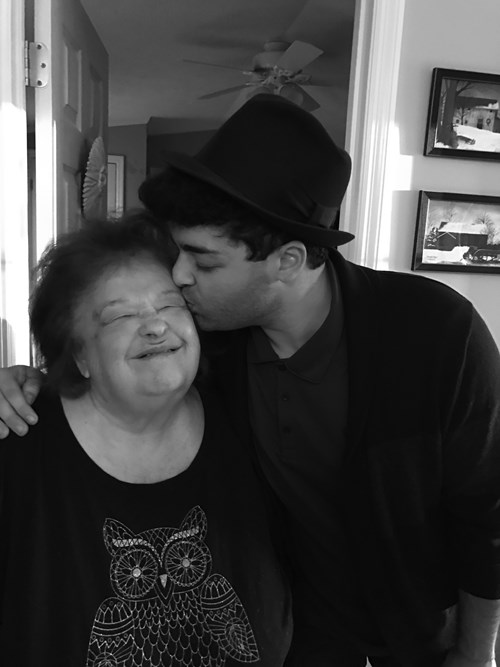
Author and Mom, 1988

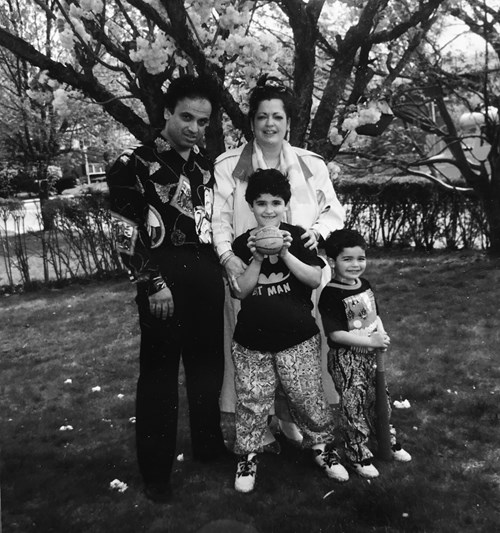
The author's immediate family, 1990

Author and maternal grandmother, 2018

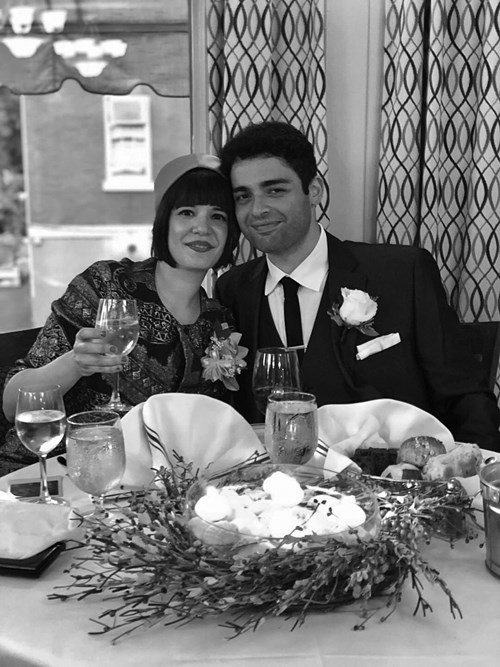
Author and wife, Michelle, wedding day 2019
An American life, joined in progress, shared for our pleasure and our cultural broadening.
Monday, February 7, 2022
LOVE & SAFFRON: A Novel of Friendship, Food, and Love, a one-sitting buffet of reading goodness
LOVE & SAFFRON: A Novel of Friendship, Food, and Love
KIM FAY
G.P. Putnam's Sons
$24.00 hardcover, available TODAY!
Rating: 3.75* of five
The Publisher Says: When twenty-seven-year-old Joan Bergstrom sends a fan letter—as well as a gift of saffron—to fifty-nine-year-old Imogen Fortier, a life-changing friendship begins. Joan lives in Los Angeles and is just starting out as a writer for the newspaper food pages. Imogen lives on Camano Island outside Seattle, writing a monthly column for a Pacific Northwest magazine, and while she can hunt elk and dig for clams, she’s never tasted fresh garlic—exotic fare in the Northwest of the sixties. As the two women commune through their letters, they build a closeness that sustains them through the Cuban Missile Crisis, the assassination of President Kennedy, and the unexpected in their own lives.
Food and a good life—they can’t be separated. It is a discovery the women share, not only with each other, but with the men in their lives. Because of her correspondence with Joan, Imogen’s decades-long marriage blossoms into something new and exciting, and in turn, Joan learns that true love does not always come in the form we expect it to. Into this beautiful, intimate world comes the ultimate test of Joan and Imogen’s friendship—a test that summons their unconditional trust in each other.
A brief respite from our chaotic world, Love & Saffron is a gem of a novel, a reminder that food and friendship are the antidote to most any heartache, and that human connection will always be worth creating.
I RECEIVED A DRC FROM THE PUBLISHER VIA NETGALLEY. THANK YOU.
My Review: First, read this:
We’ve never had mussels before. I’ve always thought of them as freeloaders clinging where they’re not wanted, and you must agree, their beards are unappetizing.
–and–
Our ten days in Paris felt like the blink of an eye. Or a dream. An elegant, buttery, wine-soaked dream.
–and–
When a new experience comes into my life, it doesn’t feel real anymore until I share it with you.
I'll be honest: I asked for this DRC because the subtitle uses the series (or Oxford) comma correctly, which is as promising a start as I can conjure in these degenerate punctuation-heretical times, and the tale is told in epistolary format. I am in the mood for a story of friendship. I am always gruntled by the effective use of epistolary storytelling. And I deeply love reading about people sharing their love of food.
You'll be looking up at that not-quite-four-star rating about now. I can explain.
All of my initial conditions were met, and met fully. I got the epistolary format used well: These are friends by post. There are gaps, lacunae in communicating with each other, and that enables the author to move the pace along in a more natural way. The fact that each letter was a crafted document, a thing one sat down to make and to serve a purpose...evoking in the friend an emotional response...that requires thought. Attention. Serious choice-making. That was evident in the prose (see above).
In Part I, the friendship developed from an initial fan letter that touched Imogen, the recipient, because of its inclusion of a packet of saffron. Now's the time to talk about the 1960s in the USA. As the world is now, a packet of saffron is a welcome gift because it's not cheap. As the world was then, a gift of a narwhal tusk would have about the same impact as saffron. "Whatinahell's that?" Imogen, who can dig clams or hunt an elk, hasn't tasted fresh garlic. In her life. Imagine the impact of SAFFRON! And no, those under 50, this wasn't in the least bit unusual.
I grew up in a household that had WAY more in the way of culinary adventurousness than the average. My parents were older when I was born, we lived near San Francisco, California, which had Chinese, Italian, Mexican, Japanese cuisines and ingredients all over, and my mother loved to experiment with weird, Gourmet-magazine type dishes. (Tuesday dinner, not so much. Feasts, though....) Then my mother and I moved to South Texas, where she hailed from, and I found the goddesses' natural food: Tex-Mex. BUT no one in 1967 Mercedes, Texas, had ever seen a fresh apricot or tasted General Tso's chicken. And that is where I can relate to this story: Joan is possessed of knowledge that Imogen simply doesn't have, or have any way to know she lacks.
So this cultural exchange is one I loved reading about. The historical moment...Cuban Missile Crisis, JFK assassination, the Beatles on Ed Sullivan ("a rrrrrrilllllly big shew!")...was the background of my childhood. They write to each other about it all. They write to each other about their cooking adventures. Single Joan has a lot to offer long-married Imogen because she (figuratively) listens and isn't invested in a particular outcome. What Imogen offers Joan is the simple, invaluable resource of being older, and experienced, and generous with her time, too. In a long novella/short novel, the two forge a perfectly balanced and genuinely moving friendship.
And now about those missing stars.
I am not nit-picking when I say that a book with the delicious recipes in it that this book has (the carne asada!!) needs to hyperlink them somewhere. I don't have a final copy, of course, but the paper copies don't appear to have an index either. (This is as of 6 February 2022, 6pm EST, when I went trolling for reviews last.) Yes yes yes, one can highlight them on the Kindle, but this is an oversight that would make the book even better if it were addressed. There's one quarter star.
Francis, Imongen's husband, blossoming into a passionate foodie during the course of the correspondence is a pleasure, insofar as it's presented to us...but Imogen is reporting it, of course, as it's an epistolary novel between Joan and herself. It's a feature, not a bug; but it left me feeling distanced from Imogen's lived life. I don't think this was a deal-breaker because epistolary...it's in the description...but I do think its impact on Imogen wasn't able to be explored quite as well as would've served the tale told. A quarter-star, and a sigh of regret for a too-short third-person catch-up in Part II.
Joan's life as a secretary at Rexall Drugs was, of course, the kind of job a girl (in the lingo of the time) could expect to get. Imogen encouraging her, boosting her, being there for her as she worked through anxiety and internalized misogyny and pursued her dreams of life in the newspaper world, was just a balm.
But then what? I didn't feel Joan got the spotlight enough as time went by...and that is down, again, to the format chosen to tell the story. But it felt unfinished as it was, with a too-short third-person wrap-up for Joan, too. Not because it wasn't a complete story! Because there was more story I wanted. Another quarter star forgone for expectations raised but not quite met.
When we return to epistolary format in Part III, the magic's worn off...the sweet, nostalgic sense of familiarity at a safe remove isn't there any more. But that isn't a deal-breaker so much as the force of the narrative doesn't have a chance to recover, so the half-star goes because, for the very first time, I noticed myself noticing I wasn't as ensorcelled as I started the read being. (Maybe if the third-person narratives had been diary entries...? I am Monday-morning quarterbacking here, so I'll stop.)
What I'll end on is the sheer pleasure of reading that this one-sitting tale offered. I think any book group that needs to lighten the tone and pick up the pace after a tough read should get this book onto their lists ASAP. I think pandemic-weary people whose lives have shifted into a new configuration through discovering food and cooking would like this for a February Sunday afternoon's pleasure. Most of all, I want to assure anyone thinking "this old man's a nutbar for pushing the read at me with this 3-3/4-star rating" is correct. This old man is, in fact, a nutbar. And one whose purpose it is to tell you what's worth reading.
This is worth reading.
Sunday, December 27, 2020
2020...the year the world stopped for a minute
THE DARK FANTASTIC: Race and the Imagination from Harry Potter to the Hunger Games
EBONY ELIZABETH THOMAS
NYU Press
$16.95 trade paper, available now
Rating: 4* of five
Many thanks to Edelweiss+ and NYU Press for my DRC of this book
This past November 1st, Author Ebony Elizabeth Thomas won the 2020 World Fantasy Special Award for Professionals in recognition of this title's outsized importance in its field. Any in-depth review of the book will simply be retyping it; the author is adept at stating home truths in trenchant, relatable ways: "Maybe it’s not that kids and teens of color and other marginalized and minoritized young people don’t like to read. Maybe the real issue is that many adults haven’t thought very much about the radicalized mirrors, windows, and doors that are in the books we offer them to read, in the television and movies we invite them to view, and in the fan communities we entice them to play in." It is a wonder to find someone as adept as Octavia Butler was at making the nature of the wrongs embedded in our lush, vibrant SF literary world clear and present and, as a result, actionable. If you're white, love to read fantasy, science fiction, or horror fiction, this is a must read.
++++++++++++++++++++++++++++++++++++++++++++++++++++++++++++++++
THE SECRET LIFE OF GROCERIES: The Dark Miracle of the American Supermarket
BENJAMIN LORR
Avery
$27.00 hardcover, $15.99 ebook editions, available now
Rating: 4* of five
Many thanks to Edelweiss+ and Avery for my DRC of this book
In a five-year odyssey through the world created to feed American consumers, Author Lorr sees the behind-the-scenes costs of the cornucopia you visited weekly if not daily....and now likely use the internet to have delivered to you. The appalling conditions of Asian slave laborers, the crushing debts of US truckers, and the battle to prevent consumers from knowing the true cost of cheap food come flying at you as fast as you can turn the pages. Those of us holed up in isolation need to read about those who have no choice but to risk plague to keep us from the risks of stepping outside. Given how many discovered the sheer creative joy of manipulating our food to taste even better might've slightly reduced our own carbon footprints...but others took up our slack. My dote Mary Roach (Stiff, Bonk, Packing for Mars) said it best in her blurb:
The modern shopper wants groceries that are ethical, sustainable, humane, affordable, fresh, and convenient. But as Lorr discovers, the costs of our demands are recouped from the bottom of the food chain: debt-ruined truckers, foreign slave labor, and Whole Foods workers in our own communities — the people whose lives Lorr shared (and sometimes lived) for weeks or months. Does it sound grim? It’s not! The Secret Life of Groceries is a terrific read. The stories flow, and the hard truths are seasoned with wit and hope.
++++++++++++++++++++++++++++++++++++++++++++++++++++++++++++++++
VESPER FLIGHTS
HELEN MACDONALD
Grove Press
$27.00 hardcover, available now
Rating: 3.5* of five
Many thanks to NetGalley and Grove Press for my DRC of this book
Alone among the literate world, I was made uncomfortable by the relationship between naturalist Macdonald and Mabel the formerly wild hawk told in H is for Hawk. These essays on many topics are written in Author Macdonald's justly celebrated elegant prose, and include so many aperçus that my commonplace book blew up. If you don't share my unease with people venerating wildness while taming it out of a fellow being, you'll enjoy this collection without my unshakeable unease.
++++++++++++++++++++++++++++++++++++++++++++++++++++++++++++++++
CLIMATE CHANGE AND THE HEALTH OF NATIONS: Famines, Fevers, and the Fate of Populations
ANTHONY J. MCMICHAEL
Oxford University Press
$26.95 trade paper, available now
Rating: 4* of five
Many thanks to NetGalley and Oxford University Press for my DRC of this book
I wanted to see what the world has done to challenge us as hard as unchecked climate change is doing at this very moment. With a startlingly immense grasp, the scope of Humankind's long fight to survive despite the ways Earth changes is calmly but urgently expressed by Author McMichael. Anyone who loves to learn the ins and outs of a complex topic with a master teacher will lap this book up. The regime change due in the US on 20 January 2021 is the perfect time to learn why we should force our lawmakers to focus on responding effectively to climate change's many effects on health, wealth, and food security.
Wednesday, March 22, 2017
MY LIFE IN FRANCE, culinary goddess Julia Child tells enough to keep the pages turning...but not all

MY LIFE IN FRNACE
JULIA CHILD (with Alex Prud'homme)
Anchor Books
$16 trade paper, available now
Rating: 4* of five
The Publisher Says: Julia Child single handedly awakened America to the pleasures of good cooking with her cookbook Mastering the Art of French Cooking and her television show The French Chef, but as she reveals in this bestselling memoir, she didn't know the first thing about cooking when she landed in France. Indeed, when she first arrived in 1948 with her husband, Paul, she spoke no French and knew nothing about the country itself. But as she dove into French culture, buying food at local markets and taking classes at the Cordon Bleu, her life changed forever. Julia's unforgettable story unfolds with the spirit so key to her success as a cook and teacher and writer, brilliantly capturing one of the most endearing American personalities of the last fifty years.
My Review: Truth in advertising had no greater champion than Julia Child. Her book is called exactly and precisely what it is: The narrative of her life in France. She begins her book on November 3, 1948, with the Child family landing at Le Havre, getting into their gigantic Buick station wagon, and motoring off across northern France towards Paris. They stop at thirty-six-year-old native Californian Mrs. Child's first French restaurant, La Couronne, where her husband Paul (already fluent in French from his first stint living there more than 20 years before) consults with M. Dorin, the maitre d', and decides the young marrieds (relatively speaking, as he's 46 by then) will have a sole meuniere with a glass of wine! I mean! A nice Republican-raised gal from Pasadena, California, drinking wine with lunch! Who heard of this?! Mais certainement not Mme. Child, nee McWilliams!
It was the beginning of a life-long love affair between Julia Child and la belle France, and Julia Child and la cuisine Francaise. It led to several books, several TV series, and a long, happy life spent teaching, teaching, teaching. Mme. Child had found her metier, at close to forty, in a day and time where living past sixty-five was ** considered to be ancient. In the process, the person she became changed the American, and possibly the world as a result, culture surrounding food. Yet Julia Child wrote this book with her husband's great-nephew Alex Prud'homme, who tells us in his brief Foreword that getting his garrulous old relative to open up about the feelings and secrets that make up the majority of any human life. His degree of success was formidable, given the generational and gender-induced reticence he fought against to extract the juicy bits from her.
Bravo, M. Prud'homme, et merci bien par tout le faire.
Julia Child was a fixture around our house when I was young. I got the TV-watching habits I carry with me to this good day at a tender age, and part of the formative process was The French Chef. My mother didn't like Mrs. Child much. She was a fan of M.F.K. Fisher's food work, which wasn't in sympathy with Mrs. Child's careful and precise measuring and nice and accurate timing. Mama was a feast-maker, not a dinner-preparer, and that's why she watched Julia Child programs.
I learned about enthusiastic appreciation of food from my mother and Mrs. Child. I was never a picky eater, and only rejected a few foods. (I still hate corn on the cob.) It always seemed like the ladies were having so much fun making these weird dishes! It made sense to me that it would be fun to eat them, and so it proved to be.
In reading this memoir, I immersed myself in the flow of Child's later-life awakening to the joy of food and the sheer exhilaration of preparing special and delicious and carefully thought-out meals for one's loved ones. While I understand the co-author's challenge in balancing the need to afford the famous personality privacy against the buying public's desire to know the dirt, I can only lament that Prud'homme either didn't or couldn't press Child on the topic of her childlessness. I suspect burying herself in research and in obsessive experimentation was a means of assuaging her sadness at not being a mother. She was, or at least she is painted in this book as being, a very nurturing person, and given the prevailing attitudes of the era, it is unlikely that this absence did not cause her pangs of regret. I would have liked to see some exploration of that, mostly because I think glittering surfaces (which this book limns in loving detail) are even more beautiful when seen with shadows. It's like sterling silver flatware: When dipped into a cleaning bath as opposed to hand-polished, it's true that all the tarnish comes off, but all the character does too, and the pattern is flat and blah for lack of a bit of dark contrast that is left by the more labor-intensive hand polishing method.
The delight of the book was in Child's almost orgasmic recollections of the foods and wines she and her dearly beloved husband Paul Child ate and drank across the years. In the course of learning to cook the haute bourgeoise cuisine that she made famous in her native land, Child came alive to the joys and thrills of sight, smell, and taste in a way that only truly delicious food can cause a person to become. It was the positive counterpoint to her manifold frustrations in collaborative cook-bookery. The travails of preparing the Magnum Opus that is Mastering the Art of French Cooking simply don't do enough to make the author come off the page and join me in my reading chair. I rate books based on this type of measure, this degree of ability to enfold and immerse me in the narrative and the emotional reality of the tale being told. I thoroughly enjoyed this book, but I wasn't swept into it and away to France circa 1950, and that was what I came to the read expecting to happen. In fact, when I saw the film partially based on this book, Julie & Julia, I was completely swept away and eager to read the source material.
In the end, I got more out of watching Meryl Streep enact Julia Child than I did reading Julia Child reporting herself. I was disappointed.
And hungry.
Monday, April 28, 2014
"Food" for Thought...and Possibly Bulimia

ANYTHING THAT MOVES: Renegade Chefs, Fearless Eaters, and the Making of a New American Food Culture
DANA GOODYEAR
Riverhead Books
$27.95 hardcover, available now
Rating: 3.5* of five
The Publisher Says: A new American cuisine is forming. Animals never before considered or long since forgotten are emerging as delicacies. Parts that used to be for scrap are centerpieces. Ash and hay are fashionable ingredients, and you pay handsomely to breathe flavored air. Going out to a nice dinner now often precipitates a confrontation with a fundamental question: Is that food?
Dana Goodyear’s anticipated debut, Anything That Moves, is simultaneously a humorous adventure, a behind-the-scenes look at, and an attempt to understand the implications of the way we eat. This is a universe populated by insect-eaters and blood drinkers, avant-garde chefs who make food out of roadside leaves and wood, and others who serve endangered species and Schedule I drugs—a cast of characters, in other words, who flirt with danger, taboo, and disgust in pursuit of the sublime. Behind them is an intricate network of scavengers, dealers, and pitchmen responsible for introducing the rare and exotic into the marketplace. This is the fringe of the modern American meal, but to judge from history, it will not be long before it reaches the family table.
Anything That Moves is a highly entertaining, revelatory look into the raucous, strange, fascinatingly complex world of contemporary American food culture, and the places where the extreme is bleeding into the mainstream.
My Review: I will try almost anything once. Almost anything, stuff like eyeballs and mountain oysters and (unknowingly) dog. Mountain oysters are tasty, eyeballs are gross, and I vomited for an hour after being told the greasy, slick, icky meat was dog.
There is stuff that these damnfool eejits are *paying*money*for* that there is not a single, solitary, remote, fat, or slim chance that I would consent to sit at a table with, still less eat.
Actually, I could stop there and the review would be complete. But there's a bit more I'd like to say. Dana Goodyear writes for The New Yorker, and it shows. Her phrases are often quite euphonious, but in the end more snacklike than mealtimey:
Appetites are hard to legislate, and people usually end up doing what they want to do. The year {Upton} Sinclair wrote The Jungle, he got his first summer cold. It was the beginning of the score of ailments that led him to John Henry Kellogg's Battle Creek Sanitarium (sic), which promoted vegetarianism, and to the writings of Horace Fletcher, "The Great Masticator," who prescribed chewing your food extra-thoroughly.I stopped subscribing to The New Yorker for that reason. Okay, back in the Shawn era we had them memorable 10,000 words on zinc, its extraction, refinement, and many uses. But now we have ephemeral, mildly interesting stuff like...
...like...
...and there you have it. The chapters in this book could have been entitled "Notes from LA" and I would've skipped gaily past them, being largely uninterested in when not actively hostile to LA. And I would've been not one smidgin less well-rounded a person.
Goodyear's entertaining moments describing the feuds and rivalres among these freaky-deaky foodies are pleasant enough. Her description of eating some of the offal these folks consume made me mildly queasy, and never...not once...made me curious enough to try some of the disgusting crap the effete of palate and overloaded of wallet gourmands herein profiled savored.
I received this copy from the publisher via LibraryThing's Early Reviewers program. That made this review possible for me to write without resorting to invective, vituperation, and contumely. Had I spent $27.95 on it, I''d be so moltenly angry even yet that it would be unwise to approach me without something normal and wholesome like a double cheesburger with bacon, mayo, and onions plus an extra-large fries prominently displayed as a token of goodwill.
Make that burger a triple.
This work is licensed under a Creative Commons Attribution-NonCommercial-ShareAlike 3.0 Unported License.
Friday, July 12, 2013
Honey, Olives, Octopus: Adventures at the Greek Table by Christopher Bakken
(illustrated by Mollie Katzen)
Rating: 4* of five
The Publisher Says: Combining the best of memoir, travel literature, and food writing, Christopher Bakken delves into one of the most underappreciated cuisines in Europe in this rollicking celebration of the Greek table. He explores the traditions and history behind eight elements of Greek cuisine―olives, bread, fish, cheese, beans, wine, meat, and honey―and journeys through the country searching for the best examples of each. He picks olives on Thasos, bakes bread on Crete, eats thyme honey from Kythira with one of Greece’s greatest poets, and learns why Naxos is the best place for cheese in the Cyclades. Working with local cooks and artisans, he offers an intimate look at traditional village life, while honoring the conversations, friendships, and leisurely ceremonies of dining around which Hellenic culture has revolved for thousands of years. A hymn to slow food and to seasonal and sustainable cuisine, Honey, Olives, Octopus is a lyrical celebration of Greece, where such concepts have always been a simple part of living and eating well.
I RECEIVED A DRC FROM THE PUBLISHER VIA EDELWEISS+. THANK YOU.
My Review: Recipes galore...one per chapter...and lush descriptions of the author’s extensive travels around the foodie paradise that is Greece.
The entire read was a fever dream of drooling and craving and meal-planning, then scrapping the plans because no one else wants this cuisine where I am. The ways that food is entwined into Hellenic culture no matter where it finds itself rooted make me think that the whole Hellenic world is onto something all of us would do well to attend to: center the glorious gifts of food culture in your daily life, do not stop being aware of what and how you are eating, use food and its rituals to strengthen your ties to others with pleasant, ongoing memories.
Bakken bring us with him on a journey in space, as well as time, delineating the cultural origins of the food rituals he brings to us. He is careful to offer his gleaned knowledge as an eager amateur, not a native expert, which sensitivity made me trust his insights more than a more learnèd, academic approach would have. I was a little afraid I would find him more on the Subject Matter Expert side, seeing as this is a book from a university press, but that was never for a moment his authorial stance.
What else would you ask for? Inquiring mind eats his way around one of the West’s oldest cultures, brings us at home his findings, and shares a trained mind’s obervations. All the way around it is a win!
Subscribe to:
Posts (Atom)