Showing posts with label New York setting. Show all posts

Monday, May 6, 2024

YOU SHOULD BE SO LUCKY, and so he should...and what fun getting him there


YOU SHOULD BE SO LUCKY
CAT SEBASTIAN

Avon Books
$18.99 trade paper, available tomorrow

Rating: 4.5* of five

The Publisher Says: An emotional, slow-burn, grumpy/sunshine, queer mid-century romance for fans of Evvie Drake Starts Over, about grief and found family, between the new star shortstop stuck in a batting slump and the reporter assigned to (reluctantly) cover his first season—set in the same universe as We Could Be So Good.

The 1960 baseball season is shaping up to be the worst year of Eddie O’Leary’s life. He can’t manage to hit the ball, his new teammates hate him, he’s living out of a suitcase, and he’s homesick. When the team’s owner orders him to give a bunch of interviews to some snobby reporter, he’s ready to call it quits. He can barely manage to behave himself for the length of a game, let alone an entire season. But he’s already on thin ice, so he has no choice but to agree.

Mark Bailey is not a sports reporter. He writes for the arts page, and these days he’s barely even managing to do that much. He’s had a rough year and just wants to be left alone in his too-empty apartment, mourning a partner he’d never been able to be public about. The last thing he needs is to spend a season writing about New York’s obnoxious new shortstop in a stunt to get the struggling newspaper more readers.

Isolated together within the crush of an anonymous city, these two lonely souls orbit each other as they slowly give in to the inevitable gravity of their attraction. But Mark has vowed that he’ll never be someone’s secret ever again, and Eddie can’t be out as a professional athlete. It’s just them against the world, and they’ll both have to decide if that’s enough.

I RECEIVED A DRC FROM THE PUBLISHER VIA NETGALLEY. THANK YOU.

My Review
: I'm a Cat Sebastian stan. Her writing chops, her eye for a story, her politics...all *chef's kiss* in my experience. This derfinitely is, please note, a slow-burn love story. I don't think this is a bug, rather a feature; I'm pretty au fait with what happens between men in bed. I'm as interested in how they got there, and why, as in what it is they're gettin' up to.

The fun in this read is that, once the guys get their bodily freak on, I believe that they'll be able, and willing to stay there! These relationships, the ones you can actually picture as real and lasting, are all too rare in fiction...let alone in romantic fiction. It is not, I hurry to reassure the bodyloathers, a meaty, intimately observed intimacy; more of a noises-off kind of affair, where we know what happened and now we see what that brought to Mark and Eddie. One-handed reading is not really Author Cat's stock-in-trade, she hasn't started now.

That being my expectation, and it being met, next point of tension for many readers (including me) is the elephant in the room of any midcentury m/m story: Outing. A reporter and a baseball phenom in physical intimacy would've had a lot of anxiety about being seen to be...a little too close, a bit off in the macho world of baseball...because it would uneash the horrors of public, untrammelled homophobia on the men. This was, after all, the time of The Lavender Scare.

So this backdrop means, in my reading, the HEAs and even HFNs many writers engineer for two men being publicly together in this time-period ring hollow. "That could not happen!" I think, all suspension of disbelief flying away on noisy bat-wings of knowledge. As always, Author Cat spares me the discomfort by making these two behave circumspectly. Mark, a reporter, knows the Power of the Press, and respects the cultural norms to avoid awakening it. He's also just lost his longtime love, and so isn't exactly in a huggy-smoochy frame of mind; Eddie's in his first-ever existential crisis..."I can't do this thing I get praise and an identity from anymore! Help!"...so he's, well, not gonna rock the boat. Such a good way to ensure there's layers of meaning behind their period-appropriate decorous public demeanor.

What makes any story centered around grief readable is hope. The men here don't have a path forward, can't see through the fog of the present into a brighter, better-defined future. Only as they learn to trust each other's love and support as real, solid stones capable of being made into a foundation do they find the ease they're seeking. That was the payoff I needed from this unlikely duo's coming-together: The sense that, to their mutual surprise, they had found together the path that neither had been able to see alone.

In the end, these two find their happiness in their connection. They are, it felt to me, solidly, enduringly connected and will weather their future storms better for being together. Now, how often do fictional people draw out that level of thought and that depth of interest? For anyone who hasn't read Author Cat's earlier work, it might sound surprising that this has happened. I assure you who haven't had the pleasure that this is a long-term feature of all her stories.

Lastly, I hope you'll read this, and resonate to it. It is a very clear statement of a deep, abiding truth of the experience of being Other:
It’s not just the burden of continually lying, it’s keeping your existence a secret. When the world has decided that people are supposed to be a certain way, but you’re living proof to the contrary, then hiding your differences is just helping everybody else erase who you are.

This book, in a period-appropriate way, presents two loving souls whose socially unacceptable love and connection truly prevent them from being erased.

Friday, January 5, 2024

THE CLARE CARLSON SERIES: BEYOND THE HEADLINES & BROADCAST BLUES


BEYOND THE HEADLINES
R.G. BELSKY

Oceanview Publishing
$26.95 hardcover, available now

Rating: 3.25* of five

The Publisher Says: Dashed dreams: she wanted to run for president one day, now she's dead at 20

When Riley Hunt—a beautiful, smart, popular student at Easton College in Manhattan—is brutally murdered, it becomes a big story for TV newswoman Clare Carlson.

After days of intense media coverage, a suspect is caught: a troubled Afghanistan war veteran with a history of violent and unstable behavior. The suspect's mother, however, comes to Clare with new evidence that might prove her son's innocence.

As Clare digs deeper into the puzzling case, she learns new information: Riley had complained about being stalked in the days before her murder, she was romantically involved with two different men—the son of a top police official and the son of a prominent underworld boss—and she had posted her picture on an escort service's website offering paid dates with wealthy men.

Soon, Clare becomes convinced that Riley Hunt's death is more than just a simple murder case—and that more lives, including her own, are now in danger until she uncovers the true story.

I RECEIVED A DRC FROM THE PUBLISHER VIA NETGALLEY. THANK YOU.

My Review
: The inappropriate use of sexuality slacks off in this entry. That was a relief. The main thing I got from the murder victim's life story, as it unfolded, was the fact that she was deeply shallow. Appearances and attention were her gods. She pursued her dream of being famous all her life; it all bit her in the butt...hard. I think the kind of uses the young woman made of her body were overplayed, but far from unrealistic. This is not uncommon in the 2020s for men or for women, to earn money from offering sexual services. We seem to be returning to the Victorian era, just being more open about it.

I'm pretty sure Clare's got oppositional defiant disorder. I agreed with her stance of refusing to obey her interfering boss's orders to make the facts of the young woman's case fit the narrative of danger and violence running rampant. The sacrificial victim chosen to take the blame is, Clare is sure, innocent; she gets busy using her investigative skills to ferret out the truth. It is, as expected, not related to the narrative she's been told to push.

There was a new guy in the mix for Clare, and for once, he wasn't a conflict of interest and super inappropriate for Clare to hook up with. I don't much like the emphasis the male author puts on his female character's sexuality, though the lack of the conflict of interest made me more willing to just...let it go.

Author Belsky is a very able, witty writer of sentences. I am less willing to engage with his sexual subject matter. Making it into a marker of crime, or into a professional quid pro quo, isn't a trope I enjoy reading too terribly much. I've got one more to read to be current on the series. Let's see how that one hits me.

+++++++++++++++++++++++++++++++++++++++++++++++++++++++++++++++++


BROADCAST BLUES
R.G. BELSKY

Oceanview Publishing
$27.95 hardcover, available now

Rating: 3* of five

The Publisher Says: Wendy Kyle took secrets to her grave— now, Clare Carlson is digging them up

New York City has no shortage of crime, making for a busy schedule for TV newswoman Clare Carlson. But not all crimes are created equal, and when an explosive planted in a car detonates and kills a woman, Clare knows it' ll be a huge story for her.

But it' s not only about the story— Clare also wants justice for the victim, Wendy Kyle. Wendy had sparked controversy as an NYPD officer, ultimately getting kicked off the force after making sexual harassment allegations and getting into a physical altercation with her boss. Then, she started a private investigations business, catering to women who suspected their husbands of cheating. Undoubtedly, Wendy had angered many people with her work, so the list of her suspected murderers is seemingly endless.

Despite the daunting investigation, Clare dives in headfirst. As she digs deeper, she attracts the attention of many rich and powerful people who will stop at nothing to keep her from breaking the truth about the death of Wendy Kyle— and exposing their personal secrets that Wendy took to her grave.

I RECEIVED A DRC FROM THE PUBLISHER VIA NETGALLEY. THANK YOU.

My Review
: No more; I'm tapping out. The way the victim was, yet again, involved in the negative side of a sex-linked industry...sleuthing for wives who want to catch their husbands cheating on them for an advantage during divorce proceedings...is not going to work for me.

Clare's a wildly opportunistic, abrasive person. That is fine with me, takes one to know one. What I find really hard to credit is that any corporate structure in today's world would harbor such a person in their senior ranks. Not because it's a bad way to be, but because routinely defying one's boss is not well tolerated in the C Suite.

At the end of the day I want to read about fictional sleuths who follow their own compasses believably enough that I don't have to remind myself that it's a novel too often. I really feel sad that I don't have that sensation in this series because the author is genuinely amusing, often enough laugh-out-loud funny. But the overemphasis on the negative uses of sex and the main character's apparent inability to use the sandpaper on her tongue to round off some of her spikier corners make this series just over the edge of my suspension of disbelief line.

Well, it was a darn good attempt for me. I wish it had worked better.

+++++++++++++++++++++++++++++++++++++++++++++++++++++++++++++++++

Monday, December 11, 2023

GLOBAL QUEENS: An Urban Mosaic, nostalgia for the ex-New Yorker or inspiration for the aspiring New Yorker


GLOBAL QUEENS: An Urban Mosaic
JOSEPH HEATHCOTT

Empire State Editions/Fordham University Press
$34.95 hardcover, available now

Rating: 5* of five

The Publisher Says: A vibrant exploration of the everyday life of one of the most diverse places in the world: Queens, New York.

Remade by decades of immigration, Queens, New York, has emerged as an emblematic space of social mixing and encounters across multiple lines of difference. With its expansive subdivisions, tangled highways, and centerless form, it is also New York’s most enigmatic borough. It can feel alternately like a big city, a tight-knit village, a featureless industrial zone, or a sprawling suburban community. Through more than 200 contemporary photographs, Joseph Heathcott captures this multifaceted borough and one of the most diverse places in the United States.

Drawn from more than a decade of roaming around Queens and snapping photos, Heathcott conveys the juxtaposition of the ordinary and the extraordinary, the mundane and the surprising, and the staggering social diversity that best characterizes Queens. At the heart of the story are two separate but entwined histories: the rapid expansion of the borough’s built environment through the twentieth century, and the millions of people who have traveled from near and far to call Queens home. Newcomers have had to confront discrimination, white racial hostility, legal challenges, and language barriers. They have had to struggle to find adequate housing, places to worship, and jobs that pay enough to survive. And they have done all of this in the borough’s jumbled collection of neighborhoods, housing types, civic and religious institutions, factories and warehouses, commercial streets, and strip malls.

Heathcott makes primary use of documentary photography to bring these social and spatial realities of everyday life into relief. He also draws on demographic data, archival sources, planning documents, news stories, and reports. The result is a visual meditation on Queens that provides clues about an urban future where notions of citizenship and belonging are negotiated across multiple lines of difference, but where a sense of ”getting along”—however roughly textured and unfinished—has taken hold in the everyday life of the streets.

I RECEIVED A DRC FROM THE PUBLISHER VIA EDELWEISS+. THANK YOU.

My Review
: The city I've lived in, or longed to return to, since the 1980s is always entered via the Borough of Queens: Both airports are there, and we're not going to count Newark as it is its own major city and port of entry for all of New Jersey's international flyers. It's the biggest borough, it's got the most oceanfront exposure, it's always been a huge part of the immigrant experience of New York City for many, possibly most, ethnic minorities getting a foothold in the Land of Opportunity.
The side of New York City that most who visit, and many who live in, it just don't think about...lots of natural areas still exist that aren't carefully manicured parks.

To those who live here in the city, or as I do now, mere meters from Queens (Nassau County WAS Queens until it seceded in 1901 for depressingly racist reasons), think of it as the borough of homes:
...I think gemütlich is a great word, and one that pretty much *is* Queens.

The place is an educational hub, having numerous university campuses, and a separate public library system that serves a tremendously large (2.4 million people) and diverse population:
...as well as being very close and convenient to the employment and entertainment hub that is Manhattan:
...so it's no wonder so very many people who come here end up in the already-established immigrant communities, and the comparatively affordable housing, that this global city offers.

One of the unappealing human characteristics is the need to Other people with slighting nicknames. A common one, from the Manhattan of my youth, was to call the people who came to our home patch (as we saw it) "Bridge and Tunnel Kids" regardless of their age. The bridges and tunnels referenced here are part of the astoundingly efficient and well-designed transportation infrastructure of the borough. It's all a lot prettier than you've been led to believe, too:
...and works a lot better than many cities with much smaller populations can manage. After all, the bridges and tunnels don't just bring the millions of Queens residents to and from different destinations...they serve millions from Long Island, millions from Brooklyn, a million-plus from Manhattan, and a few hundred thousand from Staten Island.

New York City is a place so many aspire to live, for so many reasons; a gift to one of them that you know wouldn't come amiss. The sad soul who left, but would like to come home, is also an apt recipient. The stories about Queens, the social history aspects of the book, also make it a good gift idea for your scholarly pal who talks a lot about how we live in these weird constructs called "cities" without thinking about how they work. Not for nothing did this book win The David R. Coffin Publication Grant.

Beautiful and educational, informative and entertaining...a great package.

Monday, July 31, 2023

A CRIME OF SECRETS (A Donner & Longstreet Mystery #1) lesbian-led Gilded Age New York series you need to read


A CRIME OF SECRETS (A Donner & Longstreet Mystery #1)
ANN APTAKER
Bywater Books
$9.99 ebook editions, available now

Rating: 4.5* of five

The Publisher Says: New York City, 1899.

A city on the cusp of a new century. A city growing taller, faster, a city of new inventions, new ideas—and old dangers on its shadowy streets where crime, misery, and murder lurk.

When Pauline Godfrey, a young woman embodying the coming modern age, is viciously murdered, her throat cut, private inquiry agents Finola “Fin” Donner and Devorah Longstreet must navigate a world of violence and passion, lust and betrayal, where duty is twisted into bitter obedience and love is soiled.

Fin, a tough survivor of the dockside slums, and her beloved companion, the elegant, intellectual socialite Devorah, probe deep into the festering secrets of a family, the rot and corruption of the police department, and the sinister world of the city’s thieves, whores, and thugs to find the killer.

I RECEIVED A DRC FROM THE PUBLISHER VIA EDELWEISS+. THANK YOU.

My Review
: Sapphic sleuths in Gilded Age Manhattan? ANN APTAKER penned?! Sign me right the *bleep* up! Do I particularly care whose murder this concerns? Nope! I want the pleasure of watching as Author Aptaker upends the worldview of the hoi polloi with two people who decline to participate in their tedious little black-or-white, top-or-bottom nuanceless tosh.

That, comme d'habitude, she does. *happy sigh*

A new historical fiction crime series is always a welcome development for me.I like the QUILTBAG worlds that they inhabit to come back alive and crack the false front of heteronormative society's homogeneity without our homosexuality into flinders. Author Aptaker has done this before with the Cantor Gold Crimes series in New York's pre-Stonewall art world. They're refreshingly nonconformist and still part of the long mystery novel tradition of upholding ma'at.

I don't use "law and order" here, because cruel, immoral laws are passed daily all over the world, and vicious repressive order maintained by the small-souled pursey-lipped fear-driven fools that abound in every single time period of human history. Ma'at means something altogether more agreeable to me (and I suspect to most others): The rightness and fitness of things in the world; the always joyous sense of your world running well. Ma'at herself is the center of the Afterlife as the one who weighs the dead person's heart against her feather; if the heart is heavier than the feather, that person is utterly expunged; is prevented thereby from participating in an eternal existence of harmony and pleasure. I wonder often how many righteous crusaders for Truth God and Justice will pass this test....

Certainly the outwardly, conformally Proper and Good Citizens in this story won't. How this series will take that inner-vs-outer duality ball and run with it is set up with clarity and simplicity in the choice of main charcters. Fin and Dev are from wildly different milieux, one a rough-and-tumble survivor of the wild and violent streets and the other a Lady of Quality. Very much like Nick and Nora, Author Aptaker's couple are beautifully suited in ways they continue to discover as their time together expands and their experience of each other's kindness and blindness deepens. In this initial outing, the glossy surfaces are just not quite ever matched by smooth underpinnings. Rough exteriors can, and most likely will, smooth out. Long-unquestioned shibboleths fall, leaving no thick coatings of dust just light blurrings of their outlines. It's a gift to be allowed to see a character's growth instead of meeting them fully formed here in the first book. Well chosen, Author Aptaker!

The web of lies and vileness that Fin and Dev unravel in 1899 Manhattan is nothing if not relevant to today's world where misery is considered the proper condition of the poor, the disabled, the Other. The horrible perpetuators of that misery appall and offend these upright people, who subscribe to the ma'at I described above. The fact that they come at it from very different starting points gives rise to some of the most relatable conflicts in the story: Dev feels, for example, the ugly gnaw of jealousy; Fin the hollowness of insecurity. These being inevitable in any long-term relationship, it's good to see them here, and see them seen off by the women...together.

What I most needed on a hot July weekend when going outside was, for multiple reasons, not a great idea. It kept me engaged in, interested by, rooting for, our ma'at-maintaining duo. There's not a lot stronger recommendation I can give you.

Thursday, January 20, 2022

JOAN IS OKAY, the title's a complete lie; & THREE APPLES FELL FROM THE SKY, a fairy/folk tale of the Armenian Genocide


JOAN IS OKAY
WEIKE WANG

Random House
$27.00 hardcover, available now

One of NPR's Best Books of 2022!

Funny how Life works out, isn't it? This wasn't *meant* to be a pandemic novel, says Weike Wang.

LONGLISTED for the 2023 Andrew Carnegie Medal for Excellence in Fiction!


Rating: 4* of five

The Publisher Says: A witty, moving, piercingly insightful new novel about a marvelously complicated woman who can’t be anyone but herself, from the award-winning author of Chemistry

Joan is a thirtysomething ICU doctor at a busy New York City hospital. The daughter of Chinese parents who came to the United States to secure the American dream for their children, Joan is intensely devoted to her work, happily solitary, successful. She does look up sometimes and wonder where her true roots lie: at the hospital, where her white coat makes her feel needed, or with her family, who try to shape her life by their own cultural and social expectations.

Once Joan and her brother, Fang, were established in their careers, her parents moved back to China, hoping to spend the rest of their lives in their homeland. But when Joan’s father suddenly dies and her mother returns to America to reconnect with her children, a series of events sends Joan spiraling out of her comfort zone just as her hospital, her city, and the world are forced to reckon with a health crisis more devastating than anyone could have imagined.

Deceptively spare yet quietly powerful, laced with sharp humor, Joan Is Okay touches on matters that feel deeply resonant: being Chinese-American right now; working in medicine at a high-stakes time; finding one’s voice within a dominant culture; being a woman in a male-dominated workplace; and staying independent within a tight-knit family. But above all, it’s a portrait of one remarkable woman so surprising that you can’t get her out of your head.

I RECEIVED A DRC FROM THE PUBLISHER VIA NETGALLEY. THANK YOU.

My Review
: First things first: I think Joan's neurodivergent. There. I said it.

What else is Joan? A disappointing daughter, who isn't going to give her mother the expected grands. An annoying sister, who is resolutely unimpressed with her brother's lavish getting-and-spending lifestyle. A breathtakingly good, effective ICU doctor at the outset of the Plague. A clueless, oblivious object of somewhat diffident romantic interest...utterly unrequited...for her neighbor. And most of all, most satisfyingly and unbreakably, Joan is herself.

If you don't like to read "women's fiction" because it's about men (how to catch), read this book. It's about Others (how to evade), when it's about anyone not Joan. And that was exactly why I enjoyed the read so much. Joan's struggles are typical for an atypical person, and her intelligence isn't a problem but a solution, making her an extra delightful companion for this reader. As everyone around her tries to make her feel she's missing out, lacking something, somehow wanting for something, and until she decides for herself what she thinks, she remains upset and at sea. In her enforced idleness (bereavement leave? for a father she felt little connection to still less affection for, shouting abuser that he was?) she loses the armor of being too busy to deal with all the mishegas of ordinary life.

It is great to read about the woman lead's sense of self being explored and resolved without a boyfriend at the beginning, middle, or end of the process. It is bracing to read the genuinely painful experience of the first-generation American in attempting to come to a happy resolution to a parent's desires when these are rooted in a wildly different world. But then, as the visibly different as well as culturally different as well as neurologically different (this last is not explicit in the text, but its factuality is the hill I'll die on) Joan thinks, "Why try to explain yourself to someone who had no capacity to listen?" She thinks this in a different relationship's context but the truth is, it is Joan all the way. She's not going to do the same thing a dozen...even, I suspect, a pair of...times expecting or hoping for different results. What kept me from giving it all five stars was, however, that very thing: I felt Joan was harshly judgmental from beginning to end, despite questioning herself and her responses as we went through the story. I think that's a bit unbelievable, it seemed to me she would've adjusted some of her private judgments...still, not a fatal flaw since I liked her from giddy-up to whoa.

In fact, in just over 200pp, I fell in love with Joan as she is. I think you might do the same. Give her a few of your hours. She's a good companion.

++++++++++++++++++++++++++++++++++++++++++++++++++++++++++++++++


THREE APPLES FELL FROM THE SKY
NARINE ABGARYAN
(tr. Lisa C. Hayden)
OneWorld Publications (non-affiliate Amazon link)
99¢ Kindle edition, available now

Rating: 4* of five

The Publisher Says: The Russian bestseller about love and second chances, brimming with warmth and humour

In the tiny village of Maran nestled high in the Armenian mountains, a place where dreams, curses and miracles are taken very seriously, a close-knit community bickers, gossips and laughs, untouched by the passage of time. A lifelong resident, Anatolia is happily set in her ways. Until, that is, she wakes up one day utterly convinced that she is dying. She lies down on her bed and prepares to meet her maker, but just when she thinks everything is ready, she is interrupted by a surprise visit from a neighbour with an unexpected proposal.

So begins a tale of unforeseen twists and unlikely romance that will turn Maran on its head and breathe a new lease of life into a forgotten village. Narine Abgaryan's enchanting fable is a heart-warming tale of community, courage, and the irresistible joy of everyday friendship.

THIS WAS A FREE DOWNLOAD VIA BOOKBUB. I THINK. ANYWAY, THANK YOU.

My Review
: A clever little folk-tale that mimics the forms of earlier tales with modern, relatable trappings. It’s meant to be a means of processing the upheavals of Armenia as it bumpily traveled from tsars to commissars to…chaos, pure capitalism, as part of Russia then on its own with no stops at any rational place anywhere along the way. We’re not given much information but the wretchedness of the people to use as a calendar. The main event is World War I's Armenian Genocide, there was much suffering; there was much suffering throughout, but the weird thing about it is how little of it seemed to penetrate the inner lives of the characters, really better called "survivors" given how many die in the course of the story. Their village, isolated and insulated all together, goes on, despite the horrific events that unfurl between and around them.

Is that realistic? What do I, fat comfortable American that I am, know about that; I know the author chose the fairy-tale/folk-tale structure and tenor for a reason. The Armenians have a saying:
As has been established in Maran legends since time immemorial, the night will drop them to earth from the sky:
And three apples fell from heaven:
One for the storyteller,
One for the listener,
And one for the eavesdropper.

Welcome, fellow eavesdropper, to the juicy apple of Narine Abgaryan's bestselling Russian-language tale of Armenia's wild ride through the 20th century. Strap your helmet on a little tighter. You're going to meet a lot of people, and not all of them have names you'll be able to pronounce. It does not matter a whit. Love them for who they are, not how they sound in your monoglot's ear. Anatolia, the woman at the actual center of the story, is one of the world's readers-cum-librarians so she merits our rapt attention. It's not hard to give.
Little by little, thanks to intuition and innate taste, she learned to distinguish good literature from bad and fell in love with Russian and French classics, though she came to hate Count Tolstoy, unequivocally and forever, as soon as she finished Anna Karenina.
Happen I agree...but the less said of her shelving preferences the better. Her travails, those of her fellow villagers, are deeply experienced in the author's (and translator's, what a great job Lisa Hayden did on this book! I honestly forgot it was a translation most of the time, and that is meant as a compliment) open, honest, and still lyrical prose:
For eight long, unbearable years, the war reaped a harvest of restless souls around the world, but one day it sputtered out and retreated, howling and limping and licking its bloody paws.
–and–
Anatolia suddenly grasped that there was no heaven and no hell: happiness was heaven and grief was hell. And their God was everywhere, all over, not just because He was all-powerful but also because He was the unseen threads that connect them with each other.

The other feature of the prose you'll have discerned by now is the simple, direct wisdom of it. The author and translator have taken care to make sentences that sound like they've rolled around simple peoples' minds and mouths for long enough to become weighty with meaning and light of touch:
“There’s nothing more destructive than idleness,” his father had loved repeating. “Idleness and leisure deprive life of purpose.”

Vasily now understood the truth of his father’s words. Life does, indeed, lose its purpose at the very instant a person ceases bringing benefit to those around him.

Which is a truth that many of us, disabled and/or retired, learn at a very high cost in self-esteem and peace of mind. It's not, youthful imaginings to the contrary, at all fun to be idle. So what is one meant to do? Find something useful to do! Me, I write book reviews...how about you?

Wednesday, January 19, 2022

BLUE-SKINNED GODS, one of my favorite 2021 demonstrations of social progress


BLUE-SKINNED GODS
S.J. SINDU

Soho Press
$26.00 hardcover, available now

Rating: 4.5* of five

FINALIST FOR THE 34th Lambda Literary Award—BEST BISEXUAL FICTION! Winners announced 11 June 2022.
GBH's virtual book club, BEYOND THE PAGE, features Author Sindu discussing this story and answering audience questions FREE Register at the link for tonight's 7p EST event!

The Publisher Says: From the award-winning author of Marriage of a Thousand Lies comes a brilliantly written, globe-spanning novel about identity, faith, family, and sexuality.

In Tamil Nadu, India, a boy is born with blue skin. His father sets up an ashram, and the family makes a living off of the pilgrims who seek the child’s blessings and miracles, believing young Kalki to be the tenth human incarnation of the Hindu god Vishnu. In Kalki’s tenth year, he is confronted with three trials that will test his power and prove his divine status and, his father tells him, spread his fame worldwide. While he seems to pass them, Kalki begins to question his divinity.

Over the next decade, his family unravels, and every relationship he relied on—father, mother, aunt, uncle, cousin—starts falling apart. Traveling from India to the underground rock scene of New York City, Blue-Skinned Gods explores ethnic, gender, and sexual identities, and spans continents and faiths, in an expansive and heartfelt look at the need for belief in our globally interconnected world.

I RECEIVED A DRC FROM THE PUBLISHER VIA NETGALLEY. THANK YOU.

My Review
: A child is fed a diet of lies by his parents and all the adults around him. They seek many things from their lies, and he seeks only his truth.

Come for the writing, stay for the story...the sentences are lovely things, shining and glowing with the light of inspiration. The story's the one we all need to hear at this juncture, the one about the abuse of religion in service of religiosity and greed. The cost to this genuinely beautiful soul, Kalki, is so huge...the relationships he can not save are all built on the sand of lies.

What makes this story so extraordinarily resonant is that we're all surrounded by lies all day every day. Yes, it's true, Kalki's lies are costly to those he's lying to...not being a god and still trying to heal people is wrong...but he told the truth he had been sold all his life by the liars he was raised by and among. Kalki, unlike all the rest of us, has the weight of the literal world on him, has expectations of miracles mounded on him. That's his excuse for buying into the lies he's surrounded by. What's yours? What's mine?

The questions that this brutally honest look in the mirror of a story raises are urgently in need of everyone's answers, delivered with the honesty and the anger that Kalki uses as he does the absolutely unthinkable, the unbelievably god-like thing and takes control of his life: He forgives.

Being able to forgive is, I honestly believe, the single most important quality in a healthy person's happiness. I see it in stark relief as this novel winds its coils around my heart. Kalki, wronged on every level, betrayed and abandoned on every side, used and abused and ripped off...he forgives. And that is the most beautiful thing available for a mortal to do, to give. Come and be healed: Read BLUE-SKINNED GODS.

Friday, August 13, 2021

EDGE CASE, YZ Chin's wry assessment of how "love and marriage" ≠ security


EDGE CASE
YZ CHIN

Ecco Press
$26.99 hardcover, available now

Rating: 4* of five

A BEST-OF-2021 PICK FROM NPR BOOKS!

The Publisher Says: When her husband suddenly disappears, a young woman must uncover where he went—and who she might be without him—in this striking debut of immigration, identity, and marriage.

After another taxing day as the sole female employee at her New York City tech startup, Edwina comes home to find that her husband, Marlin, has packed up a suitcase and left. The only question now is why. Did he give up on their increasingly hopeless quest to secure their green cards and decide to return to Malaysia? Was it the death of his father that sent him into a tailspin? Or has his strange, sudden change in personality finally made Marlin and Edwina strangers to each other?

As Edwina searches the city for traces of her husband, she simultaneously sifts through memories of their relationship, hoping to discover the moment when something went wrong. All the while, a coworker is making increasingly uncomfortable advances toward her. And she can’t hide the truth about Marlin’s disappearance from her overbearing, eccentric mother for much longer. Soon Edwina will have to decide how much she is willing to sacrifice in order to stay in her marriage and in America.

Poignant and darkly funny, Edge Case is a searing meditation on intimacy, estrangement, and the fractured nature of identity. In this moving debut, YZ Chin explores the imperfect yet enduring relationships we hold to country and family.

I RECEIVED A DRC FROM THE PUBLISHER VIA NETGALLEY. THANK YOU.

My Review
: First, read this:
Being very polite to train conductors and building security guards for the past decade has made my deferential way of speaking second nature. Though what an odd saying. What is my first nature?
–and–
He stood out, his skin a shade that I had seen compared to food items like chocolate or coffee in American books. Looking at him, I thought not of food, but of a neutral coolness that disguised something else, like an envelope that contained either really good tidings or earth-shattering bad news.

First novelist YZ Chin isn't playing around. She wrote those two passages early in this book. There isn't, this writing informs you, going to be any false modesty in here. I am going to talk about how a Straits Chinese woman married to a Chindian man, a fat woman married to a lean, athletic man who loves her, feels when "America" does its number on them together, separately, and as Symbols. They're two damaged people, they're altogether too small to withstand the pressure of being Symbols, and they're cracking under the strains. Which is why the book is narrated by Edwina in phone-and-internet conversations with her not-quite-licensed (it's just a paperwork thing, nothing important) therapist (see INS form I-693) after Marlin leaves her.

Edwina is an abused daughter of a harridan of a mother (The Banana Tree Spirit Story! OMG!!), a vegetarian to her dark, lean husband's more exacting veganism, a "quality control analyst" in a dudebro startup firm called, fully explanatorily, "AInstein," that lost its VCs a boatload of money by screwing some important code up and still releasing it to a client. Oopsie. Get a girl to handle it...an immigrant who won't dare make much trouble, cause any stress but will fill the role...one who won't be missed when we have to fire her for whatever screw-up she can't make us fix.
The bug was what’s called an integer overflow, which is when a number is too large for its assigned storage capacity and thus can manifest instead as a negative figure. For example, if the number 128 were forced into a signed field that could express only up to 127, the input would ‘overflow’ and be displayed as ˗128. It was mildly gratifying to learn that the human body could also overflow. I idly wondered if, any day now, my pain would grow so great that it converted into happiness.

What a terrific job, no? Not even a company-sponsored green card application, no no, you'll get your H1-C visa and that's it. Why, if she didn't really, really, really want to stay away from the poisonous reach of her mother's awful, barbed "past-life stories." Marlin's job, less pointless it seems, even affords him a few American friends, like best buddy Eamon and the guys he goes to the rock-climbing gym with. But everything changes when Marlin's father suddenly dies back in Malaysia.

At his funeral, the pair of them expensively in attendance as the ceremonies take place, along comes Edwina's mother to tell the Banana Tree Spirit story about betrayal, misery, and hateful ignorance carrying the day. That was bad enough, being about her daughter's "past life," but the many, many echoes this latest piece of cruelty has bids fair to have broken poor Marlin. At this lowest, most grief-ridden moment, the words have twisted themselves into a noose around his logical self so the corpse is all that's left in an ever-darkening relationship to Edwina.

A little detail about the pair returning from Malaysia into Trump's Murruhkuh, how they were treated at Customs, should make your blood boil, your mouth taste sour, and your eyes reflexively leak tears. I half-wondered if Edwina's speculation that "America made Marlin feel unwelcome, and so he left me," wasn't at least half right....
The US government actually monitored immigrants online, and anything I typed might be used against me—that was what internet advice hinted at. Resources for immigrants cautioned that we should "avoid profanity and the use of aggressive or threatening language" while posting online, which really voided the whole purpose of being on Twitter.

Of course, that internet false-identity therapy makes all the sense in the world in that light, doesn't it. Especially since the internet has a random, unidentifiable Crazy Person (or two, or fifty) to tell the suffering how, exactly, not to suffer anymore:
Surely I was better than these people with their loud, false bravado. Yet wasn’t I on the internet precisely because I wanted someone to give me a to-do list? I objected to the content of the lists, found them laughable, but still—I wanted my hand held, didn’t I?

Oh Edwina...that kind of comfort is so, so cold.
I decided the problem was that none of the results mentioned meddling by spirits.

Attagirl!
But when I typed in "spirits told my spouse to leave me," there was a tidal wave of marriages ended by alcoholism.

See? See what I mean, Edwina? Cold comfort...there're people out there a lot more fucked up than you and/or Marlin.
What good is marriage if you can just cancel it like cable?

Well. Now we're gettin' somewhere, Edwina. "Grieving in the form of research, because we believed in productivity above all else," might as well be tattooed on every modern workerbee, don't you think?

Well...she wanted a way to manage her grief at Marlin's weird, sudden abandonment...what about being told you're so unvalued at work that your serious problems with the MVP beta are being ignored? Before one of the dudebros tries to kiss you at a company party? And yes, Edwina, in today's world that IS sexual assault. Her revenge? Condign. (If premature...?)

It was no wonder to me that Edwina ended up doing what she did at the Korean deli. And it was actually a lovely surprise, a way of taking charge of her unhappiness. I can't help but wonder if this isn't, in fact, something that's in fact true and just not being discussed:
I didn't buy that depression was caused by low serotonin levels. No, what I felt was way more aggressive than a simple deficiency of certain neurotransmitters. There had to be another neurotransmitter that carried sadness, that handed out hopelessness like drugged candy. After all, even matter had antimatter.

But when matter and antimatter don't find a safe place to co-exist, what do they do then?
I'd send nail clippers (he was fastidious that way, or at least he used to be when he lived with me), ramen noodles (the fancy, super spicy ones, not the kind that tasted like boiled water that someone had farted in), a throw, maybe even a handheld gaming console.

No one who can write that sentence is done with being A Wife. Edwina, my dear lady, I've spent a grand total of five hours in your company, and they were grand hours! that ramen line!, but your modern-love-immigrant-style story isn't a huge revelation to me. Not once have you startled me, or surprised me, or done anything the least bit out of character.

And do you know what? I wouldn't have it any other way.

Friday, May 28, 2021

NOTHING PERSONAL, an overlooked essay by a master of the form

NOTHING PERSONAL
JAMES BALDWIN

Beacon Press
$10.99 ebook editions, available now
Save 30% on everything at their site (linked above) through December 31 using code HOL30!


Rating: 5* of five

The Publisher Says: James Baldwin's critique of American society at the height of the civil rights movement brings his prescient thoughts on social isolation, race, and police brutality to a new generation of readers.

Available for the first time in a stand-alone edition, Nothing Personal is Baldwin's deep probe into the American condition. Considering the Black Lives Matter protests in the summer of 2020--which were met with tear gas and rubber bullets the same year white supremacists entered the US Capitol with little resistance, openly toting flags of the Confederacy--Baldwin's documentation of his own troubled times cuts to the core of where we find ourselves today.

Baldwin's thoughts move through an interconnected range of questions, from America's fixation on eternal youth, to its refusal to recognize the past, its addiction to consumerism, and the lovelessness that fuels it in its cities and popular culture. He recounts his own encounter with police in a scene disturbingly similar to those we see today documented with ever increasing immediacy. This edition also includes a new foreword from interdisciplinary scholar Imani Perry and an afterword from noted Baldwin scholar Eddie S. Glaude Jr. Both explore and situate the essay within the broader context of Baldwin's work, the Movement for Black Lives, the COVID-19 pandemic, and the presidency of Donald Trump.

Nothing Personal is both a eulogy and a declaration of will. In bringing this work into the twenty-first century, readers new and old will take away fundamental and recurring truths about life in the US. It is both a call to action, and an appeal to love and to life.

I RECEIVED A DRC FROM THE PUBLISHER VIA EDELWEISS+. THANK YOU.

My Review
: It is hard for me to believe that this essay was, for a long time, relegated to text around Richard Avedon's amazing photos. The fact that Avedon and Baldwin knew each other, and since high school, hadn't made my radar screens either. This is the first time I've ever seen the essay, and how I wish it wasn't.
Generations do not cease to be born, and we are responsible to them because we are the only witnesses they have.

The sea rises, the light fails, lovers cling to each other, and children cling to us. The moment we cease to hold each other, the moment we break faith with one another, the sea engulfs us and the light goes out.

Author Baldwin was a man whose vision was clearer than most people's sight.

Possibly the best proof you can have that Baldwin, a skinny gay Black kid, was a man out of time is this:
We have all heard the bit about what a pity it was that Plymouth Rock didn't land on the Pilgrims instead of the other way around. I have never found this remark very funny. It seems wistful and vindictive to me, containing, furthermore, a very bitter truth. The inertness of that rock meant death for the Indians, enslavement for the {B}lacks, and spiritual disaster for those homeless Europeans who now call themselves Americans...

He already foresaw the gigantic changes in humor that our generation is undergoing; they were underway even then. The Smothers Brothers on their three-season comedy show sparked a revolution in what could and should be grounds for humor. It makes my eyes water to remember how much guff the "comedy" of my parents' generation desensitized them to. They were both alive before the last vestiges of vaudeville were destroyed by radio. Blackface and minstrel songs were things they heard and saw. Racism was in the air, was utterly pervasive...it was the time of Jim Crow laws, it was the time when lynchings were happening with regularity, and a flag was hung out in front of the NAACP Building in New York:
Baldwin, Harlem native that he was, would've seen that flag time and time again, would've associated it with his own Black body, his own maleness.
The violence was being perpetrated mainly against {B}lack men...the strangers; and so it didn't count. But, if a society permits one portion of its citizenry to be menaced or destroyed, no one in that society is safe.

This is something I understand viscerally. The police do not, as a rule, like faggots; if one is found in any place or at any time being faggoty in pubic, they will harass you and intimidate you to the maximum extent they can get away with; if reported, their defense is "that's a lie" and I promise you your word against their words amounts to less than nothing. This is my lived experience, so arguments are not welcome.

Imani Perry, author of the Foreword to this edition of Nothing Personal, says this of our deeply American inability to believe others' experiences are real:
Then, and now: we have acquired an endless habit of the most superficial forms of self-correction, makeup to make up for our perceived inadequacy as it were, nipping, tucking, coloring, all as a displacement for the possibilities of deeper self-reflection and self-creation.

It is fuctionally impossible to believe, believe in, trust another when you don't believe in your own value to the point that you feel compelled to ask your body to endure surgeries, toxic chemicals, and endless damaging stress in order to feel you're even acceptable to look at.

James Baldwin is a writer of great and unendingly valuable insight and moral authority. He was clear-sighted, his vision of what could be was articulated from a high moral base as a former believer in Christianity, and he never once backed down from his conviction that we could reach the City upon a Hill. He was a realist, however, schooled in the rejections of his gayness and effeminacy and Blackness by even those whose job it was to love him. He didn't believe we would reach that paradisiacal state; he never let go of the unshakeable assurance that we should never, ever cease to strive after it.

Happen I agree. Happy Memorial Day long weekend.

Friday, January 22, 2021

ASK AGAIN, YES is a deeply felt, carefully observed, and difficult to read tale of family crises

ASK AGAIN, YES
MARY BETH KEANE
Scribner
$17.00 trade paper, available now

Rating: 4* of five

The Publisher Says: A profoundly moving novel about two neighboring families in a suburban town, the friendship between their children, a tragedy that reverberates over four decades, the daily intimacies of marriage, and the power of forgiveness. How much can a family forgive?

Francis Gleeson and Brian Stanhope, rookie cops in the NYPD, live next door to each other outside the city. What happens behind closed doors in both houses—the loneliness of Francis's wife, Lena, and the instability of Brian's wife, Anne, sets the stage for the explosive events to come.

Ask Again, Yes is a deeply affecting exploration of the lifelong friendship and love that blossoms between Kate Gleeson and Peter Stanhope, born six months apart. One shocking night their loyalties are divided, and their bond will be tested again and again over the next 40 years. Luminous, heartbreaking, and redemptive, Ask Again, Yes reveals the way childhood memories change when viewed from the distance of adulthood—villains lose their menace and those who appeared innocent seem less so. Kate and Peter’s love story, while haunted by echoes from the past, is marked by tenderness, generosity, and grace.

I DON'T REMEMBER WHO GAVE ME THIS LOVELY BOOK, BUT THANK YOU!

My Review
: I'm not a spoilerphobe, as I've mentioned before, but there are certain events in this book that it would just rot on ice for you not to see for yourself for the first time. So there will be some tap-dancing around some events.

What matters to me in a read, the thing I seek and must find or I'm put out and feel I've been hard done by, is the sense that I'm seeing characters make efforts, take chances, do things, and as a result of whatever combination of those things the author chooses, they need to change. Not necessarily dramatically, or for the better or for the worse. But there needs to be some perceptible alteration in that character's life, sense of purpose, or station.

That is very much not a problem in this story.

Immigrant Francis is Irish to his core. He moves to New York because 1970s Ireland was not the Celtic Tiger it became decades on. His adjustment to American manners and mores wasn't easy on him, but he fell in love with the right woman and built a life with her. So that base is solid, right?

It is a truth universally recognized that people are their own worst enemies. Actions that seem, in the moment, inevitable or destined to occur are deeply stupid and cause problems it's hard to imagine. Yet here we are, with only the moment to live and as often as not without a clear understanding of the past to build on. As Author Keane says, "We repeat what we don't repair." That just rang me like a bell the first time I read it. Such a lovely, distilled way to say the truth as I've learned it the hard way.
The quiet of the house when she kept to her room was not the peaceful silence of a library, or anywhere near as tranquil. It was...more like the held-breath interlude between when a button gets pushed and the bomb either detonates or is defused. He could feel his own heartbeat at those times. He could track his blood as it looped through his veins.

Families are the prime breeding ground for things that need repair. Most often we don't see that...in ourselves, of course, since it's incredibly easy to see in others and there's even this thing called "fiction" to feed our schadenfreude watching others screw up chances to repair the damage done to us. But some damage is done in some families that is, in the truest sense of these words, irreparable and unforgivable. That's when the stories get really good.
Telling her, bringing that story to England, spoiled England for her. When she left for America two years later, she knew she would be smarter. She'd bring none of Ireland with her.

But no matter where you go, there you are, right? Our selves and our bodies are coterminous if not identical, where one goes there the other is as well. It's not always that great a feeling. But unless we repair the breaks, well...you're adults, you know already. And how sad, how burdensome is that knowledge.

The burden travels down generational rivers, too. In this story, Peter the son of truly miserable man and truly evil woman, falls for Kate the daughter of stoic parents whose inability to communicate doesn't keep them from mangling each other. There's a bad patch (!!) and the young people are separated against their wills; there's a reunion, and what flowers is a very beautiful blossom of hope and love.
He dreamed of sharing an apartment with Kate someday, coming home to her each evening and telling her about his day, hearing about hers, going to bed naked with the covers pulled up to their chins, feeling her warm skin next to his when he woke up every morning.
–and–
If they could do all those things and pay their bills and not dread going to work each morning, coming home each night, then that was a life. That was a great life, in Kate’s view. What else could there be? If they reminded themselves that these small things were enough, she believed, then they’d always be okay.

They're having different relationships. That's so often the way with couples, and sadly most often between couples freshly in love. The true emotional core of the party of the second part isn't always easy to reach, but the fact is most people don't really even ever try. It's hard. It's vulnerable. It's often met with anger or rejection or outrage. Who tries, they are abusive! Intrusive! I need my space! Who resists, they are elusive! They are secretive! Why won't you trust me and let me in?

Surviving those shoals, accommodating each other and bending to and fro, allowance-making and temperature-taking, survival...until new shoals hove into view as soon as the seas looked smooth.
And then she saw it so clearly, the whole trajectory of their lives, a twin flare of lights against the gunmetal winter sky: we're born, we get sick, we die. Beginning, middle, end. She saw her life as if held aloft by her own hand, and in an instant it spun away from her. Where did she want it to land? She was in the middle. The exact middle. Peter too. How could she have failed to notice that the beginning had come to an end?
–and–
It wasn’t that she didn’t love him, he knew. It was that she loved him so much that it frightened her, loved him so much that she worried she might have to protect herself from it. He tried to let her know that he’d figured that out, finally, that there was no need to explain, but then he realized that she might not know it herself.

It is a damn difficult thing to keep being in a present-tense relationship with someone over a long period of time.
They'd both learned that a memory is a fact that has been dyed and trimmed and rinsed so many times that it comes out looking almost unrecognizable to anyone else who was in that room or anyone who was standing on the grass beneath that telephone pole.

Allow this novel's steady pace to lead you where the story goes. Possess your soul in patience, don't get agitated and skip and flip; stand on the grass with Author Keane. Make a memory. Make it well.

Tuesday, December 22, 2020

Science Fiction for your Kindle to beguile this #Booksgiving Eve


ESCAPING EXODUS
NICKY DRAYDEN
(Escaping Exodus #1)
HarperVoyager
$10.99 on Kindle, available now

Rating: 4.5* of five

Many thanks to the author and HarperVoyager for my ARC.

I know the author of this book for like fifteen years now. She's got a dry wit, a generous heart, and a deeply subversive soul. This is by way of explaining how I know that, in this twisty and turny story of siblings very much at odds with each other and very deeply enmeshed in each others' psyches, she's explained us to ourselves.

What happens when your intimate enemy, the charismatic and popular one to your quieter, more thorough self, challenges your position? As with all stories of intimate enemies, this is the beginning of the end, and the series of books that will follow depends on hooking you with this cataclysm. Like every blockbuster series in fantasy, Author Drayden sets the stakes high, limns the characters indelibly and economically, and gets you ready for an action-packed ride through a world you'd swear was real.

As book two, Symbiosis (non-affiliate Amazon link), expands the story of how love screws things up for everyone, becomes available on 23 February 2021, it's time to take advantage of this book's sale price to decide if you need to preorder the next. I'm pretty confident a lot of you will need to know how this plays out.

++++++++++++++++++++++++++++++++++++++++++++++++++++++++++++++++


THE END OF ORDINARY
EDWARD ASHTON

HarperVoyager
$8.99 ebook editions, available now

Rating: 3.5* of five

Human beings hate people who don't look like themselves, don't pray like themselves, and don't eat like themselves. Imagine, then, what an *actual* difference, like a gene-manipulated extra strength or ability, would cause. You don't need to, Author Ashton has done the work for you. In this fast-paced book, I was eager to get to the next set-piece; but then realized that was what I was doing, waiting for the next Scene while being irked at the clueless-Dad-unworldly-Engineer interacting with people more generally capable than he is. Since it's a very good book to read at a moment in history when we need to take stock of how we cope with Otherness, I'd say any SF fan would do a lot worse than picking this up for #Booksgiving reading.

++++++++++++++++++++++++++++++++++++++++++++++++++++++++++++++++


WHEN GRAVITY FAILS
GEORGE ALEC EFFINGER
(The Budayeen Cycle #1)
Open Road Media
$8.99 edbook editions, available now

Rating: 4* of five

I looked at myself in the mirror. I looked awful, but I always look awful in the mirror. I keep myself going with the firm belief that my real face is much better looking.

That is a very trenchant sentence. That is exactly what you're signing up for when you get this book. A rarity now, in the 1980s this book was a unicorn for dealing with Muslim culture in any way, and using near-future SF to highlight the way whites are colonizing the world was still cutting-edge stuff. Digging deeper into themes of identity with transgender characters, refugees from dying Europe, and pharmacological solutions that become terrible problems, the book prefigures the 21st century's obsessions. Readers of transgressive fiction need to rediscover what amazed us in the 1980s because it will amaze and delight you, too.

Friday, November 8, 2019

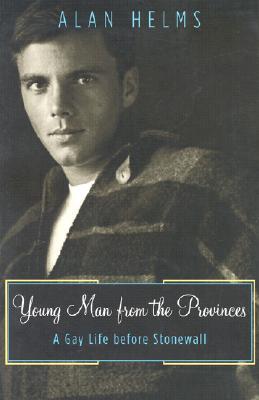
YOUNG MAN FROM THE PROVINCES, gay life as a sex toy in the pre-Stonewall world


YOUNG MAN FROM THE PROVINCES: A Gay Life Before Stonewall
ALAN HELMS

University of Minnesota Press
$16.95 trade paper, available now

Rating: 3.5* of five

The Publisher Says: Young, intelligent, and handsome, Alan Helms left a brutal midwestern childhood for New York City in 1955. Denied a Rhodes scholarship because of his sexual orientation, he soon became an object of desire in a gay underground scene frequented by, among many others, Noel Coward, Leonard Bernstein, and Marlene Dietrich. In this unusually vivid and sensitive account, Helms describes the business of being a sex object and its psychological and physical toll.
"Riveting."- New York Times Book Review

"Extraordinary and elegantly written. A record of a gay world that has virtually disappeared over the past twenty-five years of liberation and fifteen years of AIDS." -Boston Globe

"A beautifully written memoir. Helms sped through the celebrity-packed fast lanes, but he has learned how to stand back and get some perspective." -Los Angeles Times

"Sublimely funny, engaging, pathetic, highly literary, and painful to read. Helms seems like a gay Everyman whose quest for self-knowledge, respect, and contentment in this contemptuous world mirrors that of many other marginalized people." -Bloomsbury Review

Alan Helms is professor of literature at the University of Massachusetts, Boston.

I RECEIVED A REVIEW COPY OF THE BOOK FROM THE PUBLISHER. THANK YOU.

My Review
: Beloved Boston cultural institution Alan Helms had a wildly exciting past! See the film! Admire his art collection, appreciate his cultured and elegant way of speaking, his breadth of cultural knowledge, and his charming sweetness.

What does a young, abused man from flyover country do the moment he realizes he's queer? RUN! Get to New York City as soon as possible. He got to Columbia University in 1955, leaving behind a life in Indianapolis, Indiana, that could charitably be described as "uncongenial." A father who thought his son was a bitter disappointment...how many of us queer boys can relate to that...a mother whose situation wasn't a lot better than his, a younger brother whose close brush with death was the single moment in his childhood when peace reigned. None of this is a recipe for a healthy adulthood...and add in the author's understandable, if off-putting, self-absorbtion and you get a difficult-to-empathize-with narrator.

But he was So. Beautiful. Look at that face on the cover! Hoo-ee!

And the awfulness of that...wow...to be so pretty and so readily available and so snobby, who can claim to be surprised that he wasn't a pleasant person? His sexual awakening came at the price of being raped. His family life prepared him for a life of abuse. He dived into it in the glamorous world of closeted gay life pre-Stonewall. Pretty sexually available intelligent boys found innumerable lovers, and the author wasn't about to say no. (I totally relate to this and would've done precisely the same in his shoes. Damn the bad luck of not being pretty!) So a decade and a half passed in what I imagine was a golden haze...this book's largest part. It's a bit less charming to me than it might be to a younger reader. I look at the wreckage he glosses over and think, "there's the real story."

Yes, sleeping with famous Hollywood stars and titled Eurotrash is all very well. But the people you stood up, the ones whose parties weren't quite glam enough that you said you'd attend, and so on and so forth? How did you sleep, look in the mirror, launch yourself at the next big fish in your hifalutin' pond without thinking about them?

The Fall took place when he was thirtyish, and some semblance of human feeling broke the ice he'd cultivated to keep his agony at bay and under the surface of a freezing cold lake he called his heart. Escape to Boston and the tender mercies of a shrink who began the process of waking the author up from his frozen state. Then it happened: His body aged. He wasn't the hot young muffin anymore; he wasn't even visible to the hot young muffins. That had to be a bad, bad day.

Now, let me not try to hide my glee here. This event has occurred in my life, too. I can not imagine how much worse it was for a formerly gorgeous creature, feted and celebrated and wined and dined, to be cut off from that gushing geyser of distractions. Luckily for his sanity, Helms had a brain and a deep love for the life of the mind that he'd never left behind or neglected. While learning what he'd never known, that feelings are best felt in the moment and not in retrospect, I'm sure he left yet more carnage in his wake. But the fact that no one ever killed him means that he learned enough to at least fake his way through professional, if not personal, relationships. So hope still shines for him to pull his head out of his ass and recognize that, in his swan-paddle through youth, he got into some ugly emotional habits that would be wise for him to shed before he's patted in the face with a shovel and 120 cubic feet of dirt dropped on him.

I guess it shows that I don't like the man too much. Yes, part of it is envy: I would've LOVED to live among those glittering parties and glamorous people, and I'm jealous that he won nature's looks lottery. But more of it is the sense that grew and grew as I read his (ampersand-laden) memoir that he wasn't sharing his journey with me.

He was bragging that it happened.

I suppose I would too, and that is a disappointing self-revelation that elicits deep sadness in my shallows. Read the book, o ye queer boys over 50 to relive a lovely, dead time when we were few but fabulous; QUILTBAG youth, especially young and pretty ones, definitely think about your history; y'all straight folks, mm, on balance I'd say not unless your Gay BFF approves it for your personal tastes.

Wednesday, October 23, 2019

SWEET AS CANE, SALTY AS TEARS...Cajun escapee comes Home, hijinks ensue


SWEET AS CANE, SALTY AS TEARS
KEN WHEATON

Open Road Media (NON-AFFILIATE Amazon link)
$7.99 Kindle edition, available now

Rating: 3.5* of five

The Publisher Says: A freak accident forces a New Yorker to return to Louisiana and confront her Cajun past

There is nothing more dangerous than a spooked rhinoceros. It is just before lunchtime when Huey, the prized black rhino of Broussard, Louisiana, erupts from his enclosure, trampling a zoo employee on his way to a rampage in the Cajun countryside. The incident makes the rounds online as News of the Weird, and Katherine Fontenot is laughing along with the rest of her New York office when she notices the name of the hurt zookeeper: Karen-Anne Castille—her sister.

Fifty years old, lonely, and in danger of being laid off, Katherine has spent decades trying to ignore her Louisiana roots. Forced home by Karen-Anne’s accident, she remembers everything about the bayou that she wanted to escape: the heat, the mosquitoes, and the constant, crushing embrace of family. But when forced to confront the ghosts of her past, she discovers that escape might never have been necessary.

I RECEIVED A REVIEW COPY OF THIS BOOK FROM THE PUBLISHER VIA EDELWEISS-PLUS. THANK YOU.

My Review
: It's funny how The Book for a particular mood will lurk until that moment hits. I needed an undemanding read, one that had nothing to do with the present-day mishegas I find both distasteful and unseemly; I found this book set in Obama-era New York City and central Louisiana. About a funeral, and coming to terms with what family means, what being in a family requires, how it is that Facebook has metastasized across nations and cultures.

Published in 2015, the book follows Katie-Lee, fiftyish and full of the fear that gives single people, as she returns to bury her little sister in the wake of a Facebook-meme-able death. In fact, she finds out about the life-ending from her colleagues at (unnamed but obvious) Advertising Age, their titters and chuckles about a humorous tale of a zookeeper trampled by a rhino morphing into a dreadful reality: That's her baby sister. The shamefaced colleagues try to make it right, but she's already launched the boat onto the Styx.

She has to Go Home. Not a flying visit. The Native has to Return. O frabjous day.

Must be done. She does it. Hijinks ensue; her Louisiana family, of her generation that is, are all au courant with the world as they see it on Facebook, which is a large player in the novel. No political crap yet, as this book was written and published before the 2016 debacle revealed how much influence the platform has over far more than one's personal life. No Instagram, glancing mentions of Twitter, and Katie-Lee's a screen addict whose phone running out of bars is a Biblical-level disaster. She has more in common with the grandkids of her sisters and brother than with them.

She honestly has no idea what to do with her sadness. Facing mortality for the first time is a life-changing experience. I did it in my 20s when the AIDS epidemic decimated the gay guys I knew and loved. I remember the emotions, the detachment from reality that realizing your own death is, inevitably and inexorably, coming closer and closer. Youth is gone in that moment, calendar be hanged. And Katie-Lee's life in Brooklyn isn't such that she's cushioned from the yawning emptiness of survivorhood.

Dig we must, chere.

The healing in this tale is family-wide, and inclusive. The tragedies of the past are present again as they always are at funerals; so are the fun memories that inject themselves into the geology of one's life. People whose acts are literally unforgivable are not forgiven, though that day will clearly come. But the truly unforgivable ones are the least likely to see themselves as needing forgiveness. THAT resonated. Author Wheaton nailed that. But he did so in a format, following a structure, and thus made sure the Lesson isn't A Sermon (and he includes one of those, a real dilly of a tone-deaf nightmare-from-Hell one at that) and moves on to the next laugh.

There's the rub. This is a nightclub act written as a book. These moments are Wheaton's Brooklyn party pieces connected into a gender-swapped story to make them cohesive. (In fact, Katie-Lee's ex Howie sounds to me like Wheaton's ex only maybe not gender-swapped, if you take my meaning.) They're not less real or funny for that, but the structure of the book does nothing to hide this fact from knowing eyes. I'm from South Central Texas, I had a mamaw and she was transplanted Cajun stock, and in the days when I had party pieces, they fit together much the same way as Wheaton's do. So my eyes weren't fogged up but rather cleared by reading the present action-memory-lesson structure.

I hurry to remind y'all that 3-1/2 stars is a positive rating. I'm not trying to blast the author; in fact I liked the rhythm, was comfortably on board with the predictability of it, and felt completely relaxed and happy and at home. Nothing much happens. No excitement apart from a funeral games scene that about popped my eyeballs out from trying not to wake my roomie up from the laughing.

So do I recommend this read? Sure, so long as you're a storytelling-voice addict. It's $8 on your ereader and that's not a lot to spend on four or five hours' vacation without moving. But if you're not in the mood to listen to stories, this will not be a successful trip to Opelousas. (Where Mamaw's family came from! Now, I don't *know* that any Tullises married any Wheatons, but I bet if we....)

Sunday, September 29, 2019

DEEP ROOTS, the Innsmouth Legacy's second novel, so eagerly anticipated!!


DEEP ROOTS
RUTHANNA EMRYS
(The Innsmouth Legacy #2)
Tor.com Publishing
$26.99 hardcover, $9.99 ebook platforms, available now

Rating: 3.75* of five

The Publisher Says: Aphra Marsh, descendant of the People of the Water, has survived Deep One internment camps and made a grudging peace with the government that destroyed her home and exterminated her people on land. "Deep Roots" continues Aphra’s journey to rebuild her life and family on land, as she tracks down long-lost relatives. She must repopulate Innsmouth or risk seeing it torn down by greedy developers, but as she searches she discovers that people have been going missing. She will have to unravel the mystery, or risk seeing her way of life slip away.

My Review: Second novel in what I devoutly hope will be an ongoing exploration of the Lovecraftian (or Cthulhu) Mythos by QULTBAG Author Emrys; this time it's the Summer Solstice, so we're six months after the events of Winter Tide. The writing is, as always, luxurious and replete with the most pleasurably unexpected moments of character definition:
Neko’s familiar dreams lay open above me. Twists of color, scattered images: buildings, imagined cities, the people on the subway. She twitched among incomplete ideas. They spilled over the edges of everyday reality, coloring directions that she wasn’t able to travel. (Aphra is speaking of her Nisei internee "sister" from the camps.)
He separated his hands, unraveling finger from finger. (Ron Spector, gay FBI agent, is described here. He is a man torn and mended one too many times.)
A pale man, gangling in a tweed jacket, walked hunched as if against blistering wind, arms tight across his chest. He caught sight of an awning marked in Chinese characters and shuddered, hurrying on. (Lovecraft cameo! And bloody well perfect!)
In every case, Author Emrys makes this kind of observation completely without fuss or fanfare. These are the characters, the behaviors and thoughts are theirs; no need to make a song and dance about it, this is what that person would do/say/feel. I trust Author Emrys implicitly to tell me what I need to know when it is most helpful for me to know it. This is a characteristic of all of her writing that I've read. It's why I will buy and read more of her stories as and when they come out.

The Mythos itself is replete with amazing, juicy weirdnesses like the Mi-Go, or as the Deep Ones call them "meigo," betentacled crustaceany Outer Ones whose corporeal presence in out tediously limited and limiting 4D spacetime isn't remotely complete; entire segments of the creatures exist in dimensions we cannot access with our sensory equipment. Here's one image of the beings, slightly off from what Author Emrys's evocation of them summons in my brain but better than trying to word-paint them for you (or spoil the book's amazing evocation!) so you can get some traction on where this story *is*:

The Outer Ones are repugnant to Aphra, our main character; they aren't right, the way she knows that she herself isn't right to "People of the Air" like thee and me. But they are practically speaking immortal, unlimited by mere 4D spacetime's demands, and so vastly more intelligent than merely mortal Humanity; they have developed a (strange) moral code they adhere to, they are very much creatures of deep philosophical thought:
Doesn’t Nyarlathotep tell even you to ask the most dangerous questions, and travel as far as you need, wherever you need, to find the answers?
(Nyarlathobuddha, sounds like to me.)
To accept, without trying to change, the errors of the universe. Worse, though, to let our haven enforce the illusion that the universe can always be altered. Architecture as debate. Very much my thrice-mate’s style. (Spoken by one of the Outer Ones allied with Aphra about the leader of the Outer Ones's opposition.)
We seek the civilizations capable of living with difference, who can look on the vast and variable universes without fear, who can recognize wisdom wherever it’s found.
This, then, is the heart of the Outer Ones's need in our dimension: They are learning about us for their own purposes, not quite like the Yith, those truly immortal and utterly amoral scholars and recorders in the Archive of the entire body of knowledge that all beings in all dimensions have accumulated:
They boast of all they’ve learned, but write nothing down and call their work finished when all they’ve done is talk. They see everything and learn nothing; they are an embarrassment to Nyarlathotep.
The Mi-Go need something. This is value, for them, created value that pleases Nyarlathotep. The Yith? As we learned last book, and as several of Aphra's confluence (her metaphor for created family, logical as opposed to biological family) continue to wrestle with the aftermath of in this story, they aren't interested in what the knowledge they are collecting is, they are only determined to collect it, however and wherever they can, consequences be hanged. Which is why Winter Tide took place in Arkham and at Miskatonic University; and now that the Outer Ones are the opponents, where better to acquire truly useful knowledge than New York City?

Author Emrys agrees with me. She celebrates the very things that make this my home:
New York is full of immigrants and the United States is used to taking them in—we may be able to help you.
The city’s rhythm was constant when I paid it mind, but fickle in its effects. It could buoy me with excess energy, then wear me out a moment later with the pace of its million heartbeats.
Outside, the breeze brought relief: still rich with sweat and trash, but topped with the remnant of sugared pastry and the homesick scent of hot dogs.
New York, for all its height and humanity, was a breath from the ocean, and would pass in a geological instant.
Gigantically and brobdingnagianly replete with differences and conflicts and all the other things that vastly increase a culture's store of knowledge and wisdom, New York is the perfect place for the Outer Ones to set up shop! Add in the borning Cold War, the incredible postwar economic boom, and the seaport...well! I ask you! What better stewpot, pressure cooker, percolator of a place to locate a spy ring! Which is what the Outer Ones are...their internal factions can't agree whether to continue to passively watch Humanity boil itself or, out of deep savior complex fantasy needs, to intervene and "help"/force us to behave:
We needed Nnnnnn-gt-vvv’s passivist faction to reassert their influence and to hold sway over what their species did on Earth.
But Aphra and Company need to adjust their prickly, offended sensibilities to the Outer Ones's very real intent to help fellow creatures on a path to self-destruct:
You think we don’t understand family, but we do. We recognize many kinds of family, many kinds of connections that matter. We understand duties beyond obedience, and loyalty that can transcend species. We’re not the demons you think, tempting children away from the safe shadow of the gravestone. We serve a greater purpose too.
But help ain't help when it ain't asked for, is it. And that is where the whole rushing, roaring climax of the story leads us: What help are we willing to ask for? And what price offering to help a species that, in the main, wants to vomit when your pandimensional person enters its members's frames of reference?

Good times.

The attentive will recall that I gave Winter Tide four and a half stars two years ago. Then the attentive will cast their eyes upon my less-than-four-stars rating for this book. Then consider the warbles of pleasure in this story and its writing, its very universe, that have occupied me for over a thousand words. "What gives, Papaw?" the attentive will ask.

Freddy and Frances, excess baggage in general; S'vlk, Obed Marsh, and Shelean; not one of these characters has a hope in hell of making a lasting impression on the reader. They are competing for attention with characters the reader has already invested in and much more heavily than possible with them. I have read this book twice, a year apart. That was deliberate and calculated. I wanted to be absolutely sure I felt that I was fair and reasonable in my annoyance and subsequent chastisement of almost a whole star's docking. (I mean, it's not like Author Emrys will be hurt and dismayed about my review or like there'll be any kind of backlash; but it's an article of faith with me that I should behave online the way I would in person and I'm always quick to praise and deliberate in disappointment.)

The extra characters add little, detract much, and cost a great deal of forward momentum. The fact is that I'm always shifting gears, like driving a five-speed sports car up Lombard Street in San Francisco during rush hour. The issue grows and becomes very distracting by halfway through the book. I want the urgency of Winter Tide to continue, and with the immense broadening of this story, it does not.

I did not want to offer false praise, and I haven't; I did not want to stint on what I feel is merited celebration of Author Emrys's reimagined Mythos, and I do not think that I have; but, in the end and after a year's thought and consideration, I can't help but share Aphra's prayer for Cthulhu's help in her desperately overworked mind's ease:
Ïa, Cthulhu, help me sleep in the shadow of others’ dreams. Teach me patience in the shadow of frustrated desire. Teach me stillness in the shadow of ever-changing threats.