Showing posts with label University of Minnesota Press. Show all posts

Saturday, February 14, 2026

THE LUMINOUS FAIRIES and MOTHRA, best Valentines Day read I can imagine


THE LUMINOUS FAIRIES and MOTHRA
SHIN'ICHIRŌ NAKAMURA,TAKEHIKO FUKUNAGA,YOSHIE HOTTA
(tr. Jeffrey Angles)
University of Minnesota Press (non-affiliate Bookshop.org link)
$19.95 paperback, available now

Rating: 4.5* of five

The Publisher Says: The original story that hatched Mothra, one of the most beloved monsters in the “kaijuverse”—available in English for the first time

Mystical and benevolent, the colossal lepidopteran Mothra has been one of the most beloved kaiju since 1961, when The Luminous Fairies and Mothra was originally published in Japanese. Commissioned by Tōhō Studios from three of Japan’s most prominent postwar literary writers (Shin’ichirō Nakamura, Takehiko Fukunaga, and Yoshie Hotta), the novella formed the basis for the now-classic monster film Mothra, with a protagonist second only to Godzilla in number of film appearances by a kaiju. Finally available in its first official English translation, The Luminous Fairies and Mothra will captivate ardent, longtime fans of the films as well as newcomers.

Written just months after the largest political demonstrations Japan had ever seen, The Luminous Fairies and Mothra reflects the rebellious spirit of the time. In this original story, explorers visit a South Pacific island and capture a group of fairies, inciting the fury of the goddess Mothra, who sets out for Japan on a mission of rescue and revenge. Expressing a powerful social stance about Japan’s need to chart its own foreign policy during the Cold War, the novella’s political message was ultimately toned down in the Tōhō Studios film. Through this translation, Anglophone audiences will discover Mothra as a figure of protest fiction intricately reflecting the complex geopolitical situation in early 1960s Japan.

The Luminous Fairies and Mothra is translated into lively prose by Jeffrey Angles, who also wrote an extensive afterword about the novella’s cultural context, the unusual story of its composition, and the development of the 1961 film. Following Angles’s best-selling translation of the original Godzilla novellas, this new work will once again delight kaiju fans everywhere.

I RECEIVED A DRC FROM THE PUBLISHER VIA NETGALLEY. THANK YOU.

My Review
: You remember Mothra. Saturday afternoon after the teens woke up, the monster movies went on as we all stared hungrily at the weirdness onscreen (I was always most interested in the Japanese cars, natch). It was a window into a world whose anxieties never messed with my head (unlike In Cold Blood, Bonnie and Clyde, and their realistic like), but were riveting to my story-starved brain.

This translation is the first time I've ever encountered the stories that brought Mothra to our screens. I don't know that I was ever aware these stories existed as source materials for the film franchise before now. The three authors of this...novella? story cycle?...focus on the stranger who arrives on Mothra's island and what he learns of the culture, the man he tells his story to after he returns to Japan, and finally the geopolitical implications of the island between Japan and a stand-in for the USA. Like Godzilla the story is thinly disguised anti-US messaging intended to inform the ongoing debates in Japan about how much good it will really do to subjugate their political will to the worldwide hegemon. I chose that word for the US position because it sounds as ancient as Mothra's existence, yet like Mothra, is of very recent coinage and was coined in service of another imperial power.

A kid's-eye view was, "cool! Monsters blowin' shit up!" In the stories a much more thoughtful and nuanced argument is presented...the "fairies" are colonized, infantilized people of little individual agency, whose one hope of survival is collective action and a version of the violence inflicted on them. It is in reading Author/Translator Angles' essay around the text that I saw the kaiju phenomenon as the protest literature it is clearly and possibly for the first time...at least with any clarity it was the first time. It's very saddening to me that Mothra's source document was so invisible to my culturally developing self. Had I been in possession of the texts I might've cut ages out of my emotional maturation.

Seeing clearly what makes other cultures upset enough to create protest art around is extremely valuable. Even if you never walked into the TV room when one of these films was on I hope you'll look into the fascinating subject of where Mothra fits into Japan's literary culture just after their catastrophic defeat in WWII and the subsequent social and economic transformations enforced by the US victors. It was ongoing as the idea for this new mythology was being created. It's also the reason, we learn in the translator's essay, there is almost no evocative description of the world. It was to be left to the filmmaker to do the worldbuilding with as little hampering as possible.

What a delight to encounter this story familiar from childhood as an old man, and not only enjoy it again but enjoy it more now than I did then. Thank you, Jeffrey Angles. Thank you, University of Minnesota Press, for this and for everything else Minneapolis is giving the entire country in this winter of our discontent.

Friday, June 25, 2021

THREE MEMOIRS OF GAY HUSTLING, all with happy endings...not THAT kind


ASSUMING THE POSITION: A Memoir of Hustling
RICK WHITAKER

Out of print (non-affiliate Amazon link)
Various prices from different vendors

Rating: 3.75* of five

The Publisher Says: Rick Whitaker divulges the complex reasons that drove him to prostitution and reflects on the cost of a life of half-truths and emotional lies. With an unsentimental eye, Whitaker chronicles his descent and eventual resolution.

My Review: That's a pretty sparse description for a pretty intense book. It's a short thing, pared down to its essential points, and purged of prurient detail. (Darn it.)

Whitaker was the editorial assistant to publishing legend Gordon Lish. You know, Raymond Carver? Richard Ford? The one who edited, or quite possibly more than edited, their best stuff. He was, apparently, absorbing a lot from Lish (not a double entendre that I know of) because he wastes no words here describing his descent from broke publishing minion to crack-addled sex worker AND broke publishing minion.

It's amazingly easy to understand and sympathize with Whitaker. He's not some rotten-souled vile being who expresses himself by Doing Shocking Things. He's a guy who needs a center to his life, needs a sense of belonging and of mattering. I speak from experience here: If one needs those things, NEW YORK IS NOT THE PLACE TO LIVE. I watched it eat people alive, make others miserable, and all because the one thing those folks needed was the one thing the city does not reward. Either arrive already centered, focused, or understand that you are driven by a goal...or the city will have you for breakfast with a side of bacon.

Whitaker sold access to his body for drug money, for the momentary illusion of power, and for the sheer hell of it. He ended up not wanting what he found, and got out, and told his story so all the experience would not go to waste.

I like the book, where lots didn't much. I respect sex workers for the sheer magnitude of their performance capability. I admire their generosity of spirit (how many pretty people do you imagine subcontract their sex lives? Lots of old, lonely, ugly, fat folks do). I've had some very good friends (without benefits, thank you for asking) who did this demanding and difficult job. Whitaker's was a story I've heard with variations for years. It's not something I'd suggest one read for titillation, but any moralists who have accidentally stumbled into reading my reviews (you must feel so lost, poor lambs) should give it a whirl, as should those inclined to judge and find wanting all those billions and billions of people not precisely like themselves. (There is overlap in the categories, but they aren't all the same people.)

Empathy can be learned. Try this and see if you can't find some for a man searching for acceptance.

+++++++++++++++++++++++++++++++++++++++++++++++++++++++++++++++++


SECRETS OF A GAY MARINE PORN STAR
RICH MERRITT

Citadel Press (non-affiliate Amazon link)
$9.99 Kindle edition, available now

Rating: 3.75* of five

The Publisher Says: Here’s the story of Rich Merritt—the good son, teacher’s pet, Southern gentleman, model Christian student at Bob Jones University, Marine officer, and the not-so-anonymous poster boy for a New York Times Magazine article on gays in the military—whose complicated sexual past caused an international scandal when The Advocate “outed” him as “The Marine Who Did Gay Porn,” putting his life in a tailspin.

It’s the compelling, poignant story of how a boy who never listened to pop music, never cursed, and didn’t have his first drink until he was eighteen exploded into a life of drugs, alcohol, promiscuity, prostitution, and pornography. And above all, it’s a triumphant story of self-forgiveness and identity, of a man who refused to allow himself to be defined by the standards of anyone else—gay or straight. Along the way, Rich Merritt writes with humor, compassion, insight and naked truth about:
• What it’s really like growing up behind the “Fortress of Fundamentalism” and how he ultimately came to despise their views
• The harsh realities of military life under the “Don’t ask, don’t tell” Clinton policy
• A real insider’s experience of working in the male porn industry—the good, the bad, and the extremely hot
• Why he chose not to reveal his porn past to the New York Times journalist
• What it felt like to be the most notorious marine in the world and what it took to come through the fire


By turns harrowing and heartbreaking, angry and affirming, Secrets of a Gay Marine Porn Star is that rarest of memoirs—a fascinating slice of life that reads like the most absorbing fiction, but is all true.

My Review: Gay guys who become porn stars are very interesting to me. Their stories, I suppose, are all very much alike, and very much like the stories that drive women to pornography...low self-esteem, a sense of failure in one's life, a desire to capitalize on physical beauty while it lasts, greed, the usual. But those driving forces aren't unique to these people, they're common to all of us in some degree or another. Why do these folks do this (to me) very scary and risky job?

Start with a damn-near fatal upbringing in the grasp of an Evangelical family; proceed to the Bob Jones-ing of his entire education, all the way from kindergarten (there is no link to the non-University of Bob Jones due to, um, controversies shall we say) to time in seminary; waking up and realizing he can not pray the gay away, subsequent substance abuse, two deliberate decisions to end his life.

This author pilots us through his decisions made...he didn't have sex with anyone until he was twenty-three! and he was sexually repressed to the point that his first sexual encounter predates the first time he ever masturbated!...and accepted; this with a degree of skill and a commendable lack of embarrassment that surprised me. I was expecting a defensive tone to creep in to the reports. He instead simply informs the reader of his choices and seems, while not endorsing them with hindsight, not to disavow the life he lived, either. The sense I get is of a guy I'd enjoy kickin' back with a beer, some nachos, and a bunch of good jazz CDs on shuffle with.

Plus he's really so very pretty to look at.

+++++++++++++++++++++++++++++++++++++++++++++++++++++++++++++++++


YOUNG MAN FROM THE PROVINCES: A Gay Life Before Stonewall
ALAN HELMS

University of Minnesota Press (non-affiliate Amazon link)
$16.95 trade paper, available now

Rating: 3.5* of five

The Publisher Says: Young, intelligent, and handsome, Alan Helms left a brutal midwestern childhood for New York City in 1955. Denied a Rhodes scholarship because of his sexual orientation, he soon became an object of desire in a gay underground scene frequented by, among many others, Noel Coward, Leonard Bernstein, and Marlene Dietrich. In this unusually vivid and sensitive account, Helms describes the business of being a sex object and its psychological and physical toll.

My Review: Beloved Boston cultural institution Alan Helms had a wildly exciting past! See the film! Admire his art collection, appreciate his cultured and elegant way of speaking, his breadth of cultural knowledge, and his charming sweetness.

What does a young, abused man from flyover country do the moment he realizes he's queer? RUN! Get to New York City as soon as possible. He got to Columbia University in 1955, leaving behind a life in Indianapolis, Indiana, that could charitably be described as "uncongenial." A father who thought his son was a bitter disappointment...how many of us queer boys can relate to that...a mother whose situation wasn't a lot better than his, a younger brother whose close brush with death was the single moment in his childhood when peace reigned. None of this is a recipe for a healthy adulthood...and add in the author's understandable, if off-putting, self-absorption and you get a difficult-to-empathize-with narrator.

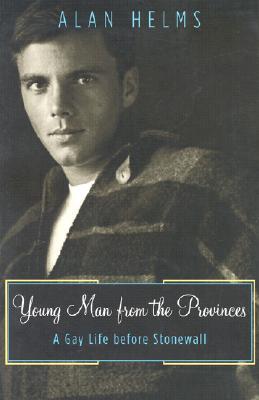
But he was So. Beautiful. Look at that face on the cover! Hoo-ee!

And the awfulness of that...wow...to be so pretty and so readily available and so snobby, who can claim to be surprised that he wasn't a pleasant person? His sexual awakening came at the price of being raped. His family life prepared him for a life of abuse. He dived into it in the glamorous world of high-class hetaira-dom in closeted gay life pre-Stonewall. Pretty, sexually available, intelligent boys found innumerable lovers, and the author wasn't about to say no. (I totally relate to this and would've done precisely the same in his shoes. Damn the bad luck of not being pretty!) So a decade and a half passed in what I imagine was a golden haze...this book's largest part. It's a bit less charming to me than it might be to a younger reader. I look at the wreckage he glosses over and think, "there's the real story."

Yes, sleeping with famous Hollywood stars and titled Eurotrash is all very well. But the people you stood up, the ones whose parties weren't quite glam enough that you said you'd attend, and so on and so forth? How did you sleep, look in the mirror, launch yourself at the next big fish in your hifalutin' pond without thinking about them?

The Fall took place when he was thirtyish, and some semblance of human feeling broke the ice he'd cultivated to keep his agony at bay and under the surface of a freezing cold lake he called his heart. Escape to Boston and the tender mercies of a shrink who began the process of waking the author up from his frozen state. Then it happened: His body aged. He wasn't the hot young muffin anymore; he wasn't even visible to the hot young muffins. That had to be a bad, bad day.

Now, let me not try to hide my glee here. This event has occurred in my life, too. I can not imagine how much worse it was for a formerly gorgeous creature, feted and celebrated and wined and dined, to be cut off from that gushing geyser of distractions. Luckily for his sanity, Helms had a brain and a deep love of the life of the mind that he'd never left behind or neglected. While learning what he'd never known, that feelings are best felt in the moment and not in retrospect, I'm sure he left more carnage behind in his wake. But the fact that no one ever killed him means that he learned enough to at leas fake his way through professional, if not personal, relationships. So hope still shines for him to pull his head out of his ass and recognize that, in his swan-paddle through youth, he got into some ugly emotional habits that would be wise for him to shed before he's patted in the face with a shovel and 120 cubic feet of dirt dropped on him.

I guess it shows that I don't like the man I got to know from reading this book too terribly much. Yes, part of it is envy: I would've LOVED to live among those glittering parties and glamorous people, and I'm jealous that he won nature's looks lottery. But more of it is the sense that grew and grew as I read his (ampersand-laden) memoir that he wasn't sharing his journey with me.

He was bragging that it happened.

I suppose I would too, and that is a disappointing self-revelation that elicits deep sadness in my shallows. Read the book, o ye queer boys over 50 to relive a lovely, dead time when we were few but fabulous; QUILTBAG youth, especially young and pretty ones, definitely think about your history; y'all straight folks, umm, on balance I'd say not unless your Gay BFF approves it for your personal tastes.

Friday, November 8, 2019

YOUNG MAN FROM THE PROVINCES, gay life as a sex toy in the pre-Stonewall world


YOUNG MAN FROM THE PROVINCES: A Gay Life Before Stonewall
ALAN HELMS

University of Minnesota Press
$16.95 trade paper, available now

Rating: 3.5* of five

The Publisher Says: Young, intelligent, and handsome, Alan Helms left a brutal midwestern childhood for New York City in 1955. Denied a Rhodes scholarship because of his sexual orientation, he soon became an object of desire in a gay underground scene frequented by, among many others, Noel Coward, Leonard Bernstein, and Marlene Dietrich. In this unusually vivid and sensitive account, Helms describes the business of being a sex object and its psychological and physical toll.
"Riveting."- New York Times Book Review

"Extraordinary and elegantly written. A record of a gay world that has virtually disappeared over the past twenty-five years of liberation and fifteen years of AIDS." -Boston Globe

"A beautifully written memoir. Helms sped through the celebrity-packed fast lanes, but he has learned how to stand back and get some perspective." -Los Angeles Times

"Sublimely funny, engaging, pathetic, highly literary, and painful to read. Helms seems like a gay Everyman whose quest for self-knowledge, respect, and contentment in this contemptuous world mirrors that of many other marginalized people." -Bloomsbury Review

Alan Helms is professor of literature at the University of Massachusetts, Boston.

I RECEIVED A REVIEW COPY OF THE BOOK FROM THE PUBLISHER. THANK YOU.

My Review
: Beloved Boston cultural institution Alan Helms had a wildly exciting past! See the film! Admire his art collection, appreciate his cultured and elegant way of speaking, his breadth of cultural knowledge, and his charming sweetness.

What does a young, abused man from flyover country do the moment he realizes he's queer? RUN! Get to New York City as soon as possible. He got to Columbia University in 1955, leaving behind a life in Indianapolis, Indiana, that could charitably be described as "uncongenial." A father who thought his son was a bitter disappointment...how many of us queer boys can relate to that...a mother whose situation wasn't a lot better than his, a younger brother whose close brush with death was the single moment in his childhood when peace reigned. None of this is a recipe for a healthy adulthood...and add in the author's understandable, if off-putting, self-absorbtion and you get a difficult-to-empathize-with narrator.

But he was So. Beautiful. Look at that face on the cover! Hoo-ee!

And the awfulness of that...wow...to be so pretty and so readily available and so snobby, who can claim to be surprised that he wasn't a pleasant person? His sexual awakening came at the price of being raped. His family life prepared him for a life of abuse. He dived into it in the glamorous world of closeted gay life pre-Stonewall. Pretty sexually available intelligent boys found innumerable lovers, and the author wasn't about to say no. (I totally relate to this and would've done precisely the same in his shoes. Damn the bad luck of not being pretty!) So a decade and a half passed in what I imagine was a golden haze...this book's largest part. It's a bit less charming to me than it might be to a younger reader. I look at the wreckage he glosses over and think, "there's the real story."

Yes, sleeping with famous Hollywood stars and titled Eurotrash is all very well. But the people you stood up, the ones whose parties weren't quite glam enough that you said you'd attend, and so on and so forth? How did you sleep, look in the mirror, launch yourself at the next big fish in your hifalutin' pond without thinking about them?

The Fall took place when he was thirtyish, and some semblance of human feeling broke the ice he'd cultivated to keep his agony at bay and under the surface of a freezing cold lake he called his heart. Escape to Boston and the tender mercies of a shrink who began the process of waking the author up from his frozen state. Then it happened: His body aged. He wasn't the hot young muffin anymore; he wasn't even visible to the hot young muffins. That had to be a bad, bad day.

Now, let me not try to hide my glee here. This event has occurred in my life, too. I can not imagine how much worse it was for a formerly gorgeous creature, feted and celebrated and wined and dined, to be cut off from that gushing geyser of distractions. Luckily for his sanity, Helms had a brain and a deep love for the life of the mind that he'd never left behind or neglected. While learning what he'd never known, that feelings are best felt in the moment and not in retrospect, I'm sure he left yet more carnage in his wake. But the fact that no one ever killed him means that he learned enough to at least fake his way through professional, if not personal, relationships. So hope still shines for him to pull his head out of his ass and recognize that, in his swan-paddle through youth, he got into some ugly emotional habits that would be wise for him to shed before he's patted in the face with a shovel and 120 cubic feet of dirt dropped on him.

I guess it shows that I don't like the man too much. Yes, part of it is envy: I would've LOVED to live among those glittering parties and glamorous people, and I'm jealous that he won nature's looks lottery. But more of it is the sense that grew and grew as I read his (ampersand-laden) memoir that he wasn't sharing his journey with me.

He was bragging that it happened.

I suppose I would too, and that is a disappointing self-revelation that elicits deep sadness in my shallows. Read the book, o ye queer boys over 50 to relive a lovely, dead time when we were few but fabulous; QUILTBAG youth, especially young and pretty ones, definitely think about your history; y'all straight folks, mm, on balance I'd say not unless your Gay BFF approves it for your personal tastes.