Showing posts with label Bloomsbury USA. Show all posts

Monday, August 17, 2026

VONNEGUT’S WAR: The Making of Slaughterhouse-Five, fascinating story of a fascinating book's creation


VONNEGUT’S WAR: The Making of Slaughterhouse-Five
SUSAN FARRELL

Bloomsbury Academic (non-affiliate Bookshop.org link)
$27.00 hardcover, available now

Rating: 5* of five

The Publisher Says: Banned, burned, and censored, Kurt Vonnegut's 1969 novel Slaughterhouse-Five is widely regarded as one of the greatest (and most controversial) novels of the twentieth century. Fusing vivid biography with popular history and close textual analysis, Vonnegut's War tells the fascinating story of the making of a modern classic and the writer that created it.

New archival discoveries and recently released oral histories give us the fullest account yet published of Vonnegut's real-life prisoner-of-war experiences at Stalag IV-B and Dresden, which heavily influenced Slaughterhouse-Five. A recently discovered trove of letters introduces us to his first wife, Jane Cox Vonnegut, and her influence on his writing. Along the way, we also encounter UFOs and aliens, grapple with the shadow cast by the Vietnam war, and unearth the stranger-than-fiction tale of David Irving's The Destruction of Dresden, the historical reference behind Vonnegut's writing about the Dresden firebombing.

This book sheds light on one of America's most beloved writers and explores how cultural forces helped to shape a modern masterpiece of storytelling.

Susan Farrell is a professor of American Literature at the College of Charleston. She has published two previous books on Vonnegut and founded the International Kurt Vonnegut Society.

I RECEIVED A DRC FROM THE PUBLISHER VIA NETGALLEY. THANK YOU.

My Review
: Billy Pilgrim shaped many an internal landscape after his appearance in 1969. My older sister encouraged me to read Slaughterhouse-Five when I was fourteen or so; I did, and was genuinely not the same person after the read. I've always been sure war and other kinds of industrial-scale killing were wrong, and tools of oppression and manipulation used by "Them" (the ever-shifting, always-there overclass) to ensure no individual of any class ever truly feels secure for very long. It read to my young self like the bravest kind of art, made to tell ugly truth in carefully crafted images. It was sublime. (I stand by my 2014 review.)

As a middle-aged man I read the story again, on the fortieth anniversary (more or less) of the first read. Same story, different reader, similar conclusion reached...though with nuances like a shocked certainty that Billy Pilgrim was Vonnegut's PTSD personified, that the entire exercise was a therapy session shaped into a narrative of brutal honesty and deep personal exposure underpinning artifice, maybe art, maybe just the complete relatability of honest, truthful self-examination made public.

Twenty more years have passed. I'm not drawn to the text for another read, too few eyeblinks left to me and too much good stuff as yet unread. This book, telling the story of how Slaughterhouse-Five came to be over the course of more than twenty years in the eventful, interesting life of Kurt Vonnegut. It was a long-term, multi-partner effort to shape Vonnegut's trauma into the glittering form we possess now. Access to much material previously off-limits to researchers makes the role of Vonnegut's much-maligned first wife in shaping the narrative more evident. We all, in the twenty-first century, have a very, very different understanding of gender dynamics than was available to any but the most advanced academic thinkers during the years Vonnegut was composing Slaughterhouse-Five. His evident misogyny went well beyond the cultural norms of his era. It's not emphasized in the book nor is it glossed over; this is at heart an academic book, though, so it sticks to its lane more than a purely popular one would. As a factor in the creation of the work in question the reprehensible misogyny and abuse Vonnegut doled out are in the DNA of the story. It's discomfiting to read the clear-eyed portrait of Vonnegut in the throes of creation. Confronting the damage he (knowingly, deliberately) enacts on those around him is unpleasant, as I've grown my mind around the work he's done over the majority of my approaching seventy years on Earth. The older I get the more I realize how little has really changed since the men who wrote the "idol with legs of iron, and feet of clay" quote appearing in the Bible sharpened their styluses.

As Author Farrell's pursuit of the reality behind the making of Slaughterhouse-Five she does the hard work of giving perspective to the acts of its creation in the context of the times. Who was this WWII veteran trying to find perspective on his experiences reading, talking to, using as sounding boards? Could this specific novel have come to be in 1949, 1959, even 1965? I remember the ferment of those years, the way my older-than-most parents were constantly blindsided and upset by the world changing so much so fast...Vonnegut was younger than they were so I realized with a start in reading this book. It adds a piece to my vision of Slaughterhouse-Five that I'd never had. It takes reading a book written about a book getting written to bring perspective to my settled opinion of a story published almost sixty years ago. Do you need a better illustration of why reading, writing about reading, and close and careful analysis of stories are more important than ever in a world getting "AI" shoved down its throat?

What this read did for me it can do for you and for others. No "AI" (properly "LLM") can do what Author Farrell did here. Human brains make connections among data points derived from deep research. They're what creates the synthesis of information that synthetic entities steal to regurgitate to the uncritical as new and insightful ideas. It's true, they are new and insightful; but if you've read the stolen source material, you realize how the scam works. It's new to you, not freshly newly thought up. This is why controlling the world's IP is such an incredibly important part of the scam.

My proof is here, in this well-written, thoroughly researched story of the making of a story that defined the emotional state of a man, and thereafter of a generation.

Monday, March 17, 2025

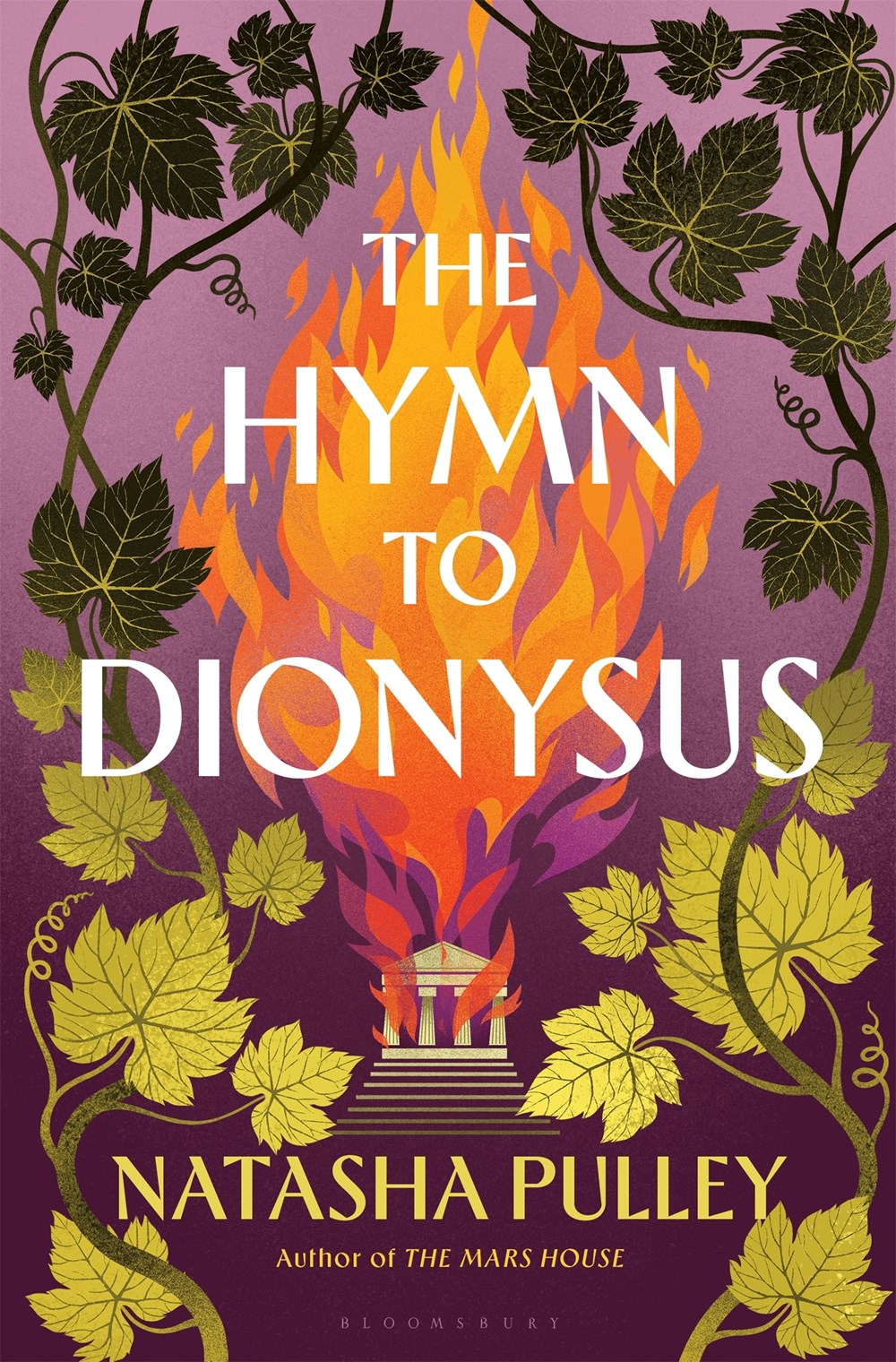
THE HYMN TO DIONYSUS, Natasha Pulley does the Greek thang...very well, too


THE HYMN TO DIONYSUS
NATASHA PULLEY

Bloomsbury USA (non-affiliate Amazon link)
$9.99 ebook, available now

Rating: 4.5* of five

The Publisher Says: A timely and timeless reimagining of the story of Dionysus, Greek God of ecstasy and madness, revelry and ruin, for readers of The Song of Achilles and Elektra.

Raised in a Greek legion, Phaidros has been taught to fight for the homeland he’s never seen and to follow his commander’s orders at all costs. But when he rescues a baby from a fire at Thebes’s palace, his commander’s orders cease to make sense: Phaidros is forced to abandon the blue-eyed boy at a temple, and to keep the baby’s existence a secret.

Years later, after a strange encounter that led to the death of his battalion, Phaidros has become a training master for young soldiers. He struggles with panic attacks and flashbacks, and he is not the only one: all around him, his fellow veterans are losing their minds.

Phaidros’s risk of madness is not his only problem: his life has become entangled with Thebes’s young crown prince, who wishes to escape the marriage his mother, the Queen, has chosen for him. When the prince vanishes, Phaidros is drawn into the search for him—a search that leads him to a blue-eyed witch named Dionysus, whose guidance is as wise as the events that surround him are strange. In Dionysus’s company, Phaidros witnesses sudden outbursts of riots and unrest, and everywhere Dionysus goes, rumors follow about a new god, one sired by Zeus but lost in a fire.

In The Hymn to Dionysus, bestselling author Natasha Pulley transports us to an ancient empire on the edge of ruin to tell an utterly captivating story about a man needing a god to remind him how to be a human.

I RECEIVED A DRC FROM THE PUBLISHER VIA NETGALLEY. THANK YOU.

My Review
: Phaidros saves an infant god, fights in an unjust war, gets PTSD from it, and...in later years...gives his skills thus acquired to saving his home city of Thebes (the one in Greece, not the one the Egyptians now call Luxor) and calls in his massive debt from Dionysus the god to...address things.

Now go buy one. Seriously...you've heard the good bits. It's Natasha Pulley's latest book (notably and annoyingly not the apparently-written sequel to The Half-Life of Valery K.)! What more do you need to know?

Plot? Already told you. Action? Read the blurb!

Fine. Spoiled brats. This is not a myth retelling. It's the story of two men a generation apart who truly fall in love, after the whole "he's so dreamy phase ends, and embark on that scariest of things to do, a mature relationship. One's a badly fucked up veteran, the other's...um...maybe divine, certainly an old soul. It bears a solid resemblance to Phaedrus, in that it is a solid and thorough examination of love in its guises, morality, and the intersection of emotion and morality that is Greek spirituality's idea of reincarnation. (Their word for it freaks people in the US right out, so I'm skipping it.) Phaidros is not partcularly like the historical Phaedrus, an Athenian aristocrat who did naughty things against the Mysteries...y'all don't much care, I get it, so the important part of using his name for our Theban hero is his name: It means "Shining" or "Brightening" as in to shine light on or brighten a room.

Greek names are so cool. They MEAN stuff. Like Plato..."flatface" or, as the Mexicans I knew in childhood used the same idea, "Chato." No big arching nose on you, sir, so you must be lower class! Yet that put-down is the most famous name in Greek philosophy. And Phaidros! Well, no one loves the one who rips the wizard's curtain down, do they? Dionysus the...god? demigod?...beautiful wild creature does, because he is also a force of opposing chaos. Nature is all shadows and shades and spectra. Dionysus is the perfect foil to light-shining Phaidros.

As a reimagining of Bacchae by Euripides, it's a loose one. It's also, tonally, a bit off. Why do these men speak to each other as modern middle-class Brits? The spark that illuminated Glorious Exploits as it used Dublin-Irish English for ancient Syracusan Greek came from its sly, side-eye commentary on the role of Ireland-v-England as replicated in the colonial war waged by Athens on Syracuse. The characters in this book do not have any comment to make on Thebes by their use of British vernacular, at least not one I can suss out. (That was deliberate.) So off came that half-star.

Still and all, as a fantastical meditation on Love, love, and their intersection points with morality, responsibility, and the eternal human desire to connect to others, I liked the story a lot. Pulley's trademark men-who-love subplot is again, and expectedly, rendered with all the grace a writer can bring, and deepened by the careful and unobtrusive use of the reincarnation-like connective tissue.

I hope, though, that this will remain her foray into Classical mundane-meets-magical worlds. It's better left in The Watchmaker of Filigree Street stories. This iteration is just that indefinable bit...off.

Wednesday, March 20, 2024

THE MARS HOUSE, latest Natasha Pulley exploration of the costs of Othering


THE MARS HOUSE
NATASHA PULLEY

Bloomsbury USA
$32.99 hardcover, available now

Rating: 4.8* of five

The Publisher Says: From the author of The Watchmaker of Filigree Street, a queer sci-fi novel about an Earth refugee and a Mars politician who fake marry to save their reputations—and their planet.

In the wake of environmental catastrophe, January, once a principal in London’s Royal Ballet, has become a refugee on Tharsis, the terraformed colony on Mars. In Tharsis, January’s life is dictated by his status as an Earthstronger—a person whose body is not adjusted to Mars’s lower gravity and so poses a danger to those born on, or naturalized to, Mars. January’s job choices, housing, and even transportation options are dictated by this second-class status, and now a xenophobic politician named Aubrey Gale is running on a platform that would make it all worse: Gale wants all Earthstrongers to be surgically naturalized, a process that can be anything from disabling to deadly.

When Gale chooses January for an on-the-spot press junket interview that goes horribly awry, January’s life is thrown into chaos, but Gale’s political fortunes are damaged, too. Gale proposes a solution to both their problems: a five-year made-for-the-press marriage that would secure January’s financial future without naturalization and ensure Gale’s political future. But when January accepts the offer, he discovers that Gale is not at all like they appear in the press. And worse, soon, January finds himself entangled in political and personal events well beyond his imagining. Gale has an enemy, someone willing to destroy all of Tharsis to make them pay—and January may be the only person standing in the way.

I RECEIVED A DRC FROM THE PUBLISHER VIA NETGALLEY. THANK YOU.

My Review
: Comme d'habitude, Author Pulley has taken multiple strands of today's hellscape and woven them into a clever, involving story. January is a ballet dancer...lean, lithe, and muscular even by Earth standards...and a refugee from the sinking of his home, London, due to climate change. No worries, it isn't a big deal in the story, just the way he gets to colonial Mars.

Where he, because he grew up on a high-gravity planet, is an "Earthstronger" and a terrible threat to the naturalized Martians. This condemns him to a life of menial labor where his freakish strength is an actual advantage not a threat.

Does this anti-immigrant rhetoric sound familiar? Start from actual differences, create threats, and stigmatize the Other with the largely imaginary threats and violent rhetoric?

The story is about all that and more. January is the only one who is referred to by the masculine pronoun. All the Martians are "they." No more information is given than that...and Gale, the senator whose careless seeking for a soundbite in their campaign to forcibly "naturalize" the Earthstrongers...a procedure with a horrific death rate, and ugly medical side-effects for those it does not kill...as the external suits that cause the Earthstrongers not to be able to exert themselves to capacity are defeatable. Gale's effort to get a political advantage blows up badly and causes them, as well as January, terrible problems.

Their solution is to offer January a five-year fake marriage contract that will give them good political optics, and him a way out of the endless drudgery and second-class citizenship of being in a suit or, far worse, beinf forcibly "naturalized." So, as always in Author Pulley's work, there is a slow...slooow...burn into True Love. That the relationship is so suitable is weird. January had to travel to another planet to find True Love...and the balance of power, also as always in Author Pulley's work, is even but in a completely unexpected way.

What makes me happy when I know there is a new book coming from Author Pulley is that I know what I will get...musings on interpersonal dynamics, commentary on injustices that clearly cause her outrage and pain, the somewhat unrealistic Love Conquers All resolutions...but have not clue the first how she will take me where I already know we're going.

*happy sigh*

So, I hear you wonder, since you got exactly what you wanted, and enjoyed the trip to get it, where's that fifth star? The one thing I was a lot less than thrilled with was the bizarre and offputting de-extinction of wooly mammoths as part of the Martian terraforming because it felt uncharacteristically gee-whiz neato-keeno it's my book and I'll do it because I can legerdemain. It did not make any sense to me, though clearly there is a narrative srand to explain it. I just did not buy it. I was also not entirely convinced by the time it was set in...the kinds of changes on Earth seemed to be unusually late, for what I expect to happen based on current trends and on Mars way too soon. So, not quite able to ignore and go on with my suspension of disbelief.

These were not terrible sins...this is a novel, not a counterfactual scientific paper...and they are in service of telling a cracking good story. Very much a good place to start reading Natasha Pulley's work if you haven't already; and a great treat for your season of reading if you have.

Tuesday, February 20, 2024

THE MARS HOUSE, latest from the ever-delightful Natasha Pulley


THE MARS HOUSE
NATASHA PULLEY

Bloomsbury USA
$15.99 ebook, available now

Rating: 4.8* of five

The Publisher Says: From the author of The Watchmaker of Filigree Street, a queer sci-fi novel about an Earth refugee and a Mars politician who fake marry to save their reputations—and their planet.

In the wake of environmental catastrophe, January, once a principal in London’s Royal Ballet, has become a refugee on Tharsis, the terraformed colony on Mars. In Tharsis, January’s life is dictated by his status as an Earthstronger—a person whose body is not adjusted to Mars’s lower gravity and so poses a danger to those born on, or naturalized to, Mars. January’s job choices, housing, and even transportation options are dictated by this second-class status, and now a xenophobic politician named Aubrey Gale is running on a platform that would make it all worse: Gale wants all Earthstrongers to be surgically naturalized, a process that can be anything from disabling to deadly.

When Gale chooses January for an on-the-spot press junket interview that goes horribly awry, January’s life is thrown into chaos, but Gale’s political fortunes are damaged, too. Gale proposes a solution to both their problems: a five-year made-for-the-press marriage that would secure January’s financial future without naturalization and ensure Gale’s political future. But when January accepts the offer, he discovers that Gale is not at all like they appear in the press. And worse, soon, January finds himself entangled in political and personal events well beyond his imagining. Gale has an enemy, someone willing to destroy all of Tharsis to make them pay—and January may be the only person standing in the way.

I RECEIVED A DRC FROM THE PUBLISHER VIA NETGALLEY. THANK YOU.

My Review
: This has a very "ripped-from-the-headlines" feel, like a big issues-driven Movie of the Week in the 1980s. The playfulness that the author, comme d'habitude, uses to frame her presentation of the Issues made me smile. I am particularly fond of the way she plays with the MM romance trope of a fake marriage that leads to a real relationship, in the context of a serious contemplation of the refugee crisis and the ever-increasing backlash againt gender minorities.

No one ever accused Author Pulley of lacking ambition.

Even inclusivity excludes, when it is a mandate...I am not a they, I am a he, and will resist being "they"d because of the same reasons I ask people what their not-always-obvious pronoun preference is. Like any overarching solution, it will not work for everyone...like absurd wealth disparities don't, like hypercompetition won't. And, as I expect from the author of The Kingdoms and The Secret Life of Valery K., that is the point. She invites us in to have a good, solid storytelling, then the real purpose sort of creeps up behind your chair and slaps some ropes around your wrists so you *need* to know what happens while also getting yor mind wedged open a bit.

Like the surgical "naturalization" of the Earthstrong immigrants that will artificially weaken them to make the like "real" Martians instead of merely imprisoning them in tightly binding suits...oh my goodness, the unpleasant parallels to our culture war over transness and the nature of being a "real" something. "We must PROTECT our weakest from these interlopers!" The eternal cry of the high-control fascist-leaning cultural bully. The Earthstrong immigrants have a terrible social ostracism as threats to the adapted Martians, confined to menial labor that renders their actual physical power differential a big advantage.

January, our main character, is the only character referred to by a masculine pronoun. As a former dancer, he is strong and lithe even by Earth standards. This makes him a scary monster of a beast to the adapted Martians, much less gravity having attenuated their strength and stamina. This is quite a come-down for him since he was once a principal dancer at the Royal Ballet. It does make his masculine pronoun feel simultaneously othering and fetshizing...like all perceived-stronger minorities his gender is hyperemphasized. This makes his union with Martian nativist Senator Gale, whose impromptu soundbite caused January tremendous social trouble, all the more trenchant in its commentary on the social construction of gender and the fetishization of, especially the visible, Others in a society.

Like we do with highly intentionally muscular men, heavy-breasted women whose endowments are clearly artificially augmented, and those whose skin and/or eye colors are not like the resident majority's are.

This, then, is Author Pulley at her tendentious best. The invitation to think through the role of fetishization, or simply enjoyed as the slow, rocky coming-together of two people from opposite sides of an ideological divide, is there. It is up to you which one you wish to foreground as you read the book. The interpersonal stakes are not shorted, or allowed to dominate; they are, as always in this author's œuvre, balanced carefully thus enriching each strand.

What makes the read just less than five stars for me is my rather less than enjoyment experienced by the inclusion of resurrected wooly mammoths. The entire ecological commentary is, for my money, twee and forgettable, though of course well-crafted...I just do not buy the animals' PoV bits, which thankfully are confined to footnotes. This is a facet that will delight some but did not me.

A worldbuilding tour de force, a meet-cute/fake marriage queer love story, a takedown of high-control ideology, and most of all a chance to fall in love alongside two wounded souls who had to travel from literal different planets to find their happiness.

Friday, June 9, 2023

THE HENRY HOKE PAGE: OPEN THROAT, how did Author Hoke think of a puma being queer?! & STICKER, queer boyhood through the lens of stickers


OPEN THROAT
HENRY HOKE

MCD x FSG
$25.00 hardcover, available now

PICADOR OFFERS THE TRADE PAPERBACK ON 4 JUNE 2024. It retails for $17.00.

Rating: 4* of five

The Publisher Says: In elegiac prose woven with humor, imagination, sensuality, and tragedy, Henry Hoke’s Open Throat is a marvel of storytelling, a universal journey through a wondrous and menacing world told by a lovable mountain lion.

A queer and dangerously hungry mountain lion lives in the drought-devastated land under the Hollywood sign. Lonely and fascinated by humanity’s foibles, the lion spends their days protecting the welfare of a nearby homeless encampment, observing obnoxious hikers complain about their trauma, and, in quiet moments, grappling with the complexities of their gender identity, memories of a vicious father, and the indignities of sentience. “I have so much language in my brain,” our lion says, “and nowhere to put it.”

When a man-made fire engulfs the encampment, the lion is forced from the hills down into the city the hikers call “ellay.” As the lion confronts a carousel of temptations and threats, they take us on a tour that spans the cruel inequalities of Los Angeles and the toll of climate grief, while scrambling to avoid earthquakes, floods, and the noise of their own conflicted psyche. But even when salvation finally seems within reach, they are forced to face down the ultimate question: Do they want to eat a person, or become one?

In elegiac prose woven with humor, imagination, sensuality, and tragedy, Henry Hoke’s Open Throat is a marvel of storytelling, a universal journey through a wondrous and menacing world told by a lovable mountain lion. Both feral and vulnerable, profound and playful, Open Throat is a star-making novel that brings mythmaking to real life.

I RECEIVED A DRC FROM THE PUBLISHER VIA NETGALLEY. THANK YOU.

My Review
: From the off, I wasn't sure about this...how did Author Hoke think of a puma being queer?! What kind of twee nonsense is a whole novel told from the point of view, nay, in the voice of, an animal going to be?!

Oh me of little faith.

What dazzles and delights me about this read is the meditations on being and becoming a sentient individual in the shadow of trauma and persecution, being and becoming an existential threat to creatures you're not able quite to emulate but whose world you inhabit. It's never about you, the fear and the anger; it's about what They bring with them into the tiny corner of space They condescend to allow you to roam in so long as you don't transgress Their amorphous, undefined boundaries.

Oh wait...that's pretty much a perfect summation of being queer in the cishet world.

Right there came my happiest moment in this read. I felt so exactly in tune with this puma. I felt so completely free to be in his head, and to enjoy his meditations on what the hell it is humans think they're doing. It's not quite what our lion thinks it is, of course, but he's a savvy old survivor with very keen senses...so he's often Right even when he's factually incorrect.

Of course, I'm tiresomely wedded to certain perceptual filters, and kept jumping a little in my seat when the cat would describe, eg, cars as being metal objects...what's a cat know about metal, my ill-tempered filing elf who lives in my brain rent-free and refuses to come up with words and/or data when I want them but freely kibitzes on minor points of fantasy in excellent reads, wanted to know. The cat who knows about metal should also know what a lighter is, and call it by name. Irritating damned elf needs to get a grip on what its actual job desciption requires.

So no five full stars. If fantasy is to work, it needs to make internal sense and be consistent in its fantastical dimensions...see Chouette for a similarly batshit crazy idea that works on this specific level better than Open Throat does.

But don't think for a second I am warning you off this short, concentrated, pithy read. I am not. I am waving my arms at you to get you to join me over here in the scrubby, hot, dry edgeland with this wonderful old cat as his world, never safe, takes on another configuration of threat.

He and I? We're hangin' as we await some kind of ending. Whatever we once thought we were doing, it's no longer what They want us to. And there's a pont in life where the reality of the exercise reveals itself in blinding bright light and inarguable simplicity. It's very much a before-and-after moment in one's life.

“I’m old because I’m not dead.”


++++++++++++++++++++++++++++++++++++++++++++++++++++++++++++++++

STICKER
HENRY HOKE

Bloomsbury USA
$14.95 trade paper

Rating: 4* of five

The Publisher Says: Object Lessons is a series of short, beautifully designed books about the hidden lives of ordinary things.

Stickers adorn our first memories, dot our notebooks and our walls, are stuck annoyingly on fruit, and accompany us into adulthood to announce our beliefs from car bumpers. They hold surprising power in their ability to define and provoke, and hold a strange steadfast presence in our age of fading physical media. Henry Hoke employs a constellation of stickers to explore queer boyhood, parental disability, and ancestral violence.

A memoir in 20 stickers, Sticker is set against the backdrop of the encroaching neo-fascist presence in Hoke's hometown of Charlottesville, Virginia, which results in the fatal terrorist attack of August 12th and its national aftermath.

Object Lessons is published in partnership with an essay series in The Atlantic.

I RECEIVED A DRC FROM THE PUBLISHER VIA NETGALLEY. THANK YOU.

My Review
: Twenty little meditative essays inspired by a ubiquitous part of 1980s and 1990s childhoods: Stickers. (GAWD how I hated the damned things. "Easy release" my lily-white one! I was still finding them on the undersides of chairs and backs of paintings in 2010.)

Author Hoke shines in these quick hits of memory, bringing the reader back into his world as it was and thinking about his various challenges...disabled mother in a wheelchair, absent father, being queer in Charlottesville, Virginia...and the roots his white self has in the South, with all the freight that implies.

He reckons with comparatively large parts of his ancestral racism; he states that, with all its contradictions, he intends this read to make his identity "...a little more tangible." Without being acquainted with the gentleman, I feel that I have a picture of him as a person that would never be obtainable through any more rigorous, structured look at what makes a person into the unique self they are. No, it's not autobiography, or even memoir, it's that rare thing : The reflective essay, the thoughtful, loosely organized look into the back corners of the closets and the darker recesses of the attic for the bright, shiny things once delighted in and now gathering patina and dust in unused parts of one's mind

I enjoyed myself as I wandered around with Author Hoke as he showed me his once-prized gewgaws and knick-knacks. Join us for a good old wander.

Thursday, August 25, 2022

NATASHA PULLEY'S PAGE: THE WATCHMAKER OF FILIGREE STREET; THE KINGDOMS; THE HALF LIFE OF VALERY K


THE HALF LIFE OF VALERY K
NATASHA PULLEY

Bloomsbury USA
$28.00 hardcover, available now

Rating: 4.75* of five

The Publisher Says: In 1963, in a Siberian gulag, former nuclear specialist Valery Kolkhanov has mastered what it takes to survive: the right connections to the guards for access to food and cigarettes, the right pair of warm boots to avoid frostbite, and the right attitude toward the small pleasures of life so he won’t go insane. But on one ordinary day, all that changes: Valery’s university mentor steps in and sweeps Valery from the frozen prison camp to a mysterious unnamed town that houses a set of nuclear reactors and is surrounded by a forest so damaged it looks like the trees have rusted from within.

In City 40, Valery is Dr. Kolkhanov once more, and he’s expected to serve out his prison term studying the effect of radiation on local animals. But as Valery begins his work, he is struck by the questions his research raises: why is there so much radiation in this area? What, exactly, is being hidden from the thousands who live in the town? And if he keeps looking for answers, will he live to serve out his sentence?

Based on real events in a surreal Soviet city, and told with bestselling author Natasha Pulley’s inimitable style, The Half Life of Valery K is a sweeping new adventure for readers of Stuart Turton and Sarah Gailey.

I RECEIVED A DRC FROM THE PUBLISHER VIA NETGALLEY. THANK YOU.

My Review
: There is nothing one Earth more appalling to me than the attitude "My ignorance is better than your education, training, and expertise." It's not just wrong-headed. It is dangerous. It leads to very, very deleterious results for the people who have no say in...often no awareness of...the risks they are being subjected to by the wilfully ignorant. The Yucca Flats, Nevada, nuclear-bomb testing disaster that People magazine broke the story of in 1980...the 1956 filming of The Conqueror ring any bells, fellow oldsters?...wasn't the only such official-denial event in the world. In the USSR, there was the Ozyorsk disaster, outed to the world in the New Scientist magazine in 1976 by a brave scientist called Medvedev. (I have to say that Siberia has a very unlucky past. This disaster occurred in 1957; the Tunguska event in 1908 was a holocaust; and sixty miles away from Ozyorsk is Chelyabinsk, of 2013 meteorite explosion fame!)

The story of the many "closed cities" in the USSR, and in today's Russia, is similarly grim, similarly marked by denial and obfuscation and outright lying. The Chernobyl disaster in 1986 was going to be treated that way, only it was far too big to tamp down and deny. So, Author Pulley has me by the nose-hairs again. Again! I am putty in this wicked writer's hands. She tells stories that make my ears perk up, the hair on the back of my neck do its wolfman imitation, and my breathing to become labored in eagerness.

Valery K. the nuclear scientist, exiled to a colder and less hospitable part of Siberia than City 40/Ozyorsk is in, is suddenly ripped from his wretched routine without explanation or preparation. He's in the gulag...this is terrifying. But his worst fears...interrogation? execution?...aren't realized. He's sent to this comparative demi-Paradise of a place to study field mice. To assess them for effects of radiation exposure.

So, all is explained. He's a criminal, but also a thorough scientist trained in matters nuclear. Trained, talented, expendable.

What follows is a litany of nuclear-waste exposure nightmares. The effects on people, on the environment, are grisly. In the one plot strand I am absolutely sure is fiction (it says here) the authorities conduct radiation-exposure experiments on the people of City 40. The other plot strands, the environmental disaster, the carelessness and mismanagement that led to and characterized the ongoing handling of the disaster, are real. (Follow the links!) And gosh golly gee, wowee zowie, those sorts of things don't *ever* happen now. Especially the official lying and misleading! That could never happen in any authoritarian state in the twenty-first century, we have satellites and technology to sniff out problems, and scientists who would *never* lie to us here in the West.

So, the timing of the title's publication is now explained.

As one expects from Author Pulley, there are two men falling in love with each other amid the chaos and carnage that they are powerless to stop. Also as one would expect, there are events that occur that cause them trouble personally and interpersonally. I've said it before, the curse of adulthood is one never, ever has an unmixed emotion. Valery tries, in his what-got-him-gulaged way, to force officialdom to face up to the scale of the disaster. He wants to help people, to save them. Shenkov, his belovèd, is a married father, is in the game because it's the way to get ahead. And stay out of the gulag. The story, in other words, of generations of gay and bisexual men. Hide! They won't kill you if they don't have to notice your deviance.

But like calls to like. Valery knows that Shenkov loves him; he knows he loves Shenkov; things won't go well for City 40, but can things go well for them as men, as people, as...a couple? Fortune, as always, favors the brave. There must always be blood sacrificed before one gets one's rewards.

Morally grey characters, men past pretty on life's curve, the necessity of moving the world's blockages to make room for your authentic life: boxes all checked. The life you want, well...what do you know about how much it will cost, about what it will extract from you. You'll find out, if you're lucky. Or maybe unlucky. Most likely both. Consider, after reading the book, the title and its layers of meaning.

The right kind of read for me, right now, and it went down like the oldest, smoothest, most deceptively sweet tequila there is.

++++++++++++++++++++++++++++++++++++++++++++++++++++++++++++++++


THE KINGDOMS
NATASHA PULLEY

Bloomsbury USA
$28.00 hardcover, available now

Rating: 5* of five

The Publisher Says: A time twisting alternative history that asks whether it's worth changing the past to save the future, even if it costs you everyone you've ever loved.

Joe Tournier has a bad case of amnesia. His first memory is of stepping off a train in the nineteenth-century French colony of England. The only clue Joe has about his identity is a century-old postcard of a Scottish lighthouse that arrives in London the same month he does. Written in illegal English—instead of French—the postcard is signed only with the letter “M,” but Joe is certain whoever wrote it knows him far better than he currently knows himself, and he's determined to find the writer.

The search for M, though, will drive Joe from French-ruled London to rebel-owned Scotland and finally onto the battle ships of a lost empire's Royal Navy. In the process, Joe will remake history, and himself.

I RECEIVED A DRC FROM THE PUBLISHER VIA NETGALLEY. THANK YOU.

My Review
: An exciting visit to the Aetherverse, to which we were introduced in The Watchmaker of Filigree Street (below)...or so it seemed to me.

It cost me so much to read this book, with its star-crossed lovers, its perception of time as layered and mutable, and its grotesque unfairness, the first time. It wasn't easy a second one, either, even though I knew what was coming.

Yes. I, testy oldster with less than two decades left to him, read a book twice.

There is that much to unpack. There is that much to process. There is that kind of thought put into the structure of the story. All that makes an investment of eyeblinks that big both desirable and at some level necessary.

The nature of Time (as the Tenth Doctor called it, "wibbly-wobbly timey-wimey...stuff") and the nature of family feature heavily in this tale. Two men whose fates...whose lives entangle across timelines of startling "points of divergence" or "PoDs" but never forget each other. Imagine loving someone enough, with so much of yourself, that you remember them when you don't remember yourself.

That is the definition of the stakes in this alternate history/time travel novel. There's a weird place, in Scotland for once, where time doesn't behave as we think it should. This remains a weird, slightly underexplained, phenomenon throughout the iterations of the story. In every timeline, Man A meets Man B, falls in love with him, then for Reasons leaves him. Man B doesn't change much, if at all. His name is Kite. His past isn't fixed, though it's the little things that change. For Man A, the one who does the leaving, the past, the present, and the nature of each is...mutable. The world is, oddly, full of people like him who come to themselves in a place where they have no memories and no trauma to explain that lack.

We, readers, know what it is. We know because there is a man, red hair, terrible burn scars, and Man A...call him Joe, call him Jem, what you will...recalls him with love. He doesn't really know why. He isn't happy anywhere. He can't find connection to anyone around him. He floats, unanchored, when away from Kite. Who is a Napoleonic-Wars naval officer with a bad past. He's building a better future, he hopes, by letting Jem/Joe go through the Scottish time gate. But it's at his own expense. He's too used to that, to doing hard and painful things, as a result of his bad past.

What came through to me most strongly was the nature of Love. There is a scene early in the book where Joe, as he was at that time, was raped. By his wife. Who should've been his sister-in-law. And she gives birth to his daughter Lily, whom he adores. He struggles against his love for Kite for several years to stay with her. In the end, he can't fight it and they reunite...and Lily is never born. Yet always alive to Joe, Jem, Man A. A truly Torquemadan torment, losing your child.

What the hell! A man getting raped by a woman?! What's the old lunatic talking about? My own life: It's happened to me, perpetrated by my mother. And that is how I know that Author Pulley got the sensation, the misery of that kind of coercion, exactly and precisely correct. It was shattering to read. It was the very first time in my over-sixty years on this planet that I have read anywhere my private and unshareable truth. It healed and soothed me in a way I didn't anticipate ever experiencing.

If that is not enough to convince you to read the book, then how's this? These men are very dishonest with themselves. They can't afford not to be. But neither man has ever, for a single moment, lost his love for the other.

Come for the wibbly-wobbly timey-wimey...stuff. Stay for the family that only love can form. Revel in the struggles of true lovers to live their truth.

++++++++++++++++++++++++++++++++++++++++++++++++++++++++++++++++


THE WATCHMAKER OF FILIGREE STREET
NATASHA PULLEY
(The Watchmaker of Filigree Street #1)
Bloomsbury USA
$26.00 hardcover, available now

Rating: 4* of five

The Publisher Says: 1883. Thaniel Steepleton returns home to his tiny London apartment to find a gold pocket watch on his pillow. Six months later, the mysterious timepiece saves his life, drawing him away from a blast that destroys Scotland Yard. At last, he goes in search of its maker, Keita Mori, a kind, lonely immigrant from Japan. Although Mori seems harmless, a chain of unexplainable events soon suggests he must be hiding something. When Grace Carrow, an Oxford physicist, unwittingly interferes, Thaniel is torn between opposing loyalties.

The Watchmaker of Filigree Street is a sweeping, atmospheric narrative that takes the reader on an unexpected journey through Victorian London, Japan as its civil war crumbles long-standing traditions, and beyond. Blending historical events with dazzling flights of fancy, it opens doors to a strange and magical past.

I CHECKED THIS ONE OUT FROM THE LIBRARY. USE THIS FREE SERVICE OFTEN. THEY'RE ALREADY PAID FOR.

My Review
: I was hoping this would be a five-star read. I hope that every time I open a book, albeit often with a forlorn sense of the hopelessness of such a thing. But this one, with Queer desire and relationship on offer? Yes please! Gimme!

Mori and Thaniel, the men in question, are indeed heading down Relationship Road. In no kind or sort of hurry, mind you. They live in *London, *Victorian times, with...magic? sort-of kind-of magic...that involves seeing the multiverse and manipulating your present to bring about a future you like the best from the possibilities. I love this idea, and the use of this trope alone would've gotten the book four stars!

The way it's handled is also really compelling to me, with Mori making his odd little machines to nudge reality into new shapes. I was also fascinated by Thaniel's kinesthesia...D# is yellow, for example...but too little was made of this for my taste, more of a small grace note. In particular I was sad that Thaniel didn't twig to something he heard being the proof he needed of what was happening around him...but he was simply too stressed out, I think was the reasoning behind that failure.

Quite a lot that I missed first time round.

I was sure I recalled this read pretty accurately, and was mildly taken aback by the amount of information I glided past before...for example, the way Thaniel says things to his, um, er, to Grace that, um, kind-of unhappen as the ending approaches...and now, on a years-later re-read seem *hugely*significant* and almost spoilery.

But that's because I really already knew them, and how they'd play out.

So what would I call this read, a re-read or a new read? It's kind of both. I've read The Kingdoms (see above) between that initial experience and this one, I'm hip to the author's tricks in a way I wasn't before; I was revisiting the story because I'm reviewing The Half Life of Valery K (see above) now, as well. It's clear as crystal that any author develops stylistic tropes, won't call them tics unless they irk me somehow, and Author Pulley's a one for hiding relationship signals in plain sight. It's a bit disappointing that Grace, after her *horrible* behavior, isn't made to suffer any consequences. Given that there's a second book with Thaniel and Mori at its center, which I haven't read, that could still be possible.

I've got the best of both worlds, then, revisiting an older read that's altered in interesting ways in light of later reads by the same author. It made this meditation on the etheric reality of chance and destiny intertwining so much richer than it was at first.

Friday, July 22, 2022

THE VANISHING SKY, home-front chronicle of German commonfolk & NAZI WIVES: The Women at the Top of Hitler's Germany, uppermost class' viewpoint


NAZI WIVES: The Women at the Top of Hitler's Germany
JAMES WYLLIE

St. Martin's Press (non-affiliate Amazon link)
$17.99 Kindle edition, available now

Rating: 4* of five

The Publisher Says: Goering, Goebbels, Himmler, Heydrich, Hess, Bormann—names synonymous with power and influence in the Third Reich. Perhaps less familiar are Carin, Emmy, Magda, Margarete, Lina, Ilse and Gerda...

These are the women behind these infamous men—complex individuals with distinctive personalities who, as they fell under Hitler's spell, were drawn deeper and deeper into a perverse version of reality.

In Nazi Wives James Wyllie skilfully interweaves their stories, exploring their roles in detail for the first time against a backdrop of the rise and fall of Nazism and in the context of the aftermath, notable for the resolute lack of contrition from those wives who survived.

I RECEIVED A DRC FROM THE PUBLISHER VIA NETGALLEY. THANK YOU.

My Review
:
When the Himalayan peasant meets the he-bear in his pride,
He shouts to scare the monster who will often turn aside.
But the she-bear thus accosted rends the peasant tooth and nail,
For the female of the species is more deadly than the male.
–Rudyard Kipling, "The Female of the Species"

We're not supposed to notice things like this in the time of "Believe Women"...yes, of course, if they're telling the truth, but always, always LISTEN to women with open minds...but the women in this book were not exemplars of twenty-first century womanhood's new (!) course. They were awful, racist, anti-semitic, and deeply spoiled people, as one would expect.

Ilse, Carin, Emmy, Gerda, Eva, Margaret, Lina, and Magda married men who ran the worst, most heinous government of the twentieth century. They knew, either from direct evidence or from the unavoidable lessons of sheer propinquity, the kind of men they were married to, and they acquiesced at the minimum and ably assisted in other cases (thinking of Magda Goebbels most especially) in forming and maintaining the ethos of the Reich.

Not one of the women who survived WWII ever expressed regret or remorse for her, or her husband's, actions. These women were prototypical, stereotypical Mean Girls. They reveled in their luxurious lifestyle, they shut down whatever empathy they possessed when confronted with anything that challenged their world, and most especially in the case of Magda Goebbels (who went so far as to murder her children when defeat was inevitable) showed no obvious signs of possessing a conscience.

That made the read kind of revolting on some levels and deeply upsetting on others. I wasn't aware of the facts presented by Author Wyllie. In many ways I wish I still wasn't! But the truth is, the authorial choice to refer to the men by their surnames and the women only by their first names made teasing apart which horrible woman was attached to what vile man more complicated than it needed to be. This is also a function of the organizational principle used, that of dealing with the entire pack of wolves as a whole. I found myself flipping around, looking to connect (eg, Gerda Bormann's, the most often) strands. Gerda was far and away the woman I found least interesting, coming across to me as a Stepford wife without much to recommend her in either positive or negative ways.

All that said, the organizational longueurs are the source of the rating but the informational content earns the author and the book my recommendation. I'm glad someone has, at long last, foregrounded the role that women played in the Third Reich, at the highest levels, in setting, supporting, and even exemplifying the worst of an awful regime.

++++++++++++++++++++++++++++++++++++++++++++++++++++++++++++++++


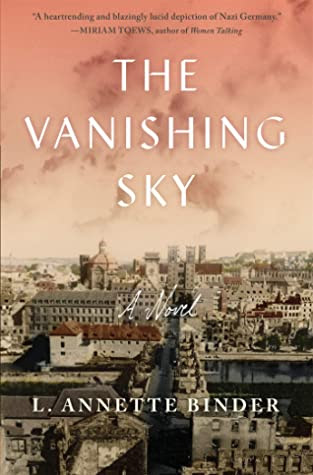
THE VANISHING SKY
L. ANNETTE BINDER

Bloomsbury USA (non-affiliate Amazon link)
$9.99 Kindle edition, available now

Rating: 3.25* of five

The Publisher Says: For readers of Warlight and The Invisible Bridge, an intimate, harrowing story about a family of German citizens during World War II.

In 1945, as the war in Germany nears its violent end, the Huber family is not yet free of its dangers or its insidious demands. Etta, a mother from a small, rural town, has two sons serving their home country: her elder, Max, on the Eastern front, and her younger, Georg, at a school for Hitler Youth. When Max returns from the front, Etta quickly realizes that something is not right-he is thin, almost ghostly, and behaving very strangely. Etta strives to protect him from the Nazi rule, even as her husband, Josef, becomes more nationalistic and impervious to Max's condition. Meanwhile, miles away, her younger son Georg has taken his fate into his own hands, deserting his young class of battle-bound soldiers to set off on a long and perilous journey home.

The Vanishing Sky is a World War II novel as seen through a German lens, a story of the irreparable damage of war on the home front, and one family's participation-involuntary, unseen, or direct-in a dangerous regime. Drawing inspiration from her own father's time in the Hitler Youth, L. Annette Binder has crafted a spellbinding novel about the daring choices we make for country and for family.

I RECEIVED A DRC FROM THE PUBLISHER VIA NETGALLEY. THANK YOU.

My Review
: First, read this:
“You’ve got to do the right thing. You’ve got to use your mind,” she said. “That’s what the real God wants. People should do the right thing but they never do.”

–and–

They should have hung their heads, but people didn’t feel shame anymore. They lied and after a while they believed the lies they told, and this is how it went.

–and–

“He’s not coming back,” Ushi pushed her cup aside. “People leave and they don’t come back. My Jens is gone and my Jürgen, too.” Her voice quavered. “They’ve wrecked the world, these men, and still they’re not done. They’d take the sky if they could. They’d take the air we breathe, and there’s nothing we can do to stop them.”

The Stockholm Syndrome of an entire nation, an entire class of people, is the shocking subject of this novel based on the facts as the author knows them surrounding her own family's WWII experience.

Etta Huber is frantic, as what wife of a dementia-suffering husband (Josef) trying to get into the war wouldn't be; as what mother of a returned soldier (Max) suffering from what we would call PTSD wouldn't be; as what loving, protective mother of a young teenager (Georg) caught up in a vision of glamour obfuscating the war's reality wouldn't be. The situation with Max is, of course, the one she's got the most emotional room for. No sane recruiter would take her retired-schoolteacher husband whose grasp of reality is deficient to wield a weapon, surely? Max, the bright and shining boy who left, is gone forever and here in his place is...a burden, frankly. In a time when the food-growing region the Hubers live in is getting less and less well-fed, another mouth isn't a joy...then Georg is sent to the Eastern front, which destroyed his brother Max, to dig defenses in what everyone knows is a vain effort to stop Allied tanks attcking German troops.

Etta isn't coping well with any of this. What she doesn't know is that she's got a stronger boy in Georg than she thought. He's been unable to believe the nonsense he's been fed in the Hitler Youth. He's fallen in love with one of the other boys, which (since this is simply unthinkable and impossible for Hitler Youths) has formed a strong resistant core in him. He ends up deserting before the boys get to the front, and walks home. Through war-torn Germany. On his own.

Max's horrors are always with him, and his behaviors worry his Mutti. Of course, he was always the odd kid:
Even when he was little Max had a way of fixing his eyes on her and asking questions that had no easy answers or no answers at all. "Mutti?" he'd asked her once when he was only six, "where do birds go to die? I see birds every day and never a dead one. Where do they go then?" and Etta could only shake her head at her boy, who thought of such things.

"They go someplace nice," she told him, "where it's quiet and the cats won't find them and the wolves and foxes neither. That's why we don't see them. They go to bird heaven." He looked at her a long while and then he nodded, satisfied with her response. It made sense that birds could find their way to heaven. They flew beneath it every day. It would only take a breeze to bear them up and through the gates, only a breeze and they were gone.

Much like Max himself disappears, vanishes from his loving mother's ability to care for him...forever. It's one of many heartbreaks in Etta's world.

What a world it was. She, and her other bog-standard German neighbors, have noticed there are people disappearing. Most of them simply note this fact without a lot of interest, but note it they do. The rare German whose instinct is to help in whatever small way she can the disappearing ones, is fighting a losing battle as we-the-readers know. But the fact is no one, inside or outside Germany, knew what was going on in the camps where the disappeared went. It wasn't good...but it was factually unknown until after the war. This novel is set *during* the war, and the author presents the unease of the people with the ever-increasing evidence of their leadership's lies and obfuscations.

In the end, what earned this book a mere shade over three stars was its overly slow pace. Many things were dwelt on that could've been done away with or been less of a focus. The voices of the Germans are, on the other hand, exactly how the German folk I knew in my life sounded: Formal, deliberate, and slightly obscured behind any words they did say. This doesn't mean it was always fun to read their ponderous utterances. But it was the purpose of the author to tell a family story. I expected it to have more of that feel to it. Instead it became a deeply personal historical account of the agonies of your way of life's death.

Monday, December 7, 2020

PIRANESI, the latest hugely immersive and fathomlessly involving Susanna Clarke novel

PIRANESI
SUSANNA CLARKE

Bloomsbury USA
$27.00 hardcover, $18.99 ebook editions, available now

Epigraph for this review: “If the doors of perception were cleansed, everything would appear to man as it is - infinite.”—William Blake


Rating: 4.9* of five

WINNER of the 2021 Women's Prize for Fiction!

The Publisher Says: From the New York Times bestselling author of Jonathan Strange & Mr Norrell, an intoxicating, hypnotic new novel set in a dreamlike alternative reality.

Piranesi's house is no ordinary building: its rooms are infinite, its corridors endless, its walls are lined with thousands upon thousands of statues, each one different from all the others. Within the labyrinth of halls an ocean is imprisoned; waves thunder up staircases, rooms are flooded in an instant. But Piranesi is not afraid; he understands the tides as he understands the pattern of the labyrinth itself. He lives to explore the house.

There is one other person in the house—a man called The Other, who visits Piranesi twice a week and asks for help with research into A Great and Secret Knowledge. But as Piranesi explores, evidence emerges of another person, and a terrible truth begins to unravel, revealing a world beyond the one Piranesi has always known.

For readers of Neil Gaiman's The Ocean at the End of the Lane and fans of Madeline Miller's Circe, Piranesi introduces an astonishing new world, an infinite labyrinth, full of startling images and surreal beauty, haunted by the tides and the clouds.

I GOT THIS BOOK FROM MY LOCAL LIBRARY. BLESS THEM ALL TO BITS.

My Review
: When you begin this voyage into the unknown, you're lulled into a sense of Rightness by this author's almost-familiar archaic language...if one has read Jonathan Strange and Mr. Norrell, this feels similar enough to make the initial impression one of either familiar immersion in warm water or an icy-cold dash of horrified repulsion and fear and desire to escape.

Indeed, I found it so simple, so direct, that I suspected a trap was being laid for me. My attention could wander among All the Capital letters, looking for Discrete meaning where there is general background clutter, furniture for The House. The House, you see, is the world. The Worldhouse is Piranesi's Place of Worship and Study, and is as close to infinite as Piranesi can conceive.
The enormity of this task sometimes makes me feel a little dizzy, but as a scientist and an explorer I have a duty to bear witness to the Splendours of the World.
–and–
The Beautiful Orderliness of the House is what gives us Life.

Life is exactly what Piranesi derives from the House. In the Drowned Halls our resourceful cicerone catches fish; in the Coral Halls, among other places, he finds colonies of mussels, and immense floats of seaweed; so the House feeds him at a most modest expenditure of energy and effort. The glorious visuals of this book are like eating Sachertorte
then black forest gâteau
then prinsesstårta
with cheesecake for dessert. The headiest are the moments we see the Drowned Halls and the Western Halls, the latter with their Statue of a Faun:
I dreamt of him once; he was standing in a snowy forest and speaking to a female child.

Could a clearer note be sounded to hark back to Lucy Pevensie and Mr. Tumnus? We're in a Story, laddies and gentlewomen, make no mistake about it. Not some run-of-the-mill novel, a Story, a myth made of sterner Stuff than a mere jeu d'esprit destined for an hour's-worth of pale pleasure. And like all those Stories we've loved and suffered through as we grew into our best selves (which, of course, we all have done like Piranesi has done), there must be An Other. Others are friends. Others are enemies. The Other, in the Story we are told here, is both and neither:
The Other believes that there is a Great and Secret Knowledge hidden somewhere in the World that will grant us enormous powers once we have discovered it.
–and–
‘Who or what is Addy Domarus?’ I asked.

‘A king. Long dead. Someone who possessed the knowledge. Or some of it at any rate. I’ve had success calling on him for aid in other rituals, notably for …’ He stopped abruptly and for a brief moment looked confused. ‘I’ve had success calling on him in the past,’ he finished.

The Other, then, is a Liar and a Manipulator. We see it, standing (more likely sitting, possibly reclining) outside the Story as we must, but our glorious cicerone does not. Or else why would we need his Story told to us?

Like any well-made Myth, the story expands the House and the Other into very odd, very frightening sizes and directions. Piranesi is a Naïf and we can't help but fear for him in his Eternal Present. But he is a scientist, and a methodical man, and he must needs follow clues and puzzle out Meanings in all the things he encounters. He makes complex calculations to determine when the Tides will make some parts of the House dangerous to him; he remembers the cycles of them so he can get food (a thing previous inhabitants...Thirteen of them, now reduced to bones that he cares for and speaks to and feeds offerings...could or did not master). His wanderings in the Halls are carefully notated in his Journals. But all his skills in this world will not stop The End from coming wearing a body he calls 16.

Author Clarke begins to crack open Reality and let in the pestiferous Mundane World, and Piranesi really, really Dislikes it. So do I, dear. Especially when the Other's Origin story begins to come clear, with the appearance of someone Piranesi calls the Prophet:
'You must have been well worth looking at before, you know … before everything happened. Ah, well! Old age happened to me. And this happened to you. And now look at us!'
–and–
'...I’ve never been very interested in what you might call morality, but I drew the line at bringing about the collapse of civilisation. Perhaps that was wrong. I don’t know. I do have a rather sentimental streak.’

But let's be honest. Not one word of this stuff feels false; it's like she's at it again, that Minx of an author, reinventing reality because there's no Reality in it. And then, when the superiority of Piranesi's fracturing Reality to our mere, meager reality is self-evident, the trap snaps shut:
The House is valuable because it is the House. It is enough in and of Itself. It is not the means to an end.
–and–
I went to the Eighteenth North-Western Hall and had a long drink of water. It was delicious and refreshing (it had been a Cloud only hours before).
–and–
Reality was not only capable of taking part in a dialogue – intelligible and articulate – it was also persuadable.

...and there one is, kettle not yet boiling and egg-salad sandwich congealing, longing to find, to be in Reality, and unable to wash the fog from one's eyes. Piranesi might not be a map of the journey, plain and notated onto paper, leading you to the House. That journey, Journey to be precise, is purely personal.

Don't kid yourselves; Susanna Clarke knows how to get there.

Wednesday, August 26, 2020

THE STORY OF CHARLOTTE'S WEB, a deep dive into the soul of a book many have read and cried over

THE STORY OF CHARLOTTE'S WEB: E. B. White's Eccentric Life in Nature and the Birth of an American Classic
MICHAEL SIMS

Bloomsbury USA
$9.99 Kindle edition, available now

Rating: 5* of five

The Publisher Says: As he was composing what was to become his most enduring and popular book, E. B. White was obeying that oft-repeated maxim: "Write what you know." Helpless pigs, silly geese, clever spiders, greedy rats—White knew all of these characters in the barns and stables where he spent his favorite hours. Painfully shy his entire life, "this boy," White once wrote of himself, "felt for animals a kinship he never felt for people." It's all the more impressive, therefore, how many people have felt a kinship with E. B. White. With Charlotte's Web, which has gone on to sell more than 45 million copies, the man William Shawn called "the most companionable of writers" lodged his own character, the avuncular author, into the hearts of generations of readers.

In The Story of Charlotte's Web, Michael Sims shows how White solved what critic Clifton Fadiman once called "the standing problem of the juvenile-fantasy writer: how to find, not another Alice, but another rabbit hole" by mining the raw ore of his childhood friendship with animals in Mount Vernon, New York. Translating his own passions and contradictions, delights and fears, into an al-time classic. Blending White's correspondence with the likes of Ursula Nordstrom, James Thurber, and Harold Ross, the E. B. White papers at Cornell, and the archives of HarperCollins and The New Yorker into his own elegant narrative, Sims brings to life the shy boy whose animal stories--real and imaginery--made him famous around the world.

I RECEIVED AN EARLY REVIEWERS' COPY in 2011 FROM THE ORIGINAL PUBLISHER VIA LIBRARY THING.

My Review
: The well-studied life of Andy and Katharine White, The New Yorker's original power couple, would seem to be infertile territory for new and original uses of its rich, deep material. There have been books and books on the magazine, on the couple, on the people that they knew and the world they both created and lived in. But no one until now connected Andy, nature, and Charlotte's Web, arguably one of the 20th century's most influential children's books.

Sims does this unusual job deftly, providing us with the bare facts of Andy's life, expanding upon those facets that serve his thesis that E.B. "Andy" White was less a social maladroit than a man in love with the natural world, and not greatly interested in most of the manufactured world around him; this slantwise perspective is what allowed the shy guy to see the story he would write, where others would merely have killed the pig for supper and brushed the web aside on the way out of the barn.

Due attention is given to the work life and the marriage of the man, and since that's well-trodden territory, the author leaves it in bare-bones form. I agree with this decision because it lets him get to the more involving parts of the story: Why did Charlotte come to be? What forces shaped the story, where did they come from, and how did this book make its journey from brainstorm to commercial success? Here is Sims's strength: He never bloviates about His Ideas, he distills a prodigious amount of reading, thinking, and talking into a nuanced, interesting, and immersive read about a book that, I suspect, most of us born after 1950 and educated in the US remember quite clearly encountering for the first time.

I disliked Stuart Little as a boy. I'd seen the dog give birth before I read it for the first time; I told my mother, "That story's stupid, she couldn't have had a baby that small alive." Mama looked at me a minute and said, "You're a very practical person, aren't you daaahlin?" (My mother was a Texan.) She then gave me Charlotte's Web. I was forever changed. Death entered my world. I don't mean awareness of it; I mean the *experience* of death, when Charlotte dies, was completely and utterly real for me. Absence. Empty space where before was an important life. Re-reading the book, as I did three or four times, couldn't make death go away. Charlotte was gone, that was that, no way was she coming back and her daughters weren't her. It took some time to recover from this blow.

And then several things happened: 1) I found out the same guy wrote this wonderful book as the dumb mouse-boy book. 2) I suddenly, in a great flash, realized that stories require readers to live, and even if Charlotte was dead, the story wasn't. 3) Maybe Stuart Little wasn't as bad as I thought it was, because the same guy told it! (Actually, I still think it's stupid, and I don't like it to this good day, forty-plus years later.)

So this book arrives from its publisher, all pretty and invitingly designed, and it's about a book that changed my worldview, and it's got that great new-book, ink-and-paper smell; well, what else to do but put down everything I was reading and all the chores I should be doing, curl up on my breezy, cool sunporch, and immerse myself in the story of the story I've adored for most of my life?

I am so very glad that I did. I feel refreshed and energized, ready to take on my own storytelling tasks with renewed vigor. The book isn't life-altering, or possessed of an outsized grandeur, or elucidative of the Mysteries of the Ages, so I can't make a case for perfection; but to anyone who, as a sensitive child, was altered by that first encounter with Charlotte's Web, I recommend this book as a balm for your worn-out, worn-in adult soul.

Monday, August 6, 2018

METHLAND: The Death and Life of American Small Town, votes have consequences and not all good!


METHLAND: The Death and Life of an American Small Town
NICK REDING

Bloomsbury USA
$17.00 trade paper, available now

Rating: 4.5* of five

The Publisher Says: The dramatic story of the methamphetamine epidemic as it sweeps the American heartland a timely, moving, very human account of one community s attempt to battle its way to a brighter future.

Crystal methamphetamine is widely considered to be the most dangerous drug in the world, and nowhere is that more true than in the small towns of the American heartland. Methland tells the story of Oelwein, Iowa (pop. 6,159), which, like thousands of other small towns across the country, has been left in the dust by the consolidation of the agricultural industry, a depressed local economy, and an out-migration of people. As if this weren t enough to deal with, an incredibly cheap, longlasting, and highly addictive drug has rolled into town.

Over a period of four years, journalist Nick Reding brings us into the heart of Oelwein through a cast of intimately drawn characters, including: Clay Hallburg, the town doctor, who fights meth even as he struggles with his own alcoholism; Nathan Lein, the town prosecutor, whose caseload is filled almost exclusively with meth-related crime; and Jeff Rohrick, a meth addict, still trying to kick the habit after twenty years. Tracing the connections between the lives touched by the drug and the global forces that set the stage for the epidemic, Methland offers a vital and unique perspective on a pressing contemporary tragedy.

My Review: The major take-away of this book, for me at least, was to explain something I've been at a complete loss to comprehend: The virulent, violent hatred of Immigrants by the Trumpanzees. Racism makes no sense to me...I hate a person, not A People...but its prevalence in what I don't accept as the Heartland, more flyover country, attests to its power. But why?

It's not their skin color, or their accent, those are things that familiarity will wear down to nubs in a remarkably short time. Say a generation. My father still made fun of Italians and Poles; I can't pick an Italian-American or Polish-American out of a lineup.

It's not that they're taking our jobs. That's misdirected class warfare, and can almost always be redirected against the vile perpetrators of the crime of job theft after a few months of patient and factual discussion.

It's the lawlessness of the Mexican Drug Trafficking Organizations and their enforcers. All Mexican. All brown skinned and all Spanish speaking. The roundups and the crimes and the staggering cost of the drugs' prevalence in an area of little to no economic opportunity, coupled with the lack of other, countervailing examples of good, law-abiding, tax-paying people of the same ethnicity and skin color and language family, make the only experiences the Trumpanzees have negative to cataclysmically horrible ones.

During Prohibition, the wine-drinking Italians became bootleggers as the idiotic and useless Volstead Act drove demand for the high of alcohol underground. Others were in the game as well, of course, but the Italians used their cultural priority of family-before-others to create and run a lucrative industry supplying Americans with their hooch. Bathtub gin blinded people. Straight-up wood alcohol killed people, despite being cut with water and flavored with gawd-knows-what. People still got high because the Depression was on and the world was horrible and this guinea down the road could hook you up with some oblivion for a dime.

A few minor modifications to that and you have the Irish moonshiners of the 19th century, the Black crack dealers of the mid-20th century, or the Mexican meth dealers of the 21st.

Does a pattern become apparent here? People want, maybe even need, to get high. There's always a way, and there's always a law against it. Which makes satisfying the need profitable, which attracts the disenfranchised (often immigrants), which leads to stigmatization then outright calumniation and scapegoating.

Methland lays the case against stigmatizing the fulfillers of the need and directs our attention to the creators of the need. It's done without hysteria or shrillness, no finger-pointing orgy of shame. It's a rational, reasoned discussion of the costs and the causes of a scourge that won't stop scourging our backs until we look up and see it clear and plain:

Corporate capitalism.

Sunday, April 30, 2017

THE MOST PERFECT THING, how life begins in fragile containers


THE MOST PERFECT THING
TIM BIRKHEAD

Bloomsbury USA (non-affiliate Amazon link
$9.99 Kindle edition, available now

Rating: 4.5* of five

The Publisher Says: Renowned ornithologist Tim Birkhead opens this gripping story as a female guillemot chick hatches, already carrying her full quota of tiny eggs within her undeveloped ovary. As she grows into adulthood, only a few of her eggs mature, are released into the oviduct, and are fertilized by sperm stored from copulation that took place days or weeks earlier. Within a matter of hours, the fragile yolk is surrounded by albumen and the whole is gradually encased within a turquoise jewel of a shell. Soon afterward the fully formed egg is expelled onto a bare rocky ledge, where it will be incubated for four weeks before another chick emerges and the life cycle begins again.

The Most Perfect Thing is about how eggs in general are made, fertilized, developed, and hatched. The eggs of most birds spend just 24 hours in the oviduct; however, that journey takes 48 hours in cuckoos, which surreptitiously lay their eggs in the nests of other birds. From the earliest times, the study of birds' ovaries and ova (eggs) played a vital role in the quest to unravel the mysteries of fertilization and embryo development in humans. Birkhead uses birds' eggs as wondrous portals into natural history, enlivened by the stories of naturalists and scientists, including Birkhead and his students, whose discoveries have advanced current scientific knowledge of reproduction.

My Review: I thought "guillemot" was a Dr. Seuss name before I read this book. Author Birkhead disabused me of this with his praises sung for the aesthetics of their shells:
I mean pretty enough, but this guy's obsessed....

And eggs are perfect in so many different ways. They have to be, for birds lay and incubate in such incredible diversity of habitats and situations, from the poles to the tropics; in wet, dry, clean and microbe-infested conditions; in nests and without nests; warmed by body heat and without body heat. The shape, colour and size of eggs as well as the composition of their yolk and albumen all constitute the most extraordinary set of adaptations. The fact that birds' eggs also provided biologists with their first insights into human reproduction makes their story even more momentous.
He is not overselling the burden of his refrain. This is a fascinating look at what these dinosaur revenants do in the reproductive world (I got a new insult out of the read: I told one person I detest that she was an altricial birth to a precocial species) and what that has revealed to scientists in applicability to all others.

People's love of the beauty of eggs has led to some dark consequences. Egg collectors hunted their favorites to actual or functional extinction, inspiring the UK to pass pretty draconian laws against private ownership of the things...in 1954! Even *I* wasn't born then, and Rachel Carson's Silent Spring was still a love-offering in progress!

What you need to know most is: was it fun to read? I'll say yes, because I really like science and am not afraid of the dictionary. If you're not a science nut, maybe it won't delight you; maybe you'll have to look stuff up; and maybe that won't agree with you.

It agreed with me.

Saturday, February 27, 2016

BOXER, BEETLE earns a 4-plus star review


BOXER, BEETLE
NED BEAUMAN

Bloomsbury USA
$16.00 trade paper, available now

Rating: 4.25* of five

The Publisher Says: Kevin "Fishy" Broom has his nickname for a reason-a rare genetic condition that makes his sweat and other bodily excretions smell markedly like rotting fish. Consequently, he rarely ventures out of the London apartment where he deals online in Nazi memorabilia. But when Fishy stumbles upon a crime scene, he finds himself on the long-cold trail of a pair of small-time players in interwar British history. First, there's Philip Erskine, a fascist gentleman entomologist who dreams of breeding an indomitable beetle as tribute to Reich Chancellor Hitler's glory, all the while aspiring to arguably more sinister projects in human eugenics. And then there's Seth "Sinner" Roach, a homosexual Jewish boxer, nine-toed, runtish, brutish-but perfect in his way-who becomes an object of obsession for Erskine, professionally and most decidedly otherwise. What became of the boxer? What became of the beetle? And what will become of anyone who dares to unearth the answers?

First-time novelist Ned Beauman spins out a dazzling narrative across decades and continents, weaving his manic fiction through the back alleys of history. Boxer, Beetle is a remarkably assured, wildly enjoyable debut.

My Review: Pawn Stars meets Queer as Folk, directed by Leni Riefenstahl and produced by Russell T Davies.

I read this after I'd gulped down The Teleportation Accident. Whatever Ned Beauman writes, he leavens with amusing dialogue and mildly incredible situations. I've heard his work characterized as science fiction. I think of that as a compliment, yet I'm not sure that label fits. It feels to me more as though Beauman has Anglicized the South American Magical Realism, shining the black light and the strobe light simultaneously on real situations, recognizable people, and commonplace locations, thereby revealing the bloodstains, the slug tracks, and the frightened faces of bystanders to the events unfurling before us.

This strange tale of fascists obsessed with Jewish sex objects is made much more fun by the modern-day frame around it. The Nazi-memorabilia thread made the whole story come together, as there was no missing the echoes of the insanity of the 1930s in modern times.

But to me the 4ft11in Sinner Roach (a piece of word-play that only makes sense in the book's context) steals the book. A boxer who makes more money from the men he fucks than he'd ever dreamed possible, goes to New York to fight the biggest fight of his career. If he can stay sober, he'll be in the big time. Well...Sinner is aptly named, let's say. His antics in New York and London are worth the book's cost. But the modern-day outcast, Sinner's echo, good-guy hacker/thief Fishy is just as amusing as he races around London in Sinner's long-ago wake to make his own big-time score. Where the two paths converge is a very moving moment. Considering Beauman's apparent dislike of sentimentality, it's also unusual.

I can't help but complain about one thing: The Philip Erskine Malaise. As soon as he takes over the narrative, he leaches the fun and slows the pace from the narrative. His wishy-washy mealy-mouthed scaredy-cat snobbery made me cringe, roll my eyes, and snort impatiently. Hence the 3/4-star deduction from the rating. Because this started out as a 5-star read, and should have stayed one. Don't cheat yourself, though, get the book on your TBR hillock somewhere near the top.

Saturday, November 2, 2013

THE TELEPORTATION ACCIDENT review


THE TELEPORTATION ACCIDENT
NED BEAUMAN

Bloomsbury USA
$25.00 hardcover, available now

Rating: 4.8* of five

The Publisher Says: HISTORY HAPPENED WHILE YOU WERE HUNGOVER.

When you haven't had sex in a long time, it feels like the worst thing that is happening to anyone anywhere. If you're living in Germany in the 1930s, it probably isn't.

But that's no consolation to Egon Loeser, whose carnal misfortunes will push him from the experimental theatres of Berlin to the absinthe bars of Paris to the physics laboratories of Los Angeles, trying all the while to solve two mysteries: whether it was really a deal with Satan that claimed the life of his hero, the great Renaissance stage designer Adriano Lavicini; and why a handsome, clever, charming, modest guy like him can't, just once in a while, get himself laid.

From the author of the acclaimed Boxer, Beetle comes an historical novel that doesn't know what year it is; a noir novel that turns all the lights on; a romance novel that arrives drunk to dinner; a science fiction novel that can't remember what 'isotope' means; a stunningly inventive, exceptionally funny, dangerously unsteady and (largely) coherent novel about sex, violence, space, time, and how the best way to deal with history is to ignore it.

LET'S HOPE THE PARTY WAS WORTH IT.

My Review: My review, if I was up for it, would be nothing but retyping the entire novel in this space. You don't need to read my yodels of praise and warbles of inducement to buy the book, you need to read the book.

Is the book funny, as is claimed for it in so many "real" review sources? Here's something I marked on page 7:
Klugweil, meanwhile, was a twenty-four-year-old so languid as to be almost liquid, except when he went on stage and broke open some inner asylum of shrieks and contortions, wild eyes and bared teeth—which made him perfectly suited to Expressionist acting and almost useless for any other type. He'd been at university with Loesser, who had always wondered what he was like during sex but had never quite had the cheek to make an enquiry with his dull girlfriend.
Page seven and I'm chuckling, building to a snorting laugh. This is my kind of humor, this droll and dry as a good martini sort of language making ironic-verging-on-facetious observations of all those about the main character...and which observations comment quietly on the main character himself.

What about the romance mentioned so prominently in the book's sales materials, and in "mainstream" reviews? Loesser pursues the elusive, rich, and utterly madcap Adele Hitler (no relation) across continents, despite this exchange from page 54:
"You'll fuck the man who brings your coffee just because he's handsome, and yet I chase you for two years and --"
She waved her hand as if to swat him away. "Oh, please let's not get into that again. 'Love is the foolish overestimation of the difference between one sexual object and another.'"
"Who said that?"
"I saw it on the wall at a party."
"Oh, so it must be true! And all my devotion means nothing?"
"I'm flattered, but there'd be no point in us even trying. You're the sort of man who couldn't stand it if I were unfaithful, but you're also the sort of man I couldn't help but be unfaithful to. You're that type. You're an apprentice cuckold."
Well, all righty then! That's him told. Loesser's anguished suspicion that Adele is right wars with his indignation at being evaluated, pigeonholed, and relegated to a non-starter position before he can make so much as a move. This propels the rest of the novel.

For noir tropes, we have Loesser's falling in with one Dr. Voronoff, famous in the demi-monde of Paris for his impotence cure: Insert the testicle of a monkey between a man's own testicles and let its nature suffuse the aging roué with unquenchable virility. For madame, there is a similar cure for the debilities of aging: Skin cream made from the foreskins of newly circumcised babies. Fresh, innocent skin cells from a body part famed for its stretchiness...well, what could possibly make more sense? A can't-fail nostrum for wrinkles and crow's feet! And Loesser, plus an accomplice-cum-con man called Scramsfield (who promises Loesser that he will reunite him with Adele, already vanished to Los Angeles), will happily liberate wealthy, stupid American women from their desperately needed money in order to survive the Great Depression.

After a spectacular failure in the quackery trade makes Paris too hot for Loesser, he continues his pursuit of Adele to Los Angeles, and here the story becomes an extremely strange (even stranger, I suppose) send-up of Golden Age science fiction tropes, decadent capitalist stereotypes, rumors of Hollywood loucheness, all of which so deeply informed the interwar popular culture's storytelling.

Teleportation. Actual physical teleportation. Research and development for same. It's almost incalculably difficult to imagine how this could be done on a macro scale in today's scientific universe, but thankfully Beauman hasn't set his story in our world but in 1935 (as it now is in the story). And here we come to a place in the narrative where, although there is no diminution of the chuckle-inducing phrasemaking or the wince-cringe-and-giggle observation that's characterized the book until now, the window-dressing is just that, decoration.

The heart of this book is yearning. Everyone in the book yearns for something, be it a person, a state of feeling, a quantum of knowledge, a passed opportunity, a deed desperately regretted that's in need of recall; yearning and searching for the way to fill the void left by the object yearned for. Adele, that object of Loesser's yearning, seeks to fill her own void by assisting in the creation of an actual, physical teleportation device, being the amanuensis and magician's assistant to Professor Bailey of the currently rechristened California Institute of Technology. The Professor has the most yearning of anyone in the entire book, stretching back to a time in Los Angeles history when what was then the Throop College of Technology welcomed a Midwestern boy called Bailey....

I don't believe anyone would thank me for the spoiler that completes that sentence. It's worth the trip to discover it yourself.

This novel was longlisted for the 2012 Booker Prize, and I see why. Beauman's linguistic playfulness and inventive use of tropes in ways both satirical and satisfying to trope fans is amazing when one considers his revolting youth. (He is under thirty, which I consider an affront to God. No one born after Man left the Moon for the final time to date should understand the world Beauman builds with deft and dextrous motions. Ain't natural.)

I left this reading experience amused, satisfied, and to my own surprise, quite moved. I liked the process of getting to the end of the story. I liked the scenery painted for me along the way. I liked the moral, or to give it less gravitas, the point of Beauman's engrossing, enfolding, bemusing narrative. I really want to know what happens next in Beauman's career. I hope I can keep all my buttons in the proper buttonholes until he finishes his ideas' fermentation.

I've rated the book under five stars, which all of the foregoing would seem to support, because I wasn't catapulted to a new level of spiritual awareness or aesthetic ecstasy (0.1 off), and because the dust jacket of the hardcover edition is coated in some sort of spoodge that has the hand-feel of the years-old bacon grease that coats the interior of a none-too-clean greasy spoon's range hood (0.1 off, after an entire star disappeared; seemed unfair to Beauman, since *he* didn't choose this icky stuff. If I come to find out he *did* choose it, another star off, and no mistake).