Pages
- Home
- Mystery Series
- Bizarro, Fantasy & SF
- QUILTBAG...all genres
- Kindle Originals...all genres
- Politics & Social Issues
- Thrillers & True Crime
- Young Adult Books
- Poetry, Classics, Essays, Non-Fiction
- Science, Dinosaurs & Environmental Issues
- Literary Fiction & Short Story Collections
- Sookie Stackhouse/Southern Vampire Books & True Blood
- Books About Books, Authors & Biblioholism
Showing posts with label Scotland setting. Show all posts
Sunday, December 7, 2025
THE SALVAGE, sapphic Gothic Scottish fun
THE SALVAGE
ANBARA SALAM
Tin House Books (non-affiliate Bookshop.org link)
$9.99 ebook, available now
Rating: 4* of five
The Publisher Says: A twisting, gothic literary thriller sure to delight fans of Our Wives Under the Sea by Julia Armfield, The Wonder by Emma Donaghue, and The Paying Guests by Sarah Waters.
It is 1962, and Marta Khoury, a trailblazing marine archaeologist, has been called to Cairnroch, a small island off the east coast of Scotland. A Victorian shipwreck, dragged from arctic waters, holds the remains of a celebrated explorer and the treasures of his final expedition. But on her first dive down to the ship, Marta becomes convinced she has seen a dark figure lurking amid the wreckage.
When the Cuban Missile Crisis and the deep chill of a record-breaking winter keeps Marta stranded on Cairnroch, she forms a relationship with Elsie, a local woman working in the island’s only hotel. When the ship's artefacts inexplicably disappear, Marta and Elsie have to brave the freezing conditions to search for the missing objects before anyone else catches on. As something eerie seems to follow her at every step, Marta must confront if the haunting is a figment of her imagination, the repercussions from a terrible mistake from her past, or if something more sinister is at play that will trap her and everyone on the island—and their secrets—in an icy wilderness.
I RECEIVED A DRC FROM THE PUBLISHER VIA NETGALLEY. THANK YOU.
My Review: Sapphic gothic ghost story set in the icy winter waters of the North Sea off Scotland? Meat and drink! Get in my eyeholes!
Marta, a woman in the dangerous business of commercial salvage diving in 1962, is a rarity. It's her husband who runs things, and maybe it's just me but seems to me he's not averse to taking on jobs that put Marta in very significant danger. As the story unfolds, there are secrets in this marriage that, well, that cast doubts....
She's evidently, however, still down with this. Not only does her narrative voice convey very significant pleasure in the underwater world, she's at her sharpest while observing the wreck off Cairnroch. The eerie shadow? That's not an object, that's a being and no being not suited up like her belongs down there. Anyone would get the hell away as fast as possible!
Returning to the surface, badly shaken but with her inventory of the salvage to be collected, there occur things to prevent her from going down to begin salvage right away. On the return trip, she discovers there are very significant items missing...she inventoried them, now they're not there. (Listing them would be spoilery, so no on that.) What's happened? It's not like deep salvage diving is something just anyone can do, nor is it obvious how the heck the stuff was removed, or where it could've gone.
It makes the cold reception of the (quite Calvinist) Cairnroch people more pronounced...the treasure belonged to a very revered local hero, whose family has commissioned the recovery of material to fill a museum on the island. The extreme cold of that winter, the greatly heated up Cold War (this was the year of the Cuban Missile Crisis), and the weird behavior of the islanders towards her make Marta...uneasy...plus, after the artifacts she was to salvage got disappeared, things got no better. Worse, in fact as now she can't shake the sense of being followed...since the Presence on the wreck gave her a scare.
With all the troubles piling up, Marta needs backup. Her husband isn't there, wouldn't be likely to help if he was...he's still angry over some stuff...though he is still her boss. Anyway a local will be more help because things are weird in this place she's isolated inside by weather, world events, and the job she still needs to pull off in order to get paid.
Enter Elsie. She's so local she works at Cairnroch's only hotel. She and Marta are...eyeing each other up...so maybe she will act as Marta's go-between to see what the hell's happening here. And on this super religious rock, Elsie's probably never had a better opportunity for a hook-up. And I do not think anyone on the island's at all fooled by their sneakin' ways. It's another layer of Other in a world obsessed, in that terrible, cruel Calvinist way, with Us-v-Them. I was pretty unconvinced by the way the "special friendship" developed considering Marta's dramatically obvious Otherness and Elsie's being One of Us to the islanders.
The resolution to the different situations arrives as one would hope it would, arising from the events Author Salam's created; but honestly it was waaay later than it would ideally have been. Marta and Elsie aren't any closer at the end than is decorous. It felt to me that, for three-quarters of the book, I was hoping Marta's husband would show up and stir the pot, or something equally dramatic.
This is not a dramatic book. It's all vibes. Really, really good vibes...I put my cardigan on half a dozen times despite it being seventy degrees in here...but short on the stuff of drama. Fights? Not even verbal ones. Hauntings? Self-inflicted ones galore. All very interesting to me. Not terribly exciting.
As someone who appreciates a narrator who isn't seeing what's really happening but instead what her shadows let her see, I was fine with this. Marta, Syrian/Scot like the author is, is a woman out of every place she's ever been put. Check. Marta's really sure she Knows the Score, despite not seeing the hoop half the time. Check. Marta's never let her defenses down, not for anyone; too risky. Check. The list goes on.
Reading diary entries is a very gothic way to build suspense. I myownself don't think it works in favor of low-conflict, high vibes stories so that seems like a miss to me. It would be a five-star read as an only-vibes novella; it only gets to four stars as a heavy-vibes gothic eerie haunted-house novel, with too little (and too incredibly uncritically unexamined) sapphic stuff to really get past the gate into the churchyard.
So I can't recommend it unreservedly but can definitely say there's a pleasurable red here for a vibes reader seeking wintertime chills; anyone who likes underwater scenes is going to purr happily, as they're some of the most effective writing in the story; and those in love with a ghost story for Yule.
Monday, September 23, 2024
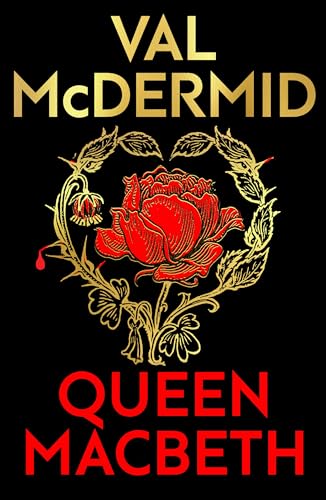
QUEEN MACBETH, feminist thriller set in medieval Scotland starring a reimagined Lady Macbeth

QUEEN MACBETH
VAL McDERMID
Atlantic Monthly Press
$22.00 hardcover, available tomorrow
Rating: 4* of five
The Publisher Says: Shakespeare fed us the myth of the Macbeths as murderous conspirators. But now Val McDermid drags the truth out of the shadows, exposing the patriarchal prejudices of history. Expect the unexpected . . .
A thousand years ago in an ancient Scottish landscape, a woman is on the run with her three companions—a healer, a weaver and a seer. The men hunting her will kill her—because she is the only one who stands between them and their violent ambition. She is no lady: she is the first queen of Scotland, married to a king called Macbeth.
As the net closes in, we discover a tale of passion, forced marriage, bloody massacre and the harsh realities of medieval Scotland. At the heart of it is one strong, charismatic woman, who survived loss and jeopardy to outwit the endless plotting of a string of ruthless and power-hungry men. Her struggle won her a country. But now it could cost her life.
I RECEIVED A DRC FROM THE PUBLISHER VIA NETGALLEY. THANK YOU.
My Review: I'm a man. An old, white one.
I'm sorry to disappoint those who now expect me to whine about "ruining Shakespeare" and "making up feminism ahistorically" and suchlike nonsense, but I myownself think this novella is telling not only a cracking good story, but bringing a long-ignored reality to light. Women, modern, medieval, or ancient, were and are not passive, pointless victims or tiresome termagants. They are, were, and always have been people with agency, possessed of skills and ideas that motivate and support changing their world.
Every story that supports this reality, presents it without a dingy scum of patriarchal judgment of those women for exercising their power, gets my enthusiastic support. Queen Macbeth is no exception.
Riffing on the great stories of history and mythology is currently very much à la mode. The trend picked up steam most recently after The Song of Achilles appeared early in the teens. It was never exactly ignored, after all...John Erskine wrote Arthurian retelling Tristan and Isolde: Restoring Palamede in 1932; Thorne Smith wrote modern satires with horny, drunken Greek Gods until his death in 1934; Tolkien remixed Anglo-Saxon epic poetry to some modest success in the 1950s. The urge to put one's own stamp onto the greatest stories of the culture is never absent. Imagine all the lost Iliads wrought by bards before writing was reinvented! (Side note: why has Jodi Taylor not sent the disaster magnets back to record some of those?) The great plays of Athens's Golden Age retold the myths, too, and that was six hundred years before the common era is reckoned to have begun.
So a Scottish crime writer revisiting Lady Macbeth's truly awful characterization at Shakespeare's hands is unsurprising. Make that Scot an outspoken feminist lesbian and, well, go figure that she would find this retelling irresistible. I wish I'd loved it instead of simply, and inevitably, admiring it. Using her widely lauded storytelling chops to re-center the Bechdel-test failing character as a powerful ruler in her own right is delightful; the way she contextualizes her choice in her Author's note made me almost giddy with anticipation.
Then came reality swinging her mace of office.
Choosing to use Scottish words...well, okay, you're Scottish, the story's Scottish, but the huge majority of the world's readers have never seen, and don't care to see, those words. Climbing the hill with a Glossary is fine; putting said glossary at the end of an ebook is a worse idea than in a tree book. In the ebook, a hyperlink to the entry with that word is possible; links that take you there and back are possible; neither was made. I did not use the glossary once during the read and lost not only fine nuance but faith that I was being considered as a guest in this world. It feels very much like the divisive, arrogant attitude regrettably common...in every sense of the word...in internet discourse about cultural identity: "I don't owe you an explanation of my culture/language/art/thing under discussion!"
Then you do nor care if I, or any "outsider," understand you? Okay. Then you'll mostly get ignored.
Author McDermid and/or publisher(s) just put a hard limit on how many people will slug it out with unhelpfully untranslated Scottishness. The tree book might be a better choice than an ebook for those who can't or won't simply skip past wotds they don't know.
Pity, that; Gruoch as reimagined is a kickass character. Her struggles matter.
Friday, April 5, 2024
CLEAR: A Novel, the most loving novel I've read in 2024
CLEAR: A Novel
CARYS DAVIES
Scribner
$24.00 hardcover, available now
Longlisted for the 2025 Walter Scott Prize for Historical Fiction!
WINNER of the £10,000 2025 Ondaatje Prize for writing that “best evokes the spirit of a place.”
Rating: 5* of five
The Publisher Says: A stunning, exquisite novel from an award-winning writer about a minister dispatched to a remote island off of Scotland to “clear” the last remaining inhabitant, who has no intention of leaving—an unforgettable tale of resilience, change, and hope.
John, an impoverished Scottish minister, has accepted a job evicting the lone remaining occupant of an island north of Scotland—Ivar, who has been living alone for decades, with only the animals and the sea for company. Though his wife, Mary, has serious misgivings about the errand, he decides to go anyway, setting in motion a chain of events that neither he nor Mary could have predicted.
Shortly after John reaches the island, he falls down a cliff and is found, unconscious and badly injured, by Ivar who takes him home and tends to his wounds. The two men do not speak a common language, but as John builds a dictionary of Ivar’s world, they learn to communicate and, as Ivar sees himself for the first time in decades reflected through the eyes of another person, they build a fragile, unusual connection.
Unfolding in the 1840s in the final stages of the infamous Scottish Clearances—which saw whole communities of the rural poor driven off the land in a relentless program of forced evictions—this singular, beautiful, deeply surprising novel explores the differences and connections between us, the way history shapes our deepest convictions, and how the human spirit can survive despite all odds. Moving and unpredictable, sensitive and spellbinding, Clear is a profound and pleasurable read.
I RECEIVED A DRC FROM THE PUBLISHER VIA NETGALLEY. THANK YOU.
My Review: What a simple, joyful story. A pair of souls are separated and so each is dissatisfied with Life. Neither knows the other exists. As the wheels of Fate catch and shudder away in the eternal darkness of chimrie (Heaven in Norn), bringing Ivar the endling of his people, and John the prodigal son of the Presbyterian faith, into their close communion, the story moves its calm inexorable way forward. Every time Ivar speaks in his dying tongue (Norn went extinct around 1850 in reality), John strains to learn what his words mean, what they describe and therefore come to form in John's mind.
The fact that John, clergyman, does this work is very telling. That he does it with the man he's been sent to dispossess of his lifelong home is...crucial. That he does this work with this man after taking this job to support Mary, his newly-wed wife, left behind on mainland Scotland; that he has sided with the anti-capitalists in the Disruption of 1843 and reluctantly took this job anyway; all these details add up to an ending that I found deeply moving, satisfying, and intensely soothing. I'm not going to spoil it for you because Author Carys makes it into quite the reveal.
I do not for a second believe it could have ended this way. I am sure it could have happened this way, though. But...well...1843, Presbyterians, human jealousy...it was a huge stretch for me to get over even one of those hurdles to accept that situation as presented as the ending of the story.
I will not downgrade this beautifully written fairy tale for lacking verisimilitude. I will go with the logic that Author Carys employs, and recommend the same course to you in your own read of the story.
Which, it being a short, fast read with the kind of language use that makes me wish this is what y'all called poetry, should be done soonest.
Wednesday, October 25, 2023
WHERE DEMONS HIDE, or really "don't hide well enough to get away with it"
WHERE DEMONS HIDE (Rebecca Connolly #4)
DOUGLAS SKELTON
Arcade CrimeWise
$27.99 hardcover, available now
Rating: 4.5* of five
The Publisher Says: Something scared Nuala Flaherty to death. When her body is found in the centre of a pentagram on a lonely moor, Rebecca is determined to find out what. Was she killed by supernatural means, or is there a more down-to-earth explanation?
Rebecca’s investigation leads her to a mysterious cult and local drug dealings. But what she doesn’t know is that crime matriarch Mo Burke still has her in her crosshairs. Mo wants payback for the death of her son, and after one failed attempt to hurt Rebecca, she is upping the ante. And this time, it could be lethal.
I RECEIVED A DRC FROM THE PUBLISHER VIA EDELWEISS+. THANK YOU.
My Review: Back to Stoirm Island go we all as Rebecca gets drawn into another strange, outlandish murder's resolution. The reason I like these stories is that they offer such weird ways for people to die...with very down-to-Earth explanations that fit consensus reality down to the ground. This being how I experience the world...whatever's got weirdness wrapped around it is being obfuscated by someone for some reason...I'm down for another trip.
Nuala's death was so OTT that the author's hand seemed tipped too far from the start. As her sad little life's ending proves, some people just have no luck in this world. The Children of the Dell are clearly a cult, and Nuala should've kept away. Cults are dangerous. Always. "Don't get near them" is the only advice you need about dealing with cults. Run away if they come for you, and never get into it with cultists, or Trouble will follow. This equally applies to Rebecca, of course; the difference is, she's responsible for ending the profitable cult-like existence of Mo Burke's family's drug-dealing cult of loyalties fiercely held. Not all religions need the supernatural to exist powerfully in their followers' hearts.
Rebacca, understandably, isn't going back to Stoirm to look into stuff...Chaz and Alan getting married there puts them into position to be her eyes and ears. These two are a delight! Rebecca's weird, unsettling past on Stoirm isn't going to keep these boys from doing the needed work for her; it's not going to cow them into inactivity, despite the spooky overtones to so many things; it's not going to prevent them from being their fun, funny, in-love selves as they help their friend fix the broken thread of a taken life in the world's tapestry.
No matter that there are explantions for what happened to Nuala, and what's behind the scene set to distract from her death; Author Skelton makes Rebecca and her catspaws work for every clue and struggle to make sense of the remorselessness of greed and jealousy that propel narcissists to act with cruelty and finality. Revenge? They think it's Justice. Being Right is an addiction to the narcissistic people of the world. Rebecca, and Elspeth, like being right for better reasons: Resolving evil deeds done by powerful and power-hungry narcissists. The two of them, having suffered at those hands they now do their best to tie up in handcuffs, pursue the benign factual-correctness face of Being Right. Theire news-reporting business is dedicated to it. This is an agreeable dream to me, so I suspend my disbelief that independent news-gatherers in Inverness, Scotland, could do what they do without being squashed under lawsuits and calumnies and threats to their safety.
Fiction is a balm and a blessing for letting me have these fantasies of Ma'at being served so well. Douglas Skelton's talents for dialogue and character creation are, as expected, well used and effective throughout the read. The plot isn't without its issues. At times, Rebecca doesn't see things I've come to think she should until past the time they're obvious. This is usually handwaved away but it happens. Chaz and Alan are, as mentioned, very sweet togeher if just a touch overplayed. I don't mean as a gay couple...I mean as Rebecca's sleuths, at times, they seem to be taking their roles flippantly and playing up how cute they are. These are quibbles, not issues; the fact is that reasonable readers can and will read the same words I did and not see what I saw, so I'm not in any way downgrading the story.
What, as always with Author Skelton's stories, happens is clearly a result of Rebecca's, and Elspeth's, moral values: No matter what, who, or where they are, victimizers must be stopped and brought to punishment for their wrongdoing. Mystery series are always in service of ma'at. The Egyptian personification of Justice and balance and harmony and order and even law is the one whose remit includes protecting and aiding this kind of journalist/sleuth with a powerful moral compass. It makes the genre one I resonate with on a bone-deep level. Rebecca, and all the people she surrounds herself with, resonate to Justice's gonging vibrations. I love the way Author Skelton uses, sometimes almost too much and too often, the hints of something from the Beyond being on Rebecca's side. I believe there is a Rightess in the world that is tipped out of balance when someone is victimized. Finding, in Rebecca and her crew, others who have that feeling too makes these reads deeply satisfying.
This outing's no exception. The ending is very satisfying, and will leave my fellow series-loving readers happily anticipating more from Douglas Skelton.
Wednesday, July 26, 2023
DOUGLAS SKELTON's Rebecca Connolly series: THUNDER BAY, THE BLOOD IS STILL, A RATTLE OF BONES
THUNDER BAY (Rebecca Connolly #1)
DOUGLAS SKELTON
Arcade CrimeWise
$25.99 hardcover, available now
Rating: 4.25* of five
The Publisher Says: Stoirm’s secrets are worth killing for in this gripping thriller for readers of All the Missing Girls and Neon Prey.
When reporter Rebecca Connolly gets a tip that suspected murderer Roddie Drummond will be returning to the island of Stoirm, she smells a story. Though never convicted in the death of his girlfriend Mhairi fifteen years earlier, Drummond is still guilty in the eyes of many islanders, and his return for his mother’s funeral is sure to stir up old resentments, hatreds, possibly even violence. Rebecca has another reason for going to Stoirm. Her own father came from there, but he never went back, and he always refused to speak of it or say what drove him away.
Defying her editor, Rebecca joins forces with local photographer Chazz Wymark to dig into the mystery surrounding Mhairi's death and her unexplained last words, “Thunder Bay”—the secluded spot on the west coast of the island where, according to local lore, the souls of the dead set off into the afterlife. When a string of violent events erupts across the island, Rebecca discovers the power of secrets, and she must decide what to bury, and what to bring into the light.
Longlisted for Bloody Scotland's McIlvanney Prize for best crime book of the year.
I RECEIVED A DRC FROM THE PUBLISHER VIA EDELWEISS+. THANK YOU.
My Review: Journalists make great sleuths for a series because asking questions and poking into stuff others would prefer to leave alone is literally their job description. They're also, by training, very, very sensitive to being lied to and misdirected. Plus the police know they really need what journalists have...the public's attention...so they tend to understand that cooperation is the best way forward if both sides are to get what they want and need.
This series opener relies on an investigative journalist, Rebecca Connolly, ignoring her editor's instructions to leave a juicy story about a past crime alone. A murder happens, the perp...in everyone's eyes a guilty man...fled his little gossipy island community after the Scottish verdict is handed down (loosely translatable as "not guilty but don't do it again"), leaving all islanders convnced that he absolutely murdered the beautiful, popular girl he was living with. Now, fifteen years later, he's back. Things on the island are changing, luxury vacation destination development is being proposed, opposed, and debated, and here's Roddie coming home to a place that emphatically does not want him.
What unfolds is a corking raking-up of old secrets, including some from Rebecca's family that's from this island. There is an expected amount of anti-social behavior, mostly in the past, but the homophobia and domestic violence here could offend a sensitive reader. It isn't prurient in its use but it is present and neither downlayed nor valorized. Your personal thresholds for this kind of action should be your guide in picking the book up.
The very best thing about this story is the intensity of place in it...the island, the islanders, the outsider (Rebecca) come to stir things up and ask questions about her own family connection to the place...all vividly described and strategically deployed to lure the reader in and cause the readerly radar to see false images and think they're facts. This requires Author Skelton to deploy an unweildy cast of characters and to require the undivided attention of his reader. The late Connolly père backstory, and its deep-past relationship to the story told here, felt like that one-too-manyeth bite of pecan pie with whipped cream...so tasty but just should've stayed on the plate because now it's all a wee bit much. The rhetorical palate-cleansing swig of coffee that is Rebecca's full comprehension of her father's reason for being so closemouthed about his youth on the island wasn't quite enough to keep the fifth star on this stellar debut effort. The big reveal of it was, to be honest, anti-climactic to me because I thought "...really...? this is what you were traumatized by, with all the other stuff going on?"
So, not a perfect read but, as a series-starter, darn good entertainment. Worth your eyeblinks and your gold.
+++++++++++++++++++++++++++++++++++++++++++++++++++++++++++++++++
THE BLOOD IS STILL (Rebecca Connolly #2)
DOUGLAS SKELTON
Arcade CrimeWise
$25.99 hardcover, available now
Rating: 4.5* of five
The Publisher Says: Investigative journalist Rebecca Connolly returns in this riveting, immersive thriller from the author of Thunder Bay—for readers of Ian Rankin, Val McDermid, and Denise Mina
When a man in eighteenth-century Highland dress is found dead on the site of the Battle of Culloden, where Bonnie Prince Charlie led his forces to a rout seared into Scottish memory, Rebecca Connolly takes up the case for the Chronicle. A controversial film about the rebellion and battle is being shot nearby, and it has drawn the ire of the right-wing nationalist movement Spirit of the Gael. Is there some link between the murder—the weapon used to impale the man leaves no doubt it was murder—and Spirit of the Gael or the shadowy militant group New Dawn, thought to be associated with them?
Meanwhile, in the working-class part of town, Rebecca's assignment to cover a protest against the placement of a convicted child molester into the community leads her to Mo Burke, the unlikely protest leader. Mo is a formidable woman, but she is also the matriarch of a known crime family and usually prefers to shun the spotlight. What has drawn her out? And what of her two grown sons, who share in the family business? The older one, Nolan, with Ben Affleck good looks, is clearly intrigued by Rebecca, as she is by him, despite her better instincts to steer clear of their dangerous, violent world.
And then another body is found, this one wearing the Redcoat uniform of the victorious British army.
I RECEIVED A DRC FROM THE PUBLISHER VIA EDELWEISS+. THANK YOU.
My Review: There's a theme developing here...huge casts of characters, this time with lots of Scots Gaelic spellings for many things, people, organizations. Rebecca, our sleuth, stumbles into another community buzzsaw as she covers the protests against a convicted pedophile being housed in a working-class neighborhood that happens to be the turf of a crime family...in its most literal sense. The matriarch, Mo, is an understandably publicity-shy person. She has broken her public silence to lead the protests against the pedophile's housing among her people. Add in a right-wing politico out to woo voters to his vile cause by stoking paranoia (*sigh* in Scotland, too?) to a terrorist organization sowing fear and distrust plus a major motion picture using the touchy site of the Battle of Culloden and we're away!
The narratives are as expected loaded with wonderfully observed and described moments, people, emotions, and places. Possibly a bit harder to take in with equanimity are the anonymous narratives of a survivor of sexual assault. I was put off by them, but as the ending unfolded, I understood why Author Skelton made that particular choice. Be aware that it exists in the narrative, but also that it serves a plot purpose beyond prurience.
Journalism is undergoing a lot of changes in the internet age. Rebecca's job is, she feels, unstable because there have been some executive ownership shifts at her paper. What that means for her future is, clearly, to be determined...along with her interesting taste for local crime-family man Nolan. His mother, redoubtable Mo, isn't at all pleased with her son because he's done with crime and because he's been clear with her that he's not going to back away from fascinating, exciting Rebecca. This conflict is very clearly going to cost all concerned a lot of tears, stress, and heartache. *eager hand-rubbing*
The deaths at Culloden and the ugly truths undergirding their choice of methods and victims are part and parcel of the changes Brexit and the forces underlying it have revealed in Scottish society. The passions that nationalism, or I suppose tribalism is closer to the meaning I want, evokes in people are never more blatant than when History puts on her Mythmaking apron and brews up social poisons of stunning strength. What Author Skelton does with this, as with Mo and her criminal family, is scrape off the filthy film of facile propagandizing (he reserves that for Finbar the politico) for a clear-sighted look at why people adhere to often deeply destructive Causes and ideals. Means are never separable from ends. Ends are never separable from needs. Needs dictate the means at one's disposal. Round and round we go, where we'll stop nobody knows...even up to the moment that death results from in/actions that seem perfectly reasonable on their face.
There's a truly terrible sacrifice demanded by Justice, of course, and it strains everything in Rebecca's journalistic world, as well as in her emotional core. The journalist's liaision she of necessity maintains with the police is costing her dearly, and won't stop in the future. Her enemies have chosen her, as she would prefer not to make enemies at all. But that's what makes the complexity and enmeshment of the reader's intellect in the casuistries Rebecca must purvey, or puncture, or both in turn, so worth the effort.
You won't be surprised that I can't give five stars to a series mystery, given the nature of the beast is to scratch the ma'at rash that murder represents erupting on the body politic. Treading the same ground comes with costs. One of them is breaking new ground, so this four-and-a-half star read is as close to five as I myownself feel I can come.
I will say that the ending is both condign and very sad. It sets us up for some dark future probabilities and honestly I can't wait to see them.
+++++++++++++++++++++++++++++++++++++++++++++++++++++++++++++++++
A RATTLE OF BONES (Rebecca Connolly #3)
DOUGLAS SKELTON
Arcade CrimeWise
$26.99 hardcover, available now
Rating: 4.5* of five
The Publisher Says: In 1752, Seamus a’Ghlynne, James of the Glen, was executed for the murder of government man Colin Campbell. He was almost certainly innocent.
When banners are placed at his gravesite claiming that his namesake, James Stewart, is innocent of murder, reporter Rebecca Connolly smells a story. The young Stewart has been in prison for ten years for the brutal murder of his lover, lawyer and politician Murdo Maxwell, in his Appin home. Rebecca soon discovers that Maxwell believed he was being followed prior to his murder and his phones were tapped.
Why is a Glasgow crime boss so interested in the case? As Rebecca keeps digging, she finds herself in the sights of Inverness crime matriarch Mo Burke, who wants payback for the damage caused to her family in a previous case.
Set against the stunning backdrop of the Scottish Highlands, A Rattle of Bones is a tale of injustice and mystery, and the echo of the past in the present.
I RECEIVED A DRC FROM THE PUBLISHER VIA EDELWEISS+. THANK YOU.
My Review: First, read this:
Near Ballachulish, the Scottish Highlands, 1755
The red-coated soldier was a bloodstain against the dull sky and drab scrub on the hill.
It had a name, this desolate lump above the waters, a heathenish Scotch concotion of sounds, but he was damned if he could pronounce it. To him it was little more than a pox-ridden mound of dirt that drew the elements like a hedge whore did corn-faced beard-splitters.
The waters of the lake shivered as chill breeze weaved its way up the hill to find his solitary figure standing post. Private Henry Greenway huddled deeper into his coat, watching the small ferry being rowed across the narrows. He wished he was in his billet, a cup of hot grog in one hand and a mutton pie, warm from the oven, in the other. This was a pointless duty, a punishment for not taking proper care of the Brown Bess he now crooked loosely in one arm. His sergeant would be displeased to see him cradle the gun so carelessly, except there was no one here to bear witness, except the blasted elements and the one he guarded, who was beyond caring, Greenway wagered.
There's no question that scene sets a very clear tone...and it's one that very much resonates through this third entry in the Rebecca Connolly thriller series.
With the new life she lucked into at the end of book two lurching into gear, Rebecca Connolly can truly feel the cold truth of freedom on her neck: No one can say no but no one needs to answer her questions, or give her leads, or so much as consider offering her the chance to do what she most wants to do: fix stuff.
She's got to build her reputation all over again, in a new and different world of newsgathering, and she loves it. When Rebecca's last adventure ended in so much loss, yet so much opportunity being spread before her, this story is the one that unfolds to her horrified fascination. James Stewart, Tanist of Clan Stewart and a wrongfully convicted victim of judicial murder, has a strong resonance with an imprisoned modern-day James Stewart convicted of murdering his politician lover...though to be honest there's pretty much no sensible motive (at least to my mind) for him to have done so, and he insists that he didn't, just as the eighteenth-century James did. Because I am indifferent to spoilers, I wikied up the long-ago story and spent the rest of the book looking for the ways the current story resonated with it. Rebecca, not having my information, gets involved in this fearsomely complex muddle blind to these clues. This situation is, unsurprisingly, one that draws in her old foes from the last book. It was handled in what I found to be a plausible way.
The main character is one I love spending time with, and love sharing troubles with. This outing into the world of crusading journalism is as deeply satisfying as before. Rebecca has a difficult group of folks whose involvement in her current investigative project is central...the mother of a jailed innocent, for example, has every reason not to respond positively to a journalist...but no access to an established powerbase to give her an effective lever to prise open their minds. All she's got is her tenacity and her inability to admit defeat.
These qualities work wonders. They usually do. Afua, the mother of the present-day innocent James Stewart, is a vividly drawn rageball, betrayed and abused by those with power over her and her son's fate. She's inflexible...it's cost her a lot, but when you have no one to turn to you need to be strong...and she's got a mother's outrage at her child's ill treatment fueling her. Watching as she learns to tolerate Rebecca's "interference" in her own chaotic efforts to free her James was frustrating for me. Stiff-necked inflexible people are maddening!
What makes The story satisfying to read is the usual tension between a homophobic culture and the reality of the ease with which anyone Othered can be used to hide real criminals on the one hand, and Author Skelton's clear and unwavering presentation of these gay people as ordinary, average people. It's distressing but refreshing to see the sexual nature of the characters simply be a fact, and only the bad actors and evildoers investing in their Othering for the lowest of motives.
Literally everything about these reads is immersive...landscapes, relationships among the characters, the background concerns of twenty-first century Scotland and of news media outside major cities and underneathe international radar, which is of course where all of us live our real lives. They're present and they're intentional but they aren't competing for your readerly attention. Author Skelton makes the propulsive story much richer by allowing the reader to choose how much thought to devote to these interrelated parts while assuring the main focus is always what we saw on the marquee.
Far and away my favorite of the three reads to date.
Monday, October 24, 2022
LITTLE EVE, US edition of the 2018 Shirley Jackson Award-winner for Best Novel & BLOOD MOON PROPHECY, debut YA fantasy
LITTLE EVE
CATRIONA WARD
Tor Nightfire
$27.99 hardcover, available now
Rating: 4* of five
The Publisher Says: From Catriona Ward, author of The Last House on Needless Street, comes the Shirley Jackson Award-winning novel Little Eve, a heart-pounding tale of faith and family, with a devastating twist
STARRED reviews from Publishers Weekly and Booklist! A LibraryReads Hall of Fame Pick! Winner of the (2018) Shirley Jackson Award for Best Novel!
“A great day is upon us. He is coming. The world will be washed away.”
On the wind-battered isle of Altnaharra, off the wildest coast of Scotland, a clan prepares to bring about the end of the world and its imminent rebirth.
The Adder is coming and one of their number will inherit its powers. They all want the honor, but young Eve is willing to do anything for the distinction.
A reckoning beyond Eve’s imagination begins when Chief Inspector Black arrives to investigate a brutal murder and their sacred ceremony goes terribly wrong.
And soon all the secrets of Altnaharra will be uncovered.
I RECEIVED A DRC FROM THE PUBLISHER VIA NETGALLEY. THANK YOU.
My Review: The #Spooktober reading this year has made me feel quite gruntled. That said, however, I'm glad I read Sundial first among Author Catriona's work...the domestic-horror vibe, added to the all human all the time cast of horror-bringers, made me feel comfortable with her voice. I had no additional hill to climb to get past the cosmic-horror tropes I wouldn't necessarily choose to read.
But psych the cosmic-horror tropes I was expecting, given that this is a story about a cult whose organizing principle is the end of the world, "cleansed" by sea-serpent, were absent. Instead this was an historical fiction with seriously gothic overtones, set at the end of World War One and containing the usual gothic elements. It wasn't a *bad* surprise. It was, however, definitely a surprise.
Author Catriona received the Shirley Jackson Award for Best Novel in 2018 for this story. I think that's one helluva great accolade to get for one's second published novel. That we in the US are getting it only now suggests someone fell asleep at the switch back in 2018. I can't say I felt this was a perfect novel, it relied a wee bit too heavily on ghastly punishments for its unsettling-bordering-on-scary stuff and its cult aspects felt worn out pretty quickly. What I found to enjoy was Author Catriona's word-sorcery:
My heart is a dark passage, lined with ranks of gleaming jars. In each one something floats. The past, preserved as if in spirit. Here is the scent of grass and the sea, here the creak of wheels on a rough path, here a bright yellow gull’s beak. The sensation of blood drying on my cheek in the wind. Abel crying for his mother, Uncle’s hand on me. Silver on a white collarbone. The knowledge of loss, which comes like a blow to the heart or the stomach. It does not reach your mind until later.
The opening of the book...we know the Dark Sorceress Catriona has rattled her bone-bag of words and will be casting irresistible spells soon. And she does.
Just not the ones I expected.
The manner of unfolding the story was intriguing. The setting was wonderfully gothic. The characters weren't as fully realized as the ones in Sundial were, but that is entirely understandable and was not unexpected...a second book isn't going to have the same polish as a fourth one does. At least, if the writer is developing authorial chops, it won't; and she most definitely is a writer developing fast and well. What that meant to me, as I read along, was that I could see details that were not the ones I think Author Catriona would emphasize now (eg, some of Delilah's behaviors, and Uncle's almost mustachio-twirling one-note-ness). I will say that this is why I landed on the four-star key instead of a fraction higher. The four stars are, however, fully merited based solely on the plot's cohesiveness and its appropriately increasing pace. A headlong rush would not have served this story the way it did Rob's story in Sundial.
While the ending is, I've tried to think of a different word but no other one fits, condign, it isn't necessarily the one you-the-horror-reader are thinking it will be. That, above all things, was the reason I recommend this story to my horror-reading friends: It's good not to know.
++++++++++++++++++++++++++++++++++++++++++++++++++++++++++++++++
BLOOD MOON PROPHECY
DILANI KAHAWALA (Legend of the Nyx #1)
Cedar Street Press
$9.99 Kindle edition, available now
Rating: 3.75* of five
The Publisher Says: Eleven years ago, Tilly Nyx did something she wasn’t supposed to. As a result, her mother was killed. Her village was destroyed. Her sister disappeared. And an ancient horror sent her into hiding.
Now sixteen years old, Tilly is determined to go home, even though she doesn’t know where home is or how to get there. All she has is the map that her mother made her swear to protect with her life.
Tilly soon finds herself plunged into the world where it all began—a world of oceans, sailing ships, and feuds between ancient magical families. She joins a fleet in search of the secret that her map holds, the secret that has been guarded by her family for thousands of years.
As Tilly learns how to cast sprites and make potions, she and her three friends must follow the trail of murky clues left by her ancestors before time runs out. But the closer they get to their destination, the more Tilly learns about her true identity–and everything is not as it seems.
I RECEIVED A DRC FROM THE PUBLISHER VIA NETGALLEY. THANK YOU.
My Review: Young-adult fantasy with cosmic horror overtones isn't my go-to genre reading. This debut novel got in under my radar because I liked the cover and the storytelling voice lulled my concerns about the subject matter.
Because most of the story is told in short chapters heavy on description, I wasn't asked to "listen" to a chosen-one teenaged girl. That was a huge plus to me. I still came away from the read wanting to swat this bratty child for being so completely and unwarrantedly willing to be guided only by her own thoughts and feelings. She never consulted anyone with more information than she possessed, she never changed her mind until her stubborn skull got thumped and hard...she is, in short, a typical smart teen. That made me nutso!
The reason I finished the read was that I liked the found-family aspect, I found the author's descriptions and world-building were very well done, and the cover art. Oh my heck. I am such a fool for a gorgeous cover. This one really fits the story being told...you'll see why. So much of the story's action is sea-borne that I mention it as a possible deal-maker or -breaker, depending on whom the read is destined for; the ships aren't, for once, the relation- type but the wooden type. The author's grasp of sailing is probably superficial but, as mine is too, I found nothing eye-rolling in her depiction of life aboard them. The sailing themes served as handy reasons to bring characters together but only briefly...as that is a deeply rooted feature of chosen-one quests, that worked very well.
Mei, James, and Nav, Tilly's scooby-group, are all standard characters. The vibe one gets from the read is very much Harry Potter and those Mortal Instruments books; the side characters, though very much side characters, are more than furnishings for the heroine's story. That dubious honor goes to the immense cast of secondary characters, seemingly dozens of them, all serving one and only one purpose. These are features of YA fantasy stories, I hasten to add, not bugs. The author is quite clear about her purpose for each one of the secondary characters. When the occasional one pops back up in a later chapter I felt quite surprised.
If you're looking for something to please your classical-magic loving tween/early-teen niece/cousin/grandchild, this introductory volume in what I expect to be a successful series will earn you early-adopter points. This is an author to watch...her journey, beginning here, can go to much greater heights.
Thursday, August 25, 2022
NATASHA PULLEY'S PAGE: THE WATCHMAKER OF FILIGREE STREET; THE KINGDOMS; THE HALF LIFE OF VALERY K
THE HALF LIFE OF VALERY K
NATASHA PULLEY
Bloomsbury USA
$28.00 hardcover, available now
Rating: 4.75* of five
The Publisher Says: In 1963, in a Siberian gulag, former nuclear specialist Valery Kolkhanov has mastered what it takes to survive: the right connections to the guards for access to food and cigarettes, the right pair of warm boots to avoid frostbite, and the right attitude toward the small pleasures of life so he won’t go insane. But on one ordinary day, all that changes: Valery’s university mentor steps in and sweeps Valery from the frozen prison camp to a mysterious unnamed town that houses a set of nuclear reactors and is surrounded by a forest so damaged it looks like the trees have rusted from within.
In City 40, Valery is Dr. Kolkhanov once more, and he’s expected to serve out his prison term studying the effect of radiation on local animals. But as Valery begins his work, he is struck by the questions his research raises: why is there so much radiation in this area? What, exactly, is being hidden from the thousands who live in the town? And if he keeps looking for answers, will he live to serve out his sentence?
Based on real events in a surreal Soviet city, and told with bestselling author Natasha Pulley’s inimitable style, The Half Life of Valery K is a sweeping new adventure for readers of Stuart Turton and Sarah Gailey.
I RECEIVED A DRC FROM THE PUBLISHER VIA NETGALLEY. THANK YOU.
My Review: There is nothing one Earth more appalling to me than the attitude "My ignorance is better than your education, training, and expertise." It's not just wrong-headed. It is dangerous. It leads to very, very deleterious results for the people who have no say in...often no awareness of...the risks they are being subjected to by the wilfully ignorant. The Yucca Flats, Nevada, nuclear-bomb testing disaster that People magazine broke the story of in 1980...the 1956 filming of The Conqueror ring any bells, fellow oldsters?...wasn't the only such official-denial event in the world. In the USSR, there was the Ozyorsk disaster, outed to the world in the New Scientist magazine in 1976 by a brave scientist called Medvedev. (I have to say that Siberia has a very unlucky past. This disaster occurred in 1957; the Tunguska event in 1908 was a holocaust; and sixty miles away from Ozyorsk is Chelyabinsk, of 2013 meteorite explosion fame!)
The story of the many "closed cities" in the USSR, and in today's Russia, is similarly grim, similarly marked by denial and obfuscation and outright lying. The Chernobyl disaster in 1986 was going to be treated that way, only it was far too big to tamp down and deny. So, Author Pulley has me by the nose-hairs again. Again! I am putty in this wicked writer's hands. She tells stories that make my ears perk up, the hair on the back of my neck do its wolfman imitation, and my breathing to become labored in eagerness.
Valery K. the nuclear scientist, exiled to a colder and less hospitable part of Siberia than City 40/Ozyorsk is in, is suddenly ripped from his wretched routine without explanation or preparation. He's in the gulag...this is terrifying. But his worst fears...interrogation? execution?...aren't realized. He's sent to this comparative demi-Paradise of a place to study field mice. To assess them for effects of radiation exposure.
So, all is explained. He's a criminal, but also a thorough scientist trained in matters nuclear. Trained, talented, expendable.
What follows is a litany of nuclear-waste exposure nightmares. The effects on people, on the environment, are grisly. In the one plot strand I am absolutely sure is fiction (it says here) the authorities conduct radiation-exposure experiments on the people of City 40. The other plot strands, the environmental disaster, the carelessness and mismanagement that led to and characterized the ongoing handling of the disaster, are real. (Follow the links!) And gosh golly gee, wowee zowie, those sorts of things don't *ever* happen now. Especially the official lying and misleading! That could never happen in any authoritarian state in the twenty-first century, we have satellites and technology to sniff out problems, and scientists who would *never* lie to us here in the West.
So, the timing of the title's publication is now explained.
As one expects from Author Pulley, there are two men falling in love with each other amid the chaos and carnage that they are powerless to stop. Also as one would expect, there are events that occur that cause them trouble personally and interpersonally. I've said it before, the curse of adulthood is one never, ever has an unmixed emotion. Valery tries, in his what-got-him-gulaged way, to force officialdom to face up to the scale of the disaster. He wants to help people, to save them. Shenkov, his belovèd, is a married father, is in the game because it's the way to get ahead. And stay out of the gulag. The story, in other words, of generations of gay and bisexual men. Hide! They won't kill you if they don't have to notice your deviance.
But like calls to like. Valery knows that Shenkov loves him; he knows he loves Shenkov; things won't go well for City 40, but can things go well for them as men, as people, as...a couple? Fortune, as always, favors the brave. There must always be blood sacrificed before one gets one's rewards.
Morally grey characters, men past pretty on life's curve, the necessity of moving the world's blockages to make room for your authentic life: boxes all checked. The life you want, well...what do you know about how much it will cost, about what it will extract from you. You'll find out, if you're lucky. Or maybe unlucky. Most likely both. Consider, after reading the book, the title and its layers of meaning.
The right kind of read for me, right now, and it went down like the oldest, smoothest, most deceptively sweet tequila there is.
++++++++++++++++++++++++++++++++++++++++++++++++++++++++++++++++
THE KINGDOMS
NATASHA PULLEY
Bloomsbury USA
$28.00 hardcover, available now
Rating: 5* of five
The Publisher Says: A time twisting alternative history that asks whether it's worth changing the past to save the future, even if it costs you everyone you've ever loved.
Joe Tournier has a bad case of amnesia. His first memory is of stepping off a train in the nineteenth-century French colony of England. The only clue Joe has about his identity is a century-old postcard of a Scottish lighthouse that arrives in London the same month he does. Written in illegal English—instead of French—the postcard is signed only with the letter “M,” but Joe is certain whoever wrote it knows him far better than he currently knows himself, and he's determined to find the writer.
The search for M, though, will drive Joe from French-ruled London to rebel-owned Scotland and finally onto the battle ships of a lost empire's Royal Navy. In the process, Joe will remake history, and himself.
I RECEIVED A DRC FROM THE PUBLISHER VIA NETGALLEY. THANK YOU.
My Review: An exciting visit to the Aetherverse, to which we were introduced in The Watchmaker of Filigree Street (below)...or so it seemed to me.
It cost me so much to read this book, with its star-crossed lovers, its perception of time as layered and mutable, and its grotesque unfairness, the first time. It wasn't easy a second one, either, even though I knew what was coming.
Yes. I, testy oldster with less than two decades left to him, read a book twice.
There is that much to unpack. There is that much to process. There is that kind of thought put into the structure of the story. All that makes an investment of eyeblinks that big both desirable and at some level necessary.
The nature of Time (as the Tenth Doctor called it, "wibbly-wobbly timey-wimey...stuff") and the nature of family feature heavily in this tale. Two men whose fates...whose lives entangle across timelines of startling "points of divergence" or "PoDs" but never forget each other. Imagine loving someone enough, with so much of yourself, that you remember them when you don't remember yourself.
That is the definition of the stakes in this alternate history/time travel novel. There's a weird place, in Scotland for once, where time doesn't behave as we think it should. This remains a weird, slightly underexplained, phenomenon throughout the iterations of the story. In every timeline, Man A meets Man B, falls in love with him, then for Reasons leaves him. Man B doesn't change much, if at all. His name is Kite. His past isn't fixed, though it's the little things that change. For Man A, the one who does the leaving, the past, the present, and the nature of each is...mutable. The world is, oddly, full of people like him who come to themselves in a place where they have no memories and no trauma to explain that lack.
We, readers, know what it is. We know because there is a man, red hair, terrible burn scars, and Man A...call him Joe, call him Jem, what you will...recalls him with love. He doesn't really know why. He isn't happy anywhere. He can't find connection to anyone around him. He floats, unanchored, when away from Kite. Who is a Napoleonic-Wars naval officer with a bad past. He's building a better future, he hopes, by letting Jem/Joe go through the Scottish time gate. But it's at his own expense. He's too used to that, to doing hard and painful things, as a result of his bad past.
What came through to me most strongly was the nature of Love. There is a scene early in the book where Joe, as he was at that time, was raped. By his wife. Who should've been his sister-in-law. And she gives birth to his daughter Lily, whom he adores. He struggles against his love for Kite for several years to stay with her. In the end, he can't fight it and they reunite...and Lily is never born. Yet always alive to Joe, Jem, Man A. A truly Torquemadan torment, losing your child.
What the hell! A man getting raped by a woman?! What's the old lunatic talking about? My own life: It's happened to me, perpetrated by my mother. And that is how I know that Author Pulley got the sensation, the misery of that kind of coercion, exactly and precisely correct. It was shattering to read. It was the very first time in my over-sixty years on this planet that I have read anywhere my private and unshareable truth. It healed and soothed me in a way I didn't anticipate ever experiencing.
If that is not enough to convince you to read the book, then how's this? These men are very dishonest with themselves. They can't afford not to be. But neither man has ever, for a single moment, lost his love for the other.
Come for the wibbly-wobbly timey-wimey...stuff. Stay for the family that only love can form. Revel in the struggles of true lovers to live their truth.
++++++++++++++++++++++++++++++++++++++++++++++++++++++++++++++++
THE WATCHMAKER OF FILIGREE STREET
NATASHA PULLEY (The Watchmaker of Filigree Street #1)
Bloomsbury USA
$26.00 hardcover, available now
Rating: 4* of five
The Publisher Says: 1883. Thaniel Steepleton returns home to his tiny London apartment to find a gold pocket watch on his pillow. Six months later, the mysterious timepiece saves his life, drawing him away from a blast that destroys Scotland Yard. At last, he goes in search of its maker, Keita Mori, a kind, lonely immigrant from Japan. Although Mori seems harmless, a chain of unexplainable events soon suggests he must be hiding something. When Grace Carrow, an Oxford physicist, unwittingly interferes, Thaniel is torn between opposing loyalties.
The Watchmaker of Filigree Street is a sweeping, atmospheric narrative that takes the reader on an unexpected journey through Victorian London, Japan as its civil war crumbles long-standing traditions, and beyond. Blending historical events with dazzling flights of fancy, it opens doors to a strange and magical past.
I CHECKED THIS ONE OUT FROM THE LIBRARY. USE THIS FREE SERVICE OFTEN. THEY'RE ALREADY PAID FOR.
My Review: I was hoping this would be a five-star read. I hope that every time I open a book, albeit often with a forlorn sense of the hopelessness of such a thing. But this one, with Queer desire and relationship on offer? Yes please! Gimme!
Mori and Thaniel, the men in question, are indeed heading down Relationship Road. In no kind or sort of hurry, mind you. They live in *London, *Victorian times, with...magic? sort-of kind-of magic...that involves seeing the multiverse and manipulating your present to bring about a future you like the best from the possibilities. I love this idea, and the use of this trope alone would've gotten the book four stars!
The way it's handled is also really compelling to me, with Mori making his odd little machines to nudge reality into new shapes. I was also fascinated by Thaniel's kinesthesia...D# is yellow, for example...but too little was made of this for my taste, more of a small grace note. In particular I was sad that Thaniel didn't twig to something he heard being the proof he needed of what was happening around him...but he was simply too stressed out, I think was the reasoning behind that failure.
Quite a lot that I missed first time round.
I was sure I recalled this read pretty accurately, and was mildly taken aback by the amount of information I glided past before...for example, the way Thaniel says things to his, um, er, to Grace that, um, kind-of unhappen as the ending approaches...and now, on a years-later re-read seem *hugely*significant* and almost spoilery.
But that's because I really already knew them, and how they'd play out.
So what would I call this read, a re-read or a new read? It's kind of both. I've read The Kingdoms (see above) between that initial experience and this one, I'm hip to the author's tricks in a way I wasn't before; I was revisiting the story because I'm reviewing The Half Life of Valery K (see above) now, as well. It's clear as crystal that any author develops stylistic tropes, won't call them tics unless they irk me somehow, and Author Pulley's a one for hiding relationship signals in plain sight. It's a bit disappointing that Grace, after her *horrible* behavior, isn't made to suffer any consequences. Given that there's a second book with Thaniel and Mori at its center, which I haven't read, that could still be possible.
I've got the best of both worlds, then, revisiting an older read that's altered in interesting ways in light of later reads by the same author. It made this meditation on the etheric reality of chance and destiny intertwining so much richer than it was at first.
Tuesday, June 8, 2021
A SCOT'S SURRENDER & HIGHLAND HAUNTING, two of the six stories in "The Townsends" series
A SCOT'S SURRENDER
LILY MAXTON (The Townsends #3)
Entangled: Scandalous (non-affiliate Amazon link)
$3.99 Kindle edition, available now
Rating: 4.5* of five
The Publisher Says: "An utterly charming slow-burn romance." - Cat Sebastian, author of The Soldier's Scoundrel
When his brother leaves him in charge of Llynmore Castle, Robert Townsend is determined to make everything go smoothly. What does it matter if he's inexplicably drawn to Ian Cameron, the estate’s stoic steward? Robert is sure he can ignore the way the Highlander's apparent dislike of him gets under his skin. They'll muddle along just fine so long as they avoid one another. An excellent plan…until a fire forces Ian into the castle—and Robert's personal space.
Ian Cameron has worked for everything he owns, unlike spoiled Robert Townsend. And he may not have friends, but he has the Highlands and the stars, and what more could he really need? But when a guest's stolen possession appears in his room, he doesn't have much choice but to admit to the handsome and aggravatingly charming Townsend brother that he needs help. To solve this mystery, they'll have to put aside their differences. And as Ian learns more about Robert, he'll have to guard his heart…or it may be the next thing stolen.
Each book in the Townsends series is STANDALONE:
* Enchanting the Earl
* The Rogue's Conquest
* A Scot's Surrender
My Review: First, read this:
“You’re too kind,” Ian said eventually. Most people would mean that statement as a compliment. Ian didn’t.
Townsend huffed. “I’m too kind?”
“People take advantage of kindness.”
He smiled suddenly. “I’m kind but crafty…the perfect combination. Don’t worry on my account.”
–and–
The Highlander was, in true contrary fashion, one of those people who were at their best in the morning—his face was alert, gray eyes sharp and observant. He’d probably bounded out of bed at dawn and wrestled a few sheep.
–and–
Robert didn’t dislike cats, but he’d always been more of a dog person himself—one knew where one stood with a dog. They didn’t stare at a person with those unreadable, impassive eyes. With cats, it was impossible to tell if they liked you or if they might be plotting your murder.
Here's what you need to know: These aren't striplings falling in love for the first time, these are men whose different stations in life and similar sexual natures keep them from being best friends immediately, from trusting each other's honesty until the bitter end, and from rushing into any kind of relationship at all. So: slow burn, learning to love, and enough baggage for the whole of steerage on the Titanic.
The set-up in the synopsis above gets you most of the way to the plot. There are details you'll enjoy discovering on your own...the focus of the book is less on the action than on the actors and their motivations, their learning, their expanding circle of trust and respect for each other. Ian, as a very senior servant, shouldn't take a snarky 'tude with his boss's little brother but he is righteously annoyed that there's a spoiled useless idler set in nominal authority over his omnicompetent self. Robert is a pleaser, a fixer, and wants only to make sure everything goes smoothly and everyone is happy as larry or it is All His Fault.
The hijinks that ensue are the result of some truly shady events that occur when strangers call. The men are suddenly perforce a team, and they're amazed at how soon they come to like it:
He could admit Robert Townsend was as handsome as the devil, and he had a voice to match, deep and dark and smooth and curled with smoke at the edges.
–and–
And thus, it was official—he was ridiculously besotted. He would have to be to think of poetry at odd, random moments, and it was always Elizabethan poetry, too.
These are men whose lives haven't led them to trust things that come easy. Ian's family...well, least said, soonest mended, and if I told you then you'd refuse to read the book, and really you need to. We are all as Heaven made us, as that Confucian ikon Dee Goong An says in one of Robert van Gulik's lovely stories about him; the judge refers to that series' only encounter with a gay couple. That was daring stuff in the 1950s, and it reflected accurately how Confucian thought deals with men who love men: Weird, but hardly their fault. If only that was the attitude of certain Georgian Scots.
Robert's not...well, he's a luckier if less assured soul than Ian is. He's just about never been honest with anyone, as a means of protecting his inner squishy bits. He writes successful silly mystery stories and makes a decent living at it. You can imagine what the hearty Scot thinks of Temperament, nor is Robert inclined to make allowances for Scottish Temper:
It was a battlefield…of parchment and quills and books. Ian couldn’t even see the actual desk. Everywhere, sheets of foolscap covered in a slanted scrawl were stacked or strewn about. Books, both open and closed, took up any space the foolscap had left. And teetering precariously close to a corner was an intricate silver-topped inkwell and an open cedarwood box that contained no fewer than ten quills.
–and–
“I’m not inclined to stand around while you hurl verbal abuse at me. If I did something that bothered you, find those words you keep buried in the depths of your prickly soul and tell me. Until then, we have more important matters at hand.”
But they are learning...learning to love, to trust, and to be as vulnerable as those activites (properly done) require a man to be.
Ian pulled him like the tide, inexorably, out into the night.
–and–
Why did touching Robert make him feel like he’d flown too close to the sun and somehow emerged on fire but alive?
They're in a category romance. They're gettin' a Happily Ever After. And it makes me very happy that I read this entry in the series, allowed myself to be steered gently by the story's currents, when I reached port:
Love was a force to be reckoned with. It wasn’t a thing to be taken lightly, or toyed with, or revoked at a whim. Its presence was felt, and its dearth. Always, always, the lack of it was missed. Love made all the difference in the world.
++++++++++++++++++++++++++++++++++++++++++++++++++++++++++++++++
HIGHLAND HAUNTING
LILY MAXTON (The Townsends #3.5)
Entangled: Scandalous (non-affiliate Amazon link)
99¢ Kindle edition, available now
Rating: 4.5* of five
The Publisher Says: For the past few months, Ian Cameron and Robert Townsend have been settling into their new life together, but when a series of odd events occur at Llynmore Castle, Ian begins to suspect that he's being haunted. The question is, is the spirit malevolent or benevolent? Does it want to harm him or warn him of something to come?
As Halloween draws closer, the ghost becomes stronger. Ian and Robert will have to trust each other and trust themselves to find the answers they need before it's too late.
Highland Haunting is 16,000 words and features the main characters from A Scot's Surrender
My Review: First, read this:
“All right. I’m sorry. I didn’t think you were superstitious.”
“I’m not.”
“But you believe in ghosts? You think you saw one?”
Ian nodded, as if there was nothing wrong with the logic of not being superstitious but believing in otherworldly beings.
That is, right there, the entire purpose of this story. Set at Halloween, Ian's culture's night when the veil between the living and the dead is at its thinnest and most permeable but when Robert's culture is beginning its steep downgrade of that into a brummagem and tawdry schlockfest like we have now. That means...this being a Scottish castle at the beginning of Winter...Gothic Atmosphere for days! And Author Maxton's going to make every allowable use of it, too. A ghostie with a tragic love story between ancestors, or bygone relatives anyway, of Ian Cameron and Robert Townsend; an old blood debt that must be paid; and the fact of these men's love, their sexual and spiritual wholeness in relationship to each other, being the medium to pay, repay, and pay forward the bond they each cherish and maintain.
“She was in this room. She was locked in, I think… She kept telling me to let her out.” He knew how strange it sounded. He also knew it was true.
Ian moved toward him, touched his waist. “Are ye all right?”
Robert wanted to sink into the touch, but he didn’t let himself. It wasn’t because Georgina was there, it was because he hadn’t believed Ian at first. Ian must have felt this way, too, this bone-deep unease, this sense of wrongness, and Robert had laughed.
–and–
“There’s a difference between coddling and cuddling.”
“This isna cuddling.”
“Then what is it?”
“Necessary. Like breathing.”
Ian had once accused Robert of saying things Ian didn’t know how to protect himself against. Now that they’d been together longer, it was the other way around. Ian’s words were simple, but they were pointed, and they cut—a knife through flesh and blood and bone—straight to the heart.
This short work does more in its under-seventy pages than many a modernist novel does in hundreds. The fact is that being in love with and lusting after someone is not enough to buid a solid, lasting relationship on; birthday parties aren't the models for quotidian living. Robert and Ian are aware of that now, where before they were besotted by the pretty wrapping paper and the party clothes. Having faced a brace of ghosts down and paid a spirit-debt to their dead foreebears together, and having done so against some pretty steep odds, they are on a firm footing that bids fair to hold them up while they build their lover's retreat from the world into a roomy, finely furnished, comfortable, and durable home for their ever-beating hearts.
It was an odd thing, to be secure in someone else’s love. To have that space, that feeling, be inviolable. It was changeable maybe, because nothing remained unchanged, but it would grow and change with them. Its roots were deep, like that centuries old hawthorn tree, profound and unshakable, no matter how much it weathered. That was simply who Robert was, and who they were, together.
Sunday, June 21, 2020
THE BEQUEST, an Enlightenment Epilogue; a delight in every way
SEASONS PASS: An Enlightenment Story
JOANNA CHAMBERS (Enlightenment #3.5)
see below for availability
Rating: 4.5* of five
The Publisher Says: Note: Seasons Pass was written as a bonus story for readers and is intended to be read after the full trilogy - it contains spoilers for book 3. As of 2020 this is no longer available on vendor sites - it is exclusively available to newsletter subscribers as is The Bequest, an epilogue story featuring the same characters (the link to her newsletter is below)
It's April 1822 and two years have passed since Lord Murdo Balfour was last in Edinburgh; two years since he met low-born lawyer, David Lauriston. Back then, Lauriston's naïve idealism and self-loathing provoked Murdo's scorn, yet Murdo has not been able to forget him.
When Murdo is asked by his father to return to Edinburgh for the King's forthcoming Scottish visit, his memories of his last time in the city are stirred up again. Frustrated by his inability to forget Lauriston, he decides to seek refuge in an anonymous encounter at Kit Redford's discreet establishment. But will Murdo find the oblivion he seeks at Kit's, or something else entirely?
My Review: I really understand why Murdo feels as deeply for David as he does after reading this story. The cold heartlessness of sex without love repels some as it consumes others. Murdo, who needs warmth to counterbalance the cold and calculating upbringing he endured, would find David's uncompromising centeredness utterly irresistible, and David's priggishness comforting. I hadn't really understood that until I read this.
And as to reading Unnatural...without having read this, the entire story would've taken me too long to immerse myself within and I'd've lost the thread early on. I recommend reading the story in its proper chronological place inside the series.
++++++++++++++++++++++++++++++++++++++++++++++++++++++++++++++++
THE BEQUEST: An Enlightenment Epilogue
JOANNA CHAMBERS (Enlightenment #3.6)
see below for availability
Rating: 5* of five
The Publisher Says: David Lauriston and Lord Murdo Balfour have been living happily together for three years at the Laverock estate in Perthshire. But when some unexpected news arrives, Murdo must confront old demons he thought he’d put behind him forever.
This story will be exclusively available to my newsletter.
Rating: Adult for extensive nudity and detailed onscreen love scenes; also contains significant crude humor/language, some substance use, passionate kissing, and moderate profanity (TBH I didn't notice profanity, but then I wouldn't)
My Review: I'll be honest...I toyed with a single star rating for this because Author Chambers said of David and Murdo: "...if I was going to give them one last story..."
I nearly unswallowed at the awful betrayal I felt at the cold, emotionless, efficient disembowelling I was undergoing at the hands of someone I've come to enjoy and admire as an artist, a talespinner, and an all-around Good Egg.
No more David and Murdo?!? WHAT IS THE POINT OF THIS, THIS DREARY TRUDGE TO THE GRAVE?!?
*ahem*
So, well, you see that I didn't succumb to my more Marquess-esque impulses. I thoroughly approve of the Laverock scenes, the lovely domestic intimacy paired with the men's still-fresh joy in each others' many charms and quirks. Yes, I know that fifteen years on they'll crab at each other for the things they swoon at today; it's inevitable; but it seems to me that these are friends and companions who had the unfathomable good fortune to fall in love, to discover the unique delight of sexual intimacy with someone who matters to you, who has keys to the doors you didn't put in and don't want to think about too often.
Murdo needs something only David has ever offered him: Compassion. His wretch of a father used Murdo in his schemes to get and hold power, no thought for how Murdo would feel about it. David needs something Murdo and only Murdo possesses: Devotion. Unlike a certain scumbag from David's past, Murdo will not present himself as apart from, above, David. Even when situationally he is required to introduce David as his "man of business," it is genuinely against his own wishes and out of respect for David's damaged trust in the goodwill of the world. Lord Murdoch doesn't need it; David Lauriston, risen to a station far below Murdo's, always will. And Murdo understands, behaves in the way that will serve his man's needs first.
If that is not true love, I do not know what is.
So this last *sob* story in the men's love story concerns the commonest crisis to enter any son's life: His father's death. And the fallout of a parent's death is always complex. Murdo's father has left him, the second son and the greatest disappointment of his life, a bequest. It changes everything and that is all I can say without the Spoiler Stasi descending upon me with their tazers and truncheons at the ready. It is very much worth signing up for Author Chambers's newsletter to procure, though honestly don't get near unless you've read the entire series.
I have to clutch at a straw here: There's a very good story waiting in Avesbury and Reid's, erm, well, encounter. And I can see no reasonable excuse for Author Chambers to avoid putting David and Murdo in that story.
No. Reason. At. All.
Monday, March 30, 2020
A JUSTIFIED STATE, first of three medium-future Scotland's awful torments, and SUPER good COVID-19 reading
A JUSTIFIED STATE
IAIN KELLY (The State Trilogy #1)
Self-Published
$1.99 Kindle edition, available now
Rating: 4.5* of five, a half-star off for the heinous w-bomb dropped at 52%
The Publisher Says: In the future, The State is ruled by the socially reformist Central Party Alliance. Poverty and homelessness have been eradicated, but overpopulation, an energy crisis and an ongoing overseas war are threatening the stability of the country. When a local politician is assassinated, Detective Danny Samson finds himself thrust into the middle of the investigation. Still grieving for his dead wife and children, Danny tracks down the assassin, an ex-military sniper called Gabriella, only to discover she may not be the real villain.
The secret behind the murder of one politician may bring down the entire ruling Party, and Danny soon learns those in power will go to any lengths to protect The State. Joining forces with Gabriella and the mysterious government agent Phillips, Danny must unearth the truth and bring the guilty to justice, before they catch up with him first.
My Review: No one is talking about this book and I can not figure out why. I think it's superb. A Justified State is really dark, involving, and quite exciting. Think Enemy of the State only written by Philip K. Dick in an unusually grim mood. It's near-future, like the In Death series, and can't fairly be classed with them because the stakes are SO. VERY. HIGH.
The world is, as I suspect you know by now, going directly to hell in a very cramped handbasket. There are 7.5 billion of us, and the planet's ability to support us all is creaking. That's not because of scarcity of resources, mind you, it's because we distribute resources in truly pathological ways. The COVID-19 pandemic during which I am writing this review, and whose assault on my nerves I read this book to mitigate, has thrown this 2018 title's central thesis into bright relief. Things, in Detective Danny Samson's unnamed-but-evidently medium-future Glasgow, are both better...the environment is recovering, the sea-level rises we're going to get (don't bother equivocating, they're coming so make your plans accordingly) are well-mitigated...and worse...we're all forced to live in Social Housing cubes, prefab characterless nightmares of conformity, and while no one is hungry only the very top echelons regularly eat natural foods. (None of this, BTW, is remotely far-fetched as we're in this situation today; you're just not used to looking at it from that angle.)
The electric grid that sustains dense city immense population is struggling. The lifespan of an average citizen is about 110 years; Danny's not quite middle-aged at 47. But it's not the years, it's the mileage, as Danny's life ceased to have any meaning after his twin children died shortly after birth, followed by his wife's depression and suicide. No one is going to be chipper under these circumstances. Danny, as a State Police Officer, is forced (note verb) to take compassionate leave to process his losses. When the story opens, a murder is in process; the lucky State Police Detective to draw the short straw of investigating the first violent homicide the City has seen in who-knows-when is Danny. That the murdered man is a Consul, a high but local State official, suggests to all and not least to Danny, that the desired result of the investigation isn't The Truth Coming Out, but the forms being filled out and filed. He's dead, it's awful, what's next.
I'll tell you what's next: Danny the Depressed needs answers because he's lost love, he's lost purpose, and he's rapidly losing the little faith in Humanity he's clung to. Solving a man's murder, even a man as far "above" Danny as the dead Consul was, will enable Danny to restore ma'at, will bring a deal of justice to a world where even-handed has been defined as fair. The reason the opening murder is committed will, I promise you, set your preconceived notions on their ear. It's a deep and twisty thing, power, and grabbing it makes enemies.
Sometimes very, very angry ones. Righteously angry.
Where there were those in power, those with more wealth, they would always seek to rise above those below them, to maintain their position and protect their interests.I do not care what kind of social system, with what kind of social controls on thought and behavior, people invent, there will be someone who will find a way to subvert the purpose of the situation for their own gain. Every system starts with a purpose, often a laudable one; we, the hoi polloi, are assured that ALL must obey the strictures put in place to benefit the many at the expense of the few.
Openness and transparency, those were the cornerstones of the Central Alliance Party that had swept to power after years of corrupt and ineffectual governance. If {the Party} had the ability to fake {location} data, then {police} reports were at best meaningless and at worst providing alibis that allowed State leaders to go wherever they wanted and do whatever they desired.It will surprise you to learn that this is, in fact, the least of the worms crawling out of the can that Danny and his weirdly assorted not-enemies (it's too much to call them "allies") have collectively opened. This is an iceberg whose long gestation has caused much, much displacement in the ocean of Danny's life.
I can't go more into that because the Spoiler Stasi will shriek at and dive-bomb me. (An unpleasant experience, I've found, and to be avoided even if their sensitivity seems to me outsized and outlandishly emotional.) But this is a book I want you to read, so I won't spoiler the real, and utterly appalling, motive for the murder of the Consul. The deaths that follow are, in fact, all tied to the central horror, the unbelievable (and I mean this literally, you will not want to believe the central crime could ever happen) cruelty and vileness, which the Consul set in motion.
Seriously, y'all, this book's been out there 18 months and it's not a bestseller yet?! Hop on it! Three bucks for five hours'-worth of twisty, dark, well-plotted, tautly paced, and almost entirely well-thought-out worldbuilding telling a deeply heartfelt moral story.
******CODA******
I do have a few minor cavils. There are, in this Brave New World, some absences that are carefully explained. No bars, casinos, or parties; only State-approved music; one mass celebration allowed, the New Year. No old-fashioned dwellings with things like fireplaces. Not in generations. And yet Danny knows how to tend a fire? And Danny knows the barman behind the bar in an illicit casino (a word he shouldn't know, a concept he shouldn't have) how exactly?
But these are cavils. I can probably MacGyver up a patch, to do with the fact that Danny's father was older when he was born and his great-grandfather was a known troublemaker, something like that. But honestly when I am so enrapt and fully invested in the story, I don't much like having to retcon myself. Call me crazy but that's the author's job to my mind.
Subscribe to:
Posts (Atom)