Showing posts with label economic inequality. Show all posts

Monday, August 3, 2026

UNITED STATES OF OLIGARCHY: How America's Wealthiest Ally with Dictators, Weaken the U.S., and Destroy Democracy, what it says on the tin


UNITED STATES OF OLIGARCHY: How America's Wealthiest Ally with Dictators, Weaken the U.S., and Destroy Democracy
CASEY MICHEL

St. Martin's Press (non-affiliate Bookshop.org link)
$15.99 ebook, available now

Rating: 4.75* of five

The Publisher Says: A staggering examination of how America's wealthiest infiltrated the government and allied with dictators, transforming the U.S. from democracy to oligarchy.

For years, a small group of billionaires has amassed increasing power, steering American politics for their own benefit. Many of these figures are familiar. There’s Elon Musk, who has used his wealth to help place Donald Trump back in the White House. There’s Mark Zuckerberg, who has used his resources to transform America into his own digital playground. There’s Jared Kushner, who has used family connections to gain more political power than he ever dreamed of.

There is only one word to describe such extreme levels of wealth, avarice, and political control: Oligarchy. But the oligarchs are not working alone. From China to Russia to Saudi Arabia and beyond, many of these men have cultivated alliances with America’s most notorious adversaries, opening the doors for autocrats around the world to sink their teeth into the U.S. Placing profit over patriotism, they have transformed into vectors of influence for some of the world’s most repulsive dictatorships, all of whom are trying to create a world dominated by imperialism and tyranny. Connecting everything from the devastation in Ukraine to destruction in Gaza to destabilization in Greenland, these oligarchs have transformed American policy and American politics into their own private fiefdoms, regardless of what Americans actually want.

In United States of Oligarchy, Casey Michel illuminates a story decades in the making, from the earliest efforts to corral and combat American oligarchs, to the new crop of individuals monopolizing American democracy and making the world safe for dictatorship – all for their own benefit.

The oligarchs have risen, and are attempting to reign. The only question remaining is whether or not it’s too late to stop them.

I RECEIVED A DRC FROM THE PUBLISHER VIA NETGALLEY. THANK YOU.

My Review
: I have no words. Spoken to introduce hundreds of them. I have no words adequate to the task of conveying the sickened terror this read left me with. More accurate, less punchy....

The U.S. is on a terrible downward slide from a not-great low point we've been heading for the entirety of the twenty-first century. I'm shocked every time I see the receipts Author Michel, a practicing journalist, brings to the table to back up the quite appalling allegations he presents. From the author's bio on St. Martin's Press's website:
His writing on offshoring, foreign lobbying, authoritarianism, and illicit wealth has appeared in The New York Times, Financial Times, The Wall Street Journal, The Atlantic, Foreign Affairs, and The Washington Post, among other outlets, and he has appeared on NPR, BBC, CNN, and MSNBC, among other stations. He has also testified in front of the Senate Judiciary Committee on the links between illicit financial networks and national security. He received his Master’s degree in Russian, Eurasian, and East European Studies from Columbia University’s Harriman Institute, and he is currently sanctioned by the Russian regime for his work.
It's obvious from this CV that Author Michel already knew what he was up against, what his story needed to be. As someone who understands the demands of journalism at a high level...look at those bona fides...this story could feel as though it was less a book, more a fattened-up magazine article.

There is some justice in this perception. It really is a topic that badly needs the timeliness of journalistic publishing because the issues addressed are so egregiously impacting the immediate, day-to-day politics of the US. That kind of reporting needs outlets, though, and outlets of the caliber capable of supporting reporting at this level are not common; the ones willing to grapple with the repugnant, malignant spread of The Oligarchy℠ less common still. Their owners are among the...people...reported on.

The book as written is a series of interconnected profiles of people and entities as interconnected as is conceivable for them to be. That they are based in any given country is utterly irrelevant. Their physical locations aren't determinative, their loyalty is to an ideology (greed) and it trumps any other ties. Their ties to each other are the sole important ones, their actions and influence uses make perfect sense through that lens.

As a book-reading experience, Author Michel has made every effort to present his impeccable research in the most fluid manner possible. It works. It's a hard book to put down, though for my health's sake I put it down regularly. I have that visceral response to writing about greed a lot.

It is not a book that will change closed minds, it's too fact-heavy to do that reliably and repeatably. Those with an emotional allegiance to the purported goals of the...people...reported on in here, the safety security prosperity guff they spout, will not come to the sudden understanding that their safety security prosperity is of no interest to the oligarchs, all the safety security prosperity "They" are interested in is "Their" own. It is a book for those who know there's something very bad happening, and they need to know what it is to take effective action.

This is where UNITED STATES OF OLIGARCHY: How America's Wealthiest Ally with Dictators, Weaken the U.S., and Destroy Democracy shines. One can't resist deleterious action without knowing where it's coming from, who's committing it, and it very much helps to have an inkling why. All the way through this chronicle of sordid greed, massive stupidity, and genuine malevolence, Author Michel presents his receipts in such a way as to make we-the-reader better able to see the interconnectedness of the oligarchy.

Because only when your perspective is outside the system can you identify the system's tricks and misdirections, thus its weak points. Cyclops, one eyed as he was, could never comprehend three-dimensional attack.

Monday, February 23, 2026

RISE AND RESIST: How to Reclaim Workplace Equity and Justice, resistance needs many fronts to be effective


RISE AND RESIST: How to Reclaim Workplace Equity and Justice
JANICE GASSAM ASARE, PhD

Berrett-Koehler Publishers (non-affiliate Bookshop.org link)
$24.95 all editions, available now

Rating: 4* of five

The Publisher Says: This powerful guide draws on strategies from Black resistance movements and merges historical wisdom with modern technology to combat the DEI backlash and build sustainable workplace equity in today’s hostile climate.

As the unprecedented backlash against diversity, equity, and inclusion intensifies—with corporations dismantling initiatives, lawmakers passing anti-DEI legislation, and post–George Floyd promises abandoned—this tactical handbook arms advocates with revolutionary resistance strategies drawn from Black historical movements.

Dr. Janice Gassam Asare transforms centuries of Black resistance wisdom—from Underground Railroad networks to civil rights organizing tactics—into modern resistance plans, wielding ethical AI as a force multiplier to create sustainable change that outlasts corporate whims and political cycles.

Each chapter grounds modern workplace tactics in revolutionary approaches of more than twenty prominent Black historical figures, including the following:

Ida B. Wells—Documentation techniques for workplace injustice inspired by her work
Ella Baker and Fred Hampton—Coalition-building methods from the American civil rights movement
Toni Morrison and Angela Davis—Narrative control strategies drawn from their celebrated writing

Whether you’re a DEI practitioner navigating corporate pushback, an employee experiencing equity rollbacks, or a leader committed to sustainable inclusion, this handbook provides battle-tested strategies for preserving workplace equity—even in hostile environments.

This isn’t just about surviving the backlash. It’s about reimagining workplaces where everyone thrives.

I RECEIVED A DRC FROM THE PUBLISHER VIA EDELWEISS+. THANK YOU.

My Review
: A hybrid how-to, why-to, and pep talk by an organzational psychology graduate with a track record:
Dr. Janice Gassam Asare is a journalist, speaker, trainer, consultant, and podcaster whose Forbes articles have garnered over 9 million views. Her writing appears in Harvard Business Review, Business Insider, and Fast Company, and she reaches over 170,000 followers across social platforms. A LinkedIn Top Voice in Racial Equity, Dr. Asare creates courses for LinkedIn Learning and Udemy Business. She holds a doctorate in applied organizational psychology and previously served as an assistant professor of management at Sacred Heart University before focusing on her consultancy. She delivers approximately fifty speaking and training engagements annually, helping organizations create more equitable workplaces.
This is her bio from the publisher.

By bringing together the tried-and-true techniques of past Black resistance and inclusion heroes in one book, Author Janice Gassam Asare taps into the most important asset in her field's arsenal: direct experience of success. As a field of psychological practice, organizational psychology has been evolving since its creation in the 1880s from industrial-worker adjustments...research that centered interest by management in reduction of expensive turnover hiring, problematic labor relations, etc., to the current efforts centering the needs of workers to experience their workplaces as safe, fair places where baseline survival is no longer the main focus of employment.

No wonder capitalists hate it.

Focusing on resistance to abusive practices involves learning what you need to know about behaviors, about what organizations will require in the way of proof of claimed harm, and why your voice should be raised in self-defense.

It's a solid, compact, effective read for anyone concerned about the way a workplace can...and should...function to better all within it.

Friday, February 13, 2026

MOTHER OF CAPITAL: How Rent Gave Birth to Modernity, necessary reading


MOTHER OF CAPITAL: How Rent Gave Birth to Modernity
MATTHEW COSTA

Pluto Press (non-affiliate Bookshop.org link)
$31.00 ebook, available now

Rating: 4.5* of five, because of the learning curve involved

The Publisher Says: Rent, or unearned income, is a pervasive concept in contemporary economics. Economists of all stripes see today’s global economy as riddled with harmful rents, but most deny these are intrinsic to capitalism, and insist they can be eliminated with the right policies. It begs the question, why is rent theory so critical of the present but so optimistic about the future?

In Mother of Capital, Matthew Costa delves into the intellectual and social history of rent to solve this puzzle. Centring rent as the engine of capitalism’s historical emergence in medieval Europe, he offers a groundbreaking, systematic history of rent and rent theory. The book also traces the history of resistance to rent from below, and unearths a neglected body of critical rent theory.

Weaving complex strands of social and intellectual history into a vivid, lively, and original explanation of how the society we live in came to be, Costa makes a bold intervention into contemporary debates about the origins and future of capitalism, the nature of social change, and of history itself.

Matthew Costa is an Australian political economist. He has been a sessional lecturer and honorary associate in the Department of Political Economy at the University of Sydney. He is currently a Director at New South Wales Treasury, and was previously an economic policy advisor in Australia’s Department of the Prime Minister and Cabinet.

I RECEIVED A DRC FROM THE PUBLISHER VIA EDELWEISS+. THANK YOU.

My Review
: If you're willing to put in the work, this is a good way to understand how capitalism got organized around the concept of extraction. Author Costa is an academic. It shows. You'll need your dictionary handy. The concepts he's explaining in these sophisticated words are, once you've familiarized yourself with the vocabulary, strikingly simple to assimilate. The end result of the read is to make available to the reader a different, probably new, angle of viewing and interpreting the modern world.

Ideological principles that go unchallenged in spite of their deleterious effects on humanity appear in stark relief when this angle of viewing is assumed. It is an angle I encourage you to investigate for yourself...don't trust me, or anyone else, to give you from On High the One True Vision of the world. Acquire a bit of knowledge from a lot of sources. This source is one whose angle of view you won't find in the huge mass of economic-discussion sources in the mainstream. Once you get your head around the light this book sheds on the system we all live within, you will understand why.

It's worth making the effort. It *is* an effort. I encourage you to fight the innerer Schweinehund, get off your mental pillow, and learn something new as painlessly as is possible. The value of the perspective this book offers you on the world as it is can't be overstated.

Friday, January 30, 2026

FIXING FAIRNESS: 4 Tenets to Transform Diversity Backlash into Progress for All, well worth the short read


FIXING FAIRNESS: 4 Tenets to Transform Diversity Backlash into Progress for All
LILY ZHENG

Berrett-Koehler Publishers (non-affiliate Bookshop.org link)
$29.95 all editions, available now

Rating: 4.5* of five

The Publisher Says: DEI needs a reset. Discover how to achieve real social change in the workplace that puts everyone ahead through the groundbreaking FAIR framework.

The demand for inclusive workplaces is stronger than ever, with most employees seeking a sense of belonging and fairness at work. Yet traditional diversity, equity, and inclusion (DEI) strategies have faced backlash and stagnation, leaving organizations at a crossroads.

Where common DEI initiatives have failed, this book instead offers a results-based, systems-focused, all-inclusive, and universally beneficial framework to help bring about real social change in the workplace. This can be achieved through the FAIR framework:
  • Fairness—Promote equitable treatment by addressing systemic barriers and ensuring transparent, just practices for all.
  • Access—Expand opportunities by removing obstacles and creating pathways for underserved and underrepresented groups.
  • Inclusion—Foster a sense of belonging where diverse voices are valued, heard, and integrated into decision-making.
  • Representation—Reflect the diversity of society at all levels, ensuring visibility and participation across demographics.
  • This book isn’t about the next acronym or rebranding; it’s a call to action for a more effective and resilient approach to social progress. The DEI industrial complex failed to make real change through unchecked growth and performative practices, and far-right antagonists only offer regressive “solutions.” With clarity, urgency, and practicality, Fixing Fairness offers a third option and charts a path forward for those committed to creating better outcomes for all.

    I RECEIVED A DRC FROM THE PUBLISHER VIA EDELWEISS+. THANK YOU.

    My Review
    : Tight, compact, and rooted in the author's entire career's-worth of research and—more importantly—practice.

    What I appreciated most was Author Zheng's ability to restate points without making me feel I was being given cold leftover oatmel, lumps and all; it is down to the approachable style of their writing. (Author Zheng uses they/them pronouns.) It's clear, from high-powered venues supporting their work with publications and endorsements...this was on Forbes's Best New 2026 Books On Workplace Inclusion And The Future Of DEI list and Author Zheng's work has appeared there, in the New York Times, and Harvard Business Review. Links are all on their website here.

    A key realization in this read came from the not-subtle calling-out of the fabrication of noise and chaos surrounding the efforts, flawed and half-hearted as they were, to set up DEI initiatives, by hostile sources supporting an antiquated and no longer prevalent societal paradigm. It's a lot to pack into barely over 160pp. Author Zheng manages! There are notes, and all of them I tested, around half, link to vaild and apparently reputable venues. None were, for example, to weird little fringe outlets...except maybe directorsandboards.com, because what tinier fringe group is there than that...and perhaps tellingly, the author cited on that site was Ted Kennedy, Jr.

    I don't think most general readers will care too much about the subject discussed here. It's too bad. After reading this book I understand the opponents of DEI much better, and disapprove of them and their actions even more...plus I've picked up some techniques for opposing their rhetoric effectively. I encourage y'all to go to Author Zheng's website, linked above, to see what their work is all about. Even if your budget is tight, you can always request your library get a copy. These ideas deserve room in your head, your awareness, and your actions.

    Wednesday, January 14, 2026

    HYPER: A Novel, the personal cost of being made stateless in a capitalist world


    HYPER: A Novel
    AGRI ISMAÏL

    Coffee House Press (non-affiliate Bookshop.org link)
    $20.00 paperback, available now

    Rating: 4.5* of five

    The Publisher Says: A cutting, hypermodern saga of money, family, and survival for fans of Zadie Smith, Patricia Lockwood, and Mohsin Hamid.

    When Rafiq Kermanj, founder of the Kurdish Communist Party, is forced to flee Tehran for London with his conservative wife Xezal and three children, they suffer the shame of penury and migration layered on Kurdish statelessness.

    Agri Ismaïl's unforgettable debut novel follows the lives of Rafiq's children and their increasingly desperate relationship to money. Siver, the only daughter, escapes into an unhappy marriage in Baghdad before fleeing to raise her daughter as a single mother in Dubai. Mohammed, the eldest, stays in London to climb the unforgiving ladder of the financial sector. Laika, the youngest, retreats into a contactless digital life, designing the trading algorithms that will ultimately prove his downfall in a condo near Wall Street.

    Siver's world is presented in sparse fragments of contemporary auto-fiction, freely jumping from past to present; Mohammed's in a hysterical realism reflecting London after the stock market crash; and Laika's in a kinetic prose that emulates the speed and rhythms of the internet, a new topic always a click away.At once a love letter to the systems novel and a subversion of the family saga, Hyper uses the unsettled nature of the Kurdish diaspora to capture the dislocations of life under capitalism. Equal parts heartfelt family story and razor-sharp satire, Hyper is an ambitious, thrilling articulation of life in the twenty-first century, marking debut author Agri Ismaïl as one of the most perceptive and exciting new voices in contemporary literature.

    I RECEIVED A DRC FROM THE PUBLISHER VIA EDELWEISS+. THANK YOU.

    My Review
    : An intense read, one that demands you consider the setting, the actors, and the milieu of each section before the read can fully settle in; the rhythm is there but you'll stumble a bit until you find it. It's surreal, it's non-linear, it's got the modernist quality of meeting its characters in their own emotional reality. It asks a lot of the reader in its three hundred fifty-ish pages.

    The aftermath of the 2008 crisis was brutal. The richest got hugely richer. It's clear to the reader that the eldest Hardi son, Mohammed, is fully on board with this. He's in a trading firm that makes (until now) the richest richer. His PoV is a funny parodic echo of how those rich Brits speak; you know they would look down on him for his antecedents (an impoverished former Communist Party founder father? my dear...), for his non-U vocabulary and choices of subject. It's fitting that we meet him in David-Lodge-ian prose.

    Sive, the only Hardi daughter, isn't thriving. Her convenient marriage to a wealthy Iraqi man collapsed when he decided to take a second wife. She left, she took her child and went to Dubai where she's resentfully eking out a living selling luxury goods to the massive winners of the 2008 collapse. She never really reflects on how her upbringing as the stateless child of social-change losers is being repeated in her own life. Siver reflects, in very spare almost elegiac prose on how women do not control their fates, how men are selfish, hoe children need need need but offer little, and so on and so forth. "You didn't love the man you left so where's the problem?" is my question for her. Not addressed, not in her awareness, only the sense (inherited from her genuinely aggrieved mother) that living her life cut into bits that suit a man not herself is unfair. It certainly is, Siver, and worth fighting not running from into a grey, cold fog of victimhood.

    Laika, named for Laika, is probably closest to his bitter, defeated father in outlook. His world is as close to completely contactless as he can make it, like his economically and spiritually impoverished father who barely scrapes by as another stateless immigrant to the land whose brutal, ugly imperialism sowed the seeds of his bitter harvest. It's a tiny, tightly bounded world he's set up in New York City, only opening into the whole of the internet when he's online living a life that suits him. It's all funded by, well, hacking; using the system that's held so many in thrall, under misused power, for generations: he's used a shadow algorithm to trade in tandem with Goldman Sachs. Don't laugh...it's a personal debacle of biblical proportions. It's all told in the most difficult-to-read (for me anyway) prose that tightly focuses on Laika's narrowness and stuckness.

    A Communist-Party founding dad with a religious wife produced these hypercapitalist, money-obsessed children. While we spend little time with Rafiq, we see in his fractured family the echoes of bombs exploded before he, let alone they, were born. The cruel and callous world of Empire (anyone's) broke these humans' spirits each in a different way. The hammer blows of being denied your identity as a group, a member of a group, or a person with agency to determine your own course all play out in Rafiq and his family. It does not end happily for them.

    Author Ismaïl is a lawyer by training, those people whose profession is predicated on the ability to craft facts into a narrative that persuades others to buy into it. This is a very lawyerly novel, in the best way. It takes information (can't call them facts, exactly, when they're about fictional characters) that can be seen multiple ways...Siver's a gold-digger, Mohammed's a pathetic wannabe, Laika's a solipsistic nihilist...and gives them dimensionality, affords them nuance, build their bases out to admit of different analyses and impressions. Rafiq and Xezal never had a connection worth the name, now he's a downtrodden prole without resources...like the ones he wanted to save...she heads back to her home without him because she can. Come to find out she's not going home. It isn't home, the place; it's home, the state of being, that Xezal and Rafiq never had, never made. It's no surprise their Western-raised kids looked outside themselves to find a core strong enough to build on. And no surprise the entire edifice of family, built on slender reeds and sand, collapsed so spectacularly.

    A powerfully affecting examination of the generational consequences stemming from capitalist, imperialist destruction, erroneously called "progress" and "stat-building" to distract from its cruelty and exclusion. I wished I'd had easier transitions between styles of storytelling used in recounting the siblings' life histories; it's a quibble, but it's the reason I can't finish out that fifth star. Just too big a ka-THUNK as I crossed each border.

    Wednesday, September 24, 2025

    ANOINTED: The Extraordinary Effects of Social Status in a Winner-Take-Most World, sets out to do just that


    ANOINTED: The Extraordinary Effects of Social Status in a Winner-Take-Most World
    TOBY STUART

    Simon & Schuster (non-affiliate Bookshop.org link)
    $14.99 ebook, available now

    Rating: 4* of five

    The Publisher Says: A leading organizational theorist takes us deep into the realm of humanity’s most powerful invisible force—social status—and how it shapes everything from who we trust and what we value to which ideas and innovations change the world and who gets credit for their success.

    Why does an authentic Rembrandt fetch hundreds of millions while a nearly identical painting by his most talented disciple goes for a tiny fraction of that price? What makes a restaurant “hot,” a neighborhood “up-and-coming,” or a technology “the next big thing”? Why do people often choose the same seats in recurrent office meetings? Who is most likely to interrupt someone else mid-sentence? Why do big name lawyers earn so much? Why are health disparities so pronounced? And why, when someone gets a bit ahead in life, does the small advantage so often compound?

    The answer to all these questions is social status—invisible hierarchies that influence every aspect of our lives, from our health to our personal relationships and careers to how we behave in social and work settings to the tastes and preferences we form. Without it, we’d be lost and paralyzed when faced with even the simplest decisions. But it comes at a steep status works as a powerful amplifier, turning small initial advantages into insurmountable leads. Inequality is baked into its core.

    Through compelling examples from business, economics, literature, art, fashion, and beyond, Anointed demonstrates how status cascades through society, creating winners and losers in ways that often have little to do with merit. And how new technology offers a glimpse of a more equitable future.

    I RECEIVED A DRC FROM THE PUBLISHER VIA NETGALLEY. THANK YOU.

    My Review
    : Analyzing what inequality *does* is pretty much the most important topic in the vastly-more-polarized world of 2025. Why it does those things is harder to pin down because that makes the researcher confront very touchy topics like racism, sexism, class snobbery...all very germane to the topic but also more fungible due to their seeming inevitability. In a world with slavery going on in it this exact instant yet that fact being unacknowledged, unacknowledgable in fact, how does one tease out the roots of the practice? Never mind that it goes back over five thousand years. That we're sure of.

    So what's the evidence we have, mountains and mountains of it, say? That inequality exists, that it does some good things...you specifically and personally have the following choices based on your status is a good way to avoid overload when making decisions...and bad ones like "this thing you need to save your life is not available to people of your status." There are obviously many points along the continuum between those arbitrarily opposed points. The author is more careful in framing his examples than I choose to be in this review. As you'd expect.

    The conferred prestige of social worth by being in some specific in-group is a golden passkey to benefits at every level of human endeavor. The author does a cracking job of putting this fact before us in blue-chip language backed by stellar research done in prestigious institutions. What does it mean is permaybehaps not always as clear. Does the author, does the data more importantly, support the common perception that this is unjust?

    To whom?

    There is a lot of data digested, a lot of analysis done, and at the end of the read...copiously annotated and with a very impressive bibliography...I do not have an answer to give you. There may be no answer to be found in the data.

    So, my idea is: look at the data left unexamined. No one can look at everything. Do this same himalaya of work with the other stuff. This book is a terrific curiosity lighter, an excellent introduction to the study of inequality, and not an epitome or summation of it. Nor does the author present it as such. He makes no claims to resolving any debates, he presents case studies...the Rembrandt one he opens with is very trenchant indeed...he leads you through facts that illuminate the issues and then expects you'll do some work.

    People who vaguely wonder "why does my boss get a reserved spot near the door?" are well-advised to get this study into their grasp. Status and prestige are very important in your daily life, it behooves you to get a handle on how and (to an extent) why they exist.

    The best companion read to this book is Steven Pinker's latest, When Everyone Knows That Everyone Knows...: Common Knowledge and the Mysteries of Money, Power, and Everyday Life. "What everyone knows" is a hugely powerful forever.

    Thursday, August 7, 2025

    THREADS OF EMPIRE: A History of the World in Twelve Carpets, fascinating light on history


    THREADS OF EMPIRE: A History of the World in Twelve Carpets
    DOROTHY ARMSTRONG

    St. Martin's Press (non-affiliate Bookshop.org link)
    $33.00 hardcover, $16.99 ebook, available now

    A LIBRARY JOURNAL BEST BOOK OF 2025

    Rating: 4* of five

    The Publisher Says: Carpet specialist Dorothy Armstrong tells the stories surrounding twelve of the world’s most fascinating carpets.

    Dorothy Armstrong’s Threads of Empire is a spellbinding look at the history of the world through the stories of twelve carpets. Beautiful, sensuous, and enigmatic, great carpets follow power. Emperors, shahs, sultans and samurai crave them as symbols of earthly domination. Shamans and priests desire them to evoke the spiritual realm. The world’s 1% hunger after them as displays of extreme status. And yet these seductive objects are made by poor and illiterate weavers, using the most basic materials and crafts; hedgerow plants for dyes, fibers from domestic animals, and the millennia-old skills of interweaving warps, wefts and knots.

    In Threads of Empire, Armstrong tells the histories of some of the world’s most fascinating carpets, exploring how these textiles came into being then were transformed as they moved across geography and time in the slipstream of the great. She shows why the world’s powerful were drawn to them, but also asks what was happening in the weavers’ lives, and how they were affected by events in the world outside their tent, village or workshop. In its wide-ranging examination of these dazzling objects, from the 5th century BCE contents of the tombs of Scythian chieftains, to the carpets under the boots of Stalin, Roosevelt and Churchill at the 1945 Yalta Peace Conference, Threads of Empire uncovers a new, hitherto hidden past right beneath our feet.

    I RECEIVED A DRC FROM THE PUBLISHER VIA NETGALLEY. THANK YOU.

    My Review
    : My only complaint is this DRC had none of the images the finished book has; I waited to write this review until I saw a finished book, so I could judge for myself how well the author's careful descriptions of these art objects evoked my perception of them.

    Very well indeed, as it happens.

    Best aspect of the read was the charming-to-me blend of personal anecdote and intensive research. They're blended in a way that evokes the sensation of having a personal chat with that world-renowned subject matter expert who's our personal bestie that we all have. (Or wish we did anyway.)

    Flying on her magic carpet of knowledge across huge spans of time and space, Author Armstrong shows us how human creativity and skill are "rewarded" by exploitation and subjugation all too often. The existence of imperialism is not new. It is always, however, driven by greed. The subject of greed shifts over time but it never leaves us.

    As the chapters are devoted to specific carpets from different cultures and eras, coveted by imperialists, a chronological organization would not work very well. It's sort of loosely there if you squint just right. I recommend reading the book as presented, however, not trying to do something more "orderly" with its vast erudition on a subject I'd bet not many of us know much about. It might help to space the chapters out, more like stories in a collection. I did that more or less by accident.

    It should surprise no one that the majority of the anonymous creators of these artworks were women, and all were from disadvantaged, relatively powerless groups. A recurring theme, this, in Western colonial attitudes.

    Feminists, art-history buffs, anti-imperialist readers, and the serious trivia hounds are encouraged to pick one up. Casual lovers of pretty books, well, if carpets are you thing yes; we're not looking at a coffee-table book, though.

    Well worth springing for the paper book. I think the ebook must have some of the illustrative images but how they come across will be heavily device dependent. Stick to the half-millennium-old printing technology.

    Thursday, February 13, 2025

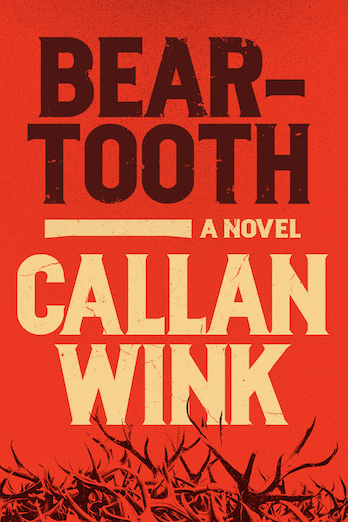
    BEARTOOTH, Callan Wink's latest Great Outdoors tale of morally questionable choices


    BEARTOOTH
    CALLAN WINK

    Spiegel & Grau (non-affiliate Bookshop.org link)
    $9.99 ebook, available now

    The Independent Press Top 40 Bestsellers: Fiction For the week ending April 19, 2026

    Rating: 3.25* of five

    The Publisher Says: Two brothers in dire straits, living on the edge of Yellowstone, agree to a desperate act of survival.

    In an aging timber house hand-built into the Absaroka-Beartooth mountains, two brothers are struggling to keep up with their debts. They live off the grid on the fringe of Yellowstone, surviving after the death of their father. Thad, the elder, is more capable of engaging with things like the truck registration and the medical bills from their father’s fatal illness and the tax lien on the cabin their grandfather built, while Hazen is... different, more instinctual, deeply attuned to the natural world. Desperate for money, they are approached by a shadowy out-of-towner with a proposition and agree to attempt a heist of natural resources from Yellowstone, a federal crime.

    Beartooth is a fast-paced tale set in the grandeur of the American West.

    I RECEIVED A DRC FROM THE PUBLISHER VIA NETGALLEY. THANK YOU.

    My Review
    : All y'all seem to be lovin' you some Western-set crime shows, like Costner's Yellowstone that lasted six years in a media landscape full of disposable shows. There are other series reads in this setting (eg C.J. Box's Joe Pickett books, Craig Johnson's five-year TV run for Longmire TV show and ongoing novel series) but all of those are borderline copaganda in their focus on police procedural plots, and valorization of the settler-colonial worldview endemic in the men of this family. The brothers in this story, coming as they do into control of valuable natural resouces after their father's expensive death that threatens their grandfather's stolen homestead.

    It was pretty hard for me to work up much sympathy for Thad, the brother whose show of privilege leads them into the nightmare of property loss, which they agree to solve, and to restore their stolen "birthright" homestead, by doing things so far beyond the pale of acceptability that I had a lot of trouble pushing through the details to get to the ending.

    Animal abuse is rife.

    I'm impressed by Wink's ability to evoke the Montana setting with near-hallucinatory clarity. I could feel the unique quality of Yellowstone's air, see the special way light limns the edges of distant objects; I was a lot less excited when the poaching scenes were also evoked as clearly. Hazen, the more nature-oriented brother, still finds it in himself to commit acts I find reprehensible for short-term gain. It's almost always the case that criminals are simply bad at planning and lack foresight; that fits these brothers to a T. They're led into criminality to solve a problem they created with no shred of common sense to their behavior.

    What happens is a drawn-out reckoning for the past and against the future. Their long-fled mother, Sacajawea, shows up to add her dose of unpleasantness. I expected to be more led along by the strands of family dissolution and reckoning. Their criminality, the means and motivation for it, led me to finish this short (under 300pp) tale of men acting like kids who need a spanking, in over a week.

    I seldom take more than three days to finish 256pp, more often two.

    Wink can write. His plotting is logical, his pace is chosen carefully to immerse the reader not whiz past anything. I wish I'd loved it by the end as much as I started out loving it.

    Animal lovers are cautioned...the awful things done to them aren't valorized, but still happen with no sense on my part they were being condemned, either.

    Monday, December 2, 2024

    DREAM CITY: A Novel, sharp-eyed skewering of a culture of excess


    DREAM CITY: A Novel
    DOUGLAS UNGER

    University of Nevada Press
    $29.95 hardcover, available now

    Rating: 4* of five

    The Publisher Says: In this unconventional tale of Las Vegas during the two delirious boom decades before the bust of the Great Recession, failed actor “C. D.” Reinhart, who has launched a new career in hotel marketing, is gradually losing his moral and existential compass. Working on The Strip during an era when Sin City’s population growth was outpacing any other place in America, C. D. climbs the industry ladder while modeling himself after a Pyramid Resorts top executive, Lance Sheperd. C. D.’s professional choices lead him down a tumultuous road, as Sheperd, a complex and, at times, visionary figure, pilots his ventures through the tangled wheeling and dealing of finance and corporate politics straight into catastrophe.

    As the story progresses, C. D. comes to understand how his personal losses and the losses of his cohort of hard driving executives on the make—especially the tragic life of his work partner, Greta Olsson, the only woman to break through into their male dominated world—are a result of the make-believe environment he has helped to create, a world where representation replaces reality. Hoping to piece together his faltering marriage and family relationships, C. D. must find a new path as he struggles to hold onto his dreams.

    In this fictionalized version of the city of glittering lights, author Douglas Unger pits the ideologies of marketing and consumerism in the casino economy of America against the erosion of individual and humane values that success in that world demands. Unger reveals the hard truth that Las Vegas, a blue-collar town considered by many to be “the most honest city,” can be a temple for self-deceptions, emblematic of a service economy that knows the price of everything and too often the value of little else. Dream City becomes both a love song and an elegy for Las Vegas that sets it apart from any other literary novel previously written about this global entertainment attraction that in so many ways represents postmodern America. Sooner or later, the challenge that faces everyone is to discover what matters most, and to learn how to bet on the better angels of our natures.

    I RECEIVED A DRC FROM THE PUBLISHER VIA NETGALLEY. THANK YOU.

    My Review
    : Deserts frighten me. I live in a beach town for a reason. My trips to Las Vegas weren't numerous, but are very memorable—for good and ill. Here's a story, then, that's set in a place I do not love or admire, featuring a man in Act Three of his life having failed at his other lives, and failing again.

    Paging Updike and Cheever, your territory's being encroached.

    And most effectively. Author Unger is working in a long tradition of male-centered stories, prioritizing an idea of success that capitalism likes to valorize and that relegates anything other than work to peripheral significance...only to flip the script and show the hollowness and lack of fulfillment and connection inherent in this cultutally approved rat race.

    Critiques are most effective when they come from within. This detailed, almost obsessive, chronicling of one man's descent from the pinnacle he dreamed of reaching into the real-world uses of the talents he never had the luck to exploit to their fullest, is inside the house. The astonishing world of wealth is detailed, excess by excess, without a trace of overt judgment. Like the eternal anticapitalist novel Babbitt, it uses a steady unblinking gaze to do what polemics fail to do: Indict the system that rewards conformist capitulation with material comforts. The problem with this reward system is, and always has been, it is conditional. It can all be taken away from the recipient at any time, either through anonymous "market forces" or malevolent, targeted manipulations of law and economics.

    In personalizing the details of one man, in one city, as he rises and falls, Author Unger joins the crew of midcentury modern men in quietly unpicking the system's built-in failures. He uses the main man's wife as a sort of moral Cassandra, constantly questioning—while continuing to enjoy—the fruits of his enviable rise from the ashes of ruined ambition. It's here that I lost a star. Women as Moral Centers, however compromised, irk the snot out of me. Like she condescended to hitch herself to this sad, lost little boy (who's given her a life of comfort) to Guide and Sustain him...gross. She's complicit, she's also culpable for not doing it her damnself. The trope of the little woman who stays home is really the relams of fantasy in this day and time. It's unusual enough that it's now fodder for highly-rated prurient TV shows about the wealthiest capitalists in the hypercapitalist world we exist in.

    Why I recommend it to you is simple: Updike, Cheever, Sloan Wilson, and company are dreadfully old-fashioned. Their row still needs hoeing in the world we live in. Author Unger is uniquely placed to tell this generation about its golden calfs. Seen in this light even the repugnant gender politics are a sharp critique of the aspirations that Las Vegas, glittering gambling capital, represents.

    Castles built in the air always fall. Gravity, it pays every one of us to foreground in our awareness, is a law that can not be repealed. Flouting it temporarily carries costs that accrue terrible interest surcharges.

    Author Unger, without beating you up, reminds you of this.

    Tuesday, November 19, 2024

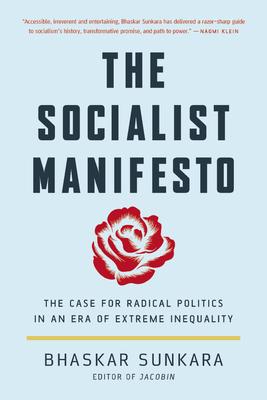
    THE SOCIALIST MANIFESTO: The Case for Radical Politics in an Era of Extreme Inequality, never more trenchant than today


    THE SOCIALIST MANIFESTO: The Case for Radical Politics in an Era of Extreme Inequality
    BHASKAR SUNKARA

    Basic Books
    $15.00 trade paper, purchased from the author's magazine website

    Rating: 5* of five

    The Publisher Says: A "razor-sharp" introduction to this political and economic ideology makes a galvanizing argument for modern socialism (Naomi Klein)—and explains how its core tenets could effect positive change in America and worldwide.

    In The Socialist Manifesto, Bhaskar Sunkara explores socialism's history since the mid-1800s and presents a realistic vision for its future. With the stunning popularity of Bernie Sanders and Alexandria Ocasio-Cortez, Americans are embracing the class politics of socialism. But what, exactly, is socialism? And what would a socialist system in America look like?

    The editor of Jacobin magazine, Sunkara shows that socialism, though often seen primarily as an economic system, in fact offers the means to fight all forms of oppression, including racism and sexism. The ultimate goal is not Soviet-style planning, but to win rights to healthcare, education, and housing, and to create new democratic institutions in workplaces and communities. A primer on socialism for the 21st century, this is a book for anyone seeking an end to the vast inequities of our age.

    I RECEIVED A DRC FROM THE PUBLISHER VIA NETGALLEY. THANK YOU.

    My Review
    : William M. Tweed said this about the way the US does politics:
    I don't care who does the electing, so long as I get to do the nominating. As quoted in Understanding American Government (2003) by Susan Welch, p. 224

    No good came from trying to talk sense into the Democratic Party; their loss on 5 November 2024 was catastrophic. It was not the resounding mandate the Nerd Reich and its tech scum boosters portray it as. The margin was not huge, but the impact will be *immense*, far-reaching, and vastly immiserating for millions.

    It did not need to happen, even in the teeth of forty years of the carefully disguised radical coup orchestrated by the wealthy and powerful against the rest of us. The way to beat the radicals is not to appease or identify with them; it is to present an alternative to them.

    This will never happen in the two-party system.

    I wanted this not to be true, but this idiotic result has driven the last nail in the coffin of my faith in humanity, my trust in the US institutions of politics, and my desire to support the least-worst politicians in hopes they'll do some of the Right Thing. They won't.

    Now what?

    Now this, and before someone says "But socialism!" or even stupider "that's Communist!" I'll remind all y'all that the monster you've been Pavlovianly conditioned to fear and hate is totalitarianism relabeled to scare you away from realizing the socialist demands the owners hate were already met...to a degree...and they're the exact things your newly elected scum were put in place to destroy. When the way you live gets worse, do not open your yap. You either voted for, or decided not to vote against, this exact result.

    It is your fault.

    Now let's figure out what we can begin to do to make a few gains. Start by reading Bhaskar Sunkara's clear, cogent, carefully reasoned manifesto. If you're still reeling from the evidence of how immensely successful the scumbags' propaganda, misinformation, and misdirection were, here's a shred of hope to cling to. Here's a possibility that you already know works...you who receive "benefits" aka your own tax money returned to you (not some gift as the radical right wants you to believe) better than anyone...so lean into it.

    Don't feel like you can do anything, don't want to think about it, are just too drained to give it your attention? That's their system for making you passive at work. If you won't do the work, spend your money to support those who will, and that shit-sure ain't the Democrats.

    Support a real change for the better. Read this book to learn what that can mean.

    Wednesday, November 13, 2024

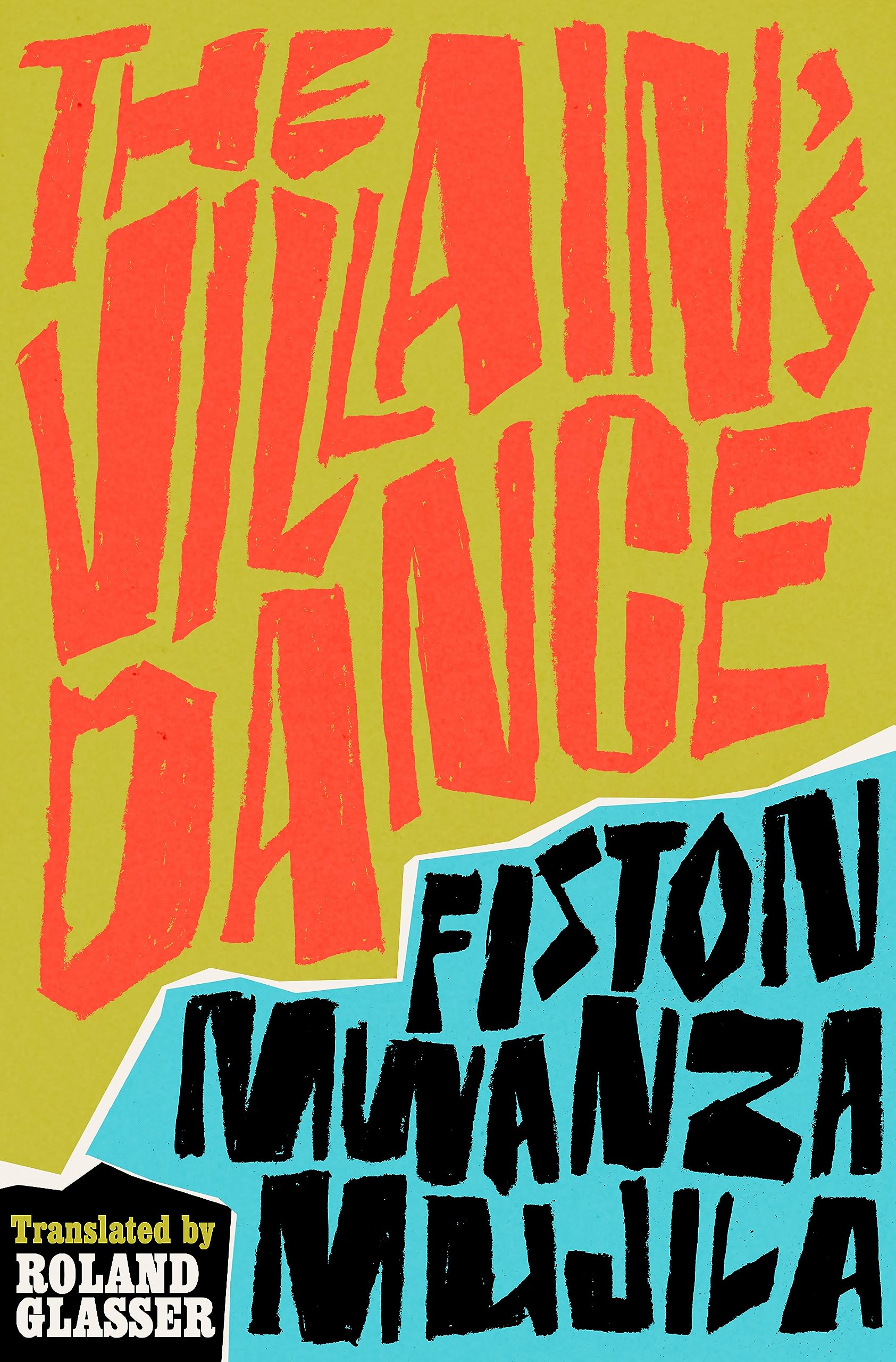
    THE VILLAIN'S DANCE, apt title for this cautionary tale of the societal chaos of civil war


    THE VILLAIN'S DANCE
    FISTON MWANZA MUJILA
    (tr. Roland Glasser)
    Deep Vellum (non-affiliate Amazon link)
    $9.99 Kindle edition, available now

    Rating: 4.5* of five

    The Publisher Says: Following the international success of his debut novel Tram 83, Fiston Mwanza Mujila is back with his highly anticipated second novel, which follows a remarkable series of characters during the Mobutu regime.

    The Democratic Republic of Congo, otherwise known as Congo-Kinshasa or DRCongo, has had a series of names since its founding. The name of Zaire best corresponds to the experience of the novel’s characters. The years of Mobutu’s regime were filled with utopias, dreams, fantasies and other uncontrolled desires for social redemption, the quest for easy enrichment and the desecration of places of power.

    Among these Zairians’ immigration to Angola during the civil war boycotting the borders inherited from colonization, as if the country did not have its own diamonds, and the occupation of public places by children from outside. The author creates the atmosphere of the time through a roundup of the diviner Tshiamuena, also known as Madonna of the Cafunfo mines, prides herself of being God with whoever is willing to listen to her. Franz Baumgartner, an apprentice writer originally from Austria and rumba lover, goes around the bars in search of material for his novel. Sanza, Le Blanc and other street children share information to the intelligence services when they are not living off begging and robbery. Djibril, taxi driver, only lives for reggae music.

    As soon as night falls, each character dances and plays his own role in a country mined by dictatorship.

    I RECEIVED A DRC FROM THE PUBLISHER VIA EDELWEISS+. THANK YOU.

    My Review
    : Want to know how much I appreciate Author Fiston Mwanza Mujila's talents?

    I didn't pan, belittle, or insult his poetry. All y'all know how I feel about poetry. And I gave it more than three stars! Be amazed, be impressed...I hope you'll be inspired to go get one. Tram 83 worked for me, as well; I know a lot of folks were't fans but it felt like a breeze from Africa to me, hot, wet, heavily freighted. This impression left me for dead in the first instance; I was less enrapt with its story and atmosphere then than I am in retrospect. In part that's down to my subsequent experience of reading The Villain's Dance.

    In common with my earlier reads of the author's books, I began this one with an awareness of atmosphere. He is always, or so it feels to me, careful to begin as he means to go on. I'm reasonably sure the huge majority of my readers are unaware of Mobutu's identity, and are more or less uninformed about tthe name "Zaire" and its history...many in my generation will have known the name Zaire vaguely applies to a huge place near the Congo River but be blissfully unaware that the name is no longer used, or why that happened.

    I think that gives the novel almost an SFnal appeal. There's little sense of geography encompassing the story in US readers, so why not just go all the way and market it as taking place on a different planet entirely? *I* can do this, I'm a book reviewer, the publisher can't. The level of outrage engendered would be epic. However, let me propose this to you: If you're willing to learn the names of made-up places like Middle Earth, Arrakis, Pern, Atlantis, Downbelow Station, and their different inhabitants, conflicts, social norms, what's the hold up on Zaire and Brazzaville?

    Maybe the tiniest taint of racism? Worth some energy to think about.

    Assuming you're in the already-overcame-it or the overcoming-it-now group, this story's got great conflicts between dark-grey, pitch-black, and palest shades of violet people trying their best to make it in a world where up and down just switched places...like being on a space station whose spin just changed speeds dramatically.

    Maybe my increased appreciation for this read makes more sense than I thought it did at first.

    The people in this book aren't just as well-realized as the setting, for the most part; see below. The pace of the story is provided by history, as it's based on the realities then prevailing. The entire enterprise of nation-building collapsing into civil war (by definition a chaotic break in the life of a society) honestly needs little of that tarting up to make it compelling, even riveting, reading. What Author Fiston does very well here is to fragment the locations of the chaos to give different people reason to speak their truth without losing the core purpose of telling us this story. Like Do Androids Dream of Electric Sheep?, we are taken into realms of deep desperation and left there long enough to get it; then we're offered a peek into the purpose of the extraction and the exploitation that requires...we're not left to wallow, the way The Octopus, f/ex, does with us in service of the same sharp criticism of the cutting edge of capitalism. Poe said it very succinctly in the nineteenth century:  "{C}orporations, it is very well known, have neither posteriors to be kicked, nor souls to be damned." (Thanks for showing me the accurate quote again, P-E!)

    Edges, as noted above, cut; in this story we're in the path of the blade so see both the wielding and cutting inherent in its very existence. People fail. It is inevitable. Challenges go unmet still less mastered. As often as not that is a design feature of the challenge. It engenders judgment and contempt for failure, but leaves the challenge, well, unchallenged. I suspect the true-to-life experience of people showing up for a minute then vanishing will affront a lot of complacently smug story-structure addicts. It's not by accident, y'all; it's a feature not a bug. Like life in an unstable place at a volatile time, different people will come, only to go without fanfare, or even explanation. Most of the characters trying to make it any old how they can haven't got the wherewithal to care, often enough to notice, who is who except at the precise flash of the camera that "now" represents.

    I am trying as best I can to explain away the most common issues I've seen raised in others's assessments of the book. I'm not sure it matters. I hope y'all will attend to my 4.5* rating more closely than to my blandishments. A book of this trenchance is not to be dismissed. I'm hopeful that a few will take this moment of US culture shock to see what has happened in other places at this kind of inflection point.

    Forewarned is forearmed.

    Saturday, November 9, 2024

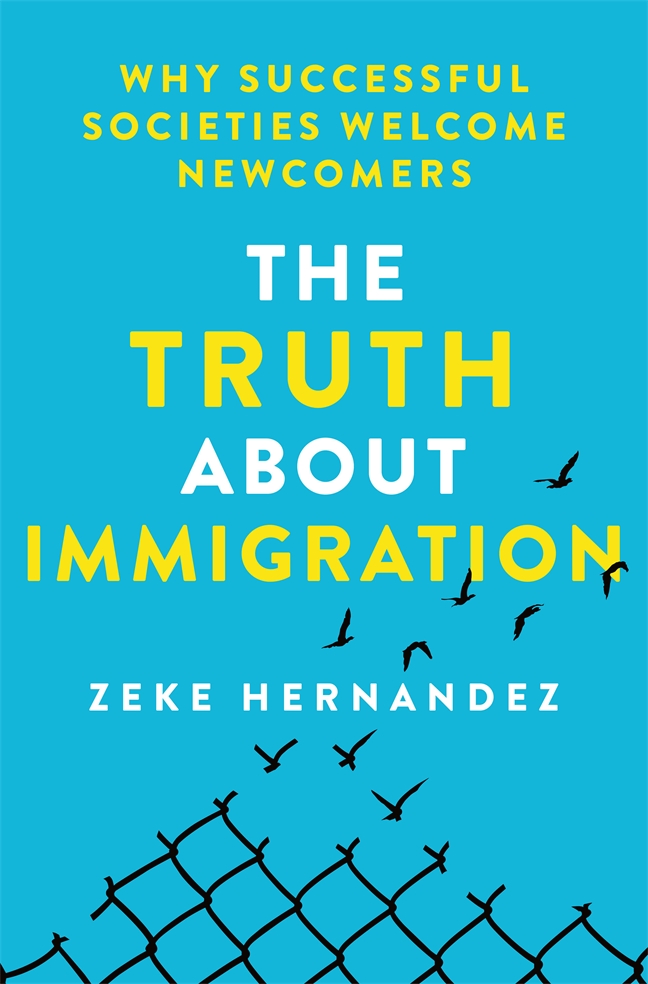
    THE TRUTH ABOUT IMMIGRATION: Why Successful Societies Welcome Newcomers, careful, honest, trenchant and tendentious


    THE TRUTH ABOUT IMMIGRATION: Why Successful Societies Welcome Newcomers
    ZEKE HERNANDEZ

    St. Martin's Press
    $30.00 hardcover, available now

    Rating: 4* of five

    The Publisher Says: The go-to book on immigration: fact-based, comprehensive, and nonpartisan.

    Immigration is one of the most controversial topics in the United States and everywhere else. Pundits, politicians, and the public usually depict immigrants as either villains or victims. The villain narrative is that immigrants pose a threat—to our economy because they steal our jobs; our way of life because they change our culture; and to our safety and laws because of their criminality. The victim argument tells us that immigrants are needy outsiders—the poor, huddled masses whom we must help at our own cost if necessary. But the data clearly debunks both narratives. From jobs, investment, and innovation to cultural vitality and national security, more immigration has an overwhelmingly positive impact on everything that makes a society successful.

    In The Truth About Immigration, Wharton professor Zeke Hernandez draws from nearly 20 years of research to answer all the big questions about immigration. He combines moving personal stories with rigorous research to offer an accessible, apolitical, and evidence-based look at how newcomers affect our local communities and our nation. You'll learn about the overlooked impact of immigrants on investment and job creation; realize how much we take for granted the novel technologies, products, and businesses newcomers create; get the facts straight about perennial concerns like jobs, crime, and undocumented immigrants; and gain new perspectives on misunderstood issues such as the border, taxes, and assimilation.

    Most books making a case for immigration tell you that immigration is good for immigrants. This book is all about how newcomers benefit you, your community, and your country. Skeptics fear that newcomers compete economically with locals because of their similarities and fail to socially assimilate because of their differences. You'll see that it's exactly the opposite: newcomers bring enduring economic benefits because of their differences and contribute positively to society because of their similarities. Destined to become the go-to book on one of the most important issues of our time, this book turns fear into hope by proving a simple truth: immigrants are essential for economically prosperous and socially vibrant nations.

    I RECEIVED A DRC FROM THE PUBLISHER VIA NETGALLEY. THANK YOU.

    My Review
    : Do you like to eat? Thank an immigrant, an economic migrant, as you chow down on those tomatoes and cucumbers.

    *You* sure didn't go pick 'em.

    Do you use Google, chat on Twitter, watch TikTok every day? Thank an immigrant. In this case, you're thanking said immigrant with your data being harvested to fatten his (they're all men, at least so far) coffers.

    But that law'n'order fetish you got goin' on...surely that's the real reason to oppose immigration, to keep 'em out and chuck 'em out when they come anyway, right? The president-elect has more felonies on his record than a random immigrant. But they cost us money! Take money from needy Murrikinz! You're thinking of the GOP in the various legislatures. Immigrants pay taxes through their (upright & honest, or shady) employers. They're barred by law from getting any of those taxes back.

    The author, unlike me, is apolitical. He has done the research and these are the facts he found. If you support immigration, read this book for talking points. There's a lot of 'em. If you don't support immigration, why the hell are you reading my reviews? If someone you care for is anti-immigrant, maybe this non-partisan voice will reach them. It sure can't hurt to try.

    I'm not calm enough to care to engage with people like that. They're wrong. I needn't fuss about it because that kind of wrong loves a fight. Got nothin' left for that uselessness. If you do, great! And here's you a swiss army knife of evidence-backed facts to use in your noble work of Enlightenment.

    Thursday, October 17, 2024

    KLAXON READS: THE BIG CON: Crackpot Economics and the Fleecing of America, & LIMITARIANISM: The Case Against Extreme Wealth


    LIMITARIANISM: The Case Against Extreme Wealth
    INGRID ROBEYNS

    Astra House
    $28.00 hardcover, available now

    Rating: 4* of five

    Ahead of the paperback release on 23 September 2025, listen to the author on The Grey Area podcast. Necessary reading and listening in 2025.

    The Publisher Says: "A powerful case for limitarianism – the idea that we should set a maximum on how much resources one individual can appropriate. A must-read!" —Thomas Piketty, bestselling author of Capital in the Twenty-First Century

    An original, bold, and convincing argument for a cap on wealth by the philosopher who coined the term "limitarianism."

    How much money is too much? Is it ethical, and democratic, for an individual to amass a limitless amount of wealth, and then spend it however they choose? Many of us feel that the answer to that is no—but what can we do about it?

    Ingrid Robeyns has long written and argued for the principle she calls "limitarianism"—or the need to limit extreme wealth. This idea is gaining momentum in the mainstream – with calls to "tax the rich" and slogans like "every billionaire is a policy failure"—but what does it mean in practice?

    Robeyns explains the key reasons to support the case against extreme wealth:
  • It keeps the poor poor and inequalities growing
  • It’s often dirty money
  • It undermines democracy
  • It’s one of the leading causes of climate change
  • Nobody actually deserves to be a millionaire
  • There are better things to do with excess money
  • The rich will benefit, too
  • This will be the first authoritative trade book to unpack the concept of a cap on wealth, where to draw the line, how to collect the excess and what to do with the money. In the process, Robeyns will ignite an urgent debate about wealth, one that calls into question the very forces we live by (capitalism and neoliberalism) and invites us to a radical reimagining of our world.

    I RECEIVED A DRC FROM THE PUBLISHER VIA EDELWEISS+. THANK YOU.

    My Review
    : Using moral arguments against massive wealth accumulation is like using moral arguments against porn: You could be right, probably aren't, and the target audience for your suasions could not possibly care less about them.

    All the bullet list items above? The very wealthy know those to be true and could not possibly care less about them. "Every billionaire a policy failure" is way more effective because it simply states the people's case against the perpetrators of the crimes (moral and/or legal) that must be committed to become a billionaire.

    What to do with the proceeds of the confiscation of excessive wealth is always going to be the weak point of any scheme to disempower the richest. The current Congress, like all its predecessors, is made up of people beholden to the moneymen. They will not confiscate and redistribute more than those who pay them...the people offer a token salary, the real money is in the campaign warchests they pay no tax on and use as they please...will allow.

    Author Robeyns is firing an opening salvo in the next campaign against greed. It will persuade a few groundlings to talk it up and try to get it onto the agenda of more meetings.

    Absolutely no billionaire will acquiesce to her suggestions. Therefore nothing will change as radically as she proposes.

    That is not, in my view, the purpose of this read, any more than Marx or Mao delivered revolutions in human social or economic organization with their books. In fact both delivered fig leaves for the vilest and most destructive totalitarians to operate on their ostensible behalf while in fact defrauding their true believers and, often as not, killing the ones who said "stop" because the inconveniently moral could be labeled "counterrevolutionary" therefore beyond the social pale to the supporting masses.

    What Author Robeyns offers here is a chance for you to examine your beliefs and your conscience. She doesn't have a prayer of impacting the lowlife, amoral Nerd-Reichers and the humanoid wallets enabling them. She *does* have a chance to elucidate some ugly facts about the accumulation of great wealth. A philosopher who has read, studied, and thought very deeply about human nature, she comes to conclusions you and I would do well to evaluate for ourselves. The only way I know of to do that is to read her words, and decide how much you resonate with them. The work this book represents is impressive. No one gets to these stages of argument absent a long, intense program of study.

    Do you feel in your water that someone possessing a billion currency units is also possessed of a character flaw? You'll find some comfort in knowing that you're not first to reach, or alone in reaching, this conviction. Is the spectacle of inconceivably rich foreigners using their hoards to manipulate the US electorate and thus the outcome of our elections very angering to your patriot's soul? You'll resonate to the ways and means of removing that power from them.

    Thomas Piketty praises this book as a "must-read" on its central argument of limitarianism. As he has done more than anyone else to yank the horribly uncomfortable, thick wool of "neoliberalism" from the world's eyes, I'd say heed him and get this book into your head before casting your 2024 votes up and down the ticket.

    Why have I given it a surprisingly limitarian four stars, if I set out to warble my fool lungs out about its virtues? Because, by the tendentious nature of books setting forth cases for action, it's a bit repetitive. It's not academic in purpose so it's not footnoted to a fare-thee-well. It is, in short, a beast with two faces: one faces the congregation and lectures for change; one faces the choir and seeks approval for its message.

    Speaking from the choir, I approve.

    ++++++++++++++++++++++++++++++++++++++++++++++++++++++++++++++++


    THE BIG CON: Crackpot Economics and the Fleecing of America
    JONATHAN CHAIT

    Mariner Books (non-affiliate Amazon link)
    $11.99 Kindle edition, available now

    Rating: 4* of five

    The Publisher Says: The scam of supply-side economics is clearly and convincingly explained in “a classic of political journalism” (Michael Lewis).

    Jonathan Chait has written for a range of publications, from the Wall Street Journal to the Washington Post, and considers himself a moderate. But he’s convinced that American politics has been hijacked.

    Over the past three decades, a fringe group of economic hucksters has corrupted and perverted our nation’s policies, Chait argues, revealing in The Big Con how these canny zealots first took over the Republican Party, and then gamed the political system and the media so that once-unthinkable policies—without a shred of academic, expert, or even popular support—now drive the political agenda, regardless of which party is in power. The principle is supposedly “small government”—but as he demonstrates, the government is no smaller than it was in the days of Ronald Reagan; it’s simply more debt-ridden and beholden to wealthy elites.

    Why have these ideas succeeded in Washington even as the majority of the country recognizes them for the nonsense they are? How did a clique of extremists gain control of American economic policy and sell short the country’s future? And why do their outlandish ideas still determine policy despite repeated electoral setbacks? Explaining just how things work in Washington, DC, and distinguishing between short-term volatility in the “political weather” and the long-term, radical shift in the “political climate,” Chait presents a riveting drama of greed and deceit that should be read by every concerned citizen.

    “Chait is both very serious and seriously funny as he traces the rise of conservatism over the past thirty years.” —Michael Kinsley

    I RECEIVED THIS BOOK AS A GIFT. THANKS!

    My Review
    : We knew the 1980 election was stolen. We knew why, too. Milton Friedman told us why it had to be in Free to Choose, book and TV show. He operated in the libertarian/laissez-faire world of F.A. Hayek. The men behind Reagan were supply-side radicals who wanted more than anything to cripple the Federal government's ability to act against the businesses polluting out planet, and "taking their money." Instead the Federal government would need to borrow money...at interest...from the banks; enriching the bankers and hobbling the politicians who could enforce change on the reactionary elite.

    What tendentious Author Chait does in this seventeen-year-old book is detail the ways this brazen theft (my words, not his) has resonated down the decades to the present moment of radicalized fascist terrorism meeting economic royalism in an ongoing enshittification of the world's social fabric. And it's being done to us all under the name "supply-side economics."

    Call it whatever you like. We're forty-four years into the world's first experiment in this snake-oil system of not taxing the rich and not acting to protect the poor and the needy, after seeing the huge economic and societal gains of the Keynesian interventionist years. The promises of economic growth and technological innovation, of booming investment by those untaxed billionaires, etc etc ad nauseam, have not materialized. There's never been a glimmer of benefit to anyone except the untaxed wealthy.

    Yet the entire conversation about the economy is still framed in terms that comport with this failed-in-practice theory.

    The essence of insanity is doing the same thing repetitively and expecting different results to come of it.

    Author Chait isn't kidding around with this takedown of the naked emperors of the economic establishment. It is refreshing to see a commonsensical moderate-to-conservative poloitical thinker confront orthodoxy, hold it to the test of results-versus-promises, and report honestly on his findings. Reading this book before the 2024 election would be wise. Reading it, and considering deeply its message and its implications, is something I'd call a civic duty.

    Thursday, October 10, 2024

    COMMON SENSE ECONOMICS: What Everyone Should Know About Wealth and Prosperity, everyone should know but not believe this is Received Truth


    COMMON SENSE ECONOMICS: What Everyone Should Know About Wealth and Prosperity
    VARIOUS AUTHORS

    St. Martin's Press
    $30.00 hardcover, available now

    Rating: 3.5* of five

    The Publisher Says: The fully revised and updated fourth edition of the classic Common Sense Economics.

    As the global economy recovers from the COVID-19 pandemic and debates over the future of work challenge our long-held preconceptions about what careers and the market can be, learning the basics of economics has never been more essential. Principles such as gains from trade, the role of profit and loss, and the secondary effects of government spending, taxes, and borrowing risk continue to be critically important to the way America's economy functions, and critically important to understand for those hoping to further their professional lives—even their personal lives.

    Common Sense Economics discusses these key points and theories and more, using them to show how any reader can make wiser personal choices and form more informed positions on policy. Now in its fourth edition, this classic from James D. Gwartney, Jane S. Stroup, Dwight R. Lee, and Tawni H. Ferrarini has been fully updated to include commentary on the effects of the pandemic on the global economy and the workplace; it offers insight into political processes and the many ways in which economics informs policy, illuminating our world and what might be done to make it better.

    I RECEIVED A DRC FROM THE PUBLISHER VIA NETGALLEY. THANK YOU.

    My Review
    : Not entertaining, not as dry as a textbook either. Densely packed tendentious freemarketeering with a curious blind spot to how its own examples undermine its Hayek-lite assumptions about how the economy (as though that was one readily definable, easy-to-encompass in words, entity) works and should work. I think any book that trumpets a viewpoint, eg "low taxes good" here, should be honest enough to mark this out as editorializing. More especially since their own chosen examples of, eg, businesses seeking tariffs on imported goods to protect their market share presented without the expected free-trader's opprobrium, sorta gives the lie to the book's claims to being "commonsense" since this violates their own oft-reinforced (I fought myself hard to strive for neutrality I do not feel by changing the word from the judgmental but truthful "repeated") statements supporting "low taxes good."

    The revisions undertaken post-COVID really ought honestly to have been labeled "post-China falling from favor." As a policy guide, not recommended, then. But for an economics explainer of how neoliberal economics wants you to think it works...modern research undermines the existence of the core neoliberal concept of "rational actors"...it's solid and as easy as it can get. All my stars for that useful quality.

    Stay skeptical, then, and remember any time someone wants you to think a system is infallible, or "self-correcting," or "maximizing efficiency," they're not just factually incorrect but wrong. Plus almost guaranteed to be manipulating you for their own (however broad a definition of "their" you care to apply) benefit.

    Monday, September 9, 2024

    THE IDEAL STATE: A Model Based on Analysis of Savagery, Feudalism, Capitalism and Beyond


    THE IDEAL STATE: A Model Based on Analysis of Savagery, Feudalism, Capitalism and Beyond
    TAYYIB AHMAD TAYYIB

    Ideal Publishing Inc.
    $18.00 Kindle edition, available now

    Rating: 3* because I fully agree with the politics.

    The Publisher Says: Previously published as "The Evil Within Evolution of Social Systems & The Ideal State"

    This is a fully revised and expanded edition. Have you not wondered what kind of a country you would want to live in? What policies of its government would guarantee a secure and happy life for you and your children? We need to look at our past history and understand how our previous generations have fared under different social systems. Only then we can decide how a state should be structured and what policies it should adopt to ensure security and well-being of its population. It is important to know what makes a state into an imperial power and drives it to subjugate other states and peoples and exploit them. How could this tendency be avoided?

    All civilized states and societies are moving towards more and more socialism and democratic control of their governments, despite temporary setbacks. What do you think lies ahead? States like Norway, Sweden, Denmark and most other European states are referred to as "social democratic states". Their citizens enjoy free education, universal health care and a guaranteed retirement income. China calls its socio-economic system as "Socialism with Chinese Characteristics". Despite being a developing country, it has eliminated extreme poverty and offers free high-school education to all its citizens and subsidized higher education and virtually universal health care. Bernie Sanders pleaded for a "democratic socialism" in the United States in his bid for the presidency of the US, a few years ago.

    In this work, you would find a comprehensive analysis of the development of socio-economic and political systems from the age of savagery to feudalism and capitalism. You would find why, and how, capitalism leads to extreme exploitation, imperialism and violence, why it needs to be discarded and why a democratic socialist future for mankind is inevitable. The resulting ideal state should ensure equality of social, economic and political rights for all, without any distinction - racial, national, or gender. It should eliminate all kinds of economic exploitation resulting in development of all individuals to their full potential. Numerous illustrations are included and many political thinkers, economists and political leaders have, indirectly, contributed to this work. Quotations from their works are included on specific issues. Imagine what such an ideal state, or states, would mean for you and for the rest of humanity. Find out how humanity is progressing in that direction now and how this process would accelerate in the future. Let us not give up hope. The future of humanity is bright!

    I RECEIVED A DRC FROM THE PUBLISHER VIA NETGALLEY. THANK YOU.

    My Review:
    This book is preaching to the choir, in terms of my belief the author is onto something good in his negative assessment of capitalism.

    But, for four hundred pages, the prose is a lot like the synopsis above. That is to say, it's not fluid and readable like Yannis Varoufakis and Thomas Piketty (as translated by Arthur Goldhammer, anyway) are. I'm not in good conscience able to recommend the read to laypeople. If you're interested in leftist economics and social policy, come to the altar, but check your expectations at the door.

    Wednesday, September 4, 2024

    THE DEVIL AT HIS ELBOW: Alex Murdaugh and the Fall of a Southern Dynasty, in a nutshell: Sick-making


    THE DEVIL AT HIS ELBOW: Alex Murdaugh and the Fall of a Southern Dynasty
    VALERIE BAUERLEIN

    Ballantine Books
    $32.00 hardcover, available now

    Rating: 4.75* of five

    The Publisher Says: Power, privilege, and blood—this is the definitive and thrilling true story of Alex Murdaugh’s violent downfall, from a veteran Wall Street Journal reporter who has become an authority on the case.

    Alex Murdaugh was a benevolent dictator—the president of the South Carolina trial lawyers’ association, a political boss, a part-time prosecutor, and a partner in his family’s law firm. He was always ready with a favor, a drink, and an invitation to Moselle, his family’s 1,700-acre hunting estate. The Murdaugh name ignited respect—and fear—for a hundred miles in any direction.

    When he murdered his wife, Maggie, and son Paul at Moselle on a dark summer night, the fragile façade of Alex’s world could no longer hold. His forefathers had covered up a midnight suicide at a remote railroad crossing, a bootlegging ring run from a courthouse, and the attempted murder of a pregnant lover. Alex, too, almost walked away from his unspeakable crimes with his reputation intact, but his downfall was secured by a twist of fate, some stray mistakes, and a fateful decision by an old friend who’d finally seen enough.

    Why would a man who had everything kill his wife and grown son? To unwind the roots of Alex’s ruin, award-winning journalist Valerie Bauerlein reported not just from the courthouse every day but also along the backroads and through the tidal marshes of South Carolina’s Lowcountry. When the jurors made their pilgrimage to the crime scene, trying to envision Maggie and Paul’s last moments, she walked right behind them, sensing the ghosts that haunt the Murdaughs’ now-shattered legacy.

    Through masterful research and cinematic writing, The Devil at His Elbow is a transporting journey through Alex’s life, the night of the murders, and the investigation that culminated in a trial that held tens of millions spellbound. With her stunning insights and fearless instinct for the truth, Bauerlein uncovers layers of the Murdaugh murder case that have not been told.

    I RECEIVED A DRC FROM THE PUBLISHER VIA NETGALLEY. THANK YOU.

    My Review
    : Sick-making.

    True-crime books are not strangers to my TBR himalaya, or my blog. They regularly infuriate me, offend my sense of ma'at, and reorient my moral compass in the direction of "humans are irredeemable scum".

    This story marks the second time I have felt physically sick while reading about a true crime. (American Honor Killings was the first.) Author Bauerlein covered the story for the Wall Street Journal because, one assumes, there were so very many financial crimes uncovered in this murder trial. The malpractice, malfeasance, and felony money-laundering are what made the case interesting enough for that bastion of The Establishment to consent to spend resources on the take-down of what is presented as a rogue actor, a bad apple, an outlier. What better way to protect The Establishment than to show it policing itself?

    The book details a century's worth of similar, often worse, crimes committed by the same family. Unprosecuted, usually uninvestigated crimes committed as good as out in the open.

    But this one's a rogue.

    No, he is not, and if #MeToo taught the world anything it's that The Establishment circles the wagons fast to contain the damage. Zoë Kravitz has made this superficial damage control the center of her directorial debut film Blink Twice. Author Bauerlein does not seem to make this connection, though, as she says, Alex Murdaugh had inherited his forebears' power and prowess and then squandered it, the work of a hundred years washed away in blood. Even after digging into the history of these crackers in expensive shoes, her allegiance is firmly to The Establishment, and thus confines condemnation to this scumbag while quietly and indirectly exonerating the evil demon of generational wealth that enabled at the least, caused is more like it, the inevitable rise of the very scumbag she ringingly condemns.

    I understood the need to organize the book out of chronological order; there's evidence that otherwise wouldn't fit into the story. It did mean that all the almost-five hundred pages feel weighty, freighted with meanings you can not slip past or you will indeed miss something. It also made the read a week longer for me than it would have been otherwise. Processing the implications of the murderer's inherited sense of entitlement and immunity from consequences was, and is, effortful for me.

    Terrible story of a vile scion of ill-gotten wealth squandered, and for a wonder, the criminal punished at long last. A cautionary tale for others in similar circumstances.

    The chickens will come home to roost.

    Friday, March 1, 2024

    THE SIX: The Lives of the Mitford Sisters, bringing Us-v-Them all the way home


    THE SIX: The Lives of the Mitford Sisters
    LAURA THOMPSON

    Picador
    $20.00 trade paper, available now

    Rating: 4* of five

    The Publisher Says: The contrasting lives of the Mitford sisters—stylish, scandalous and tragic by turns—hold up a mirror to upper-class life before and after the Second World War.

    The eldest was a razor-sharp novelist of upper-class manners; the second was loved by John Betjeman; the third was a fascist who married Oswald Mosley; the fourth idolized Hitler and shot herself in the head when Britain declared war on Germany; the fifth was a member of the American Communist Party; the sixth became Duchess of Devonshire.

    They were the Mitford sisters: Nancy, Pamela, Diana, Unity, Jessica and Deborah. Born into country-house privilege, they became prominent as ‘bright young things’ in the high society of interwar London. Then, as the shadows crept over 1930s Europe, the stark—and very public—differences in their outlooks came to symbolise the political polarities of a dangerous decade.

    The intertwined stories of their lives—recounted in masterly fashion by Laura Thompson—hold up a revelatory mirror to upper-class English life before and after World War II.

    I RECEIVED A DRC FROM THE PUBLISHER VIA NETGALLEY. THANK YOU.

    My Review
    : I have read The American Way of Death. I have read Love in a Cold Climate. That these books were written by sisters never fails to astonish me. If you have not yet, read them to see just how little two sisters can share...the folks in Nancy’s novels own the corporations that rip off the bereaved in Jessica’s book.

    The gossipy goodness of a big family that has oodles of money and wildly talented members is a cultural icon these days, thanks to Succession and its imitators...but honestly, what kind of world would we live in if we couldn’t look at the source material with a more compassionate eye? The Mitford sisters were not villainesses. They disagreed on a lot of things...but won’t any six people when examined as closely as their fame enabled the Mitfords to be? Nancy, the eldest, was not overtly political, yet spent her life among the people she grew up among, the wealthiest in the world. That did not prevent her from shopping Diana and her repugnant fascist husband Oswald Mosley to the Intelligence services during WWII. She might have been rich and upper class, but she had limits that could not be transgressed, including treasonous actions against the UK that the fascists led by her brother-in-law were planning. That did not extend to Decca, Jessica’s family nickname, and her leftist principles...despite Jessica being so committed to those principles that she allowed her own child to die rather than accept help from her family.

    So, clearly, this is a juicy, gossipy read. Does that make it a worthwhile one? We are, as of this writing, in a time of wealth inequality as stark as the one in the Mitford sisters’ lives. The natural consequence of battle-lines being drawn is depersonalizing the Other Side, attributing inhuman levels of focus to Them, all against what Our Side...clearly the side of God and the Angels, self-evidently Right in all ways and destined to prevail over Them...thus excusing ourselves in advance from the annoying burden of empathy with people we disagree with.

    What Author Thompson does in this book is give us the gory details of rich people’s lives, while bringing our attention to the immutable nature of Family in forming its members...would Nancy, the eldest, ever have been able to turn into the radical that late-in-order rebel Jessica, or middle-child Diana, did? Likely not. Her world, Thompson shows, is that much different from theirs. Like any big family, the Mitfords were a very mixed bag of people formed by the pressure cooker of differing expectations and opportunities into very, very different people. What looks from the outside like a bloc of wealth and privilege is, from a closer view, a forest of unique trees.

    This is a useful reminder now, when we look at the Othering that is so prevalent in modern society. They are not Them, they are all part of Us. We are, in fact, always an Us, just like the Mitfords were.

    Saturday, January 27, 2024

    CONFESSIONS OF AN ECONOMIC HIT MAN (3rd edition)...still infuriating after twenty years, maybe even more


    CONFESSIONS OF AN ECONOMIC HIT MAN (3rd edition)
    JOHN PERKINS

    Berrett-Koehler Publishers
    $21.95 trade paper, available now

    Rating: 5* of five

    The Publisher Says: The riveting third edition of this New York Times bestselling title expands its focus to China, exposes corruption on an international scale, and offers much-needed solutions.

    Extensively updated, this edition features twelve new chapters, including a new introduction, preface, and study guide. The book brings the story of economic hit men (EHMs) up-to-date and focuses on China’s EHM strategy.

    EHMs are highly paid professionals who use development loans to cheat countries around the globe out of trillions of dollars and force them to serve US interests. Former economic hit man John Perkins gives an insider view into this system. With a truly global perspective, this book offers powerful revelations on extremely timely elements, including the third economic hit man wave that is sweeping the world and the way China optimizes US EHM models to make them a more dominating force. China’s strategy is even more dangerous since it’s successful at enticing lower income nations.
    Perkins also reveals how we can transform what he calls a failing Death Economy into a Life Economy. He encourages China’s leaders to apply the Confucian ideal of serving the family to the global community to end the EHM strategy. The book ultimately provides a source of hope and inspires readers to participate in a new era of global cooperation.

    I RECEIVED A DRC FROM THE PUBLISHER VIA EDELWEISS+. THANK YOU.

    My Review
    : When I read the first edition back in 2004, it was an eye-opener. Remember that those were the Cheney years, where the forces of business skulduggery were very much ascendant. Their plan was, and is, to do the maximum amount of economic damage in order to impoverish and control the working people around the world with insecurity, debt slavery, and social Othering to build xenophobia and mistrust.

    It suits China to go big on these proven strategies because there are so very many Chinese people...but like the Western economies, they figured without the population collapse their old people living longer and having fewer babies while they still can making the existing plans increasingly unworkable. Global climate change is not helping them, or their plans.

    No need to cry for the failure to get immediate control has had on the awful people who think only of their own short-term profits,though...the plans have changed enough to make a whole new level of economic misery possible.

    Reading this book was intensely angering all over again, as John Perkins uses his insider knowledge to explain the new goals and tactics to reach them. I thought humans were awful before I read the first edition. After reading the third, with its laser focus on the newest practitioners of manipulative business shenanigans, I was ready to stow away on the next SpaceX rocket. I do not care where it is going. As long as it is away from the kind of horrible, amoral, truly sociopathic scum that run things in the ways that John Perkins reveals.

    However.

    The John Perkins-revealed point is, now that we know, and can see, the manipulations and behaviors being deployed against our Body Politic, we can take action. Call it out, call your congressional district office, call the White House...anyone who HAS to listen...and make it clear that you want to see substantive change in the way business is regulated. Make it clear you want to see your government stand up and fight against the looting of the treasury and the planet both. Then go to the polls and VOTE THEM OUT. You still have that power, and it scares Them leaky, and they are trying to take the vote away from you. Stay active, or accept the much, much worse world the Economic Royalists are trying to cram down your throat.