Showing posts with label leftist economics. Show all posts

Sunday, September 20, 2026

WAR IS A RACKET: And Other Essential Truths from General Smedley Butler, brutal, frank, determined to tell the truth he saw


WAR IS A RACKET: And Other Essential Truths from General Smedley Butler
SMEDLEY BUTLER
(foreword by Kristofer Goldsmith)
Steerforth Press (non-affiliate Bookshop.org link)
$11.99 ebook, available now

The Independent Press Top 40 Bestsellers: Non-Fiction For the week ending September 29, 2026

Rating: 5* of five

The Publisher Says: Includes a new introduction by Kristofer Goldsmith, the nation’s most recognized authority on the targeting of American troops and veterans with disinformation and extremist recruiting efforts.

Updated with fresh material, this edition brings the prophetic warnings of the 2-time Medal of Honor recipient to a new generation.

"A short, blunt, and extremely vigorous blast." —The New York Times


Smedley Butler, a retired Marine Corps major general and the most decorated combat veteran of his era, is best known today for War is a Racket (1935), a searing anti-war, anti-imperialism, anti-capitalism critique of U.S. military interventionism that has remained perennially in-print and is as relevant today as ever.

This new collection features additional writings that underscore Butler’s role as a staunch advocate for veterans' rights and a fearless defender of democracy. In addition to his 1933 call-to-action, "You've Got to Get Mad," this volume includes his explosive 1934 testimony before the McCormack-Dickstein Committee. There, Butler exposed "The Business Plot"—a conspiracy by a group of Wall Street and other powerful figures that sought to convince Butler to use his influence over disgruntled veterans to seize control of the federal government and install a fascist regime.

With America’s present day military activity more closely tied to corporate profits and the enrichment of its leaders than ever, Butler’s insightful breakdown of the military-industrial complex remains highly resonant. Featuring a new introduction from combat veteran and advocate Kristofer Goldsmith, this edition is an essential resource for anyone looking to build their antifascist toolkit.

I RECEIVED A DRC FROM THE PUBLISHER VIA EDELWEISS+. THANK YOU.

My Review
: War is a racket. It's just true. In these chapters, a career Marine with the most stellar service record, a reputation as a straight-shootin' sunuvabitch tells it like it is:
  1. War is a racket
  2. Who makes the profits?
  3. Who pays the bills?
  4. How to smash this racket!
  5. To hell with war!
Written after his retiremet from the position as head of US-occupied Haïti's police force as a speech, turned into a bestselling, Reader's Digest-distributed short book...isn't it telling that almost a hundred years ago peace was a right-wing talking point?...and renowned until the US joined the hugely profitable-for-business world war made its message...awkward.

This new edition of the book is contextualized for modern audiences by Iraq veteran, military-family-descended Kristofer Goldsmith. His clarity and honesty about the personal costs, most of a century after this book's appearance, and thus the consequences of the war machine were know and deliberately ignored.
Smedley Darlington Butler was also the whistleblower that saved the US from the success of the Wall Street Putsch in 1933. The fascists who made that attempt chose the wrong figurehead. They've been quietly designing the next one since then. We're living through it.

Read a moral man's account of what "They" want. It should tell you why it is imperative to #Resist.

Thursday, April 9, 2026

METROPOLITANS: New York Baseball, Class Struggle, and the People's Team, lefties like sports too!


METROPOLITANS: New York Baseball, Class Struggle, and the People's Team
A.M. GITTLITZ

Astra House (non-affiliate Bookshop.org link)
$17.99 ebook, available now

The Independent Press Top 40 Bestsellers: Non-Fiction For the week ending June 23, 2026

Rating: 5* of five

The Publisher Says: A wide-reaching, revolutionary narrative history of the Team of Destiny (da Mets, for anyone not keeping score), that takes us from their 19th century inception to their 1962 resurrection to the present day.

A love letter to a franchise and a thrilling study of New York City history, Metropolitans brilliantly shows us that sports have long been a site of political struggle, rousing class consciousness, and animating fights for racial equality. From purportedly calming riots in ’69 through the quality of their play to producing some of the greatest chokes in sporting history, from integration to desperate labor struggle against millionaire and billionaire franchise owners, Metropolitans makes a deeply humane and convincing argument for the fascinating singularity of the New York Mets—and why it should be not just the team of the counterculture, the freaks, and the losers, but anyone with a beating heart.

Gittlitz leads us through baseball’s amateur beginnings to the Mets’ first heady World Series on the heels of the Civil Rights and anti-war movements that many Mets players participated in to the bad boy years, the exploitative development of farm academies in developing nations, and their inglorious purchase by a new breed of capitalist—even after which they remained lovable losers.

But this is a book not only for Mets fans, or New York partisans, but anyone interested in the Mobius strip dynamic of sports and politics, the history of the national game, or the beautiful contradiction of baseball a middle-class game owned by billionaires, in which the players—like the spectators—look to traverse the diamond and ultimately safely escape its many dangers.

I RECEIVED A DRC FROM THE PUBLISHER VIA EDELWEISS+. THANK YOU.

My Review
: I'm giving this book five stars because the Miracle Mets defeating the Orioles in 1969 was the first time I understood why my grandmother wanted to live to see the Cubs win the Series again (she didn't), and why my dad took me to freezyfrosty cold Candlestick Park to see the Giants play, and lose.

I can't not love anything about baseball, even as I get more and more uneasy with the concept of these gladiatorial games organized to give people some outlet for their desire to hate that is not threatening to "Them"—the capitalist class that very, very badly does not want you to expend that energy in political action.

Carefully entwined into the history of the US, the story of the Metropolitans and of team sports in general is told here with acuity and concision. It's a purpose and a point expressed best in this quote:
From this communal vantage, the abstractions of statistics and standings are confronted by the reality of what we are really seeing—not a game between two opposing teams, but a common human struggle, within and against the economic, legalistic, and mechanical structure of the game itself, and its role as opiate for the physical and existential pain of wage labor.
I can't really add anything to that statement except to say "+1" to it.

I'm old, so I remember when baseball mattered to lots and lots of Americans, held a real place in our cultural conversation. Football and basketball have that centrality now. But for those of us still loving the sound of a snapped bat connecting on a fastball, this book is catnip. Leftist social critique and economic analysis are seldom more appealingly presented than when entwined with a cultural mainstay of generations-long standing.

I hope I live long enough to see my Mets win the Series again.

Wednesday, April 8, 2026

WORK TO DO: A Novel, like "The Office" only meaner


WORK TO DO: A Novel
JULES WERNERSBACH

University of Iowa Press (non-affiliate Bookshop.org link)
$19.95 paperback, available now

Rating: 4* of five

The Publisher Says: When Eleanor founded Guadalupe Street Co-op in the early 1980s, she was in her mid-twenties and madly in love with her girlfriend, Meg. Together, they envisioned an idyllic grocery store owned by its workers and customers.

Forty years later, Guadalupe Street Co-op is an iconic Austin business with a loyal customer base, an antiquated business model, and a disgruntled staff. Roz, one of the store’s senior managers, is too caught up stalking her ex-wife online to notice that her girlfriend, Molly, is plotting with her coworkers to unionize. Roz also doesn’t see that Molly is not-so-secretly in a situationship with Randy, the dairy manager leading their collective.

Unfolding over the course of a single week during Texas hurricane season, Work to Do pings between the co-op’s first year and present day, as the unionization bid reaches fever pitch. The wind howls, the power goes out, and water creeps through the front door, as questions of who owns the grocery store and who has a right to its future are posed. And will the workers ever be paid enough to buy the organic groceries they shelve?

I RECEIVED A DRC FROM THE PUBLISHER VIA EDELWEISS+. THANK YOU.

My Review
: Hierarchies change people, at the top and at the bottom. They're good for, and at, that...yet we're told that being "a family" is not to be in a hierarchy by the kind of lefty person who sets up a co-op. (I was transported to Wheatsville as I read this.) If that's the case, what kind of family did you grow up in? Parents are our first bosses, our first gods. The idea of hierarchy is instilled in us by "bedtime" and "naptime" and, most hated of all, "bathtime." These activities are policed by Authority, ie parents. Thus from a young age we are in a hierarchy called "family"; soon enough, we begin to rebel. We desire to make our own choices, our own lessons learned our own way.

A unionization drive at a co-op is the business equivalent of adolescent rebellion. It felt to me as though all the characters were coping with adolescent emotional states throughout the story. The nature of any group is to experience friction in different strengths and around different topics of disagreement. This story pits idealism...no co-op anywhere ever is founded to make a profit...and pragmatism...how the hell can I pay rent and buy food this month? It's all tangled up with personality conflicts, old grudges, and the inevitable recrudescence of Being Right in any group attempting to make decisions.

Eleanor, the founder of the co-op, is parent to the idea and has powerful, forty-year-old ideas about the concept of the workers as family. Of course no one's paid enough, no one ever is because capitalism runs on scarcity. No matter that you're structuring a business on a cooperative model, you're still in a capitalist system, its pressures still apply. As the founder (owner is not applicable, they all own the co-op) Eleanor's investment is truly, intimately personal. It explains but does not excuse how thoroughly unpleasant Eleanor is during the whole book.

In point of fact, everyone from Randy the unionizer to Roz the manager, through to Eleanor the founder, is thoroughly unpleasant. Not one of them behaves empathetically, with kindness, or in any way not narcissistically. This is not the read for someone who needs to like the characters they're reading about. It's well-observed, with lots of clever lines; it's got the hurricane and its aftermath to give the reader a serious jolt of adrenaline; it's been part of everyone's experience to be a member of a hierarchy that's experiencing change. I was kept in the flow of the story by these structural realities while not invested in any one character's success. It was an interesting experience of being on the outside of a story, looking on as events unfolded, feeling myself caring in an abstract way about these folks.

Anyone who wonders if queer people running things, leftist running things, or multigenerational structure including all ages, are happier workplaces should read this story. Anyone who thinks life is better when x thing is the center of your work, your relationship, your mind should read this story. People are people. They do and say stupid, ill-advised things. Sometimes hurtful words are fixable, sometimes they aren't...don't think you're being Right will carry you through to inevitable victory...or even to happiness. It's all laid bare in Author Wernersbach's smoothly polished prose.

Read Work to Do when you're after a cautionary tale about hubris, a reminder that empathy is always a better choice, that cooperation trumps selfishness but does not necessarily mean getting what you want. It's a very grown-up person's book, and looks at queer people in all their messy, human glory...and snickers behind its hand.

Sunday, November 30, 2025

THE AWL, Korean Manha of labor trouble like we're having


THE AWL Vol. 1
CHOI GYU-SEOK (tr. Lynn Eskow)
Ablaze Publishing (non-affiliate Bookshop.org link)
$14.99 all editions, available now

Rating: 3.75* of five

The Publisher Says: The Awl is a story of ordinary folks struggling to be treated as humans.

Set in the latter half of the 2000s, against the backdrop of “Pureumi”, a fictional superstore chain in South Korea, the work unfolds with a focus on two protagonists: Yi Su-in, who has been instructed by the corporation to dismiss workers unjustly; and Gu Go-sin, a labor activist.

A man of principles, Su-in is someone who cannot restrain outspoken criticism and is constantly at odds with the world. Though he has quit a career in the armed forces to live quietly and chosen an ordinary job, he once again clashes against the world because the company has ordered him to drive out employees by force.

Aiding Su-in is Go-sin, a cool-headed and deft labor activist who runs a labor counseling center near the Pureumi chain. Unlike Su-in, who has difficulty getting along with people and sternly sticks to rules, he approaches others without hesitation and even resorts to extreme measures at times to accomplish goals.

Together, Su-in and Go-sin will oppose the manipulation and moral harassment to which the employees are cynically subjected. The process through which these two figures remind ordinary, diligent workers of their rights and bring change together will fire up readers.

Remarkable in mastery and brilliance, author Choi Gyu-seok (The Hellbound) depicts with finesse all the adventures of this shock of two worlds, and at the same time offers an amazing portrait of a complex Korean society, crossed by multiple tensions.

Proof that popular works can also be created based on social topics, The Awl has left an indelible mark on South Korean comics. Entertaining and moving at the same time, The Awl remains a monumental work in the nation’s comics, consummate in its artistry, while conveying an important social message.

I RECEIVED A DRC FROM THE PUBLISHER VIA EDELWEISS+. THANK YOU.

My Review
: I'm the target audience for this story. I had a hard time following it because my sequential-art skills are pretty poor. I'm working to get myself past that barrier, but this story challenged my determination hard. I can't get to a full four stars because if I, fully on the side of these union guys, can't keep focused, what's the less-convinced reader going to do?

It seems odd to provide the US-market reviewers with Korean language artwork.

Nonetheless, I found the story of a man in corporate slavery, I mean work, with a functional conscience and a powerful moral compass, refreshing; I appreciated the PoV of the street-tough union organizer being humanized, as well.

It's not for everyone, but the ones it's for should know it exists.

Monday, October 13, 2025

SIDDHARTH KARA'S PAGE: THE ZORG: A Tale of Greed and Murder That Inspired the Abolition of Slavery; & COBALT RED: How the Blood of the Congo Powers Our Lives


COBALT RED: How the Blood of the Congo Powers Our Lives
SIDDHARTH KARA

St. Martin's Press (non-affiliate Bookshop.org link)
$11.99 ebook, available now

Rating: 5* of five

The Publisher Says: The revelatory New York Times and Publishers Weekly bestseller, shortlisted for the Financial Times Best Business Book of the Year Award.

An unflinching investigation reveals the human rights abuses behind the Congo’s cobalt mining operation―and the moral implications that affect us all.

Cobalt Red is the searing, first-ever exposé of the immense toll taken on the people and environment of the Democratic Republic of the Congo by cobalt mining, as told through the testimonies of the Congolese people themselves. Activist and researcher Siddharth Kara has traveled deep into cobalt territory to document the testimonies of the people living, working, and dying for cobalt. To uncover the truth about brutal mining practices, Kara investigated militia-controlled mining areas, traced the supply chain of child-mined cobalt from toxic pit to consumer-facing tech giants, and gathered shocking testimonies of people who endure immense suffering and even die mining cobalt.

Cobalt is an essential component to every lithium-ion rechargeable battery made today, the batteries that power our smartphones, tablets, laptops, and electric vehicles. Roughly 75 percent of the world’s supply of cobalt is mined in the Congo, often by peasants and children in sub-human conditions. Billions of people in the world cannot conduct their daily lives without participating in a human rights and environmental catastrophe in the Congo. In this stark and crucial book, Kara argues that we must all care about what is happening in the Congo―because we are all implicated.

I RECEIVED A DRC FROM THE PUBLISHER VIA NETGALLEY. THANK YOU.

My Review
: Remember King Leopold's Ghost: A Story of Greed, Terror and Heroism in Colonial Africa? More than a quarter-century later, that story of exploitation and abuse of human beings from the vilest era of European colonialism had no effect on the world. Handwringing and smug self-assurance that we would never, it can't happen again, are herewith disproved. We did; it did.

And not many of "us" care, or act like we care, or say or do anything to indicate to our corporate masters that we disapprove. After reading this book, maybe a few will take some time to hunt up contact details for their pad/laptop/cellphone manufacturer and let them know...

...

...well, it's pretty much useless to finish that sentence. Siddharth Kara writes his fingers to the bone, he goes hot miserable places, and he comes and tells us the impassioned truth about how our "clean" energy devices depend on the slave labor of millions...so does every plateful of food you eat...and we go full Joker mode...
...and move on.

After reading Author Kara's interviewee who interrupts him to finish the sentence, "...you work in horrible conditions..." with
"No, we work in our graves."
And you and I sit here and stare at our cobalt-powered screens.

++++++++++++++++++++++++++++++++++++++++++++++++++++++++++++++++


THE ZORG: A Tale of Greed and Murder That Inspired the Abolition of Slavery
SIDDHARTH KARA

St. Martin's Press (non-affiliate Bookshop.org link)
$15.99 ebook, available now

Rating: 5* of five

FINALIST for the 2026 PEN/John Kenneth Galbraith Award for Nonfiction! Winner announced 31 March 2026.

Time's The 100 Must-Read Books of 2025 selection

A New York Times 100 Notable Books of 2025 selection

The Publisher Says: From Pulitzer finalist and New York Times bestselling author of Cobalt Red: A notorious slave ship incident that led to the abolition of slavery in the UK and sparked the US abolitionist movement

In late October 1780, a slave ship set sail from the Netherlands, bound for Africa’s Windward and Gold Coasts, where it would take on its human cargo. The Zorg (a Dutch word meaning “care”) was one of thousands of such ships, but the harrowing events that ensued on its doomed journey were unique.

After reaching Africa, the Zorg was captured by a privateer and came under British command. With a new captain and crew, the ship was crammed with 442 slaves and departed in 1781 for Jamaica. But a series of unpredictable weather events and mistakes in navigation left the ship drastically off course and running out of water. So a proposition was put forth: Save the crew and the most valuable of the slaves—by throwing dozens of people, starting with women and children, overboard.

What followed was a fascinating legal drama in England’s highest court that turned the brutal calculus of slavery into front-page news. The case of the Zorg catapulted the nascent anti-slavery movement from a minor evangelical cause to one of the most consequential moral campaigns in history—sparking the abolitionist movement in both England and the young United States.

Siddharth Kara utilizes primary-source research, gripping storytelling, and painstaking investigation to uncover the Zorg’s journey, the lives and fates of the slaves on board, and the mysterious identity of the abolitionist who finally revealed the truth of what happened on the ship.

I RECEIVED A DRC FROM THE PUBLISHER VIA NETGALLEY. THANK YOU.

My Review
: Whistleblowers are reviled by the greedy capitalists because they interfere with the satiation of the actually evil levels of greed that propel acts like these in the book.

There is a reason y'all's religions, one and all, condemn greed. Not that it ever has the tiniest effect on most "religious" people's behavior, nor the behavior of those who claim they work for the common good, nor really any other human being I've ever known. Yes, before some annoying twidgee says it, I include myself.

Like Cobalt Red (q.v.), Author Kara knows exactly what will give you nightmares, and deploys that thing in search of your conscience. It's history, not current events, I hear you echoing my bleat of self-justification. Back to Cobalt Red you should go.

The relief from guilt is the sheer outrageousness of the court case fought over this murderous event. It's something that I definitely see making a huge splash in the press of the day. It would be a Frontline documentary today. In any event, it is historical record, so there is no escaping the ugly truth:
We have known the facts of slavery for generations and done the bare minimum to end it, more to ameliorate our feelings of greed and guilt than because we see the enslaved as real people.

Sleep tight.

Thursday, July 3, 2025

FAKE WORK: How I Began to Suspect Capitalism is a Joke, memoir of life in capitalism's trenches and how they changed her


FAKE WORK: How I Began to Suspect Capitalism is a Joke
LEIGH CLAIRE LaBERGE

Haymarket Books (non-affiliate Bookshop.org link)
$9.99 ebook, available now

Rating: 3.5* of five

The Publisher Says: In this genre-bending memoir, Leigh Claire La Berge reflects on her stint at one of the most prestigious management consulting firms in the country and what it teaches us about the absurdity of work—for readers of Bullshit Jobs and fans of Office Space and Sorry to Bother You

The year is 1999, and the world is about to end. The only thing standing between corporate America and certain annihilation is a freshly employed twenty-two year old and her three-ring binders.

While headlines blazed with doomsaying prophecies about the looming Y2K apocalypse, our protagonist Leigh Claire was quickly introduced to the mysterious workings of The Process—a mythical and ever-changing corporate ethos The Anderson People (her fellow consultants) believe holds world saving powers. Her heroic printing physical copies of spreadsheets and sending them to a secure storage facility somewhere in the bowels of New Jersey. After a series of equally mundane tasks, and one well-timed deployment of an anecdote about a legendary quarterback, she soon found herself jet-setting on the firm's dime to thirty-minute lunch meetings in Johannesburg, giving impromptu lectures to Japanese executives about limiting liability at the end of the world, and leaping from burning vehicles on Mexico City's busiest highway.

As present-day Leigh Claire reflects on the inanity of her former employment, we're introduced to a carousel of characters plucked from a Mike Judge screenplay, and are treated to post-facto theoretical interjections about the nature of financialized capitalism that recall David Graeber at his best.

I RECEIVED A DRC FROM THE PUBLISHER VIA EDELWEISS+. THANK YOU.

My Review
: Best read by those already familiar with Marxism for Cats: A Radical Bestiary. A memoir of being a minor cog in a massive corporate machine, and working on what ended up being an unnecessary task since Y2K's predicted meltdown was averted by a lot of hard-working coders.

It's absolutely clear to me that this nightmarish experience would radicalize anyone with two functioning neurons and a conscience. The memoir aspect of the story is the more powerful to my mind because someone subjected to a vastly successful indoctrination process woke up and rejected it.

That's a take-away I can get behind.

Since leaving the corporate world, Author La Berge has made her career taking down this system's rottenness with academic books and articles all adding their mite to the reconceptualization of our present system. In her second book, Wages Against Artwork, she introduced me to the concept of "decommodified labor," or labor that is not recompensed. Labor being capitalism's lifeblood, this made a big shift in my worldview. Is art rightfully not a wage-earning pursuit? Discuss. I have. (My conclusion is redistribution via UBI is the fair solution.)

As someone who has never fitted into any large system I related to Author La Berge's increasing hostility to meaningless "productivity" goals, pointless groupthink reinforcement sessions (aka meetings), and supremely extravagant playthings, eg expensive, environmentally unjustifiable travel, absurdly an performatively wasteful meals, and the like.

In the face of post-pandemic disillusionment with The Bosses in general, it's time to reassess what The Bosses demand from us for the absolutely insecure, fire-at-will "jobs" that—by design—never quite pay enough. This is someone who can report from the inside and shed light on why The Bosses absolutely go all-in for AI as an alternative to the labor she performed that she's discussing. It's obvious these jobs are going away to anyone who even half-heartedly glances at unemployment statistics. Nothing being proposed to fill that gap in employment, it is clear the war on workers has ratcheted up.

This is a memoir; it's told more or less episodically; that means there's some irritating repetition of key points. I was familiar with the economic vocabulary but those who aren't might simply give up on the read. The insights Author La Berge delivers are important enough that I urge you to use a not-Google search engine to look up the concepts not familiar to you. The heart of this critique, while firmly personal, is...literally everywhere...being borne out as valid. You might or might not share he sense of humor, but Author La Berge is one helluva cicerone through the uselessness of capitalism as an organizing principle. It is not to be trusted, and here is an insider's experience of why.

Wednesday, July 2, 2025

WE ARE EATING THE EARTH: The Race to Fix Our Food System and Save Our Climate, klaxon in your ear


WE ARE EATING THE EARTH: The Race to Fix Our Food System and Save Our Climate
MICHAEL GRUNWALD

Simon & Schuster (non-affiliate Bookshop.org link)
$29.99 hardcover, available now

Rating: 4* of five

The Publisher Says: From the author of New York Times bestseller The New New Deal, a groundbreaking piece of reportage from the trenches of the next climate the fight to fix our food system.

Humanity has cleared a land mass the size of Asia plus Europe to grow food, and our food system generates a third of our carbon emissions. By 2050, we’re going to need a lot more calories to fill nearly 10 billion bellies, but we can’t feed the world without frying it if we keep tearing down an acre of rainforest every six seconds. We are eating the earth, an ingenious phrase coined by Michael Grunwald, and the greatest challenge facing our species will be to slow our relentless expansion of farmland into nature. Even if we quit fossil fuels, we’ll keep hurtling towards climate chaos if we don’t solve our food and land problems.

In this rollicking, shocking narrative, Grunwald shows how the world, after decades of ignoring the climate problem at the center of our plates, has pivoted to making it worse, embracing solutions that sound sustainable but could make it even harder to grow more food with less land. But he also tells the stories of the dynamic scientists and entrepreneurs pursuing real solutions, from a jungle-tough miracle crop called pongamia to genetically-edited cattle embryos, from Impossible Whoppers to a non-polluting pesticide that uses the technology behind the COVID vaccines to constipate beetles to death. It’s an often infuriating saga of lobbyists, politicians, and even the scientific establishment making terrible choices for humanity, but it’s also a hopeful account of the people figuring out what needs to be done—and trying to do it.

Michael Grunwald, bestselling author of The Swamp and The New New Deal, builds his narrative around a brilliant, relentless, unforgettable food and land expert named Tim Searchinger. He chronicles Searchinger’s uphill battles against bad science and bad politics, both driven by the overwhelming influence of agricultural interests. And he illuminates a path that could save our planetary home for ourselves and future generations—through better policy, technology, and behavior, as well as a new land ethic recognizing that every acre matters.

I RECEIVED A DRC FROM THE PUBLISHER VIA EDELWEISS+. THANK YOU.

My Review
: If one emerges from this read an ardent capitalist, political "conservative", and a climate-change skeptic, one is defective intellectually and morally.

Honestly I could end the review there because anything else I say will only be repetition of these statements with embellishments.

We are at a crossroads in many areas of our existence as a species. We have access to immense mountains of information and have little training to contextualize and interpret it. We are, for the first time ever, able to see with our own eyes, the entire Earth as it appears from space...a literal god's-eye view...and have done nothing to make that unique in humankind's entire history as a species awareness part of our worldview. We act as though problems are local, or localizable, and have just one cause so need only one solution.

Nothing in Nature supports this delusion. It is debunked in immense bodies of data collected, analyzed, and tested over generations now. Bad-faith arguments made by profit-seeking entities have ruined, to an extent I naïvely thought was actually impossible, the very idea of the data we already have being usable to start patching up the mess we have before us.

Books like this one walk you through the way we know what we know...briskly, but with integrity and expertise balanced by enthusiasm...and what we can in fact do now to make a positive impact on the course we're taking. I could wish for more viewpoints drawn from our Global Southern neighbors, and the women who outside the West perform the vast majority of food growth and harvest. I could wish for a less preaching-to-the-choir bent to the narrative.

But I can't fault Author Grunwald's data sources or synthesis. I can't fault his palpable sense of urgency. I can't help but wish more of y'all would get the message he's putting out: Action is the need and it's an urgent one.

Thursday, June 26, 2025

THE 2nd THOM HARTMANN PAGE: The Hidden History of Big Brother in America; The Hidden History of Monopolies

THE HIDDEN HISTORY OF BIG BROTHER IN AMERICA: How the Death of Privacy and the Rise of Surveillance Threaten Us and Our Democracy
THOM HARTMANN

Berrett-Koehler Publishers (non-affiliate Bookshop.org link)
$17.00 ebook, available now

TAKE NOTE: For just two days—June 26–27 (2025)—we’re giving you 30% off any book in any format at bkconnection.com.

Rating: 4* of five

The Publisher Says: America's most popular progressive radio host Thom Hartmann reveals how the government and corporate America misuse our personal data and shows how we can reclaim our privacy.

Most Americans are worried about how companies like Facebook invade their privacy and harvest their data, but many people don't fully understand the details of how their information is being adapted and misused. In this thought-provoking and accessible book, New York Times bestselling author Thom Hartmann reveals exactly how the government and corporations are tracking our every online move and using our data to buy elections, employ social control, and score and monetize our lives.

Hartmann uses extensive, vivid examples to highlight the consequences of Big Data on all aspects of our lives. Along with tracing the history of surveillance, he shows how we got to where we are today, how China—with its new Social Credit System—serves as a warning, and how we can and must avoid a similarly dystopian future.

By delving into the Constitutional right to privacy, Hartmann reminds us of our civil right and shows how we can restore it.

I RECEIVED A DRC FROM THE PUBLISHER VIA EDELWEISS+. THANK YOU.

My Review
: Not updated yet, I'll be very interested to see what Hartmann has to say about the extreme, upsetting effects of AI on the Body Politic.

While we are indeed starting to engage with the most important factor in this outdated screed against the Felonious Yam and his tech bro scum support/enablers, ie who's doing what with our deepest darkest secrets, it could really be much too late to do anything effective about it. Look at the *massive* data theft done by DOGE on behalf of Edolph Twitler. Why is no one in Congress screeching their fool lungs out about this?

Because, like Hartmann, they do not understand what the problem really is: Us. The userbase wants Big Data to store credit card numbers, passwords...16 billion of which were compromised on 18 June 2025 alone...so we don't have to think. Big Data will use its enormous database, its stunningly effective analytic software, and all the cash we've allowed it to pile up, to defeat any attempts to meaningfully deny it more and more and more data.

This is not to say we should not try. We should, starting right now.

Getting mad is the first stop on this train, so read this book and steam your way to Congress's inbox.

+++++++++++++++++++++++++++++++++++++++++++++++++++++++++++++++

THE HIDDEN HISTORY OF MONOPOLIES: How Big Business Destroyed the American Dream
THOM HARTMANN
(foreword by Ralph Nader)
Berrett-Koehler Publishers (non-affiliate Bookshop.org link)
$19.95 ebook, available now

TAKE NOTE: For just two days—June 26–27 (2025)—we’re giving you 30% off any book in any format at bkconnection.com.

Rating: 4* of five

The Publisher Says: “This is the most important, dynamic book on the cancers of monopoly by giant corporations written in our generation.”—from the foreword by Ralph Nader

American monopolies dominate, control, and consume most of the energy of our entire economic system; they function the same as cancer does in a body, and, like cancer, they weaken our systems while threatening to crash the entire body economic. American monopolies have also seized massive political power and use it to maintain their obscene profits and CEO salaries while crushing small competitors.

But Thom Hartmann, America's #1 progressive radio host, shows we've broken the control of behemoths like these before, and we can do it again.

Hartmann takes us from the birth of America as a revolt against monopoly (remember the Boston Tea Party?), to the largely successful efforts of both Presidents Theodore and Franklin Roosevelt and other like-minded leaders to restrain corporations' monopolistic urges, to the massive changes in the rules of business starting during the “Reagan Revolution” that have brought us to the cancer stage of capitalism.

He shows the damage monopolies have done to so many industries: agriculture, healthcare, the media, and more. Individuals have taken a hit as well: the average American family pays a $5,000 a year “monopoly tax” in the form of higher prices for everything from pharmaceuticals to airfare to household goods and food. But Hartmann also describes commonsense, historically rooted measures we can take—such as revitalizing antitrust regulation, taxing great wealth, and getting money out of politics—to pry control of our country from the tentacles of the monopolists.

I RECEIVED A DRC FROM THE PUBLISHER VIA EDELWEISS+. THANK YOU.

My Review
: More finger-pointing and right-wing-bashing than even I, for whom those activities are recreations I savor, found excessive. Nonetheless, as a way to get at the root of a problem not at all new, not uniquely American, and not quickly resolvable, this little ammo pile is good.

I think most of y'all know much of this history but quite likely haven't put it into this context before. That makes it a good, if tendentious (by design!), read for anyone who has a single qualm about greed.

I hope you'll try to get your head around why your wallet is always flat, why politicians say we can never "afford" things other countries have had for decades, and what to do about it.

THE THOM HARTMANN PAGE: Unequal Protection; The Hidden History of American Oligarchy; The Hidden History of American Healthcare


UNEQUAL PROTECTION: How Corporations Became "People" and How You Can Fight Back
THOM HARTMANN

Berrett-Koehler Publishers
$20.95 trade paper, presently backordered...wonder why...

Rating: 4* of five

The Publisher Says: Was the Boston Tea Party the first WTO-style protest against transnational corporations? Did Supreme Court sell out America's citizens in the nineteenth century, with consequences lasting to this day? Is there a way for American citizens to recover democracy of, by, and for the people?

Thom Hartmann takes on these most difficult questions and tells a startling story that will forever change your understanding of American history. He begins by uncovering an original eyewitness account of the Boston Tea Party and demonstrates that it was provoked not by "taxation without representation" as is commonly suggested but by the specific actions of the East India Company, which represented the commercial interests of the British elite.

Hartmann then describes the history of the Fourteenth Amendment—created at the end of the Civil War to grant basic rights to freed slaves—and how it has been used by lawyers representing corporate interests to extend additional rights to businesses far more frequently than to freed slaves. Prior to 1886, corporations were referred to in U.S. law as "artificial persons." but in 1886, after a series of cases brought by lawyers representing the expanding railroad interests, the Supreme Court ruled that corporations were "persons" and entitled to the same rights granted to people under the Bill of Rights. Since this ruling, America has lost the legal structures that allowed for people to control corporate behavior.

As a result, the largest transnational corporations fill a role today that has historically been filled by kings. They control most of the world's wealth and exert power over the lives of most of the world's citizens. Their CEOs are unapproachable and live lives of nearly unimaginable wealth and luxury. They've become the rudder that steers the ship of much human experience, and they're steering it by their prime value—growth and profit and any expense—a value that has become destructive for life on Earth. This new feudalism was not what our Founders—Federalists and Democratic Republicans alike—envisioned for America.

It's time for "we, the people" to take back our lives. Hartmann proposes specific legal remedies that could truly save the world from political, economic, and ecological disaster.

I CHECKED THIS BOOK OUT FROM THE PRIME LENDING SERVICE. USE THEM OFTEN, THEY PAY AUTHORS FOR OUR USE.

My Review
: If I need to spell out why this book's subject, fifteen years on, is still relevant...nay, even moreso, please accept my congratulations for your recent recovery from the coma.

Citizens United v. FEC is one of the most direct causes of the horrible politiscape of 2025. It is an outgrowth of the central argument of this book, that "corporate personhood" is the legal equal of natural personhood (ie being a human being, though even that isn't enough anymore) and therefore endows corporations with broad civil rights including First Amendment rights to free speech.

The lawyers are, of course, thrilled because this means their clients need hugely profitable PAC-running, fee-generating help. The rest of us? Totally screwed, you can have the justice you can pay for... Hartmann, to the political left in the US, argues this is absurd. It is. He goes on to ramble about stuff from history that isn't really well-supported by facts, and his anti-corporate bias goes a lot further than the nonsensical "personhood". It's a shame on some levels because the problems and abuses he rails against are real. Distracting from them by arguing the Boston Tea Party (of 1773!) was the first salvo of resistance to multinational corporations screwing over We-the-People is fanciful at best.

Had he stopped with noting that the notion of "corporate personhood" is explicitly NOT INCLUDED in the decision of Santa Clara County v. Southern Pacific Railroad Co. but is present only in a headnote written by a clerk. Headnotes do not form part of the judgment in Supreme Court decisions; this was ruled on in separate decisions on other cases, and acknowledged in this decision.

There is no Constitutional basis for "corporate personhood" as now constituted. I wish Hartmann had played less to his audience and stuck more closely to what I perceive to be his strong, central thesis. I'd rate this tendentious mash-up of political grievance (which I share!) with historical research into legal history higher had he done so.

Still it's a hugely important topic and a book whose emotional register will propel most who really don't care much for argument and prefer conclusions to finish the read.

+++++++++++++++++++++++++++++++++++++++++++++++++++++++++++++++


THE HIDDEN HISTORY OF AMERICAN HEALTHCARE: Why Sickness Bankrupts You and Makes Others Insanely Rich
THOM HARTMANN

Berrett-Koehler Publishers (non-affiliate Bookshop.org link)
$19.95 ebook, available now

TAKE NOTE: For just two days—June 26–27 (2025)—we’re giving you 30% off any book in any format at bkconnection.com.

Rating: 4* of five

The Publisher Says: Popular progressive radio host and New York Times bestselling author Thom Hartmann reveals how and why attempts to implement affordable universal healthcare in the United States have been thwarted and what we can do to finally make it a reality.

"For-profit health insurance is the largest con job ever perpetrated on the American people—one that has cost trillions of dollars and millions of lives since the 1940s,” says Thom Hartmann.

Other countries have shown us that affordable universal healthcare is not only possible but also effective and efficient. Taiwan's single-payer system saved the country a fortune as well as saving lives during the coronavirus pandemic, enabling the country to implement a nationwide coronavirus test-and-contact-trace program without shutting down the economy. This resulted in just ten deaths, while more than 500,000 people have died in the United States.

Hartmann offers a deep dive into the shameful history of American healthcare, showing how greed, racism, and oligarchic corruption led to the current “sickness for profit” system. Modern attempts to create versions of government healthcare have been hobbled at every turn, including Obamacare.

I RECEIVED A DRC FROM THE PUBLISHER VIA EDELWEISS+. THANK YOU.

My Review
: This book is for you if you've ever wondered why Luigi Mangione is being treated like a terrorist for allegedly killing a very rich "insurance" company executive, and why when we-the-people failed to rise in our millions against his heinous murderous act, he suddenly vanished from our media landscape.

Creating a martyr, a face that can act as a rallying image for people against the horrible system that delivers the worst results for the great majority of its consumers yet fattens wallets at an obscene clip, is not what "They" want.

What this book does is delve into the ways, the compromises, the roots of capitalist seizure of healthcare delivery. It's definitely not going to convert anyone on the political right. It is unabashedly tendentious. It makes no serious effort to come up with any idea to persuade the capitalists to loosen, still less release, their grip on the public purse.

In preaching to the choir, Hartmann is mostly issuing a rallying cry. The reason to read the book is to become motivated, to pick up a few bits and bobs to hurl at the enemy within. If you're tired of arguing, this is not your best investment of time and treasure.

If like me you're in search of fuel for the possibly-wavering fires of battle, here's you a book.

+++++++++++++++++++++++++++++++++++++++++++++++++++++++++++++++


THE HIDDEN HISTORY OF AMERICAN OLIGARCHY: Reclaiming Our Democracy from the Ruling Class
THOM HARTMANN

Berrett-Koehler Publishers (non-affiliate Bookshop.org link)
$19.95 ebook, available now

TAKE NOTE: For just two days—June 26–27 (2025)—we’re giving you 30% off any book in any format at bkconnection.com.

Rating: 4* of five

The Publisher Says: Thom Hartmann, the most popular progressive radio host in America and a New York Times bestselling author, looks at the history of the battle against oligarchy in America—and how we can win the latest round.

Billionaire oligarchs want to own our republic, and they're nearly there thanks to legislation and Supreme Court decisions that they have essentially bought. They put Trump and his political allies into office and support a vast network of think tanks, publications, and social media that every day push our nation closer and closer to police-state tyranny.

The United States was born in a struggle against the oligarchs of the British aristocracy, and ever since then the history of America has been one of dynamic tension between democracy and oligarchy. And much like the shock of the 1929 crash woke America up to glaring inequality and the ongoing theft of democracy by that generation's oligarchs, the coronavirus pandemic of 2020 has laid bare how extensively oligarchs have looted our nation's economic system, gutted governmental institutions, and stolen the wealth of the former middle class.

Thom Hartmann traces the history of this struggle against oligarchy from America's founding to the United States' war with the feudal Confederacy to President Franklin Roosevelt's struggle against “economic royalists,” who wanted to block the New Deal. In each of those cases, the oligarchs lost the battle. But with increasing right-wing control of the media, unlimited campaign contributions, and a conservative takeover of the judicial system, we're at a crisis point.

Now is the time for action, before we flip into tyranny. We've beaten the oligarchs before, and we can do it again. Hartmann lays out practical measures we can take to break up media monopolies, limit the influence of money in politics, reclaim the wealth stolen over decades by the oligarchy, and build a movement that will return control of America to We the People.

I RECEIVED A DRC FROM THE PUBLISHER VIA EDELWEISS+. THANK YOU.

My Review
: This is another provocatively unapologetic takedown of the right-wing slow coup that's been ongoing since "They" installed that fatuous old actor in the White House after manipulating the media into reporting insanity as facts.

Not gonna work to deradicalize your MAGAt relative, but definitely can offer you some armor against joining them for even a second. Staying alert to what their end game is will keep your from getting too far off the line "They" don't want you to draw. It's blatantly partisan and at times on the overkill side, but better that than playing nice with nasty people.

To fight intolerance, you must learn to be intolerant of it. Paradoxically that works for all topics in public life.

Monday, May 5, 2025

EMPTY VESSEL: The Story of the Global Economy in One Barge, the best kind of economic microhistory


EMPTY VESSEL: The Story of the Global Economy in One Barge
IAN KUMEKAWA

Alfred A. Knopf (non-affiliate Amazon link)
$14.99 ebook, available tomorrow

LISTEN TO THE AUTHOR ON SMARTY PANTS!

Rating: 4* of five

The Publisher Says: The rise of globalization and financialization as seen from a barge—one Swedish barge, to be exact, built in 1979

What do a barracks for British troops in the Falklands War, a floating jail off the Bronx, and temporary housing for VW factory workers in Germany have in common? The Balder, a single barge that served all three roles. Though the name would eventually change to Finnboda 12. And then to Safe Esperia. And later on, to the Bibby Resolution. And after that . . . in short, a vessel with so many names, and so many fates, that to keep it in our sights—as the protagonist of this fascinating economic parable—Ian Kumekawa has no choice but to call it, simply, the Vessel.

Despite its sturdy steel structure, weighing 9,500 deadweight tons, the Vessel is a figure as elusive and abstract as the offshore market it comes to a world of island tax havens, exploited labor forces, free banking zones, Thatcherism, Reaganomics, and mass incarceration, where even the prisoners are held offshore. Fitted with modular shipping containers, themselves the product of standardized global trade, the ship could become whatever the market demanded. Whether caught in an international dispute involving Hong Kong, Nigeria, Indonesia, and the Virgin Islands—to be settled in an English court of law—or flying yet another foreign “flag of convenience” to mask its ownership—the barge is ever a container for forces much larger than even its hulking self.

Empty Vessel is a jaw-dropping microhistory that speaks volumes about the global economy as a whole. In following the Vessel—and its Sister Vessel, built alongside it in Stockholm—from one thankless task to the next, Kumekawa connects the dots of a neoliberal world order in the making, where regulation is for suckers and “Made in USA” feels almost quaint.

I RECEIVED A DRC FROM THE PUBLISHER VIA NETGALLEY. THANK YOU.

My Review
: I love microhistories. They're so sweeping. They explain so much of life, and politics, and economics. Marc Levinson's terrific THE BOX: How the Shipping Container Made the World Smaller and the World Economy Bigger, for a foundational read in this subject, is another sweeping microhistory to read and enjoy. Or maybe "value" is a better word; the prose in a microhistory is of secondary importance. Clarity is, or should be, the author of a microhistory's primary aim.

Author Kumekawa, Harvard historian by day, read that lesson, internalized it, and applies it to every piece of this complex-but-not-complicated story of the modern world using one barge's life history. The interconnectedness of the global economy, the ways and means of the greedy to avoid scrutiny...always, always it boils down to greed...and detailing the astonishing accumulation of profit from unglamourous quotidian needs-meeting.

What makes the story of a floatel/mobile military barracks/overflow prison as engrossing in this book is the carefully constructed mental diagram of interconnections of the barge's redesigns and refits and destinations. It was, however, that very complexity that knocked off my fifth star. Just too much work needed to follow them all to derive the full import of his points will cost even the most felicitous of writers a star. Shopping for the least profit-trimming places to "register" the barge...that's code for "who will take a small enough bribe for it to be cheaper than actual safety maintenance?"...as seaworthy and owned by a legitimate business has kept the author's research interesting. I expect his search history caused the FBI, NSA, and other initialism-yclept shadow dwellers a good deal of curiosity.

Why I myownself want you to read it is that it uses something very simple as a lens to focus attention on the quiet parts of capitalism that very badly need saying out loud. The money the owners of this barge collected was never huge, but was "protected" from taxation so greater in effect than simple face value. It is the fundament...double sense very much intended...of international capital's business model.

In case you're new here, I do not subscribe to the "greed is good" mindset.

Author Kumekawa's done us a solid in getting curious one day when he heard of a prison barge moored in New York City's river. (I think it's the East River, but can't be sure...could be the Bronx River, could be Long Island Sound, but I'm too lazy to look it up.) Where it's led him is the place I hoped it would go: The bank lobby where the capitalsts hide their ill-got gains from the people whose labor produces them.

Good choice for a read in the present political climate.

Tuesday, November 19, 2024

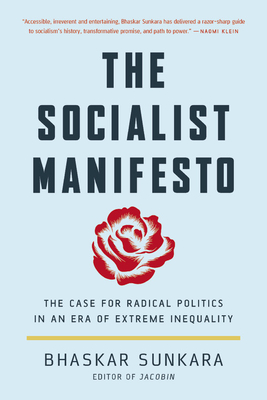
THE SOCIALIST MANIFESTO: The Case for Radical Politics in an Era of Extreme Inequality, never more trenchant than today


THE SOCIALIST MANIFESTO: The Case for Radical Politics in an Era of Extreme Inequality
BHASKAR SUNKARA

Basic Books
$15.00 trade paper, purchased from the author's magazine website

Rating: 5* of five

The Publisher Says: A "razor-sharp" introduction to this political and economic ideology makes a galvanizing argument for modern socialism (Naomi Klein)—and explains how its core tenets could effect positive change in America and worldwide.

In The Socialist Manifesto, Bhaskar Sunkara explores socialism's history since the mid-1800s and presents a realistic vision for its future. With the stunning popularity of Bernie Sanders and Alexandria Ocasio-Cortez, Americans are embracing the class politics of socialism. But what, exactly, is socialism? And what would a socialist system in America look like?

The editor of Jacobin magazine, Sunkara shows that socialism, though often seen primarily as an economic system, in fact offers the means to fight all forms of oppression, including racism and sexism. The ultimate goal is not Soviet-style planning, but to win rights to healthcare, education, and housing, and to create new democratic institutions in workplaces and communities. A primer on socialism for the 21st century, this is a book for anyone seeking an end to the vast inequities of our age.

I RECEIVED A DRC FROM THE PUBLISHER VIA NETGALLEY. THANK YOU.

My Review
: William M. Tweed said this about the way the US does politics:
I don't care who does the electing, so long as I get to do the nominating. As quoted in Understanding American Government (2003) by Susan Welch, p. 224

No good came from trying to talk sense into the Democratic Party; their loss on 5 November 2024 was catastrophic. It was not the resounding mandate the Nerd Reich and its tech scum boosters portray it as. The margin was not huge, but the impact will be *immense*, far-reaching, and vastly immiserating for millions.

It did not need to happen, even in the teeth of forty years of the carefully disguised radical coup orchestrated by the wealthy and powerful against the rest of us. The way to beat the radicals is not to appease or identify with them; it is to present an alternative to them.

This will never happen in the two-party system.

I wanted this not to be true, but this idiotic result has driven the last nail in the coffin of my faith in humanity, my trust in the US institutions of politics, and my desire to support the least-worst politicians in hopes they'll do some of the Right Thing. They won't.

Now what?

Now this, and before someone says "But socialism!" or even stupider "that's Communist!" I'll remind all y'all that the monster you've been Pavlovianly conditioned to fear and hate is totalitarianism relabeled to scare you away from realizing the socialist demands the owners hate were already met...to a degree...and they're the exact things your newly elected scum were put in place to destroy. When the way you live gets worse, do not open your yap. You either voted for, or decided not to vote against, this exact result.

It is your fault.

Now let's figure out what we can begin to do to make a few gains. Start by reading Bhaskar Sunkara's clear, cogent, carefully reasoned manifesto. If you're still reeling from the evidence of how immensely successful the scumbags' propaganda, misinformation, and misdirection were, here's a shred of hope to cling to. Here's a possibility that you already know works...you who receive "benefits" aka your own tax money returned to you (not some gift as the radical right wants you to believe) better than anyone...so lean into it.

Don't feel like you can do anything, don't want to think about it, are just too drained to give it your attention? That's their system for making you passive at work. If you won't do the work, spend your money to support those who will, and that shit-sure ain't the Democrats.

Support a real change for the better. Read this book to learn what that can mean.

Thursday, October 17, 2024

KLAXON READS: THE BIG CON: Crackpot Economics and the Fleecing of America, & LIMITARIANISM: The Case Against Extreme Wealth


LIMITARIANISM: The Case Against Extreme Wealth
INGRID ROBEYNS

Astra House
$28.00 hardcover, available now

Rating: 4* of five

Ahead of the paperback release on 23 September 2025, listen to the author on The Grey Area podcast. Necessary reading and listening in 2025.

The Publisher Says: "A powerful case for limitarianism – the idea that we should set a maximum on how much resources one individual can appropriate. A must-read!" —Thomas Piketty, bestselling author of Capital in the Twenty-First Century

An original, bold, and convincing argument for a cap on wealth by the philosopher who coined the term "limitarianism."

How much money is too much? Is it ethical, and democratic, for an individual to amass a limitless amount of wealth, and then spend it however they choose? Many of us feel that the answer to that is no—but what can we do about it?

Ingrid Robeyns has long written and argued for the principle she calls "limitarianism"—or the need to limit extreme wealth. This idea is gaining momentum in the mainstream – with calls to "tax the rich" and slogans like "every billionaire is a policy failure"—but what does it mean in practice?

Robeyns explains the key reasons to support the case against extreme wealth:
  • It keeps the poor poor and inequalities growing
  • It’s often dirty money
  • It undermines democracy
  • It’s one of the leading causes of climate change
  • Nobody actually deserves to be a millionaire
  • There are better things to do with excess money
  • The rich will benefit, too
  • This will be the first authoritative trade book to unpack the concept of a cap on wealth, where to draw the line, how to collect the excess and what to do with the money. In the process, Robeyns will ignite an urgent debate about wealth, one that calls into question the very forces we live by (capitalism and neoliberalism) and invites us to a radical reimagining of our world.

    I RECEIVED A DRC FROM THE PUBLISHER VIA EDELWEISS+. THANK YOU.

    My Review
    : Using moral arguments against massive wealth accumulation is like using moral arguments against porn: You could be right, probably aren't, and the target audience for your suasions could not possibly care less about them.

    All the bullet list items above? The very wealthy know those to be true and could not possibly care less about them. "Every billionaire a policy failure" is way more effective because it simply states the people's case against the perpetrators of the crimes (moral and/or legal) that must be committed to become a billionaire.

    What to do with the proceeds of the confiscation of excessive wealth is always going to be the weak point of any scheme to disempower the richest. The current Congress, like all its predecessors, is made up of people beholden to the moneymen. They will not confiscate and redistribute more than those who pay them...the people offer a token salary, the real money is in the campaign warchests they pay no tax on and use as they please...will allow.

    Author Robeyns is firing an opening salvo in the next campaign against greed. It will persuade a few groundlings to talk it up and try to get it onto the agenda of more meetings.

    Absolutely no billionaire will acquiesce to her suggestions. Therefore nothing will change as radically as she proposes.

    That is not, in my view, the purpose of this read, any more than Marx or Mao delivered revolutions in human social or economic organization with their books. In fact both delivered fig leaves for the vilest and most destructive totalitarians to operate on their ostensible behalf while in fact defrauding their true believers and, often as not, killing the ones who said "stop" because the inconveniently moral could be labeled "counterrevolutionary" therefore beyond the social pale to the supporting masses.

    What Author Robeyns offers here is a chance for you to examine your beliefs and your conscience. She doesn't have a prayer of impacting the lowlife, amoral Nerd-Reichers and the humanoid wallets enabling them. She *does* have a chance to elucidate some ugly facts about the accumulation of great wealth. A philosopher who has read, studied, and thought very deeply about human nature, she comes to conclusions you and I would do well to evaluate for ourselves. The only way I know of to do that is to read her words, and decide how much you resonate with them. The work this book represents is impressive. No one gets to these stages of argument absent a long, intense program of study.

    Do you feel in your water that someone possessing a billion currency units is also possessed of a character flaw? You'll find some comfort in knowing that you're not first to reach, or alone in reaching, this conviction. Is the spectacle of inconceivably rich foreigners using their hoards to manipulate the US electorate and thus the outcome of our elections very angering to your patriot's soul? You'll resonate to the ways and means of removing that power from them.

    Thomas Piketty praises this book as a "must-read" on its central argument of limitarianism. As he has done more than anyone else to yank the horribly uncomfortable, thick wool of "neoliberalism" from the world's eyes, I'd say heed him and get this book into your head before casting your 2024 votes up and down the ticket.

    Why have I given it a surprisingly limitarian four stars, if I set out to warble my fool lungs out about its virtues? Because, by the tendentious nature of books setting forth cases for action, it's a bit repetitive. It's not academic in purpose so it's not footnoted to a fare-thee-well. It is, in short, a beast with two faces: one faces the congregation and lectures for change; one faces the choir and seeks approval for its message.

    Speaking from the choir, I approve.

    ++++++++++++++++++++++++++++++++++++++++++++++++++++++++++++++++


    THE BIG CON: Crackpot Economics and the Fleecing of America
    JONATHAN CHAIT

    Mariner Books (non-affiliate Amazon link)
    $11.99 Kindle edition, available now

    Rating: 4* of five

    The Publisher Says: The scam of supply-side economics is clearly and convincingly explained in “a classic of political journalism” (Michael Lewis).

    Jonathan Chait has written for a range of publications, from the Wall Street Journal to the Washington Post, and considers himself a moderate. But he’s convinced that American politics has been hijacked.

    Over the past three decades, a fringe group of economic hucksters has corrupted and perverted our nation’s policies, Chait argues, revealing in The Big Con how these canny zealots first took over the Republican Party, and then gamed the political system and the media so that once-unthinkable policies—without a shred of academic, expert, or even popular support—now drive the political agenda, regardless of which party is in power. The principle is supposedly “small government”—but as he demonstrates, the government is no smaller than it was in the days of Ronald Reagan; it’s simply more debt-ridden and beholden to wealthy elites.

    Why have these ideas succeeded in Washington even as the majority of the country recognizes them for the nonsense they are? How did a clique of extremists gain control of American economic policy and sell short the country’s future? And why do their outlandish ideas still determine policy despite repeated electoral setbacks? Explaining just how things work in Washington, DC, and distinguishing between short-term volatility in the “political weather” and the long-term, radical shift in the “political climate,” Chait presents a riveting drama of greed and deceit that should be read by every concerned citizen.

    “Chait is both very serious and seriously funny as he traces the rise of conservatism over the past thirty years.” —Michael Kinsley

    I RECEIVED THIS BOOK AS A GIFT. THANKS!

    My Review
    : We knew the 1980 election was stolen. We knew why, too. Milton Friedman told us why it had to be in Free to Choose, book and TV show. He operated in the libertarian/laissez-faire world of F.A. Hayek. The men behind Reagan were supply-side radicals who wanted more than anything to cripple the Federal government's ability to act against the businesses polluting out planet, and "taking their money." Instead the Federal government would need to borrow money...at interest...from the banks; enriching the bankers and hobbling the politicians who could enforce change on the reactionary elite.

    What tendentious Author Chait does in this seventeen-year-old book is detail the ways this brazen theft (my words, not his) has resonated down the decades to the present moment of radicalized fascist terrorism meeting economic royalism in an ongoing enshittification of the world's social fabric. And it's being done to us all under the name "supply-side economics."

    Call it whatever you like. We're forty-four years into the world's first experiment in this snake-oil system of not taxing the rich and not acting to protect the poor and the needy, after seeing the huge economic and societal gains of the Keynesian interventionist years. The promises of economic growth and technological innovation, of booming investment by those untaxed billionaires, etc etc ad nauseam, have not materialized. There's never been a glimmer of benefit to anyone except the untaxed wealthy.

    Yet the entire conversation about the economy is still framed in terms that comport with this failed-in-practice theory.

    The essence of insanity is doing the same thing repetitively and expecting different results to come of it.

    Author Chait isn't kidding around with this takedown of the naked emperors of the economic establishment. It is refreshing to see a commonsensical moderate-to-conservative poloitical thinker confront orthodoxy, hold it to the test of results-versus-promises, and report honestly on his findings. Reading this book before the 2024 election would be wise. Reading it, and considering deeply its message and its implications, is something I'd call a civic duty.

    Sunday, April 10, 2022

    YOUR HEART IS A MUSCLE THE SIZE OF A FIST, first novel set in a major, convulsive inflection point


    YOUR HEART IS A MUSCLE THE SIZE OF A FIST
    SUNIL YAPA

    Lee Boudreaux Books (non-affiliate Amazon link)
    $10.99 Kindle edition, available now

    Rating: 4* of five

    The Publisher Says: The Flamethrowers meets Let the Great World Spin in this debut novel set amid the heated conflict of Seattle's 1999 WTO protests.

    On a rainy, cold day in November, young Victor—a boyish, scrappy world traveler who's run away from home—sets out to sell marijuana to the 50,000 anti-globalization protestors gathered in the streets. It quickly becomes clear that the throng determined to shut the city down—from environmentalists to teamsters to anarchists—are testing the patience of the police, and what started as a peaceful protest is threatening to erupt into violence.

    Over the course of one life-altering afternoon, the lives of seven people will change forever: foremost among them police chief Bishop, the estranged father Victor hasn't seen in three years, two protestors struggling to stay true to their non-violent principles as the day descends into chaos, two police officers in the street, and the coolly elegant financial minister from Sri Lanka whose life, as well as his country's fate, hinges on getting through the angry crowd, out of jail, and to his meeting with the president of the United States.

    In this raw and breathtaking novel, Yapa marries a deep rage with a deep humanity, and in doing so casts an unflinching eye on the nature and limits of compassion.

    A LOVELY SURPRISE GIFT. THANK YOU.

    My Review
    : First, read this:
    Doing something, he had discovered, anything, however small, that contributed to your meaningfulness of self and surroundings—well, that was the trick. That was the trick to not feel like shit.
    –and–
    What is the function of the heart, if not to convince the blood to stay moving with the limits where it belongs, to stay at home.

    Stay at home, stay at home, stay at home.

    But restless thing that it is, your blood, it leaps into the world.
    –and–
    ...{T}hey learned that courage is not the ability to face your fear, heroically, once, but is the strength to do it day after day. Night after night. Faith without end. Love without border.

    What the 1999 WTO Protests taught the reactionaries around the world was that there was nothing they could do to win the hearts of the people. They set about controlling their bodies instead. As Author Yapa put it, "...how deep the darkness of the heart which longs for control," and there it is out in the open. The hearts of a few demand that the world obey them, obey their darkness, and submit to external control.

    None of the seven PoV characters in this story are without that darkness. They're all on trajectories that will not allow then to remain unbruised and unbattered by life, and more particularly by the awfulness of demanding economic justice from those whose entire way of life, whose whole sense of self, is rooted in and branches from their hoarded wealth. There are those whose one need in this life is to deny others what they want and/or need (preferably both) so they can Win, they can be seen to be Right because they've won! Then there are those whose one need in this life is to take away what it is they've decided is unfairly denied to others:
    They wanted to tear down the borders, to make a leap into a kind of love that would be like living inside a new human skin, wanted to dream themselves into a life they did not yet know. He heard them in the streets saying, “Another world is possible,” and beneath his ribs broken and healed and twice broken and healed and thrice broken and healed, he shuddered and thought, God help us. We are mad with hope. Here we come.
    –and–
    Tiresome people, but he knew it was only human nature to believe it best to ignore suffering, to focus on your own good fortune. The human survival mechanism: to say your prayers, thank your gods, and hold your breath when you passed the slums. The sweet poison of privelege, wasn't it? To think blindness a preferable condition.

    And neither side of this divide sees the grim and angry reality: They're one coin. Heads, tails, maybe they're aesthetically distinct but they're one zero-sum-game playing piece of a coin. It would be funny if it weren't so tragic.

    The central spine of the book, for this reader, is the story of Bishop and Victor...father and son, estranged, and truly, absolutely the same man, the same wounded-by-loss, blinded-by-love man. Just as sad as father-and-son estrangements always are. Just as inevitable as the voice of experience being unable to be the ears of acceptance that a rudderless, shallow-drafted dinghy of a boy needs to find a channel in the rough storms he can't avoid:
    “What we require of others so that we may live our lives of easy convenience. Dad, there are people who work all day every day for thirty years assembling the three wires that make a microwave timer beep. What are we supposed to think of this? How do they survive it? Why do we ask them to?”
    –and–
    “Son, how easily an open heart can be poisoned, how quickly love becomes the seeds of rage. Life wrecks the living.”

    Singing the same song, different verses, and different keys...the minor key of youthful wounds, the major key of adult scars.

    What you need to know is that Author Yapa wrote a polyphonic poem, a written kōan to the concept of connection and belonging. What you want to read needs to be story of discovering yourself in many places, seeing your wounds and worlds across gulfs of experience and of time as you seek out the hand, the heart, the warm and welcoming shoulder to shelter and comfort you:
    It was 1999 in America, he had traveled the world for three years, looking for what he didn’t know, and now here he found himself: absolutely allergic to belief, nineteen years old, and totally alone.
    –and–
    And yet there he was, his son, looking and smiling through his half-opened eyes, not a look of concern, but as if he understood in some way, the sometime knowledge of what this is, the knowledge of the whole ugly beautiful thing, the knowledge of the courage it takes to move into fear and to fuck up and to go on living, knowing that sometimes it is two people alone and some small kindness between them that is not even called family, or forgiveness, but might be what some, on the good days, call love.

    Good days or bad, that is its name: Love. There are strands to this too-short, too-scattered narrative that seek their love, that clutch their illusions of love; but in this father, whose son is not his flesh and blood but is his, and this son, whose world refuses to stop hurting and whose heart can't make itself heard yet, there is a beautiful, complete love of like-minded men.

    If that's a story you need to read, as I did, then get this into your hands at once.

    Sunday, November 1, 2020

    THE CARE MANIFESTO, a short read but an intense and inspiring one

    THE CARE MANIFESTO: The Politics of Interdependence
    THE CARE COLLECTIVE

    Verso Press
    $9.99 Kindle edition, available now

    Rating: 3.75* of five

    The Publisher Says: We are in the midst of a global crisis of care. How do we get out of it?

    The Care Manifesto puts care at the heart of the debates of our current crisis: from intimate care—childcare, healthcare, elder care—to care for the natural world. We live in a world where carelessness reigns, but it does not have to be this way.

    The Care Manifesto puts forth a vision for a truly caring world. The authors want to reimagine the role of care in our everyday lives, making it the organising principle in every dimension and at every scale of life. We are all dependent on each other, and only by nurturing these interdependencies can we cultivate a world in which each and every one of us can not only live but thrive.

    The Care Manifesto demands that we must put care at the heart of the state and the economy. A caring government must promote collective joy, not the satisfaction of individual desire. This means the transformation of how we organise work through co-operatives, localism and nationalisation. It proposes the expansion of our understanding of kinship for a more 'promiscuous care'. It calls for caring places through the reclamation of public space, to make a more convivial city. It sets out an agenda for the environment, most urgent of all, putting care at the centre of our relationship to the natural world.

    I RECEIVED A DRC OF THIS TITLE FROM THE PUBLISHER VIA EDELWEISS+. THANK YOU.

    My Review
    : A pamphlet in length, a Bible in heft, and very British in tone, this is a cri de coueur and a call to arms at one and the same time. There is no one thing in the text that is or could be made into an action item, so activists take note. The purpose of this work is to examine the failures of our present end-stage capitalist system of delivering "care" to its consumers. Spoiler alert: it's a shambles, with horrific social and economic costs.

    Then, after wasting exactly no words on belaboring (!) their point, the contributors outline theoretical bases for extending the concept of care, starting with feminist thinker Joan Tronto's formulation of types of care. First there is caring for, the step-one state of all care, the delivering care from one person to another. Next comes caring about, the empathetic connection that leads us to extend our hand to others, often strangers to us. And caring with, the hardest stage of care that Tronto identifies...the urge to act, to make one's ideas and suggestions work in the wider world, for example the people who join Greenpeace or Doctors Without Borders.

    The contributors use this ingenious and simple system of ideas about caring to offer some blissfully utopian suggestions for enabling "promiscuous care," which sounds a lot racier than it is. I hoped for something louche; I got the idea that a truly well-run planet would be promiscuously cared for, about, and with because the Collective urges on us a paradigm shift into drawing no distinctions between the needy and caring. Animals, ecosystems, all are in need of care; souls and minds and bodies, no matter whose or what's bodies and souls we're talking about, should be able to expect care. Simply for existing.

    If that does not make your heart swell and your eyes leak a bit, you're dead inside.

    How this should be accomplished and what enforcement regime will be in place, well...no plan this blissfully Right can be that precise. I did not come away from this read equipped with solutions, but I darn sure came away with answers that I want to summon into existence. And that is a great place to start thinking through the "what comes next" part of the Revolution that capitalism's collapse will bring.