Showing posts with label leftist social critique. Show all posts

Sunday, September 20, 2026

WAR IS A RACKET: And Other Essential Truths from General Smedley Butler, brutal, frank, determined to tell the truth he saw


WAR IS A RACKET: And Other Essential Truths from General Smedley Butler
SMEDLEY BUTLER
(foreword by Kristofer Goldsmith)
Steerforth Press (non-affiliate Bookshop.org link)
$11.99 ebook, preorder now for delivery 22 September 2026

Rating: 5* of five

The Publisher Says: Includes a new introduction by Kristofer Goldsmith, the nation’s most recognized authority on the targeting of American troops and veterans with disinformation and extremist recruiting efforts.

Updated with fresh material, this edition brings the prophetic warnings of the 2-time Medal of Honor recipient to a new generation.

"A short, blunt, and extremely vigorous blast." —The New York Times


Smedley Butler, a retired Marine Corps major general and the most decorated combat veteran of his era, is best known today for War is a Racket (1935), a searing anti-war, anti-imperialism, anti-capitalism critique of U.S. military interventionism that has remained perennially in-print and is as relevant today as ever.

This new collection features additional writings that underscore Butler’s role as a staunch advocate for veterans' rights and a fearless defender of democracy. In addition to his 1933 call-to-action, "You've Got to Get Mad," this volume includes his explosive 1934 testimony before the McCormack-Dickstein Committee. There, Butler exposed "The Business Plot"—a conspiracy by a group of Wall Street and other powerful figures that sought to convince Butler to use his influence over disgruntled veterans to seize control of the federal government and install a fascist regime.

With America’s present day military activity more closely tied to corporate profits and the enrichment of its leaders than ever, Butler’s insightful breakdown of the military-industrial complex remains highly resonant. Featuring a new introduction from combat veteran and advocate Kristofer Goldsmith, this edition is an essential resource for anyone looking to build their antifascist toolkit.

I RECEIVED A DRC FROM THE PUBLISHER VIA EDELWEISS+. THANK YOU.

My Review
: War is a racket. It's just true. In these chapters, a career Marine with the most stellar service record, a reputation as a straight-shootin' sunuvabitch tells it like it is:
  1. War is a racket
  2. Who makes the profits?
  3. Who pays the bills?
  4. How to smash this racket!
  5. To hell with war!
Written after his retiremet from the position as head of US-occupied Haïti's police force as a speech, turned into a bestselling, Reader's Digest-distributed short book...isn't it telling that almost a hundred years ago peace was a right-wing talking point?...and renowned until the US joined the hugely profitable-for-business world war made its message...awkward.

This new edition of the book is contextualized for modern audiences by Iraq veteran, military-family-descended Kristofer Goldsmith. His clarity and honesty about the personal costs, most of a century after this book's appearance, and thus the consequences of the war machine were know and deliberately ignored.
Smedley Darlington Butler was also the whistleblower that saved the US from the success of the Wall Street Putsch in 1933. The fascists who made that attempt chose the wrong figurehead. They've been quietly designing the next one since then. We're living through it.

Read a moral man's account of what "They" want. It should tell you why it is imperative to #Resist.

Monday, September 14, 2026

AMERICAN CAESAR: How Theocrats and Tech Lords Are Turning America into a Monarchy, sobering and timely


AMERICAN CAESAR: How Theocrats and Tech Lords Are Turning America into a Monarchy
BRADLEY B. ONISHI

St. Martin's Essentials (non-affiliate Bookshop.org link)
$14.99 ebook, available now

Rating: 4* of five

The Publisher Says: A chilling and urgently needed exposé on the forces pushing American politics and religion toward a post-constitutional autocracy

From Silicon Valley boardrooms to rural pulpits, from Catholic monasteries to Beltway think tanks and Project 2025, a convergence is underway. Reactionary Catholics dream of a new Christendom. Protestant pastors invoke divine right over democratic rule. Tech billionaires, led by the likes of Peter Thiel and Elon Musk, argue that freedom and democracy are incompatible. Their solution? A singular ruler to bring “order” out of what they see as liberal chaos.

With a theologian’s sensibility, a journalist’s touch, and a historian’s eye for how movements evolve and adapt, Dr. Bradley B. Onishi traces the strange alliance between spiritual warfare and Silicon Valley libertarianism. At the center of it all is the desire for an unbound executive—one man, beyond checks, beyond balance, beyond democracy. This isn’t nostalgia for the 1950s. It’s an organized attempt to abandon the American experiment altogether. A former insider turned academic expert, Onishi brings unmatched depth to this investigation—tracing his own path from evangelical pastor to co-host of Straight White American Jesus, the nation’s leading religion and politics podcast.

As the 2024 election fades into history and a new political order takes shape, American Caesar is not just a warning. It’s a map of how we got here—and a call to act before the Republic as we know it becomes just another chapter in a forgotten history book.

I RECEIVED A DRC FROM THE PUBLISHER VIA NETGALLEY. THANK YOU.

My Review
: I'm highly suspicious of the notion that "order" is a Good Thing because who decides this for other people is generally who wants to control those other people's lives in close detail. Those kinds of people are almost always puritans of one or another sort, who believe "They" should not be thinking those thoughts/doing those things (usually, though not always, sexual) because *eeewww*.

Author Onishi adds in the tech industry's "thinkers" to the usual suspects but stops short of using the slurs I myownself hurl at them. Author Onishi is tendentious as hell, shouting and waving his arms at the public, determinedly pointing the fingers of both hands at sometimes strained parallels with a past distant enough to make comparisons very very broad. Human nature does not change from what I can see; the same playbooks are still effective because our psychology is much the same.

"Much the same" does not mean we're always going to succumb to the same ruses. Look at the demonization of immigrants that's largely limited to haters and shouters, who are always in every era a minority; how many more people did what Minneapolis did and showed up to disrupt ICEstapo raids? California's honking warners of imminent danger are not getting hate outside the small bubble of the haters and screamers or there would be giant crowds of people helping ICE instead of huge shortages of recruits.

I'm not trying to put you off the read, it says what I think and explains what I fear; it brings the receipts for its bases of argument; it's going a bit further into the "it's inevitable, prepare to suffer" direction than I suspect is fully supported by developments. I think its tone is alarmist in a time when alarm is not only justified, but required; however presenting the grim facts ought to serve, not presenting deterministic conclusions. Those tend to dishearten the ordinary person, not rile them into the resistance and non-compliance we so urgently need to support and spread as a mindset.

Flawed by an overly emotional tone or not, this book can and should be part of your pre-election reading.

Friday, September 11, 2026

THE CORONER'S SILENCE: Death Records and the Hidden Victims of Police Violence, damning indictment using evidence seldom seen by the public


THE CORONER'S SILENCE: Death Records and the Hidden Victims of Police Violence
TERENCE KEEL

Beacon Press (non-affiliate Bookshop.org link)
$14.99 ebook, available now

Rating: 4.5* of five

The Publisher Says: For readers of His Name Is George Floyd and Under the Skin

A landmark investigation into forensic medicine that exposes the systematic concealment of state-sanctioned violence through death investigations


Each year, police officers kill over 1,000 people they've sworn to protect and serve. While some cases, like George Floyd's and Sandra Bland's, capture national attention, most victims remain nameless, their stories untold. The Coroner's Silence reveals a disturbing truth about these coroners and other death investigators are often complicit in obscuring the violent circumstances of in-custody deaths.

Through rigorous research—including critical records analysis, public health studies, and interviews with victims' families—this book unmasks the systemic failures within forensic medicine. Terence Keel shows how incomplete autopsy reports, mishandled medical documents, and strategically lost evidence effectively shield law enforcement from accountability.

The Coroner’s Silence uncovers how the current system of death investigation operates as a mechanism of institutional safeguarding. By highlighting the structural powerlessness of coroners and their disconnection from the communities most affected by police violence, Keel demonstrates how bureaucratic processes can render human suffering invisible.

True accountability requires more than procedural reform. It demands a fundamental reimagining of how we investigate, document, and understand deaths at the hands of state institutions. The Coroner's Silence is a crucial intervention that challenges us to confront the deeply ingrained mechanisms that perpetuate systemic violence.

I RECEIVED A DRC FROM THE PUBLISHER VIA EDELWEISS+. THANK YOU.

My Review
: Starting with an acknowledgment of the demands we place on the police, "...we have asked police in America to maintain law and order in addition to managing the problems of poverty, the unhoused, the mentally unwell, and people suffering with substance abuse," Author Keel peels back the layers of denial, obfuscation, and lying that enshroud the deaths of people in law-enforcement custody. Coroners, tasked with the responsibility of reporting on the condition of the deceased's body after their death, often use terminology that clouds what would be interpreted as signs of violence lest police be accused of criminal conduct.

The obvious problem arises when there has been criminal police conduct. It is not always the case, nor is it unknown; the system is intended to hold bad actors accountable for their actions; so how are victims' families, members of the public, to feel confident when principal figures are left to perform their role largely under the radar and so in practical terms unaccountably?

Author Keel studied the problem, saw the tensions in the system up close, and presents us this honest report with all its uneasy conclusions. I'm particularly taken with the concept of "second death," the erasure of the deceased's violent death at the hands of public safety professionals; men and women who collude to prevent the truth of the deceased's time in custody leading to their death is enacting a different sort of violence on them and their survivors, whether family or society at large, by shielding violent offenders from responsibility because they are the police.

It should surprise no one that racialized and marginalized victims disproportionately suffer fatal consequences on entering police custody. It is almost impossible for members of those groups to receive posthumous justice due to the bureaucratic sleight-of-hand defeating open and transparent accountability for deaths in custody. Medical jargon, grammatical skulduggery...much can be hidden by using bureaucracy's beloved passive voice, and ameliorative jargon eg, "shots were fired" by anyone in particular, or just impelled by hard breezes?, or "an officer-involved conflict" of what sort? initiated by whom?, etc etc.

Narratives constructed in this pettifogging fashion are not rigorous, and should be challenged at every turn. That they are not indicates the true purpose of coroners' reports by whatever name: exculpation by obfuscation.

It is infuriating that this is widespread, nay ubiquitous, and goes largely unchallenged. In bringing the abuse of public trust this behavior represents, Author Keel does his best to prevent as many "second death"s as he possibly can. I pray for his ongoing success and for this cultural poltroonery to be held up for public ridicule.

Monday, September 7, 2026

SONGS MY MOTHER TAUGHT ME: Why the Artist Must Take Sides, truth told, action called for


SONGS MY MOTHER TAUGHT ME: Why the Artist Must Take Sides
SAUL WILLIAMS

Haymarket Books (non-affiliate Bookshop.org link)
$9.99 ebook, avaiable now

The Independent Press Top 40 Bestsellers: Non-Fiction For the week ending September 16, 2026

Rating: 5* of five

The Publisher Says: Award-winning poet and performer Saul Williams explores how artists today must respond to systemic violence and injustice—in the words of Paul Robeson, by choosing sides.

Songs My Mother Taught Me is Williams’ clear-eyed exploration of the role of the artist in these times by answering the question: what radicalized you? He answers by examining how his role models—writers and artists, from Amiri Baraka to local musicians in Brazilian bars to Palestinian hip-hop heads—have responded to imperialist violence, oppression, and genocide. Riffing on Paul Robeson’s famous declaration, Williams builds a provocative case for why today’s artists cannot remain neutral in the face of injustice. “We need songs that crumble empires,” he writes, “films that teach, remind, and inspire, poems that would make a despot revoke your citizenship.”

The radical artists of the Vanguard Series offer new poetry and prose to answer the question, What does poetry have to do with politics?

I RECEIVED A DRC FROM THE PUBLISHER VIA EDELWEISS+. THANK YOU.

My Review
: What does poetry have to do with anything, demands my inner poetry-averse Philistine. What all art has to do with politics, answers reasonable me.

Everything. Just as Reverend Jedidiah, here, says it does.

I was inclined to listen to the words of the Reverend from Sinners because everything he's saying in these barely-200 pages is so exactly what I'd like you to hear...art matters or "They" would not try to censor it, take it away from you, hide it if "They" don't approve of it...search engine enshittification is more complicated than a ban, but also flies under your radar and has built-in plausible deniability.

You are what you consume. Go light on the empty, sweet-tasting, pretty but pointless stuff for a healthy mind/body/spirit (health is the enemy of bullshit on every measurable axis). Reverend Jedidiah says so too, out of his complicated mind and mouth. I'm very impressed by Author Saul's meditations on the promises and beauties in spirituality being bait (my word) for the hook of obedience and deference to authority. It's deeply saddening, but true as even a brief glance at the world shows you. Taking sides in the culture wars is often hardest for people who see the misuse of their source of joy and consolaion in the world. So much of the noise in the world is, and always has been, intended to make it hard for you to focus for very long. Breaking through the noise is best done by listening to it, looking for what it's pushing you to accept. Advertising, for example, is pushing you to accept the "blessing" of capitalism...look at this maginificent abundance of stuff! see what an amazing life you can have!...without looking at the wages no one can live on, the cost of the plastic it's wrapped in, the fact that it's flimsy and will break. Begin your journey at church...why would Jesus say it's fine to rip kids away from parents, to take fathers from their families to be shipped away not even where they came from and might have needed to escape, when a huge part of the christian message is "love thy neighbor?" All very obvious. But the noise, the shouting, the struggle to afford all the brummagem gauds makes the obvious recede into shadows so it won't bother you with its obviousness.

"They" don't need to lie to you if "They" can distract you from the stone-cold obvious truth.

Author Saul follows in the footsteps of truly great souls, from Paul Robeson to his mother. He distills into readable, relatable prose the truths that can feel threatening to acknowledge, accept, and act on: You, no matter how "small" or "insignificant" you think you are, must take sides. You can't afford not to. There is too much at stake, too much happening that we can not let go on as it is.

Take comfort in reading Author Saul's wisdom. No, it's not easy. It never is.

It's necessary instead.

SWITZY, Emma Cline's latest and a Booker-longlisted smack in the face


SWITZY
EMMA CLINE

Random House (non-affiliate Bookshop.org link)
$13.99 ebook, available now

Rating: 5* of five

LONGLISTED FOR THE 2026 BOOKER PRIZE Shortlist will be announced on September 22.

The Publisher Says: A mesmerizing portrait of an aging man’s last pilgrimage, from the New York Times best selling author of The Girls and The Guest.

A private plane cuts through the winter night, somewhere over Greenland. David, a retired executive, sits back in his leather seat, playing solitaire on his phone. Click. Click. Drag. Click. The notebook in his jacket pocket is filled with familiar phrases, urgent reminders to himself, but he struggles to recognize his own handwriting.

A mystery, among many mysteries. The world, once so knowable, has been rendered inscrutable.

This is what David Cody, his assistant, asleep in the seat next to him, will shepherd him along the voyage. A stopover in London. Dinner with his adult daughter. A meeting in France with an old friend, estranged for decades.

His final destination is Zurich.

David glides through hotel rooms and airports and foreign cities, running out the clock on his mortal life. His grasp on the present slips away, and the past rushes the Sunday roasts of childhood. The stiff clothes meant only for church. A summer at a school friend’s house. The losses and missteps that punctuate a life.

As David’s arrival in Zurich looms, an exquisitely rendered portrait of an unraveling mind emerges, both darkly humorous and profoundly moving. Hypnotic and startlingly original, Switzy probes the depths of human consciousness, revealing what a man is left with when the accomplishments and compromises that have defined him, and the illusions he's relied on, vanish.

I RECEIVED A DRC FROM THE PUBLISHER VIA NETGALLEY. THANK YOU.

My Review
: First, read this:
And maybe it made sense that this task proved so difficult, that the attempt to write the letter only underscored the necessity of the letter: things really had become unmanage-able. Other words for it: unbearable; meaning-less.

Disconcerting, this mental ice floe, populated only by David, floating off into the polar darkness. He was some-times a figure standing on the shore, watching himself float away, and sometimes he was on the ice floe, losing sight of land.

The ice floe-he had tried to write about that. In the letter.

In his strange new child's handwriting, these fat, scratched-out blocks.

The ice floe. The white room in the brain. How he knew when he was smiling and it was an error.

This dark hour, this loneliness.

Fear which lacked a shape. A dark, crumpled coat thrown carelessly into the corner of an unfamiliar room.

It's not the creeping horror of the smartphone-reading generation's inability to see the meaning-carrying blocks of text I still call paragraphs this time, it's the unmooring, the complexification of a dementia-raddled mind that has these single-line statements progressing down the page exactly as David's mind progresses down the legibility scale. He can parse less and less information, understand fewer and fewer ideas and concepts as his mind decouples meaning and experience.

A life lived amid the intense and complicated whirl of global finance. A life lived without awareness of what he was undervaluing, like most of us lead. A life that, now that he's losing his Self to the unraveling of dementia, he's decided to end...seemingly without reference to anyone else, a final act of solipsistic capitalism as there are no other stakeholders left in his world.

An uncomfortable indictment of the entirety of the life he's choosing to end.

It's a story I read in fits and starts because I kept feeling the need to step away from David so I could (re)gain perspective on him; is he, was he, only ever a monster or has he lost the parts of his self-constructed identity that were warm and inviting and needing and needed to the ravages now making him feel the need to leave his world?

I never found an answer. I wonder if he did, and so disliked what he found that assisted dying sounded like a way out of the emotional reckoning that is the end of life.

It felt to me that it would be well within his character to choose that last for those selfish reasons. I support his decision, no matter how he arrived at it, because he like all of us deserves to choose what kind of ending he gets. But wow...to leave it until you've decided you're going to die to make the amends you should have made long ago?

So very solipsistic, fearful, cowardly, and typical.

A fascinating story richly deserving a place in the Booker Prize conversation for this year. Also deserving of praise for contributing to multiple societal conversations we very, very badly need to have.

Wednesday, September 2, 2026

PRECIOUS CHILDREN...to whom? why?...questions with more answers than I expected


PRECIOUS CHILDREN
MARY G. THOMPSON

Tachyon Publications (non-affiliate Bookshop.org link)
$16.95 paperback, available now

Rating: 4.8* of five

The Publisher Says: A wealthy family trying to cheat death is overmatched—by a stubborn teenager hiding in a body that looks just like their son. In this taut tale of genetics and entitlement, nature vs. nurture goes horrifically wrong.

Dina Blake’s fourteen-year-old son, Geoff, has just died for the second time. But everything will be okay. The Blake family’s wealth has bought them thousands of clones of each of their children. These children are farmed out to loving families, but with the caveat that the bodies are always available to the Blakes.

After Geoff dies, the Blakes upload their son’s memories into Nathan, who is an unwilling host, desperate to stay with the family who loved him.

Dina’s younger daughter, Di, is terrified because she knows something her parents don’t—the memory transfer doesn’t always go as planned. The Geoff who’s been living with them since his first death isn’t the person her mother thinks he is, and the families of the bodies the Blakes steal aren’t all innocent.

When Geoff returns to life in Nathan’s body, he has to contend with Nathan’s frustrating desire to live and his unexpected ability to fight for his life. For some children to live, others must die. Dina must decide how far she’ll go to protect her children, and Geoff must find out if, and who, he’s willing to kill.

I RECEIVED A DRC FROM THE PUBLISHER VIA EDELWEISS+. THANK YOU.

My Review
: A scathing, unnerving judgment rendered on the Cult of Mother, the repellent entitlement of wealthy people, the absence of ethical consideration in fertility treatment's grey areas...a very modern set of concerns not that often addressed in either fiction or public debate.

There's no guts'n'gore, nothing supernatural, none of the usual markers of horror that do not appeal to me; instead we're immersed in a world where the privileged are able to command the use of the underprivileged as breeding stock for their own children at the expense of children of their own. A take on the same story as Never Let Me Go, the horror of it is more pointed as it's brought to a conflict point the Ishiguro novel never sought...the struggle of one person to survive at the cost of explicit death for another character in the same body.

Dina's one relatable trait is the single, vague qualm she sort-of has about killing an actual person to have her piece-of-work son back. It's sad that it was permitted by Authority to come to this, the entire practice should never have been permitted at all, but at least her repulsive entitlement took a slight ding at this appalling practice at last.

I'm not sure this is the lesson I was meant to take away from the read but it's the one I internalized: There is no way in which privilege does not warp the privileged in very ugly ways. Dina's ambivalence about her willingness to kill someone else's child to get her own back is too little too late for my tolerance; and this is less speculative than it's pretending to be, more prediction of things to come.

Deeply unsettling meditation on the repugnant greed that dominates our world. A read that's stuck in the corners of my mind.

Friday, August 28, 2026

A RESISTANCE HISTORY OF THE UNITED STATES, from Bookshop.org's Independent Press Top 40 Bestsellers: Non-Fiction list all summer long


A RESISTANCE HISTORY OF THE UNITED STATES
TAD STOERMER

Steerforth Press (non-affiliate Bookshop.org link)
$15.99 ebook, available now

The Independent Press Top 40 Bestsellers: Non-Fiction For the week ending September 16, 2026

Rating: 3.5* of five

The Publisher Says: An urgent, bracing new look at American history that Ava DuVernay calls "deeply necessary for this moment."

Revisit the Salem Witch Trials, the Underground Railroad, and other resistance movements of American history to get a bold new understanding of how resistance shaped our past—and how its principles can change our future.

The United States was shaped by resistance—but not in the way we’ve been taught. The Revolution did not secure liberty; it opened the door to either liberty or oppression, where only white men enjoyed all of the benefits and protections of citizenship.

In A Resistance History of the United States, public historian Tad Stoermer shows how from the very beginning, that tension—between the ideals of resistance and the realities of power—has defined America more than the Enlightenment ideals enshrined in the Declaration of Independence and the Constitution.

Utililizing powerful storytelling to focus on key—and often lesser-known—moments in American history, this book reveals the truth of how resistance movements from Colonial times have opposed the powers that be. Stoermer covers an impressive roster of pivotal movements, with each chapter identifying a key resistance movement and principle meant to inspire contemporary readers, including:
  • Bacon’s Rebellion/Metacomet’s War (1676)
  • Salem Witch Trials (1692)
  • The Black Loyalists (1783)
  • The Underground Railroad (1850)
  • Through these and many more examples, Stoermer dismantles the mythologies that pass for American history—exposing the curated nostalgia, moral evasions, and institutional silences that have long protected abusive power. What emerges is an essential look at how we can take lessons from the past to understand, and effectively respond to, the injustices we face today.

    I RECEIVED A DRC FROM THE PUBLISHER VIA EDELWEISS+. THANK YOU.

    My Review
    : There's a reason this story has been on the Bookshop.org non-fiction bestseller list since who-kicked-the-cat. It's organized like the podcast-a-holics like it, event by event. More like a podcast script collection than a narrative history, it is nonetheless a nevessary document of how *structural* change can get made.

    I myownself don't think that's the only kind that counts, where the author does.

    I'm far more annoyed by the absence of footnotes/inline citations in a serious work of non-fiction. Surely in the Age of AI it would be the work of but a moment to get that done! By itself, that was one star gone. I'm not convinced the choice of political changes enshrined in law was as restrictive as the author's use of it requires. To use my own pet peeve, where's the gay-marriage part? Where's the Homestead Strike?

    So not perfect but way way better, more corrective, than the triumphalist claptrap that's extruded by the yard from more mainstram publishers. Steerforth Press does interesting work all the time even when I quibble with it. This is a fine example of that reality.

    I think most readers would prefer to ear-read the book, as it plays into the podcasting ethos of it.

    Friday, August 7, 2026

    BLOOD OF THE DAWN, Peru's violent past made personal


    BLOOD OF THE DAWN
    CLAUDIA SALAZAR JIMÉNEZ
    (tr. Elizabeth Bryer)
    Deep Vellum (non-affiliate Bookshop.org link)
    $9.95 ebook, available now

    Rating: 4* of five

    The Publisher Says: Debut novel by Peruvian author viscerally revisits Peru's recent, traumatic history through the eyes of three women

    Blood of the Dawn follows three women whose lives intertwine and are ripped apart during what's known as "the time of fear" in Peruvian history, when the Shining Path militant insurgency was at its peak. The novel rewrites the conflict through the voice of women, activating memory through a mixture of politics, desire, and pain in a lucid and brutal prose.

    Claudia Salazar Jiménez was born in 1975 in Lima, Peru. She is a critic, a scholar, and an author; she founded PERUFEST, the first Peruvian film festival in New York, where she lives; and she won the 2014 Americas Narrative Prize for this, her debut novel.

    I RECEIVED A DRC FROM THE PUBLISHER VIA EDELWEISS+. THANK YOU.

    My Review
    : A nasty proxy war was fought by the US versus the USSR as part of what we in the US are taught to call "the Cold War." How cold is a war whose victims number in the hundreds of thousands in one theater of its coldness, eg Latin America? Are people's families less fractured because no US soldiers (to speak of) were killed? Are those (mostly) men less dead because they weren't casualties of great pitched battles?

    One nasty war was the struggle Peruvians fought against Sendero Luminoso (Shining Path in English), a Soviet-backed militia that committed atrocities against ordinary people with seeming success throughout the 1980s. The brutality of the US-backed military's responses to Sendero Luminoso drove some into the rebels' camp, others away from it. In any civil war there are no real winners. This was never more evident than in Peru. Author Salazar Jiménez limns that very clearly by decentering the male (mostly) combatants in favor of three women whose lives are both upended and defined by the conflict.

    It's a depressing truth that this book came out in 2016, I read it in 2017, and while I made my notes on it at the time I never wrote them into a review. The biggest part of my failure to review it stems from the stream-of-consciousness narrative vignettes feeling unlinked-up. This is a debut, so it deserves generosity of treatment; however I was very, very irritated by the sense that, if there was a common thread in the background tapestry, I did not see it.

    On skimming the story ten years later, I still don't. The PoV women are all enmeshed in the struggles of Peru, none on the government side but Melanie the city-born colonizer-stock photographer is probably closest as photography and its granddaughter filmmaking's very much an outgrowth of bourgeois culture more broadly; her desire to show the world what's happening to her country gets her resoundingly abused by Sendero Luminoso perpetrators. Her narrative voice wasn't distinctive, particularly in (unclear) distinction to Modesta the impoverished country-dwelling Quecha woman's.

    That both were raped quite violently (there is no non-violent rape, I'm saying their experiences were even more violent than baseline horror) did not make them more distinguishable in a narrative technique used to emphasize the commonalities of sexualized assault. It served that function. a side-effect of that function is it's more difficult to build specific empathy for that character. As the story progresses, Modesta faces the challenge of carrying then birthing a daughter from her horrifying experience...a daughter she cannot easily or readily bond with. Since I'm more distant emotionally from her by not having a clear sense of her as Modesta but rather as a woman caught in war, it's harder for that horrific truth to make its most intense impact on me-the-reader.

    Comrade Marta, the cadre of the Sendero Luminoso, was probably the one easiest to tell apart because she was seeing, participating in, perpetrating, but centrally seeing the violence her group committed as a necessary step to gaining meaningful freedom for the people of Peru. I got why she fell into that way of thinking, but it's always hard to see that path as justified to my bourgeois self. How does killing stop killing? I do not observe that result from those actions anywhere in my own world.

    So my rating does not rest primarily on my pleasure in the prose from any angle. I would rate the book two and a half stars were it still 2016 out there. Today we have the US starting bullshit wars to protect a bunch of pedophile rapists from facing the consequences of their crimes instead of simply enriching some scumbags; we have a government so dedicated to white supremacist misogyny as policy instead of more nebulously ideology that voting rights and bodily autonomy are being dismantled as matters of law; we are, in short, more in danger from our government than from any external enemy.

    In that sociopolitical milieu this book is four stars of klaxon-sounding warning. Heed these words, understand these threats viscerally by reading this story.

    Monday, August 3, 2026

    COOKING IN THE WRONG CENTURY, Austrian woman's storyteller reaches Anglophones at last


    COOKING IN THE WRONG CENTURY
    TERESA PRÄAUER
    (tr. Eleanor Updergraff)
    Pushkin Press (non-affiliate Bookshop.org link)
    $13.99 ebook, available now

    Rating: 4* of five

    The Publisher Says: An irresistibly witty satire about a dinner party where the foodie guests have a grand amount of taste but no social clue at all.

    For the hostess, food has always been about growing up. From the pancakes your grandmother made, dolloped with jam, to the salty glug of your very first oyster. Now, poised at the brink of midlife, the hostess prepares for a dinner party in her new apartment, desperate for the envy of her cultured friends. With a hunger for the finer things in life, she folds linen napkins into neat triangles, arranges wildflowers for the table and puts on a playlist that projects effortless cool.

    But her composure begins to falter when her guests arrive drunk and late, downing bottles of her perfectly cooled wine and trailing water over the floor. Here comes the chain-smoking professor who never says the right thing, the husband glued to his smartphone, the wife who makes a secret pass at your boyfriend.

    As small talk and social preening give way to sexual tension and lost inhibitions, the hostess struggles to maintain control over an evening far beyond her wildest imaginings. Outrageously funny and keenly observed, this is the first novel by Austrian powerhouse Teresa Präauer to be translated into English, and a delectable feast of social satire for readers of Perfection and The Anthropologists.

    I RECEIVED A DRC FROM THE PUBLISHER VIA EDELWEISS+. THANK YOU.

    My Review
    : Maybe it's just me relating to "the hostess" so deeply and personally...maybe I'm feeling a little wistful for the times when asking people to your home for a home-cooked meal was not weird or unexpected.

    That, however, is not remotely what's on Author Präauer's mind. This is a super-sarcastic snarkfest of skewered bourgeois pretensions. She gets after every conceibable subset of our brittlest chit-chat, puts a big ol' flensing knife under the scrotal skin of her (formerly) male characters, spraying narrative mace in their eyes since they weren't using them to see what's in front of their faces anyway.

    The women! ZOMG What a collection of prunes, determined to out-smug each other in their certainty of opinions...most especially about food. In its deeply felt rage, it was Babette's Feast for the dining discourse of Ibnstagram meets The Women for the self-conscious class skewering.

    It's not clear to me there is not only one dinner party, though it seems the characters aren't the same people...? But believe you me, they're indistinguishable...examining more closely than is comfortable people from the same background so I was left with one idea of what we-the-reader are supposed to think and feel about them. Our narrator occasionally addresses us through the broken fourth wall on the subject of how we perceive food; how food as a cultural touchstone came to exist in our minds.

    So you know I was right there. I was fully engaged in every bit of this admittedly slight narrative. I don't think the story being told quite merits the 176-page count...It feels more like a 150pp novella would've done better justice to the exploration of the hostess's purpose in feeding her friends (only her friends) and her new Swiss...fella, let's say. Maybe I didn't really need the oddly angled ending, but rather a simpler one of a door just closing...?

    Whatever my cavils, this introduction to Author Präauer, well-known and established in Austria, and her interests and writing style, was a genuine pleasure. I was entertained, amused, and drawn in to this social commentary on Instagrammable foodies, women with axes to grind but no courage to let loose and do it already, and the men who completely misunderstand them.

    Very much a "give this one a try" shove to your bookstore from me.

    Wednesday, July 29, 2026

    THE WINDS OF MARACAIBO: A Novel, deeply felt, beautifully said family saga


    THE WINDS OF MARACAIBO: A Novel
    MARÍA ELENA MORÁN
    (tr. Madeline Jones)
    Alfred A. Knopf (non-affiliate Bookshop.org link)
    $13.99 ebook, available now

    Rating: 4.25* of five

    The Publisher Says: A propulsive family drama, the story of a woman determined to recover her kidnapped daughter in the ruins of Chávez’s social revolution—the fast-paced English-language debut of an award-winning and bestselling author that brings the Venezuelan migrant crisis to life in lyrical, seething prose, for readers of Elizabeth Acevedo, Jesmyn Ward, and Gabriela Garcia

    It was too late, y la ternura no basta—now that she’d tasted the gunpowder, and the gunpowder was bolivariano, revolutionary. And that unthinkable traitor Camilo was using it to blow up her life.

    “Elisa left with Camilo.” “Camilo took her out of the country.”


    These are the text messages Nina receives while living in the storage room of a university in Porto Alegre, Brazil, where she’s cleaning houses to make money to send back home.

    Home is 4,500 miles away, in Maracaibo, Venezuela, where the water never runs on Mondays and there’s yet another blackout. Where a trip to the grocery store costs 220 times the minimum wage.

    Home is Elisa, her thirteen-year-old daughter, who loves to run around the house and belt out Queen’s “Don’t Stop Me Now.” Who should be growing, when instead her waist is shrinking. Home is Graciela, Nina's mother, who lately stays shut up in her room all day talking with her dead, most urgently her beloved husband, Raúl (who’s just as eager to talk back from the grave).

    And what the hell does Camilo think he’s doing now, stealing off with their daughter to the United States of America—the one place Nina most assuredly never wants to call home?

    Narrated through the voices of Nina and her family, and through the voice of her treacherous ex, Camilo, The Winds of Maracaibo is the heart-racing tale of a mother fighting to get her daughter back across the border, at any cost—a brave and furious reversal of the American Dream and an ode to the Venezuelan women who gave their blood, sweat, and tears to a nation dismantled by the egos of men.

    I RECEIVED A DRC FROM THE PUBLISHER VIA NETGALLEY. THANK YOU.

    My Review
    : I wonder how many people in the US will make it past the brutal evocation of what our government's calculated-to-immiserate destruction of Venezuela's civil society resulted in. It's almost a third, more than a quarter, of the beginning of the book. This is a country our regime hates enough to have kidnapped its sitting president and first lady because they wouldn't pay the vig that was demanded of them.

    The living and the dead speak to us. It's a narrative structure that will take some time to settle into, though I think it's less off-putting than the rage they all feel, the terrible emotional toll they've paid and keep paying in this manufactured chaos, and the terrible decisions they make under its duress. I was so deeply offended by the intended-yet-impersonal misery and chaos they all, in their different ways, endure. My human fellow feeling circuits overheated multiple times.

    The awful truth of people living under occupation and under economic sanctions is that they are not capable of...do not have the capacity to think...any thinking beyond the shortest of horizons. That's what survival mode does to a human being. It makes the people in its toils easily manipulable, its real intent, but it also causes their moral capacities to...short circuit, is my best approximation.

    Camilo, lookin' right at you, miserable "enchufado" bastard. (Really worth looking up, Anglophones.)

    The recent history, the past thirty years or so, of Venezuela has been dominated by Hugo Chávez and his disrupted revolution. One guess who did the disrupting...the results of that reformist binge collapsing have been horrendous for average Venezualans like Nina. She's forced to leave her young daughter Elisa with her own mother Graciela, recently widowed by Raúl's death and struggling emotionally, financially, and practically. Elisa is thus parentified much to her resentful fury, which means when Nina's father Camilo shows back up with the idea of moving to the US so as to earn their money there, Elisa jumps at the chance to be a kid again.

    Nina finds out when Graciela thinks to tell her Camilo's got Elisa now and they went to the US. Tank goodness, right? No! Nina's carrying a load of fury towards the US for its wanton destruction of her country, a thing that seems not to bother Camilo and exists in the same nebulous faraway as the rest of reality to Graciela. None of this happens as neatly as I'm presenting it to you. All those PoVs are following each other but not linearly, rather in twining braids of recursion. It's not direct but it felt more like I was in the natural process of getting to know the characters.

    Given that I related most powerfully to the highly principled Elisa, who rejected Camilo and all he represented because he should only rot under the pile of money he's stolen from worthier needier people, you might feel surprise when I say Raúl's PoV, anguished for the unhappy present of the family he loves and annoyed he can't make them see sense, was the one that often moved me to tears. Graciela is overmatched by reality and Elisa is warping under the strain of growing up too fast. Nina is rigidly refusing to budge an inch; great for a single person but not for a mom.

    It's a moving, enlightening family saga of mess, real-feeling people, and a very lovely story to read.

    Until you think about what it means.

    Sleep tight GOP voters.

    Saturday, July 25, 2026

    SHADOWS OF THE REPUBLIC: The Rebirth of Fascism in America and How to Defeat It for Good, spot-on and well thought through if light on action items


    SHADOWS OF THE REPUBLIC: The Rebirth of Fascism in America and How to Defeat It for Good
    OMER AZIZ

    Broadleaf Books (non-affiliate Bookshop.org link)
    $32.99 hardcover, available now

    Rating: 4.25* of five

    The Publisher Says: What is driving the rise of fascism—and how can we stop it?

    In this singular investigation into the sinister realms of fascism and its many guises, Omer Aziz, author of the acclaimed Brown Boy and contributing writer for the Boston Globe, sets out to answer the Why are so many young people like him drifting to the ultranationalist right? Shadows of the Republic offers a haunting portrait of American fascism, how it began, and why it is now focused on immigration, technology, and the purification of society.

    Fascism is not coming to America; it has been here for a long time. With astringent clarity, Aziz traces the flaring up of fascist ideas in both American history and our current moment.

    From the dominance of the KKK, to the Nazi rally in New York in 1939, to the alliances between U.S. elites and European fascists, Aziz examines the long shadows of fascism. Traveling across the United States and Europe, he illuminates connections between street fascists and the ones in suits, between Hitler and the country across the ocean he so admired. Aziz examines culture in Germany and Italy in the 1930s, where propaganda ministers made people believe both everything and nothing, and he examines the apppeal of the far right among the very group it targets. Using interviews with experts and his own experience, he also offers an anti-fascist playbook to reinvigorate democracy and our civic life.

    Fascism is a precise term, cheapened by overuse. Yet when a word describes reality, we can't afford to ignore it. From the pulsing power of an ideology of the past to its comeback among even those with the most to lose, Shadows of the Republic offers the definitive story of American fascism—and what we can do to salvage democracy for years to come.

    I RECEIVED A DRC FROM THE PUBLISHER VIA EDELWEISS+. THANK YOU.

    My Review
    : From the publisher's blurbs:
    "A comprehensive work on fascism and America's democracy."—BOB WOODWARD
    "An alarm bell announcing that the American house is on fire."—STEPHEN KING
    "A provocative and passionate reminder that democracies don't collapse overnight."—CALEB GAYLE
    Not bad, as a group of famous names lending a book their luster. It helps that Brown Boy already proved Author Omer's literary cred to all and sundry. (If you've never read it, your library has a decent chance of having a copy on their shelves.) A man with multiple degrees from good schools who happens to be from a Pakistani-Canadian immigrant family knows exclusion and profiling intimately. It's why he speaks with the passion for his antifascist beliefs that clearly powers his writing of this book.

    What will likely open the reader's eyes is the depth and age of fascism's roots in the US. It's really easy to say "it's this regime's doing" but it ain't the whole truth, or even close to it. In doing the reporting for this book, Author Omer delved into the different identities in modern fascism, from street-level grievance-led prejudice to boardroom media-trained corporatism. Each branch of the shrub has its own genesis, its own (perverse) virtue-signaling, and its own class systems to go with its origins.

    A serious problem we're watching play out in real time is the anti-intellectual fervor of fascists. Ultimately, Author Omer decries the harms being done to all of us now, but points out we can use this same reality against the fascists. It's heartening to read a book that doesn't just ring the tocsin for the republic for which we stand, but shows us who's resisting (or resisted before) and how.

    I'm sad there was not *more* of that in the read, but understand the reasoning of focusing on presenting the system so we can stop making the fumblimg foolery that's led us to this dark passage in our country's existence. It's widely applicable to many places, of course, but wow are the people of the US led carefully away from thinking critically about what's happening around us. Author Omer explains how effectively and helpfully but maybe a bit too often.

    Author Omer is a fine, approachable guide to the perpetrators and the resisters. It's clear whose side he's on but he doesn't fall into the trap where I live my life, ie vilifying The Others and treating them as unworthy shitty beings. I admire this character trait. I have never in my rising-seventy years on Earth been able to emulate it. Would that I could, but at least Author Omer provides example and encouragement to try, try again.

    As a read, this is a fine experience; as a guide to resistance, this is an inspiring collection of ideas; as a way to support people who are doing good work in the world, buying a copy of this book is a good investment.

    Saturday, July 18, 2026

    THE SIXTH NIK, we need a new literary adjective..."Krausian"


    THE SIXTH NIK
    DANIEL KRAUS

    Saga Press (non-affiliate Bookshop.org link)
    $14.99 ebook, available now

    Rating: 4.75* of five

    The Publisher Says: Perfectly aligned for readers of Iain M. Banks’s The Culture series and Ursula K. Le Guin’s “The Ones Who Walk Away from Omelas”, The Sixth Nik is a galaxy spanning adventure from the New York Times bestselling and Pulitzer Prize–winning author of Angel Down and Whalefall.

    Deep into space, far past the triworld outposts, beyond range of the lethal trollbot internet, soars The Sickness: a ship woven from biomatter and capable of reacting to every need of its human crew. Sisilla, a nine-year-old cultist with a brain enhanced by arcane tech known as “niks,” has boarded to investigate the enigma of Fém—a plague-riddled planet that has abruptly gone rogue.

    The mysterious crew includes a faceless assassin, a beautiful engineer jigsawed by plastic surgery, a peyote-addicted medic, and—most lethal of all—a rugged, NonModded captain with a score to settle with Sisilla. Other dangers abound. A hacked robot begins to believe Sisilla is its daughter. The Sickness itself is mutating, possibly even pregnant. And the secret of Fém is more horrific than anyone could have imagined. To survive, Sisilla will need to forsake her predetermined fate and embrace the unknown.

    I RECEIVED A DRC FROM THE PUBLISHER VIA NETGALLEY. THANK YOU.

    My Review
    : Sisilla is a weird protagonist. She knows when she will die: after she completes her "Chore," the issue/problem/situation her birth family gave her life to resolving with the aid of major surgical brain modification and enhancement by alien tech. It's...distancing, for we-the-reader and most certainly for the Inuit people her birth family sent her to live among (it's the custom, it's required). She is the fifty-fifth child to have this life wished on her before she's got anything like the ability to offer consent, and then there's the fact that she will be killed when her "Chore" is complete. The alien-tech brain mods, the "niks," will be removed from her dead brain, the next sacrificial child will be found and modified, and giant social/technical/existential problems will be solved.

    I was appalled and repulsed by this system of abusive exploitation. I was revolted by the most bizarrely powered transport that took Sisilla from her place of education and preparation into distant reaches of space, that "plasmagraphic" ship's name...The Sickness...apt for the ship and the "Chore" Sisilla is to accomplish at the cost of her life. This being Author Kraus, I was expecting seriously effective descriptive language everywhere. I got it in spades. I've seldom liked a character I sympathized with *less* than Sisilla, mostly because the Omelas-ness of her world is a truly effective backdrop for creating kind feelings by way of contrast. I was actually nauseated by The Sickness, thus felt a reluctant protective urge towards the child it was created to transport. A misplaced emotion...Sisilla is not a person in need of protection, but one to be protected against as normalizing a brutal, utilitarian corruption of innocence in a very questionable enterprise. I won't call it a cause.

    I finished this read in May. I wrote three reviews, discarded them for being inaccurate and overly emotive. This review goes up no matter what. Author Kraus does a tremendous job of creating fascinating, flawed, awful human being protagonists in the two books of his I have now read. I know a lot of people read Angel Down (review linked on first reference) very differently than I did...it is my favorite WWI novel, despite the war being only the setting of a far, far more damning commentary on capitalism, anomie, and sociopathy writ large. Its commentary would not be as effective as it is were it set in another time and place. That is why I call it my favorite WWI novel. I won't call The Sixth Nik my favorite SF novel, or my favorite alien-contact novel; it is my favorite body horror novel. This is a finely gauged story that evokes sympathy and disgust simultaneously. There is a direct presentation of revolting meaty awfulness. Then there is, as one thinks about it, an awful emotionally excavating familiarity to its meaty awfulness. It is a story wherein People...that giant amorphous guilt-ameliorating construct...have chosen to sacrifice the humanity and the life of a little girl to solve a problem more quickly, more expeditiously, more seamlessly, at that cost.

    Is the bell ringing yet?

    So this read is not for everyone, not likely to be one you'll undertake unless you are willing to spelunk some dark caves of the soul with only a little light to carry with you. It will reward you with an undistorted assessment of the world, the humans in it, and (from Shakespeare in Love, remember that film?) a bit with a dog aptly named "Positive Roy." I suspect the fairly heavy-handed symbolism of the ship's mode of propulsion...one of my few true objections to the not-subtle nature of the story's worldbuilding...will cause eye-rolling. I offer to the rolled eye a reminder of "the Snarl," an equally unsubtle but much more palatable metaphor for tech-mediated human communication, and quite possibly an equally useful organizing principle to use along with Cory Doctorow's "enshittification."

    Would I recommend you read this story? Yes. Do I expect you will? Not many of you. Do I hope you will try to overcome your reluctance to engage with something this complicated emotionally?

    Very much. I did. I got a lot out of reflecting, revisiting, rethinking my ideas in this story's mirrors.

    Friday, July 17, 2026

    BALSAM KARAM'S PAGE: using pieces of the SFF toolkit to great effect without writing SF or F


    EVENT HORIZON
    BALSAM KARAM
    (tr. Saskia Vogel)
    The Feminist Press (non-affiliate Bookshop.org link)
    $16.95 all editions, available now

    Rating: 4.5* of five

    The Publisher Says: From the author of The Singularity, a saga of one girl's resistance and exile in the stars and soil of empire.

    Seventeen-year-old Milde is from the Outskirts, a place beyond the mountains where the dirt is corpse-rich and mothers and daughters make their living banished from society—without rights, access to care, or legal status. Simmering under the surface of their day-to-day survival is a desire for change—and one day, Milde and her friends act on it, setting fire to government buildings in the city that has rejected them.

    When Milde is framed as the instigator of the uprising, she is arrested, imprisoned, tortured, and eventually presented with a final choice: to be executed publicly or to be launched into space, into a black hole called the Mass, for an experiment. Milde chooses the Mass.

    Event Horizon is an exquisite existential novel, dark as deep space, woven with reflection on oppression, solidarity, trauma, and loss. With a completely unique voice, Balsam Karam writes about the swirl of hope and despair in the lives of the marginalized and a young woman’s unwavering belief in a better world.

    I RECEIVED A DRC FROM THE PUBLISHER VIA EDELWEISS+. THANK YOU.

    My Review
    : First, read this:
    They're talking about deportation, we told them, Do you understand what that means? They're talking about taking us across the border and leaving us there, they're saying we have to go home, but what home do we have other than this one, I told them. I was born here and my child was born here, I told them—It's true that we've been living without papers for all these years, but now were being deported—is that acceptable? These are our lives I told them, but no one wanted to listen and so we ended up here. Milde listens to her mother and sits down beside her, watching the buildings rise one by one, wishing she already knew how to build a home.
    Maybe I resonate with this despairing cry because I experienced a similar feeling, if not legal process, with my own homeplace rejecting my very being as a gay man. Displacement is a violent painful amputation without mercy or understanding or empathy...and it goes on every single day all over the world, in homes in cities in countries in (especially) religions.

    Every time it occurs it is an evil, a wound to the spirit of all who perpetrate and/or experience it. It is a wound on the masses of people who, like those who stay in Omelas, ignore it. Milde chooses a course of action in recation to this wrong that commits the most terrible crime imaginable: It is meant to, in the metaphorical structure of Omelas, show the complacent, the docile and unquestioning, the cost of their dreamworld. Terrorism! the shout rises, led by those terrorizing Others to please and entertain the unthinking and disengaged. Milde must be punished, must be seen to be punished, not to deter future "terrorists" but to satiate the appetite for cruelty of the dociles, passive entertainment to slake the human thirst for blood.

    Milde makes an ugly bargain with the evil system:
    Sure, I can go to space and die, why not? I'd rather die in the depths of a black hole than wait around to be executed here, if you see what I mean. I'm doing this so that I can sit back and rest for once, no knife or metal lid hidden under my pillow, and so that, if only for a day, I won't have to look at those same white faces that wish me harm.
    Her consent to be sent into the uttermost unknown to die while providing data (her suffering and death) is about as meaningful to the "white faces that wish {her} harm" as clicking "accept and close" is. There is no meaningful other option, but make it look good for those who can't be arsed to see how wrong, how painful it really is.

    Swedish Kurdish author Balsam is the child of a man who experienced the horrors of a "terrorist" who chose his course of action to resist colonization. That crime resulted in his daughter being a Swede not a Kurd by nationality, a displacement that will reverberate through her entire life short or long. Everyone makes these decisions for their children, it's inherent in having them; but as all parents know it's never what you say but what they hear that counts. Author Balsam's feelin' some kinda way about these choices, and seeing the world in a unique cast of light as a result.

    All of us Anglophones can see it because she let us in on experiences we don't precisely share, but still can find ways to be with. We can all feel echoes pressing on our emotional eardrums that come from a similar place of "injustice happened to me, to my life, that I had no pwer to resist"...maybe enabling us as a result to make the effort to help the world resist, reject the bloody hunger for revenge or simply the vicious desire to hurt Others to slake Humanity's thirst for it.

    Eminent Translator Vogel has been at work for a good long time so it's no surprise her skills make this feel like a native English speaker wrote it. In fact I bring it up here because I was suddenly struck about the halfway point that I was not having my usual internal debate about "what word was that in {language}?" I checked the copyright twice during this read...yep, translation. This is very unusual for me. It's even more surprising because this is Author Balsam's first book.

    The outrage that simmers under this lovely surface is definitely part of the reading experience. There is not sweetness in the story, or in the language; there is precision, but not distance, or chill. It's going to make emotional demands of you-the-reader. Milde experiences the constant reminder of difference that is used by polite people to maintain their superiority in the hierarchy. Her mother Essa is not even as far into the acculturation process as she is; it's a process defined by exclusion, rejection, after all. Milde's course as a resister is set thereby and this her fate sealed.

    Her violent terrorism is what is left to a powerless woman in the face of an entire power structure built for the purpose of excluding her forever. Her resistance is all she has; it can only be what it compelled her to enact; so her phases of punishment *must* result in her body being launched into a black hole to die in as-yet-unknown suffering that must be public. It must be shared, this last and most intimate violation of her humanity. Otherwise she will not have paid for her "crime."

    It is the best of all possible validations for the power structure. It is the best of all possible tricks to play on the power structure for Milde. It was chilling how much courage Milde possessed accepting this final, long act of her life. Even Christ only suffered for hours.

    ++++++++++++++++++++++++++++++++++++++++++++++++++++++++++++++++
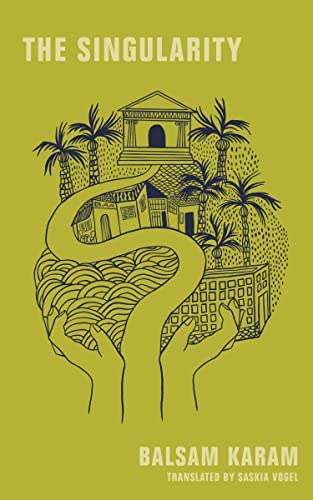

    THE SINGULARITY
    BALSAM KARAM
    (tr. Saskia Vogel)
    The Feminist Press (non-affiliate Bookshop.org link)
    $16.95 all editions, available now

    Rating: 4.25* of five

    The Publisher Says: Lyrical and devastating, The Singularity is a breathtaking study of grief, migration, and motherhood from one of Sweden’s most exciting new novelists.

    In an unnamed coastal city filled with refugees, the mother of a displaced family calls out her daughter’s name as she wanders the cliffside road where the child once worked. The mother searches and searches until, spent from grief, she throws herself into the sea, leaving her other children behind. Bearing witness to the suicide is another woman—on a business trip, with a swollen belly that later gives birth to a stillborn baby. In the wake of her pain, the second woman remembers other losses—of a language, a country, an identity—when once, her family fled a distant war.

    Balsam Karam weaves between both narratives in this formally ambitious novel and offers a fresh approach to language and aesthetic as she decenters a white European gaze. Her English-language debut, The Singularity is a powerful exploration of loss, history, and memory—an experience akin to “drinking directly from a flood of tears” (Aftonbladet).

    I RECEIVED A DRC FROM THE PUBLISHER VIA EDELWEISS+. THANK YOU.

    My Review
    : Published first but written second in Author Balsam's career.
    The grandmother picked them up and held them close in sleep almost no sleep at all and then muttered that no one beyond the ruined wall wished them well and that she couldn’t bear another loss – again and again she said she couldn’t bear any more loss and even though the children didn’t understand how or why, they knew that the loss was now a part of them and that at any moment it could strike again.
    It's the world of Event Horizon (review above) on Swedish soil in the camp the women live in as they have no recourse or options:
    It’s your first winter in the house with the little garden, the darkness outside. Something hard hits the windows and your brother stands up, puts on his coat. After a while he comes back in, says he needs something to wipe off the dog shit from the window and the postbox. In his hand is a blue and yellow sticker that he’s torn off, like the ones you’ve seen high up on lampposts around town.

    –and–
    Later, your mum tells you that the first thing she was told after talking about how she had been tortured in prison was that no one would hire a person like her. One eye missing, older and not entirely fluent – it’ll be tough, the caseworker had said.
    Nice people do not shout racist slogans in your face. It does not mean they are not going to behave in racist ways. The story's narrative risk-taking is more evident in its middle third:
    / do you think of her often, Marcus or Magnus asks softly / we ate bean stew with rice and yoghurt and I drank a whole pot of tea afterwards / you nod, of course you do / Gran was the happiest of us all I think / I think of her and of my grandmother you say and put the cup down / she took you in her arms and then I made sure to sleep while I had the chance / do you know anything about black holes? you later ask the counsellor / and I only got out of bed the next morning can you imagine? / inside a black hole is a place that is also a state — do you know about this? you ask, facing Patrick or Henry in his chair / a few days later Rozia's mother visited with little Rozia in her arms and a basket full of fruit /no, I'm afraid I don't know much about space, says Eric or Martin and continues to take no notes / then the two of you would meet up practically every day / you say it's called the singularity - that's what the place is called and lean over the bed / you and Rozia were like twins, we thought - the same round face and your hair as big and black / inside the singularity, the force of gravity is so strong it can't be calculated, can you imagine? you tell the counsellor / the pair of you often played in Rozia's yard and sometimes you stood by the big road even though you weren't allowed to and the soldiers could show up at any moment / that force pushes bodies together and renders the distance between them nil / because you both liked Gran's fried potatoes and her bean stew, you mostly ate at ours Mum says / you use your hands to show how no space remains between bodies in the singularity
    It doesn't scan easily, but I promise you it is not flummery, a brummagem gaud of "Style" that distracts with difference without adding into meaning. In the more conventional first and last parts, the harrowing tales told do the work of impacting you in dark corners of your Safe Place, you are not safe, ever, as long as you are Other. While you are reading Author Balsam's story you are Other along with her.

    It's a passionate document about grieving. It is a horrible chronicle of losing a child, losing an infant, losing losing losing without a moment of respite and never once ever giving up.

    Until the final act of control is yours.

    If you need a—any—content warning, do not pick this read for yourself.

    Friday, July 3, 2026

    KILLING BABY HITLER, time-travel/alt-hist fantasy of Changing History...derailed by the Butterfly Effect


    KILLING BABY HITLER
    MICHAEL TOMASKY

    O/R Books (non-affiliate Bookshop.org link)
    $9.99 ebook, available now

    Rating: 4* of five

    The Publisher Says: In the year 2141, the planet is ruled by billionaires, democracy is a relic, the environment is collapsing, and Illinois is home to thirty-foot alligators.

    When a ragtag team of scientists discovers the secret to time travel, they set their sights on history’s most infamous villain: baby Adolf Hitler. The mission doesn’t go quite as planned.

    Because rewriting history is never simple. Instead of preventing the rise of fascism, they trigger a bizarre new timeline in which Hitler grows up in America, editing one of the country’s most hateful newspapers, and history warps in strange and unsettling ways. What begins as a darkly funny scheme to fix the past spirals into a mind-bending journey across centuries, as the time travelers confront unintended consequences, shifting timelines, and a future that may be even worse than the one they left behind.

    Part sci-fi thriller, part biting satire, Killing Baby Hitler is Michael Tomasky’s first work of fiction—a wildly original novel that skewers power, questions the logic of hindsight, and reminds us that the present may be the hardest time of all to change. Bold, provocative, and disturbingly plausible, it’s a time-travel tale like no other.

    I RECEIVED A DRC FROM THE PUBLISHER VIA EDELWEISS+. THANK YOU.

    My Review
    : I like my silly sci-fi delivered with humor, so I'm your boy for this story's topic and style. I'm also a fan of time-travel (purest of fantasies) and alternate history (I dunno if we'll ever science our way into certainty that other timelines are real, but I think they can't NOT be), so bring your killing Hitler story unto mine eyes.

    O/R is a leftist purveyor of tendentious reads mostly non-fiction; I approve of this, so seeing this novel become available I downloaded it immediately. I'm a fan of the wish-fulfillment inherent in stories of changing history, though the pop-culture "butterfly effect" is pretty inaccurate to the real subset of chaos theory. Doesn't mean I don't love to read about it. I was really hoping to love this read, too.

    I enjoyed and liked it. I'd've loved it if it'd kept on with the initial tone. It's honest, abrasive, truthful about human nature; it's holding up our faults as people to us in this low-real life stakes fictional tale. It's always safe to look at existential crisis in the mirror of practical impossibility. To be able say humanity does not come off unscathed is pretty much my minimum standard for this kind of srory. Happy to say scathing is done. Pulling the punch at the end...well...I get it, I really do, and I can't tell you I thought the ending was incongruous, or tacked on to the story it was finishing off. It fit fine.

    I wasn't expecting the tonal shift, so it popped me in the mouth for a minute. I don't think others who're less pessimistic, or permaybehaps don't see things through my Darkling eye. Without reservation a recommended read for summer in particular among the "if only" fantasists seeking to refashion the world. A well-paced story that makes its points without sacrificing the exuberant fun of reinvention, no matter how implausible.

    Truths are told, honest self-appraisal encouraged, and a vote of confidence I don't entirely agree with is offered to send the entertainment reader away happy.

    Wednesday, June 24, 2026

    THE ONE AND THE NINETY-NINE: Forging Identity in the Age of Social Contagion, your words aside Religion is not a good answer to Society's ills


    THE ONE AND THE NINETY-NINE: Forging Identity in the Age of Social Contagion
    LUKE BURGIS

    St. Martin's Press (non-affiliate Bookshop.org link)
    $15.99 ebook, available now

    Rating: 3.25* of five

    The Publisher Says: How to become yourself without losing everyone else.

    We’re living in a time when it’s harder than ever to become a whole person—and to stay in authentic community. Some people dissolve into their group identities and lose themselves entirely. Others withdraw into ephemeral, online collectives they can float into and out of without consequence. Both are symptoms of the same a fragmented sense of self in an age of social contagion. This fragmentation is more than a personal crisis—it’s the soil in which hollow and often dangerous mass movements take root, offering counterfeit belonging to those desperate for meaning.

    The One and the Ninety-Nine is a timely and inspiring exploration of what it means to forge a stable identity in the face of coercion, conformity, and the contagious desires of the crowd. Through compelling and original insights drawn from philosophy, psychology, and personal experience, author Luke Burgis examines how our lives are shaped by the groups we belong to—and how we, in turn, shape those groups. He offers a roadmap for engaging with modern society without losing our unique sense of personhood, and reveals the essential rites of passage and personal challenges that differentiate a life of meaning from one dictated by societal expectations.

    People who are able to find their solid self and thrive in the space between the one and the many—who can act with integrity while being part of a community—live freer and more comfortable lives and become models for others. The One and the Ninety-Nine is a call to reject passive conformity, rediscover the depth of personality, and choose a life that is both truly personal and deeply connected.

    I RECEIVED A DRC FROM THE PUBLISHER VIA NETGALLEY. THANK YOU.

    My Review
    : I don't approve of religion in general; I have an abiding bone-deep dislike for christians in particular, as a gay man with no interest in "overcoming my sinful nature" or whatever other nonsense "They" spew at me to coerce me into feeling a need to placate "Them" by behaving in a way comfortable to "Them." So when the author admitted to being a christian in the first few pages of the book, I set it aside with no intention of finishing the DRC.

    I'm very worried about the undesigned social experiment we as a society are running in the form of algorithmically-mediated social media. I don't trust the tech scum to design the algorithms with the betterment of a person, but a bottom line, as its goal. Ample evidence of the role greed plays in the industry makes me all but positive no attention is paid to human needs when designing systems used by all of us.

    Those two prior things are causally linked. I finished reading The Reverse Centaur's Guide to Life After AI (qv) and got more urgently agitated by what I read there; I recalled the DRC of this book, dealing with forming an authentic self. I opened it back up to see what I could glean.

    Lots of christian nonsense. Parables and Bible quotes galore. Stating that (in his opinion, to be fair stated as such) people are more selfish now after *heavily*implying* the reason is we're more secular/less christian. Which...well...who's selfish, my dude? the people doing their best to navigate the world in ways you don't like, or you for saying your religion has The Answers to making people better and more empathetic? (Leave aside The Troubles, in the Ireland where you start your book, were an intra-christian spat that's half a millennium old.)

    So no, I'm no big fan of his, nor did I think his shepherd/sheep needing rescue framing was anything other than seriously condescending.

    But.

    He's correct. The education system carefully indoctrinates us to accept Authority and seek conformity. It's a real thing, intentionally designed to do what we see around us: create sheeple. It's been done by his co-religionists for millennia now, to equally destructive effect, not ever acknowledged or examined by him. It's a giant problem for every society throughout time. Cohesion good, public morality good, conformity and scapegoating bad. Since christianity is a major source of both pressure to conform and assigning blame onto Others (those who don't pray like you, sexual-behavioral minorities, the Devil) I think it takes big brass ones not to examine *that* in great detail while quietly assuming the adding-back of religion will go a long way to fixing the very real problem he's identified.

    I admire you, Brother Luke, for being so vulnerable and forthcoming about your experiences with your father's dementia. It was very moving. It was a long struggle, of course, and from the inside must've felt interminable. I do not think it was quite the connective tissue you intended it to be. It was rather more confessional than professional.

    I did not, in other words, find solutions I want to support or even effect to the very real, well-stated societal stressors I'm eager to address. It's not likely to fix things by doing yet again things that helped society fracture before now.

    THE REVERSE CENTAUR'S GUIDE TO LIFE AFTER AI: How to Think About Artificial Intelligence—Before It's Too Late, latest Doctorow klaxon


    THE REVERSE CENTAUR'S GUIDE TO LIFE AFTER AI: How to Think About Artificial Intelligence—Before It's Too Late
    CORY DOCTOROW

    MCD x FSG (non-affiliate Bookshop.org link)
    $11.99 ebook, available now

    Rating: 5* of five

    The Publisher Says: Whether you want to criticize, kill, or use AI, you have to get through the hype and uncover the real story.

    Start with labor: in automation theory, a centaur is a person who chooses to use technology to help them do the things that matter to them. A reverse centaur is a person who has been conscripted to serve as a helper for a machine, at an inhuman, machine pace: a driver made to deliver all day long, nonstop; a warehouse worker made to work without food or bathroom breaks; a programmer made to crank out impossible amounts of code. As Doctorow says: it's not enough to ask what the technology does—we have to understand who it's doing it for and who it's doing it to.

    The intended audience for AI hype isn't the people who are forced to use AI. The AI show is a performance staged for bosses and investors. Investment bankers claim AI will to be worth more than $16 trillion: a number that only makes sense if AI replaces vast swathes of the wage-earning human workforce. To justify that level of "value," every story about AI must be presented as inevitable, world-changing disruption. Even the tales of the robot apocalypse are a calculated attempt to bolster the fearsome power of AI.

    Anything that can't go on forever eventually stops. When the AI bubble bursts, what will we salvage? Is there something in the wreckage that everyday people will find useful? In The Reverse Centaur's Guide to Life After AI—as he so successfully did in Enshittification—Doctorow recounts both how we found ourselves in this dire situation and how we can get through it, to a life "after" AI in which the tools work for us, not the other way around.

    I RECEIVED A DRC FROM THE PUBLISHER VIA NETGALLEY. THANK YOU.

    My Review
    : The argument I myownself have against "AI" (which isn't and won't be intelligent the way humans are) is financial. There is an AI bubble running right now that's gifted us the utterly brummagem world's first trillionaire. Look a little more deeply into SpaceX's IPO, you'll see how much of it's built on AI (which was partially trained on stolen US Government data via the little dickweeds from DOGE).

    It really looks a lot like a gigantic pump-and-dump scheme when one reads Author Cory's work as digested and documented in this scathing book. He's been in the trenches reporting on tech matters for what feels like forever. Enshittification, anyone? It must make the guy a crazy person to present his deeply researched, well sourced and informed conclusions to general apathy. It lights fires under some of us, my dude, so please don't stop!

    Especially relevant to my eagerness to share this book with all y'all is the centering of "AI"'s intended impact on labor. It's Author Cory's clear statement that the bubble's partly fueled by tech scum's intense desire to destroy any power of workers over their work, the conditions and rewards thereof, and the very nature of employment as reconstituted post-Great Depression. Wealth inequality is something "AI" is designed to entrench.

    I hope a skilled human copyeditor went over this book after my DRC was created. There are some amusing errors of fact that, honestly, trouble me a bit, eg referring to trustbusting under FDR instead of his distant cousin TR. Some other errors niggled at me, but...well...consider the subject matter, maybe these sorts of issues are proof positive of the validity of Author Cory's thesis...?

    I'm very serious when I say this: reading this book can give you tools to manage your personal interactions with the "AI" being rammed down our unwilling throats to further enrich the riches scum ever to rise to the controlling positions they're now it. It can do this by alerting the complacent or avoidant reader to what is actually at risk in this economic bubble's inflation.

    An easy prose style delivers a hard-to-fathom message. It's one of my favorite reads of 2026. Please get one and read it. Libraries are very likely to have copies in stock now. Of course, if you can, making the purchase for your own shelves or devices is the best way to support Author Cory in his quest to wake us all up to the threats...and the opportunities knowing they're there present...to our essential human nature.

    Friday, June 12, 2026

    I MAKE MY OWN FUN, a title you'll look at differently after the read


    I MAKE MY OWN FUN
    HANNAH BEER

    House of Anansi Press (non-affiliate Bookshop.org link)
    $19.99 paperback, available now

    Rating: 4.5* of five

    The Publisher Says: An unhinged romp through fame, obsession, and fandom

    Everyone knows Marina, the A-list movie star. But very few know Marina, the absolute monster.

    Years at the top have proved that whatever Marina wants, she gets. But when she meets bartender Anna, Marina discovers something that can't be Anna's affection. As Anna remains unmoved, Marina's advances become more desperate, and her obsession more dangerous.

    The price of fame is heavy—and someone will have to pay for it …

    I RECEIVED A DRC FROM THE PUBLISHER VIA EDELWEISS+. THANK YOU.

    My Review
    : Mmmkay...so...see it's like this. There is not one shred of realism in this weirdness. Marina has five Oscars and she got them when not yet thirty.

    Five. OSCARS.

    Park them carpin' natterin' nabobs of emotional negativity in the punchbowl, y'all. Go with it. So Marina's in London for...something, I forgot what, doing her "Miss Relatable Superstar oh I'm just plain folks" shtik that sells out theaters, bored with the fact it keeps working, but nothing gonna change her runnin' the con, because a superstar girl's gotta feed the hordes of hangers-on. Marina goes out, worn out after another day of faking sincerity in search of booze and babes (the hot PR-inspired boyfriend is with his little sidequest lad—everybody's bi). (Oh, Marina? She likes girls too.)

    And there SHE is: Anna the food-service worker, starstruck and ripe for the plucking. Marina plucks, well tries to anyway. Anna is...not impressed.

    This cannot be allowed. You just know the whole world, from the folks Marina catfishes on various dating apps to the fellow A-lister "friends" she's secretly fed to the internet wolves for shits and giggles, has always fallen right into or back into her orbit at the merest crook of a pinky from Marina. Anna, though, declines the part she's been cast to play.

    I hope you saw Tár. Marina's the Hollywood version of her, very very sure she is worth all the trouble and pain she causes all around her because she is A Star. There is more than a little of the Fatal Attraction thing goin' on with the way Anna keeps ducking out and trying to get away, which Marina's sure is just playing hard to get. Not so much Marina...Anna sees your real face and wants no part of looking into the abyss of selfishness and self-regard you represent. You're running out of time, passing the line of 30 aka career death, and Anna is failing to hide your desperation and trappedness from you...how dare she?! You *deserve* Anna's utter devotion! You're YOU!

    Bitter, angry celebrity-obsessed woman caught in what she knows inside is the beginning of the end refuses to examine her actual reality to see what she wants to try next. Told in a headlong, obsessive rush, maybe even too much of one, Author Beer's debut novel is a howl of outrage that the /marinas of the world get as far as they do, that what the Marinas of the world do to others is only partial repayment and charged to the wrong account for what's done to them. The ending, honestly rushed and abrupt, works because there are unreliable narrators like Christie's Dr. Sheppard, and then there are the Marinas. This ending, abrupt as it is, makes the sheer awfulness of Marina fluoresce. It's so so sad, and so so appropriate, and just truly satisfying for what it subtextually points to.

    There is not one soul in this book I felt like I wanted to rescue, teach sense to, or even get to know better. I know it's a novel but it truthfully made me look askance at everyone involved in the celebrity-influencer world again.

    Summer sudsy thriller fun! I say feed your inner cynic a story to keep it from gluing you to the next season of The Traitors.

    Friday, May 22, 2026

    DARK ECHOES OF THE PAST, (Heredia Detective #13) is first one to make it into English


    DARK ECHOES OF THE PAST (Heredia Detective #13)
    RAMÓ DÍAZ ETEROVIC (tr. Patrick Blaine)
    AmazonCrossing (non-affiliate Amazon.com link)
    $3.99 ebook, available now

    Rating: 4* of five

    The Publisher Says: The first novel by multiple-award-winning Chilean author Ramón Díaz Eterovic to be translated into English―a landmark event for fans of crime fiction.

    Private investigator Heredia spends his days reading detective novels; commiserating with his cat, Simenon; and peering out over the Mapocho River from his Santiago apartment. The city he loves may be changing, but Heredia can’t stop chasing the ghosts of the past. This time, they’ve come to him…

    Virginia Reyes’s brother, an ex–political prisoner of dictator Augusto Pinochet, was killed in an apparent robbery. Yet nothing of value was taken. The police have declared the case closed, but Virginia suspects that things aren’t quite as they appear and turns to Heredia for help. Heredia couldn’t agree more―but he can’t shake the feeling that there’s something Virginia’s not telling him.

    Heredia knows this is not a simple crime. His investigation proves it. Drawn back into a world where murderers nest, secrets are to kill and die for, and Pinochet’s legacy still casts a long, dark, and very threatening shadow, it’s all Heredia can do to crawl out of it alive.

    I RECEIVED A DRC FROM THE PUBLISHER VIA NETGALLEY. THANK YOU.

    My Review
    : I love a late-life career change story. I love a PI who drinks whiskey, takes mysterious women's troubles seriously, and reads books in the book I'm reading.

    I'm annoyed that book thirteen is the first book to be translated from this long-running series. I'm still more annoyed that, after then translating book four, AmazonCrossing abandoned the project. "I guess they didn't sell enough of them" is an idiotic statement when referrering to a "they" that controls over half the US book-sales market and is part of a multi-billion dollar company. Define "enough" please.

    Okay, the story itself: Dark as a black kidnapper's hood on a moonless night. Dark as a victim locked in a car trunk on a one-way trip to torture and death's mood. That's what it's about, after all. What happened in Chile under the US-backed Pinochet regime was full of stories like Virginia Reyes' and of course like her dead brother's.

    Oh wait...maybe I have a glimmer as to why this series wasn't continued, and even maybe why the translator chose this one to start the Englishing with. Some glimmers of why I never heard much about the series crease my brain at last.

    There is darkness at the heart of every empire. Look a millimeter under the shiny surface that's there to dazzle and entertain you and stories like this one are common as pig tracks. Kudos to Translator Blaine for using the dazzle to be a magnifying lens for the ugly, horrifying acts you're dazzled into not seeing. Have none of us really understood "The Lottery"? Or "The Ones Who Walk Away from Omelas"? And those two, going back fifty, seventy-five, years weren't the first in their "look past the surface" genre.

    A tense, intense, dark and twisty ride through the ugliest parts of an imperial project we still operate today. The definition of extraordinary rendition exists because of this story's well-explored historical roots. It should disgust and shame us all.

    Authorial styles arise from decisions on how to present ugly facts. I found Author Eterovic's style, as ably translated by Patrick Blaine...you can feel a op-flight translation just like you can top-flight prose in your own language, and this is the stuff...right up my alley.

    Recreational stress with a side order of ugly history, anyone?