Showing posts with label Swedish translation. Show all posts

Friday, July 17, 2026

BALSAM KARAM'S PAGE: using pieces of the SFF toolkit to great effect without writing SF or F


EVENT HORIZON
BALSAM KARAM
(tr. Saskia Vogel)
The Feminist Press (non-affiliate Bookshop.org link)
$16.95 all editions, available now

Finalist for the 2026 Cercador Prize for Literature in Translation.

Rating: 4.5* of five

The Publisher Says: From the author of The Singularity, a saga of one girl's resistance and exile in the stars and soil of empire.

Seventeen-year-old Milde is from the Outskirts, a place beyond the mountains where the dirt is corpse-rich and mothers and daughters make their living banished from society—without rights, access to care, or legal status. Simmering under the surface of their day-to-day survival is a desire for change—and one day, Milde and her friends act on it, setting fire to government buildings in the city that has rejected them.

When Milde is framed as the instigator of the uprising, she is arrested, imprisoned, tortured, and eventually presented with a final choice: to be executed publicly or to be launched into space, into a black hole called the Mass, for an experiment. Milde chooses the Mass.

Event Horizon is an exquisite existential novel, dark as deep space, woven with reflection on oppression, solidarity, trauma, and loss. With a completely unique voice, Balsam Karam writes about the swirl of hope and despair in the lives of the marginalized and a young woman’s unwavering belief in a better world.

I RECEIVED A DRC FROM THE PUBLISHER VIA EDELWEISS+. THANK YOU.

My Review
: First, read this:
They're talking about deportation, we told them, Do you understand what that means? They're talking about taking us across the border and leaving us there, they're saying we have to go home, but what home do we have other than this one, I told them. I was born here and my child was born here, I told them—It's true that we've been living without papers for all these years, but now were being deported—is that acceptable? These are our lives I told them, but no one wanted to listen and so we ended up here. Milde listens to her mother and sits down beside her, watching the buildings rise one by one, wishing she already knew how to build a home.
Maybe I resonate with this despairing cry because I experienced a similar feeling, if not legal process, with my own homeplace rejecting my very being as a gay man. Displacement is a violent painful amputation without mercy or understanding or empathy...and it goes on every single day all over the world, in homes in cities in countries in (especially) religions.

Every time it occurs it is an evil, a wound to the spirit of all who perpetrate and/or experience it. It is a wound on the masses of people who, like those who stay in Omelas, ignore it. Milde chooses a course of action in recation to this wrong that commits the most terrible crime imaginable: It is meant to, in the metaphorical structure of Omelas, show the complacent, the docile and unquestioning, the cost of their dreamworld. Terrorism! the shout rises, led by those terrorizing Others to please and entertain the unthinking and disengaged. Milde must be punished, must be seen to be punished, not to deter future "terrorists" but to satiate the appetite for cruelty of the dociles, passive entertainment to slake the human thirst for blood.

Milde makes an ugly bargain with the evil system:
Sure, I can go to space and die, why not? I'd rather die in the depths of a black hole than wait around to be executed here, if you see what I mean. I'm doing this so that I can sit back and rest for once, no knife or metal lid hidden under my pillow, and so that, if only for a day, I won't have to look at those same white faces that wish me harm.
Her consent to be sent into the uttermost unknown to die while providing data (her suffering and death) is about as meaningful to the "white faces that wish {her} harm" as clicking "accept and close" is. There is no meaningful other option, but make it look good for those who can't be arsed to see how wrong, how painful it really is.

Swedish Kurdish author Balsam is the child of a man who experienced the horrors of a "terrorist" who chose his course of action to resist colonization. That crime resulted in his daughter being a Swede not a Kurd by nationality, a displacement that will reverberate through her entire life short or long. Everyone makes these decisions for their children, it's inherent in having them; but as all parents know it's never what you say but what they hear that counts. Author Balsam's feelin' some kinda way about these choices, and seeing the world in a unique cast of light as a result.

All of us Anglophones can see it because she let us in on experiences we don't precisely share, but still can find ways to be with. We can all feel echoes pressing on our emotional eardrums that come from a similar place of "injustice happened to me, to my life, that I had no pwer to resist"...maybe enabling us as a result to make the effort to help the world resist, reject the bloody hunger for revenge or simply the vicious desire to hurt Others to slake Humanity's thirst for it.

Eminent Translator Vogel has been at work for a good long time so it's no surprise her skills make this feel like a native English speaker wrote it. In fact I bring it up here because I was suddenly struck about the halfway point that I was not having my usual internal debate about "what word was that in {language}?" I checked the copyright twice during this read...yep, translation. This is very unusual for me. It's even more surprising because this is Author Balsam's first book.

The outrage that simmers under this lovely surface is definitely part of the reading experience. There is not sweetness in the story, or in the language; there is precision, but not distance, or chill. It's going to make emotional demands of you-the-reader. Milde experiences the constant reminder of difference that is used by polite people to maintain their superiority in the hierarchy. Her mother Essa is not even as far into the acculturation process as she is; it's a process defined by exclusion, rejection, after all. Milde's course as a resister is set thereby and this her fate sealed.

Her violent terrorism is what is left to a powerless woman in the face of an entire power structure built for the purpose of excluding her forever. Her resistance is all she has; it can only be what it compelled her to enact; so her phases of punishment *must* result in her body being launched into a black hole to die in as-yet-unknown suffering that must be public. It must be shared, this last and most intimate violation of her humanity. Otherwise she will not have paid for her "crime."

It is the best of all possible validations for the power structure. It is the best of all possible tricks to play on the power structure for Milde. It was chilling how much courage Milde possessed accepting this final, long act of her life. Even Christ only suffered for hours.

++++++++++++++++++++++++++++++++++++++++++++++++++++++++++++++++
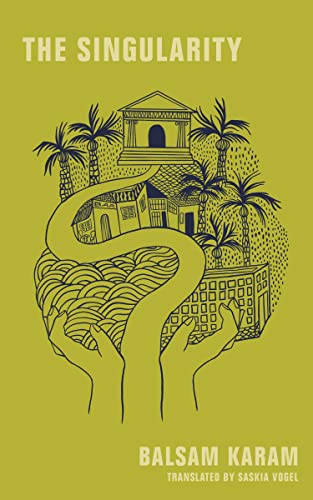

THE SINGULARITY
BALSAM KARAM
(tr. Saskia Vogel)
The Feminist Press (non-affiliate Bookshop.org link)
$16.95 all editions, available now

Rating: 4.25* of five

The Publisher Says: Lyrical and devastating, The Singularity is a breathtaking study of grief, migration, and motherhood from one of Sweden’s most exciting new novelists.

In an unnamed coastal city filled with refugees, the mother of a displaced family calls out her daughter’s name as she wanders the cliffside road where the child once worked. The mother searches and searches until, spent from grief, she throws herself into the sea, leaving her other children behind. Bearing witness to the suicide is another woman—on a business trip, with a swollen belly that later gives birth to a stillborn baby. In the wake of her pain, the second woman remembers other losses—of a language, a country, an identity—when once, her family fled a distant war.

Balsam Karam weaves between both narratives in this formally ambitious novel and offers a fresh approach to language and aesthetic as she decenters a white European gaze. Her English-language debut, The Singularity is a powerful exploration of loss, history, and memory—an experience akin to “drinking directly from a flood of tears” (Aftonbladet).

I RECEIVED A DRC FROM THE PUBLISHER VIA EDELWEISS+. THANK YOU.

My Review
: Published first but written second in Author Balsam's career.
The grandmother picked them up and held them close in sleep almost no sleep at all and then muttered that no one beyond the ruined wall wished them well and that she couldn’t bear another loss – again and again she said she couldn’t bear any more loss and even though the children didn’t understand how or why, they knew that the loss was now a part of them and that at any moment it could strike again.
It's the world of Event Horizon (review above) on Swedish soil in the camp the women live in as they have no recourse or options:
It’s your first winter in the house with the little garden, the darkness outside. Something hard hits the windows and your brother stands up, puts on his coat. After a while he comes back in, says he needs something to wipe off the dog shit from the window and the postbox. In his hand is a blue and yellow sticker that he’s torn off, like the ones you’ve seen high up on lampposts around town.

–and–
Later, your mum tells you that the first thing she was told after talking about how she had been tortured in prison was that no one would hire a person like her. One eye missing, older and not entirely fluent – it’ll be tough, the caseworker had said.
Nice people do not shout racist slogans in your face. It does not mean they are not going to behave in racist ways. The story's narrative risk-taking is more evident in its middle third:
/ do you think of her often, Marcus or Magnus asks softly / we ate bean stew with rice and yoghurt and I drank a whole pot of tea afterwards / you nod, of course you do / Gran was the happiest of us all I think / I think of her and of my grandmother you say and put the cup down / she took you in her arms and then I made sure to sleep while I had the chance / do you know anything about black holes? you later ask the counsellor / and I only got out of bed the next morning can you imagine? / inside a black hole is a place that is also a state — do you know about this? you ask, facing Patrick or Henry in his chair / a few days later Rozia's mother visited with little Rozia in her arms and a basket full of fruit /no, I'm afraid I don't know much about space, says Eric or Martin and continues to take no notes / then the two of you would meet up practically every day / you say it's called the singularity - that's what the place is called and lean over the bed / you and Rozia were like twins, we thought - the same round face and your hair as big and black / inside the singularity, the force of gravity is so strong it can't be calculated, can you imagine? you tell the counsellor / the pair of you often played in Rozia's yard and sometimes you stood by the big road even though you weren't allowed to and the soldiers could show up at any moment / that force pushes bodies together and renders the distance between them nil / because you both liked Gran's fried potatoes and her bean stew, you mostly ate at ours Mum says / you use your hands to show how no space remains between bodies in the singularity
It doesn't scan easily, but I promise you it is not flummery, a brummagem gaud of "Style" that distracts with difference without adding into meaning. In the more conventional first and last parts, the harrowing tales told do the work of impacting you in dark corners of your Safe Place, you are not safe, ever, as long as you are Other. While you are reading Author Balsam's story you are Other along with her.

It's a passionate document about grieving. It is a horrible chronicle of losing a child, losing an infant, losing losing losing without a moment of respite and never once ever giving up.

Until the final act of control is yours.

If you need a—any—content warning, do not pick this read for yourself.

Thursday, July 16, 2026

THE BREAK-UP RETREAT, latest from Sweden's bright star doesn't twinkle as bright


THE BREAK-UP RETREAT
CAMILLA STEN
(translator not credited)
Minotaur Books (non-affiliate Bookshop.org link)
$14.99 ebook, available now

Rating: 3.5* of five

The Publisher Says: An undercover journalist goes to expose an exclusive psychological wellness clinic where women go to recover from heartbreak, with dire consequences, in this creepy thriller from The Bachelorette Party author Camilla Sten.

Welcome to Himlafall Clinic, where we use revolutionary therapy techniques to heal you from heartbreak. Whether you are going through a devastating breakup, or can’t seem to stop picking the wrong partners, we are here to help you change your life, once and for all…

Isobel Anderssen has heard rumors. Nestled deep in the Swedish woods, there is a retreat. Primarily aimed at helping women who have gone through devastating break-ups, the Himlafall Clinic is meant to heal your mind and help you move on.

Sometimes people are never heard from again.

Armed with a fake story and a contraband phone to record interviews, Isobel is ready to expose Himlafall’s founder and get closure for the families of missing loved ones. But when she gets there, nothing goes to plan. Her contact is missing. The founder, Dr. Martina Hastings, knows how to get under Isobel’s skin in ways she didn’t anticipate. And all the while, the ghosts of the missing haunt her at every turn. It is clear something is going wrong and Himlafall, and Isobel must uncover the truth, before she disappears once and for all.

I RECEIVED A DRC FROM THE PUBLISHER VIA NETGALLEY. THANK YOU.

My Review
: This reads uncomfortably like the transcripts of some brainwashing sessions, brutal and demeaning and very destructive. It's written in Camilla Sten's voice, but in this uncredited translation, reads more like it's not-quite-Sten enough to be all her own work. The Bachelorette Party I reviewed in June 2025 had a similar effect on me. It's not *bad* but it's not like her earlier books in that it never sparkles, its cast feels...cast from a mold, but never painted, lacquered and polished, buffed up.

It struck me as odd that Author Sten would choose to have Isobel make herself so incredibly obvious as an interloper. In 2026, you need to expend a great deal of thought on how someone even *could* assume a fake identity. Surveillance capitalism demands to know who you are, even (especially) the very wealthy who could afford this emotional Abu Ghraib for brokenhearted rich ladies (and at no time did any of the men...all men 0.o...feel worthy of more than a sneak-eaten grocery-store pastry as mourning). If Author Sten did that here, I did not see it. I was quite surprised that someone who could make me really feel how prosopagnosia affects one's life in The Resting Place that wasn't up to her earlier storytelling standard. Isobel's daft actions would've been glaringly obvious to anyone with a reasonably observant eye and a modicum of common sense, and her vaunted Plan was basically "wing it based on vibes."

Disappointing...this is a premise that the earlier Sten would've embroidered a Bayeux Tapestry of story over, yet what I got was a sampler.

Come home, Alexandra Fleming and Camilla Sten! Y'all were the dynamic duo. Whatever's gone wrong fix it and make more magic.

Please.

Monday, February 2, 2026

THE SECRET OF SNOW, cozy, sentimental Swedishness


THE SECRET OF SNOW
TINA HARNESK
(tr. Alice Menzies)
Atria Books (non-affiliate Bookshop.org link)
$14.99 ebook, available now

Rating: 3.75* of five

The Publisher Says: This lyrical runaway Swedish hit follows a reclusive, elderly couple who cross paths with a pair of twentysomething newcomers in a small mountain town, revealing an unexpected, shared history and the reclamation of a nearly extinct culture.

Meet Máriddja: eccentric, eighty-five years old, and facing a cancer diagnosis. She’s determined to keep the truth about her illness from her husband Biera, while also finding someone who can take care of him once she’s gone.

Meet Kaj: a new transplant to the village, recently engaged to Mimmi, and mourning the death of his mother. One day, when Kaj unexpectedly finds a box of Sámi—the indigenous people of Scandinavia—handicrafts belonging to his mother, he unlocks something he never anticipated, something that will change his life for years to come.

A “brilliant debut” (Aftonbladet Söndag, Sweden) full of humor and heartbreak, The Secrets of Snow movingly grapples with grief, love, and the power of history.

I RECEIVED A DRC FROM THE PUBLISHER VIA NETGALLEY. THANK YOU.

My Review
: As with most bestsellers, this story is pitched right down the middle. Take one old (straight, natch) couple facing end of life issues of varying but intense urgency. Add one young (straight, natch) couple facing relationship teething pains and life traumas. Connect them by geography in a place small enough to breed affinity through enforced proximity. Add a glaze of native cultural issues. Give the old woman an iPhone and have her repurpose Siri as a confidant for comic relief. Serve.

It's fine if this is dessert after a hearty substantial meal. This is presented as the meal. If these were the concluding chapters of a much longer book that dug into Kaj's relationship with his mother and dialed down the awkward obvious coincidence that's telegraphed early and often, and the roots of Mári's anguished love for Biera (though who wouldn't be mad for someone who thinks his wife "was generous with everything, including her dignity" when everyone else thinks she's a madwoman!), I'd be wadding up the Kleenex with the rest of y'all.

It's a debut novel, and as I've said many times I grade on a curve for debut novelists, or I'd be a lot less tactful in expressing my dissatisfaction. I now turn your attention to the marvelous, evocative writing. Particularly effective, probably even moreso in Swedish, is the evocation of Sámi culture...the indigenous folk of the Arctic are about as well-presented in Sweden as First Nations people are in Canada, and only Black people are presented worse than Native Americans in the US. Author Harnesk does not stint on her vocabulary. Menzies, our translator, has worked hard and successfully to render the tone of the original. I don't speak Swedish, but there's a feel, an aura around a really well-made work of prose that comes through in the very best translations. It came through here.

While understanding why this became a bestseller does not add to my desire to praise it, I predict all y'all would love the read if you gave it a try. The Fredrik Backman bus, the Shelby van Pelt posse, the Sally Hepworth squad, should bypass the library hold list and put your credit cards on the line. This book is aimed right at you. Any reader wanting a lingering look at love, grief, and a lifetime of being true to your lights finally being rewarded should get it from the library. Request it if you don't see it in the catalog.

It's built to make you feel the warm glow of goodness.

Wednesday, May 1, 2024

1795: THE ORDER OF THE FURIES (The Wolf and the Watchman #3) ends the Winge brothers' trip through Enlightenment Stockholm


1795: THE ORDER OF THE FURIES (The Wolf and the Watchman #3)
NIKLAS NATT OCH DAG
(tr. Ebba Segerberg)
Atria Books
$28.99 hardcover, available now

Rating: 4* of five

The Publisher Says: The spellbinding and eerie finale to the #1 internationally bestselling “cerebral, immersive” (The Washington Post) historical trilogy follows two unlikely allies as they struggle to end the reign of a powerful cabal of depraved hedonists in 18th-century Stockholm.

For more than a year, brilliant lawyer Emil Winge has dedicated himself to capturing the diabolical Tycho Ceton, with the invaluable assistance of one-armed army veteran and watchman Jean Michael Cardell. Their mission is made more difficult by the ever-increasing paranoia gripping Sweden’s royal family, who fear that a bloody revolution is brewing. A letter with the names of the revolutionary conspirators is said to be in the possession of Anna Stina Knapp, a good friend to Cardell. Now, Anna is missing and Cardell is determined to find her before the secret police take her into custody.

While Winge and Cardell fight for justice and for life, they find themselves caught between powerful enemies—those who will do anything to maintain the status quo, and those who will only be satisfied with its total destruction. Niklas Natt och Dag brilliantly concludes his immersion into the dark and turbulent waters of 18th-century Stockholm.

I RECEIVED A DRC FROM THE PUBLISHER VIA NETGALLEY. THANK YOU.

My Review
: Dark, turbulent story finishes the arc of this series with the finality of an amputation saw. We met Cecil Winge and Mickel Cardell in 1793 as a truly appalling series of crimes come to light. These men, one in the terminal stages of the Great White Plague (tuberculosis) that ravaged the cities of the time, refuse to just accept that human beings can be treated in the vile ways they've seen without any consequences. Solid Enlightenment values on display, then. A human being has innate worth and dignity, and the kind of killing being perpetrated by someone(s) is an affront to that dignity.

It is hard for us to get into that mindset today. The privilege baked into the world we live in is now centered on money as worth and virtue; then it was god-given by birth. Whose vagina you were shoved out of was, forver and ever, the Place you occupied in this world and the next. Is it, I often wonder, better to base stuff on money? I mean, just look at the scum who hoard huge piles of money and get immense privilege! Unlike the old aristocracy, no one prepared them in any way for the responsibility of "high" social position so they waddle about, dribbling crudeness and outgassing idiocy like this wasn't a disgusting display of vulgarity.

Ahem.

Back to the book: The "high-born" people committing the crimes Mickel and the Winge brothers (Emil takes Cecil's place in the last two books of the series) are sufficiently enraged by to pursue them clearly don't have any noblesse oblige in them either. They behave disgustingly, but in private. The results of their disgusting behavior are simply dumped and there's no absolutely clear-cut way to pin it on the perpetrator(s) or to hold them accountable.

It's in the book! That's not me being political!

What happens in this last volume is the culmination of honest, honorable men pursuing justice across a corrupt landscape of privilege and abuse of power. It's a landscape that is absolute in its wins and losses. That is what suits the PTB, after all, since it's their thumbs on the scales of justice. The disgusting crimes, ones that repulse all honorable people of every station, in this book are less...meaty...but just as awful. The essential crime in the entire series, the one thing that unites the books and makes the reader invest in the characters and stories, is the abuse of power by the powerful. The lives of ordinary people are ruined at a whim, are altered for the worse by someone who has no consequences for that alteration. The team who set out to change that are doing so, bit by bit, in the teeth of a gale blown directly at them by men who do not want any precedents to be set that challenge their control.

The fierceness and appalling cruelty of the fight shows that they know the stakes are existential. Lose this one battle against two little nobodies and lose, once and for all, the Absolute Rights they presently enjoy. The force applied to Mickel and the Winges only makes sense when you look at it from the position of those whose power is at stake. The power that the little guys are fighting to take, the justice that they seek for victims cruelly used, is not out of proportion, that is overtly revolutionary, so why is it being resisted so fiercely?

Because once limited, absolute power dissolves. If held accountable for *this* crime, there is no longer immunity, no longer a usable reason to quash future and further reckonings. Why do you think there's something called a "consent decree"? The entire apparatus of Sweden's absolute monarchy topples if these two little men win Justice for the victims they're fighting for!

Do they, in the end, win? Read the book(s), dark and violent as they are, because I'm scared of the Spoiler Stasi. Those women take no prisoners.

Thursday, August 31, 2023

IN THE SHADOW OF POWER and IN THE NAME OF TRUTH, books 7 & 8 in the Sandhamn Murders series


IN THE SHADOW OF POWER (Sandhamn Murders #7)
VIVECA STEN (tr. Marlaine Delargy)
AmazonCrossing
$4.99 Kindle edition, available now

Rating: 4* of five

The Publisher Says: What do the new arrivals on Sandhamn Island have to fear? Their own secrets—in this gripping novel of suspense by the bestselling author of In the Heat of the Moment.

The new summer house on Sandhamn Island is an architectural dream for its owner, Carsten Jonsson. It’s a nightmare for the locals. The venture capitalist has flouted local traditions, property lines, and the natural beauty of the coastline. He’s also too wealthy and arrogant to heed the anonymous warnings to leave.

The threats escalate when his guest lodge is burned to the ground and an unidentifiable corpse is found in the charred ruins. Detective Inspector Thomas Andreasson isn’t sure if it’s murder or a tragic accident. Until his friend attorney Nora Linde is drawn into the investigation.

Nora’s emotional investment in Carsten’s fragile and fearful wife, Celia, is yielding a new level of that the Jonssons are hiding more than anyone can imagine. Now Thomas and Nora must sift through the ashes of a puzzling crime and step into the shadows of a powerful family, whose deadly secrets are coming to light on Sandhamn.

I RECEIVED A DRC FROM THE PUBLISHER VIA NETGALLEY. THANK YOU.

My Review
: This entry in the series is a major shake-up of the Seriesverse. Everything I say now forward is a HUGE SPOILER. You've been warned.

Nora, previously a bank-lawyer, has switched gears and become a public prosecutor in the Economic Crimes investigations unit. This makes a lot of sense as the stories need to include her more organically. Thomas being a police inspector will, quite naturally, need to interact with her more often and on less flimsy pretexts. Given the scumminess of her boss's behavior towards her in the last book, it's a good thing she's left that bank...and even better that she's left banking.

Jonas is, four years after the last book's events, her partner and the father of her first daughter. Take that, Henrik! Of course this means she's got Wilma, Jonas's daughter the teenager, to contend with, though that's a treat for another book as she's entirely absent from this one. As her own two sons with Henrik (in this book, they're vacationing with him) enter their teens...poor lamb, she's really walked into a buzzsaw with this...she's going to face some troubles! Heaven only knows the blended-family issues this presents are fertile, if well-trodden, fictional grounds. They call these tropes "evergreens" for a reason.

On the Thomas end, the Scoobygroup's changed. Margit's been promoted and is no longer his loyal sidekick. Aram, whose foolishness in the last book earned my snorts and eyerolls, is now in Margit's spot. His Iranian ancestry sould let Author Sten do some serious soul-searching about Swedishness. Erik, another Scoobygroup character that I myownself never found interesting, has gone into the private sector and is tempting Thomas to follow him with better pay and easier working conditions. Will Thomas leave the police just as Nora joins them? Stay tuned...not in this book, though.

THIS story, the mystery we're here to watch unfold, is about Carsten Jonsson, a bigfootin' vulture capitalist whose finances are teetering, also with no taste and no class, violating Sandhamn's cultural norms. He builds his family a gigantic McMansion that's aesthetically out of place (shades of book one!) and might be legally questionable regarding property rights...but there's a suspicious fire as he invites the whole island over to "welcome" him and his family...and, of course, there's a dead body in the mix. Thomas must investigate, since it's a murder not an arson case. Nora is involved because a) prosecutor who used to work in banking, 2) longtime Sandhamner thus included in the party invitation, iii) woman whose spidey-senses have gone off at the ménage chez Jonsson because wife-component's behavior is making her very, very edgy. Was the Sandhamn neighbor who's made it his mission to oust Jonsson and family from the neighborhood guilty of setting the fire? Was the dead body killed in the fire, or dead before it? And who, exactly, was it who died?

Nora's change of career makes her involvement in the case so much more logical. It's also good that so much hinges on her banking background, where she was driven off by the shadiness of the banking business's deals with criminals. Here's a victim whose involvement in that shady, not-quite-illegal but clearly immoral world of Russian big money has led to consequences.

Things are resolved, of course, and ugly secrets kept by both the Jonssons are aired. Sandhamn's pretty surface is again revealed to be draped over the usual human ugliness. Thomas does something stupid again, but it made more sense to me this time. Or I'm just getting inured to it....

The themes of environmental change and related business turpitude are, as expected, much to my taste. I've really only got one really big "do what now" moment in this read: WHO THE HELL IS EVA?!

++++++++++++++++++++++++++++++++++++++++++++++++++++++++++++++++
REVIEW OF BOOKS 1 & 2 HERE
REVIEW OF BOOKS 3 & 4 HERE
REVIEW OF BOOKS 5 & 6 HERE
++++++++++++++++++++++++++++++++++++++++++++++++++++++++++++++++

IN THE NAME OF TRUTH (Sandhamn Murders #8)
VIVECA STEN (tr. Marlaine Delargy)
AmazonCrossing
$4.99 Kindle edition, available now

Rating: 4* of five

The Publisher Says: A shocking abduction rocks idyllic Sandhamn Island in an enthralling novel of suspense by Viveca Sten, bestselling author of In the Heat of the Moment.

With the summer season on Sandhamn comes an unsettling mystery for Detective Inspector Thomas Andreasson. A bullied young boy has vanished from a sailing camp on neighboring Lökholmen Island. Has the terrorized eleven-year-old run away? Or, in this isolated vacation spot where strangers lurk, is it something more ominous?

The disappearance has also captured the interest of Thomas’s longtime friend, attorney Nora Linde. The missing child happens to be the son of her latest client, Christian Dufva. He is a key witness against his partner in a high-profile embezzlement trial, and Dufva’s testimony could be devastating. It’ll also be Nora’s biggest win—the next step toward a position as chief prosecutor. But with every anonymous threat against Dufva, the stakes get higher.

When new evidence surfaces in their respective cases, new questions and fears arise for Thomas and Nora. Time is running out to resolve them. So is hope of finding the boy alive. Because on Sandhamn Island, the truth is buried as deep as the secrets.

I RECEIVED A DRC FROM THE PUBLISHER VIA NETGALLEY. THANK YOU.

My Review
: Continuing our exploration of "what was that again?" moments in this series, we have stalking, bullying, pedophilia, one runaway kid and a missing one, embezzlement, gambling, gangsters from Lithuania, relationship woes, and a wedding.

Wedding?

Jonas and Nora are getting hitched! Why, I am unsure, since their daughter Julia's school age now. And Jonas's fitness isn't, IMO, really top-notch, since he accepts a job flying to Thailand on the eve of the ceremony. Yet Nora seems not to see this as the red flag I do...though of course she's not exactly thrilled with his swanning off at that moment. Her angry repsonse felt muted and disproportionately absent the larger sense of questioning I expected. Only he could take this job? He couldn't buy a ticket on another airline to get home on time? ...???... Probably the biggest surprise to me, apart from the fact that it's happening at all, is Wilma's inclusion in the ceremony. Clearly skipping over her adolescence has let us have the nice-person end product without the factually inevitable angst.

Thomas, meanwhile, is discovering what I've thought all along: Elin's wonderful but Pernilla's a pill and rejoining his life to hers was a major goof-up. After succumbing to Erik's blandishments to leave the police, Thomas found out this didn't make Pernilla one bit less awful. Now he's back to his meaningful if lower-paying job (to Pernilla's disgust), repartnered with Aram, and his energies are focused on the summer-camp issues. As readers with any experience of series mysteries already know, there's a connection between Nora's court case over embezzlement and her star witness's son Benjamin's disappearance from said camp; what it is turned out to be a surprise to me. My original theory about what the thread was turned out to be wrong. That actually made me enjoy the read more because being surprised eight books into a series is a good thing.

The usual problem I have with these books is that Thomas or someone else police-y does something deeply stupid that risks his life...no this time so much, instead there are decisions made in investigating the camp-problems that seem particularly lunkheaded...there's a search for the missing boy that's badly mishandled...but nothing that's going to get Thomas killed. The anonymous threatening calls made to the witness and to Nora are overdetailed. Knowing they're happening is enough and there's only so many ways to threaten someone without becoming repetitive, which they do.

Possibly the biggest disappointment to me was the fact that, in pursuit of their respective crimes, Thomas and Nora really don't interact much. It makes sense given the nature of the events, but I found that I missed them spending friend-time together.

The sailing camp that Benjamin's been coerced into attending by his father is nightmarish reading, with some Lord of the Flies-level bullying that's not downplayed and a camp counselor whose mental-health struggles mislead and complicate the police investigation into Benjamin's disappearance. There's a great deal of information about sailing and its culture in Sweden that was interesting enough but might slow things down a bit for thriller readers. The local pedophile gets a look-in, of course he would since he's been put in the book, in what ends up as a truly unnecessary red herring. Oops, that's a spoiler. Well, that's life boys and girls, when reviewing book eight of a series there will be some. I expect longtime readers of the series are going to be a bit testy about the complete absence of a murder in this installment. I myownself think the evolution that's underway could be great...depending on what Author Sten does with it.

A long read with short chapters that stay on point is a good thing for most modern readers. I doubt most will see what's coming at the end. If you do see it...kudos. But don't talk about it!

Wednesday, August 30, 2023

IN THE HEAT OF THE MOMENT and IN HARM'S WAY, books 5 & 6 of the Sandhamn Murders


IN THE HEAT OF THE MOMENT(Sandhamn Murders #5)
VIVECA STEN (tr. Marlaine Delargy)
AmazonCrossing
$5.99 Kindle edition, available now

Rating: 3.25* of five

The Publisher Says: What’s a lie among friends? It’s murder—in this riveting thriller by Viveca Sten, bestselling author of Tonight You’re Dead…

It’s Midsummer’s Eve, the celebration of the longest day of the year, and on Sandhamn it’s the longest party of the year. But the fun comes to a dead halt when a young reveler is murdered, a teenage girl is found drugged and dazed on the beach, and other young women vanish. So far, what links the victims is a mystery. For Nora Linde and her new boyfriend, Jonas Sköld, the crimes are personal: one of the missing girls is Wilma, Jonas’s daughter. And her disappearance could test Nora and Jonas’s relationship in ways they never expected.

Thrust into the investigation, they soon discover that it’s more than a case of bad blood between friends. But the truth, which has receded into a haze of carousing, drugs, and liquor, is getting harder to see. If Nora and Jonas are going to find out what happened to Wilma, they’d better do it fast—before the ebbing tides sweep away all the terrible secrets of that night on Sandhamn Island.

I RECEIVED A DRC FROM THE PUBLISHER VIA NETGALLEY. THANK YOU.

My Review
: Another more Thomas-centered book, therefore more police procedural-like than the cozy-er Nora-centric ones...but only slightly. Thomas and Pernilla have a new daughter, and experience the stresses of parenthood all over again (remembering this is their second child together, and their long separation came after the first child's death). Thomas is the lead investigator on the murder-and-disappearance case that involves Nora's new boyfriend through his daughter being among the girls who've vanished from the high-octane Midsummer's Night revelries. Given that he was really not happy about saying yes to her badgering pleas to be allowed to party with the cool kids, he's an absolute wreck.

Wilma, Nora's boyfriend's daughter, is part of a crowd that Nora finds troubling. They're privileged, spoiled brats who use lovely Sandhamn and its close-knit community as a backdrop for irresponsible chemical-fueled partying. Nora's ex-husband and his milieu of privilege come forcefully to mind as she tries to assist Thomas in his attempts to bring a young man's murderer to justice and return the missing young women to their insanely anxious families. Her worries for her own young sons and their futures enter into the story as well. The awful ex is, unsurprisingly given that he's in the social milieu of the dead boy's parents, sticking his oar in. It seems life sans Nora isn't the fun that life with her was. She, unlike Thomas vis-a-vis Pernilla, isn't having it. This gets all the yay from me after his abusive behavior in an earlier book.

The main thread of the story, though, is Thomas and policing partner Margit methodically working to solve the case without significant details. These are all locked in the heads of the spoiled, drunk, high kids whose reactions to a dead guy and some missing gal-pals is basically to whine about being asked questions by old farts in uniforms instead of being allowed to get away from all this boring shit on Papa's yacht.

Ick ptui.

Thomas, in spite of needing to be focused on the case, is of course just as eager as the brats are to get the whole thing over with so he can go home and play with his new daughter. (I'm still deeply conflicted about this rapprochement with Pernilla, whose presentation of self makes me suspicious.) So the detective, his sidekick, and the witnesses are all conflicted and not clearly focused on the tragedy that's occurred. That presents a problem for me as a reader.

The dead boy's father, the young hellions doing the partying, and to an extent Nora's stepdaughter-adjacent person Wilma, are all really unsympathetic characters. Their collective story is woven of multiple strands of neglect and indifference coupled with overaffluence and its deleterious effect on the moral compasses of the privileged. Where this led me as a reader was into a lot of "Thomas should be home with his new baby and Margit ought to slap all of 'em" eyerolling. The author seems in a funny way to share my impatience because the end of the book feels like a rush to wrap up the threads, so isn't all that satisfying. I can assure my ma'at-lovin' readers that there's resolution to the death and the disappearances too. There will be no black armbands in the Linde ménage. I'm hopeful that Jonas, with Nora, won't repeat his mistakes and Nora will continue to shun her vile ex-husband.

This book is very much not my favorite in the series to date, and skated perilously close to becoming a DNF on several occasions. The power of Thomas and Nora as people I believe could exist and whose flaws I can invest in as I watch them overcoming, or trying to, their effects powered my drive through the read.

YMMV, of course.

++++++++++++++++++++++++++++++++++++++++++++++++++++++++++++++++
REVIEW OF BOOKS 1 & 2 HERE
REVIEW OF BOOKS 3 & 4 HERE REVIEW OF BOOKS 7 & 8 HERE
++++++++++++++++++++++++++++++++++++++++++++++++++++++++++++++++

IN HARM'S WAY (Sandhamn Murders #6)
VIVECA STEN (tr. Marlaine Delargy)
AmazonCrossing
$5.99 Kindle edition, available now

Rating: 3* of five

The Publisher Says: A woman’s dangerous career comes to a chilling end in this spellbinding thriller by Viveca Sten, bestselling author of In the Heat of the Moment…

The body of world-famous journalist Jeanette Thiels is discovered the day after Christmas, frozen in a snow-spotted garden just steps from her hotel on Sandhamn Island. Detective Thomas Andreasson finds it highly unlikely that it was some bizarre accident. After all, the relentless war-zone correspondent was no stranger to conflict and controversy—both professional, and of late, very personal. Who would want to see her dead is another story.

Enlisting the help of attorney Nora Linde, his longtime friend on holiday, Thomas is anxious for the answers. But he and Nora don’t have to look far. The clues are leading them closer to home than they imagined. Jeannette may have made a career out of exposing corruption at the highest levels of world power, but she was also a woman with secrets of her own and they’re coming to light on Sandhamn. But for Thomas and Nora, unearthing the deeply rooted deceptions behind Jeanette’s death could now put those closest to her in harm’s way, too.

I RECEIVED A DRC FROM THE PUBLISHER VIA NETGALLEY. THANK YOU.

My Review
: I now know more than I ever knew there was to know about pickled herring.

This is not an approving statement.

Again, we're police-proceduraling with Thomas and Margit. She's coalesced into more of a presence than I ever expected her to do, has our Margit; but I'm still not distracted from the mains by her involvement in investigations so I call the author's level of detail in limning her character good. The immigration issues facing Europe, the backlash from "cultural purity" proponents, the unbelievable, incredible hatred that some are consumed by for those not just like them all concatenate at the same time as Nora's Yule festivities on Sandhamn. (Why she includes the vile ex-husband is beyond me.)

After Iranian immigrant journalist Juliette dies in the snow outside her hotel on the island (you know, I love cozies and their settings, but the logical part of me says "the Swedes ain't idiots and this place would glow like Chernobyl on any statistical map of Swedish crime" like Midsomer would in England); it's not a horrible accident, of course. Juliette's work is digging into some unnerving and clearly unsavory stuff that the Powers That Be did not want exposed. Then Juliette's controlling Swedish ex-husband comes into the suspect frame; even his pre-adolescent daughter thinks he probably had some hand in her mother's death.

Enter Thomas and Margit as the lead investigators, and the police Scoobygroup we've seen before starts the interesting ferreting among the fallen leaves of this dogged, but hapless, woman's life. The work she'd been doing about the burgeoning nativist group that hates non-Nordic Swedes was reaching a critical mass and that's a reason to kill in that sick, twisted worldview. The issues between her and her ex keep the focus on the police's work in solving her poisoning; thus off the Nora parts of the plot. For those hooked in by Nora from the off, this story will feel frustrating. Her involvement in Thomas's case is pretty much nil; her plot strands are lawyering related, as her company is enmeshed in the colonial remnants of Sweden's centuries-old Baltic empire. This leads to some unpleasant, though legal, ways of making money, to Nora's deep disgust; her firm's head and she are due for a showdown over this shady, unethical entanglement (among other things, like misogyny and borderline harassment). As this echoes the main case's focus on the role of History in forming a place for better or ill, it wasn't a waste to include Nora. She doesn't play a role in the crime investigation but her moral musings and decisions do offer depth of field to the main idea behind the murder.

I am not a fan of the dithering "will-she-won't-she" style of storytelling I see all too much of in series reads. Why women should be presented as so weak as to constantly question their decisions about men is something I do not think we question as a trope nearly hard enough. Nora's ex shouldn't be up for rehabilitation after his emotional abuse of her. (Let's not even bring up The Slap. Might bring up my lunch wth it.) She's decided several books ago that the affair she discovered him having is the bridge too far. That should be allowed to be that. Her efforts not to estrange her ex-husband from their sons is admirable. But let's leave it as focused on the EX part and not so much the HUSBAND part.

That ongoing snark aside, the role of ethnicity in this story is very much the catalyst for some trademark idiotic behaviors among the investigators. Thomas in particular is, every book, doing something that unnecessarily endangers his life...and while I'm really not on board with his reunion with Pernilla, he DOES have an infant daughter to consider before haring off without backup to Get The Perp. And this time he's very much not alone, since one of the investigative Scoobygroup is an Iranian-born Swede whose dander gets up as facts of the case come to light. He decides, like his colleagues Thomas and Margit, to say "screw it" to rule-following and puts himself (and, one would think, any hope of bringing a successful prosecution) in danger.

Well, fiction ain't fact, and at least in the latter case I really got why the response was what it was.

I do want to offer one very major content warning: There is, in this entry, animal abuse that I found very upsetting. It is the reason that I rated this read lower than the one before it, when before this occurred, I was set to give it a solid four stars. I am, it's true, very averse to this subject matter, and others might not find the event portrayed as upsetting as I did. For my fellows in feeling that children and animals being harmed are not welcome events in my entertainment, be aware this occurs.

Snowy, Yule-y streets in the sweetly intimate island community of Sandhamn. The expected death. The inevitable successful resolution of the crime. The ongoing lives of characters I've come to care about. All the elements of damned fine read. And so it was.

Until the content warning stuff happened. I'll be continuing with the series but some luster got lost off my pleasure.

Tuesday, August 29, 2023

GUILTLESS and TONIGHT YOU'RE DEAD, books 3 & 4 of the Sandhamn Murders


GUILTLESS (Sandhamn Murders #3)
VIVECA STEN (tr. Marlaine Delargy)
AmazonCrossing
$4.99 Kindle edition, available now

Rating: 3.5* of five

The Publisher Says: The tiny Swedish island of Sandhamn has always been a haven for lawyer Nora Linde. With trouble brewing in her marriage, she finds its comforts more welcome than ever, even in the depths of winter. That is, until her two young sons trip across a severed arm in the woods.

The boys’ gruesome discovery will once again connect Nora with her childhood friend Thomas Andreasson, now a local police detective. When the limb is identified as belonging to a twenty-year-old woman who disappeared without a trace months earlier, what had been a missing persons case takes on a whole new urgency.

Nora and Thomas delve deeply into the woman’s final hours, each of them wrestling not only with the case but with the private demons it awakens in them. As they do, they’ll find themselves drawn into the history of Sandhamn and the tensions that have been simmering just below the surface for more than a hundred years.

I RECEIVED A DRC FROM THE PUBLISHER VIA NETGALLEY. THANK YOU.

My Review
: ScandiCozy all over again...the novel, which is to say the ongoing series part of the read, is about the familial misadventures and vicissitudes of the main characters. This part of the read worked very well for me. Thomas's life as a cop is complicated enough to scare off an understanding and caring partner, let alone a self-centered one like Thomas's ex-wife. Nora the lawyer's finally bumped into the immutable reality that her snobbish doctor husband is a complete waste of her time and emotion when his ongoing infidelity is revealed (to no one's shock except Nora's). Now she needs to find a way to co-parent with someone she quite rightly despises after learning of his betrayal of her.

Thomas is at a different crossroads. His future is as unclear as his friend Nora's is, but he needs to reckon with a past that he's mostly dealt with by running from what he can't bury. His pain, that of a grieving father for his dead child, is so deep he can't let go of it. His ex-wife, Pernilla, who gets his blame for the death, is by the end of the book less shibboleth and more a flawed and also grieving person. Maybe, now that he's got some perspective, he can let go of his raw pain and move forward...we shall see. And that, right there, is the genius of this series: I care, and I want to see. I'm really invested in the characters.

The murder of a young girl, and its ties to Sandhamn's past, wasn't as successful for me. In part this is down to the fact that, while I am perfectly happy to suspend disbelief, the interrelationship of the modern crime with Nora's house and, by extension, her already troubled idea of her long-ago found family, strained the relevant emotional muscles too far. That, plus a fair-play violation in the form of a crucial interrelationship of past and present being completely withheld, left me feeling less kindly toward that aspect of the read.

I am also really discomfited by Nora's too-easy acceptance of some very shady "explanations" of a new character's deeply creeper-y behaviors. It could simply be the author felt they were sufficient...this all takes place pre-#MeToo...but they read as troubling to me because Nora doesn't seem to question the man's motives more than superficially. It's kind-of of a piece with the spoilery problem I had with book 2. This ain't, to my old-man eyes, any kind of a message I think should sit well with anyone in the 2020s.

Don't start here, but don't skip the story in its turn. It might not be my favorite of them so far, but it's got a lot going for it.

++++++++++++++++++++++++++++++++++++++++++++++++++++++++++++++++
REVIEW OF BOOKS 1 & 2 HERE
REVIEW OF BOOKS 5 & 6 HERE
REVIEW OF BOOKS 7 & 8 HERE
++++++++++++++++++++++++++++++++++++++++++++++++++++++++++++++++

TONIGHT YOU'RE DEAD (Sandhamn Murders #4)
VIVECA STEN (tr. Marlaine Delargy)
AmazonCrossing
$2.99 Kindle edition, available now

Rating: 4* of five

The Publisher Says: Soon to be divorced, attorney Nora Linde is finding her way as a single mother, and even falling in love again, when she’s asked by her childhood friend Detective Thomas Andreasson to help in a disturbing investigation. Marcus Nielsen, a university student, has apparently committed suicide, but it’s what he’s left behind that’s so suspicious and damning: his research into the Coastal Rangers, an elite military group where, in 1976, a young cadet died under questionable circumstances, a sadistic sergeant went free, and a case went cold.

When two of Nielsen’s contacts are also found dead—and diaries of their torturous training turn up missing—Thomas and Nora are certain that whatever happened three decades ago is unforgivable. And for someone who wants to keep those secrets buried—unforgettable. Now they must fight against time to expose a cover-up that hasn’t yet claimed its last victim.

I RECEIVED THIS AS A GIFT. THANK YOU.

My Review
: Much more Thomas-centered than the previous book. The crime here, in the present day, is deceptively simple...a suicide by hanging that a grieving mother cannot bring herself to imagine is what it seems.

Surprise! It isn't what it seems.

Nora's main involvement is to be asked by Thomas to look into the some aspects of the modern case as there's a personal connection to her. As her divorce approaches finalization, she's still playing nice with the family she's almost escaped from when her son's got a birthday party coming up. On the plus side she's got someone new in her life (who's actually also her tenant). The main item that contains what we all need to know about this tragedy's historical roots is, again, a found diary with deeply relevant clues. This repetitive trope would normally be grounds for a whole-star deduction in my rating schema. The reason it isn't? The sociology of military service subplot grabbed me hard. Not incidentally, in this entry Thomas and his partner Margit come more together as a detecting team for me, relying more on each other than in the last book. I'm not all the way sure why it happened now, but their previously slightly tenuous working relationship became more solidly grounded in pursuing the sadistic, evil killer.

Thomas's last-book accidental dousing, to undersell its seriousness, and subsequent loss of toes, his stint in rehab after the accident, and his reunion with self-centered Pernilla-the-ex, all make this entry in the series much more in his focus than last time. I'm still in the camp of thinking these are more Scandicozy than Nordic Noir stories, though the awful, sadistic murderer...serial killer, actually...is matched for ferocity by the "unexpected" addition of another guilty party. I won't at all say the existence or identity of the second party was surprising. It was believable, inasmuch as any mystery story's believable.

What beggared my belief was Thomas, near the end of the book (though not the story, see below), doing something that NO rational person would do who had all the information he possessed. It was stupid of him to risk so much for no commensurate possibility of gain. As it turned out, the result of his risk-taking was...tidy...but only for now, or I miss my guess. (In other words, I don't really believe it is what I read on these pages.)

The end of the book isn't an ending so much as a stopping place. There's obviously a lot more to the life-stories I'm invested in; but I am also reasonably sure there's more of the entanglements that came to light in this book to come in future entries. They're just too temptingly dangling loose for those strands not to lead somewhere new.

Again, don't start here but don't skip this one...Thomas and Pernilla have a BIG surprise for us that you won't want to miss out on.

Wednesday, August 9, 2023

THE DETAILS, malarial dreams of Love, Swedish Style


THE DETAILS
IA GENBERG
(tr. Kira Josefsson)
HarperVia
$22.99 hardcover, available now

Rating: 4* of five

The Publisher Says: An acclaimed Swedish author makes her English language debut with this intoxicating novel in the vein of Rachel Cusk and Sheila Heti, about a woman in the throes of a fever remembering the important people in her past, her memories laid bare in vivid detail as her body temperature rises.

A woman lies bedridden from a high fever. Suddenly she is struck with an urge to revisit a novel from her past. Inside the book is an inscription: a get-well-soon message from Johanna, an ex-girlfriend who is now a famous television host. As she flips through the book, pages from the woman's own past begin to come alive, scenes of events and people she cannot forget.

There are moments with Johanna, and Niki, the friend who disappeared years ago without a phone number or an address and with no online footprint. There is Alejandro, who gleefully campaigns for a baby even though he knows their love has no future. And Brigitte, whose elusive qualities mask a painful secret.

The Details is a novel built around four portraits; the small details that, pieced together, comprise a life. Can a loved one really disappear? Who is the real subject of the portrait, the person being painted or the one holding the brush? Do we fully become ourselves through our connections to others? This exhilarating, provocative tale raises profound questions about the nature of relationships, and how we tell our stories. The result is an intimate and illuminating study of what it means to be human.

I RECEIVED A DRC FROM THE PUBLISHER VIA NETGALLEY. THANK YOU.

My Review
: Ecru silk damask, if it were a novel.

Fine sentences, trenchant observations, but all a bit samey. The nature of Love is, I guess, pretty much to be variations on a theme for most all of us. Like the damask I opened with, it's details that change not the shape of the central concerns of the lover. Her apparent life-long bisexuality simply is, from beginning to end; there's zero mention of coming out, except a tiny nod at the very end when her father's calm reaction to it in the past gets a sentence fragment. Nor is there a single soul whose response to her bisxeuality is...well, to be honest, even present.

This being the way I think things should be, I got no kick with that.

What doesn't excite me then? I have the sneaking suspicion that there's not more than meets the eye here, that the meanings are all present and accounted for, that one's meant to be exactly where we're left. I'm perfectly ready to stipulate that this could be my failure to dig deeper. Honestly the prose and the story don't invite me to do so...Nor do I, a lifelong US citizen, feel I'm led to see and feel the map coordinates throughout the text. Because I'm not Swedish nor am I familiar with them, the towns and neighborhoods of Stockholm that are named gave me no extra information, no deepened shadows or illuminated spots from their mentions.

The events of her life of love coming to her as fragments in a malarial fever gets little enough play that I never had a chance to develop a response to it. It's merely a framing device and no more. I found that to be a good thing because it didn't require a lot to use it effectively. Mentions here and there. No more than might occur in a letter one sends to a friend recalling shared moments from the past.

If your present mood calls for something meditative, something thoughtful without being stressful, here's a short, pleasant trip to Sweden with an honest hearted companion. Let her tell you some of her secrets. Your day might be enriched even more than mine was by my bisexual sibling. One small tic in the corner of my eye was caused by Alejandro,in the blurb above, campaigning for the narrator to have a baby with him. It is Kristian, whom Alejandro displaced in the narrtor's love, that wanted to have babies with the narrator. *tsk* on the copywriter!

Monday, August 7, 2023

1794: The City Between the Bridges , second The Wolf and the Watchman tale, translated by Ebba Segerberg


1794: The City Between the Bridges (The Wolf and the Watchman #2)
NIKLAS NATT OCH DAG
(tr. Ebba Segerberg)
Atria Books
$28.99 hardcover, available now

Rating: 4* of five

The Publisher Says: A #1 international bestseller, this atmospheric and breathtaking sequel to the “cerebral, immersive page-turner” (The Washington Post) The Wolf and the Watchman explores the darkness hidden beneath the splendor of 18th-century Stockholm.

Stockholm, 1794: A young nobleman, Eric Three Roses, languishes in a hospital as the rest of the city claims that he belongs in a madhouse. Riddled with guilt, he writes down the memories of his lost love—his beautiful wife who died on their wedding night.

The young woman’s mother also mourns her death and, desperate for justice, begs for help from the only person who will listen to her: Jean Mickel Cardell, the one-armed watchman. But she isn’t the only person seeking him out.

Emil, younger brother to the brilliant lawyer and detective Cecil Winge, finds the watchman to demand his late brother’s pocket watch back. Instead, Cardell enlists Emil’s help to discover what really happened at the Three Roses estate that dreaded wedding night.

The City Between the Bridges: 1794 is a suspenseful race for the truth before it’s too late from an author with a “thrilling, unnerving, clever, and beautiful” (Fredrik Backman, #1 New York Times bestselling author) voice.

I RECEIVED A DRC FROM THE PUBLISHER VIA NETGALLEY. THANK YOU.

My Review
: Splendidly grim; staggeringly brutal.

Really, I could stop typing right there. What you need to know is: The first book isn't a necessity to read before this one, but I recommend it. If that book's truly dreadful crimes don't cause you to blench, this one's won't either plus you'll already know Mickel Cardell...he's central to the point of view of Enlightenment-era Stockholm from below our usual ten-thousand-foot aerie of aristocracy of the mind or the law. History glosses over so much.

The author and the translator must have worked closely together on this series to maintain such a clear sense of the language being used with great exactness and concision. The way the imagery unfolds is gripping, especially in the more awful parts...and there are plenty of them!...so I'm not going to spend a lot of keystrokes specifying the CWs. Trust me, if you need a content warning, you might shouldn't pick this series up. Bodies and minds are abused, ground down, commodified. No one in this book has a shred of a chance at happiness.

If that matters to you, shop elsewhere.

What you'll get in this shop is a very trenchant take on the role of power in corrupting the powerful's souls. What happens when no one can say no to you is never pretty. What happens to others is downright horrifying. It behooves the reader willing to come down the fetid alleys and swim across the reeking canals to realize what dehumanizing and Othering costs the Othered, but also those passively complicit in it.

The manner in which the story is constructed, multiple apparently disconnected viewpoints, isn't at first obviously going to lead us to Stockholm and Mickel. Be patient...it will. But that polyphony that feels so alienating early on is, in the end, an effective tool for conveying the reality of the story to the observing eye of the reader.

I don't for a second think too many will see the ending coming. That is praise, coming from me. I can't honestly say I felt ma'at upheld in the resolution. Because nothing on this wide green Earth can redress the balance of horror and misery unleashed on the people in it. But it doesn't stop being worth the trip.

So no happy happy, joy joy. But a lot of seriously good points being made in prose more than up to the task of delivering the burden of the tale in unforgettable ways.

Sunday, October 23, 2022

THE CAMILLA STEN PAGE: THE LOST VILLAGE, a folk-horror Swedish thriller in translation & THE RESTING PLACE, atmospheric domestic thriller


THE LOST VILLAGE
CAMILLA STEN
(tr. Alexandra Fleming)
Minotaur Books
$17.99 trade paper, available now

Rating: 4* of five

A 2021 NPR BEST BOOK OF THE YEAR!

The Publisher Says: The Blair Witch Project meets Midsommar in this brilliantly disturbing thriller from Camilla Sten, an electrifying new voice in suspense.

Documentary filmmaker Alice Lindstedt has been obsessed with the vanishing residents of the old mining town, dubbed “The Lost Village,” since she was a little girl. In 1959, her grandmother’s entire family disappeared in this mysterious tragedy, and ever since, the unanswered questions surrounding the only two people who were left—a woman stoned to death in the town center and an abandoned newborn—have plagued her. She’s gathered a small crew of friends in the remote village to make a film about what really happened.

But there will be no turning back.

Not long after they’ve set up camp, mysterious things begin to happen. Equipment is destroyed. People go missing. As doubt breeds fear and their very minds begin to crack, one thing becomes startlingly clear to Alice:

They are not alone.

They’re looking for the truth...
But what if it finds them first?

I RECEIVED A DRC FROM THE PUBLISHER VIA NETGALLEY. THANK YOU.

My Review
: Author Sten is a Force. Her storytelling chops, in this her debut novel!, are truly impressive. Usually split timelines, here denoted by labeling chapters "Now" and "Then", give me pause. It so seldom adds impetus to the natural pace of the story. In Author Sten's case she overcame this. By itself that merits praise...but to use it, as here, in setting a perceptual "trap" for her readers, is extraordinarily tough to pull off.

The framing device that threatened, at first, to derail my enjoyment of the story was also the biggest surprise to me: A long stretch of "Now" spent reading letters discovered in the Lost Village. While that by itself isn't bad, so very often it is a deus ex machina and so feels like a cheat to me. I re-read parts of the section to see if I could find the seams but I couldn't...I kept running across images I lingered over (eg doubts creeping up on a character like "stinging little devils") and action I wanted to follow right now. That's good horror writing...good writing, period.

Much of the seemingly inevitable comparison-to-known-things marketing has borne down hard on Midsommar, a stunningly beautiful folk-horror film whose story is stretched to the point of snapping in order to make its beautiful scenes...seriously, go look at it, the stills should be sold as art!...work. Also harked back to is The Blair Witch Project, whose shakycam found-footage horror story was, to put it mildly, a farrago but whose fascinating editing (predictable and pedestrian aren't necessarily ineffective in horror storytelling) has deeply influenced the entire field of visual horror storytelling. This comparison is, to me, fair and reasonable; the Midsommar one is a stretch and honestly a disservice to the story here told.

This is folk horror as only a Swede setting her story in Sweden would, possibly could, produce. But it's much, much more unnerving to me, more frightening, than Midsommar because this story is about the intersection of mental illness and religious fanaticism that is its own form of mental illness...but grounded in a solid, meaningful, and thoughtful take-down of capitalism and patriarchy.
We perceive women suffering from mental illness with a sort of paradoxical double-sidedness; both victims and monsters, simultaneously infantilized and feared. A certain level of dysfunction is accepted—after all, women who are suffering mild depression and starving themselves aren’t going to leave their husbands or start revolutions, which is very practical indeed.
–and–
We view a depressed upper-class woman from a stable family background dealing with depression as “having the blues,” while the homeless woman on the street corner battling auditory hallucinations is a thing to be feared, a threatening monster. Not a person in need of help. Not someone with thoughts, dreams, fears, and needs of their own. Not a fully formed human being with agency and identity, suffering from an illness and doing their best to function as well as they can.

Author Sten is singin' my song; Translator Fleming is wrapping it in stylish English.

Several friends of mine who read and reviewed the book, all of them women, weren't impressed with the author's feminist take as presented, and to a woman they were dismissive of the "folk horror" trappings the US publisher wrapped around the story. In that latter I hesitantly join them, but as a man I felt the feminist, or more accurately anti-patriarchal, views the author quite clearly espouses by way of contrast to the "Then" action and more clearly espouses in the "Now" if via a dark means, rang me like a bell.

Permaybehaps I'm settling, in the sense that it might not be as clear to the women because it's not enough of a feminist standpoint. I can't say; I can say that, to me, this read bound together creepy, scary real-life threats and challenges with a social and political slant I am in sympathy with. You should give Author Camilla Sten a shot, see what you think.

++++++++++++++++++++++++++++++++++++++++++++++++++++++++++++++++


THE RESTING PLACE
CAMILLA STEN
(tr. Alexandra Fleming)
Minotaur Books
$17.99 trade paper, available now

Rating: 4* of five

The Publisher Says: A spine-chilling, propulsive psychological suspense from international sensation Camilla Sten.

The medical term is prosopagnosia. The average person calls it face blindness—the inability to recognize a familiar person’s face, even the faces of those closest to you.

When Eleanor walked in on the scene of her capriciously cruel grandmother, Vivianne’s, murder, she came face to face with the killer—a maddening expression that means nothing to someone like her. With each passing day, her anxiety mounts. The dark feelings of having brushed by a killer, yet not know who could do this—or if they’d be back—overtakes both her dreams and her waking moments, thwarting her perception of reality.

Then a lawyer calls. Vivianne has left her a house—a looming estate tucked away in the Swedish woods. The place her grandfather died, suddenly. A place that has housed a dark past for over fifty years.

Eleanor. Her steadfast boyfriend, Sebastian. Her reckless aunt, Veronika. The lawyer. All will go to this house of secrets, looking for answers. But as they get closer to bringing the truth to light, they’ll wish they had never come to disturb what rests there.

A heart-thumping, relentless thriller that will shake you to your core, The Resting Place is an unforgettable novel of horror and suspense.

I RECEIVED A DRC FROM THE PUBLISHER VIA NETGALLEY. THANK YOU.

My Review
: I've known someone with prosopagnosia well, and for a lot longer than I have known the word or the condition existed. It's one of the reasons I was really eager to get this book's DRC and devour it. I was so happy to see this under-represented and misunderstood disability represented at all. I hoped, of course, to see it represented well.

It was. The condition of "face-blindness" was truly well established, in a complex and multivalent way; it was also chillingly effectively woven into a deeply unsettling, even unnerving, plot.
Prosopagnosia, face blindness. It means my brain doesn’t process human faces the same way others’ do. I can’t recognize faces, so have to memorize distinguishing features instead.

What happens, as you've seen in the book description, is a scene of brutal violence that simply can't be forgotten by anyone who's experienced anything remotely close to it. But, in Eleanor's case, it's a scene that lacks a very important resonance. She's seen a murder, and a murderer, and she can't forget it but can't process it, can't help assign guilt to the guilty because she is biomechanically incapable of the necessary function. And then what happens? She inherits the house her grandmother failed to tell her that she owned. Way to lard the stress into the liver of the story...another set of unknown people, faces ever unknown to her and markers to somehow fasten onto their identities.

From that point on, I was so very sold on this read. I could not WAIT to see how this awful psychological double bind would resolve.

The things I liked were, like the things I liked in The Lost Village, the ones that brought the character to life:
...it’s the body that panics first, the brain that follows. If I can just keep my breaths slow and force myself to relax then I can trick my mind into calm.
–and–
“Your fear is valid, but that doesn’t make it real. The fear may be true, but it doesn’t have to be your truth.”

They're present, they're satisfyingly numerous, but in the end the thing that will make or break the read is one's response to the ending. The entire book is a set-up to the set-piece in the last, say, thirtyish pages. It's a big ask from a sophmore novelist. I was rewarded by it because its resolution was so very timely and so personal to me. I can't say more because the Spoiler Stasi will descend on me with malice and fury. This post will clue you in to the direction we're heading if you care to be enlightened.

I thought the use of a big, old, dark manor house in the country was going to be a silly distraction, a gewgaw meant to distract me from something...it wasn't, and it was; the big winter storm, another gothic-storytelling staple, was similarly used. These weren't my favorite moments in the book. I will say they didn't "ruin" my experience of the story as can happen with such inessentials. The nature of the story is so basically well-crafted that Author Sten could've chosen any one of an array of settings and accomplished her task.

I confess that, as I read along and Eleanor kept doing her Eleanor thing, I was half-dreading the need to slap an "ableism" content warning on the review. I was so relieved that I did not feel Author Sten had crossed my own mental threshhold for use of a disability shading into the old, dark "crippled" territory I've still been hit with in the twenty-first century.

I'm going to leave the last words to Eleanor, via Author Sten. I think they say more about what I derived from this read than I can.
She says that wounds can leave scars on our souls just like on our bodies, and that we have to learn to live with them rather than try to rid ourselves of them completely.

Thursday, September 29, 2022

MY BROTHER: A Novel, Scandinavian grimdark not-fantasy with a sting in its tail


MY BROTHER: A Novel
KARIN SMIRNOFF
(tr. Anna Paterson)
Pushkin Press (non-affiliate Amazon link)
$14.95 trade paper, available now

Rating: 4* of five

The Publisher Says: A Swedish publishing phenomenon: a literary noir of extraordinary power follows the discovery of a young woman’s body in the long grass behind the sawmill...

Which part of the story is not for telling?

Jana Kippo has returned to Smalånger to see her twin brother, Bror, still living in the small family farmhouse in the remote north of Sweden.

Within the isolated community, secrets and lies have grown silently, undisturbed for years.

Following the discovery of a young woman's body in the long grass behind the sawmill, the siblings, hooked by a childhood steeped in darkness, need to break free.

But the truth cannot be found in other people's stories. The question is: can it be found anywhere?

I RECEIVED A DRC FROM THE PUBLISHER VIA EDELWEISS+. THANK YOU.

My Review
: First, read this:
We were born just a few minutes apart and are alike in many ways. Especially in how we look. We are thin and gingery, with straggly unpigmented hair. We are so bleakly unremarkable that nobody used to remember either of us as somebody. Only as the twins.

–and–

So the police were looking into her death I said.
Of course they did. What did you expect. A dead woman found in the grass near the sawmill and it turns out she has slept with most of the married men in the village. And a number of others as well. On top of that one of the suspects is a convicted murderer.
Who I asked. Me of course he said.

You're now familiar with the author's voice in this, the first of three novels set it the Arctic Swedish town of Smalånger, where Bror and Jana are from...Jana has left...Bror hasn't bothered, he can drink himself to death in the comfort of what was the family's home. With, now, the company of his twin, as she chooses to come back to, to, help? Anyway, bear witness if not accelerate the crash. To keep herself in food (Bror worries about booze, nothing else) she starts working for the local social services department, which she calls smalångerhomecareservices, thus making herself useful while getting fully up on the local gossip from the people she works with and the ones she's helping to survive whatever time is left to them in a modicum of physical comfort. No one in Smalånger lives in psychic comfort, she discovers early, and often.

My idea of what I was in for was too weak-kneed. I thought I'd get something dark, but not my-eyes-my-poor-eyes dark! A woman suffers a dreadful childhood; returns to the scene of the crime to be there with the brother ("Bror" is Swedish for "brother"; unlike Jana, he has no personal name) whose life was stalled, stopped, and never had any particular reason to start it again. He drifts aimlessley, but reasonably harmlessly...yes, he sleeps with his best friend's wife, but it's not like he was the only one who did; he's drinking himself to death, sure, but when the woman he loved but who was murdered by person or persons unknown, what else is there to do except hang out with her widower and drink?

No, not chuckle one in this book. But there are two more in Swedish and I need to read them now!

What the heck? I need to read them? Yes, while I wouldn't have predicted that I'd get invested in this Nordic grimdark saga of terrible, sad, claustrophobic life in a tiny, remote, and dark (physically) place, that is exactly what happened. What more there is to learn I want to learn it.

It's that kind of a read, y'all. You won't leave the same as you entered.

Friday, July 30, 2021

AMATKA, Karin Tidbeck's truly disorienting & disturbing Swedish SF


AMATKA
KARIN TIDBECK
(tr. by the author)
Vintage Books
$16.00 trade paper, available now

Rating: 4* of five

The Publisher Says: Vanja, a government worker, leaves her home city of Essre for the austere, wintry colony of Amatka on a research assignment. It takes some adjusting: people act differently in Amatka, and citizens are monitored for signs of subversion.

Intending to stay just a short while, Vanja finds herself falling in love with her housemate, Nina, and decides to stick around. But when she stumbles on evidence of a growing threat to the colony and a cover-up by its administration, she begins an investigation that puts her at tremendous risk.

In Karin Tidbeck's dystopic imagining, language has the power to shape reality. Unless objects, buildings, and the surrounding landscape are repeatedly named, and named properly, everything will fall apart. Trapped in the repressive colony, Vanja dreams of using language to break free, but her individualism may well threaten the very fabric of reality. Amatka is a beguiling and wholly original novel about freedom, love, and artistic creation by an idiosyncratic new voice.

THIS PURCHASE WAS INSPIRED BY THE WICKED, WICKED SF BOOK-BLOGGER, RACHEL CORDASCO. GO FOLLOW HER...WHY SHOULD I GO BROKE ALONE.

My Review
: I was inspired to write this review by the book's selection for a group read in Goodreads's Speculative Fiction in Translation group. The power of group reads is not to be treated lightly, authors...court them!

This is a weird, weird tale. Vanja, a government functionary in a brutally planned-to-a-fare-thee-well society, is sent to an outlying community in her colonial world of, um, psychically manipulable fungi. Sort of. I am floundering a bit for a way to present the world because Author Tidbeck uses the ever-useful in medias res technique to keep your defenses down. I've seen readers unable to decide whether it's all a fable, a magical-realist condemnation of the supposed grey horrors of socialism, or a real secondary world that the colonists have traveled to in some poorly-explained way. I myownself plump for the latter because "colonists" means little on today's quite crowded Earth.

Also it pays for readers to attend to, then recall, that the book mentions the first colonists discovered buildings "not for human standards" which is all but a slamming shut of that case for me. Other readers may find other ways to interpret the story, of course; I don't think it's giving enough credit to a story to say that one and only one interpretation uses The Right Lens.

It was, however, this point that convinced me this was not Earth whether past or future. The sun being missing, or *a* sun being missing, I took to mean that the planet's skies were totally overcast at all times. How else but via a thick atmosphere of some kind could a fungal habitat keep itself from desiccation? And that also went along with the colonists' arrival by non-chemically-propelled means, as their arrival isn't accompanied by any sense of A Journey.

Vanja's life in this peculiar totalitarian society was what kept my interest the most. Her inability and/or unwillingness to be integrated anywhere made her fascinating to me. Nina, her love interest, is another more-or-less misfit. It seems to me their attraction is peculiarly one-sided. How can anyone be attracted to the point of falling in love with Vanja? She's the embodiment of the society she lives in...stop naming her and she will simply slide back into fungal goop.

This presents my basic problem with the book: It stops. It slips back into the primordial goop of story-stuff. I'm sure the ambiguity of the ending is deliberate, is a choice and a declaration of stylistic intent. Looked at from that angle, it "works" inasmuch as I am unable to finish my relationship with this story...I keep needing to name it: "Amatka has ended...Amatka is over..." but note that I need to use "to be" verbs, there isn't even a gerund I can whomp up out of the story-stuff I'm given.

It's not like this is a fatal flaw. It is, however, a self-inflicted wound on what might have been a hugely more popular seller...and I get the impression, reading about a rigid settler society that never appears to question WHY this fungal paradise of infinite, if ephemeral, possibility even exists or what happens to those who...vanish, that this is entirely okay with the author. If not the reason she wrote the story in the first place.

I found myself chuckling at the knee-jerk responses to this story to the world of socialist economic austerity. In fact, it seems to me a bitterly outraged condemnation of the eternal horror of capitalism's consume-or-die ethos, its ephemeral products designed to fail to ensure they need to be replaced, the supposed inexhaustibility of the planet's resources tied to an endless need to rename...recycle, reform, reuse...the very substance of reality. Because it's gray and hopeless, it must be about Them, not us...well folks, your privilege is showing. The view from the bottom is very much in line with Author Tidbeck's retelling of it.

What I want is for hundreds of thousands of you to be overwhelmed by a sudden desire to make your inner world richer with a flattened, attenuated emotional landscape. By contrast, even the new plague-fighting restrictions impinging on our daily lives must seem positively vibrant with possibility.

All in all, a wonderful story to read, and then re-read, for its layered and beautifully textured use of, and celebration f the uses of, language. I have seldom read a self-translated work that was this exacting in its craft, so fully and unsparingly rendered as its own self. Many are the echoes of Solaris, for example, in the protean fungal goop; but never by word or deed do the characters echo the positions or words of Lem's ancestral work.

Bravo, Author Tidbeck. Well crafted on all counts, in all metrics.