Showing posts with label folk horror. Show all posts

Wednesday, October 7, 2026

SLEEPERS IN THE SNOW, pretty sentences telling a supremely silly story just for fun...it is!


SLEEPERS IN THE SNOW
JOANNE HARRIS

Pegasus Crime (non-affiliate Bookshop.org link)
$18.99 ebook, available now

Rating: 3.75* of five

The Publisher Says: A gripping and powerful suspense story of love, loss, and the mysteries of memory by internationally bestselling author Joanne Harris.

Out on the moor, in the snow, a house stands beneath a pylon. It is a house full of memories and old things. And, in the dark, when the pylon sings in the wind, it is a house full of ghosts and fading memories . . .

The house, Kirkhill, has a new occupant—just moved in, fresh from a bitter divorce and looking for a new start. The moor is the perfect place for isolated, beautiful in the changing seasons, peaceful, and with just enough of the previous owners’ belongings that it’s a perfectly self-contained and cozy home.

Only, as the nights start to draw in and the weather takes a turn, so does the house. The cozy isolation becomes menacing, animals begin acting strangely, and it seems someone could be watching the house. And the diaries of the previous owners begin to reveal a terrible tragedy which befell Kirkhill—one which its new occupant may be unable to escape.

I RECEIVED A DRC FROM THE PUBLISHER VIA EDELWEISS+. THANK YOU.

My Review
: Midsommar meets gender-flipped Rebecca sans Mrs. Danvers. Our unnamed narrator doesn't feel to the reader like he really belongs in Kirkhill—why is he so grateful the previous occupants left their stuff behind?—but we're on a slow reveal schedule with only him to rely on for details of what exactly happened in his past as well as is happening in the present. Was getting an isolated big pile of a place isolated on the moors a particularly sound idea for a recently divorced guy? (Not really, as it happens. Not precisely unexpectedly.)

As our PoV man ruminates about how angry he is at Her (must've been infidelity, nothing makes fictional men madder), he distracts himself by nosing into Caroline and Arthur's left-behind diaries. Right on cue, the house starts moving stuff around, making small things disappear and furniture suddenly be in shin-barking places. It's left nebulous if he believes this is why stuff is moving; as he is not getting any younger it's probably the ordinary aging memory issues.

My eyes rolled so far back I saw my brain. Hauntings aren't ever going to convince me presented like this. The spooky stuff-moving-around trope is bollocks; real hauntings are memories you can't shake, love you did not give when you could have, wanted to, but didn't; memories you cherish and can not ever share because they weren't made in shareable ways. This guy reads someone else's diary and somehow it all matters enough to him that he is going a bit crazy over what he has no way to know or reason to trust is not a lie or a fantasy?

It sounds like I disliked the read. I mostly didn't. I mostly fell in love woth Author Harris's beautifully evocative sentences taking me into chilly drafts, wide vistas of unpopulated ground that can't be built on because it's that halfway point between bog and dirt that is moorland, all to the souundtrack of the huge electrical pylon that's right over the house huuming and buzzing. Of course it's there over the house...it's the only buildable land for macres around. As someone who's had tinnitus since the mumps left me with them in 1965 (I think), I can confirm the sound of electricity buzzzing and humming can be very soothing or very very annoying, depending on one's mood and/or the other ambient sounds.

It's the kiind of detail that the author had no way to know anyone would for sre have experience of, but she got the effect of that kind of eerie variable hum on a person's mood, without ever obtruding into full awareness for someone whose tinnitus is not necessarily real, would have or know. Still she got it right. And not by accident. That's excellent craft work. My headcanoon is that the narrator does have tinnitus but there is no direct factual statement to that effect.

What there is, comme d'habitude with Joanne Harris, is good writing telling a good story about a person whose feelings are powerfully agitated; and we go on the journey through those feelings with the person until...an end is reached. It was not really an ending but it definitely was the egress from the story.

Well worth the trip for her fans, and if (like me) you loved Piranesi you'll hear echoes from that megaton explosion of creativity.

Monday, June 22, 2026

BONE OF MY BONE, latest of Johanna van Veen's sapphic historical fiction/horror tales


BONE OF MY BONE
JOHANNA van VEEN

Poisoned Pen Press (non-affiliate Bookshop.org link)
$19.99 paperback, available now

Rating: 4.5* of five

The Publisher Says: Bram Stoker Award–nominee and USA Today bestseller Johanna van Veen unveils a sapphic folk-horror tour de force—perfect for fans of The VVitch and The Salt Grows Heavy. A skull's grin is eternal…

The year is 1635.

Sister Ursula, a young nun fleeing the ruins of her convent, and Elsebeth, a sharp-witted peasant, escape a band of marauding soldiers and disappear into the Bavarian forest. War scorches the land, and no one survives it alone. Amid the devastation, they find something in the arms of a dying man: the gilded skull of a saint.

It is said that if you reunite the saint's skull with her body, a wish will be granted. Desperate for salvation, and each with secret desires of their own, Ursula and Elsebeth follow a ragged map across the blighted countryside. But darkness follows them. A necromancer, drawn to the relic's power. The saint herself, whispering at night. And as the lines between blessing and curse blur, the women must face a harrowing the magic they seek comes at a cost.

At the journey's end, they'll face an impossible choice—one that could tear apart everything they know… or bind them to each other forever.

I RECEIVED A DRC FROM THE PUBLISHER VIA NETGALLEY. THANK YOU.

My Review
: There is a period in History with no war. Statistically there must be.

This is not it. As usual, Religion...and religion...are at the heart of the Thirty Years' War that Author van Veen chose as her backdrop for the love between Elsebeth the canny formerly-Protestant peasant and Ursula the Catholic nun. Their meet-cute involves marauding soldiers and an unlikely act of salvation from the usual fate of women in a war. A bond formed then is unbreakable, and it helps that Elsebeth has already lost her religious faith. An odd sort of reward comes to the women for acting on human decency and female solidarity: the discovery of a first-class "holy relic" that both women understand the mythology behind (follow both links to see why that isn't unusual or anachronistic).

At that moment we leave the ordinary world behind. This is now a supernatural tale of pilgrims on a quest to perform an action for a reward. The background is war, violence, and its usual consequences for humanity caught up in it. That's the horror, and as I've said before, the kind of horror I can relate to; the supernatural horror so common in books is not scary to me because I don't believe in the supernatural or, maybe more accurately, in its innate power to act independently on reality. The women must protect the relic they've been charged with safekeeping from a necromancer who wants to use the thing to Perform Eville Acts.

It could as easily be a greedy bastard wanting to disassemble the adornments of the relic for onward sale and profit. Likewise the women's desire to protect the relic could as easily be motivated by their own need to survive, thus making returning the relic to its institutional owners for a presumably significant reward makes sense. Would change nothing, really, but the supernatural edge is used very well to heighten stakes that I myownself found entirely high enough. This is the origin of my half-star reduction in the rating: artificially (to my mind) inflating the stakes.

I genuinely enjoyed the women's love story more than any of the silly supernatural stuff. I got really invested in Ursula and Elsebeth reaching the understanding that their quest gave them the very best gift of all gifts in each others' love. It's a lovely process to follow no matter what other story beats an author uses around it. The love of same-sex couples will always garner my supportive interest in a story (see my reviews of Nicked and Recital of the Dark Verses for other examples). My joy at the women falling in love outweighed any reflexive eye-rolling at the notion of necromantic powers being able to create a kind of zombie-slave of poor Otto, for example.

I'm all in on recommending the read to my fellow queers. Author van Veen is a stylistic writing monadnock. Her eye for what makes a story compelling to a reader, not just a genre addict, is second to none. If you worry about gore and scariness in horror fiction, ,I'll tell you that I found all the trappings of horror less worrying than the awful limning of humanity's viciousness that's inherent in any story set in wartime.

Religion, the big public-facing institution, and its private-practice cousin, religion, come off poorly in this story. So y'all know going in. It's the genesis of the war being fought after all.

Wednesday, December 10, 2025

IT CAME FROM THE CLOSET: Queer Reflections on Horror, a genre the community embraces...hard


IT CAME FROM THE CLOSET: Queer Reflections on Horror
JOE VALLESE
(Editor)
The Feminist Press (non-affiliate Bookshop.org link)
$25.95 all editions, available now

Rating: 4* of five

The Publisher Says: Through the lens of horror—from Halloween to Hereditary—queer and trans writers consider the films that deepened, amplified, and illuminated their own experiences.

Horror movies hold a complicated space in the hearts of the queer community: historically misogynist, and often homo- and transphobic, the genre has also been inadvertently feminist and open to subversive readings. Common tropes—such as the circumspect and resilient “final girl,” body possession, costumed villains, secret identities, and things that lurk in the closet—spark moments of eerie familiarity and affective connection. Still, viewers often remain tasked with reading themselves into beloved films, seeking out characters and set pieces that speak to, mirror, and parallel the unique ways queerness encounters the world.

It Came from the Closet features twenty-five original essays by writers speaking to this relationship, through connections both empowering and oppressive. From Carmen Maria Machado on "Jennifer’s Body", Jude Ellison S. Doyle on "In My Skin", Addie Tsai on "Dead Ringers", and many more, these conversations convey the rich reciprocity between queerness and horror.

I RECEIVED A DRC FROM THE PUBLISHER VIA EDELWESS+. THANK YOU.

My Review
: I'll put it this way: It seemed to me, when I began reading, that queer people are really barkin' up the wrong tree to look to horror, homophobic, transphobic, misogynistic medium it is, for representation. Anti-models, maybe...but representation carries (to me, anyone else?) positive or at the minimum neutral connotations for the represented.

I do not see this in horror stories, where the evil queer has survived long past its rejection in most mainstream media.

"All of us together are smarter than any one of us" has never been more amply and aptly demonstrated than in this collection of essays. It is true that some are hits and others misses; it's in the nature of collections for this to be the case. My miss could easily be your hit. It's the reason that essays are so very valuable collected together, to maximize the reader's exposure to new, different ideas that might resonate...or clang dissonantly. Both, and all the shades of experience between, are valuable for pointing out and pointing up one's blind spots.

I'd never once, when watching Jaws in 1975, considered the homoerotic subtext in the film. (I've never read the novel.) I only watched it the once because, fifty years later, I still won't go into the ocean above my ankles because I'm *still* scared by that buoy scene. (IYKYK) Jen Corrigan saw it. I didn't think she was right at first; then I kept thinking about the points being raised and came to think she was correct. Fifty years later, I'm thinking about a film I saw once, and can't forget for bad reasons, reassessing it in light of a stranger's thoughts and appreciating it more positively for doing that.

Recontextualizing an object of fear, fifty years later, actually reduces the terror I've always felt due to Spielberg's genius-level indirect threat building, not making it grimly obvious therefore dismissable, reducible to whether we think the effect was "good enough" or not. What strikes unseen is always more frightening, look at Alien, look at ICEstapo's masked raids, look at the fear of the unknown everywhere in our culture.

So essays by queer people about the films that scare all of use make the scares, even the ones at our expense like Tucker Lieberman's essay on childhood trauma and A Nightmare on Elm Street, are the best use of our mental energy around these cultural products designed to elicit fear in the viewer. When we, the queers of the world, are targets of evil everywhere in our quotidian lives it pays to forearm yourself with context to battle the inner demons "They" want to feed, to convince you are REAL and YOUR FAULT...which they aren't.

A book to be savored in sips, not down-in-one belted into your eyeholes. Well worth gifting to your horror-obsessed friend of any sexuality, or your queer media-studies nibling/grand, or just some guy who was traumatized by Jaws as a teen.

You never know where healing will come from.

Sunday, November 30, 2025

JESSICA FREEBURG & NATALIE FOWLER'S PAGE: GHOSTS OF THE WILD WEST; MONSTERS OF THE PACIFIC NORTHWEST; MONSTERS OF THE SOUTH


MONSTERS OF THE SOUTH: Stories of Swamp Creatures, Aliens, and Other Legendary Beasts
JESSICA FREEBURG & NATALIE FOWLER

Adventure Publications (non-affiliate Bookshop.org link)
$8.99 ebook, available now

Rating: 4* of five

The Publisher Says: Read 26 chilling stories, from two paranormal investigators, about reportedly true encounters with monsters in the South and Southeast.

A mysterious winged creature descends upon a community, leaving behind a horrific disaster and whispers of a deadly omen. A family’s peaceful night becomes a nightmare when their home is attacked by otherworldly beings. In the dead of night, a man is visited by a monstrous half-dragon, half-bird beast. The South’s history includes several unimaginable encounters with legendary creatures. This collection of “ghost stories” presents the creepiest, most surprising tales of monsters in the states of Alabama, Arkansas, Florida, Georgia, Kentucky, Louisiana, Mississippi, North Carolina, Oklahoma, South Carolina, Tennessee, Texas, Virginia, and West Virginia.

Authors Jessica Freeburg and Natalie Fowler are active paranormal investigators with a shared fascination for things that go bump in the night. The professional writers spent countless hours combing the region for the strangest and scariest run-ins with the unexplained.

Horror fans and history buffs will delight in these 26 terrifying tales. They’re based on reportedly true accounts, proving that the Southern USA is the setting for some of the most unnerving monster tales ever told. The short stories are ideal for quick reading, and they are sure to captivate even the most reluctant of readers. Share them with friends around a campfire or try them alone at home—if you dare.

I RECEIVED A DRC FROM THE PUBLISHER VIA EDELWEISS+. THANK YOU.

My Review
: A great choice for your advanced eight-year-old cryptid fancier! Nothing in here will scare the ordinary ten-year-old or older. None of the vocabulary should present much of a problem after sixth-grade level. Any weird words are explained in the text.

It's a car/plane/travel book, one that's easy to put down and pick up. Best not to give it to the gulp-it-down reader, it gets repetitious.
I *love* this title!

I don't think anyone who isn't already into cryptids will get much joy. There's only the one alien story:

You're bound to know at least one kid who'll like this.

+++++++++++++++++++++++++++++++++++++++++++++++++++++++++++++++

MONSTERS OF THE PACIFIC NORTHWEST: Stories About Bigfoot, Sea Serpents, and Other Legendary Creatures
JESSICA FREEBURG & NATALIE FOWLER

Adventure Publications (non-affiliate Bookshop.org link)
$8.99 ebook, available now

Rating: 4* of five

The Publisher Says: Read 22 chilling stories, written by two paranormal investigators, about reportedly true encounters with monsters in Idaho, Oregon, and Washington.

A pastor’s afternoon hike takes a horrifying turn when a creature follows him home and terrorizes his family. A woman’s routine drive becomes a heart-pounding encounter when a Sasquatch chases a deer into the path of her car. A child’s innocent night games go from sporty to sinister when a Wendigo stalks him from the shadows. The Pacific Northwest’s history includes several unimaginable encounters with legendary creatures. This collection of “ghost stories” presents the creepiest, most surprising tales of monsters in the states of Idaho, Oregon, and Washington.

Authors Jessica Freeburg and Natalie Fowler are active paranormal investigators with a shared fascination for things that go bump in the night. The professional writers spent countless hours combing the region for the strangest and scariest run-ins with the unexplained.

Horror fans and history buffs will delight in these 22 terrifying tales. They’re based on reportedly true accounts, proving that the Pacific Northwest is the setting for some of the most unnerving monster tales ever told. The short stories are ideal for quick reading, and they are sure to captivate even the most reluctant of readers. Share them with friends around a campfire or try them alone at home—if you dare.

I RECEIVED A DRC FROM THE PUBLISHER VIA EDELWEISS+. THANK YOU.

My Review
: Exactly the same formula as the author duos other browsing or traveling books. Tales of cryptids, monsters, oddball stuff, designed to entertain anyone over a sixth-grade reading level. Challenging vocabulary is about the critters themselves, so is explained in the text.

Going to Seattle, Portland, Yakima, Vancouver? Give the kid this book for the trip.

It's not a huge investment, the series looks fine on a tablet or ereader, and who knows? Might keep kid plus siblings quiet!

+++++++++++++++++++++++++++++++++++++++++++++++++++++++++++++++

GHOSTS OF THE WILD WEST: Stories from Deadwood, Tombstone, and the Old Frontier
JESSICA FREEBURG & NATALIE FOWLER

Adventure Publications (non-affiliate Bookshop.org link)
$8.99 ebook, available now

Rating: 4* of five

The Publisher Says: Read 21 chilling ghost stories with ties to the Wild West, based on actual accounts, as told by two paranormal investigators.

Too many lawmen and bandits met their ends on the streets of Deadwood, and their ghostly whispers still remain. In Tombstone, the infamous Bird Cage Theatre is haunted by the shadows of gamblers and painted ladies from long ago. The Wild West produced some of America’s most legendary characters—whose spirits might still roam among us. This collection of ghost stories unearths the creepiest, most surprising tales about old cowboys, outlaws, sharpshooters, prospectors, and more!

Authors Jessica Freeburg and Natalie Fowler are active paranormal investigators with a shared fascination for things that go bump in the night. The professional writers spent countless hours combing the country for the strangest and scariest run-ins with unexplained phenomena connected to the Old Frontier.

Horror fans and history buffs will delight in these 21 terrifying tales. They’re based on reportedly true accounts, proving that the Wild West sparked some of the most notorious and compelling ghostly tales ever told. The short stories are paired with brief retellings of each figure’s deeds while among the living and are ideal for quick reading. They are sure to captivate anyone who enjoys a good scare. Share them with friends around a campfire or try them alone at home—if you dare.

I RECEIVED A DRC FROM THE PUBLISHER VIA EDELWEISS+. THANK YOU.

My Review
: Nothing in here will scare anyone over thirteen, at least not of average maturity level. I'd give it happily to an advanced twelve-year-old for a long, dull car trip or flight.

Adults? If they like the ghost hunter shows, sure, but not just because. Someone without that interest won't much enjoy the read...plus, like all compendiums like this, don't gulp...sip.

What it looks like.

I though these were more interesting:

Utilitarian, made for a purpose and serves it.

Wednesday, October 8, 2025

THE WAX CHILD, chilling and brutal example of misogyny


THE WAX CHILD
OLGA RAVN
(tr. Martin Aitken)
New Directions (non-affiliate Bookshop.org link)
$17.48 ebook, available now

WINNER OF the 2026 Locus Award for TRANSLATED NOVEL!

The Independent Press Top 40 Bestsellers: Fiction For the week ending July 28, 2026

One of Ancillary Review of Books' 2025 Notable Books!

Rating: 4.75* of five

The Publisher Says: Based on a real-life seventeenth century Danish witch trial, The Wax Child tells in vivid prose the story of Christenze Kruckow, a noblewoman long pursued by a scandal of sorcery. People whisper that in her wake one finds illness, death, and unsettling behaviour by pigs and cats. Some even say she once fashioned out of wax a child, an instrument of the most sinister magic. Christenze will flee the rumours to Aalborg, that great city of seawater and mist. But even there suspicion and fear rule, and once a rumour of witchcraft has taken hold, it can prove hard to shake…

I RECEIVED A DRC FROM THE PUBLISHER VIA EDELWEISS+. THANK YOU.

My Review
: Beginning at about the time this book does, the Lutheran Reformation of Denmark was a bolt from the blue regarding social roles. Women, never favored as a class of beings in christian social organization, had carved out a side-hustles as "cunning folk" or "wise women" whom we would learn to call witches quite soon. Funny, that's part of what the cunning folk were helping their clients protect against..."witch curses lifted one laying hen" or similar verbiage would've been on the cunning folk's roadside signs had they had roadside signs. Or roads.

Author Ravn did a whole huge heap of research on folk magic and its practitioners, relying on court cases and church sources as they are the only extant words about the (mostly) women who worked in this field. This specific story is from court records of Danish women tried and executed for witchcraft.

The creation of a poppet, the European precursor to the voodoo doll (that terrible calumniating lie of a thing), was...faithless to the pop-culture b.s. written and shown for generations now...a bridge created to the intended recipient of health and healing and good fortune.

Once anything gets entangled in the filthy web of christianity it gets perverted and misused.

At all events, Author Ravn used her research heavily in making this story deeply unnerving and spooky. She's created on Christenze's factual bones a story of a woman who simply said "no" to patriarchal control systems, to compulsory heterosexuality, to life spent bearing baby after baby many, even most, of whom will die. Becoming, then, a beacon of sense and independence while attracting to herself a group of like-minded women who resonate to the lures of freedom from "femininity" and its subjugations and humiliations; well, that couldn't be tolerated in the brave new Lutheran world that demanded conformity to its rules and submission to its precepts (as all freshly installed orthodoxies must or face destruction by dissent). Christenze must be stopped, foiled, negated.

Our wax child narrator is created by Christenze prior to her final (dis)solution. The wax child, the poppet, is buried...and survives Christenze. Somehow, not ever vouchsafed us an explanation as to how, we meet the wax child and begin to learn Christenze's story, the story of the communities she inhabited, the story of her downfall...all from the poppet's "mouth" and memory. "How do I know this? The dead fly in the window-sill told me, the grass-pollen as it puffed into the air told me, a brass candlestick told me, a speck of grit. Everything remembers and speaks to those who will listen," we're told.

What elevates this read to all-but five stars is the sharpness of the wax child's awareness of the horrible price we exact, all unthinking, on the whole of creation for our simple continuation of existence as we want, selfishly, it to look. We demand and demand and demand but do not stop to reckon up the cumulation of effects that demanding exacts. "The reason is behind us. All reasons are behind us. The fire has its own reason. The future is already visible. It is over there by the exits. I want you to look directly into the fire—You will hear me in the night under the breath—You will hear me when spring turns to summer, and there in the light an opening occurs...will you come with us to the Lucia fest...? Magic is possible. Laughter is possible. There is a way out...there is a way out…" In this incantatory language, this cadence of a summoning, I want to believe the wax child knows and will vouchsafe.

Way out there might well have been. Might even, for all I know, be. It will not be easy, and it will demand reckoning with the fire. "It is in the depths of her vessels, in that which we call horn and hair. In the smallest sequences it resides there still. I don't need to tell so much, I am merely a reminder, a down that settles upon your brow, and I am with you."

I do not see it coming to pass.

Sunday, August 10, 2025

FISHING FOR THE LITTLE PIKE, Finnish language translation of folk/cozy horror-tinged fantasy murder mystery...no, really


FISHING FOR THE LITTLE PIKE
JUHANI KARILA
(tr. Lola Rogers)
Restless Books (non-affiliate Bookshop.org link)
$9.99 ebook, available now

Rating: 4.5* of five

The Publisher Says: In the utterly original, genre-defying, English-language debut of Finnish author Juhani Karila, a young woman’s annual pilgrimage to her home in Lapland to catch an elusive pike in three days is complicated by a host of mythical creatures, a murder detective hot on her trail, and a deadly curse hanging over her head.

When Elina makes her annual summer pilgrimage to her remote family farm in Lapland, she has three days to catch the pike in a local pond or she and the love of her life will both die. This year her task is made more difficult by the intervention of a host of deadly supernatural creatures and a murder detective on her tail.

Can Elina catch the pike and put to rest the curse that has been hanging over her head since a youthful love affair turned sour? Can Sergeant Janatuinen make it back to civilization in one piece? And just why is Lapland in summer so weird?

Fishing for the Little Pike is an audacious, genre-defying blend of fantasy, folk tale, and nature writing.

I RECEIVED A DRC FROM THE PUBLISHER VIA EDELWEISS+. THANK YOU.

My Review
: I'm endlessly absorbed in stories about the Arctic, and learning to be so about stories in the Sámi culture. The more I learn about these complex interrelationships, and the fascinating people and cultures they produce, the more acutely aware of climate change's personal costs I grow.

At no time was I sure what was going on. That's by the author's design. Is the mythic world of the Sámi real? I mean on the consensus-reality scale, none of what happens ought to happen; so is the Sámi model of reality real? It is to Elina, and the consensus-reality world of the story's framing device can't account for the stranger events, so....

It's just delightful to be in that "no, that thing can not exist but she's...omigawd, what?!" head when there's a police detective from the consensus-reality world as flummoxed as we are, as stymied as possible in the execution of an apprehension, and just as bewildered as we are. The people of Vuopio don't hesitate to gossip around her, like the time the mayor, well...her consensus-reality mind doesn't accept that.

The nature writing in this story is evocative enough to make me feel summer sunburnt and skeeter-bit, colorful enough to fit seamlessly around the frankly disturbing delineation of Sámi supernatural entities, and the gestalt becomes as immersive as The Man Who Spoke Snakish. I'm charmed, I'm unnerved, I've laughed, I've stressed my limbic system into believing I've Seen Things.
Slabber Olli told her about the places he had been. He had been to the bottom of the sea and wandered endless gardens of stars in outer space. He said that human time as we know it was over. That the waters would rise and then fall, and then fiery waters would come. The Earth would be reshaped into something new. Mud would flow. Boiling canyons would open up.

"The mountains are already starting to move,” Slabber Olli said.

He told her about creatures that used to live in the sea, like reptiles with two mouths, a horizontal one and a vertical one. He told her about creatures at the bottom of the sea shaped like elm leaves, with five eyes and long, bendy elephant trunks and scissors on their heads.

About sharks with anvils growing on their backs. Flightless birds three meters tall that ran after deer on graceful, muscular legs that bent and stretched, bent and stretched, their beaks opened wide. He told her about the rockets people would build to shoot themselves off to other planets, and how badly it would turn out. Humans would continue their journey. They would find doors to knock on and portals that wouldn't open when they knocked, and the humans would break them down, and the ones they couldn't break they would build keys for. And all the while, humans would be changing. Humans would be changed not just by time but by humans themselves, and before long you'd have to call them human derivatives, and then something else entirely. In the end, it was just matter rearranging itself over and over. What was the Earth? Nothing more than an entrance hall where humanity had once briefly waited.

The consensus-reality world doesn't knowingly or willingly contain these things. Elina, in her calm way, accepts this deluge of weirdness, and then goes on about being in Lapland to prevent a curse from activating and ruining her life.

After all, why else are there raskels, or frakuses, or that bloody murderous knacky who's trapped her into the highest-imaginable stakes card game? And was the mayor of her hometown really...disappeared...by a wraith? The consensus-reality detective, who just wants to bring Elina in for questioning as there's reason to believe she's, um, involved in a murder, certainly thinks so. The villagers say so, too. (The wraith thing not the murder, although....)

I'd give this truly wacky, fun, off-kilter setting all five stars alone. I can't get that high because Elina's curse is unsatisfyingly acquired and self-perpetuated. She's taken it on to process a set of guilts that do not properly belong to her. I'm down for the fantasy aspects of the story but I draw the line at emotionally self-sabotaging women.

I'm as close to all five stars as that grunt of dissatisfaction will allow me to get. I'll read anything Author Juhani Karila writes that's translated, though, because I had a fine old time with this story.

Thursday, April 3, 2025

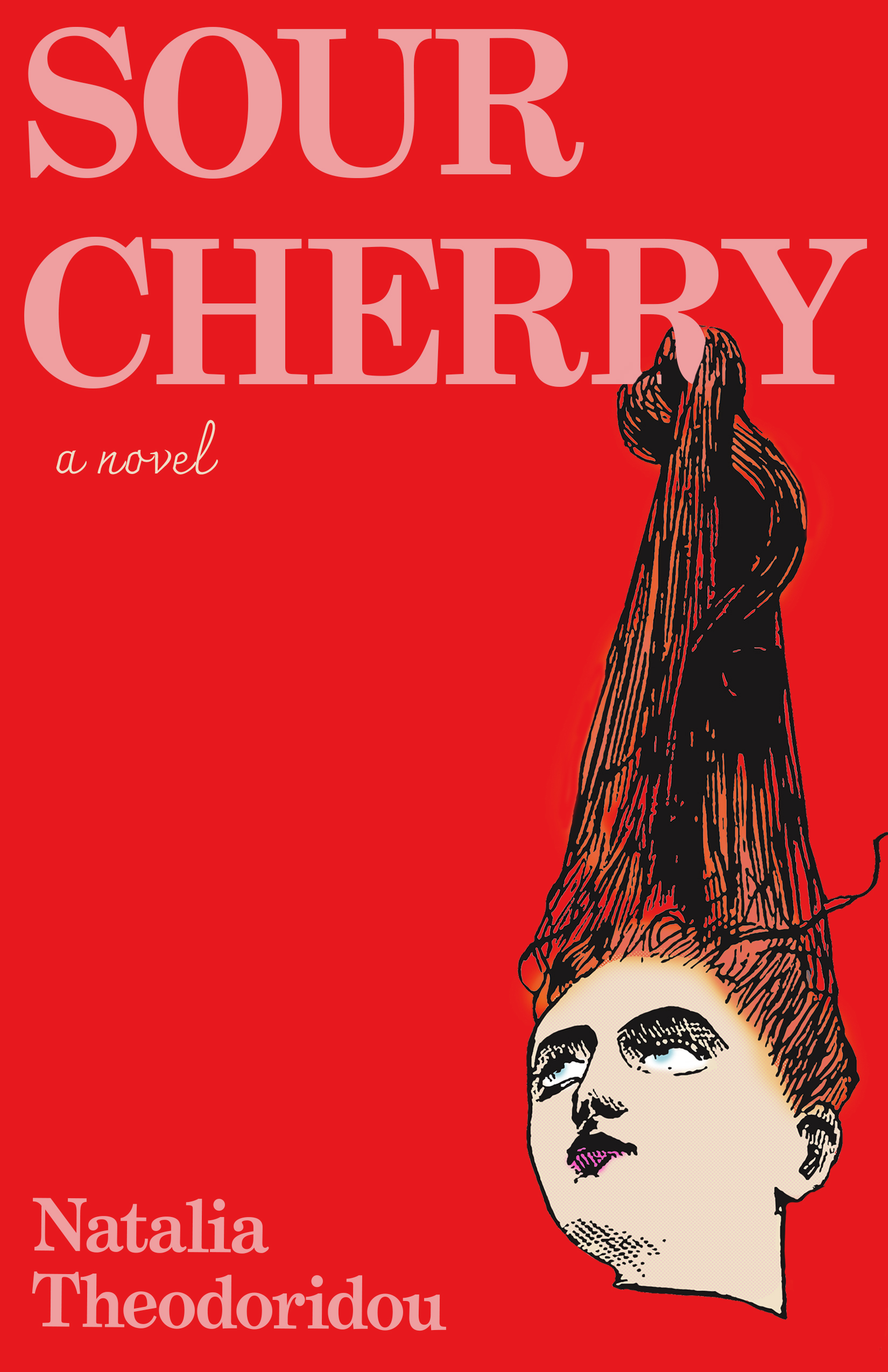
SOUR CHERRY, feminist retelling of the folktale Bluebeard...only with empathy


SOUR CHERRY
NATALIA THEODORIDOU

Tin House Books (non-affiliate Amazon link)
$9.99 ebook, available now

2025 Nebula Award nominee for Best Novel. Winners will be announced June 3-7, 2026.

One of LitHub's 100 Notable Small Press Books for 2025!

WINNER OF the 2026 Locus Award for FIRST NOVEL!

Rating: 3.75* of five

The Publisher Says: A stunning reimagining of Bluebeard—one of the most mythologized serial killers—twisted into a modern tale of toxic masculinity, a feminist sermon, and a folktale for the twenty-first century.

The tale begins with Agnes. After losing her baby, Agnes is called to the great manor house to nurse the local lord’s baby boy. But something is wrong with the child: his nails grow too fast, his skin smells of soil, and his eyes remind her of the dark forest. As he grows into a boy, then into man, a plague seems to follow him everywhere. Trees wither at the roots, fruits rot on their branches, and the town turns against him. The man takes a wife, who bears him a son. But tragedy strikes in cycles and his family is forced to consider their own malignancy—until wife after wife, death after death, plague after plague, every woman he touches becomes a ghost. The ghosts become a chorus, and they call urgently to our narrator as she tries to explain, in our very real world, exactly what has happened to her. The ghosts can all agree on one thing, an inescapable truth about this man, this powerful lord who has loved them and led them each to ruin: If you leave, you die. But if you die, you stay.

Natalia Theodoridou’s haunting and unforgettable debut novel, Sour Cherry, confronts age-old systems of gender and power, long-held excuses made for bad men, and the complicated reasons we stay captive to the monsters we love.

I RECEIVED A DRC FROM THE PUBLISHER VIA NETGALLEY. THANK YOU.

My Review
: Retelling "Bluebeard," one of the most unsettling folk tales I've ever encountered, was a shoo-in to get my admiring attention for this novelist's debut effort. At about the 45% mark, the scene under the cherry tree, I found the time jumping wearing me down...no particular effect was, in my observation, intended for these shifts. They do not seem coupled to changes in emotional register, or attached to revelations of characters' understandings of themselves or each other. Instead they felt to me like ways to avoid exploring an important shift in something because after the time shift the event shifted from is dealt with in short and sharp explanation..."after that Tristan looked at his hand a lot"...without much depth. As this story explores the fear and the disappointment that must inevitably accompany truly loving another person, that matters. The ending was, as a result of this ongoing issue, a bit anticlimactic.

The plus side is that this is a retelling of a quite brutal tale that tries hard to be in the main character's corner. Something that gives kids like me nightmares is brought into the realm of reason. It's very empathetic, it's very willing to engage the readers' empathy. This makes the awfulness all the more poignant and impactful, and is the source of all my positive feelings for the book. It grapples with the deep, oceanic sadness of loving someone who is haunted by an awful past, whose emotional tides do not stop at the shores between himself and the world. It brings a lovingkindness to the seemingly cursed eternal outsider, yet doesn't play the victim card for the monster or the lover.

Craft quibbles aside, I found this story quite engrossing or I'd've simply Pearl-Ruled it. I haven't raised the thematic elements of horror to content-warning status because, frankly, if you need CWs on ancient folktales you won't consider the read for more than a split second anyway.

A debut novel that portends a career of fascinating work. I already want to read Author Theodoridou's next book.

Wednesday, October 4, 2023

THE BLACK TREE ATOP THE HILL, folk-gothic horror novella & MENEWOOD, decade-in-the-making sequel to HILD


THE BLACK TREE ATOP THE HILL
KARLA YVETTE

CLASH Books
$16.95 trade paper, available now

Rating: 4* of five

The Publisher Says: What came first in this Gothic Western, the ghosts, or The Black Tree Atop the Hill? Set in an alternate American old-west that is hauntingly familiar yet strangely off-putting, Marisol is the first to see the tree on the hill, but that’s only to be expected. As the witch of Jack Boyd’s ranch, her job is to notice threats, even amid a most disastrous calving season. It is up to Marisol and the ranch’s ghost to work together to stop mysteriously spreading trees from taking over their ranch, California, and the entirety of the country. But real magic requires sacrifice, and Marisol is not certain she is prepared to accept the consequences of what she must do to stop the trees’ advance.

This is a story about believing in intuition against the rain, about the violence of nature and of those who inflict it. Gothic gardeners explore the question of nature’s home in a progressing world.

Oozing with conflicting resolutions and twisty insides, this is a stunning debut by Portland artist Karla Yvette.

I RECEIVED A DRC FROM THE PUBLISHER VIA EDELWEISS+. THANK YOU.

My Review
: I'm not sure how I got through the awful animal-horror bits. Must be because they weren't perpetrated upon the poor things after they were alive, but were part of a really awful curse that was put on this ranch—and the rest of California—in this altered Western. Folk horror-Gothic horror-tinges of cosmic horror...why the heck would I, materialist extraordinaire, like reading this?!

For one thing, it's short and succinct. Marisol's got a job to do, protecting people from the rampant ill-meant magic flowing everywhere. She doesn't dawdle around being scared or feeling put-upon, she focuses on her protection duties...thank goodness!

What worked best for me in this read was the pacing. A close second was the fact thar Author Yvette never put in any excessive "world-building" aka infodumping stuff...you're where you are, get used to it...and that works best when I'm being asked to suspend disbelief for the space of a novella. If this were a full-on novel, I'd miss the infodumping. The brevity of a novella, which is the exact right length for this story, is stodged up by too much detail of the rules the characters are all playing by. They know them, and I'm happy to follow their lead...for this long, anyway.

Marisol, as expected, carries the story forward. Her ideas about the curse, about the ghost of the rancher's dead wife, and her job, are the really interesting part of the read. The thing that always engages my forward-going gears in a read is a story of underdogs who face down the Powers That Be when it would be easier, and more sensible, to give in and give up. Not being too much of a giver-upper, I like that plot. The Lodge, in this story, functions as a church of sorts regulating magic and punishing its misuse...as, of course, defined by the Lodge. Marisol's magic isn't sanctioned by the Lodge yet she's the one who figures out what the heck is making things on Jack's ranch go so awfully wrong. That's always going to poke the people I don't like in their softest spot: Their hegemony.

All the way around a good tale well-told, an interestingly off-kilter from consensus normality setting, and a heroine whose power comes from her own resources. Definitely a winner for me!

++++++++++++++++++++++++++++++++++++++++++++++++++++++++++++++++


MENEWOOD
NICOLA GRIFFITH

MCD x FSG
$35.00 hardcover, available now

Rating: 4.5* of five

The Publisher Says: In the much anticipated sequel to Hild, Nicola Griffith's Menewood transports readers back to seventh-century Britain, a land of rival kings and religions poised for epochal change.

Hild is no longer the bright child who made a place in Edwin Overking's court with her seemingly supernatural insight. She is eighteen, honed and tested, the formidable Lady of Elmet, now building her personal stronghold in the valley of Menewood.

But Edwin needs his most trusted advisor. Old alliances are fraying. Younger rivals are snapping at his heels. War is brewing—bitter war, winter war. Not knowing who to trust he becomes volatile and unpredictable. Hild begins to understand the true extent of the chaos ahead, and now she must navigate the turbulence and fight to protect both the kingdom and her own people.

Hild will face the losses and devastation of total war, and then she must find a new strength, the implacable determination to forge a radically different path for herself and her people. In the valley, her last redoubt, her community slowly takes root. She trains herself and her unexpected allies in new ways of thinking as she prepares for one last wager: risking all on a single throw for a better future...

In the last decade, Hild has become a beloved classic of epic storytelling. Menewood picks up where that journey left off, and exceeds it in every way.


I RECEIVED A DRC FROM THE PUBLISHER VIA NETGALLEY. THANK YOU.

My Review
: Pearl-clutchers get your grips ready: I'm going to say some nice things about a christian abbess.

Of course, her christian belief is...muted? inflected? yes, inflected...by the ancient practices of seventh-century Northumbria (a name she wouldn't have known of or used, but firmly established in our modern idea of the time and place). Her christian belief is, by most modern standards, heretical. The Roman priests in this story don't come off that well. They're not alone. King Edwin, whose godmouth Hild is still, is singularly blind to the way his rulership's grip drives the agendas of many angry, ill-willed forces around him.

They are using deeply predictable pathways to bring his rule down, yet he needs Hild's counsel to identify the threats. It's ever thus: Power is as always its own worst enemy. Look at the extensive historical record. All dictators eventually fall, even if it's sometimes quite a lengthy process. What Griffith does brilliantly is in the construction of the story of Hild's rise and the fall of an older world. Her inventions and fictionalizations of this history make sense of some things that our few contemporary(ish) sources apply generous slatherings of handwavium to. It's not, in the end, a story with huge depths of character but rather one with immense scope and sweep of events, and actions taken, purposes found, lives changed and morphed. That being a good kind of historical epic strategy, I'm on board.

Good thing, too, as there are seven hundred-ish pages of Hild's story.

Expect action, don't expect explication. The last book's, um, meatyness and squalor as I think it's fair to characterize it, is still a major register of the narrative voice. You're going to want to bookmark the maps, the notes, and the glossary. There is also, in the ebook, a hyperlink to the author's website where there is a wealth of information about who was who and who never really was and what the hell all those freaky-deaky names mean. In fact this historical novel has more source citations than many history books claiming factuality I've read here recently. It works very much to Author Griffith's favor that she spends a goodly amount of time in her endnotes explaining why she made some choices regarding names and naming conventions, as well as giving a Cliffs Notes course in the unreliability of our best sources on the grounds of non-neutrality.

For this cranky old man reader, Hild is only coming more and more to matter as she moves from fey young girlhood to her surprisingly potent womanhood. I love the fact that this woman, this member of a group outrageously repressed and abused for the majority of the millennium-plus since Hild's death, is the only person powerful enough to change the course of the world (go look up the Synod of Whitby). That isn't in this book, but it'd better be in a future one. This character is far, far too amazing to drop now!

A hardcover of this length is pricey and hard for older and disabled people to manage as an object as well as a significant purchase. All I can say is that the read is worth accepting these obstacles to get in your head.

Sunday, October 23, 2022

THE CAMILLA STEN PAGE: THE LOST VILLAGE, a folk-horror Swedish thriller in translation & THE RESTING PLACE, atmospheric domestic thriller


THE LOST VILLAGE
CAMILLA STEN
(tr. Alexandra Fleming)
Minotaur Books
$17.99 trade paper, available now

Rating: 4* of five

A 2021 NPR BEST BOOK OF THE YEAR!

The Publisher Says: The Blair Witch Project meets Midsommar in this brilliantly disturbing thriller from Camilla Sten, an electrifying new voice in suspense.

Documentary filmmaker Alice Lindstedt has been obsessed with the vanishing residents of the old mining town, dubbed “The Lost Village,” since she was a little girl. In 1959, her grandmother’s entire family disappeared in this mysterious tragedy, and ever since, the unanswered questions surrounding the only two people who were left—a woman stoned to death in the town center and an abandoned newborn—have plagued her. She’s gathered a small crew of friends in the remote village to make a film about what really happened.

But there will be no turning back.

Not long after they’ve set up camp, mysterious things begin to happen. Equipment is destroyed. People go missing. As doubt breeds fear and their very minds begin to crack, one thing becomes startlingly clear to Alice:

They are not alone.

They’re looking for the truth...
But what if it finds them first?

I RECEIVED A DRC FROM THE PUBLISHER VIA NETGALLEY. THANK YOU.

My Review
: Author Sten is a Force. Her storytelling chops, in this her debut novel!, are truly impressive. Usually split timelines, here denoted by labeling chapters "Now" and "Then", give me pause. It so seldom adds impetus to the natural pace of the story. In Author Sten's case she overcame this. By itself that merits praise...but to use it, as here, in setting a perceptual "trap" for her readers, is extraordinarily tough to pull off.

The framing device that threatened, at first, to derail my enjoyment of the story was also the biggest surprise to me: A long stretch of "Now" spent reading letters discovered in the Lost Village. While that by itself isn't bad, so very often it is a deus ex machina and so feels like a cheat to me. I re-read parts of the section to see if I could find the seams but I couldn't...I kept running across images I lingered over (eg doubts creeping up on a character like "stinging little devils") and action I wanted to follow right now. That's good horror writing...good writing, period.

Much of the seemingly inevitable comparison-to-known-things marketing has borne down hard on Midsommar, a stunningly beautiful folk-horror film whose story is stretched to the point of snapping in order to make its beautiful scenes...seriously, go look at it, the stills should be sold as art!...work. Also harked back to is The Blair Witch Project, whose shakycam found-footage horror story was, to put it mildly, a farrago but whose fascinating editing (predictable and pedestrian aren't necessarily ineffective in horror storytelling) has deeply influenced the entire field of visual horror storytelling. This comparison is, to me, fair and reasonable; the Midsommar one is a stretch and honestly a disservice to the story here told.

This is folk horror as only a Swede setting her story in Sweden would, possibly could, produce. But it's much, much more unnerving to me, more frightening, than Midsommar because this story is about the intersection of mental illness and religious fanaticism that is its own form of mental illness...but grounded in a solid, meaningful, and thoughtful take-down of capitalism and patriarchy.
We perceive women suffering from mental illness with a sort of paradoxical double-sidedness; both victims and monsters, simultaneously infantilized and feared. A certain level of dysfunction is accepted—after all, women who are suffering mild depression and starving themselves aren’t going to leave their husbands or start revolutions, which is very practical indeed.
–and–
We view a depressed upper-class woman from a stable family background dealing with depression as “having the blues,” while the homeless woman on the street corner battling auditory hallucinations is a thing to be feared, a threatening monster. Not a person in need of help. Not someone with thoughts, dreams, fears, and needs of their own. Not a fully formed human being with agency and identity, suffering from an illness and doing their best to function as well as they can.

Author Sten is singin' my song; Translator Fleming is wrapping it in stylish English.

Several friends of mine who read and reviewed the book, all of them women, weren't impressed with the author's feminist take as presented, and to a woman they were dismissive of the "folk horror" trappings the US publisher wrapped around the story. In that latter I hesitantly join them, but as a man I felt the feminist, or more accurately anti-patriarchal, views the author quite clearly espouses by way of contrast to the "Then" action and more clearly espouses in the "Now" if via a dark means, rang me like a bell.

Permaybehaps I'm settling, in the sense that it might not be as clear to the women because it's not enough of a feminist standpoint. I can't say; I can say that, to me, this read bound together creepy, scary real-life threats and challenges with a social and political slant I am in sympathy with. You should give Author Camilla Sten a shot, see what you think.

++++++++++++++++++++++++++++++++++++++++++++++++++++++++++++++++


THE RESTING PLACE
CAMILLA STEN
(tr. Alexandra Fleming)
Minotaur Books
$17.99 trade paper, available now

Rating: 4* of five

The Publisher Says: A spine-chilling, propulsive psychological suspense from international sensation Camilla Sten.

The medical term is prosopagnosia. The average person calls it face blindness—the inability to recognize a familiar person’s face, even the faces of those closest to you.

When Eleanor walked in on the scene of her capriciously cruel grandmother, Vivianne’s, murder, she came face to face with the killer—a maddening expression that means nothing to someone like her. With each passing day, her anxiety mounts. The dark feelings of having brushed by a killer, yet not know who could do this—or if they’d be back—overtakes both her dreams and her waking moments, thwarting her perception of reality.

Then a lawyer calls. Vivianne has left her a house—a looming estate tucked away in the Swedish woods. The place her grandfather died, suddenly. A place that has housed a dark past for over fifty years.

Eleanor. Her steadfast boyfriend, Sebastian. Her reckless aunt, Veronika. The lawyer. All will go to this house of secrets, looking for answers. But as they get closer to bringing the truth to light, they’ll wish they had never come to disturb what rests there.

A heart-thumping, relentless thriller that will shake you to your core, The Resting Place is an unforgettable novel of horror and suspense.

I RECEIVED A DRC FROM THE PUBLISHER VIA NETGALLEY. THANK YOU.

My Review
: I've known someone with prosopagnosia well, and for a lot longer than I have known the word or the condition existed. It's one of the reasons I was really eager to get this book's DRC and devour it. I was so happy to see this under-represented and misunderstood disability represented at all. I hoped, of course, to see it represented well.

It was. The condition of "face-blindness" was truly well established, in a complex and multivalent way; it was also chillingly effectively woven into a deeply unsettling, even unnerving, plot.
Prosopagnosia, face blindness. It means my brain doesn’t process human faces the same way others’ do. I can’t recognize faces, so have to memorize distinguishing features instead.

What happens, as you've seen in the book description, is a scene of brutal violence that simply can't be forgotten by anyone who's experienced anything remotely close to it. But, in Eleanor's case, it's a scene that lacks a very important resonance. She's seen a murder, and a murderer, and she can't forget it but can't process it, can't help assign guilt to the guilty because she is biomechanically incapable of the necessary function. And then what happens? She inherits the house her grandmother failed to tell her that she owned. Way to lard the stress into the liver of the story...another set of unknown people, faces ever unknown to her and markers to somehow fasten onto their identities.

From that point on, I was so very sold on this read. I could not WAIT to see how this awful psychological double bind would resolve.

The things I liked were, like the things I liked in The Lost Village, the ones that brought the character to life:
...it’s the body that panics first, the brain that follows. If I can just keep my breaths slow and force myself to relax then I can trick my mind into calm.
–and–
“Your fear is valid, but that doesn’t make it real. The fear may be true, but it doesn’t have to be your truth.”

They're present, they're satisfyingly numerous, but in the end the thing that will make or break the read is one's response to the ending. The entire book is a set-up to the set-piece in the last, say, thirtyish pages. It's a big ask from a sophmore novelist. I was rewarded by it because its resolution was so very timely and so personal to me. I can't say more because the Spoiler Stasi will descend on me with malice and fury. This post will clue you in to the direction we're heading if you care to be enlightened.

I thought the use of a big, old, dark manor house in the country was going to be a silly distraction, a gewgaw meant to distract me from something...it wasn't, and it was; the big winter storm, another gothic-storytelling staple, was similarly used. These weren't my favorite moments in the book. I will say they didn't "ruin" my experience of the story as can happen with such inessentials. The nature of the story is so basically well-crafted that Author Sten could've chosen any one of an array of settings and accomplished her task.

I confess that, as I read along and Eleanor kept doing her Eleanor thing, I was half-dreading the need to slap an "ableism" content warning on the review. I was so relieved that I did not feel Author Sten had crossed my own mental threshhold for use of a disability shading into the old, dark "crippled" territory I've still been hit with in the twenty-first century.

I'm going to leave the last words to Eleanor, via Author Sten. I think they say more about what I derived from this read than I can.
She says that wounds can leave scars on our souls just like on our bodies, and that we have to learn to live with them rather than try to rid ourselves of them completely.

Wednesday, September 15, 2021

SLEWFOOT, Brom's latest tale of unease and injustice


SLEWFOOT: A Tale of Bewitchery
BROM

Nightfire Books
$29.99 hardcover, available now

Rating: 4* of five

The Publisher Says: A spirited young Englishwoman, Abitha, arrives at a Puritan colony betrothed to a stranger – only to become quickly widowed when her husband dies under mysterious circumstances. All alone in this pious and patriarchal society, Abitha fights for what little freedom she can grasp onto, while trying to stay true to herself and her past.

Enter Slewfoot, a powerful spirit of antiquity newly woken… and trying to find his own role in the world. Healer or destroyer? Protector or predator? But as the shadows walk and villagers start dying, a new rumor is whispered: Witch.

Both Abitha and Slewfoot must swiftly decide who they are, and what they must do to survive in a world intent on hanging any who meddle in the dark arts.

I RECEIVED A DRC FROM THE PUBLISHER VIA NETGALLEY. THANK YOU.

My Review
: Maybe it was the teen angst. Maybe it was my allergy to Villains Without Nuance. Maybe I'm just getting old.

I don't like this book much. I should...spooky dos in Puritan times? folk horror? Revenge?! yes please...and I think I might have if I hadn't taken against Abitha so very strongly. Adolescents whose sense of themselves as Right and Hard Done By aren't enjoyable companions for an entire book. I felt Abitha's difficulties with Authority were period appropriate...totally bought that she was justifiably angry with the entire male world...but she comes across as a modern woman. Then when Slewfoot-the-character wins her over with no effort? He's an innocent, albeit one with tremendous Powers, and with...um...horns? Literal goatly horns. But Abitha just...accepts. It strained me to buy into that.

I'm not insensitive to the appeal of the Other to those trapped in rigid, conformity-enforcing social milieus. But Abitha's ready acceptance of this, um, extremely Other that resembles the goat we meet her losing...and she even calls him "Samson" after the goat...it didn't scan for me with a seventeenth-century woman. Not even one whose upbringing was as peculiar, her mother a root woman and her father a drunken sot, as hers was.

My most favoritest thing is the animate Forest that Slewfoot (he has other names throughout the story, all of which carry their own shades of meaning and of humor) cohabits with, that has re-summoned Slewfoot from a liminal state to deal with Forest's concerns about its future. (I loved Jesus Thunderbird's name for Slewfoot...Hobomok...as it carried so many levels, from a beautiful butterfly to a scary demon via an early American novel about the Noble Savage slur. A quick trip to the internet will give you literal *hours* of perusing pleasure.) Perhaps the most unsettling of Brom's illustrations is the one he made for Creek:

It's perfect, it's unsettlingly Other, and completely relatably familiar all at the same time. What's missing here is the essence of Creek's Wrongness, Otherness...scale...Creek is tiny and looks like that. Sweet dreams!

These being hallmarks of Brom's works, and the source of my relatively high rating for a book I wasn't all the way in sympathy with, so I was rolling along fine until...the torture porn began. Abitha and her mother, women accused of witchcraft, were in for a bad time. I accepted that. But I was revolted by the deeply prurient recounting of the torments meted out to the women, guilty as charged by the lights of the community they lived in though ambiguously so in modern eyes. They transgressed...they paid dearly for it...
"I want to burn them to the ground, All of them. All of it. Their church, their commandments, their covenants, their riles, edicts, and laws, their fields, their homes, and most of all their fucking bonnets and aprons. I want to hollow them out, make them know what it is to lose everything, everything, to lose their very soul!"

Nothing in this life comes for free...the bigger the ask, the bigger the price. There is more truth than you can fully know in the ancient adage, "Be careful what you wish for lest the answer be Yes."

Saturday, March 8, 2014

Peter Pan's tale told, at last, with truth and guts: THE CHILD THIEF by Brom


THE CHILD THIEF
BROM

EOS
$15.99 trade paper, available now

Rating: 5* of five

The Publisher Says: Peter is quick, daring, and full of mischief—and like all boys, he loves to play, though his games often end in blood. His eyes are sparkling gold, and when he graces you with his smile you are his friend for life, but his promised land is not Neverland.

Fourteen-year-old Nick would have been murdered by the drug dealers preying on his family had Peter not saved him. Now the irresistibly charismatic wild boy wants Nick to follow him to a secret place of great adventure, where magic is alive and you never grow old. Even though he is wary of Peter's crazy talk of faeries and monsters, Nick agrees. After all, New York City is no longer safe for him, and what more could he possibly lose?

There is always more to lose.

Accompanying Peter to a gray and ravished island that was once a lush, enchanted paradise, Nick finds himself unwittingly recruited for a war that has raged for centuries—one where he must learn to fight or die among the "Devils," Peter's savage tribe of lost and stolen children.

There, Peter's dark past is revealed: left to wolves as an infant, despised and hunted, Peter moves restlessly between the worlds of faerie and man. The Child Thief is a leader of bloodthirsty children, a brave friend, and a creature driven to do whatever he must to stop the "Flesh-eaters" and save the last, wild magic in this dying land.

My Review: Retelling the Peter Pan legend with heaping helpings of Celtic myth, genuine teenage angst, and surprisingly scary-to-me horror. I think the huge majority of people remember the basics of the story, Peter enticing kids off to Neverland to fight Captain Hook and never, ever grow up, right? Well, same here, only Neverland is one emm-effin' SCARY-ASS place, the kids are society's fallen-through-the-cracks abusees, runaways, and misfits, and the reason they never grow up is they mostly die in their first few minutes there.

Peter himself, the Happy Sociopath, well, his backstory is one of the revelations of the book...he's a changeling child, an apparently immortal and certainly immoral survivor of pagan Ireland. The author delved deeply into the Celtic myths, and has gifted us with a reconstruction of the actual, underlying story, trimmed of repetition, variations among the versions smoothed out, selectively applied, and a new, vibrant, and compelling tale made from the old, raggedy myths.

It's superb. It's 480pp long. It's *beautifully* illustrated. It's enormous, at 7 x 10. I adore it, book and content both. No one may borrow my copy, a gift from a ridiculously generous friend, because if a corner gets bent or a page gets food-baptized, There Will Be Blood.

I wasn't much of a child. I thought about stuff kids just don't, like why it was okay for girls to have different names after they got married, but not boys; why the Bible said it was okay to fuck your daughters like Lot did, but not other boys; and that all those yahoos clappin' for Tinkerbelle, clearly the *lamest* fairy ever in the history of fairies, should oughta just go straight to the milk and cookies and leave me alone with the gin. Disney shit made me gaseous, as I said to my mother, who paused, laughed, and never inflicted anything Disney on me again. So it was with great and well-founded trepidation that, after reading a gushsome review of this book, I decided to move out of my comfort zone and give it a whirl.

Oh my heck.

I had to put it down every so often because the pain in my gouty wrists and fingers got so nasty, and no book-holding device I possess was up to this tome's heft (lost that Levenger reading desk, dammit!). And a darn good thing, too, since I was rather often scared poopless by some action or another. It's a real story, this Child Thief...a real, balls-out, the-world's-a-meanass-place Matterhorn of a journey, made in excellent company and told in truthsome, sparklingly grim prose.

I want Tim Burton to make this mini-series, starring Johnny Depp as Peter, don't care how old he is he's the *perfect* beautiful sociopath with no fear for scare...animate it, do the thing they did with The Polar Express whatever that's called, and BTW that's one of the all-time great Xmas stories isn't it?, but let's get this fucker made (to quote Bela Lugosi from Ed Wood, another Depp masterpiece) and not shilly-shally!

In case you can't tell, this book is Recommended with Joy.