Pages
- Home
- Mystery Series
- Bizarro, Fantasy & SF
- QUILTBAG...all genres
- Kindle Originals...all genres
- Politics & Social Issues
- Thrillers & True Crime
- Young Adult Books
- Poetry, Classics, Essays, Non-Fiction
- Science, Dinosaurs & Environmental Issues
- Literary Fiction & Short Story Collections
- Sookie Stackhouse/Southern Vampire Books & True Blood
- Books About Books, Authors & Biblioholism
Showing posts with label debut novel. Show all posts
Saturday, September 12, 2026
WE NEVER CALLED IT FRISCO, debut art-critic novel
WE NEVER CALLED IT FRISCO
JED PERL
Coffee House Press (non-affiliate Bookshop.org link)
$17.99 ebook, available now
Rating: 3.5* of five
The Publisher Says: A candid novel about the art, artists, and their tempestuous relationships in the countercultural movement of the 50’s and 60’s, by one of America's most celebrated art critics.
During intermission at a modern dance performance in San Francisco, esteemed and incorrigible cultural critic Marcia Lang collapses into a banquette and dies on the spot. Her lover, Burt, soon discovers that Marcia willed him her entire estate. His windfall includes her correspondence, her stilted redwood house in Marin County, and an incomplete draft of her unpublished memoir, We Never Called It Frisco. As he processes Marcia’s death alongside their cadre of Berkeley bohemians, Burt begins to reconstruct Marcia’s work in progress as an elegiac collage for the friend he’s lost and the city that found her.
In his first novel, Jed Perl guides his reader down the back alleys of a mid-century San Francisco populated with painters, puppeteers, paperback revolutionaries, and the writers like Marcia who determined their positions in the cultural ecosystem. Through energetic and immersive prose, We Never Called It Frisco tests the structural limits of the novel as a site of reconstitution and remembrance.
I RECEIVED A DRC FROM THE PUBLISHER VIA EDELWEISS+. THANK YOU.
My Review: The post-war history of US art, in novel form.
If nothing in you perked up at that précis, don't get this read onto your TBR because it's the sum total of the story. Marcia and Burt are names, not characters; their personalities aren't developed, though their...her...critical opinions about art are. Burt is quiet, he's more observant than Marcia's professional eye for art (and its movements) is.
The central tragedy, Marcia's early death, takes place before we-the-reader have the chance to invest in her whether positively or negatively. For that to work as a novelistic technique, the way we learn about her needs to be more personal, more through memories than through her writings. Burt's devastated, naturally; why would that not lead a storyteller into flashbacks, accompanied by her writings? Instead we listen to Marcia's judgmental pronunciamentos interspersed with Burt's sadness. It's not propulsive, nor was I expecting it to be; but it's also progressively less involving.
I liked the idea of this debut novel enough to finish it, and should Author Perl write more fiction, I will seek it out to read. It's not the best work he's done. But it's also not the best work he will do.
Friday, July 31, 2026
MAZELTOV, gay Jewish teen's bar mitzvah mishegas

MAZELTOV
ELI ZUZOVSKY
Henry Holt & Co. (non-affiliate Bookshop.org link)
$13.99 ebook, available now (preorder a paperback for $17.99, delivered 25 August, at that link too)
Rating: 3.5* of five
The Publisher Says: In a glorious debut, a boy confronts queer lust, shame, the threat of war, and the plague of family on the day he becomes a man.
At a banquet hall, at the onset of war, Adam Weizmann’s bar mitzvah party turns into a glorious catastrophe. On the cusp of manhood—and the verge of a nervous breakdown—Adam has been bracing for his special day, mired in family neuroses and national dysfunction.
In a chorus of voices, a fractious cast of well-wishers narrates Adam’s coming-of-age in Israel: his newly devout father and the mystic rituals he practiced on his young son; his best friend, Abbie, who points the way to joyful transgression; Khalil, a Palestinian poet, who offers a glimpse of a different way to be; and Adam himself, filled with shame and desire as he faces the brokenness of his world.
At once tender and lustful, a work of scathing satire and piercing insight, Mazeltov is a wholly original vision of a young man’s quest to know his own heart.
I RECEIVED A DRC FROM THE PUBLISHER VIA NETGALLEY. THANK YOU.
My Review: Framed as a long flashback from a future not filled in (so as not to give stuff away), this coming-of-age story centered on a religious rite of passage that's recognizing the adolescent mind's shift into high (adult) gear. Unsurprisingly that's also a time many queer kids become aware they're different...and some of those become aware of just exactly how they're different.
Adam's name, shared with the first-ever man in his religion's mythology, is a clever choice. It truly does feel as though one is the very first ever to go through the self-discovery process. Then there's his surname: Weizmann. Only the greatest Zionist of them all was Weizmann. Can't unsee that call-back. It's prestigious in Israel, very much the opposite in my world.
No matter how accepting one's peers and family might be, there is anxiety around recognizing one is Other in the eyes of the world. Most of us don't feel accepted in that awful 13-15 age bracket though, so the queer identity adding complexity to the existing tsurres is seldom welcome.
The Israel setting is going to be an issue to some who read my blog. The ongoing genocide against Palestinians is not foregrounded here, so make your decisions with that information in mind. I myownself was not minded to reject the book outright for not writing the details of a war crime that long predates the PoV character's birth into his personal story. You do you, though.
The multiple PoVs and the technique used to switch among them, along with quiet, unheralded details that are not consistent in the different PoVs, is more likely to cause readers problems than procrustean political tomfoolery. I'm sure some readers put these detail differences down to a lack of novelistic craft. I'm not of that opinion myownself. I think Author Zuzovsky put those variations in the narrative because the characters are going to have those differing recalls, and we as the listeners aren't necessarily going, or even likely to know whose version is factually correct...if any version is.
Adam's unhappily divorced parents are *awful*...and this is judging them from their own PoVs not from dam's adolescent one. Dad snipes at Mom in his remarks for the occasion, Mom can't be arsed to write a speech or her son's rite of passage...ick. Send these two to Gaza to be aid workers so they'll be forced to think of others not just themselves.
It's a sort read at under 200pp. I'll say I was never bored. I'll mention that I was empathetic for this kid's relatable, familiar struggles with naming and taking on his adult identity. I can't not say that I'm squeamish about Israeli literature because the way their government is acting is appalling...and my government's bankrolling it.
It's complicated, like Adam Weizmann's bar mitzvah. It's messy, like Adam Weizmann's bar mitzvah. It needs some room to grow it didn't get, like Adam Weizmann's bar mitzvah.
But it's a debut. More and even better things are to come. Like the aftermath of Adam Weizmann's bar mitzvah.
Thursday, July 23, 2026
WATERSPOUT, one of Troy Ford's Pink Sheep Novels

WATERSPOUT (The Pink Sheep Novels Book 2)
TROY FORD
Sweet Flag Books (non-affiliate Bookshop.org link)
$15.99 paperback, available now
Rating: 4* of five
The Publisher Says: Pillion meets The Goldfinch in this dark literary novel about art, ambition, and the volatile people who become our muses.
Jimmy Traywick is running out of options. Job, apartment, boyfriend, and gallery in San Francisco—gone. Retreating to a quiet town across the Bay, he’s hoping for a fresh start when a charismatic insider offers a shot at the New York art world.
Desperate to seize the opportunity, he begins painting the new lovers and friends who have pulled him into their orbit, transforming passion and chaos into a raw new body of work.
But when secrets surface and relationships fracture, he discovers too late that inspiration can come at a devastating price.
I RECEIVED A DRC FROM THE PUBLISHER VIA NETGALLEY. THANK YOU.
My Review: Ambition's a cruel taskmaster. It forces people into actions they'd otherwise overthink their way out of, like trading sex for fame. It's a terrible price to pay for a a commodity that loses value when you lose interest. Money...assets...jewels...their value is more durable.
It doesn't stop people from making that bargain. For millennia people have traded sex for tangible items and intangible things like gods and power and fame/notoriety. Jimmy Traywick did that. It worked...until it didn't.
That's the thing about Faustian bargains: Wanting something badly enough to ignore your own misgivings about it is its own reward. Funny word to use, isn't it. Not funny-ha-ha but funny-hmmm. It's a bad reward, but a real one, to set and pursue a goal to the single-minded exclusion of doubt and fear. Jimmy, like other ambitious people, desires at a more intense level than most of us. He's not stupid, wait yes he is, he's not dumb because he sees Paul Allenson in 3D, shadows are there, they point to things that aren't open, aboveboard...and he takes the proffered bargain anyway.
It's a choice. A choice he made. Now we meet Jimmy in the aftermath. He still owns his choice, its mark is on him for good and ever. The story you're reading is the story of making that choice, choosing that fate knowing it will be costly but not what exactly the cost will be.
It's always fascinating and not a little enlightening to read stories about people who are more intense about their lives, their goals, the desires than we-the-reader are. We're looking in on a train wreck, watching the rescue operation be hit by flash floods, the director with the radio coordinating everything get hit by lightning, the ambulances fall into sinkholes on the way to the scene...and we-the-reader sit comfortably in our chair in the air conditioning thrilling to it all.
Ain't reading grand?
Author Ford is an unkind man with a depraved soul. Goddesses please bless him for showing it to us. Jimmy goes through the wringer and comes out flattened but never flat and featureless.The same is less true of those around him, or this would be five stars with a yodel of rapture. It's a tough balancing act, taking time away from our PoV guy to limn some depth for the supporting players. It's a thing all too often left undone. I don't think it was left undone here, Author Ford's not careless or unskilled. It was part and parcel of the choice to tell the story with its focus resolutely on Jimmy. It was a lot to put onto one character, and that one character was rather less nuanced than I'd've needed for him to be to sit back in my chair with the book open on my lap with a slightly dazed expression on my puss.
It's a really involving tale, once I opened it I didn't close it willingly; it never once bored me or made me wish to heck he'd get bloody on with it; but it explored depths I didn't find that deep, so it's not my idea of perfect.
It very much is perfectly entertaining and, not for nothing, really begging to have a movie draped over it. Get you one and see if I'm wrong.
Monday, June 15, 2026
THE OPEN ERA, romantic fiction with tennis players in the lead roles
THE OPEN ERA
EDWARD SCHMIT
Berkley Books (non-affiliate Bookshop.org link)
$10.99 ebook, available now
Rating: 4* of five
The Publisher Says: Love evens the score between two tennis players in this stunning debut romance.
Recently-turned-pro tennis player Austin Hardy has been out since high school and it's never been a big deal. That is, until he becomes the first openly gay man to compete in a Grand Slam. Suddenly, being gay is a huge deal, with headlines to prove it.
Unprepared for this new spotlight, Austin’s anxiety disorder hits a breaking point, and he trips and falls at practice. Right next to the very attractive, very talented, and probably straight Diego Cruz, ranked World #2.
The two players start a friendship off the court. But between their flirty banter, mixed signals, and brewing rivalry, Austin is thrown further off his game by Diego.
With the eyes of the world on Austin, the weight of history on his shoulders, and Diego across the net—he must decide if love means nothing or if love means everything as he battles for the trophy during an electric two weeks at the US Open.
I RECEIVED A DRC FROM THE PUBLISHER VIA NETGALLEY. THANK YOU.
My Review: I'm guiltily reminded of this DRC by Marisa Tandon's hour-long interview with the author. It was on my Pride Month agenda, but wasn't moving up the stack very quickly because the book-review traffic is seriously backed up this unnerving politically charged year.
If you haven't encountered Marisa Tandon yet, she's the LA sports nut who believes romance and sports go together like sugar and spice. Better together, fine apart...and her channel's the reason I got interested enough to watch Off Campus, which she praised. (Not for me, straight people having romances involves and interests me not at all. Well done to Ms. Tandon for even getting me over to Prime.)
I'm glad I read this book over the past twelve days. It's not a tropey romance, in my view, but a contemporary novel about two athletes who fall in love as they compete in the sport each of them truly loves but which, in its basics, is designed in queer-unfriendly ways. Maybe homophobia is inherent in sports because it's so very physical, so centered on what bodies do and can do, that it breeds anxiety in the breeders (slur used intentionally in this context) lest their precious hold on superiority in our culture be threatened by success in Others' hands. Think white supremacist nonsense over Black athletic accomplishments.
As Austin copes with his sudden rise to parity in standing with Diego, tennis's second-seed star, he is prone to panic attacks. How that works as an aspiring professional athlete, well, I'm not all the way convinced it would. It's the source of much of the young men's emotional energy as they discover they're falling in love. Diego's the second lead, a young man of many sterling qualities. One of them is not really empathy or he wouldn't more or less ghost Austin after being really supportive. There's definitely no HEA and barely the minimum-standard HFN ending. I'd enjoy seeing the young men do more in another book, one that either brings them firmly together or separates them for good.
I don't think the anti-romance crowd, of whom I once was a part, will cringe at this story's very light dusting of men falling in love. It's not going to trigger the lighter eww-ick homophobes. It's a story about finding love, finding out about how the line between love and friendship is always squiggly, while existing in the full glare of the public gaze.
What's left undone, unsaid, unresolved is always fertile ground for storytellers with the itch to make their readers or viewers sit with uncomfortable realizations and hard truths of emotional life. Not everyone who deserves the HEA gets it. Not everyone who falls in love knows what the heck to do about it, or how to make it work. Sometimes the right one comes along before they're properly prepared.
Which is why there's a whole category called "second chance romance."
I hope Austin and Diego don't need that label, but am always glad to see them if/when they return.
Wednesday, March 11, 2026
PEDRO THE VAST, mycohorror/sporror at full throttle
PEDRO THE VAST
SIMÓN LÓPEZ TRUJILLO (tr. Robin Myers)
Algonquin Books (non-affiliate Bookshop.org link)
$11.99 ebook, available now
Rating: 4.25* of five
The Publisher Says: Simón López Trujillo’s “mind-blowing” (Gabriela Cabezón Cámara) debut takes readers into a dry and degraded, fire-prone landscape where humanity has encroached a step too far into the natural world, and a deadly fungus mounts its own resistance . . .
In the disorienting, devastatingly tense world of López Trujillo, a eucalyptus farm worker named Pedro starts coughing. Several of his coworkers die of a strange fungal disease, which has jumped to humans for the first time, but Pedro, miraculously, awakes. His survival fascinates a foreign mycologist, as well as a local priest, who dubs his mysterious mutterings to be the words of a prophet. Meanwhile Pedro's kids are left to fend for themselves: the young Cata, whose creepy art projects are getting harder and harder to decipher, and Patricio, who wasn't ready to be thrust into the role of father. Their competing efforts to reckon with Pedro’s condition eventually meet in a horrifying climax that readers will never forget.
For readers of Jeff Vandermeer and Samanta Schweblin, López Trujillo is a next-generation Bolaño with a fresh, speculative edge and a mind that's always one step ahead of us.
I RECEIVED A DRC FROM THE PUBLISHER VIA NETGALLEY. THANK YOU.
My Review: Mycohorror, sometimes "sporror" (a play on "spore horror"), has a history that goes back a way. In our Anthropocene climate change-plagued times it's grown in prevalence and in popularity. The entire cultural interest in ecohorror is only growing. The Last of Us was quite a cultural moment; Jeff Vandermeer's Area X novels still fly off the shelves; in the QUILTBAG community T. Kingfisher's Sworn Soldier series makes a stir.
all of which makes my eyebrows rise a bit: y'all do realize this is the Earth herself rising in outraged fury against the disease process we represent to her body, like planetary chemotherapy, right? Considering the Anthropocene's awful effects on the Earth, we'll be lucky if all that happens is her fever goes up and she unleashes the ancient life-givers the fungi onto us because then a few will, by the immutable statistics of Life, will make it through.
Subtle weirdness abounds in the world-building, the eponymous Pedro being...affected...in ways that drive the plot but do not allow for him to be more than a name and a list of symptoms most of the time. The story reaches a climax I (experienced old weird-fiction reader that I am) saw coming, with a big reveal that was expected—albeit intense—and a niggling issue of "who exactly is telling me this story?" gets addressed.
I think the main draw of this read is the author's effective story design, and the excellent pitch of the prose...Translator Myers, take your well-earned bow...that makes it a pleasure to spend these 140ish pages with this team. I can see this being filmed and becoming a hit. Chile's natural beauty has been badly damaged, so it feels to me like the right cultural moment to do this story filmic justice.
It's short enough to make a solid weekend's reading but not so short you'll look up and think "...that's IT?" when you're done. The idea of horror is to give you a jolt, this does that (a bit late in the game, but definitely does it) and does a good job of reminding insular Anglophone readers that the world is much bigger than just our part.
I'd offer more stars if the twist was not so obvious. I've already said that this is a me thing; I expect you to know how much of my bugaboo stock you share by now, I've been at the reviewing game twenty years! Even if we share them all, this is a story I think is worth your time and treasure.
Friday, February 20, 2026
TWO LEFT FEET, gay Premier League football...soccer in the US...version of the trendy gay romance series we all love
TWO LEFT FEET
KALLIE EMBLIDGE
Dell Books (non-affiliate Bookshop.org link)
$11.99 ebook, available now
Rating: 3.5* of five
The Publisher Says: A Premier League football star must defend his roster spot—and his heart—when a threateningly talented and handsome midfielder joins his team in this utterly charming debut romance, a profound love letter to the world’s most popular sport.
Oliver Harris is football royalty in London. Ordinarily the star of the Camden Roses is calm, cool, and collected, keeping his club relevant with his prowess in the midfield and mighty left foot. But this season, the threats There’s Camden’s management to contend with—complete with a new, prickly Dutch coach, eager for better results—and a mid-season injury, which sidelines him when his team needs him most. When a recruit is called up to fill in, Oliver fears he’ll be replaced. If he can mentor this younger talent, then they might just have a chance at winning, together.
After a string of lackluster performances in his native Spain, Leonardo Davis-Villanueva is looking for one last shot at the club he always dreamed of, where he once played in the youth academy. Oliver immediately finds confident, eager Leo irritating. He can barely go through the motions, let alone coach him, without outright hostility. When he comes to admire Leo’s skill and warms to his humor and energy, though, he begins to see Leo as a friend—and then, to his mounting horror, as something more.
Leo craves Oliver’s attention and partnership; Oliver can’t afford to fall in love with his teammate. He’s always kept a tight lid on his sexuality in a league that’s never had a player come out. As the season heats up, a lot more than football hangs in the balance. Can Oliver—and Leo—win when it counts most?
I RECEIVED A DRC FROM THE PUBLISHER VIA NETGALLEY. THANK YOU.
My Review: Oliver, our MC, is a shitty guy: self-obsessed, entirely focused on what's happened *to* him in his life; he's basically a straight man. Except he really wants sex with other guys. Like lots of straight victimvictimvictim men I've known, he thinks he ought to be able to do what he wants to who he wants and be left alone about it. There I agree with him, within consensual boundaries. He's got thhe social awareness to stay on the DL in the Premier League. It's as homophobic a culture as the NHL of Heated Rivalry (in)fame.
So meeting Leo, a hottie with skills equal to his own before his playing career temporarily ended in injury, and slowly, reluctantly falling in love with him follows the grumpy/sunshine, enemies-to-lovers trope nexus. Leo is boundlessly enthusiastic, willing to get in the big fat middle of anything because he's sure it will come out right. As Oliver moves from injured mentor to teammate and partner in an amazing player collaboration with Leo, he realizes he's never been so happy, the team's come out of their scoring slump, and if this beautiful amazing man will have him he wants to be the partner he deserves.
All at once we're in the press-conference-having, coming-out-to-mom part of the story. After the first third-plus of having to put up with his B.S. of pity-poor-me he's healed by Luuuv. Then...finis.
This is a debut novel or I'd have the marshmallow fork out and the logs a-flamin'. I'm going with three stars for what feels like the usual rookie error of not giving the reader intimacy building between the men...even the sex scenes were, well, infrequent and lacking urgency...and an extra half-star for realizing there's a gap in the market that can be filled with a bit of effort. I'd like to see this further honed, fined down into a dart to pierce my wall of ignorance about football; the author doesn't demonstrate a lot of knowledge I can't glean from Wikipedia. I'd call it a competent job of work that could, if seriously expanded on, become a series I'd read.
At the very least it would need to give me more connection and interconnection between the guys, even if it does slow-burn as slowly as this story does; less inner-gaze tediousness..nothing gets resolved until everything gets resolved all at once!...and more of the men exploring their borning connection.
Not for football addicts.
Monday, February 2, 2026
THE SECRET OF SNOW, cozy, sentimental Swedishness
THE SECRET OF SNOW
TINA HARNESK (tr. Alice Menzies)
Atria Books (non-affiliate Bookshop.org link)
$14.99 ebook, available now
Rating: 3.75* of five
The Publisher Says: This lyrical runaway Swedish hit follows a reclusive, elderly couple who cross paths with a pair of twentysomething newcomers in a small mountain town, revealing an unexpected, shared history and the reclamation of a nearly extinct culture.
Meet Máriddja: eccentric, eighty-five years old, and facing a cancer diagnosis. She’s determined to keep the truth about her illness from her husband Biera, while also finding someone who can take care of him once she’s gone.
Meet Kaj: a new transplant to the village, recently engaged to Mimmi, and mourning the death of his mother. One day, when Kaj unexpectedly finds a box of Sámi—the indigenous people of Scandinavia—handicrafts belonging to his mother, he unlocks something he never anticipated, something that will change his life for years to come.
A “brilliant debut” (Aftonbladet Söndag, Sweden) full of humor and heartbreak, The Secrets of Snow movingly grapples with grief, love, and the power of history.
I RECEIVED A DRC FROM THE PUBLISHER VIA NETGALLEY. THANK YOU.
My Review: As with most bestsellers, this story is pitched right down the middle. Take one old (straight, natch) couple facing end of life issues of varying but intense urgency. Add one young (straight, natch) couple facing relationship teething pains and life traumas. Connect them by geography in a place small enough to breed affinity through enforced proximity. Add a glaze of native cultural issues. Give the old woman an iPhone and have her repurpose Siri as a confidant for comic relief. Serve.
It's fine if this is dessert after a hearty substantial meal. This is presented as the meal. If these were the concluding chapters of a much longer book that dug into Kaj's relationship with his mother and dialed down the awkward obvious coincidence that's telegraphed early and often, and the roots of Mári's anguished love for Biera (though who wouldn't be mad for someone who thinks his wife "was generous with everything, including her dignity" when everyone else thinks she's a madwoman!), I'd be wadding up the Kleenex with the rest of y'all.
It's a debut novel, and as I've said many times I grade on a curve for debut novelists, or I'd be a lot less tactful in expressing my dissatisfaction. I now turn your attention to the marvelous, evocative writing. Particularly effective, probably even moreso in Swedish, is the evocation of Sámi culture...the indigenous folk of the Arctic are about as well-presented in Sweden as First Nations people are in Canada, and only Black people are presented worse than Native Americans in the US. Author Harnesk does not stint on her vocabulary. Menzies, our translator, has worked hard and successfully to render the tone of the original. I don't speak Swedish, but there's a feel, an aura around a really well-made work of prose that comes through in the very best translations. It came through here.
While understanding why this became a bestseller does not add to my desire to praise it, I predict all y'all would love the read if you gave it a try. The Fredrik Backman bus, the Shelby van Pelt posse, the Sally Hepworth squad, should bypass the library hold list and put your credit cards on the line. This book is aimed right at you. Any reader wanting a lingering look at love, grief, and a lifetime of being true to your lights finally being rewarded should get it from the library. Request it if you don't see it in the catalog.
It's built to make you feel the warm glow of goodness.
Friday, September 5, 2025
LAMB: A novel in snapshots, what it felt like to be young and queer and there
LAMB: A novel in snapshots
TROY FORD
Sweet Flag Books (non-affiliate Bookshop.org link)
$9.99 paperback, available now
Rating: 4* of five
The Publisher Says: D is shaken when his mercurial friend Lamb vanishes just before they're set to move in together. The news of his death three years later shadows him like a ghost.
Sifting through Lamb's journals decades later, D uncovers a raw, intimate portrait of a sensitive misfit navigating a world that never understood him.
From their first meeting at an elite all-boys school to the chaos of 1990s San Francisco, Lamb's story unfolds in a tangle of tenderness and rebellion, anguish and adventure. Through journal entries, letters, poetry, and stories, Lamb is a coming-of-age in snapshots that captures the dazed spirit of young men searching for belonging in the aftermath of the AIDS crisis.
A Tales of the City for Generation X—a dark afterparty of gay awakening both aching and unforgettable.
I RECEIVED A DRC FROM THE PUBLISHER VIA NETGALLEY. THANK YOU.
My Review: A very sweetly remembered lover from the first years of knowing you're queer will always call your heart home. It's this book that tells you why it did for Author Ford.
We all grow older with this kind of memory of our coming of age, if not always coming out. It's the nature of being adolescent in the modern world...finding one's tribe, feeling one's first romantic love (for most anyway) are very deep experiences. Bound up with our particular time and place, they're all a stew of heady, intense, immediate sensations and thoughts and things learned.
It felt very *right* to be in D and in Lamb's heads from the time just that crucial bit ahead of them.
You can't go home again; but you can remember it, you can summon the sensations thoughts feelings to your older self. There are times that is what you need and should seek out. This book will likely do that for boys born in about 1959 through 1966. It felt good to be young then, even if you weren't *happy* you felt you *could* be.
To all y'all born after 1980: I'm so sorry my generation fucked up so very badly. We did you out of this glorious sadness, and we're only ever going to pay for it.
Saturday, August 2, 2025
ON EARTH AS IT IS ON TELEVISION, weirdly funny first-contact debut novel
ON EARTH AS IT IS ON TELEVISION
EMILY JANE
Hyperion Avenue (non-affiliate Bookshop.org link)
$17.99 trade paper, available now
Rating: 4* of five
The Publisher Says: In Emily Jane’s rollicking debut, when spaceships arrive and then depart suddenly without a word, the certainty that we are not alone in the universe turns to intense uncertainty as to our place within it.
Since long before the spaceships’ fleeting presence, Blaine has been content to go along with the whims of his supermom wife and half-feral, television-addicted children. But when the kids blithely ponder skinning people to see if they’re aliens, and his wife drags them all on a surprise road trip to Disney World, even steady Blaine begins to crack.
Half a continent away, Heather floats in a Malibu pool and watches the massive ships hover overhead. Maybe her life is finally going to start. For her, the arrival heralds a quest to understand herself, her accomplished (and oh-so-annoying) stepfamily, and why she feels so alone in a universe teeming with life.
Suddenly conscious and alert after twenty catatonic years, Oliver struggles to piece together his fragmented, disco-infused memories and make sense of his desire to follow a strange cat on a westward journey.
Embracing the strangeness that is life in the twenty-first century, On Earth as It Is on Television is a rollicking, heartfelt tale of first contact that practically leaps off the planet.
I RECEIVED A DRC FROM THE PUBLISHER VIA NETGALLEY. THANK YOU.
My Review: I think laughing is a gift I'll never take for granted again. 2025 has given me few reasons to laugh. This 2023 title was one that got to be more and more fun as I read along.
Despite the c-a-ts being the first-contacting aliens' favorite Earthlings. No way could this climb past four stars after that extremely bad authorial decision.
Though playing the Strugatskys' Roadside Picnic for laffs, like they commissioned Michael Zadoorian to observe the results of the visit for a report, is *almost* enough, as the aliens arrive, depart, and pretty much act like indifferent tourists on a cruise. The Earthlings left in their wake are befuddled, asking all sorts of questions, but none the wiser as to the aliens' purpose in visiting Earth.
It sorta doesn't matter. The point of humor is to look at things that seem absurd, but are genuinely important...sometimes profound. This story isn't quite profound, but it's important: We need a perspective check. Maybe aliens exist, maybe they're too far away in time and/or space to "hear" us, or maybe they're fully aware of us and just don't care.
That hurts a lot of peoples' feelings, but if aliens exist (I think spacefaring ones don't), I'll be completely unsurprised if they, like Jane's aliens, aren't much interested in humanity as it acts the fool, messes up its room, defies reason in the name of spurious "personal autonomy," and generally behaves like spoiled, perspectiveless adolescents with too much free time.
A summertime read with enough interesting ideas to make it more than empty reading calories while delivering the sugar rush of humor to keep your mind from processing the nutritious stuff in the moment.
Friday, June 13, 2025
THE PHOENIX PENCIL COMPANY, debut magical-realism Chinese culture novel...very worthy Reese's Book Club pick for #PrideMonth
THE PHOENIX PENCIL COMPANY
ALLISON KING
William Morrow (non-affiliate Bookshop.org link)
$14.99 ebook, available now
Rating: 4.75* of five
The Publisher Says: A REESE'S BOOK CLUB PICK!
In this dazzling debut novel, a hidden and nearly forgotten magic—of Reforging pencils, bringing the memories they contain back to life—holds the power to transform a young woman’s relationship with her grandmother, and to mend long-lost connections across time and space.
Monica Tsai spends most days on her computer, journaling the details of her ordinary life and coding for a program that seeks to connect strangers online. A self-proclaimed recluse, she's always struggled to make friends and, as a college freshman, finds herself escaping into a digital world, counting the days until she can return home to her beloved grandparents. They are now in their nineties, and Monica worries about them constantly—especially her grandmother, Yun, who survived two wars in China before coming to the States, and whose memory has begun to fade.
Though Yun rarely speaks of her past, Monica is determined to find the long-lost cousin she was separated from years ago. One day, the very program Monica is helping to build connects her to a young woman, whose gift of a single pencil holds a surprising clue. Monica’s discovery of a hidden family history is exquisitely braided with Yun’s own memories as she writes of her years in Shanghai, working at the Phoenix Pencil Company. As WWII rages outside their door, Yun and her cousin, Meng, learn of a special power the women in their family possess: the ability to Reforge a pencil’s words. But when the government uncovers their secret, they are forced into a life of espionage, betraying other people’s stories to survive.
Combining the cross-generational family saga and epistolary form of A Tale for the Time Being with the uplifting, emotional magic of The Midnight Library, Allison King’s stunning debut novel asks: who owns and inherits our stories? The answers and secrets that surface on the page may have the unerasable power to reconnect a family and restore a legacy.
I RECEIVED A DRC FROM THE PUBLISHER VIA NETGALLEY. THANK YOU.
My Review: I so very badly want Meng's superpower of Reforging that, once I encountered it, I was unable...okay, unwilling but really, really unwilling...to stop reading the story. Injecting an author's actual words directly into my veins?
Magical pencil me, Yun! (Or Monica, if you're now possessed of the power.)
So there you have it, laddies and gentlewomen. My officially enthroned favorite fantasy trope that utterly bypasses my usual Chosen-One Hidden Powers flush button. There really is a way around every prejudice. What didn't really ring for me was Monica's modern-day iteration of these magically delicious pencils made by Yun and her cousin Meng in 1937 Shanghai (all you Iris Chang readers know what the implications of that are already; if you haven't read Chang, go do so.) EMBR, Monica's boss's startup, seems to be a not-evil iteration of Facebook, in my own crude and unnuanced terms, and that's a concept so toxified by that fuck Zuck and his henchrats that I was preemptively squicked out by it.
It's a cool idea for a story, and one that feels like Author King has really gone into to develop her world's natural development. I think the decision not to go into how and what Meng and Yun have as a power paradoxically let me just accept it...use one of the pencils they created and in a future that's never defined by length or relationship, someone hip to the trick can utterly exist within the words you've created. Trying to build out a system around this would not have made it easier to believe.
As to *why* these pencils exist, this brings me to the almost-all-five starrèdness of the read: The entire book is suffused with a deep and highly loving sadness as memory, its utter unreliability, its undeniable centrality to one's identity and selfhood, are examined. Monica, Yun, all their ties and all the facts of their family's life, swept away in the fires of war; recoverable with this one astonishing instrument, writing itself entire in a new head. Monica's journey to understanding this...power, gift, supernatural geas...is tied back to Grandmother Yun and forward to new lover Louise. I've said elsewhere that reading is the act of thinking with another head.
Writing, creating stories, are under direct and explicit threat in a time of rampant and overly successful suppression of books, ideas, and fields of study. NASA's proposed budget eliminates entirely astrophysical research, funding for space-sciences fellowships, all Earth sciences research. Libraries suffer huge challenges to remove particularly queer books and media...all orchestrated and funded by certain religious groups. This is something I'm morally certain Author King is indirectly, and all the more effectively for it, commenting on with Yun and Monica's interconnectedness via the magic of stories to pass forward the truth and the facts of a violent past.
If you wonder how this can happen in the modern world, look at what's under attack...learning, information-gathering, all the weapons against ignorance and chaos. Resisting this, refusing to simply accept it, why this is a thing to be worked toward and desired, you should trust Shakespeare:
Not marble, nor the gilded monuments
Of princes, shall outlive this powerful rhyme;
But you shall shine more bright in these contents
Than unswept stone, besmeared with sluttish time.
When wasteful war shall statues overturn
And broils root out the work of masonry,
Nor Mars his sword, nor war’s quick fire, shall burn
The living record of your memory:
’Gainst death, and all oblivious enmity,
Shall you pace forth; your praise shall still find room
Even in the eyes of all posterity
That wear this world out to the ending doom.
So, till the judgement that yourself arise,
You live in this, and dwell in lovers’ eyes.
It is impious to speak after Divinity has spoken.
Saturday, May 31, 2025
NO NAMES, a #PrideMonth debut novel from a poet via Minneapolis's estimable Coffee House Press
NO NAMES
GREG HEWETT
Coffee House Press (non-affiliate Amazon link)
$17.99 ebook, available now
Rating: 3.75* of five
The Publisher Says: Inspired by the iconic punk scene of the late '70s, No Names blurs the lines of affection and sexuality in a haunting tale of desire, hope, and loss.
Mike and Pete were "no names," two working-class boys lost in the shuffle of their stratified town, brought together by their love of music. By 1978, their punk band was blazing across the underground scene. Now, in 1993, Mike is a hermit living alone on a dot of an island in the North Atlantic. When a mysterious letter from an unlikely fan named Isaac arrives, he's pulled right back into the pain he’s spent over a decade running from.
Isaac longs for an escape from his lonely teenage life. A chance discovery of the No Names’ only album catapults him into an obsession with the godlike rockers and the tantalizing possibility of connection.
As their stories collide, mistakes breed consequences that echo through the decades like the furious reverberations of a power chord.
I RECEIVED A DRC FROM THE PUBLISHER VIA EDELWEISS+. THANK YOU.
My Review: Two-thirds of an excellent novel...after the twist, it's not excellent anymore. It's good, and as a contrast to almost two hundred pages of really outstanding build-up, I felt really let down by the ending. It was a messy trailing-off of several conversations, between characters and us, as well as each other. Multiple PoV novels are always...baggy...but this one's excitement and intensity came from the sense I had in the first part of the book that each person was picking up the thread of a narrative, was the response part in a call-and-response composition.
Much of that energy came from the way the voices wove around each other as they spoke of the times and events that the narrator before had no way of knowing. By the two-thirds mark, they were not telling the same story. They were following their own strands into a future not shared; it's like life, you meet, connect, intertwine for a time, then the time is over. The problem I had with that in this context is that it takes me from one kind of book...close harmony call-and-response...into another, the oratorio going chapter-and-verse through the wind-up of the stories I'd previously experienced directly.
What started as a five-star read ended at three and three-quarters because the narrative drive leaked right out, becoming severe with Mike's relating with the reader how Isaac fits in with the story. I began to nit-pick characters' word choices, their manner of addressing the facts they presented. That is never a good sign. I was disinvesting before the book ended.
But my goddesses, that first bit! A true joy of reading time spent well, and in the presence of a talented voice in storytelling. So not-quite four stars to celebrate the first novel of a writer whose next novel I want to read as soon as he writes it.
Friday, April 25, 2025
EVERYTHING IS FINE HERE, debut novel of coming-of-age and coming out in queer-hostile Uganda
EVERYTHING IS FINE HERE
IRYN TUSHABE
House of Anansi Press (non-affiliate Amazon link)
$9.99 ebook, available now
Rating: 4* of five
The Publisher Says: A tender coming of age novel set in Uganda in which a young woman grapples with the truth about her sister in a country that punishes gay people.
Eighteen-year-old Aine Kamara has been anticipating a reunion with her older sister, Mbabazi, for months. But when Mbabazi shows up with an unexpected guest, Aine must confront an old her beloved sister is gay in a country with tight anti-homosexuality laws.
Over a weekend at Aine’s all girls’ boarding school, sisterly bonds strengthen, and a new friendship emerges between Aine and her sister’s partner, Achen. Later, a sudden death in the family brings Achen to Mbabazi’s and Aine’s home village, resulting in tensions that put Mrs. Kamara’s Christian beliefs to the test. She issues an ultimatum, forcing Mbabazi to make a difficult choice, but Aine must too. Unable to convince Mama to reconsider, Aine runs away to Mbabazi’s and Achen’s home in Kampala. There she reconnects with Elia, the sophomore at Makerere University she’s had a crush on for a while.
Acclaimed writer Iryn Tushabe’s dazzling debut novel, Everything Is Fine Here, explores the choice Aine must make, and its inevitable and harrowing results.
I RECEIVED A DRC FROM THE PUBLISHER VIA NETGALLEY. THANK YOU.
My Review: How any parent, let alone one who has actually given birth, could reject their child to obey a bizarre (and demonstrably untrue) imaginary bully in the sky's idiotic rules is utterly beyond my ability to comprehend.It made this story one I could never fully commit to. In setting this dynamic at the center of several characters' awakenings, societal and personal, the author's veracious presentation of Mrs. Kamara's conflict between her religion and her love for her children left me out.
It isn't simply that I don't *like* it, this reality, the truth of many many families...some I've known quite well...is so alien to what I know of parenting and the love of a parent for a child that I quit believing the story's heart of truth. It *is* truth, I'm fully aware. I simply can't get over that utterly insane and viciously cruel behavior attributed to "moral" people, so I end up outside looking in.
That's why this powerful, beautifully written novel only gets 4 stars.
The love and the hope and the genuine human interlinking that is a family takes place among the people rejected by this vengeful god. I think if that as a powerful indictment of the belief system. The young women all seem to accept the reality of god while declining to accept the rules they're told are ordained by him. That resistance is delightful to me, and is expressed as a firm rejection of patriarchy: "...she'd read enough novels to suspect when patriarchy was disguising itself as romance," as I practically weep with jubilation.
A note to my more vocal women negative commenters: Logic and evidence dictate that honest men oppose patriarchy solely for its demonstrable and unconscionable wastefulness; self-preservation demands that gay men...I am one...oppose its procrustean dualistic insistence on a gender binary. That I benefit from it does not mean I must be blind to its evils and insensitive to its costs. Please stop DMing me about it. (This same attitude is applicable to my old white man's opposition to racism.)
The most fun I had reading this Uganda-set novel was its evocations of the life lived there, the backdrop of the natural world...not paraded in some weird tourist-trap way, rather that Aine (our PoV character) notices what is natural for her to notice. It's a solidly built world. It feels to me like I could get off a bus there and not feel culture shock because the rhythms and the ethos aren't completely unfamiliar after reading this story. That is some excellent writing, Author Tushabe.
A truly honest, very emotionally centered, coming-of-age and coming out story. One that is set in a world very hostile to women and to queer people. This is a gift to US readers from a place and at a time when understanding the costs and injustices of repression could not possibly be more important. Reading is, always, an act of resistance. Resist ignorance of what misogyny and homophobia deprive their human victims of.
Thursday, April 24, 2025
THE FANTASIES OF FUTURE THINGS, a lovely story of discovering your true self

THE FANTASIES OF FUTURE THINGS
DOUG JONES
Simon & Schuster (non-affiliate Amazon link)
$14.99 ebook, available now
Rating: 4.5* of five
The Publisher Says: A compelling and timely debut novel following two Black men tasked with overseeing the destruction and gentrification of the predominantly Black neighborhoods surrounding Atlanta during the 1996 Olympics.
The Fantasies of Future Things follows two Black men working for the real estate development company responsible for the revitalization of Summerhill in Atlanta, Georgia, for the 1996 Olympics. But Summerhill is a predominantly Black neighborhood, and real estate agents Jacob and Daniel know that “revitalization” is code for “gentrification”—which means they will be tasked with displacing people from their own community.
Brooklyn-born Jacob, a recent Morehouse graduate, is armed with the hopes of his parents and has big dreams about the life he should be living. Daniel, a native of Atlanta, is tired, angry, and disillusioned with his career and ready for a change. While different in many ways, Jacob and Daniel are coming to grips with many of the same accepting their sexuality, dealing with the pressures of family, wrestling with the conflicting morality of their jobs, and coping with the daily trauma that comes with being Black in America. As we follow the parallel journeys of these two men, and in the face of towering obstacles, Jacob and Daniel must decide what they are willing to do for themselves and for their communities.
This lacerating, bold, and moving novel deftly explores our need for intimacy and the harm of internalized homophobia, the relationships Black men have with family and each other, and the restrictive masculinity so often required of them.
I RECEIVED A DRC FROM THE PUBLISHER VIA NETGALLEY. THANK YOU.
My Review: The 1990s are very recent, right? What do you mean, thirty years ago?! Thirty years ago it was 1966!
I need a lie-down.
So that trauma being delivered to my undeserving psyche, I set about reading this book in an existential crisis mode, which turned out to suit the read down to the ground. Jacob and Daniel are pursuing dreams that they've bought into but did not create, do not trust, and can not break free of. The price of the men getting what they were ambivalently pursuing is the meat of this story.
I'm rootin' for this book to succeed from the off, is my point. I think the exploration of what a man will do to survive versus what does that man need, want, and desire to make his survival into a life is what makes a story one that stands out from the crowd. Jacob's Morehouse degree and the weight of his Brooklyn-originated family's desire for him to continue the bougie life and style they love is at variance with his lived experience working to "gentrify" a living community away from its residents. Daniel's more local experience as a fatherless boy coming to manhood in Atlanta is rooted in a life more like that of the people the two men are displacing. While both men are striving to make lives defining themselves as materially successful, the cost in honesty about themselves, and in the acceptance of the shady tactics of the developers, is bitterly poignant.
Daniel and Jacob are well-rounded characters. They felt to my reading eyes like people I could pick out on a street. I was fully convinced when Daniel got a lead on his father's identity at the choice he made sprang from a real person's heart and mind. Jacob's entanglement with social-worker Sherman and its soul-awakening consequences also felt as though it was something I heard from Jacob's actual lips. I was that enmeshed in this story's reality, and was disappointed when I had to come out of it.
I don't imagine a lot of readers will like the slightly pat resolution. I don't think it was necessarily the best possible way to end this story. I did feel it had the honesty to bring closure to the plot. Would a slightly more open-ended resolution have gained it a full fifth star? Yes. But this is a complete story, one that does a lot of honest and unflinching soul-searching among its characters, and that matters a lot.
Four and a half stars for its loevely sentences, and its loving soul searching truth-telling ways.
Monday, April 14, 2025
OPEN, HEAVEN is poet Seán Hewitt debut coming-of-age novel, sad and beautiful

OPEN, HEAVEN
SEÁN HEWITT
Alfred A. Knopf (non-affiliate Bookshop.org link)
$13.99 ebook, available now
One of The Guardian's The best fiction of 2025 list!
Rating: 4* of five
The Publisher Says: A stunning debut novel from the acclaimed young Irish poet Seán Hewitt, reminiscent of Garth Greenwell and Douglas Stuart in the intensity of its evocation of sexual awakening.
Set in a remote village in the North of England, Open, Heaven unfolds over the course of one year in which two sixteen year old boys meet and transform each other’s lives.
James—a sheltered, shy sixteen-year-old—is alone in his newly discovered sexuality, full of an unruly desire but entirely inexperienced. As he is beginning to understand himself and his longings, he also realizes how his feelings threaten to separate him from his family and the rural community he has grown up in. He dreams of another life, fantasizing about what lies beyond the village’s leaf-ribboned boundaries, beyond his autonomy, tenderness, sex. Then, in the autumn of 2002, he meets Luke, a slightly older boy, handsome, unkempt, who comes with a reputation for danger. Abandoned by his parents—his father imprisoned, and his mother having moved to France for another man—Luke has been sent to live with his aunt and uncle at their farm just outside the village. James is immediately drawn to him, like the pull a fire makes on the air, dragging things into it and blazing them into its hot, white centre, drawn to this boy who is beautiful and impulsive, charismatic, troubled. But underneath Luke’s bravado is a deep wound—a longing for the love of his father and for the stability of family life.
Open, Heaven is a novel about desire, yearning, and the terror of first love. With the striking economy and lyricism that animate his work as a poet, Hewitt has written a mesmerizing hymn to boyhood, sensuality, and love in all its forms. A truly exceptional debut.
I RECEIVED A DRC FROM THE PUBLISHER VIA NETGALLEY. THANK YOU.
My Review: Daddy issues are powerful among men. (Probably women too, but I have no direct information about that.) People never love you the way you think they do, or should. Teenage is bloody awful to live through, and golden gorgeous once you know what the rest of life is.
Time runs faster backwards. The years–long, arduous, and uncertain when taken one by one–unspool quickly, turning liquid, so one summer becomes a shimmering light that, almost as soon as it appears in the mind, is subsumed into a dark winter, a relapse of blackness that flashes to reveal a face, a fireside, a snow-encrusted garden. And then the garden sends its snow upwards, into the sky, gathers back its fallen leaves, and blooms again in reverse.This, my olds, is the way reading this book progresses. Imagery, metaphor, simile, all deployed in gorgeous swathes of lushness. Does anything *happen*? ask my Plotters. Does anyone get fucked? ask the Smutleys. What about character growth? wonder the odd (very odd, frankly) straights who accidentally stumble across things I write. (Howdy, both of y'all!)
If you are reading this story with An Agenda (eg, what happens to Daddy, does the kid get his cherry popped), put it down and read something not by a poet. One of those Seán Hewitt decidedly is. I am not a poetry reader. Let go of your pearls, that's far from the first time I've said it. Then I read a line like, "It was like walking through a folk song that afternoon—the blackbirds and the thrushes, the sweetness if the flowers, the boy who I loved, and who might even love me, waiting for me between the trees," and I get all swoony and wander around smiling (scared my roommate to death, he thought I was having another stroke) and vow to read more poetry.
I'm better now.
So we're clear: You're here for the writing, not the first-love-coming-of-age story. It is lovely writing indeed. I honestly never once thought about how rural north-of-England boys in the Aughties found out how absolutely mind-blowingly amazing it is to fall in love with another boy. I'm closer to knowing that now, and whaddaya know it's a lot like the ways city boys in Seventies Texas did. Hence the evergreenness of that plot. It's never going to be all that dissimilar to other times and places. Plotters, you've read it before, and nothing unusual happens here. Very slowly. Described in words and images designed to make your tear ducts open like stopcocks on a clepsydra. Until the ending, when it's more like the outflow channels through the Three Gorges Dam.
As to why, you'll find out.
What makes this journey down a well-worn cart track, jolts and ruts and huge potholes of Emotional Discovery℠ and all, worth my while is that I'm really there with young James. A poet who understands the power of leaving something unsaid, unheard, and all there in the spaces between the words—the boys—can make an old cynical great-grandpa think about how it happened, how it felt, who to hide from and how to cover it up. Things that hurt, that warped me in the moment, that felt like having my skin ripped off and salted vinegar poured on the wounds, are visible now in a gentler light, more importantly a context that makes them Meaningful Developments towards adulthood.
Is that good? Dunno, but it makes me feel good and likely will you, as well.
Wednesday, February 26, 2025
LISTEN TO YOUR SISTER, an exhortation at least two Black men shoulda taken to heart

LISTEN TO YOUR SISTER
NEENA VIEL
St. Martin's Griffin (non-affiliate Amazon link)
$12.99 ebook editions, available now
Rating: 4.25* of five
The Publisher Says: For fans of Jordan Peele’s films, Stranger Things, and The Other Black Girl, Listen To Your Sister is a laugh-out-loud, deeply terrifying, and big-hearted speculative horror novel from electrifying debut talent Neena Viel.
Twenty-five year old Calla Williams is struggling since becoming guardian to her brother, Jamie. Calla is overwhelmed and tired of being the one who makes sacrifices to keep the family together. Jamie, full of good-natured sixteen-year-old recklessness, is usually off fighting for what matters to him or getting into mischief, often at the same time. Dre, their brother, promised he would help raise Jamie–but now the ink is dry on the paperwork and in classic middle-child fashion, he’s off doing his own thing. And through it all, The Nightmare never stops haunting Calla: recurring images of her brothers dying that she is powerless to stop.
When Jamie’s actions at a protest spiral out of control, the siblings must go on the run. Taking refuge in a remote cabin that looks like it belongs on a slasher movie poster rather than an AirBNB, the siblings now face a new threat where their lives–and reality–hang in the balance. Their sister always warned them about her nightmares. They really should have listened.
I RECEIVED A DRC FROM THE PUBLISHER VIA NETGALLEY. THANK YOU.
My Review: "Listen to your sister" is the most oddly edged weapon in the arsenal of control. Listen to her wisdom. Listen to her express while she experiences despair. Listen to her, learn how the wisdom comes out of the same swamp as the despair.
Being tasked with responsibilities beyond your capabilities is a common feature in many child-as-custodian tales. Rising to meet the challenge, failing at it, muddling through...well, that's adulthood as parent or guardian or, to be completely honest, any old thing as a legal adult.
What sets this story above most I've read like it, from The Outsiders as a kid on, is The Nightmare. It's a really big part of Calla's quotidian awareness. It's a looming, energy-sapping Presence...éminence grise writ literal...that defines Calla's every waking thought about her ward/little brother. In The Nightmare Jamie dies, and dies, and dies; the most horrific death. Here's Calla, responsible for the life of someone she honestly should never have been if her parents had...well, what? not died? not run away? where are they and why aren't they there?...not, in any event, left her responsible unhelpfully unbackstopped by her other brother, useless Dre.
Now my full attention is engaged. Starting just before the halfway point I began to listen to my own niggling awareness. Permaybehaps this is Calla finding a coping mechanism to make sense of this utter reorientation of her world...permaybehaps she's tuned in to something like a psychic K-Cthulhu...she might simply be going quietly insane...and in the US a young Black woman whose self-image is of being too hefty who's also now responsible for shepherding a teenaged Black man into adulthood alive and unencarcerated when he has a big mouth and a powerful eye for hypocrisy....
I was deeply interested in the way I wasn't answered as I got these musings phrased into questions. I was instead led to ideas about the answers supported in the story. That we see the narrative through all three siblings' eyes lent the book the air of fairness, until you thought a minute about it when Calla's centrality swims into focus ever more clearly. She is the only one who acts for the clearly conceptualized good of the Family, where her brothers (one too young, one too narcissistic) think only of how The Nightmare and its embodiment in their sister affects them. It is through those young men's eyes that The Nightmare feeds into horror. They mock and disbelieve, thinking she's nuts and/or trying to control them.
Sound familiar, Cassandra fanciers? Calla's awful stresses are external, internal, self-inflicted, inevitable for a young woman of color in a deeply racist white world. They're real. They're just fearful imaginings. They can't be taken seriously. Laugh them off.
That goes as well as it usually does when men ignore sound advice from women. As a subject for social horror, I'm hard-pressed to think of a better, more trenchant way to build a story.
What I ended up enjoying the most in this read was less the plot...first novels are almost always a bit baggy at the knees...than Calla's mellifluous voice and her sense of humor. BE AWARE THAT THE N-SLUR IS USED A LOT. I don't like it, this is something I have trouble with from my 1960s childhood where it was used *very*differently* so I want you to know that fact. Mostly, Calla's a smart, funny woman doing a thankless job she wouldn't have had to do had death and abandonment not landed her where she is.
I can't go a fifth star because of the N-slur stuff. It made me think hard about many things, and might should get that five; but not with the (appropriate, well-thought-out) use of N-words.
YMMV, but in any event I encourage you to find out soon.
Monday, January 13, 2025
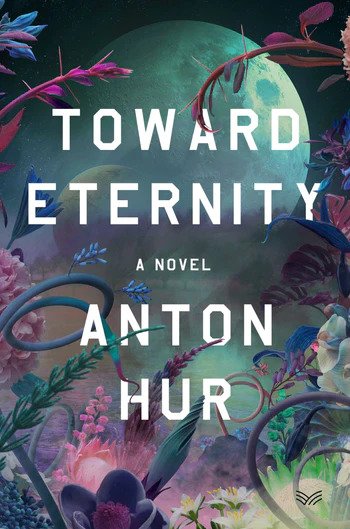
TOWARD ETERNITY, meditative title for a contemplative debut novel

TOWARD ETERNITY
ANTON HUR
HarperVia (non-affiliate Amazon link)
$12.99 kindle edition, available now
Rating: 4.5* of five
The Publisher Says: What does it mean to be human in a world where technology is quickly catching up to biology?
In a near-future world, a new technological therapy is quickly eradicating cancer: The body’s cells are entirely replaced with nanites—robot or android cells that not only cure those afflicted but leave them virtually immortal. At the same time, literary researcher Yonghun teaches an AI how to understand poetry and creates a living, thinking machine he names Panit, meaning "Beloved," in honor of his husband. When Dr. Beeko, who holds the patent to the nano-therapy technology, learns of Panit, he transfers its consciousness into an android body, giving it freedom and life.
As Yonghun, Panit, and other nano humans thrive—and begin to replicate—their development will lead them to a crossroads and a choice with existential consequences.
I RECEIVED A DRC FROM THE PUBLISHER VIA NETGALLEY. THANK YOU.
My Review: This book renewed my faith in my judgment of poetry as a stalking horse for the worst kind of exclusionary snobbery. It requires a linguistic adept, a genuinely intellectually superior mind, to fathom its Sacred Complexities well enough to use it to create AGI, which (of course) then becomes a worthy love-object.
"Whether a life ends happily or sadly, what does it matter but the weight of the emotions one felt, the weight of the clarity of all the meaningful moments one possessed while living on this Earth, whether they have been good or bad? Is it not the weight, in the end, that really makes us human after all?" muses Panit the AGI. This beautiful phrase does convince me to give the writing four stars. This is prose I wish to high heaven other SFF writers would at least aspire to. Author Hur has been to the linguistic wellspring and used a solid-silver vessel to drink from it.
The idea of sentience being the connecting thread as we travel through a deep future of change and revision, of editing and shaping the narrative of consciousness, is where the other half-star comes from. The narrative device of one notebook passing among many hands, taking on many meanings, offers the reader a handle to grapple with balancing the solid-silver vessel Hur used while not losing control of the easily-spilled contents.
It's not going to be easy for many to move past the genders of the consciousnesses that take this notebook through time. That's a shame. I'll say that poetry, in this case, can draw in those questing minds. I'm pretty sure that has a downside. If what you want is to "{feel} these words against my skin as if they were physical objects, or as if they were light passing through the prism of my body and shattering into the spectrum. Had I ever truly understood any word before, ever? How could I have claimed to have made a study of poetry or that this study had made me human when I had never understood what it meant to feel words?", then you're in the proper aisle. If those sentiments, expressed in same-sex contexts, are going to make you uneasy, you're late for the exit.
Asserting that poetry is the proper lens for emotional writing is, honestly, disproved by this novel. It is a story with a plot, with development of multiple characters, and has an ending that flows from the events described herein. That is a novel in my eyes, and it does something poetry does not: It connects the reader...me...to Author Hur's worldview as chosen and molded into this story.
Change. Time. Immaterial movement. All are central to making a work a novel, not a poem. But because (I'm confident in this assertion) Author Hur's pharmacopoeia is the shape and weight of words before the end that is the sentence, what occurs is a valorization of the idea of poetry, which functions on that small, precise unit for its impact.
I liken this to a poem being a mosaic, a story being a fresco, and a novel an oil painting. Mosaics fall apart easily, the pieces are still pretty but don't do much to make an impression unless painstakingly restored by experts; frescos, done in sharply defined spaces and usually quickly can last for centuries and, even if volcanoes engulf them are still recognizably art; oil paintings are gigantic efforts to use malleable medium to create a simulacrum of reality, whose materials are slippery and prone to blending as well as subject to vagaries of fashion for their perceived beauty. Makes sense, too, as these are roughly the same order of appearance (assuming one counts folktales and fables and myths as stories not novels or poems).
Author Hur's debut novel is a beautiful work. It's a deep questioning of Humanity, humaneness. It's a story that moves the reader through the ideas, we don't often take time to articulate, of love and connection. Poetry isn't my choice of a defining trait of being human.
Words are...beautiful, sharp, shiny, eternally morphic words. Take this as your encouragement to go get Author Hur's first novel.
Thursday, January 2, 2025
THE SAFEKEEP, debut novel of lesbian awakening and compulsive, possessive desires

THE SAFEKEEP
YAEL VAN DER WOUDEN
Avid Reader Press (non-affiliate Bookshop.org link)
$13.99 ebook, available now
WINNER OF THE 37TH Lambda Literary Awards for Lesbian Fiction!
WINNER OF THE 2025 WOMEN'S PRIZE FOR FICTION! Read about it, and the author's heartfelr thank-you speech, at The Guardian (no paywall; please support them.)
Rating: 4* of five
The Publisher Says: An exhilarating, twisted tale of desire, suspicion, and obsession between two women staying in the same house in the Dutch countryside during the summer of 1961—a powerful exploration of the legacy of WWII and the darker parts of our collective past.
A house is a precious thing...
It is 1961 and the rural Dutch province of Overijssel is quiet. Bomb craters have been filled, buildings reconstructed, and the war is truly over. Living alone in her late mother’s country home, Isabel knows her life is as it should be—led by routine and discipline. But all is upended when her brother Louis brings his graceless new girlfriend Eva, leaving her at Isabel’s doorstep as a guest, to stay for the season.
Eva is Isabel’s antithesis: she sleeps late, walks loudly through the house, and touches things she shouldn’t. In response, Isabel develops a fury-fueled obsession, and when things start disappearing around the house—a spoon, a knife, a bowl—Isabel’s suspicions begin to spiral. In the sweltering peak of summer, Isabel’s paranoia gives way to infatuation—leading to a discovery that unravels all Isabel has ever known. The war might not be well and truly over after all, and neither Eva—nor the house in which they live—are what they seem.
Mysterious, sophisticated, sensual, and infused with intrigue, atmosphere, and sex, The Safekeep is a brilliantly plotted and provocative debut novel you won’t soon forget.
I RECEIVED A DRC FROM THE PUBLISHER VIA NETGALLEY. THANK YOU.
My Review: Opposites attract. Hard to argue with that for most grown folks; but it's also hard to see what these women see in each other. Their oppositeness is deep-rooted, identity-forming stuff. That level and degree of oppositeness is hard to overcome; one partner's ordinary life is an existential rejection of the other.
Isabel takes the idea of the houseproud Dutch woman very much to an extreme. Eva presages women's liberation's rejection of housewife as an identiry; she's free-spirited and unmaterialistic. That comes across to Isabel as outrageous disrespect to herself and her poor, abused house.
What caused these radically ill-suited women to fall for each other? Forced proximity? I don't rightly know. They manage to have sex. I won't call it making love; and honestly how did pissy, controlling Isabel ever let herself get involved in something as inherently dirty, messy, and collaborative as sex in the first place?
I have questions about this. None are answered.
I read most of the book thinking I'd be stretching to three stars. The events at the end of the book...the way their romance does what Love really does to the Lover and the Beloved...got me a fractional hair over the four-star line. It's a first novel and there are some ways events are presented that do not help the reader invest in the plot. It's a strain to do some of the emotional heavy lifting because Isabel and Eva are so weirdly assorted as partners for more than a one-night fling that I kept needing to remind myself to tamp my eyebrows back down out of my hairline.
But Isabel says a line that shoved me there, one I can't repeat because the Spoiler Stasi has its truncheons and tasers ever at the ready...grow the fuck up, y'all...but its delicate evocation of the awareness od the inportance of the persona in intimacy that explained a lot of the book to me.
It's a big risk to leave something so important so late. I'm glad I didn't bail before I got there. I hope Author van der Wouden does something new soon.
Tuesday, December 31, 2024
QUILTBAG ROUNDUP: LAST NIGHT IN NUUK; THE BOOK OF AWESOME QUEER HEROES: How the LGBTQ+ Community Changed the World for the Better; OUR EVENINGS

OUR EVENINGS
ALAN HOLLINGHURST
Random House (non-affiliate Amazon link)
$13.99 Kindle edition, available now
LONGLISTED for the 2026 Dublin Literary Award...the shortlist of six will be announced on 7 April 2026, the winner(s) in May's festival.
Rating: 4.5* of five
The Publisher Says: From the internationally acclaimed winner of the Booker Prize, a piercing novel that envisions modern England through the lens of one man’s acutely observed and often unnerving experience, as he struggles with class and race, art and sexuality, love and violence.
Did I have a grievance? Most of us, without looking far, could find something that had harmed us, and oppressed us, and unfairly held us back. I tried not to dwell on it, thought it healthier not to, though I’d lived my short life so far in a chaos of privilege and prejudice.
Dave Win, the son of a British dressmaker and a Burmese man he’s never met, is thirteen years old when he gets a scholarship to a top boarding school. With the doors of elite English society cracked open for him, heady new possibilities lie before Dave, even as he is exposed to the envy and viciousness of his wealthy classmates, above all that of Giles Hadlow, whose worldly parents sponsored the scholarship and who find in Dave someone they can more easily nurture than their brutish son.
Our Evenings follows Dave from the 1960s on—through the possibilities that remained open for him, and others that proved to be illusory: as a working-class brown child in a decidedly white institution; a young man discovering queer culture and experiencing his first, formative love affairs; a talented but often overlooked actor, on the road with an experimental theater company; and an older Londoner whose late-in-life marriage fills his days with an unexpected sense of happiness and security.
Moving in and out of Dave’s orbit are the Hadlows. Estranged from his parents, who remain close to Dave, Giles directs his privilege into a career as a powerful right-wing politician, whose reactionary vision for England pokes perilous holes in Dave’s stability. And as the novel accelerates towards the present day, the two men’s lives and values will finally collide in a cruel shock of violence.
This is “one of our most gifted writers” (The Boston Globe) sweeping readers from our past to our present through the beauty, pain, and joy of one deeply observed life.
I RECEIVED A DRC FROM THE PUBLISHER VIA NETGALLEY. THANK YOU.
My Review: Vignettes from the privileged and fortunate life of a mixed-"race" (useless term, divisive and ill-defined, but lacking an appropriate alternative one here) queer man and his circle of friends of his youth as they move through the stages of life, change partners, grow, and grow old, in the UK of our recent past.
Details are as synopsized by the publisher above; my reading of it was undertaken because Author Hollinghurst has never failed to give me the very agreeable experience of following him through a logical and internally consistent plot led by the loveliest sentences creating relatable, heightened-into-beauty situations and images.
Job done again. I'm in the contented majority of readers who felt well-served by this outing (!) into Hollinghurst's familiar-but-better reality. I even had the thoroughly unpleasant duty of feeling the humanity of a political-right radical and Brexiteer.
Enjoyable, all of it, but not new or freshly imagined by the author of The Line of Beauty, hence that missing half-star.
++++++++++++++++++++++++++++++++++++++++++++++++++++++++++++++++
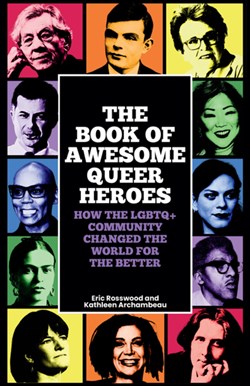
THE BOOK OF AWESOME QUEER HEROES: How the LGBTQ+ Community Changed the World for the Better
ERIC ROSSWOOD, KATHLEEN ARCHAMBEAU, KATE KENDELL, Esq.
Mango (non-affiliate Amazon link)
$14.99 Kindle edition, available now
Rating: 4.5* of five
The Publisher Says: Discover how gay, lesbian, bisexual, and trans people have changed the world into the one we know and love in this riveting history book.
Historic Icons in the LGBTQ+ Community
Discover how gay, lesbian, bisexual, and trans people have changed the world into the one we know and love in this riveting history book.
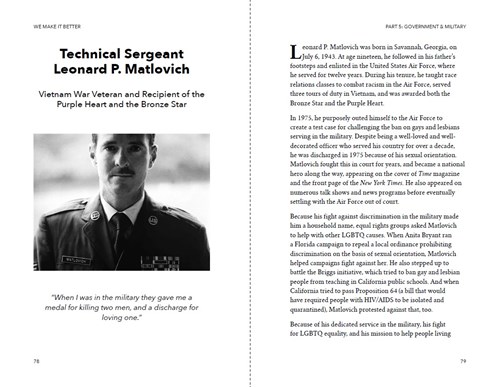
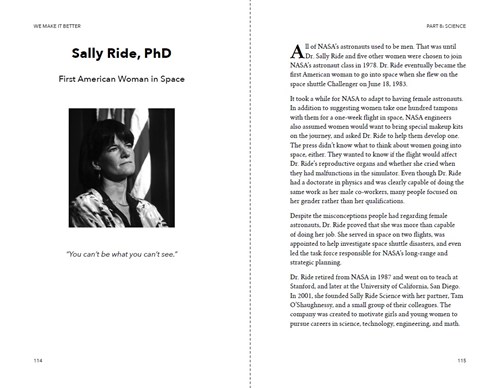
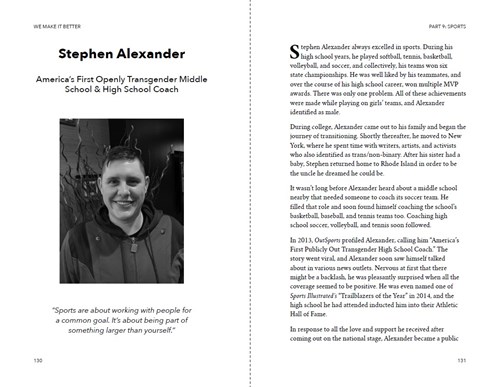
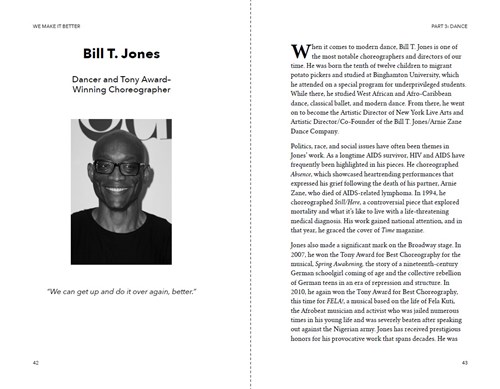
Pride across the ages. The LGBTQ+ community has made countless positive impacts throughout history as scientists, world leaders, athletes, and entrepreneurs, and each one of them deserves to be celebrated in The Book of Awesome Queer Heroes. Going into the history and achievements of famous queer icons, this LGBTQ+ book is a love letter to those who have brought love, positivity, and advancement into our society. Let author and activist Eric Rosswood and Kathleen Archambeau guide your discovery of amazing facts about each historical figure and how their lives have shaped ours in more ways than one.
How they are still inspiring us today. The Book of Awesome Queer Heroes doesn’t just cover what so many LGBTQ+ people have accomplished; it also shares how we can achieve our dreams by learning from their persistence. Learn about activists such as Marsha P. Johnson, X González, Sylvia Rivera and many more in their fight for progressive change against discrimination.
Meet heroes and world-changers you may have heard of, with biographies about:
Star athletes such as Esera Tuaolo and Billie Jean KingIf you enjoy LGBTQ+ books and memoirs such as Hollywood Pride, The House of Hidden Meaning, or Karma, then you’ll love The Book of Awesome Queer Heroes.
Entertainers like Sir Elton John, Margaret Cho, Daniela Vega, and RuPaul
Government and military officials such as Eric Fanning and Leo Varadkar
Trailblazers in science and technology including, Alan Turing and Lynn Conway
Other historic icons like Oscar Wilde and Bayard Rustin
I RECEIVED A DRC FROM THE PUBLISHER VIA EDELWEISS+. THANK YOU.
My Review: I deliberately left publishing this review until after Yule because, I'm sad to say, there are families (of a sort) where a young adult could be in trouble if this book was given to them. I still think any queer kid over, say, thirteen would hugely benefit from receiving this book as a way of being reassured that they're not the first queer person, nor the only one who had a tough road to follow into adulthood.
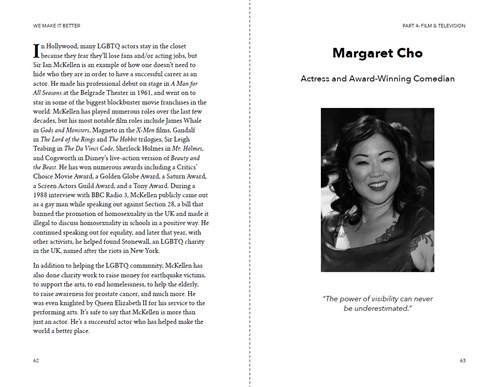
Brief biographical sketches and images of the ancestors of their own people will encourage a young soul in need of the security and reassurance of belonging to a lineage.
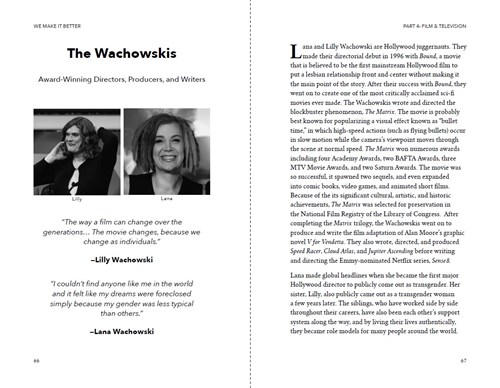
At under $15, the modest price will more than repay your investment in a young queer kid's anchor into reality. I don't know how much longer these books will be available, so I'll recommend this one as a gift to give now while They still don't make it ever-harder to procure.
+++++++++++++++++++++++++++++++++++++++++++++++++++++++++++++++

LAST NIGHT IN NUUK
NIVIAQ KORNELIUSSEN
Black Cat/Grove Press (non-affiliate Amazon link)
$9.99 Kindle edition, available now
Rating: 4* of five
The Publisher Says: A witty and fearless debut from a stunning new voice, Last Night in Nuuk is a work of daring invention about young life in Greenland. Through monologues, emails, and text exchanges, she brilliantly weaves together the coming of age of five distinct characters: a woman who’s “gone off sausage” (men); her brother, in a secret affair with a powerful married man; a lesbian couple confronting an important transition; and the troubled young woman who forces them all to face their fears. With vibrant imagery and daring prose, Korneliussen writes honestly about finding yourself and growing into the person you were meant to be. Praised for creating “its own genre” (Politiken, Denmark), Last Night in Nuuk is a brave entrance onto the literary scene and establishes her as a voice that cannot be ignored.
I RECEIVED A COPY AS A GIFT. THANK YOU.
My Review: I got one of these eight years ago from a friend now vanished into the internet's anonymity. I'd heard of it on Lambda Literary's reviews site.
There's always a novelty factor when someone from a place less frequented (to self-centered monoglot Anglophone readers) writes about their home place. It's new, it's fresh, it isn't a place you went on holiday in your teens. Extra exciting when the author's somewhere on the QUILTBAG spectrum and sets a queer story of five people in different gradations of outness in a place where that is not the first thing that comes to mind as a probability.
I had never once in my life considered the presence of QUILTBAG culture existing at all in Greenland.
A book of stories about different members of that community, deeply enmeshed in each others' lives, felt irresistible, and I was eager to dive in...then Life got in the way, my treebooks got relocated for me (much against my will), and it never happened until now. This is my last read of 2024. It's not a fat book so I thought it might be okay for me to hold.
Not a good choice. Much pain, three days to read under two hundred pages, an actual new gouty tophus formed from the exercise.
Yet I heartily enjoyed the novelty factor, I was on board with the use of this generation's epistolary style of texts and emails and social-media posts, since the characters are all young adults and this is their cultural landscape. Their landscape overlapped with mine of the same era in my life with its deeply predictable drunken sex and bewildering rage coming at them from unexpected places, aka bullying.
I don't think I'd've loved it more if I'd read it in '18. I didn't adore it now. I fell under its spell of novelty, enjoyed the reminder of how very powerful a force lust was in my past and how much fun it all was, and in the end was mildly glad I'd read it.
Won't pick it up again, will put it in the Little Free Library come spring, and might read the author's next book.
Equally might not.
Either outcome is fine.
Monday, October 28, 2024
BLUE LIGHT HOURS, first novel by established literary luminary of translation

BLUE LIGHT HOURS
BRUNA DANTAS LOBATO
Grove Press/Black Cat
$17.00 trade paper, available now
Rating: 4* of five
The Publisher Says: of a young Brazilian woman’s first year in America, a continent away from her lonely mother, and the relationship they build over Skype calls across borders
In a small dorm room at a liberal arts college in Vermont, a young woman settles into the warm blue light of her desk lamp before calling the mother she left behind in northeastern Brazil. Four thousand miles apart and bound by the angular confines of a Skype window, they ask each other a simple question: what’s the news?
Offscreen, little about their lives seems newsworthy. The daughter writes her papers in the library at midnight, eats in the dining hall with the other international students, and raises her hand in class to speak in a language the mother cannot understand. The mother meanwhile preoccupies herself with natural disasters, her increasingly poor health, and the heartbreaking possibility that her daughter might not return to the apartment where they have always lived together. Yet in the blue glow of their computers, the two women develop new rituals of intimacy and caretaking, from drinking whiskey together in the middle of the night to keeping watch as one slides into sleep. As the warm colors of New England autumn fade into an endless winter snow, each realizes that the promise of spring might mean difficult endings rather than hopeful beginnings.
Expanded from a story originally published in The New Yorker, and in elegant prose that recalls the work of Sigrid Nunez, Katie Kitamura, and Rachel Khong, Bruna Dantas Lobato paints a powerful portrait of a mother and a daughter coming of age together and apart and explores the profound sacrifices and freedoms that come with leaving a home to make a new one somewhere else.
I RECEIVED A DRC FROM THE PUBLISHER VIA NETGALLEY. THANK YOU.
My Review: A tight, compact barely-more-than-novella based on the author's fiction debut story. She's translated work from Brazilian that I've loved (The Words That Remain) and liked a lot (Moldy Strawberries), so I was primed for a good experience. I got that indeed.
Loneliness and that indescribable parent-feeling compounded of intense longing for the child you've had every day of their life as your primary focus mixed with huge dollops of pride in their accomplisment that's led them away from you, and the freezing fear of what you know can and will happen to hurt them where you just can't be. And, of course, resentment that this stellar being needs to be so far away to feel grown up. I was pleased that the author's stand-in was so dutiful and so genuinely, if sometimes impatiently, loving toward her mother in their long-distance relationship.
If you have, or were, a child, it's going to speak to you. It's told mostly from the author-placeholder's PoV, but we do hear directly from her mother at the end. It will sound, and feel, familiar to older folks. It will offer some insights to younger ones. It will do all this without leaving you feeling Taught. I am morally certain Author Lobato has been in this exact skin, it fits the reader so well.
Why I recommend it to you now is the fall has fallen, there's chill in our Northern Hemisphere air, trees are coloring up, and that's the time for a hot steaming mug for sipping and a long sleeve for sniffling into. You'll do a lot of both of 'em.
I'd offer a fifth star had the ending not felt like it was given a mildly short shrift. It's not bad, it's organic to the story, it's just not quite enough for a full, complete experience of her mother's part of their life.
A first novel made from Life, and grown from a short story could not hope for a better apotheosis. This will not, I hope, be the last work of her own long fiction Author Lobato publishes. Those will feel even more accomplished.
Subscribe to:
Posts (Atom)