Pages
- Home
- Mystery Series
- Bizarro, Fantasy & SF
- QUILTBAG...all genres
- Kindle Originals...all genres
- Politics & Social Issues
- Thrillers & True Crime
- Young Adult Books
- Poetry, Classics, Essays, Non-Fiction
- Science, Dinosaurs & Environmental Issues
- Literary Fiction & Short Story Collections
- Sookie Stackhouse/Southern Vampire Books & True Blood
- Books About Books, Authors & Biblioholism
Showing posts with label Coffee House Press. Show all posts
Monday, October 26, 2026
PHANTOM LIMB, Last Days #2...back to teaching us needed lessons
PHANTOM LIMB (Last Days #2)
BRIAN EVENSON
Coffee House Press (non-affiliate Bookshop.org link)
$18.00 all editions, available now
Rating: 4.5* of five
The Publisher Says: After destroying the headquarters of an underground amputation cult, a burned and battered Kline finds himself in a holding cell. When he enlists the help of an ex-cop to commute his prison sentence, Kline inadvertently tangles with a schism of the very cult he sought to destroy. Can Kline investigate the sect’s ritualistic murder spree without getting lured into their ranks?
Frigid and precise, Phantom Limb interrogates our notions of wholeness, fate, and the lengths we are willing to go to connect with a higher power.
I RECEIVED A DRC FROM THE PUBLISHER VIA EDELWEISS+. THANK YOU.
My Review: Kline's back! Oh joy. The christian lunatics, the "Brotherhood of Mutilation" (follow the link, I'm not going through *that* again), are serious about getting Kline the ex-cop who damn near destroyed the entire cult. And so it goes....
This is barely not a novella. It's short; it's not a "Calgon, take me away" read. Or, if it is, I'm very worried about you. There is a lot of body horror, a lot of symbolic anti-religious messaging in that body horror as well as conceptually anti-religious messaging in the entire witness protection element of the story. As we all know, their gawd, like organized crime, finds everybody in the end.
After five years of relative safety in prison that he serves on bullshit charges under a fake name, Kline isn't out five seconds before the schismatic from the Brotherhood of Mutilation cult who call themselves Paul (that bit of quiet calling-out was *chef's kiss*, Author Brian!) find Kline to finish the destruction he began in Last Days. It was not for nothing he served that sentence and hoped his trail went cold. Yet, like all things religious, you're never ever free of the pollution.
In returning to the mutilates doing their infighting in October 2026, it's my interpretation of Author Brian's purpose in piling up the bodies, causing harm with abandon, enshittifying the world to show the gore-seeking reader the real damage done by True Believers. It's not important what their zeal is directed towards, in support of, because it results in irreparable harms caused—including death—regardless of to whom the harms are caused. Zealotry has this way of overshooting any boundaries one thinks to set.
So here's Kline amid a welter of gore as always, trying to expunge a nightmarish hate group. It works, it doesn't, it causes harm on the way and creates new zealots if not today or tomorrow then soon. People love hate, rage, and being Right about stuff more than food and sex combined. This is human nature, visible in cultures throughout time in archaeology, then in writing, now in images. I see no reason to think there was ever a past of peaceful coexistence after there were enough people alive to form persistent families. It's why our cultural heritage is replete with myths, folktales, parables that show in grim, graphic detail the perils of transgressing The Order of Things℠...the selfish urge to do that is overwhelming at times. We all feel it, but the consequences after are the point of these kins of stories. Is this really the world you want? If yes, be ready for the coalition of the harmed to exact revenge.
And so it goes.
Wednesday, September 30, 2026
HELEN OF NOWHERE, inexplicably longlisted for the Booker
HELEN OF NOWHERE
MAKENNA GOODMAN
Coffee House Press (non-affiliate Bookshop.org link)
$17.99 ebook, available now
The Independent Press Top 40 Bestsellers: Fiction For the week ending October 13, 2026
Rating: 2.5* of five
The Publisher Says: From the “brilliantly complex” (Jenny Offill) author of The Shame comes an electrifying dive into one man’s fractured psyche as he searches for a new life.
Taking place over the course of one day, Helen of Nowhere introduces an intimate cast: an unnamed man at the end of both his career and marriage, a young realtor showing him an idyllic house in the countryside, and Helen, the mystifying former owner whose spectral presence seems to imbue the house’s every grain of wood. Through stories of the remarkable woman, the man is presented with an alternate way of life. But, as evening fades into black, the specifics of how to live it become more than what he bargained for.
Philosophically adventurous, strange, and fascinating, Helen of Nowhere examines the structures that form our identity, staring the reader down to ask the haunting question: What is the cost of true happiness?
I RECEIVED A DRC FROM THE PUBLISHER VIA EDELWEISS+. THANK YOU.
My Review: Well...there hadda be one full-on flop among the Booker reads. I'm delighted to say I did not buy this inexplicably longlisted book; it was vouchsafed me. In a shock twist I *forgot* I got the DRC despite having opened the file, bookmarked a spot with no note as to why, and then checked it out of my branch because...I totally forgot I'd ever received it.
::cue ominous theremin music::
So here's the first bit:
Act I, ManI...was not involved, did not care, felt literally nothing.
I think it’s okay to tell a woman she’s beautiful once a year. Any more than that and her life will be about being beautiful, entirely. Anything less and she’ll feel a lack of love and attention. My wife always said I never told her she was beautiful enough. But like I said, I don’t think it’s good for women.
Someone told me that life is a collection of details you choose to pay attention to. Most of my life has been taken up by my work, but since my work has always been about observing nature, I consider my life’s work all about paying attention. This is what I told my students: The world is to be observed, and observing for its own sake is a life worth living.
The house, for example, was warm, despite its being unfurnished, with simple wooden features and beams containing echo strokes of a handheld chisel. There was a built-in couch with a dark blue fabric cushion, its edges sewn by hand, somehow both right-angled and arched in a crescent shape. Beside it, an ornate cast iron wood stove. The windows were large, single-paned. There was a piece of upright wood in the corner, a gnarled tree or trunk that had been elevated into something sculptural. Besides that, nothing but gleaming, empty space.
Ellen, who is one of my longtime LibraryThing friends and with whom I share a lot of literary opinions, said it best: *shrug*
Man, the MC, gives off zero Main Character Energy, which I guess we all know is meant to de-emphasize the phallocentric "Big Dick Energy" it replaced in pop culture. This guy's a cuck, and boring with it which is unforgivable. The clue I was not going to resonate with the read came when I was searching other opinions to see why anyone on the Booker committee noticed this in the first place: It's A Christmas Carol made feminist, built around either archetypes or stereotypes depending on how positive you're feeling about the retelling but not realistic characters. I don't happen to think Dickens did his best work on the Cratchits so no shade cast.
Sound dreary? It was. I'm no fan of Dickens, I'm not hugely impressed by reimaginings as a class of literary endeavor, so the headwinds began to make sense. Maybe if I *loooved* A Christmas Carol...? But instead I have a true cuck Ebenezer, a Present in the too-chatty Realtor, Past in the eponymous Helen of Nowhere, whose stage presence is the most interesting, and Wife as Man's diminished Future. I found nothing compelling in them, I wanted the under-150pp to be over before it was, and most damningly,did not remember I'd read the story at all.
So, on the whole: Glad it wasn't on the shortlist.
Saturday, September 12, 2026
WE NEVER CALLED IT FRISCO, debut art-critic novel
WE NEVER CALLED IT FRISCO
JED PERL
Coffee House Press (non-affiliate Bookshop.org link)
$17.99 ebook, available now
Rating: 3.5* of five
The Publisher Says: A candid novel about the art, artists, and their tempestuous relationships in the countercultural movement of the 50’s and 60’s, by one of America's most celebrated art critics.
During intermission at a modern dance performance in San Francisco, esteemed and incorrigible cultural critic Marcia Lang collapses into a banquette and dies on the spot. Her lover, Burt, soon discovers that Marcia willed him her entire estate. His windfall includes her correspondence, her stilted redwood house in Marin County, and an incomplete draft of her unpublished memoir, We Never Called It Frisco. As he processes Marcia’s death alongside their cadre of Berkeley bohemians, Burt begins to reconstruct Marcia’s work in progress as an elegiac collage for the friend he’s lost and the city that found her.
In his first novel, Jed Perl guides his reader down the back alleys of a mid-century San Francisco populated with painters, puppeteers, paperback revolutionaries, and the writers like Marcia who determined their positions in the cultural ecosystem. Through energetic and immersive prose, We Never Called It Frisco tests the structural limits of the novel as a site of reconstitution and remembrance.
I RECEIVED A DRC FROM THE PUBLISHER VIA EDELWEISS+. THANK YOU.
My Review: The post-war history of US art, in novel form.
If nothing in you perked up at that précis, don't get this read onto your TBR because it's the sum total of the story. Marcia and Burt are names, not characters; their personalities aren't developed, though their...her...critical opinions about art are. Burt is quiet, he's more observant than Marcia's professional eye for art (and its movements) is.
The central tragedy, Marcia's early death, takes place before we-the-reader have the chance to invest in her whether positively or negatively. For that to work as a novelistic technique, the way we learn about her needs to be more personal, more through memories than through her writings. Burt's devastated, naturally; why would that not lead a storyteller into flashbacks, accompanied by her writings? Instead we listen to Marcia's judgmental pronunciamentos interspersed with Burt's sadness. It's not propulsive, nor was I expecting it to be; but it's also progressively less involving.
I liked the idea of this debut novel enough to finish it, and should Author Perl write more fiction, I will seek it out to read. It's not the best work he's done. But it's also not the best work he will do.
Saturday, August 1, 2026
ORNAMENTAL, Colombian author's chilling dystopia from eleven years ago, published in pandemic times
ORNAMENTAL
JUAN CÁRDENAS (tr. Lizzie Davis)
Coffee House Press (non-affiliate Bookshop.org link)
$16.95 any edition, available now
Rating: 4* of five
The Publisher Says: The lives of a doctor, his wife, and his patient collide, laying bare the political and personal narratives they have carefully constructed for themselves.
A scientist recruits volunteers for the trial of a new recreational drug that exclusively affects women. Among them is “number 4,” who becomes emotionally involved with first the scientist, then his wife, a well-known visual artist in the midst of a creative crisis. The scientist is oblivious to the atrocities his new drug will bring to the city; his wife is oblivious to the superfluousness of the objects she committed her life to exhibiting in galleries and museums. Number 4’s presence pierces the couple’s complacency, gradually undoing the many certainties they’ve accumulated in their lives of ease.
I RECEIVED A DRC FROM THE PUBLISHER VIA EDELWEISS+. THANK YOU.
My Review: Somebody has a poor opinion of medical professionals and the industry they perpetuate: "Today they finally brought in the participants: four middle-aged women whose unremarkable medical histories show no record of addiction or criminal activity. The only peculiarity is that they all had children at a fairly young age, but that’s not unusual for women from the inferior classes." says the PoV doctor in the journal where he recounts his clinical trials of what is, effectively, soma. It's really a shame the world has moved on from Huxley's Brave New World, because it explains so very much of the 2020s is rooted in the feared and despised efforts of utopians to bring peace and order through conformity. Enforced by drugs.
A story about a medical researcher who wants to make women more docile by granting them euphoric indifference to the mundane world. A drug that, once administered, has the user in its thrall ever afterward, and of course the administrators are men.
Does any of this sound familiar, Huxley readers? Does anything about this social agenda...subjugating women by hooking them on a dream of happiness that's been standardized...sound politically motivated and as though it might be in progress? The reason this book, published in 2020, made no ripples feels likely to be that pesky pandemic we have all memory-holed, that kind of ate all the attention the world had at that moment. Because it was spot-on and prophetic.
No one has a name in the narrator's journals, only functional labels. Logical empiricism writ interpersonal. It's a way of universalizing those involved in the action, showing them not to be characters with inner lives but mere function-servers in the narrator's mind. We;re in his journals, his are the only thoughts we're vouchsafed, so he has no need to pretend he has a scintilla of interest in them as monads only as they serve his purposes.
Purposes are, in his view, those actions that leave traces; he wants to leave a trace. His view of the function-servers as not being characters is forcefully ridiculed by "Number 4"'s insistence that you can't have a city without a name, there can't be a city occupied by function-servers but people who need and want and create, as well as manufacture and consume. Her use of the doctor's drug does not so blunt her edges that even the doctor's wife, a maker of frivolous brummagem ornaments, is struck by "Number 4"'s perceptions of creation. She becomes closer to "Number 4" on her artistic and creative level, appearing to head into a real assessment...can't call it a reassessment because there is no indication of any such thing ever having taken place before...of the purpose of making the gauds she makes.
And then "Number 4" goes away and the doctor and his wife submerge in the soma-like miasma of their dystopia, resuming their pointlessness and indifference.
Exactly as I see around me, function-servers failing to connect dots in persistent patterns. I found it disheartening but very very well-made. Sentences lure we-the-reader on and on into the buildings that have no meaning and form no city.
Don't go into this tale expecting there to be an ending. More an evocation of The End, and one I'm still chilled to the marrow while looking at the diorama of the author's story made by a manic fifth-grader without perspective.
Monday, July 13, 2026
ADA, latest fascinating idea made into a story by the eminent funny intellectual Mark Haber
ADA
MARK HABER
Coffee House Press (non-affiliate Bookshop.org link)
$18.00 paperback, available now
Rating:
The Publisher Says: From “one of the most rigorous and serious—and anachronistic—novelists working today” (The Washington Post) comes a raucous new tale plumbing the depths of ego and ardor.
In a remote country in Europe, Gerard Desacroux IX, petty tyrant and French nationalist, wants nothing more than to be reunited with Ada, the object of his desire ever since their brief fling in Paris years before. Though Ada is on her way to visit, there are the unfortunate matters of civil unrest, assassination attempts, and Ada’s affluent (and highly inconvenient) husband to contend with before bliss is attained. Despite it all, Desacroux IX is determined that nothing—neither war, nor ominous weather, nor the rising swell of indignant peasants—shall stand between him and Ada.
Told with Mark Haber’s trademark exuberant absurdity, Ada is a comedy about the mania of power, unrequited love, and the solitude of authority.
I RECEIVED A DRC FROM THE PUBLISHER VIA EDELWEISS+. THANK YOU.
My Review: Berchtesgaden. Are you even serious right now. Berchtesgaden! And Desacroux being shoved out of Paris because of THE Revolution, being scion of a lineage of disgusting fascist scum! Readerly nose, meet authorial fist.
And it *barely* takes him a hundred pages to whomp up this recipe for tart-tongued satire of entitlement. It's a fast-moving read, it doesn't have digressions or discursions to slow Desacroux's millrace of thoughts as he settles into Berchtesgaden (seriously, follow the link above...it makes this read exquisitely funny!) with the intent to claim what is not his for purposes malign and bland at the same time. It goes...not well, really for anyone but most definitely hastens Desacroux's comeuppance.
At every turn, he's hemmed in, he lives in a tine, muddy place of no significance after being thrown off the world stage for utter incompetence and uselessness. Desacroux paces in circles around his "Great" Room, abusing and being abused by Hans the sole servant; when the people rise against him, he retreats into the Sword Closet, an even smaller space than the "Great" Room, one with the trappings of power all around him...and he never grasps a single one, relying on isolation to "protect" him from consequences from his real-world abuses of power. Trapped with the trappings of power, weapons he does not have the skill or the wit to wield, fearful and waspish with it, utterly determined to possess *some*thing so he chooses a woman.
Reliably a safe choice for controlling men throughout history. It's here I got to thinking about Ada, or Ardor, Nabokov's longest work of fiction with its alternative world that so deftly, so lovingly, dissects the loss of the illusion of power by dwelling on its exterior trappings; both puissance, and intimate power are lost, misused, made into glue-traps of self-delusion and narcissism. The title, obviously, is a source of my mental leap from a short satire to a long and complicated exploration of similar themes. The sound of the word "Ada" is important in both works, but I don't think it's ever obvious they're related. Maybe they aren't, in Author Haber's purposeful use of brevity, more than coincidentally resonant and then only in my fevered head. Though I'll counsel anyone who starts this read and feels like abandoning it to read it aloud to youself for a page or two: This is performative language, meant to be performed, to be inhabited like its not-quite-our reality. Make the sounds, speak the vision into your world. It will change your experience for the better. (I do this with Nabokov's prose, too.)
It did make my propulsive experience of this single paragraph of a read more piquant, so I hope it was really in Author Haber's mind nit solely mine. The fate of each Ada, and her illicit suitor, is oddly enough not the real point of the story. It ends not with a bang but a whimper, like most people's lives do without regard to their egocentric self-aggrandizement. It's here that I dock my tenth of a star from a perfect five. Desacroux clearly believes he is fated for the ending of a Great Man, and nothing short of that is an ending. *I* think he deserves to be beaten almost to death, then thrown into a muddy ditch to drown while dying of thirst: "...the importance of literature and books, not the books themselves, I’ve said, quite frankly books bore me, but the presence of books is vital, because the absence of books is quite disastrous, the proximity of books, the symbolic importance of owning books, cannot be overstated, and having books around, read or not, speaks to the intellectual vigor and peerless ambitions of their owner," and "...my grandfather stupidly, ridiculously, decided not only to purchase books and collect books and surround himself with books, which, as I’ve already said, is fine and good, but also to read them, the fool!"
Off with his authorial head, I say in my Red Queen voice, for even crafting these sentences! For sinful wicked shame on you, Haber!
Monday, May 11, 2026
ELECTRIC SHAMANS AT THE FESTIVAL OF THE SUN, the most truth-telling title of 2026
ELECTRIC SHAMANS AT THE FESTIVAL OF THE SUN
MÓNICA OJEDA (tr. Sarah Booker)
Coffee House Press (non-affiliate Bookshop.org link)
$20.00 paperback, preorder for delivery 12 May 2026
Rating: 4.5* of five
The Publisher Says: National Book Award finalist Mónica Ojeda returns with a blazing, psychedelic novel about girlhood, violence, and the loss of innocence.
In the near future, best friends Noa and Nicole flee their home in Guayaquil, Ecuador to attend the Solar Noise Festival, a week-long, retro-futuristic gathering at the foot of an active volcano. While Noa fully embraces the haze of narcotics and hedonism in an effort to obscure her true reason for attending, Nicole senses something darker at play behind the festival’s so-called “celebration of life.” Amid technoshamanic poetry, collective hallucinations, and ritualistic dances, each girl navigates her own path in an effort to escape her past and reclaim her right to a future.
Vivid, terrifying, and celebratory, Electric Shamans at the Festival of the Sunblends the primal with the supernatural, solidifying Mónica Ojeda as one of the most singular and exciting voices in Latin American and world literature today.
I RECEIVED A DRC FROM THE PUBLISHER VIA EDELWEISS+. THANK YOU.
My Review: Sarah Booker, the translator whose job it was to make this...tale...accessible to Anglophone audiences, has The Best Job Ever. She and the Coffee House Press acquisitions team get to read good stuff all the time, most of which will never see US publication for a variety of reasons, and we on the outside will never know even exist. Translator Booker has the hard, intense job of creating in English (a very slippery tool, English, full of landmines and tiger-traps for translators) a story told in Spanish that's already sui generis. (Read the Spanish-language reviews on Goodreads, most mention how poetic/beautiful the language is.)
Starting a story at a music festival (I recommend googling the names of the musicians throughout the book, it's most instructive) is quite a flex. It's a loud, raucous thing by design, so having your characters start our acquaintance in such an intense and auditorily overwhelming way is going to sort the audience into pro and con very quickly. I suspect most people who liked Jawbone and/or Nefando will be averse to this intense introduction to our PoV women. I don't know if enough people are already on the Ojeda/Booker train to make that a sizable market but I sure as hell hope so...I want more.
After the characters are charged with the passionate energy that a music festival imparts to those willing to receive it, they begin the Hero's Journey to that gorgeous and mystical place, the Andes Mountains, for shamanic enlightenment. If you have never been to Cuzco or Machu Picchu, please make at least those places destination priorities. I found the evocation of place in this part of the tale we're investing in to be stellar, even better than the more divisive music festival with its more chaotic and uncontrolled atmosphere.
The common element of both segments of the tale, musical and mystical, are overcoming the breakage that a brutal and uncaring world inflicts on us all, and submerging into an overwhelming Otherness to find the path through the noise and pain of Life. It's done in the musical mode of counterpoint, so it unites seemingly disparate modes by their very difference.
I'm really not sure how better to explain the affect of the read than to say it helps to think of the gestalt as an opera libretto, structured to an underlying music that never stops and always leads you forward. The effect of this use of a constant, if quiet, through line is to make the crescendos hit harder, feel louder, than you expect them to be. Invest in Noa and her dad, accept the antiphonal others, and this read will propel you into the shamanic journey's end-point you didn't necessarily see coming.
Wednesday, January 14, 2026
HYPER: A Novel, the personal cost of being made stateless in a capitalist world
HYPER: A Novel
AGRI ISMAÏL
Coffee House Press (non-affiliate Bookshop.org link)
$20.00 paperback, available now
Rating: 4.5* of five
The Publisher Says: A cutting, hypermodern saga of money, family, and survival for fans of Zadie Smith, Patricia Lockwood, and Mohsin Hamid.
When Rafiq Kermanj, founder of the Kurdish Communist Party, is forced to flee Tehran for London with his conservative wife Xezal and three children, they suffer the shame of penury and migration layered on Kurdish statelessness.
Agri Ismaïl's unforgettable debut novel follows the lives of Rafiq's children and their increasingly desperate relationship to money. Siver, the only daughter, escapes into an unhappy marriage in Baghdad before fleeing to raise her daughter as a single mother in Dubai. Mohammed, the eldest, stays in London to climb the unforgiving ladder of the financial sector. Laika, the youngest, retreats into a contactless digital life, designing the trading algorithms that will ultimately prove his downfall in a condo near Wall Street.
Siver's world is presented in sparse fragments of contemporary auto-fiction, freely jumping from past to present; Mohammed's in a hysterical realism reflecting London after the stock market crash; and Laika's in a kinetic prose that emulates the speed and rhythms of the internet, a new topic always a click away.At once a love letter to the systems novel and a subversion of the family saga, Hyper uses the unsettled nature of the Kurdish diaspora to capture the dislocations of life under capitalism. Equal parts heartfelt family story and razor-sharp satire, Hyper is an ambitious, thrilling articulation of life in the twenty-first century, marking debut author Agri Ismaïl as one of the most perceptive and exciting new voices in contemporary literature.
I RECEIVED A DRC FROM THE PUBLISHER VIA EDELWEISS+. THANK YOU.
My Review: An intense read, one that demands you consider the setting, the actors, and the milieu of each section before the read can fully settle in; the rhythm is there but you'll stumble a bit until you find it. It's surreal, it's non-linear, it's got the modernist quality of meeting its characters in their own emotional reality. It asks a lot of the reader in its three hundred fifty-ish pages.
The aftermath of the 2008 crisis was brutal. The richest got hugely richer. It's clear to the reader that the eldest Hardi son, Mohammed, is fully on board with this. He's in a trading firm that makes (until now) the richest richer. His PoV is a funny parodic echo of how those rich Brits speak; you know they would look down on him for his antecedents (an impoverished former Communist Party founder father? my dear...), for his non-U vocabulary and choices of subject. It's fitting that we meet him in David-Lodge-ian prose.
Sive, the only Hardi daughter, isn't thriving. Her convenient marriage to a wealthy Iraqi man collapsed when he decided to take a second wife. She left, she took her child and went to Dubai where she's resentfully eking out a living selling luxury goods to the massive winners of the 2008 collapse. She never really reflects on how her upbringing as the stateless child of social-change losers is being repeated in her own life. Siver reflects, in very spare almost elegiac prose on how women do not control their fates, how men are selfish, hoe children need need need but offer little, and so on and so forth. "You didn't love the man you left so where's the problem?" is my question for her. Not addressed, not in her awareness, only the sense (inherited from her genuinely aggrieved mother) that living her life cut into bits that suit a man not herself is unfair. It certainly is, Siver, and worth fighting not running from into a grey, cold fog of victimhood.
Laika, named for Laika, is probably closest to his bitter, defeated father in outlook. His world is as close to completely contactless as he can make it, like his economically and spiritually impoverished father who barely scrapes by as another stateless immigrant to the land whose brutal, ugly imperialism sowed the seeds of his bitter harvest. It's a tiny, tightly bounded world he's set up in New York City, only opening into the whole of the internet when he's online living a life that suits him. It's all funded by, well, hacking; using the system that's held so many in thrall, under misused power, for generations: he's used a shadow algorithm to trade in tandem with Goldman Sachs. Don't laugh...it's a personal debacle of biblical proportions. It's all told in the most difficult-to-read (for me anyway) prose that tightly focuses on Laika's narrowness and stuckness.
A Communist-Party founding dad with a religious wife produced these hypercapitalist, money-obsessed children. While we spend little time with Rafiq, we see in his fractured family the echoes of bombs exploded before he, let alone they, were born. The cruel and callous world of Empire (anyone's) broke these humans' spirits each in a different way. The hammer blows of being denied your identity as a group, a member of a group, or a person with agency to determine your own course all play out in Rafiq and his family. It does not end happily for them.
Author Ismaïl is a lawyer by training, those people whose profession is predicated on the ability to craft facts into a narrative that persuades others to buy into it. This is a very lawyerly novel, in the best way. It takes information (can't call them facts, exactly, when they're about fictional characters) that can be seen multiple ways...Siver's a gold-digger, Mohammed's a pathetic wannabe, Laika's a solipsistic nihilist...and gives them dimensionality, affords them nuance, build their bases out to admit of different analyses and impressions. Rafiq and Xezal never had a connection worth the name, now he's a downtrodden prole without resources...like the ones he wanted to save...she heads back to her home without him because she can. Come to find out she's not going home. It isn't home, the place; it's home, the state of being, that Xezal and Rafiq never had, never made. It's no surprise their Western-raised kids looked outside themselves to find a core strong enough to build on. And no surprise the entire edifice of family, built on slender reeds and sand, collapsed so spectacularly.
A powerfully affecting examination of the generational consequences stemming from capitalist, imperialist destruction, erroneously called "progress" and "stat-building" to distract from its cruelty and exclusion. I wished I'd had easier transitions between styles of storytelling used in recounting the siblings' life histories; it's a quibble, but it's the reason I can't finish out that fifth star. Just too big a ka-THUNK as I crossed each border.
Friday, January 2, 2026
AUDITION, Kiwi social SFF-lite that sets a tendentious trap of prose
AUDITION
PIP ADAM
Coffee House Press (non-affiliate Bookshop.org link)
$17.99 ebook, available now
WINNER OF the 2026 Ursula K. Le Guin Prize for Fiction.
Rating: 4.8* of five
The Publisher Says: A genre-defying novel—part science fiction, part social realism—from one of the most powerful voices in New Zealand literature today.
A spaceship called Audition is hurtling through the cosmos. Squashed immobile into its largest room are three giants: Alba, Stanley and Drew. If they talk, the spaceship keeps moving; if they are silent, they resume growing.
Talk they must, and as they do, Alba, Stanley and Drew recover their shared memory of what has been done to their former selves—experiences of imprisonment, violence and misrecognition, of disempowerment and underprivilege.
Pip Adam’s uncategorisable new novel, part science fiction, part social realism, asks what happens when systems of power decide someone takes up too much room—about how we imagine new forms of justice, and how we transcend the bodies and selves we are given.
I RECEIVED A DRC FROM THE PUBLISHER VIA EDELWEISS+. THANK YOU.
My Review: Like Stand on Zanzibar a half-century ago, this story is making a point along multiple fronts of effort. Stylisically it's resolutely avant-garde, modernist, and uses that tradition of liberation from centuries old linear narrative convention to oppose itself as completely as possible. Oppose from what? That verb needs a subject!
It takes the opportunity to set oppositional positions to, well, modernity; the way the modern world steadily relentlessly inexorably shrinks the essential liberty, autonomy, self-determination of Humanity. This is a powerful theme to pursue. It leads into some dark meditations on confinement.
It is most evidently a story in support of the anticarceral abolitionism gaining ground among progressives. More quietly it enables, encourages, examination of the ways individuals accept labels and thus limitations, even when the labels aren't very good fits. It's not foregrounded the way opposition to the carceral state is. It's there for you to consider.
I enjoy novels that expect me to bring my own ideas and knowledge to bear on reading them. I enjoy being asked to hold a thought more than a page or two before the thought pays off, hooks into another thought to make a distinctive picture. It is a pleasure to be exercised and entertained and experience elucidation of a viewpoint while immersing oneself in lovely phrasemaking.
Alba searches around her body and there is not an ounce of homesickness. She misses nothing. She was born into the world and it was not happy to see her. This isn’t her home. She doesn’t want to take advantage or be any more of a burden than she already is here. They hadn’t asked her to come, she hadn’t asked to be there. It isn’t a welcome—it’s an extremely advanced form of attack and defence.I think that, in its compactness and its rhythm, carries more than surface meaning. Alba's is a point of view I think many could and should attend to. Her sense of...wrongness...is it all external? Is it self-recognition without self-acceptance? Is Alba...are Drew and Stanley as well...forced to keep talking as the means of propelling their starbound prison moving away from Earth in order to get their pasts out of their heads? What does the taking up of physical space have to do with the implied relationship to psychic...emotional...space? All the way into eternal exile and utter Othering in order to get permission to be ecstatically oneself. A price paid without any kind or sort of reward is rare, if one becomes an other self in response to it. A different self, an intentional self, a truthful self.
The ending of this story offers that future of selfness to the giants. It's not found the way a lot of readers will be comfortable with. But if you can read about people told they are too much for this world being thrust out of that world by being squashed into sealed containers and hurled into lethal vacuum, you really should look at why this particular ending bothers you (if it does..I found it the most liberating part of the story).
Pip Adam is a writer who reckons with ideas in her fiction. It's not always clear to me that I'm on the same train of thought as she is. That is, for me as a reader, very interesting and gives a dynamism to the words I'm reading. I experience the need to consider, "did I read that sentence and change my view of the story I thought I was reading by Pip Adam's design or my own?" very involving.
It's a story I felt repaid my attention with well-honed ideas I'd had in duller forms before that. I'd wished, during the read, for...ornamentation...flourishes...a bit of zhuzhery. I can't say the directness of prose was unpleasant or uninvolving, so I can't call it a flaw. I can say that me, reader me, the id that devours Story, wanted it; so I can't offer a perfect five but I can't take much away from that height. It's a cruel place to land:
It’s a strange feeling to know that they will never have to explain this to any of their kind. They will never return. They had been sent to die. That’s clear now. Maybe they had been sent to take over this world, as some kind of front guard or maybe no one that sent them could imagine this. But they are lost to their own world now. They don’t belong where they have have come from and they don’t belong here. They are the only ones of their kind who will make it.Pip Adam made it.
Monday, December 15, 2025
TERRY DACTYL, trans girl's life from plague to plague
TERRY DACTYL
MATTILDA BERNSTEIN SYCAMORE
Coffee House Press (non-affiliate Bookshop.org link)
$18.00 all editions, available now
Rating: 4.5* of five
The Publisher Says: From iconic author and activist Mattilda Bernstein Sycamore comes a breathless search for intimacy and connection, from club culture to the art world, from the AIDS crisis to COVID-19.
Terry Dactyl has lived many lives. Raised by boisterous lesbian mothers in Seattle, she comes of age as a trans girl in the 1980s in a world of dancing queens and late-night house parties just as the AIDS crisis ravages their world. After moving to New York City, Terry finds a new family among gender-bending club kids bonded by pageantry and drugs, fiercely loyal and unapologetic. She lands a job at a Soho gallery, where, after partying all night, she spends her days bringing club culture to the elite art world.
Twenty years later, in a panic during the COVID-19 lockdown, Terry returns to a Seattle stifled by gentrification and pandemic isolation until resistance erupts following the murder of George Floyd, and her search for community ignites once again.
In propulsive, intoxicating prose, Terry Dactyl traces an extraordinary journey from adolescence to adulthood, delivering a vital portrait of queer identity in all its peril and possibility.
I RECEIVED A DRC FROM THE PUBLISHER VIA EDELWEISS+. THANK YOU.
My Review: It was my world, this one. The AIDS epidemic to COVID...yeah...my adulthood. So no, not the lesbian moms part, and I'm not trans, but it still feels very familiar if not very sweet and happy.
No book about this span is ever not going to center the experience of loss and grief. It was the fabric we cut our lives out of. It takes a lot of moxie to be openly trans, even now when you can imagine your lesbian moms being glad for you that you've found your Self, the real one. Terry never hides her identity. She is herself from giddy-up to whoa. It leads her into the loving embrace of her found family in New York just as AIDS begins scything them with its death sentence for being queer.
Why this is a book made for the run-up to Yule is it's about us who live in loss, who never get to be the happy little homebody, who always yearn for something gone beyond our reach. Its unconjoined nature makes it the right kind of read for a busy and distracted holiday...re-reading a sentence or two is absolutely ordinary in this book's world. What this read offers, in this "festive" season, is the company of someone who survived...without her loved ones. Terry's a survivor in the approving, tough and capable definition; also in the lonely, left-behind definition. As COVID threatens to ravage her world again, she retreats to her home in Seattle.
It's not her home. It's a different place with the same name. I relate...I'm from Los Gatos before Netflix, Austin before Infowars, Manhattan before 9/11. None of my homes are remotely the same as when I was growing into myself there. It was this fellow-feeling that kept me reading the non-linear, mosaic story that followed the vibes of the story not the plan of it.
Certainly an unusual choice to make, going home to weather a storm. I wish I'd been able to spend more time in her moms' company, and wanted some greater theme to emerge from their choices to give Terry's life a more theatrically-defined completeness. I know this story is more the way life is lived: moving from experience to experience while still working out what the hell just happened.
Completely successful on that measure. I'm glad I read the story. But now, please write something from Terry's mothers' point of view, please and thank you, Author Mattilda.
Monday, December 1, 2025
THE AQUATICS, brutal violence is, always has been, the world's norm for Others
THE AQUATICS
OSVALDE LEWAT (tr. Maren Baudet-Lackner)
Coffee House Press (non-affiliate Bookshop.org link)
$18.00 all editions, available now
Rating: 4.5* of five
The Publisher Says: An extraordinary novel of loyalty, strife, and empowerment from Peabody Award-winning Cameroonian filmmaker Osvalde Lewat.
In the fictional African country of Zambuena, Katmé Abbia enjoys a life of privilege and influence married to Tashun, the powerful prefect of Zambuena's capital. Yet after years spent playing the obedient, demure wife to a husband who has ceased to notice her, Katmé grows increasingly restless. Her one source of connection is Samy, a childhood friend, struggling artist, and gay man—an offense punishable by law in Zambuena. When Katmé discovers that Samy’s new exhibition, funded by herself and Tashun, boldly critiques Zambuena's social and economic inequities, her public, married life is set on a collision course with her one true friendship. As social pressures and political rivals sow life-threatening consequences, Katmé faces an agonizing choice: abandon her friend or destroy her family.
Mixing compassion with clear-eyed fury and a keen sense of the absurd, The Aquatics confronts one of contemporary Africa’s most entrenched societal issues in a story as immersive and inevitable as a quickly rising tide.
I RECEIVED A DRC FROM THE PUBLISHER VIA EDELWEISS+. THANK YOU.
My Review: Misogyny, homophobia, and christian fundamentalism all travel in one ugly pack, like the social hyenas they are. Cruelly tormenting those they Other while standing in staunch defense of "their own"...so long as those under their control do not act up, resist, or question the leadership's order.
Katmé is that one inside the pack's protection...until she isn't. Her ephemeral status as an insider comes to an end when her true friend, only friend, queer artist Samy attracts her husband's political enemies' attention. She's accustomed to the misogyny, the indifference, even the beatings, as a price to be paid for her "comfortable" lifestyle. In a country viewed internationally as poor in service of its people's rights...read the wiki article, this is only barely a novel...it's not in the least surprising that Katmé is placed in the horrifying position she is. Her life is in danger if she continues to support Samy, her queer friend...his life is in danger because he refuses to accept being second-class, not good enough...and the culture's overlords are fighting over political crap having nothing to do with Samy or Katmé, but they pay the price. I'm reminded of the proverb "when elephants fight, the grass suffers," as an apt summation of this novel's central conceit.
The content warnings are serious, please heed them. Domestic violence is sadly not uncommon anywhere. It is just part of the landscape in Author Lewat's story. I was appalled at the casual tone of the prison rape Samy endures, at the beatings Katmé receives from her husband, from the pervasive sense that none of this would raise a single Cameroonian eyebrow. (Yes, we're calling it by a made-up name, but no one's fooled. It's like Peyton Placewas in the 1950s, a figleaf meant to make reprisals an admission of guilt.) This is a tough novel, meant to be hard to swallow, even hard to chew. It does a great service, one fiction might be the only thing that can do it, of showing Society its own ass in a mirror of gigantic proportions.
The lives of these characters, these people, are appalling. They are a shriek of outrage that the world just looks away; they are a warning lest others succumb to the easeful abdication of morality to those who know nothing of it.
A novel that arrives as a bitter gift in time for all the religious holidays.
Monday, August 18, 2025
PATCHWORK, excellent title for what I hope you'll see with refreshed and restored pleasure in Literature
PATCHWORK
TOM COMITTA
Coffee House Press (non-affiliate Bookshop.org link)
$13.99 ebook, available now
Rating: 4.5* of five
The Publisher Says: Tom Comitta returns with a novella that is at once a picaresque quest for a stolen snuffbox and a marvel of literary découpage, equal parts love story, old-fashioned thriller, and absurdist romp.
To whom does a story belong? Who is its author? What is an author? Does it matter? These questions and more populate the subversive and audacious Patchwork, a comical tragedy that highlights the connective tissue that joins stories to themselves as well as to the grand history of storytelling itself. Celebrating the tropes and clichés of classical novels while simultaneously forging them into an original narrative, Patchwork ultimately shows us that the stories produced by hundreds of writers past—celebrated or obscure, reverent or hilarious, factual or fantastical—may, in the hands of a master, become a single, seamless whole.
I RECEIVED A DRC FROM THE PUBLISHER VIA EDELWEISS+. THANK YOU.
My Review: Every so often it's very helpful to one's mood to see Literature cavorting naked, ignoring your shocked gaze. It's a little like finding those nudes of your grandfather, young and virile, displaying for whoever it was that took them. (DON'T ASK.)
Tom Comitta's displaying Literature's bare backside as he remixes bits and pieces of what others wrote to serve new meanings and explore ideas of authorship, of Authority, by...ignoring it. Samuel Beckett made similar experiments sixty years ago. It's refreshing, to say the least, when someone looks afresh at shibboleths like Literature and sees what's under its underpants instead of reverently praising its court dresses.
The means by which he accomplishes this is to set Literature off on a snipe hunt for a snuff box. Ostensibly. Sorta-kinda, anyway, but we ain't goin' in a line, let alone a straight one, anywhere. There are lots and lots of side quests, points where you put your readerly trust in Author Comitta because if there's a path ahead you sure can't see it, and then lo! Behold the comic-strip of a walk home, made up entirely of Victorian artwork that decorated Dickens novels.
Does it make sense? Yes, but in a curious way, no. It's consistent with hunting, with being in motion; it's a metacommentary on research and its pleasures; it's not the only time we are required to double-clutch the non-synchromesh transmission of this assembled car of many manufacturer's bits to see if we're going to make it up the hill of narrative logic.
Don't count on it.
We're then thrust into an olfactory assessment of the walk that runs through Richard Price's evocative prose pertaining to a mall food court's assault on one's nose. That's really another sly rib-poke. A huge assortment of things made into one thing in our readerly framework just by the accident of proximity...like reading the thesaurus as a story, like using all the words you find there in chains of meaning.
It's short, barely two hundred pages. It's pungent and oddly elegant, see above. It's unusual, it's not country you necessarily have a map for at hand (unless you own a copy of Robbe-Grillet's Jealousy, that is). Patchwork is a perfect title for this patched-up piecework example of how to quilt, tat, and knit a whole thing, to sew bits into a refined Frankensteinian monster, that becomes a whole and separate artwork. It's a read that is animated in its parts by many heads and hands long-dead mostly forgotten and revived, reanimated, restored and repurposed by Tom Comitta.
He's done this before, The Nature Book came out from Coffee House Press in 2023 when his subject was the deathly serious issue of climate change; I didn't read it because, well, grim much? I'll go back and pick it up. The world needs fresh ways of thinking about things we already (think we) know. Perspectives like Comitta's are forceful reminders that knowledge, that what already exists in our heads, is not static, not fixed in one pattern, unless we force, allow, ignore it to be. I can't offer a perfect five because, in order to ask people for money, the publisher needs to tell them it's *about* something so a plot of sorts is crafted...I'd say grafted, in the sense skin is over a wound...and it really doesn't add a whole lot to the exercise.
Freshen up your readerly search engine by querying it in unusual ways. You're rewarded by surprises and pleasures not easy to find.
Saturday, May 31, 2025
NO NAMES, a #PrideMonth debut novel from a poet via Minneapolis's estimable Coffee House Press
NO NAMES
GREG HEWETT
Coffee House Press (non-affiliate Amazon link)
$17.99 ebook, available now
Rating: 3.75* of five
The Publisher Says: Inspired by the iconic punk scene of the late '70s, No Names blurs the lines of affection and sexuality in a haunting tale of desire, hope, and loss.
Mike and Pete were "no names," two working-class boys lost in the shuffle of their stratified town, brought together by their love of music. By 1978, their punk band was blazing across the underground scene. Now, in 1993, Mike is a hermit living alone on a dot of an island in the North Atlantic. When a mysterious letter from an unlikely fan named Isaac arrives, he's pulled right back into the pain he’s spent over a decade running from.
Isaac longs for an escape from his lonely teenage life. A chance discovery of the No Names’ only album catapults him into an obsession with the godlike rockers and the tantalizing possibility of connection.
As their stories collide, mistakes breed consequences that echo through the decades like the furious reverberations of a power chord.
I RECEIVED A DRC FROM THE PUBLISHER VIA EDELWEISS+. THANK YOU.
My Review: Two-thirds of an excellent novel...after the twist, it's not excellent anymore. It's good, and as a contrast to almost two hundred pages of really outstanding build-up, I felt really let down by the ending. It was a messy trailing-off of several conversations, between characters and us, as well as each other. Multiple PoV novels are always...baggy...but this one's excitement and intensity came from the sense I had in the first part of the book that each person was picking up the thread of a narrative, was the response part in a call-and-response composition.
Much of that energy came from the way the voices wove around each other as they spoke of the times and events that the narrator before had no way of knowing. By the two-thirds mark, they were not telling the same story. They were following their own strands into a future not shared; it's like life, you meet, connect, intertwine for a time, then the time is over. The problem I had with that in this context is that it takes me from one kind of book...close harmony call-and-response...into another, the oratorio going chapter-and-verse through the wind-up of the stories I'd previously experienced directly.
What started as a five-star read ended at three and three-quarters because the narrative drive leaked right out, becoming severe with Mike's relating with the reader how Isaac fits in with the story. I began to nit-pick characters' word choices, their manner of addressing the facts they presented. That is never a good sign. I was disinvesting before the book ended.
But my goddesses, that first bit! A true joy of reading time spent well, and in the presence of a talented voice in storytelling. So not-quite four stars to celebrate the first novel of a writer whose next novel I want to read as soon as he writes it.
Monday, March 10, 2025
LESSER RUINS, shortlisted for the 2025 Republic of Consciousness Prize—United States & Canada—for Small Presses
LESSER RUINS
MARK HABER
Coffee House Press (non-affiliate Amazon link)
$9.99 ebook editions, available now
Rating: 3 very grouchy stars of five
Shortlisted for the 2025 Republic of Consciousness Prize—United States & Canada—for Small Presses Winner announced 12 March 2025
The Publisher Says: From the author of Reinhardt's Garden and Saint Sebastian's Abyss comes a breathless new novel of delirious obsession.
Bereft after the death of his ailing wife, a retired professor has resumed his life's work—a book that will stand as a towering cathedral to Michel de Montaigne, reframing the inventor of the essay for the modern age. The challenge is the litany of intrusions that bar his way—from memories of his past to the nattering of smartphones to his son's relentless desire to make an electronic dance album.
As he sifts through the contents of his desk, his thoughts pulsing and receding in a haze of caffeine, ghosts and grievances spill out across the page. From the community college where he toiled in vain to an artists' colony in the Berkshires, from the endless pleasures of coffee to the finer points of Holocaust art, the professor's memories churn with sculptors, poets, painters, and inventors, all obsessed with escaping both mediocrity and themselves.
Laced with humor as acrid as it is absurd, Lesser Ruins is a spiraling meditation on ambition, grief, and humanity's ecstatic, agonizing search for meaning through art.
I RECEIVED A DRC FROM THE PUBLISHER VIA EDELWEISS+. THANK YOU.
My Review: I connected with this sad-sack whiner in his grief for his dead wife, and his beautifully evoked love for coffee.
Apart from that, I loathed him and wanted him to shut his moan-hole.
I live (involuntarily and with poor grace) in proximity to a grievance-led, dementia-addled, old drunk. This is like reading the smart version of him venting his legit sadness and tiresome regrets in the key of "they done me wrong" on endless repeat.
I think this book is better than I perceive it to be, due to my own life's issues and difficulties. It has to be, to have elicited from me the degree of irritated disgust with its protagonist that it did. Had it been simply a poor job of writing or storytelling, I'd simply have Pearl-Ruled it and moved on with my day.
Read the free sample that Kindle offers you, you'll know right away if this resonates with you, and if the resonance is on a frequency you enjoy reverberating to. I very much did not like this read. The reasons I've given suggest to me that others without my life circumstances will feel otherwise.
My rating being an expression of my personal pleasure in the read explains its paltriness. You will most likely, or so I hope, disagree with me.
Sunday, September 22, 2024
EDELWEISS+ MYSTERIES/THRILLERS/CRIME STORIES: Burgoines to read for #Deathtober 2024

CALICO by LEE GOLDBERG
Rating: 3* of five
The Publisher Says: From #1 New York Times bestselling author Lee Goldberg, comes an explosive, page-turning investigative thriller - with a mind-blowing twist.
There's a saying in Barstow, California, a decaying city in the scorching Mojave desert . . .
The Interstate here only goes in one direction: Away.
But it's the only place where ex-LAPD detective Beth McDade, after a staggering fall from grace, could get another badge . . . and a shot at redemption.
Over a century ago, and just a few miles further into the bleak landscape, a desperate stranger ended up in Calico, a struggling mining town, also hoping for a second chance.
His fate, all those years ago, and hers today are linked when Beth investigates an old skeleton dug up in a shallow, sandy grave . . . and also tries to identity a vagrant run-over by a distracted motorhome driver during a lightning storm.
Every disturbing clue she finds, every shocking discovery she makes, force Beth to confront her own troubled past—and a past that's not her own—until it all smashes together in a revelation that could change the world.
I RECEIVED A DRC FROM THE PUBLISHER VIA EDELWEISS+. THANK YOU.
My Review: Entertaining fluff to pass an afternoon. The kind of read that scratches the same "tell me a story but don't make me think too hard" that television has historically specialized in. In fact, this'd make a *great* Movie of the Week, whatever we're calling those now. Netflix Originals? Prime Videos?
Any road, there's a lot less here than meets the eye in substantive themes, but who cares? Read it for the sci-fi-lite elements, the interesting Western US setting (problems and all), and the relatable characters. But seriously, Author Goldberg..."Ben Cartwright"? SMH
Severn House wants $6.99 for the Kindle edition (non-affiliate Amazon link), a reasonable price for the fun I had.
++++++++++++++++++++++++++++++++++++++++++++++++++++++++++++++++
The Labyrinth House Murders (House Murders #3) by Yukito Ayatsuji (tr. Ho-Ling Wong)
Rating: 3.5* of five
The Publisher Says: THE TWISTY AND INGENIOUS FOURTH INSTALLEMENT IN THE BIZARRE HOUSE MYSTERIES.
The famed mystery writer Miyagaki Yotaro lives a life of seclusion in the remote Labyrinth House. When Yotaro invites four young crime authors to his home for a birthday party, they are honoured to accept. But no sooner have they arrived than they are confronted with a shocking death, then lured into a bizarre, deadly competition…
As the twisted contest gathers pace, murder follows murder. The ingenious sleuth Shimada Kiyoshi investigates, but can he solve the mystery of the house before all those trapped in its labyrinth are dead? And can you guess the solution before he does?
I RECEIVED A DRC FROM THE PUBLISHER VIA EDELWEISS+. THANK YOU.
My Review: This entry in the ongoing series is billed as the third and the fourth in it (see above synopsis), and as I don't speak Japanese I can't be certain which it actually is. Since the original publication date was in 1988, it ought to be easier than this.
Truly doesn't matter to the reading pleasure of the book, so I suppose the now-normal lie that "this series can be read in any order" is, for once, true. Do take note that this is NOT a fair-play mystery, as there's at least two details crucial to resolving the plot that are not given to you, or even hinted at.
What the read does, however, is to take you through a very well-constructed labyrinth. Playing Theseus is entertaining when the stakes are 1) completing your in-progress novel and b) inheriting cash and copyrights from a very well-known mystery writer. Adjusting expectations this way presents a good day's entertainment.
Pushkin Vertigo brings this out either on 10 October 2024 or 13 May 2025. Either way it's a preorder, so check prices with your chosen retailer.
++++++++++++++++++++++++++++++++++++++++++++++++++++++++++++++++

The Devil of the Provinces by Juan Cárdenas (tr. Lizzie Davis)
Rating: 3.5* of five
The Publisher Says: After a series of failures, a biologist returns to his hometown to live with his grieving mother. But in this gripping crime novel that upends the genre’s conventions, strange events unravel what he thought he knew of his past, his present, and himself.
When a biologist returns home to Colombia after fifteen years abroad, he quickly becomes entangled in the trappings of his past and his increasingly bizarre present: the unsolved murder of his brother, a drug dealer seeking transcendence, a boarding school where students disappear and girls give birth to strange creatures. An encounter with a well-connected acquaintance leads to a job offer in big agriculture, and he’s gradually drawn into a web of conspiracy. Ultimately, he may be destined to remain in the city he’d hoped never to see again. In The Devil of the Provinces, nothing is as it seems.
I RECEIVED A DRC FROM THE PUBLISHER VIA EDELWEISS+. THANK YOU.
My Review: It feels a bit like cheating to call this a crime novel on first glance. It took the publisher an afterword essay to make a (flimsy) case for it. But on sober reflection lasting months, I came to agree that this IS a crime novel of a specific sort:
The biologist observed that, as with most extravagant paintings, the fabrication of custodiae had flourished during the Counter-Reformation, when the Catholic Church set in motion its major propaganda operation: the colonization of the senses through artwork. Persuasion wasn't enough anymore, subjugation was the aim. The passage from education to spectacle, evangelization to fanaticism. These images were made to trap the eye and flood it with vibration, illusions of movement, space-time dislocation.
The crimes committed, a murdered brother and a drug-dealing bestie (nothing solves the murder, no punishment accrues to the dealer) aside, are the truly vile crimes of misusing language and power to manipulate and control others for fun and profit. The criminals are both persons and institutions, as always in the annals of crime.
That's all told in the voice you read above; you'll like it or not, I very much do, but it takes time and a strong willingness to engage with the vocabulary to glean the story's full affect.
Coffee House Press asks $17.95 (non-affiliate Amazon link) for one. The library's free. Unless you fell in love with the sample go check it out...but read it. This is a tendentious meditation on what a true true crime is.
++++++++++++++++++++++++++++++++++++++++++++++++++++++++++++++++
Alcatraz Ghost Story: Roy Gardner's Amazing Train Robberies, Escapes, and Lifelong Love by Brian Stannard
Rating: 3* of five
The Publisher Says: The Incredible True Story of the Most Hunted Man in Pacific Coast History—and the Woman He Loved
Before the 1920s found their roar, a charismatic gambling addict named Roy Gardner dominated news headlines with daring train robberies and escapes from incarceration. Nicknamed "the Smiling Bandit," Gardner spilled no blood—except his own—as he cut a felonious path across the western United States, as the country hobbled through a recession in the aftermath of the First World War.
Once imprisoned for the long term in federal prisons, including Alcatraz, the most notorious prison's second-most-notorious inmate won over some unlikely champions. Both Gardner's wife, Dollie, and a police officer who once arrested him launched extensive campaigns for Gardner's release on the vaudeville circuit, claiming a brain operation would cure his lawless ways. Was Gardner a good man who made bad decisions as the victim of injury and circumstance? Or was his charming personality merely the poker face of a scoundrel?
Richly researched, drawing on contemporary newspaper accounts, Alcatraz Ghost Story explores the life of Roy Gardner in the context of his great love story and the larger backdrop of drug addiction, incarceration, and the racial and labor violence of the 1920s and 1930s.
I RECEIVED A DRC FROM THE PUBLISHER VIA EDELWEISS+. THANK YOU.
My Review: An uneven true-crime story, one that reminded me of the old film Falling Down. How hard can you push a fundamentally decent man with charm and charisma until he gives violently up on The System?
Add the fillip of never being quite sure which Gardner was the fundamental one, the sales whiz charmer or the criminal manipulator, and you have a catchy book. My rating reflects mostly a dissatisfaction with the choppy pacing...we slow down to discuss historical events that end up being peripheral to the story, eg World War I bond drives, and gloss over things I'd like to hear more about, eg life in/on Alcatraz...rather than the research, or the story being told.
(Also I deeply dislike his One True Love, Dollie...shallow Babbitty broad.)
Skyhorse Publishing is asking $19.99 for a Kindle edition. (non-affiliate Amazon link)
++++++++++++++++++++++++++++++++++++++++++++++++++++++++++++++++
Saving Myles by Carl Vonderau
Rating: 3.5* of five
The Publisher Says: When the FBI can’t help, an unassuming banker takes matters into his own hands to bring his son home
Wade, a respected banker in La Jolla, CA, and his estranged wife, Fiona, make the unbearable decision to send their teenage son, Myles, away to an expensive treatment center after a streak of harmful behavior. After a year of treatment, Myles comes home, seemingly rehabilitated. But soon, he sneaks off to Tijuana to buy drugs—and is kidnapped.
When the ransom call comes, Fiona is frantic and accepts help from Andre, the Quebecois whose charity Fiona runs. Wade is wary of Andre’s reputation and the bank he owns, but seeing no other way to secure a kidnap negotiator or the ransom, he swallows his doubts to get his son home.
In order to get the ransom money, Wade makes a deal with Andre—he’ll work for Andre’s bank in exchange for the cash. But as Wade races to rescue Myles before his kidnappers lose their patience, he realizes he’s wrapped up in more crime than just a kidnapping—he’s now indebted to a cartel.
Perfect for fans of Harlan Coben and Lisa Scottoline.
I RECEIVED A DRC FROM THE PUBLISHER VIA EDELWEISS+. THANK YOU.
My Review: Kid-in-jeopardy thriller, with Dad chasing after his kidnapped teen son for a change. Usual useless woman trope found too often in male-oriented thrillers: his ex-wife involves a villain so obvious he should twirl his mustachios, which—shock twist!—makes everything harder for Dad to fix.
I want to belt the idiot kid upside his head for being such a shit. The writing's good, the pacing's propulsive, the publisher's comps are spot-on.
Oceanview Publishing asks $9.49 (non-affiliate Amazon link) for a Kindle edition. Go to the library, says I.
++++++++++++++++++++++++++++++++++++++++++++++++++++++++++++++++
The Belgrade Conspiracy: A David Rivers Thriller (Shadow Strike #6) by Jason Kasper
Rating: 3* of five
The Publisher Says: **FROM FORMER GREEN BERET AND USA TODAY BESTSELLING AUTHOR JASON KASPER**
A lethal shipment of military hardware. An international terrorist group on a mission of mass destruction. One man stands to forever change the course of history…unless David Rivers can stop him.
David Rivers is an expert in the art of violence. Together with his team of CIA operatives, he's executed dozens of covert assassinations―but this mission might turn out to be his deadliest yet. One man stands behind the transfer of high-level military hardware to an international terrorist syndicate.
The CIA has uncovered his identity: Yuri Sidorov, a Russian arms dealer with state protection. With the arms deal only days away, David and the team are faced with an impossible to get close enough to take out their target, they must first win his trust. David and the team infiltrate a black market arms network in Serbia, negotiating a web of secret police and mafia hitmen. Each wrong turn may prove fatal, but they're determined to succeed at any cost. But Sidorov is still alive for a reason, and when the team uncovers dark forces at work in the Balkans and America, they realize that killing him is the least of their worries. By the time they learn the truth, it's too late…and now they're the ones being hunted.
I RECEIVED A DRC FROM THE PUBLISHER VIA EDELWEISS+. THANK YOU.
My Review: I knew when I asked for this read it was #6 in a series, but let's be honest. It's a military thriller. The characters are fairly interchangeable in the genre, they're archetypes: Tech genius, spycraft maven, violent guy...nobody really needs to know much except the outlines to follow along. It's stakes and pacing that matter in this genre.
Still true. If your idea of fun is taking a fast-paced ride through some unfamiliar world locations, here's you a violent, nationalistic read. Guilty pleasure, for me at least, and not a series I'll be pursuing.
Severn River Publishing wants $6.99 for a Kindlebook. (non-affiliate Amazon link)
Friday, August 23, 2024
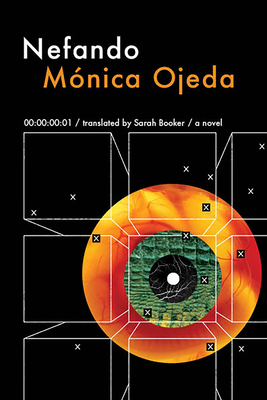
NEFANDO, if you have a trigger, do not read this book

NEFANDO
MÓNICA OJEDA (tr. Sarah Booker)
Coffee House Press
$17.95 trade paper, available now
Rating: 4* of five
The Publisher Says: A techno-horror portrait of the fears and desires of six young artists whose lives are upended by a controversial video game, from National Book Award finalist Mónica Ojeda.
Six young artists share an apartment in Kiki Ortega, a researcher writing a pornographic novel; Iván Herrera, a writer whose prose reveals a deeply conflicted relationship with his body; three siblings, Irene, Emilio, and Cecilia, who quietly search for ways to transcend their abuse as children; and El Cuco Martínez, a video-game designer whose creations push beneath the substrate of the digital world. All of them are connected in different ways to Nefando, a controversial cult video game whose purpose remains a mystery.
In the parallel reality of the game, players found relief from the pain of past trauma and present shame, but also a frighteningly elastic sense of self and ethics. Is Nefando a game for horror enthusiasts, a challenge to players' morals, or a poetic exercise? What happens in a virtual world that admits every taboo?
Unsparing, addictive, and perverse, Nefando takes us to the darkest corners of the web, revealing the inevitable entanglement of digital and physical worlds, and of technology and horror.
I RECEIVED A DRC FROM THE PUBLISHER VIA EDELWEISS+. THANK YOU.
My Review: If you have a trigger, do not read this book.
I can't recommend this read to you. I can tell you it challenged my every shibboleth, saying out loud things I'm reluctant to confront, because that means acknowledging them. Unlike Jawbone, this book doesn't burst onto the scene pointing Horror's attention onto girls and women as perpetrators and planners of Evil for the first time...well, not literally THE FIRST time but definitely early on...but treads that path with zeal and a ghoulish delight.
I'm always impressed when a writer can genuinely shock me. I was routinely shocked by the game Nefando, genuinely repulsed and affronted by things within it. As the sales copy above says, this is an unsparing story, deeply deeply perverse, and discomfitingly addictive. I didn't much want to keep reading. I had to. I was not going to be able to keep these images from ruining my sleep until I gave the story closure. The last time I felt this way about a psychological horror story was the Japanese version of Ring, which...well, no, not going into it except to say this story has similarly deeply embedded awful triggers for me.
If I felt any kind of way about the translation, it was deeply impressed. Translator Booker made this nightmarish trip down...all the way down...into the pit an utterly unmissable trip. That takes mad skills. She has those, and clearly also has a deep affinity for psychological horror, the kind that blends pervasive unease with jump scares. If there is ever a horror translators' award, it should be called "The Sarah Booker Slap."
Author Ojeda...I hope this paper exorcism of your personal demons did you all the good in the world. It's set my therapy sessions back at least five years.
*shudder*
Saturday, May 25, 2024
CECILIA, sapphic obsessive love and bodily fixation in gorgeous prose
CECILIA
K-MING CHANG
Coffee House Press
$14.95 trade paper, available now
Rating: 4.5* of five
The Publisher Says: A surreal novella about the intensity and eroticism of girlhood friendships, the ecstasy of desire and disgust, and matriarchal mythmaking.
Seven, who works as a cleaner at a chiropractor’s office, reencounters Cecilia, a woman who has obsessed her since their school days. As the two of them board the same bus—each dubiously claiming not to be following the other—their chance meeting spurs a series of intensely vivid and corporeal memories. In the defamiliarization that follows, the narrator begins to experience queerness itself as an alienation from normative time.
Smart, subversive, and gripping, Cecilia is a winding, misty road trip through bodily transformation, inextricable histories of desire and violence, diaspora, and obsessive love.
I RECEIVED A DRC FROM THE PUBLISHER VIA EDELWEISS+. THANK YOU.
My Review: This short read is much more affecting than most its length are. That is a funcrion of K-Ming Chang's bravura performance with English as a weapon:
When I reached up to touch my face, I felt no protrusions, no new bones inflecting my surface, and yet, when Cecilia and I looked at each other, we saw them: beaks mountaining out of our mouths, rooted to the shadows of our jawbones. Beaks shining like the perfect darkness preserved inside a belly.
You are on notice: Pay attention to the words chosen, pay attention to the images described, or this very slightly surreal...in its literal meaning, the meaning of the parts it's made of, "overreal, above real, on top of real"...narrative of two girls discovering love, passion, intense vibrant hypercolored Experience, will simply squash you, split the space where you are and move through it.
An intense experience will be had; your choice of framing for the act of being engaged with this story will determine its positive or negative perception for you. I am resolutely positive about the experience because anyone who can, and will, and does explore the sensation of Obsession to burnout is my idol.
That will trigger very strong and not always positive memories for some readers. Be aware of this fact particularly if you have been, or are being, stalked.
Readers who prefer direct action will not resonate to the Proustian aide-memoire of this novella. The story, as in plot, is spare to the point of threadbare: Old friends with a past connection of unrequited lust, requited love, and sensual obsession, meet at one's place of work, chat, then get on a bus to go home...not together. Just that isn't gonna drag the hoi polloi into this tent, there to be entertained. The story is of the rung-bell resonance of girls loving each other before womanhood imbues loving, intense intimacy with a bodily expression's inevitability. The immensely divisive choice of piss as a focus of fascination, desire, disgust, and connection is definitely going to upset some people. It is, I think, an example of how little female desire is examined in our literary landscape that this choice has occasioned such a response across the spectrum of readers. Women, even sapphically inclined ones, are still called on to present a particular strain of pure, clean, unsullied neutered bodiless Love and not filthy, sweaty, bodily based Lust...that's reserved for intimacy, things done and thought in private. Shame, in other words. In porn, these acts are Done To women as a form of punishment or humiliation. K-Ming Chang's Seven is not humiliated or punished. She's so obsessed that this is an urgently desired act of further possession and imtimacy. There's more than a whiff of body horror to the way bodily processes and even body parts are casually discussed, possessed, and even deployed throughout the read.
The author's choice of making her girls of Chinese descent, living in the US diaspora, is...to my surprise...not foregrounded. I expected it to be more of a focus because so much is made of the author's own ethnicity. It was something I didn't really notice until I'd read the story and was thinking about responses to the author's realier works (eg, Bestiary, Bone House, Gods of Want), where ethnicity is apparently made more of within those stories. Haven't read 'em, can't speak with an informed eye, but this story doesn't make a meal of it as I suspected it might.
I definitely don't think this read is for everyone, but the right reader will be unfazed by childbirth evocations and livers of others as property to be treasured. The right reader will immerse their awareness in the meaty world of loving someone so much that consuming them is desirable, not in the Hannibal Lecter sense I hasten to say. The right reader will give their readerly ears to the very idiosyncratic music of K-Ming Chang's creation.
It's me. I'm the right reader.
Thursday, February 10, 2022
JAWBONE, making deities out of desperation in MeanGirlLand
JAWBONE
MÓNICA OJEDA (tr. Sarah Booker)
Coffee House Press
$16.95 trade paper, available now
Long-listed for the 2022 National Book Award for Literature in Translation!
Rating: 4.75* of five
The Publisher Says: Fernanda and Annelise are so close they are practically sisters: a double image, inseparable. So how does Fernanda end up bound on the floor of a deserted cabin, held hostage by one of her teachers and estranged from Annelise?
When Fernanda, Annelise, and their friends from the Delta Bilingual Academy convene after school, Annelise leads them in thrilling but increasingly dangerous rituals to a rhinestoned, Dior-scented, drag-queen god of her own invention. Even more perilous is the secret Annelise and Fernanda share, rooted in a dare in which violence meets love. Meanwhile, their literature teacher Miss Clara, who is obsessed with imitating her dead mother, struggles to preserve her deteriorating sanity. Each day she edges nearer to a total break with reality.
Interweaving pop culture references and horror concepts drawn from from Herman Melville, H. P. Lovecraft, and anonymous “creepypastas,” Jawbone is an ominous, multivocal novel that explores the terror inherent in the pure potentiality of adolescence and the fine line between desire and fear.
I RECEIVED A DRC FROM THE PUBLISHER VIA EDELWEISS+. THANK YOU.
My Review: White. Menacing, toothy, bony white. You'll need to recalibrate your horror-meter away from the endless dark.
I think many people are a little skittish about reading books that have truly, deeply dysfunctional women and girls as the predators as well as prey in a "human is wolf to human" tale. It seems to skeeve the Sanctity of Motherhood crowd the most, which is predictable and unsurprising. What it isn't is realistic. The three characters in this English-language debut horror/psychological thriller-adjacent story are actors in psychodramas they both inherited and participated in perpetuating...they are not, not one of them, victims.
I'd give Author Ojeda a gold medal for that, if I had one. I am mortally sick of sending women and girls the unending message that if uterus, then victim is a) immutable fact 2) a good dodge to avoid personal responsibility and accountability and iii) a necessary precondition to discovering one's agency. Anna/Annelise is, plain and simple, a stunningly effective manipulator. She is absolutely in control of her fate. She orchestrates everything around her to suit a narrative she builds, changes, improves to get more of the oxygen she craves: Attention. Fernanda, oh the poor thing I can hear readers thinking, is totally tuned in to her needs: she seeks extremes, she wants to defy and thus define her limits. And when we meet her, she is at last smashed against the hard limit of being immobilized. Fernanda, deeply and darkly aware of her young body's power to seduce, reward, pleasure her victims in motion and action, is never more completely the center of her captor's world than when she is rendered incapable of movement.
But Miss Clara, the nominal adult whose tenuous leash on her id has snapped, the possessor of power over her students as their guardian and cicerone, is utterly unable to exercise even a shadow of that power because she is so cracked and broken by her past. Her charges, like those things that prosecutors level at malefactors, like those vessels of energy that impart their essential power to a needy receptacle for it, are charged with the true nature of the quest in this polyphonic Passion Play: Boundaries.
Miss Clara has immobilized Fernanda to remove her from the harm she causes and is caused by Anna. In so doing, she creates the most brazen crucible for Horror among the "innocent" I've read in a solid decade or more. I've read that other reviewers, as well as some critics, conjure the shade of H.P. Lovecraft in describing the affect of this story. There is an element of the eldritch horror miasma inherent in any book entitled Jawbone wherein that word is used without distancing irony. But I myownself think this is horror of the Our Lady of the Flowers ilk, of the Juliette, or Vice Amply Rewarded strain. The events herein aren't of the explicit-conduct variety. They are sexual, these women, and they are absolutely sure that sexual is what they mean their acts to be, thus Genet; they are psychologically subtle, they are seeking and thirsting for subtler refreshment than just vaginal wetness, thus de Sade.
It is anxiety-crippled Miss Clara's terrible, terrible luck to meet privileged perverted Annelise. The young mistress of domination's most brilliantly subtle expression, the psychic force of the story on the unbalanced, determines to make of her youth a supreme weapon, the myth of purity. The White God she invents and that god's immediate claim on the unwavering attention of all with whom Annelise shares the words, is so carefully inflected that Miss Clara does not see but feels with blinding intensity the repeated reiterated regurgitated violations that broke her to begin with, that made with White no purity but putridity. No nobility and cleanliness and finality of bone. There is only the powder of mold as it rots flesh in wetness. There is the liminal space of menstrual cloth not yet used as a blood-dam. Annelise conjures the cruel capable whiteness of teeth, hardest objects in a body, necessary to rip and mangle the very stuff Humanity must have or simply lose all power and cease. Die. Though perhaps not entirely, if there is will and enough lust to use it.
As an act of Literature, translation is alchemical. Take this gleaming, golden thing, this extant object of crafted and intended meaning, and use the solvents and reagents of a different meaning-regime to produce gold. Again. In Jawbone, Translator Booker explains her kerotakis and its subtle distillates in a note before one reads the novel. I understand that impulse to assist the mainly monoglot US audience. It feels to me, at least, more like a way to emulate Annelise: I will take all the pain, hurt me and make me bleed, that I may give your dark input of uninterest or unwillingness to work for this experience of distillation into a finer, lighter, more potent Enlightenment its ashes and sands, its heats from sources not like the results. Not for this translator the mere bain-marie. Its coddling of like fluids to make of one the best and most palatable form it can take is too bland for this alchemy of hers. No custard of double-boiled entertainment comes from here. It is the hottest ash, the slowest heat exchange of crater-hot sand that takes the already intoxicating vodka into Everclear, into its superlative...but brutally unforgiving of misuse...form.
It is a high-wire act, as I would guess translating Joyce's Ulysses into hieroglyphics would be. Surviving tweaks to reality like multi-hyphenated English terms, which would make a Spanish-speaking ear and eye agog with Otherness, aren't readily apparently Othered. I fully understand and support the editorial decision not to use italics to indicate foreignness. For Spanish. But permaybehaps some of these oddities could be italicized for the Othering of English as it would be in an Ecuadorian ear? As it is, they just stub my reader's toe on their odd height and unyielding hardness.
It can feel, in the course of the read, humid to be in the abandoned spaces and the wildlands. I mean this in a visceral way. The reading of the games that Fernanda enacts, at huge, huge existential risk to Annelise, calls forth actual sweat from my reader's brow. In the stories, the words spun to whip the parties to Dionysian ecstasy and Pan-ic from the god itself work. That is not always to the benefit of Author Ojeda's actual novel. Overall, minding my place as bystander and accomplice but not perpetrator, I can't give the entire reading experience a perfect score because of those very few points where The Story showed herself from behind the obscuring mask.
Make no mistake, though, this is Literature and big, big fun entertainment caught in the slick, wet act of making passion real. Read it without your lady-gloves on. Read it with your speed turned lower than usual but used longer. Read it while you're avoiding something Social, some obligation that couldn't be said no to.
But read it now.
Subscribe to:
Posts (Atom)