Showing posts with label grief. Show all posts

Wednesday, November 11, 2026

THE FIRST HOUSE: A Novel, when you lose your head, find Diana, and gain a billion cicadas


THE FIRST HOUSE: A Novel
AVNI DOSHI

S&S/Summit Books (non-affiliate Bookshop.org link)
$14.99 ebook, available now

Rating: 4.25* of five

The Publisher Says: From the Booker Prize finalist author of Burnt Sugar comes a riveting novel of rupture and rebirth, of one woman’s journey to understand the fault lines in her marriage, her home, and her family.

When my husband comes into the bedroom we have shared for thirteen years and tells me he doesn’t want to be married anymore, I reach for my neck. My head is missing.

A husband announces he is leaving, that he was never happy. A woman is left behind with their two children in the house they built together, reeling at this forced recasting of the story of their marriage. Everything becomes an encounter at the grocery store, a looming cicada horde, a statue of Diana that suddenly appears in her neighbor’s yard. Or was it always there?

As she wades through the aftermath of her marriage, her complicated family resurfaces. Although close to her parents, her relationship with them is strained, and she is fully estranged from her older sister—the perfect daughter—who still lives at home and always disapproved of her husband. So when did the trouble begin? And where will she go from here?

When she was a child, an astrologer in India told her parents that the family would die in water. Ever since, they’ve avoided pools and lakes and the ocean; no one ever learned to swim. From the Booker finalist and beloved author of Burnt Sugar comes a brilliant story of betrayal, renunciation, and renewal, of a woman spiraling who swims to the other side and comes up for air.

I RECEIVED A DRC FROM THE PUBLISHER VIA NETGALLEY. THANK YOU.

My Review
: I have had the experience of learning, abruptly, that I was having a different relationship than my partner was, while we were still having it. It is...disorienting, to put it mildly. What did I miss? is on a loop in the broken-up-with one's head. What happened, what did I do, what can I do...unanswerable because if the answer was in you, you would've seen it, probably would've stopped it from reaching the breaking point...like the way he refuses to to discuss why her credit card keeps failing, where it is he disappears to. I don't think I really need to belabor these points since Author Doshi doesn't.

Knowing you're not in love with someone several children into a marriage isn't an unusual state of affairs...happened to my mother, my father too albeit with a different woman. It's weird, this thing we call marriage in the US, so wildly consequential to your health, wealth, and happiness and so very very few guardrails to the roads entering it while so very very many trammel your pathway out. The narrator did not have the support of her family going into this marriage, her parents and sister found her husband untrustworthy; now that he's decided to go for his own happiness and she's still in the first house dealing with the consequences, she sees the obstacles and restrictions ahead.

It's a good moment to discuss the astrology underpinning the story. A blocked novelist turned praticing astrologer, the narrator sees how wonderfully astrology assembles a narrative for the failure of her marriage in the first angular house. (Interesting she, a first-generation South Asian immigrant family member, did not choose Vedic astrology to practice. Avoiding racializing yourself in that way has first house implications.) I'll put the Wikipedia précis of the meaning of the first house here: "The angular houses of the horoscope are considered to be the most ardent, or forceful, and are considered to have the greatest impact in the chart. The influential 17th-century astrologer William Lilly states simply: 'Planets in angles do more forcibly show their effects.' Angular houses rule those critical things in our life, such as our appearance and how we behave, our family life, our married life or partnerships, and our career." Our understanding of astrology as readers is best surrendered to Author Doshi, though. Follow her lead.

What resonated with me was our narrator's use of astrology rather than her understanding of it as a practice. As raising children fully eats one's creative force in many, many people, the narrator must find both income and outlet from and for her creativity. Astrology to the rescue. It provides moments of easter-egged humor as we go though the story. On the narrator's quest to put this life-changing shift in her marriage into context, figure out how to be a functional parent and (self-)provider, find her feet with the birth-family who candidly disliked the abandoner from the start and will recolonize her every thought, feeling, and action unless she is truly vigilant, when in this mishegas does she have a minute to grieve her loss?

Never. So the human thing to do is to find a story. Her own springs being low, maybe even goddesses forfend dry, she turns to the myths that underpin astrology and culture more broadly. Have the neighbors always had a statue of Diana in their yard? Diana, huntress, virgin, changeable Diana thirty feet away? There it is though...whenever it got there, it's there...and it's the catalyst for the narrator to examine the fear, the wilful blindness of her (and her older sister's) carefully padded, packed away, crated for storage emotional lives: "What I had believed to be indestructible was gone. The way I had engaged with the world was no longer possible. The children came into the room, already in their pyjamas, and caught me talking to myself. They couldn't understand that I was meeting myself as someone new."

Child of immigrants who carry very different ideas about how to feel with the narrator's new status from her own, still muddled, ones, the narrator has to confront her adult self's precarity by resisting her family's intrusive bullying with enough panache to maintain a thread of connection. In her meeting with herself as a monad, the narrator understands mother's and sister's worlds are her world: compromise, retreat, rock no boats follow no clues to pay for Security. The narrator's bargain was reneged on by the party of the second part. Her female relatives...they have feelings, no reason to look into them like the narrator has, and estrangement makes them unwilling to listen to her.

The great power of betrayal, of destruction, is its undeniability. The ruins are there. The foundations aren't there. The situation of economic and emotional dependence on outsiders, others, is the root of her first-house troubles. In her attempts to find a self while becoming of necessity someone new in practical terms, the narrator channels all her story-stuff...research, reading, thinking...into a scaffolding to hang a new self woven intentionally in full knowledge of where the old version failed first.

There was not one person in this story I liked, would invite to my home for a day's relaxing chat and cooking and just...being. They're all determined to make their forced-from-without changes as hard and as noisily painful as possible. What I felt for them was compassion. What I could not believe was how invested I was in their irritating nonsense. I wanted each of them to figure it out, to get to the floorboards that might creak...gotta make noise...but will hold them up while they learn to support their own internality.

It is why I landed a bit above the baseline four stars this kind of capable, slightly overwound storytelling merits. Author Doshi, I will be delighted to see where you decide to lead me next.

Thursday, October 22, 2026

TO THE EAST OF THE EAST, LONGLISTED FOR THE 2026 NATIONAL BOOK AWARD in TRANSLATED LITERATURE


TO THE EAST OF THE EAST
PING LU
(tr. Jeremy Tiang)
World Editions (non-affiliate Bookshop.org link)
$14.99 ebook, available now

Rating: 4* of five

The Publisher Says: LONGLISTED FOR THE 2026 NATIONAL BOOK AWARD in TRANSLATED LITERATURE

Min-Hui's travels from Taiwan to Beijing in search of her vanished husband in this multi-layered meditation on marriage and freedom from Taiwan's most sophisticated contemporary voice.

While chasing business opportunities in China, Min-Hui’s husband disappears without a trace, forcing her to uproot her quiet life as a writer in Taiwan and travel to Beijing, where the chaos of the city leaves her reeling. Does the Chinese government truly have her best interests at heart, and how hard are the authorities looking for her missing husband?

Marooned in the ancient capital, Min-Hui encounters the enigmatic Shangjun, a self-proclaimed human rights activist who seeks refuge in her hotel room. As their relationship blooms, Min-Hui allows him to read her novel in progress: a young Qing emperor confined within the Forbidden City becomes fascinated by pirate merchant Zheng Zhilong’s tales of the Taiwanese seas. All the while, Min-Hui contemplates the discord in the marriage she is desperate to save. Exploring the universal longing for freedom with her signature multi-layered narrative, Ping Lu interweaves Min-Hui’s search for her husband and her Beijing love affair with the historical backstory of her novel and unsent letters from her vanished husband.

To the East of the East offers a profound meditation on liberation, destiny and the contingencies of national histories by one of Taiwan’s most sophisticated contemporary voices.

I RECEIVED A DRC FROM THE PUBLISHER VIA EDELWEISS+. THANK YOU.

My Review
: As best I recall, or can find evidence for, this is my forst-ever encounter with Ping Lu's work. Quite a force in Taiwanese literature, her publisher tells me in this book's attached biographical details "Ping Lu writes on a wide range of topics, including society, culture, gender, politics, history and human rights," then goes on to list Taiwanese literary prizes she has won.

Jeremy Tiang's translation tells me a lot about why that's the case. It's a layered, complex read; Min-Hui's marriage and its anger and stress, Chinese/Taiwanese political intertwining with its sibling/spouse/parent-child resonances that never settle into a predictable, steady state jitter and flare at each other; the history of the ancient culture is presented in an historical novel that's embedded in this modern palimpsest of story.

It's a lot. It's barely over two hundred pages. Pay attention.

I got a vibe as I read the story that I was missing something, that there was a layer of...a resonant bell ringing that I was too far away to hear but I could feel. I looked for reviews by native speakers to see if something was not in the translation. Turns out no, but in a curious way yes. Min-Hui gets two PoVs, one grieving, one knowing; the missing husband gets one; then there's the historical novel. In the observation of people who read the Mandarin version, there is a distinctive and different way the language feels between the PoVs. Like the lack of an English version of "tu" that hobbles Romance-language translations when a tonal shift in character familiarity or intimacy occurs, its shade lingers for the sensitive reader. English gives its speak/readers so much, but not a substitute for tenses, voices, and cases in other languages.

Min-Hui traveling the distance from Mexico City to New York City, with approximately the same change of prevailing culture, and discovering as a result that people who don't communicate are prone (doomed, I'd say honestly) to have different relationships, was a poignant story. Working out her feelings with the historical novel within the novel worked surprisingly well for me. I was not sold on it at first but came to see this technique as almost painfully poignantly demonstrating Min-Hui's functional overthinking issues that condemn her to a half-life of never reaching out, connecting; until one reads the letters it seems literally impossible for her to hope to change.

Never say never.

Wednesday, October 7, 2026

EVERY STORY IS A LOVE STORY, letting go of grieving


EVERY STORY IS A LOVE STORY
IMBOLO MBUE

Random House (non-affiliate Bookshop.org link)
$13.99 ebook, available now

Rating: 4.75* of five

The Publisher Says: From the New York Times bestselling author of Behold the Dreamers and How Beautiful We Were, a captivating novel about love lost—and the weight of regret

What if I’d never gotten into that car? What if I’d pulled out of the driveway five minutes earlier, or ten minutes later?

Three years ago, Wolo’s wife was killed in a tragic car accident. In an instant, the great love of his life was gone, and so was their beautiful future. In the face of a loss that seemed insurmountable, Wolo has slowly rebuilt a semblance of a life: he goes to work, hangs out with a small circle of friends, and fends off the matchmaking efforts of the older women in his family. The grief that dogged him has, with time, become a little gentler.

Until a letter arrives one day, unbidden, threatening to upend his life once again. It is from Victoria, the woman who was behind the wheel that terrible day. Wolo’s family pastor tells him the letter is the work of the devil; his mother expressly forbids him from making further mention of it; his father’s second wife calls, from Cameroon, to tell him to destroy it. But Wolo ponders it for days, and ultimately agrees to meet with the woman who killed his wife. When he does, the compassion and deep remorse of the woman affects him in ways he had never imagined, and he begins to wonder if the long road to healing can be shared.

What do we owe to those who have hurt us? Are we defined by our worst moments and our deepest regrets? And, more than anything, can forgiveness ease our suffering? Moving and full of life, Every Story Is a Love Story charts the uneven path from heartbreak to healing.

I RECEIVED A DRC FROM THE PUBLISHER VIA NETGALLEY. THANK YOU.

My Review
: Wolo found true love with Yoma. It's the loveliest moment in someone's life: love is joyous before Life has its way with you, and Wolo? He was absolutely at the peak of joy because Yoma was pregnant!

Life had its way with him.

Victoria causes the accident that ends Wolo's happiness. It is impossible for Wolo to recover from this hideous, disfiguring agony of grief, and however loudly he tells his mother, his stepmother, his matchmaking aunties this he is still urged to date, to love again, to move on.

As if some random woman will be Yoma again, will be The One, will fill his life with laughter and excitement...impossible. And then. Will you look at that. Victoria writes to express her remorse for the awful thing she caused to happen to him. To ask Wolo to meet her and process their shared grief.

The Greek chorus of Wolo's life is unequivocal: Do not do this. Don't even think about doing this. You're morbidly obsessed with your loss already don't reinforce it is the universal subtext of their advice. Wolo's stunted, limited existence, the one he resists altering because letting go of his rage and agony feels like killing Yoma and their unborn twins again, has to change or Wolo will die. From the inside out.

So he says yes.

It was here I began to see why Author Mbue chose flashback, a style of storytelling I often find disinvolving, for Wolo's process of healing. It is reinjuring him, it is shoving his head in the waterboarding bucket again and again...it is allowing him just enough air to survive...it is letting him pull his feet under him on the wet floor and lurch and stumble away from the bucket...it is the light that shows the hand extended to him, showing a human is reaching with kind and helpful intent into his dark, drowning life.

It shows Wolo Victoria. Her pain from causing him pain. Her knowledge that she harmed Wolo, she (without malice) stole his life from him and wants so badly to do anything to help him because only that will help her.

And he reaches back.

Everything else I could say is spoilerific. I didn't give it a full-five rating because of spoilery stuff, but look how close I came. (Side note: I am so very happy to have as of October 2026 the ability to give quarter-star ratings on the country's biggest book-discovery engine.) It is Author Mbue's gift to be able to visit the darkest places in a person's life while they are floodlit in Capitalism's distracting material abundance and spiritual moonless midnight. This is another of her immigrants' tales of fitting in being less important than settling down.

It is a beautiful story with some odd edges to keep it from melting into the pleasant sameness of the bulk of entertaiment. That hard-to-differentiate mass gets so stultifyingly dull.

Monday, September 28, 2026

MAY WE FEED THE KING, Booker-shortlisted poet's novel


MAY WE FEED THE KING
REBECCA PERRY

Transit Books (non-affiliate Bookshop.org link)
$17.99 ebook, available now

The Independent Press Top 40 Bestsellers: Fiction For the week ending November 17, 2026

The New York Times's 100 Notable Books of 2026 list

LONGLISTED FOR THE 2027 Dublin Literary Award. Link is to a PDF of the 71 longlisted titles.

Rating: 5* of five

The Publisher Says: She is a curator, who spends her time dressing the rooms of historic buildings to bring them to life. But in the lush private quarters of a medieval palace, she finds herself so transfixed by the reign of an almost-forgotten King that the edges of her life begin to blur.

He is a reluctant ruler with no hunger for power, rushed to the throne after the untimely deaths of his older brothers. But it isn't long before whispers begin to fly around the court. And with the growing belief that the King is not fit for the throne comes the idea that another might rule in his stead.

May We Feed the King dances between the lives of a historical subject who risks the future of his kingdom and a woman who turns to the past to hide from her present. Laced with desire and longing, it is a playful, stirring meditation on history and storytelling: on what makes a King 'Great', and a life meaningful.

I RECEIVED A DRC FROM THE PUBLISHER VIA EDELWEISS+. THANK YOU.

My Review
: A poet penning a literary novel about an unnamed museum curator grieving an unstated loss while she is engaged in a project that reimagines the physical world of an unnamed surprise king in his unnamed palace on its 750th anniversary of foundation and use.
I have been deciphering archives and curating semi-permanent scenes (domestic, culinary and otherwise) in medieval buildings for the past twenty-two years. When you see a replica feast scene in the great hall of an old building, I am the person who placed the pomegranates beside the pie, and for a very good reason. When you come upon a room, cordoned off with red rope, beyond which you see an open book on a desk, a chunk of bread picked hollow, and a quill in an ink pot that is empty of ink, I am telling you something about the person who lives in that room. The ink may be purple, and even though no one can see it in the straightforward sense, one in a thousand people will sense it. Ultimately, I want my work to communicate with everyone, but it is those people I really hold in my mind.

Sounds drearily precious, like a poem, like all the pit-sniffing Literary Novels we're subextually told us mouth-breathers are too dullwitted to Appreciate, no?

No. And no one is more surprised than me. I was interested in reading the story because, well, Booker snobbery is the honest way to say it. (I'm still salty that US Anglophone authors are now eligible for what was explicitly a Commonwealth storytelling prize...twelve years and not over it yet.) As the story unfolds in past and present, the real reason I kept going and going hit me...I'm a sucker for the hyperfixated, the deep-focusing narrow-vision-having wonks of History. It's endlessly interesting to me that someone could get this interested in creating an immersive experience for a modern audience of small size centering the medieval world of a minor, forgotten royal. Just to conceive of it is interesting abd then to sell the idea, to research the minutiae, to think through the problems inherent in the process...yep, I'm in!

Of course what's driving our curator to the bizarre lengths has to be very, very painful, very overwhelming to demand this depth of avoidance; it's a good decision for Author Perry to leave it imprecise, unfocused because specificity ruins relatability. I've been that deep in grief so I suppose there's more than a little fellow feeling driving my interest. I get in a visceral way the desire to lose one's hurting self in an all-absorbing, unrelated subject that can't trigger hurting memories or aching similarities that will fuel the downward spiral: "There’s something that can happen when I am embarking on a project on the scale of the work at the palace, and so heavily focused on food scenes: my appetite sours, and real food becomes some-thing of a threat. I can’t be sure if it is becoming more or less real, too much itself, too vivid, or something altogether different. Whatever, it makes me not want to eat."

Probably the short chapters Author Perry alternates between present and past are going to annoy some readers enough to cause comment from them. I'd like to offer an alternative to the annoyed noises by saying that mosaics are made of tesserae that look like nothing while the artist is assembling them to a pattern they alone see entire. But the pieces that look so unlikely, so unimportant, are integral to a whole we need patience to experience as intended: "One evening on the way home from the palace—after a full day in the shadow of the archives, where we had sat, the archivist and I, my left biceps pressed against their right, making a double-width human—I stopped in a local bar for a glass of wine.

These are things that I had forgotten how to do, that I had forgotten were possible."

It can enrich the experience of seeing the whole very much to recall the process of being present as it's made. This poetically rich story, a concentrated, allusive work of reckoning with a life's boundaries and endings is the reward a reader will remember and treasure long after the book itself retires to its shelf-bound afterlife.

Wednesday, September 23, 2026

THE STRANGERS, autofiction? metafiction? thought-provoking grief-study no matter how you look at it


THE STRANGERS
NAOMI ALDERMAN

Little Brown and Company (non-affiliate Bookshop.org link)
$14.99 ebook, available now

New York Public Library's Best Books for Adults 2026 list

Rating: 4.5* of five

The Publisher Says: They came from nowhere, and now they are everywhere.

A few months after her mother dies, the novelist Naomi Alderman sets up a wildlife camera in the back garden of her parents’ home. It captures the first image of a strange new animal. Low to the ground, about the size of a badger, flat face, long, trunk-like nose. Suddenly these “mimmoths” are as common as foxes or dogs. And no one knows where they’ve come from.

As Alderman negotiates the territory of grief—a place with its own logic and rhythms – the mimmoths spread. From the UK east and west, to the United States, to Russia, to India. They seem harmless, but oddly intelligent. They cannot be captured, they will not take food from humans, they have their own purposes.

Alderman cannot shake the feeling that she has a particular connection to the creatures. Or is she just succumbing to ‘mimmoth psychosis’? As the impact of the mimmoths increases, she is pulled into the cross currents of conspiracy theories and global power struggles. Have her deeply personal forms of mourning lent recent events a surreal air, or is our reality changing drastically and irrevocably?

From the award-winning author of the international bestseller, The Power, The Strangers is a thrillingly original and devastatingly moving novel that blurs the lines between fiction and reality, inviting us to reconsider what it means to be human. It’s like nothing you’ll have read before.

I RECEIVED A DRC FROM THE PUBLISHER VIA NETGALLEY. THANK YOU.

My Review
: Grief does very weird things to a person. I'll hold up my hand and admit I've hallucinated (officially) the sound of my thirty-five ears gone belovèd's voice more than once over the years. That one, however, is nothing compared to the mimmoths.

Shared, collective grief powers the mimmoths, of course; no way are fun-sized mammoth-y entities that just...appear...as Naomi Alderman's mother dies, her father's decline speeds up, the planet's climate and civilization's bad-crazy frag-grenade era heat up, just totally unrelated. There is plenty of evidence that Naomi Alderman is not the only one seeing them!

Mass psychosis? Permaybehaps...the mimmoths being widely seen hasn't meant they're easily, or even at all, interacted with, no feedings by humans, no captures (just killings) by humans, nothing tangible except ubiquity. Oh, and lots of (potentially) related effects stemming from being in the vicinity of the mimmoths, healing or spontaneous abortion or death, but SOMEthing momentous occurs to some people (Naomi Alderman included), so of course the conspiracy-theory areas of society have new fodder for old conspiracies and material to make new ones.

Book-Naomi Alderman and Author Naomi Alderman are entwined narratively and intertwined emotionally, as the genesis of the story in mother-loss is real world; the mimmoths and their effects, well...the effects are real, and while I haven't seen a mimmoth I'd love to. What led to Author Naomi Alderman creating this lovely, odd, off-kilter sci-fi memoir is the awfulness of needing a way to work through the random events in a world where the god you thought was yours turns out not to exist and nothing you've thought was real is, in fact, enduringly persistently real, the stuff that god should prevent/ameliorate isn't getting better, and love does not conquer all...but Love persists, endures."Everyone knows the saying: Whatever doesn't kill you makes you stronger.

But it's not true. Some things don't kill you but just leave you permanently weaker," as Naomi Alderman muses.

A better way to present the fragmented sensation of living on after the death of a love object but not the love is hard for me to conjure. A mimmoth is real, if not tangible; it affects the world but has no effect on it, like a past, like a dead love; and comes from a silent nowhere without explanation like the Orthodox Jewish god that Naomi Alderman has lost.

It is in blurring the lines separating Author Naomi Alderman's terrible emotional, psychic blows, and the consensus-reality immiseration of end-stage capitalism, that this story's impact is most powerful. Creating, summoning the mimmoths, endowing them with potency of emotional and practical sorts...affect and effect...Author Naomi Alderman makes this a story to be reckoned with. As Author Naomi Alderman processes the profundity of her loss (mostly the loss of possibility, a different, better future) after her mother's death, Naomi Alderman reckons with the world's losses and the loss of the world through her semidivine, partly malign living-but-not mimmoths.

Like every other grief considered I've ever read, this is not a story for its own sake or an entertainment to be enjoyed for a while then largely forgotten. It's not tidy enough for that. Manicured Versailles gardens are not the analogues here, but the designed and controlled wildernesses of Capability Brown. Visibly as different as it's possible to be, yet each is a planned, designed, shaped, undergirded and attention-directing space to be within. Moving through The Strangers will give you the feels a great piece of writing is so good at delivering. Don't expect Versailles, enjoy the wilder, less trammeled world of Capability Brown, and I expect you'll feel amply rewarded.

Wednesday, September 9, 2026

THE LIGHT BETWEEN THE PINES, even Kirkus likes it!


THE LIGHT BETWEEN THE PINES
WARREN READ

Ig Publishing (non-affiliate Bookshop.org link)
$18.95 all editions, available now

Rating: 4.5* of five

The Publisher Says: In the stillness of a pine grove, a wrecked car tells a story no one wants to hear.

Red Miller has lived long enough to know when someone is lying, especially his daughter, Gina. On an afternoon in early fall of 1979, Red gives Gina’s boyfriend money he knows he won’t see again, then watches his daughter slip further away, wondering where it all went wrong. Five years later, a call from an Idaho deputy changes everything: Gina has vanished after a fatal car crash, and Red has a grandson he’s never met. Haunted by his failures and the memory of a wife lost too soon, Red travels to a small Idaho town in search of answers. But what he finds is more than a mystery; it’s a reckoning-of love misspent, of the fragile ties that bind us, and of the strange, stubborn hope that still lingers in the quiet spaces between regret and redemption.

The Light Between the Pines is a powerful, slow-burning portrait of family and fallout, told with the sparse beauty and emotional precision of Kent Haruf’s Plainsong and Richard Ford’s Wildlife.

I RECEIVED A DRC FROM THE PUBLISHER VIA EDELWEISS+. THANK YOU.

My Review
: A grandparent who goes into battle for a dead child's child is a story that resonates with old-man me. By far my favorite iteration of it is Let Him Go by Larry Watson. This one's a close second.

Red Miller has the relatively common parenting experience of looking at a child's mate choice and thinking, "did I do *that* crappy a job?" Another not-uncommon event is the child whose own child is hidden from the parent for complicated emotional reasons, or uncomplicated practical ones; there are a million ways a family can fall apart, and Red's living through one or two...if the Idaho deputy on the other end of the phone telling him about his daughter's involvement in a fatal accident and subsequent disappearance, he's feeling like there's a few of her steps down the road of irresponsibility that he is due to catch up on.

Seeing everything unravel is likely a very common experience among the older people, no matter how hard one works there's often enough something that comes along to muck it all up. His wife's early death, his subsequent descent into private grief, his daughter's youthful rebellion, all leading to this moment...well, the details are likely different but you probably know these emotional blows from having endured them.

Now, of course, he has to head east into territory he doesn't know, isn't excited to get to know, and meet people he could do without ever having known existed to see what the hell he has to do to get this mess cleaned up, see if he can actually find a future with his family after losing the heart of it, losing his heart, and making every last mistake he could for the past five years right again.

The quiet, compact...just over 250pp...story is never mired down in the gloopy goofy introspection that can get so tiring when what you want to read is a story not a mea-maxima-culpa. Instead we see the life that Red Miller wants is not the one he has because he's doing a lot of work in the present to create a different one. It's so refreshing; it shows Author Read really took on board the lessons of writing his first book, The Lyncher in Me, about his appalling family secret. It's best to set the scene, say the least possible number of words, and let we-the-reader think it over and decide what we're going to do with it all.

Well applied, that lesson; it's made a terrific story into a pleasure to read.

Sunday, July 12, 2026

EVERYTHING WAS BEAUTIFUL AND NOTHING HURT, how I would know I was dead is just that


EVERYTHING WAS BEAUTIFUL AND NOTHING HURT
BEN REEVES

Avid Reader Press (non-affiliate Bookshop.org link)
$14.99 ebook, available now

Rating: 4.5* of five

The Publisher Says: Travis is Death in the modern world. He wears jeans and a T-shirt and lives in a small, grey town. His job is to offer people comfort in their final hours of life. He’s stoic, gentle, and a little naive, despite everything he knows. He’s young and handsome, despite who he is. Each death he witnesses is meaningful to him; he listens, never judges, and most importantly, never tries to change anyone’s fate. He knows that every life must eventually end to maintain the balance of the universe and he respects the cycle.

Then he meets Dalia, a midwife, and her boisterous eight-year-old daughter Layla, who live across the hall. As Dalia and Layla come to embrace Travis, it becomes more difficult to maintain the detachment that’s allowed him to function for so long. Their time together teaches him what’s truly important in life—and what might be irrevocably lost in death.

Written with radiant warmth, wisdom, and compassion, Everything Was Beautiful and Nothing Hurt is a timeless story about appreciating life, accepting its end, and finding our place in the universe—especially when it feels most impossible—that will resonate with anyone who has ever loved and lost or worried at time’s passing.

I RECEIVED A DRC FROM THE PUBLISHER VIA NETGALLEY. THANK YOU.

My Review
: Remember Meet Joe Black? Or, if you're a reader my age, Salley Vickers' novel Mr. Golightly's Holiday? We're all interested in divine personifications of absolute power...god and death being in Western cosmology the two supreme beings...and we need to tell stories as much as we need to breathe, so it's inevitable that there will always be new and interesting ways to personify them. (And funny ones, if you're irreverent like Sir Terry Pratchett. Author Ben Reeves is staking out a bit of that territory in this story.

Travis is an ordinary guy who also happens to be Death. Literal Death. The Grim Reaper wears jeans and t-shirts. Sure, why not. Travis comforts and guides people into death, so you already know it's not going to be a Pratchetty jollification of a story. Seeing the personification of death as more or less a death doula is, on its face, reductive because Death is permanent, absolute, fundamental, and utterly unknowable like Life is. Reducing a terrifying cosmic power to a guy in jeans and a t-shirt who helps you, guides you with kindness and sympathy, through the emotional landscape of The End, feels like lèse-majesté to me. Like euphemising "he died" into "he has passed away," if feels like emotional dishonesty to me, like a pointless attempt to pre-feel the horrible twisting agony that is grief. (It doesn't work, any more than not saying "Voldemort" did. Any time one uses the passive voice, dishonesty is stinking up the sentence.)
Enough abstraction. The action in this story is heavy, the emotions surrounding death are never otherwise though sadness is not necessarily always foregrounded. Author Reeves chose, rightly in my view, to give Travis a first-person narrative voice in stream of consciousness style. It is how we experience life, so why wouldn't Life's intimate partner use it? It's also effective in conveying the immediacy of Death's role in one's life by distancing our mere mortal PoVs into third-person limited narratives.

I think that won't sit well with some readers, but it very much worked for me. It made the stakes so clear: at the end of life, Death is the main character. He (in this case) looms large, his thoughts and his emotional investment in us are all mortals have in that transition. It was a very interesting take, one I don't recall seeing in a novel before. (A dim, distant tocsin sounds about a short story set during a pogrom in Ukraine—anyone else hear it?)

What made this creative and intelligent Death-centered story so interesting to me was the clear intent to elicit powerful responses in the reader was never shortchanged by pulled punches. I find the central conceit just a bit dimmed down for softening sharp edges; but within that mild criticism of intentional diminishment of robustness, the action isn't kinetic to make the story external. It's a story of the interiority of death, as experienced and related to us by Death.

It's a superior read, told by a talented storyteller, in a creative way that enhances its message of coping with emotion at te end of life.

Saturday, March 7, 2026

THE VALLEY OF VENGEFUL GHOSTS: A Novel, grief and grieving and loss drown a woman


THE VALLEY OF VENGEFUL GHOSTS: A Novel
KIM FU

Zando/Tin House Books (non-affiliate Bookshop.org link)
$9.99 ebook, available now

Rating: 4* of five

The Publisher Says: An eerie, spellbinding novel of grief, ghosts, apocalyptic rain, and slowly splintering reality, from an author who “writes with a pen as sharp and precise as a lancet.” —PEN/Hemingway Award judges’ citation

In the aftermath of her mother's death, Eleanor is unmoored. For years, her mother orchestrated every detail of her life—from meals, to laundry, to finances—as Eleanor focused on her career as an online therapist. Left to navigate the world on her own, Eleanor clings to her mother’s final directive: use her inheritance to buy a house.

Desperate to obey her mother one last time, Eleanor impulsively buys a model home in a valley-turned-construction site, a picturesque development steeped in a shadowy history. It feels like a fresh start, until the rain comes—an endless, torrential downpour. As water seeps in through the house’s cracks, the line between what is real and what is not begins to blur. Haunted by the stories of her clients, a stream of workmen and bureaucrats she can’t trust, and visions of ghosts from her past and present, Eleanor’s reality unravels, and she is forced to reckon with the secrets she’s buried and the choices she’s made.

I RECEIVED A DRC FROM THE PUBLISHER VIA NETGALLEY. THANK YOU.

My Review
: When something is too good to be true, it is. Nothing is more guaranteed to blind you to that reality than desperation. Eleanor's mother, Lele, has controlled Eleanor's life to the point of a toxic...but comfortable...dependence on Lele for the mechanics of living. Tedious adulting offloaded onto a partner is seldom a good idea, and when the partner is a parent it is catastrophic. Parents die. it's part of the bargain. Eleanor finds Lele's death more than merely unpleasant, more than simply painful: it's her utter undoing. Lele cooked, laundered, managed Eleanor's world. Her inevitable death, far too early it's true, unmoors Eleanor in every way.

Parents expect their children will grieve on their death but continue to live and to manage themselves as one has taught them to do. Lele has not taught Eleanor anything of note, for complicated reasons no doubt but the effect is now all Eleanor has is last instructions: Buy a house.

Ever bought a house? It is complicated, it is intimidating, it is unnervingly legal and permanent and deepy scary. Eleanor is ludicrously ill-suited to the task on every level. It is no wonder she, deeply immersed in her business life of being a therapist, makes practical mistakes with emotional consequences. She can afford this really cool-sounding house in a stunning natural setting? How? That should be so far out of her reach...what's the catch, where's the trigger, what?? But you need to be savvy to the ways of the world to see that from the off, Author Fu writes this description of the realtor who sells her this place: "His thick hair was slicked back, coiffed high off his forehead. He smiled toothily as she approached. He held his hand out for a shake, and a large watch slid out of his jacket sleeve, the band and bezel the same chrome brightness as his car."

Run, Eleanor, run! But of course she doesn't. So she ends up with the whitest elephant of all white elephants. And the unraveling begins.

It's here where I leave Eleanor and her plight to you to discover. I took the trip to tell you if it was one worth taking, and why. It's a modern take on horror, this dread and unmooredness, this sense of waters so much deeper than you thought fro looking at them, this...unease. Eleanor stands in for us on the cusp of a revolution no one wants, on every front. No matter how much AI slop "They" feed us, people don't care about it; no matter how much doubt "They" fling over reality, summers are hotter and winters weirder and more violent; so there's a constant pressure to mistrust your own sense of Reality and leave everything to "Them" to manage.

It's not going well. For us, for Eleanor, for the planet.

The way the story unfolds is intended to build that...wrongness, unease, unhappiness...into the experience the reader and Eleanor exist inside, to make the boil expand so it will finally pop, them be cleaned out. But by whom? At what cost in pain and unpleasant side effects? Can we, in fact, clean up our own mess?

Not if we, like Eleanor, have no real connection to the way "They" are running reality on our behalf.

It's short enough as a read to be a weekend's focused read. It's intense enough as a narrative to support that kind of sustained attention. It's a deeply satisfying immersion into the slow awakening of a grieving soul to the cost of extending childhood far, far too long. It's hard to be alive in a world beset by challenges too big to make a positive difference in by one's self.

Welcome to adulthood. Go out and do the work, no matter how scary or hard, because the alternative is drowning.

Monday, March 2, 2026

THE DISAPPOINTMENT, debut novel of queer loving and grieving and connecting


THE DISAPPOINTMENT
SCOTT BROKER

Catapult (non-affiliate Bookshop.org link)
$14.99 ebook, available now

Rating: 4.5* of five

The Publisher Says: Set during a doom-fated vacation to the Oregon coast, The Disappointment follows a couple trying to hold close to one another while a bent reality—warped by personal losses and an ever-increasing drift toward the surreal—threatens to unravel them

It’s the night before a much-needed vacation, and Jack—a former playwright mourning his failed career—catches his husband, Randy, packing his mother’s urn. They had agreed: no mother on this trip. Parents, living or otherwise, aren’t the ideal guests for romantic getaways. But Randy has been carrying his mother’s remains everywhere since her death, and he isn’t ready to let go now.

Despite its natural beauty and kitschy charm, the Oregon coast does not provide the respite the couple seeks. Instead, their surroundings and encounters with locals grow increasingly surreal as the days pass. An overly-dedicated Method actor, tantra-obsessed neighbors, and a child environmentalist who may be able to communicate with the dead are but a few of the characters whose presence exposes long-simmering tensions that threaten to undo Jack and Randy’s marriage—to say nothing of their hold on reality.

Told with sly, irreverent humor, and shot through with dark currents of envy and longing for something other than what one has, The Disappointment explores the mutual exhilaration and terror of being placed center stage in one’'s own life.

I RECEIVED A DRC FROM THE PUBLISHER VIA EDELWEISS+. THANK YOU.

My Review
: Why do we accept the cultural pressure to seek only peak experiences? Why accept that added burden on mere humans who are not capable of providing The Pinnacle all the time? Even most of the time. Often any of the time. But they're what we got, they're flawed and imperfect and a lot of trouble.

And so, being human, are we.

Among the smartest things my stepmother ever said to me was "romance is sweet and fun, but relationships are about farts and morning breath." Yuh-huh. If somene's not farting or blowing morning breath at you, they're dying. And I don't mean metaphorically.

Longing for perfection is a curse that takes us out of the tangible and plentiful joys of the moments of our lives. I'm a little salty about the chatbot illusion of intelligence and emotional personhood because it's a complete and utter lie. It reinforces the same thing Jack and Randy are battling in this story. They plan a "getaway" from their lives, a chance to decompress and reconnect with themselves and each other...but that assumes they're not connected and not always compressed, a fallacy that modern culture just *loooves* to sell you.

Verb selected very much advisedly.

It's discovering that feat of misdirection and manipulation that I found in the core of this read. Jack and Randy have bought the cultural crap. They're drifting apart because they've fallen for the illusion and can't find each other in the haze of it. Their griefs...Randy's mother's death, Jack's sense of himself as a failure...aren't the kind you can choose not to process. What The Disappointment does is set the stage for a wacky road trip to nowhere, delivers just that, and has its men lead us into themselves...without miring us in Interiority, in Reflection, in Contemplation. All those are terrific when those emotional registers are the ones you're in the mood for. That was not me at the moment I read this story. As a result I battened on the absurdism of these two in their shared moment of crises (plural deliberate, as is the separateness it implies) being enacted before me. Author Broker invokes Samuel Beckett in the text, appropriate as Jack is mourning his failed life as a playwright and who else would he invoke without lèse-majesté; he's making you think in absurd, if not surreal, terms as love molds itself around their griefs.

Because they share a grief: "My skin hugs closer to my bones, then shivers like a sheet of aluminum when he speaks," can not be spoken of someone one does not have a powerful connection to. Even when the World is doing its usual indifferent thing, even when you're gripped by desire (for someone else), even when you're wild with jealousy over trifles, this kind of connection isn't escapable. You can choose to sever it in practice but it survives, it mutates into...I don't know the word, is there one for a state of interconnection deeper than friendship but tinged with the sadness of dead lust?

Randy and Jack are looking into that nameless abyss. It's led them to a flowering of sexual awareness of each other. Is that going to last? (Scruff might play a big role in this.) I don't think I've read a more surprising, more enlivening, more vigorously honestly grounded, story of the insanely complex world of long-term couplehood.

What I loved was tinged with a little sense of déja-vu, as a lot of the story is assembled from the stuff of life. It can't be avoided and remain an honest tale of how we navigate life. The very end of the book is an "incantation with no resolve"—a resolutionless invitation to go on when you can't go on.

I'll go on.

LIES WE TELL ABOUT THE STARS, good YA treatment of grief's realities


LIES WE TELL ABOUT THE STARS
SUSIE NADLER

Dutton Books for Young Readers (non-affiliate Bookshop.org link)
$10.99 ebook, available now

Rating: 4* of five

The Publisher Says: A gorgeous debut about friendship, grief, and new beginnings set in near-future San Francisco in the aftermath of a catastrophic earthquake and on the cusp of the first human mission to Mars.

Celeste Muldoon is alone when the Big One finally hits, because, for the first time ever, her best friend stood her up after school. Nicky and Celeste share a birthday, matching tattoos, an obsession with the upcoming Mars mission, and pretty much everything else. So why did he ghost her on the day she needed him most?

As the quake’s death toll rises and days pass, Nicky and Celeste’s parents fear the worst. But Celeste doesn’t buy it. He couldn’t be dead. Nicky’d spent their senior year selling essays to rich kids and was about to get caught. He’d told Celeste about his plan to vanish, to reinvent himself and escape the disaster he’d created. The quake would be perfect cover.

But she can’t convince anyone that he could still be alive. Only Meo, a mysterious stranger who was somehow mixed up with Nicky, seems to believe, but Celeste has every reason to distrust him—even if her heart races whenever Meo shows up.

When Celeste finds Nicky’s notebook, it sends her and Meo on a quest across the broken city, up the coast through towns sheltering quake refugees, and eventually all the way to Florida, where the mission to Mars is about to lift off.

I RECEIVED A DRC FROM THE PUBLISHER VIA NETGALLEY. THANK YOU.

My Review
: Celeste is a spoiled, solipsistic brat, the kind of kid my mother called a typical teenager...utterly sure she is the center, the reason, the ultimate source of others' feelings and actions. How dreary, right parents? Here we go again.

Only partially true. We do spend a bit more time with Celeste taking a widespread tragedy more personally than is ever justified. What drags Celeste into the larger world of adulthood is her determination to make the world give her a reason that she has to experience the horror that is loss and grief. There is, in other words, hope for her yet.

That's the adult reward for reading the story. I put on my YA hat for the rest of the review.

Structurally it's a quest novel that follows the hero's journey, so it taps into the pull this story always exerts. Celeste is shown as the hero to some advantage because she has strong self-confidence, and learns through adversity to trust that she is able and willing to make her own way. She learns, again through adversity, that acting out her negative feelings about others is a losing game. Her spirit-guide, Nicky, is not explored in depth; he is a ghost of some power, whose interactions with Celeste read to me as fantasy but could easily be interpreted as "from beyond" by less jaded readers. Meo, in the here and now, is uninteresting to me; he serves Celeste's desires and offers her companionship on terms that solidify her understanding of boundaries.

I'd like to shoutout the prose, in particular the resonance of the phrasemaking that permeates the story. There's a smart kid out there who will twig to how this style is chosen to do a specific emotional thing that isn't overbearingly, ham-handedly guiding you to Feel This Now. (Spoiler Stasi look away: Keep the first line in your head while reading the end.)

I would give this to an ordinary fifteen-year-old without hesitation. Not really so comfortable to hand to younger people than that, the independence and boundary-setting are just a bit more...mature...than their social development. But for that grand or nibling just getting to the "I want I yearn I long for" age, it can offer some guidance on that journey. It's always best to do this teaching by storytelling.

Monday, December 15, 2025

TERRY DACTYL, trans girl's life from plague to plague


TERRY DACTYL
MATTILDA BERNSTEIN SYCAMORE

Coffee House Press (non-affiliate Bookshop.org link)
$18.00 all editions, available now

Rating: 4.5* of five

The Publisher Says: From iconic author and activist Mattilda Bernstein Sycamore comes a breathless search for intimacy and connection, from club culture to the art world, from the AIDS crisis to COVID-19.

Terry Dactyl has lived many lives. Raised by boisterous lesbian mothers in Seattle, she comes of age as a trans girl in the 1980s in a world of dancing queens and late-night house parties just as the AIDS crisis ravages their world. After moving to New York City, Terry finds a new family among gender-bending club kids bonded by pageantry and drugs, fiercely loyal and unapologetic. She lands a job at a Soho gallery, where, after partying all night, she spends her days bringing club culture to the elite art world.

Twenty years later, in a panic during the COVID-19 lockdown, Terry returns to a Seattle stifled by gentrification and pandemic isolation until resistance erupts following the murder of George Floyd, and her search for community ignites once again.

In propulsive, intoxicating prose, Terry Dactyl traces an extraordinary journey from adolescence to adulthood, delivering a vital portrait of queer identity in all its peril and possibility.

I RECEIVED A DRC FROM THE PUBLISHER VIA EDELWEISS+. THANK YOU.

My Review
: It was my world, this one. The AIDS epidemic to COVID...yeah...my adulthood. So no, not the lesbian moms part, and I'm not trans, but it still feels very familiar if not very sweet and happy.

No book about this span is ever not going to center the experience of loss and grief. It was the fabric we cut our lives out of. It takes a lot of moxie to be openly trans, even now when you can imagine your lesbian moms being glad for you that you've found your Self, the real one. Terry never hides her identity. She is herself from giddy-up to whoa. It leads her into the loving embrace of her found family in New York just as AIDS begins scything them with its death sentence for being queer.

Why this is a book made for the run-up to Yule is it's about us who live in loss, who never get to be the happy little homebody, who always yearn for something gone beyond our reach. Its unconjoined nature makes it the right kind of read for a busy and distracted holiday...re-reading a sentence or two is absolutely ordinary in this book's world. What this read offers, in this "festive" season, is the company of someone who survived...without her loved ones. Terry's a survivor in the approving, tough and capable definition; also in the lonely, left-behind definition. As COVID threatens to ravage her world again, she retreats to her home in Seattle.

It's not her home. It's a different place with the same name. I relate...I'm from Los Gatos before Netflix, Austin before Infowars, Manhattan before 9/11. None of my homes are remotely the same as when I was growing into myself there. It was this fellow-feeling that kept me reading the non-linear, mosaic story that followed the vibes of the story not the plan of it.

Certainly an unusual choice to make, going home to weather a storm. I wish I'd been able to spend more time in her moms' company, and wanted some greater theme to emerge from their choices to give Terry's life a more theatrically-defined completeness. I know this story is more the way life is lived: moving from experience to experience while still working out what the hell just happened.

Completely successful on that measure. I'm glad I read the story. But now, please write something from Terry's mothers' point of view, please and thank you, Author Mattilda.

Monday, November 17, 2025

THE FERRYMAN AND HIS WIFE, short and sentimental


THE FERRYMAN AND HIS WIFE
FRODE GRYTTEN
(tr. Alison McCullough)
Algonquin Books (non-affiliate Bookshop.org link)
$17.99 paperback, available now

LONGLISTED FOR THE 2027 Dublin Literary Award. Link is to a PDF of the 71 longlisted titles.

Rating: 4* of five

The Publisher Says: In the spirit of Amor Towles and George Saunders, the renowned, bestselling Norwegian author Frode Grytten takes readers on a quietly epic journey: ferry driver Nils Vik's last route along the fjord, on what he knows will be his last day alive.

Nils Vik wakes up on November the 18th and knows it will be the day he dies. He follows his morning routine as voices from his past echo in his mind, and looks around the empty house one last time, before stepping onto his beloved boat.

His dog, dead these many years, leaps aboard with him, and then the other dead begin to emerge—from the woods along the fjord, from each of the ferry stops along the route, from his logbook full of memories and quotations and jotted-down notes about the weather conditions. The people from the past accompany him now, prodding him, showing him what he might have missed before, as he waits for his Marta, his late, remarkable wife, to finally join him on the boat again.

Winner of the prestigious Brage Prize, and considered to be Grytten's long-awaited masterpiece, The Ferryman and His Wife is the story of a quiet, yet utterly profound, life told in reverse. Timeless and absorbing, this is a novel about what we take with us—those moments that might seem insignificant as they happen but prove to be the most meaningful, in the end.

I RECEIVED A DRC FROM THE PUBLISHER VIA NETGALLEY. THANK YOU.

My Review
: Wisdom comes late in life, if it bothers to stop by your place at all.
To be born was to live long enough to discover what air and sea and earth and hate and love are, then to say thank you and goodbye.
Nils Vik, the ferryman of the title, has a good store of wisdom built up, and uses his last day of life to put it in order.
This life is like an item of clothing, the beauty exists on the outside but the warmth is found within.
Aper&çu after aphorism following quotable line, this is a lovely sentimental ruminative summing-up of a small life lived well.
"He loved his wife. I always said they lived like two clapping hands, she was the left hand, he the right."
If the need for a warm toddy on a cold day is upon you, read this book. It is lovey; it is short; it answers that need we all share for feeling seen and valued for ourselves, for our gifts and how we've given them.
"And don’t think I’m about to ask you. About what? Whether or not you were happy – because I know exactly what you’ll say. You’re one of those people who thinks you’re happy where you are, somebody who wants no more than what you already have."
I found the one discordant note, some people traveling in Nils' ferry to exterminate feral dogs, sufficiently off-putting to skip over any possible details I might be offended by and ding a star off the rating.

Its impact was warming overall, and the prose went down well; will I remember it in a week? Not likely; it was an afternoon's pleasant entertainment.

Thursday, August 7, 2025

SLEEPLESS NIGHT, grief never really ends...so what do you do with it?


SLEEPLESS NIGHT
MARGRIET DeMOOR
(tr. David Doherty)
New Vessel Press (non-affiliate Bookshop.org link)
$15.95 all editions, available now

Rating: 5* of five

The Publisher Says: A woman gets up in the middle of a wintry night and starts baking a cake while her lover sleeps upstairs. When it's time for her to take the cake out of the oven, we have read a story of romance and death. The narrator of this novel was widowed years ago and is trying to find new passion. But the memory of her deceased husband and a shameful incident still holds her in its grasp. Why did he do it?

Margriet de Moor, the grande dame of Dutch literature, tells a gripping love story about endings and demise, rage and jealousy, knowledge and ambiguity—and the possibility of new beginnings.

I RECEIVED A DRC FROM THE PUBLISHER VIA EDELWEISS+. THANK YOU.

My Review
: When I get a deMoor translation, I hop right on reading it because I know I'll go deep into a fascinating place. First Grey, Then White, Then Blue seduced me into her fan club thirty-plus years ago; then, over the years, a few other tries at getting Anglophones interested in her storytelling have been made. None has riled up the delighted baying and howling I feel she deserves for her beautiful, considered, lapidary work.

Oh...I think I see why others aren't flocking to get her latest. More fools they be.

This story will speak loudest to those among us who have lost a love. Left behind to make sense of the life we now live, our love now unreturned, figuring out how the hell to keep plowing through endless, cheerless, drift-filled days and then...horror of self-sadism...those reflective contemplative unanswerable-questioning nights.

Bake a cake!

In this case a tulbandcake (here translated as a "bundt cake" which, yes, but in a curious way, no):
A tulbandcake showing its candied-fruit interior and cool fluting

Staying busy, trying to keep your thoughts out of the toxic death-spiral of loneliness, resentment, anger, hollowness; that's all so relatable, and more poignant because on this night she's come to her kitchen to escape a man she's trying to find a passion for who is sleeping (she thinks) in her bed. He's been left behind as well...though her abandonment is to the love of her life's suicide some time ago and his to his wife's unwillingness to be married to him. That's it, that's the sum total of his existence in this story; having been him before I'll say it's my considered opinion he's lying awake wondering what the hell he's doing where he is when she's not even willing to be there with him for afters.

That said, the love of her life gave up on her, their brand-new life together, and on Life. That leaves a scar. What this nocturnal awakening is about is that scar. Is she so puckered and warped by it there's no longer a way to lie flat again? Is this hopelessness real or imagined? Can she tell the difference? How can she tell the difference?

Is the cake ready?

Because if it is, it needs to come out and cool down so it can be eaten.

IYKYK.

Monday, April 7, 2025

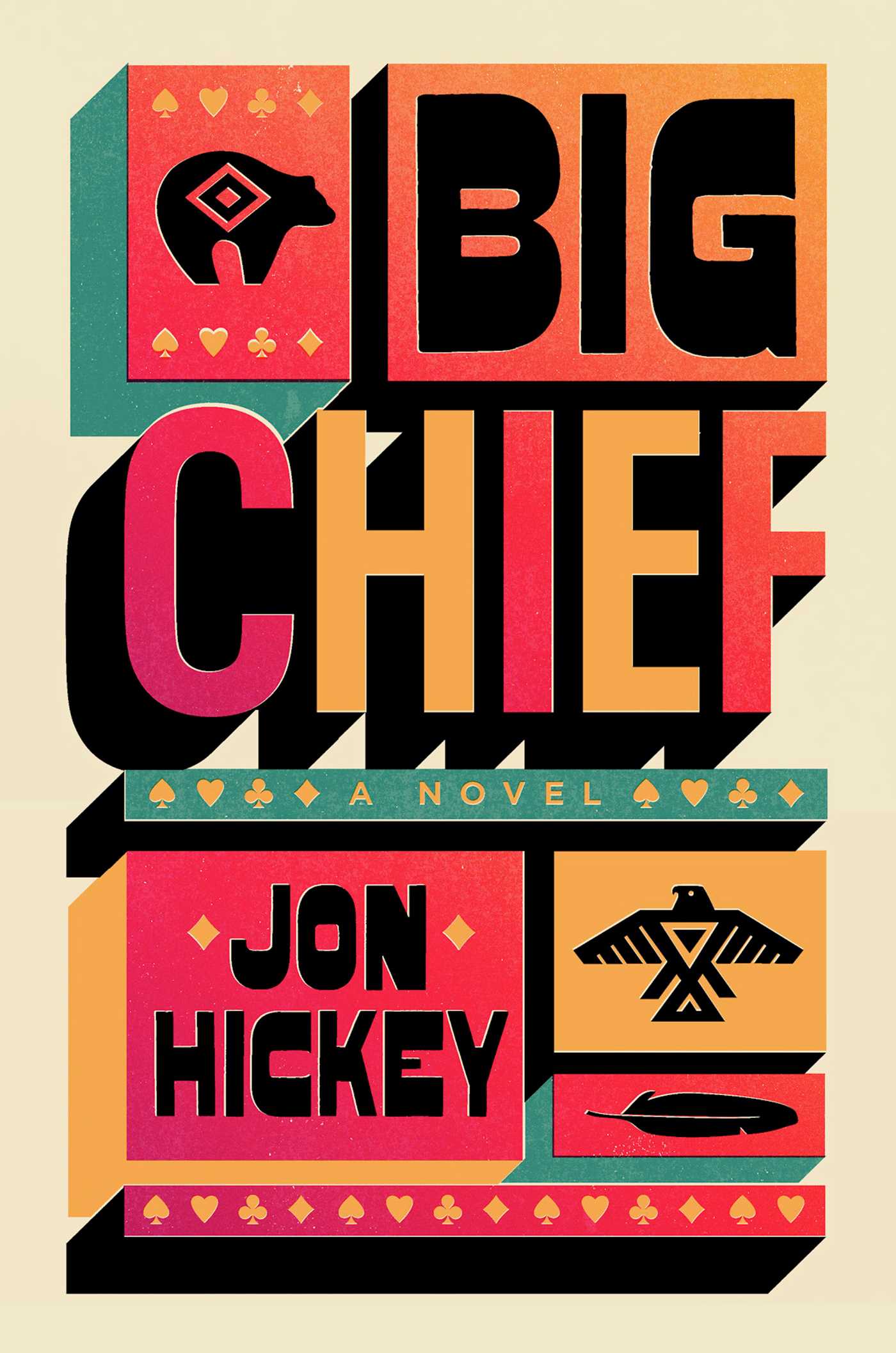
BIG CHIEF, debut Native American political/corruption story about loyalty and grief


BIG CHIEF
JON HICKEY

Simon & Schuster (non-affiliate Amazon link)
$14.99 ebook, available tomorrow

One of Electric Literature’s Best Novels of 2025!

Rating: 3.75* of five

The Publisher Says: There There meets The Night Watchman in this gripping literary debut about power and corruption, family, and facing the ghosts of the past.

Mitch Caddo, a young law school graduate and aspiring political fixer, is an outsider in the homeland of his Anishinaabe ancestors. But alongside his childhood friend, Tribal President Mack Beck, he runs the government of the Passage Rouge Nation, and with it, the tribe’s Golden Eagle Casino and Hotel. On the eve of Mack’s reelection, their tenuous grip on power is threatened by a nationally known activist and politician, Gloria Hawkins, and her young aide, Layla Beck, none other than Mack’s estranged sister and Mitch’s former love. In their struggle for control over Passage Rouge, the campaigns resort to bare-knuckle political gamesmanship, testing the limits of how far they will go—and what they will sacrifice—to win it all.

But when an accident claims the life of Mitch’s mentor, a power broker in the reservation’s political scene, the election slides into chaos and pits Mitch against the only family he has. As relationships strain to their breaking points and a peaceful protest threatens to become an all-consuming riot, Mitch and Layla must work together to stop the reservation’s descent into violence.

Thrilling and timely, Big Chief is an unforgettable story about the search for belonging—to an ancestral and spiritual home, to a family, and to a sovereign people at a moment of great historical importance.

I RECEIVED A DRC FROM THE PUBLISHER VIA NETGALLEY. THANK YOU.

My Review
: I Pearl-Ruled There There. I almost Pearl-Ruled this book. The reason I didn't, in spite of the irksome meandering of the plot, is that I liked Mitch and didn't like the coruscating cloud of people in Orange's book. I think there's a deeper...difference...in these stories than I am accustomed to. The characters in Tommy Orange's novel never felt distinctive or differentiated as I read that first segment. Hickey's characters, Mitch in particular, were more fleshed out, which allowed me to get into the twisty story. But both novels share a similarly alienating absence of interest in building tension for all they're both stories about identity-forming in the crucible of interpersonal conflict.

I am all over stories of power addicts misusing their hits of the drug. It feels evergreen and timely at the same moment of storytelling..."this could be 1888, 1988, 2008, and I'd be in the same rooms among the same people" says my headliner note...so I'm better able to get past the messy, not-obvious-why-they're-happening PoV shifts. I was sometimes a little fuddled about Mack's hold over Mitch, a lawyer who's cynical yet still young enough to believe the law has force of its own. Mack has no such illusions (nor does his political opponent Gloria) so he's, um, pragmatic and elozable. Mitch? Not sure if he's willfully blind to Mack's, um, character traits or simply prefers him to other political animals because Mack's familiar to Mitch. Mitch uses his lawyerly (though not legal) skills to fix events in Mack's favor but he's not crossing his personal ethical boundaries.

I felt immersed in the Passage Rouge Nation. I felt I understood why people love the place. I was on board for the ways and means Mack adopted to effect change, so truly *got* how he lost his moral way. I mistrusted his political opponent/loudly activist Gloria. While believing she was at least half sincere in her desire to reform the world, I felt it was not so much it wouldn't line her pockets. My evil little inner cynic got a good outing among these people.

As to why there are not-quite four full stars, I never fully bought into the plot to retain power Mack set in motion, as it seemed out of proportion thus guaranteed to blow up and cause him worse problems. Mitch saw this, I think, as a failing but he and Mack want the same outcome and share so much history; now how much sense of self does he care to put on the line to achieve a goal? Mitch is a perpetual outsider, which I relate to deeply, as well as a carrier of nasty generational trauma. It was clear to me as I read past the point I nearly tapped out that Author Hickey gets something profound about Mitch. He is among the few who is capable of making his trauma into a source of power.

I think the real reason I found this story so powerfully involving all comes down to my sense of connection to Mitch. Yeah, I'd've liked less muddling through the plot's interesting intertwining strands; I might've enjoyed Mack more had he not possessed what felt like a convenient penchant for making own goals. In the end I allowed this debut novel its imperfections because I feel, and I hope, Author Hickey will be back on our shelves soon with an even more accomplished story for us.

Monday, March 10, 2025

LESSER RUINS, shortlisted for the 2025 Republic of Consciousness Prize—United States & Canada—for Small Presses


LESSER RUINS
MARK HABER

Coffee House Press (non-affiliate Amazon link)
$9.99 ebook editions, available now

Rating: 3 very grouchy stars of five

Shortlisted for the 2025 Republic of Consciousness Prize—United States & Canada—for Small Presses Winner announced 12 March 2025

The Publisher Says: From the author of Reinhardt's Garden and Saint Sebastian's Abyss comes a breathless new novel of delirious obsession.

Bereft after the death of his ailing wife, a retired professor has resumed his life's work—a book that will stand as a towering cathedral to Michel de Montaigne, reframing the inventor of the essay for the modern age. The challenge is the litany of intrusions that bar his way—from memories of his past to the nattering of smartphones to his son's relentless desire to make an electronic dance album.

As he sifts through the contents of his desk, his thoughts pulsing and receding in a haze of caffeine, ghosts and grievances spill out across the page. From the community college where he toiled in vain to an artists' colony in the Berkshires, from the endless pleasures of coffee to the finer points of Holocaust art, the professor's memories churn with sculptors, poets, painters, and inventors, all obsessed with escaping both mediocrity and themselves.

Laced with humor as acrid as it is absurd, Lesser Ruins is a spiraling meditation on ambition, grief, and humanity's ecstatic, agonizing search for meaning through art.

I RECEIVED A DRC FROM THE PUBLISHER VIA EDELWEISS+. THANK YOU.

My Review
: I connected with this sad-sack whiner in his grief for his dead wife, and his beautifully evoked love for coffee.

Apart from that, I loathed him and wanted him to shut his moan-hole.

I live (involuntarily and with poor grace) in proximity to a grievance-led, dementia-addled, old drunk. This is like reading the smart version of him venting his legit sadness and tiresome regrets in the key of "they done me wrong" on endless repeat.

I think this book is better than I perceive it to be, due to my own life's issues and difficulties. It has to be, to have elicited from me the degree of irritated disgust with its protagonist that it did. Had it been simply a poor job of writing or storytelling, I'd simply have Pearl-Ruled it and moved on with my day.

Read the free sample that Kindle offers you, you'll know right away if this resonates with you, and if the resonance is on a frequency you enjoy reverberating to. I very much did not like this read. The reasons I've given suggest to me that others without my life circumstances will feel otherwise.

My rating being an expression of my personal pleasure in the read explains its paltriness. You will most likely, or so I hope, disagree with me.

Sunday, September 8, 2024

I'M STILL HERE: A Dog's Purpose Forever, lovely meditation on love, loss, grief, and going on anyway


I'M STILL HERE: A Dog's Purpose Forever
CATHRYN MICHON
(illus. Seth Taylor)
Andrews McMeel
$9.99 Kindle edition, available 10 September 2024

Rating: 4* of five

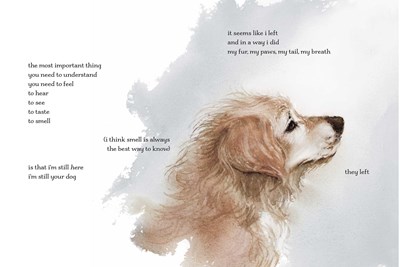
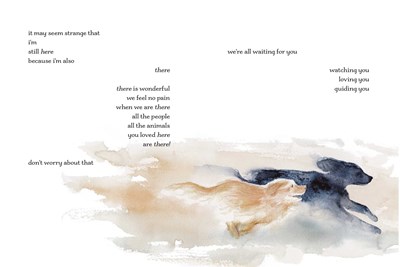
The Publisher Says: This richly illustrated book reveals a comforting narrative told from the point of view of a loving angel dog, who wants you to know, “I’m still here . . . But I’m also there where all the animals run free, with no pain, waiting for you, watching for you, loving you, and guiding you.”

Losing one’s dog is one of the most difficult experiences we go through and it’s hard to find solace. However, the profound, four-legged narrator of I’m Still Here has nothing but good news for humans. The free verse is equally rhapsodic about the eternal nature of our souls and the amazing sound of crinkly wrappers that means cheese is about to be sliced. This very good dog proclaims that love never dies, that we will meet again, and that if you ever doubted that humans are magnificent creatures, look no further than the humble ball.

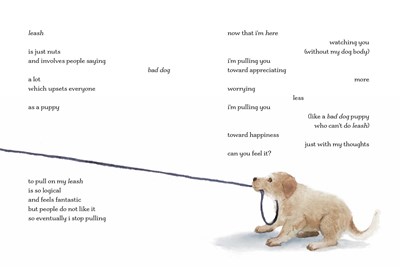
There is nothing to fear, because it is this dog’s purpose to pull you (like a bad dog who doesn’t know how to do “leash”) toward joy, and to remind you to relish all the naps and treats life has to offer.

Author Cathryn Michon co-wrote the blockbuster hit film A Dog’s Purpose. Elegant, full-color watercolor paintings by award-winning artist Seth Taylor make this sumptuous volume the perfect gesture of compassion for anyone who has ever said goodbye to a dog (or person) gone too soon, because it’s always too soon. It turns out that the best way to honor those we’ve loved and lost is to be here now, until we meet again.

I RECEIVED A DRC FROM THE PUBLISHER VIA EDELWEISS+. THANK YOU.

My Review
: Not my usual fare. I'm pretty hard-hearted abou grief and grieving, compared to most, because I feel so much of the stuff most people resonate with is mawkish and embarrassing.

Except when it comes to our poochies.

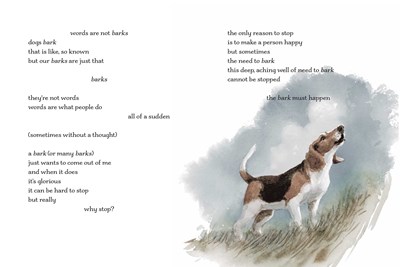
Much emotional investment in many dogs, oceans of tears when I lose them, and a beautifully warm glow that no human's ever induced in me, made this a must-read. It was sentimental, the illustrations gorgeous, and the package came through as beautiful and luxurious even on my tablet. That's good design.

So heartfelt!
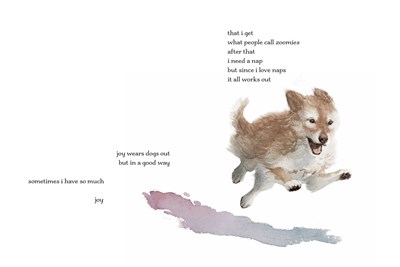
Embodying joy.

Good boy!

She's got the right idea!

Precious little pup...makes you want to schmoozle those teeny little ears, no?

I think anyone who's ever loved and lost would love this poultice for that ache.

Monday, July 29, 2024

BRIGHT OBJECTS, shiny start to a promising new career


BRIGHT OBJECTS
RUBY TODD

Simon & Schuster
$28.99 hardcover, available now

Rating: 4.25* of five

The Publisher Says: A young widow grapples with the arrival of a once-in-a-lifetime comet and its tumultuous consequences, in a debut novel that blends mystery, astronomy, and romance, perfect for fans of Emma Cline’s The Girls and Ottessa Moshfegh’s Death in Her Hands.

Sylvia Knight is losing hope that the person who killed her husband will ever face justice. Since the night of the hit-and-run, her world has been shrouded in hazy darkness—until she meets Theo St. John, the discoverer of a rare comet soon to be visible to the naked eye.

As the comet begins to brighten, Sylvia wonders what the apparition might signify. She is soon drawn into the orbit of local mystic Joseph Evans, who believes the comet’s arrival is nothing short of a divine message. Finding herself caught between two conflicting perspectives of this celestial phenomenon, she struggles to define for herself where the reality lies. As the comet grows in the sky, her town slowly descends further and further into a fervor over its impending apex, and Sylvia’s quest to uncover her husband’s killer will push her and those around her to the furthest reaches of their very lives.

A novel about the search for meaning in a bewildering world, the loyalty of love, and the dangerous lengths people go to in pursuit of obsession, Bright Objects is a luminous, masterfully crafted literary thriller.

I RECEIVED A DRC FROM THE PUBLISHER VIA NETGALLEY. THANK YOU.

My Review
: A debut novel from a very accomplished author, one whose best gift is the deft touch of characterization. I felt very connected to Sylvia from the get-go, her fuddled and bewildered survivor's guilt, her unostentatious revenge-seeking against the one responsible for her loss, and her deep but unwilling fascination with a charismatic local cult leader.

The lovely patterns Author Todd weaves among these strands, spinning her threads from the ever-renewed internal structures of loss, guilt, sadness, and outrage, don't sag or drop. They're sometimes not as harmoniously tinted as a veteran writer might choose...the mother-in-law in particular is rather paler than I'd expected, Theo the astronomer a bit too intense...but these are quibbles. Not a line out of place, not a word (even when a not-American word crops up) wasted or obscured.

The lack of a full fifth star on my rating isn't because of some sense of disappointment. I got what I wanted. The plot...revenge-driven widow struggles to cope with her loss and her survivor guilt will catch me in its web every time...is consistent, is finished with an appropriate, yet unexpected, ending. What bothered me, and this is really a very *me* thing to be tangled up in, was the comet. A comet, one on a path to get this close to Earth, is not going to go undetected for very long. We're motivated, since Shoemaker-Levy 9 smacked Jupiter so very hard in 1994, to go looking for these kinds of objects.

Okay, so that's a half-star lost. A tiny smidgeon of the tarnish on my shiny loving cup of pleasure also traces to Theo and his own warping loss. It's a trope I find painfully Writerly, is the Conjunction of Damaged Souls. Theo's issues were understandably similar to Sylvia's; his response to her darkness was believable. His discovery of her, in Australia, where he happens to be for the confirmation of a career-defining discovery, is what rings false to me. As always I want this kind of other-directed man to exist; I suspect he isn't to be found in a man about to ascend to the heights of his ambitions. I also see the facile characterization of Joseph Evans, and honestly, since he's such a bell-end of a grifter, I just don't care.

Quibbles and crotchets aside, everything Author Todd does in this story fits. The mystery plot, the way it's rooted in the ugliness of revenge, the focus of the two leads on their personal quests, all works as a whole. The manner in which the ending's made manifest felt satisfying to me. I'm struggling with myself not to spoiler it (though I really want to!) because experiencing the event blind is a pleasure enhancer.

Tyro author does a fine job, will most likely do better next time, and very much deserves your treasure and time.

Wednesday, June 5, 2024

WELCOME TO FOREVER, lovely meditation on what makes you, you


WELCOME TO FOREVER
NATHAN TAVARES

Titan Books (non-affiliate Amazon link)
$10.99 ebook, available now

Rating: 4.5* of five

The Publisher Says: A sweeping, psychedelic romance of two men caught in a looping world of artificial realities, edited memories, secretive cabals and conspiracies to push humanity to the next step in its evolution.

For fans of Tomorrow and Tomorrow and Tomorrow, Ubik, The Eternal Sunshine of the Spotless Mind and Evangelion.

Fox is a memory editor—one of the best—gifted with the skill to create real life in the digital world. When he wakes up in Field of Reeds Center for Memory Reconstruction with no idea how he got there, the therapists tell him he was a victim in a terrorist bombing by Khadija Banks, the pioneer of memory editing technology turned revolutionary. A bombing which shredded the memory archives of all its victims, including his husband Gabe.

Thrust into reconstructions of his memories exploded from the fragments that survived the blast, Fox tries to rebuild his life, his marriage and himself. But he quickly realises his world is changing, unreliable, and echoing around itself over and over.

As he unearths endless cycles of meeting Gabe, falling in love and breaking up, Fox digs deep into his past, his time in the refugee nation of Aaru, and the exact nature of his relationship with Khadija. Because, in a world tearing itself apart to forget all its sadness, saving the man he loves might be the key to saving us all.

I RECEIVED A DRC FROM THE PUBLISHER VIA NETGALLEY. THANK YOU.

My Review
: The Eternal Sunshine of the Spotless Mind only gay it up. I loved that film, and this book, for the same reasons: They show us how extremely integral to our sense of self and buying in to the social construct of reality memory is. If someone doesn't share your memory of something, is your memory wrong? If you can't find a memory in your mind, is it gone? Where'd it go?

After the strokes I had in 2023, these questions are more important than ever to me. They were never unimportant to me but have gained urgency as a result of that crisis. Reading this book with its structural similarity to my own experience of needing others...the kindness of others is literally everything, y'all, practice giving it as well as receiving it....to help me find my sense of myself in the world was satisfyingly resonant.

Questioning one's identity is a thing we're told magically stops for queer people when we come out. (Spoiler alert: It does not.) All the jostles to one's sense of self that a long-term intimate relationship brings are wildly out-of-proportion shocks to many of us. Fox meeting Gabe, meeting him again and again, and still coming up against that shocking wall of The Other as a complete and entire being not knowable to yourself, makes this a wonderful piece of relationship fiction. It's very much also a SFF exploration of overweening tech hubris. It's also a sly jab at the savior complex of the people who look at humanity as a set of problems to be solved. All of these facets are inherent in the story's conflicts, in the quest that Fox sets out on to rediscover and reintegrate himself after trauma.

I'll say that, after the success that was my read of A Fractured Infinity, I went into this sophmore effort hoping for no slump and wishing for an out-of-the-park homer. I got neither. I got the top-quality expansion on the strengths of the first novel, its relationships, and that is way more than enough to get an extra half-star from my stingy self. A full star didn't happen because the first book's film-editing style didn't thrill me this time, either. I honestly expected scene numbers and location directions. I suspect Author Tavares uses shot lists to organize the stories he tells...hoping for his sake this makes the film industry take him up and film both his stories.

This story should be of extra deep interest to readers over 35 because that group has, as a rule, experiences like Fox's and Gabe's to bring to the table. It is straight-people safe, no NSFW smexytimes to shock and/or affront you. The love story, the trajectory of a man constructing and reconstructing his life after a horrible, external trauma, ought to draw in all identities...or so I hope in this polarized world.

Very much a recommended #PrideMonth read for us and for allies all.

Monday, May 20, 2024

THE GUNCLE ABROAD, sequel...with a knowing wink...to a surprise hit


THE GUNCLE ABROAD
STEVEN ROWLEY

G.P. Putnam's Sons
$29.00 hardcover, available tomorrow

Rating: 4* of five

The Publisher Says: From the nationally bestselling author of The Guncle comes the much-anticipated sequel, in which Patrick O’Hara is called back to his guncle duties…at a big, family wedding in Lake Como, Italy.

Patrick O’Hara is finally in a league of his own…professionally. Inspired by his stint as Grant and Maisie’s caretaker after their mother’s passing, Patrick has "un-stalled" his acting career with sit-com, Guncle Knows Best. Still, some things have had to take a back seat. Looking down both barrels at fifty, Patrick is single and lonely after breaking things off with Emory. But at least he has family, right?

When his brother Greg announces his big, second wedding in Lake Como, Italy, Patrick feels pulled toward Grant and Maisie and flies to Europe to attend the lavish event, only to butt heads with a newfound Launt (Lesbian Aunt), curb his sister Clara from flirting with guests, and desperately restore himself to the favored relative status in the eyes of the kids, as they struggle to adjust to a new normal. But is it Patrick’s job to save the day? Or is simply celebrating love enough to quell the family chaos?

Gracing the page with his signature blend of humor and heart, Steven Rowley delivers the long-awaited sequel to a beloved story, all about the complicated bonds of family, love, and what it takes to rediscover yourself, even at the ripe age of fifty.

I RECEIVED A DRC FROM THE PUBLISHER VIA NETGALLEY. THANK YOU.

My Review
: Teenagers. Yikes! Maisie's dad is getting remarried to a Very Glamourous Italian, which is NOT a way to a bookish teen girl's heart. Grant is eleven, doesn't really have a lot of interest in the wedding parts, but will—he thinks—definitely prefer his life without an Italian marchesa for a stepmom, since Maisie's churned those waters. The gruesome twosome turn to their truly belovèd Guncle Patrick, their Dad's big brother, for help stopping what they see as impending disaster.

Guncle ("gay uncle" if you need a refresher) has, in agreeing to "help" them, got a plan. The issue with plans is that teenagers, with their fully adult-strength emotions and complete absence of perspective, most often see through plans and get...stroppy...when they feel manipulated.

Clever Guncle...take the kids on a European tour, since he's already finishing up a film role in London, and talk to them...remember "Guncle Rules"? now they're "Love Languages"...while working through their fears about their Dad moving on from their Mom's early death. It will, not coincidentally, help him move on from his recent breakup with Emory, whom I feel sure we've all forgotten from The Guncle. At any rate, it's a welcome distraction from the entertainment business for a successful...again...sitcom...again...star, and a man about to turn the Big Five-Oh. Yep, the guy who found being loudly reminded by his loving niece that he was forty-three tantamount to a hate crime is a half-century old.

Does his wiliness now exceed his willingness to be there for his family? Close-run thing if you ask me.

Well, Rowley's still got his humor vein open. I loved this bit:
“Sequels are either too bloated, too stuffed with B-team actors or characters or Ewoks—things that weren’t good enough for the original. A cash grab to profit off something that was probably a fluke in the first place.”

Cassie glanced at the surrounding patrons, perhaps wishing she could dine with one of them.

“The only time it maybe works—and I mean the only time—is when there wasn’t an ending that was entirely happy, when not everything was tied up in a neat little bow. Otherwise you have to undo someone’s happy ending to create more drama for your characters, and no one likes a happy ending undone. And what stories these days don’t have happy endings?”

Thus Patrick to his long-suffering agent...and Author Rowley tipping his hat to the audience. It's not the first time I've been here, so pay me the respect of telling me you're aware of that fact. I appreciated it, and was simultaneously amused by it. It joins the host of amusing moments that this whirlwind tour of Europe that must be completed in time for the destination wedding on Lake Como...shades of Patrick Dennis and Around the World with Auntie Mame, another sequel that has to undo a happy ending...and you get a fun, funny summertime escape in book form. That is a wonderful lot.

Of course, this is not the first time we've met these characters, so there's a lost sparkle that can't be recreated no matter what one does. In its place is a luster, the warm burnished glow from a fine silver samovar, one that always spills its tea warmed to perfection into your perfectly prepared cup. Sweet...the return and humanization of oldest sister Clara in her latest reinvention of self...bitter, Patrick's jealousy of the marchesa's lesbian sister who woos her way into Maisie and Grant's affections...fun, the comical nightmare rehearsal dinner like something from The Philadelphia Story, only...um...earthier, and honestly de trop. Tropes. Well polished, gleaming tropes that most story-loving readers want to read because they are familiar and dear and relatable. What story about a wedding that deserves one's attention at all doesn't feature some concatenation of mishaps?

The utter charm of how the world rights itself in romantic fiction is a source of delight.

Come be delighted. (But dear GOD, the w-verbing has got to stop!)