Pages
- Home
- Mystery Series
- Bizarro, Fantasy & SF
- QUILTBAG...all genres
- Kindle Originals...all genres
- Politics & Social Issues
- Thrillers & True Crime
- Young Adult Books
- Poetry, Classics, Essays, Non-Fiction
- Science, Dinosaurs & Environmental Issues
- Literary Fiction & Short Story Collections
- Sookie Stackhouse/Southern Vampire Books & True Blood
- Books About Books, Authors & Biblioholism
Showing posts with label grieving. Show all posts
Thursday, October 22, 2026
TO THE EAST OF THE EAST, LONGLISTED FOR THE 2026 NATIONAL BOOK AWARD in TRANSLATED LITERATURE
TO THE EAST OF THE EAST
PING LU (tr. Jeremy Tiang)
World Editions (non-affiliate Bookshop.org link)
$14.99 ebook, available now
Rating: 4* of five
The Publisher Says: LONGLISTED FOR THE 2026 NATIONAL BOOK AWARD in TRANSLATED LITERATURE
Min-Hui's travels from Taiwan to Beijing in search of her vanished husband in this multi-layered meditation on marriage and freedom from Taiwan's most sophisticated contemporary voice.
While chasing business opportunities in China, Min-Hui’s husband disappears without a trace, forcing her to uproot her quiet life as a writer in Taiwan and travel to Beijing, where the chaos of the city leaves her reeling. Does the Chinese government truly have her best interests at heart, and how hard are the authorities looking for her missing husband?
Marooned in the ancient capital, Min-Hui encounters the enigmatic Shangjun, a self-proclaimed human rights activist who seeks refuge in her hotel room. As their relationship blooms, Min-Hui allows him to read her novel in progress: a young Qing emperor confined within the Forbidden City becomes fascinated by pirate merchant Zheng Zhilong’s tales of the Taiwanese seas. All the while, Min-Hui contemplates the discord in the marriage she is desperate to save. Exploring the universal longing for freedom with her signature multi-layered narrative, Ping Lu interweaves Min-Hui’s search for her husband and her Beijing love affair with the historical backstory of her novel and unsent letters from her vanished husband.
To the East of the East offers a profound meditation on liberation, destiny and the contingencies of national histories by one of Taiwan’s most sophisticated contemporary voices.
I RECEIVED A DRC FROM THE PUBLISHER VIA EDELWEISS+. THANK YOU.
My Review: As best I recall, or can find evidence for, this is my forst-ever encounter with Ping Lu's work. Quite a force in Taiwanese literature, her publisher tells me in this book's attached biographical details "Ping Lu writes on a wide range of topics, including society, culture, gender, politics, history and human rights," then goes on to list Taiwanese literary prizes she has won.
Jeremy Tiang's translation tells me a lot about why that's the case. It's a layered, complex read; Min-Hui's marriage and its anger and stress, Chinese/Taiwanese political intertwining with its sibling/spouse/parent-child resonances that never settle into a predictable, steady state jitter and flare at each other; the history of the ancient culture is presented in an historical novel that's embedded in this modern palimpsest of story.
It's a lot. It's barely over two hundred pages. Pay attention.
I got a vibe as I read the story that I was missing something, that there was a layer of...a resonant bell ringing that I was too far away to hear but I could feel. I looked for reviews by native speakers to see if something was not in the translation. Turns out no, but in a curious way yes. Min-Hui gets two PoVs, one grieving, one knowing; the missing husband gets one; then there's the historical novel. In the observation of people who read the Mandarin version, there is a distinctive and different way the language feels between the PoVs. Like the lack of an English version of "tu" that hobbles Romance-language translations when a tonal shift in character familiarity or intimacy occurs, its shade lingers for the sensitive reader. English gives its speak/readers so much, but not a substitute for tenses, voices, and cases in other languages.
Min-Hui traveling the distance from Mexico City to New York City, with approximately the same change of prevailing culture, and discovering as a result that people who don't communicate are prone (doomed, I'd say honestly) to have different relationships, was a poignant story. Working out her feelings with the historical novel within the novel worked surprisingly well for me. I was not sold on it at first but came to see this technique as almost painfully poignantly demonstrating Min-Hui's functional overthinking issues that condemn her to a half-life of never reaching out, connecting; until one reads the letters it seems literally impossible for her to hope to change.
Never say never.
Wednesday, October 7, 2026
EVERY STORY IS A LOVE STORY, letting go of grieving
EVERY STORY IS A LOVE STORY
IMBOLO MBUE
Random House (non-affiliate Bookshop.org link)
$13.99 ebook, available now
Rating: 4.75* of five
The Publisher Says: From the New York Times bestselling author of Behold the Dreamers and How Beautiful We Were, a captivating novel about love lost—and the weight of regret
What if I’d never gotten into that car? What if I’d pulled out of the driveway five minutes earlier, or ten minutes later?
Three years ago, Wolo’s wife was killed in a tragic car accident. In an instant, the great love of his life was gone, and so was their beautiful future. In the face of a loss that seemed insurmountable, Wolo has slowly rebuilt a semblance of a life: he goes to work, hangs out with a small circle of friends, and fends off the matchmaking efforts of the older women in his family. The grief that dogged him has, with time, become a little gentler.
Until a letter arrives one day, unbidden, threatening to upend his life once again. It is from Victoria, the woman who was behind the wheel that terrible day. Wolo’s family pastor tells him the letter is the work of the devil; his mother expressly forbids him from making further mention of it; his father’s second wife calls, from Cameroon, to tell him to destroy it. But Wolo ponders it for days, and ultimately agrees to meet with the woman who killed his wife. When he does, the compassion and deep remorse of the woman affects him in ways he had never imagined, and he begins to wonder if the long road to healing can be shared.
What do we owe to those who have hurt us? Are we defined by our worst moments and our deepest regrets? And, more than anything, can forgiveness ease our suffering? Moving and full of life, Every Story Is a Love Story charts the uneven path from heartbreak to healing.
I RECEIVED A DRC FROM THE PUBLISHER VIA NETGALLEY. THANK YOU.
My Review: Wolo found true love with Yoma. It's the loveliest moment in someone's life: love is joyous before Life has its way with you, and Wolo? He was absolutely at the peak of joy because Yoma was pregnant!
Life had its way with him.
Victoria causes the accident that ends Wolo's happiness. It is impossible for Wolo to recover from this hideous, disfiguring agony of grief, and however loudly he tells his mother, his stepmother, his matchmaking aunties this he is still urged to date, to love again, to move on.
As if some random woman will be Yoma again, will be The One, will fill his life with laughter and excitement...impossible. And then. Will you look at that. Victoria writes to express her remorse for the awful thing she caused to happen to him. To ask Wolo to meet her and process their shared grief.
The Greek chorus of Wolo's life is unequivocal: Do not do this. Don't even think about doing this. You're morbidly obsessed with your loss already don't reinforce it is the universal subtext of their advice. Wolo's stunted, limited existence, the one he resists altering because letting go of his rage and agony feels like killing Yoma and their unborn twins again, has to change or Wolo will die. From the inside out.
So he says yes.
It was here I began to see why Author Mbue chose flashback, a style of storytelling I often find disinvolving, for Wolo's process of healing. It is reinjuring him, it is shoving his head in the waterboarding bucket again and again...it is allowing him just enough air to survive...it is letting him pull his feet under him on the wet floor and lurch and stumble away from the bucket...it is the light that shows the hand extended to him, showing a human is reaching with kind and helpful intent into his dark, drowning life.
It shows Wolo Victoria. Her pain from causing him pain. Her knowledge that she harmed Wolo, she (without malice) stole his life from him and wants so badly to do anything to help him because only that will help her.
And he reaches back.
Everything else I could say is spoilerific. I didn't give it a full-five rating because of spoilery stuff, but look how close I came. (Side note: I am so very happy to have as of October 2026 the ability to give quarter-star ratings on the country's biggest book-discovery engine.) It is Author Mbue's gift to be able to visit the darkest places in a person's life while they are floodlit in Capitalism's distracting material abundance and spiritual moonless midnight. This is another of her immigrants' tales of fitting in being less important than settling down.
It is a beautiful story with some odd edges to keep it from melting into the pleasant sameness of the bulk of entertaiment. That hard-to-differentiate mass gets so stultifyingly dull.
Monday, September 28, 2026
MAY WE FEED THE KING, Booker-shortlisted poet's novel
MAY WE FEED THE KING
REBECCA PERRY
Transit Books (non-affiliate Bookshop.org link)
$17.99 ebook, available now
The Independent Press Top 40 Bestsellers: Fiction For the week ending November 3, 2026
SHORTLISTED FOR THE 2026 BOOKER PRIZE Winner will be announced on 9 November.
Rating: 5* of five
The Publisher Says: She is a curator, who spends her time dressing the rooms of historic buildings to bring them to life. But in the lush private quarters of a medieval palace, she finds herself so transfixed by the reign of an almost-forgotten King that the edges of her life begin to blur.
He is a reluctant ruler with no hunger for power, rushed to the throne after the untimely deaths of his older brothers. But it isn't long before whispers begin to fly around the court. And with the growing belief that the King is not fit for the throne comes the idea that another might rule in his stead.
May We Feed the King dances between the lives of a historical subject who risks the future of his kingdom and a woman who turns to the past to hide from her present. Laced with desire and longing, it is a playful, stirring meditation on history and storytelling: on what makes a King 'Great', and a life meaningful.
I RECEIVED A DRC FROM THE PUBLISHER VIA EDELWEISS+. THANK YOU.
My Review: A poet penning a literary novel about an unnamed museum curator grieving an unstated loss while she is engaged in a project that reimagines the physical world of an unnamed surprise king in his unnamed palace on its 750th anniversary of foundation and use.
I have been deciphering archives and curating semi-permanent scenes (domestic, culinary and otherwise) in medieval buildings for the past twenty-two years. When you see a replica feast scene in the great hall of an old building, I am the person who placed the pomegranates beside the pie, and for a very good reason. When you come upon a room, cordoned off with red rope, beyond which you see an open book on a desk, a chunk of bread picked hollow, and a quill in an ink pot that is empty of ink, I am telling you something about the person who lives in that room. The ink may be purple, and even though no one can see it in the straightforward sense, one in a thousand people will sense it. Ultimately, I want my work to communicate with everyone, but it is those people I really hold in my mind.
Sounds drearily precious, like a poem, like all the pit-sniffing Literary Novels we're subextually told us mouth-breathers are too dullwitted to Appreciate, no?
No. And no one is more surprised than me. I was interested in reading the story because, well, Booker snobbery is the honest way to say it. (I'm still salty that US Anglophone authors are now eligible for what was explicitly a Commonwealth storytelling prize...twelve years and not over it yet.) As the story unfolds in past and present, the real reason I kept going and going hit me...I'm a sucker for the hyperfixated, the deep-focusing narrow-vision-having wonks of History. It's endlessly interesting to me that someone could get this interested in creating an immersive experience for a modern audience of small size centering the medieval world of a minor, forgotten royal. Just to conceive of it is interesting abd then to sell the idea, to research the minutiae, to think through the problems inherent in the process...yep, I'm in!
Of course what's driving our curator to the bizarre lengths has to be very, very painful, very overwhelming to demand this depth of avoidance; it's a good decision for Author Perry to leave it imprecise, unfocused because specificity ruins relatability. I've been that deep in grief so I suppose there's more than a little fellow feeling driving my interest. I get in a visceral way the desire to lose one's hurting self in an all-absorbing, unrelated subject that can't trigger hurting memories or aching similarities that will fuel the downward spiral: "There’s something that can happen when I am embarking on a project on the scale of the work at the palace, and so heavily focused on food scenes: my appetite sours, and real food becomes some-thing of a threat. I can’t be sure if it is becoming more or less real, too much itself, too vivid, or something altogether different. Whatever, it makes me not want to eat."
Probably the short chapters Author Perry alternates between present and past are going to annoy some readers enough to cause comment from them. I'd like to offer an alternative to the annoyed noises by saying that mosaics are made of tesserae that look like nothing while the artist is assembling them to a pattern they alone see entire. But the pieces that look so unlikely, so unimportant, are integral to a whole we need patience to experience as intended: "One evening on the way home from the palace—after a full day in the shadow of the archives, where we had sat, the archivist and I, my left biceps pressed against their right, making a double-width human—I stopped in a local bar for a glass of wine.
These are things that I had forgotten how to do, that I had forgotten were possible."
It can enrich the experience of seeing the whole very much to recall the process of being present as it's made. This poetically rich story, a concentrated, allusive work of reckoning with a life's boundaries and endings is the reward a reader will remember and treasure long after the book itself retires to its shelf-bound afterlife.
Wednesday, September 23, 2026
THE STRANGERS, autofiction? metafiction? thought-provoking grief-study no matter how you look at it
THE STRANGERS
NAOMI ALDERMAN
Little Brown and Company (non-affiliate Bookshop.org link)
$14.99 ebook, available now
Rating: 4.5* of five
The Publisher Says: They came from nowhere, and now they are everywhere.
A few months after her mother dies, the novelist Naomi Alderman sets up a wildlife camera in the back garden of her parents’ home. It captures the first image of a strange new animal. Low to the ground, about the size of a badger, flat face, long, trunk-like nose. Suddenly these “mimmoths” are as common as foxes or dogs. And no one knows where they’ve come from.
As Alderman negotiates the territory of grief—a place with its own logic and rhythms – the mimmoths spread. From the UK east and west, to the United States, to Russia, to India. They seem harmless, but oddly intelligent. They cannot be captured, they will not take food from humans, they have their own purposes.
Alderman cannot shake the feeling that she has a particular connection to the creatures. Or is she just succumbing to ‘mimmoth psychosis’? As the impact of the mimmoths increases, she is pulled into the cross currents of conspiracy theories and global power struggles. Have her deeply personal forms of mourning lent recent events a surreal air, or is our reality changing drastically and irrevocably?
From the award-winning author of the international bestseller, The Power, The Strangers is a thrillingly original and devastatingly moving novel that blurs the lines between fiction and reality, inviting us to reconsider what it means to be human. It’s like nothing you’ll have read before.
I RECEIVED A DRC FROM THE PUBLISHER VIA NETGALLEY. THANK YOU.
My Review: Grief does very weird things to a person. I'll hold up my hand and admit I've hallucinated (officially) the sound of my thirty-five ears gone belovèd's voice more than once over the years. That one, however, is nothing compared to the mimmoths.
Shared, collective grief powers the mimmoths, of course; no way are fun-sized mammoth-y entities that just...appear...as Naomi Alderman's mother dies, her father's decline speeds up, the planet's climate and civilization's bad-crazy frag-grenade era heat up, just totally unrelated. There is plenty of evidence that Naomi Alderman is not the only one seeing them!
Mass psychosis? Permaybehaps...the mimmoths being widely seen hasn't meant they're easily, or even at all, interacted with, no feedings by humans, no captures (just killings) by humans, nothing tangible except ubiquity. Oh, and lots of (potentially) related effects stemming from being in the vicinity of the mimmoths, healing or spontaneous abortion or death, but SOMEthing momentous occurs to some people (Naomi Alderman included), so of course the conspiracy-theory areas of society have new fodder for old conspiracies and material to make new ones.
Book-Naomi Alderman and Author Naomi Alderman are entwined narratively and intertwined emotionally, as the genesis of the story in mother-loss is real world; the mimmoths and their effects, well...the effects are real, and while I haven't seen a mimmoth I'd love to. What led to Author Naomi Alderman creating this lovely, odd, off-kilter sci-fi memoir is the awfulness of needing a way to work through the random events in a world where the god you thought was yours turns out not to exist and nothing you've thought was real is, in fact, enduringly persistently real, the stuff that god should prevent/ameliorate isn't getting better, and love does not conquer all...but Love persists, endures."Everyone knows the saying: Whatever doesn't kill you makes you stronger.
But it's not true. Some things don't kill you but just leave you permanently weaker," as Naomi Alderman muses.
A better way to present the fragmented sensation of living on after the death of a love object but not the love is hard for me to conjure. A mimmoth is real, if not tangible; it affects the world but has no effect on it, like a past, like a dead love; and comes from a silent nowhere without explanation like the Orthodox Jewish god that Naomi Alderman has lost.
It is in blurring the lines separating Author Naomi Alderman's terrible emotional, psychic blows, and the consensus-reality immiseration of end-stage capitalism, that this story's impact is most powerful. Creating, summoning the mimmoths, endowing them with potency of emotional and practical sorts...affect and effect...Author Naomi Alderman makes this a story to be reckoned with. As Author Naomi Alderman processes the profundity of her loss (mostly the loss of possibility, a different, better future) after her mother's death, Naomi Alderman reckons with the world's losses and the loss of the world through her semidivine, partly malign living-but-not mimmoths.
Like every other grief considered I've ever read, this is not a story for its own sake or an entertainment to be enjoyed for a while then largely forgotten. It's not tidy enough for that. Manicured Versailles gardens are not the analogues here, but the designed and controlled wildernesses of Capability Brown. Visibly as different as it's possible to be, yet each is a planned, designed, shaped, undergirded and attention-directing space to be within. Moving through The Strangers will give you the feels a great piece of writing is so good at delivering. Don't expect Versailles, enjoy the wilder, less trammeled world of Capability Brown, and I expect you'll feel amply rewarded.
Wednesday, September 9, 2026
THE LIGHT BETWEEN THE PINES, even Kirkus likes it!
THE LIGHT BETWEEN THE PINES
WARREN READ
Ig Publishing (non-affiliate Bookshop.org link)
$18.95 all editions, available now
Rating: 4.5* of five
The Publisher Says: In the stillness of a pine grove, a wrecked car tells a story no one wants to hear.
Red Miller has lived long enough to know when someone is lying, especially his daughter, Gina. On an afternoon in early fall of 1979, Red gives Gina’s boyfriend money he knows he won’t see again, then watches his daughter slip further away, wondering where it all went wrong. Five years later, a call from an Idaho deputy changes everything: Gina has vanished after a fatal car crash, and Red has a grandson he’s never met. Haunted by his failures and the memory of a wife lost too soon, Red travels to a small Idaho town in search of answers. But what he finds is more than a mystery; it’s a reckoning-of love misspent, of the fragile ties that bind us, and of the strange, stubborn hope that still lingers in the quiet spaces between regret and redemption.
The Light Between the Pines is a powerful, slow-burning portrait of family and fallout, told with the sparse beauty and emotional precision of Kent Haruf’s Plainsong and Richard Ford’s Wildlife.
I RECEIVED A DRC FROM THE PUBLISHER VIA EDELWEISS+. THANK YOU.
My Review: A grandparent who goes into battle for a dead child's child is a story that resonates with old-man me. By far my favorite iteration of it is Let Him Go by Larry Watson. This one's a close second.
Red Miller has the relatively common parenting experience of looking at a child's mate choice and thinking, "did I do *that* crappy a job?" Another not-uncommon event is the child whose own child is hidden from the parent for complicated emotional reasons, or uncomplicated practical ones; there are a million ways a family can fall apart, and Red's living through one or two...if the Idaho deputy on the other end of the phone telling him about his daughter's involvement in a fatal accident and subsequent disappearance, he's feeling like there's a few of her steps down the road of irresponsibility that he is due to catch up on.
Seeing everything unravel is likely a very common experience among the older people, no matter how hard one works there's often enough something that comes along to muck it all up. His wife's early death, his subsequent descent into private grief, his daughter's youthful rebellion, all leading to this moment...well, the details are likely different but you probably know these emotional blows from having endured them.
Now, of course, he has to head east into territory he doesn't know, isn't excited to get to know, and meet people he could do without ever having known existed to see what the hell he has to do to get this mess cleaned up, see if he can actually find a future with his family after losing the heart of it, losing his heart, and making every last mistake he could for the past five years right again.
The quiet, compact...just over 250pp...story is never mired down in the gloopy goofy introspection that can get so tiring when what you want to read is a story not a mea-maxima-culpa. Instead we see the life that Red Miller wants is not the one he has because he's doing a lot of work in the present to create a different one. It's so refreshing; it shows Author Read really took on board the lessons of writing his first book, The Lyncher in Me, about his appalling family secret. It's best to set the scene, say the least possible number of words, and let we-the-reader think it over and decide what we're going to do with it all.
Well applied, that lesson; it's made a terrific story into a pleasure to read.
Sunday, July 12, 2026
EVERYTHING WAS BEAUTIFUL AND NOTHING HURT, how I would know I was dead is just that

EVERYTHING WAS BEAUTIFUL AND NOTHING HURT
BEN REEVES
Avid Reader Press (non-affiliate Bookshop.org link)
$14.99 ebook, available now
Rating: 4.5* of five
The Publisher Says: Travis is Death in the modern world. He wears jeans and a T-shirt and lives in a small, grey town. His job is to offer people comfort in their final hours of life. He’s stoic, gentle, and a little naive, despite everything he knows. He’s young and handsome, despite who he is. Each death he witnesses is meaningful to him; he listens, never judges, and most importantly, never tries to change anyone’s fate. He knows that every life must eventually end to maintain the balance of the universe and he respects the cycle.
Then he meets Dalia, a midwife, and her boisterous eight-year-old daughter Layla, who live across the hall. As Dalia and Layla come to embrace Travis, it becomes more difficult to maintain the detachment that’s allowed him to function for so long. Their time together teaches him what’s truly important in life—and what might be irrevocably lost in death.
Written with radiant warmth, wisdom, and compassion, Everything Was Beautiful and Nothing Hurt is a timeless story about appreciating life, accepting its end, and finding our place in the universe—especially when it feels most impossible—that will resonate with anyone who has ever loved and lost or worried at time’s passing.
I RECEIVED A DRC FROM THE PUBLISHER VIA NETGALLEY. THANK YOU.
My Review: Remember Meet Joe Black? Or, if you're a reader my age, Salley Vickers' novel Mr. Golightly's Holiday? We're all interested in divine personifications of absolute power...god and death being in Western cosmology the two supreme beings...and we need to tell stories as much as we need to breathe, so it's inevitable that there will always be new and interesting ways to personify them. (And funny ones, if you're irreverent like Sir Terry Pratchett. Author Ben Reeves is staking out a bit of that territory in this story.
Travis is an ordinary guy who also happens to be Death. Literal Death. The Grim Reaper wears jeans and t-shirts. Sure, why not. Travis comforts and guides people into death, so you already know it's not going to be a Pratchetty jollification of a story. Seeing the personification of death as more or less a death doula is, on its face, reductive because Death is permanent, absolute, fundamental, and utterly unknowable like Life is. Reducing a terrifying cosmic power to a guy in jeans and a t-shirt who helps you, guides you with kindness and sympathy, through the emotional landscape of The End, feels like lèse-majesté to me. Like euphemising "he died" into "he has passed away," if feels like emotional dishonesty to me, like a pointless attempt to pre-feel the horrible twisting agony that is grief. (It doesn't work, any more than not saying "Voldemort" did. Any time one uses the passive voice, dishonesty is stinking up the sentence.)
Enough abstraction. The action in this story is heavy, the emotions surrounding death are never otherwise though sadness is not necessarily always foregrounded. Author Reeves chose, rightly in my view, to give Travis a first-person narrative voice in stream of consciousness style. It is how we experience life, so why wouldn't Life's intimate partner use it? It's also effective in conveying the immediacy of Death's role in one's life by distancing our mere mortal PoVs into third-person limited narratives.
I think that won't sit well with some readers, but it very much worked for me. It made the stakes so clear: at the end of life, Death is the main character. He (in this case) looms large, his thoughts and his emotional investment in us are all mortals have in that transition. It was a very interesting take, one I don't recall seeing in a novel before. (A dim, distant tocsin sounds about a short story set during a pogrom in Ukraine—anyone else hear it?)
What made this creative and intelligent Death-centered story so interesting to me was the clear intent to elicit powerful responses in the reader was never shortchanged by pulled punches. I find the central conceit just a bit dimmed down for softening sharp edges; but within that mild criticism of intentional diminishment of robustness, the action isn't kinetic to make the story external. It's a story of the interiority of death, as experienced and related to us by Death.
It's a superior read, told by a talented storyteller, in a creative way that enhances its message of coping with emotion at te end of life.
Monday, April 20, 2026
TEMPORARY PALACES: A Novel, lovely reckoning with the past story
TEMPORARY PALACES: A Novel
JEFF MILLER
House of Anansi Press (non-affiliate Bookshop.org link)
$22.99 paperback, available now
Rating: 4* of five
The Publisher Says: In the fevered summer of 2001, charismatic activist Rob and his collective set up a squat in an abandoned house. His bandmate and lover, Ben, watches anxiously as his own plans are threatened by Rob’s choice of radical politics over music. Meanwhile, photographer Alex finds herself torn between documenting the chaos of the scene and saving the friendship that binds them together. When the police break up the squat, Rob vanishes, and the dream dies.
Ten years later, Alex and Ben find each other again—she’s conquering Montreal’s contemporary art world, he’s running a thriving restaurant in Ottawa. But their success feels hollow. As they excavate their shared past, they must confront the ghost of Rob’s disappearance and the trauma that pushed them apart.
Pulsing with the raw energy of basement punk shows and DIY creativity, late-night manifestos and first heartbreaks, Temporary Palaces is a blazing debut that captures a generation caught between idealism and survival, art and activism, the dreams that define us and the compromises that save us.
I RECEIVED A DRC FROM THE PUBLISHER VIA EDELWEISS+. THANK YOU.
My Review: Youthful idealism and the irrepressible need to create meet, collide, intertwine, then break apart. After decades apart, two survivors of these intense youthful heartbreaks meet again and start sorting out the pieces of everyone's wreckage. They each have some from the other, and from vanished Rob, and both have used these bits and shrapnel to create the less volatile selves needed for settled adulthood.
They've each built a life that suits their ideas of themselves as developed in the nuclear reactor of Changing The World, but haven't seen each other as they've done that building. The mercurial, elusive Rob, on the other hand, left lots of shards in their souls. Coming to terms with wild, passionate love that explodes is probably one of the most relatable love stories ever written. Alex isn't sure she can sort out her feelings, Ben is sure he can't despite his now-grounded life doing the most nurturing, practical thing anyone can do: feeding people for a living.
Alternating PoVs per chapter kept the momentum of each character's story moving at a solid pace. I never lost sight of their personal or mutual struggles with the way the past-them blew stuff up, made their passionate connection into sharp flying pieces of toxic pain that flew into each other as well as shoved their greatly belovèd Rob away. Neither knew then that guys like Rob, men on a mission to tear shit down and burn the pieces, never stay in one place, never settle into the lovely mundanity of learning one other person's heart well enough to recite their tells. This story is the pair of them finding out what passion costs, how long you have to pay the interest on its loan of excitement, and what illusions sustained them that might still be viable.
Nostalgia for that time in life I can understand and share. I recall the Aughties very, very differently from these characters. Of course, the US is not Canada and a middle-aged man is not an idealistic young person embarking on life. My take on Author Miller's novel is one of seeing a story unspool, taking an interest in it, and remaining at a remove because it wasn't my past.
A pleasure to read all the same.
Saturday, March 7, 2026
THE VALLEY OF VENGEFUL GHOSTS: A Novel, grief and grieving and loss drown a woman
THE VALLEY OF VENGEFUL GHOSTS: A Novel
KIM FU
Zando/Tin House Books (non-affiliate Bookshop.org link)
$9.99 ebook, available now
Rating: 4* of five
The Publisher Says: An eerie, spellbinding novel of grief, ghosts, apocalyptic rain, and slowly splintering reality, from an author who “writes with a pen as sharp and precise as a lancet.” —PEN/Hemingway Award judges’ citation
In the aftermath of her mother's death, Eleanor is unmoored. For years, her mother orchestrated every detail of her life—from meals, to laundry, to finances—as Eleanor focused on her career as an online therapist. Left to navigate the world on her own, Eleanor clings to her mother’s final directive: use her inheritance to buy a house.
Desperate to obey her mother one last time, Eleanor impulsively buys a model home in a valley-turned-construction site, a picturesque development steeped in a shadowy history. It feels like a fresh start, until the rain comes—an endless, torrential downpour. As water seeps in through the house’s cracks, the line between what is real and what is not begins to blur. Haunted by the stories of her clients, a stream of workmen and bureaucrats she can’t trust, and visions of ghosts from her past and present, Eleanor’s reality unravels, and she is forced to reckon with the secrets she’s buried and the choices she’s made.
I RECEIVED A DRC FROM THE PUBLISHER VIA NETGALLEY. THANK YOU.
My Review: When something is too good to be true, it is. Nothing is more guaranteed to blind you to that reality than desperation. Eleanor's mother, Lele, has controlled Eleanor's life to the point of a toxic...but comfortable...dependence on Lele for the mechanics of living. Tedious adulting offloaded onto a partner is seldom a good idea, and when the partner is a parent it is catastrophic. Parents die. it's part of the bargain. Eleanor finds Lele's death more than merely unpleasant, more than simply painful: it's her utter undoing. Lele cooked, laundered, managed Eleanor's world. Her inevitable death, far too early it's true, unmoors Eleanor in every way.
Parents expect their children will grieve on their death but continue to live and to manage themselves as one has taught them to do. Lele has not taught Eleanor anything of note, for complicated reasons no doubt but the effect is now all Eleanor has is last instructions: Buy a house.
Ever bought a house? It is complicated, it is intimidating, it is unnervingly legal and permanent and deepy scary. Eleanor is ludicrously ill-suited to the task on every level. It is no wonder she, deeply immersed in her business life of being a therapist, makes practical mistakes with emotional consequences. She can afford this really cool-sounding house in a stunning natural setting? How? That should be so far out of her reach...what's the catch, where's the trigger, what?? But you need to be savvy to the ways of the world to see that from the off, Author Fu writes this description of the realtor who sells her this place: "His thick hair was slicked back, coiffed high off his forehead. He smiled toothily as she approached. He held his hand out for a shake, and a large watch slid out of his jacket sleeve, the band and bezel the same chrome brightness as his car."
Run, Eleanor, run! But of course she doesn't. So she ends up with the whitest elephant of all white elephants. And the unraveling begins.
It's here where I leave Eleanor and her plight to you to discover. I took the trip to tell you if it was one worth taking, and why. It's a modern take on horror, this dread and unmooredness, this sense of waters so much deeper than you thought fro looking at them, this...unease. Eleanor stands in for us on the cusp of a revolution no one wants, on every front. No matter how much AI slop "They" feed us, people don't care about it; no matter how much doubt "They" fling over reality, summers are hotter and winters weirder and more violent; so there's a constant pressure to mistrust your own sense of Reality and leave everything to "Them" to manage.
It's not going well. For us, for Eleanor, for the planet.
The way the story unfolds is intended to build that...wrongness, unease, unhappiness...into the experience the reader and Eleanor exist inside, to make the boil expand so it will finally pop, them be cleaned out. But by whom? At what cost in pain and unpleasant side effects? Can we, in fact, clean up our own mess?
Not if we, like Eleanor, have no real connection to the way "They" are running reality on our behalf.
It's short enough as a read to be a weekend's focused read. It's intense enough as a narrative to support that kind of sustained attention. It's a deeply satisfying immersion into the slow awakening of a grieving soul to the cost of extending childhood far, far too long. It's hard to be alive in a world beset by challenges too big to make a positive difference in by one's self.
Welcome to adulthood. Go out and do the work, no matter how scary or hard, because the alternative is drowning.
Monday, March 2, 2026
THE DISAPPOINTMENT, debut novel of queer loving and grieving and connecting
THE DISAPPOINTMENT
SCOTT BROKER
Catapult (non-affiliate Bookshop.org link)
$14.99 ebook, available now
Rating: 4.5* of five
The Publisher Says: Set during a doom-fated vacation to the Oregon coast, The Disappointment follows a couple trying to hold close to one another while a bent reality—warped by personal losses and an ever-increasing drift toward the surreal—threatens to unravel them
It’s the night before a much-needed vacation, and Jack—a former playwright mourning his failed career—catches his husband, Randy, packing his mother’s urn. They had agreed: no mother on this trip. Parents, living or otherwise, aren’t the ideal guests for romantic getaways. But Randy has been carrying his mother’s remains everywhere since her death, and he isn’t ready to let go now.
Despite its natural beauty and kitschy charm, the Oregon coast does not provide the respite the couple seeks. Instead, their surroundings and encounters with locals grow increasingly surreal as the days pass. An overly-dedicated Method actor, tantra-obsessed neighbors, and a child environmentalist who may be able to communicate with the dead are but a few of the characters whose presence exposes long-simmering tensions that threaten to undo Jack and Randy’s marriage—to say nothing of their hold on reality.
Told with sly, irreverent humor, and shot through with dark currents of envy and longing for something other than what one has, The Disappointment explores the mutual exhilaration and terror of being placed center stage in one’'s own life.
I RECEIVED A DRC FROM THE PUBLISHER VIA EDELWEISS+. THANK YOU.
My Review: Why do we accept the cultural pressure to seek only peak experiences? Why accept that added burden on mere humans who are not capable of providing The Pinnacle all the time? Even most of the time. Often any of the time. But they're what we got, they're flawed and imperfect and a lot of trouble.
And so, being human, are we.
Among the smartest things my stepmother ever said to me was "romance is sweet and fun, but relationships are about farts and morning breath." Yuh-huh. If somene's not farting or blowing morning breath at you, they're dying. And I don't mean metaphorically.
Longing for perfection is a curse that takes us out of the tangible and plentiful joys of the moments of our lives. I'm a little salty about the chatbot illusion of intelligence and emotional personhood because it's a complete and utter lie. It reinforces the same thing Jack and Randy are battling in this story. They plan a "getaway" from their lives, a chance to decompress and reconnect with themselves and each other...but that assumes they're not connected and not always compressed, a fallacy that modern culture just *loooves* to sell you.
Verb selected very much advisedly.
It's discovering that feat of misdirection and manipulation that I found in the core of this read. Jack and Randy have bought the cultural crap. They're drifting apart because they've fallen for the illusion and can't find each other in the haze of it. Their griefs...Randy's mother's death, Jack's sense of himself as a failure...aren't the kind you can choose not to process. What The Disappointment does is set the stage for a wacky road trip to nowhere, delivers just that, and has its men lead us into themselves...without miring us in Interiority, in Reflection, in Contemplation. All those are terrific when those emotional registers are the ones you're in the mood for. That was not me at the moment I read this story. As a result I battened on the absurdism of these two in their shared moment of crises (plural deliberate, as is the separateness it implies) being enacted before me. Author Broker invokes Samuel Beckett in the text, appropriate as Jack is mourning his failed life as a playwright and who else would he invoke without lèse-majesté; he's making you think in absurd, if not surreal, terms as love molds itself around their griefs.
Because they share a grief: "My skin hugs closer to my bones, then shivers like a sheet of aluminum when he speaks," can not be spoken of someone one does not have a powerful connection to. Even when the World is doing its usual indifferent thing, even when you're gripped by desire (for someone else), even when you're wild with jealousy over trifles, this kind of connection isn't escapable. You can choose to sever it in practice but it survives, it mutates into...I don't know the word, is there one for a state of interconnection deeper than friendship but tinged with the sadness of dead lust?
Randy and Jack are looking into that nameless abyss. It's led them to a flowering of sexual awareness of each other. Is that going to last? (Scruff might play a big role in this.) I don't think I've read a more surprising, more enlivening, more vigorously honestly grounded, story of the insanely complex world of long-term couplehood.
What I loved was tinged with a little sense of déja-vu, as a lot of the story is assembled from the stuff of life. It can't be avoided and remain an honest tale of how we navigate life. The very end of the book is an "incantation with no resolve"—a resolutionless invitation to go on when you can't go on.
I'll go on.
Monday, November 17, 2025
THE FERRYMAN AND HIS WIFE, short and sentimental
THE FERRYMAN AND HIS WIFE
FRODE GRYTTEN (tr. Alison McCullough)
Algonquin Books (non-affiliate Bookshop.org link)
$17.99 paperback, available now
Rating: 4* of five
The Publisher Says: In the spirit of Amor Towles and George Saunders, the renowned, bestselling Norwegian author Frode Grytten takes readers on a quietly epic journey: ferry driver Nils Vik's last route along the fjord, on what he knows will be his last day alive.
Nils Vik wakes up on November the 18th and knows it will be the day he dies. He follows his morning routine as voices from his past echo in his mind, and looks around the empty house one last time, before stepping onto his beloved boat.
His dog, dead these many years, leaps aboard with him, and then the other dead begin to emerge—from the woods along the fjord, from each of the ferry stops along the route, from his logbook full of memories and quotations and jotted-down notes about the weather conditions. The people from the past accompany him now, prodding him, showing him what he might have missed before, as he waits for his Marta, his late, remarkable wife, to finally join him on the boat again.
Winner of the prestigious Brage Prize, and considered to be Grytten's long-awaited masterpiece, The Ferryman and His Wife is the story of a quiet, yet utterly profound, life told in reverse. Timeless and absorbing, this is a novel about what we take with us—those moments that might seem insignificant as they happen but prove to be the most meaningful, in the end.
I RECEIVED A DRC FROM THE PUBLISHER VIA NETGALLEY. THANK YOU.
My Review: Wisdom comes late in life, if it bothers to stop by your place at all.
To be born was to live long enough to discover what air and sea and earth and hate and love are, then to say thank you and goodbye.Nils Vik, the ferryman of the title, has a good store of wisdom built up, and uses his last day of life to put it in order.
This life is like an item of clothing, the beauty exists on the outside but the warmth is found within.Aper&çu after aphorism following quotable line, this is a lovely sentimental ruminative summing-up of a small life lived well.
"He loved his wife. I always said they lived like two clapping hands, she was the left hand, he the right."If the need for a warm toddy on a cold day is upon you, read this book. It is lovey; it is short; it answers that need we all share for feeling seen and valued for ourselves, for our gifts and how we've given them.
"And don’t think I’m about to ask you. About what? Whether or not you were happy – because I know exactly what you’ll say. You’re one of those people who thinks you’re happy where you are, somebody who wants no more than what you already have."I found the one discordant note, some people traveling in Nils' ferry to exterminate feral dogs, sufficiently off-putting to skip over any possible details I might be offended by and ding a star off the rating.
Its impact was warming overall, and the prose went down well; will I remember it in a week? Not likely; it was an afternoon's pleasant entertainment.
Wednesday, October 15, 2025
THE PARADOX HOTEL, rollicking good time-travel story
THE PARADOX HOTEL
ROB HART
Ballantine Books (non-affiliate Bookshop.org link)
$4.99 ebook, available now
Rating: 4* of five
The Publisher Says: An impossible crime. A detective on the edge of madness. The future of time travel at stake.
January Cole’s job just got a whole lot harder.
Not that running security at the Paradox was ever really easy. Nothing’s simple at a hotel where the ultra-wealthy tourists arrive costumed for a dozen different time periods, all eagerly waiting to catch their “flights” to the past.
Or where proximity to the timeport makes the clocks run backward on occasion—and, rumor has it, allows ghosts to stroll the halls.
None of that compares to the corpse in room 526. The one that seems to be both there and not there. The one that somehow only January can see.
On top of that, some very important new guests have just checked in. Because the U.S. government is about to privatize time-travel technology—and the world’s most powerful people are on hand to stake their claims.
January is sure the timing isn’t a coincidence. Neither are those “accidents” that start stalking their bidders.
There’s a reason January can glimpse what others can’t. A reason why she’s the only one who can catch a killer who’s operating invisibly and in plain sight, all at once.
But her ability is also destroying her grip on reality—and as her past, present, and future collide, she finds herself confronting not just the hotel’s dark secrets but her own.
I RECEIVED A DRC FROM THE PUBLISHER VIA NETGALLEY. THANK YOU.
My Review: Witty, fun dialogue describing a very standard plot. I'm not complainig, I'm explaining. If you like our Unstuck heroine,January Cole, you'll like the whole effort. I liked her; I think most of y'all might as well. If you're not all lemon-puckered about SF, you might already know Author Rob's work from The Warehouse. (Plenty of subtext in that sentence if you know what you're looking for.)
"Unstuck"? Um, well, yeah...it's a time-travel book, featuring some yucky trillionaire types without morals or scruples, who can afford their very own access to time travel:
“There’s this saying, about people who are born on third base and think they hit a triple,” I tell him. “About the way people inherit wealth and power and think that not only did they earn it, but they deserve it. We deal with a different sort in this place. People who were born on third base and think they built the stadium.”A consequence of developing time travel is that some people come "Unstuck" from their roots in...whatever Time is...hence are "Unstuck." Think The Time Traveler's Wife, or Everything Everywhere All at Once. Like all the best time-travel stories, those and this one are about bigger things, grief, the idea of inequality, the process of identity versus the certainties most of us crave for identity to provide...y'know, Life.
Author Rob digs in, plays it out, makes us care while taking our little teeny Stuck selves through a mad, whirling, loud maelstrom of voices and ideas. January lost Mena, grieves for her, but...what does loss really mean to someone Unstuck? Why is everything everywhere here and why is now all at once? With time crimes to solve, security professional January needs to track everyone and through the everywhere that is the Paradox Hotel...which is being sold in the process of the US Government privatizing the ability to time travel, just to add some more complexity.
And who's the dead guy in room 526 that no one else can see?
All of these are questions January needs to solve/resolve. It's the only focus she has that can override her desperate, raging grief for Mena. And it might keep her employed at the Paradox Hotel.
And alive. All because she's Unstuck, so the only one who *can* do it all.
I don't offer a fifth star because the humor is often bitter, sometimes forced, and always facetious. I resonate with most of it. I love Jodi Taylor's emotionally intense, very funny books; they're happy humor, laughing...sometimes mordantly...together with the story. In Author Rob's work, we stand outside and laugh at things with January. It can feel off-putting. So no fifth star for you.
It's still a really good time for the right mood, the right reader, the right moment. Look into it!
Thursday, August 7, 2025
SLEEPLESS NIGHT, grief never really ends...so what do you do with it?
SLEEPLESS NIGHT
MARGRIET DeMOOR (tr. David Doherty)
New Vessel Press (non-affiliate Bookshop.org link)
$15.95 all editions, available now
Rating: 5* of five
The Publisher Says: A woman gets up in the middle of a wintry night and starts baking a cake while her lover sleeps upstairs. When it's time for her to take the cake out of the oven, we have read a story of romance and death. The narrator of this novel was widowed years ago and is trying to find new passion. But the memory of her deceased husband and a shameful incident still holds her in its grasp. Why did he do it?
Margriet de Moor, the grande dame of Dutch literature, tells a gripping love story about endings and demise, rage and jealousy, knowledge and ambiguity—and the possibility of new beginnings.
I RECEIVED A DRC FROM THE PUBLISHER VIA EDELWEISS+. THANK YOU.
My Review: When I get a deMoor translation, I hop right on reading it because I know I'll go deep into a fascinating place. First Grey, Then White, Then Blue seduced me into her fan club thirty-plus years ago; then, over the years, a few other tries at getting Anglophones interested in her storytelling have been made. None has riled up the delighted baying and howling I feel she deserves for her beautiful, considered, lapidary work.
Oh...I think I see why others aren't flocking to get her latest. More fools they be.
This story will speak loudest to those among us who have lost a love. Left behind to make sense of the life we now live, our love now unreturned, figuring out how the hell to keep plowing through endless, cheerless, drift-filled days and then...horror of self-sadism...those reflective contemplative unanswerable-questioning nights.
Bake a cake!
In this case a tulbandcake (here translated as a "bundt cake" which, yes, but in a curious way, no):
A tulbandcake showing its candied-fruit interior and cool fluting
Staying busy, trying to keep your thoughts out of the toxic death-spiral of loneliness, resentment, anger, hollowness; that's all so relatable, and more poignant because on this night she's come to her kitchen to escape a man she's trying to find a passion for who is sleeping (she thinks) in her bed. He's been left behind as well...though her abandonment is to the love of her life's suicide some time ago and his to his wife's unwillingness to be married to him. That's it, that's the sum total of his existence in this story; having been him before I'll say it's my considered opinion he's lying awake wondering what the hell he's doing where he is when she's not even willing to be there with him for afters.
That said, the love of her life gave up on her, their brand-new life together, and on Life. That leaves a scar. What this nocturnal awakening is about is that scar. Is she so puckered and warped by it there's no longer a way to lie flat again? Is this hopelessness real or imagined? Can she tell the difference? How can she tell the difference?
Is the cake ready?
Because if it is, it needs to come out and cool down so it can be eaten.
IYKYK.
Thursday, June 5, 2025
THE BOOK OF DAVID, powerful evocation of the grief of losing your love
THE BOOK OF DAVID
JEAN-LUKE SWANEPOEL
Kindle edition (non-affiliate Amazon link)
$9.99, available now
Rating: 4.5* of five
The Publisher Says: A gut-punch record of what remains when an imperfect relationship between two men comes to an abrupt and tragic end. A tender exploration of longing, memory, and regret, and ultimately of love at its messiest.
When Leon Jonker meets David Hale, David is naked on a San Francisco beach. Six months later, they meet again and begin a relationship which will end with David’s death.
Leon, unsung novelist, retreats to South Africa and there attempts to write David out of his system. But falling in love with David—loud, vulgar, and uninhibited—was easier than falling out of love is proving to be. The firsts, Leon discovers, come to mind much easier than the resentments, the recriminations—the rest.
There are two sides to the story of every relationship, and somewhere in between lies the truth.
I RECEIVED A DRC FROM THE PUBLISHER VIA NETGALLEY. THANK YOU.
My Review: There aren't only two sides of any love relationship, there are multitudes...people who love you, hate you, all the points on the spectrum between those poles all invest in some version of the narrative you're living. I think this slender work of queer relationship fiction operates from that reality.
We spend time with the men as they collide on a nude beach in San Francisco (David's nude, so ipso facto it's a nude beach), Leon there from his native place in queer-unfriendly South Africa after his parents emigrate from there to California, and sparks fly. The lust is immediate; love comes (!) later. Or is it just agreeable sex between lonely men...is it love from Leon to David, from David to Leon, all these things in turn?
A short novel of a turbulent interconnection told by Leon mostly, with bits and bobs from David's journal. It's raw, it's honest, it's complex. I like all of those characteristics in my gay fiction. Us queer men are often flattened in affect to our genitals and organs. Thee guys aren't a standard couple, David being twenty years younger than Leon. This resonated with me. David coming from a very different background to Leon did as well.
Leon processes his grief at David's death...not a spoiler, it's there throughout the story...right in front of us, really truthfully and in the fits and starts I know so well from my own life lived in grief. We don't expect to be sent on a spiral into our past, but *wham* some invisible-to-others Thing happens and it's time to process the loss. Again.
Jean-Luke is a Goodreads connection of mine. This is the first of his three (through May 2025) books I've read. I feel sure I'll enjoy his other work because this slender book made such a good impression on me. I love being able to recommend books by people I've known for a good while; it's fun to say, in honesty, that someone I know (however slightly) has made a fine story out of the pain and loss of Life lived in love.
I will say that the dislikable Leon as the main narrator was not always agreeable, though I understand the choice. Even the spikiest hearts give love, it just looks a little weird sometimes. But a full fifth star was not possible on the back of that minor quibble.
Monday, April 21, 2025
SEPARATE ROOMS, classic Italian novel of grief and loss in the AIDS plague's early years

SEPARATE ROOMS
PIER VITTORIO TONDELLI (tr. Simon Pleasance)
Zando (non-affiliate Amazon link)
$14.99 ebook, available tomorrow
Rating: 5* of five
The Publisher Says: Thomas, a young German musician, is dying. His older boyfriend, a renowned Italian writer named Leo, finds it impossible to watch the slow and inevitable demise of his lover; he condemns himself to moving cities every few weeks instead, in the hope of finding a semblance of peace.
He travels through Europe where past and present overlap, years merge and faces emerge—and where reminders of the life he and Thomas shared are on every corner. Leo's memories become clearer with every road he takes, much as he wishes he could simply forget. While alive, and wanting to preserve the passion of their relationship, Leo had forced Thomas to live separately: in separate rooms, separate towns, with separate lives. But now, face to face with true solitude, Leo must finally reckon with the impossible striving of memory to recreate life and, ultimately, cross an ocean to find the strength to go on.
André Aciman's Call Me by Your Name meets Ocean Vuong's On Earth We're Briefly Gorgeous: Separate Rooms is a singular and unforgettable meditation on almost-ideal love, told in three musical movements, by a fiery and unforgettable literary talent.
I RECEIVED A DRC FROM THE PUBLISHER VIA NETGALLEY. THANK YOU.
My Review: This book came out in Italian in 1989. I assume most of y'all remember something about 1989, but probably not the sheer awfulness of the AIDS epidemic eating the gay-men's communities around the world at that time.
I was there. I loved and lost more than once in the hell of the times. It happened like Tondelli, dead a year and a half after this book appeared, said it did:
In his last moments, Thomas is back in the family fold, with the same people who brought him into the world. Now, with their hearts torn asunder by suffering, they are helping Thomas to die. There is no room for Leo in this parental reconciliation. Leo is not married to Thomas. He has not had children with him. Neither of them bears the other's name at the registry office, and there is not a single legal record on the face of the earth that carries the signatures of witnesses to their union. Yet for more than three years they have been passionately in love with one another. They have lived together in Paris and Milan, and they have travelled together, played music together and danced together. They have quarrelled and abused each other, and even hated each other. They have been in love. But it is as if, without warning, beside that deathbed, Leo realised that he had experienced not a great love story, but rather some little school crush. As if they were telling him: You've both had a good time, and that's okay, too. But here we're fighting a life and death struggle. Here a life is at stake. And we—a father, a mother and a son—are what really matters.That made Thomas one of the lucky ones, the ones whose families did not reject him, refuse to see him, or came to his deathbed simply to reject him one final time. Leo? Oh please, like anyone not gay thought a thing of the feelings and needs of the ones left behind!
The book is a series of leaps and hops in space...around the cities Thomas and Leo occupied for moments in time...and time, either spent together or remembered in the loss of love, or remembered in the moment of being there as one of the spaces Thomas wasn't with Leo. I think this fracturing into the three acts of an operetta, as Tondelli said he aimed to do, this absence of cohesion in the third-person narrative awareness, pretty perfectly explains grief's effects on the grieving mind.
In the grief of losing one's belovèd partner there's a profound silence. Leo's early response of lurching heedlessly from pillar to post is a way many people have of trying to escape that horrific, entombing silence. In looking at places he saw with Thomas, there's a sense that the existence of the places he saw with his love somehow, in some small corner of their physicality, contain an Akashic record of the emotional bond they shared. It's as though Leo, seeing this place or that, gets his love now vanished without a record, memorialized. If people still living don't see Thomas and Leo's love as valid, the squares of Paris or Milan recorded and validated it by holding them as their moments ran steadily out. In Leo's still-prevalent idea of what makes a couple worthy of acknowledgment, these places are the best substitutes he can identify for external validation.
By the third movement Leo feels, as he did in their life, that he and Thomas are meant to live in separate rooms. There is no more separate room than the tomb. Leo, permaybehaps too late, thinks his way through his actions in light of the ending of the love story he so possessed, the love object he so powerfully cherished. It is not a story about Leo's resolution of his regrets. It is Leo's reckoning with his (now alienated from their proper object) feelings. It is Leo's possibly impermanent realization that he, and Thomas, simply were not going to be able to invent for themselves and each other a way to accept they could live in anything but separate rooms.
I don't think it will speak to everyone. It spoke to me because my "Thomas" is ever with me, as Leo's is in this récit. The reckoning Leo is doing, I have done, and expect I'll do many years to come.
It's very beautiful. It is the last work Tondelli ever completed. It might mean a lot to people like me who lived it; but the experience of intense grief for what one has experienced the tearing, severing, bloody viciousness of death ripping away will speak to you all.
Maybe not today, but it will.
Labels:
#PrideMonth,
#QUILTBAG,
1980s setting,
CW: AIDS,
Europe setting,
gay author,
gay first love,
gay history,
grieving,
Italian translation,
Pier Vittorio Tondelli,
queer history,
Simon Pleasance,
Zando
Friday, April 18, 2025
ANOTHER FINE MESS (Bless Your Heart #2) is the kind of fun supernatural urban fantasy I miss

ANOTHER FINE MESS (Bless Your Heart #2)
LINDY RYAN
Minotaur Books (non-affiliate Amazon link)
$14.99 ebook, available tomorrow
Rating: 4* of five
The Publisher Says: Making sure dead things stay buried is the family business...
For over a hundred years, the Evans women have kept the undead in their strange southeast Texas town from rising. But sometimes the dead rise too quick–and that’s what left Lenore Evans, and her granddaughter Luna, burying Luna’s mother, Grace, and Lenore’s mother, Ducey. Now the only two women left in the Evans family, Luna and Lenore are left rudderless in the wake of the most Godawful Mess to date.
But when the full moon finds another victim, it’s clear their trouble is far from over. Now Lenore, Luna, and the new sheriff—their biggest ally—must dig deep down into family lore to uncover what threatens everything they love most. The body count ticks up, the most unexpected dead will rise–forcing Lenore and Luna to face the possibility that the undead aren’t the only monsters preying on their small town.
I RECEIVED A DRC FROM THE PUBLISHER VIA NETGALLEY. THANK YOU.
My Review: Silly Southern fantasy. It's cozy, and fun...the undead in Lufkin/Port Arthur country? I am not only in, I'm pretty convinced it's factually correct...and resonant with the East Texas matriarchal culture I know well.
I haven't read Bless Your Heart, the first in the series, but I felt the ringing curse in its bones on first reading the title. The subtext of those three words is brutal in my childhood culture, and not obvious to non-Southerners. It sets up perfectly the basis of the series: These women, the Evanses, are restoring ma'at, are guarding the rightness of the world against Evil and evildoers. That's a story I always enjoy reading.
As is so often the case in families, there are a lot of secrets in the Evans line and some that never made it to those who need them most now. There are undead beings to slay and, unfortunately, no one alive who knows for sure how to do the slaying. The present duo of survivors must thus root around and find out what they need to know on their own. Their support system is robust. They learn both to expand family and how to let others help them heal from last book's events.
There is gore, there is a dread in the atmosphere, and a lot rides on the Strigoi (Romanian undeadies, see Eliade's Miss Christina for some background) not staying risen for one instant longer than can be managed. It's the kind of fun I had with True Blood, with Buffy the Vampire Slayer, and all transposed to a part of East Texas I know well enough to feel the story in my water.
If fun's the aim, and gore's not a deal-breaker, here's a good read. Expect the storytelling to mirror the characters' perceptions of events, ie not everything is linear and none of it is spoon-fed to you. This was an enhancement to me after I settled into the rhythm of the story, but that took some time. I can't quite say I bought into the ending's motivating factors but it was certainly of a piece with a series on this kind of supernatural-inflected topic.
I'll offer a solid four stars with a push to anyone in Southern culture to check it out.
Sunday, September 8, 2024
I'M STILL HERE: A Dog's Purpose Forever, lovely meditation on love, loss, grief, and going on anyway
I'M STILL HERE: A Dog's Purpose Forever
CATHRYN MICHON (illus. Seth Taylor)
Andrews McMeel
$9.99 Kindle edition, available 10 September 2024
Rating: 4* of five
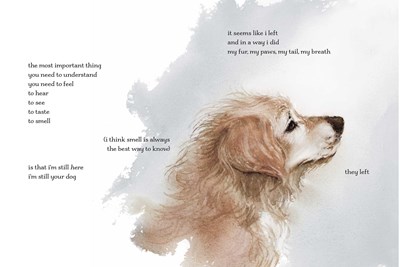
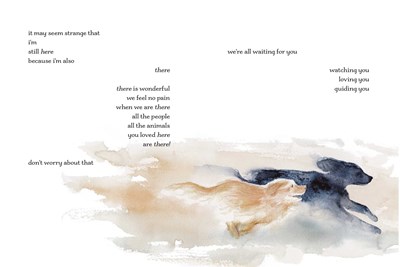
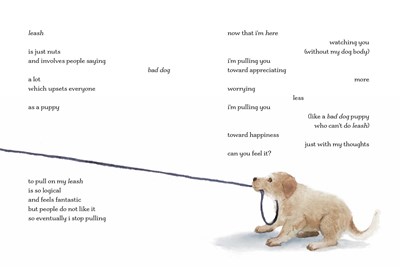
The Publisher Says: This richly illustrated book reveals a comforting narrative told from the point of view of a loving angel dog, who wants you to know, “I’m still here . . . But I’m also there where all the animals run free, with no pain, waiting for you, watching for you, loving you, and guiding you.”
Losing one’s dog is one of the most difficult experiences we go through and it’s hard to find solace. However, the profound, four-legged narrator of I’m Still Here has nothing but good news for humans. The free verse is equally rhapsodic about the eternal nature of our souls and the amazing sound of crinkly wrappers that means cheese is about to be sliced. This very good dog proclaims that love never dies, that we will meet again, and that if you ever doubted that humans are magnificent creatures, look no further than the humble ball.
There is nothing to fear, because it is this dog’s purpose to pull you (like a bad dog who doesn’t know how to do “leash”) toward joy, and to remind you to relish all the naps and treats life has to offer.
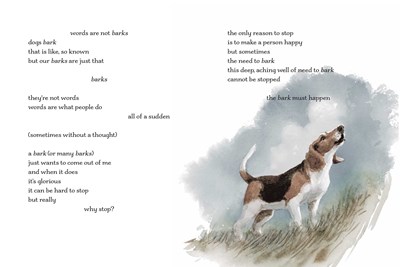
Author Cathryn Michon co-wrote the blockbuster hit film A Dog’s Purpose. Elegant, full-color watercolor paintings by award-winning artist Seth Taylor make this sumptuous volume the perfect gesture of compassion for anyone who has ever said goodbye to a dog (or person) gone too soon, because it’s always too soon. It turns out that the best way to honor those we’ve loved and lost is to be here now, until we meet again.
I RECEIVED A DRC FROM THE PUBLISHER VIA EDELWEISS+. THANK YOU.
My Review: Not my usual fare. I'm pretty hard-hearted abou grief and grieving, compared to most, because I feel so much of the stuff most people resonate with is mawkish and embarrassing.
Except when it comes to our poochies.
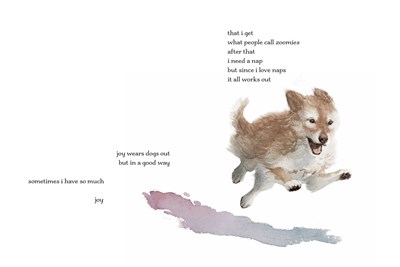
Much emotional investment in many dogs, oceans of tears when I lose them, and a beautifully warm glow that no human's ever induced in me, made this a must-read. It was sentimental, the illustrations gorgeous, and the package came through as beautiful and luxurious even on my tablet. That's good design.

So heartfelt!
Embodying joy.
Good boy!

She's got the right idea!

Precious little pup...makes you want to schmoozle those teeny little ears, no?
I think anyone who's ever loved and lost would love this poultice for that ache.
Monday, July 29, 2024
BRIGHT OBJECTS, shiny start to a promising new career

BRIGHT OBJECTS
RUBY TODD
Simon & Schuster
$28.99 hardcover, available now
Rating: 4.25* of five
The Publisher Says: A young widow grapples with the arrival of a once-in-a-lifetime comet and its tumultuous consequences, in a debut novel that blends mystery, astronomy, and romance, perfect for fans of Emma Cline’s The Girls and Ottessa Moshfegh’s Death in Her Hands.
Sylvia Knight is losing hope that the person who killed her husband will ever face justice. Since the night of the hit-and-run, her world has been shrouded in hazy darkness—until she meets Theo St. John, the discoverer of a rare comet soon to be visible to the naked eye.
As the comet begins to brighten, Sylvia wonders what the apparition might signify. She is soon drawn into the orbit of local mystic Joseph Evans, who believes the comet’s arrival is nothing short of a divine message. Finding herself caught between two conflicting perspectives of this celestial phenomenon, she struggles to define for herself where the reality lies. As the comet grows in the sky, her town slowly descends further and further into a fervor over its impending apex, and Sylvia’s quest to uncover her husband’s killer will push her and those around her to the furthest reaches of their very lives.
A novel about the search for meaning in a bewildering world, the loyalty of love, and the dangerous lengths people go to in pursuit of obsession, Bright Objects is a luminous, masterfully crafted literary thriller.
I RECEIVED A DRC FROM THE PUBLISHER VIA NETGALLEY. THANK YOU.
My Review: A debut novel from a very accomplished author, one whose best gift is the deft touch of characterization. I felt very connected to Sylvia from the get-go, her fuddled and bewildered survivor's guilt, her unostentatious revenge-seeking against the one responsible for her loss, and her deep but unwilling fascination with a charismatic local cult leader.
The lovely patterns Author Todd weaves among these strands, spinning her threads from the ever-renewed internal structures of loss, guilt, sadness, and outrage, don't sag or drop. They're sometimes not as harmoniously tinted as a veteran writer might choose...the mother-in-law in particular is rather paler than I'd expected, Theo the astronomer a bit too intense...but these are quibbles. Not a line out of place, not a word (even when a not-American word crops up) wasted or obscured.
The lack of a full fifth star on my rating isn't because of some sense of disappointment. I got what I wanted. The plot...revenge-driven widow struggles to cope with her loss and her survivor guilt will catch me in its web every time...is consistent, is finished with an appropriate, yet unexpected, ending. What bothered me, and this is really a very *me* thing to be tangled up in, was the comet. A comet, one on a path to get this close to Earth, is not going to go undetected for very long. We're motivated, since Shoemaker-Levy 9 smacked Jupiter so very hard in 1994, to go looking for these kinds of objects.
Okay, so that's a half-star lost. A tiny smidgeon of the tarnish on my shiny loving cup of pleasure also traces to Theo and his own warping loss. It's a trope I find painfully Writerly, is the Conjunction of Damaged Souls. Theo's issues were understandably similar to Sylvia's; his response to her darkness was believable. His discovery of her, in Australia, where he happens to be for the confirmation of a career-defining discovery, is what rings false to me. As always I want this kind of other-directed man to exist; I suspect he isn't to be found in a man about to ascend to the heights of his ambitions. I also see the facile characterization of Joseph Evans, and honestly, since he's such a bell-end of a grifter, I just don't care.
Quibbles and crotchets aside, everything Author Todd does in this story fits. The mystery plot, the way it's rooted in the ugliness of revenge, the focus of the two leads on their personal quests, all works as a whole. The manner in which the ending's made manifest felt satisfying to me. I'm struggling with myself not to spoiler it (though I really want to!) because experiencing the event blind is a pleasure enhancer.
Tyro author does a fine job, will most likely do better next time, and very much deserves your treasure and time.
Wednesday, June 5, 2024
WELCOME TO FOREVER, lovely meditation on what makes you, you
WELCOME TO FOREVER
NATHAN TAVARES
Titan Books (non-affiliate Amazon link)
$10.99 ebook, available now
Rating: 4.5* of five
The Publisher Says: A sweeping, psychedelic romance of two men caught in a looping world of artificial realities, edited memories, secretive cabals and conspiracies to push humanity to the next step in its evolution.
For fans of Tomorrow and Tomorrow and Tomorrow, Ubik, The Eternal Sunshine of the Spotless Mind and Evangelion.
Fox is a memory editor—one of the best—gifted with the skill to create real life in the digital world. When he wakes up in Field of Reeds Center for Memory Reconstruction with no idea how he got there, the therapists tell him he was a victim in a terrorist bombing by Khadija Banks, the pioneer of memory editing technology turned revolutionary. A bombing which shredded the memory archives of all its victims, including his husband Gabe.
Thrust into reconstructions of his memories exploded from the fragments that survived the blast, Fox tries to rebuild his life, his marriage and himself. But he quickly realises his world is changing, unreliable, and echoing around itself over and over.
As he unearths endless cycles of meeting Gabe, falling in love and breaking up, Fox digs deep into his past, his time in the refugee nation of Aaru, and the exact nature of his relationship with Khadija. Because, in a world tearing itself apart to forget all its sadness, saving the man he loves might be the key to saving us all.
I RECEIVED A DRC FROM THE PUBLISHER VIA NETGALLEY. THANK YOU.
My Review: The Eternal Sunshine of the Spotless Mind only gay it up. I loved that film, and this book, for the same reasons: They show us how extremely integral to our sense of self and buying in to the social construct of reality memory is. If someone doesn't share your memory of something, is your memory wrong? If you can't find a memory in your mind, is it gone? Where'd it go?
After the strokes I had in 2023, these questions are more important than ever to me. They were never unimportant to me but have gained urgency as a result of that crisis. Reading this book with its structural similarity to my own experience of needing others...the kindness of others is literally everything, y'all, practice giving it as well as receiving it....to help me find my sense of myself in the world was satisfyingly resonant.
Questioning one's identity is a thing we're told magically stops for queer people when we come out. (Spoiler alert: It does not.) All the jostles to one's sense of self that a long-term intimate relationship brings are wildly out-of-proportion shocks to many of us. Fox meeting Gabe, meeting him again and again, and still coming up against that shocking wall of The Other as a complete and entire being not knowable to yourself, makes this a wonderful piece of relationship fiction. It's very much also a SFF exploration of overweening tech hubris. It's also a sly jab at the savior complex of the people who look at humanity as a set of problems to be solved. All of these facets are inherent in the story's conflicts, in the quest that Fox sets out on to rediscover and reintegrate himself after trauma.
I'll say that, after the success that was my read of A Fractured Infinity, I went into this sophmore effort hoping for no slump and wishing for an out-of-the-park homer. I got neither. I got the top-quality expansion on the strengths of the first novel, its relationships, and that is way more than enough to get an extra half-star from my stingy self. A full star didn't happen because the first book's film-editing style didn't thrill me this time, either. I honestly expected scene numbers and location directions. I suspect Author Tavares uses shot lists to organize the stories he tells...hoping for his sake this makes the film industry take him up and film both his stories.
This story should be of extra deep interest to readers over 35 because that group has, as a rule, experiences like Fox's and Gabe's to bring to the table. It is straight-people safe, no NSFW smexytimes to shock and/or affront you. The love story, the trajectory of a man constructing and reconstructing his life after a horrible, external trauma, ought to draw in all identities...or so I hope in this polarized world.
Very much a recommended #PrideMonth read for us and for allies all.
Labels:
#LoveIsLove,
#PrideMonth,
#QUILTBAG,
AI,
gay relationship,
gay SFF,
grief,
grieving,
jealousy in marriage,
loss of a spouse,
Nathan Tavares,
sci fi thriller,
searching for identity,
Titan Books
Sunday, May 12, 2024
AFTERLIGHT, love, loss, and learning as they look from The End
AFTERLIGHT
JAAP ROBBEN (tr. David Doherty)
World Editions
$19.99 all editions, available now
Rating: 4* of five
The Publisher Says: This moving novel gives voice to the silent grief of the mothers of stillborn children
The young free-spirited florist Frieda grew up in a strictly Catholic environment in the 1960s. When she steps onto a frozen river on a late winter afternoon, little does she know that everything is about to change for her. On the ice, she meets the married Otto. They experience a love that begins stormy and ends with Frieda becoming pregnant—a scandal in the world in which she moves. And so she must never be the mother of her secret child.
For decades she kept her memories of this episode in her life to herself. But the grief for the lost child remains, despite the later marriage, despite the son she still has. At the age of eighty-one, Frieda is suddenly alone again. The silent sorrow returns with force. Only then does she dare to face her story—and to share it.
With Afterlight, inspired by true events, Robben not only pulls back the veil on Frieda’s story but also shines a light on the experiences of countless women between the 1950s and 1980s. The result is an impressive story about buried female trauma, caused by society, organized religion, and the dominant social mores.
I RECEIVED A DRC FROM THE PUBLISHER VIA EDELWEISS+. THANK YOU.
My Review: I lost my love a lot earlier in life than Frieda did. He needed the level of care that Frieda does as the story begins, not me; nor have I yet reached the point where she is, of needing basic-living help.
Thank goodness the strokes I had in 2023 didn't make that help a lifelong need. But I still had the points of recognition and connection with Frieda from my life's story. I was right there with her as she adjusted to a new place to live that doesn't belong to her; I felt her dislocation as the night's disturbances had her groping around the unfamiliar space to find things she's sure she has, and still needs...only they aren't there and won't be again.
I am also familiar with the awful pains of being Othered by "religious" people, and told by The World that who you are is bad, and wrong, and will always cause their gawd to hate you and doom you to an eternity of punishment. Poor Frieda. I wouldn't say she overcomes that abusive horror in this story. I would say she makes her own way in life with the miracle of love offered her by the now-dead Louis...the one who fully expected he would survive her as she declined and lost more and more of herself. I asked Rob to read this book, and, after hearing what it was about, he looked at me through the computer screen and said, "No." Simple, final. Understandable.
It's a lot to ask: Frieda's happiness was bookended by a lot of pain. It is, though, the kind of pain that older people will relate to. It is a very familiar world that Frieda brings back to us in each time period. We've all been too young for some major life event that happened to us anyway. We've all felt unloved and abandoned...rightly, as in Frieda's case, or wrongly...and many, if not most, of us can relate deeply to loving someone and losing them. A lot of my readers are getting to the place where they, or their parents, are needing help that wasn't needed in the recent past. And all of that is what you and I share with Frieda.
Do you want to read about it for entertainment? Well, I did. I was pleased to have the fellow-feeling of Frieda's journey into the undignified, unpleasant (to me) world of bodily aging; as this is a story set in two timelines, though, I was expecting to be led into the sunnier meadows of the earlier life she led, and its youthful exuberance. Here is where the story fell short of the five stars all stories I read start with for me.
This is not a short book—three hundred-ish pages. There was space to develop the dual timeline, and it wasn't done. What's enjoyable about the way Author Jaap writes Frieda's story is the immediacy of it. He gets the sense of her, at every age, as a woman very much alert to the world around her; and yet unable to reach it, grasp it, without mediation...hearing aids, glasses, nurses, her husband, gawd...and so never fully having her own undiluted experience of anything.
Youthful inexperience prevented her from seeing the man who impregnated her in 1963 with any clarity, led to her downfall by the mediation of a religious upbringing that so starved her for genuine experience that she fell for the most unsubtle of lures. There's the consequences part of that in the book, but the stick gets applied without the carrot in my estimation.
That said, I liked this read. I liked its soft edges on hard realities...its gentle Impressionistic blur is, though, down to poor vision, not to a soft reality. That made it the more poignant to read. It's an enjoyable, relatable story well-told by an author who knows his subject. It's deftly translated...no clunks or clanks, and nothing that my early-learner study of Dutch saw as out of place...which helps.
Good is not the enemy of great when it is enough in itself.
Subscribe to:
Posts (Atom)