Showing posts with label 1970s setting. Show all posts

Thursday, July 23, 2026

WATERSPOUT, one of Troy Ford's Pink Sheep Novels


WATERSPOUT (The Pink Sheep Novels Book 2)
TROY FORD
Sweet Flag Books (non-affiliate Bookshop.org link)
$15.99 paperback, available now

Rating: 4* of five

The Publisher Says: Pillion meets The Goldfinch in this dark literary novel about art, ambition, and the volatile people who become our muses.

Jimmy Traywick is running out of options. Job, apartment, boyfriend, and gallery in San Francisco—gone. Retreating to a quiet town across the Bay, he’s hoping for a fresh start when a charismatic insider offers a shot at the New York art world.

Desperate to seize the opportunity, he begins painting the new lovers and friends who have pulled him into their orbit, transforming passion and chaos into a raw new body of work.

But when secrets surface and relationships fracture, he discovers too late that inspiration can come at a devastating price.

I RECEIVED A DRC FROM THE PUBLISHER VIA NETGALLEY. THANK YOU.

My Review
: Ambition's a cruel taskmaster. It forces people into actions they'd otherwise overthink their way out of, like trading sex for fame. It's a terrible price to pay for a a commodity that loses value when you lose interest. Money...assets...jewels...their value is more durable.

It doesn't stop people from making that bargain. For millennia people have traded sex for tangible items and intangible things like gods and power and fame/notoriety. Jimmy Traywick did that. It worked...until it didn't.

That's the thing about Faustian bargains: Wanting something badly enough to ignore your own misgivings about it is its own reward. Funny word to use, isn't it. Not funny-ha-ha but funny-hmmm. It's a bad reward, but a real one, to set and pursue a goal to the single-minded exclusion of doubt and fear. Jimmy, like other ambitious people, desires at a more intense level than most of us. He's not stupid, wait yes he is, he's not dumb because he sees Paul Allenson in 3D, shadows are there, they point to things that aren't open, aboveboard...and he takes the proffered bargain anyway.

It's a choice. A choice he made. Now we meet Jimmy in the aftermath. He still owns his choice, its mark is on him for good and ever. The story you're reading is the story of making that choice, choosing that fate knowing it will be costly but not what exactly the cost will be.

It's always fascinating and not a little enlightening to read stories about people who are more intense about their lives, their goals, the desires than we-the-reader are. We're looking in on a train wreck, watching the rescue operation be hit by flash floods, the director with the radio coordinating everything get hit by lightning, the ambulances fall into sinkholes on the way to the scene...and we-the-reader sit comfortably in our chair in the air conditioning thrilling to it all.

Ain't reading grand?

Author Ford is an unkind man with a depraved soul. Goddesses please bless him for showing it to us. Jimmy goes through the wringer and comes out flattened but never flat and featureless.The same is less true of those around him, or this would be five stars with a yodel of rapture. It's a tough balancing act, taking time away from our PoV guy to limn some depth for the supporting players. It's a thing all too often left undone. I don't think it was left undone here, Author Ford's not careless or unskilled. It was part and parcel of the choice to tell the story with its focus resolutely on Jimmy. It was a lot to put onto one character, and that one character was rather less nuanced than I'd've needed for him to be to sit back in my chair with the book open on my lap with a slightly dazed expression on my puss.

It's a really involving tale, once I opened it I didn't close it willingly; it never once bored me or made me wish to heck he'd get bloody on with it; but it explored depths I didn't find that deep, so it's not my idea of perfect.

It very much is perfectly entertaining and, not for nothing, really begging to have a movie draped over it. Get you one and see if I'm wrong.

Monday, February 16, 2026

EVIL GENIUS: A Novel, look into some meanings of "genius" before leaping to conclusions


EVIL GENIUS: A Novel
CLAIRE OSHETSKY

Ecco
$14.99 ebook, available now

Rating: 5* of five

The Publisher Says: An exuberant novel about a young woman’s quest to carve her own path—even if she needs to step over a few dead bodies along the way

It’s 1974 and San Francisco is full of mystery and menace. Nineteen-year-old Celia Dent keeps telling herself how lucky she is to be married to Drew, a man who says he loves her. But Celia’s contentment with her little life is shattered when a woman she knows is murdered in a love tryst gone awry. What would that be like, Celia wonders, to die—or kill—for love? What would it be like to live each moment passionately and with full knowledge that each breath is bringing her closer to her final breath?

Before Celia knows it her musings about love-and-death happenings are bleeding into daily life. She’s practicing her marksmanship at a local gun range. She's searching for a love tryst of her very own. She's thinking about how good it would feel to bury something sharp inside her domineering husband’s ear. It’s all pretend, though, until the night comes when Celia finally goes too far, and she and Drew are set on a deadly collision course.

Exhilarating, surreal, and bitingly clever, Evil Genius is a comic noir about obsession and desire—and what happens when a sweetly seditious young woman dares to imagine a better life for herself.

Claire Oshetsky is also the author of the novels Poor Deer and Chouette, which was longlisted for the PEN/Faulkner Award.

I RECEIVED A DRC FROM THE AUTHOR. THANK YOU.

My Review
: I'm an Oshetsky fan. Chouette and Poor Deer (review links above) were excellent reads for a lover of storytelling that blends noir and surreal and pieces of stream-of-consciousness. I'm here for the women who, for varying reasons not least including men being obliviously privileged and uniformly clueless, don't get their feet under themselves. Identities are always under construction, never more so than when the identity is most rigidly brandished at the world. Those like "my Drew" as our PoV character, Celia, thinks of her controlling husband, are fragile masks that must constantly be reinforced...at Celia's expense in this case. It's not an uncommon trait, this...I was the raw material from which my mother's controlling abuse drew her rigidity, masked her awfulness from outsiders.

In this tale of obsession, cruelty, and how we create ourselves in response to outside pressures meeting a core of resistance, and how very much pressure that can require. Celia does not seem aware of how deep her well of rage is. Celia, under "my Drew" as lord and master, touches that rage at last...she has the example of her quite spectacularly murdered co-worker to create urgency in her feelings about "my Drew." It is a spiral up, from touching the rage and the hatred in her to dreamimg of murdering him with a nail file to the ear to taking a ride home from an attractive stranger on her commuter train to buying a weapon to taking the initiative to set up a meeting with a man she's never met but deals with on the phone a lot. It's clear the cork's popped on a lifetime of swallowed emotional abuse and neglect and victimization.

And she's only nineteen.

What keeps me Oshetskying every time I can is Celia and her half-siblings who are all Author Claire's brain children. I find new ways to enjoy off-the-beam points of view with each story she writes. Here's Celia in progress: "What Drew didn’t know is that I couldn’t be shamed that way. Not any longer...I would never again let myself be shamed by my body, or its functions, or its urges." Brava, kid! You're only nineteen and light-years ahead of most people's final destinations. It's of a piece with Celia's object of fetishization, the Barbie doll. It requires no huge leap to see how a bizarre doll...collection...stands in for the need to discover safety, and how little actual use it is. How little it takes, a few ounces of plastic molded into a distorted human shape, to buy a sham safety from the very real storms around her, these golems of industrial feminization in their legions pacifying the susceptible intentional victims with their infinite manipulability (plasticity in its original sense.).

Author Claire doesn't say this. That would be rude. Author Claire might be rowdy but she is not rude. Her ability to slit the character envelope with a rapier of witty, unsentimental observation while releasing the evil genius inside Celia to perform the real function of protection is *chef's kiss*. I've seen a few reviews that interpret the title in a more comic-book way, resembling a supervillain; I suppose that's inevitable as this is what most people are familiar with. It is, however, not at all what the story delivers, whereas I see the genius loci in every shred of this story's fabric. Follow the link above after reading Evil Genius to see if you find similar echoes.

It's a rare thing for me to say: I wish I could forget this story entirely so I could read it for the first time all over again. I want to re-meet Doggo. And Celia. (Not Sock Man, though.)

Monday, January 12, 2026

JEAN, adolescent heartbreak made tougher by class divide


JEAN
MADELEINE DUNNIGAN

W.W. Norton (non-affiliate Bookshop.org link)
$28.99 all editions, available now

Rating: 4* of five

The Publisher Says: Seventeen–year–old Jean, a troubled Jewish boy caught in the countercultural swirl of 1970s London, arrives at Compton Manor, a rural alternative boarding school for boys with “problems.” Though he is an outcast among these outcasts, he is befriended by Tom, a much wealthier, more popular classmate, and it seems as if Jean’s world might change.

When things turn romantic, Jean is tipped into a heady, overwhelming infatuation. What before seemed odd now brims with promise—the compulsory farming at school, reading poetry aloud, pagan ritual—and Jean thinks he might even pass his exams. But the differences between Tom and Jean—Tom is tuition–paying, Jean is on a scholarship; Tom social, Jean reclusive—create too wide a chasm to cross.

Set over one hot summer, Jean is a startlingly assured debut about the kinds of love that break us and make us whole.

I RECEIVED A DRC FROM THE PUBLISHER VIA NETGALLEY. THANK YOU.

My Review
: Choosing not to use conventional punctuation is the root of many novelists' downfall. As a debut novelist, Author Dunnigan set herself this monumental task, on top of several other monumental tasks in telling the story of a young Queer boy coming alive to sex and sexuality in a highly specific milieu. It is an uneven success at them all. The least successful is the sense of place; it's 1976 in London, but if you want to be transported to 1976 London, this is not your best choice of a read.

Jean is a scholarship boy in a behavioral-problem-student boarding school. It's a sketched in place, apart from some unpleasantly graphic dealings with animals dead and alive. Those are extremely particular environments; with a reader's expectations set on feeling immersed in the world they're not successful. I can't say I was ever more than tangentially aware of the environment. It is not described or, better still, evoked. It's stated this is where the action takes place. It works against the sense of place for the characters, teen boys mind you, to wander around in time as the narrative continues. This is how an older person experiences time...this connects to *that* and whatever happened to him anyway but this jerk can't cut in line! No! get back to your place while I find my damn wallet again did I leave it on the counter? oh good there it is.

Teenagers aren't prone to this yet, every moment is real! alive! pulsing with possibility! especially when you're newly In Love with the most gorgeous exciting amazing boy on the planet who has the sexiest...oh my he's hot. What this does give the reader is the World of Jean, all third person, all interior, all solipsistic as a boy usually is.

Punctuation keeps the stream of consciousness from bursting the banks and making a mess. This story is the mess that punctuation and dialogue tags prevent. It's not bad, as in not incompetent in any way. It's just more work than it needs to be to pick the threads of doomed adolescent heartbreak out of the verbs. As a superannuated version of Jean, I can say Author Dunnigan's chosen a strangely indirect way to deal with adolescent male libido by distancing the reader from it in this stream of consciousness. It's almost sexless sexuality presented in the flashes of memory and the internal asides and other tangential evocations.The way she's chosen to present him to us felt distancing to me because he is not experiencing the moment. He's a teen boy in love, he would be thinking A LOT about sex in direct and physical terms, since he isn't a virgin any more.

I'm still excited by the read. I liked the experience of Jean's rootlessness, his inability to see anything not directly pointed out to him. I think a big part of my desire to keep reading was rooted in my sense that, for all the author's odd choices and off framing that didn't work for me, I got to see the world from the haze of Wrongness that Jean has always felt...that so many like him, limited, ungainly, graceless, feel. It was a big mental leap to be in Jean's skin. He does not think ahead, he is not aware of others as real, he can't fully grasp his choices are in fact his own. Jean does not make choices. Things happen to Jean. The constant tobacco use and the uncontrolled drug use were deeply familiar, very much part of adolescence in the era. In the end, Jean is a boy whose manhood we don't get to see but which is not likely to be much better than his adolescence of betrayals has been.

My recommendation sounds grudging. It really isn't. This is a debut novel that takes a big swing. It is more successful than not; it's only that the presentation isn't going to entice readers who aren't already fans of stream-of-consciousness storytelling. It felt fine to me, and might to you if you're willing to make room for a man being born and broken at the same time.

Friday, December 5, 2025

TOPP: Promoter Gary Topp Brought Us the World, graphic biography/memoir of 1970s coolness


TOPP: Promoter Gary Topp Brought Us the World
DAVID COLLIER

Conundrum Press (non-affiliate Bookshop.org link)
$20.00 paperback, available now

Rating: 4* of five

The Publisher Says: As with all of Collier's work, his latest graphic novel is a combination of memoir and biography. This time, he explores his involvement in the cultural landscape of Toronto in the 1970s and 80s, specifically focusing on the life of Gary Topp, a concert promoter and founder of the pioneering Canadian repertory cinema.

Topp emerged from an immigrant background, abandoned the family textile business, and became an influential figure in the lives of an entire community. He was also Collier's first boss and mentor. Though outspoken and opinionated, Gary Topp inspired love and devotion, not only in those who worked for him, but also in the acts he booked—including the Ramones, The Police, and the Dixie Chicks.

This graphic novel looks at a rapidly disappearing past and uses Topp's ability to see beyond the mainstream for a look at where our culture is heading.

I RECEIVED A DRC FROM THE PUBLISHER VIA EDELWEISS+. THANK YOU.

My Review
: I feel old. Everything in this graphic novel took place, not just in my lifetime, but during my adulthood.

And it's fading history! This is the dim, distant past to the crowd most likely to buy a graphic novel. I'm gonna go shout at some clouds.

Anyway. I'm not from Toronto, but I feel a lot more aware of the reach of punk, and of weird 70s films, and the pervasive, why didn't I see it then, dissatisfaction of young men with the world. The thing about dissatisfaction is, it can be manipulated and redirected by those as observant and savvy as Topp was; often enough for wicked, nasty purposes. Neatly explaining today.

Each panel is an episode in the ongoing story, so it can be browsed without fear of losing the plot threads. Ain't none. I must say I'm lukewarm at best on the art...very appropriate to the period and milieu, though.
I got a few more samples; I don't think you're in any doubt about your feelings for the art by now, so I'll stop here.

Your too-cool-for-school nibling might enjoy seeing how it was done; any oldster punk-rock scenesters might feel nostalgic and dewy-eyed; comic book fans might like a graphic memoir about the edges of fame. It was a decent read.

Friday, September 5, 2025

LAMB: A novel in snapshots, what it felt like to be young and queer and there


LAMB: A novel in snapshots
TROY FORD

Sweet Flag Books (non-affiliate Bookshop.org link)
$9.99 paperback, available now

Rating: 4* of five

The Publisher Says: D is shaken when his mercurial friend Lamb vanishes just before they're set to move in together. The news of his death three years later shadows him like a ghost.

Sifting through Lamb's journals decades later, D uncovers a raw, intimate portrait of a sensitive misfit navigating a world that never understood him.

From their first meeting at an elite all-boys school to the chaos of 1990s San Francisco, Lamb's story unfolds in a tangle of tenderness and rebellion, anguish and adventure. Through journal entries, letters, poetry, and stories, Lamb is a coming-of-age in snapshots that captures the dazed spirit of young men searching for belonging in the aftermath of the AIDS crisis.

A Tales of the City for Generation X—a dark afterparty of gay awakening both aching and unforgettable.

I RECEIVED A DRC FROM THE PUBLISHER VIA NETGALLEY. THANK YOU.

My Review
: A very sweetly remembered lover from the first years of knowing you're queer will always call your heart home. It's this book that tells you why it did for Author Ford.

We all grow older with this kind of memory of our coming of age, if not always coming out. It's the nature of being adolescent in the modern world...finding one's tribe, feeling one's first romantic love (for most anyway) are very deep experiences. Bound up with our particular time and place, they're all a stew of heady, intense, immediate sensations and thoughts and things learned.

It felt very *right* to be in D and in Lamb's heads from the time just that crucial bit ahead of them.

You can't go home again; but you can remember it, you can summon the sensations thoughts feelings to your older self. There are times that is what you need and should seek out. This book will likely do that for boys born in about 1959 through 1966. It felt good to be young then, even if you weren't *happy* you felt you *could* be.

To all y'all born after 1980: I'm so sorry my generation fucked up so very badly. We did you out of this glorious sadness, and we're only ever going to pay for it.

Sunday, July 13, 2025

THE QUEEN OF SATURN AND THE PRINCE IN EXILE, Black coming-of-age novel with an SF twist


THE QUEEN OF SATURN AND THE PRINCE IN EXILE
ERRICK NUNNALLY

CLASH Books (non-affiliate Bookshop.org link)
$17.95 trade paper, available now

Rating: 4* of five

The Publisher Says: A Black nerd coming-of-age novel set in 1970s Boston about a boy who struggles to learn the truth behind his mother’s claims of otherworldly origins in the smoldering aftermath of the Civil Rights era and COINTELPRO's dying breaths.

Sean’s mother, Sojourner, consistently claims otherworldly origins—Saturn, specifically. A story he’s heard his entire life and never considered that it might be true until strange men intrude on his family’s lives. Complicating matters, his father, David, and his mother, were part of a Civil Rights era Black power group that captured the attention of the FBI.

A literal bombing put an exclamation point to the end of the organization. But as soon as Sean could read on his own, he immersed himself in science fiction, fantasy, and comic books, while largely ignoring the history of his people. That ignorance morphs into a disturbing proposition and learning the truth of his parents’ pasts could prove deadly.

Sean’s exploration introduces him to music, girls, delusions of privilege, and the thrills of revolution, all while becoming an adult. The Queen of Saturn and the Prince in Exile marries golden age sci-fi with the nostalgia of roller skates, funk, and first love.

I RECEIVED A DRC FROM THE PUBLISHER VIA EDELWEISS+. THANK YOU.

My Review
: Coming of age in 1970s Murruhkuh was pretty awful. The nightmare of Watergate and the vileness of the people who supported Nixon and then gave us the Reagan revolution was, and I say this from my own personal experience of doing it, nightmarish...conform or suffer is not new to now, nor was it new to the Nixon trauma years, nor to McCarthyism in the 1950s, nor to...you get the drift.

Always feeling torn and at sea, also not new, as you're told one thing is true but it sure doesn't look like it is has a powerful emotional cost. Paying that cost is Sean's burden. As a Black teen his emotional bills are so much more immense than any my gay atheist, but white, ass had to pay.

Sean and I shared the burden of crazy mothers. Saturn has no crust, ma'am, icy or hot or rocky...just ain't one for your people to have dug themselves into. So while my own mother was a religious nut with weird ideas about her god, her delusions were decidedly less...outré so were easier to hide.

Sean's Dad doing the good work he did to help the increasingly re-oppressed after the Civil Rights era's violent and ongoing denial and retraction of gains made impressed me. The sadness of his mother's psychotic break was intense, but I never read it as anything but psychosis. I did not question the source of the break but the sci-fi clothes she put on it were mostly just reasons to feel sadder for Sean as the coming-of-age we all must do to establish our adult selves blew his happy bubble up.

I'll call it an SF novel mostly because Sean himself needs that genre track to make his reality bearable. It's more a story about how people urgently need their stories to cope with life, and the best place to find the materials you make those stories will always be stories already told.

It's always tough to find a path through the horrors of life. This is the story of a boy becoming a man without enough of a story to hang onto, and how much that cost him in the end. Could not be more rageful, more unblinkingly aware and accusatory of the racism our country refuses to renounce and stop using to harm everyone.

Under two hundred pages of honest reflection on how each Black man is broken: By design.

Thursday, June 19, 2025

TRAMPS LIKE US, a bit of history all in 21st-century Western culture could learn from


TRAMPS LIKE US
JOE WESTMORELAND

MCD (non-affiliate Bookshop.org link)
$11.99 ebook, available now

Rating: 5* of five

The Publisher Says: A treasured cult classic following a young gay man crisscrossing 1970s and ’80s America in search of salvation. Now reissued with an introduction from Eileen Myles and an afterword from the author.

Abused by his father and stifled by closeted life as a teenager in Kansas City, Joe, the wide-eyed narrator of Tramps Like Us, graduates from high school in 1974 and hits the road hitchhiking. But it isn’t until he reunites with Ali, his hometown’s other queer outcast, that Joe finds a partner in crime. When the two of them finally wash up in New Orleans, they discover a hedonistic paradise of sex, drugs, and music, a world that only expands when they move to San Francisco in 1979.

Told with openhearted frankness, Joe Westmoreland’s Tramps Like Us is an exuberantly soulful adventure of self-discovery and belonging, set across a consequential American decade. In New Orleans and San Francisco, and on the roads in between, Joe and Ali find communities of misfits to call their own. The days and nights blur, a blend of LSD and heroin, new wave and disco, orgies and friends, and the thrilling spontaneity of youth—all of which is threatened the moment Joe, Ali, and seemingly everyone around them are diagnosed with HIV. But miraculously, the stories survive. As Eileen Myles writes, “I love this book most of all because it is so mortal.”

Back in print after two decades and with an introduction by Myles and an afterword by the author, Tramps Like Us is an ode to a nearly lost generation, an autofictional chronicle of America between gay liberation and the AIDS crisis, and an evergreen testament to the force of friendship.

I RECEIVED A DRC FROM THE PUBLISHER VIA NETGALLEY. THANK YOU.

My Review
: When I first read this in the Aughties it was already historical fiction. It was my life, my graduating class, and my generation of gay men who were, to all intents and purposes, vanished. Many died that I knew...almost none I was really close to until the late 1980s.

Reading the story again, at well over sixty, reminded me forcefully of that *horrible* severing. All hope seemed to die. With every memorial service there was less reason to feel as though anyone cared, as though people like me were on anyone's priority list.

I started volunteering here and there. I saw christians at their absolute worst. Mothers rejecting dying sons, fathers speaking loudly with their absence...it was the last nail in my faintest glimmers of religiosity.

So being there wasn't...nice...but it did make me recall the value of community (and the reality of burnout). When my true love was dying of CMV in 1992, I had men around me who loved him, and who supported me so completely (thanks Joe and Domingo!) that I could latch onto Ali and Joe as they created their magic circle, as they ran from haven to hearth looking for home.

It was breathtaking. It was heartbreaking. It was very much the way I want to remember the squashed possibilities of gay liberation...none of this *fighting* for equal rights we've been distracted with for decades, but coming up with new ways to define ourselves in the world.

Not even my grands have come back to that level.

What might have been, sighs the young heart in the elderly chest. Visit it for y'all's selves.

Wednesday, May 14, 2025

THE BOY FROM THE SEA, Irish fable-making for this century's needs


THE BOY FROM THE SEA
GARRETT CARR

Alfred A. Knopf (non-affiliate Amazon link)
$14.99 ebook, available now

NOMINATED for the 2026 Dublin Literary Award...a longlist of twenty will be announced in February 2026, the shortlist of six in April 2026, the winner(s) in May's festival.

Rating: 4* of five

The Publisher Says: 'Compulsive reading. Compassionate, lyrical and full of devilment' Louise Kennedy, author of Trespasses

1973. In a close-knit community on Ireland’s west coast, a baby is found abandoned on the beach. Named Brendan Bonnar by Ambrose, the fisherman who adopts him, Brendan will become a source of fascination and hope for a town caught in the storm of a rapidly changing world.

Ambrose, a man more comfortable at sea than on land, brings Brendan into his home out of love. But it’s a decision that will fracture his family and force him to try to understand himself and those he cares for.

Bookended by the arrival and departure of a single mesmerizing boy, Garrett Carr's The Boy From the Sea is an exploration of the ties that make us and bind us, as a family and community move irresistibly towards the future.

I RECEIVED A DRC FROM THE PUBLISHER VIA NETGALLEY. THANK YOU.

My Review
: Funny thing how kindness skips a generation. Declan, the titular "Boy"'s older sibling, wouldn't know kindness if it fucked him. The elder Bonnar couple love their magical gift of a child..."Parents knew you can never tell how a child will turn out, naturally yours or not. They had learned, fundamentally, every child comes in from the sea, washes up against the ankles of their parents, arms outstretched, ready to be shaped by them but with some disposition already in place, deep-set and never quite knowable"...Brendan, named for the Navigator, that famously fostered child. The boy, like mythical Brendan, never has his own place to take root...thanks, Declan...but instead becomes a source of bemusement in the community.

The narrative is from a godlike omniscient third-person PoV...the godlike, or royal, "we." It's a choice that, while conferring the reader with the advantage of being privy to things a more limited PoV would make awkward to show, removes us from the action. Observing from a distance is always going to slow one down when reading about the intimate life of a community. It did here. There are so many small, mean-souled people in Brendan's world. It doesn't relent, either, when we see his "family"...mother Christine's horrifying sister and father, and unwilling sibling Declan...being so unreservedly awful to him. As though being abandoned in a Moses-like way was somehow his fault, or merited (like any infant deserves abandonment).

So quite a melancholy read for me. As I've come to expect from Irish writers, or the ones who get published in the US anyway, the prose has real lyricism. Unexpectedly it breaks into quotidian musings on things like the EU and its fishing quotas..."He still felt guilty about his comportment with Christine later, as he sat in his car outside the fisheries office. He’d never actually apologize but he’d be extra jovial in their next few encounters; this was how we indicated we were sorry for something we’d said or done: by acting oddly the next time we met you"...and the waning control of the church on peoples' inner lives..."A note on our use of the word ‘grand’ is here required. It might sound like a relative of good or great but in our usage it was something different. ‘Grand’ was how we acknowledged that something wasn’t good or great while also saying nothing could be done and there was no point going on about it"...and eldercare..."Eunan {Christine's ghastly father} was against anything without set purpose and complete predictability and a human tended to fail on these requirements. He was against surprises, he hadn’t allowed a telephone in the house for many years as you never knew when it might ring on you. He mocked anything frivolous: placemats, dessert, having a lie-in, suffering from your nerves. ‘Get away out of that!’ he’d shout at cream cakes and people with hay fever."

What you're getting in this story is not showy, or fast, or loud. It is just like the sea that dominates this Western Irish town. It is quiet and inner-directed, with wild outbursts of damage and trouble, followed by the calmer gift-giving phase again. It is a lovely, involving visit to a lifeway long since altered by the relentlessness of change grown from within anf imposed from without.

I very much enjoyed the story's two-decade time frame. They were the last years of an Ireland now so completely vanished that one would be hard pressed to see it in modern Ireland. An elegy, albeit an emotionally honest one, to the way the country once was, with characters standing in for ways old and new. A read I expect will launch the writer into world notice because it is so plangently plucking heartstrings all the way through.

I don't mean that as a diss, only a recognition. I'm hip to your tricks, Author Carr, and I see how well you're performing them. That earns you a respectful tip-of-the-cap four stars.

Thursday, September 12, 2024

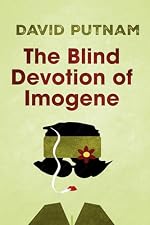
THE BLIND DEVOTION OF IMOGENE, billed as #1 in a series...stop here, no need for more


THE BLIND DEVOTION OF IMOGENE (The Misadventures of Imogene Taylor #1)
DAVID PUTNAM
Level Best Books (non-affiliate Amazon link)
$5.99 Kindle edition, available now

Rating: 3* of five

The Publisher Says: In 1973, Imogene Taylor is seventy-five years old, on parole for murder, and works at a store that sells dented canned goods. Twelve years earlier, she went to prison for killing her love-of-her-life-husband, Wayne. She called it an accident. The judge and jury called it murder. Imogene’s parole agent is constantly on her case, looking to send her back to prison.

During her time in prison, Imogene had to vent her angst at someone and sent the sitting Presidents (during the ten years in prison) threatening letters bringing her to the attention of the Secret Service. She does extensive research and writes a novel, Peekaboo POTUS, about the assassination of a US President. She sends the book "over the transom" to one publisher. The publisher, after being unable to contact Imogene, comes looking for her.

The Cigar, an organized crime gangster, walks into Dentco, where Imogene works, and extorts the store for protection money. Pay up or get firebombed. The entire strip center is under this threat.Imogene must dodge an overzealous parole agent while dealing with a dead woman in the neighbor’s garage. She’s on parole for murder, so she can’t report it to the police. No one would believe her. Imogene and Suz think the woman in the box is Suz’s long-estranged mother. Rather than reveal Suz’s father as the probable killer, Imogene convinces Suz to bury her mom under the avocado tree in the backyard. Until Thelma, Suz’s mother, appears after reading the obituary.

It's a race to uncover the real killer as Imogene dodges gangsters, family members, and a publisher on her quest to find the truth.

At the same time, Imogene’s neighbor dies of natural causes and leaves a hoarder’s mess to his daughter, Suzanne. Imogene helps Suz clear out a pyramid of boxes filled with junk in the garage. At the bottom of the pile, they find a box with a dead woman who has been hidden for many years.

I RECEIVED A DRC FROM THE PUBLISHER VIA NETGALLEY. THANK YOU.

My Review
: This book is a mess! The author, well-known as the creator of the eleven-book-long Bruno Johnson tough-guy cop/sleuth thrillers, ought to know better how to trim and prune repetitive dialogue, description, and general focus inconsistencies.

Also, why was this set in 1973? There was no reason I could discern that it needed to be in, or benefited from, such a setting. Given when this character's alleged murder takes place, for example, I'd think she would shy away from writing a novel about a presidential assassination. Not only was she locked up the year Kennedy was shot, she's writing her novel during the famously Trumpian vengeance-seeking Nixon's reign of terror.

You'd do well to stay off either one's radar.

Stick to the Bruno Johnson series.

Friday, August 30, 2024

MY PART OF HER, a parting in no way sweet but replete with sorrow


MY PART OF HER
JAVAD DJAVAHERY
(tr. Emma Ramadan)
Restless Books
$17.99 trade paper, available now

Rating: 4.5* of five

The Publisher Says: In exiled Iranian author Javad Djavahery’s captivating English debut, a youthful betrayal during a summer on the Caspian sea has far-reaching consequences for a group of friends as their lives are irrevocably altered by the Revolution.

For our unnamed confessor, the summer months spent on the Caspian Sea during the 1970s are a magically transformative experience. There, he is not the “poor relative from the North,” but a welcome guest at his wealthy cousin Nilou’s home and the gatekeeper of her affections. He revels in the power of orchestrating the attentions of her many admirers, granting and denying access to her would-be lovers. But in a moment of jealousy and youthful bravado, he betrays and humiliates an unlikely suitor, setting into motion a series of events that will have drastic repercussions for all of them as the country is forever transformed by the Iranian Revolution a few short years later.

Over the next twenty years, the lingering effects of that betrayal set the friends on radically different paths in the wake of political, religious, and cultural upheaval. Their surprising final reunion reveals the consequences of revenge and self-preservation as they each must decide whether and how to forget the past. Urgent and gorgeously written, My Part of Her captures the innocence of youth, the folly of love, and the capriciousness of fate as these friends find themselves on opposing sides of the seismic rifts of history.

I RECEIVED A DRC FROM THE PUBLISHER VIA EDELWEISS+. THANK YOU.

My Review
: Layers of response to this book. Most of them uncomfortable with the narrator, his assumption of power over the life of his female cousin, over the lives of the men who pursue her, and the general awfulness of a culture where that's just the way it is.
You'll see. It'll happen to you, if it hasn't already, and you will know as I do that the life you spent wanting to forget was in fact nothing but a life spent remembering.

This storytelling voice is the one used throughout the book. You're told what the story will do next, where it will lead you the reader. That isn't going to be everyone's favorite technique, but it's integral to the book. It is, per Translator Ramadan, a cultural staple and thus a vital part of the story being told. As she's translated other works from French in ways that delighted me, I'm willing to trust her.

How far will a male go to possess a female? How high is up, the answer ends up being; the young woman in this iteration of that seemingly eternally fresh story represents the startlingly awful answer of "into depths of manipulation and depravity that will revolt and surprise you."

The details aren't unique, or even any more distasteful than the fact that he uses his position of trust to rifle his cousin's underwear drawer; to cause a discovery to be made that screws up her chances at escaping an ugly, exploitive sysytem; and to ruin her suitor's life entirely in his home place while simultaneously looking virtuous to a powerful man.

So we're listening to the confession of a truly despicable boy...why?

Because all this takes place on the cusp of Iran's 1979 Islamist rebellion against the Shah and his paymasters. Everything changes...for the worse...very soon after the events of the story. Even here, my goodness if he doesn't try to finagle a way to weasel in with the new, hardline regime. The risks of playing a double game with True Believers come home to him. His much-desired cousin is suddenly more vulnerable than he is. She's a woman with an education and counterrevolutionary ideas.

She disappears.

An exiled Iranian author makes his Anglophone debut in this disturbing tale of moral turpitude and the cost of power to those who only want its benefits. The story the narrator tells us, finally revealing his ugly, wizened by lust soul to the gaze of others, doesn't so much edify its readers as provide a horrible example of the wages of the truest, most unforgivable sin:

Greed.

I read it with a strong desire to douse my brain in bleach to get the pervy little bastard's cringing Uriah Heeply gloating over his power cleaned off its surfaces. To no avail, obvs. I'm decidedly not edified at the end of the read. I'm damned glad I've never met this little lickspittle. I'm even more glad I can judge him from the untested heights of US cultural privilege. I've confronted that gift again and remain knee-shakingly grateful I was never tested in this way. Would I have done better?

Monday, November 28, 2022

THE LEIGH RUSSELL PAGE: JOURNEY TO DEATH, first Lucy Hall procedural & GIRL IN DANGER, the second


JOURNEY TO DEATH
LEIGH RUSSELL

Thomas & Mercer
$2.99 Kindle edition, available now (non-affiliate Amazon link)

Rating: 4* of five for suiting my exact mood

The Publisher Says: Lucy Hall arrives in the Seychelles determined to leave her worries behind. The tropical paradise looks sun-soaked and picture-perfect—but as Lucy soon discovers, appearances can be very deceptive. A deadly secret lurks in the island’s history, buried deep but not forgotten. And it is about to come to light.

As black clouds begin to gather over what promised to be a relaxing family break, Lucy realises that her father stands in the eye of the coming storm. A shadow from his past is threatening to destroy all that he holds dear—including the lives of his loved ones.

A dark truth is about to explode into their lives, and that truth is going to hit them right between the eyes.

I RECEIVED A DRC FROM THE PUBLISHER VIA NETGALLEY. THANK YOU.

My Review
: The wages of sin are paid by those born of it. This is the first of a new series starring the woman who will pay for hte sins of the past. It definitely kept me going as we start the book following George in the 1970s...a time of terrible political crises and much violence, as any of us who lived through it remember. Despite the terrible things happening, we're moving at a dream-like pace...it kept me from being fully immersed and presented a problem for me throughout the read.

Landing in the Seychelles for a family vacation, Lucy, George's twentysomething daughter, is ready for a complete change because she's just broken her engagement to a man whose idea of marriage isn't like hers. Because we do hear a LOT about that subject, I was about to skip the rest of the read. I kept going because the descriptions are fully and completely involving. I can't really extract one to show you, sorry...the problem with reading a DRC is that I can't copy-and-paste the way one can with normal Kindle books.

What I found ironic is that ever-so-betrayed Lucy's mother, put in jeopardy by her husband lying by omission, doesn't seem ready to snatch some passing policeman's gun and shoot him dead. I assure you that, were my Young Gentleman Caller to whisk me off to a beautiful foreign destination where he (searching for a lost love) got me kidnapped, you would need one sheet of blotting paper and a whisk broom to clean up what was left of him once I was free.

Anyway, I love reading about tropical places, I enjoyed Lucy's complete unwillingness to accept anything told her at face value no matter whose face was uttering it, and I wanted just this level of readerly demand. It's not perfect, it's not fast-paced, but it is lush and it gives you plenty to think about. Recommended!

+++++++++++++++++++++++++++++++++++++++++++++++++++++++++++++++++


GIRL IN DANGER
LEIGH RUSSELL

Thomas & Mercer
$3.99 Kindle editon, available now

Rating: squeaks to 4* of five on its mood-suiting qualities

The Publisher Says: Chasing a story, reporter Lucy Hall plunges into a desperate fight to save her own life.

Lucy Hall’s first summer in Paris promises to be idyllic. She’s fallen in love with the city and enjoys her new job as an investigative reporter. When her friend Nina comes to stay, the girls look forward to a wonderful summer. But Paris is a city of contrasts and Lucy is about to experience its dangerous side.

When an anonymous source promises her a scoop, Lucy can’t resist the chance to make her name. The deeply unsettling meeting with her informant indicates that there may be more at stake than she’d suspected. Returning home with questions instead of answers, Lucy finds her apartment ransacked and Nina gone.

Lucy knows her friend is in danger, but the police are unwilling to help. When her informant is found dead, she realises she may be next. Lucy has something the killer wants and he’ll do anything to get it back…

I RECEIVED A DRC FROM THE PUBLISHER VIA NETGALLEY. THANK YOU.

My Review
: Another case of feeling the scenery is a co-star in the read and might deserve a cut of the royalties. This time it's set in a place I've been! So I felt even more connected to the locales.

Another situation where I wonder how the bloody hell the woman got there...how is a twenty-four-year-old going to get an investigative journalist's position in a city she's not from, and barely speaks the language? And what journalist's boss would chastise her for pestering people for story ideas? That is the literal definition of her job.

Well, no matter, I wasn't asked to fact-check the MS so I let it go.

I totally bought that Lucy, knowing she's dealing with a dreadful underworld figure, would go to the police the second her visiting gal-pal vanishes and her apartment gets ransacked; I also totally bought that the police, knowing what they are bound to know of the criminal in question, basically shrugged and said "come back after forty-eight hours, kthxbye" because the young visitor will either arrive back confused from being lost or in Ziploc baggies piece by piece to scare Lucy away from being a journalist investigator. Either way the police don't really need to do much.

A little harder to buy is Lucy teaming up with Alain Michel (Alan Michael, the author didn't spend much time researching names), the proverbial P.I. with a Past; of course he Knows Stuff. It's a pearl-clutcher, this level of suspense. I will say that the author makes a serious effort to add some physical danger to this entry (largely theoretical last time), but most does this with details of the aftermath of violence and that doesn't have the same effect long-term.

But as I thought these dismissive thoughts I realized I was more than half-way through the read. What?! How did that happen? It happened because the prose is direct, well-formed, and the plot is familiar enough to make few demands and still involving enough to require that I finish the read. I enjoyed the sentimental journey to Paris, I liked the resolution of the plot, and found myself exactly the right read for a sloppy Sunday in this series.

Monday, November 8, 2021

DAMNATION SPRING, true-life tale of the cost of living in a cheap, disposable world


DAMNATION SPRING
ASH DAVIDSON

Scribner
$28.00 hardcover, available now

PAPERBACK AVAILABLE NOW! Only $17.99.

SHORTLISTED FOR THE 32ND ANNUAL READING THE WEST BOOK AWARD FOR DEBUT FICTION! Follow the link to vote for it.

Rating: 3* of five

A BEST BOOKS OF 2021 – FICTION SELECTION FROM BOOKPAGE!

The Publisher Says:A stunning novel about love, work, and marriage that asks how far one family and one community will go to protect their future.

Colleen and Rich Gundersen are raising their young son, Chub, on the rugged California coast. It’s 1977, and life in this Pacific Northwest logging town isn’t what it used to be. For generations, the community has lived and breathed timber; now that way of life is threatened.

Colleen is an amateur midwife. Rich is a tree-topper. It’s a dangerous job that requires him to scale trees hundreds of feet tall—a job that both his father and grandfather died doing. Colleen and Rich want a better life for their son—and they take steps to assure their future. Rich secretly spends their savings on a swath of ancient Redwoods. Colleen, desperate to have a second baby, challenges the logging company’s use of herbicides that she believes are responsible for the many miscarriages in the community—including her own. Colleen and Rich find themselves on opposite sides of a budding conflict that threatens the very thing they are trying to protect: their family.

Told in prose as clear as a spring-fed creek, Damnation Spring is an intimate, compassionate portrait of a family whose bonds are tested and a community clinging to a vanishing way of life. An extraordinary story of the transcendent, enduring power of love—between husband and wife, mother and child, and longtime neighbors. An essential novel for our times.

I RECEIVED A DRC FROM THE PUBLISHER VIA NETGALLEY. THANK YOU.

My Review
: First, read this:
"Ask any of these guys. You won’t find a guy that loves the woods more than a logger. You scratch a logger, you better believe you’ll find an ‘enviro-mentalist’ underneath. But the difference between us and these people is we live here. We hunt. We fish. We camp out. They’ll go back where they came from, but we’ll wake up right here tomorrow. This is home. Timber puts food on our tables, clothes on our kids’ backs. You know, a redwood tree is a hard thing to kill. You cut it down, it sends up a shoot. Even fire doesn’t kill it. Those big pumpkins up in the grove, they’re old. Ready to keel over and rot. You might as well set a pile of money on fire and make us watch."
–and–
“The real timber’s gone,” Lark said. “What’s left, ten percent, including the parks? Two thousand years to grow a forest, a hundred years to fall it. No plague like man.”

There isn't a lot to argue with in this novel. The positions are made clear as glass, the townsfolk of the story are innocent of any wrongdoing except not wanting change and the corporate interests are extracting value from the land, the timber, and the people with no slightest regard for the costs.

This ain't rocket science. You know whose side you're on from the jump.

What price innocence...the townies aren't idiots, it's clear that their corporate masters pay them pittances to do dangerous jobs. They love those jobs, they love the life it affords them. So why the hell should they bitch if someone else lives fancier than they do? Ain't like they'd want to live like those folks do, even if they had all the money those folks have. So keep the trees fallin' and the pennies rollin' in.

The personal costs? Well, omelets ain't ever come out of whole eggs, have they. That's the way life is. Except...when you step in front of a woman who wants kids, you'd better be *well*armored*indeed*. Colleen wants babies. She's miscarried eight times! Her sister's had healthy ones, and with a man you'd have to be kind to describe as "grossly unfit." It clearly ain't her body....

And here's my problem: The pace of the novel is, to put it politely, magisterial. The language is limpidly clear, if a bit less than inspiringly lyrical. But the gender politics are awful. The conflict between husband and wife over her screaming NEED to mother a brood, her apostasy to community values (and with a man she has a history with! that gets what feels to me like a pretty insignificant amount of play) because her uterus hasn't popped out healthy babies, squicked me out. I hate it when women in stories play the Mother Card and get away with amazingly nasty shit (see my outraged shout about Gone Girl), unlike Colleen. But basically I don't care about Motherhood. It isn't necessary for you to reproduce yourselves, straight people, the planet's already working itself into a fever to get rid of us. So using it, as Author Davidson does here, as a reason for Colleen to do something that (objectively) is good but will end the way of life these people want to live, shouldn't be framed as "she did it for her babies to be born."

Listen, I don't think what mega-corporations do to the world is laudable, and they do it for the vilest, most selfish reasons. I'm right there with you on the "make it stop" front. But don't play "Sacred Motherhood" on your cards or you'll lose any serious argument for them to be held accountable. NOT being a mother is the responsible choice for all women. The only people who are carryin' on about having more babies are the white supremacists, and we need a lot fewer of them stat.

On balance, three stars was what I could muster, and I felt pretty questionable about that last half-star. The book's set in 1977. We already knew the cost of overpopulation then. The "Zero Population Growth" movement was organized in 1968. It's still a damned good idea. But Sacred Motherhood is used as a primary motivator to positive action in this story, and that sits wrong with me.

The ending wasn't particularly satisfying, after all we've been through; but there not being anything dramatically wrong with the structure or the writing (apart from there being too much of it) I couldn't bring myself to downgrade it. But it wasn't an easy decision. Three...that is, on Amazon's debased scale, a bad rating. I think it's a perfectly fine rating, a perfectly fine read got a perfectly fine rating, and I didn't beat it up beyond its just deserts. That will have to do.

Tuesday, January 26, 2021

DUELING BANJOS, yep *that* Dueling Banjos!; stories from the making of "Deliverance"

DUELING BANJOS: The Deliverance of Drew
RONNY COX, as told to Barbara Bowers

Decent Hill
OUT OF PRINT; various prices

Rating: 4* of five

The Publisher Says: Dueling Banjos: The Deliverance of Drew is a collection of stories of the making of the iconic movie Deliverance, told from the perspective of one of the four main actors in the film, Ronny Cox, who played the character of Drew.

Based on the novel by James Dickey, the movie was filmed in the summer of 1971 and was released the following year in 1972. Forty years later, it remains one of the most recognized films in movie history for being raw, emotional, violent and shocking - yet it leaves a lasting impression of artistic excellence. It is one of those films that have somehow managed to remain timeless. Ronny was just a struggling stage actor when he was cast in the film. He has since gone on to appear in over one hundred and forty-five movie and television productions, and has had a very successful career as a folk musician, playing in venues all over the country. He also happens to be one of the world's great storytellers, and this book follows his journey from a struggling unknown to a leap through the doors of Hollywood stardom.

The stories are told with both humor and honesty, with perspectives on the artistic details that most movie-goers really never take into account. There are great anecdotes about his fellow actors: Burt Reynolds, Jon Voight and Ned Beatty. There is a look inside the brilliant vision of director John Boorman and how the presence of author James Dickey created friction on the set. There are harrowing tales of how each actor nearly lost his life during the filming of the movie, and the facts about how everything was accomplished with no stunt men. There are many myths that surrounded the movie when it was released and many of those myths persist today.

In putting together this collection of stories, Ronny Cox tells the "real" stories and puts those myths to rest. It is a fascinating look at what went into making a film that was named to the Library of Congress National Film Registry Film Preservation List in 2008 as a film that is "culturally, historically or aesthetically" significant, to be preserved for all time. It was selected as a work of enduring significance to American culture. In Ronny Cox's own words, he shares the wonder, the hardships, the laughter, the brotherhood, and the magic that brought to life the great novel written by James Dickey.

I RECEIVED A DRC OF THIS BOOK VIA EDELWEISS+. THANK YOU.

My Review
: This is the oldest DRC I possess. How old is that, you ask? It was sent to me when this book was brand new, and film was 40 (forty) years old; and it is 50 (fifty) years old now, filming as it did in 1971.

Ten years. Great goddesses below us. My old notebook says I posted my review on LibraryThing...can't find it, though...so here we go again!

IMPORTANT NOTE: THIS BOOK PRESUMES YOU'VE SEEN THE FILM DELIVERANCE AND SO DO I


Ronny Cox, aka "Drew" from this film or "Captain Jellico" from Star Trek: The Next Generation's "Chain of Command" sixth-season two-part episode, was a struggling actor with a theater resume as long as a rap sheet when John Boorman, still a small-time film director from England, met him and immediately cast him as Drew in the film.

What a break for the struggling actor married to a post-doc chemist with two kids to support! And to be in such a loud project...Deliverance was splashy, famous poet writes novel!...reviews in The New Yorker, The New York Times Book Review, Time, The Nation...well, my god, what more could a first-time movie actor want? Burt Reynolds and Jon Voight, up and coming movie stars, as cast mates? Done. An old actor-friend as the fourth cast mate? Insert Ned Beatty! (Sorry, a bit on-the-nose, that metaphor.)

James Dickey's books as a poet of renown had bigged him up publicly...a Guggenheim Fellow, a National Book Award for Poetry, and a poetry consultant to the Library of Congress...what we've called "United States Poet Laureate" since 1985. Just listen to Ronny describe the first time he's seen the man:
Jim was a big mountain of a man, well over 200 pounds, big and hulking, and spoke with a really redolent Southern accent. And so, there he was up in front of the room holding forth. He was reading his poetry and he was so into this one poem. It was mesmerizing to hear him read the poem, and I'll never forget—he got to this one place and he read this line of poetry and he stopped and he looked up and he said, "GODDAMN, that's a good line!", and I was blown away.
That, you can almost hear from there and then, is one BIG personality. So big, in fact, he was taking up too much space in Director Boorman's film set, especially with Dickey's favorite actor Ronny. So a terribly embarrassing "please leave" scene played out that Ronny really delves into.

Here, then, is raconteur Ronny Cox's strongest point: Telling you, decades later, how what happened made him, and others, feel and what they said to hide or cover or point it up. Yes, it's his version. He stipulates that to Barbara Bowers, the editor who made this book what it is. He even names Christopher Dickey, the Great Man's Son, as someone whose own book, a memoir, presents...let's be Trumpian and call them "alternative facts." He's sure he's got his reasons, says Ronny, for saying what he does. That isn't what someone who was in the room would've seen, Ronny reminds us.

This isn't a long book. This is a deep book about the film Deliverance and how it got made, who did what, and why it mattered to audiences in 1972 theaters. I was one of those ticket-buyers. There's a shocking rape scene in this film. It is viscerally awful and completely honest for the first time I know anything about, forty-nine years later, concerning the vile crime of rape. More powerfully so, for that day and time, by making the raped party a man.

Did nothing for the advancement of gay rights, and sadly perpetuated many harmful and hurtful stereotypes about the South, but what it *should* have done is sparked a million public and private conversations about the victimization, the humiliation, the utter lack of compassionate care for its survivors.

I look around me and wonder if #MeToo is enough, can dent a rape culture that survived this horrible, brutal, completely honest rape scene.

Back to the book. I rocked along at a happy clip, ending the read with smiles, and appreciating the well-chosen but not numerous photos illustrating key moments Ronny is remembering in those sections. In about two hours, I felt I'd been given a private audience with someone whose impact on my visual and aesthetic life was significant. I am so delighted that three of the four leads in this film are still with us, as is John Boorman, and I surely hope someone has some Golden Anniversary hoopla planned COVID or no.

I want to leave you with a glimpse into Ronny Cox, Performer Extraordinaire for almost sixty years, as he ruminates on the reason people still care about Deliverance...it's the same reason he does:
Deliverance is one of the few novels that has been made into a film that I like both the novel and the film. For me, at least, if I like the book, then I normally hate the film. Or vice versa. The reason I liked both the book and the film of Deliverance is even though they are both telling exactly the same story, they are telling it in two completely different ways.

Thursday, January 14, 2021

THREE QUILTBAG HISTORIES: Shuggie Bain, When Brooklyn Was Queer, A Very English Scandal


WHEN BROOKLYN WAS QUEER
HUGH RYAN

St. Martin's Press
$11.99 ebook editions, available now

Rating: 5* of five

The Publisher Says: The groundbreaking, never-before-told story of Brooklyn’s vibrant and forgotten queer history, from the mid-1850s up to the present day.

When Brooklyn Was Queer is a groundbreaking exploration of the LGBT history of Brooklyn, from the early days of Walt Whitman in the 1850s up through the women who worked at the Brooklyn Navy Yard during World War II, and beyond. No other book, movie, or exhibition has ever told this sweeping story. Not only has Brooklyn always lived in the shadow of queer Manhattan neighborhoods like Greenwich Village and Harlem, but there has also been a systematic erasure of its queer history—a great forgetting.

Ryan is here to unearth that history for the first time, and show how the formation of Brooklyn is inextricably linked to the stories of the incredible people who created the Brooklyn we know today. Folks like Ella Wesner and Florence Hines, the most famous drag kings of the late-1800s; E. Trondle, a transgender man whose arrest in Brooklyn captured headlines for weeks in 1913; Hamilton Easter Field, whose art commune in Brooklyn Heights nurtured Hart Crane and John Dos Passos; Mabel Hampton, a black lesbian who worked as a dancer at Coney Island in the 1920s; Gustave Beekman, the Brooklyn brothel owner at the center of a WWII gay Nazi spy scandal; and Josiah Marvel, a curator at the Brooklyn Museum who helped create a first-of-its-kind treatment program for gay men arrested for public sex in the 1950s. Through their stories, WBWQ brings Brooklyn’s queer past to life.

I RECEIVED AN ARC OF THIS BOOK FROM ST. MARTIN'S PRESS. THANK YOU.

My Review
: One of my very favorite possessions is this hardcover copy I received from my friend Katie after the Déluge of 2019 ruined my ARC. The author tells us from the start that:
I use the catchall queer...to refer to people whose sexuality or gender identity isn’t conventional for their time, which helps me avoid projecting specific modern identities (such as gay or transgender) on folks for whom those ideas wouldn’t necessarily have made a lot of sense.


That is all the explanation you need for how, and why, he wrote this history of being "other" in the US's biggest city. It's deeply researched, very well-written, and fascinating to read. Who knew Gypsy Rose Lee and Carson McCullers were close? Who had any idea that Coney Island was known as a queer neighborhood before it was known as a boardwalk and sideshow mecca?

It's enjoyable to learn about New York's most-populous borough with author Hugh Ryan.

+++++++++++++++++++++++++++++++++++++++++++++++++++++++++++++++++


SHUGGIE BAIN
DOUGLAS STUART

Grove Press
$17.00 trade paper or ebook editions, available now

Rating: 5* of five

The Publisher Says: Shuggie Bain is the unforgettable story of young Hugh "Shuggie" Bain, a sweet and lonely boy who spends his 1980s childhood in run-down public housing in Glasgow, Scotland. Thatcher's policies have put husbands and sons out of work, and the city's notorious drugs epidemic is waiting in the wings. Shuggie's mother Agnes walks a wayward path: she is Shuggie's guiding light but a burden for him and his siblings.

She dreams of a house with its own front door while she flicks through the pages of the Freemans catalogue, ordering a little happiness on credit, anything to brighten up her grey life. Married to a philandering taxi-driver husband, Agnes keeps her pride by looking good—her beehive, make-up, and pearly-white false teeth offer a glamourous image of a Glaswegian Elizabeth Taylor. But under the surface, Agnes finds increasing solace in drink, and she drains away the lion's share of each week's benefits—all the family has to live on—on cans of extra-strong lager hidden in handbags and poured into tea mugs. Agnes's older children find their own ways to get a safe distance from their mother, abandoning Shuggie to care for her as she swings between alcoholic binges and sobriety. Shuggie is meanwhile struggling to somehow become the normal boy he desperately longs to be, but everyone has realized that he is "no right," a boy with a secret that all but him can see. Agnes is supportive of her son, but her addiction has the power to eclipse everyone close to her—even her beloved Shuggie.

A heartbreaking story of addiction, sexuality, and love, Shuggie Bain is an epic portrayal of a working-class family that is rarely seen in fiction. Recalling the work of Edouard Louis, Alan Hollinghurst, Frank McCourt, and Hanya Yanagihara, it is a blistering debut by a brilliant novelist who has a powerful and important story to tell.

I CHECKED THIS BOOK OUT FROM MY LOCAL LIBRARY VIA OVERDRIVE. USE THE LIBRARY, FOLKS! THEY NEED THE PATRONAGE.

My Review
: If you don't know already, the 2020 Booker Prize was presented to Author Stuart for this fictionalized account of growing up gay in a deeply dysfunctional, working class family. His story is not unique, though his voice is; he is a survivor of times and tides most of us who read novels are apart from, unacquainted with. A taste for grit lit, an ear for the music of Scottish voices, and a love for searingly honest, uncompromising, and unflinching life-fictions will be sated and elated by this read.

A few of the more beautiful lines from Shuggie's point of view as a teen:
He found his long, thick moustache and sat absent-mindedly stroking it, like a favourite pet. Under it his spare chin wobbled.
–and–
The morning light was the colour of too-milky tea. It snuck into the bedsit like a sly ghost, crossing the carpet and inching slowly up his bare legs.The morning light was the colour of too-milky tea. It snuck into the bedsit like a sly ghost, crossing the carpet and inching slowly up his bare legs.

+++++++++++++++++++++++++++++++++++++++++++++++++++++++++++++++++


A VERY ENGLISH SCANDAL: Sex, Lies and a Murder Plot at the Heart of the Establishment
JOHN PRESTON

Penguin Books
$16.95 trade paper, available now

Rating: 4* of five

The Publisher Says: The shocking true story of the first British politician to stand trial for murder

Behind oak-panelled doors in the House of Commons, men with cut-glass accents and gold signet rings are conspiring to murder. It's the late 1960s and homosexuality has only just been legalised, and Jeremy Thorpe, the leader of the Liberal party, has a secret he's desperate to hide. As long as Norman Scott, his beautiful, unstable lover is around, Thorpe's brilliant career is at risk. With the help of his fellow politicians, Thorpe schemes, deceives, embezzles—until he can see only one way to silence Scott for good.

The trial of Jeremy Thorpe changed our society forever: it was the moment the British public discovered the truth about its political class. Illuminating the darkest secrets of the Establishment, the Thorpe affair revealed such breath-taking deceit and corruption in an entire section of British society that, at the time, hardly anyone dared believe it could be true.

A Very English Scandal is an eye-opening tale of how the powerful protect their own, and an extraordinary insight into the forces that shaped modern Britain.

I CHECKED THE EBOOK EDITION OUT FROM MY LOCAL LIBRARY. USE THE LIBRARY, FOLKS, THEY NEED US!

My Review
: The Emmy-winning TV series available on Amazon is an ideal adaptation of the story told in this book.

The morality play that was Jeremy Thorpe's life is hard to misunderstand: Bisexual in a time when any taint of same-sex love was fatal to a career in any walk of public life, Thorpe resorted to attempted murder of his younger, unstable ex-lover when he reached power in Parliament. Like any good scandal, this one only *starts* with the title event; as proceedings widen their cast of involved characters, many renowned British figures of the era get involved and implicated...men whose own sexual misdeeds far, far exceeded Thorpe's consensual buggery. Ironically, Thorpe's attempt to forestall scandal is what brought him down (shades of Nixon and Trump!), as he was acquitted of the charge of attempted murder but was never again any force in British politics.

A thumping good read, a slice of history that we cannot seem to keep from replaying, and a story to make one grateful the world has changed as much as it has.

Monday, November 4, 2019

THE LINES, a family's devastation in malaise-era US by a master of voices


THE LINES
ANTHONY VARALLO

University of Iowa Press
$17.00 trade paper, available now

Rating: 4* of five

The Publisher Says: Set in the summer of 1979, when America was running out of gas, The Lines tells the story of a family of four—the mother, the father, the girl, and the boy—in the first months of a marital separation. Through alternating perspectives, we follow the family as they explore new territory, new living arrangements, and new complications. The mother returns to school. The father moves into an apartment. The girl squares off with her mother, while the boy struggles to make sense of the world. The Lines explores the way we are all tied to one another, and how all experience offers the possibility of love and connection as much as loss and change.

I RECEIVED A REVIEW COPY FROM THE PUBLISHER AT MY REQUEST. THANK YOU.

My Review
: I was a teenager during the 1970s, already a survivor of a "broken family," though I suspect my own family was less broken than unformed...rather like the asteroid belt, widely dispersed bodies intersecting with silent violence when they bother to interact at all. Hence my interest in Author Varallo's first novel (after several story collections, including 2005's kid-themed This Day In History which I read in the Aughties and LOVED).

What strikes me first is how subtle Varallo is in making his points. "The mother," "the father" (much less in evidence beginning to end...I suppose that was inevitable), "the girl," "the boy," are all people with names though not in relation to each other. I have sisters...my sister is the mental name of each, after all I know who I'm thinking/talking about...and thus the message is sent. Author Varallo is narrating the novel from the inside, like any omniscient third person narrator...oh wait, he's not using omniscience...hm...so we're limited in our viewpoint but intimate with the thoughts and the only people who have names are outsiders and so the narrator is The Family?

Did I parse that correctly?

And, most importantly, does it matter...after all, I wasn't wondering about or even aware of needing to wonder about that until I started writing this review. I like it when I'm aware of a writer's writerly craft in hindsight. It is all too often the case in what I am told we should call "literary fiction" (isn't all fiction of necessity literary? even the televised, broadcast, projected kind? or am I too "big-tent" in my application of its definition?) that the overriding impression I, and many other readers, take away is, "how very hard it must have been to perform that feat." I love the hell out of Ducks, Newburyport and rated it almost five stars, but it's a very literary book, one that's got a huge amount of craft in its composition and good goddesses how much sweat and graft in the editing, and it shows.

I'm not against working for my pleasure; I'm against not including more work of the pleasurable reading sort in the category "literary." This novel is a pleasure read; it was a pleasure to read; the story was deeply relatable; and it didn't push its complexities of construction and creation at the reader. That's a good enough reason to read it right there, assuming broken-family fiction is one's thing. Sales figures suggest that it's a lot of peoples' jam...so come get you some.

I was deeply saddened by the father's ineffectual solipsism. He wasn't able to reach out from his gravity well of depression to connect with anyone, certainly not the mother in her angular, cutting unkindness. The girl, a highly competent person in the mother's mold, wasn't particularly ready for her role as leader to fall on her so soon; the boy, well, what a mass of inabilities he was, and isn't that depressingly familiar. Marcus, the bullying stepbrother brought into the family by the mother's decision to be Cliff's woman, is my worst nightmare of a human being. He decides to "teach" the boy how to be a man. It goes, unsurprisingly, horribly wrong and ends up as a major adolescent pissing match. As the nightmare of the blending family unfolds, there is a moment on pages 206–206 where the mother crystallizes the problems she's faced all her life in one paragraph:
And what is the mother to make of this scene, her son and Marcus locked into some kind of adolescent combat, while her husband's old coin bank, that banal and detestable thing, inexplicably smolders on a grill that had, as far as she can recall, only held burgers and hot dogs? Smoke, thick and unnatural, rises from the grill's lid. The air feels heavy with lighter fluid. If ruin has a scent, this back yard reeks of it. See the smoke drifting into the neighbor's yard, as real and substantial as the boy's tears, which he wipes now, his breath heaving in his chest. This family has seen enough tears to last them for a good long while, but each day seems to show up with a fresh supply, unaware of surplus. Human misery, there's never a shortage of it. Surely the neighbors will detect its odor, if they haven't already gotten too heavy a whiff this summer. This house where so much has gone up in smoke.

The mother puts her hand on the boy's shoulder, says, "Where's your sister?"

Uplifting it isn't, but rewarding it is. The world as seen through eyes much like my own. A pleasure not to be dismissed or belittled, that.

Tuesday, January 17, 2017

BITTER IS THE WIND, love and loss and what life can and cannot do to you

BITTER IS THE WIND
JIM McDERMOTT

Rare Bird Books
$9.99 Kindle edition, available now

Rating: 4* of five

The Publisher Says: Bitter Is The Wind is a coming of age novel that traces the lives of George Johnson, Jr. and his father from the rural blue collar landscape of upstate New York in the 1970s to the halls of Wharton Business School and the heights of Wall Street. After a family tragedy strengthens their familial bond, the Johnsons contend with assembly line monotony, unfulfilled dreams of baseball stardom, and they learn what it means to be tempted, trapped, jailed and ignored by a seemingly uncaring God.

First-time novelist Jim McDermott opens a window on the American working class and its aching desire for financial security, recognition, and respect. His characters confront a modern world with limited possibilities, ambiguous mores, and authorities who seem devoted to keeping the brightest and most talented members of the underclass on the other side of town. Bitter Is The Wind deconstructs the American dream.

***I DON'T REMEMBER WHY I HAVE THIS BOOK. I'M GLAD THAT I DO, THOUGH.***

My Review: Any book that leads off with the main character remembering the Miracle Mets winning the World Series in 1969 is a shoo-in for my deep affection.

Following the George Johnsons from lows to lowers to heights unimaginable at the beginning is a heady experience. The father fails the son...in both their eyes...but for wildly different reasons. I have a shit relationship with my own father, still living for some unknown but unnecessary reason; George Junior comes to realize how much he owes his father, and how much his father loves him. Bile rose in my throat at that: Sheer tortured jealousy that someone dared to have a father whose love was real, and whom they could offer love to! How cruel to be deprived of any bond of love or respect or even tolerance from or towards my own father.

So already we know McDermott's the real deal. His story is set against the same time as my own life has been lived, and it was very much like revisiting that historical moment when men like George Senior were learning just how hard the system they believed in was fucking them. I don't come from a working-class background, but I can tell you that's how the story was playing out on TV from the Nixon Recession of 1969-1971 to the Oil Embargo of 1973-1974 to the Hostage Crisis and Oil Shock of 1979...through the horrors of the Reagan years...it felt as bleak and as hopeless as McDermott has his characters feel:
George Sr visited later that night. He sat on the sidewalk near the gasoline pumps. He opened a can of Shop-Rite cola and watched his sixteen-year-old son work. Selling gasoline instead of rabbits. Cleaning up after customers instead of rabbits. Wearing a collared Texaco shirt with his name on it instead of a tee shirt. He took a swig from the can and set it on the sidewalk. "Kid forced me out of the rabbit business," he muttered.

A Cadillac approached from the Taconic and stopped in front of the pumps. George Sr stood up and chucked his soda can into the metal trash container. He waved goodbye to his son and walked toward his pickup. "Unemployment's over 9 percent and he's responsible for a whole business," he said to himself.
How proud a man feels when his child, his son, does well! That's doing well, see: Waiting on a guy in a Cadillac as the one running the gas station, not working with rabbits at a lab. That's bleak...but the kid's got a job, the dad's got a job, and they're doing better than millions of others. (Then and now.)

A stupid mistake, being in the wrong place at the wrong time, could have cost George Jr his entire future. It was the Just Say No era, after all, and a drug bust isn't a great thing to have on a resume. But George Jr climbs over the obstacle, by gawd, and he gets himself into Wharton...that's one hell of an achievement...and he gets himself a really good job by the time Reagan's second administration is getting underway. He's Made It. And making it feels...

...about like not making feels. Not great. Not awful. Just not the high of highs you're expecting after the build-up and the work you've had to do. It's great not to have to clean rabbit cages, goodness knows. But...Peggy Lee said it best...Is That All There Is? If that's all there is, my friends, then let's keep dancing.

But life doesn't have any interest in you or your needs. Life gets going and then you're halfway done! Keep dancing...keep dancing...keep dancing....

But there are moments when you get to decide whether you're ready for the Final Disappointment:
"George, I'm not asking you. I'm telling you. You're going to LA. It's part of the job. You're well paid."

George circled around the coffee table, stopping in front of [his boss]. "Nope." George's eyes narrowed. "I'm not going."

"What?" [his boss] asked, raising his hand.

"You heard me. Go find somebody else. I quit."

George spun around on his freshly polished shoes. He walked to his office, picked up his jacket, and left the building. On the way back to the subway, he handed the disabled Vietnam veteran a five dollar bill.
And so the Boy Who Made Good makes good at last. He learns slowly, this one, but learn he does and he decides he's ready to keep dancing. This time, though, it will be his own tune.