Showing posts with label motherhood. Show all posts

Sunday, August 9, 2026

QUEEN MAB, debut surreal mother-fiction


QUEEN MAB
EMILY McBRIDE

FSG (non-affiliate Bookshop.org link)
$14.99 ebook, available now

Rating: 4.5* of five

The Publisher Says: In this debut novel, a new mother—a scholar steeped in fairy lore—wrestles with the legacies and madness of motherhood.

There is a changeling in this story—but who is it?

Madeleine is young for motherhood, a promising grad student in Victorian and modernist literature, twenty-three and not long married. Even her mother worries about the timing. But Madeleine’s ambivalence is pushed aside by Tom’s elation and her own desire to bring new life into a world marked by loss.

Then comes Maud, perfect and fresh, despite a traumatic labor. But just a few nights into their life, something seems amiss. Maud is changed. The child never stops crying. Her hunger is insatiable. Her eyes glint with some kind of ancient mischief. Could Maud be a fairy child, swapped when Madeleine wasn’t paying attention? Is the real Maud dancing in the half-light, with the fairies and the foxes? Did the gray cat hide her behind the hedge?

Tom goes about the day-to-day, working toward a promotion and urging Madeleine to connect with other moms. Her parents come to clean out her grandmother’s house, her father newly obsessed with genealogy and DNA tests. Madeleine, interrupted by violent visions, panicked at her lack of maternal love, shut out from her old life, frantically searches for answers. The old stories end in sorrow and bloodshed, and the fairies don’t just kidnap babies—they’re also partial to young women. Is Maud the changeling, or is Madeleine? And if she’s been swapped, how will she find her way back?

Emily McBride’s Queen Mab is a riveting portrait of madness, motherhood, the myths that haunt us, and the families who keep us tethered.

I RECEIVED A DRC FROM THE PUBLISHER VIA NETGALLEY. THANK YOU.

My Review
: I speak from experience when I say psychosis is terrifying to experience. I do not wish it on the very lowest, worst human beings on the planet.

Not even MAGAts. Besides, most of 'em are already there.

Queen Mab is probably the best fictional evocation I've ever read as to *why* psychosis is utterly terrifying. Something Madeleine lnows cannot be true...is true. Everything she is, has learned, made her own mental world with, tells her this hideous impossibility: her child is a faery changeling. It is simply the truth.

What ensues is the other horrifying reality of psychosis: to get back to consensus reality means admitting you've left it, and that is a terrible, terrible moment in a person's life. It does not help that her career is the study of Victorian literature. Irish folklore. Made-up stuff that's now horrifyingly real in her brain, and she has to tell the people in her life that this is where she is. And she has to grapple with, not only having given birth, something her mother could not do and did not do so has no insights to offer but now Madeleine has to re-grapple with her status as an adoptee. Is this congenital? Is there something permanent wrong?

I'm well-known for not being in the Cult of Mother. Madeleine is probably burning her membership card. But a story like this one that carefully flenses the bullshit rainbows-and-lollipops stuff off the bones of the life-altering disaster-movie destruction of pregnancy, delivery, neonatal care, social rearrangement, marital instability...and all without making the process feel artificially predetermined....

It's quite a feat. It's a first novel so it can go over the top at times. It can seemingly forget where it's been to go where the author wants it to go. But it never fails to ground itself in Madeleine's world as she sees it at thee moment. It makes for a deep, unnerving reading experience. Madeleine's fear is we-the-reader's fear.

I'm very impressed. I'm intrigued by what Author McBride will create next.

Monday, May 25, 2026

NOTHING ON EARTH, spy thriller for the Rachel Cusk reader


NOTHING ON EARTH
IAN MacKENZIE

The Unnamed Press (non-affiliate Bookshop.org link)
$28.00 ebook, available now

Rating: 4.5* of five

The Publisher Says: "I often traveled for work." So begins Nothing On Earth, a propulsive novel that tells the story of Anna Hendrix, an American spy, as she seeks answers for the appearance of a mysterious and potentially powerful metal of unknown origin.

For a long time, Anna was in counterterrorism, but now she is on a new mission, one which has friends and enemies across the globe scrambling to find answers. Her pursuit will take her from the Horn of Africa to Southeast Asia—through expatriate enclaves and the NGO communities in which she cultivates her cover and extracts information from a wide cast of characters: aid workers, diplomats, foreign correspondents, energy magnates, insurgents, dissident, and of course, other spies.

As the pressure mounts to find the original source of the metal, Anna must make choices with life-changing implications not just for herself, but for the people with whom she deals, always bearing in mind the young daughter waiting for her back home. In Nothing on Earth, novelist Ian MacKenzie reimagines a pivotal decade in the Pax Americana, from the killing of Osama bin Laden to the storming of the Capitol. Anna’s voice—lean, understated, unflappable—is our companion and guide through the dark topography of geopolitical power, and in the end, the furthest reaches of human comprehension.

For fans of Rachel Cusk and John Le Carré alike, this is a story of power and secrecy, geopolitics and science, parenthood and loss, and the question of how we know what we think we know, how we make sense of our existence on Earth.

I RECEIVED A DRC FROM THE PUBLISHER VIA EDELWEISS+. THANK YOU.

My Review
: The macguffin in this story is a metal called for convenience "The Resource." It's never precisely named, but it has sci-fi-esque qualities that make it very important to the US and our new global competitor China. It also drags Anna Hendrix from pillar to post in a grail quest set at the end of the American imperial project.

The reading experience is the thing that peopelled me through the story, as Anna faces obstacles and overcomes opponents whose parallel grail quests for The Resource she thwarts and redirects and generally uses her personal charm and concomitant network of allies and enablers, and the occasional useful idiot, to shape events.

Events that are shaped are rife with consequences. Empires have ill-defined goals that form entire futures for people with no stake in the success of those imperial goals except surviving their aftermath. Anna Hendrix, unlike spies I'm accustomed to spending time with *cough*Bond*cough*, in delivering the story directly to us, allows her audience access to her ruminations on the enterprise she's embarked on, though always couched in interpersonal terms.

That makes her sound like a women's-fiction manipulative heroine. She's not that...she is but she isn't...Anna Hendrix, in Author Ian's hands, is a subtle character whose narration has layers of awareness and intentionality that are worthy of the publisher's comparison of the story to one by Rachel Cusk. As in Author Cusk's fiction, I found Anna Hendrix to be a self-aware narrator of her story, while remaining within that story. It's a tricky narrative effect to pull off. It requires sophisticated, self-aware use of tropes and conventions. (I'd cite examples were I writing a critique or analysis for scholarly purposes but I ain't got them chops.)

Setting the story amid the massive upheavals of the Teens and early Twenties allows Author Ian to, from the safe distance of Anna's story-role of first-person narrator, comment on the nature and responsibility of espionage. What result justifies the costs (there are always costs) of meddling in the affairs of sovereign nations, and more importantly the quotidian workings of people's lives? What happens to goals when those setting them change those goals? What is Anna Hendrix's responsibility as the world shifts in directions she can't predict?

That undersells the action part of the storytelling. I'm as susceptible to a chase scene as any other guy. I like Anna Hendrix telling me about how she rips and runs and fights off physical threats, because it's not mechanical...Anna's a mother, her stake in the world is as a result much deeper than her male counterparts in fiction. If she's fighting for her life, she's fighting for her motherhood at the same time.

Sexist though it may be to acknowledge it, mothers are fundamentally different from fathers in affect and effect. I'm not really interested in going deeply into that argument in reviewing this story but I feel it's important to say that the issue of Anna Hendrix As Mother is not glossed over, nor is it obsessed over; another fine balancing act Author Ian navigates with more aplomb than I'd expect from a man writing from a woman's PoV. So now let's talk about that.

I can't offer a full fifth star to this story because Author Ian, as a man, is projecting some cultural baggage of motherhood onto Anna Hendrix and her choice of a career that takes her away from her child. I regard that fact as an unfairness on my part, but I have to do it in the name of reporting my own honest reaction to an important fact of the story. Anna's just given birth as the story opens. I'm aware of that fact for the first quarter of our current action but then, as in life, my awareness of it drops away. I don't know this for a fact, obviously, but I...not a member of the Cult of Mother...found Author Ian's periodic refreshing of her motherhood both appropriate and awkward, as though the Author-Man thought "waitaminnit what about the kid?" I could easily be talked out of that perception by a woman taking issue with my statement. I was also unclear as to why Anna's relationship with her daughter Thea's Korean father was not more part of her calculations regarding The Resource and her pursuit of it.

Another writer would've leaned on The Resource's ill-defined otherworldliness, very much to the detriment of Anna Hendrix's story of how she sets about controlling events surrounding this Resource. I mention this to reassure those who experience story-hives at the lightest contact with things SFnal that you're not asked to invest more than passing interest in the nature of The Resource.

I'll say that as spy thrillers go I couldn't think of another one that so deftly combines the quest elements with the depth of a more interpersonal literary novel. It was a story praised by multiple very high-quality writers, and deservedly so. It's well worth your time and treasure to acquire, literary consumers, and yours too, spy-story folk.

Wednesday, February 18, 2026

SADEQA JOHNSON'S PAGE: KEEPER OF LOST CHILDREN; THE HOUSE OF EVE


KEEPER OF LOST CHILDREN
SADEQA JOHNSON

37 Ink/Simon & Schuster (non-affiliate Bookshop.org link)
$14.99 ebook, available now

Rating: 4.25* of five

The Publisher Says: In this new novel from the New York Times bestselling author of The House of Eve, one American woman’s vision in post WWII Germany will tie together three people in an unexpected way.

Lost in the streets and smoldering rubble of Occupied Germany, Ethel Gathers, the proud wife of an American soldier spots a gaggle of mixed-race children following a nun. Desperate to conceive her own family, she feels compelled to follow them to learn their story.

Ozzie Philips volunteers for the army in 1948, eager to break barriers for Black soldiers. Despite his best efforts, he finds the racism he encountered at home in Philadelphia has followed him overseas. He finds solace in the arms of Jelka, a German woman struggling with the lack of resources and even joy in her destroyed country.

In 1965, Sophia Clark discovers she’s been given an opportunity to integrate a prestigious boarding school in Maryland and leave behind her spiteful parents and the grueling demands. In a chance meeting with a fellow classmate, she discovers a secret that upends her world.

Toggling between the lives of these three individuals, Keeper of Lost Children explores how one woman’s vision will change the course of countless lives, and demonstrates that love in its myriad of forms—familial, parental, and forbidden, even love of self—can be transcendent.

I RECEIVED A DRC FROM THE PUBLISHER VIA NETGALLEY. THANK YOU.

My Review
: On a kernel of fact, Author Sadeqa coaxes a mighty oak of a story about the power of determination and the motivation of compassion. Three characters are entwined in a narrative of prejudice endured, triumphally defeated by love, and made into the beautiful thing that is selfhood.

Ethel Gathers has the most nominitively determinative name ever. I understand why Author Sadeqa chose it in place of the rather blander name of the woman who started the Brown Baby Plan, Mabel Grammer. Of course I, a white child of privilege, did not ever hear of this marvelous plan or its tutelary spirit. Being both about Black folks and established by a woman, that information is not startling. I have never been so heartened by the factual roots of a story! It entwines Ozzie, a "colored" man in the post-WWII US Army who merits and desires a promotion into the Intelligence service only to be stymied because, what else, racism shuts doors nominally opened by executive order; Ethel, as her time in 1951 Germany as an Army wife introduces her to the issue central to the story; and Sophia, a biracial teen in 1965 when we meet her.

No points for sussing out the interconnections among them all.

It's not an advanced storytelling technique that draws on into this read, it's the human connection, the fellowship of people who know anger, feel frustration and loss and sadness, and revel in goodness and rightness triumphing. Our older PoV characters proceed into the future while Sophia is mostly looking into her own past as she works to escape her truly awful upbringing. All three threads come together at a powerfully symbolic and racially charged moment in the 1960s.

It's not coyness that leaves me with lamentably vague language there. As you read along you'll see the interconnections forming. I'm not going to reveal them because they're a very big part of the finale of the story, giving it a lot of its oomph. I hate when reviewers do that but...trust me, you want to take this ride innocent of these facts.

++++++++++++++++++++++++++++++++++++++++++++++++++++++++++++++++


THE HOUSE OF EVE
SADEQA JOHNSON

37 Ink/Simon & Schuster (non-affiliate Bookshop.org link)
$13.99 ebook, available now

Rating: 3.75* of five

The Publisher Says: 1950s Philadelphia: fifteen-year-old Ruby Pearsall is on track to becoming the first in her family to attend college. But a taboo love affair threatens to pull her back down into the poverty and desperation that has been passed on to her like a birthright.

Eleanor Quarles arrives in Washington, DC, with ambition and secrets. When she meets the handsome William Pride at Howard University, they fall madly in love. But William hails from one of DC’s elite wealthy Black families, and his parents don’t let just anyone into their fold. Eleanor hopes that a baby will make her finally feel at home in William’s family and grant her the life she’s been searching for. But having a baby—and fitting in—is easier said than done.

With their stories colliding in the most unexpected of ways, Ruby and Eleanor will both make decisions that shape the trajectory of their lives.

I RECEIVED A DRC FROM THE PUBLISHER VIA NETGALLEY. THANK YOU.

My Review
: Playing the mother card does not earn a story my esteem. The Cult of Mother is, oddly, not the focus of Author Sadeqa's stories...it's about how women, in relation to motherhood, are required to make hard decisions and come to terms with how fathers create mothers but mothers do not create fathers. Many factors haunt Author Sadeqa's mothers in this story of how becoming pregnant is not always, or in all ways, a happy moment for a woman. Leaving aside the permanence of motherhood, the social milieu a child is brought into is almost more important than the love, or lack of it, a mother feels for that child.

In exploring these complexities in a 1950s racist US Author Sadeqa brings struggles and battles to light that can not help but move the reader. It is a sentimental story, it will cause you to well up with tears (or you're a sociopath), it does its romantic-fiction job with verve and gusto. It is not a prose megalith to be held up in future literary seminars, and is not meant to be, but it is effective at its chosen task. It entertains, it informs about the deep emotional ties humans form...willingly or not...to those they might or might not admire.

It's a good read for a dull weekend that will give you a solid satisfying ending for its story.

Friday, July 4, 2025

THE GIRLS WHO GREW BIG, Author Leila Mottley's sophomore novel...worth the wait


THE GIRLS WHO GREW BIG
LEILA MOTTLEY

Alfred A. Knopf (non-affiliate Bookshop.org link)
$14.99 ebook, available now

On the ALA's 2026 Andrew Carnegie Medals for Excellence longlist.

Rating: 4* of five

The Publisher Says: From the author of Oprah's Book Club pick and New York Times bestseller Nightcrawling, here is an astonishing new novel about the joys and entanglements of a fierce group of teenage mothers in a small town on the Florida panhandle.

Adela Woods is sixteen years old and pregnant. Her parents banish her from her comfortable upbringing in Indiana to her grandmother’s home in the small town of Padua Beach, Florida. When she arrives, Adela meets Emory, who brings her newborn to high school, determined to graduate despite the odds; Simone, mother of four-year-old twins, who weighs her options when she finds herself pregnant again; and the rest of the Girls, a group of outcast young moms who raise their growing brood in the back of Simone’s red truck.

The town thinks the Girls have lost their way, but really they are finding it: looking for love, making and breaking friendships, and navigating the miracle of motherhood and the paradox of girlhood.

Full of heart and life and hope, set against the shifting sands of these friends’ secrets and betrayals, The Girls Who Grew Big confirms Leila Mottley’s promise and offers an explosive new perspective on what it means to be a young woman.

I RECEIVED A DRC FROM THE PUBLISHER VIA NETGALLEY. THANK YOU.

My Review
: A worthy follow-up to Mottley's debut novel...link to my 4.5* praise for it is at the top...and one that evokes a strong sense of a place both radically different (cosmetically) and exactly the same as Oakland in Nightcrawling. "No matter where you go, there you are" said Peter Weller in the cult movie with the long title I don't want to type.

Kiara's siblings in trappedness in this book are Adela, Simone, and Emory. Not one scintilla of good luck, or often enough good sense, between 'em. This is what really makes the read come alive for me. These three young women are all pregnant, one again, and teenagers. Their little Peyton-Place-y gossip factory, Padua Beach, has written them off. They gravitate together to give mutual aid and comfort, often as the only source of help for each of them. "Family" is usually best found in this story. They're there for each other because there's no one else willing to do what's needed, more than the minimum anyway.

Not one girl had an abortion; not one impregnator has done one damn helpful thing. Welcome to the world rapist Kavanaugh and christian nutball Coney Barrett were elevated far beyond their capabilities to enable.

You know you're not gettin' away from here without hearing about how stories can and should give the reader a dose of empathy expansion and exercise.

I think the most important reason to read *this* book at *this* moment is that the stories of each narrator are told from her PoV. It's all too frequent for a book on this kind of intimate scale, dealing with this intimate, very personal topic, to be narrated from the outside. Instead Author Mottley chose to tell us the stories of these young women in their own eyes, how it looks to them not someone standing aside, not involved with the necessary action of pregnancy. Of course there is a certain, if not penalty then effect on the narrative pacing. Very like pregnancy itself, the first two-thirds of the young mothers' tale is just slow, it sort of meanders and makes its way through their experiences; and then that last third is non-stop. I'm reluctant to quote lines out of their context because there are spoilers, but believe me: Author Mottley delivers on her literary promise.

If you go into the read forearmed, permaybehaps you won't experience the impatient, finger-tapping sense of "get on with it!" that marked me down as a four-star reader. The last ~125 pages will be well worth your time, I assure you.

We're sliding into some dark days. These three young women are your cicerones to a way out: They are the people we need to focus on helping. Knowing how they feel should make that easier. Anf you'll really enjoy a well-told story.

Wednesday, December 4, 2024

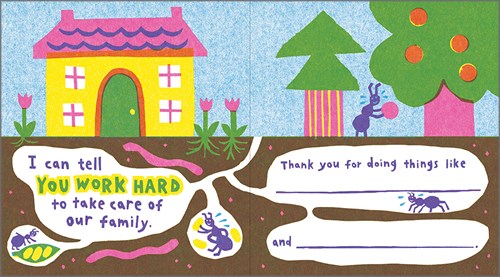
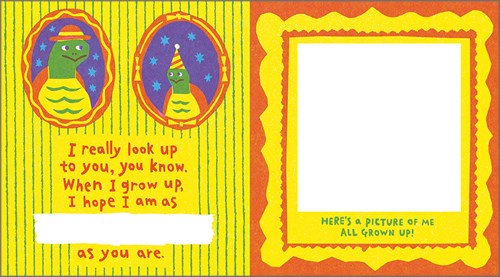
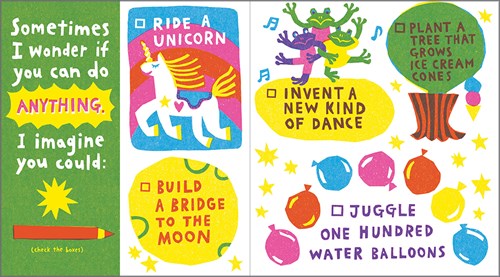
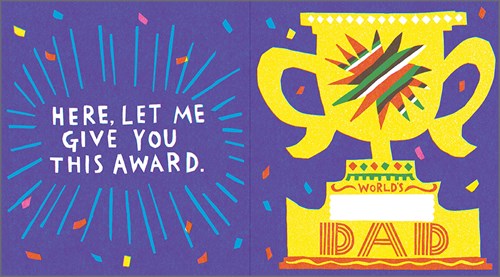
Aussie publisher Compendium does parenting: MOM, I MADE YOU A BOOK & DAD, I MADE YOU A BOOK, sweet keepsakes against *shudder* teenage


DAD, I MADE YOU A BOOK
MIRIAM HATHAWAY
(illus. Asahi Nagata)
Compendium (non-affiliate Amazon link)
$14.95 hardcover, available now

Rating: 5* of five

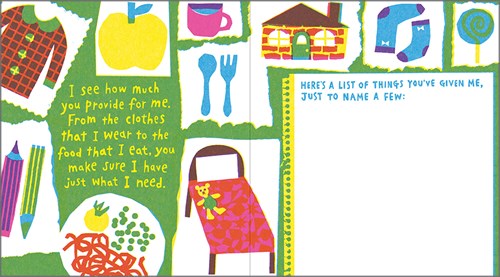
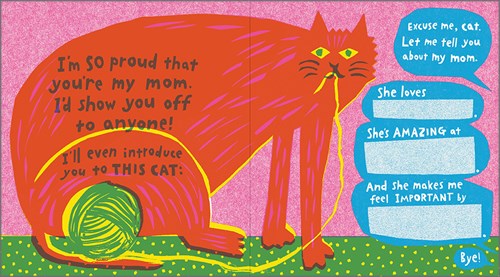
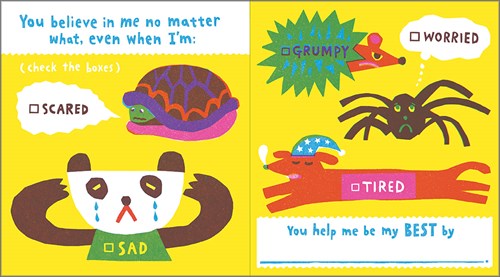
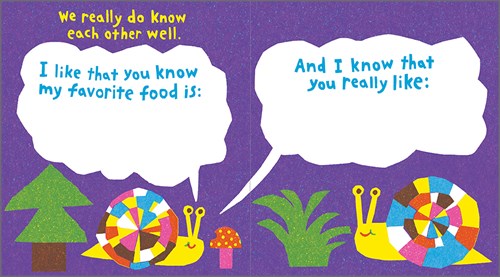
The Publisher Says: There is no better way to brighten Dad's day than heartwarming words from their little one. Help a child tell their dad just how great he is with this fun fill-in-the-blanks book. Kids can open the pages to draw pictures, make lists, and check off boxes as they express their love for their papa. When complete, Dad will have a one-of-a-kind keepsake that captures their child's personality, creativity, and love.

I RECEIVED A DRC FROM THE PUBLISHER VIA EDELWEISS+. THANK YOU.

My Review
: I think this little keepsake is completely adorable. I have some reservations about teaching kids to write and/or draw in books, but honestly they're going to anyway so lean in on this one occasion. It's also very nice that the way it's presented means it could be used by queer parents, too...no presumption of an opposite-sex spouse.


Seems likely to me that SOMEone out there will use this as a jab at the ex, but that's on you, not the author and illustrator. Cheap'n'cheerful way to give Dad an ongoing hug from the six- or seven-year-old who will be a surly teen one day soon...and guaranteed it'll come long before you're ready...so stock him up on the good memories now.

+++++++++++++++++++++++++++++++++++++++++++++++++++++++++++++++


MOM, I MADE YOU A BOOK
MIRIAM HATHAWAY
(illus. Asahi Nagata)
Compendium (non-affiliate Amazon link)
$14.95 hardcover, available now

Rating: 5* of five

The Publisher Says: Mom makes every day special! Help a child tell her everything they love about her with the playful prompts in this fill-in-the-blanks book. Kids can open the pages and enjoy an afternoon of imagination—drawing pictures, selecting checkboxes, and making lists—all while celebrating everything they love about their mama. When complete, Mom will have a heartwarming keepsake that captures their little one's personality and appreciation.

I RECEIVED A DRC FROM THE PUBLISHER VIA EDELWEISS+. THANK YOU.

My Review
: An idea to put before your husband, wives. Or grandparents, give to your grand's mother...with the appropriate hand-holding, of course.


My, let's start the kids on gender stereotypes early, shall we? Its saving grace...making up a bit for the pinkness of it...for me was the playfulness of the idea. Let the kid say it with a little prompting. And, as above, entirely appropriate for queer couples or single moms.

Saturday, May 4, 2024

THE JINN DAUGHTER, death magic, motherhood, and one very ill Death


THE JINN DAUGHTER
RANIA HANNA

Hoopoe Books|American University in Cairo Press
$17.95 trade paperback, available now

20% Off when ordered on their website! Just enter promo code: summer24 at checkout. Valid until 10 August 2024 in North America, the Uk, Europe, and (naturally) Egypt.

Rating: 4.5* of five

The Publisher Says: A stunning debut novel and an impressive feat of storytelling that pulls together mythology, magic, and ancient legend in the gripping story of a mother’s struggle to save her only daughter

Nadine is a jinn tasked with one job: telling the stories of the dead. She rises every morning to gather pomegranate seeds—the souls of the dead—that have fallen during the night. With her daughter Layala at her side, she eats the seeds and tells their stories. Only then can the departed pass through the final gate of death.

But when the seeds stop falling, Nadine knows something is terribly wrong. All her worst fears are confirmed when she is visited by Kamuna, Death herself and ruler of the underworld, who reveals her desire for someone to replace her: it is Layala she wants.

Nadine will do whatever it takes to keep her daughter safe, but Kamuna has little patience and a ruthless drive to get what she has come for. Layala’s fate, meanwhile, hangs in the balance.

Rooted in Middle Eastern mythology, Rania Hanna deftly weaves subtle, yet breathtaking, magic through this vivid and compelling story that has at its heart the universal human desire to, somehow, outmaneuver death.

I RECEIVED A DRC FROM THE PUBLISHER VIA EDELWEISS+. THANK YOU.

My Review
: Mythology that tantalizes with its familiar outlines, and its very intriguing shifts, is always going to get my attention. Nadine has a very unusual job as a Hakawati jinn who must tell the story of the dead before their spirit can move to the next world. This is very appealing to me, as the medium of delivery is pomegranate seeds that fall from the sky. This use of the many-cultural pomegranate as a deliverer of information about the dead in its very numerous, sweet-fleshed seeds seemed like it should be used in more myths!

Demeter and Persephone add their cultural mite to the familiarity stakes as Nadine, our jinn mother, needs to keep her daughter from being drafted to assume the role of the soul-sickened, dying, Death. I don't guess any mom wants her little girl to grow up into a being universally feared and loathed. The tension seemed logical if overplayed: In the quest to save her half-human child from becoming Death, Nadine takes us through an afterlife of surprising charm and a weird kind of gentleness. I guess when Death and her court are female, that is what happens...? As a side note, the men here are one-dimensional walk-ons. I was fine with that, others might not be.

I kept thinking that Death sounded like a fine ruler, where do I go to learn necromancy? Nadine was way ahead of me. Lots of the stories in this very literary fantasy novel center on death as a bargain, making deals, and the like. That is not really something I think is factual, but this being fiction not religion I have no kick with it. The book is short enough that its one note, Motherlove, does not become tiresome. She needs to make some hefty decisions with serious consequences to keep her daughter safe, including the hail-mary pass of digging up her dead partner's horrible father, but in the end only truly good people can help Nadine do good things.

Does it all make sense? Not to me; but I am a cynical old man who thinks the job of being Death sounds spiffing. There is a lot of time spent doing the same thing a couple different ways...go with it. Be in the flow of the story. I recommend this quiet, loving story for US mother's day, as a gift or as a celebration of a deeply missed Mom.

Monday, February 28, 2022

SUNDIAL, an oddly innocuous title for an anything-but-innocuous read


SUNDIAL
CATRIONA WARD

Tor Nightfire Books
$26.99 hardcover, available tomorrow (pre-orders today, of course!)

Rating: I settled on four; YMMV

READ HER INTERVIEW IN The Guardian!

The Publisher Says: You can't escape what's in your blood...

All Rob wanted was a normal life. She almost got it, too: a husband, two kids, a nice house in the suburbs. But Rob fears for her oldest daughter, Callie, who collects tiny bones and whispers to imaginary friends. Rob sees a darkness in Callie, one that reminds her too much of the family she left behind.

She decides to take Callie back to her childhood home, to Sundial, deep in the Mojave Desert. And there she will have to make a terrible choice.

Callie is worried about her mother. Rob has begun to look at her strangely, and speaks of past secrets. And Callie fears that only one of them will leave Sundial alive…

The mother and daughter embark on a dark, desert journey to the past in the hopes of redeeming their future.

I RECEIVED A DRC FROM THE PUBLISHER VIA NETGALLEY. THANK YOU.

My Review
: Y'all remember how I said I wasn't a member of the Cult of the Mother? Rob, the mother at the center of the pitch-black exploration of the Dark Heart of Motherhood, isn't a big fan of it either. And she, stupid asshole that she is, had a second baby with a man she dislikes despite the fact she doesn't like the one she already has.

So why the ever-lovin' hell did I keep reading the book? And what's that star rating up there all about? I can (sort of) explain....

I hate fewer tropes more than the Noble Woman Who Keeps Her Family Together™. This is that story. And I hate that about it. I'm not interested in reading about the vileness of animal experimentation. This is that story, too. I really, really do not like to read Exceptional Child narratives. I don't really need to say it again, do I? But once you open this story up, you're In It For The Duration. Believe me when I tell you, you're not going to come out the other side the same as you went in. Rob is really a bad, bad mother in that she became one at all, ever, after what her childhood was like. It's inevitable that very bad things would follow this woman around like roast-beef-and-brussels-sprouts farts. And yet her narrative voice never does the inexcusable and becomes whiny. She gets closest to it when she discovers that her best friend isn't. But even then, very early on, her tone is "goddammit! not a-fucking-gain!" instead of "how could this happen to meeeeee?" which last is the norm for most women's fiction/domestic thrillers I've perused.

It's what occurs to bring the matter to her attention that needs to be praised: Her youngest child contracts chicken pox. There is only one plausible way that could have occurred. And that, as the saying goes, is that. What matters as we go forward is what Rob is going to do about the stuff she learns: fix it. Every weird, unbelievably wacked out thing Rob does throughout this weird, wacked out story is aimed at fixing the problems she's got in her face right this minute. And it takes her less time to figure out what she has to do to have the best chance to fix it than you'd think, looking at the page count.

Not a one for deep self-reflection, our Rob. Had she been so equipped, there would've been no marriage and no children in her life. And believe you me, there should NOT HAVE BEEN.

So why were there a marriage and children in her life? Because...there are debts that one repays whether in this or another life, there are things that are absolutely yours and yours alone to atone for and to offer up to the evil life-force that this world was created to sustain. And that is where Rob and Callie are as this story begins its uphill climb against the gravity of reality.

When you start out a read as addictively written as this one is, you accept that there are things you won't like as much as others in it. Because something is marketed as horror, you know you're going to have to accept a certain level of gore, for example. The question is will you be too squicked to take the gore as it's intended, or will it just lie there on the book's floor waiting for the cleaning crew to make it all go away? This book seriously skated on the edge of calling the crime-scene cleaners as we got more and more into the scenes in the desert. I wasn't at all sure continuing was a good idea at multiple junctures.

I persevered, and despite the feeling that there could've been less of some gory moments, the fact is that the gore here is handled with deft assurance, and is applied to the plot with a care that one senses even as it deepens about one's ankles. The moments when the plot takes the path of least resistance, ie "it's the man's fault," there is in fact something more to it than that. There is a dark, echoing justice in the world the book creates, a seriously ugly but still urgent weighing of karmic scales that must happen to give this ending, any ending really, a hope of satisfying the reader.

The latent genetic flaw, or the generational trauma inheritance, or the epigenetic expression of ancestral agonies that come to the fore in the read are utterly predictable from the moment we meet Rob. But there's the small matter of how Author Catriona Ward writes to explain why one is compelled to keep reading on. It is this fact that caused me to power through very, very, very upsetting events that would normally have caused me to shut the book for good.

I don't think too terribly many of my regular readers are in it for horror reads. If that's you, skip this review. But horror people should, if they have not already, make this author welcome on their shelves. She's a good sentence-by-sentence writer, and while I'm not the most familiar with horror plotting, this story's absence of supernatural falderol accentuates the truth that I appreciate horror stories making plain: Humanity is made up of vile, irredeemable scum who, even when they say they're doing something for "the greater good" or whatever, are actually just looking for ways to excuse their inner cruel bastard coming out.

Thursday, November 18, 2021

CHOUETTE, a surrealist novel with an amazing tale to tell


CHOUETTE
CLAIRE OSHETSKY

Ecco Press
$16.99 trade paper, available now

Rating: 4* of five

The Publisher Says: An exhilarating, provocative novel of motherhood in extremis
Tiny is pregnant. Her husband is delighted. “You think this baby is going to be like you, but it’s not like you at all,” she warns him. “This baby is an owl-baby.”

When Chouette is born small and broken-winged, Tiny works around the clock to meet her daughter’s needs. Left on her own to care for a child who seems more predatory bird than baby, Tiny vows to raise Chouette to be her authentic self. Even in those times when Chouette’s behaviors grow violent and strange, Tiny’s loving commitment to her daughter is unwavering. When she discovers that her husband is on an obsessive and increasingly dangerous quest to find a “cure” for their daughter, Tiny must decide whether Chouette should be raised to fit in or to be herself—and learn what it truly means to be a mother.

Arresting, darkly funny, and unsettling, Chouette is a brilliant exploration of ambition, sacrifice, perceptions of ability, and the ferocity of motherly love.

I RECEIVED A DRC FROM THE PUBLISHER VIA NETGALLEY. THANK YOU.

My Review
: You can't find my interest in the Cult of Mother with a scanning electron microscope. I dislike the smugness of Mothers who define themselves by the fruits of their uterus. I am routinely revolted and infuriated by the seemingly inevitable bad, lazy, underinvolved fathers these Noble Mothers are saddled with. (Who chose him? Could it just possibly be you, your behavior, your expectations are at fault, Mother?)

Why in the hell did I ask for, then read this book?!

Because we're not on the rails leading to Vaginaville by way of Labor Creek, that's why. This book posits a half-owl, half-human baby born of lesbian bestiality committed in a dream. (Not a spoiler, that's literally the first page of the read.)
I dream I’m making tender love with an owl. The next morning I see talon marks across my chest that trace the path of my owl-lover’s embrace. Two weeks later I learn that I’m pregnant.

You may wonder: How could such a thing come to pass between woman and owl?

I, too, am astounded, because my owl-lover was a woman.
                                                    * * *
As for you, owl-baby, let’s lay out the facts. Your owlness is with you from the very beginning. It’s there when a first cell becomes two, four, eight. It’s there when you sleep too much, and crawl too late, and when you bite when you aren’t supposed to bite, and shriek when you aren’t supposed to shriek; and on the day that you are born—on the day when I first look down on your pinched-red, tiny-clawed, outraged little body lying naked and intubated in a box—I won’t have the slightest idea about who you are, or what I will become.

But there you will be, and you will be of me.

Right there, that voice makes my readar ping like it's locked onto an approaching asteroid. This? This is weird trip and I am here to take it.

What doesn't make me coo with delight is the rather stark presentation of her husband and his family. I did, however, get many evil-hearted chuckles at their expense:
My mother-in-law sees right over me. She is six feet tall and never looks down. She looks out toward the horizon instead, with an expression on her face as if she is thinking the same thought all the time, and that thought has something to do with the pioneer spirit.

Still, the way Author Oshetsky treats the poor bewildered father of this owl-baby is the reason I don't give this book five stars, why I won't be mentioning it for my annual six-stars-of-five "this book...it merged itself into me"; women get to whinge about male writers treating them as cardboard cutouts, so I have done the same.

Chouette's birth, her entry into a world not meant or designed for her, is a trauma; her mother is the only one who champions her. Naturally enough; she's got the owl-baby she expected. No one around her took her seriously when she told them, "this baby is half-owl," because who in their right mind would? Then...Chouette.

From that point on, the beautiful language...the beautiful Satanic Second Person language...goes into the full monty crazytime of a human woman raising an owl-baby, a creature she simply isn't like, but she keeps slugging. She does what mothers across the globe have always done: She learns, adapts, improvises. She makes do and she feeds, raises her child, meeting her owl-baby's needs for raw meat, for training in how to catch prey; she tussles with her owl-baby to accomplish the simplest of daily tasks.

In the teeth of a word-gale of opposition and resistance from her dog-person husband ("When it comes to our little girl, can't is a dirty word"). And I don't mean "man who likes dogs," I mean she thinks her husband...all of the rest of us not her and Chouette, in fact...are like dogs.

She does not intend a compliment in it.

The rest of the narrative is a rehash of The Yellow Wallpaper meets Gaslight. The horrors build in frequency as the reviled dog-person father succeeds in making his Charlotte into a dog-baby. Then comes the day the dog-family meets Charlotte...and she reverts to Chouette. Violently. Horribly. The dog-person father comes to a bloody end; Chouette and mother go on the lam; but, as it inevitably must, Time has her way with us:
She is strong. She is monstrously individual. She is sister to the Titans. She is Ozymandias before the fall. She is the bird of omen, dark and foul; she is blood-wed; she is Strix; she is harbinger of war and bringer of death and slughterer of armies, oh, my Polyphonte!—

She is the girl I raised her to be.

And that she is. This bizarre extended metaphorical trip through the awful, consuming process of being a mother ends as it must...in defeat, in triumph, in the hollowness of being finally ready...for the task, the life, just ended. The awful emptiness of realizing: Now it's just me I worry about, care for, be with. Now it's not You, it's just me.

All the stars I've rated this book are for that single, cruel, agonizing, slow-moving catastrophe of a realization.

Monday, November 8, 2021

DAMNATION SPRING, true-life tale of the cost of living in a cheap, disposable world


DAMNATION SPRING
ASH DAVIDSON

Scribner
$28.00 hardcover, available now

PAPERBACK AVAILABLE NOW! Only $17.99.

SHORTLISTED FOR THE 32ND ANNUAL READING THE WEST BOOK AWARD FOR DEBUT FICTION! Follow the link to vote for it.

Rating: 3* of five

A BEST BOOKS OF 2021 – FICTION SELECTION FROM BOOKPAGE!

The Publisher Says:A stunning novel about love, work, and marriage that asks how far one family and one community will go to protect their future.

Colleen and Rich Gundersen are raising their young son, Chub, on the rugged California coast. It’s 1977, and life in this Pacific Northwest logging town isn’t what it used to be. For generations, the community has lived and breathed timber; now that way of life is threatened.

Colleen is an amateur midwife. Rich is a tree-topper. It’s a dangerous job that requires him to scale trees hundreds of feet tall—a job that both his father and grandfather died doing. Colleen and Rich want a better life for their son—and they take steps to assure their future. Rich secretly spends their savings on a swath of ancient Redwoods. Colleen, desperate to have a second baby, challenges the logging company’s use of herbicides that she believes are responsible for the many miscarriages in the community—including her own. Colleen and Rich find themselves on opposite sides of a budding conflict that threatens the very thing they are trying to protect: their family.

Told in prose as clear as a spring-fed creek, Damnation Spring is an intimate, compassionate portrait of a family whose bonds are tested and a community clinging to a vanishing way of life. An extraordinary story of the transcendent, enduring power of love—between husband and wife, mother and child, and longtime neighbors. An essential novel for our times.

I RECEIVED A DRC FROM THE PUBLISHER VIA NETGALLEY. THANK YOU.

My Review
: First, read this:
"Ask any of these guys. You won’t find a guy that loves the woods more than a logger. You scratch a logger, you better believe you’ll find an ‘enviro-mentalist’ underneath. But the difference between us and these people is we live here. We hunt. We fish. We camp out. They’ll go back where they came from, but we’ll wake up right here tomorrow. This is home. Timber puts food on our tables, clothes on our kids’ backs. You know, a redwood tree is a hard thing to kill. You cut it down, it sends up a shoot. Even fire doesn’t kill it. Those big pumpkins up in the grove, they’re old. Ready to keel over and rot. You might as well set a pile of money on fire and make us watch."
–and–
“The real timber’s gone,” Lark said. “What’s left, ten percent, including the parks? Two thousand years to grow a forest, a hundred years to fall it. No plague like man.”

There isn't a lot to argue with in this novel. The positions are made clear as glass, the townsfolk of the story are innocent of any wrongdoing except not wanting change and the corporate interests are extracting value from the land, the timber, and the people with no slightest regard for the costs.

This ain't rocket science. You know whose side you're on from the jump.

What price innocence...the townies aren't idiots, it's clear that their corporate masters pay them pittances to do dangerous jobs. They love those jobs, they love the life it affords them. So why the hell should they bitch if someone else lives fancier than they do? Ain't like they'd want to live like those folks do, even if they had all the money those folks have. So keep the trees fallin' and the pennies rollin' in.

The personal costs? Well, omelets ain't ever come out of whole eggs, have they. That's the way life is. Except...when you step in front of a woman who wants kids, you'd better be *well*armored*indeed*. Colleen wants babies. She's miscarried eight times! Her sister's had healthy ones, and with a man you'd have to be kind to describe as "grossly unfit." It clearly ain't her body....

And here's my problem: The pace of the novel is, to put it politely, magisterial. The language is limpidly clear, if a bit less than inspiringly lyrical. But the gender politics are awful. The conflict between husband and wife over her screaming NEED to mother a brood, her apostasy to community values (and with a man she has a history with! that gets what feels to me like a pretty insignificant amount of play) because her uterus hasn't popped out healthy babies, squicked me out. I hate it when women in stories play the Mother Card and get away with amazingly nasty shit (see my outraged shout about Gone Girl), unlike Colleen. But basically I don't care about Motherhood. It isn't necessary for you to reproduce yourselves, straight people, the planet's already working itself into a fever to get rid of us. So using it, as Author Davidson does here, as a reason for Colleen to do something that (objectively) is good but will end the way of life these people want to live, shouldn't be framed as "she did it for her babies to be born."

Listen, I don't think what mega-corporations do to the world is laudable, and they do it for the vilest, most selfish reasons. I'm right there with you on the "make it stop" front. But don't play "Sacred Motherhood" on your cards or you'll lose any serious argument for them to be held accountable. NOT being a mother is the responsible choice for all women. The only people who are carryin' on about having more babies are the white supremacists, and we need a lot fewer of them stat.

On balance, three stars was what I could muster, and I felt pretty questionable about that last half-star. The book's set in 1977. We already knew the cost of overpopulation then. The "Zero Population Growth" movement was organized in 1968. It's still a damned good idea. But Sacred Motherhood is used as a primary motivator to positive action in this story, and that sits wrong with me.

The ending wasn't particularly satisfying, after all we've been through; but there not being anything dramatically wrong with the structure or the writing (apart from there being too much of it) I couldn't bring myself to downgrade it. But it wasn't an easy decision. Three...that is, on Amazon's debased scale, a bad rating. I think it's a perfectly fine rating, a perfectly fine read got a perfectly fine rating, and I didn't beat it up beyond its just deserts. That will have to do.

Sunday, March 20, 2016

CONQUISTADOR OF THE USELESS crystallizes Millennial concerns, angst, joy


CONQUISTADOR OF THE USELESS
JOSHUA ISARD

CINCO PUNTOS PRESS
$16.95 trade paper, available now

Rating: 4* of five

The Publisher Says: Joshua Isard’s debut novel is a hoot. Our hero Nathan Wavelsky moves into the burbs with his wife. Life is good. He’s a successful slacker. He doesn’t want to rock the boat. His definition of a good time is listening to his favorite bands on his iPod and staring at the grass and the poplar trees in his backyard. As a mid-level corporate manager, he does what his bosses tell him. If they want somebody fired, he fires them. No questions asked. But the boat does start to rock. He innocently gives a copy of Kurt Vonnegut’s Cat’s Cradle to a teenage girl and his neighbors are righteously appalled. His wife’s hormones start to tango and now she wants a baby. Sure, he enjoys sex, but that doesn’t mean he wants a baby in the house. Worse, his best friend wants him to climb Mount Everest. Nathan likes to camp and hike, but climbing the Himalayas? He could die, for God’s sake. He just wants to be left alone. But no chance. Shit begins to happen.

My Review: I can't help myself. I have to ask a not-really-rhetorical question that I've already heard many answers to: Why didn't this book light up the tills of all the bookeries of the country? Why isn't at the least a modestly large cult following hollering about this book?

I loved this book. To me, it feels as timely and as timeless as The Man in the Grey Flannel Suit. In a lot of ways it's the same sort of indictment of a culture that Sloan Wilson made: How does a man do a soulless job, make a living at it, and still manage not to spend one erg of energy asking himself the central question of a worthwhile life: Why?

Nathan drifts along with his wife Lisa, not imagining a future any different from the present, when *blammo* Lisa gets the baby message from her hormones at the same time as the couple's mutual college friend Mark shows up to entice Nathan into the most insane adventure on the surface of the Earth: Climbing Mount Everest.

Nathan, Lisa, and Mark are the age of my generation's children. They were, as Nathan notes cynically, raised with the belief that every single one of them was a special little snowflake who could do anything! anything! without mentioning what might happen if the anything they wanted to do was "nothing much." Nathan's nothing much is working for the Sirs, as he calls them, doing a mid-level management job very well. Lisa has her college-admissions job. They live in a nice, leafy suburb of Philadelphia. Why, Nathan thinks, isn't this good enough? Like Tom and Betsy in The Man in the Grey Flannel Suit, Nathan and Lisa have just not talked about some important items for future plans, and now it all happens at once: Lisa's hormones, Mark's insane desire to have Nathan with him summiting Everest, and now the Sirs want Nathan to take on a more remunerative and responsible role at his pretty pointless job.

And with that, Nathan's suspended solids crystallize. Yes, of course, he tells the Sirs, but I'll need ten weeks leave first. I have to go climb Mount Everest with my old college buddy. Amazingly, after some ritual posturing, the Sirs agree; the training begins, Lisa has several meltdowns but ends as we all, including her, know she will: Supporting Nathan. An expensive venture, requiring a lot of training, to do something that Nathan and Lisa both agree has no real value.

In the end, of course, it's the things that have no "value" that are the most precious. As we leave Nathan and Lisa, they're still "slackers," neither has gone into Greenpeace or the Occupy movement; but what they are as people, who they are as a couple, has crystallized.

Luckily for us all, it's a diamond that glitters in front of us and not mere salt. Make some noise, readers, order copies, read them, write reviews! Isard's work should be celebrated!

Saturday, August 30, 2014

MOTHER OF A MACHINE GUN, a mother of a wallop in under 100pp


MOTHER OF A MACHINE GUN
MICHAEL SEIDLINGER

Lazy Fascist Press (non-affiliate Amazon link)
$4.95 Kindle edition, available now

Rating: 4* of five

The Publisher Says: What happens when a woman gives birth to a machine gun?

"Mother has something else to say but music won’t stop music is here to stay. For ‘music’, read language. In this headlong tumble of a novella, we see not only an (unhinged/possibly murderous) Mother searching for her (autistic/possibly murderous) son, but also we see language itself, banged up and tripping, a bleeding anatomy of Biblical, crime show, tabloid, service industry phrases joined into a body, hurtling towards impact, and wondering where its human inmates are."

—Joyelle McSweeney, author of Salamandrine: 8 Gothics

My Review: McSweeney's blurb strikes the perfect tone for this novella. Perfect, and no one really can do any better in summing up a work that clearly fell out of Seidlinger's head, sharp-edged and lethally shaped, whole and entire.

I've read three of Seidlinger's books, this being the second of them and The Fun We've Had being the first. I'm getting a picture here. A young man determinedly deconstructing identity. A tyro artist making big bold gestures in small constrained spaces. A soul in search of a mate.

So that's the art.

Now the craft: Every writer needs a trope. Seidlinger's is musical brevity. He'd be called a poet if he made less sense. It's to your taste or it's not, but it's a technique that feels to me organically arrived at, a natural result of being part of the zeitgeist this youth has sucked in with his breath and taken in with his mental food.

The short and virtually unpunctuated sentences of the piece aren't visually appealing to me. It looks like poetry, not a novel, when there is so much white space on a page, when the entire novella is only 90pp, when the one-line paragraphs are dotted hither and thither. I'm an older person, schooled in an older-still tradition of reading long, windy (both pronunciations and meanings) sentences and paragraphs and pages. I don't take to, appreciate, this technique naturally.

So I read it aloud. The dog doesn't much care. She pays attention to me while it suits her and then goes to sleep. Meanwhile the human is making noise, yeah well so what else is new.

I got a lot out of that exercise. I've come to know Michael a little, and appreciate how very hard he works to make the world around him more intense and interesting than it would otherwise be. I approve of this desire on his part, and enjoy the efforts he's made as a writer, an editor, and a publisher. Speaking aloud the words in this book made it clear to me what a scouring, cleansing thing it is to make a question out of an answer. Mother. Mother? The Mother A Mother Some Mother...and to make a question out of the verb forms of this frighteningly large concept, Mother: to Mother, to Be A Mother...activities, identities, aspirations, longings...and the object of Mother is Son. Matthew. Some mother's son. The object of mothering, the subject of being a mother.

I suspect sons wonder more about mothers and mothering than daughters, potential/actual/present mothers, do; we will never know motherhood, the condition of Mother. Daughters can be mothers, even if they choose not to be. It's a mystery sons can't enter into, and many of us wish we could comprehend it better. We would be free of Mother if we could, we tell ourselves, free at last! So what does Seidlinger do with his Mother angst? What an artist does with every lump in the throat: Speaks it into being, limns it onto the air, strokes it onto pages physical or virtual.

Reading this Mother's journey around the bend, I Mothered myself. I found it good.