Showing posts with label family saga. Show all posts

Wednesday, July 29, 2026

THE WINDS OF MARACAIBO: A Novel, deeply felt, beautifully said family saga


THE WINDS OF MARACAIBO: A Novel
MARÍA ELENA MORÁN
(tr. Madeline Jones)
Alfred A. Knopf (non-affiliate Bookshop.org link)
$13.99 ebook, available now

Rating: 4.25* of five

The Publisher Says: A propulsive family drama, the story of a woman determined to recover her kidnapped daughter in the ruins of Chávez’s social revolution—the fast-paced English-language debut of an award-winning and bestselling author that brings the Venezuelan migrant crisis to life in lyrical, seething prose, for readers of Elizabeth Acevedo, Jesmyn Ward, and Gabriela Garcia

It was too late, y la ternura no basta—now that she’d tasted the gunpowder, and the gunpowder was bolivariano, revolutionary. And that unthinkable traitor Camilo was using it to blow up her life.

“Elisa left with Camilo.” “Camilo took her out of the country.”


These are the text messages Nina receives while living in the storage room of a university in Porto Alegre, Brazil, where she’s cleaning houses to make money to send back home.

Home is 4,500 miles away, in Maracaibo, Venezuela, where the water never runs on Mondays and there’s yet another blackout. Where a trip to the grocery store costs 220 times the minimum wage.

Home is Elisa, her thirteen-year-old daughter, who loves to run around the house and belt out Queen’s “Don’t Stop Me Now.” Who should be growing, when instead her waist is shrinking. Home is Graciela, Nina's mother, who lately stays shut up in her room all day talking with her dead, most urgently her beloved husband, Raúl (who’s just as eager to talk back from the grave).

And what the hell does Camilo think he’s doing now, stealing off with their daughter to the United States of America—the one place Nina most assuredly never wants to call home?

Narrated through the voices of Nina and her family, and through the voice of her treacherous ex, Camilo, The Winds of Maracaibo is the heart-racing tale of a mother fighting to get her daughter back across the border, at any cost—a brave and furious reversal of the American Dream and an ode to the Venezuelan women who gave their blood, sweat, and tears to a nation dismantled by the egos of men.

I RECEIVED A DRC FROM THE PUBLISHER VIA NETGALLEY. THANK YOU.

My Review
: I wonder how many people in the US will make it past the brutal evocation of what our government's calculated-to-immiserate destruction of Venezuela's civil society resulted in. It's almost a third, more than a quarter, of the beginning of the book. This is a country our regime hates enough to have kidnapped its sitting president and first lady because they wouldn't pay the vig that was demanded of them.

The living and the dead speak to us. It's a narrative structure that will take some time to settle into, though I think it's less off-putting than the rage they all feel, the terrible emotional toll they've paid and keep paying in this manufactured chaos, and the terrible decisions they make under its duress. I was so deeply offended by the intended-yet-impersonal misery and chaos they all, in their different ways, endure. My human fellow feeling circuits overheated multiple times.

The awful truth of people living under occupation and under economic sanctions is that they are not capable of...do not have the capacity to think...any thinking beyond the shortest of horizons. That's what survival mode does to a human being. It makes the people in its toils easily manipulable, its real intent, but it also causes their moral capacities to...short circuit, is my best approximation.

Camilo, lookin' right at you, miserable "enchufado" bastard. (Really worth looking up, Anglophones.)

The recent history, the past thirty years or so, of Venezuela has been dominated by Hugo Chávez and his disrupted revolution. One guess who did the disrupting...the results of that reformist binge collapsing have been horrendous for average Venezualans like Nina. She's forced to leave her young daughter Elisa with her own mother Graciela, recently widowed by Raúl's death and struggling emotionally, financially, and practically. Elisa is thus parentified much to her resentful fury, which means when Nina's father Camilo shows back up with the idea of moving to the US so as to earn their money there, Elisa jumps at the chance to be a kid again.

Nina finds out when Graciela thinks to tell her Camilo's got Elisa now and they went to the US. Tank goodness, right? No! Nina's carrying a load of fury towards the US for its wanton destruction of her country, a thing that seems not to bother Camilo and exists in the same nebulous faraway as the rest of reality to Graciela. None of this happens as neatly as I'm presenting it to you. All those PoVs are following each other but not linearly, rather in twining braids of recursion. It's not direct but it felt more like I was in the natural process of getting to know the characters.

Given that I related most powerfully to the highly principled Elisa, who rejected Camilo and all he represented because he should only rot under the pile of money he's stolen from worthier needier people, you might feel surprise when I say Raúl's PoV, anguished for the unhappy present of the family he loves and annoyed he can't make them see sense, was the one that often moved me to tears. Graciela is overmatched by reality and Elisa is warping under the strain of growing up too fast. Nina is rigidly refusing to budge an inch; great for a single person but not for a mom.

It's a moving, enlightening family saga of mess, real-feeling people, and a very lovely story to read.

Until you think about what it means.

Sleep tight GOP voters.

Monday, April 6, 2026

HONEY IN THE WOUND, Korean magical realist family saga


HONEY IN THE WOUND
JIYOUNG HAN

Avid Reader Press (non-affiliate Bookshop.org link)
$14.99 ebook, preorder now for delivery 7 April 2026

Rating: 4.5* of five

The Publisher Says: A lyrical and suspenseful debut novel about a mysteriously gifted Korean family confronting the brutality of the Japanese empire, Honey in the Wound is an epic tale of survival and the reclamation of power.

A sister disappears and returns as a tiger. A mother’s voice compels the truth from any tongue. A granddaughter divines secrets in others’ dreams. These women are all of one lineage—a Korean family split across decades and borders by Japanese imperialism.

At this saga’s heart is Young-Ja, a girl who infuses food with her emotions. She revels in her gift for cooking, nourishing the people she loves with her cheerfulness. But her sunny childhood comes to an end in 1931 when Japanese soldiers crush her family’s defiance against the Empire. Young-Ja is cast adrift, her food turning increasingly bitter with grief. When a Korean rebel fighter notices her talents, however, she is whisked off to Manchuria to join a secretive sisterhood of beautiful teahouse spies. There, Young-Ja finds a new sense of belonging and starts using her abilities for the resistance. But the Imperial Army is not yet finished with her…

Decades later, Young-Ja lives alone in Seoul, withdrawn from the world until her Tokyo-born granddaughter Rinako bursts into her life with the ability to see into dreams. In cultivating a tentative bond, they confront the long-buried past in a stunning emotional climax.

As an unforgettable family perseveres in the long shadow of colonialism, Honey in the Wound transports readers to mountain forests where tiger-girls stalk, to Manchurian teahouses and opium dens where charming smiles veil secrets, and to the modern metropolises of Tokyo and Seoul where restless ghosts stir. This debut novel is a tender yet powerful multi-generational drama that shines light onto the twentieth century’s darkest corners and gives voice to those who bore witness.

I RECEIVED A DRC FROM THE PUBLISHER VIA NETGALLEY. THANK YOU.

My Review
: Brutality is colonialism's sole common legacy across all colonial regimes. Korea's half-century as part of Japan's empire was certainly no exception. Many are the stories of families ravaged by slavery, by economic disadvantages imposed to benefit the colonizers, by the horrors of the comfort women's suffering. It's not unique to Japan's imperial project...go look at Briseis' life after the fall of Troy, and I promise you she was nowhere near the first to suffer this fate...but its systematic, intentional social sanction somehow makes it a vile twentieth-century model of efficiency in evildoing.

So much of modern US culture is Korean inflected. I've reviewed a fair few Korean translations, Korean-themed stories written by members of its diaspora, stories set in Korea, all sorts really, because the culture of the place is ancient, rich, and deeply rooted as it smoothly takes on the modernity of this century as an economic, therefore cultural, powerhouse. As I gain more and more experience with the stories Koreans send into the Anglophone readership, I see one very, very frequent strand appearing: the Japanese occupation, usually framed in apocalyptic, folkloric ways to distance the reader from the brutal reality and to restore some agency, some meaning, to the country's suffering.

No exception this time. Starting in 1902 when Korea was an independent monarchy, the family we come to know and invest caring into is gradually Japanesed in personal names (pay careful attention, context will tell you if someone is being addressed or referred to as a Korean or as a Japanese imperial subject) and place names. It's like the British stealing India and naming "Mumbai" as "Bombay." (There are so many examples from all over the colonized world, that example is just the one I felt Anglophones would relate to most easily.)

The first 40% of the story is the slowest, with the highest concentration of double names. It's a debut novel. The fact is this is exactly reflective of the reality Author Han relates to us as we start our journey in 1902. Put in some effort and it will all begin to feel second nature to you quite quickly. The delight of a writer whose planning makes your reading more fluent with her intentional shifts in register is one who gets my highest regard. Time changes within few pages of each other are all quietly indicated with characters giving us clues, not with bold chapter or section headings that bring your readerly attention to the shifts themselves not the flow of the story.

This might not sound like it will suit you. I recommend reading a sample after publication day on the 7th. It feels more fluid than I'm making it sound. For example, you'll notice as you read through the book that there is a lot of use of, and description using, the color yellow. It would behoove you to go look into musok, the people's religion of Korea, and its use of colors. Like the shifts of names this is an enriching detail that clues the reader in to the larger thematic purpose of a passage, or a name, or an evocative word.

It made this read one I really looked forward to getting into, immersing myself into again and again. And a good thing indeed these moments were there because the horrific cost to the people of the colonial occupation, then the war, demanded much fortitude of me-the-reader to stay invested in people enduring so much. I had reservoirs of interested, sympathetic caring to draw down as horrors mounted up.

I will say I wish there had been a map in the book. I'm not sure where some place names were, whether they were really elsewhere or were Korean places I had read about renamed. Its lack was not fatal to my pleasure; but I felt it nonetheless.

A story I urge on readers and enjoyers of Pachinko and Whale. A story with depths deeper than its modest 320pp page count implies. An author who is a fine discovery in her debut novel.

Wednesday, January 14, 2026

THIS IS WHERE THE SERPENT LIVES, Pakistan's class and capitalism colliding


THIS IS WHERE THE SERPENT LIVES
DANIYAL MUEENUDDIN

Alfred A. Knopf (non-affiliate Bookshop.org link)
$14.99 ebook, available now

One of Maris Kreizman’s Best of Books of 2026 So Far

Rating: 4* of five

The Publisher Says: A stunning first novel from universally acclaimed Daniyal Mueenuddin, whose debut short story collection won the Story Prize and was a finalist for the Los Angeles Book Prize, the National Book Award, and the Pulitzer Prize.

Moving from Pakistan’s sophisticated cities to its most rural farmlands, This Is Where the Serpent Lives captures the extraordinary proximity of extreme wealth to extreme poverty in a land where fate is determined by class and social station.

Daniyal Mueenuddin’s This Is Where the Serpent Lives paints a powerful portrait of contemporary feudal Pakistan, and a farm on which the destinies of a dozen unforgettable characters are linked through violence and love, resilience, and tragedy. From Afra, who rose from abject poverty to the role of trusted servant to an affluent gangster; to Saqib, an errand boy who is eventually trusted to lead his boss’s new farming venture, where he becomes determined to rise above his rank by any means necessary. Saqib’s boss, the wealthy landowner Hisham, reminisces about meeting his wife while she was dating his brother, while Gazala, a young teacher, falls for Saqib and his bold promises for their future before learning about his plans to skim money from the farm’s profits.

In matters of both business and the heart, Mueenuddin’s characters struggle to choose between the paths that are moral and the paths that will allow them to survive the systems of caste, capital, and social power that so tightly grip their country.

Intimate and epic, elegiac and profoundly moving, Mueenuddin’s This Is Where the Serpent Lives is a tour de force destined to become a classic of contemporary literature.

I RECEIVED A DRC FROM THE PUBLISHER VIA NETGALLEY. THANK YOU.

My Review
: Soapy story about being born into class, being raised crass, and oppressing the mass...es. I was ready for some piercing social commentary on Pakistan's elites, the warping effect of money allied to godlike privilege on the privileged and on their victims, the distortion of justice that is misogyny...all of these I got. I got them slowly at first, in languorous scenes that linger on details; as the narrative shifts time frames and picks up speed, though not by much, each time.

It is probably that last the lopped off a star. I found I was a little too long in 1955 with Bayasid, only for him to cede the stage completely. It makes narrative sense, it's not poorly handled, I understood *why* it was happening and even agreed with the decision. It happens again when Rustom hands over to Hisham and Nessim on their way to Dartmouth...it's clearly intended to serve a purpose, though I'm not in full agreement with the purpose it's serving being a good one.

I'm not, I promise you, trying to make this sound like a bad read. I found it very interesting to live with these characters. I wasn't as impelled to read more as is necessary for me to offer that fifth star. I'd call this a promising first novel by a writer with serious short-story chops.

Maybe even a short-story cycle that got smooshed into a novel....

Friday, November 28, 2025

THE WAYFINDER, one of The Washington Post's 10 Best Books of 2025!


THE WAYFINDER
ADAM JOHNSON

MCD x FSG (non-affiliate Bookshop.org link)
$14.99 ebook, available now

Wall Street Journal's The 10 Best Books of 2025
One of Publishers Weekly's Best Books of 2025!


One of The Washington Post's 10 Best Books of 2025!

Rating: 4* of five

The Publisher Says: A historical epic about a girl from a remote Tongan island who becomes her people's queen.

Talking corpses, poetic parrots, and a fan that wafts the breath of life—this is the world young Kōrero finds herself thrust into when a mysterious visitor lands on her island, a place so remote its inhabitants have forgotten the word for stranger. Her people are desperate and on the brink of starvation, and the wayward stranger offers them an impossible choice: they can remain in the only home they’ve ever known and await the uncertainty to come, or Kōrero can join him and venture into unfamiliar waters, guided by only the night sky and his assurance of a bountiful future in the Kingdom of Tonga. What Kōrero and her people don’t know is that the promised refuge is no utopia—instead, Tonga is an empire at war and on the verge of collapse, a place where brains are regularly liberated from skulls and souls get trapped in coconuts with some frequency.

The perils of Tonga are compounded by a royal feud: loyalties are shifting, graves are being opened, and everyone lives in fear of a jellyfish tattoo. Here, survival can rest on a perfectly performed dance or the acceptance of a cup of kava. Together, the stranger and Kōrero embark upon an epic voyage—one that will deliver them either to salvation or to the depths of the Pacific.

Evoking the grandeur of Wolf Hall and the splendor of Shōgun, the Pulitzer Prize–winning novelist Adam Johnson conjures oral history, restores the natural world, and locates what’s best in humanity. Toweringly ambitious and breathtakingly immersive, The Wayfinder is an instant, timeless classic.

I RECEIVED A DRC FROM THE PUBLISHER VIA NETGALLEY. THANK YOU.

My Review
: Because I read stochastically, I find very long books challenging to complete. It's harder to keep momentum, and information sometimes escapes me; in this book's case, over 700 pages, it worked against the read feeling whole and complete. When it was named one of The Washington Post's 10 Best Books of 2025, I realized I was going to have to read the whole book again, this time straight through.

It was worth it. After a slow start acquiring needed information about the dramatis personae (helpfully enumerated in the front of the book,just before the urgently needed map), I was launched into two full reading-days of immersion into Tongan royal politics, Polynesian diaspora politics, LOTS of sexual violence against women (that's the missing star explained), poor resource management decisions and their consequences, and the odd-but-inescapable feeling that this novel was happening in front of me, wasn't fiction but myth reenactment, was an Akashic record playing for me.

I definitely understand why it's on The Washington Post's list. Going through the book in a solid focused way definitely is the way to experience it. The pacing is not fast or page-turny. It's relentless, like the small, innumerable waves lapping against the hull, against the shore, each one easy to ride but all of them adding up to major losses of land, of wooden protective hull, major changes in place and time without much seeming to happen until whipped into fierce destruction by a storm.

Because the read is like sailing on deep waters there's not a linear relationship to time. Quite a lot of people find long reads intimidating. More still find time-jumps distracting. Please believe me: If you can last ~65pp, you can make a very intense and interesting journey with Author Johnson. If that initial part, about the sample you get to read free, is not working for you, maybe this isn't the read for right now. I will note that, if you can read fantasy novels or SF novels, you can cope with the Tongan names and language (you'll get help along the way).

I have snorted derisively at spoilerphobes since y'all emerged from the shadows to bully the rest of us with your demand we worry about your emotional state. It's weird, then, that I look back over this read and think "I do not have the skills to convey the substance of this story even without worrying about spoilers." It is dense, it is immersive, it is seawater and fierce lashing squalls and the utter solitude of the vast deep ocean...but to tell you the story...? Read the synopsis. It's about a third of the story you're being told.

I feel like I'm copping out. Maybe I am. I can say with certainty that I tried hard to figure out how to synopsize with justice the complexities of the story, and failed. What did not fail was the engulfing pull of the story as it moved me from place to place, from person I cared about to villain I didn't (unless we're counting hatred as "caring"), as I watched helpless as people...peoples...made their deaths inevitable. I mourned and cried over a few, the few who are many, and then felt the outrage of being denied what suddenly mattered to me that I have.

It was an excellent read. But, accurate and/or period-appropriate or not, the sexual violence against women...never prurient or played for titillation...just did not ever let me forget its pervasive threat. I can't forget and I don't diminish it.

No matter. I still think you'll get a lot of excellent story-pleasure from this outstanding read.

Saturday, December 21, 2024

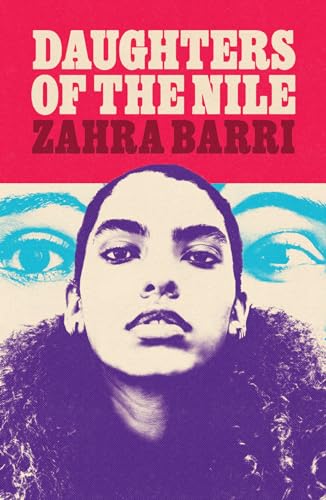
DAUGHTERS OF THE NILE, extraordinary sapphic family saga


DAUGHTERS OF THE NILE
ZAHARA BARRI

Unbound (non-affiliate Amazon link)
$6.15 Kindle edition, available now

Rating: 4* of five

The Publisher Says: A bold multi-generational debut novel exploring themes of queerness, revolution and Islamic sisterhood.

Paris, 1940. The course of Fatiha Bin-Khalid’s life is changed forever when she befriends the Muslim feminist Doria Shafik. But after returning to Egypt and dedicating years to the fight for women’s rights, she struggles to reconcile her political ideals with the realities of motherhood.

Cairo, 1966. After being publicly shamed when her relationship with a bisexual boyfriend is revealed, Fatiha’s daughter is faced with an impossible decision. Should Yasminah accept a life she didn’t choose, or will she leave her home and country in pursuit of independence?

Bristol, 2011. British-born Nadia is battling with an identity crisis and a severe case of herpes. Feeling unfulfilled (and after a particularly disastrous one-night stand), she moves in with her old-fashioned Aunt Yasminah and realises that she must discover her purpose in the modern world before it’s too late.

Following the lives of three women from the Bin-Khalid family, Daughters of the Nile is an original and darkly funny novel that examines the enduring strength of female bonds. These women are no strangers to adversity, but they must learn from the past and relearn shame and shamelessness to radically change their futures.

I RECEIVED A DRC FROM THE PUBLISHER VIA EDELWEISS+. THANK YOU.

My Review
: A powerfully imagined story of how very lucky we are to be alive at this moment in world history, when even sixty lousy years ago...within my lifetime!...options for women, for gay men, and for overall independence from patriarchy were as unimaginable as escape from the divine right of kings were three hundred years ago. While this story of a family's women moving from tradition to liberation is a carefully thought-out demonstration of hurdles failed, hurdles overcome, and hurdles only now hoving into view, it has a structural weakness. Most multiple-timeline stories have this same weakness: As we move from timeframe to timeframe, focusing a different woman in each, we lose forward momentum. It takes reading time to recover the investment made within each timeframe. Yasminah is indeed a constant, though not always foregrounded, presence; this helps with, but doesn't overcome my issue.

It mattered to me because the locations should have felt different in really evocative ways...Paris, Cairo, Bristol might as well be on different planets!...but I had to refocus my emotional temperature to a new main character. I'm not trying to be unkind or dissuasive; I really enjoyed this journey through the world's astonishingly rapid growth, and equally disheartening failure to learn lessons from past failures.

It's a very inexpensive Kindlebook. I'd tell any of my women readers, especially the sapphic ones, to get this all loaded up for solidarity's sake. Your family "Togetherness" will be that much easier to bear if you read about an earlier generation's struggles. We all need to know we're not alone, and part of that is knowing we're not the first either.

It is a fine piece of writing, and of story-telling; it *just* fails at greatness for this old man reader.

Thursday, August 8, 2024

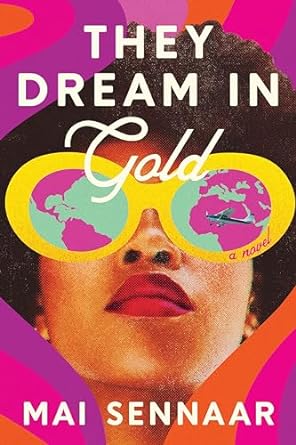
THEY DREAM IN GOLD, debut novel from tyro publisher SJP Lit...both worth watching


THEY DREAM IN GOLD
MAI SENNAAR

Zando/SJP Lit
$28.00 hardcover, available now

Rating: 4* of five

The Publisher Says: A “luminous” (Tara Conklin) literary debut following two dreamers, one intercultural family, and the diasporic pursuit of home.

When Bonnie and Mansour meet in New York in 1968―his piercing gaze in a downtown jazz club threatening to carry her away―their connection is undeniable. Both from fractured homes, with childhoods spent crossing the Atlantic, they quickly find peace with each other. And as Mansour’s soaring Senegalese melodies continue to break new ground, keeping time with the sound of revolution and taking him and Bonnie from Paris to Rio and Switzerland, it seems as though happiness might finally be around the corner for them both.

Then Mansour goes missing. His Spanish tour was only meant to last three weeks, but three months later, he and his band have not returned. In his absence, Bonnie reckons with her memories of him, and comes to understand that the hopes of so many women―her mother and grandmother; his mother, aunt, childhood friend―rest on her perseverance. Stirred by the life growing inside her, Bonnie puts a plan in action to find him.

Spanning two decades and moving through the hotbeds of the African diaspora, They Dream in Gold is an epic yet intimate exploration of the migrant hunger for belonging and a powerful, intergenerational testament to our shared humanity, for lovers of Tara Stringfellow’s Memphis and Abi Daré’s The Girl with the Louding Voice.

I RECEIVED A DRC FROM THE PUBLISHER VIA NETGALLEY. THANK YOU.

My Review
: Buckle up...this is a complicated read. Long at over four hundred pages, complex in its interrelated cast of characters, difficult to summarize as a result. Senegal, Paris, New York...the Twenties, the Sixties...familys seen in passing, a family being formed...this novel's a web.

It's a debut novel for the storyteller and close to a debut for the publisher. Sarah Jessica Parker's SJP Lit is part of a company called Zando Projects (Zando's website). SJP Lit's mission statement is:
Sarah Jessica Parker’s SJP Lit publishes sweeping, expansive, thought-provoking, and discussion-driven stories that are inclusive of international and underrepresented voices. SJP Lit books capture the contemporary imagination and reflect a wide range of ideas and experiences.

So someone famous decided not to start a book club, or an imprint in the Corporate World, but a company publishing books she curates and pays for and edits for us to see what she wants to read and offers us as worth it to read, too. As I would expect from Parker's résumé, the story told here is very much focused on character development. Bonnie and Mansour are not, despite what you could reasonably expect from the synopsis, the only or even the best developed characters. Because the story does not conform to linear time's slightly tedious constraints, we get the family polyphonics as well as the dynamics. This is a fancy way for me to say, if you're expecting a straightforward family saga, you're going to be left wanting. If you really want a book you can inhabit, one that feels more like a series (I mean this in the good way!) than a standalone, here's a great summertime immersion.

The way we move from time to time, from place to place, demands of the reader a level of participation, of code-switching, that might be off-putting for some. I think you'll twig quite quickly to the cues that indicate we're going to shift, though they are not the same from one instance to the next. What I like about that is the mood of the read never stagnates, a danger that family sagas can fall into readily. After a time many of them feel like trauma porn, or a weird triumphalism celebrating a character's Strength, Nobility, and Fortitude. Yeeeccchhh

Author Mai Sennaar doesn't succumb to that too-easy, too-incredible stuff. Her women are beset by worries and doubts. They wonder if things are worth it if they hurt this much, demand this much of them. They stumble, fall, and fail. But they never stay down for good.

It is a distinction, not a difference, but it is a consequential one that speaks to the author's intent. She is not going for the facile road to storytelling success. That is clear from the start. For this old white man, that made the read all the more interesting and involving. Some of that could be down to the slightly more...distant...way the narration is deployed, it gets an overview feeling across. Back to that polyphony of PoVs. This is a natural outgrowth of it. I found it enhanced my reading experience, in part because it enabled Author Sennaar to put me more firmly into the time and place the different strands of her story-web flow through.

I found I was disgruntled by one big, star-losing thing: Like Sweet, Soft, Plenty Rhythm (whose author flatteringly blurbed this book), every one of these women is circling a man. The story's center is a man (absent though he be). Is it that hard to make these women interrelate around themselves and each other?

A crotchet of mine. The Bechdel test still matters to me because the queer equivalent is abysmal still...gay characters feature more than ever, less than reality says is fair. So, no fifth star for you, debut novel. Author Sennaar is deeply talented and should be supported, make no mistake.

Maybe she's got more to say, soon. Let's show we're listening.

Friday, May 10, 2024

BEASTS OF A LITTLE LAND, a beautiful read to disassemble one's complacency...its time come at last


BEASTS OF A LITTLE LAND
JUHEA KIM

Ecco (non-affiliate Bookshop.org link)
$14.49 ebook, available now

Rating: 5* of five

From BBC's World Book Club: Juhea Kim's...dazzling debut novel Beasts of a Little Land is a powerful historical novel that intertwines Korea’s fight for independence with deeply personal narratives of love, survival, and ambition. Spanning decades from the early 20th century...offers a richly detailed exploration of class struggles, colonialism, and shifting power dynamics, all centred on the tale of two friends who refuse to let one another go despite all the hardship they endure. We love this book because it’s an astonishing historical epic, dealing with love, war, the will to survive in any situation, written in beautiful, often dreamlike prose.

Harriett (the host) will be recording with Ottessa (Moshfegh) on Wednesday 2nd July (2025) so we need your questions for 26th June at the latest to be featured. Email to worldbookclub@bbc.co.uk

The Publisher Says: An epic story of love, war, and redemption set against the backdrop of the Korean independence movement, following the intertwined fates of a young girl sold to a courtesan school and the penniless son of a hunter

In 1917, deep in the snowy mountains of occupied Korea, an impoverished local hunter on the brink of starvation saves a young Japanese officer from an attacking tiger. In an instant, their fates are connected—and from this encounter unfolds a saga that spans half a century.

In the aftermath, a young girl named Jade is sold by her family to Miss Silver’s courtesan school, an act of desperation that will cement her place in the lowest social status. When she befriends an orphan boy named JungHo, who scrapes together a living begging on the streets of Seoul, they form a deep friendship. As they come of age, JungHo is swept up in the revolutionary fight for independence, and Jade becomes a sought-after performer with a new romantic prospect of noble birth. Soon Jade must decide whether she will risk everything for the one who would do the same for her.

From the perfumed chambers of a courtesan school in Pyongyang to the glamorous cafes of a modernizing Seoul and the boreal forests of Manchuria, where battles rage, Juhea Kim’s unforgettable characters forge their own destinies as they wager their nation’s. Immersive and elegant, Beasts of a Little Land unveils a world where friends become enemies, enemies become saviors, heroes are persecuted, and beasts take many shapes.

I RECEIVED A DRC FROM THE PUBLISHER VIA NETGALLEY. THANK YOU.

My Review
: Starting an historical novel with a hunting scene is pretty much a statement of intent: We're heading into conflict! There's nothing about this going to be smooth and easy!

It isn't, for the characters at least. The value of self to family, to society; the value of individuation, personal or political; the value of loyalty, fidelity, honor: All strands in this novel's braid. What keeps these weighty themes from becoming burdensome to follow is the resonant writing.
It appeared to him that no matter how much he gave, he would always have more than enough. As he grew older, he even relished the struggles brought on by his sacrifices. There was a soaring awareness that illuminated his soul whenever he did the right thing, which also cost him something. This euphoria, however, was balanced by the utter terror he felt when he looked around and saw so many others to whom this consciousness was not only absent, but unknowable and abhorrent. Most people, MyungBo realized, were made of a different material than his, and it was not something that could shift, as from coldness to warmth, but an elemental and fundamental difference, like wood from metal.

This is, in my reading ear, the musing of a smart man on an immutable truth that does not ever appear the same way from person to person preceiving it; and, in his musing, retaining that awareness. I rang like a bell to this soft hammer striking me.

Current event make this read all the more trenchant. The world has never lacked people or peoples hard done by, consigned to lesser states of being than is their natural right by some standard or quality invented, "discovered," or detected without evidence of its relevance or importance. This passage in history, well, if I really need to spell it out for you I don't want to. This novel has a thriving culture that is suddenly deemed inferior, much to their mass outraged disbelief; this invented inferiority excuses a colonial oppression that has as its purpose eradicating a people's soul to be replaced with their oppressors' vision of perfect slaves.

And that, I expect you already know, is a hateful, criminal enterprise with many, many collaborators inside the edifice being created, as well as...much more terribly...many times more outside. When the day arrives that the false and ill-fitting, ramshackle and improvised, structure collapses, things brak and shatter and split and buckle in random-seeming shapes without patterns. Lives and loves and entire branches of family history jumble in lethal chaos, not every deat physical.

It might be the psychological ones that cause the most suffering.

What Juhea Kim has done for us is map that chaos onto one family of highly effective people who still can't save their lives, their loves, their lands without unthinkable suffering rippling out from the Korean nation's convulsive death-agonies, its multiplicity of death-agonies, and find in that chaos the undetected in the time of crisis pattern that supports random bits of the past just enough to provide the seeds for pearls to come, yet to come.

In 2024, this rread, beautiful for and in itself, means so much more than it did when it came out in 2021. It can speak its truth of betrayal and cruelty into a landscape more like itself; more like the one that needs to hear that truth said without rage or outrage or plangent pleading blame-shoving. I'd love for everyone I know, everyone I can reach, to at the least try this lovely flower's powerful fruit.

Please.

Monday, August 14, 2023

WHALE, the precarious lot of Korea's powerless through a family's life


WHALE
CHEON MYEONG-KWAN
(tr. Chi-Young Kim)
Archipelago Books
$15.99 ebook, available now

Rating: 4.5* of five

Shortlisted for the American Literary Translators Association's 2024 National Translation Awards!

The Publisher Says: SHORTLISTED FOR THE 2023 INTERNATIONAL BOOKER PRIZE

A sweeping, multi-generational tale blending fable, farce, and fantasy—a masterpiece of modern fiction perfect for fans of One Hundred Years of Solitude


Whale is the English-language debut of a beloved and bestselling South Korean author, a born storyteller with a cinematic, darkly humorous, and thoroughly original perspective.

A woman sells her daughter to a passing beekeeper for two jars of honey. A baby weighing fifteen pounds is born in the depths of winter but named “Girl of Spring.” A storm brings down the roof of a ramshackle restaurant to reveal a hidden fortune. These are just a few of the events that set Myeong-kwan Cheon’s beautifully crafted, wild world in motion.

Whale, set in a remote village in South Korea, follows the lives of three linked characters: Geumbok, an extremely ambitious woman who has been chasing an indescribable thrill ever since she first saw a whale crest in the ocean; her mute daughter, Chunhui, who communicates with elephants; and a one-eyed woman who controls honeybees with a whistle. Brimming with surprises and wicked humor, Whale is an adventure-satire of epic proportions by one of the most original voices in South Korea.

I RECEIVED A DRC FROM THE PUBLISHER VIA EDELWEISS+. THANK YOU.

My Review
: First, read this:
While the man with the scar—the renowned con artist, notorious smuggler, superb butcher, rake, pimp of all the prostitutes on the wharf, and hot-tempered broker—was a taciturn man, he was gregarious with Geumbok, telling her everything about himself. The stories he told her were frightening and cruel, about murder and kidnapping, conspiracy and betrayal—how he was born to an old prostitute who worked along the wharf and was raised by other prostitutes when she died during childbirth, how he grew up without knowing his father, how a smuggler who claimed to be his father appeared in his life, how he stowed away to Japan with this man, how a typhoon came upon them during the journey, how the ship capsized, how the smuggler didn’t know how to swim and flailed in the waves before sinking into the water, how he, who thankfully knew how to swim, drifted onto a beach and lost consciousness, where he was discovered by the yakuza, how he lived with them and learned to use a knife, how he killed for the first time, how he met the geisha who was his first love, how he parted ways with her, how he returned home and consolidated power in this city—but she remained enthralled, as though she were watching a movie.

It really amazed me how very violent this read was. Women, queer people, and children are assaulted in every way you can conceive of on practically every page. This is not to say the women are never the abusers...one woman grooms and sexually assaults a young boy.

Korea, once a backwater place only marginally present in the world's mind, was never expected to be more than the setting of a future war between the US and China. The huge existential dread of living in a place known only as the scene of a war that hasn't happened yet and only a few years away from being the colony of a brutal imperial power that was determined to extirpate its history and culture made all the modern cultural and economic flowering of Korea inconceivable. That has given the worst, most predatory actors free rein to design the socioeconomic climate to empower the lowest, most venal people to excel. (Does this sound familiar, Westerners?) The present-day creators working in Korea are shouting their "NO MORE"s and "NEVER AGAIN"s into excellent, internationally important artworks. This short novel is definitely one of those.

There is a dark, bitter gallows humor in the recounting of the many and various forms of violence in the story. The fact is, there are many very uncomfortable line-crossings of every sort in this family's trip through modernizing Korea. What I understood from this is that the author, who presents, eg, sexual assault as a fact of life, was not sensationalizing the existence of it, or trying to invalidate the experience of it; but was instead making the awful aftermath, the survival of its brutalizing horror, the point of her story...not the acts themselves but the aftermath of quotidian sameness that every victim of violence must, in fact, return to. Dinner still needs to be made, the garden still needs to be weeded, there are bricks to be made and laid, your tedious humdrum existence chugs right along...and that, my spoiled fellow Westerners, is how life is.

Not sensationalized. Not minimized. Lived over, through, shoved into a dark closet and sealed as tightly as is possible. No, it's never going away; yes, it bursts out in strange places in one's post-traumatic life that often cause more trauma; most of the world calls that "getting on with it." We're conditioned to condemn this pragmatism as being less than ideal. It is, in fact, the best and only way poor people all over the planet cope. It is a very privileged response to decry this kind of humor masking awful untold, untellable agony as perpetuating a system that is entrenched.

Not everyone is equipped to rebel, to spark change, and those people deserve our respectful attention, too.

That doesn't make this an easy read but I think it makes this an important read.
By its very nature, a story contains adjustments and embellishments depending on the perspective of the person telling it, depending on the listener’s convenience, depending on the storyteller’s skills. Reader, you will believe what you want to believe.