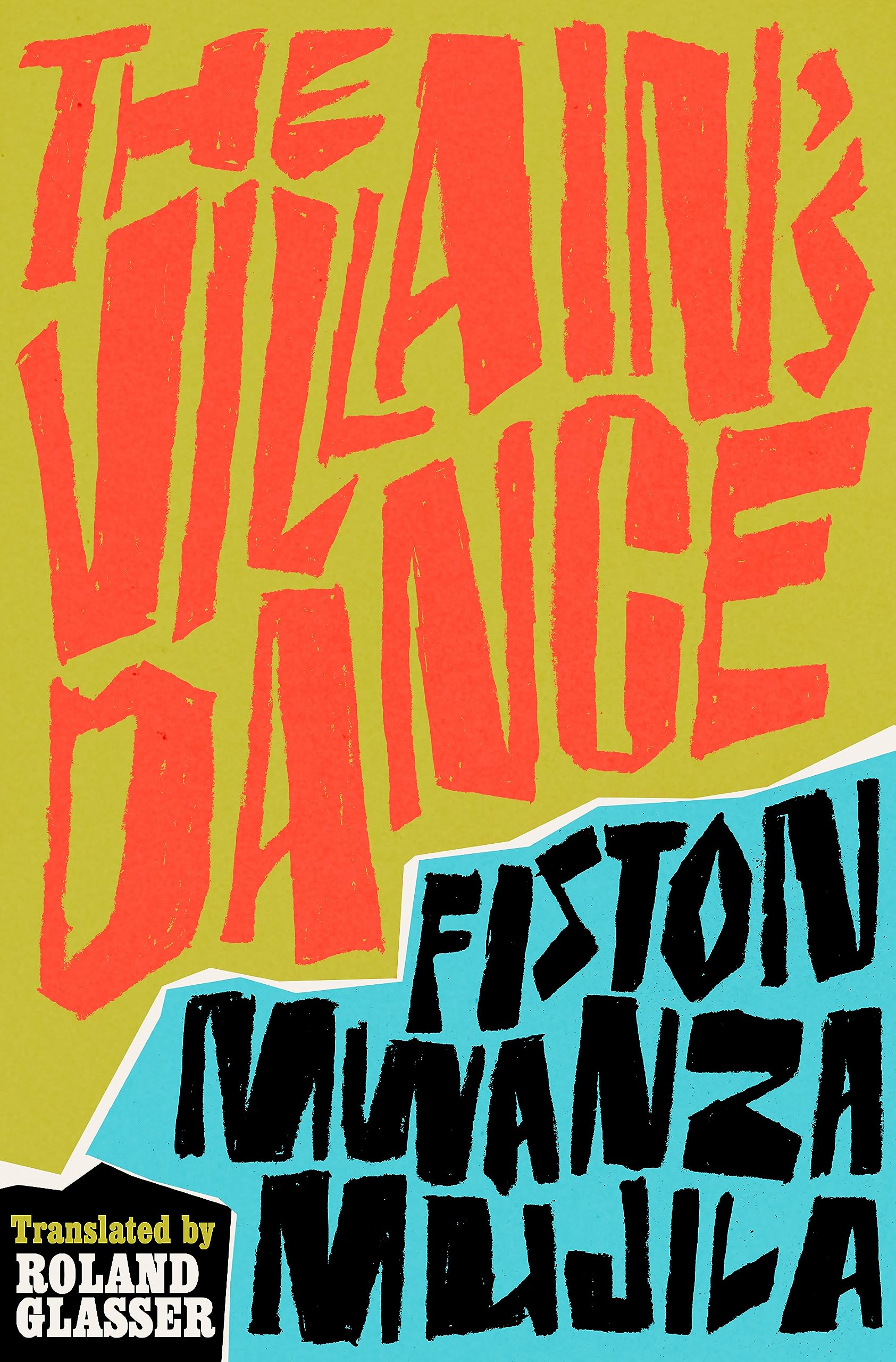
THE VILLAIN'S DANCE
FISTON MWANZA MUJILA (tr. Roland Glasser)
Deep Vellum (non-affiliate Amazon link)
$9.99 Kindle edition, available now
Rating: 4.5* of five
The Publisher Says: Following the international success of his debut novel Tram 83, Fiston Mwanza Mujila is back with his highly anticipated second novel, which follows a remarkable series of characters during the Mobutu regime.
The Democratic Republic of Congo, otherwise known as Congo-Kinshasa or DRCongo, has had a series of names since its founding. The name of Zaire best corresponds to the experience of the novel’s characters. The years of Mobutu’s regime were filled with utopias, dreams, fantasies and other uncontrolled desires for social redemption, the quest for easy enrichment and the desecration of places of power.
Among these Zairians’ immigration to Angola during the civil war boycotting the borders inherited from colonization, as if the country did not have its own diamonds, and the occupation of public places by children from outside. The author creates the atmosphere of the time through a roundup of the diviner Tshiamuena, also known as Madonna of the Cafunfo mines, prides herself of being God with whoever is willing to listen to her. Franz Baumgartner, an apprentice writer originally from Austria and rumba lover, goes around the bars in search of material for his novel. Sanza, Le Blanc and other street children share information to the intelligence services when they are not living off begging and robbery. Djibril, taxi driver, only lives for reggae music.
As soon as night falls, each character dances and plays his own role in a country mined by dictatorship.
I RECEIVED A DRC FROM THE PUBLISHER VIA EDELWEISS+. THANK YOU.
My Review: Want to know how much I appreciate Author Fiston Mwanza Mujila's talents?
I didn't pan, belittle, or insult his poetry. All y'all know how I feel about poetry. And I gave it more than three stars! Be amazed, be impressed...I hope you'll be inspired to go get one. Tram 83 worked for me, as well; I know a lot of folks were't fans but it felt like a breeze from Africa to me, hot, wet, heavily freighted. This impression left me for dead in the first instance; I was less enrapt with its story and atmosphere then than I am in retrospect. In part that's down to my subsequent experience of reading The Villain's Dance.
In common with my earlier reads of the author's books, I began this one with an awareness of atmosphere. He is always, or so it feels to me, careful to begin as he means to go on. I'm reasonably sure the huge majority of my readers are unaware of Mobutu's identity, and are more or less uninformed about tthe name "Zaire" and its history...many in my generation will have known the name Zaire vaguely applies to a huge place near the Congo River but be blissfully unaware that the name is no longer used, or why that happened.
I think that gives the novel almost an SFnal appeal. There's little sense of geography encompassing the story in US readers, so why not just go all the way and market it as taking place on a different planet entirely? *I* can do this, I'm a book reviewer, the publisher can't. The level of outrage engendered would be epic. However, let me propose this to you: If you're willing to learn the names of made-up places like Middle Earth, Arrakis, Pern, Atlantis, Downbelow Station, and their different inhabitants, conflicts, social norms, what's the hold up on Zaire and Brazzaville?
Maybe the tiniest taint of racism? Worth some energy to think about.
Assuming you're in the already-overcame-it or the overcoming-it-now group, this story's got great conflicts between dark-grey, pitch-black, and palest shades of violet people trying their best to make it in a world where up and down just switched places...like being on a space station whose spin just changed speeds dramatically.
Maybe my increased appreciation for this read makes more sense than I thought it did at first.
The people in this book aren't just as well-realized as the setting, for the most part; see below. The pace of the story is provided by history, as it's based on the realities then prevailing. The entire enterprise of nation-building collapsing into civil war (by definition a chaotic break in the life of a society) honestly needs little of that tarting up to make it compelling, even riveting, reading. What Author Fiston does very well here is to fragment the locations of the chaos to give different people reason to speak their truth without losing the core purpose of telling us this story. Like Do Androids Dream of Electric Sheep?, we are taken into realms of deep desperation and left there long enough to get it; then we're offered a peek into the purpose of the extraction and the exploitation that requires...we're not left to wallow, the way The Octopus, f/ex, does with us in service of the same sharp criticism of the cutting edge of capitalism. Poe said it very succinctly in the nineteenth century: "{C}orporations, it is very well known, have neither posteriors to be kicked, nor souls to be damned." (Thanks for showing me the accurate quote again, P-E!)
Edges, as noted above, cut; in this story we're in the path of the blade so see both the wielding and cutting inherent in its very existence. People fail. It is inevitable. Challenges go unmet still less mastered. As often as not that is a design feature of the challenge. It engenders judgment and contempt for failure, but leaves the challenge, well, unchallenged. I suspect the true-to-life experience of people showing up for a minute then vanishing will affront a lot of complacently smug story-structure addicts. It's not by accident, y'all; it's a feature not a bug. Like life in an unstable place at a volatile time, different people will come, only to go without fanfare, or even explanation. Most of the characters trying to make it any old how they can haven't got the wherewithal to care, often enough to notice, who is who except at the precise flash of the camera that "now" represents.
I am trying as best I can to explain away the most common issues I've seen raised in others's assessments of the book. I'm not sure it matters. I hope y'all will attend to my 4.5* rating more closely than to my blandishments. A book of this trenchance is not to be dismissed. I'm hopeful that a few will take this moment of US culture shock to see what has happened in other places at this kind of inflection point.
Forewarned is forearmed.

