Pages
- Home
- Mystery Series
- Bizarro, Fantasy & SF
- QUILTBAG...all genres
- Kindle Originals...all genres
- Politics & Social Issues
- Thrillers & True Crime
- Young Adult Books
- Poetry, Classics, Essays, Non-Fiction
- Science, Dinosaurs & Environmental Issues
- Literary Fiction & Short Story Collections
- Sookie Stackhouse/Southern Vampire Books & True Blood
- Books About Books, Authors & Biblioholism
Showing posts with label film biography. Show all posts
Sunday, December 14, 2025
THE WORLDS OF HAYAO MIYAZAKI: The Influences and Inspiration Behind the Iconic Films
NICOLAS RAPOLD
Frances Lincoln Ltd (non-affiliate Bookshop.org link)
$35.00 all editions, available now
Rating: 5* of five
The Publisher Says: An in-depth collection of the rich influences and sources of inspiration behind one of animated cinema’s all-time greats, and Japanese cinema’s most popular cultural export. Explore the inspirations behind the work of the legendary Hayao Miyazaki, one of animated cinema’s all-time great creators.
Often called the godfather of animation, Miyazaki is able to imagine and populate worlds like no other director or animator. His films, from My Neighbour Totoro to the Oscar-winning Spirited Away and The Boy and The Heron, are deeply original, each conjuring up their own complete and entrancing version of reality.
This book journeys through the rich mix of cultural, historical and artistic influences that shape Miyazaki’s storytelling. From Japanese folklore and childhood memories to architecture, classic cinema, literature and political commentary, it reveals how Miyazaki’s deeply personal vision creates layered worlds that somehow feel both fantastical and grounded in truth.
With insight into his process, visual language and recurring themes—including nature, flight, girlhood, resistance and renewal —The Worlds of Hayao Miyazaki offers fans and film lovers a deeper understanding of the imagination behind the magic.
A celebration of creative freedom, storytelling without limits, and the enduring power of animation.
I RECEIVED A DRC FROM THE PUBLISHER VIA EDELWEISS+. THANK YOU.
My Review: If you are not a Miyazaki fan already, this book could make you one. (But seriously, how can anyone not be a fan after seeing Spirited Away?) I'm willing to bet most all of us have at least one film fan, animation fan, Japanese-culture maven, in our gifting circle. Any of them will appreciate this beauty.
what we'll see on the journey
I'm sure we're all aware of animation's tremendous popularity. A safe bet to give a teen giftee is this lovely, immersive story of how the art of Miyazaki sprang from th art Miyazaki has seen and spoken lovingly about.
The publisher doesn't offer lots of spreads for publicity, understandably, but there are some lovely ones to take a look at:
It's great value for money spent, assuming you opt for the tree book version; the ebookmis a bit cranky and not as fluidly designed.
A very exciting gift to get, and one you'll be thanked for in longer terms than most gifts.
Friday, November 28, 2025
JAYNE MANSFIELD: The Girl Couldn't Help It, massive research, pretty pictures to sweeten the deal
JAYNE MANSFIELD: The Girl Couldn't Help It
EVE GOLDEN
University Press of Kentucky (non-affiliate Bookshop.org link)
$34.95 all editions, available now
Rating: 4* of five
The Publisher Says: Jayne Mansfield (1933–1967) was driven not just to be an actress but to be a star. One of the most influential sex symbols of her time, she was known for her platinum blonde hair, hourglass figure, outrageously low necklines, and flamboyant lifestyle.
Hardworking and ambitious, Mansfield proved early in her career that she was adept in both comic and dramatic roles, but her tenacious search for the spotlight and her risqué promotional stunts caused her to be increasingly snubbed in Hollywood.
In the first definitive biography of Mansfield, Eve Golden offers a joyful account of the star Andy Warhol called "the poet of publicity," revealing the smart, determined woman behind the persona. While she always had her sights set on the silver screen, Mansfield got her start as Rita Marlowe in the Broadway show Will Success Spoil Rock Hunter?. She made her film debut in the low-budget drama Female Jungle (1955) before landing the starring role in The Girl Can't Help It (1956). Mansfield followed this success with a dramatic role in The Wayward Bus (1957), winning a Golden Globe for New Star of the Year, and starred alongside Cary Grant in Kiss Them for Me (1957). Despite her popularity, her appearance as the first celebrity in Playboy and her nude scene in Promises! Promises! (1963) cemented her reputation as an outsider.
By the 1960s, Mansfield's film career had declined, but she remained very popular with the public. She capitalized on that popularity through in-person and TV appearances, nightclub appearances, and stage productions. Her larger-than-life life ended sadly when she passed away at age thirty-four in a car accident.
Golden looks beyond Mansfield's flashy public image and tragic death to fully explore her life and legacy. She discusses Mansfield's childhood, her many loves—including her famous on-again, off-again relationship with Miklós "Mickey" Hargitay—her struggles with alcohol, and her sometimes tumultuous family relationships. She also considers Mansfield's enduring contributions to American popular culture and celebrity culture. This funny, engaging biography offers a nuanced portrait of a fascinating woman who loved every minute of life and lived each one to the fullest.
I RECEIVED A DRC FROM THE PUBLISHER VIA EDELWEISS+. THANK YOU.
My Review: I was a young boy when Jayne Mansfield died. It was stunning how insensitive the chatter around the tragedy was...my mother vocally disapproved of the demeaning way she was talked about as a "sex kitten" and bringing up her nude photos and scenes. I've been interested in her ever since, as my judgmental mother was *defending* her, so something had to be interesting about her.
the most famous photo...Sophia Loren disapproves
More interested in being a star than an actress, the lady was quite a handful as a person—ramping up the public persona that would've made her zillions in the Aughties, fighting, undressing, taking risqué to its apotheosis in the days when Marilyn Monroe, Diana Dors, and she were working the blonde bombshell vein in the publicity mine.
how she made her millions
Like those ladies, Jayne Mansfield was an intelligent, troubled person with a hot ambitious streak in her that her face and body were able to fuel. She never hesitated to use her sex appeal...and sex...to get her name in front of the public. It worked; she was famous.
Mickey and Jayne in mid-act
She was not respected, as no woman in that era was really respected; but certainly no frankly, openly sexual anyone, still less a woman, was going to be highly regarded in the film or television industry. Thus when fashions changed and gamines became The Next Thing, she had no baseline of support in the industry she'd made so much money for.
Las Vegas was ready for her
Turbulent, addiction-haunted personal lives were, are, always have been back into pop-culture history all too common among the famous. Jayne Mansfield was no different than so many others with messy personal lives. She did seem to get married a lot and ended up with five children born between 1950 and 1965.
the family side
The terrible tragedy of a life cut so very short is that her potential, her development, her impact on the world is frozen at a moment; not a moment I suspect, reading about her in this book, she would have stayed in forever. Author Golden has come in for criticism in her supposed inaccurate information about what, when I poked into it a little bit, looked to me like pretty insignificant dates and details about trifles. Looking at the notes...all fiftyish pages of 'em!...Author Golden *lived* in newspaper archives for a good while. Where the issue seems to arise is in the slightly too-prominent tone of disapproval some have seen in the text. It did not feel moralizing to me. I was more interested in the trajectory of a proto-Kardashian sibling.
either of these could have Kim Kardashian in them and be the same publicity campaign
When Yule gifting is the point, the life and times of bygone stars make very instructive reading. We're in fame hyperdrive thanks to a level of mass communication unknown in Jayne Mansfield's life, but the exploitive outlines are still there. Your budding feminist film scholar might enjoy seeing how we got where we are; your brodawg cousin might just like seventy-plus pictures of Jayne Mansfield. The Fifties and Sixties exert fascination that will peak in the late 20s and early 30s as the TCM crowd starts watching the silly innocent farcically "naughty" work of the era. A book like this will please those audiences.
She might not have received the Good Housekeeping Seal of Approval, but this family is very much a testament to the fact she did something right.
Wednesday, December 4, 2024
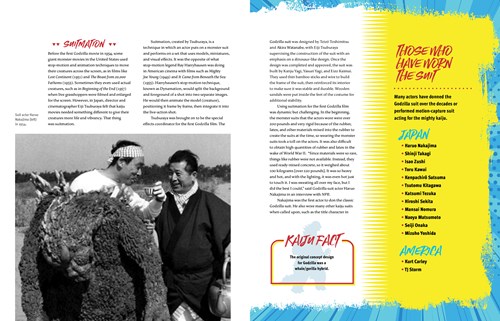
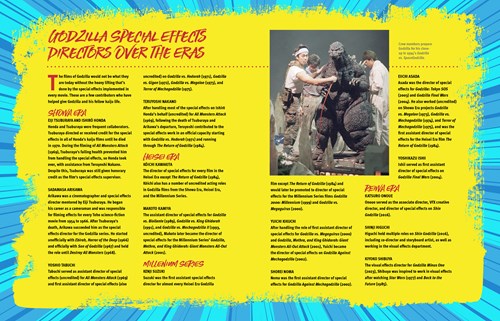
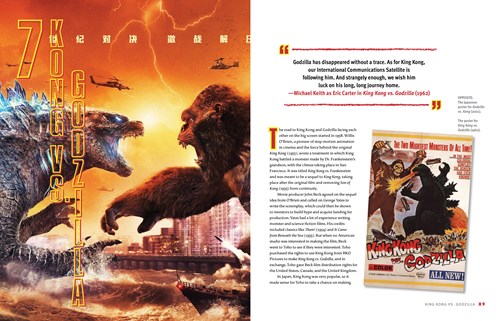
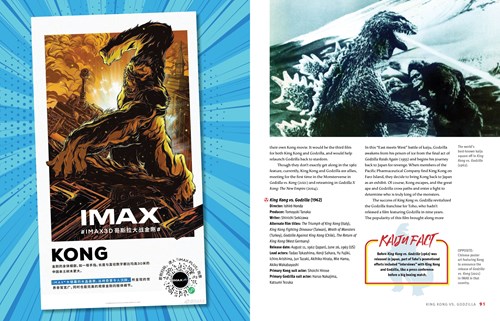
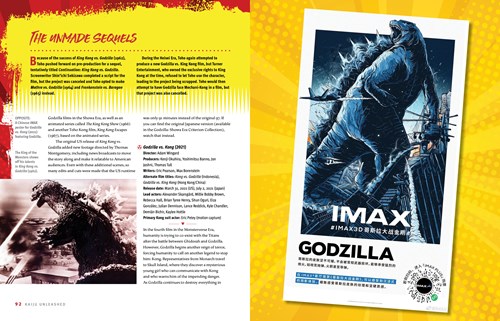
KAIJU UNLEASHED: An Illustrated Guide to the World of Strange Beasts, ideal #Booksgiving gift for your otaku lover of kaiju
KAIJU UNLEASHED: An Illustrated Guide to the World of Strange Beasts
SHAWN PRYOR (foreword by Jason Barr)
Epic Ink/Quarto
$29.99 hardcover, available now
Rating: 4.5* of five
The Publisher Says: Kaiju Unleashed offers a general introduction to the exciting film genre, serves as a guidebook to its film highlights, and celebrates its practitioners, trends, and stories.
Celebrate the world of movie monsters and beasts with Kaiju Unleashed, a complete reference guide to strange creatures in film and how they came to be.
Kaiju (Japanese for “strange creature”) is a film genre that emerged in Japan in the early ’50s. The movies center on giant monsters battling humans, machines, or other beasts. First popular in the ’50s and ’60s, this film category has stomped its way back into mainstream culture.
This comprehensive guide features:
I RECEIVED A DRC FROM THE PUBLISHER VIA EDELWEISS+. THANK YOU.
My Review: Whatever you think of this film genre, you should at least admit it's got serious cultural staying power...seventy years and counting...and think of the millions of fans it's spawned who've gone on to make very successful careers out of this born-of-anxiety monster-laden universe in many fields. The author goes into manga, anime, and of course film, practitioners of all sorts of kaiju storytelling.
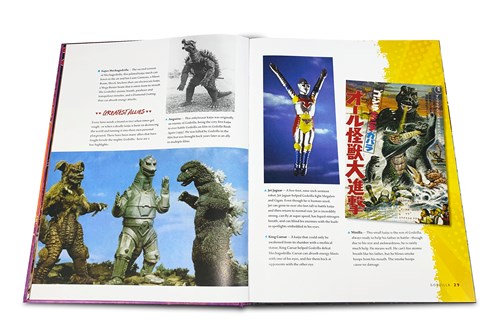
This heavy-on-the-graphics volume goes into the highlights of how, when, and to a limited extent, why the genre got its hooks into pop culture. The text is not the whole point; the illustrations and graphics are not the whole point; the gestalt is superior to any of its constituent elements.

It's never going to be obvious to non-fans (to which group I belong) why this genre appeals enough to be an organizing principle for one's life. It also doesn't matter a whit. Even if you can't reliably tell the difference between Godzilla and Rodan, you probably have someone close who can, does, and has dreams in kaiju-ese. Nibling, grand, or sibling...perish forbid, spouse...they'll love this celebratory festival of behind-the-scenes stories and images, faces to put with names the fan's heard before, and technical effects illustrations.

Never forget all the King Kong-verse films! They're kaiju, too.

You'll get really big points from your otaku giftee with this celebratory recounting of the development and impact of their doted-on genre. I predict a quiet hour or two as the flipping and dipping and kvelling start when the wrappings fall. Exactly the spirit of Jólabókaflóð/Booksgiving.
Thursday, December 14, 2023
THE WARNER BROTHERS, the Jewish immigrants who created modern Hollywood
THE WARNER BROTHERS
CHRIS YOGERST
The University Press of Kentucky (Screen Classics series)
$34.95 hardcover, available now
Rating: 4* of five
The Publisher Says: One of the oldest and most recognizable studios in Hollywood, Warner Bros. is considered a juggernaut of the entertainment industry. Since its formation in the early twentieth century, the studio has been a constant presence in cinema history, responsible for the creation of acclaimed films, blockbuster brands, and iconic superstars.
These days, the studio is best known as a media conglomerate with a broad range of intellectual property, spanning movies, TV shows, and streaming content. Despite popular interest in the origins of this empire, the core of the Warner Bros. saga cannot be found in its commercial successes. It is the story of four brothers—Harry, Albert, Sam, and Jack—whose vision for Hollywood helped shape the world of entertainment as we know it.
In The Warner Brothers, Chris Yogerst follows the siblings from their family's humble origins in Poland, through their young adulthood in the American Midwest, to the height of fame and fortune in Hollywood. With unwavering resolve, the brothers soldiered on against the backdrop of an America reeling from the aftereffects of domestic and global conflict. The Great Depression would not sink the brothers, who churned out competitive films that engaged audiences and kept their operations afloat—and even expanding. During World War II, they used their platform to push beyond the limits of the Production Code and create important films about real-world issues, openly criticizing radicalism and the evils of the Nazi regime. At every major cultural turning point in their lifetime, the Warners held a front-row seat.
Paying close attention to the brothers' identities as cultural and economic outsiders, Yogerst chronicles how the Warners built a global filmmaking powerhouse. Equal parts family history and cinematic journey, The Warner Brothers is an empowering story of the American dream and the legacy four brothers left behind for generations of filmmakers and film lovers to come.
I RECEIVED A DRC FROM THE PUBLISHER VIA EDELWEISS+. THANK YOU.
My Review: Four driven Jewish immigrants left Poland poor nobodies and became the architects of an entire multi-billion dollar empire...and multi-trillion dollar industry.
They didn't play nice all the time. They didn't hesitate to call out hypocrisy while practicing it. But they, for better or worse, made the modern celebrity/entertainment culture we all live in from their savviest business instincts and their unrelenting drive to be Safe in their new homeland. They were charitable with their money and made a big difference in many lives, for the better.
Their studio acquiesced to the Production Code, as they had to in order to stay in business, but produced subversively messaged anti-Nazi and anti-Klan movies. They innovated technologically (The Jazz Singer's sound was an invention of Sam Warner, who died before its premiere...one of the brothers' many personal tragedies). They created and massaged and changed advertising paradigms, distribution methods, audience metrics...and how to make a mess of your life. Jack Warner, a horrible man, comes out of this biographical book looking like Iago's mentor. He was awful to actresses, he was awful to his brothers, he was horrible to his son. No one that terrible should've made the amazing films he made.
Loads of black and white images make this a handy reference for studio publicity photo lovers, and enrich the general reader's experience of the story. It is told as a story, albeit not in the most exciting narrative voice. The author definitely wants you to know that he's done the research, thought through the implications of the Warner Brothers's effect on film as an art and an industry. He's not ignoring the personal details of their Shakespearan family saga. He just doesn't give it to you in punchy, quip-laden sentences.
Author Yogerst is telling us the story of an Institution, The Warner Brothers, a family of immigrant Jews in an anti-semitic world, who created the institution Warner Bros., whose thousands of films we've all watched our entire lives...pure Hollywood, that story. That will appeal to your film-buff giftee as well as your Jewish studies maven. The Warner Brothers are well-served by The Warner Brothers.
A FRONT ROW SEAT, as close as we can get to the Golden Age of Hollywood in real life
A FRONT ROW SEAT
NANCY OLSON LIVINGSTON
University Press of Kentucky (Screen Classics series)
$34.95 hardcover, available now
Rating: 4.5* of five
The Publisher Says: From her idyllic childhood in the American Midwest to her Oscar–nominated performance in Sunset Boulevard (1950) and the social circles of New York and Los Angeles, actress Nancy Olson Livingston has lived abundantly. In her memoir, A Front Row Seat, Livingston treats readers to an intimate, charming chronicle of her life as an actress, wife, and mother, and her memories of many of the most notable figures and moments of her time.
Livingston shares reminiscences of her marriages to lyricist and librettist Alan Jay Lerner, creator of award-winning musicals Paint Your Wagon, Gigi, and My Fair Lady (which was dedicated to her), and to Alan Wendell Livingston, former president of Capitol Records, who created Bozo the Clown and worked with legendary musical artists, including Nat King Cole, Frank Sinatra, Judy Garland, the Beach Boys, the Beatles, the Band, and Don McLean. One of the last living actors of the Golden Age of Hollywood, Livingston shares memorable encounters with countless celebrities—William Holden, Billy Wilder, Bing Crosby, Marilyn Monroe, and John Wayne, to name a few—and less pleasant experiences with Howard Hughes and John F. Kennedy that act as reminders of women's long struggle for equality.
Entertaining and engrossing, A Front Row Seat deftly interweaves Livingston's life with her observations of the artists, celebrities, and luminaries with whom she came in contact—a paean to the twentieth century and a treasure for readers enamored with a bygone era.
I RECEIVED A DRC FROM THE PUBLISHER VIA EDELWEISS+. THANK YOU.
My Review: Oscar nominee for her second role, in Sunset Boulevard, Olson was a woman with a future in acting on stage and screen. Instead, she hitched her star to two powerful men and became a wife and mother. As they were powerful, she was never far away from the glamour of the industry she'd left behind.
She never stopped working, she never made it as big as she would have had she stuck it out, but this lady had herself one amazing ride through the greatest years of the industry she walked away from serving.
Imagine her two daughters born in the early 1950s as Mom and Stepdad bring 'em to meet the Beatles.
What this book does is give you exactly what the title says it will: A front row seat, next to a bona fide insider, at all the major theatrical, musical, and entertainment world events of the Jet Set/Rat Pack era.
The personal life the lady led was honestly one of pretty typical stuff for a woman in that time...a lot of hard work supporting the career of her husband, a lot of swatting away the eight hands most men seemed to grow when her lovely blonde-capped profile hove into view, raising three children in an ever-scarier world. She stints with none of it.
Come for the glamour, the nostalgia of this bygone cultural moment; stay to get acquainted with someone you can easily imagine becoming your friend. A book of delights and pleasures that raids a scrapbook of stunning depth and fun! There are so many more images than I could show to you, but I chose some to demonstrate the feel of them all.
Your women-in-film reader, your glamour-chaser giftee, and your own good self could really sink into this charming hostess's beautifully curated cocktail party. Great for #Booksgiving.
MEAN...MOODY...MAGNIFICENT!: Jane Russell and the Marketing of a Hollywood Legend, more than one way to make it in the world
MEAN...MOODY...MAGNIFICENT!: Jane Russell and the Marketing of a Hollywood Legend
CHRISTINA RICE
University Press of Kentucky
$34.95 hardcover, available now
Rating: 4.5* of five
The Publisher Says: By the early 1950s, Jane Russell (1921–2011) should have been forgotten. Her career was launched in what is arguably the most notorious advertising campaign in cinema history, which invited filmgoers to see Howard Hughes's The Outlaw (1943) and to "tussle with Russell." Throughout the 1940s, she was nicknamed the "motionless picture actress" and had only three films in theaters. With such an inauspicious, slow start, most aspiring actresses would have given up or faded away. Instead, Russell carved out a place for herself in Hollywood and became a memorable and enduring star.
In Mean... Moody... Magnificent!, Christina Rice offers the first biography of the actress and activist perhaps best known for her role in Gentlemen Prefer Blondes (1953). Despite the fact that her movie career was stalled for nearly a decade, Russell's filmography is respectable. She worked with some of Hollywood's most talented directors—including Howard Hawks, Raoul Walsh, Nicholas Ray, and Josef von Sternberg—and held her own alongside costars such as Marilyn Monroe, Robert Mitchum, Clark Gable, Vincent Price, and Bob Hope. She also learned how to fight back against Howard Hughes, her boss for over thirty-five years, and his marketing campaigns that exploited her physical appearance.
Beyond the screen, Rice reveals Russell as a complex and confident woman. She explores the star's years as a spokeswoman for Playtex as well as her deep faith and secondary vocation as a Christian vocalist. Rice also discusses Russell's work in creating and leading the WAIF foundation, which helped unite tens of thousands of orphaned children with adoptive parents. This stunning first biography offers a fresh perspective on a star whose legacy endures not simply because she forged a notable film career, but because she effectively used her celebrity to benefit others.
I RECEIVED A DRC FROM THE PUBLISHER VIA EDELWEISS+. THANK YOU.
My Review: Old Hollywood was an unfriendly place for women in general, buxom beauties in particular. Jane Russell was a very early example of what happens when a very targeted publicity campaign succeeds at one aim and damn near torpedoes a career in the process.
The very young girl Miss Ernestine Jane Geraldine Russell
What makes a star? It's a question that most people really don't think much about. In today's world, it's less mysterious than it ever has been. The earlier one goes, the more the alchemy was being codified and made into chemistry...and Jane Russell was a kind of case in point of that moment of change.
Two examples of the advertising stills responsible for the actress being dismissed for a decade as a figure with a face, not a talent
Getting the world to pay attention to a newcomer in any industry is a giant challenge in every era. What Howard Hughes got into his head was to show Russell in the way he, and most men, saw her and women in general...sex objects. He gave her an entirely unfounded image as a sex kitten. It was something the religious, conservative Russell was unhappy to have lumbered on her. That is, until she leaned into it later in life, with her hugely successful Playtex 18-Hour Cross-Your-Heart bra campaigns that funded her old age! Making lemonade from bitter early-life lemons indeed.
In her entire film career, she made fewer than two dozen films, and was famous for only one: Gentlemen Prefer Blondes (1953) in which she was decidedly less emphasized than Marilyn Monroe.
It was never her film, no matter what; the roles she played were pretty blah, if I'm at all honest; no one would remember her if not for her role in The Paleface starring Bob Hope:
...which she said saved her career, and which led to a lifelong friendship with the powerful and string-pulling Hope.
Honestly, the reason I cared to read the book, and recommend it to y'all, is simple: Russell the woman was more interesting than Russell the actress. After an abortion, illegal in those days so always unsafe to have, left her unable to bear children, she settled down with one wonderful husband, a football player then famous, and adopted three children. Her struggles to complete international adoptions led her to found Waif, a non-profit that helped people get international adoptions recognized in the US. She was actually pro-life, though unfortunately to me also anti-abortion; she focused her sincere christian belief into making it possible for people to bring otherwise parentless children into their homes to make families. That's walking the pro-life talk.
She married for the last of three times (one divorce, one death) to a real-estate developer whose projects she influenced, while re-starting a glamorous career in nightclubs:
And the image lived into the 2000s!
Her undistinguished Hollywood career, followed by her success as a nightclub entertainer for decades, her tenacity and uncompromising refusal to either quit or be dismissed by the many men who belittled, tried to control, and even ruin her is inspiring.
Film fans, students of fame and its many costs, glamourhounds...plus the feminists who need to see how someone not possessed of a liberal viewpoint could still make a powerful career...are among your giftees this #Booksgiving? Here's a book for them. Maybe you, too, don't front! You'll glom a few pages before wrapping.
Monday, August 24, 2020
SUITE FOR BARBARA LODEN, a hybrid literary biography/novel that miraculously transports us
SUITE FOR BARBARA LODEN
NATHALIE LÉGER (tr. Nathalie Lehrer and Cécile Menon)
Dorothy, a publishing project
$16.00 trade paperback, available now
Rating: 5* of five
The Publisher Says: “I believe there is a miracle in Wanda,” wrote Marguerite Duras of the only film American actress Barbara Loden ever wrote and directed. “Usually, there is a distance between representation and text, subject and action. Here that distance is completely eradicated.” It is perhaps this “miracle”—the seeming collapse of fiction and fact—that has made Wanda (1970) a cult classic, and a fascination of artists from Isabelle Huppert to Rachel Kushner to Kate Zambreno. For acclaimed French writer Nathalie Léger, the mysteries of Wanda launched an obsessive quest across continents, into archives, and through mining towns of Pennsylvania, all to get closer to the film and its maker. Suite for Barbara Loden is the magnificent result.
Moving contrapuntally between biography and autofiction, film criticism and anecdote, fact and speculation, Suite for Barbara Loden is a stunning meditation on knowledge and self-knowledge, on the surfaces of life and art, and how we come to truth—a kind of truth—not through facts alone but through acts of the imagination.
My Review: As Duras says above, “I believe there is a miracle in Wanda,” writing of the only film American actress Barbara Loden ever created. “Usually, there is a distance between representation and text, subject and action. Here that distance is completely eradicated.”
A film more famous in our time than in the year it was released, Barbara Loden’s sole filmed work as writer and director went from an affront to American feminists—how dare a woman filmmaker represent a woman as a passive pawn in her own life!—to a smash reception at the 31st Venice International Film Festival, where it received Best Foreign Film honors—as the only American entrant accepted that year. Honestly, it might as well have been a foreign film right here in the USA for all the attention it received in the 1970s.
Loden was an actress who was famous if you knew who she was. She was the leggy, semi-clothed blonde bombshell sidekick to sophisticated sketch and improvisational comedian Ernie Kovacs on his critical darling of a revue show. She won a Tony Award in 1964 for playing a thinly disguised take on Marilyn Monroe in an Arthur Miller play. She was a featured actress in several of second husband Elia Kazan’s films (eg, Splendor in the Grass). Her Method acting was learned at the Actors’ Studio while she was a teen-aged dancer at the famed Copacabana nightclub. This was a woman of formidable ability and negligible self-confidence who, paradoxically, married two high-powered men (her first husband was film and television project distributor Larry Joachim, a major player in the early years of television) and left each of them yearning for the strength to control her.
French author Nathalie Léger is introduced to this subject of obsessive interest by a writing assignment: Create a composite entry for Loden and her single outing as a writer/director for inclusion in a film encyclopedia. Léger tells us that she got the instruction from said editor, “No need to put your heart and soul into it.” Sounds to me as though this was not the editor’s first go-round with Mme Léger. That was possibly the most wasted breath the editor had ever used to form speech. “I was trying to be as objective and rigorous as possible. To describe and only to describe, in as few words as possible,” says Léger of beginning her research. Instead, this encyclopedia entry blossoms into a combination personal essay, critical assessment of film, director, and star, and miniature biography of a minor player in the film world with a major talent.
At the very most, I’d expect someone charged with writing an encyclopedia entry to visit a film-school library, see if the subject’s only film was available in some format and give it a watch, at the extravagant end spend the money for an international phone call to an easy-to-locate colleague of Loden’s who was still living at the time. Léger flies to Pennsylvania’s coal country, the setting of the film; contacts film scholars in the USA as well as famous French star of the same era as Loden, Isabelle Huppert; haunts the late Loden’s son, who possesses “twenty-five boxes” of material on his mother and (not unreasonably to me) wants to know what specifically or even generally Léger is looking for; and can’t articulate to any of them precisely what it is she is seeking. I have the sense that, even as this beautiful and intimate mixed portrait of Loden, Wanda, and Léger was going to press, she wouldn’t have been able to articulate precisely what the purpose of her journey was except in terms of its result.
Loden and Léger are each on a road trip towards some sort of epiphany. Loden’s, as Wanda, is going to be fraught with the usual sort of misery and pointless, purposeless suffering that is the lot of the intellectually ungifted when they come unmoored from whatever habits and relationships they’ve tangled themselves into. Léger’s road trip is guided by that savior of the directionless, GPS:
It is a very good film, if you’d care to watch its 102 minutes. Cinema vérité isn’t everyone’s cup of tea, and while the ample-for-its-day budget of $110,000 is spent so that it shows on camera the seedy underbelly of the American Dream is pretty much intact and uncomfortably familiar. The upholstery is different colors and the TVs have flat screens. All of Wanda’s acting is done by Loden and her man, Michael Higgins; as Mr. Dennis, he’s the latest loser to tow her long behind him. He’s enough of an improvement over the husband she didn’t so much leave as simply drop and forget to pick up that Wanda makes every attempt to stay with him as his petty little control tactics become more and more desperate (throwing a new pair of slacks out the car window because “no slacks when you’re with me,” and “no curlers, they make you look cheap; do you wanna look cheap?”) as his unrevealed criminal plan begins to crack open. But for Wanda this is the big time, this is freedom from the hideous coal-mining burgs of her entire life, from kids she doesn’t care about, from people who know her and despise her. Author Léger relates this barren freedom to her own mother’s life, and does so in a way that makes clear what those 1970s American feminists were testy about: At every turn, these women exist, actually exist, only in relation to the plans and persons of their men.
The bleak truth is that many women in 2016 are in the same boat. Wanda’s cult classic status among the most sophisticated cinephiles does not make the subject matter more comfortable for today’s energetic and ever-more-successful activists to watch. And Léger, by writing a beautiful film critique mixed with a biographical sketch and a patch or two of memoir, has used artful image juxtapositions to create the unsettling but unignorable truth behind all of these stories.
NATHALIE LÉGER (tr. Nathalie Lehrer and Cécile Menon)
Dorothy, a publishing project
$16.00 trade paperback, available now
Rating: 5* of five
The Publisher Says: “I believe there is a miracle in Wanda,” wrote Marguerite Duras of the only film American actress Barbara Loden ever wrote and directed. “Usually, there is a distance between representation and text, subject and action. Here that distance is completely eradicated.” It is perhaps this “miracle”—the seeming collapse of fiction and fact—that has made Wanda (1970) a cult classic, and a fascination of artists from Isabelle Huppert to Rachel Kushner to Kate Zambreno. For acclaimed French writer Nathalie Léger, the mysteries of Wanda launched an obsessive quest across continents, into archives, and through mining towns of Pennsylvania, all to get closer to the film and its maker. Suite for Barbara Loden is the magnificent result.
Moving contrapuntally between biography and autofiction, film criticism and anecdote, fact and speculation, Suite for Barbara Loden is a stunning meditation on knowledge and self-knowledge, on the surfaces of life and art, and how we come to truth—a kind of truth—not through facts alone but through acts of the imagination.
My Review: As Duras says above, “I believe there is a miracle in Wanda,” writing of the only film American actress Barbara Loden ever created. “Usually, there is a distance between representation and text, subject and action. Here that distance is completely eradicated.”
A film more famous in our time than in the year it was released, Barbara Loden’s sole filmed work as writer and director went from an affront to American feminists—how dare a woman filmmaker represent a woman as a passive pawn in her own life!—to a smash reception at the 31st Venice International Film Festival, where it received Best Foreign Film honors—as the only American entrant accepted that year. Honestly, it might as well have been a foreign film right here in the USA for all the attention it received in the 1970s.
Loden was an actress who was famous if you knew who she was. She was the leggy, semi-clothed blonde bombshell sidekick to sophisticated sketch and improvisational comedian Ernie Kovacs on his critical darling of a revue show. She won a Tony Award in 1964 for playing a thinly disguised take on Marilyn Monroe in an Arthur Miller play. She was a featured actress in several of second husband Elia Kazan’s films (eg, Splendor in the Grass). Her Method acting was learned at the Actors’ Studio while she was a teen-aged dancer at the famed Copacabana nightclub. This was a woman of formidable ability and negligible self-confidence who, paradoxically, married two high-powered men (her first husband was film and television project distributor Larry Joachim, a major player in the early years of television) and left each of them yearning for the strength to control her.
French author Nathalie Léger is introduced to this subject of obsessive interest by a writing assignment: Create a composite entry for Loden and her single outing as a writer/director for inclusion in a film encyclopedia. Léger tells us that she got the instruction from said editor, “No need to put your heart and soul into it.” Sounds to me as though this was not the editor’s first go-round with Mme Léger. That was possibly the most wasted breath the editor had ever used to form speech. “I was trying to be as objective and rigorous as possible. To describe and only to describe, in as few words as possible,” says Léger of beginning her research. Instead, this encyclopedia entry blossoms into a combination personal essay, critical assessment of film, director, and star, and miniature biography of a minor player in the film world with a major talent.
At the very most, I’d expect someone charged with writing an encyclopedia entry to visit a film-school library, see if the subject’s only film was available in some format and give it a watch, at the extravagant end spend the money for an international phone call to an easy-to-locate colleague of Loden’s who was still living at the time. Léger flies to Pennsylvania’s coal country, the setting of the film; contacts film scholars in the USA as well as famous French star of the same era as Loden, Isabelle Huppert; haunts the late Loden’s son, who possesses “twenty-five boxes” of material on his mother and (not unreasonably to me) wants to know what specifically or even generally Léger is looking for; and can’t articulate to any of them precisely what it is she is seeking. I have the sense that, even as this beautiful and intimate mixed portrait of Loden, Wanda, and Léger was going to press, she wouldn’t have been able to articulate precisely what the purpose of her journey was except in terms of its result.
Loden and Léger are each on a road trip towards some sort of epiphany. Loden’s, as Wanda, is going to be fraught with the usual sort of misery and pointless, purposeless suffering that is the lot of the intellectually ungifted when they come unmoored from whatever habits and relationships they’ve tangled themselves into. Léger’s road trip is guided by that savior of the directionless, GPS:
Sky. The ocean floor. The earth’s gravity field. Lines, measurements, a shape, a time. What the experts call the figure of the earth. I don’t want to know any more. I allow myself to be guided; I don’t understand the organized collusion of data transformed into electromagnetic waves that come crashing mathematically into the rental car’s black box to dictate my itinerary. I’ve muted the sound; heading into this unknown country I rely only on the image of the infinite ribbon unspooling on the GPS screen. No obstacles, a marvelous, illusory continuity, the perfect representation of stupidity—what others might call an acceptable representation of reality. “The magic box,” the mechanic had said. I have heard that the GPS is altering our perception of our position in space and the way we travel from place to place. The very notion of an itinerary is problematic nowadays; some people go so far as to believe that everything, including time and emotions, can be localized. It seems to be becoming increasingly difficult to accept that we don’t always know exactly where we are, and by extension it is becoming increasingly difficult to know exactly where we are.Where in the world is Léger? She’s lost; or she’s not found, anyway, not by the spirit she seeks so assiduously that, instead of knocking out two hundred fifty words or so on a minor player in the film world, she knocks on time’s doors and bangs her shins on the invisible furniture in the dark theaters where Wanda isn’t playing.
It is a very good film, if you’d care to watch its 102 minutes. Cinema vérité isn’t everyone’s cup of tea, and while the ample-for-its-day budget of $110,000 is spent so that it shows on camera the seedy underbelly of the American Dream is pretty much intact and uncomfortably familiar. The upholstery is different colors and the TVs have flat screens. All of Wanda’s acting is done by Loden and her man, Michael Higgins; as Mr. Dennis, he’s the latest loser to tow her long behind him. He’s enough of an improvement over the husband she didn’t so much leave as simply drop and forget to pick up that Wanda makes every attempt to stay with him as his petty little control tactics become more and more desperate (throwing a new pair of slacks out the car window because “no slacks when you’re with me,” and “no curlers, they make you look cheap; do you wanna look cheap?”) as his unrevealed criminal plan begins to crack open. But for Wanda this is the big time, this is freedom from the hideous coal-mining burgs of her entire life, from kids she doesn’t care about, from people who know her and despise her. Author Léger relates this barren freedom to her own mother’s life, and does so in a way that makes clear what those 1970s American feminists were testy about: At every turn, these women exist, actually exist, only in relation to the plans and persons of their men.
The bleak truth is that many women in 2016 are in the same boat. Wanda’s cult classic status among the most sophisticated cinephiles does not make the subject matter more comfortable for today’s energetic and ever-more-successful activists to watch. And Léger, by writing a beautiful film critique mixed with a biographical sketch and a patch or two of memoir, has used artful image juxtapositions to create the unsettling but unignorable truth behind all of these stories.
Subscribe to:
Posts (Atom)