Showing posts with label Hutu-Tutsi genocide. Show all posts

Friday, November 21, 2025

IGIFU...five out of five stars. No notes.


IGIFU
SCHOLASTIQUE MUKASONGA
(tr. Jordan Stump)
Archipelago Books (non-affiliate Bookshop.org link)
$12.99 ebook, available now

Rating: 5* of five

The Publisher Says: The stories in Igifu summon phantom memories of Rwanda and radiate with the fierce ache of a survivor. From the National Book Award finalist who Zadie Smith says, "rescues a million souls from the collective noun genocide."

Scholastique Mukasonga's autobiographical stories rend a glorious Rwanda from the obliterating force of recent history, conjuring the noble cows of her home or the dew-swollen grass they graze on. In the title story, five-year-old Colomba tells of a merciless overlord, hunger or igifu, gnawing away at her belly. She searches for sap at the bud of a flower, scraps of sweet potato at the foot of her parent's bed, or a few grains of sorghum in the floor sweepings. Igifu becomes a dizzying hole in her stomach, a plunging abyss into which she falls. In a desperate act of preservation, Colomba's mother gathers enough sorghum to whip up a nourishing porridge, bringing Colomba back to life. This elixir courses through each story, a balm to soothe the pains of those so ferociously fighting for survival.

Her writing eclipses the great gaps of time and memory; in one scene she is a child sitting squat with a jug of sweet, frothy milk and in another she is an exiled teacher, writing down lists of her dead. As in all her work, Scholastique sits up with them, her witty and beaming beloved.

I RECEIVED A DRC FROM THE PUBLISHER VIA EDELWEISS+. THANK YOU.

My Review
: I don't have much to say except the banners and the stupidifiers are right: Reading is very dangerous, ideas are existentially threatening. To "Them." Good, says I.

Igifu, the personification of hunger. The viciousness of it. The endlessness of it. The demands of the body...unmet...the demands of the child, unmeetable...the demands of the future, just not your future, that you must meet. 5*

The Glorious Cow here's the way it sounds:
If we met any girls bringing the water home from Lake Cyohoha, my father would grumble: "That’s what they’ve done to us. Have you seen those calabashes they’re carrying on their heads? Back home in Rwanda, those calabashes were our butter churns. No one would have dared fill them with water. Shame be upon us! And I know what your mother does, but it’s no good, not even Ruganzu Ndori’s water can replace the milk from our cows."
Never think your inability to release the past, to move forward, to leave the dead in their graves, will ever do a single shred of good in, for, or to the world, the family, or yourself. 5*

Fear sounds like this:
"In Nyamata," my mother used to say, "you must never forget: we’re Inyenzi, we’re cockroaches, snakes, vermin. Whenever you meet a soldier or a militiaman or a stranger, remember: he’s planning to kill you, and he knows he will, one day or another, him or someone else. And if not today, then soon, in fact he’s wondering why you’re still alive at all. But he’s not in a hurry. He knows you won’t get away."

I feel physically ill typing this. A mother addressing her daughter with these words. What the actual fuck happened to my country to make it possible for me to hear this in my head, only in Spanish? 5*

The Curse of Beauty continues the abusiveness of the Othering, the cruelty of the powerful. There's a curse in being found beautiful by those who see first your powerlessness, after that your face, and then stop looking at you at all but seeing only themselves as warped reflections of smallness magnified. 4*

Grief exists for this line alone: "They’re inside you. They only survive in you, and you only survive through them."

Keep alive until you're forced not to be; you're now a vessel for the vanished, the only vessel for some (too many) to exist, to have existed. Any survivor will understand that, feel its massive, invisible weight, know its unshareable spiky penetration into your core. 5*

#ReadingIsResistance

Monday, November 22, 2021

COCKROACHES, a truly terrible tale told in perfect, sharp-edged sentences


COCKROACHES
SCHOLASTIQUE MUKASONGA
(tr. Jordan Stump)
Archipelago Books
$16.00 trade paper, available now

Rating: 5* of five

The Publisher Says: Imagine being born into a world where everything about you—the shape of your nose, the look of your hair, the place of your birth—designates you as an undesirable, an inferior, a menace, no better than a cockroach, something to be driven away and ultimately exterminated. Imagine being thousands of miles away while your family and friends are brutally and methodically slaughtered. Imagine being entrusted by your parents with the mission of leaving everything you know and finding some way to survive, in the name of your family and your people.

Scholastique Mukasonga's Cockroaches is the story of growing up a Tutsi in Hutu-dominated Rwanda—the story of a happy child, a loving family, all wiped out in the genocide of 1994. A vivid, bitterwsweet depiction of family life and bond in a time of immense hardship, it is also a story of incredible endurance, and the duty to remember that loss and those lost while somehow carrying on. Sweet, funny, wrenching, and deeply moving, Cockroaches is a window onto an unforgettable world of love, grief, and horror.

I RECEIVED A DRC FROM THE PUBLISHER VIA EDELWEISS+. THANK YOU.

My Review
: Each and every time you try to explain away hateful, horrible things someone you love says, you bring the fate of the ones they're spreading hate for a small step closer to Scholastique Mukasonga's family's fate. She is not dead because she was away at boarding school, by a lucky chance, when the Tutsi people she was born among were once again displaced by the Hutu.
The soldiers demanded that President Kayibanda’s portrait be hung in every house. The missionaries made sure the image of Mary was put up beside him. We lived our lives under the twin portraits of the President who’d vowed to exterminate us and Mary who was waiting for us in heaven.

The boarding school in Kigali, thank goodness, was close enough to Burundi that her Hutu classmates, who called her "inyenzi" (the cockroaches of the title), weren't successful in eliminating her after the school no longer taught Tutsi students in 1973. Her family, driven out of the place she was born during the 1959 pogrom by Hutu against Tutsi, made the horrible decision to save Scholastique and her also-educated brother André. Their time in Burundi led Scholastique to marry a French man in 1992. She was in France when the genocide occurred.

But, in all honesty, she makes it plain that the genocide was set in motion when the Belgians divided the Hutu majority from the Tutsi, and placed the taller, straighter-nosed Tutsi in power over the Hutu. The country's independence was always going to be a starting bell for a race war after that. Incidents; laws backing them up; and those "harmless" socially acceptable slurs made 1994 a slow-motion cataclysm.

The last chapter of this book is so painful to read that it took me a month to finish it.

What the hell, I hear the voices mutter as they click away, this is supposed to be the recommended-reading season on this blog! And it is. I recommend you read it as our neighbors, our families, even (perish forbid) our friends fall into the hateful, ignorant, yet addictive rage-mind that we're seeing "populist" authority figures promote around the world. We in the US are primed for it by the existence of vaccine refusers, Holocaust deniers, CRT scare-mongers, gay-baiters, and all the "socially conservative" religious liars and hate-mongers. Conservative my ass! They're radical right-wing dictatorship-building under decent (or at least not actively evil) people's very noses. They're gerrymadering something as close to permanent power as they can; packing the courts with their vile minions; and it won't take that long, well under forty years, for the Rwandan genocide to come true here, as well.
All I have of my loved ones' deaths are black holes and fragments of horror. What hurts the worst? Not knowing how they died or knowing how they were killed? The fear they felt, the cruelty they endured, sometimes it seems I now have to endure it in turn, flee it in turn. All I have left is the terrible guilt of living on amid so many dead. But what is my pain next to everything they suffered before their tormentors granted them the death that was their only escape?

Do not wait until it's too late. Buy and read this uncomfortable, disquieting tale of a country that lost its mind and then threw its soul away. We in the US should not be forced to endure this, when we still can head it off.
Over and over, I write and rewrite their names in the blue-covered notebook, trying to prove to myself that they existed; I speak their names one by one, in the dark and the silence. I have to fix a face on each name, hang some shred of a memory. I don’t want to cry, I feel tears running down my cheeks. I close my eyes. This will be another sleepless night. I have so many dead to sit up with.

I survived the AIDS years. I relate to what Author Mukasonga is telling us in this book with, perhaps because I am a survivor, a great deal of urgency. I do not want some young gay man's sister to write these words after the next Kyle Rittenhouse gets his jollification from opening fire on a group of gay protestors. I live in dread of the #BlackLivesMatter moms and dads writing these words for their sons, dead at the hands of murderous bigots.

Learn from the past. At long last, look. Learn. Do not allow the whole country to sleepwalk down the tracks to another Auschwitz.

Monday, August 9, 2021

THE ETERNAL AUDIENCE OF ONE, Rémy Ngamije's debut novel of identity and cultural visibility


THE ETERNAL AUDIENCE OF ONE
RÉMY NGAMIJE

Scout Press
$28.00 hardcover, available now

Rating: 4.5* of five

The Publisher Says: Reminiscent of Zadie Smith and Michael Chabon, this “gorgeous, wildly funny and, above all, profoundly moving and humane” (Peter Orner, author of Am I Alone Here ) coming-of-age tale follows a young man who is forced to flee his homeland of Rwanda during the Civil War and make sense of his reality.

Nobody ever makes it to the start of a story, not even the people in it. The most one can do is make some sort of start and then work toward some kind of ending.

One might as well start with Séraphin: playlist-maker, nerd-jock hybrid, self-appointed merchant of cool, Rwandan, stifled and living in Windhoek, Namibia. Soon he will leave the confines of his family life for the cosmopolitan city of Cape Town, in South Africa, where loyal friends, hormone-saturated parties, adventurous conquests, and race controversies await. More than that, his long-awaited final year in law school promises to deliver a crucial puzzle piece of the Great Plan immigrant: a degree from a prestigious university.

But a year is more than the sum of its parts, and en route to the future, the present must be lived through and even the past must be survived.

From one of Africa’s emerging literary voices comes a lyrical and piquant tale of family, migration, friendship, war, identity, and race following the intersecting lives of Séraphin and a host of eclectic characters from pre- and post-1994 Rwanda, colonial and post-independence Windhoek, Paris and Brussels in the 70s, Nairobi public schools, and the racially charged streets of Cape Town.

I RECEIVED A DRC FROM THE PUBLISHER VIA EDELWEISS+. THANK YOU.

READ THIS MEMOIR ARTICLE IN LIT HUB!

My Review
: What do you get from a wisecracking young African novelist when you turn him loose with a contract? A novel of the prices exacted by immigration on the emigrated persons, be that emigration voluntary or enforced, cannot help but run into the problem of "why am I here again?" for its fat, complacent first-world-native readers. The usual answer is, "where else would you like to be?" Author Ngamije writes sentences like this:
The only certainty is this: everything that is not the end must be the start of something else.

Séra says that his mother said it first; I believe him. I believe whatever Author Ngamije says, actually. I have already said nice things about Author Ngamije's writing when I discussed The Neighbourhood for last year's Caine Prize reviews. He's deployed a lot more of his snappy humor here (a bed so narrow it should have a singles-site profile, East African parents outdoing the Spanish Inquisition in the barbarity of their interrogation, "FOMO, the acronym of doom," a vile w-bomb at 47% being self-described as a "salacious nictation"...though that didn't prevent him from using it three more times), having so much more room to make the case for laughs. Laughs you'll get, for absolute sure and certain. When Therése and Séra meet at a less-than-opportune moment, for example. If you fail to fall about screaming with laughter at how Author Ngamije structures that scene, then you are deficient.

And there is a great deal of uncertainty in the happiness of the parents in this story. There are no swift and sure answers to the eternal eyeroll of the offspring. A stern reminder, however, that your parents didn't become parents without having some kinda past together is fully served in several chapters. The set-up for them being together, a party attended in Paris, is...incomplete at first telling. It seems there was a lot more to being young in that day and time...well. Usually there was some, um, carnal dimension to their partnering up for parenthood:
His torso occupied every inch of his shirt, and his maroon bell-bottom jeans accentuated a prim pair of buttocks and strong thighs.

He was dressed to pull, for sure! And Therése was very much there to be pulled...well, that is half the story, and the other half was told, so you'll find it when you get to it. But the parenting years came next. A thankless task, that, and made more difficult by the implosion of their country. Several flashbacks to that time are all from Séra's child-vision. It's very effective, and still manages to evoke from the adult reader the fear and the determination of the parents to protect their kids. And then they spent the entire rest of their lives ensuring you'd have it better than they do, Séra. So what does he do with his uni life in Cape Town? What all of us did! Party! Make a group of like-minded friends, find something to rag on the world about...the usual twentysomething life. Author Ngamije says smart, funny things in a smartass way, just like Séraphin himself. He's got a helluva mouth on him, does Séra, and he's not afraid to use it.
...{I}f nobody ever makes it to the start of a story, and if everyone is in the same boat just bailing and steering as best they can, then I guess the whole point of life is to make some sort of a start and then work towards some kind of ending, whenever and wherever it might be. Part plagiarism will permit to agree with Shakespeare: "All the world's a staage..." upon which we perform for the eternal audience of one. ... I guess, then, that the point of life is to dive in, hold on, and hope that a flop...is worth the laugh at the very end.

–and–

"She actually likes black people," Séraphin said. "And it isn't because she's traveled a lot. Slavers traveled too and look where that got us."

–and–

"I have a better chance of being Pablo Escobar than being Pablo Neruda."

"You and drug dealers." {She} laughed. "Not a fan of poetry, then?"

"I approach poetry like other people's dogs. With great caution."

The entire group of friends stay hooked in to their affection for each other, such as it is, and they overlook the usual tensions in any group setting...the odd man out, the tolerated-but-unloved, the group boss with the plans everyone goes along with because it's easier than fighting and better than anyone else's ideas anyway. The flirting, the hookups...the breakups and dumpings...it's all there, exactly where it should be, told in texts instead of long calls and short meetings.

There is, of course, the requisite older woman in Séraphin's résumé, and she speaks a truth to him: "There is a point when actions become promises," that I truly wish I knew how to embroider so I could make a pillow-cover out of. I am also moved by immigrant Séra meditating on forgiveness being meaningless without remembering the thing being forgiven. It is a truth I learned much later in my life than he was forced to, but a severely underrated one in the general conversation we as a society should be having with more seriousness than we seem to be doing.

The lighthearted moments, let me hasten to say now, are quite prevalent in the book. More time laughing is spent than Other Things. Don't mistake this for some gloomy, first-novel-MFA-program navel-gazing! You'll know for sure that you're in good, capable hands, that this is a cocktail party you can't quite imagine how you got invited to and not Thanksgiving with your in-laws.

That is also, of course, apparent in some less joy-giving ways. The function of Séraphin's Great Council of Séraphins is clearly to make you aware that you've shifted to the inner workings of the lad's head; the problem is, for this seasoned reader, it was overused. Two or three times would've been effective...many more and it becomes Ben Stiller's 2013 remake of Danny Kaye's 1947 comedic classic The Secret Life of Walter Mitty. As much fun as recalling the original was for the first twenty minutes, seeing the shots recreated...well...it got old.

The fragmented construction of the story will put some readers off. The flashbacks aren't slowing the story down, I will protest, they are givning it traction! But many will disagree with me, I fear. Structuring a story in an anti-chronological way does indeed allow us to feel, instead of see, the action as the characters do. It does also require of us that we pay attention to what's underlying the surface story of an immigrant leaving home to leave home to learn how to return home to make a home. It's really just that simple...Thomas Wolfe did it, y'all all lapped it up. Ride the waves, don't shove your feet into them. (Have I ever mentioned that my Young Gentleman Caller is a surfer?)

There is a time in a character's arc that the wise mentor offers a personal story that illuminates a Greater Truth that Our Hero needs to hear. That time came, it lingered a bit too long for comfort, and then it was over. That was, actually, a good thing, because the purpose of it was a deeper one than was expected. The way it happens, the moment it comes, are a little bit deceptive, so kudos to Author Ngamije for that misdirection. I like not knowing everything!

But the classic misdirection, well. Remember how you found out your parent was a person before you were born? Remember the moment you learned what they least wanted you to know but you needed to hear? That moment is a beaut in this book, one of those "...I didn't know you had it in you..." times that come to all adult children. I loved it, and if you're the reader I hope you are for reading my reviews, you'll carry on to the very end for the reward you're offered.
"All arguments can be fixed. Circumstances, not so much."

Formerly tall father stood next to tall son.

"You have to decide whether you want to be right or whether you want to be happy. It is a simple choice."

It may be simple...it is simple...but it is never easy.

Sunday, September 11, 2016

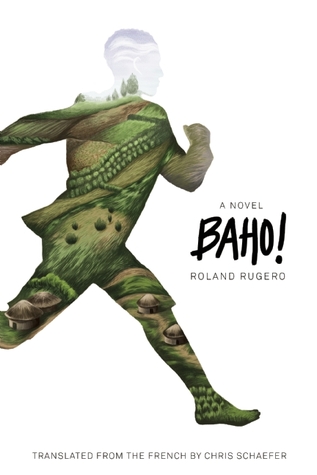
BAHO!, a Burundian novel of rage and redemption **TRIGGER WARNING** sexual violence


BAHO!
ROLAND RUGERO
translated by Christopher Schaefer
Phoneme Media (non-affiliate Amazon link)
$16.00 trade paper, available now

Rating: 3.5* of five

The Publisher Says: When Nyamugari, an adolescent mute, attempts to ask a young woman in rural Burundi for directions to an appropriate place to relieve himself, his gestures are mistaken as premeditation for rape. To the young woman's community, his fleeing confirms his guilt, setting off a chain reaction of pursuit, mob justice, and Nyamugari's attempts at explanation. Young Burundian novelist Roland Rugero's second novel Baho!, the first Burundian novel to ever be translated into English, explores the concepts of miscommunication and justice against the backdrop of war-torn Burundi's beautiful green hillsides.

My Review: A fable of modern life, not just in Africa but the world over: An atmosphere of fear and mistrust arising from more than a decade of endless war causes Nyamuragi (not Nyamugari as above) the mute to be accused of rape, then of murder as the heat of the moment causes passions to rise higher and higher. His "victim" is a teenaged girl who is accustomed (horribly) to the idea that every woman is a man's fair game. She isn't even close enough for Nyamuragi to touch until after she screams, when he grabs her to put his hands over her mouth. The whole village hears the commotion and, being on edge as a whole, assumes that there's trouble and sets out to find the screamer and help her. They see Nyamuragi manhandling their woman-child, assume the worst, and the pursuit begins. Running, of course, makes Nyamuragi look guilty, so the pursuers begin to stone him.

An elder of the village, widow of one of the wealthy men, is out tending her goats when the kerfuffle starts:
With her left eye, the one-eyed woman tries to make out the pack of pursuers.

With the other eye, her bad one, she searches her thoughts. Tears escape them both. It is hard work with sweat trickling down. One eye makes out reality, and the other seeks the explanation for its harshness. One sees, and the other deliberates. The old woman's comprehension in either case is muddled.
Her comprehension about matched mine, as the age of our protagonist Nyamuragi changes from elevn to twenty-six and hovers in an uncertain state from beginning to end. This is intentional, per the translator's note. The author is working in the oral storytelling tradition and piles on details that contradict each other as a means of overwhelming the reader, making the story more intensely alive, and who am I to argue with success?

As the mob drags Nyamuragi towards his death by hanging with a "virgin hemp rope" (this will be important later), the one-eyed old woman hears the word ejo, which leads to her reverie:
Tomorrow and yesterday: two different times, a single word to label them both. Two places in time, a single name. As a result, one becomes the other. Or maybe "tomorrow" and "yesterday" meld into one another, because they contain two chimeras: past and future.
(itals in original)
It seems that Nyamuragi has tried, in his torment, to assent to the mob's mistaken murder of him, to offer himself as a scapegoat for the rage and terror of the whole nation of Burundi, by shouting ego, an assent; since he's been electively mute for his whole life, his vocalization is misuderstood and the crowd roars ejo back at him. They wonder what he means, did he do mischief yesterday or will he if they let him live until tomorrow? In the throes of their rage and fear, they can't decide and no one can agree with anyone else.

Nyamuragi is, in the extremity of his manhandling and torture, driven by his agony to retreat into the waiting state. He's not fully in his body, he keeps blacking out, falling asleep, waking again to be dragged up and up the hill where his village mates are going to hang him from the giant fig tree. His ejo is very much where he is:
In fact, at a very young age Nyamuragi had loved to read, this way of summarizing life with signs. Letters which possessed hats, ties, crooked dashes, feet, arms pointed upwards or turned downwards, hooks above and below, commas, periods, scrawls and scribbles, with the odd one crossed out.
It is always safer, Nyamuragi has learned, to avoid speech and trust silence. Words on paper are blessedly mute. He has emulated them through the horrors of his parents' murders; he has emulated them so well that now he can't summon them despite his great need.

If Nyamuragi had possessed speech, perhaps he would have prayed for divine intervention. He needn't bother, since the divine has already intervened by sending his Uncle Jonathan the demobbed soldier to the village to see his nephew now that the wars are over:
He had served on the frontlines. He knew that tactical decisions win wars. The disorderly two-hundred-strong crowd did not overwhelm him. He knew they were weak. Because he was systematic. And especially because kuvuga menshi siko kuyamara—to speak much does not imply exhausting one's words.
It is Uncle Jonathan who saves the day, and saves Nyamuragi.

This fable of rage, fear, revenge, guilt and expiation, is as relevant to US society as to Burundian. While the scapegoat isn't guilty of the crime of rape, he looks like he is, so he is targeted and the sins of the villagers are heaped on the outsider-from-birth. Mob action might be more direct in Burundi than here, but only just. That the village unites around its young woman and protects her, promises her vengeance, is a refreshing difference from US society's casual, uninterested assumption that the rapist is more "innocent" than the victim. (Typing that sentence nauseated me.)

I recommend to you that, if you read this book (and I think you should), be prepared to do some involuntary soul-searching. How would you have handled the mob rule's decision to murder someone you knew for something you don't know whether or not he did? How would you have tried to comfort the terrified girl whose screams set off the whole nightmare? Would any course of action you can imagine have made any difference?

Only the best books can do this to a reader. This is art of a high order.