Showing posts with label Polish gay life. Show all posts

Sunday, June 20, 2021

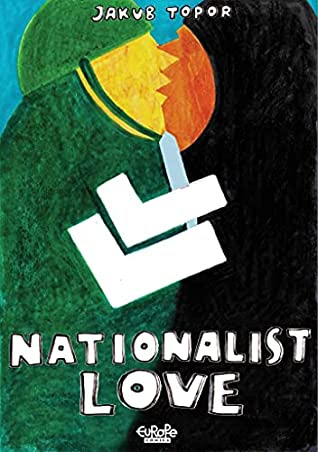
NATIONALIST LOVE, a Polish graphic novel about QUILTBAG people...just not the ones you're thinking of


NATIONALIST LOVE
JAKUB TOPOR

Europe Comics (non-affiliate Amazon link)
$11.99 ebook editions, available now

Rating: 5* of five

The Publisher Says: When Zapsky and Byro meet during a right-wing nationalist march, their joint escape from the police results in an unexpected and violent outburst of passion. Their initial euphoria quickly turns into doubt and fear—after all, if their buddies found out about them, the consequences would be terrible... But now that they’ve come together, will they be able to simply forget and move on with their lives? Or is it something more lasting, despite the risk it represents for both?

"Nationalist Love" is the third graphic novel by Jakub Topor, nominated for the graphic novel of the year award at the Lodz Comics Festival.

I RECEIVED A DRC FROM THE PUBLISHER VIA NETGALLEY. THANK YOU.

My Review
: Two skinhead boys, Zapsky and Byro, meet at a hate-rally held in their Polish city. The Nationalists, our Proud Boys writ Euro, throw stuff and set fires and hurt cops. These are some revolting people. They're each stupider than the other, they got no class or brains, yet still they find each other...attractive? available? attainable maybe. Their stupid antics require them to hide from the cops...naturally they decide to do it together, since Zapsky's mother is away for a month. Hijinks ensue.

This isn't the first time I've seen these boys, just never so thoroughly reduced to their ugliest shapes and colors. As a not-especially-convinced experiencer of sequential art, this was always something I found irritating...this kind of "artwork" would get the horselaugh from so many artsy types I've known. I'd absorbed that prejudice and simply never bothered to challenge or examine it until the past few years. Now, I look at this art's clumsiness and its garishness and think...well, how better to narrate this story?

Whaddaya expect, anyway, in a world centered on two losers without a shred of class or decency between them? They are always gonna have to hide abnormal, sick sexual proclivities from the world their undereducated, credulous, angry, and powerless class lives in. Funnily enough, like so many who live in that hate-defined and -bounded world, it's also the one they resent. But Zapsky and Byro got lucky, found each other....found love...which is the most dangerous thing of all. Zapsky definitely feels this, after a brief and deeply unsettling period of being truly happy with Byro, and under pressure to prove he's not a fag to his co-workers, he sends a break-up text that callously dismisses Byro.

Zapsky's Mammele, escaping her loser son's ubiquity and her own pointless existence, is at a beach resort-cum-health spa. And guess what? She meets A Man too! (Called Manfred. No lie.) The sheer awfulness of the art, as in the ugliness of the people and the garishness of the colors, goes so well with this horrible tale of numerous disgusting creeps that it's almost eerie. And that's when I felt myself really giving up, shedding the weight of, that habit of contempt. It isn't pretty! But who said art needs to be pretty? I like Jackson Pollock and Agnes Martin, for gods' sweet sake. I'm not one of those Impressionism-über-Alles sofa-matching-art people!

Or maybe I am...and hide it from myself by liking things that made my mother cringe? That certainly includes comic books...I've been so snobby about them for so long that it feels fake to say, "there is no other way this story could've been told, and it very much needed to be told," but it's just the truth.

Chapter 3 is called "Spoiled Rich Kids"...seems to be a pattern among Polish émigré writers. Like Jedrowski in Swimming in the Dark, Topor gets a character (Byro Bad-skin here) among the wealthy who are privileged to consume and exist as they like. Then he lets him sink or swim...sink in this case. Byro's rebounding from his breakup text, and searches the Internet for gay clubs...he decides he's going to fix himself up, be less Nationalist looking, by dressing better and hiding his skinhead under his loser father's long-unused toupée. The club scene scares him, he doesn't know the culture and is about to get himself into serious trouble but is rescued by one of the rich kids. They decide to keep him when leaving the club becomes a good idea...he almost loses his cool when a "darkie" (an Arab guy called Jamal) is in the house party, too. He's eventually, and inevitably, outed as a Nationalist; but not until after kissing a straight guy at the party. The violence the posers inflict on Byro is pretty mild...more about humiliating him for not being like them. And that, despite the fact he doesn't *want* to be like them, is the worst rejection he suffers. (Not that he is recovered from being rejected by Zapsky, please understand. Just trying to figure out how to move on.)

Mammele gets lucky with Manfred. That scene's just grisly. Even Byro's parents decide to fool around (more grisly still). Byro's Dadzio figures out the kid's got his wig. That should be fun! I thought, watching him explain what the hell he was doing with the damn thing....

Chapter 4 is "Zapsky Looks for a Girlfriend"...the co-workers' plan to get Zapsky laid results in him finding one. Because he's never been in any relationship at all except the brief honeymoon with Byro, he ignores the red flags of an abusive, angry, selfish woman looking for something in exchange for the sex she doles out to him. In his months-long journey through this hell, Zapsky confronts low self-esteem, and his work pals do a lot to support him and care for him. They are crude but actually touchingly kind. Since we focus on Zapsky, we never learn anything more about what happened after Byro's night out...disappointingly...or about Mammele's reactions to the girl Zapsky gets with.

But long story short: Girl gets dumped. Zapsky gets lonely. One rainy day who does he see under a bus shelter but...BYRO!! It's a loving reunion, the bond of real love between them reasserts itself, and they, well, do what young guys do when under the heady influence of reciprocal attraction and genuine connection. They fool around.

...and there's a PoS from their earlier Nationalist lives filming their reunion.

Naturally, the evidence gets shown to the wrong people. All the old gang, I mean this literally, are on the hunt for Zapsky. They find him.

Things end as they so often do.

It's awful to know that this happens and happens and happens to men and women, cis and trans, all around the world because "don't be so sensitive" and "it's just a joke" aren't seen for what they are.

They are normalizations of hate, and soft volleys preparing the way for violence.

I downloaded this graphic novel from Europe Comics, an outfit with whom I am unfamiliar...how shocking...so, if you're in the same boat, here's their mission statement from NetGalley:
Europe Comics is a joint digital initiative run by 13 European comics industry players from 8 European countries. Its main purpose is the creation of a pan-European catalog of award-winning graphic novels from across the continent, published digitally in English and available through major retailers and library networks. Europe Comics also works towards the promotion of European authors and the creation of a European comics online directory, meant for both comics readers and professionals.

Well...so this Polish creator found his way to this American oldster via a social system intermediated by several levels of technology that are under a lot of pressure all the time to justify its worst users' behaviors. This is an example of positive social and personal results from being massively online. Say hallelujah and bring the jubilee.

Tuesday, June 1, 2021

SWIMMING IN THE DARK, a lovely first-love tragedy where no one dies


SWIMMING IN THE DARK
TOMASZ JEDROWSKI

William Morrow Paperback Originals
$16.99 trade paper, available now


Rating: 4.75* of five

The Publisher Says: Set in early 1980s Poland against the violent decline of communism, a tender and passionate story of first love between two young men who eventually find themselves on opposite sides of the political divide—a stunningly poetic and heartrending literary debut for fans of Andre Aciman, Garth Greenwell, and Alan Hollinghurst.

When university student Ludwik meets Janusz at a summer agricultural camp, he is fascinated yet wary of this handsome, carefree stranger. But a chance meeting by the river soon becomes an intense, exhilarating, and all-consuming affair. After their camp duties are fulfilled, the pair spend a dreamlike few weeks camping in the countryside, bonding over an illicit copy of James Baldwin’s Giovanni’s Room. Inhabiting a beautiful natural world removed from society and its constraints, Ludwik and Janusz fall deeply in love. But in their repressive communist and Catholic society, the passion they share is utterly unthinkable.

Once they return to Warsaw, the charismatic Janusz quickly rises in the political ranks of the party and is rewarded with a highly-coveted position in the ministry. Ludwik is drawn toward impulsive acts of protest, unable to ignore rising food prices and the stark economic disparity around them. Their secret love and personal and political differences slowly begin to tear them apart as both men struggle to survive in a regime on the brink of collapse.

Shifting from the intoxication of first love to the quiet melancholy of growing up and growing apart, Swimming in the Dark is a potent blend of romance, post-war politics, intrigue, and history. Lyrical and sensual, immersive and intense, Tomasz Jedrowski has crafted an indelible and thought-provoking literary debut that explores freedom and love in all its incarnations.

I CHECKED THIS BOOK OUT OF MY LOCAL LIBRARY. USE YOUR LIBRARY, FOLKS! THEY NEED US.

My Review
: Happy Pride Month, US QUILTBAGgers! Let's celebrate what our fellows in Poland can't: A safe, sane Pride Month of more freedoms than were even conceivable even in my own youth of this lifetime.

Ludwik is a normal child: he knows he knows nothing, is interested in the things the people around him tell him to ignore, and most of all is just discovering, like all kids, that he's Weird. Trouble is his weird isn't going to be so easy to live with in Communist Poland: he's fallen in love, at nine years old, with Beniek. A boy. But also a Jewish boy. In the 1960s, World War II was very much alive and deeply scarringly real to Poles. Somehow the Jews, despite their vanishing into German ovens, are to blame for everything...and here's little faggot Ludwik falling for a Jewboy. Oh boy.

Then one day, Ludwik stops seeing Beniek around the way he always has been. Nothing...absence...awful heartbreak to a child whose loves are so fierce because they are so new. There is nothing like a disaster to make one aware of the freight we bring from our pasts, all the way out to our death.
I was transported into a vision of my life that made me so dizzy my head began to spin. Shame, heavy and alive, had materialized, built from buried fears and desires.

He's fallen; the only one who could catch him is now in Israel. (The Six-Day War happened, the Jews were expelled from Poland yet again.) Poor little guy, dropped into an ugly reality that connects to nothing, not any thing, in his loving heart. What the world will do to him....

Among the first things it does to him is grow him up: mother and grandmother lock themselves into her bedroom, doing something deeply mysterious together. He pesters and nags, and finally Granny tells his mother it's time to come clean: they bring their Ludzio into her bedroom and listen to Radio Free Europe. For the first time, they allow him to be One of Them. Sadly.
I thought of Mother, of her pointless life, her passivity. Of the years she’d spent listening to the radio, explaining her truths to me, and all of it for what? She’d died a submissive employee at the Electricity Office and had never dared to speak up or live out any of her ideas.

The sadness of a dead parent, a father whose entire life was spent far away from them by his choice, never spoken of still less to, results in an unmoored adolescent. Luckily for him, he is at least aware that he is gay...that he can not be like the boys he tres to emulate for mother and for grandmother to see, walking with a girl hand in hand along their street. One post-loss night, an older man in a park where THEY go takes his innocence. (As a side note, if not for one of those same older men I'd've never experienced a positive sexual encounter possibly at all, so no tutting about ephebeophiles or the like.) It is, from that moment on, a necessity that his bitter angry self, unable to fake an identity he despises the same way he despises the lying system he's entrapped by, leave Wroclaw and get to university in Warsaw.
Yay. That happens, there he is in his glory, but all courses end. At the end of his schooling, he is required to spend a summer harvesting beets, and there...
...my eyes fell on you. I had never seen you before—not consciously, anyway. Yet my mind felt strangely relieved, as if it had recognized someone.
–and–
“Pleased to meet you,” you said. “I’m Janusz.”

Janusz. Two syllables that rise and fall and follow each other logically, almost inevitably, and whose sound together is so familiar, so natural, that the meaning of its parts remained hidden to me until years later: Ja, meaning “I” in our language, and nusz, sounding just like our word for “knife.”
–and–
You smiled, dissolving the tension, your teeth flashing in the light of the fire. We sat there for a while, in our private silence, worlds shifting in me.

The dawning of first love! "Worlds shifting in me"...how utterly perfect and how very poignant to one so far from it as I am.

It seems bizarre to me, that I'm the same age as Ludwik. I look into this mirror, lightly distorted, and think...yes, that was it, these thoughts are familiar though I was doing this before Ludzio in age. But yes. I'm right there, I'm fully immersed, this is the way it felt, that's almost exactly what I thought.

It's unsurprising, then, that the rest of the course of first love is pretty particularly followed. Fear of rejection, fear of acceptance! Fear of the future. Wild, surging riptides of Jealousy! Swimming fearless and free in a moonlit pool, filling the darkness with your love for him, his for you, while every beat of the world's heart pushes pushes pushes...before you know its direction.
I don’t know how many days we stayed at the lake, because each one was like a whole world, every moment new and unrepeatable.
–and–
You listened, really listened, gentle eyes taking me in without judgment, making me feel more heard than I knew I could be.

So universal, the course of that first true love. There are minor variations, specific things to a time or a place. The course, however, is steady and unvarying: delight, disillusionment, dénouement. Then, if one is amazingly lucky, a new relationship grows into place over the old one.

The time of Solidarność, "Solidarity" in English, was the beginning of the end of Soviet Communism. Ludzio feels it in his bones, it causes him to rear back and resist and to refuse the whole idea of collaboration that his Janusz is making into a future...sadly we know how that will turn out for him.
The queues for the shops swelled like bloody lips—deliveries had become so few and far between that the only way to get anything was to wait. The lines had started to occupy whole streets.

And now Ludzio's frustrations are personal, his belovèd landlady/substitute grandmother, is very very ill and the system simply...doesn't care.
“There must be something else you can do.” I felt the moment slipping through my fingers. “Please, can’t you make an exception?”

She raised her eyes toward me again, this time without a trace of empathy. “I told you what to do. Now stop blocking the line for your fellow citizens.”


Why I did not give this book its seemingly merited perfect score is simple: Threads are raised but not snipped or woven, merely left dangling. The doctorate Ludzio spends so much time and effort on doesn't go anywhere...there is simply no mention of it ever again. Similarly the absolutely divine Pani Kolecka, his Warsaw grandma-quivalent and landlady...from dying to recovering to vanished. Um...not really acceptable. How he gets to New York instead of Chicago, where he applied for a passport to go, is never discussed. What does he do in New York, in Midtown no less? What business would need him? Has he gone to work for the UN as a translator? The Polish Government would have some stern words to say about that.... Yes, it's a book told in second person (blech) addressing a man the narrator's left behind forever and will never see again, but some sense of how that came to be *possible* was missing and missed.

In the end, though: It is exquisite pain to let go, to release the weight of the truth into a pool—deep, dark, and desalinated of all hints, innuendos, just lies—and save yourself, your future, your actual physical body without harming anyone else's life at all.
“I adored this book more than you knew,” it read there in your stocky, right-leaning script. “I wanted to keep it . . . but it’s yours. Bring it back one day if you can. I’ll be here. J.”


Fuck honesty. The price is too high, the interest Life charges is usurious, the carnage of Being Truthful lasts generations. Bravo Ludzio.