Pages
- Home
- Mystery Series
- Bizarro, Fantasy & SF
- QUILTBAG...all genres
- Kindle Originals...all genres
- Politics & Social Issues
- Thrillers & True Crime
- Young Adult Books
- Poetry, Classics, Essays, Non-Fiction
- Science, Dinosaurs & Environmental Issues
- Literary Fiction & Short Story Collections
- Sookie Stackhouse/Southern Vampire Books & True Blood
- Books About Books, Authors & Biblioholism
Showing posts with label poetry collection. Show all posts
Thursday, December 5, 2019
RAIN AND EMBERS, an immigrant poet and artist comes clean and goes clear
RAIN AND EMBERS
ALI NURI
Kindle edition
$8.00 ebook or paperback, available now
Rating: 4.5* of five
The (Self-)Publisher Says: A poetic story of survival, Rain and Embers touches on far-reaching themes of migration, forgiveness, and love.
An urgent and necessary study in dualities, Ali Nuri offers a migrant's perspective on what it means to be torn between East and West, sun and moon, the past and the present. Following the story of a refugee in a constant state of flux, Rain and Embers encapsulates the human condition--one where a sense of belonging is elusive amidst an ever-changing landscape.
Above all, Rain and Embers is an exploration of fractured identities, acceptance, and finding a place to call home. When all the ashes wash away, beauty remains in the wreckage, waiting to bloom once more.
this dance of you and I
is the flickering of flames
a fire raging in the dead of night
to be yours
is to be entangled
with the source of poetry
the letters shape themselves
line after line they assemble
from a fountain of ink
your love
is a mother to words
a parent to poetic purpose
but alas
what is to remain
of kindling if not ash?
My Review: How does an Arab immigrant to the US, living in Las Vegas...possibly the most American place on Earth's surface, parched and dry and hot and gaudy...process his fragmented identity?
Who is he, why is he that person, and most of all...why should you care?
Because identity as an American is front and center in the life of the country in the 21st century. Because the answers to those questions matter more than ever. Historically immigration has stirred violent passions in the hoi polloi as the lower classes seek to be better than someone, anyone at all, and the upper classes seek to ensure their fiscal and social stranglehold on the national discourse that it may never be allowed to stray into a real, egalitarian call for justice.
This is what you see before you right now, theydies and gentlethem. The latest salvo in a long-running war against ordinary people by those who profit from their labor. And Ali Nuri, disadvantaged in this country by several layers of identity, has prospered, is contributing to the society that would turn on him in a heartbeat because he's darker skinned than the ideal held up to all who enter this closed and inbred culture. He works to make our American lives more easeful in the vehicle automation sector. People like me will benefit greatly from the increased mobility the eventual rise of the driverless car will enable. And this young poet, this artist with a tender heart and a cold, insecure perch among us, gifts us all with his most intimate thoughts and observations.
Make no mistake: Outsiders are the best poets. Ali Nuri's eyes are looking at the same landscape your eyes are, fellow Americans and foreign readers, but they're seeing what those not here and those whose place here is unquestioned can not see. Then he tells us what we look like, but manages to be kind about it. (Most of the time.) So what drove his family out of Iraq? He tells you directly here, and a more damning indictment of our nation's inhospitable welcome of those in need you won't read soon.
Ali gifted me a copy of his book. He's a photographer as well as a poet, and he understands the human costs of making art deeply and indelibly. His experience of the life of an incomer to a closed world, one whose love and whose life aren't valued by those around him, informs every line and every frame of his work.
I don't like poetry. I do like Ali Nuri's writing. I learned to love his depths and snort tolerantly at his shallows. I learned to think of him as Ali, not as "the immigrant poet guy." Do the same, you won't be disappointed.
Wednesday, May 15, 2019
THE ART OF DYING and WHAT ABOUT THIS, two collections by two poets you need to know about
Happy Hump Day, everyone! I'm reading poetry books, plural (hence the double review below), on this positively sun-struck breezy day.
Pick y'all's selves up off the floor at your leisure. Meanwhile let me explain.
THE ART OF DYING
SARAH TOLMIE
McGill-Queen's University Press
$16.95 trade paper, available now Amazon link for US purchasers
Rating: 5 stars...yep, all five!...of five
The Art of Dying was one helluva wallop. Y'all might remember that I fell in love with its cover, enough that I used A Dear Canadian Friend's gift to me to procure a copy after an article about the AUP Book, Jacket, and Journal Design show showed it to me.
So I was reading the short, super-concentrated poems. "Self," I said to myself, "this is the Sh...tuff. This is why all those pretentious pit-sniffers whose only love is self-love (in all its meanings) write their vapid maunderings with silly line breaks."
I know, right?!
Memento mori...and does Doctor Sarah Tolmie, academic, medievalist, un-sniffing poet extraordinaire, ever put memory through its paces. I was, and am, compelled to think deeply about five-line, ten-line, multi-page word paintings. That's not the commonest impulse for me. "You too will die" is my preferred translation from the Latin (pace Latinists with exact translations) of the phrase and that thought is ever with me. I think a lot of people shy away from the idea of Death when what they actually fear is the process of dying. We're divorced from its realities by the medicalization of illness (an issue Tolmie deals with in multiple facets). The process is part of Life, not of Death...and that's a Tolmie thought that I think makes the whole fear industry tremble.
You're not afraid of Death. I can almost promise you that you haven't thought about Death much at all. The pain and enfeeblement of illness are the things that inspire most people to flee screaming from the mere mention of Death. Its reality is possibly more terrifying: The Great Unknown, the place we're all going but no one has ever come back from to tell us about. (I am not religious and I don't believe y'all's bedtime story is in any way factual.)
A Facebook chat with Gemma Files, an author of horror novels, that I participated in very recently made me think again about why horror has no fear for me. The silliness of the rituals surrounding Death has always struck my funny bone. I save my sadness and longing for the living. They can make use of it, they can feel my empathy and my lovingkindness and my appreciation. The dead? I suspect they survive in some form. I doubt very much its a form we'd recognize. But the body horror and supernatural horror of the storytelling world, the world that Author Files (and to an extent Poet Tolmie, though she with an ironically raised brow) and many like her inhabit, have little actual potency and their imaginative powers exert force on our imaginations in proportion to our fear of Death (which, I said above, I believe to be a fear of the process of dying).
The attentive will note my approbation of a rhyming-couplets poem.
Pick y'all's selves up off the floor at your leisure.
The New York Times photo
WHAT ABOUT THIS: Collected Poems of Frank Stanford
Michael Wiegers, ed.
Copper Canyon Press
$40.00 hardcover, available now
Rating: 5* of five
So then, after that delight to my literary sensibilities arose from the quantum foam, I read this article from The Millions and was reminded of Frank Stanford, whose 1978 collection Crib Death I found on my then-boyfriend the much older alcoholic abuser's shelf.

I don't mean to give y'all the impression that I can just *poof* summon up a poem from 40-year-old memories. I got the text from my memory of the older book's and the specific poem's title, then checked this book out of the library. This kitten-squisher of a volume...750 pages!...collects a thorough and informed sampling of his magic mountain of work both published and unpublished. I got re-interested in Stanford after reading in the above-referenced article that Stanford had committed suicide at 29.
Twenty-nine.
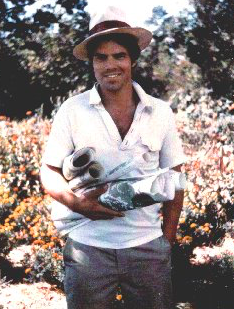
Imagine the life unlived, the art unmade; the world's loss is incalculable when Death takes some unhappy or unwilling soul away from whatever Reality finally turns out to be. Assuming we ever find out, that is.
So the book...elephantine tome!...slogged home in my shoulder tote on a cold and rainy day. I sat right down to look for this deeply meaningful memory, but being a bookish sort, was unable not to read both the Introduction (by one Dean Young, previously unknown to me) and the Editor's Note by Copper Canyon Press publisher Michael Wiegers. I discovered this unlikely-to-be-memed aperçu in Young's Introduction:
Death is the Great Unknown. Frank Stanford got that, and wrote with its reality up front and up close and personal:
Or is he the moon.
Or the chigger.

The reddener of millions of feet, ankles bending to bring them within frantic scratching distance of fingers long ago rotted away. The annoying, irritating, sometimes sickening (in all its senses) reminder that we're alive and Life is a Death sentence. Irrationally clawing at the reddened surface of our living corpses, we read poems by artists like Frank Stanford who just couldn't endure the long way home.
These poets spoke to my unpoetic Poetry-hatin' heart because they practice poetry without the dead, deadening blanket of Poetics across their faces. Their mouths, unmuffled, speak and can be heard by this Death-addled dying man. Since y'all're dying too, I want you to know we can listen to what the souls of our compatriots feel without unnecessary intellectualizing complications.
Pick y'all's selves up off the floor at your leisure. Meanwhile let me explain.
THE ART OF DYING
SARAH TOLMIE
McGill-Queen's University Press
$16.95 trade paper, available now Amazon link for US purchasers
Rating: 5 stars...yep, all five!...of five
The Art of Dying was one helluva wallop. Y'all might remember that I fell in love with its cover, enough that I used A Dear Canadian Friend's gift to me to procure a copy after an article about the AUP Book, Jacket, and Journal Design show showed it to me.
So I was reading the short, super-concentrated poems. "Self," I said to myself, "this is the Sh...tuff. This is why all those pretentious pit-sniffers whose only love is self-love (in all its meanings) write their vapid maunderings with silly line breaks."
Most books of poems are far too short.first two stanzas of poem 22
It's hard to get your money's worth.
How does it make sense in the marketplace
To pay twelve quid for sixty pages?
Or fifteen euros, or twenty bucks?
So poets are shit out of luck.
I know, right?!
Memento mori...and does Doctor Sarah Tolmie, academic, medievalist, un-sniffing poet extraordinaire, ever put memory through its paces. I was, and am, compelled to think deeply about five-line, ten-line, multi-page word paintings. That's not the commonest impulse for me. "You too will die" is my preferred translation from the Latin (pace Latinists with exact translations) of the phrase and that thought is ever with me. I think a lot of people shy away from the idea of Death when what they actually fear is the process of dying. We're divorced from its realities by the medicalization of illness (an issue Tolmie deals with in multiple facets). The process is part of Life, not of Death...and that's a Tolmie thought that I think makes the whole fear industry tremble.
Hate to tell you, but you're going to die.It's the very first poem, in its entirety; it sets a tone for this collection that the remaining artistry very much delivers on.
Quite soon. Me, too.
Shuck off the wisdom while it's warm.
Death does no harm
To wisdom.
You're not afraid of Death. I can almost promise you that you haven't thought about Death much at all. The pain and enfeeblement of illness are the things that inspire most people to flee screaming from the mere mention of Death. Its reality is possibly more terrifying: The Great Unknown, the place we're all going but no one has ever come back from to tell us about. (I am not religious and I don't believe y'all's bedtime story is in any way factual.)
It continues to be fashionable to mourn the death of ritual.first stanza of poem 10
We miss the Neolithic ochre, smoking censers, silly hats
Cthulhu and Harryhausen prayers, all the mystic flap.
A Facebook chat with Gemma Files, an author of horror novels, that I participated in very recently made me think again about why horror has no fear for me. The silliness of the rituals surrounding Death has always struck my funny bone. I save my sadness and longing for the living. They can make use of it, they can feel my empathy and my lovingkindness and my appreciation. The dead? I suspect they survive in some form. I doubt very much its a form we'd recognize. But the body horror and supernatural horror of the storytelling world, the world that Author Files (and to an extent Poet Tolmie, though she with an ironically raised brow) and many like her inhabit, have little actual potency and their imaginative powers exert force on our imaginations in proportion to our fear of Death (which, I said above, I believe to be a fear of the process of dying).
Death looks a lot like success.Poem 42 in its entirety
As in, "I killed that test"
"She slays me" and the rest—
Though it's the act and not the state
Whose power we appropriate,
All us murderous wannabes
In our casual hyperboles.
The attentive will note my approbation of a rhyming-couplets poem.
Pick y'all's selves up off the floor at your leisure.
The New York Times photoWHAT ABOUT THIS: Collected Poems of Frank Stanford
Michael Wiegers, ed.
Copper Canyon Press
$40.00 hardcover, available now
Rating: 5* of five
So then, after that delight to my literary sensibilities arose from the quantum foam, I read this article from The Millions and was reminded of Frank Stanford, whose 1978 collection Crib Death I found on my then-boyfriend the much older alcoholic abuser's shelf.
The Neighbor's WifeI read that as a teen and was shocked to my still-forming core that someone out there Got Me. The obsessive need for someone's presence. The intense internal fire that only comes to the surface when mundane reality offers a single, fleeting, unremarkable image of one's inner state and thus crystallizes reality in the same stunning, unexpected way that a chemistry demonstration creates shocking clouds of sharpness from water.
Four a.m. and she's still gone
But I'm not going to call.
It's not so bad, until just before morning,
When I see a truck driver
Take a smoke out of his lips
And throw it out the window
And I watch it go to pieces
All over the road.
I don't mean to give y'all the impression that I can just *poof* summon up a poem from 40-year-old memories. I got the text from my memory of the older book's and the specific poem's title, then checked this book out of the library. This kitten-squisher of a volume...750 pages!...collects a thorough and informed sampling of his magic mountain of work both published and unpublished. I got re-interested in Stanford after reading in the above-referenced article that Stanford had committed suicide at 29.
Twenty-nine.

Imagine the life unlived, the art unmade; the world's loss is incalculable when Death takes some unhappy or unwilling soul away from whatever Reality finally turns out to be. Assuming we ever find out, that is.
So the book...elephantine tome!...slogged home in my shoulder tote on a cold and rainy day. I sat right down to look for this deeply meaningful memory, but being a bookish sort, was unable not to read both the Introduction (by one Dean Young, previously unknown to me) and the Editor's Note by Copper Canyon Press publisher Michael Wiegers. I discovered this unlikely-to-be-memed aperçu in Young's Introduction:
Many of these poems seem as if they were written with a burnt stick. With blood, in river mud. There is something thankfully unexamined in their execution. I say "thankfully" because we have been through a long century of self-consciousness and irony, and while their brand of rigor and suspicion have brought intelligence to American poetry they have also brought rigor mortis, they have deadened the nerves and made poets fear the irrational.What is more irrational than Death? Dying is rational, can be subjected to analysis and quantification, is possible to construct a schema to slot into one's syllogistic understanding of Life.
Death is the Great Unknown. Frank Stanford got that, and wrote with its reality up front and up close and personal:
Putting Up FenceAn unpolished scream of a betrayed husband, a howl of the pain of being unwanted and still alive, a rage-filled hate-fuelled moment in time that Stanford lived and left uncollected on his paper alp. He's dead, he's dying in front of our horrified eyes always and forever.
I believe the moon wades a creek
Like an albino with a blade
Fixed to a stick.
It rises, red as a place
Where a chigger's been.
Voyeur in the loft, leaving your gum
Stuck to a fork in the barn,
Like a porter paid to listen
With his head in a portal
Of a ship returning before it's due.
Then I come down the road with ice.
Or is he the moon.
Or the chigger.

The reddener of millions of feet, ankles bending to bring them within frantic scratching distance of fingers long ago rotted away. The annoying, irritating, sometimes sickening (in all its senses) reminder that we're alive and Life is a Death sentence. Irrationally clawing at the reddened surface of our living corpses, we read poems by artists like Frank Stanford who just couldn't endure the long way home.
These poets spoke to my unpoetic Poetry-hatin' heart because they practice poetry without the dead, deadening blanket of Poetics across their faces. Their mouths, unmuffled, speak and can be heard by this Death-addled dying man. Since y'all're dying too, I want you to know we can listen to what the souls of our compatriots feel without unnecessary intellectualizing complications.
Saturday, September 24, 2016
ARE YOU AN ECHO? stuns with its poetical economy and perfect pitch

ARE YOU AN ECHO?: The Lost Poetry of Misuzu Kaneko
DAVID JACOBSON
SALLY ITO
MICHIKO TSUBOI (editors and translators)
Chin Music Press
The Publisher Says: In early-1900s Japan, Misuzu Kaneko grows from precocious bookworm to instantly-beloved children’s poet. But her life ends prematurely, and Misuzu’s work is forgotten. Decades later her poems are rediscovered—just in time to touch a new generation devastated by the tsunami of 2011. This picture book features Misuzu’s life story plus a trove of her poetry in English and the original Japanese.
**CHIN MUSIC PRESS OFFERED ME AN ARC OF THIS TITLE IN EXCHANGE FOR AN HONEST REVIEW**
My Review: Whenever a package arrives from Chin Music Press, I know that everything else has to go to the Later pile. As always, I was *so* richly rewarded when I opened these covers.
This gorgeous and extremely touching sampler of Kaneko Misuzu's poetry is perfectly illustrated. It is introduced by a brief recounting of Kaneko's unhappy life. While I would most definitely want my grandkids to read the poetry, I'd want to read Kaneko's story to them, and make sure I was fully present to gauge their need for explanation and/or comfort as the tale unfolds.
Even if you have no kids, grandkids, nieces, nephews, or strange kids you can borrow, buy this beautiful object for your coffee table. You will be the coolest kid on the block.
Big Catch
At sunrise, glorious sunrise
it’s a big catch!
A big catch of sardines!
On the beach, it’s like a festival
but in the sea, they will hold funerals
for the tens of thousands dead.
Friday, September 9, 2016
TANKA & ME, forty-some pages of lyrical insight into being a woman

TANKA & ME
KAETHE SCHWEHN (Mineral Point Poetry Series #1)
Brain Mill Press
$14.95 trade paper/eBook bundle, available now
Rating: 4* of five
The Publisher Says: TANKA & ME is a visceral, pleading, and fierce collection of poems, underpinned with thudding vessels and satisfying wreckage. Kaethe Schwehn externalizes the overlooked power of women into a multidimensional character who hunts both the speaker and the reader. Our wild Tanka engages down deep with role-play, sex, prayer, and refusal until we can’t look away or stay quiet. These are love poems, but they love with claws and whiskey, bolt cutters and saws. You can love someone for a long time without knowing how, our speaker realizes, and Tanka prowls and preens and breaks us down until we know how to love ourselves, how to know ourselves, how to free ourselves. TANKA & ME is feminist poetry with muscle, bones, and heart.
My Review: It is a modern axiom, supported by rigorous scientific research, that reading literary fiction demonstrably improves the reader's ability to empathize, possibly in my own opinion to identify, with others unlike themselves. I suppose it is a sad statement on a culture that we produce men who believe that rape is ever, in any way, at any time, acceptable—or even tolerable.
Here's an idea: Parents of sons need to give them reasons to read literary fiction, which I'll somewhat arbitrarily assume includes poetry. Start here. Schwehn's poetry is accessible to anyone, at least in my never-humble opinion. It is a speaker, self-described "...Midwestern white girl living in a town / where a bank raid is reenacted every year", in a colloquy with the titular character Tanka. She is both real and imaginary, both wild and tame, both alive and unreal. Yes, the antecedent is vague, but that characterization isn't:
Tanka, help.—from "Plea" on p27
I am here museless.
Water in the glass
and no flower or pubis or mule in the glass to amuse me.
My students have white smiles and even the soft blond
hair at their brows is pulled back tightly.
I am becoming deathly afraid that I am normal.
That the neon hills that once erupted in my dreams
will not return.
Fun wordplay, fine imagery, a tight and focused poem. A window into the soul of each of us, certainly each adolescent, each creative soul, each adult working out how to do this mundane piece of work called living while still finding some sort of beauty and meaning in the exercise.
So, parents of sons, give them a reason to read this short book of accessible poems, and see if they don't come out the other side a bit more able to see beneath the surface of The Other to the core of human existence: No one knows how to do it; we're all floundering for meaning and connection; so speak to The Other just like you would to your own inner self.
It sure as hell can't hurt. It's a cheap experiment that might just change your son's life for the better.
Friday, August 26, 2016
FAIR DAY IN AN ANCIENT TOWN, poetry that's *saturated* with yearning

FAIR DAY IN AN ANCIENT TOWN: Poems
GREG ALLENDORF (Mineral Point Poetry Series #3)
Brain Mill Press
$14.95 trade paper & eBook bundle, available now
Rating: 3.5* of five
The Publisher Says: It’s April now, complains Allendorf’s speaker, and still no desperate gift of unreturned yearning.
The poems of Fair Day in An Ancient Town subvert the glorious, Romantic pastoral into a voice easy to imagine as Walt Whitman’s darkly clever younger brother. The object of affection is fake-tanned and an idiot but still crashes a dozen lush masturbatory fantasies—or the speaker and his lover meet as shepherds only to eat M&Ms and abandon each other on bingo night. O, the way his mouth confounded me / and folded on my mouth there in the fold, slyly sings one of Allendorf’s shepherd’s songs, O, the glory of his hairy arms, / the way they lit my eyes a little then.
Layering complex form, rhyme, and craft over lush horniness and hard wit, Allendorf effortlessly upends romantic poetry and exposes it to the twenty-first century. This is a collection to make the reader laugh out loud and think deep—and then find a way to be alone under the covers.
**BRAIN MILL PRESS PROVIDED ME WITH THIS REVIEW COPY AT MY REQUEST. THANK YOU!**
My Review: Alone hell! This collection could honestly be subtitled, "Inducements to Cruise for Action"! "I'll paint the memory/of you on my closed coffin lid and lard/my arteries with your untamed beauty." That's some hot longing goin' on there.
Kiki Petrosino edits these collections of work by poets from the middle of America, but does not find middlin' poets. This signed copy, #18 of 100, is a lovely object to hold as well as a pleasure of a trove to read. I'll give you a whole poem as a sample of the aesthetic at work here:
SOBER
Never so great the shiftlessness. The rest
of the night, I'll stare into the wall
and think a poem about alcohol.
I'll write about the luxury that's failed
me so far this month. It's April now,
and still no desperate gift of unreturned
yearning. Usually, I'm writing reams
of crushy ones each day. Lush, bitter birds
that soar into the window one by one.
I just can't muster it. They hurt me some,
the poems and their people, all the pearl
of torture. I confess, I am afraid;
It's hard to sleep without a tiny veil
of pain to puff with breath and call a sail.
You'll find this to your taste, or not; but the collection is well represented by this poem, so make your purchasing decisions accordingly.
Subscribe to:
Posts (Atom)